Jordan-Watkins Wedding

Thomas and Margret Mordecae Watkins are pleased to announce the marriage of their daughter Margret to David Jordan, son of Benjamin and Mary Evans Jordan.  David and Margaret were married 21 September 1839 in Merthyr-Tydfil, Glamorganshire, Wales.

Much of the history below is taken from the sketch written by David and Margret’s granddaughter Martha Evans Anderson (1870-1930).  I have fleshed it out with dates and additional detail from source documents.

Margret Watkins was born 10 September 1816 in Merthyr-Tydfil.  She is believed to be the second of 5 children born to Thomas and Margret Watkins.  We really do not know a whole lot about Thomas and Margret Watkins.  A number of stories have survived which are shared below.

David Jordan was born 7 February 1820 in Merthry-Tydfil.  He is the first of four known children born to Benjamin and Mary Jordan.  Just like Margret’s parents, we really do not know much about this family.  At least minimal family history dates or stories have come down regarding either line.

Benjamin and Mary Jordan “were of a religious turn of mind and taught the Bible when he was just a boy, refined and of a gentle manner.”  Mary Jordan passed away in April 1843 when the family was still young.  The family consisted of David, Jane, Sarah, and John.  The Jordans were “a very refined and considered High Class people and of a high moral and religious character.  They were always proud of their personal appearance, always well dressed.”  The brothers were “devoted brothers, they lived and worked together with kind and friendly for each other.  When David and Margaret had children they all lived as a loving family together…this brother was named John Jordan.”

We really do not know anything of the Courtship between David Jordan and Margret Watkins.  “At this times Wales was in a prosperous condition and David and Margret were soon settled in which was very comfortable and spacious.  They had an extra room so that his father and one brother could live with them in their home.  His father lived only two weeks, when he died.  His brother continued to live with David and his wife.”

“Margret (Watkins) Jordan lost her mother when she was very young, leaving her father with a family of small children.  While the family was without the mother’s care, Margret met with an accident which left her with a crippled arm for the rest of her life.  This happened when she was about 2 years old…when her sister was carrying her on her back, when she slipped and fell.  Margret cried for days from pain before they learned that she had a broken arm at the elbow.  It had already started to set, it had been so long since it happened that they thought the child could not stand to have it rebroken and set properly, so it was never properly taken care of.”

“Margret’s father married again and brought into their home a most worthy and wonderful new mother to the children.  Grandmother used to tell us that she never remembered her real mother but their step mother was all that our real mother could have been.”

“When Margret was still in her teens and because of her crippled arm, she was apprenticed in a school for sewing.  The sewing at that time was all done by hand, they had no sewing machines.  Margret took to that kind of work very readily and was very satisfied to become a very good seamstress, while still a very young woman.  She was able to construct some of the finest work in the area.”

“Margret had a blind brother who learned to play the harp.  He was often requested to play, to entertain for groups at entertainments.  He carried his harp with him everywhere he went.  He was employed to play at different places and went alone to his employment places with his harp.  He became very popular and was loved by all his friends and family.”

“Margret continued to follow her trade as a seamstress after her marriage to Grandfather David Jordan, because she was very popular among the people of her community for her sewing.  As her family duties increased on her time, they had six children, two of which died in infancy, she gave up a lot of her sewing and devoted most of her time and energies to her family responsibilities.”

“David and Margret were among the very first in their area to embrace [T]he Church of Jesus Christ of Latter-day Saints.  They were baptized [18 January 1849].  Their children all grew up in the church.”

At this time there was a large branch of the Mormon church in their area of Wales.  “Their family was very faithful and devoted to their new church.  David was a good singer and also a composer and poet.”  He composed a number of beautiful poems.  One song was in honor of the Prophet Joseph Smith.  “As children, we remember hearing him sing this beautiful song, the music was very sweet and the words were all in Welsh.  We only understood it in part, but there was just something about the song that touched us very deeply.”

When they embraced the LDS church they had two little children, Mary and her older sister Gwyn who were 3 and 5 years old.  They were raised in the LDS church and were baptized when they reached 8 years old.

David and Margret’s first son was Thomas Jordan born December 1840 in Merthyr-Tydfil and dying June 1841.  We know very little about this little boy.

The first daughter was Gwenlliam Jordan born 2 August 1842 in Merthyr-Tydfil.  She was baptized in August 1851.

I had a copy of Gwenlliam Jordan and David D Williams in this post, but we have determined that photo was actually of another couple.

The second daughter was Mary Watkins Jordan born 5 December 1844 in Merthyr-Tydfil.  She was baptized 1 January 1852.

“David was a coal miner.  He and his brother went to work every day in the coal mines.  They were paid good wages at the time, so they did very well economically.”

“One day David’s shift in the mine interfered with his Priesthood meeting so he traded shifts with a friend of his.  He was the secretary of his group and felt like he should attend his Priesthood meeting.  Grandmother Margret told us that she remembers the incident very well.  It was a beautiful day and all was peaceful and calm.  Then at 9:30 am word came there had been an explosion in the mine.  People rushed to the place and it was soon learned that a large number of miners had lost their lives in the explosion and among them was David’s friend who was working in his place.  This was a great sorrow for David.  He loved this man very much and he was there instead of David.”

“As time went on, conditions changed.  Little by little the miner’s wages were reduced causing hard times.  Then there were strikes putting them out of work entirely for months.”

“Their two girls had by now grown into their teens.  They found employment and became independent.  There was also two little boys in the family.”  These two boys would have been David and Thomas.

Charles Jordan was born 3 November 1848 in Merthyr-Tydfil.  He died in December 1848.

Margret Jordan was born 26 Jul 1850 in Aberdare, Glamorganshire, Wales.  She died in June 1852.

David Moiah Jordan was born 7 June 1854 in Merthyr-Tydfil.

Thomas Jordan was born 17 March 1857 in Merthyr-Tydfil.

Ann Watkins Jordan was born in 1861 and we do not know how long she lived.

“Margret now returned to her sewing again to support the family during the hard times.  In a few years, the two girls got married and came to Utah, leaving their parents and the two brothers in Wales.  This happened in 1864.”

I have previously written about Gwenlliam Jordan and her marriage to David D Williams at this link.

“David and Margret had now been members of the LDS church for 20 years.  They were however very happy and contented until their daughters left for America.  They were also making every effort to join their daughters in Utah.

“Then they were made very sad by the death of their youngest son.  He was 11 years old.  Many of the members of their church had gone to Utah and they were feeling lonesome and sad.”  David Moiah Jordan died 14 October 1865.

“The Elders that served as missionaries in their area always found a big welcome in the Jordan home, even in the middle of the night would stop by and found a welcome and told them that it was like coming home.”

“They themselves were making every effort to prepare to go to Utah themselves.  They were planning to sail with the next company of Saints that were to leave by ship for New York.”

“It was now 9 years since their two daughters had gone to Utah.  One day the Elders called on them and told them that the next ship would sail in three weeks.  They counted their money which they had saved and it was not enough.  So they decided that they would have to wait for a later sailing date, until they could accumulate some more funds.”

“When they had secured the money they needed, they sent word to their daughters of their plans so they would expect them.”  The Jordan’s departed 29 July 1872 from Liverpool, Lancashire, England.

“After a lazy and weary journey crossing the Atlantic Ocean, they landed in New York City, on the 13th of August 1872 and remained in New York with their 15 year old son.  They found employment and remained there until October.  They received a letter from their 2 daughters containing money for them to continue to Utah.  Some of the money came from their daughter Mary’s husband, who sold his team of horses to get the money to send to them.”

They arrived in Brigham City, Box Elder, Utah on 10 November 1872 “after visiting in Ogden with their oldest daughter Gwenie Williams, and then they continued on to Brigham City where their daughter Mary Evans lived.  It is useless to try and describe how happy they all were to be back together again after 9 years of being apart, and praying for the time when they could all be together in Zion.”

“The first winter in Utah was very hard on them because of the extreme cold temperatures and the abundance of snow.  It was particularly hard on Grandfather David because he was used to working underground in the coal mines of Wales.”

“Their daughter Mary and her husband William Evans were living in their two room log cabin at 1st East and 3rd South, just one half block south of the First Ward Meetinghouse.  They had 4 children by now, Margret, Mary Jane, Martha, and Abraham, who was just one week old when their grandparents arrived in Brigham City from Wales.  These newly arrived grandparents remained with William and Mary and their 4 children in their small home the rest of the winter of 1872.”

“At this time the railroad was being built from Ogden to Logan and the three men, Grandfather Jordan, son-in-law William, and the 15 year old son (Thomas) of David and Margret Jordan, all found work building for the railroad.  It was very difficult for David and his son to endure working out in the awful cold weather through that first winter.”

“Two years later, William Evans purchased another house on a large lot.  The house had 4 rooms in the Third Ward at the corner of 3rd West and 3rd North.  It was on the northwest corner of the intersection.  When they moved into the bigger house with their 4 children, they sold the old house to David and Margret who lived in their log home for the rest of their lives.”

“They lived comfortable and made it very attractive and comfortable.  They were neat and tidy people and they kept a beautiful garden which they were very proud of and they produced a lot of products for their table.”

“They were very interesting people to talk to and had many interesting and the conditions and memories of their lives in Wales and the extensive knowledge and testimony of the gospel, made it always a pleasure to visit with them.”

“As time went on they worked at many different things that there was to do around Brigham at that time, which was all real hard labor.”

David and Margret attended the Endowment House in Salt Lake City, Salt Lake, Utah to receive their own endowments on 10 October 1878.  David and Margret were sealed to each other the same day.

“Their son Thomas grew into manhood and they decided that they would build themselves a better house.  They erected the foundation and bought as much of the material for the house as they could the first year, with hopes that the next year they thought and hoped that they could continue building the house.”

“However, the winter came and there was no work to be had for them.  Their son Thomas decided to go to Evanston, Wyoming to work, putting up ice, and they had some relatives.  He obtained employment in one of the coal mines near by.  He was doing well and was very happy there with the thought that he would be able to help his parents with their new home building.”

“This was not to be because Thomas was severely injured in an accident and word was sent to his parents at Brigham City.  His father, David, went to Evanston to see his son but Thomas died just one hour before his father arrived on February 28, 1880.”

“This was a great sorrow to Thomas’ family and destroyed all their hopes for completing their home building plans.  When spring came, David sold all the building materials that he had accumulated for their new home, spent the rest of their lives in the original small log house.”

“Their sorrow over the loss of their son weighed so heavily upon them that it changed their life’s hopes for the future.  However, their faith and convictions in the gospel and the LDS Church which they accepted in Wales; and the trust in their Heavenly Father never failed them.  Faithfully they continued to attend all their church duties and their testimonies grew and were wonderful to hear them speak.”

“Grandfather David was able to adapt himself to most any kind of employment; and with the products of their well kept garden and the fruit that he raised in the years at their home, they had a comfortable living.”

“They also took a great interest in the Temple work of the church and were some of the first to attend the new Logan Temple after its dedication in 1877.”

“They had their family genealogy all in order so that when the temple was ready, so were they.  They traveled to Logan often to do temple ordinances for the members of their family and stayed a week at a time on many occasions to do this temple work.”

“This work of love continued until David’s health began to fail, but he continued to obtain information and prepare records on the members of their family for the work to be done in the temple for their dead ancestors.”

David and Margret were sealed to all their children in the Logan Temple 27 June 1888.  Gwenlliam and Mary were both happy to be physically present for the occasion.  All of the other children had passed away prior.

David and Margaret Jordan

“Grandfather David Jordan’s life came to a peaceful end November 26, 1893 in Brigham City, Utah.  So peaceful and sweet was his passing away that our family can be proud of that dear old Grand Sire.  He was the first fruits of the gospel in our family.”

“Grandmother Margret was not the last one in their little home, and she felt the loss of her companion very keenly, but she was visited and comforted by her living daughter and grandchildren.  She wanted to continue living along in their home.”

“It had been 25 years since she and her dear husband came to live in that little log cabin; and there she wanted to stay until she could go to join her dear departed companion.”

“She lived another 7 years after her husband died.”

Mary Jordan Evans, LaVan Jones, Margret Evans Jones, Margret Jordan

Mary Jordan Evans, LaVan Jones, Margret Evans Jones, Margret Jordan

“She died November 19, 1902, at home in Brigham City, Utah.  She was buried in the Brigham City Cemetery beside her beloved husband.

A side note at the end of the above: “This was written by granddaughter Martha Evans.  This story was copied from a note book, in the hand writing of Martha Evans.”  “It is probably a repetition of the story I have previously translated from his hand-written record that I have previously had translated and distributed some years ago.  However, I am sure that it is more more in detail than the one I translated previously because there is much more of it.  Yours truly, Wesley Anderson 10 May 1986”

Gwenlliam passed away 3 September 1900 in Slaterville, Weber, Utah.  Mary passed away 8 December 1923 in Brigham City.

Williams-Davis Wedding

Here is another life sketch I want to share.  This time of John Haines Williams and Sarah Jane Davis.  John is the father of David Davis Williams and Mary Jane Williams Davis.  He is the brother to my David D Williams.  At some point I hope I have more history to write of David D and John Haines’ parents, but at this point there are far too many questions.  In all honesty, it seems that their parents John Williams and Frances Henneys have had their history confused, merged, and corrupted by some other Williams lines.  Until we can sort the real information on our line from the rest, I have delayed writing to keep from perpetuating mistakes and confusion.  For example, it appears John Williams died in Ogden, Weber, Utah in 1867.  But some have him merged and combined with John Williams who died in 1876, 1870, and 1867.  On with the already written history.

I will offer more family information after the life sketch.  I do not know who wrote this history.

~

“John Haines Williams was born February 1, 1829, at Pembrey, Carmarthenshire, Wales, a son of John Williams and Frances Hennys.  He was the fourth child of ten children: Frances, Elizabeth, Catherine, John, Mary, David, Sarah, Richard and Joseph.  His father was a collier by trade and worked hard to sustain a large family.

“Sarah Jane Davis was born 5 July 1830 at Kidwelly, Carmarthenshire, Wales, the daughter of William and Margaret Davis of Kidwelly.  She was the youngest of the nine children born in this family: Margaret, Mary, Ann, William, Eliza, John, David, Lewis, and Sarah Jane.

“After their marriage, John and Sarah Jane made their home in Llanelli, Carmarthenshire, Wales, where he worked in the coal mines.  Here two sons were born, William and David.  Upon hearing the gospel and the advantages of life in America, they worked, saved, and made plans for a new home there.  Those who emigrated in their party were: John, Sarah Jane, their sons, William and David, his father, John Williams, then a widower, and his two brothers,  David and wife and Richard.  They took passage from Liverpool, England with a group of Saints in the year 1855, spending eight weeks on the water.

“Landing in New York, they went to Scranton, Pennsylvania to make their home.  While living there, the men worked in the coal mines.  At Scranton, two more children were born, Thomas John and Ann.  The family lived in Scranton until 1859 and then came west, making their home in Ogden, Utah for several years.  There Eliza Bell, Sarah, John, and Mary were born.

“When a group of Saints were leaving for southeastern Idaho, John and Sarah Jane and their eight children went with them and settled in Malad Valley.  At first, they lived in Woodruff where George and Frances were born.  Later they moved to Malad and took up a homestead of three hundred twenty acres at Gwenford.  There they worked hard clearing the land of sage by hand to prepare it for planting.

“John Haines was a lover of fine horses and cattle.  Many people of the valley bought animals from him.  They built a three-room log house and were happy in their new home.  Here Joseph, the eleventh child, was born.

“Desiring the best in education for their children and having a desire to share their happiness in the truths of the gospel, Thomas was sent to Europe and labored as an L.D.S. missionary in England and Wales.  After his return home he attended school and taught school for many years.  This privilege could not be afforded the others after the death of their father.

“Sarah Jane was a very proud, cultured and refined woman, a wonderful homemaker, seamstress and cook.  Many enjoyed her delicious home-cooked meals.  She had to make bread nearly every day.  The Indians were prowlers at that time.  They came to her home often, but she believed in the admonition of President Brigham Young; It is better to feed them than fight them.  This she did.

“John Haines died on January 20, 1882 at the age of fifty-three.  Sarah Jane worked very hard caring for her family.  Her daughter, Frances, lived with her until her mother=s death on August 4, 1892.  They were both buried in the Malad City Cemetery.”

~

Some more family history information.

John Haines Williams born 1 February 1829 in Pembrey, Carmarthenshire, Wales and died 20 January 1882 in Gwenford, Oneida, Idaho.  He was buried 23 January 1882 in Malad, Oneida, Idaho.

Sarah Jane Davis born 5 July 1830 in Kidwelly, Carmarthenshire, Wales and died 4 August 1892 in Samaria, Oneida, Idaho.  She was buried 7 August 1892 in Malad.

John and Sarah were married in 1849 in Kidwelly.

Their children are:

William Davis Williams born 20 June 1850 in Burry Port, Carmarthenshire, Wales and died 10 May 1916 in Malad.  Buried 13 May 1916 in Malad.  Married Hannah Maria Thomas (1849-1900) 10 April 1871 in Samaria, Oneida, Idaho.

David Davis Williams born 19 June 1852 in Llanelli, Carmarthenshire, Wales and died 27 June 1927 in Samaria.  Buried 30 June 1927 in Samaria.  Married Rebecca Price Williams (1857-1936) 31 December 1877 in St. Johns, Oneida, Idaho.

Catherine Williams born 4 April 1854 in Llanelli and died 27 March 1856 in Pennsylvania.

Thomas Davis Williams born 3 August 1856 in Hyde Park, Westmoreland, Pennsylvania and died 24 January 1900 in Woodruff, Oneida, Idaho.  Buried 27 January 1900 in Samaria.  Married Mary Ann Davis (1860-1895) 20 January 1881 in Samaria.  He married Agnes Ellen Bowen (1868-1943) 18 May 1897 in Brigham City, Box Elder, Utah (married by Rudger Clawson, later LDS Apostle and member of the First Presidency).

Ann Ellen Williams born 11 April 1861 in Scranton, Lackawanna, Pennsylvania and died 26 August 1936 in Malad.  Buried 28 August 1936 in Malad.  Married Joshua “Jessie” Lewis Thomas (1857-1928) 26 March 1888 in Malad.

Sarah Williams born 3 May 1862 in Ogden, Weber, Utah.  We don’t know anything more about her.

Eliza Bell Williams born 4 June 1963 in Ogden and died 15 September 1941 in Samaria.  Buried 19 September 1941 in Samaria.  Married William Lewis Jones (1857-1889) 19 January 1887 in Logan, Cache, Utah.

Mary Jane Williams born 8 April 1864 in Ogden and died 20 March 1903 in Samaria.  Buried 24 March 1903 in Samaria.  Married Samuel Deer Davis (1859-1923) 10 October 1882 in Salt Lake City, Salt Lake, Utah.

John Haines Williams born 18 February 1866 in Ogden and died 9 August 1956 in Malad.  Buried 11 August 1956 in Samaria.  Married Rebecca Morse (1869-1938) 14 February 1886 in Malad.

George Haines Williams born 15 October 1867 in Woodruff and died 26 December 1950 in Woodruff.  Buried 29 December 1950 in Samaria.  Married Sarah Elizabeth Morse (1872-1908) 20 September 1890 in Samaria.

Frances Williams born 10 April 1870 in Woodruff and died 18 July 1948 in Woodruff.  Buried 20 July 1948 in Samaria.  Married Samuel John Williams (1865-1943) 14 December 1898 in Samaria.

Joseph Davis Williams born 15 January 1872 in Malad and died 5 November 1943 in Samaria.  Buried 9 November 1943 in Samaria.  Married Rachel Morse (1872-1937) 18 August 1896 in Samaria.

Williams-Williams Wedding

I am sharing this life sketch of David Davis Williams and Rebecca Price Williams.  The original version was written by William Jenkin Williams and found in the records of Eliza Williams Rees with insights from her granddaughter Betty Mifflin Bushman taken from family interviews and her own experience.  For the most part I will stick to the original history.  I do not have any photos to share, but since I have the history, I wanted to make it available.

Before I jump into the rest of the life sketch, I think it is important to connect these individuals to my family history.  I have previously written of the marriage between David D Williams and Gwenllian Jordan.  David D Williams had a brother named John Haines Williams.  David Davis Williams is the son of John Haines Williams.

I will provide more family information after the life sketch.

~

“David D. Williams was born in Llanelli, Carmarthenshire, Wales on June 19, 1852, a son of John Haines Williams and Sarah Jane Davis.  He came to the United States with his parents, settling first in Pennsylvania in 1858.  In 1860 the family moved to Ogden, Utah, crossing the plains with in a handcart company led by Captain Elias Morris.  It was the second ox team to land in Ogden.  From there the family went north to the Malad Valley where they settled in Muddy Creek, living in a dugout where some of the children were born.  They later moved to Gwenford.

“Rebecca P. Williams was born on New Year’s Eve, December 31, 1857, at Merthyr Tydfil, Glamorganshire, Wales, a daughter of Jenkin Williams and Eliza Price.  She was baptized (LDS) in Wales on December 11, 1867 by her father, Jenkin, and confirmed by John Thomas.  With her parents, she came to this country for the gospel’s sake, settling in Pittsburgh, Pennsylvania.  After living there two years, they went to the Malad Valley in the year 1872.

Younger Rebecca Price Williams

Younger Rebecca Price Williams

“On Rebecca’s birthday, December 31, 1877, she and David were married in St. Johns, Oneida, Idaho by Justice of the Peace William H. Waytell in the presence of Benjamin Waldron and Mary Ann Daniels.

“David was baptized (LDS) 8 March 1878 by John Evan Price and confirmed by Samuel D. Williams.

“He and Rebecca took up a farm in Gwenford where they lived for about twenty years.  During this time David operated a freighting business between Kelton, Utah and Helena, Montana, a trip that would take him about three months.  He served as a deputy sheriff, was the first Chief of Police of Samaria, Idaho, and even worked as a blacksmith.  Later he went into the confectionery business and operated a business and general store, D.D. Williams Candy Kitchen, with Rebecca in Samaria until his death June 27, 1927.  He was a man, it is said, who could not be idle.   His daughter, Eliza, described him as a wonderful husband and  father.  His granddaughter, Mae Rees Mifflin, remembers him with great fondness also.  She named her first child, Darla Dean, after her grandfather.  It is a wonder that Darla was not nicknamed Dee Dee too.

David Davis Williams

David Davis Williams

“About him, a grandson, Ray Earl Rees, told the following story:  Their daughter, Eliza (Ray’s mother), had a washing machine.  In order to help her elderly parents, she would do their laundry.  Every Monday morning Grandpa David would drive his buggy the few miles to Malad with a bundle of clothes for her to wash.  Grandpa would drive the team around to the north road and enter the farmyard by the back way.  About the time he was expected, Ray would wait out by the gate to open it for his grandfather.  Then he would climb up in the buggy with him and ride up to the house.  Always Grandpa Williams had a sack of candy for Ray.  He could depend on that treat and waited eagerly for it each Monday morning.

“When the family would visit their grandparents in Samaria, it was a treat to go in to the store and see all the candies on display behind the glass counter.  Rather than give the children candy, Grandpa Williams would give them each a nickel and let them do the choosing.  They were not allowed to go around the counter, but while he smiled encouragement to them, they would stand before the counter and choose their treat.

“He was the sweetest man who ever drew a breath, Ray said about his grandfather.

“David was always a prominent figure in our childhood stories about family as our mother was said to be his favorite.  He even appeared to her to tell her goodbye after his death.

“It seemed so romantic to my sister and me that he and Rebecca married on my favorite holiday of the year, New Year’s Eve.  That day was also Rebecca’s twentieth birthday.  Her present was our handsome, nice great-grandfather.  What a perfect party time to have a wedding anniversary.

“Rebecca is remembered by her daughter, Eliza, as a wonderful mother and homemaker, never being one to go away from home.  She had a wonderful alto voice and when the children were small, she would often gather them around and sing to them.

“After her children grew up and married, she helped her husband in keeping the confectionery store.  Many remember stopping there as youngsters on their way to Mutual to share a soda and socialize.  They were always reminded not to be late for their church meeting by Rebecca, who would usher them out the door at ten minutes ’till.  Later the teenagers would reunite there to pick up where they had left off.

“Her daughter, Eliza, described her this way, Rebecca P. Williams was loved by all who knew her.  She was kind to everyone and did not have an enemy on earth.

“Great-Grandmother Rebecca was always a colorful figure to my sister and me.  As the youngest surviving child in her family of eleven children, we loved the story of how when the family came from Merthyr Tydfil, Wales, she was assigned to carry a beautiful crystal bowl for her mother.  With it wrapped in a shawl, fourteen-year-old Rebecca later carefully tended it all the way to Idaho.  Through interesting circumstances, that bowl was inherited by our grandmother, then Mama, and finally Darla.  Since Darla also inherited Grandma Rees’ beautiful china closet, it seemed quite natural that the Welsh bowl would always rest inside it.  At any rate, I never ever expected it to be mine.  One day when I was picking up Darla to bring her to my house for a day’s visit, her daughter, Alyce, walked out to the car with us.  In her hands, Darla was carrying something wrapped in a piece of fabric.  She handed it to me with a smile saying that she had a present for me as a little thank you gift because I was so good to her.  With Alyce looking on and smiling too, I turned back the cloth to see the Welsh bowl.  Ignoring my protests that it was hers and that I could not accept it, she said she knew it would be safer in my home, that I would take good care of it and always treasure it.  Alyce said they had talked it over and both felt that it should be mine.  How I love to hold and admire that bowl.  Made of clear glass in a square shape, scalloped edging runs along its rim and base.  With a small pedestal and lion heads at each square corner, it is truly a work of art and indeed a special item. I love knowing of its history and importance in our family.  When we would look at it as children and hear its story, it was always viewed in quiet awe or discussed in hushed tones.  Never, ever, did I think it would be mine.  I felt amazed, quite honored, and a bit afraid of the responsibility.

“David died on 27 June 1927 after an illness of eight months.

“Later Grandma Rebecca moved to Malad  where she resided just across the street from her daughter, Eliza.  I remember Grandma carefully preparing a plate of dinner each evening for her mother.  It was usually the job of Uncle Ray to deliver it with a caution to hurry so it would be hot for his grandmother.  When I was around, he would often grab me by the hand and together we would dance across the street as he deftly carried the napkin covered plate in one hand and dragged me along with the other.

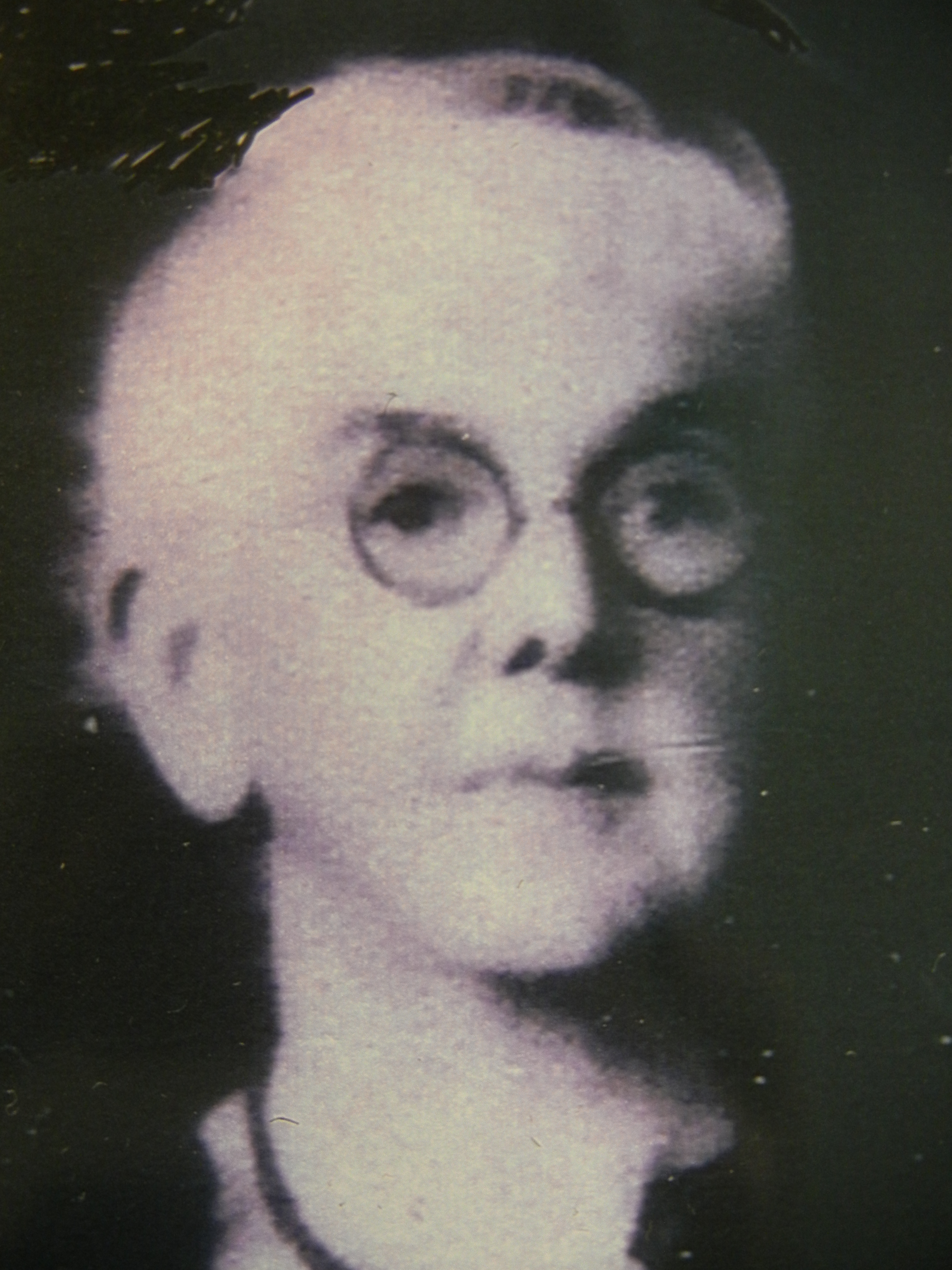
“I remember her as a frail little lady, a bob of white hair on top of her head, wire-rimmed glasses perched on her nose as she looked us over.  Books and magazines were plentiful in her small apartment and always a deck of cards.  In addition to reading, she liked to play games, playing Solitaire to entertain herself when no one else was around.

“Rebecca died on March 30, 1936 at the age of 84, a few months before my fifth birthday.

Rebecca

Rebecca Price Williams

“Both are buried in the Samaria Cemetery.

“Thirteen children were born to David and Rebecca, five boys and eight girls:  Sarah, William Jenkin who died in infancy, Mary, David, Phoebe, Jenkin, Eliza, Margaret, John, Catharine, Beatrice, Frances Orenda who died as a baby, and George.”

~

Some more family history information.

David Davis Williams born 19 June 1852 in Llanelli, Carmarthenshire, Wales and died 27 Jun 1927 in Samaria, Oneida, Idaho.  He was buried 30 June 1927 in Samaria.

Rebecca Price Williams born 31 December 1857 in Merthyr Tydfil, Glamorganshire, Wales and died 30 March 1936 in Malad, Oneida, Idaho.  She was buried 2 April 1936 in Samaria.

David and Rebecca were married 31 December 1877 in St Johns, Oneida, Idaho.

Their children are:

Sarah Elizabeth Williams born 22 August 1878 in Samaria and died 31 February 1968.  Buried in Draper, Salt Lake, Utah.  She married James Benjamin McGuire (1872-1952) 30 September 1900 in Samaria.

John Jenkin Williams born and died 23 September 1879 in Samaria.  Buried in Samaria.

Mary Jane Williams born 10 April 1881 in Samaria and died 14 January 1975.  Buried in St Johns.  She married John Nelson Hill (1872-1913) 22 February 1899 in St Johns.

David Joseph Williams born 26 February 1883 in Samaria and died 4 April 1973.  Buried in Malad.  He married Ester “Essie” Katherine Munsee (1888-1967) 25 March 1908 in Ogden.

Phoebe Ann Williams born 12 December 1884 in Samaria and died 15 March 1942 in Salt Lake City, Salt Lake, Utah.  Buried in Riverton, Salt Lake, Utah.  She married Thomas Charles Jones (1883-1922) 4 July 1903 in Samaria.

William Jenkin Williams born 24 Jul 1886 in Samaria and died 5 Jun 1963.  Buried in Samaria.  Married Mary Mae John (1901-1989) 26 February 1921.

Eliza Mae Williams born 10 February 1888 in Samaria and died 6 July 1967 in Ogden.  Buried in Ogden.  Married Gomer Vaughan Rees (1883-1971) 24 November 1904 in Samaria.

Margaret Rebecca Williams born 25 November 1889 in Samaria and died 9 November 1980.  Buried in New Philadelphia, Tuscarawas, Ohio.  Married Walter Russell Ripley (1895-1979) 13 December 1913 in Malad.

John Haines Williams born 31 May 1891 in Samaria and died 25 February 1957 in Malad.  Buried in Malad.  Married Eleanor Jones (1899-1975) 29 March 1916 in Malad.

Catharine Zina Williams born 14 August 1893 in Samaria and died 19 Oct 1988 in Salt Lake City.  Buried in Malad.  Married Elijah R van Ables (1892-1961) 12 December 1920 in Malad.

Beatrice Estella Williams born 30 July 1894 in Samaria and died 9 December 1976.  Married Carl William Jones (1892-1958) 4 April 1913 in Malad, later divorced.  Married Allen John Keehn (1888-1957) 16 November 1938 in Elko, Elko, Nevada.

Frances Orenda Williams born 6 May 1897 in Samaria and died 10 September 1897 in Samaria.

George Thomas Williams born 22 February 1901 in Samaria and died 24 June 1962 in Pocatello.  Buried in Restlawn Memorial, Pocatello, Bannock, Idaho.  Married Theona Withers (1906-1990) 4 October 1924 in Malad.

Harlech, Wales

I looked through some old photos of mine that I want to write about and share.  I stumbled upon some old pictures from 2003 and some more in 2008 of visits to Harlech and thought someone might be interested to see them.

Harlech, Gwynedd, Wales is home of one of the castles built by Edward I.  It was built between 1282 and 1289 and played a part is many battles.  Wikipedia provides some quick details namely that this castle held an important place in several wars.  It withstood seige by Madog ap Llywelyn but fell to Owain Glyndwr.  Later it played a part in the War of the Roses and was the last fortification to fall in the Glorious Revolution in 1647.  Honestly, I just wanted to go there after hearing Men of Harlech sang by a choir while I lived in Hyde, Cheshire, England.

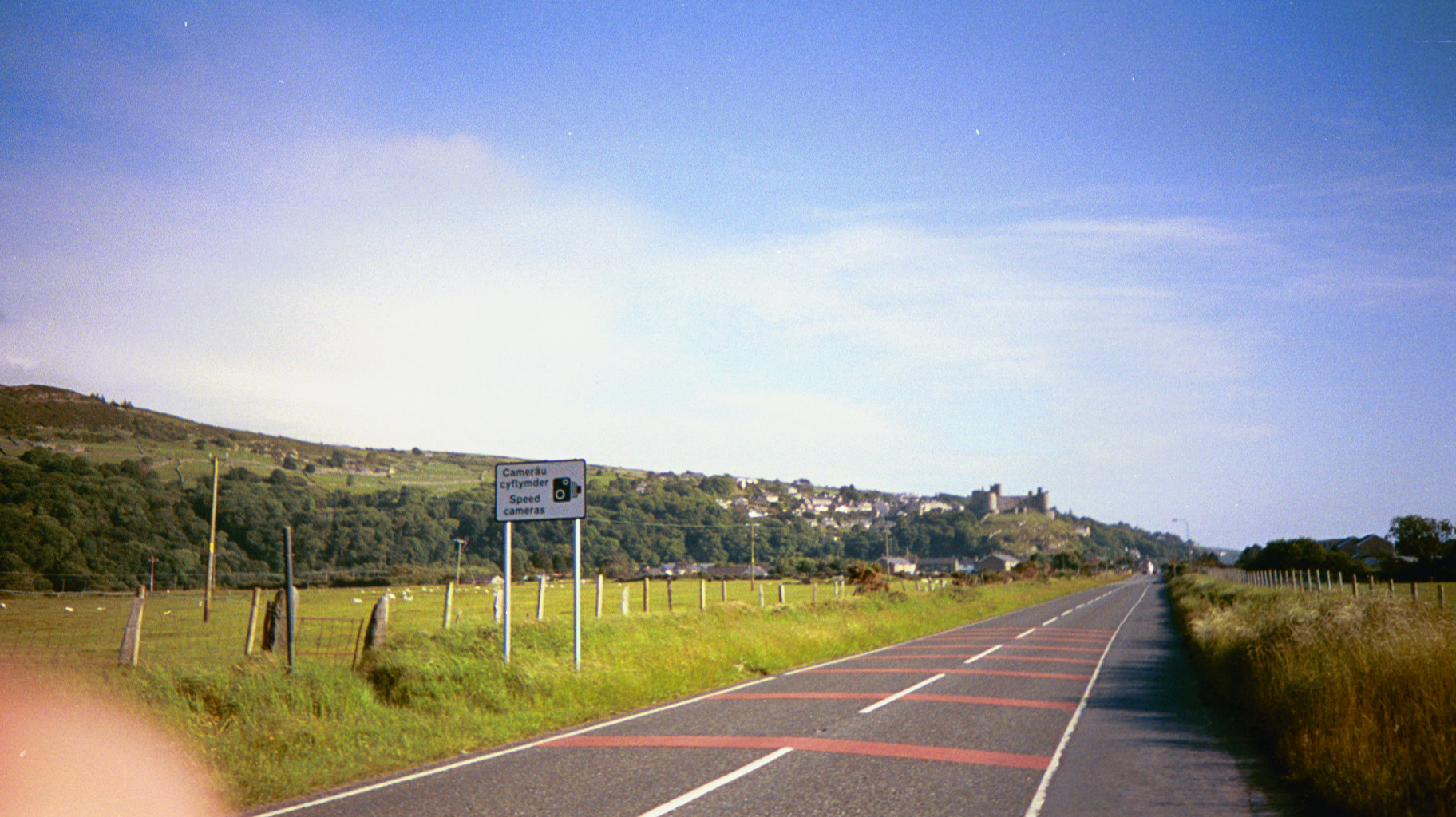
In 2003, Brad Hales, Amy Hales, and I decided to venture to Harlech castle.  Neither of us had ventured south of Porthmadog as missionaries in 1998 – 2000 and thought we would venture down to the castle.  We snapped this picture on the road approaching from the north.

Harlech Castle on the hill

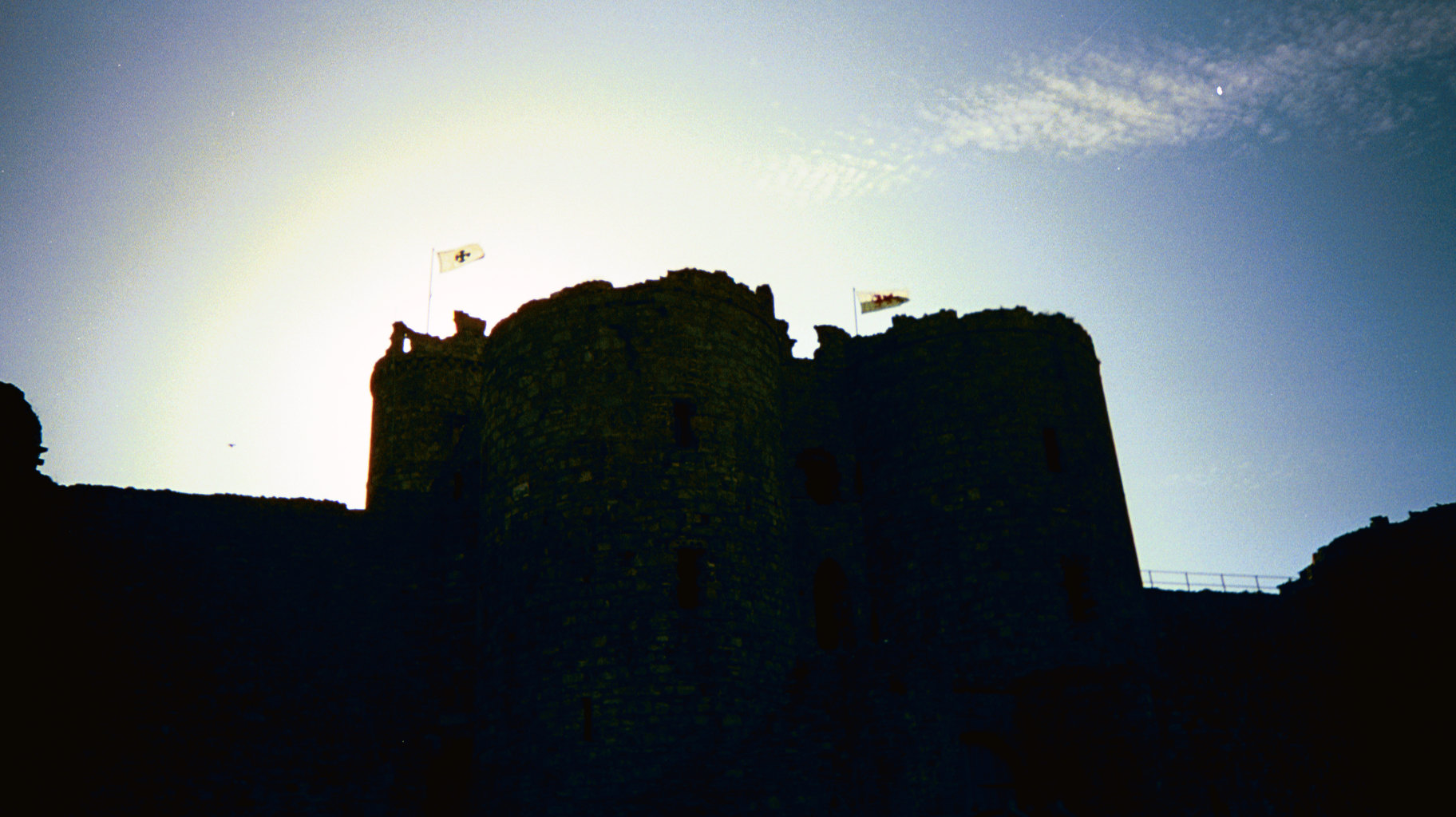
Unfortunately, we arrived after the castle had closed for the day.  We snapped this picture of the silhouette and the flags from the road below.

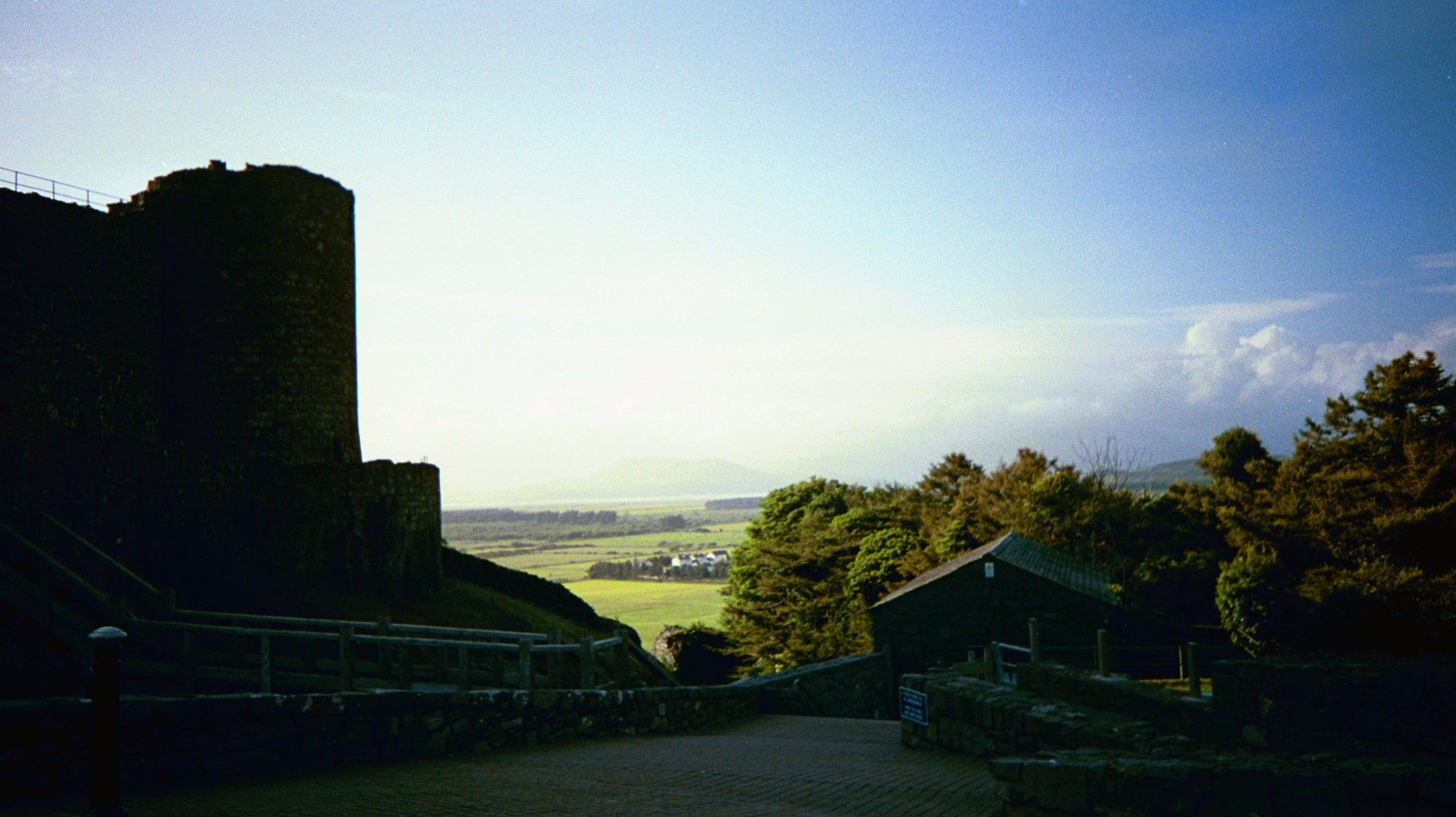
Here is another picture of the castle silhouette looking to the north across Afon Dwyryd estuary toward the direction of Penrhyndeudraeth.

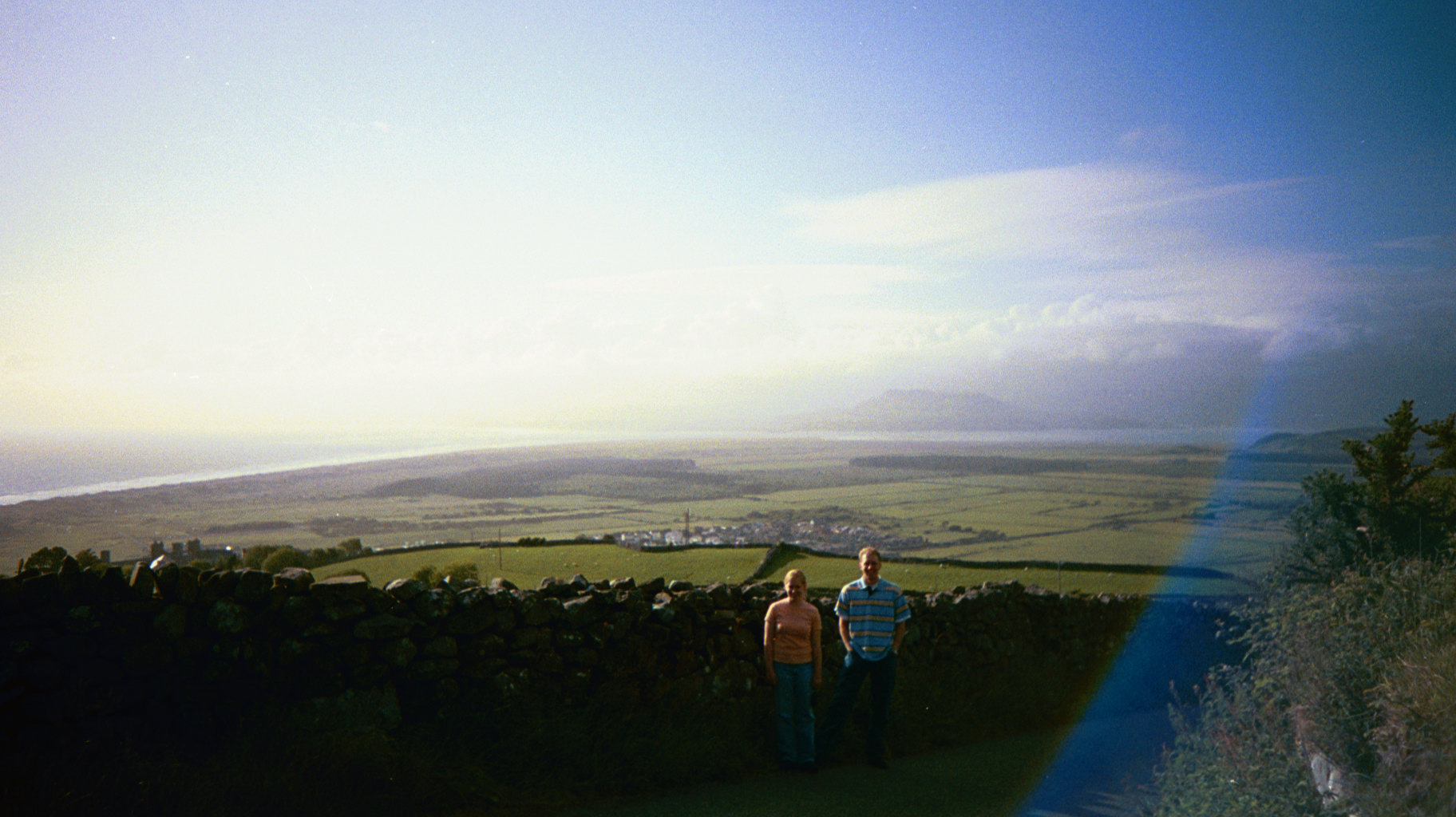
Here is a road above Harlech looking in the same direction.  Notice the amazing, sturdy stone wall.

Brad Hales and his sister, Amy, above Harlech in 2003

This picture is at the same location but shot back towards Harlech.  You can see the outline of the castle towers as well as more of the estuary.

Amy Hales and Paul Ross and the breathtaking Afon Dwyryd estuary in the background

Amanda and I visited again in 2008.  Luckily, we got there with plenty of time to visit and spend time inside.  The day was a bit overcast, but we grabbed some great pictures.  You can also see the considerable difference between the film camera and digital camera!

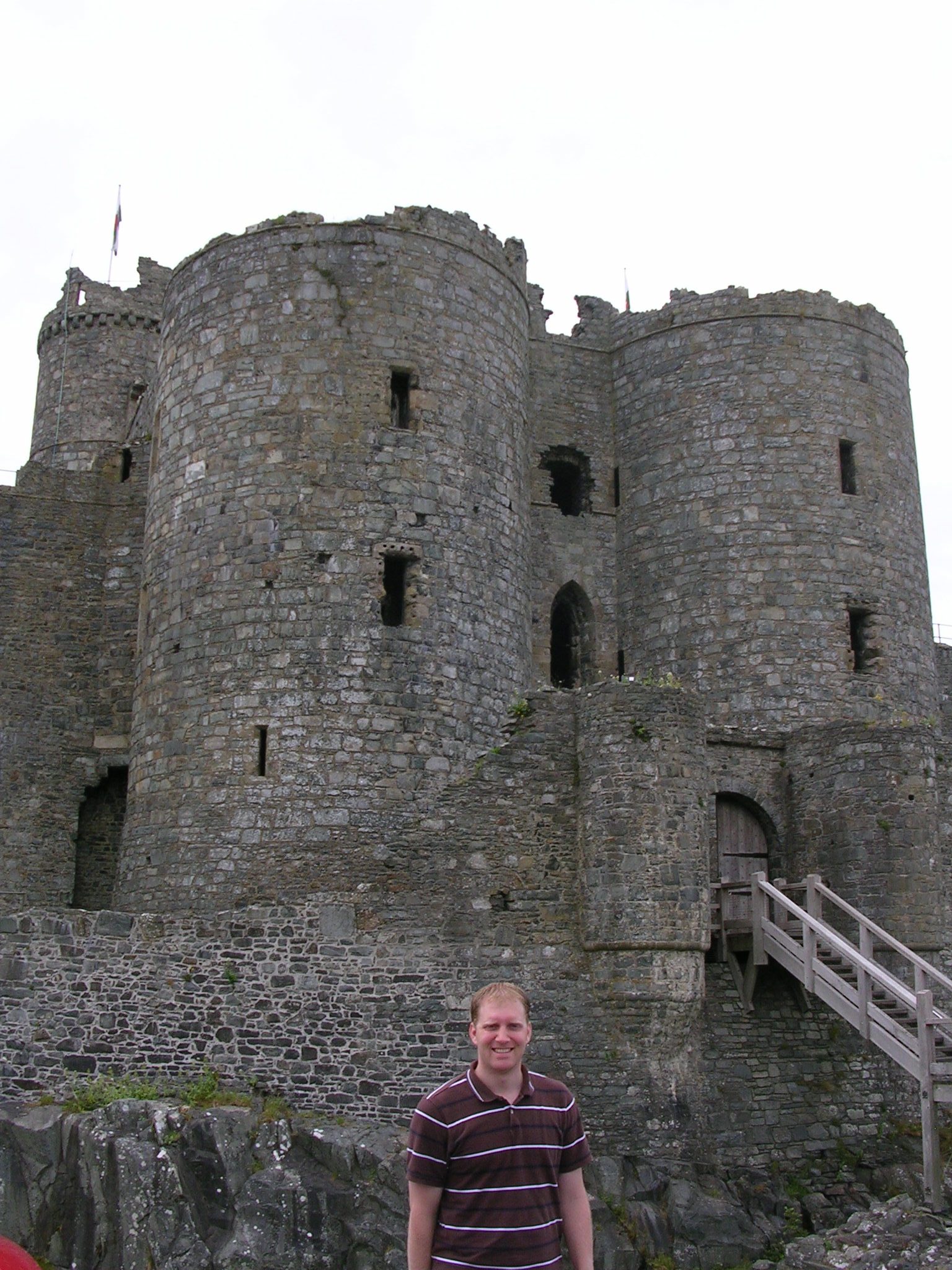
Picture from below of Harlech Castle

This shot gives you a view of the eastern side with the imposing towers, the gate, the rocky chasm between and gives some impression of how formidable this castle would have been to attack.  Ignore the goober in the picture.

Harlech gate and guard towers

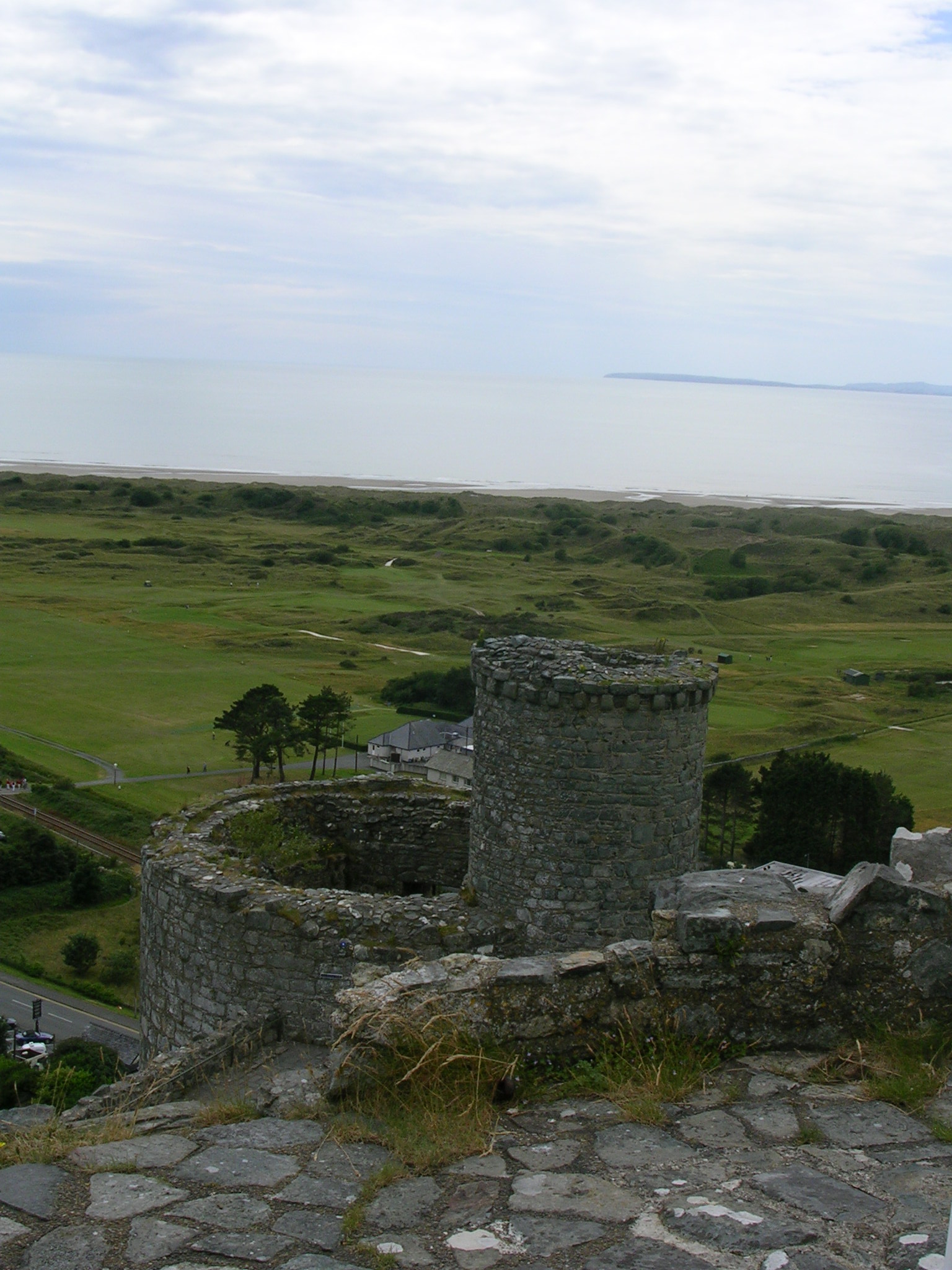
When Harlech was built over 720 years ago it was on the Irish Sea.  Notice how far the sea is from the castle now, about a mile away.  This was taken from one of the castle’s walls.

The Irish Sea from Harlech Castle

View of the Irish Sea from one of Harlech’s towers

Another picture, looking south along the western wall.

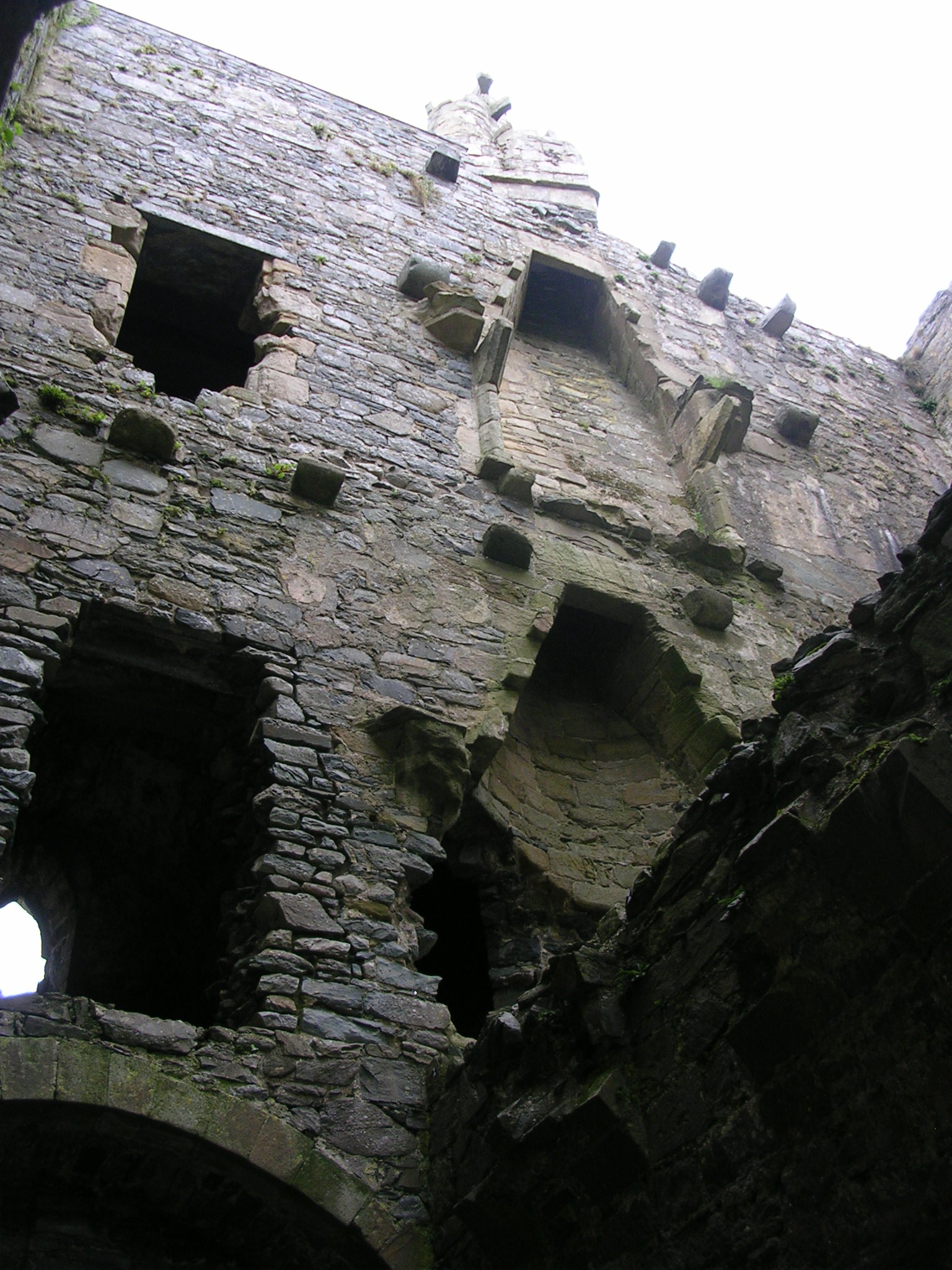
A shot looking up at the fireplaces of two other floors.  The majority of all woodwork is missing in this castle and the stone is all that remains.

Fireplaces

You can see the holes in the walls where beams would have been placed in times past.

Harlech Walls

Looking down into the hollow walls of Harlech castle from one of its towers.

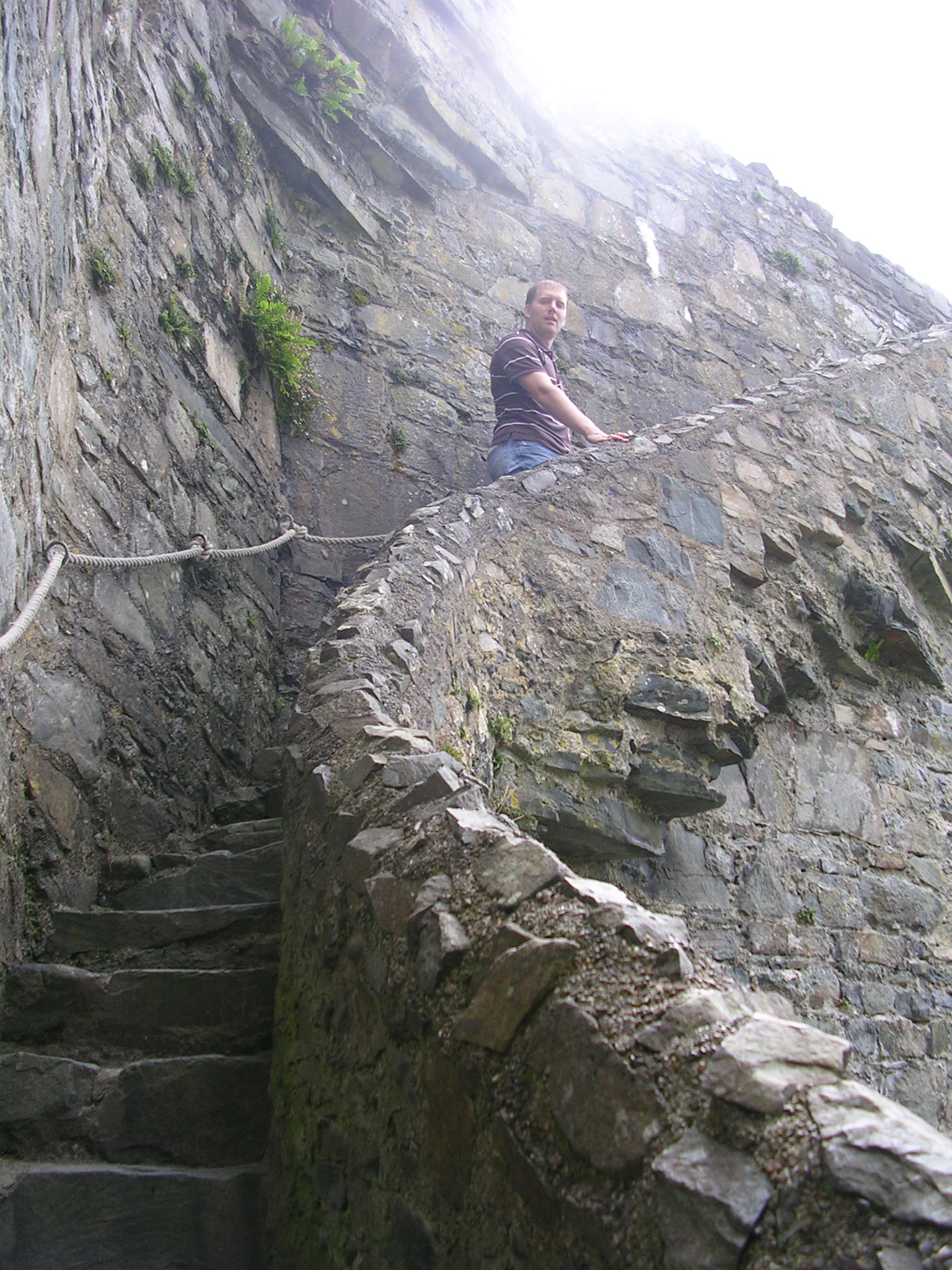
We got quite the kick out of this sign.  Would someone really take children on a castle wall?  It looks like adults falling off walls or down the stairs, not children.

Classic Sign

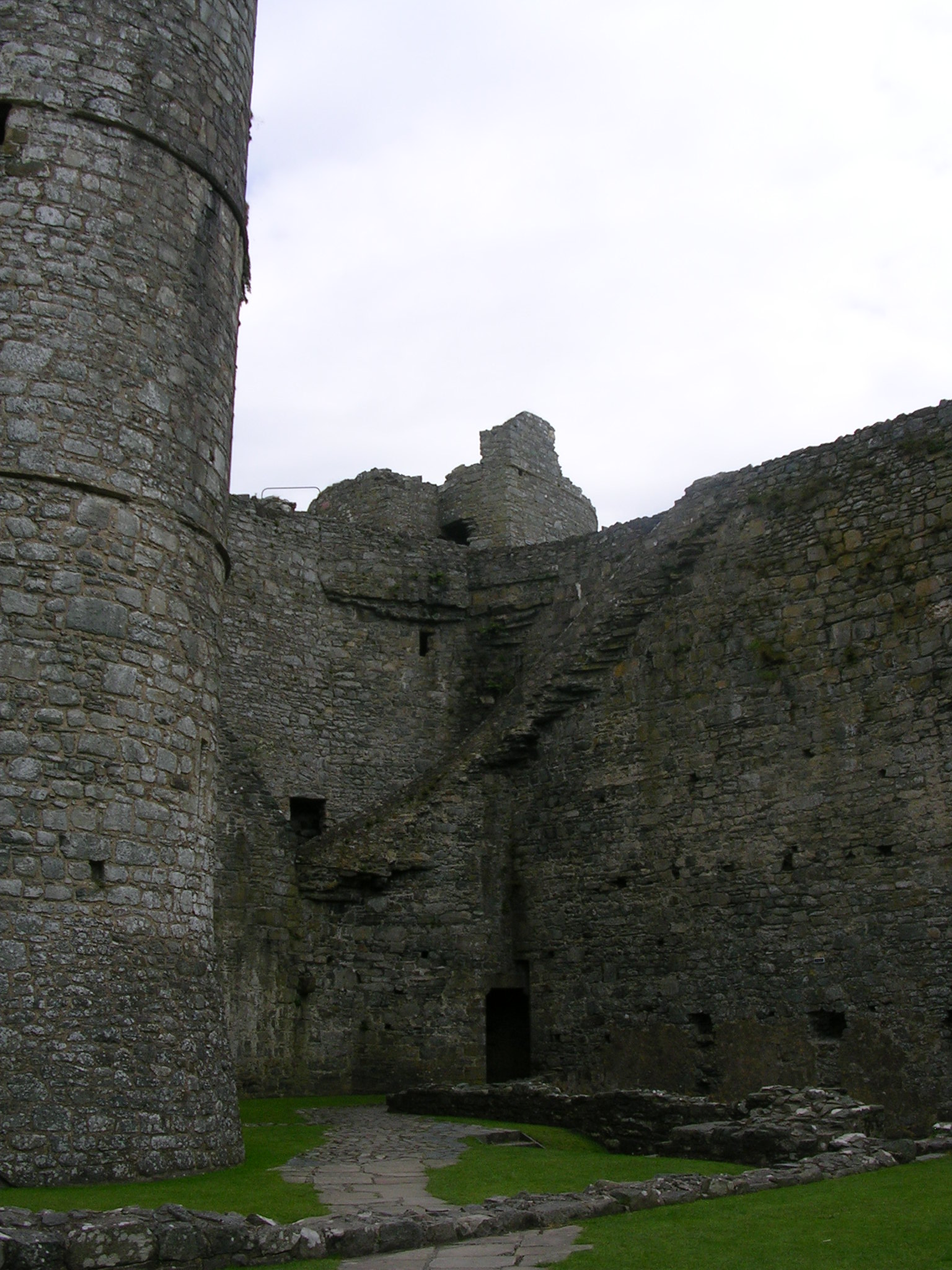
These stairs were pretty steep.

Here is one of the walls.  Funny how no wood in the castle makes it 725+ years but yet a tree can grow out of a tower hundreds of feet up.

I know you are probably getting bored by this point so I should probably wrap it up.  This was the entry to the main quarters (king’s?).

The chimneys just came out at the top of the walls.  I guess at least the sentinels had somewhere to stay warm when on watch.

Inside one of the towers where the water seepage had worn away the wood and stone over the years to leave this intimidating scene.

One last picture looking out toward the Afon Dwyryd estuary.

Thanks to my cutie for traveling to Harlech with me, I love you!  (She is standing on a wall chimney, that is why she is my height.  The southern shoreline is behind us.

Albert Docks


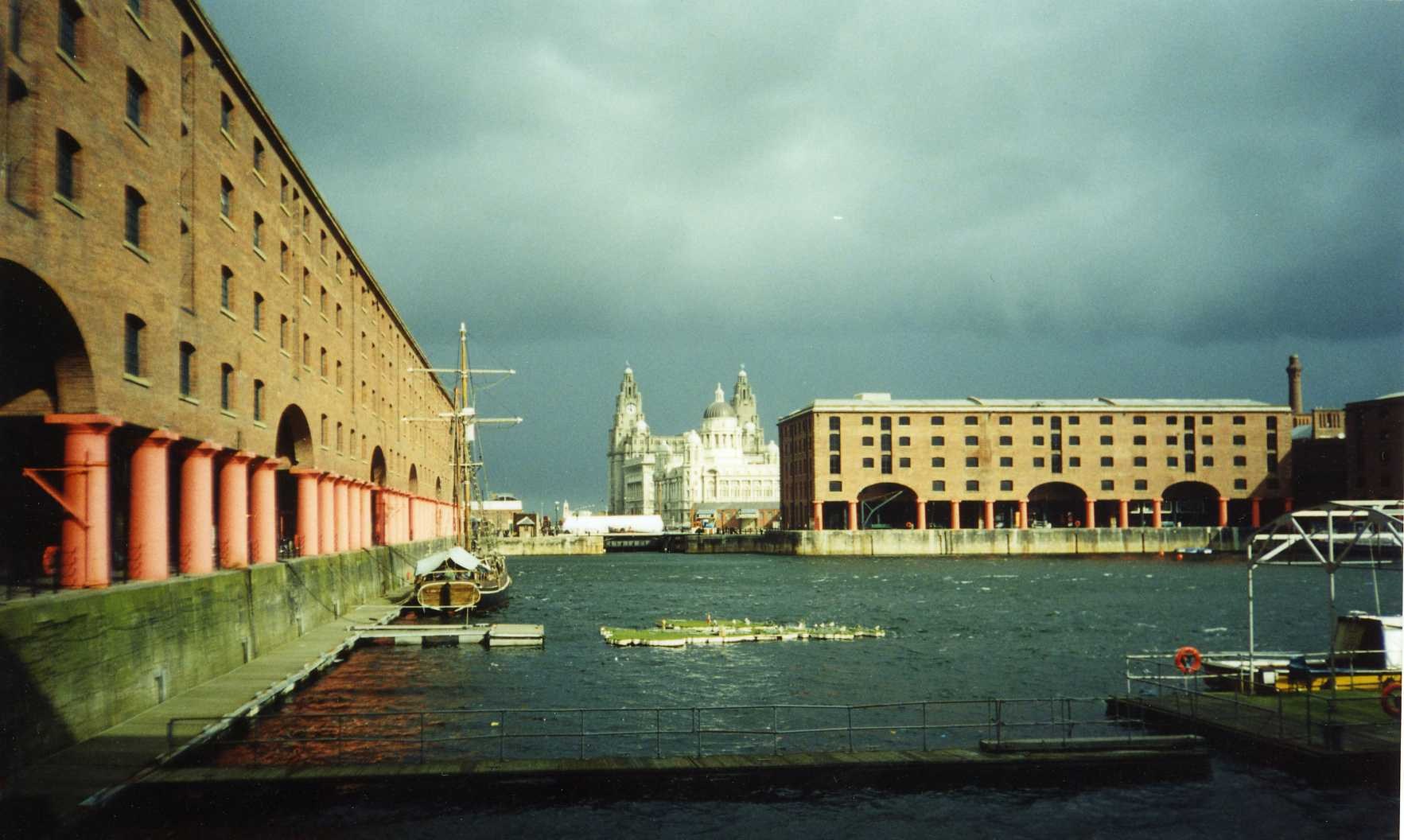
As I have written some of the histories already posted and continue the drafts of a few for later, I am surprised how many of my ancestors came through Albert Docks in Liverpool, England.  Most of my ancestors that came to America during the 1800’s came in the latter part of the century and passed through this series of warehouses/docks. Doing some research, this was the first non-combustible warehouse system in the world.  The world’s first hydraulic cranes were also used here.

I took this picture on 13 April 1999 as we visited as a part of our mission tour.  Since so many church history sites were in our mission, we were taken on tour and the Albert docks were included.  At that time I had no knowledge that a single one of my ancestors walked these very stones.  Since a good portion of my ancestry is German, I assumed they would not have traveled through Liverpool.  I was wrong.  As far as I can tell, every ancestor that immigrated in the 19th century came through this very port.  German, Swedish, Norwegian, English, Welsh.  One was even married on the water as they waited for their turn to leave the port.

Looking back, I wish I had known this at the time.  But still, I am glad I have a picture from that day I visited.  You can see The Three Graces between the Albert buildings.  The Royal Liver Building is the farthest with the clock tower.  This building also has the storied Liver birds on the top of each tower.  The next building is the Cunard Building, built by the Shipping Company.  The closest one, with the dome, is the Port of Liverpool Building.  All three are pretty buildings and when I lived across the Mersey in Liscard, I would often see these impressive buildings from the opposite shore.  I had no idea Albert Dock even existed then, otherwise I may have snapped a shot of it at that time.

Letter from David Williams to Wales

I just came upon this letter written by David D Williams to his sisters in Wales.  In it he describes his trip to Utah from Wales.  The letter was originally written in Welsh.  I have written of David and his immigration in his biography.  As mentioned in the history, David is the son of Frances Henneys and John Williams born in Wales in 1832.  He immigrated to Utah in 1864.  I am including a picture of some rolling hills in Southern Wales that I took with some friends in 2003.  Funny how he thinks how beautiful Utah was (then), and yet we feel the same about his Wales!

Ogden City

October 13, 1864

My dear sisters,

I have reached the end of my journey in the valley of Great Salt Lake well and happy, and I hope that you are the same. I shall now give you some of the history of my trip from the Old Country. This little letter is not large enough to describe all I saw, but I shall do my best to describe the outstanding features as briefly and inclusively as possible. We started from Aberdare on May 17th for Merthyr, where we stayed overnight. Next morning, the 18th, we started for Liverpool. After leaving the old rugged, craggy mountains of Wales behind us, we came to the flat plains of England and there saw the most desirable land such as we had never seen in all our lives. It was full of apple trees, plums, pears, and all kinds of other fruit, nature was a feast of beauty, all kinds of beautiful buildings of red brick. By evening we reached Liverpool. (One-half dozen words obliterated by creased paper) the streets were all paved. There is no time now to give details about this place. Next day we went down to the docks, and there we saw the General McClellan. This immense vessel laid about 70 yards long carrying 2000 tons. After getting everything in order, the steamboat pulled us on to the river, where we saw the great eastern, the world’s chief wonder. May 21st, we set sail for New York across the Atlantic Ocean. We saw many large fish. About the banks of Newfoundland we saw many large icebergs, some of them 200 feet high, and the portion above the surface of the water was but a third of the whole, so this enormous block would stand 600 feet high if it were all visible. We had a successful journey. We got one bad storm for about 24 hours. We were on the ocean for a month and 3 days. After reaching New York, we were taken to customs offices where all immigrants have to pass. After getting all in order there, we started out by steamboat on the river Genessee for about 160 miles to Albany. Here we took the train, and away we went for hundreds of miles along the borders of Canada. Then we crossed the river to St. Clair and through a part of Canada, then recrossed the same river to the United States and on to Buffalo. Here laid a large lake called Buffalo Lake. I don’t know its size but it was scores of miles long. After changing trains, we went on to Quincy. This lies on the bank of the Mississippi River. We crossed this river to the State of Missouri. Here is the most delightful land we ever saw, vast plains for hundreds of miles. I did not see a single mountain during my journey from New York to Wyoming (in Nebraska). We went along the banks of Mississippi for about 900 miles to St. Joseph. This was as far as we went by train. We were on the train for 11 days and nights, and were very tired for want of a place to sleep, having traveled 2000 miles.

From here we went by steamboat on the Missouri River for 200 miles to Wyoming, and here we came to the plains. We stayed in Wyoming for 3 weeks. July 21st we started over the plains, a company of 500 to 600 people, men, women and children, and about 80 wagons. After traveling on the plains for about 11 weeks, we reached the City of Great Salt Lake on Oct. 4th. This is the most beautiful city I ever saw in my life. It is full of apple trees, plums, pears, peaches, damsons, grapes, melons and all kinds of other fruit. The buildings are large and beautiful, and you seldom see a double house, but each house separate with a garden adjoining. The streets are all straight for miles, not a crooked street in the city. I stood by Brigham Young’s house facing the south, and I could see 20 to 30 miles of perfectly straight road. We can see for 80 miles here better than you can see for 20 there. After being here several days, I learned that father and my brothers were in Ogden City, 40 miles away, and that Richard is coming down to the festival (conference). This gave me no small amount of joy, for this was the first news I had of my father that he was alive. I saw Richard in the city, and when the festival was over, we started for Ogden City. John has moved out 200 miles from here, and he and his family were well when last heard from. Father is well and contented and he was as glad to see me here as I was to see him, and to hear that you are all well there. They want you to come next time and would love very much to see you. This is three times as good a country to live in if you care to work. I know that Sally is unable to come without help, but if Mary is able to come if nothing untoward has happened, and I would advise you, Mary, to come out next time, so we can later help Sally and her family. I would like to know whether or not you intend coming next time so I can give you a few instructions. It is a great country if one is wise to take advantage of the elements, and to do everything for one’s self, for which I can greatly commend these people, more so than the people of the old country. The women make all their own clothes – weave, roll, and everything; it’s a poor place for a tailor to live on his trade. They also make soap, candles, vinegar, yeast and everything for their own use. These people raise the material for sugar, and make molasses like the tressels you have, except that it is much better. The sugar is all in this molasses, and the refuse that comes from this is what you have for treacle. There is nothing else in particular that I can add at present. Father sincerely sends his regards to you, to his old neighbours, and to all the Saints, and hopes to see some of their names in the paper as immigrants the next time. Richard sends his regards to you and to all the saints and his acquaintances. Give me an answer as soon as you can, so I can have sufficient time to write back if you should come out next time. If you want to know anything, ask in your letter and I shall answer it with pleasure.

This briefly from your dear father and your brothers, John, David and Richard Williams.

Please give this letter (accompanying this one ) to William Rees.

A few words to William Rees, my brother in the gospel. I have taken my pen in hand to send you a few lines, hoping you are well and happy, and enjoying the comforts of the gospel, as I do myself at present; and I thank God for that. I intended to give you a little news of the plains and its creatures. But from what we hear, it is not likely there will be an immigration over the plains for some time, because the Indians are rather cruel and are at war with the United States. We were on the plains for 11 weeks because of difficulties. We joined another train (wagon train) and in all we had 150 wagons with about 1200 people; our train was about 4 miles long. The last train of saints came to Salt Lake City on Oct. 20th. Trains of gentiles had joined them along the line, and I heard people saying that they stretched over 10 miles while traveling. Eighty of the rich people of Salt Lake City were called, last festival (conference) to go south 600 miles and raise cotton, and the rich everywhere are being called on to help; and there is also a widespread call for people to go there to settle. They are going to build ships on the Colorado River, for that is the way the next immigrants will come, around the Cape Horn. I have to finish at present for want of space on this paper, with fond regards to you, to Thomas Griffiths and his family, to Mary Hoskins and her family, and to all the saints alike.

This briefly from your old brother in the Gospel, David Williams.

D.R. Mr. David Williams, Ogden City,

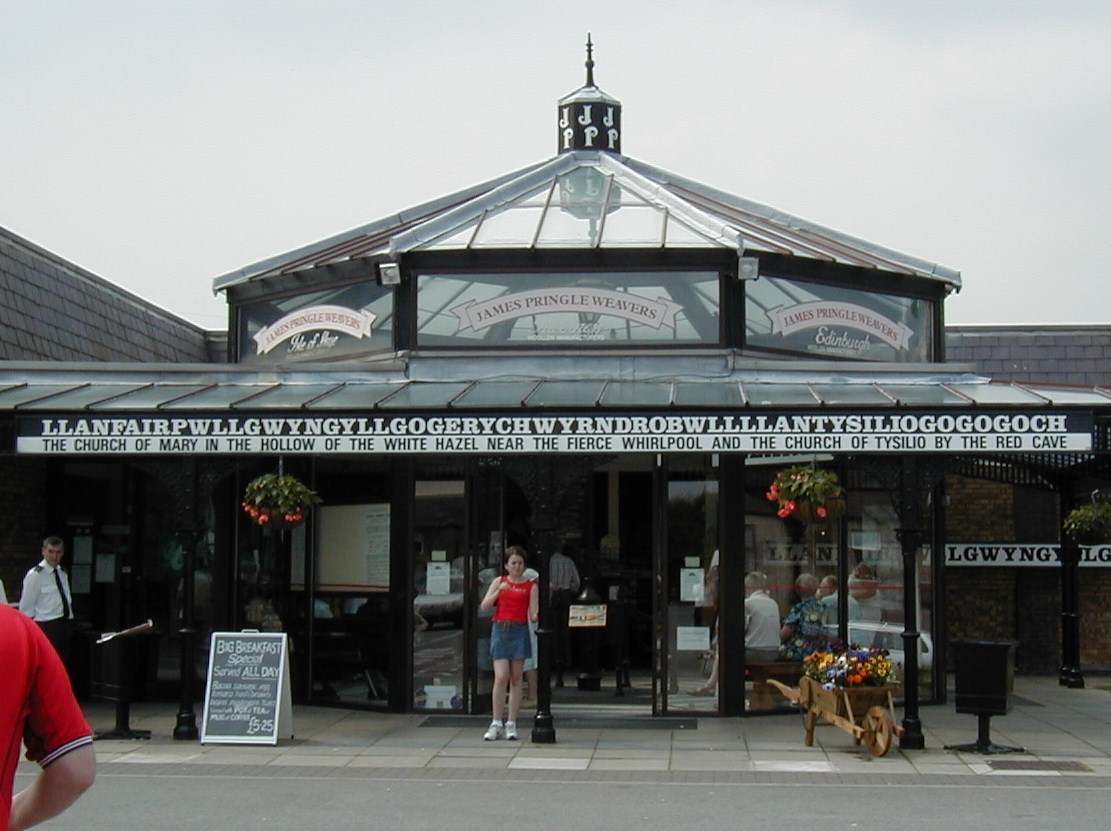
LLANFAIRPWLLGWYNGYLLGOGERYCHWYRNDROBWLLLLANTYSILIOGOGOGOCH

I have previously written of my visit to Llangollen, Wales with the store sign reading “YSIOPFACHGARDIAUWRTHYBONTDROSYRAFONDDYFROWYYNLLANGOLLEN.”  When I came home from the mission, I had the photo above in my collection.  I must admit, I never actually visited the town nor took this picture.  Although, if Amanda and I had realized we were within 3 miles of the town when we traveled to Beaumaris, Wales through Menai Bridge we probably would have stopped.

Unlike YSIOPFACHGARDIAUWRTHYBONTDROSYRAFONDDYFROWYYNLLANGOLLEN, I can point you somewhere on how to say it.  I stumbled upon this little video which is clear on how to say LLANFAIRPWLLGWYNGYLLGOGERYCHWYRNDROBWLLLLANTYSILIOGOGOGOCH and even has a catchy tune if you want to remember it.  One of my missionary companions had a tape that taught the listener how to say it.  I listened to it once and had other things to do.  Now I wish I would have learned.  Maybe some time dedicated to the song will help me sound smart the next time someone asks the most novel place I know of in Wales.

John and Elizabeth Quayle

Here is a photograph of John Quayle and Elizabeth Sharp and presumably one of their children.  Since I have the photograph, I thought I better make it available.

Elizabeth Sharp was born on Christmas Day in 1834 in Misson, Nottinghamshire, England to Thomas Sharp and Elizabeth Cartwright.  If you are interested, I have written about her parents, the family’s conversion to the LDS faith, and the family’s trip to America in her brother’s short biography, Sharp-Bailey Wedding.

Siblings William and Isabella continued west with a LDS wagon train and Elizabeth stayed behind with her brother James in St Louis.  Elizabeth’s mother died in St. Louis shortly after arriving.  Elizabeth and James did not join the LDS faith with their mother (Elizabeth), William, and Isabella.

Elizabeth married John Quayle who was a shoemaker and born 14 March 1833 in Kirkham, Isle of Man.  I have not been able to find this town, so either it is a mistake or misspelling.  The 1860 Census has the family living in Meramec, St Louis, Missouri.  1870 places them in Central, St Louis, Missouri.  1880 finally places the family back in St Louis, Missouri, where both of them died.  By the 1880 Census, John had become a foreman in a pork house, probably the pork house of his brother-in-law James.  I have a photo of James and his short biography will be available soon.  The family seemed to have some difficulty informing the census takers because their ages jump pretty wildly from the right year to up to nine years in difference.  Further, John Quayle is listed as Isle of Man in one, Wales in another, and even Missouri in another.  We are pretty confident in the date given above, but it is not perfectly sure.

John and Elizabeth have seven children that we are aware of, some believe there is another named Thomas but we cannot link him with any clear documentation.

John Quayle (Jr) was born 5 November 1855 in Illinois and died 13 May 1910 in St. Louis.  He was buried on the 15th in the New St. Marcus Cemetery in St. Louis.  He married Laura Breitenstein 19 June 1833 in St. Louis.

James H Quayle was born 15 February 1858 in St. Louis and 6 September 1864 in St. Louis.  He is buried in the Bellefontaine Cemetery in St. Louis.

Isabella Quayle was born October 1861 in St. Louis and died 12 September 1864 in St. Louis.  She is also buried in Bellefontaine Cemetery.

Margaret Quayle was born July 1864 in St. Louis and died 25 April 1866 in St. Louis.  She is also buried in Bellefontaine Cemetery.

Ida Quayle was born in 1867 and died 13 November 1888.    We do not know much more.

Emily Quayle, also apparently called Emma on some records, was born 29 January 1868 in St. Louis and died 1 February 1928 in St. Louis.  She was buried on the 3rd in St. Marcus Cemetery.  She married Gustavus Crause.

Elizabeth Quayle was born December 1870.  She married William Duggan.  We do not know much else about this family besides this little bit shared with family near the early 1900’s.  She died 25 June 1903 in St. Louis.

In 1878 the family lived at 1286 S 8th St in St Louis.  In 1880 they were living at 1727 Decatur in St. Louis.

John died in 1894 after falling off a load of hay.  We do not know much more than this and it does not appear he is buried with the rest of the family in Bellefontaine Cemetery, if so, it is misspelled or under another name.

Elizabeth lived with her daughter Elizabeth, known as Lizzie to differentiate, until her passing.  Elizabeth died of typhoid fever 6 November 1902 in St. Louis.  She was buried the next day in Bellefontaine.