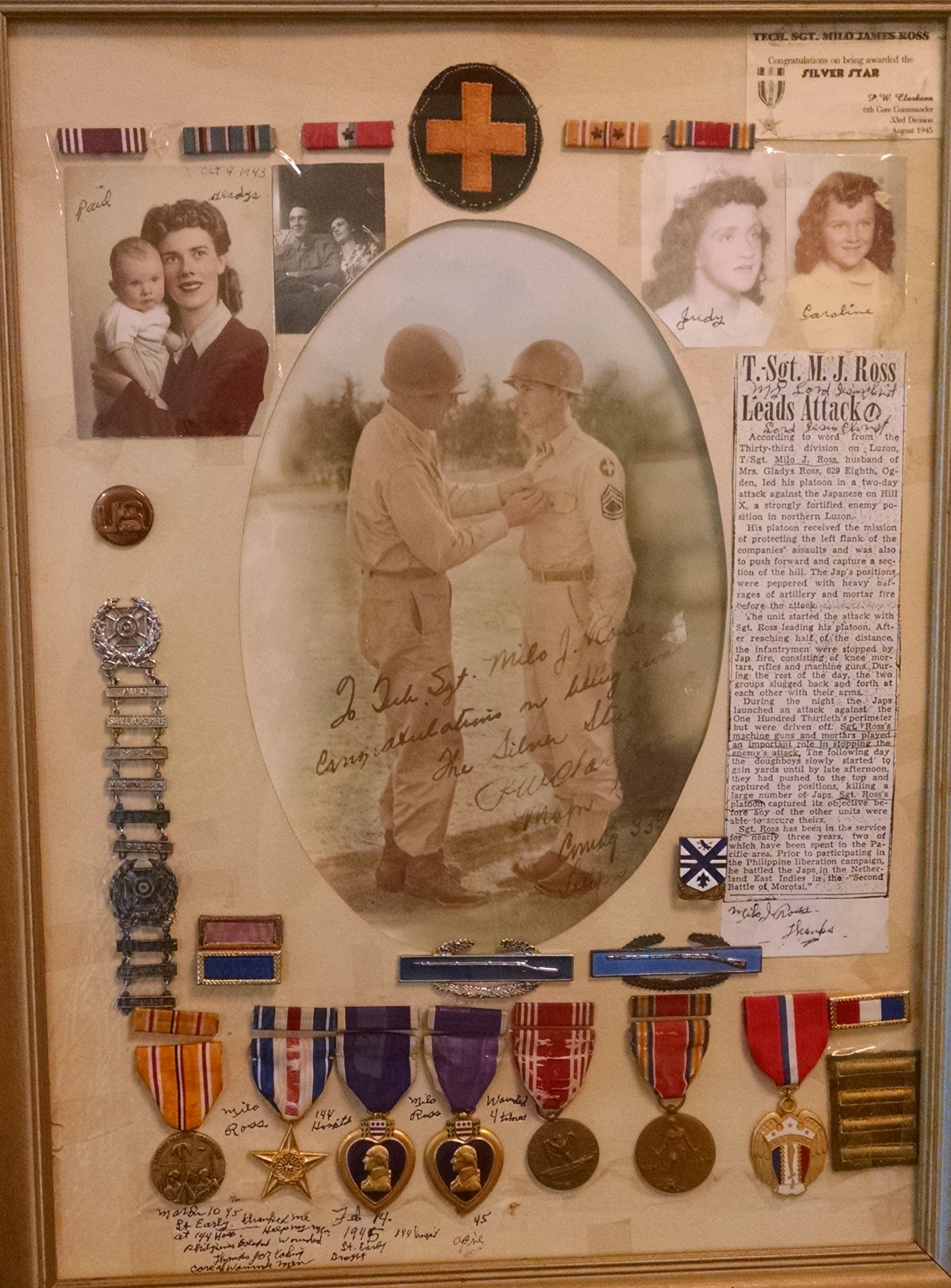
I previously wrote about the plaque that hung on my Grandparents’ wall in Plain City, Utah. The photo in the center of the plaque showed Milo James Ross receiving the Silver Star by Major General Clarkson.
Milo James Ross WWII medals, clippings, and photo
Before Grandpa passed away, the Army was gearing up to do a more formal presentation of his medals as some of them were just given to him without much fanfare. Apparently some of them deserved a bit more formal recognition. Initially, we were gearing up for Independence Day 2014. However, some things grind slowly forward. We were then talking about some dates in August 2014 and September 2014. Unfortunately, Grandpa passed away 17 July 2014.
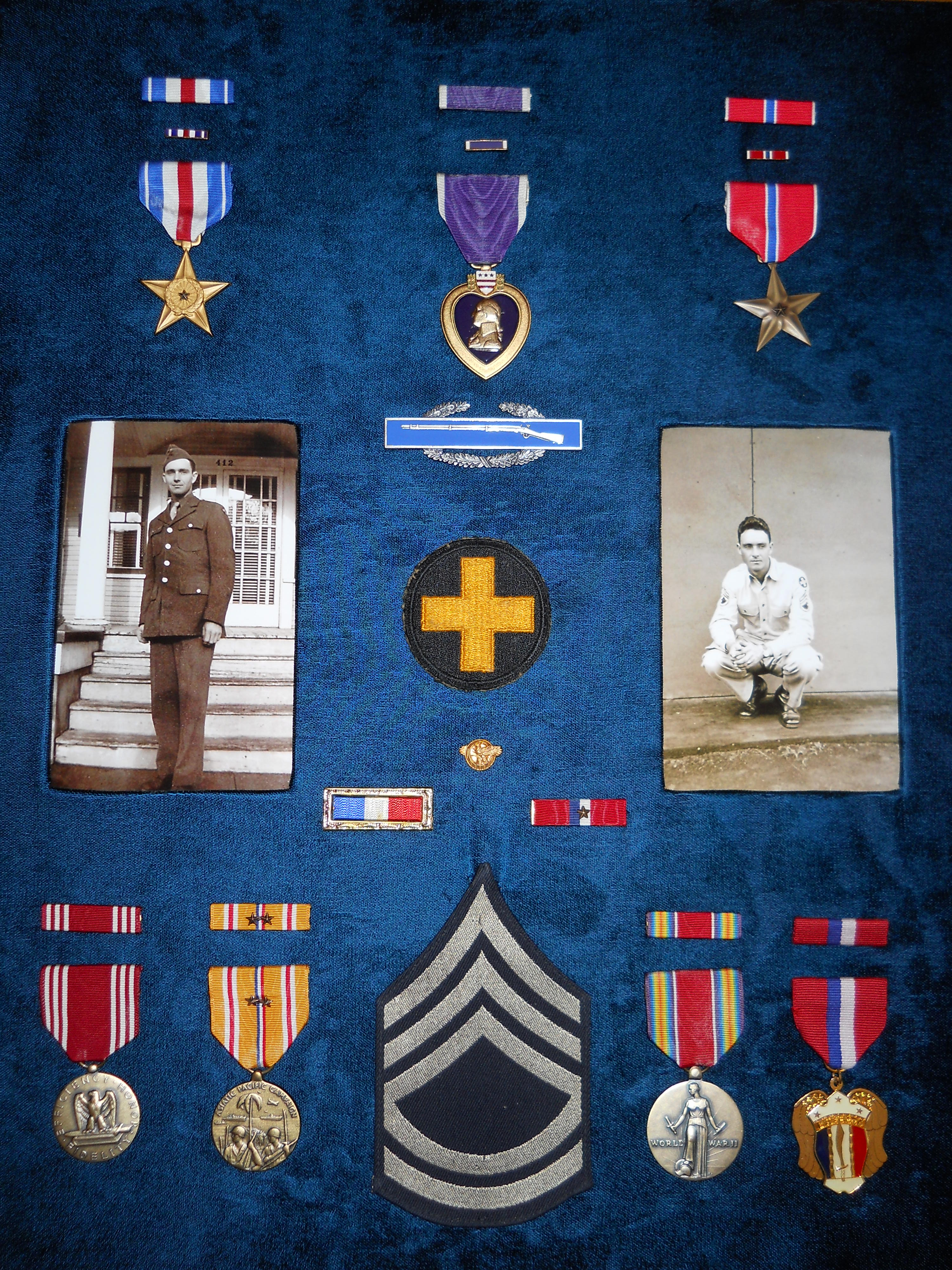
In preparation for the more formal presentation, the military gave new copies of some of the medals he had already received and the others he had not yet received. We took those and put them in a shadow box for his funeral. Here is a photo we took of the box before putting it behind glass.
I am not clear on the medals and what they each mean. His obituary lists a number of his medals that were awarded to him.
His obituary included this Army service information:
“Milo enlisted in the Army in October 1942. He served in the 33 rd Infantry Division, 130 th Regiment, Company C. He trained in weapons and earned his expert ranking. He arrived in Hawaii in July 1943 and received the announcement that his son, Milo Paul, had been born. He served as part of the Philippine invasion force and they fought through the jungles and liberated Baguio City. He was injured five times, one while tending to other soldiers awaiting medical attention.
“He was present at the Japanese surrender at Luzon as a Technical Sergeant in June 1945. He received two purple hearts and the Silver Star for his service at the end of World War II. His Company received a Presidential Citation for outstanding performance during armed conflict with the enemy in efforts to seize Hill X in Bilbil Mountain Province. At the time of Milo’s death, the military was preparing to award him another Purple Heart, another Silver Star, Bronze Star, Good Conduct Medal, Asiatic-Pacific Campaign Medal & Bronze Star, World War II Victory Medal, Combat Infantry Badge 1 st Award, Philippine Liberation Ribbon and Bronze Star, Honorable Service Button for World War II. He was also to be awarded the Philippine Liberation Medal and Republic of the Philippines Presidential Unit Citation Badge from the Philippine Government.
The UofU Commemoration placard for Grandpa in 2009
The 2009 University of Utah Veterans Commemoration included this excerpt about Grandpa:
“Milo James Ross was drafted into the army shortly after the attack on Pearl Harbor. He was sent to Fort Douglas and shipped out that same day to Fort Lewis, Washington. For the next two months, he went through a weapons platoon crash course. He trained on machine guns, mortars, and hand launchers. Ross quickly earned expert ranking on these weapons. Following basic training, Ross’s unit was sent to Barstow, California. Their training focused on digging fox holes.
“Ross soon shipped out to the Hawaiian Islands, leaving behind his young pregnant wife. As his unit landed on the big island of Hawaii on July 4, 1942, a voice on the loud speaker said, “Sergeant Ross, congratulations. Your wife and son are doing well, and, one more thing, before you get off the ship you and your men have guard duty for the next four hours. Welcome to Hawaii.”
“After a long training in Hawaii, Ross’s unit, “C” Company, 130 Infantry Regiment, 33rd Infantry Division, became part of the Philippine invasion force. They hit the beach in Lingayen Gulf and intensely fought their way through jungles and mountains to the inland city of Baguio.
“Ross was wounded while tending other soldiers who were awaiting medical attention. He spent two months in a hospital while recovering from shrapnel wounds all over his body.
“The day after Ross returned to his unit, they jumped into three months of fighting that only ended with the Japanese surrender at Luzon in June, 1945.
“Company C, 130th Infantry Regiment was awarded a Presidential Unit Citation for outstanding performance of duty and superb courage during armed conflict with the enemy in their efforts to seize Hill X in the Bilbil Mountain Province in the Philippines. For his service, Ross was awarded the Purple Heart and the Silver Star.
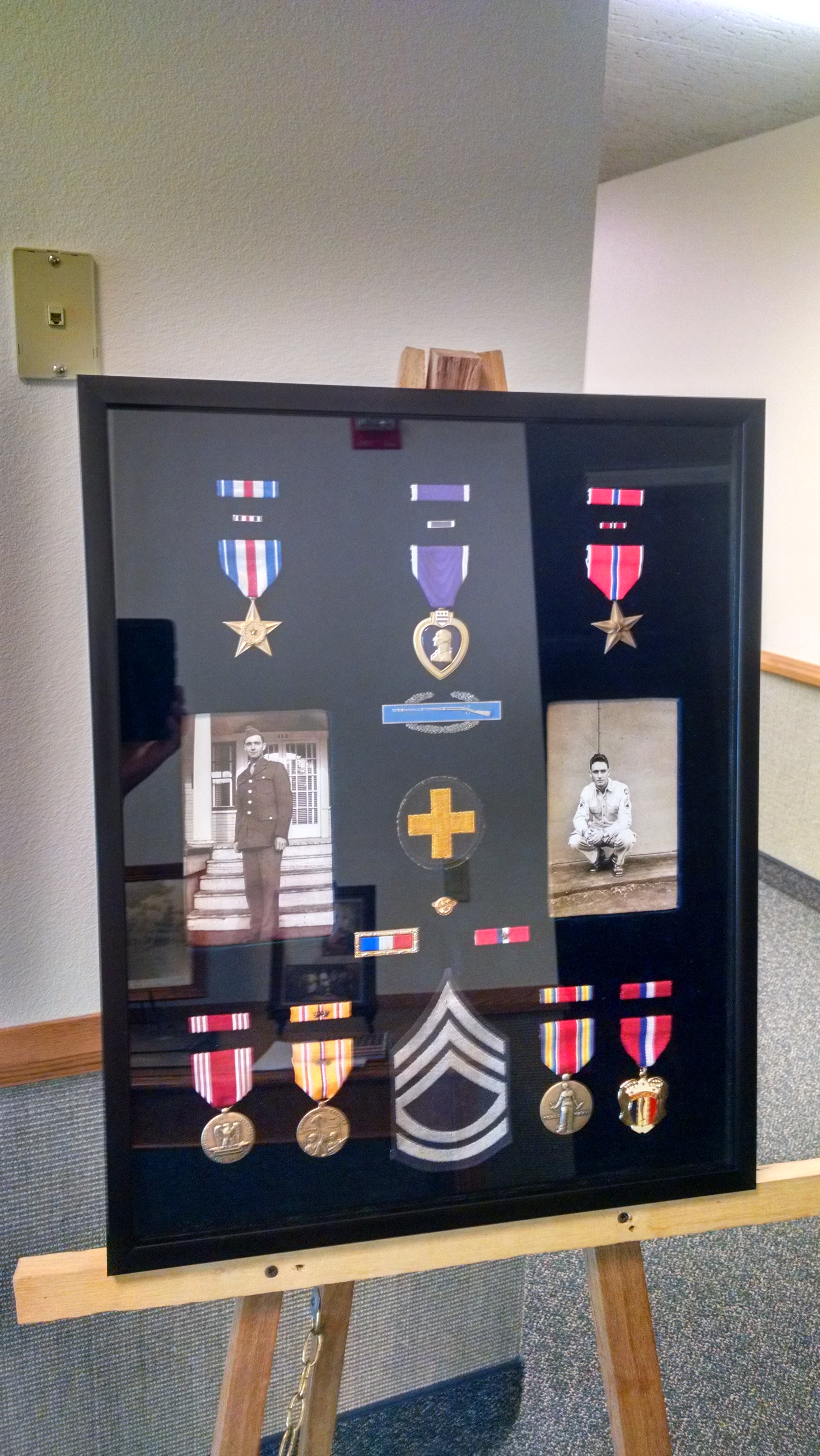
The same shadowbox on display at his funeral
BYU Library – Special Collections has this biography and reference citation of Grandpa:
“Milo James Ross (1921-2014) was a World War II veteran who fought in the Pacific battles.
“Milo Ross was born February 4, 1921 just north of Plain City, Utah to John Jack William Ross and Ethel Sharp Ross. When Milo was barely four, his mother passed away in childbirth. Milo and his siblings were cared for by their maternal grandparents until financial strains forced Milo to be raised by his uncle, Edward Sharp, in Plain City, Utah. He grew up farming with his cousins and attended the local schools, eventually graduating from Weber High in 1939. In 1940, at a Plain City celebration, Milo met Gladys Maxine Donaldson and two years later, on April 4, 1942, they were married in her parents’ home in Ogden, Utah. The October of that same year, Milo enlisted in the United States Army at Fort Douglas, Utah, becoming a member of the 33rd Infantry Division, 130th Regiment, Company C. After training they were sent to Needles, California handling freight, setting up tents and digging trenches and then on to Hawaii for further training. When they arrived in Hawaii, on July 4, 1943, Ross was informed his son, Milo Paul, had been born that very same day. Ross’s company was assigned to become part of the Philippine invasion force where they fought in New Guinea and Luzon. They fought through the jungles, liberated Baguio City, was present at the Japanese surrender in Luzon in June 1945, and left Ross injured on five separate occasions.
“Milo Ross was honorably discharged in September of 1945. He was honored with two Purple Hearts, the Silver Star, and the Presidential Citation for outstanding performance. Returning home, Milo worked remodeling homes. He also had two daughters: Judy Ethel and Caroline. Gladys and Milo solemnized their marriage July 2, 1976 in the Ogden Temple of the Church of Jesus Christ of Latter-day Saints. Gladys died in 2004.
“Milo James Ross died in Plain City, Utah on July 17, 2014 at the age of 93.
Citation:
“Standard examiner, via WWW, March 2, 2018 (Milo James Ross; born February 4, 1921 in a log cabin north of Plain City to John Jack William Ross and Ethel Sharp Ross; mother tragically died from childbirth in 1925; Milo and his siblings lived with Ross grandparents until the costs proved too great and his Uncle Edward Sharp raised Milo in Plain City until adulthood; He attended schools in Plain City and graduated from Weber High in 1939; farmed with sharp cousins; Gladys Maxine Donaldson at a Plain City celebration in 1940; married April 4, 1942 in her parent’s home on 8th Street in Ogden; enlisted in the Army in October 1942; 33rd Infantry Division, 130th Regiment, Company C; Philippine invasion force and they fought through the jungles and liberated Baguio City; injured five times; present at the Japanese surrender at Luzon as a Technical Sergeant in June 1945; two Purple Hearts and the Silver Star; Presidential Citation for outstanding performance; He returned home in 1945 and worked remodeling homes; children Milo Paul, Judy Ethel and Caroline; solemnized their marriage July 2, 1976 in the Ogden LDS Temple; died in Plain City on July 17, 2014)
“UPB files, March, 2, 2018 (Milo James Ross; born Feb. 4, 1921 in Plain City, Utah; Joined army Oct. 1942 at Fort Douglas, Utah; fought in new Guinea and Luzon; sent to Needles, California handling freight, setting up tents and digging trenches; sent to Hawaii and landed July 4, 1943 where he received news his son had been born that very same day; wife passed away in 2004 and daughter on 1998)
The new medals shadowbox on display at his funeral
This is another chapter of the Jonas history book compiled by Carvel Jonas. “The Joseph Jonas clan of Utah (including – early Jonas family history; early Nelson family history)” I am re-posting this as I received much better photos of Joseph and Annie, so those are now included!
Joseph and Annie Jonas 1883
“Joseph Jonas was born 10 January 1859. We learn the exact date and year because of research and the United States Census. His death certificate has the year of birth as 1858, and the headstone has Oct 1, 1860. I was told that members of the family couldn’t remember if he was born 10/1 – Oct. 1st or 1/10 – Jan 10. Fortunately, when Grandpa Jonas was asked during the 1900 census he told them January 1859. So we know he was born 10 January 1859. Also, all the other census records but one seem to agree. Joseph was born at Frenchtown, Monroe County, Michigan. His father was Hubert Jonas, who was born 8 Oct 1816 at Kirchheim, Rheinland, Prussia (Germany). His mother was Maria Catharina Schumacher, who was born 13 September 1815 at Oberdrees, Rheinland, Prussia. Joseph was the sixth and last son of a family of all boys. These three older brothers were born at Rheinbach, Rheinland, Prussia. These three older brothers died before marrying. Joseph lived with his family on the family farms in Michigan until 1879. Joseph was educated in the public schools in Michigan and could read and write. Joseph remained a member of the Catholic Church and went to St. Michaels Parish, which is still located at 502 West Front Street, Monroe, Michigan. This was a mostly German Parish, and this is the Parish that recorded Joseph’s older brother, John who was buried Sept 1870. Joseph moved with his family in 1871 to Ash Township. There the Jonas land was bordered by a railroad on its east border and was probably was the place where Joseph first became introduced to a very long career working on the railroad. In 1879 the family sold their land in Michigan and moved to Nebraska, Platte County, in a place called Pleasant Valley. This is where Joseph’s mother died in March of 1880. Pleasant Valley was a large area of county and the place where Joseph visited is now called St. Bernard. St. Bernard was a German settlement, and is probably the reason that first attracted the family to the area. His father and brother, William, farmed with a man named Michael Jonas. It was first believed that this other Jonas family was a branch of ours. Research proved this incorrect. Our Jonas family owned no land in Nebraska. Members of our family helped this other family to operate their farm for 4-5 years.
“Joseph had a long career working with section gangs for railroads. By the time he was 21 years old, (maybe before this age) until he was about 57 years old he worked for the railroads in section gangs. The only exception was a year and a half when he tried farming. That is over 35 years that we know of. “A section gang was a group of men – muscular, sunburned, streaked with dust and sweat; using crowbars and mallets. They were maintenance crews, the housekeepers of the railroad. All summer they chip away at their allotted section of railroad roadbed, weeding, spraying, burning, resurfacing, reballasting, repairing the ravages of frost and rain. The crew rode a handcar, which was nothing more than a flat, open truck on wheels, which raised about a couple of feet above the rails. It could be lifted on and off the tract by four men, two at each end. The men stood up to pump the handles by which it was propelled” Joseph’s work consisted in “Keeping the track in good level order. He used a jack to raise the sunken rails, shoveling earth beneath the ties to keep them in place. Besides the regular pay, they made overtime when there was any special work to be done, as unloading gravel trains. Only a few hands were kept on past November in the Northwest where Joseph mostly worked, two on a section. The rest got free passes, there being next to no work on the track until the frost breaks up.” Much of the information about section work was adapted from “Section Life in the North-West,” an anonymous article published in “Cornhill Magazine,” in January 1888.
“When Joseph worked for the Great Northern Railroad he had to keep the track he was working cleared when the Fast Mail came. A train that carried the U.S. Mail from St. Paul to Seattle traveled the track once a day. The men had to be careful to get out of the way for the train.
“Research indicates that Joseph used the following tools: claw bars, line wrenches, spike malls, adzes and tongs. Each of the rails were thirty three feet long, and were held together by bolts and fishplates. The men who worked on the railroad comprised the most cosmopolitan crew in American History. They included Civil War veterans and freed slaves, Irish and German Immigrants, Mormons and atheists, Indians and Chinese. They would ride the rails on their hand cars replacing rotting ties, tamp loose spikes and tighten bolts. Joseph’s daily wages averaged in 1892 $1.76 to $2.20 in 1914 a day as a section foreman (statistics found in Railway Statistics of the USA published in 1917).
“Now a little early history about great grandmother, Annette or Annie Nelson Jonas. Annette Josephine Nelson was born 18 November 1864. Logan 4th ward records tell us she was given a priesthood blessing 2 Feb 1865. She was born one month after her parents had arrived in Utah from their immigration from Sweden. She was born in a temporary dugout on College Hill, Logan, Utah. Her parents were Johannes Nilsson, (He later changed the last name to Nelson, and also used Neilsen at one time). He was born 4 Oct 1827 in Tonnersjo, Hallands, Sweden. Her mother was Agneta Bengtsson who was born 9 December 1832 in Oringe, Hallands, Sweden. Annie was the sixth child of her family. Her husband, Joseph, was also the sixth child in his family. She had ten siblings, 5 sisters and 5 brothers. When Annie was born it was raining, so members of the family put pans on the bed to catch the water as it dripped through the sod roof. Annie’s older brother, August, told about this day in his life history. The following is a quote from he history. “We were just moved into your home when Annette Josephine was born…She was the first child born in the Logan fifth ward. Mother was alone except for James (an older brother) and me. James sent to fetch father who was threshing wheat for John Anderson. When he arrived with a sister, mother had already taken care of herself and the baby.” The Nelson family had joined The Church of Jesus Christ of Latter-day Saints the year they left Sweden. They had built a temporary dugout until they could build a wooden cabin the following year. That winter was very hard for everyone in the area. An early January thaw had caused the snow to melt and the water inside the dugout was knee deep. Boards were used so the family could walk without wading in the water. They bailed out the home and went back the same night.
“When Annie was a baby the following events happened. “When mother went gleaning, I (August) had to stay with the baby (Annie). One day I left her on the bed while I went out to play. She rolled off the bed and got a big lump on her head. She was still crying when mother came home.” When Annie was almost nine years old her mother died, 4 November 1873. It was just about 14 days before Annie’s ninth birthday. And just six days before her birthday her infant brother, Moses, died. Moses was less than a month old when he died 12 November 1873. When Annie was about 11 years old her father remarried. The three younger children were raised by a stepmother. We have no details now, but life was very unpleasant for these three children because of the relationship with this stepmother. This marriage didn’t last more than eight years. Before Annie’s mother died she said to her son, “August, if I die, I want you to take care of the children.” He continues, “That had always been my job around the house. Later one evening mother kissed me and said, “You have been a good boy. God bless you.” With a smile she turned her head and breathed her last. God alone knows what little children lose when mother is gone. While she was sick I heard her say, “I don’t want to leave my little children.” Little did I know or realize what home would be like without her. She was more than ordinarily ardent and spiritually minded with high ideals, had a comprehensive knowledge of the gospel.”
“Annie had light red hair and blue eyes. Annie’s mother her sister Abigail, and her first daughter, Margaret, all had red hair. Annie wasn’t very much taller than five feet, and was slender.
“While Annie was a teenager she went to work in a boarding house. She didn’t like living at home with her stepmother and her step siblings. While she was working at the boarding house she met Joseph Jonas, who was renting a room. Joseph had a dark, wavy hair and brown eyes. During their courtship Annie received a letter from her brother, August. He said, “I suggested to her that she marry a Mormon boy. Her reply was that Mormon boys were not as genteel as a Gentile.” With Annie’s unhappy life at home she must have thought marriage would be a better life. Annie was married the same month she turned 19 years old. Joseph was 24 years old, two months shy of being 25 years old when they were married. They were married November 1883 in Logan, Utah. Since Annie was born in November she may have been married on her birthday, but the day isn’t known. Joseph was 5 years older than Annie. Their first child was born 17 Jun 1884 in Logan, Utah. I am told Annie’s children would come early, before the normal nine months. Shortly after their first child was born Annie and Joseph moved to central Washington State near or at Ellensburg, Kittitas County. That move was made before the birth of their second child, Mary, who was born 17 Jul 1885. The rest of their children, seven in total, were all born at or near Ellensburg. They eventually lived in several, little towns near Ellensburg, such as Bristol in the 1890’s, Thorp in 1901, and Cle Elum 1900. Annie and Joseph moved to Washington because Joseph’s father and brother, William, had moved there from Nebraska about this same time in 1883-84.
“By 21 Jun 1887 Joseph and his brother bought 240 acres of land. Their father, Hubert, was living with the two families. An 1885 census of Washington Territory has William’s wife, Emma, Joseph’s wife, Annie, our great grandmother, living at the same place. The land was about three miles south east of Ellensburg according to the speedometer on our car when we drove the distance. These two sister-in-lays, Annie and Emma, would help each other take care of their babies. Annie’s daughter, Rosa, said they washed the clothes on a washing board and then would take them, especially the diapers, down to the creek. The clothes were rinsed to get all the soap out of them. Then they would hand the diapers over some bushes to dry.
“The families shared responsibilities. Rosa and some of Uncle Williams children would take the cows out on the plateau to graze. Mary and Margaret would help take care of the house. There were a lot of rattle snakes in the area. Occasionally Rosa Jonas would take a forked stick and hold the snakes head down. Then the boys would stone the reptile to death. One time the snake was so large it pounded the ground and jumped until it got loose. The kids never realized the danger they were in until years later. Fortunately, no one was hurt. Another time a large, wild cat kept attacking the cows so the kids brought the cows home. When their parents got upset at them for bringing the cows home the kids told them about the large cat. Uncle William Jonas rode his horse to the plateau and found the large cat tracks so the parents knew the kids were telling the truth.
“Joseph and William sold their 240 acres 28 Dec 1888 for 100 dollars in gold coins. They owned the land for a year and six months. Joseph gave up farming and went to work for the railroad again, much of the time working as the section gang boss. William stayed in the area as a farmer and homesteaded. William lived about three miles north of Ellensburg. While the two brothers, Joseph and William were buying their land a third brother, Francis Jonas, came to live with them. On 5 Sept 1887 Francis baptized his son at the St. Andrews Church in Ellensburg. For a time Joseph’s two brothers and his father lived together as a family in the same area.
“An important date for the Jonas families must have been 3 April 1886. This day there were three Jonas children baptized. Joseph and Annie’s daughter, Mary; Williams and Emma’s two children, Elizabeth and Hubert.
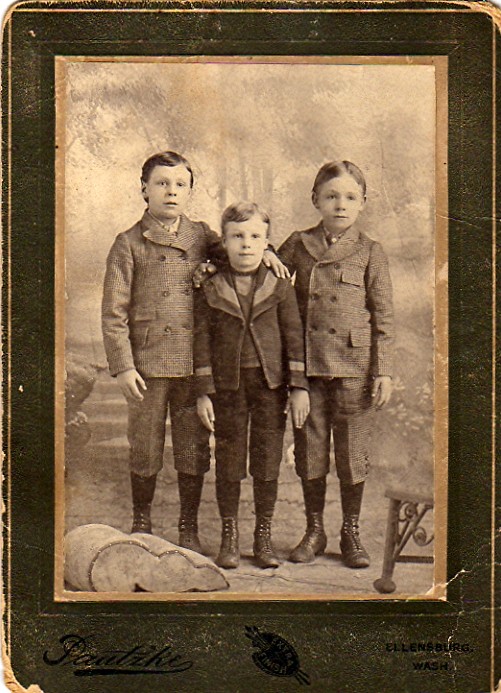
John, Joseph, and William Jonas probably right before moving to Utah in 1901. The photo is stamped with Ellensburg on the matting.
“It seems that Joseph and Annie rented after this time in 1889. William’s family lived close and the cousins would visit each other. Uncle William’s family had a gorgeous watermelon patch. William’s children chided Joseph’s children because they didn’t have a watermelon patch. One night, Rosa, John, William and Joseph swiped a watermelon and ate it. They didn’t want anyone to know so they fed the rhines to the pigs. The pigs wouldn’t eat the rhines. So uncle William’s kids discovered the rhines and the kids were caught. Joseph, soon after selling his land, began working for the Northern Pacific Railroad Company. He became a section foreman for the railroad. Both the 1900 and 1910 United States Census tell us he was a section foreman. Joseph would also make money besides working on the railroad. In the fall of 1895 the whole family went and picked hops.
“Joseph and Annie lived together as husband and wife for 13 years and one month. Annie’s mother, Agneta; Annie’s youngest sister, Abigail; her oldest daughter, Margaret; Annie’s Granddaughter, Verla; and also Annie all had a similar physical condition. Some of the symptoms were that the heart would palpitate of flutter, not fully beating. And their womanly cycles would last up to six months and then stop for two months. There was a chemical imbalance in their systems. Today we would call this PMS or premenstrual syndrome. In our family it is apparently passed from daughter to daughter, and sometimes it skips a generation. It also seems that it is harder to live with after each pregnancy, but during the pregnancy it goes away. Annie had a severe case of this chemical imbalance. After each pregnancy her condition made her more emotionally imbalanced. During her seventh pregnancy she lost the baby girl who lived only a few hours. Rosa and some of the family gave the baby daughter the name of her mother, Annette Josephine and later sealed her to her parents. Lillian, who was Joseph Nelson Jonas’ wife, had a dream. In this dream her husband was carrying an infant in his arms. That experience got the family thinking and Rosa remembered the baby being born. While Annie was having contractions with this seventh baby she went to her husband who was at work. Joseph was very upset with his wife for not staying home. Some say that Joseph did a very foolish thing while he was upset, and kicked Annie where the baby was. I’m not sure why this happened, or what the entire circumstances were at the time. On 12 August 1896 the little girl was born. With Annie’s history of chemical imbalance getting worse and emotional health came to the last straw. I am certain that both Joseph and Annie felt guilt that the baby died, and blamed themselves to some degree. Joseph took Annie to the Eastern State Hospital in Spokane Country, Washington State. She was admitted 29 December 1896, a little over four months from the time Annie lost her last baby. After the baby died Annie continued to loose blood for several months after. Annie agreed to go to the hospital. The night before she went to the state Hospital her children knew something was wrong of different. Annie put on her nice clothes, curled her hair and slept with her children. The next morning Joseph and Annie took the train to Spokane. While Annie was gone Margaret, the oldest child, was in charge of the household. The children knew that if they didn’t mind Maggie she would tell Joseph when he came home from work.
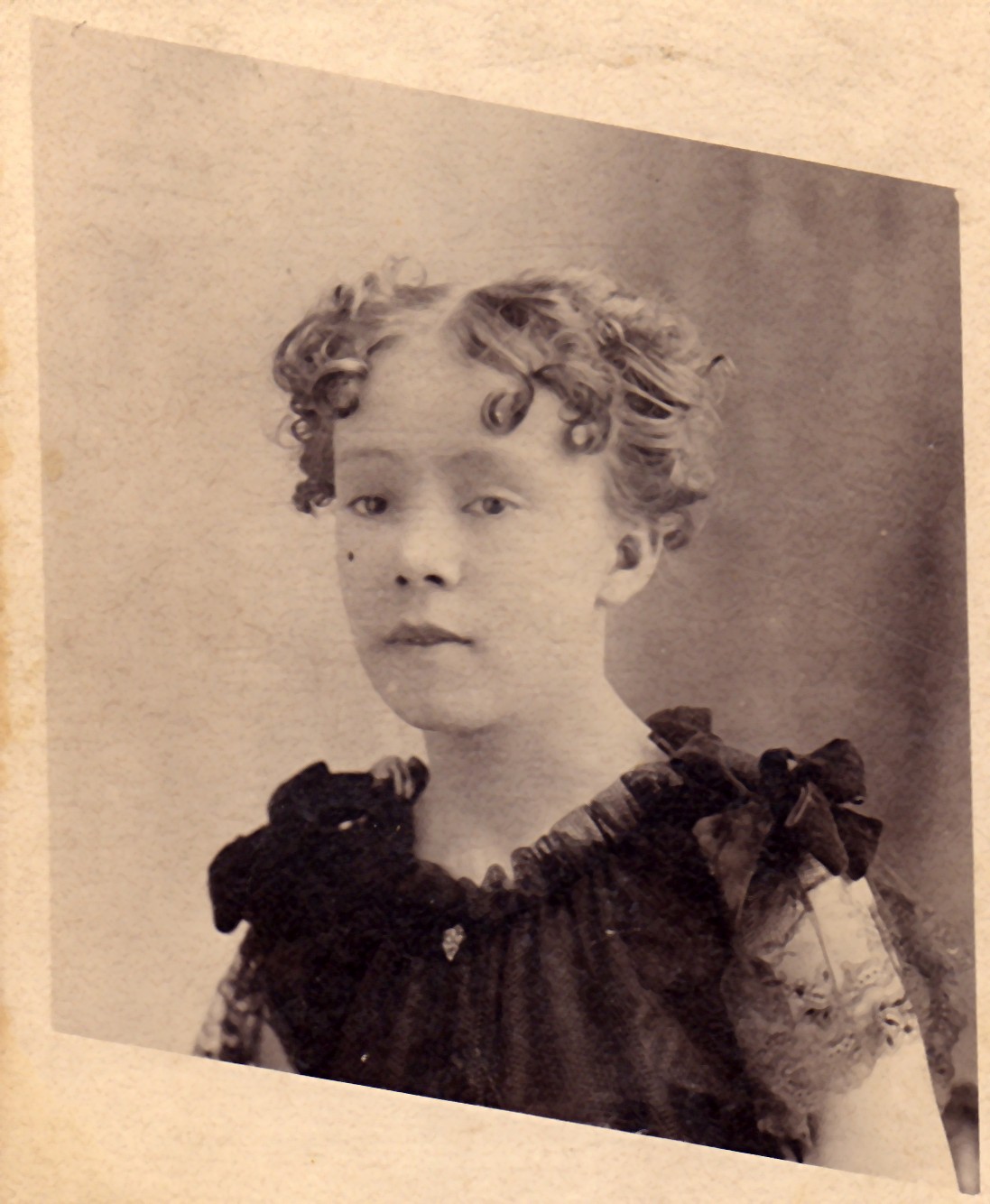
Margaret Jonas
“After Annie was admitted to the hospital she was later sent home 31 October 1899 after 2 years and 11 months of hospitalization. Annie was just 32 years old when she first went to the state hospital. She had her 32nd birthday a little over a month before. She had been admitted four days after Christmas. With needed time to travel she must have left just a day or two after Christmas. It was probably delayed until after Christmas so she could have one last holiday with the children. Later she was discharged on Halloween day. Just about a month before she was discharged, 21 September 1899, Joseph and Annie’s daughter Mary Nelson Jonas had died. Perhaps after the loss of this daughter Joseph thought of bringing his wife home to the family again. The family was still living in the Ellensburg area. The stay was short. She was home for six months and 11 days. Then she was readmitted 11 May 1900. Her name is on the 1900 general census taken in Spokane County while she was at the hospital. Annie never saw her daughter, Mary Nelson, after her 11th birthday because Annie wasn’t home when she died.
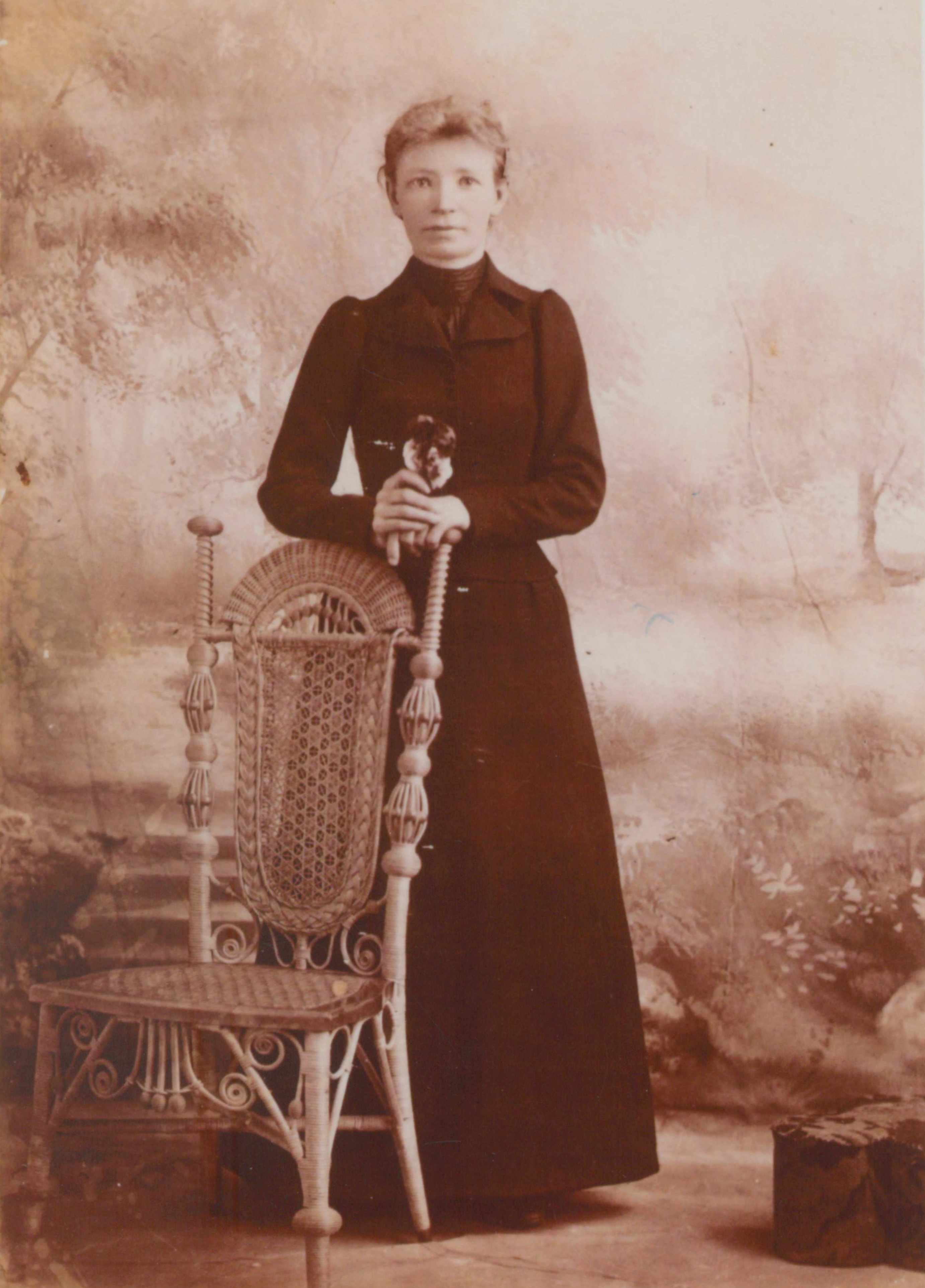
Annie Nelson Jonas 1900
“After Annie was readmitted the second time she stayed for 14 months until 2 Jul 1901. On this day she was released by her family and taken to Utah. On the 3rd of July 1901 Joseph, Annie and their five living children arrived in Utah at Annie’s brother’s home in Sandy. Joseph and Annie’s sister, Charlotte, were hopeful if Annie associated with her family, the Nelson’s, it might help her emotional and mental health. Annie’s brother, August, had this recorded in his life story, “…my sister, Charlotte Abigail, lived with us that summer (Sandy, Utah-1893). When she went to Logan that fall she had the fever. Later, (1901), she went to Washington to visit with our sister, Annie, wife of Joseph Jonas. Annie had been sick for a very long time, but none of us knew the nature of her illness until Charlotte brought the whole family to Utah with her. It turned out to be a mental illness. She kept running away so we finally had to put her in the institution at Provo, where she died a short time after…” “…There were five children. It was sad to see sister in her condition. I had not seen her since 1878, (Annie was 13 years old in 1878 until November)…Her daughter told me that before she lost her mind she would hold her head in her hands and moan, will not my father or brothers come and get me? …Her husband destroyed her letters to us so we never knew what she was going through.” Joseph and Annie’s children did write to the Nelson’s while they were living in Washington because we have some letters or post cards that have survived. So it is the belief of the author that Annie could have found a way to communicate with the Nelson’s.
“August was asked to care for the children by his mother when she was on her death bed. Instead, he left home when Annie was 13 years old and never saw her again until she was almost 29 years old. In his life story August said that instead of caring for the children he wanted to go and “make money.” To his credit August did help his other sister, Charlotte, when she was older. But it would have helped if care could have been given when the children were young.
“After Annie arrived at her brother’s home in 1901 Annie stayed with them for a few days over four months. Then August and his wife signed the warrant of commitment for Annie to be admitted to the Provo State Hospital 6 November 1901. Annie’s records are still at the state hospital in Provo. Annie remained there for 6 years 11 months until she died 23 December 1907 and was buried 25 December on Christmas Day. She was buried in the Crescent cemetery. For some reason the Nelson’s never put a headstone on her grave. Years later members of the Jonas family, probably William Nelson Jonas, placed a headstone on her grave. Annie was a young 43 years old when she died, the same age that her mother Agneta, had died.
A copy of Annie’s Utah State Mental Hospital records are included after. There is very little in the record, but it is telling what little is included.
“While the Jonas family lived with the Nelson’s Joseph Jonas worked on August’s farm. He was not a free quest. While they were there it became harvest time. Joseph worked with both families. Joseph wasn’t a tall person, 5’6″ or 5’7” but he was a very strong man. He often boasted that he could take the place of two men in the field. Joseph worked on the threshing machine. He lifted the bags of grain off the thresher.
“Annie’s brother, August, condemned grandmother for not raising her family in the LDS church. He would bring out his temple cloths and according to Rosa Jonas who was there, made grandma cry. He would say, “This is what our mother was buried in.” Then he would show her the temple clothes. This happened a few times and grandma was so upset on time that she spit on her brother. August probably had good intentions, but he handled the situation wrong. Annie was a women who was sick and just released from a state hospital. She needed special consideration and understanding.
Joseph and Margaret Jonas about 1899
“Joseph and August had arguments, too. August persuaded the Jonas children to stay in Utah and not go back with their father to Washington. Rosa remembered that her father shook his fist at her and said “You remember where you belong.” Finally, Joseph went back to Washington with only one of his five living children, Margaret. The rest stayed in Crescent. The four Jonas children finally went to Richmond, Utah. Rosa married in 1904 and in 1908 the three boys left Sandy to live with their sister.
Christian & Rosa Andersen
“An interesting book that may help the reader of this story to understand the life of Annie had while she was in the state hospitals was published March of 1908 and is entitled “A Mind that Found Itself.” This is a biography written by the author after his complete recovery from a mental illness. He describes conditions in a state hospital during the same time period Annie was living in one. The man’s name is Clifford W Beers. People who were admitted at the turn of the century were often treated cruelly. The people who were hired were untrained and needed no qualifications. Add to this the low wage and one may understand that people who hired to watch the sick used physical restraints and force to control their assigned subjects. Besides having their freedoms and dignity taken away, they were assigned to one style of clothes to wear.
“According to Annie’s records Annie was rational at times and then would have a sudden stroke of passion come over her. While Annie was in the state hospital she wrote to her children. She was capable of writing beautiful intelligent letters. At times she was in possession of her mental abilities. Unfortunately her children never answered her letters, which only worsened the way she felt about herself. The children were young, the oldest in her mid-teens. But the lack of support of her children and all other family relatives must have made her very lonely and given her a feeling of unhappiness and probably despair. Also, Joseph, her husband, must have been frustrated after taking her out of the state hospitals three different times and unable to help her. The circumstances would try the patience of any man. Joseph and Annie were given certain trials in this life which would be hard to bear by most people. Perhaps their trials in this life will help their standing before God in the next. A feeling of empathy for them comes over the author when he thinks of their lives and their loneliness.
“All of the children of Joseph and Annie, who lived past the age of 20, joined The Church of Jesus Christ of latter-day Saints. John, William, and Joseph Nelson were all baptized 10 January 1902. Rosa was baptized 6 February 1902. Margaret, Mary, and Annette Josephine had short lives. Mary died of typhoid fever 21 September 1899 being 14 years and two months old. Her sister, Rosa, said she chided her sister and told her, “You’re not sick because your face is so pink.” Mary unfortunately died the next day. The children did not realize it was the high fever that caused her cheek’s to be so flushed. Mary was baptized in the St. Andrew church in Ellensburg 25 Jul 1886 with two of her cousins, Elizabeth and Hubert. She was just one year old. Her headstone is on the main road or trail which runs through the Holy Cross Cemetery in Ellensburg. Her headstone is facing away from the road so you would need to go to the back to see the words. The original road was moved from in front of her headstone to the back of her headstone. The headstone reads, Mary dau. of Joseph and Anna Jonas born 17 Jul 1885 died 21 Sep 1899. She is buried next to her grandfather, Hubert Jonas and close to her sister, Margaret, and Uncle William Jonas. Her baptism and death records are at St. Andrew’s church. Margaret died of Bright’s disease. Bright’s disease is characterized by heightened blood pressure. The city paper called the Ellensburg Dawn dated 22 Sep 1904 reads, “Miss Jonas, daughter of Joe Jonas died Sat of Bright’s disease.” Margaret was born 17 Jun 1884 in Logan, Cache county, Utah. No records were found for her baptism in Ellensburg, although she was baptized. We have pictures of her graduation from catechism. Margaret was the only daughter who had red hair like her mother. Margaret was the only child who went back to Washington with her father sometime in 1901. She lived in Thorpe when she died. She has a beautiful headstone with a lot of detail embossed on it and these words, “Margaret beloved dau of Joseph and Annie Jonas died 17 Sep 1904 aged 30 years 3 months.” Both Margaret’s and Mary’s headstones were bought by grandpa Joseph Jonas. We know that because grandma was absent from the family during both deaths. Margaret also had a 4″ X 6 1/2″ card made at the time of her death. This card, too, was Joseph’s idea. The card is in a silver and black print with white background. There is a bird that has a paper in its mouth with the following description, “Let us be patient: These severe afflictions not from the ground arise, but often times celestial benedictions assume this dark disguise.” There is a small arch with “In Living Remembrance of.” Then a box elaborately decorated with, “Margaret Jonas” died Sep 17, 1904 aged 20 years and 3 months.” Then at the bottom in silver letters the following poem. “We miss thee from our home, dear, We miss the sunshine of thy face. We miss thy kind and willing hand, Thy fond and earnest care, Our home is dark without thee, We miss thee everywhere.” Joseph Jonas’ sentiments are realized to a degree by the headstone and card he left behind. He was obviously deeply hurt by his daughter’s death.
Margaret Jonas
“Another interesting story we have, which gives us insight to Joseph’s personality, is how he handled his three son’s misbehaving. The three Jonas boys, John, William, and Joseph, had been caught stealing apples. Joseph was very upset. But instead of doing something immediately he went and chopped some wood for the fire. He chopped long enough to get rid of some of his anger. Then he disciplined his three boys. Joseph had a quick temper, but this story reveals his attempt to control his temper. If Joseph came home and got upset he was capable of turning the furniture over. However, Rosa’s children who knew Joseph Jonas really loved him. Rosa said that she had often wished she had sealed her mother’s sister, Charlotte, to him after he died.
William Nelson Jonas
“Joseph gave annual donations to his church. One record reveals the following: “Mr Joe Jonas paid $5.00 this 11 day of October.” Also, 5 July 1910-paid $5.00 for cemetery care; 1911-his name was written for contributions; 1912 contribution of $3.00; 1913 contribution of $10.00. Joseph was also one of the witnesses when his brother, William, sold his land on the 18th of October 1905. The above records reveal faith in God. Also, there were probably other donations before 1910 that weren’t recorded. We have a census record for Joseph in the following years; 1860, 1870, 1880, 1885, 1887, 1900, 1910. We learn from the 1900 census that the family lived in Cle Elum, a place north west of Ellensburg, at which time they were renting a house. The 1910 year has Joseph living in the South Kittitas Precinct. He was living in a house with two single men, who were also of German extraction and were also workers for the railroad. Joseph was 51 years old and his roommates were 47 and 56 years old. He told the man taking the census that he was the head of his family and that he was a widower. next to Joseph’s name on the 1910 census is the record of seven men who were living in a section house. Joseph was most likely living in the foreman’s house that was owned by the railroad. Counting the two people living with him it is likely that Joseph was the foreman of nine men during this summer work.
Margaret Jonas
“On 19 February 1912 Joseph Jonas went to a notary and recorded the following affidavit: “Joseph Jonas to public. Joseph Jonas, being first duly sworn, on oath states: That he is a brother of William Jonas who died in Kittitas County Washington, Oct 11, 1905; that said William Jonas died seized the following real estate situated in said Kittitas County, to wit: the south west quarter of section twenty three (23) in township eighteen (18) north of range eighteen (18) east, W.M.; that said William Jonas at the time of his death was a widower, his wife, Emma Jonas, having died in said Kittitas county, on March 17, 1898, intestate: that said William Jonas was married once; that George Jonas, son of said William and Emma died on the third day of July, 1908, at the age of ten years, intestate.”
“Joseph Jonas was a hard working man. He was strict with his family, and was a good provider. He often helped neighbors by letting them stay in his house and by feeding them. One time grandmother, Annie, had made some rolls and jam which were given to a visitor. The man decided that he didn’t want to eat the food so after he got outside he gave the food a toss. Joseph saw this and gave the man a verbal tongue lashing. Also, Grandpa one day was cooking a pan of eggs. It was a large fry pan. A fly landed into the eggs, so he threw the eggs, fly and all, into the fire.
“About 1907 Joseph was visiting his daughter, Rosa. He needed some help on his section gang. So his son-in-law, Christian Anderson, went to Washington and worked on the railroad. His son-in-law thought Joseph was a good man to work for and after Joseph died he made a wooden cross for his grave.
“When Joseph was 58 years old he came to Utah to die at his daughter’s home in Richmond, Utah. Joseph had sugar diabetes and dropsy. He had been sick for a year and six months before he died. He stayed at Rosa’s home for about two months before he passed away. Lillian, Joseph Nelson Jonas’ wife, who remembered seeing Joseph said that he was a handsome man even on his death bed. He died 28 Jun 1917 at 3:00 A.M. and was buried 30 Jun 1917 in the Richmond Cemetery. He has a headstone. It is exactly like his wife’s headstone and were both placed on the graves by a member of the Jonas family years after their deaths. The records aren’t clear, but the only sibling they had who could have bought these headstones was William Nelson Jonas. All the other siblings had died rather early in life.
Joseph Nelson Jonas and Lillian Coley Jonas
“During one of the visits Joseph made to his daughter, Rosa, in Richmond, Utah, Rosa had forgotten to put Annie’s picture away. Joseph picked it up and said, “They didn’t tell me when you passed away, but you came to me so I knew you were dead.”
“Some time after Cy Anderson was born, the first grandson of Joseph and Annette, Joseph made a visit to Utah to see the family. That was probably in 1908. Joseph bought him some new clothes, a sailor’s outfit. During his visits he would ask the children to help their mother. Joseph would be standing at the top of the stairs and would toss someone a nickel and say, “clean up the table for your mother and the nickel is yours.” The grandchildren who knew Joseph really like him. Joseph rejected any attempt his children made to convert him to the LDS Church. But Joseph was a religious man, and believed in God.
“Rosa loved to take her father’s coat and smell the lapel when he came to visit. She liked to smell the smoke from the big cigar Grandpa smoked.
John and Nellie (Andersen) Jonas
“Grandpa Joseph Jonas lived to see his wife, Annie, die; three of his daughters; both of his parents; his brother, William, and Emma his sister-in-law all die. He lived away from his four living children for most of their lives. He was a man with a family, but wasn’t able to be with them very much for the last 16 years of his life. He was very much alone except for friends he made in Washington. Grandma, Annette Nelson Jonas, except for a few brief months, spent the last 11 years of her life alone or in the company of strangers. Annie experienced her family’s lack of support and certainly a broken heart sped her to an early death. One may wonder why some people are asked to suffer such hardships in life. Yet, we should always appreciate them for giving us our lives and for the sacrifices they made in raising a large family. They provided for and loved their children, and raised them well under extreme hardships.
I have two copies of the History of Plain City, Utah. The front indicates it is from March 17th 1859 to present. As far as I can tell, the book was written in 1977. At least that is the latest date I can find in the book.
One copy belonged to my Grandparents Milo and Gladys Ross. My Grandpa has written various notes inside the history which I intend to include in parenthesis whenever they appear. They add to the history and come from his own experience and hearing.
I will only do a number of pages at a time. I will also try to include scanned copies of the photos in the books. These are just scanned copies of these books, I have not tried to seek out originals or better copies.
History of Plain City March 17th 1859 to present, pages 123 through 140.
SPORTS IN PLAIN CITY
By Lyman H. Cook
Plain City’s most prominent claim to fame has been through the sports program and the great players and teams that the town has produced. I know of no other town to community in this state, to possibly out of state, that can equal the accomplishments in the total sports program as the town of Plain City. I don’t know how many hundred championships or trophies this town has won in baseball, basketball, softball, volleyball, and Jr. Posses, over the last 75 years or more. We include the young teams and people in the town, and also the girls. These trophies and championships came from local, county, multi-county, state, stake division, region, multi-region, and All Church basketball, softball, and volleyball, which is the largest leagues in the world.
On February 14, 1977, at 3:30 PM, there were 226 trophies in the trophy cases at the Plain City Church. I couldn’t begin to estimate the number of trophies in the homes here in Plain City. Can you comprehend the number of teams involved and especially the number of people involved on the teams in accomplishing this great record.
There seems to be a special spirit, or force, ambition, or drive, that compels players to excel and teams to win. The will to win in Plain City is the strongest I have ever known. We have been accused of playing dirty, or being poor sports, but in answer to these charges, I would submit the phrase: We just play hard, and the spirit of competition just brings out the best in us. In Plain City you don’t hope you can win, you are expected to win. Some communities dislike us for our sports program because it is so strong, and in reality, they judge their success of their season by the fact of whether they can beat Plain City or not. I realize these are rather potent and strong statements, but never the less, they are all true.
We dedicate this section of sports to all the people who have ever played on a team in Plain City. We realize that some names will be missed and it is not our intent to forget anyone, but we can’t remember all, and this is all of the sports material that has been turned in for the history. If your name is left off, write it in, and if you were star of the team, write that in also.
We have asked for and received personal write-ups on a few people who have signed professional contracts or have distinguished themselves in certain sports. We recognize them for their talents in that they in turn have brought special recognition to Plain City. I am sure these talented athletes would be the first to recognize their fellow members, for they realize that no one man is bigger or better than the whole team, and in this light, we recognize the teams they played on.
From 1944 until the present, there were three basketball teams that went to All Church and won two second places. Commencing in 1951 through 1954, we played in four fast-pitch All Church Tournaments. We won a second-place finish and eight-place finish.
In 1953, we played on a volleyball team that went to the All Church Tournament and won the Sportsmanship Trophy, which was a great honor. The team that played were: Dee Cook, Lyman Cook, Wayne Cottle, Wayne Skeen, Blair Simpson, Kenneth Lund, Harold Hadley, and others we couldn’t remember.
There were teams that went to the All Church Slow Pitch Tournaments from Pain City for three years. They won two All Church Championships, and a third-place finish. There have been some excellent younger teams in baseball, basketball, and softball, and a Junior team last year (1976) won a second-place in a
The All Church program.
This was one of the early teams of Plain City, and this picture was taken around 1910. They played together for many years, and they won several championships.
Top Row: L to R: Joe Hunt, Tooley Louis Poulsen, Preston Thomas, Parley Taylor, Jack Hodson.
Middle Row: L to R: Mr. Anderson, Coach, Jim Thomas, Melvin Draney
Bottom row: L to R: Oscar Richardson, Joe Singleton
Louis Poulsen
Tooley Poulsen played on many championship teams, and played several positions, mainly second base and catcher.
This was one of the first Mutual basketball teams in Plain City. They played their games in the upstairs of the old hall. Lyle Thomas reports that you didn’t have to be polished to play on this team, just big and rough, for there was very little whistle blowing in those days. This picture was taken in about 1925, and they won several championships.
Back Row: L to R: Rulon Jenkins, Lyle Palmer, Marion Sneed, Milton Garner
Front Row L to R: Theo Thompson, Ralph Robson, Coach Ellis Giles
This was the 1930 Plain City Baseball team. They played for State Champion ship.
Top Row: L to R: Horace Knight, Albert Sharp, Walter Christensen
Middle Row: L to R: Floyd Palmer, Angus Richardson, Arnold Taylor, Walter Moyes, Abram Maw, William Freestone
Bottom Row: L to R: Clair Folkman, Gilbert Taylor, Dick Skeen, Fred Singleton, Frank Skeen, Elmer Carver
BASEBALL AND EARLY SPORTS
By Elwood (Dick) Skeen
Baseball was Plain City’s most favorite sport. Baseball in Plain City in the early 1920’s and 1930’s was composed of the Plain City Bull Dogs with the following players taking part:
Louis Poulsen
Joe Singleton
Walter Draney
Elmo Rhead
Parley Taylor
Joe Hunt
Elvin Maw
Oscar Richardson
John Hodson
They represented Plain City in the Weber County Farm Bureau League, composed of North Ogden, Hooper, Roy, and Clinton. There were many good ball players in those days that played on the teams. The town park at that time was covered with salt grass. There were no base lines, no pitcher mounds. But, on a Saturday afternoon the park was filled with people that came from all over the county to watch the games. Horses and wagons lined the park.
Foot racing was also a great sport at that time, and Plain City had one of the best in Walter Draney, who was not only fast, but also a great athlete.
As time passed and the older players began to drop out, the chance came for us younger players to take over. In 1925 I caught my first Farm Bureau game at Liberty with Ezra Taylor doing the pitching. Then, the other players that made up our team for the next few years started to play. We had our share of victories. In fact, we had more than our share of wins.
Finances at that time were hard to come by. We did what we could to raise money to continue supporting the team. In 1928, the ball team put on the first Black and White Day with Mervin Thompson and Joseph Skeen showing their cattle. An old-time refreshment stand, soda water, ice cream, candy bars, and popcorn, which sold for 5¢. Also, some drinks that were not sold at the stand.
Our uniforms were furnished by Plain City individuals and business firms from Ogden. Suits would have the name of the giver on the back. Decoration day and the Fourth of July were our most celebrated days with all kinds of sports for those who wished to perform. A baseball game and a dance in the evening would top the day.
We would get the best team from Ogden to play on these days so that we could show what was leading up to the best team we had. In 1930, we won the Weber County Farm Bureau League, and the town bought us new uniforms to go to Lagoon to play Sandy, Utah, for thy State Championship. We lost by a close score. Our players were:
Gilbert Taylor
Walter Moyes
Arnold Taylor
Frank Skeen
Horace Knight
Albert Sharp
Fred Singleton
Abram Maw
Walter Christensen
Clair Folkman
Dick Skeen
Bill Freestone was the manager. Angus Richardson was the coach. Elmer Carver took care of finances, and Floyd Palmer and Byron Carver were scorekeepers. We played in tournaments at Brigham City and Ogden, and some out-of-state games were played.
We continued playing, but soon the gang started drifting different ways and our days were coming to an end. The league started to dwindle and later, folded up with the workload increase. Baseball was soon lost to the towns in Weber County.
Left to Right: Nalon Taylor, Bert Cook, Howard Gibson, Bud Dallinga, Wayne Cottle, Thayne Robson, Bill Stokes, Rulon Jenkins, Coach
The Desert News Sport Best Two MIA Teams
Page 10 – Salt Lake City, Utah-Saturday, March 11, 1944
Bottom Row: L to R: Carl Taylor, Carl Hodson, Fred Singleton, Coach, Blair Simpson, Glen Charlton
Top Row: L to R: Frank Hadley, John Nash, Lyman Cook, Ray Cottle
Ray Cottle, Center: First Team All Church
Frank Hadley, Forward: Second Team All Church
Lyman Cook, Guard: Second Team All Church
Blair Simpson, Guard: Honorable Mention
This team played for All Church Championship in 19441. They played Grantsville, Utah, and lost to them for the title. The games were played in the old Desert Gym, by the Hotel Utah. The teams stayed four nights in the Hotel Utah. They ate, slept, and played basketball.
Top Row L to R:
Alf Charlton, Athletic Director
Lyman Cook, Ronald Skeen, Kenneth Lund, Grant
Lund, Wayne Skeen, Clair Folkman, Coach
Bottom Row L to R:
Harold Hadley, Elmer Hipwell, Bill Stokes, Dee
Cook, Blair Simpson
This was the Plain City M-Men Team that played after World War II, in 1946, for several years and won several state championships and played in the division tournaments.
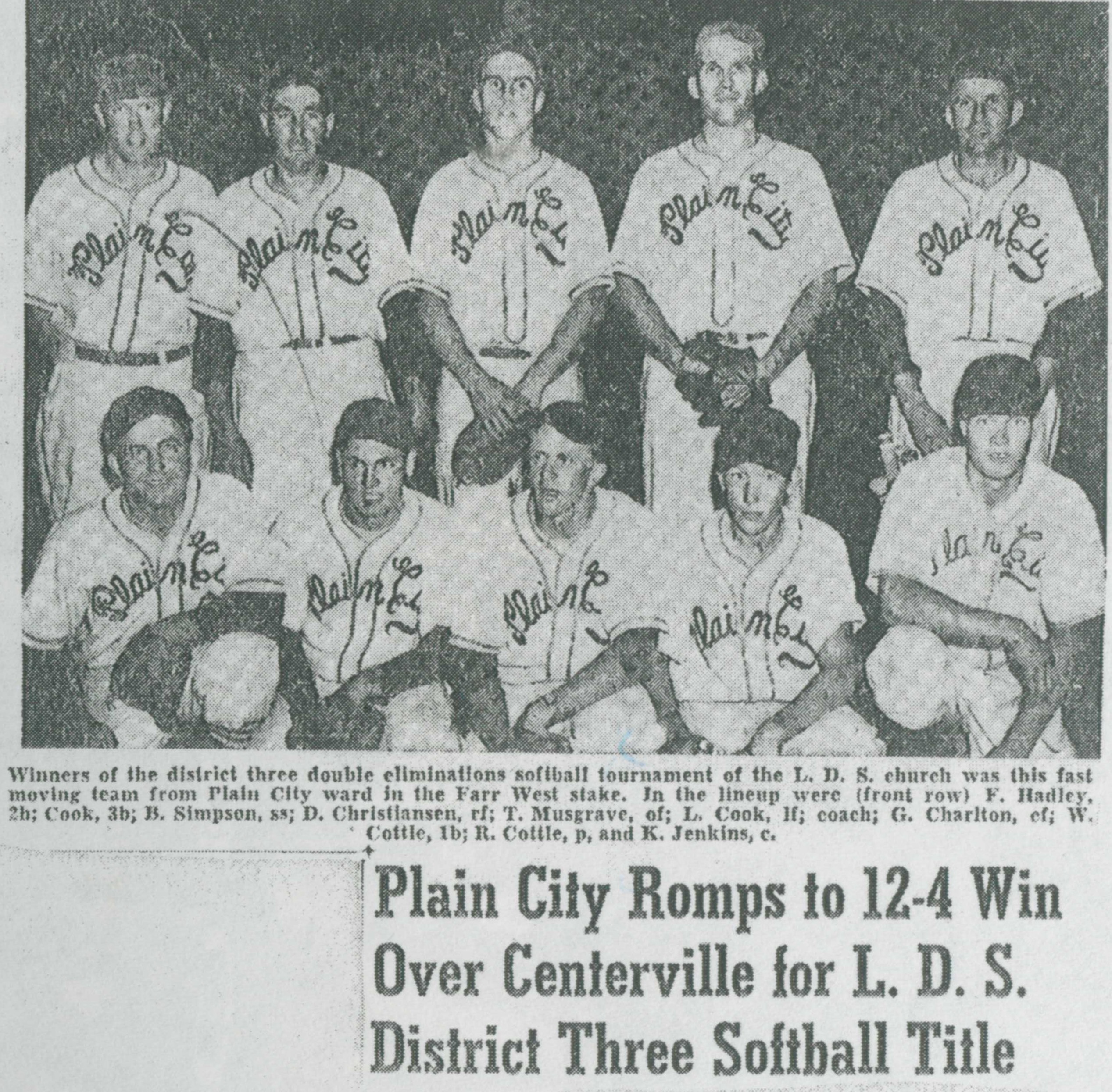
Winner of the district three double elimination softball tournament of the L.D.S. church was this fast moving team from Plain City in the Farr West Stake. In the lineup (front row) F. Hadley, 2b; Cook 3b; B. Simpson, 5b; D. Christensen, rf; T. Musgrave. Of; L. Cook, lf; coach; G. Charlton, of; W. Cottle. 1b; R. Cottle, p, and K. Jenkins, c.
Plain City Romps To 12-4 Win
Over Centerville for L. D. S.
District Three Softball Title
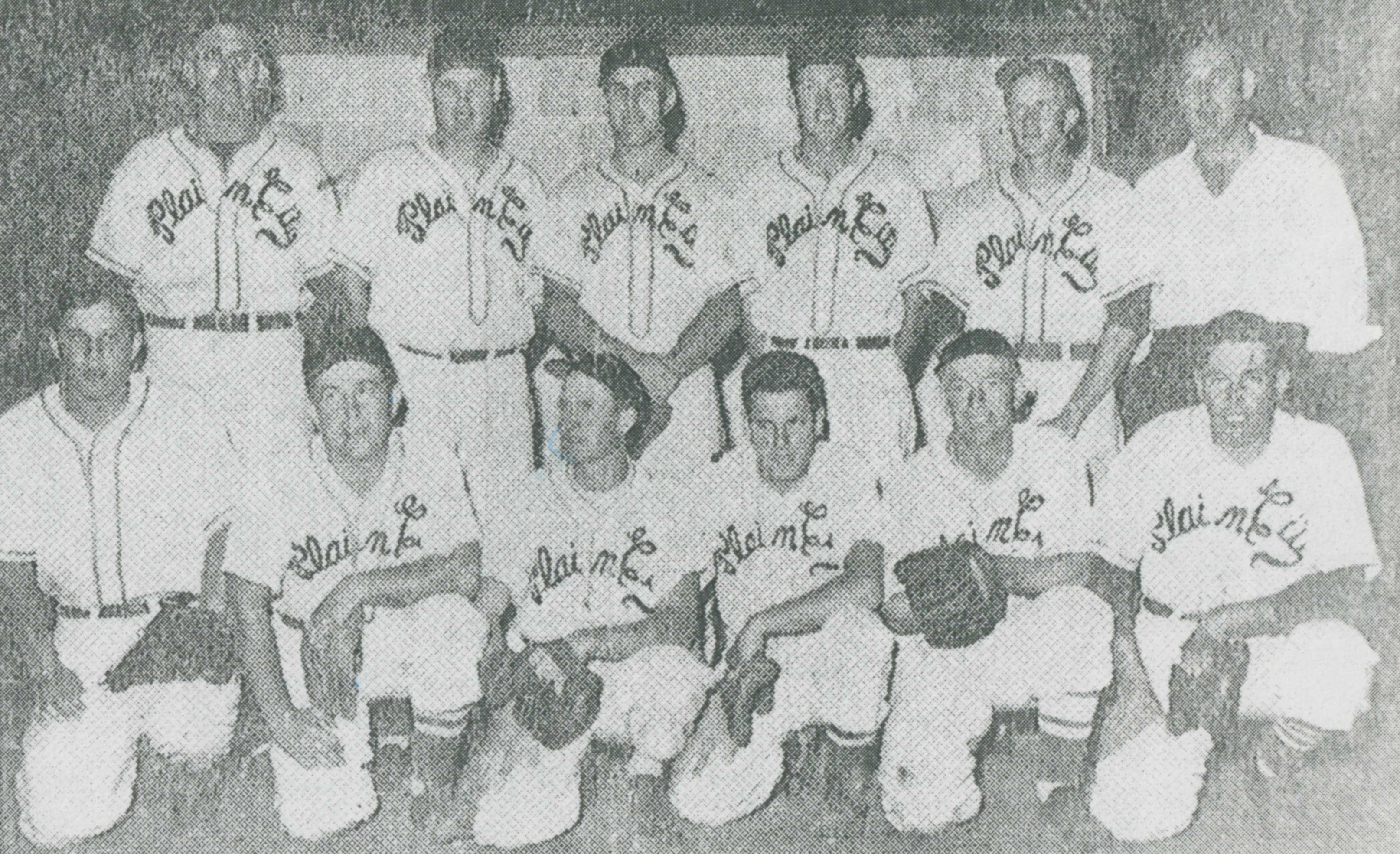
PLAIN CITY SOFTBALL TEAM OF 1951
By Lyman Cook
Plain City has always been a very strong baseball town, and the feeling was that softball was a game for girls, or you played softball at family reunions. In 1951 the Farr West Stake started a softball program and wanted teams to participate. I was Ward Athletic Director at that time and asked these players to play. This was the first softball team organized in Plain City. We won the Stake and District III. We then went on to the All Church Tournament in Salt Lake City. We won some and lost some, not too eventful. I coached the team the first year we played. This was a fast-pitch team.
L. D. S. Division III Champs
Repeating their last year’s victory in the L.D.S. division III softball tournament, the Plain City team came through again last night at Ogden softball park to beat Hoytsville 9 to 6. Front row Left to right: M. Heslop, E. Hadley, C. Taylor, D. Cook, A. Maw and G. Charlton: back row, lerft to right: R. Cottle, W. Skeen, W. Cottle, L. Cook, B. Simpson, and D. Skeen, coach. Absent from photo: Jenkins, V. Stokes and R. Skeen.
PLAIN CITY WARD SOFTBALL TEAM OF 1952
By Lyman Cook
In 1952 we repeated as stake champions and also won the Division III Championship again. We went to the All Church Tournament again and played very well. We played for the All Church Championship, but lost to Pocatello 10th Ward in a good game. Blair Simpson was voted Most Valuable Player of the tournament. Wayne Cottle made the All Church Team. There may be others. This was also a fast-pitch team. Dick Skeen was the coach.
This team played Farm Bureau Baseball and won the
Championship around 1950:
Top Row: L to R:
Junior Taylor, Wayne Skeen, Don Singleton, Bert Cook,
Glen Charlton, Kent Jenkins, Clair Folkman, Coach
Bottom Row: L to R:
“Buss” Lyman Skeen, Frank Hadley, Wayne Cottle, Ray
Charlton, John Maw, Dee Cook
This team played Pleasant Grove for All Church Champion-
Dee Cook, Manager, Darrell Christensen, Robert Folkman,
Bert Cook, Kenneth Lund, Wayne Cottle, Kent Jenkins, Coach
Many county and Northern Utah Championships were obtained by this team that was sponsored by the Town Board in the late 1950’s to middle 1960’s.
COACHES: Clair Folkman – Blair Simpson
TEAM MEMBERS: POSITIONS:
Blair Simpson P- IF
Wayne Cottle IF
Cy Freston IF
LaGrand Hadley OF – P
Archie Skeen C
Gaylen Hansen C – P – IF
Bobby Taylor P – OF
George Cook IF
Reid Nielson IF P
Ted Favero IF –
Dennis Anderson P
Garry Skeen OF
Lynn Folkman OF
Bud Parker IF – OP
Tom Seager OF
Harold Hadley IF
Harold Marriott IF
******
PLAIN CITY WARD FASTPITCH TEAM
1960, 1961, 1962
This team won the Stake, Region, and Division Championships, and represented the ward in All-Church competition with a successful number of victories.
COACH: Elmer Carver
TEAM MEMBERS:
Tom Seager, P Blair Simpson, SS
Gaylen Hansen, C LaGrand Hadley, LF
Wayne Cottle, 1st Robert Folkman, CF
George Cook, 2nd Dee Cook, RF
Cy Freston, 3rd Don Singleton, IF
Blaine Eckman, QF Gar Hunter, 1st – OF
THE PLAIN CITY BULLDOGS
This is one of the very first Weber County Recreation Teams in Plain City. Many of these players went on playing baseball for many years.
Front Row: L to R:
Dick Skeen, Coach, Fred Palmer, Darrel Thompson, Kenneth Hogge, George Cook, Ronald Sharp.
Back Row: L to R:
Archie Skeen, Brent Taylor, Wayne Poulson, Jay Freestone, Robert Folkman, LaGrand Hadley
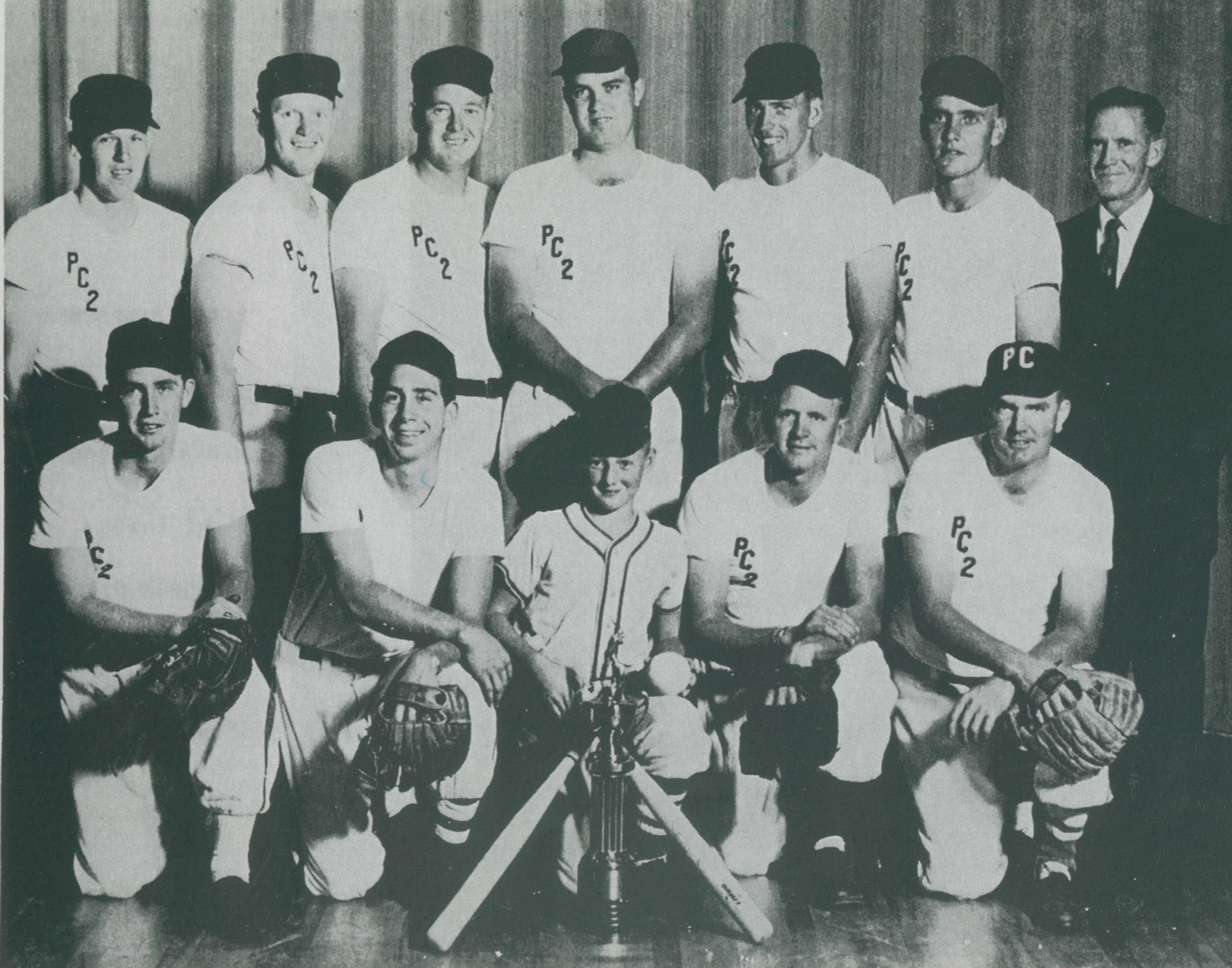
PLAIN CITY SECOND WARD
ALL – CHURCH CHAMPIONSHIP TEAM
1963 – 1ST Place
1964 – 1st Place
1965 – 3rd Place
This team represented the Plain City 2nd Ward and Plain City Town by winning 64 and losing only two games over a three-year span. Many players received All – Church recognition. In the championship game the first year the team hit 11 home runs and pulled off a triple play for the victory.
Back Row: L to R: Not in Photo
Garry Skeen Archie Skeen
Gaylen Hansen Ken Searcy
George Cook Jay Freestone
Gar Hunter Val Taylor
Jerry Bradford Mel Cottle
Lynn Folkman Gordon Singleton
Bishop Rulon Chugg Jim Beasley
Don Singleton
Front Row: L to R: Gary Hill
Bishop Orlo Maw
Jerry Moyes
Doug Palmer
Dale Searcy
Blair Simpson
LaGrand Hadley
All – Church Honors:
Gar Hunter
Jerry Bradford
Ken Searcy
Gaylen Hansen
Archie Skeen
Blair Simpson, Most Valuable Player
BLAIR SIMPSON
and
ELMER SINGLETON
of the
PITTSBURGH PIRATES
1948
“Two cousins met”
ELMER SINGLETON
Elmer Singleton started pitching for the Farm Bureau League in Plain City. He pitched for several championship teams. He signed a professional contract with Cincinnati, and played at Wenatchee, Washington in 1939, his first year. He played for Idaho Falls, Portland, and Oklahoma City. He moved on up to the big league and played with the following teams:
Cincinnati
Yankees
Chicago
Kansas City
Boston
Pittsburgh
Washington in 1950
Toronto
San Francisco
Seattle
He was in professional baseball for 27 or 28 years, the last eight years as a player coach.
He pitch two no hitters, one at San Francisco, and the other at Seattle. Elmer won the Player of the Year Award at Seattle in 1956. There is a baseball card with Elmer’s picture on it with the Chicago Cubs. It reads:
“This will be Elmer’s 17th year in professional baseball.
He started back in 1940 and after 11 uneventful seasons,
got red hot to become one of the top hurlers on the
Pacific Coast. In 1952 at San Francisco, he won 17, followed
with 15 triumphs in 1953 and moved to Seattle in 1956.
He had the best Pacific Coast Earned Run Average.”
Elmer told us that before he left to play professional baseball, the people of Plain City honored him at a banquet. They gave him a ball glove, and he still has it. He is listed in the Sports Record along with his accomplishments. Elmer was a great baseball pitcher. The only picture we have of Elmer is with Blair Simpson. Elmer and Blair are cousins,
BLAIR SIMPSON
BY Blair Simpson
I attended school at Plain City before going to Weber High School. At Weber High School I participated on the track team, played some basketball and pitched for the Weber High baseball team.
After graduating from Weber High School in 1944, I was drafted into the army for two years.
In 1948, I signed a professional baseball contract with the Pittsburgh Pirates organization. While playing with the Pirates, I played with the following cities:
Santa Rosa, California
Pittsburg, California
Modesto, California
Hutchinson, Kansas
Waco, Texas
Charleston, South Carolina
I was a pitcher and had to quit because of an injury to my knee.
After retiring from professional baseball, I played a considerable amount of baseball with Plain City and other teams in the Ogden area, such as:
Ogden Ford Sales
Heitz Heating
Wasatch Time
I was selected on the All Star Baseball Team composed of 16 players from the State of Utah.
I also played on many softball teams in the Ogden area such as Fisher Hess, Utah General Depot, Fred M. Nyes, Savon, and others.
In 1952, I was named the Most Outstanding Player in the “All Church Fastpitch Softball Tournament” in Salt Lake City and was also named to the All Church All Star Team in 1953.
In 1963, o received the Most Outstanding Player Award in the All Church Softball Slow Pitch Tournament. In 1964, I again received the most Outstanding Player Award in the slow pitch division of the All Church Tournament held in Salt Lake City. The year 1964 was one of my most memorable occasions in All Church Softball as I hit four consecutive home runs in one game.
I would like to give a lot of credit to whatever successes I have enjoyed in athletics to the talented town of Plain City.
WAYNE COTTLE
By Wayne Cottle
I was born November 30, 1928, in Ogden, Utah. I lived in Plain City all my life. I attended Plain City Elementary and Junior High. I played basketball in the 9th and in the 10th grades for Plain City. L. Rulon Jenkins was our coach and our principal. We played against Hooper, North Ogden, Huntsville, and Weber High School.
In the Fall of 1945, I started Weber High School, playing football, basketball, baseball, and track for both years. In 1947, I played to a tie for the Region I Championship with Box Elder. We played off the tie breaker at Ogden High School, beating Box Elder for the first Region I Championship for many years. I won the Region I scoring title. We entered the State Tournament in Salt Lake City and we lost to Granite, who became the State Championships, in the semi-finals. I was the recipient of the Standard Examiner KLO Watch Award for being the outstanding athlete of the year.
I entered Weber Junior College in the Fall of 1947. After about a month of practice I became one of the starting forwards. We played in several tournaments winning 3rd place in the Compton California Invitational. We played an independent schedule that year. In 1948-49 Weber became a member of the ICAC Conference. We won the conference and played Snow Junior College Tournament. We won the game and I was voted the tournament’s Outstanding Player Ward. We went to the national finals in Hutchinson, Kansas. We won our first game, then we met two defeats.
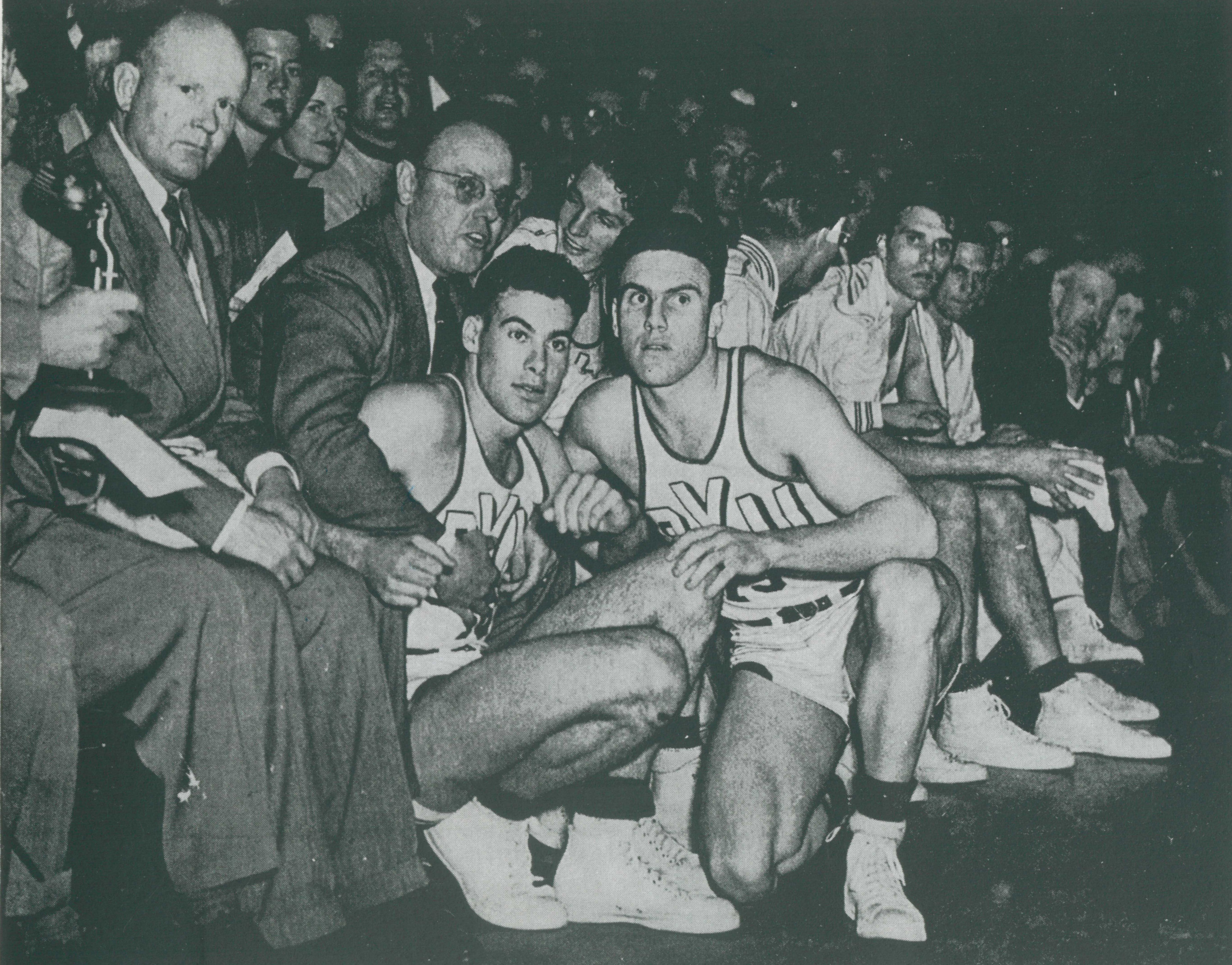
In the Fall of 1949, I entered Brigham Young University. I was on the team that won the Skyline Conference Championship for the first in many years. We went to the NCAA at Kansas City, Missouri. We lost to Baylor University, then beat UCLA for 3rd place. The next year we accepted a bid to enter the National Invitational Championship and two of our players were voted All American.
I graduated from BYU in 1951, came back to Plain City and started to play basketball with the Ward team. From the 1951- 1952 season until the creation of the Plain City 2nd Ward in 1960, we never lost a league game in the Farr West Stake. The year of the creation of the Plain City 2nd Ward, they beat us once and we beat them once. We played off the Stake Championship at Wahlquist Jr. High, and we won the team and the championship. After that season, the Church specified an age limit and I was area championships and went to the All Church several times.
WAYNE COTTLE
Brigham Young University
BERT COOK
He attended Plain City School where he was active in athletics. He graduated and attended Weber High School in 1947 and 1948., where he participated in football, basketball, baseball, and track. In 1948, he was selected on the Class A State All Star Team, in which Weber High School won the championship. He also won the All American in boys Award in baseball at John Affleck Park in 1948. From this he won a trip to Chicago.
He played for the Plain City baseball team for the Farm Bureau and Ogden City League.
From 1948 until 1952 he attended Utah State university at Logan, Utah, where he started on the first five as a freshman, and later in the year played in the AAU Tournament and was selected on the All Tournament Team.
In 1951 – 1952, he lead the conference in scoring and was voted All Conference both years. In 1952 he was voted All American in basketball where his Number 6 jersey was retired at Utah State University being the first one in the history of the school. That same year he was selected on the All Conference Team, and traveled with the Harlem Globe Trotters and the College All Star for several games. Later that year, he signed a contract with the New York Knickerbockers and was drafted into the service where he played for Fort Lee, Virginia Military team in which he lead the scoring and was later voted to the Second Army All Star Team.
He served his country in the Far East Command in 1954, being released in 1955, when he rejoined the Knicks until 1956. After a serious knee injury he returned to Plain City and played for the Plain City Ward and the Ogden City League.
He played on the 1956 team that won second place and he made First Team All Church.
At Weber High School I participated in basketball, baseball, and football and was productive and beneficial. After graduation in 1954, I attended Utah State University for two years on a football scholarship. Next, I received a University of Utah Scholarship in baseball. That year 1958, was a successful year with a batting of .350. The next year was even more eventful. My batting average jumped to .490. The .490 batting average was good enough to lead the Skyline Conference, plus I was fortunate to lead the NCAA in homeruns and RBI’s. These statistics and the efforts of the University of Utah Sports Publicity Department lead to my selection as the “First Team Catcher on the College All -American baseball Team”. As a result of this honor, I was selected the “Most Valuable Player in NCAA, District 7.” The year was 1959.
Opportunities were available to sign a professional baseball contract with the New York Yankees, Chicago Cubs, Boston Red Sox, and the Phillies. In 1959 I signed a bonus contract with the Boston Red Sox.
During the next three years I played in the following leagues: Sophomore League in Alpine, Texas: North Carolina League in Raleigh, North Carolina; Midwest League in Waterloo, Iowa; and the Eastern League in Johnstown, Pa. Winter ball was played in Bradenton, Florida.
In 1962, spring training was held in Deland, Florida. Because of a successful spring training I was invited to join the Triple A League in Seattle, Washington, “The Seattle Rainiers.” All Star Catcher honors were received in 1960, 1961, and 1962. In 1963 I was invited to spring training with the parent ball club, The Boston Red Sox. At the completion of spring training I was again assigned to the Seattle Rainiers.
Some of the great stars helping the young players were: Ted Williams, Bobby Doerr, Rudy York, Johnny Pesky, and Mel Parnell. As of this year, 1977, the only teammate of mine still with the Boston Red Sox is Carl Yastrzemski.
Before I talk about the Layton and Taylorsville Temples, I thought I better throw in another temple visit we made since I last updated. While on Spring Break this year, we made a stop in Vernal, Utah. While there, we scheduled and attended the Vernal Utah Temple with the kids. Glad we stopped to make another memory at another House of the Lord.
Hiram and Aliza at Vernal Utah Temple on 27 March 2024
Since the kids have a goal to attend the temple every month this year, we did also make it in April to the Twin Falls Temple. In May, while going to Utah for the open houses, we made sure to stop off and fulfill the monthly goal. May took us to Ogden Utah Temple.
Hiram and Aliza Ross at Ogden Utah Temple 17 May 2024
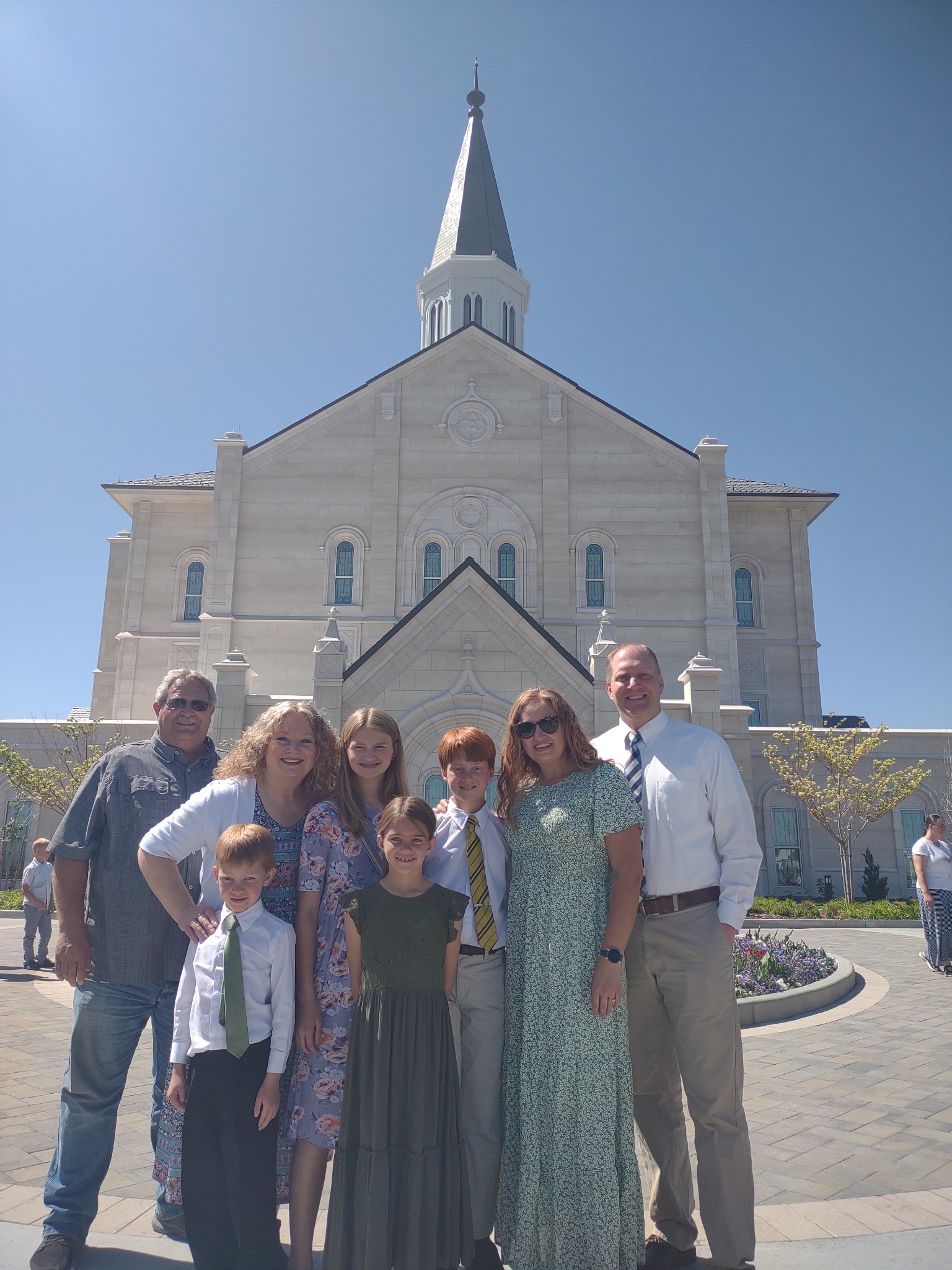
Later that evening, we attended the open house of the Layton Utah Temple with Amanda’s parents. Beautiful.
Paul, Lillian, Amanda, Aliza, James, and Hiram Ross with Bryan and Jill Hemsley 17 May 2024
We look forward to attending the temple after it is dedicated.
The next day we attended the open house for the Taylorsville Utah Temple, again with Amanda’s parents. We were also excited to run into the Brad and Rachel Hales family as well as Sarah Sanderson!
Bryan and Jill Hemsley with James, Aliza, Lillian, Hiram, Amanda, and Paul Ross 18 May 2024
It has been a crazy year for temple attendance and temple open houses. We have attended quite a few and quite a few are coming up for open houses. Wow, should be fun. It is exciting that the Kingdom and Church of God on the earth is in such a position to build so many beautiful houses to the Lord. We are blessed to attend the open houses and hopefully return some day to participate in holy ordinances there.
When I was interviewed for my first temple recommend in 1998, President Gene Hansen indicated he had a goal since he was first endowed to attend the temple every single month. He challenged me to do the same. As long as I have held a recommend, or I had permission to attend, I have attended the temple every single month since 1998. That meant a full day off of work in Missouri as it was a 4 hour drive one way from Branson, Missouri, to St. Louis, Missouri. Or from Richmond, Virginia, to Washington, D.C., that was a 4-5 hour drive and we often would go up and spend the night and return home on Saturday or Sunday depending on the circumstances.
Many open houses are upcoming, including Deseret Peak Utah; Casper Wyoming; Grand Junction Colorado; Elko Nevada; Syracuse Utah; Burley Idaho; Lindon Utah; Ephraim Utah; Smithfield Utah; Montpelier Idaho; Heber Valley Utah; Teton River Idaho; Salt Lake City Utah; Provo Rock Canyon Utah; Cody Wyoming; Lethbridge Alberta; Lehi Utah; and West Jordan Utah. Hopefully we can make some of the more exotic ones, particularly Birmingham England; Edinburgh Scotland; Honolulu Hawaii; and Vancouver British Columbia. We will see what our future holds.













 Sagacity