
This is another chapter of the Jonas history book compiled by Carvel Jonas. “The Joseph Jonas clan of Utah (including – early Jonas family history; early Nelson family history)” I am re-posting this as I received much better photos of Joseph and Annie, so those are now included!

“Joseph Jonas was born 10 January 1859. We learn the exact date and year because of research and the United States Census. His death certificate has the year of birth as 1858, and the headstone has Oct 1, 1860. I was told that members of the family couldn’t remember if he was born 10/1 – Oct. 1st or 1/10 – Jan 10. Fortunately, when Grandpa Jonas was asked during the 1900 census he told them January 1859. So we know he was born 10 January 1859. Also, all the other census records but one seem to agree. Joseph was born at Frenchtown, Monroe County, Michigan. His father was Hubert Jonas, who was born 8 Oct 1816 at Kirchheim, Rheinland, Prussia (Germany). His mother was Maria Catharina Schumacher, who was born 13 September 1815 at Oberdrees, Rheinland, Prussia. Joseph was the sixth and last son of a family of all boys. These three older brothers were born at Rheinbach, Rheinland, Prussia. These three older brothers died before marrying. Joseph lived with his family on the family farms in Michigan until 1879. Joseph was educated in the public schools in Michigan and could read and write. Joseph remained a member of the Catholic Church and went to St. Michaels Parish, which is still located at 502 West Front Street, Monroe, Michigan. This was a mostly German Parish, and this is the Parish that recorded Joseph’s older brother, John who was buried Sept 1870. Joseph moved with his family in 1871 to Ash Township. There the Jonas land was bordered by a railroad on its east border and was probably was the place where Joseph first became introduced to a very long career working on the railroad. In 1879 the family sold their land in Michigan and moved to Nebraska, Platte County, in a place called Pleasant Valley. This is where Joseph’s mother died in March of 1880. Pleasant Valley was a large area of county and the place where Joseph visited is now called St. Bernard. St. Bernard was a German settlement, and is probably the reason that first attracted the family to the area. His father and brother, William, farmed with a man named Michael Jonas. It was first believed that this other Jonas family was a branch of ours. Research proved this incorrect. Our Jonas family owned no land in Nebraska. Members of our family helped this other family to operate their farm for 4-5 years.
“Joseph had a long career working with section gangs for railroads. By the time he was 21 years old, (maybe before this age) until he was about 57 years old he worked for the railroads in section gangs. The only exception was a year and a half when he tried farming. That is over 35 years that we know of. “A section gang was a group of men – muscular, sunburned, streaked with dust and sweat; using crowbars and mallets. They were maintenance crews, the housekeepers of the railroad. All summer they chip away at their allotted section of railroad roadbed, weeding, spraying, burning, resurfacing, reballasting, repairing the ravages of frost and rain. The crew rode a handcar, which was nothing more than a flat, open truck on wheels, which raised about a couple of feet above the rails. It could be lifted on and off the tract by four men, two at each end. The men stood up to pump the handles by which it was propelled” Joseph’s work consisted in “Keeping the track in good level order. He used a jack to raise the sunken rails, shoveling earth beneath the ties to keep them in place. Besides the regular pay, they made overtime when there was any special work to be done, as unloading gravel trains. Only a few hands were kept on past November in the Northwest where Joseph mostly worked, two on a section. The rest got free passes, there being next to no work on the track until the frost breaks up.” Much of the information about section work was adapted from “Section Life in the North-West,” an anonymous article published in “Cornhill Magazine,” in January 1888.
“When Joseph worked for the Great Northern Railroad he had to keep the track he was working cleared when the Fast Mail came. A train that carried the U.S. Mail from St. Paul to Seattle traveled the track once a day. The men had to be careful to get out of the way for the train.
“Research indicates that Joseph used the following tools: claw bars, line wrenches, spike malls, adzes and tongs. Each of the rails were thirty three feet long, and were held together by bolts and fishplates. The men who worked on the railroad comprised the most cosmopolitan crew in American History. They included Civil War veterans and freed slaves, Irish and German Immigrants, Mormons and atheists, Indians and Chinese. They would ride the rails on their hand cars replacing rotting ties, tamp loose spikes and tighten bolts. Joseph’s daily wages averaged in 1892 $1.76 to $2.20 in 1914 a day as a section foreman (statistics found in Railway Statistics of the USA published in 1917).
“Now a little early history about great grandmother, Annette or Annie Nelson Jonas. Annette Josephine Nelson was born 18 November 1864. Logan 4th ward records tell us she was given a priesthood blessing 2 Feb 1865. She was born one month after her parents had arrived in Utah from their immigration from Sweden. She was born in a temporary dugout on College Hill, Logan, Utah. Her parents were Johannes Nilsson, (He later changed the last name to Nelson, and also used Neilsen at one time). He was born 4 Oct 1827 in Tonnersjo, Hallands, Sweden. Her mother was Agneta Bengtsson who was born 9 December 1832 in Oringe, Hallands, Sweden. Annie was the sixth child of her family. Her husband, Joseph, was also the sixth child in his family. She had ten siblings, 5 sisters and 5 brothers. When Annie was born it was raining, so members of the family put pans on the bed to catch the water as it dripped through the sod roof. Annie’s older brother, August, told about this day in his life history. The following is a quote from he history. “We were just moved into your home when Annette Josephine was born…She was the first child born in the Logan fifth ward. Mother was alone except for James (an older brother) and me. James sent to fetch father who was threshing wheat for John Anderson. When he arrived with a sister, mother had already taken care of herself and the baby.” The Nelson family had joined The Church of Jesus Christ of Latter-day Saints the year they left Sweden. They had built a temporary dugout until they could build a wooden cabin the following year. That winter was very hard for everyone in the area. An early January thaw had caused the snow to melt and the water inside the dugout was knee deep. Boards were used so the family could walk without wading in the water. They bailed out the home and went back the same night.
“When Annie was a baby the following events happened. “When mother went gleaning, I (August) had to stay with the baby (Annie). One day I left her on the bed while I went out to play. She rolled off the bed and got a big lump on her head. She was still crying when mother came home.” When Annie was almost nine years old her mother died, 4 November 1873. It was just about 14 days before Annie’s ninth birthday. And just six days before her birthday her infant brother, Moses, died. Moses was less than a month old when he died 12 November 1873. When Annie was about 11 years old her father remarried. The three younger children were raised by a stepmother. We have no details now, but life was very unpleasant for these three children because of the relationship with this stepmother. This marriage didn’t last more than eight years. Before Annie’s mother died she said to her son, “August, if I die, I want you to take care of the children.” He continues, “That had always been my job around the house. Later one evening mother kissed me and said, “You have been a good boy. God bless you.” With a smile she turned her head and breathed her last. God alone knows what little children lose when mother is gone. While she was sick I heard her say, “I don’t want to leave my little children.” Little did I know or realize what home would be like without her. She was more than ordinarily ardent and spiritually minded with high ideals, had a comprehensive knowledge of the gospel.”
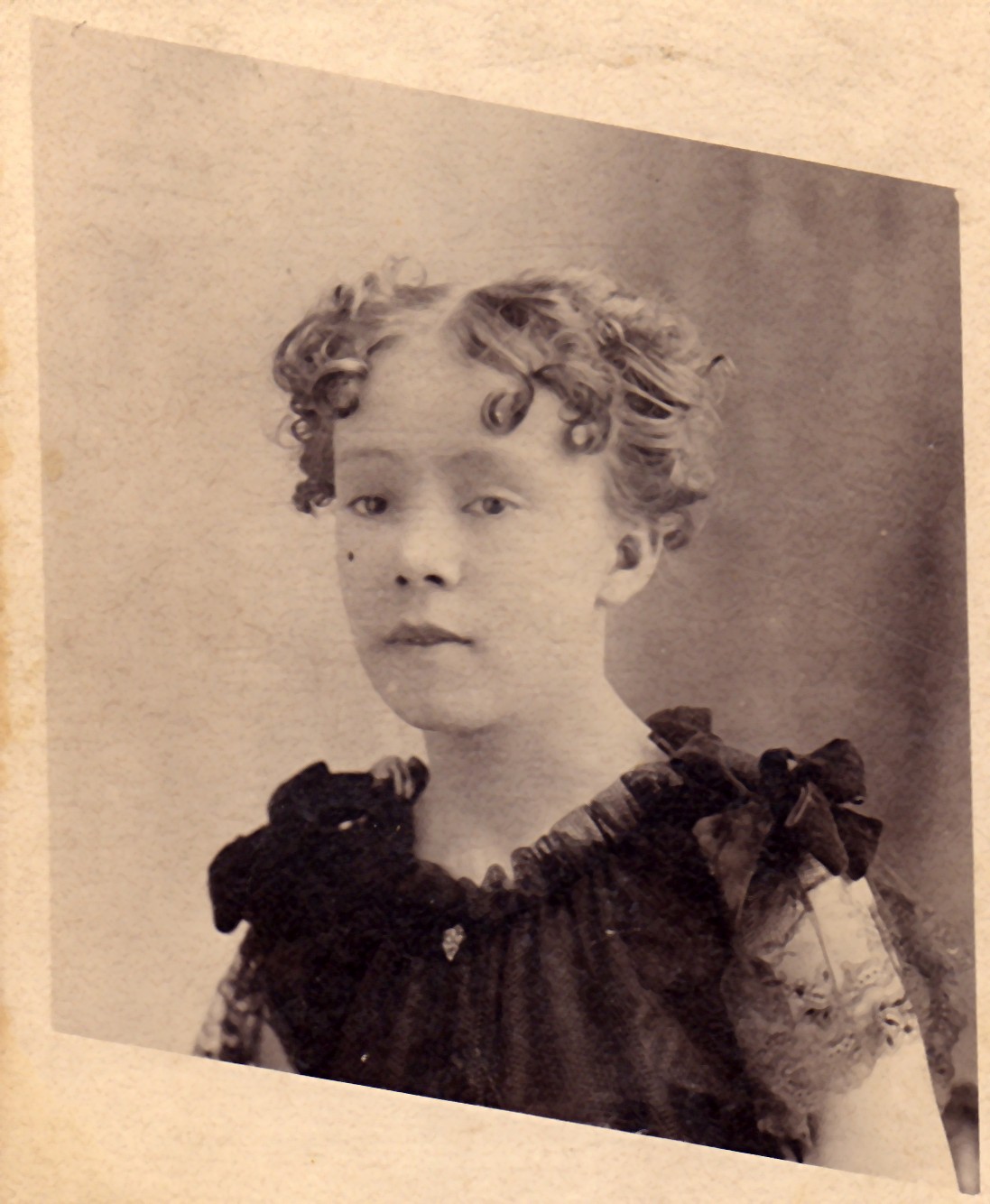
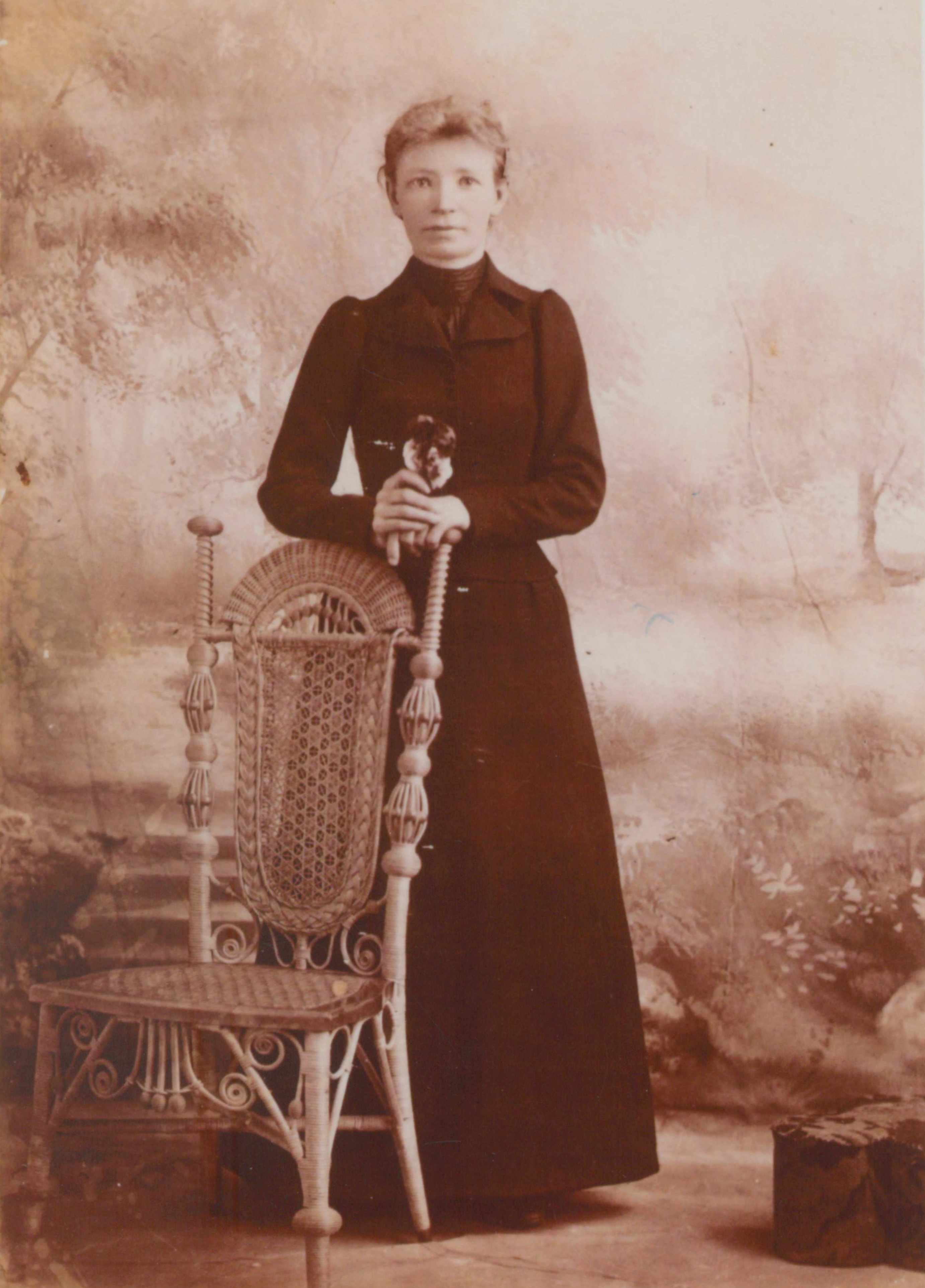
“Annie had light red hair and blue eyes. Annie’s mother her sister Abigail, and her first daughter, Margaret, all had red hair. Annie wasn’t very much taller than five feet, and was slender.
“While Annie was a teenager she went to work in a boarding house. She didn’t like living at home with her stepmother and her step siblings. While she was working at the boarding house she met Joseph Jonas, who was renting a room. Joseph had a dark, wavy hair and brown eyes. During their courtship Annie received a letter from her brother, August. He said, “I suggested to her that she marry a Mormon boy. Her reply was that Mormon boys were not as genteel as a Gentile.” With Annie’s unhappy life at home she must have thought marriage would be a better life. Annie was married the same month she turned 19 years old. Joseph was 24 years old, two months shy of being 25 years old when they were married. They were married November 1883 in Logan, Utah. Since Annie was born in November she may have been married on her birthday, but the day isn’t known. Joseph was 5 years older than Annie. Their first child was born 17 Jun 1884 in Logan, Utah. I am told Annie’s children would come early, before the normal nine months. Shortly after their first child was born Annie and Joseph moved to central Washington State near or at Ellensburg, Kittitas County. That move was made before the birth of their second child, Mary, who was born 17 Jul 1885. The rest of their children, seven in total, were all born at or near Ellensburg. They eventually lived in several, little towns near Ellensburg, such as Bristol in the 1890’s, Thorp in 1901, and Cle Elum 1900. Annie and Joseph moved to Washington because Joseph’s father and brother, William, had moved there from Nebraska about this same time in 1883-84.
“By 21 Jun 1887 Joseph and his brother bought 240 acres of land. Their father, Hubert, was living with the two families. An 1885 census of Washington Territory has William’s wife, Emma, Joseph’s wife, Annie, our great grandmother, living at the same place. The land was about three miles south east of Ellensburg according to the speedometer on our car when we drove the distance. These two sister-in-lays, Annie and Emma, would help each other take care of their babies. Annie’s daughter, Rosa, said they washed the clothes on a washing board and then would take them, especially the diapers, down to the creek. The clothes were rinsed to get all the soap out of them. Then they would hand the diapers over some bushes to dry.
“The families shared responsibilities. Rosa and some of Uncle Williams children would take the cows out on the plateau to graze. Mary and Margaret would help take care of the house. There were a lot of rattle snakes in the area. Occasionally Rosa Jonas would take a forked stick and hold the snakes head down. Then the boys would stone the reptile to death. One time the snake was so large it pounded the ground and jumped until it got loose. The kids never realized the danger they were in until years later. Fortunately, no one was hurt. Another time a large, wild cat kept attacking the cows so the kids brought the cows home. When their parents got upset at them for bringing the cows home the kids told them about the large cat. Uncle William Jonas rode his horse to the plateau and found the large cat tracks so the parents knew the kids were telling the truth.
“Joseph and William sold their 240 acres 28 Dec 1888 for 100 dollars in gold coins. They owned the land for a year and six months. Joseph gave up farming and went to work for the railroad again, much of the time working as the section gang boss. William stayed in the area as a farmer and homesteaded. William lived about three miles north of Ellensburg. While the two brothers, Joseph and William were buying their land a third brother, Francis Jonas, came to live with them. On 5 Sept 1887 Francis baptized his son at the St. Andrews Church in Ellensburg. For a time Joseph’s two brothers and his father lived together as a family in the same area.
“An important date for the Jonas families must have been 3 April 1886. This day there were three Jonas children baptized. Joseph and Annie’s daughter, Mary; Williams and Emma’s two children, Elizabeth and Hubert.
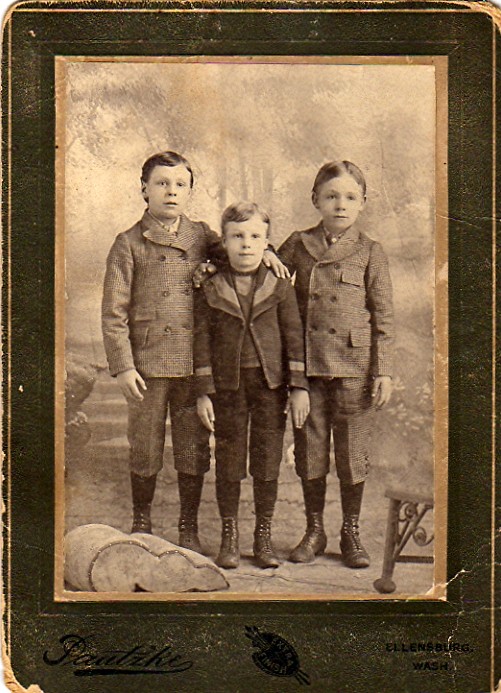
“It seems that Joseph and Annie rented after this time in 1889. William’s family lived close and the cousins would visit each other. Uncle William’s family had a gorgeous watermelon patch. William’s children chided Joseph’s children because they didn’t have a watermelon patch. One night, Rosa, John, William and Joseph swiped a watermelon and ate it. They didn’t want anyone to know so they fed the rhines to the pigs. The pigs wouldn’t eat the rhines. So uncle William’s kids discovered the rhines and the kids were caught. Joseph, soon after selling his land, began working for the Northern Pacific Railroad Company. He became a section foreman for the railroad. Both the 1900 and 1910 United States Census tell us he was a section foreman. Joseph would also make money besides working on the railroad. In the fall of 1895 the whole family went and picked hops.
“Joseph and Annie lived together as husband and wife for 13 years and one month. Annie’s mother, Agneta; Annie’s youngest sister, Abigail; her oldest daughter, Margaret; Annie’s Granddaughter, Verla; and also Annie all had a similar physical condition. Some of the symptoms were that the heart would palpitate of flutter, not fully beating. And their womanly cycles would last up to six months and then stop for two months. There was a chemical imbalance in their systems. Today we would call this PMS or premenstrual syndrome. In our family it is apparently passed from daughter to daughter, and sometimes it skips a generation. It also seems that it is harder to live with after each pregnancy, but during the pregnancy it goes away. Annie had a severe case of this chemical imbalance. After each pregnancy her condition made her more emotionally imbalanced. During her seventh pregnancy she lost the baby girl who lived only a few hours. Rosa and some of the family gave the baby daughter the name of her mother, Annette Josephine and later sealed her to her parents. Lillian, who was Joseph Nelson Jonas’ wife, had a dream. In this dream her husband was carrying an infant in his arms. That experience got the family thinking and Rosa remembered the baby being born. While Annie was having contractions with this seventh baby she went to her husband who was at work. Joseph was very upset with his wife for not staying home. Some say that Joseph did a very foolish thing while he was upset, and kicked Annie where the baby was. I’m not sure why this happened, or what the entire circumstances were at the time. On 12 August 1896 the little girl was born. With Annie’s history of chemical imbalance getting worse and emotional health came to the last straw. I am certain that both Joseph and Annie felt guilt that the baby died, and blamed themselves to some degree. Joseph took Annie to the Eastern State Hospital in Spokane Country, Washington State. She was admitted 29 December 1896, a little over four months from the time Annie lost her last baby. After the baby died Annie continued to loose blood for several months after. Annie agreed to go to the hospital. The night before she went to the state Hospital her children knew something was wrong of different. Annie put on her nice clothes, curled her hair and slept with her children. The next morning Joseph and Annie took the train to Spokane. While Annie was gone Margaret, the oldest child, was in charge of the household. The children knew that if they didn’t mind Maggie she would tell Joseph when he came home from work.
“After Annie was admitted to the hospital she was later sent home 31 October 1899 after 2 years and 11 months of hospitalization. Annie was just 32 years old when she first went to the state hospital. She had her 32nd birthday a little over a month before. She had been admitted four days after Christmas. With needed time to travel she must have left just a day or two after Christmas. It was probably delayed until after Christmas so she could have one last holiday with the children. Later she was discharged on Halloween day. Just about a month before she was discharged, 21 September 1899, Joseph and Annie’s daughter Mary Nelson Jonas had died. Perhaps after the loss of this daughter Joseph thought of bringing his wife home to the family again. The family was still living in the Ellensburg area. The stay was short. She was home for six months and 11 days. Then she was readmitted 11 May 1900. Her name is on the 1900 general census taken in Spokane County while she was at the hospital. Annie never saw her daughter, Mary Nelson, after her 11th birthday because Annie wasn’t home when she died.
“After Annie was readmitted the second time she stayed for 14 months until 2 Jul 1901. On this day she was released by her family and taken to Utah. On the 3rd of July 1901 Joseph, Annie and their five living children arrived in Utah at Annie’s brother’s home in Sandy. Joseph and Annie’s sister, Charlotte, were hopeful if Annie associated with her family, the Nelson’s, it might help her emotional and mental health. Annie’s brother, August, had this recorded in his life story, “…my sister, Charlotte Abigail, lived with us that summer (Sandy, Utah-1893). When she went to Logan that fall she had the fever. Later, (1901), she went to Washington to visit with our sister, Annie, wife of Joseph Jonas. Annie had been sick for a very long time, but none of us knew the nature of her illness until Charlotte brought the whole family to Utah with her. It turned out to be a mental illness. She kept running away so we finally had to put her in the institution at Provo, where she died a short time after…” “…There were five children. It was sad to see sister in her condition. I had not seen her since 1878, (Annie was 13 years old in 1878 until November)…Her daughter told me that before she lost her mind she would hold her head in her hands and moan, will not my father or brothers come and get me? …Her husband destroyed her letters to us so we never knew what she was going through.” Joseph and Annie’s children did write to the Nelson’s while they were living in Washington because we have some letters or post cards that have survived. So it is the belief of the author that Annie could have found a way to communicate with the Nelson’s.
“August was asked to care for the children by his mother when she was on her death bed. Instead, he left home when Annie was 13 years old and never saw her again until she was almost 29 years old. In his life story August said that instead of caring for the children he wanted to go and “make money.” To his credit August did help his other sister, Charlotte, when she was older. But it would have helped if care could have been given when the children were young.
“After Annie arrived at her brother’s home in 1901 Annie stayed with them for a few days over four months. Then August and his wife signed the warrant of commitment for Annie to be admitted to the Provo State Hospital 6 November 1901. Annie’s records are still at the state hospital in Provo. Annie remained there for 6 years 11 months until she died 23 December 1907 and was buried 25 December on Christmas Day. She was buried in the Crescent cemetery. For some reason the Nelson’s never put a headstone on her grave. Years later members of the Jonas family, probably William Nelson Jonas, placed a headstone on her grave. Annie was a young 43 years old when she died, the same age that her mother Agneta, had died.
A copy of Annie’s Utah State Mental Hospital records are included after. There is very little in the record, but it is telling what little is included.
“While the Jonas family lived with the Nelson’s Joseph Jonas worked on August’s farm. He was not a free quest. While they were there it became harvest time. Joseph worked with both families. Joseph wasn’t a tall person, 5’6″ or 5’7” but he was a very strong man. He often boasted that he could take the place of two men in the field. Joseph worked on the threshing machine. He lifted the bags of grain off the thresher.
“Annie’s brother, August, condemned grandmother for not raising her family in the LDS church. He would bring out his temple cloths and according to Rosa Jonas who was there, made grandma cry. He would say, “This is what our mother was buried in.” Then he would show her the temple clothes. This happened a few times and grandma was so upset on time that she spit on her brother. August probably had good intentions, but he handled the situation wrong. Annie was a women who was sick and just released from a state hospital. She needed special consideration and understanding.
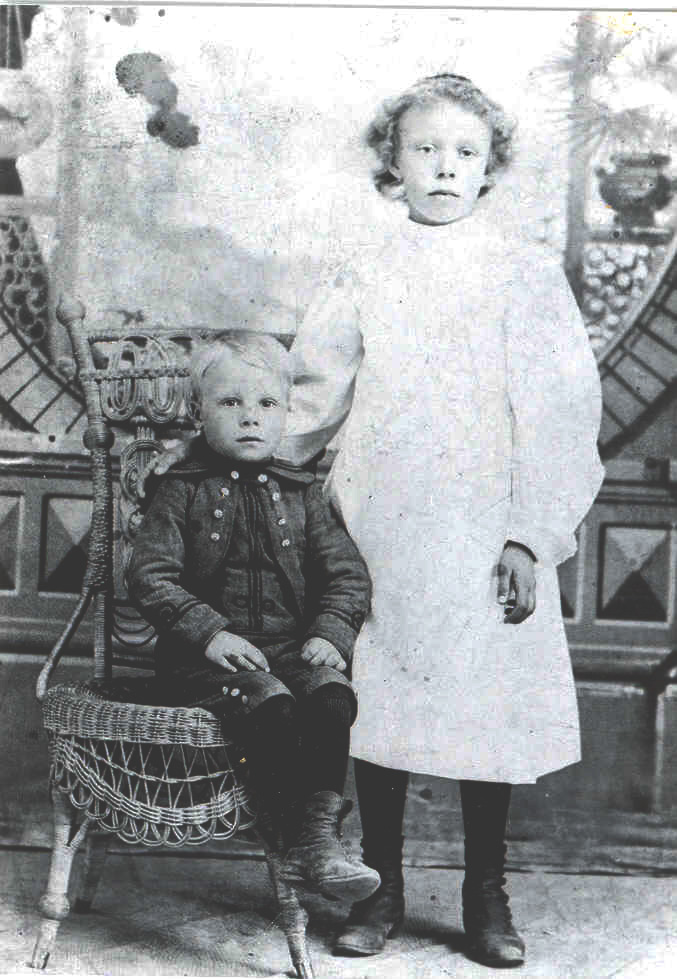
“Joseph and August had arguments, too. August persuaded the Jonas children to stay in Utah and not go back with their father to Washington. Rosa remembered that her father shook his fist at her and said “You remember where you belong.” Finally, Joseph went back to Washington with only one of his five living children, Margaret. The rest stayed in Crescent. The four Jonas children finally went to Richmond, Utah. Rosa married in 1904 and in 1908 the three boys left Sandy to live with their sister.

“An interesting book that may help the reader of this story to understand the life of Annie had while she was in the state hospitals was published March of 1908 and is entitled “A Mind that Found Itself.” This is a biography written by the author after his complete recovery from a mental illness. He describes conditions in a state hospital during the same time period Annie was living in one. The man’s name is Clifford W Beers. People who were admitted at the turn of the century were often treated cruelly. The people who were hired were untrained and needed no qualifications. Add to this the low wage and one may understand that people who hired to watch the sick used physical restraints and force to control their assigned subjects. Besides having their freedoms and dignity taken away, they were assigned to one style of clothes to wear.
“According to Annie’s records Annie was rational at times and then would have a sudden stroke of passion come over her. While Annie was in the state hospital she wrote to her children. She was capable of writing beautiful intelligent letters. At times she was in possession of her mental abilities. Unfortunately her children never answered her letters, which only worsened the way she felt about herself. The children were young, the oldest in her mid-teens. But the lack of support of her children and all other family relatives must have made her very lonely and given her a feeling of unhappiness and probably despair. Also, Joseph, her husband, must have been frustrated after taking her out of the state hospitals three different times and unable to help her. The circumstances would try the patience of any man. Joseph and Annie were given certain trials in this life which would be hard to bear by most people. Perhaps their trials in this life will help their standing before God in the next. A feeling of empathy for them comes over the author when he thinks of their lives and their loneliness.
“All of the children of Joseph and Annie, who lived past the age of 20, joined The Church of Jesus Christ of latter-day Saints. John, William, and Joseph Nelson were all baptized 10 January 1902. Rosa was baptized 6 February 1902. Margaret, Mary, and Annette Josephine had short lives. Mary died of typhoid fever 21 September 1899 being 14 years and two months old. Her sister, Rosa, said she chided her sister and told her, “You’re not sick because your face is so pink.” Mary unfortunately died the next day. The children did not realize it was the high fever that caused her cheek’s to be so flushed. Mary was baptized in the St. Andrew church in Ellensburg 25 Jul 1886 with two of her cousins, Elizabeth and Hubert. She was just one year old. Her headstone is on the main road or trail which runs through the Holy Cross Cemetery in Ellensburg. Her headstone is facing away from the road so you would need to go to the back to see the words. The original road was moved from in front of her headstone to the back of her headstone. The headstone reads, Mary dau. of Joseph and Anna Jonas born 17 Jul 1885 died 21 Sep 1899. She is buried next to her grandfather, Hubert Jonas and close to her sister, Margaret, and Uncle William Jonas. Her baptism and death records are at St. Andrew’s church. Margaret died of Bright’s disease. Bright’s disease is characterized by heightened blood pressure. The city paper called the Ellensburg Dawn dated 22 Sep 1904 reads, “Miss Jonas, daughter of Joe Jonas died Sat of Bright’s disease.” Margaret was born 17 Jun 1884 in Logan, Cache county, Utah. No records were found for her baptism in Ellensburg, although she was baptized. We have pictures of her graduation from catechism. Margaret was the only daughter who had red hair like her mother. Margaret was the only child who went back to Washington with her father sometime in 1901. She lived in Thorpe when she died. She has a beautiful headstone with a lot of detail embossed on it and these words, “Margaret beloved dau of Joseph and Annie Jonas died 17 Sep 1904 aged 30 years 3 months.” Both Margaret’s and Mary’s headstones were bought by grandpa Joseph Jonas. We know that because grandma was absent from the family during both deaths. Margaret also had a 4″ X 6 1/2″ card made at the time of her death. This card, too, was Joseph’s idea. The card is in a silver and black print with white background. There is a bird that has a paper in its mouth with the following description, “Let us be patient: These severe afflictions not from the ground arise, but often times celestial benedictions assume this dark disguise.” There is a small arch with “In Living Remembrance of.” Then a box elaborately decorated with, “Margaret Jonas” died Sep 17, 1904 aged 20 years and 3 months.” Then at the bottom in silver letters the following poem. “We miss thee from our home, dear, We miss the sunshine of thy face. We miss thy kind and willing hand, Thy fond and earnest care, Our home is dark without thee, We miss thee everywhere.” Joseph Jonas’ sentiments are realized to a degree by the headstone and card he left behind. He was obviously deeply hurt by his daughter’s death.
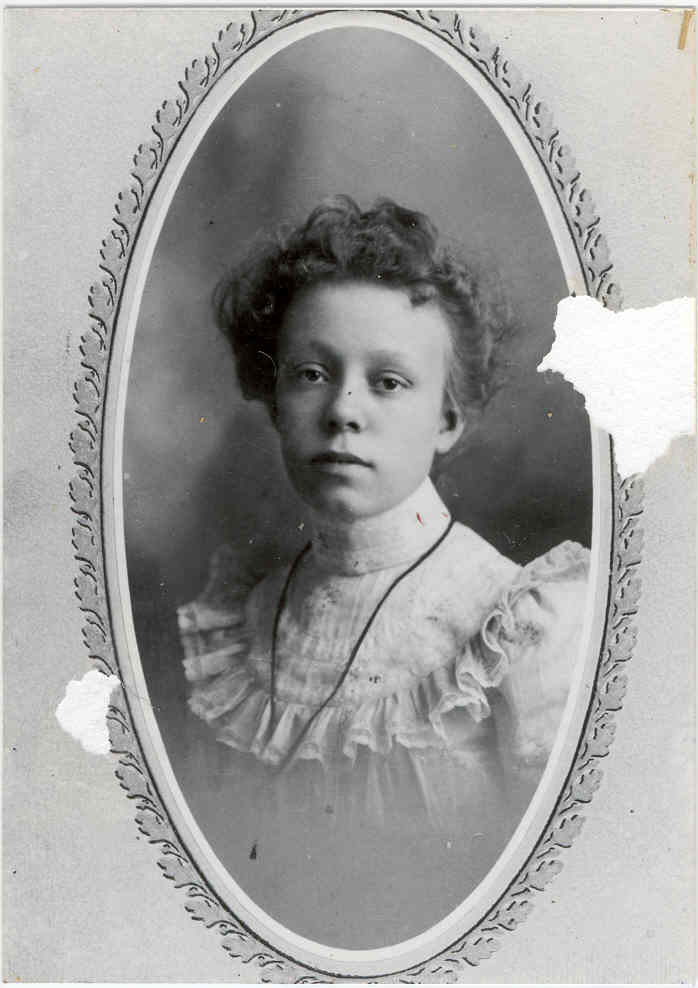
“Another interesting story we have, which gives us insight to Joseph’s personality, is how he handled his three son’s misbehaving. The three Jonas boys, John, William, and Joseph, had been caught stealing apples. Joseph was very upset. But instead of doing something immediately he went and chopped some wood for the fire. He chopped long enough to get rid of some of his anger. Then he disciplined his three boys. Joseph had a quick temper, but this story reveals his attempt to control his temper. If Joseph came home and got upset he was capable of turning the furniture over. However, Rosa’s children who knew Joseph Jonas really loved him. Rosa said that she had often wished she had sealed her mother’s sister, Charlotte, to him after he died.
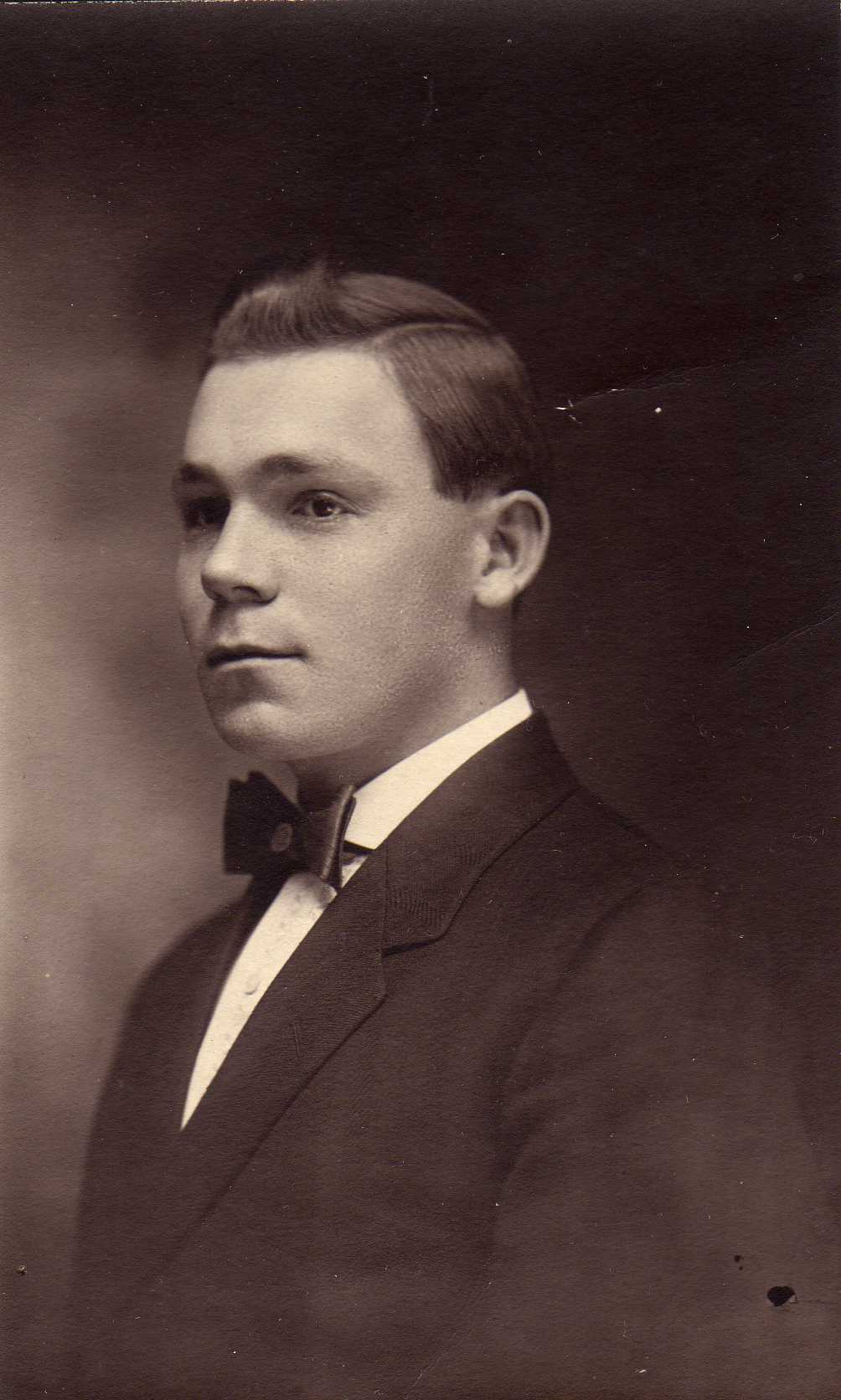
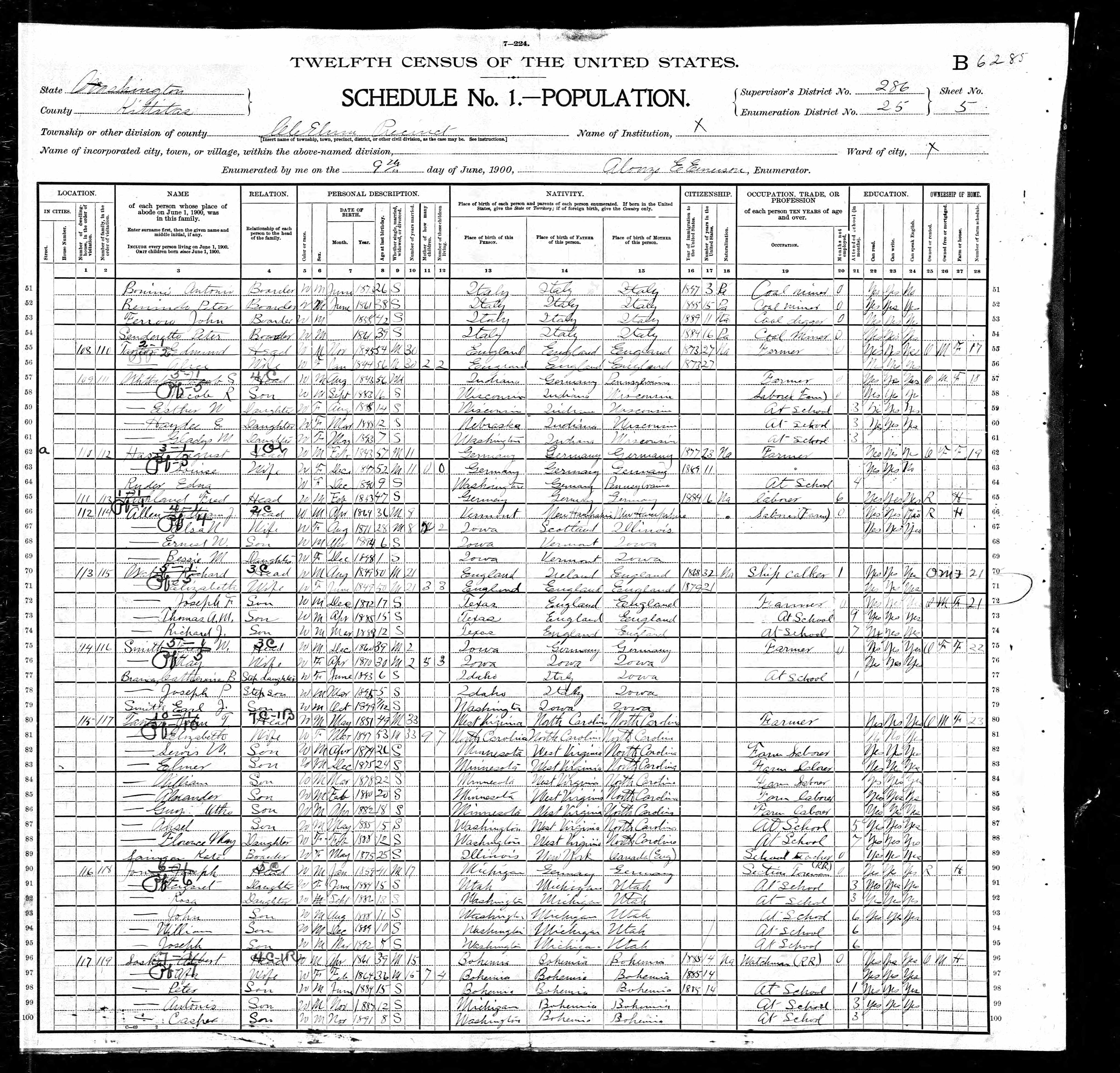
“Joseph gave annual donations to his church. One record reveals the following: “Mr Joe Jonas paid $5.00 this 11 day of October.” Also, 5 July 1910-paid $5.00 for cemetery care; 1911-his name was written for contributions; 1912 contribution of $3.00; 1913 contribution of $10.00. Joseph was also one of the witnesses when his brother, William, sold his land on the 18th of October 1905. The above records reveal faith in God. Also, there were probably other donations before 1910 that weren’t recorded. We have a census record for Joseph in the following years; 1860, 1870, 1880, 1885, 1887, 1900, 1910. We learn from the 1900 census that the family lived in Cle Elum, a place north west of Ellensburg, at which time they were renting a house. The 1910 year has Joseph living in the South Kittitas Precinct. He was living in a house with two single men, who were also of German extraction and were also workers for the railroad. Joseph was 51 years old and his roommates were 47 and 56 years old. He told the man taking the census that he was the head of his family and that he was a widower. next to Joseph’s name on the 1910 census is the record of seven men who were living in a section house. Joseph was most likely living in the foreman’s house that was owned by the railroad. Counting the two people living with him it is likely that Joseph was the foreman of nine men during this summer work.

“On 19 February 1912 Joseph Jonas went to a notary and recorded the following affidavit: “Joseph Jonas to public. Joseph Jonas, being first duly sworn, on oath states: That he is a brother of William Jonas who died in Kittitas County Washington, Oct 11, 1905; that said William Jonas died seized the following real estate situated in said Kittitas County, to wit: the south west quarter of section twenty three (23) in township eighteen (18) north of range eighteen (18) east, W.M.; that said William Jonas at the time of his death was a widower, his wife, Emma Jonas, having died in said Kittitas county, on March 17, 1898, intestate: that said William Jonas was married once; that George Jonas, son of said William and Emma died on the third day of July, 1908, at the age of ten years, intestate.”
“Joseph Jonas was a hard working man. He was strict with his family, and was a good provider. He often helped neighbors by letting them stay in his house and by feeding them. One time grandmother, Annie, had made some rolls and jam which were given to a visitor. The man decided that he didn’t want to eat the food so after he got outside he gave the food a toss. Joseph saw this and gave the man a verbal tongue lashing. Also, Grandpa one day was cooking a pan of eggs. It was a large fry pan. A fly landed into the eggs, so he threw the eggs, fly and all, into the fire.
“About 1907 Joseph was visiting his daughter, Rosa. He needed some help on his section gang. So his son-in-law, Christian Anderson, went to Washington and worked on the railroad. His son-in-law thought Joseph was a good man to work for and after Joseph died he made a wooden cross for his grave.
“When Joseph was 58 years old he came to Utah to die at his daughter’s home in Richmond, Utah. Joseph had sugar diabetes and dropsy. He had been sick for a year and six months before he died. He stayed at Rosa’s home for about two months before he passed away. Lillian, Joseph Nelson Jonas’ wife, who remembered seeing Joseph said that he was a handsome man even on his death bed. He died 28 Jun 1917 at 3:00 A.M. and was buried 30 Jun 1917 in the Richmond Cemetery. He has a headstone. It is exactly like his wife’s headstone and were both placed on the graves by a member of the Jonas family years after their deaths. The records aren’t clear, but the only sibling they had who could have bought these headstones was William Nelson Jonas. All the other siblings had died rather early in life.

“During one of the visits Joseph made to his daughter, Rosa, in Richmond, Utah, Rosa had forgotten to put Annie’s picture away. Joseph picked it up and said, “They didn’t tell me when you passed away, but you came to me so I knew you were dead.”
“Some time after Cy Anderson was born, the first grandson of Joseph and Annette, Joseph made a visit to Utah to see the family. That was probably in 1908. Joseph bought him some new clothes, a sailor’s outfit. During his visits he would ask the children to help their mother. Joseph would be standing at the top of the stairs and would toss someone a nickel and say, “clean up the table for your mother and the nickel is yours.” The grandchildren who knew Joseph really like him. Joseph rejected any attempt his children made to convert him to the LDS Church. But Joseph was a religious man, and believed in God.
“Rosa loved to take her father’s coat and smell the lapel when he came to visit. She liked to smell the smoke from the big cigar Grandpa smoked.

“Grandpa Joseph Jonas lived to see his wife, Annie, die; three of his daughters; both of his parents; his brother, William, and Emma his sister-in-law all die. He lived away from his four living children for most of their lives. He was a man with a family, but wasn’t able to be with them very much for the last 16 years of his life. He was very much alone except for friends he made in Washington. Grandma, Annette Nelson Jonas, except for a few brief months, spent the last 11 years of her life alone or in the company of strangers. Annie experienced her family’s lack of support and certainly a broken heart sped her to an early death. One may wonder why some people are asked to suffer such hardships in life. Yet, we should always appreciate them for giving us our lives and for the sacrifices they made in raising a large family. They provided for and loved their children, and raised them well under extreme hardships.













 Sagacity