History of Plain City Pt 7

I have two copies of the History of Plain City, Utah. The front indicates it is from March 17th 1859 to present. As far as I can tell, the book was written in 1977. At least that is the latest date I can find in the book.

One copy belonged to my Grandparents Milo and Gladys Ross. My Grandpa has written various notes inside the history which I intend to include in parenthesis whenever they appear. They add to the history and come from his own experience and hearing. 

I will only do a number of pages at a time. I will also try to include scanned copies of the photos in the books. These are just scanned copies of these books, I have not tried to seek out originals or better copies.

History of Plain City March 17th 1859 to present, pages 107 through 122.

SCHOOLS
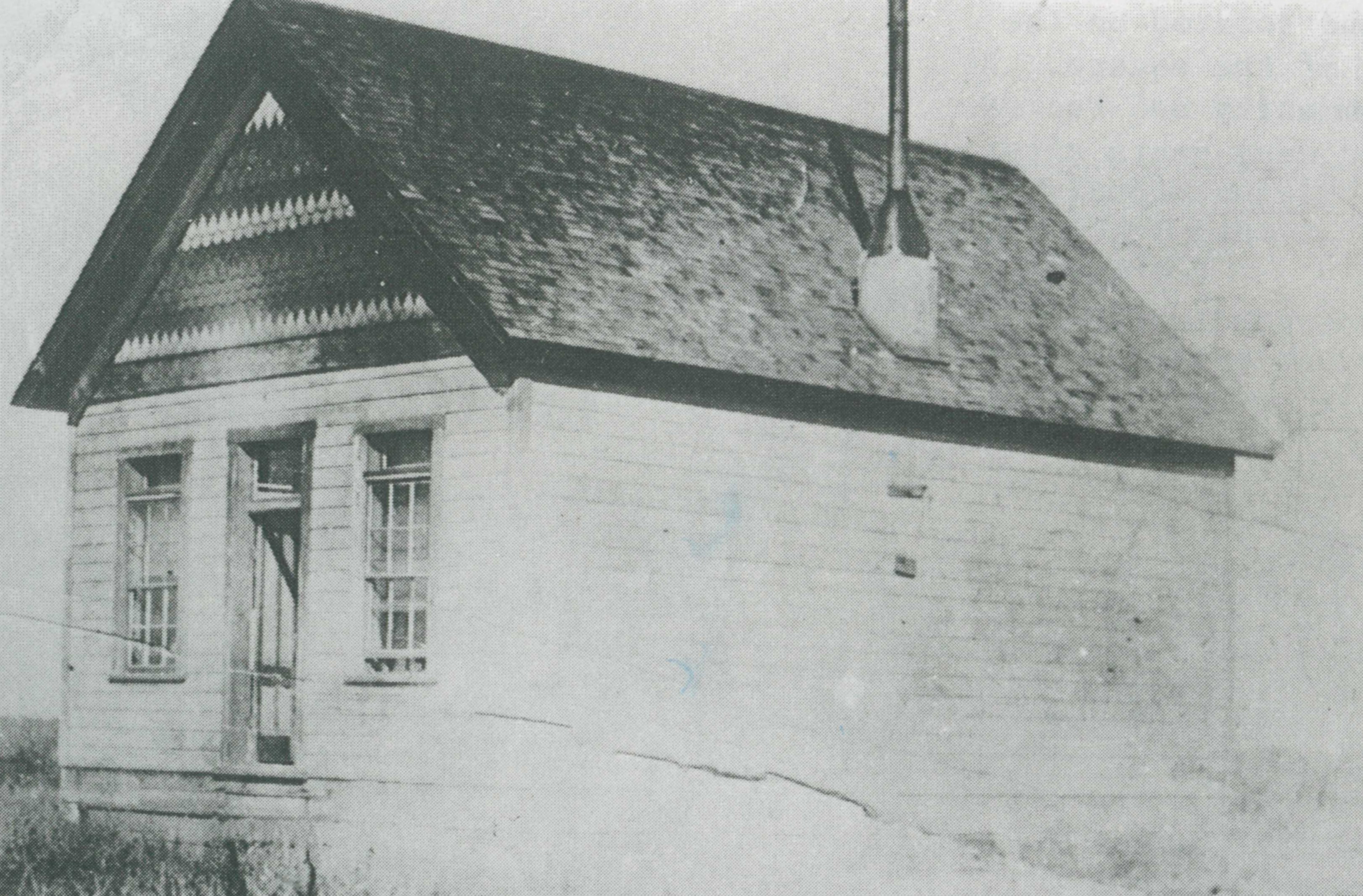
Early Plain City School

Poplar School

            Submitted by Roxey R. Heslop

             Poplar was a branch of the Plain City Ward and it received its name from the long rows of Poplar trees on both sides of the street.

            The school district was organized in 1891. First school was held in the home of Peter McCue located about 3475 West 1975 North. James L. Robson was the first teacher followed by Mrs. W. Winslow and Myra Gray.

            A room school house was built about 1894 at 3320 West 1975 North. This picture is not the Poplar school which had no windows in the front but on the west side and three was a wood shed at the back but it is very similar in many ways.

            The teachers were Bessie Zinn, Blanch Bagley, Freed W. Dalton, Naomi Tracy, Emma Anderson, Sarah Stevenson, Etta Brow, Lottie Henigar, Minnie Rudiger, Melvina Wayment, Esther Steward, Welthy Lake, and Pearl Tracy.

            The Poplar School House was the center of church and social activities. Sunday School was organized 3 Sept. 1894. Primary and Religion were held there.

            Dances were wonderful. Everyone danced and the young folks were taught to waltz, two-step, quadrills, polkas, schottisches and others that were popular at that times. Richard Lund with his violin accompanied by his daughters, Annie or Alminda on the organ. Often lunch was served. Children’s dances were held.

            The Poplar Lane people were like a united family. Everyone went to church and attended all social events. All the children played together.

            Nearly all of the folks have gone but those who are left enjoy wonderful memories of the days of activity, associations and inspirations that was bought from the one-room school.

First consolidated public school. Built to replace the North, South, and Poplar Schools. It was built of adobe and located on the northeast corner of the square. It was used as a community and recreational center for many years after the second consolidated school was built.
Second public school after front door was sealed; new entrance was built on the east side when the gymnasium was added. Lunch room facilities were added to the west later.
Second public school after remodeling when front windows were bricked over but before later additions were made.
Interior of the second school, showing old wood and metal desks that were attached to long wooden planks.

CLASS PICTURE TAKEN IN THE POPLAR SCHOOL

Poplar school was a one room building. This picture was taken during the school term of 1901-1902 with Etta Brown as teacher. Later she married LeRoy E. Cowles who became the president of the University of Utah.

Top row: Emma Cottle, Elmer Robson, Ada Skeen, Williams Allred, Walter Cottle, Anzley Miller Luckart, Parley Taylor, Luella Cottle Stanger, Edmund Furnis, Alma Furnis, Laurence Cottle, Leslie Taylor, John Taylor.

Bertha Urry, Kate Urry East, Pearl Taylor Lund, Bertha Robson England, Alice Urry Wayment, Josephine Cottle Monroe, John Jackson, Elmer Taylor.

Roxey Robson Heslop, Manila Taylor Hancock, Emma Taylor Homer, Kate Kensley Nalder, Parley Stoker, Blanch Kenley, Drysdale, Unknown, Jessie Kenley Wayment, Evelyn Taylor Cottle, unknown, Martena Taylor Surrage, Merl Jackson, Zina Urry, Nellie Kenley Draney.

Some were too young to go to school and were brought for the picture.

                                                                                                Submitted by Roxey R. Heslop

This is the graduating class of 1907, Class of 1906-1907

Bottom Row

                     Pearl Taylor Lund, Lester Taylor, her brother

2nd Row From Bottom

                        Kristina Grieve, John Quincy Blaylock, Principal

                        Lula Marriott Neal, Hazel Skeen Rhead

3rd Row

                        Bertha England, Ruth Hodson Wheeler

                        Sylvia Richardson Singleton, Ruby Ipson Hunter

                        Jesse Cottle

Plain City Graduation Class

Left to Right, Back Row:

Mable Palmer, Noland Taylor, Gilbert Maw, Leone Lund

Middle Row:

Iris Poulsen, LaVerna Davis, Principal John C. Neal, Florence Singleton, Ruth Poulsen

Front Row:

Clifton Kerr, Marion Sneed, Arvilla Taylor, Ellis Giles, Margaret Hunt, Gilbert Taylor, Harold Carver

PUBLIC SCHOOL BUILT IN 1906

            This is located on the site of the present Plain City Elementary School.

            It included elementary through tenth grade in later years. The last year the tenth grade was held in the school was 1947. After that, it remained in use as an elementary school.

            The front windows were bricked over and later the front doors were bricked when the gymnasium was added to the east.

            Still later, a cafeteria was added to the west. The building was demolished in 1955, leaving the later additions and adding a new addition of classrooms to the east that same year.

            The students pictured at the bottom of the picture are enlarged on the3 following pages.
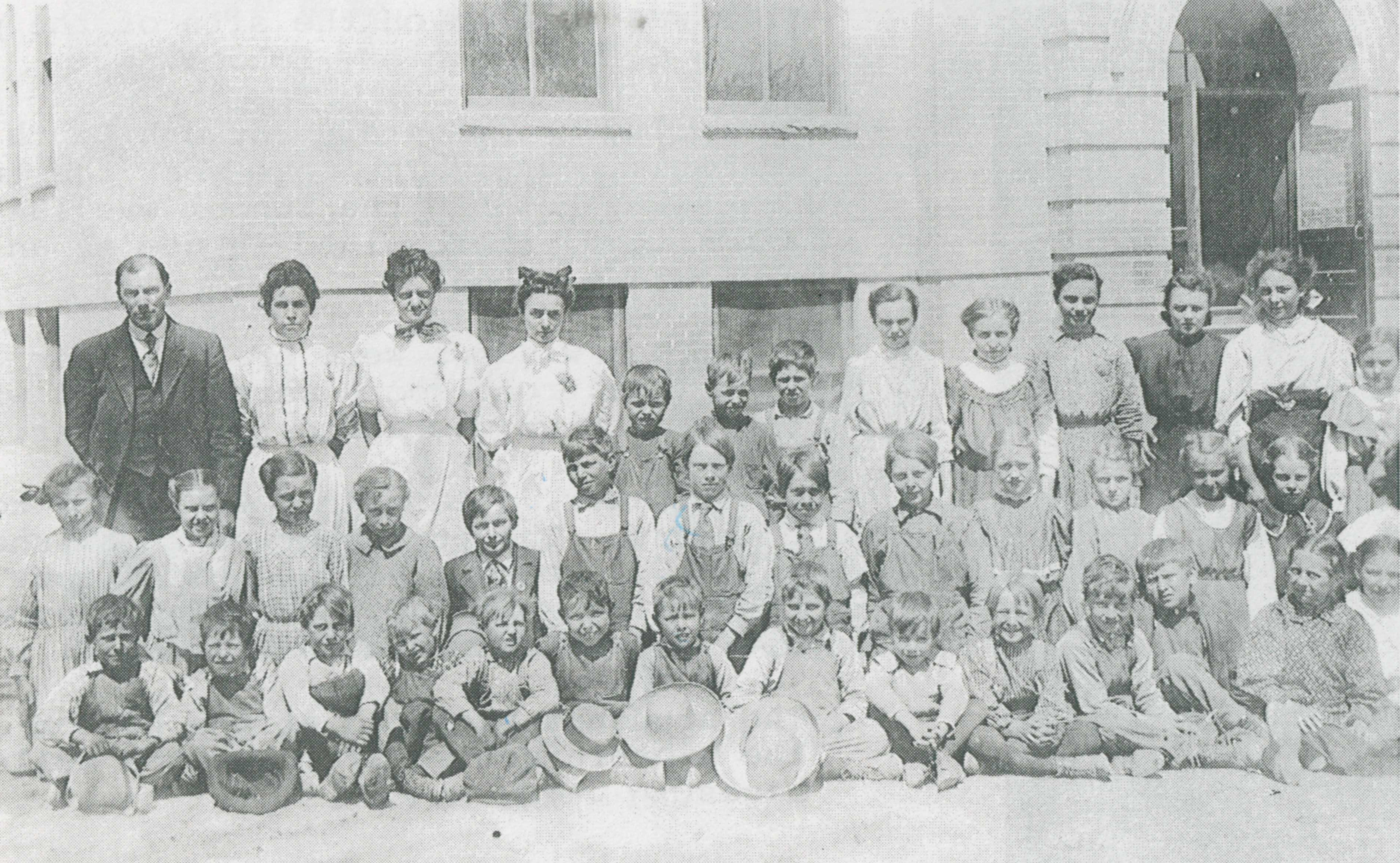
Weber County School District was organized in 1906-07. Plain City was dedicated in September of 1906.

            The teachers are: John Quincy Blaylock, Laura Lamon, Rosabell O’dell and Elda Cooley.

1909, 8TH Grade Graduation Class.

Back row L to R: John Taylor, Roxey Robson (Heslop), Easter Lund (Stevenson), Elvin Maw, Mildred England (Hart) (Robins).

Front row L to R: Lona Ipsen ( – ), Teacher John Q. Blaylock, Bertha Hodson (Bullock).

Enlargement of the students in the 1907-07 school picture on the preceeding pages, showing the center one-third of the students.

Early school buses were privately owned and used for summer vacations and school trips.

Enlargement of the students in the 1906-07 school picture on the preceeding page, showing the left one-third of the students.

L. Rulon Jenkins, teacher and Principal of the 1906 school during later years in the 30’s and 40’s.

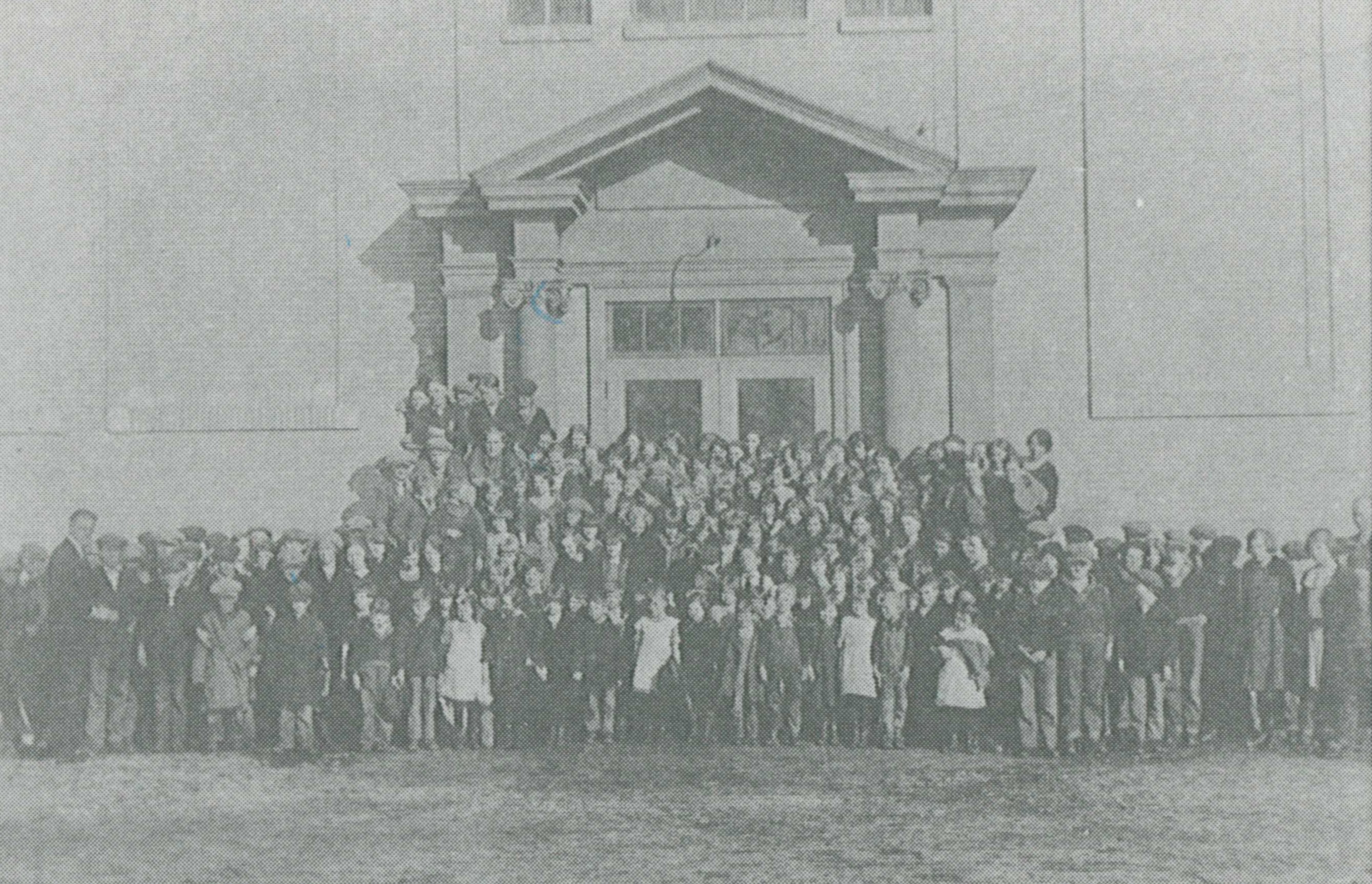
Early classes held in the 1906 school during succeeding years. Dates and identities not known.

Early Plain City Class Picture Date and teacher unknown. We hope you can identify a parent or grandparent to make it more meaningful to you.

View of the 1906 school after the gymnasium had been added and more modern bus transportation used.
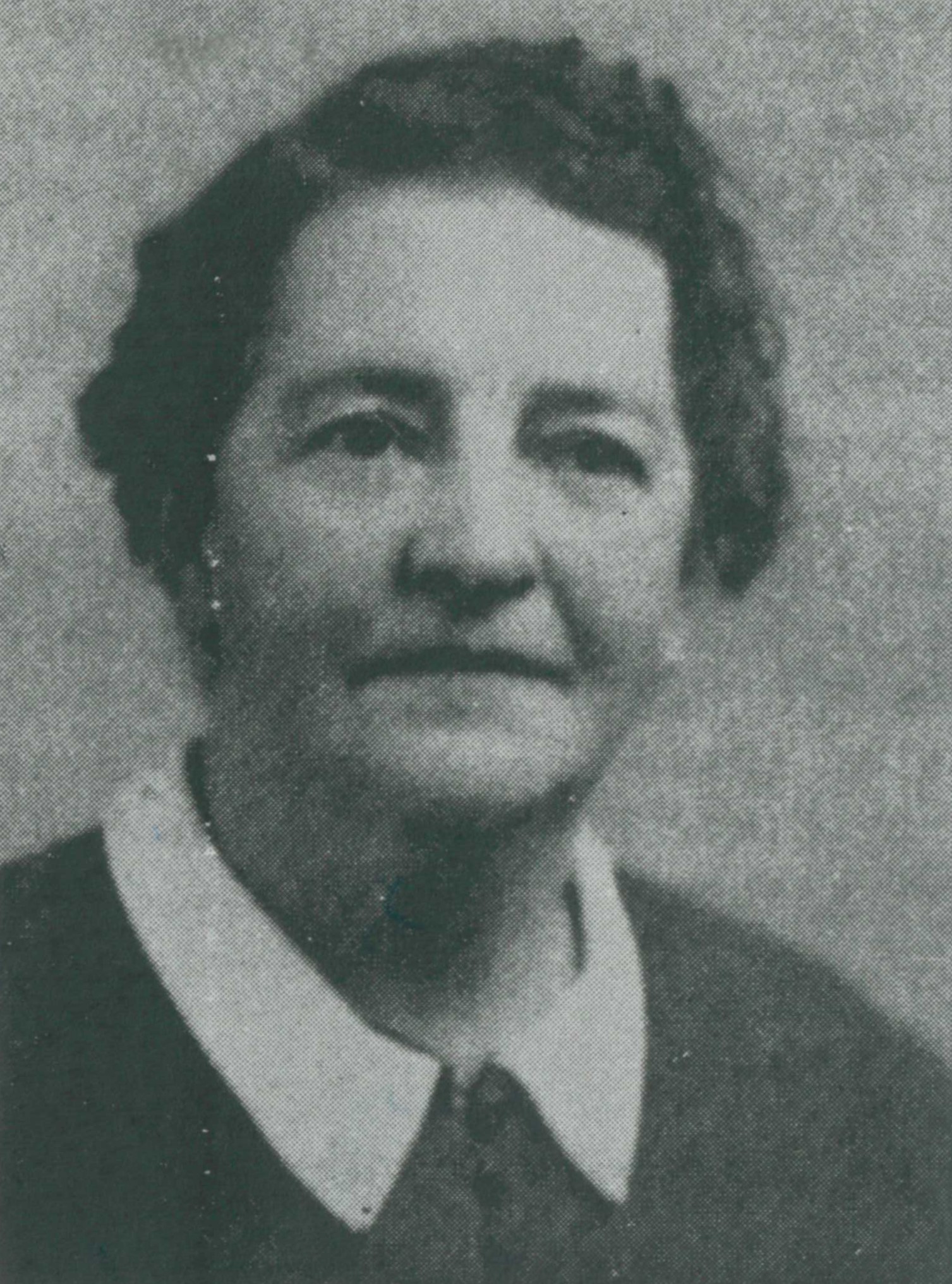
CLARA SKEEN THOMAS

SUBMITTED BY BEVERLY B EDDY

            The Plain City School Hot Lunch Program was organized by Clara Skeen Thomas, wife of George Sidney Thomas. Clara Thomas was the first to start the Hot Lunch Program at the Plain City School 1923-1924.

            She received $1.00 per day. She served vegetable and tomato soups, chip beef gravy on mashed potatoes and chili. These were purchased at the cost of three cents a bowl. With this money she received from the food, she would but the materials needed to prepare the next meal.

            For years, she cooked and prepared the food at her home. She would have to take it up to the school each day. This would consist of three blocks each way. Later the school purchased a coal oil stove, which made it possible to prepare the food at the school. Each year the Hot Lunch program started in November and ended in March.  Clara Skeen Thomas cooked and prepared the hot lunch at the Plain City School for eleven years and never missed a day.

SCHOOL LUNCH PROGRAM

L to R: Ivy Carver, Elizabeth Lund, Vacona Singleton, Tillie Moyes, Bell Woods.

SCHOOL BUS TRANSPORTATION

SUBMITTED BY ELMER ROSE

            Oh what progress in education when in 1926, Weber High School opened its doors for County students. This high school is located on Washington Blvd. and presently occupied by the Adult Education Center.

            Elmer Rose, of Warren, drove a bus to accommodate the northwest area of Weber County. Mr. Rose’s route covered several miles each day. He picked up all the high school students from Warren and both elementary and high school students from the south end of Plain City. He dropped the elementary students off at the Plain City elementary school. The student’s near the street car tracks were left to ride it to the high school.

            Mr. Rose then continued his route through the North Plain City Road, back along highway 84 to within a reasonable distance from the car line. Then after passing the Harrisville along the route to Ogden limits.

            On the route going to the high school, Mr. Rose picked up the Farr West Elementary students and delivered them to the Farr West School. He returned down the North Plain City Road picking up the elementary students for Plain City School.

            The bus contracts to maintain and operate these units of transportation were awarded by bids. The lowest bidder getting the job if his outfit met the approval of the school board.

            The inside of the bus had a bench on each side facing the center. The girls usually occupied these seats. In the center was a bench called a straddle seat. The boys were crowded together astraddle this bench.

            The first bus was small and about 30 students were crowded into it. The students gave this bus the nickname of “Cracker Box”.

            He often chartered his privately owned bus to take scouts, F.H.A. and other groups on excursions and other activities.

            Mr. Rose removed the bus from its chassis during the summer so that he might use the truck for farm trucking.

            This picture is of the second privately owned bus maintained and operated by Elmer Rose. This bus had a large capacity, accommodating about 50 students.

BUSSES LOADED IN FRONT OF WEBER HIGH SCHOOL IN 1926

            The first buses to transport students to Weber High School in 1926 were operated and maintained by the individual owners. The contracts were let to the person whose bid was accepted by the Board of Education. Since these first buses were individually owned, the owners often used them for 4-H, temple, and various other excursions and activities.

            Owners often used them for hunting trips. Family and friends slept in them overnight lodging away from home. The straddle bench was removed to make room for the bed.

            Some owners removed the bus body from the chassis and placed another bed on the truck, so as to utilize it for farm trucking during the summer.

            School transportation has evolved from the horse-drawn school wagon to the giant sized yellow school bus.

            Today students ride to school fairly comfortable. The buses are warm, the seats padded, the radio plays popular music. These luxuries were undreamed of by the students who rode in the white top covered wagon, or the horse drawn sleigh in the midst of winter.

                                                                                    SUBMITTED BY RUTH FOWERS

SCHOOL LUNCH PROGRAM WORKERS
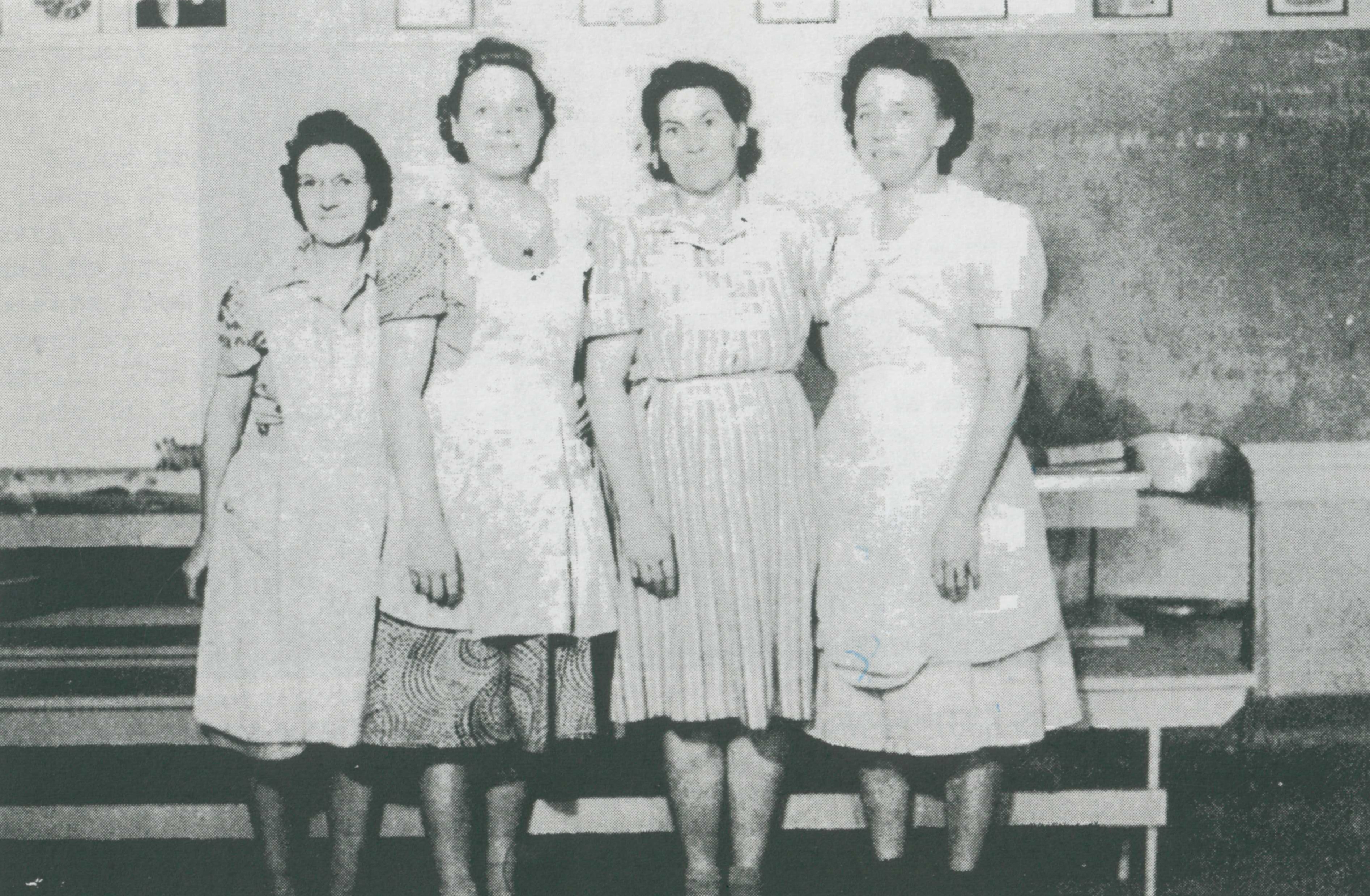
L to R: Hazel Kennedy, Mabel Moyes, Thelma H. Palmer, VaCona P. Singleton- Head Cook.

L to R: Principal Earl Cragun, Fern Hogge, Mabel Moyes, Norma Jensen, Hazel Kennedy.

Demolition in 1955 of the school building of 1906. This building had been in use continuously since that date. Many changes and additions had been added around it.
View of the new addition added in 1954-55 as seen through the rubble of the 1906 building and the construction equipment of the new building.
View of the Plain City Town Square from the roof of the school gymnasium.

Three view of the Plain City Elementary School as it stands today in 1977 with its many additions.
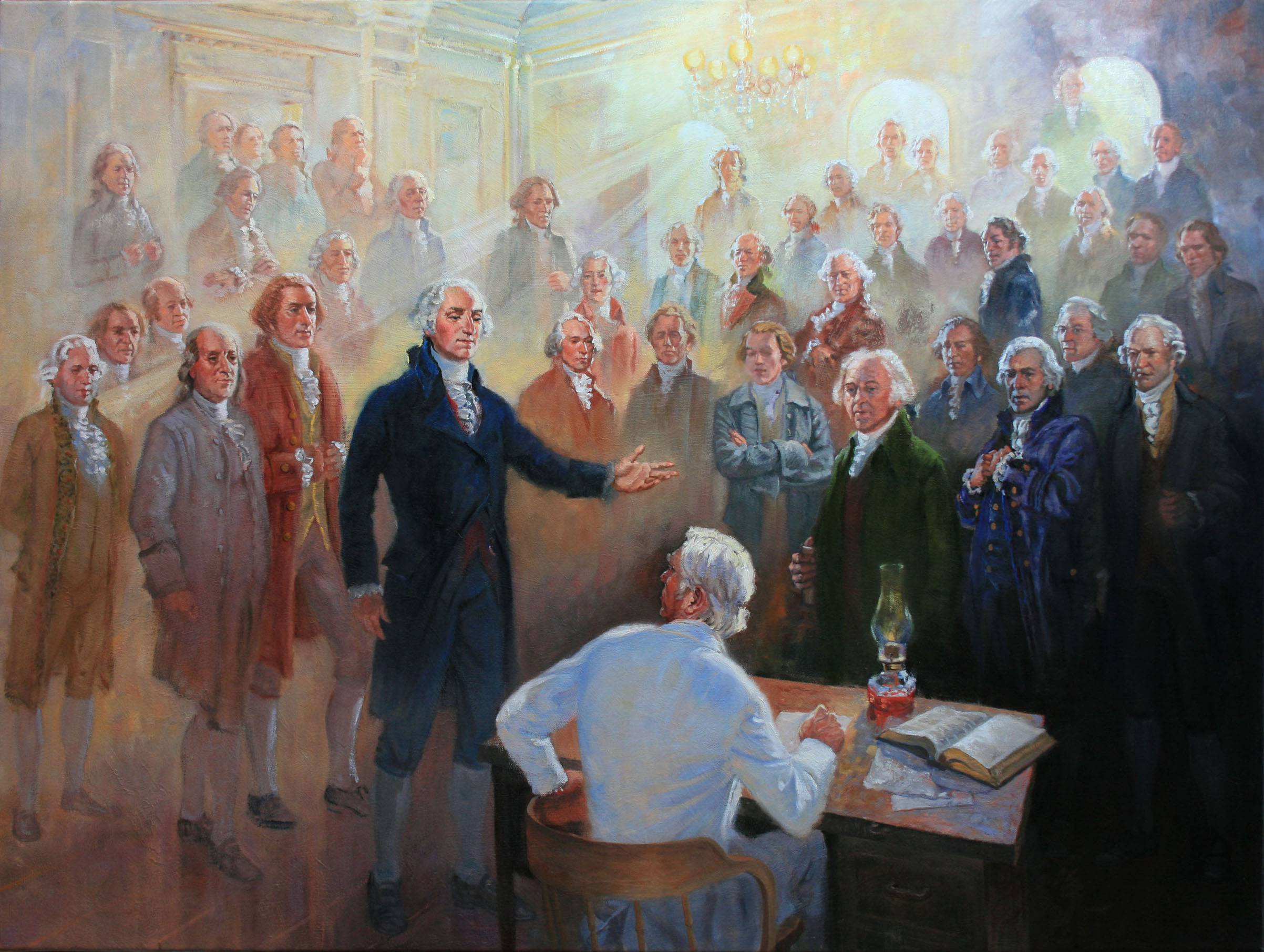
Wilford Woodruff and Founding Fathers

Wilford Woodruff’s vision of the Founding Fathers requesting Temple Ordinances

We are moving soon, but the Burley 11th Ward gave me another chance to address them. Since I received a number of requests for a copy of the talk, which is really just a collage of various items I could find online, the Journal of Discourses, the Saints second and third volumes, and other various histories. Here is the text of the talk I wrote, that does not mean it is the talk I gave…

I first addressed the freedoms we have as contrasted in the Saints third volume related to Germany. I said the word Jew and Israel from the stand and did not fear reprisal. I listen to free radio anytime I want and even seek out British radio from time to time and there is nothing illegal. Lastly, we could congregate without the worry of those in our midst about what was said or in the actual act of meeting.

Then to the following:

Declaration of Independence – We hold these truths to be self-evident, that all men are created equal, that they are endowed by their Creator with certain unalienable Rights, that among these are Life, Liberty and the pursuit of Happiness.

George Washington: “The success, which has hitherto attended our united efforts, we owe to the gracious interposition of Heaven, and to that interposition let us gratefully ascribe the praise of victory, and the blessings of peace.”

Alexander Hamilton: “The Sacred Rights of mankind are not to be rummaged from among old parchments or musty records. They are written . . . by the Hand of Divinity itself.” “For my own part, I sincerely esteem it a system, which without the finger of God, never could have been suggested and agreed upon by such a diversity of interests.”

Thomas Jefferson: “The God who gave us life gave us liberty at the same time.”

John Adams: “As I understand the Christian religion, it was, and is, a revelation.”

Benjamin Franklin: “The longer I live the more convincing Proofs I see of this Truth. That God Governs in the Affairs of Men!—And if a Sparrow cannot fall to the Ground without his Notice, is it probable that an Empire can rise without his Aid?—We have been assured, . . . in the Sacred Writings, that ‘except the Lord build the House, they labour in vain that build it.’ I firmly believe this;—and I also believe that without his concurring Aid we shall succeed in this political building no better than Builders of Babel.”

James Madison: “It is impossible for the man of pious reflection not to perceive in it a finger of that Almighty hand which has been so frequently and signally extended to our relief in the critical stages of the revolution.”

Samuel Adams: “Revelation assures us that ‘Righteousness exalteth a Nation’—Communities are dealt with in this World by the wise and just Ruler of the Universe. He rewards or punishes them according to their general Character.”

Charles Pinckney: “When the great work was done and published, I was . . . struck with amazement. Nothing less than that superintending hand of Providence, that so miraculously carried us through the war, . . . could have brought it about so complete, upon the whole.”

On May 4, 1842, he called to his side nine of the most faithful of his brethren—Hyrum Smith, Brigham Young, Heber C. Kimball, Willard Richards, Newell K. Whitney, and others—and later their wives came with them to the upper floor of the Red Brick Store in Nauvoo. 

Joseph was seeking to fulfill the promise from D&C 124, given in 1841, which the Lord would reveal to Joseph “all things pertaining to this house, and the priesthood thereof, and the place whereon it shall be built.” 

He had started, “If it should be the will of God that I might live.” Then he corrected and said, “It is not the will of the Lord that I should live, and I must give you, here in this upper room, all those glorious plans and principles whereby men are entitled to the fulness of the priesthood.” He proceeded in an improvised and makeshift way to do so.

We have from Brigham Young that after they had received these blessings the Prophet said: “Brother Brigham, this is not arranged right. But we have done the best we could under the circumstances in which we are placed, and I wish you to take this matter in hand and organize and systematize all these ceremonies.”

Brigham Young later said, “I did so. And each time I got something more, so that when we went through the temple at Nauvoo I understood and knew how to place them there. We had our ceremonies pretty correct.”

While the Nauvoo Temple was started in 1841, the first endowments were performed in the winter of 1845 and into 1846.  Baptisms had started in the Mississippi River prior to the temple and moved into the temple baptistery soon after it was completed and dedicated, well before the rest of the temple was done.  Brigham, leading the church, was personally overseeing the organization and perfection of the endowment and other ordinances that started in Nauvoo. 

After arriving in Salt Lake City, the church used the top floor of the Council House, starting in 1852 until the Endowment House was completed in 1855.  It was in this building that endowments, prayer circles, some missionary training, and some setting aparts were conducted.  The use of the Endowment House ended in 1877 with the completion of the St George Temple.  That building stood until Wilford Woodruff heard that unauthorized sealings were occurring there and ordered it razed in 1889. 

The St George Temple was the only one completed during Brigham Young’s 30 year tenure as President.  It was dedicated on 1 January 1877 in three dedicatory prayers under the direction of Brigham.  The baptistery by Wilford Woodruff, the main floor by Erastus Snow, and the sealing room by Brigham Young Jr.  Wilford Woodruff served as St George Temple President from 1877 to 1884.  Brigham had to be carried up the stairs, but he stood and spoke in the Assembly Room. 

“When I think upon this subject, I want the tongues of seven thunders to wake up the people,” he declared. “Can the fathers be saved without us? No. Can we be saved without them? No. And if we do not wake up and cease to long after the things of this earth, we will find that we as individuals will go down to hell.”

Brigham lamented that many Saints were pursuing worldly things. “Supposing we were awake to this thing, namely the salvation of the human family,” he said, “this house would be crowded, as we hope it will be, from Monday morning until Saturday night.”

On 9 January 1877, the first baptisms for the dead were performed in the St George Temple.  The first endowment for the dead was performed on 11 January 1877.  Brigham and Wilford personally oversaw the ordinances being performed.  Wilford began wearing a white suit, starting the trend that continues to this day. 

All endowments to this point had been done and passed by word of mouth.  It was in St George, far from Salt Lake City, that the ordinances were first written down.  Brigham also wanted to make sure the record was preserved and that they were standardized.  They were read to Brigham time and time again who would then approve or continue to revise the ordinances.  Brigham went home to Salt Lake City in April 1877.  He stopped and dedicated the spot for the Manti Temple on the way home.

Wilford Woodruff then wrote in his journal on Sunday 19 August 1877, “I spent the evening in preparing a list of the noted men of the 17 century and 18th, including the signers of the Declaration of Independence and presidents of the United States, for baptism on Tuesday the 21 Aug 1877.”

His journal entry for August 21 reads, “I, Wilford Woodruff, went to the temple of the Lord this morning and was baptized for 100 persons who were dead, including the signers of the Declaration of Independence. … I was baptized for the following names.” He then listed the names of one hundred men.

Elder Woodruff continued his journal entry: “When [John Daniel Thompson] McAllister had baptized me for the 100 names, I baptized him for 21, including Gen. Washington and his forefathers and all the presidents of the United States that were not on my list except Buchanan, Van Buren, and Grant.” (The work for these presidents has since been done.)

“It was a very interesting day,” Elder Woodruff continued. “I felt thankful that we had the privilege and the power to administer for the worthy dead, especially for the signers of the Declaration of Independence, that inasmuch as they had laid the foundation of our Government, that we could do as much for them as they had done for us.

“Sister Lucy Bigelow Young went forth into the font and was baptized for Martha Washington and her family, and seventy of the eminent women of the world. I called upon the brethren and sisters who were present to assist in getting endowments for those that we had been baptized for today.” (Wilford Woodruff’s journal, typescript, vol. 7, Church History Library; spelling and punctuation modernized.)

The first public mention of these events was made nearly a month after the baptisms were performed. In an address in the Tabernacle on Temple Square on 16 September 1877, Elder Woodruff first told publicly of the visitation of the signers of the Declaration of Independence.

“You have had the use of the Endowment House for a number of years, and yet nothing has ever been done for us. We laid the foundation of the government you now enjoy, and we never apostatized from it, but we remained true to it and were faithful to God. (Conference Report, April 10, 1898; Discourses of Wilford Woodruff, pp. 160-61)

During the 68th Annual General Conference of the Church which was held in April 1898, President Woodruff recounted the sacred experience:

I am going to bear my testimony to this assembly, if I never do it again in my life, that those men who laid the foundation of this American government and signed the Declaration of Independence were the best spirits the God of heaven could find on the face of the earth. They were choice spirits, not wicked men. General Washington and all the men that labored for the purpose were inspired of the Lord.

Another thing I am going to say here, because I have a right to say it.  Every one of those men that signed the Declaration of Independence, with General Washington, called upon me, as an Apostle of the Lord Jesus Christ, in the Temple at St. George, two consecutive nights, and demanded at my hands that I should go forth and attend to the ordinances of the House of God for them.  Men are here, I believe, that know of this, Brother John D. T. McAllister, David H. Cannon and James S. Bleak.  Brother McAllister baptized me for all those men, and then I told these brethren that it was their duty to go into the Temple and labor until they had got endowments for all of them.  They did it.  Would those spirits have called up on me, as an Elder in Israel to perform that work if they had not been noble spirits before God?  They would not. (Wilford Woodruff, Conference Report, April 1989, pp. 89-90.)

“They waited on me for two days and two nights,” he said,

“I thought it very singular, that notwithstanding so much work had been done, and yet nothing had been done for them.” (Journal of Discourses, 19:229.)

I was also present in the St. George Temple and witnessed the appearance of the Spirits of the Signers….the spirits of the Presidents….and also others, such as Martin Luther and John Wesley….Who came to Wilford Woodruff and demanded that their baptism and endowments be done. Wilford Woodruff was baptized for all of them. While I and Brothers J.D.T. McAllister and David H Cannon (who were witnesses to the request) were endowed for them. These men… laid the foundation of this American Gov., and signed the Declaration of Independence and were the best spirits the God of Heaven could find on the face of the earth to perform this work. Martin Luther and John Wesley helped to release the people from religious bondage that held them during the dark ages. They also prepared the people’s hearts so they would be ready to receive the restored gospel when the Lord sent it again to men on the earth.” (Personal journal of James Godson Bleak – Chief Recorder of the St. George Temple.)

In 1986, some of the staff of the Family History Library’s LDS Reference Unit were assigned to compile and computerize all the existing genealogical data on the founding fathers, to identify their families, and to document completed temple ordinances for each. For purposes of the project, a founding father was identified as one who had signed one or more of the following documents: the Articles of Association (1774), the Declaration of Independence (1776), the Articles of Confederation (1778), or the Constitution (1787).

The library study of 1986 revealed that there were no sealings of children to parents performed at the time the baptisms and endowments were performed. As a note, the ongoing revelation related to sealings to parents was not revealed until 1894.  It was then that the Law of Adoption, or sealing to prominent church leaders, was discontinued and we were encouraged to do genealogical work to compile the pedigree of the entire human family.  It was then that the Utah Genealogical Society was founded that has snowballed into the fantastic work of FamilySearch and all its appendages. 

He also recorded that George Washington, John Wesley, Benjamin Franklin, and Christopher Columbus were ordained High Priests at the time.

Temple work was performed on behalf of the following well-known and respected men and women in the St. George Utah Temple in August 1877.

Founding Fathers: William Hooper (NC), Joseph Hewes (NC), John Penn (NC), Button Gwinnett (GA), Lyman Hall (GA), George Walton (GA), Edward Rutledge (SC), Thomas Heyward Jr. (SC), Thomas Lynch (SC), Arthur Middleton (SC), Samuel Chase (MD), William Paca (MD), Thomas Stone (MD), Charles Carroll (MD), George Wythe (VA), Richard Henty Lee (VA), Thomas Jefferson (VA), Benjamin Harrison (VA), Thomas Nelson Jr. (VA), Francis Lightfoot Lee (VA), Carter Braxton (VA), Robert Morris (PA), Benjamin Rush (PA), Benjamin Franklin (PA), John Morton (PA), George Clymer (PA), James Smith (PA), George Taylor (PA), James Wilson (PA), George Ross (PA), Caeser Rodney (DE), George Read (DE), Thomas McKean (DE), Philip Livingston (NY), Francis Lewis (NY), Lewis Morris (NY), Richard Stockton (NJ), John Witherspoon (NJ), Francis Hopkinson (NJ), John Hart (NJ), Abraham Clark (NJ), Josiah Bartlett (NH), William Whipple (NH), Matthew Thornton (NH), Samuel Adams (MA), John Adams (MA), Robert Treat Paine (MA), Elbridge Gerry (MA), Stephen Hopkins (RI), William Ellery (RI), Roger Sherman (CN), Samuel Huntington (CN), William Williams (CN), and Oliver Wolcott (CN).

Note: Temple work was not done for John Hancock or William Floyd as it had already been completed previously.

Presidents of the United States: George Washington, John Adams, Thomas Jefferson, James Madison, James Monroe, John Quincy Adams, Andrew Jackson, William Henry Harrison, John Tyler, James Knox Polk, Zachary Taylor, Millard Fillmore, Franklin Pierce, Abraham Lincoln, and Andrew Johnson.  Temple work was not done for James Buchanan, Martin Van Buren, or Ulysses S. Grant.

Other eminent men baptized by Wilford Woodruff in the St. George Utah Temple in August 1877 include: Sir Edward Gibbon, Johann Wolfgang von Goethe, Oliver Goldsmith, Henry Grattan, Humboldt, Alexander von Irving, Washington Jackson, Thomas Jonathan “Stonewall” Johnson, Samuel Juarez, Benito Pablo Kemble, John Philip Liebig, Baron Justus von Livingstone, David Macaulay, Thomas Babington Nelson, Lord Horatio O’Connell, Daniel Peabody, George Powers, Hiram Reynolds, Sir Joshua Schiller, Johann Christoph Friedrich von Scott, Sir Walter Seward, William Henry Stephenson, George Thackeray, William Makepeace, Vespucci, Amerigo Webster, Daniel Wesley, John Wordsworth, William Parepa, Count Dimitrius, Martha Washington and her family, John Washington (Great Grandfather of George Washington), Sir Henry Washington, Lawrence Washington (Brother of George Washington), Augustine Washington (Father of George Washington), Lawrence Washington (Father of Augustine), Lawrence Washington, Daniel Park Custis, John Park Custis (Son of Daniel and Martha Parke Custis), and Martin Luther.

Eminent Women baptized include: Jean Armour (1767—1834) of Scotland, Jean Armour Burns (Wife of Robert Burns) (1759—1796), Jane Austen (1775—1817) of England, novelist, Mary Ball (1708—1789) of America, Mary Ball Washington (Mother of George Washington) (1732—1799), Sarah Bernard (1800—1879) of England, Sarah Barnard Faraday (wife of Michael Faraday (1791—1867), Charlotte Bronte (1816—1855) of England, novelist, Felicia Dorothea Browne (1793—1835) of England, Elizabeth Barrett Browning (1806—1861) of England, poet, (wife of Robert Browning) (1812—18?), Martha Caldwell Calhoun (d. 1802) of America (mother of John Caldwell Calhoun) (1782—1850), Martha Parke Custis (1755—1773) of America (Daughter of Martha Washington) (1732—1802), Martha Dandridge Washington (1732—1802) of America (wife of George Washington) (1732—1799),  Rachel Donelson Jackson (1767—1828) of America (wife of Andrew Jackson (1767—1845), and Abigail Eastman Webster (1737—1816) of America (mother of Daniel Webster (1782—1852), to name but a few. Temple work was performed for a total of 70 eminent women.

During most of our national history Columbus and the Founders were considered heroes with determination and foresight.  Cities, rivers, and many other places were named after them.  More recently there has been a wide spread effort, designed especially to indoctrinate young people, which slanders Columbus, the Founders and their accomplishments.  Columbus is held personally responsible for centuries of mistreatment of Native Americans.  The Founders are portrayed as being greedy and motivated by selfish interests. All of this is as astonishing as it is misleading.  

From the Lord’s perspective among the most important events of the history of the world was the discovery and founding of America.  1 Ne 11-14.  Nephi was referring to Columbus when he wrote:  “I looked and beheld a man among the Gentiles, who was separated from the seed of my brethren by the many waters; and I beheld the Spirit of God, that it came down and wrought upon the man; and he went forth upon the many waters, even unto the seed of my brethren, who were in the promised land” 1 Ne 13:12.  By the Founders “the Lord God will raise up a mighty nation…even on the face of this land.” 1 Ne 22:7.

Go on to life and history of George Ross of Pennsylvania, signer of Declaration of Independence.  

Jonas History: Jonas/Schumacher

This is another chapter of the Jonas history book compiled by Carvel Jonas. “The Joseph Jonas clan of Utah (including – early Jonas family history; early Nelson family history)”

    “Our Jonas descendants from Utah can all trace their genealogy to the Rheinland in Germany to, so far, the early 1700’s.  This is the area where all of our great grandfathers and great grandmothers lived.  The Jonas last name can be traced to a little town called Kirchheim.  All the Jonas; we know of originated from Kirchheim, including Hubert Jonas who is the first, and as far as we know, the only member of the Jonas clan who sailed to America.  Hubert’s wife was born in Oberdrees, a little town near Kirchheim.  Her name was Maria Catharina Schumacher.  She went by the name of Mary.  Mary’s mother was also from Oberdrees, and her mother’s family as far back as we can go were also from Oberdrees.  Mary’s father was Johann Peter Schumacher.  The Schumacher’s came from Schweinheim, another town near Kirchheim.  Maria Catharina Schumacher was born 13 Sep 1815.  All of our ancestors from Joseph Jonas, born 10 Jan 1859, back to the early 1700’s belonged to the Roman Catholic Church, and were Prussian until they came to America.  Many of our records past the year 1800 come from parish records and give only christening dates instead of birthdays.  Mary is the only child we can find born to Johann Peter Schumacher, born 4 Jun 1793, and Anna Maria Schmitz born 1 Oct 1792.  Mary’s record of birth was not found under the Schumacher last name, but under her mother’s last name, Schmitz.  Mary’s parents were not married until she was 18 years old.  They were married 31 Jan 1834.  Fortunately they were married and left us a record, or our genealogical would end without knowing who Mary’s father’s family were.  Johann Petrus Schumacher’s parents were Hubert Schumacher, a farmer, and Elisabeth Nuecken.  They had three children.  Our great grandfather, John Peter, was the middle child.  Anna Maria Schmitz’s parents were Christian Schmitz and Anna Christina Siep.  They had two children, our great grandmother was the oldest. 
    “Joseph Jonas’ father was Hubert Jonas, born 8 Oct 1816 at Kirchheim, Rheinland, Germany.  Hubert’s parents were Wilhelm Jonas, Chr 23 Jul 1773 and died 27 May 1843, and Anna Catharina Breuer, Chr 21 Jun 1782 and died 5 Feb 1855.  Wilhelm and Anna were married 19 Jul 1802 in Kuchenheim.  They were parents of eleven children, 6 girls and 5 boys.  Our great grandfather, Hubert, was the fifth child and second son.  Wilhelm was a farmer and a weaver by trade.  Hubert was also a weaver, and mostly a farmer. 
    “Hubert Jonas was 43 years old when our great grandfather, Joseph was born.  Huber’s father, Wilhelm Jonas, was also 43 years old when Hubert was born.  Wilhelm’s father, another Hubert Jonas Chr 7 Nov 1728, was over 45 years old when Wilhelm was born.  So in our genealogy line about 131 years pass in time before a fourth generation was born, he being Joseph Jonas who was born 10 January 1859.  To continue the Jonas genealogy line Hubert Jonas, Chr 7 Nov 1728 and died Apr 1785 was married to a Gertrud Hartzheim.  They had five children, 2 boys and 3 girls.  Our great grandfather, Wilhelm, was their youngest child.  Huber’s father was Jacob Jonas.  We do not have Jacob’s birthday yet.  We do know that he married Catharina Zimmermann and they had seven children.  Jacob remarried and had two more sons.  A death date for Catharina Zimmermann has not been found, but we can assume it is between 14 Jun 1735, the birthdate of her last child, and 28 Nov 1741, the date Jacob remarried.  Records for a third man named Hubert Jonas were also found.  He was a few years younger than Jacob Jonas, and was also found on the same church records from Kirchheim.  It is the opinion of the author that these two were brothers.  Because of their similar last names, both living in the same small town, and Jacob was a witness to Huber’s first child’s baptism.  Also, the name Hubert was given to Jacob’s second child.  It is estimated that Jacob Jonas was born about 1699-1706.  The significance of finding these two brothers is that it assures us the Jonas last name continues back farther in time, even though known records may not.  Anna Catharina Breuer, Chr 19 Jul 1782, father’s name was Johannes Breuer.  He married Christina Neuenheim the 22 Jul 1777.  Both had been married before and had lost their first companions to death as both were widowed.  Johanne’s first wife, Margaretha Reuter, died Jan 1777 after almost twelves years of marriage.  Seven months later he married our great great grandmother, Christine Neuenheim.  Her first husband had died about nine years before she remarried.  They had two daughters, our great grandmother being the youngest.  Johannes Breuer had had three sons before his first wife died.  Johannes Breuer’s parents were Christian Breuer who died 7 Sep 1757, and Barbara Bessenich who died 16 Jul 1761.  Christian and Barbara had four children, two boys and two girls.  Johannes Breuer and his twin brother, Petrus, were the oldest children of the family. 
    “Now for the more specific history of Hubert Jonas, born 8 Oct 1816 at Kirchheim, Rheinland, Germany; his wife and children.  Hubert was the 6th child and second son of Wilhelm and Anna Jonas.  He was taught in the trade of a weaver as his father was, but records in America show that he mostly farmed.  He married Mary Catharina Schumacher 25 Jan 1844 at Rheinbach.  He was 27 years old when he married and she was 28 years old.  They had three children born to them in Germany.  They were all sons.  Peter Jonas born 13 Feb 1845; Johann Wilhelm born 24 Jun 1848; Johann born 17 Nov 1849.  They were all born in Rheinbach, and it is very likely that Hubert and Mary lived in Rheinbach after they were married.  All of these three sons died before marrying.  Our family didn’t have any knowledge of Johann Wilhelm, who must have died as a very young infant.  Since no record was found for his death in Germany he must have died sailing to America or shortly after arriving.  The only death record we have of these three son’s which has been found is for Johann Jonas.  He died 7 Aug 1870 at Frenchtown, Michigan.  He was a single, 20 year old who had worked as a farmer with his father.  He died of consumption, which is the archaic term for tuberculosis.  Peter, the oldest son is believed to have died from the same sickness.  According to cousin Verla both boys caught a disease from the horses they loved to work with.  The county records for Monroe county only go back to 1867, so it is believed that Peter died a few years before 1867.  Peter’s brother took his older brother’s name of Peter when he was confirmed at the local perish in 1866.  Peter’s name is recorded on the 1860 general census, but is missing on the 1870 general census.  So we can reasonable deduct that Peter died between 1860 and 1866.  This is consistent with what members of the family remembered.  Rosa told her daughter, Verla, that Peter and John were both in their early 20’s when they died. 
    “After arriving in America, Hubert and Mary had three more son’s born to them.  They were Wilhelm (William), who was most likely named after his grandfather.  William was born Sep 1851.  Francis, who was born to them about 1854.  Joseph who was born 10 Jan 1859.  The exact date of immigration is not know to date.  But we know they came between 17 Nov 1849 when Johann was born in Germany, and Sep 1851 when Wilhelm was born in America.  It is very likely they came during the summer month’s of either 1850 of 1851.  If they immigrated in 1850 Hubert would have been 33 years old and Mary would have been 34 years old, unless they left after Sep 1850.  If they left after Sep then we would need to add one more year to their ages.  Even though we don’t have the exact date of immigration we have it isolated to only two different years.  Also, Hubert and Mary never naturalized after coming to America according to the Michigan records.  Some speculation has been given by the author about the reason or reasons Hubert took his young children who were only about 6, 2, and 1 years of age across the Atlantic to America.  Hubert’s father had died before the immigration.  But his mother, and some of his brothers and sisters were still alive.  In researching it is noted that beginning in 1844 harvests were poor in Germany and business decreased  Many Germans were hungry and out of work.  There were also many revolts in almost all the German capitals in 1848 against the existing government and debate about the united Germany.  Perhaps these events influenced Hubert to leave and find new opportunities in America. 
    “Hubert and Mary first bought land on the 1 Mar 1858.  It was about 20 acres in Frenchtown, Monroe county, Michigan and cost them $300.00 dollars.  Frenchtown was in south east Michigan.  Hubert lived on land that is now called Woodland Beach.  They went to St. Michael’s parish, which is in Monroe City.  This was a parish organized specifically for the German immigrants.  The church has recorded on the death register Johannes Jonas in the year of 1870 which date matches the vital county records.  The county record has Hubert and Mary Jonas as parents.  The parish also has confirmation for Johannes Jonas the 26 May 1864.  He took the name Antonius.  They also have a confirmation of Johannes Jonas 16 Jun 1870 who took the name of Franciscus (Frances) which was one of the children of Hubert and Mary.  Also, the confirmation of Wilhelm Jonas 30 Sep 1866 who took the name of Peter-which was the name of the oldest child who died before 1867.  The second confirmation of Johannes Jonas was performed less than two months before his death. 
    “Hubert bought land for the second time 21 Jan 1865.  He bought about 40 acres for $800.00.  On 19 Nov 1867 he bought about 13 acres for $125.00.  28 Jul 1868 he bought one undivided 6th part of a certain piece of land for $200.00.  By 4 Mar 1871 Hubert and Mary sold all of their 46 acres in Frenchtown township for $1,000.00.  There may have been a transaction or two which we don’t know about because the acres don’t add up to 46.  These land records tell us a little about Hubert.  For example, the record of 1865 the clerk wrote Hubert Unos and that he was called Jonas.  The name was probabaly misspelled because Hubert would have said Jonas with the German pronunciation which give the letter J a Y sound as in the word you.  Also, when they sold all their land in Frenchtown they reserved the wheat now growing on said land, and privilege of harvesting and removing the same.  So we learn that Hubert grew wheat that year.  His son, Wilhelm, was growing wheat about 1900, so it is possible that wheat was the main crop Hubert grew during his farming career. 
    “On 4 Mar 1871, the same day Hubert sold his 46 acres for $1,000, he bought 72 acres for $1,000 in another town.  This time the family moved to Ash Township.  This new land was about 6 miles northwest of their land in Frenchtown.  On a 1876 atlas for Ash Township there is in sec 29, 70 acres for H. Jonas with the Little Swan Creek running thru the property at the north end.  On the other side of this creek is the village of Grafton, and it’s post office and store on the remaining 10 acres (which Hubert did not own).  The name of the owners around this area were mostly English and Irish.  The old Wayne and Monroe Railroad (now the Chesapeake and Ohio) formed the east border of the property.  The land to the south and west was farm land.  A Stoney creek was not on Hubert’s property, but ran westerly 1 mile or south of his land, and this same river was very close to his property in Frenchtown.
    “A land record recorded 4 Feb 1879 gives the date Hubert and Mary sold their 72 acres and moved from the state of Michigan.  Census records for 1860 and 1870 have been found for Hubert and Mary.  They show the family members names and indicate that Hubert and his son’s were all farmers.  The 1880 general census tell us that Hubert was living in Nebraska.  We learn that Hubert was 63 years and 10 months old when he first became a grandfather.  Hubert, his son Wilhelm, Wilhelm’s wife and their daughter, Anna, were living with another family whose surname was also Jonas.  Joseph, our great grandfather, was also found on the 1880 census, which was recorded Jun 23-24 of that year.  However Joseph was living in Columbus, Nebraska, working on the railroad.  It was first believed that this other Jonas family was a branch of our Jonas family.  But it proved incorrect.  It was coincidental that these two Jonas families met.  They belonged to the same religion, and were also Prussian.  The 1880 census also recorded the death of Hubert’s wife, Mary.  She died in Mar of 1880 of consumption.  This year coincides with the family history which was recorded in a history of Central Washington which states that Mary died in America in 1880.  The place that they lived at in Nebraska was called Pleasant Valley, which was in existence for only a year before our family arrived.  Today it is called St. Bernard, and was named after the parish that Hubert and Mary went to.  St. Bernard was a German settlement established in Jun 1878.  This is were our great grandmother, Mary, is buried, although the exact spot is not known.  The Platte County vital records have the marriage of Hubert’s oldest living son, Wilhelm.  When he was 26 years old he married Emma Schriber.  She was 22 years old.  They were married 20 May 1879.  It was only 11 months after Hubert sold his land in Michigan that his wife died in Nebraska.  Hubert stayed in Pleasant Valley from Feb or Mar of 1879 until a little after the 20 Jan 1883.  On this last date the following was reported in the local newspaper, “The Democrate”, under court proceedings.  Below will be found the disposition made in all the cases on the docket for the term just closed.  Hubert Jonas vs Peter Lonsbert passed.  This information lets us know that Hubert was still living in Pleasant Valley the first part of 1883.  Hubert stayed in this area for about 4 years.  Then the Jonas family moved west in 1883.  When the author was in Spokane, Washington doing some research he found a land record.  It was known that Huber’s son, Francis, lived in Spokane County, but no records were found of him.  Instead, a land record was found for Hubert Jonas.  bought 25 Sep 1883, 8 a.m. for $65.00, Hubert bought some land in the town of Sprague.  In the land record the words premises are used, and it is likely that Hubert bought a home and that Francis lived with him for a short time.  The selling of this property was not found.  Now the town of Sprague is in Lincoln County.  By 1885 Hubert and his two son’s William and Joseph were all found on the census in Ellensburg, Kittitas County, Washington.  Joseph and William had bought land together and all farmed for a while.  A census of 1887 shows Hubert still alive.  This same year all three of Huber’s son’s were living in Ellensburg.  Francis baptized a boy in the St. Andrew church in town who was born 5 Sep 1887.  At least for a little while Hubert had all three of his living children in one place living with him before his death.  There isn’t an official record of Hubert’s death do to poor record keeping at the local parish, and a fire which destroyed many of the civil records at the county building.  The Holy Cross Cemetery in Ellensburg is Hubert’s final resting place.  The church records only have record of where his body was buried, but not the exact date of death.  We believe it was in 1889.  Hubert’s granddaughter, Rosa, remembered that she was about 3 years old when he died.  So we estimated the year of death. 
    “An important article was discovered in the history of Central Washington from a book entitled “History of Klickitah, Yakima, and Kittitas counties.”  It is quoted here in it’s entirety.  Note that some of the information is incorrect and the correct information has been provided inside the brackets.  “William Jonas, one of Kittitas County’s successful farmers, lives two miles north and a mile and a quarter east of Ellensburg, Washington.  His father, Hubert Jonas, was born in Germany, in 1814 (8 Oct 1816), and came to the United States when thirty-six years old, and farmed in Michigan, Nebraska, and Washington.  His mother, Katherine Shoemaker (Maria Catharina Schumacher) Jonas, was born in Germany, in 1815 (13 Sep 1815), and died in America, in 1880 (Mar).  Their other sons are: Frank, who lives in Spokane County, and Joseph, a resident of Thorp, Washington.”
    “Mr. Jonas, of this articles, was educated in the schools of Michigan, and followed farming in that state until he was twenty-seven.  Then he operated a farm in Nebraska for five years and beginning in 1885, he was engaged in railroad work for one year.  In 1886 he came to Washington and took up one hundred and twenty acres as a homestead, and later bought one hundred and sixty acres, which he has since farmed.  He was married in Nebraska in March, (20 May), 1879, to Emma Schner (Schriber), who was born in Germany (Austria) in 1855.  She is now deceased.  The children which survive her are: Anna, born August 15, 1881 (1880); Hubert, born Nov 13 (4) 1883; Lizzie, born Apr 15 (3) 1885 (1886); Katie, born Jun 11 (6 Nov) 1892; George, born March 8 (3) 1898, all of whom are living at home.”
    “Mr. Jonas is a member of the Catholic church.  He takes an active interest in political affairs, affiliating with the Democratic Party.  His holdings consist of two hundred and eighty acres of land, which he farms admirably, forty-five head of cattle and five head of horses.  He devotes about twenty acres to clover, the rest of his cultivated land to grain.”  The above article was published in 1904.
    “On 22 Jul 1905 William sold some of his land to all his children for a dollar.  On 29 Jul 1905 he sold what was probably the rest of his land to a local company.  About three months later William died, 11 Oct 1905.  He is buried in the Holy Cross Cemetery, Ellensburg, in an unmarked grave near his wife who has a beautiful marker. 
    “It is not the intention of the author to give a life history of William and Emma’s nine children. Some information has been collected and will be given as a partial history.  Also, five of their children’s pictures are included in this history book.
    “After William died the children stayed on the family farm.  Many land records told how some land was sold and other parts of the land had an option to sell by a certain date.  By 19 Feb 1912 all the land was finally sold. 
    “Emma, who changed her name to Erma, William (Bill) Jr., Kate and Anna never had any children, although they had all been married at one time.  Elizabeth (Lizzie) had two girls, Clydeen and Francis.  Clydeen was killed in a car wreck and the family lost track of Francis.  Hubert had two children.  A boy who died in World War II, and a girl named Mabel.  Hubert and Elizabeth both had a daughter who made them grandparents.  Hubert’s and Elizabeth’s family lines continue today, but there are no Jonas last names passed on anymore from William and Emma’s side of the family. 
    “Emma or Erma died in her sleep on the Oregon Coast.  She and her husband retired there operating a motel and he did plumbing on the side.  Katherine (Katie) died in the fire.  The newspaper article is quoted here.  “Trapped by flames which swept swiftly through her small apartment at 311 Deermount, Mrs. Kate (Jonas) Helgeson and Gustav Remset, 63, fisherman, were burned to death early this morning as rescuers, beaten back by smoke and fire, attempted in vain to save them.”
    “Firemen, who said the cause of the fire has not been officially determined, reported the telephone alarm was turned in at 1:14 a.m..” 
    “Coast Guardsmen, William Kendred, machinist’s mate first class, driving by on their way to the bases when they noticed the fire.  Stopped they spoke to three women standing on the sidewalk and found no alarm had been turned in.  The Coast Guardmen broke in a window and discovered the man’s body, but efforts to pull him out were thwarted by flames and smoke.”
    “Mrs. Helgeson, wife of William Helgeson, fisherman now on the fishing grounds on the vessel Attu, occupied the upper apartment of the house.  Louis Jacobsen lives in the lower one.  Jacobsen told police he came home about 11 last night and everything was dark upstairs.”
    “The two-story frame house was shambles, firemen said, although the lower floor was still intact.  Damage is estimated at $3,500.00.  Coroner P. J. Gilmore ordered an autopsy performed this afternoon by Dr. Dwight Cramer to determine the cause of death of the woman and man.  Mr. Remset, a member of the Deep Sea Fishermen’s union, registered in Seattle, was a halibut fisherman.”
    “Mrs. Helgeson, at one time a resident of Petersburg, had lived here for many years, and at one time operated what is now the Up and Up cafe.”
    “Kates death record has the following information.  She was 5’6” tall 225 lbs, and had a ruddy complexion with dark hair.  Cousin Verla Lythgoe, who did the LDS Temple work for Katie, said that she couldn’t stop crying during the time she was in the temple.  She knew that Katie was overjoyed that her temple work was being done for her. 
    “A short note should be made for Frank or Francis Jonas, who was a brother to William and Joseph Jonas.  We do not have very much information about him..  Neither Joseph’s or William’s children know much about him or his possible children.  I was told that he was the “black sheep” of the family and moved away from his brothers and their families.  I discovered that he married a Louise Andrews and in 1887 baptized a son in Ellensburg.  He wrote to his brother, Joseph, before Joseph died in 1917, so he probably lived longer than any of his brothers.  Merlin Jonas Andersen met a son of Frank’s in Idaho in 1937, but he wouldn’t have anything to do with his Utah cousins.  One day we will be able to add Frank’s family to this history.

Presidents Day

In honour of Presidents Day this year I thought I would post a couple of pictures I have regarding Presidents of the United States.

Brad Hales, me, Anna Badger, and Jeana Stuart

Brad Hales, me, Anna Badger, and Jeana Stuart

Bush and Cheney Inauguration in 2008

Bush and Cheney Inauguration in 2008 in front of the US Capitol

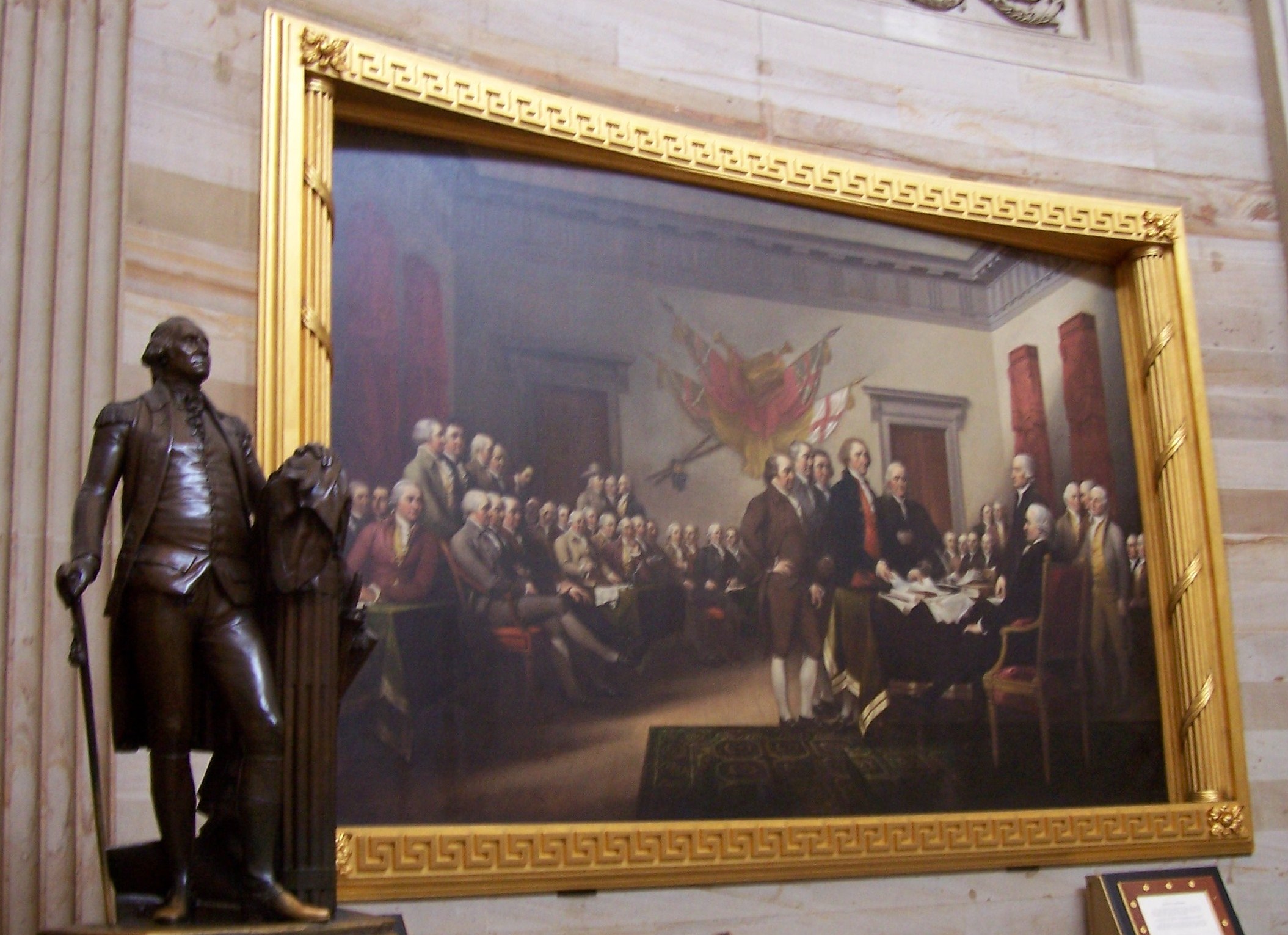
George Washington statute by the Turnbull Commission of Five.  Adams, Jefferson, Washington, all became Presidents.

George Washington statue by the Trumbull Declaration of Independence.  Adams, Jefferson, Washington, all became Presidents, in US Capitol, Washington, DC

Martha and George Washington tombs

Martha and George Washington tombs in Mt Vernon, Virginia

Washington Equestrian Statute with Jefferson standing in front

Washington Equestrian Statue with Jefferson standing in front in Richmond, Virginia

Washington as a Mason in Alexandria, Virginia

Washington as a Mason in Alexandria, Virginia

James Monroe tomb, Richmond, Virginia

James Monroe tomb, Richmond, Virginia

Plaque on James Monroe's tomb

Plaque on James Monroe’s tomb

John Tyler Grave

John Tyler Grave in Richmond, Virginia

John Quincy and Louisa Adams' tombs

John Quincy and Louisa Adams’ tombs in Quincy, Massachusetts

John and Abigail Adams' tombs

John and Abigail Adams’ tombs in Quincy, Massachusetts

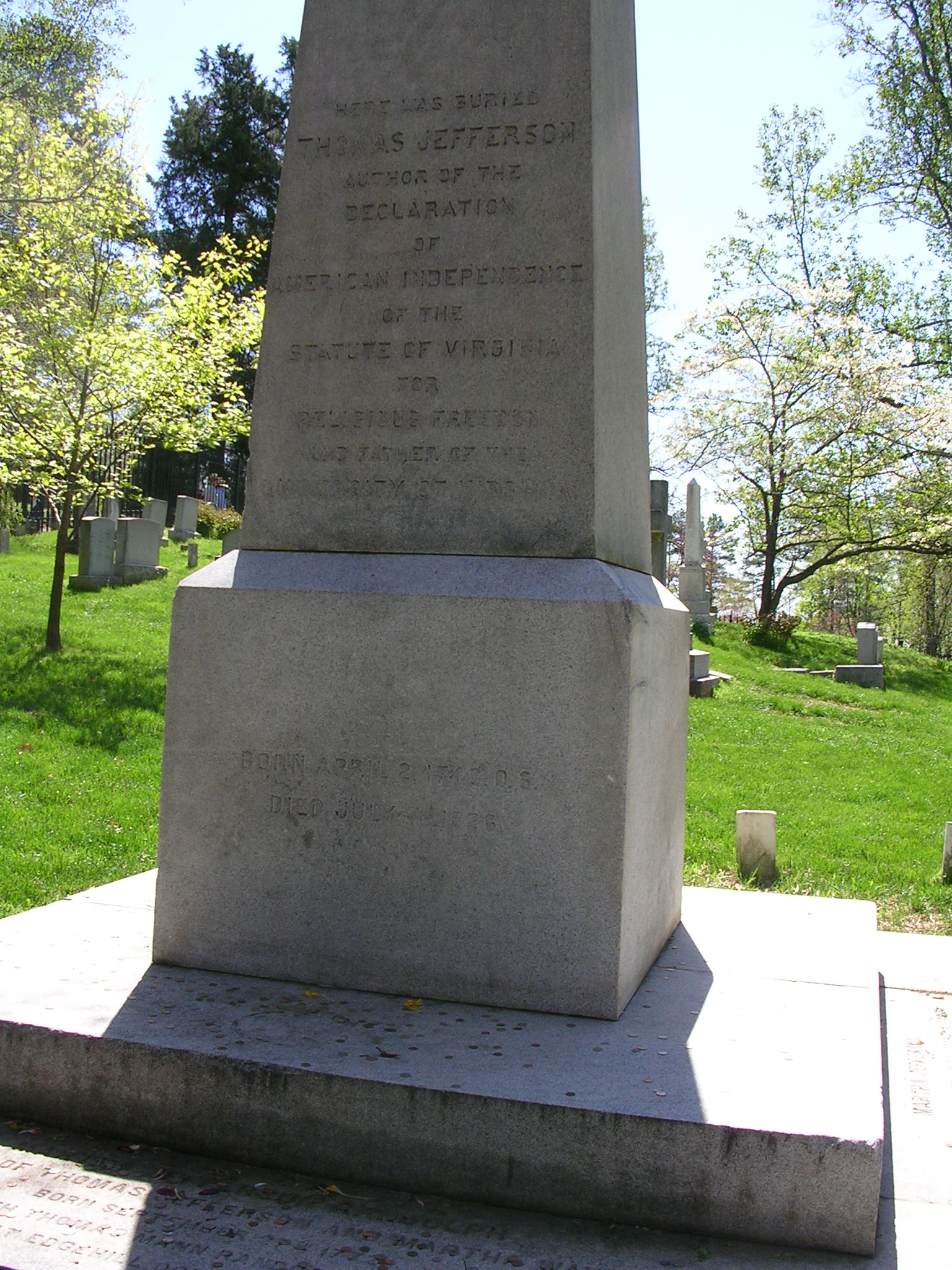
Thomas Jefferson's tombstone near Charlottesville, Virginia

Thomas Jefferson’s tombstone near Charlottesville, Virginia

That is pretty much the closest I got to any of these Presidents, that I can prove.  I have also been the resting spots of William Howard Taft, Harry S Truman, John F Kennedy.

Visiting Charlottesville

This morning we took a lovely drive for an hour to our west.  Our destination was lovely Charlottesville, Virginia.  Of course, as everyone knows, named after Queen Charlotte, the wife of the least favorite King in America, George III.  It is tied with Monticello, Ashlawn-Highland, and the University of Virginia.  It is also linked with Montpelier.

Our first photos are in relation to Monticello.  This was Amanda’s first trip, my second trip.  This time had much more green for me to see which was a pleasant surprise.  I will tell you now, the gardens are much more beautiful when they have something growing in them!  We parked, purchased our tickets, and headed up the hill.  We chose to walk rather than ride the shuttle.  We arrived first at the Jefferson Cemetery which continues to bury Jefferson descendents.  The next stop was the massive gardens.  The tour manual boasts over 1000 feet of them.  The Garden Pavilion you see in the photos is about half way.  There are some great views from the garden area over the local area.  Really quite beautiful.
We roamed up the hill and around the house.  You can see various pictures from around the property.  The striped fluffy tulips are something to mention.  We even took a picture.  We got some pictures from the well known Nickel view.  We went on the tour at 12:40.  I have always been impressed with Thomas Jefferson.  Nearly everything in my knowledge of Jefferson has been of great influence on me.  His focus of design in homes has been something that has impressed me since I started drafting in about 1992.  I remember almost instantly learning about Jefferson’s views probably in my first month of drafting.  I have been enamored every since.  Anyhow, I won’t do an opinion piece on Jefferson here…  The house is magnificent.
We came out, roamed some more and made our way back down the hill.  We drive just another mile or two away to James and Elizabeth Monroe’s home, Highland.  You will notice in the pictures that there is a yellow house attached to the white house.  The white house is the original Highland.  In later years the Victorian yellow house was added and the plantation came to be known as Ashlawn.  Thomas Jefferson convinced James Monroe to buy a plantation near him which he did.  It is important to mention Monroe owned several.  In his over 50 years of office, he spent only about 4 years all together at Highland.  His wife was frail in later years and they never made it back very often.  Plus towards the end to settle all his debts he sold Highland.  He died in New York City debt free.  There is a massive tree there in the yard I wanted Amanda to go take a picture with.  So we got to see one of her better sides in that photo.
We left our visit at Ashlawn-Highland to head back to Charlottesville.  We stopped at the Thomas Jefferson Museum and then went to the University of Virginia.  After a day at Monticello and hearing so much about it I had to see the original campus.  You can see pictures of the Rotunda which is the focal point of the campus.  You can see pictures from both sides of the Rotunda.  We also took pictures both east and west from The Lawn.  The Old Cabell building is seen to the west from The Lawn.
Lastly, I added a couple of pictures from our trip to Washington in March.  There are some pictures from late one night of the Washington Temple, Washington Monument, and Jefferson Memorial.
It was a busy day.  We even took a cooler of goodies to make ourselves lunch.  Next time we need to pack more water though.

Few firsts

I tried my first sushi this past week. I enjoyed it too. But the cost will probably keep me from it for a good while longer.We toured a home built in the 1400’s. Yep, even before the settling of Jamestown. The home is tudor and beautiful. Wish I had one. It was imported, literally. The house was dismanted in Lancashire and brought over to America, piece by piece. They then built the current house. I quite enjoyed it.

We went and visited the Hollywood Cemetery. There we saw the graves of James Monroe and John Tyler. That was interesting. We also saw the grave of Jefferson Davis.

Amanda is now back at school meaning we are back on our tight budget. I don’t mind. I got a pay raise so it won’t be quite as cramped a budget as
it was before.

Tomorrow we make a trip to Kernersville, North Carolina. It will be Amanda’s first trip to North Carolina. I sure hope it is better than the last time I was there. It was so hot you walked outside and received an instant headache. We will be visiting and staying with my cousin and his wife, Terry and Marylynne Jonas. He is my Grandfather’s brother’s son. I don’t remember ever meeting him, although he remembers me when I was a
little boy. I don’t remember ever meeting his father, my great uncle Spencer, either. Anyhow, after an evening and Saturday morning together, we are headed to Raleigh/Apex to attend the temple there. Another one of the small temples. It is a bit strange to have to call and make an appointment to attend the temple. We are scheduled for the 1:30 PM session. It was the last space available, and it is Spanish speaking. So it will be a good thing for Amanda and me. We can brush up on, or learn, some Spanish.

We will return Saturday evening. Monday is a holiday so neither Amanda or I have anything to do. We may head off to do some more sightseeing somewhere.

Things are well. There has been quite a flu epidemic at work. However my good fortune of rarely getting sick has saved me once again. It passed on all sides of me. Suppose it was that lambs blood on my cubicle entrance….

Sordid thoughts on the lowly things

Here we are beginning another week.  I admit, I am torn in so many ways.  What to do?  Where to go?  These are questions that I suppose creep up in our lives when we are just not quite as sure of things as we would like.
My job has become just that.  I am not motivated by money and they keep trying to entice me with it.  Well, in the end, I find myself doing the same routine, with not much improvement.  Well, I lie.  Every week so far has been an improvement in my earnings.  This past week I made more than six hundred in a week, before taxes and all.  So I guess that is a good thing.  But that is not how I measure my effectiveness.  Never has been, never will be.  Why would I use Babylon’s measuring rod?  How many lives am I influencing?  Is my family the better for it?  Am I happy?  And then the answer comes in at a stark no.
I get to go around and meet a wide variety of people.  That is most definitely true.  However, while I do feel we have a valuable tool, and a good product for those who need supplemental insurance, I am finding many people who have this as their only insurance.  They are content to believe that this is going to cover their needs and that is not the truth.  I think most understand this is not major medical, but for the fact that these people are poor and paying for this bothers me.  Now for the craftsmen and heavy laborers who carry this, I most certainly think it is the best thing for them.  So I am touching these people’s lives, and getting to meet them.  But I am not convinced I am leaving them better off in the end.
It most certainly is a worthwhile time to visit and see all these places.  I have always been fascinated by geography and love to travel.  This job has catered to that desire.  I have been to the birthplace of Meriwether Lewis, William Clark, Thomas Jefferson, and James Monroe.  I have been to the place where John Wilkes Booth was hiding, found, shot, and killed.  The historic Northern Neck of Virginia, while slightly penetrated, has been interesting.  But all this traveling takes time and money.  By which I travel and find the homes of these people, which are literally everywhere, so the byproduct is I learn the territory.  However, I am finding that running a household, a wife in school, and other costs take one’s funds.  In the end, I can afford the $100-$130 I am spending on fuel.  But I am worried that by breaking even, I am not saving to replace or add to the vehicle that is being required to drive the minimum of 1,000 miles a week.  With 183,000 miles plus on the car, I should be saving or paying for another vehicle rather than running into the ground the only means of income and transportation, for two, I currently have.  That just seems dumb to me.  In the end, it is not making enough money to pay for a car payment a month, nor to save up for a new car at a later point.
What about the next point?  What about my family?  Well, the last week, I certainly made the most of what I have made yet with the company.  But having said that, I am leaving at 9 in the morning, and returning at 9 or 10 at night.  If I was single, that would not be so much the issue.  I have a wife that is at home.  She can surely spend the time studying or whatever else without my interference.  When I finally get home though, I am exhausted.  I need to eat and go to bed.  She is kind enough to provide the food.  By the time we read our scriptures, pray, get ready for bed, and make it in, I am beyond my bedtime.  We have spent little or no social time, and other events are just a pain.  That is fine for a little while, but it really starts to add up in the long run, and I am not willing to make that type of a sacrifice.  The job is on the altar before the wife.
Lastly, am I happy.  Well, I surely enjoy the traveling and people.  It does grow wearisome at times though.  I love meeting people, I love seeing these new places.  However, the chances of my meeting these people again are slim.  It was not like spraying lawns at all!  Many of them gripe and moan they have to pay this again, and the rest are just a pain to track down.  It wears on me.  What wears the most is that I don’t have time to do things I wish to do.  I take the LSAT this weekend and I have no time to really practice for it.  That bothers me.  What is worse that when I do get time to myself, I use it for other things than studying.  I have other things I place more importance on and since I never get to do them, then the lesser things don’t come up.  So now what?  I am not going to postpone it again.  I should have just taken it in June.
So, after seeing this whole thing now play out, I am not impressed with the fruits.  I planted the seeds, I have lingered, waited, and prayed long enough.  The fruits appear to be bitter and if I allow the tree to continue to grow, it will only grow more wearisome and bitter.
I don’t even think it is so much Combined that I am having the issues with.  I wonder how much more effective I could be if I were to be trained in how to sell.  Would that little extra bit every day make it more worth it?  Would I be able to stop earlier from working knowing I had met the monetary needs?  Who knows.  Probably.  If I could spend less time working to make the same amount, that would be good.  If I could lay some aside for other purposes, that would be helpful.  All I know, something has to change, now.
Having said all that, I wonder about the other side.  Could there be something more I am missing?
What about those who say stick with it?  Grin and bear it?  It will all work out in the end.  I have thought quite a bit about Joseph of old.  He was in prison and a very unlikeable position.  But he bore through it with faith and came out on top.  My leaders at work keep wanting to put me into executive training.  In fact, if I would have agreed, I would be in Virginia Beach all week for it.  (But what of the LSAT then?  Being gone all week seems to only compound the problems.  Best part, they don’t even pay for your being gone so I would sacrifice a week for no pay!)  So, do I endure, make my way to management, and then what?  Well, I will be expected to train.  How in the world can I train on something I have yet to learn to do?  Nobody seems to be willing to train me and I obviously have not worked it out yet.  As Marc says, I am making what money I am by pure hard diligence and work.  That is noble and all, but he makes the same I do with only half the hours.  Yet getting him to train me is like pulling teeth.  Endure….where is the line where you simply throw your hands in the air and say I am moving on?
Much on the mind lately is the thought that perhaps I am meant to be here for some reason or another.  Marc has accepted an invitation to attend General Priesthood with me on Saturday Night.  That is great news.  I would like to endure enough to see him read the Book of Mormon and join the church.  However, should I gain one soul for the kingdom and give up everything for that one?  Honestly, I don’t see anything breaking down in my relationship with Amanda, but do I want to take that chance?  It is hard to be a nice person when I am not completely satisfied with my job.  Amanda takes some of the brunt of that.  There are two reasons why I have stuck with the job so far.  Simply because I need some income to provide for those things that are essentials (granted this house is more than we need, but it is still inexpensive compared to renting an apartment).  Secondly, in the hope that Marc will feel of the Spirit and be converted.  With my being away from the company the chances of his keeping his commitments and being converted are greatly reduced.  He has no one else to challenge and teach.  I told the missionaries about him coming on Saturday.  I sure hope we can get his address and a commitment to take the missionary discussions.  That will sure take a load off of me!
Yes, I believe it is time for a change.  But where to?  What shall I do?  Where shall I go?