The Heyburn Citizens group received some photos from a Rose Pederson in Vancouver, Washington. These were given to the City of Heyburn. I took the opportunity to scan them and make them available more widely.
Burley Idaho Feb. 1920 – Mr. E. Bowman – Jossie & Flossy (Bays) – Walt Gill
I was able to track down Walter Arthur Gill fairly easily. Walter Arthur Gill born 19 July 1889 in St. Edward, Boone, Nebraska. The 1900 Census has him with his family still in St. Edward. The 1910 Census has him in Heyburn, living with his parents. His brother, Amos, is living next door with his family.
This letter from 1911 indicates he was now the owner of some real estate in Heyburn, Idaho.
This letter indicates his homestead application is allowed in Section 14, Township 10 South, Range 23 East. This would put this farm east of Heyburn’s A Street (400 West), west of 300 West, south of 400 South, and north of 500 South. Nothing on the 1910 census tells me exactly where they were living, but I don’t know that was where he homesteaded either.
Walt Gill (holding son Art Gill – born in 1922), Eva Lenore Anderson (from Edith’s prior marriage), Edith Marion Howell Gill, Amy Jane Hall Gill
Walt is the son of Arthur Erwin Gill (1854 – 1923) and Amy Jane Hall Gill (1858 – 1935). He married Dolly Genevera Baily (1891 – 1966) on 11 January 1911 in Albion, Cassia, Idaho. I do not see any children and do not know how that marriage ended.
He married Edith Marion Howell (1899 – 1940) on 19 July 1921 in Rupert, Minidoka, Idaho. The 1920 Census does not provide where he lives, but Dolly is not with him. Ralph Arthur Gill was born 4 April 1922 in Jarbridge, Elko, Nevada. Aimee Jean Gill was born 21 January 1924 in Idaho (not clear where).
Mr. E Bowman – Walt Gill
I cannot tell how long he was on the homestead he claimed. It doesn’t seem to have been very long.
Burley Idaho – Feb. 1920 – Anona Gill on Flossy – Lady & Rock (Blacks) – Walt Gill
Anona Gill (1912 – 1974) is his niece, daughter of Amos Hiram Gill (1881 – 1940) and Jane A Vizzard (1881 – 1953).
Edith remarried to Robert Earl Taylor (1894 – 1953) on 27 January 1931 in Elko, Elko, Nevada.
The 1930 Census has Walt living in Inyo County, California. He appears to be in or around Bishop, Inyo, California for the 1940 Census and reports he was also living there in 1935. The obituary for his mother lists him as living in Taft, Kern, California in 1935. When he registered for the draft in 1942, he was living in Hollywood, Los Angeles, California. He remarried to a Jessie Opal Shafer, nee Fowler, in California. She was using the Gill name for the 1940 Census, so likely married before then.
Nancy – Sis & Joy (Bays) – Walt Gill
I don’t know what Nancy is as referenced as a name on the photo. Maybe that is her shadow on the horse?
Walter died 13 February 1943 in Hollywood. He is buried in the Hollywood Forever Cemetery.
Decision:In re Richard M. Champ and Helen B. Champ, Case No. 08-40272-JDP (Bankr. D. Idaho, 19 Aug. 2013) Judge: Honorable Jim D. Pappas, United States Bankruptcy Judge Counsel for Debtors: Paul Ross, Idaho Bankruptcy Law, Paul, Idaho Chapter 13 Trustee: Kathleen A. McCallister, Meridian, Idaho
Background
Richard and Helen Champ filed a Chapter 13 petition on 8 April 2008, represented by attorney Emil F. Pike, Jr. Their plan was confirmed in October 2008, requiring monthly payments of $910 over sixty months toward $53,019.09 in unsecured debt. The confirmation order included a specific provision reflecting that Mrs. Champ had a pending Social Security disability claim: if she were awarded benefits, the Debtors were required to file an amended Schedule I to disclose that income.
The Debtors faithfully made plan payments for nearly five years — even through a period in which Mr. Champ suffered a heart attack and the Trustee extended the payment period to allow them to catch up. By the time this dispute arose, only approximately $1,130 remained unpaid under the Plan.
The Trustee’s Motion
In March 2013 — nearly two years after learning of the Social Security award from the Debtors’ 2011 tax return — McCallister filed a motion to dismiss, alleging that the Debtors had failed to comply with the confirmation order by not amending their schedules to disclose Mrs. Champ’s Social Security lump sum award of $37,914.40 and her ongoing monthly benefit of $1,038.90. The Trustee argued the award remained property of the estate and demanded either dismissal or a turnover of approximately $25,600 to pay creditors in full.
The Objection
The Debtors engaged new counsel — Paul Ross with Idaho Bankruptcy Law — and filed a substantive objection raising several important points.
First, the Debtors’ original attorney, Emil Pike, had passed away in April 2010, leaving them without legal guidance at the precise moment they needed it most. When Mrs. Champ received the Social Security award in mid-2011, the Debtors did what they understood to be appropriate — they called the Trustee’s office. A factual dispute arose over what was communicated: the Trustee believed the Debtors were asking about a payoff and were told to contact an attorney; the Debtors believed they were simply told to keep making plan payments. Either way, their outreach demonstrated good faith, not an intent to conceal.
Second, new counsel promptly filed amended Schedules B, C, and I to address all disclosure deficiencies, including the Social Security lump sum, the ongoing monthly benefit, and a previously undisclosed $92 monthly Lamb Weston pension payment to Mrs. Champ.
Third, and critically as a legal matter, Social Security benefits are excluded from the calculation of a debtor’s current monthly income under 11 U.S.C. § 101(10A)(B) following BAPCPA. As such, the Social Security award would not have increased the Debtors’ required plan payments regardless of when it was disclosed. The Trustee’s demand for a $25,600 turnover had no statutory basis.
The objection also raised alternative relief: modification of the plan under § 1329 to reduce any remaining payment obligation to zero given the Debtors’ reduced income and medical hardships, or alternatively, a hardship discharge under § 1328(b) given that the plan shortfall was attributable to circumstances beyond the Debtors’ control — specifically, the death of their attorney and Mr. Champ’s serious medical issues.
The Court’s Ruling
Judge Pappas denied the Trustee’s motion to dismiss in its entirety. While acknowledging that the Debtors technically failed to comply with the confirmation order, the Court exercised its discretion under 11 U.S.C. § 1307(c) — which uses the permissive “may” rather than the mandatory “shall” — and weighed the totality of the circumstances carefully.
The Court’s analysis turned on several key findings:
The death of the Debtors’ attorney left them without guidance at a pivotal moment, and their confusion about compliance was understandable given that circumstance
The Debtors’ phone call to the Trustee’s office and their voluntary provision of their 2011 tax return — which disclosed the Social Security income — demonstrated that they were not attempting to conceal anything
The Debtors had substantially completed five years of plan payments; denying them a discharge at that stage would be a disproportionately harsh sanction
Under post-BAPCPA law, Social Security income is excluded from current monthly income under § 101(10A)(B), meaning the award would not have changed the Debtors’ payment obligations in any event — a point recently confirmed by the Ninth Circuit in Drummond v. Welsh (In re Welsh), 711 F.3d 1120 (9th Cir. 2013)
The undisclosed Lamb Weston pension of $92 per month, while a concern, was too minor an omission to override five years of consistent plan compliance
The Court declined to consider the alternative requests for plan modification or hardship discharge raised in the objection, noting those would need to be raised by proper motion with appropriate notice — but the dismissal motion itself was denied, clearing the path for the Debtors to receive their discharge.
Why This Matters
1. Disclosure obligations are ongoing and binding. Confirmed plans create court orders, and debtors must comply with them throughout the life of the case — not just at the point of confirmation. A change in financial circumstances mid-case requires prompt attention.
2. Attorney death mid-case creates real risk for clients. When counsel passes away during a long Chapter 13 plan, clients are left without guidance precisely when they may need it most. Practitioners and courts alike should be attentive to these situations, and successor counsel should audit compliance with the confirmation order from the outset.
3. Social Security income is excluded from disposable income calculations post-BAPCPA. While SS income must be disclosed on Schedule I, it does not factor into a debtor’s projected disposable income under § 1325(b), and — as confirmed in In re Welsh — it cannot be considered in a good faith analysis under § 1325(a). The Trustee’s demand for a $25,600 turnover in this case was legally untenable.
4. Dismissal under § 1307(c) is discretionary. Courts are not required to dismiss even upon a finding of material default. Where debtors have acted in good faith, made substantial plan payments, and the equities weigh against dismissal, courts retain and will exercise broad discretion to deny the motion.
5. Good faith communication matters. The Debtors’ efforts — calling the Trustee’s office, providing tax returns, engaging new counsel promptly — were central to the Court’s finding that no intent to evade existed. Documented communication with the Trustee’s office, even if informal, can be meaningful evidence in contested dismissal proceedings.
Full Decision: Case No. 08-40272-JDP, Doc. 72 (Bankr. D. Idaho 19 Aug. 2013)
I wrote previously of a book I have that belonged to my Great Grandfather, Joseph Nelson Jonas. The book was given to me by Ellis Jonas along with a couple of others. Inside the book was this clipping, presumably put there by my Great Grandmother, Lillian Coley Jonas. I have no clue about its significance, if any. It was clipped and put there in the book for some reason.
“Word was received yesterday afternoon of the death of Dr. Wm. B. Parkinson, Jr., of Fairfield, Idaho. He had been ailing for the last year and was being treated for heart trouble at the time of his death in a hospital at Twin Falls, Idaho.
He was a son of the late Dr. Wm. B. Parkinson, Sr., and Elizabeth B. Parkinson, of Logan and was born at Morgan, Dec. 24, 1877, moving to Logan with his father’s family when a small boy. He graduated from medical school in Chicago and came back and practiced in Wellsville and Logan and settled in Lewiston where he practiced for many years. Later he moved to Fairfield, Idaho, where he was practicing at the time of his death.
“Surviving are his wife and the following children: Mrs. Ben Red of Price, Mrs. Hugh Johnstone of Oakland, Calif., Floyd Parkinson and Mrs. Beth Blair of Lewiston, Paul of Price, and Peggy Parkinson of Lewiston, and seven grand children.
“The brothers and sisters are Mrs. George W. Leishman, Mrs. Ada England, Elizabeth Parkinson, and Mrs. Afton Nielsen of Logan, Mrs. Winnifred Jennens of Detroit, Michigan. Dr. George T. Parkinson, Twin Falls, Ida., Mrs. Hazel McAlister of Preston, Dr. Fred B. Parkinson, Cedar City. Mrs. Veda Worley of Salt Lake, Mrs. Karma Parkinson of Franklin, Dr. Wallace Parkinson of San Francisco, Calif., Don Parkinson of Texas, Mrs. Edith Shaw of Provo, and Mrs. Arthur Rallison of Whitney, Idaho.
“Funeral services are being held at Fairfield, Idaho Thursday morning at 10 a. m. Burial will be at the Logan cemetery. Short services will be held at Logan graveside at 3 p. m. Friday.
“Friends may call at the W. Loyal Hall mortuary in Logan Friday from 10 a. m. to time of graveside rites.
I have two copies of the History of Plain City, Utah. The front indicates it is from March 17th 1859 to present. As far as I can tell, the book was written in 1977. At least that is the latest date I can find in the book.
One copy belonged to my Grandparents Milo and Gladys Ross. My Grandpa has written various notes inside the history which I intend to include in parenthesis whenever they appear. They add to the history and come from his own experience and hearing.
I will only do a number of pages at a time. I will also try to include scanned copies of the photos in the books. These are just scanned copies of these books, I have not tried to seek out originals or better copies.
History of Plain City March 17th 1859 to present, pages 150 through 165.
SITE FOR NEW TOWN PARK
SUBMITTED BY FLORENE PARKE
In December, 1975, Mayor Lee Olsen and the Plain City Town Council consisting of William VanHoulten, Wayne Cottle, Darwin Taylor and David Thomas, passed a resolution to purchase 20 acres of land. This land was to be used as a recreational complex and also house the town hall and other municipal buildings.
On December 30, 1975, the City of Plain City purchased 20 acres of land from Bernard and Nora Poulsen. The land is located at the north-west corner of the intersection of 2200 North and 4100 West Streets.
The long-term plans for the park included three regulation ball diamonds, (two softball diamonds, and a little league ball diamond); an equestrian arena and open space exercise area to be used for football and other activities requiring large open spaces. A site identified for future development of municipal structures may include a swimming pool, restrooms and parking areas.
Purchasing and developing the land is an expensive process. It is the intention of the City Council to program the work in six one-year phases. Development of the equestrian arena was part of the first year’s phase.
The area housed an arena known as Paul Knight’s Arena. It has been used in the past for several Junior Possee competitions, calf roping meets, and various horses related events. The arena needed fencing and landfill and water installations.
In December, 1976, the Plain City Lions Club, in cooperation with the parents of Junior Possee members, had the area surveyed and hauled 103 loads of sand necessary for a proper working arena. Approximately 30 volunteers donated their time and equipment for two days to complete this part of the work.
Heavy gauge chain-link fencing has been purchased with money from the town and from money raised by Junior Possee members through various fund raising projects. The fence will be installed as soon as the weather conditions permit.
Plain City’s Junior Possees, Four-H groups, and the many other residents interested in equestrian sports will have a safe place for their activities, and the town will have an arena to be proud of.
Paul’s Arena as it is known today, which will be rebuilt into the Town’s new Park. Used for many years for horse and Jr. Posse events.
*A CHILD’S CHRISTMAS IN UTAH
BY WAYNE CARVER (SON OF ELMER AND JANE CARVER)
ASSOCIATE PROFESSOR OF ENGLISH
CARLETON COLLEGE
It isn’t that way now. The quiet fields are broken into building lots and the farmers build jet engines in the city and garden with a tractor after work. The old canal is lined with concrete and in the center of the town the Saturday and sun-drenched baseball diamond has shrunk to softball under lights, and the county has built a tennis court just off third bade for a game the kids are beginning to learn to play in white shoes.
The frame store with the pot-bellied stove smelling of sizzled tobacco spit and with the mash sacks and rummy dive in back is a supermarket now where wives in stretch-pants by barefoot and frozen chopped broccoli by the ton and aerosol bombs that go “SwwOOOOOOsh” and keep off the bugs or put on your pie a water glob of something threatening to be white and that keeps your arteries open.
It isn’t the way it used to be in that un-fluent time of plowing, planting, watering, hoeing, furrowing, harvesting, and throwing the harvest in the river to be pickled in the Great Salt Lake. It is the affluent society now, of missile sites and loan companies, and the ice cream comes come frozen in glazed wrapping and taste like the strips of brown paper we used to put our upper lip to stop the nosebleed. And I have not been back for Christmas for many and many a year – to the long everyday stocking with a fifty cent piece squashing the toe, the large orange pressing the half dollar down – a thick, loose-skinned orange that peeled clean and dry – to the heaped snow that fell on every Christmas eve – I have not been back, and it isn’t that way now – and all I can do is gather a crystal or two from a vein of quartz- or is it foolsgold? – in Time.
****
In the bed-covering warmth of the high ceiling room in the weather-bent old house between the mountains and the salt lake, nothing was alive at first except the dry flopping of the harness straps against the horse’s matted cost and the cold jangle of the chains against the horse’s matted coat and the cold jungle of the chains against the single-tree of the go-devil that Dad used to clear the paths between the house and the barn, the barn and the chicken coop, the chicken coop and the house, and to gouge a trial down the drifted lane to the country road where the snowplows from the shops in Ogden would come later in the day. Lying in the dark that is beginning to be thin out like spilled ink, we hear coming through the window the flopping and the jangling and the sliding rumble of the triangular runners as they push aside rocks and twigs and skid down the sides of irrigation ditches, and the tongue clicking and “steady, boy, steady,” of Dad as he talks to the horse. Hearing this, and seeing from under the door the orange line of kitchen light and, without listening for it, hearing the first snapping of the kindling in the range and smelling, without sniffing for it, the sulphurousness of coal smoke, we know- all three of us – that we have been trickled ourselves and somehow, we can’t say how, had fallen asleep – sometime, somewhere, – back in that black night and that Christmas had come again and caught us sleeping.
Then the tinny, descending jingle of loose bedsprings, the cold shock beneath the warm flannel pajamas legs, the cold fluttering linoleum slap against the feet; and the orange line beneath the door flashes upward and out: We are across the kitchen, through the heavy coal smoke to where the living room door id barred, sealed against us, as mother, at the side door, calls outside, and Dad comes in.
Daylight comes with the smell of oranges, pine, needles, pine needles, and chocolate, and coal smoke from the heater, and the brittle crack of hazel nuts and the tearing raveling crunch of peanut shells, the shimmering glissando of tissue paper crushing, the sweet sticky slurp of cherry chocolates, and the crack and shatter of peanut brittle. Amidst the smell, above the sounds, comes the “oh, just what I wanted,” of Mother and the “Very nice, very fine,” of Dad and the “One -two-three-four! I got four presents that’s simply more than anybody,” of Mary and the “This Wheel’s just fine cause it’s got a burr on the axle, not a cotter key,” of Nephi, and the “Billy’s got this book, he’ll not swap. I’ll swap with Rex,” of another.
By mid-morning the board valley glisten under the cold sun, and you have gone alone through the fields I the over-the-boots snow and along the row of willows besides the canal and watched the muskrats swimming in the alley of dark water between the frozen banks, have seen the runic tracing of the quail and pheasant trails and shaken the loose snow away from your collar that a magpie knocked down on you as you passed beneath the cottonwood trees to Rex’s place where you ate rock candy, swapped the extra Bomba you had read for the Army Boys in France that you had not. By noon you have been to Bill’s through the glare of the sun and snow and shown him your hi-tops with the long grey woolen socks ad the fold-over edge of red at the top and eaten peanut brittle, been to Grant’s and seen the new skates, shown-off the cream and green cover of your Plunk and Luck and eaten candy, been along the roads, the ditches, the trails until the snow packed into ice inside your boots has sent you home to dry and then, drying, behind the big heater in the living room to sail on the stack of books to all the great green world that never was and will last, therefore, forever.
The crunch and ravel and shimmering tinkle is gone from the room now. The quiet is there like a field rippled with snow until the others return from their rounds, and in from the kitchen come only the first rasps ad scrapes and clicks and hacks of dinner’s getting underway. There is pine tree and warmth and the smell of chocolate syrup. Behind the stove Bomba the Jungle Boy crouches in the grass besides the trail as the enemy patrol with poisoned darts in their quivers and blow guns in their hand file slowly by the disappear into the tangled heat of the jungle. In the gassy, coal smelling clearing Bomba is wiping into glittering brightness the still smouldering and dripping blade when, bursting through the streaming wall of branches and vines, comes Aunt Em’s bellow of tribal greeting, followed by a safari of cousins and a diminutive uncle, each one bearing weapons and supplies clutched in their careful and love-filled hands.
“Good Lord, Louisa, there you are just as I figgered, sweating out in the kitchen while everybody else has a fine faretheewell. We’re late but I been after Ephriam since daybreak to get them cows milked so’s we could get on our way. By Judas Priest, you would thought the man had never milked a cow before. Biggest kid in house for Christmas. I get more work out of the cat than I do him. Lordy! You ought to see that house. You can’t see out the windows for trash, and I’m so flustered I think I sliced an egg on the jello and a banana on the hot potato salad. I’m afraid to look, I tell you. And Moroni? – he was out chasing the girls until je ought to have been home milking, too; and, Lord, Sara and nell, you’d of thought they never been given anything before. And all the time, Eph draggin’ along, them cows moanin’ out in the barn, their bags so full they’d like t’have died, nothing to eat – it’s a good thing for that, I suppose. Why, he didn’t get out of the house until ten O’clock, the milk man had come and gone by two hours and all the time me trying’ to bake a cake in a crooked oven with the coal Wilbur man sold us at a special and, Louisa, I’m tellin ’you it ain’t coal at all. It’s just dirt. It’s better dirt than half that hard scrabble your man’s farming down there in Salt Creek, and if Wilbur can sell that sandy loam he sold me for coal, I’s say Josiah’s got a fortune in fuel under that field of onions he tries to grow ever summer. Glow! I’s by there t’other day lookin’ for the horses before the shruf stray-penned “ em and I say to Eph, “Josiah’s got a nice five acres of picklin’ onions out a that salt flat he’s tryin’ to farm. Ought to get a special price, seein’s how they pickled all summer. Grow! I’s by ther t’other day lookin’ for the horses before the shurf stray -penned “em and I say to Eph, “ Josiah’s got a nice five acres of picklin’ onions out a that salt flat he’s tryin’ to bake this cake, and roast a shoulder of pork and fix the salad and I’m up to my chin in candy and nuts and wrappin’ paper until I finally just booted everybody out the back door and said, “Lordy, go over t’the neighbors and dirty up some fresh territory while I get something done.” So they did. Except Eph. He’s still settin’ there in his new robe and slippers, dozin’ mind you, his head bobbin’ back and forth like a derrick fork. And them poor cows hollerin’ to be milked, and finally I told him, “Lord almighty man, go out there and take out enough milk to relieve their pain anyways, even if you don’t care about no milk check next week.’ So he did. Well, here we are. Where d’you want me to put the roast to keep it warm, Here! Give me that knife, I’ll peel the taters. Don’t you get no help? Where’re your kids? You get started on the rolls, woman. This house is goin’ to be crawlin’ with starving prople before we get turned around and us without a thing to put in their mouths.I thought I told you Big J flour’s better’n this other stuff. Lord! I don’t know what’s goin’ to happen to us. Ten o’clock milkin’; I tell you, I thought I’d never live to the day.”
And then the green jungle explodes into white brightness and come alive with cousins and uncles and aunts as the tribal dance around the tree begins and the hecatombs are offered to the angry powers of hunger and love: roast chicken, roast turkey, hams, and pork shoulders, brown gravies, chicken gravies, sage and giblet stuffing, candied yams and sweet potatoes, mashed potatoes, cranberry sauce, creamed corn, wax beans, lima beans, and string beans, carrots – tossed salads, potato salads, gelatin salads, cream pies, fruit pies, mince pies, pumpkin pies, chocolate cake, and white cakes, jello ad whipped crème and sliced bananas, candy in dishes and boxes, apples, oranges, and bananas – and one cup of coffee brewed just for Uncle Heber, the free-thinker of the tribe who risked the taboo, and for him, too, the cracked saucer for the ashes of his cigar.
And above the crack of celery, the clack of china, the clink oof silverware, the chattering drone and occasional giggle or scream, and through the acrid halo of smoke around Uncle Heber’s head comes Aunt Em’s piercing voice: “It’s a foul habit and an abomination in the sight of God, Heber, and I’d rather see my brother take to drink than terbakker the way you do. And coffee defiles the temple of the spirit in a worse way, and Louisa’s curtain’ll smell of Christmas and sin until the Fourth of July because of you.”
And though the drone and chatter, Uncle Heber’s: Sis, you finish your meal in your way; I’ll finish mine in mine. The Prophet used to smoke, so did Brother Brigham – and chew. They chewed and spit like any man. I sin in good company. Fact, is sis, if the truth was known, smokin’ and good coffee got to be a sin because Joseph had an allergy to caffeine and nicotine. Used to break out in hive after every cup of joe and every satisfying drag, so he made both a sin. Say, get me a stove match will you, sis, while yer up – in the kitchen there. See? A good cigar goes out if it ain’t appreciated.”
And then through the long dying of the day, the world beyond the oppressive clearing behind the stove goes on. Bomba frees the friendly white girl, eats a tapir, while through the nebulous jungle wall from far beyond come the shouts and squeals of cousins and brother and sister play, the falsetto chirping of Aunt talk, and the grumbling bass of Uncle talk. And as the Army boys march aboard the transport in New York to go to France with “Lafayette, we are here,” on their lips, there hovers in the air of the stifling, coal-gas smelling hold of the transport:
“Franklin D. Roosevelt was sent by God to lead his children out of bondage.”
“I like that man’s smile. Then he sticks them cig-roots in his mouth and I tell you I jist don’t know!”
“We should have won that game on the Fourth; Freddie just got a leetle tired. . . .”
“Walkin’ on to my farm and tellin’ me what I can grow and what I can’r. I sicked the dog on that little pipsqueak. . . .”
“Doak, that big elephant, fannin’ twice with men on. . . . Never could hit a round-house out.”
“. . . on relief until his first paycheck . . . blew it all one weekend at Elko. . . “
“Next time Brig Roberts umpire, I say protest the game. . . “ “Two of them Clinton players smoke. I seen ‘em. . . “
“Good for them . . . “
“Heber!”
“Paid in paper script. . . not worth the paper it’s . . . “
“. . . kept track the last three games . . . fanned four times with one on . . . “
“Farmers the last one to get anything from a government . . . “
“We got 3.2 beer what we have to risk damnation to drink. But the price of tater’s about the same as when Hoover. . . “
“ Eat the taters then the shut up. “ S bettern defilin’ Em! We’d live forever, that a-way – the two of us.”
“Ha!”
“Only hit all year as I remember rolled down the gopher hole back of first base in West Warren for a ground rule double. . . some clean up hitter be is. . . “
“don’t care how the man smokes. I’d vote for FDR for God tomorrow if I had the chance..”
“But President Hoover says. . . “
“To Hell with President Hoover!”
“Heber! Heber! Heber!”
And now Bart, the oldest, most handsome, most dependable of all the Army Boys in France, escaped from the hospital in the rear, slogs through the nuts, shells, and package wrapping of rural France, wet, cold, delirious, dropping into shell holes as the rat-a-tat-tat of a match-shooting gun rattles out of the living room from behind the sofa. In the lull that follows, as the darkness comes on, a command rips across the subdue murmur of No-Man’s Land: Ephriam! It’s milkin’ time. Lord! Let’s go on home and see how many cow’s got mastitis from this mornin’. Judas Priest! One thing for sure. Never milk a cow, never have to. They’ll have their bags caked-up like a lick of salt. Come on, Eph!.
And Uncle Heber, rising from the waves of cigar smoke, “Emmie sit down. For the Lord of all the Lamanites. I only see you about once a year, it seems like.”
She, settling back into the sofa, “That’s for sure.” There is a long quiet. Then, “But Heber, when’re you going to come to your senses and make your peace with me and the Church.”
I’m ready, Emmie, always have been. For you or the Church. But I figger the Church’ll be a dang sight easier to settle up with that you.”
From inside the pill-box in the living room comes another burst of fire, and Bart, with his dependent buddies, crawls along a little stream in the gassy gloom of twilight, trying to get a bearing on the mortar that is lobbing rounds into the Company. And Bart whispers, “I’m going over there to see what it looks like, anyways.”
“No, no, bart,” from his friends. But he, “Remember the Luistania.” Ashamed, they say no more. “It may not be what I’m after but just beyond that hill is where I need a pig for winter dressing up, and if Parley P. Brown – Goodie-Two-Shoes Brown, we called him in school – has got what I want –“
‘Heber! That’s talk I won’t hear. He’s a God-fearing man and –“
“And a man practically lacking in the power of speech, Em, that’s what he is. Why, Em whenever I think you’re right, that I’m a sinner temporarily damned to a lower degree of glory, I remember the day I went over there to buy that pig. We’re out in the pen, see – a sloppy pen if you ever saw one – and all these weaner pigs are grunting around in there. I’ve got this gunny sack and a three foot piece of two-by-four, but Parl Brown don’t so things that way. No Sir! ‘You stay here, ‘ he says and he crawls in that stuff. I’ll return presently with a shoat.” Return! Presently! Shoat! The man can’t talk. Well – anyhow – he slops into the pen. He corners one of the wet-snouted little balderdroppers, lunges at it and, by Christmas, kisses by half a foot – skids into the plank wall. Judas Priest, I though he’d killed himself. Picks himself up. Scrapes himself off. Looks over at me. You could hardly see his face. ‘Little rascals,’ he says, and grins; he corners another. Dives again, skids, misses, splatters, hits, stands up,wipes, away at himself a bit. Elusive little tykes,’ he says, turns, gets ready to do it again. I’ve had enough. ‘Parl!’ I beller at him. He looks around. I crawls over the fence. By jaspers, I’m near tears, ‘Parl, for Juniper’s sweet loving sake, man, don’t talk to pigs like that. Now you go on, get out of here!’ He goes, me pushin him. Then I turns to the litter and look them square in the eye. They’re all backed into one side and a corner, still and quiet. They’d sense the change right off. Then I hold my two- by out in front where they can see it. I drops my sack open, the mouth of it facing them. I drops on my haunches and teeters a bit. Then I says, real tight and lowlike: ‘Now – you little thin-snouted, bleary-eyed runty-backed, spiral-trailed sons of this litter, one of you hop into this sack.’ Why, almost immediately, you might say, the one nearest the sack trots over, sniffs a hit, squeals a little, and walks in the sack and curls up. I snap the sack to with a piece of binder twine, hoists it over my shoulder, climbs ion the pick-up and brings it along home. Paid Parl a day later by check. Well, Emmie, you see the point? Sin has its place. A man like Parley P. Brown might not defile the curtains in the parlor, might make it all the way to the Celestial degree of glory, but he’s not worth a good God- damn in a pig pen.”
Then the war draws to its close in the snow of winter and the troops march home from No-Man’s Land, over there, over there – across the rubbles of papers and candy and peanuts and broken toys and needles from the trees, and , suddenly, the lights all over the world come on to Mother’s: You’ll ruin your eyes, son, reading in the dark behind that heater.”
And only the others are there now – the other two and Dad and Mother – and we eat a sandwich of cold chicken and have some milk out of the big pan in the pantry and we have family prayer around a chair in the kitchen. Kneeling there, the linoleum burning its cold into our knees, everything is love and one and whole. The day is blest, and all the days to come.
In the bedroom we shiver against the cold sheets and giggle and fight for warmth against each other.
In enveloping blackness we hear the squeak of the snow under Dad’s boots as he walks for the check-up to the barn and hear the sounds of cleaning up from the kitchen.
Overhead the attic creaks as the old house sways a little in the winter chill that comes down on a black wind from the black mountains to the east an moves through the valley and across the salt lake and into all the years to come – but that cannot touch the bed-covering warmth of a Christmas that is past.
*Reprinted by permission of ‘The Carleton Miscellany”
Copyright, 1965, by Carleton College
Northfield, Minnesota 55057
FIRST PLAIN CITY CANNING FACTORY
This was the first canning factory in Plain City. It was located across the street from Loyd Olsen’s home at about 1900 North 4700 West. The factory was built around or before 1900. The picture was taken in 1906 or 1907. The factory was torn down in 1916 or 1917 and part of it was moved to become part of the john Maw store. Laura Musgrave remembers working there as a girl.
We do not have the names of those in the picture, but were told that the older man on far right is Abraham Maw who run the factory. He is the father of Henry T. Maw and grandfather of Abraham Maw.
PICTURE TAKEN ABOUT 1900
Front row left to right:
Trina Folkman, Wilford Danvers, Lonna Richardson Miller, Thomas Jenkins.
Second row left to right:
Elea England Watson, Dave Geddes, Luci Rawson, Sophie England, Jed Skeen, Melissa Carver.
Third row left to right:
Rose Stoker, Cerilla Richardson, Lorenzo Lund, Sussen Geddes, John Moyes, Riley Skeen, Lyman Skeen, Emily White, Richard Lund.
Peter Green was on the original photo with only part of him showing. You could see his hat and right arm and leg.
EARLY ORCHESTRA
The man with the cap is Robert Hunt. He is Clara Hunt Singleton’s brother. Clara was the mother of Florence Singleton Simpson.
OLD PHOTOS
Above two: Plain City’s 110 year Anniversary.
Picture taken in front of the old dance hall. In 1959 on the Sunday nearest the 17th of March no cars were allowed at the church, just teams and horses and buggies. The people came to church in pioneer dress as a climax to a weeks long celebration.
Above: Rear view of the old Church house. The upstairs was a recreation hall with a stage.
PLAIN CITY CANNING COMPANY
The Plain City Canning Company was built in 1925. They operated the factory for over 30 years. During World War II they used prisoner’s of war for laborers during the canning season. It is owned by George Cook.
EVERETT’S PLUMBING
This building was built by Everett Taylor for his plumbing business.
BUSINESSES OF TODAY
BUILDERS BARGAIN CENTER
Builders Bargain Center, formerly England’s Builders. This business was started and run by Chester England for many years.
The Confectionery, but known to everyone in City has the Pool Hall, or the Grog Hall.
BUSINESSES OF TODAY
BARNES FURNITURE CO.
Barnes Furniture Co. was started by Hebert and Elida Barnes in the winter of 1948-1949. Elida had acquired upholstery skills through Utah State Extension Services with offices in Odgen. Herbert learned wood work, restyling and remodeling from Utah Defense Depot. An elderly German refinishing craftsman taught Hebert the refinishing craft. Later on both had upholstery training through Weber College.
The first shop was one-half of a small railroad box car situated east and south of the present shop at 1600 N. 4700 W.
This makeshift shop was soon out grown. The present shop erected in 1953.
FIRST SHOP
Now owned by George Cook and used as a bath house.
PRESENT SHOP OF BARNES FURNITURE
BUSINESSES OF TODAY
PAUL COSTLEY GARAGE
This garage opened in the fall of 1947, and is located north of the city of Plain City.
C. & B. REPAIR SHOP
The C. & B. Auto Repair Shop owned by Curt Knight and Bruce Hall. The old building at the left is Rall Taylor’s old blacksmith shop.
BUSINESSES OF TODAY
CLIFF FOLKMAN SERVICES
Cliff Folkman operated a gas station in this location for over 30 years. He moved into the new building in the fall of 1964, located in the center of town, on the east side of the Square.
WHITIE’S CAFE AND ICE CREAM PARLOR
Dennis White opened his cafe in the summer of 1976. It is located on the east side of the Square.
BUSINESSES OF TODAY
UTAH TRANSIT AUTHORITY BY RUTH FOWERS
On Tuesday, July 6, 1976, the Utah Transit Authority started regular bus transportation services to Plain City area. The bus arrived in Plain city at 6:55 A.M. and returned to Ogden through Slaterville by way of Pioneer Road. The schedule continued every 40 minutes, the late bus leaving Plain city at 6:55 P.M., Monday through Saturday, with o service Sunday or holidays. It is called Route #20 Plain City.
This service had been in the planning for some three years prior. The U.T.A. is supported by quarter of a cent sales tax. The fare being 15 cents for adults and 10 cents for children and senior citizens, with senior citizens allowed the courtesy ot ride free between the hours of 10 – 3 and after 6 P.M.
Many citizens are enjoying this method of transportation to and from Ogden, some extend its service to Salt Lake City and return.
BANK OF UTAH
Nov. 27, 1972, marked the grand opening date for the Plain City Branch of the Bank of Utah.
The bank has had a steady increase in its patronage since the beginning. Services are available to all the citizens in the surrounding towns. Some clientele come from as far as south Brigham City.
The bank started with three employees and now as four.
I have two copies of the History of Plain City, Utah. The front indicates it is from March 17th 1859 to present. As far as I can tell, the book was written in 1977. At least that is the latest date I can find in the book.
One copy belonged to my Grandparents Milo and Gladys Ross. My Grandpa has written various notes inside the history which I intend to include in parenthesis whenever they appear. They add to the history and come from his own experience and hearing.
I will only do a number of pages at a time. I will also try to include scanned copies of the photos in the books. These are just scanned copies of these books, I have not tried to seek out originals or better copies.
History of Plain City March 17th 1859 to present, pages 33 through 38.
Past Bishops of Plain City
Henry J Gardner 1906 – 1910
Back (l-r): Wilmer J Maw, George E Knight, Elvin H Maw, Charles L Heslop; Front: George A Palmer, Gilbert Thatcher, Henry T Maw
Wilmer J. Maw 1920–1926
George E. Knight 1949–1953
Elvin H. Maw 1944–1949
Charles L. Heslop 1936–1944 (Married Milo Ross & Gladys Donaldson April 1942)
George A. Palmer 1926–1936
Gilbert Thatcher 1913–1920
Henry T. Maw 1910–1913
(l-r): Charles L Heslop, Elvin H Maw, George E Knight, Merrill Jenkins, Lyman H Cook, Rulon Chugg, Wayne W Cottle, Orlo S Maw
Charles L Heslop, 1936-1944
Elvin H Maw, 1944-1949
George E Knight, 1949-1953
Merrill Jenkins, 1953-1959
Lyman H Cook, 1959-1964
Rulon Chugg, 1960-1965, 2nd Ward
Plain City Ward – Wayne W Cottle, 1964 –
Plain City Ward – Orlo S Maw, 1965
(l-r) Kent Calvert, Robert Sharp, Kent Jenkins
Kent Calvert, 2nd Ward 1971-1974, 3rd Ward 1974-
Robert Sharp, 2nd Ward 1974-
Kent Jenkins, 1st Ward 1971-
PLAIN CITY BRANCH OFFICER
1859 – 1977
Submitted by Roxy Heslop Gilbert Thatcher 1913 – 1920
PRESIDING ELDERS Wilmer J Maw 1920 – 1926
William W Raymond 1859 – 1863 George A Palmer 1926 – 1936
John Carver 1863 – 1866 Charles L Heslop 1936 – 1944
William W Raymond 1866 – 1870 Elvin H. Maw 1944 – 1949
Lewis W Shurtliff 1870 – 1877 George F Knight 1949 – 1953
FIRST COUNSELORS Merrill Jenkins 1953 – 1959
Daniel Collet 1859 – 1866 Lyman Cook 1959 – 1964
John Carver 1872 – 1877 Wayne W Cottle 1964 – 1971
SECOND COUNSELORS Kent Jenkins 1971 –
Jeppe G Folkman 1859 – 1872
~
PLAIN CITY FIRST WARD
John Spiers 1872 – 1877 FIRST COUNSELORS
CLERKS John Spiers 1877 – 1895
John Spiers 1859 – 1872 Abraham Maw 1895 – 1901
William W McGuire 1872 – 1877 Peter C Green 1901 – 1903
PLAIN City Ward Officers 1877 – 1977 Henry J Garner 1903 – 1906
BISHOP Peter M Folkman 1906 – 1910
Lewis W Shurtleff 1877 – 1883 James L Robson 1910 – 1920
George W Bramwell 1883 – 1906 George A Palmer 1920 – 1926
Henry T Maw 1910 – 1913 Elvin H Maw 1926 – 1936
Gordon F Thompson 1936 – 1944 Abraham E Maw 1936 – 1944
L Rulon Jenkins 1944 – 1949 Fred L Singleton 1944 – 1946
Wilford Woodruff’s vision of the Founding Fathers requesting Temple Ordinances
We are moving soon, but the Burley 11th Ward gave me another chance to address them. Since I received a number of requests for a copy of the talk, which is really just a collage of various items I could find online, the Journal of Discourses, the Saints second and third volumes, and other various histories. Here is the text of the talk I wrote, that does not mean it is the talk I gave…
I first addressed the freedoms we have as contrasted in the Saints third volume related to Germany. I said the word Jew and Israel from the stand and did not fear reprisal. I listen to free radio anytime I want and even seek out British radio from time to time and there is nothing illegal. Lastly, we could congregate without the worry of those in our midst about what was said or in the actual act of meeting.
Then to the following:
Declaration of Independence – We hold these truths to be self-evident, that all men are created equal, that they are endowed by their Creator with certain unalienable Rights, that among these are Life, Liberty and the pursuit of Happiness.
George Washington: “The success, which has hitherto attended our united efforts, we owe to the gracious interposition of Heaven, and to that interposition let us gratefully ascribe the praise of victory, and the blessings of peace.”
Alexander Hamilton: “The Sacred Rights of mankind are not to be rummaged from among old parchments or musty records. They are written . . . by the Hand of Divinity itself.” “For my own part, I sincerely esteem it a system, which without the finger of God, never could have been suggested and agreed upon by such a diversity of interests.”
Thomas Jefferson: “The God who gave us life gave us liberty at the same time.”
John Adams: “As I understand the Christian religion, it was, and is, a revelation.”
Benjamin Franklin: “The longer I live the more convincing Proofs I see of this Truth. That God Governs in the Affairs of Men!—And if a Sparrow cannot fall to the Ground without his Notice, is it probable that an Empire can rise without his Aid?—We have been assured, . . . in the Sacred Writings, that ‘except the Lord build the House, they labour in vain that build it.’ I firmly believe this;—and I also believe that without his concurring Aid we shall succeed in this political building no better than Builders of Babel.”
James Madison: “It is impossible for the man of pious reflection not to perceive in it a finger of that Almighty hand which has been so frequently and signally extended to our relief in the critical stages of the revolution.”
Samuel Adams: “Revelation assures us that ‘Righteousness exalteth a Nation’—Communities are dealt with in this World by the wise and just Ruler of the Universe. He rewards or punishes them according to their general Character.”
Charles Pinckney: “When the great work was done and published, I was . . . struck with amazement. Nothing less than that superintending hand of Providence, that so miraculously carried us through the war, . . . could have brought it about so complete, upon the whole.”
On May 4, 1842, he called to his side nine of the most faithful of his brethren—Hyrum Smith, Brigham Young, Heber C. Kimball, Willard Richards, Newell K. Whitney, and others—and later their wives came with them to the upper floor of the Red Brick Store in Nauvoo.
Joseph was seeking to fulfill the promise from D&C 124, given in 1841, which the Lord would reveal to Joseph “all things pertaining to this house, and the priesthood thereof, and the place whereon it shall be built.”
He had started, “If it should be the will of God that I might live.” Then he corrected and said, “It is not the will of the Lord that I should live, and I must give you, here in this upper room, all those glorious plans and principles whereby men are entitled to the fulness of the priesthood.” He proceeded in an improvised and makeshift way to do so.
We have from Brigham Young that after they had received these blessings the Prophet said: “Brother Brigham, this is not arranged right. But we have done the best we could under the circumstances in which we are placed, and I wish you to take this matter in hand and organize and systematize all these ceremonies.”
Brigham Young later said, “I did so. And each time I got something more, so that when we went through the temple at Nauvoo I understood and knew how to place them there. We had our ceremonies pretty correct.”
While the Nauvoo Temple was started in 1841, the first endowments were performed in the winter of 1845 and into 1846. Baptisms had started in the Mississippi River prior to the temple and moved into the temple baptistery soon after it was completed and dedicated, well before the rest of the temple was done. Brigham, leading the church, was personally overseeing the organization and perfection of the endowment and other ordinances that started in Nauvoo.
After arriving in Salt Lake City, the church used the top floor of the Council House, starting in 1852 until the Endowment House was completed in 1855. It was in this building that endowments, prayer circles, some missionary training, and some setting aparts were conducted. The use of the Endowment House ended in 1877 with the completion of the St George Temple. That building stood until Wilford Woodruff heard that unauthorized sealings were occurring there and ordered it razed in 1889.
The St George Temple was the only one completed during Brigham Young’s 30 year tenure as President. It was dedicated on 1 January 1877 in three dedicatory prayers under the direction of Brigham. The baptistery by Wilford Woodruff, the main floor by Erastus Snow, and the sealing room by Brigham Young Jr. Wilford Woodruff served as St George Temple President from 1877 to 1884. Brigham had to be carried up the stairs, but he stood and spoke in the Assembly Room.
“When I think upon this subject, I want the tongues of seven thunders to wake up the people,” he declared. “Can the fathers be saved without us? No. Can we be saved without them? No. And if we do not wake up and cease to long after the things of this earth, we will find that we as individuals will go down to hell.”
Brigham lamented that many Saints were pursuing worldly things. “Supposing we were awake to this thing, namely the salvation of the human family,” he said, “this house would be crowded, as we hope it will be, from Monday morning until Saturday night.”
On 9 January 1877, the first baptisms for the dead were performed in the St George Temple. The first endowment for the dead was performed on 11 January 1877. Brigham and Wilford personally oversaw the ordinances being performed. Wilford began wearing a white suit, starting the trend that continues to this day.
All endowments to this point had been done and passed by word of mouth. It was in St George, far from Salt Lake City, that the ordinances were first written down. Brigham also wanted to make sure the record was preserved and that they were standardized. They were read to Brigham time and time again who would then approve or continue to revise the ordinances. Brigham went home to Salt Lake City in April 1877. He stopped and dedicated the spot for the Manti Temple on the way home.
Wilford Woodruff then wrote in his journal on Sunday 19 August 1877, “I spent the evening in preparing a list of the noted men of the 17 century and 18th, including the signers of the Declaration of Independence and presidents of the United States, for baptism on Tuesday the 21 Aug 1877.”
His journal entry for August 21 reads, “I, Wilford Woodruff, went to the temple of the Lord this morning and was baptized for 100 persons who were dead, including the signers of the Declaration of Independence. … I was baptized for the following names.” He then listed the names of one hundred men.
Elder Woodruff continued his journal entry: “When [John Daniel Thompson] McAllister had baptized me for the 100 names, I baptized him for 21, including Gen. Washington and his forefathers and all the presidents of the United States that were not on my list except Buchanan, Van Buren, and Grant.” (The work for these presidents has since been done.)
“It was a very interesting day,” Elder Woodruff continued. “I felt thankful that we had the privilege and the power to administer for the worthy dead, especially for the signers of the Declaration of Independence, that inasmuch as they had laid the foundation of our Government, that we could do as much for them as they had done for us.
“Sister Lucy Bigelow Young went forth into the font and was baptized for Martha Washington and her family, and seventy of the eminent women of the world. I called upon the brethren and sisters who were present to assist in getting endowments for those that we had been baptized for today.” (Wilford Woodruff’s journal, typescript, vol. 7, Church History Library; spelling and punctuation modernized.)
The first public mention of these events was made nearly a month after the baptisms were performed. In an address in the Tabernacle on Temple Square on 16 September 1877, Elder Woodruff first told publicly of the visitation of the signers of the Declaration of Independence.
“You have had the use of the Endowment House for a number of years, and yet nothing has ever been done for us. We laid the foundation of the government you now enjoy, and we never apostatized from it, but we remained true to it and were faithful to God. (Conference Report, April 10, 1898; Discourses of Wilford Woodruff, pp. 160-61)
During the 68th Annual General Conference of the Church which was held in April 1898, President Woodruff recounted the sacred experience:
I am going to bear my testimony to this assembly, if I never do it again in my life, that those men who laid the foundation of this American government and signed the Declaration of Independence were the best spirits the God of heaven could find on the face of the earth. They were choice spirits, not wicked men. General Washington and all the men that labored for the purpose were inspired of the Lord.
Another thing I am going to say here, because I have a right to say it. Every one of those men that signed the Declaration of Independence, with General Washington, called upon me, as an Apostle of the Lord Jesus Christ, in the Temple at St. George, two consecutive nights, and demanded at my hands that I should go forth and attend to the ordinances of the House of God for them. Men are here, I believe, that know of this, Brother John D. T. McAllister, David H. Cannon and James S. Bleak. Brother McAllister baptized me for all those men, and then I told these brethren that it was their duty to go into the Temple and labor until they had got endowments for all of them. They did it. Would those spirits have called up on me, as an Elder in Israel to perform that work if they had not been noble spirits before God? They would not. (Wilford Woodruff, Conference Report, April 1989, pp. 89-90.)
“They waited on me for two days and two nights,” he said,
“I thought it very singular, that notwithstanding so much work had been done, and yet nothing had been done for them.” (Journal of Discourses, 19:229.)
I was also present in the St. George Temple and witnessed the appearance of the Spirits of the Signers….the spirits of the Presidents….and also others, such as Martin Luther and John Wesley….Who came to Wilford Woodruff and demanded that their baptism and endowments be done. Wilford Woodruff was baptized for all of them. While I and Brothers J.D.T. McAllister and David H Cannon (who were witnesses to the request) were endowed for them. These men… laid the foundation of this American Gov., and signed the Declaration of Independence and were the best spirits the God of Heaven could find on the face of the earth to perform this work. Martin Luther and John Wesley helped to release the people from religious bondage that held them during the dark ages. They also prepared the people’s hearts so they would be ready to receive the restored gospel when the Lord sent it again to men on the earth.” (Personal journal of James Godson Bleak – Chief Recorder of the St. George Temple.)
In 1986, some of the staff of the Family History Library’s LDS Reference Unit were assigned to compile and computerize all the existing genealogical data on the founding fathers, to identify their families, and to document completed temple ordinances for each. For purposes of the project, a founding father was identified as one who had signed one or more of the following documents: the Articles of Association (1774), the Declaration of Independence (1776), the Articles of Confederation (1778), or the Constitution (1787).
The library study of 1986 revealed that there were no sealings of children to parents performed at the time the baptisms and endowments were performed. As a note, the ongoing revelation related to sealings to parents was not revealed until 1894. It was then that the Law of Adoption, or sealing to prominent church leaders, was discontinued and we were encouraged to do genealogical work to compile the pedigree of the entire human family. It was then that the Utah Genealogical Society was founded that has snowballed into the fantastic work of FamilySearch and all its appendages.
He also recorded that George Washington, John Wesley, Benjamin Franklin, and Christopher Columbus were ordained High Priests at the time.
Temple work was performed on behalf of the following well-known and respected men and women in the St. George Utah Temple in August 1877.
Founding Fathers: William Hooper (NC), Joseph Hewes (NC), John Penn (NC), Button Gwinnett (GA), Lyman Hall (GA), George Walton (GA), Edward Rutledge (SC), Thomas Heyward Jr. (SC), Thomas Lynch (SC), Arthur Middleton (SC), Samuel Chase (MD), William Paca (MD), Thomas Stone (MD), Charles Carroll (MD), George Wythe (VA), Richard Henty Lee (VA), Thomas Jefferson (VA), Benjamin Harrison (VA), Thomas Nelson Jr. (VA), Francis Lightfoot Lee (VA), Carter Braxton (VA), Robert Morris (PA), Benjamin Rush (PA), Benjamin Franklin (PA), John Morton (PA), George Clymer (PA), James Smith (PA), George Taylor (PA), James Wilson (PA), George Ross (PA), Caeser Rodney (DE), George Read (DE), Thomas McKean (DE), Philip Livingston (NY), Francis Lewis (NY), Lewis Morris (NY), Richard Stockton (NJ), John Witherspoon (NJ), Francis Hopkinson (NJ), John Hart (NJ), Abraham Clark (NJ), Josiah Bartlett (NH), William Whipple (NH), Matthew Thornton (NH), Samuel Adams (MA), John Adams (MA), Robert Treat Paine (MA), Elbridge Gerry (MA), Stephen Hopkins (RI), William Ellery (RI), Roger Sherman (CN), Samuel Huntington (CN), William Williams (CN), and Oliver Wolcott (CN).
Note: Temple work was not done for John Hancock or William Floyd as it had already been completed previously.
Presidents of the United States: George Washington, John Adams, Thomas Jefferson, James Madison, James Monroe, John Quincy Adams, Andrew Jackson, William Henry Harrison, John Tyler, James Knox Polk, Zachary Taylor, Millard Fillmore, Franklin Pierce, Abraham Lincoln, and Andrew Johnson. Temple work was not done for James Buchanan, Martin Van Buren, or Ulysses S. Grant.
Other eminent men baptized by Wilford Woodruff in the St. George Utah Temple in August 1877 include: Sir Edward Gibbon, Johann Wolfgang von Goethe, Oliver Goldsmith, Henry Grattan, Humboldt, Alexander von Irving, Washington Jackson, Thomas Jonathan “Stonewall” Johnson, Samuel Juarez, Benito Pablo Kemble, John Philip Liebig, Baron Justus von Livingstone, David Macaulay, Thomas Babington Nelson, Lord Horatio O’Connell, Daniel Peabody, George Powers, Hiram Reynolds, Sir Joshua Schiller, Johann Christoph Friedrich von Scott, Sir Walter Seward, William Henry Stephenson, George Thackeray, William Makepeace, Vespucci, Amerigo Webster, Daniel Wesley, John Wordsworth, William Parepa, Count Dimitrius, Martha Washington and her family, John Washington (Great Grandfather of George Washington), Sir Henry Washington, Lawrence Washington (Brother of George Washington), Augustine Washington (Father of George Washington), Lawrence Washington (Father of Augustine), Lawrence Washington, Daniel Park Custis, John Park Custis (Son of Daniel and Martha Parke Custis), and Martin Luther.
Eminent Women baptized include: Jean Armour (1767—1834) of Scotland, Jean Armour Burns (Wife of Robert Burns) (1759—1796), Jane Austen (1775—1817) of England, novelist, Mary Ball (1708—1789) of America, Mary Ball Washington (Mother of George Washington) (1732—1799), Sarah Bernard (1800—1879) of England, Sarah Barnard Faraday (wife of Michael Faraday (1791—1867), Charlotte Bronte (1816—1855) of England, novelist, Felicia Dorothea Browne (1793—1835) of England, Elizabeth Barrett Browning (1806—1861) of England, poet, (wife of Robert Browning) (1812—18?), Martha Caldwell Calhoun (d. 1802) of America (mother of John Caldwell Calhoun) (1782—1850), Martha Parke Custis (1755—1773) of America (Daughter of Martha Washington) (1732—1802), Martha Dandridge Washington (1732—1802) of America (wife of George Washington) (1732—1799), Rachel Donelson Jackson (1767—1828) of America (wife of Andrew Jackson (1767—1845), and Abigail Eastman Webster (1737—1816) of America (mother of Daniel Webster (1782—1852), to name but a few. Temple work was performed for a total of 70 eminent women.
During most of our national history Columbus and the Founders were considered heroes with determination and foresight. Cities, rivers, and many other places were named after them. More recently there has been a wide spread effort, designed especially to indoctrinate young people, which slanders Columbus, the Founders and their accomplishments. Columbus is held personally responsible for centuries of mistreatment of Native Americans. The Founders are portrayed as being greedy and motivated by selfish interests. All of this is as astonishing as it is misleading.
From the Lord’s perspective among the most important events of the history of the world was the discovery and founding of America. 1 Ne 11-14. Nephi was referring to Columbus when he wrote: “I looked and beheld a man among the Gentiles, who was separated from the seed of my brethren by the many waters; and I beheld the Spirit of God, that it came down and wrought upon the man; and he went forth upon the many waters, even unto the seed of my brethren, who were in the promised land” 1 Ne 13:12. By the Founders “the Lord God will raise up a mighty nation…even on the face of this land.” 1 Ne 22:7.
Go on to life and history of George Ross of Pennsylvania, signer of Declaration of Independence.
Ole and Constance Christiansen are pleased to announce the marriage of their daughter Martha to Herbert Coley, son of Stephen and Hannah Coley. They were married in 1874 in Norway. While I normally like to start these historical posts as a wedding announcement, I trip up there. We do not have any histories that give us an actual marriage date and location. Knowing the period, it is not imagined they were not actually married. Their first child was born in 1875. Curiously, after their immigration to the United States due to their conversion to The Church of Jesus Christ of Latter-day Saints, they not only went to the Logan Utah Temple to be sealed, but also applied to be married. As such, they were married and sealed in the Logan Utah Temple on 26 April 1893.
Martha was born the second of eleven children to Constance Josephine Eliza Jorgensen and Ole Christiansen on 16 April 1879 in Fredrickstad, Ostfold, Norway. I have not written their history yet, but as linked above, I wrote some limited information on Constance when we visited her grave first in 2018 and again in 2020. Ole was born in Trogstad, Norway and Constance in Drammen, Norway. Both Ole and Constance were baptized and confirmed into The Church of Jesus Christ of Latter-day Saints on 26 January 1876 in Norway.
What happens for the next few years is unclear on the reasons. Martha’s older sister, Walborg, was born 24 December 1875 in Fredrickstad, then Martha in 1879. We really have no records during this period and so I am unclear if there was another child, or two, in that period of time. Eivelda was born 20 October 1881 in Melbourne, Victoria, Australia. I have no clue why or what took the family to Australia. Their next child, Constance, was born 9 November 1883 also in Collingwood, then a suburb of Melbourne. Apparently Walborg and Martha were left in Norway while their parents went to Australia. Alice, Martha’s granddaughter recalls Martha telling of her sitting on the mountainside overlooking the fjord waiting for her parents to return and her missing them terribly. Martha’s first brother, Henry Owen, was then born 27 March 1887 back in Fredrickstag, Norway. Ole and Constance were back in Fredrickstag by March 1887.
I have been unable to find the immigration records for the Christiansen family between Norway to Australia and back. But the family was in Australia for at least 3 years, maybe as long as 6 years. They were not back in Norway very long as Rhoda was born in Richmond, Cache, Utah on 18 September 1890. Martha moved with her family to Richmond in the late 1880s. One record has it in 1887, another 1889, Martha was listed in the 1900 Census as immigrated in 1888. Either way, we now are in the vicinity of where she would have met Herbert Coley. Of Martha’s remaining 6 siblings, 5 were born in Richmond and 1 in Hyde Park.
Herbert was born the 5th of 9 known children to Hannah Maria Rogers and Stephen Coley on 12 February 1864 in Lutley, Worcestershire, England. It was while living in Lutley that the LDS missionaries first made a visit. We do not know the conversion story but Herbert and his siblings joined the church. Martha joined 23 August 1867, Herbert 1 June 1881, George 22 August 1881, and Frank 2 June 1882. The 1871 English Census has the family still living in Lutley and Herbert listed as a scholar. The call to gather in Utah was strong enough that these four children made the venture. We don’t know if Stephen and Hannah came begrudgingly or not, but they joined some of their children in Utah. Unfortunately, the other children left in England we do not know where they went or what happened to them.
Herbert shows on the 1881 English Census in Dudley, Worcestershire, England as farm labor for the Doorbar family. Herbert appears to have boarded the Nevada in Liverpool arriving 3 July 1882 in New York City, New York. I cannot see that any siblings went with him on the trip. Stephen, Hannah, and Martha all traveled in 1890 (with Letitia Lea Willetts and her daughter Clara, and two known Frank and Mary Coleys). Stephen Coley was baptized 5 January 1892 and Hanna 26 October 1892 (same day she was endowed in the temple, so either that date is wrong or the prior record could not be found and the ordinance was duplicated. Hannah died 22 October 1894 in Franklin, then Oneida County, Idaho and was buried in Lewiston.
I don’t know any of the details of how they met, but the stars seem to have aligned in Richmond. However it happened, Herbert and Martha were married and sealed 1 December 1896 in Logan at the Temple. Herbert was a diligent laborer who would acquire full ownership in their home by 1910. Martha was a strict and involved homemaker and mother.
Herbert and Martha maintained their home, large garden, and raised 10 children. Lillian was born 26 August 1898 in Lewiston (listed in the Coveville Precinct, which is now the area of Cove). The 1900 Census on 9 June 1900 lists Herbert as a farm laborer with his immigration in 1881 and Martha’s in 1888. By 1910, the Census finds the family in Wheeler (about six miles west of Lewiston) where the home was owned outright. We don’t know exactly where the family lived. Edna was born 23 November 1900, Wilford Herbert 1 Mar 1903, Carrie 20 April 1906, and Hannah Marie 3 June 1909. Ole Christiansen passed away 27 February 1900 in Richmond and was buried there. Carrie is listed as born in Richmond, but we do not know the circumstances how she was born there instead of Wheeler/Lewiston. Hannah’s birth certificate lists Herbert as a farmer and Martha as housewife. The 1910 Census on 26 May 1910 shows Herbert as a Laborer and that he “Works Out.” Whatever that meant in 1910.
All the remaining children were born in Richmond. As such, it is likely at this time the family moved to the cabin south and east of Richmond estimated about 2016 E and 9000 N. I have tried to pinpoint where the cabin remains are still located. Here is a photo of the cabin from the 1980s. The 1920 Census on 16 January 1920 lists Herbert as a Farmer and Teamster with the additional insight of “Hauls Milk & Farms.” This same Census also lists Wilford as having his own Farm, but still living with his parents.
Coley Cabin near Richmond, Utah
It was in this house that the remaining children were born. Ivan Stephan on 26 June 1912, Roland Charles on 20 July 1915, Oley Lloyd on 11 February 1918, Arthur Christiansen on 15 July 1921, and William Golden on 22 January 1924. In 2012 the home had collapsed to a pile of rubble. It was after Ellis Jonas’ funeral we visited as family (Ellis is Lillian’s son). Ellis had taken me there about 2002. Stephen Coley died 22 October 1913 in Lewiston and was buried by his wife.
The 1930 Census taker showed up 15 April 1930 and shows the family in Richmond with Roland, Lloyd, Art, and Golden still in the home. The 1940 Census on 8 April 1940 has the family still in Richmond with Art and Golden the only two remaining.
Herbert and Martha Coley in the garden
Over the years, the family kept busy with marriages. Lillian married Joseph Nelson Jonas on 6 September 1917 in the Logan Temple. Edna married Gerald Andrus 17 April 1921 in Richmond and after a short marriage, divorced, and remarried to Olof Alma Neilson 23 July 1923 in Logan, sealed 30 July 1924 at the Logan Temple. Wilford married Edith Dagmar Cammack 15 May 1924 in Logan, sealed 3 June 1946 in Logan Temple. Carrie married Joseph Lorus McMurdie 21 July 1924 in Logan, sealed 21 October 1926 in Logan Temple. Hannah married William Surgeoner Thomson 2 July 1927 in Logan, sealed 14 June 1972 in Salt Lake Temple. Ivan married Clara McMurdie 22 October 1930 in Buhl, Twin Falls, Idaho, sealed 10 February 1932 in Logan Temple. Joseph Jonas passed away 6 September 1932 in Ogden, Weber, Utah. Constance Christiansen passed away 10 December 1932 in Portland, Multnomah, Oregon and was buried there. Roland married Veda Anderson 5 May 1937 in Logan Temple. Lloyd married Verda Anderson (twin sister to Veda) 23 November 1938 in Logan Temple. Arthur married Gladys Bernice McMurdie (his niece!) 10 September 1940 in Preston, Franklin, Idaho, that marriage lasted a short time for hopefully obvious reasons. Arthur remarried to Mary Elizabeth Popwitz (his nephew’s WWII widow) 3 May 1946 in Evanston, Uinta, Wyoming. Golden married Shirley Mae Hall 15 March 1946 in Elko, Elko, Nevada, sealed 11 May 1965 in Logan. Many grandchildren were born in these years as well for Herbert and Martha.
Herbert and Martha Coley (I have the original of Martha, but not of Herbert, so I know it is still out there)
Recorded family stories are fairly scant. Nobody wrote much down and that generation was gone before many were asking questions. Ivan Coley told his daughter Colleen that Herbert was a short, very English man. Apparently Herbert met Wild Bill Hickok at one point and shared that fact regularly.
In 1942, Herbert went to visit Ivan and Clara in Buhl. I will have to find out if Martha was there as well. While out in the yard, I have been told by a well, or a trough, he slipped and broke his hip. There was not really much to do for someone in that condition then. He was in terrible pain. He was taken back to Richmond and passed away later of pneumonia. He died 7 September 1942 at age 78 (obituaries all have 75) and was buried in Richmond Cemetery 9 September 1942.
Martha Coley and Hannah Thomson in a garden, dresses and even a brooch
Martha moved into town shortly afterward. Various family members lived in the cabin when they started out their marriages. Martha’s new home was somewhere near 400 South and 200 East. With the new homes I cannot tell as well, but I have tried to pinpoint the spot. She lived in this home until she needed assistance and went to live with Lloyd and Veda in Salt Lake City. When they could not care for her any more, she then lived in a care facility in Logan the last months of her life.
5 generations about 1959, Lillian Coley Bowcutt, Martha Christiansen Coley, Joseph Hebert Jonas, Robert Lee Jonas, Joseph Leland Jonas.
In 1948, Martha was honored for successfully Relief Society Teaching for more than 40 years. Here is a photo from that occasion. You can find more detail here.
Back (l-r): Lydia Leavitt, Estella Blair, Sarah Preece, Susanna Allen, Livinia Wilcox, Clara Wheeler. Front: Lavina Poulsen, Christensia Hansen, Martha Coley, Martha Lewis, Sarah Snelgrove.
Unfortunately I do not have a many more stories. But I do have a few more photos. We have these two photos of a gathering about 1950.
Back(l-r): Doreen Neilson, Martha Coley, Golden Coley, Edna Neilson, Unknown, Gloria Neilson holding unknown child, Olof Neilson. Middle: Shirley Coley, Joy Coley (baby), Mary Coley,
Mary (holding Joy), Shirley, Doreen, Unknown, Martha, Edna, Gloria
This wonderful family reunion picture from 1955. I have linked the other post sharing the other photo. That link also names everyone in the photo. Martha is sitting surrounded by her grandchildren and children.
1955 Coley Reunion, Richmond, Utah
Herbert’s obituary in the Salt Lake Telegram on 8 September 1942 reads:
“Richmond, Cache County – Funeral Services for Herbert Coley, 75, who died at his home in Richmond Monday at 7:45 a.m. following a brief illness will be conducted Wednesday at 1:30 p.m. in the Richmond South L.D.S. ward chapel by E. M. Hicken, Bishop.
“Mr. Coley was born in England on February 12, 1867, a son of Stephen and Hannah Rogers Coley. In 1885, at the age of 16, he immigrated to the United States.
“On December 1, 1896, he married Martha Christiansen in the Logan L.D.S. temple. He was a prominent farmer in the Richmond district.
“Surviving are his widow of Richmond, 10 sons and daughters, Mrs. Lillian Jonas, Ms. Edna Nielsen and William Golden Coley of Richmond, Wilford Herbert Coley of Logan, Ms. Hannah Thomson and Lloyd Coley of Salt Lake City, Ms. Carrie McMurdie, Ivan, Roland and Arthur Coley, all of Buhl, Idaho, 37 grandchildren, three great grandchildren, and a sister, Mrs. Martha France of Richmond.
Lillian, Edna, Martha (sitting) Coley in the 1940’s
“Friends Pay Tribute to Richmond Man
“Funeral Services for Herbert Coley, 75, prominent Richmond farmer who died at his home in Richmond, Monday at 7:45 a.m. following a brief illness, were conducted Wednesday at 1:30 p.m. in the Richmond South ward chapel by Bishop E. M. Hicken.
The rest of the article follows nearly verbatim what the Salt Lake obituary listed, then this line.
“Burial was in the Richmond cemetery under direction of the W. Loyal Hall mortuary.
Martha Christiansen Coley very small picture enlarged
Martha Coley and Scotty
Martha Coley serious
Martha Coley smile
Martha passed away in Logan at age 82 on 14 August 1961. Here is the language from her obituary and an article of the funeral. She was buried in Richmond 17 August 1961.
“Richmond – Martha Christensen Coley, 82, died at a rest home in Logan Monday of causes incident to age. “She was born April 16, 1879 in Norway to Ole and Constance Josephine Eliza Jorgensen Christensen. When she was eight years old she came with her parents to America. “On December 1, 1896 in Logan she married Herbert Coley. The marriage was solemnized in the Logan LDS Temple in 1900. They made their home in Lewiston and Richmond. She was always active in the LDS church, especially as a Relief Society block teacher. Mr. Coley died September 7, 1942. “Surviving are Mrs. Lorenzo (Lillian) Bowcutt and Mrs. Edna Neilsen, Richmond; Wilford H. Coley, Logan; Mrs. William (Hannah) Thompson and Lloyd O. Coley, Salt Lake City; Mrs. Lars (Carrie) McMurdie and Ivan S. Coley, Buhl, Idaho; Roland Coley, Mesa, Arizona; Arthur C. Coley, Ogden; William G. Coley, Hyrum; a number of grandchildren and great grandchildren. “Funeral services will be held Thursday at 1 p.m. in the Richmond South Ward with Bishop Oral Ballam in charge. “Friends may call at Hall Mortuary in Logan Wednesday from 7 to 9 p.m. and at the South Ward chapel Thursday from 11:30 a.m. until time of services. Burial will be in the Richmond Cemetery.
“Funeral services were held in the Richmond South Ward chapel Thursday for Mrs. Martha C. Coley with Counselor Quentin Peart conducting. Lloyd Coley gave the family prayer. “Prelude and postlude music was played by Reese Murray. The ward chorus directed by Mrs. Florence Lewis with Mrs. Billie Lou Bagley as accompanist sang “The Lord’s Prayer.” Ila Rae Richman and company sang “That Wonderful Mother of Mine.” Mrs. Florence Lewis and Mrs. Rebecca Lewis sang “In the Garden,” and Ronnie Lewis sang “Beyond the Sunset.” “Prayers were by William Thomson and Larus McMurdie. Speakers were Mrs. Leona McCarrey who read the obituary, Noel Stoddard and Counselor Peart. Pallbearers were her six sons, Wilford, Ivan, Roland, Lloyd, Arthur and Golden Coley. The grave in Richmond Cemetery was dedicated by Joseph Jonas. Flowers were cared for by the Relief Society.
~
I have written previously about the video that came from the funeral and graveside service of Martha. In that post I walk through the video and the identified individuals. It also scans the 10 children standing in the cemetery. This photo below is of the same instant.
Art, Golden, Wilfred, Roland, Lloyd, Edna, Hannah, Carrie, Lillian, Ivan at their mother’s grave in Richmond, Utah
I hope some day I obtain more photos to share of Herbert and Martha.
I am unsure how to introduce these pictures. I do not know the occasion, I cannot really say it is a reunion. I do not know which family really pulled this together or why, I do not know at whose house the reunion took place. It seems like an impromptu gathering of the Neilson family, but yet there are Coley’s present. Maybe the Coleys came to visit so the Neilsons all gathered too? But then there is the unknown woman. Is she related to the Neilsons, a distant relative of the Coleys, or both (since Edna Neilson, Art Coley, and Golden Coley are siblings with their mother Martha present).
About all I have been able to determine at this point is the pictures are believed to have been taken in Richmond, Cache, Utah in about 1950. We venture to guess sometime in the early spring due to the snow still on the mountains.
Back(l-r): Doreen Neilson, Martha Coley, Golden Coley, Edna Neilson, Unknown, Gloria Neilson holding unknown child, Olof Neilson. Middle: Shirley Coley, Joy Coley (baby), Mary Coley, CarolDean Neilson, Harold Neilson, Russell Neilson. Front: Unknown, Charlotte Neilson, Steve Coley, Arlan Neilson, unknown (boy sitting apart).
Martha Christiansen Coley (1879-1961) is the widow of Herbert Coley(1864-1942).
Edna Coley Neilson (1900-1983) is the daughter of Herbert and Martha Coley.
Olof Alma Neilson (1891-1960) is the husband of Edna Coley Neilson.
Harold Christian Neilson (1921-1966) is the son of Edna Neilson and Gerold Andrus (1903-1984) but was raised by Olof Neilson (you can read more under the above link for Edna).
Oma Dorine (Doreen) Johnson Neilson (later O’Neil)(1921-2003) is the wife of Harold Neilson.
Charlotte, Arlan, and CarolDean are all children of Harold and Doreen Neilson (although my records show none of these were born yet, but I have not been able to validate their birthdays).
Alma Russell “Russell” Neilson is the son of Olof and Edna Coley.
Gloria May Olson Neilson is the wife of Russell Neilson. I presume some of the unknowns in the photo are their children, but have not obtained that information yet.
Arthur “Art” Christiansen Coley(1921-2004), not in the above picture but below, is the son of Martha Coley.
Mary Elizabeth Popwitz Coley is the wife of Art Coley.
Stephen “Steve” G Coley is the son of Art and Mary Coley.
William Golden “Golden” Coley (1924-2009) is the son of Herbert and Martha Coley.
Shirley May Hall Coley is the wife of Golden Coley.
Joy Ann Coley is the daughter of Golden and Shirley Coley.
If anyone has contact with any of Harold or Russell’s children, I would like for them to see the pictures and perhaps provide more information.
Unknown and Edna Neilson
Above you can see Edna Neilson with the unknown lady who appears to be part of the reason the family assembled. Unfortunately, we do not know who the guest of honor is! Initially I thought it was some relation of the Neilson clan, but nobody alive in their family seems to know who she is. But then why would Martha Coley and two of her other children’s families come to visit a Neilson visitor? Perhaps a sibling or sibling in law of Martha? Who knows? Hopefully some day I can find out and rewrite this post.
Here are the boys present on the occasion.
Golden, Art (holding Joy), Harold (CarolDean in front of him), Russell, Olof, unknown boy in front, and elusive honored guest
Here are the girls present on the occasion.
Mary (holding Joy), Shirley, Doreen, Unknown, Martha, Edna, Gloria
Since I presume these photos were all from Art and Mary’s camera, of course there is a picture with Mary and Joy.
Mary and Joy
One last picture of part of the elusive woman with Harold and his two children, Arlan and CarolDean.

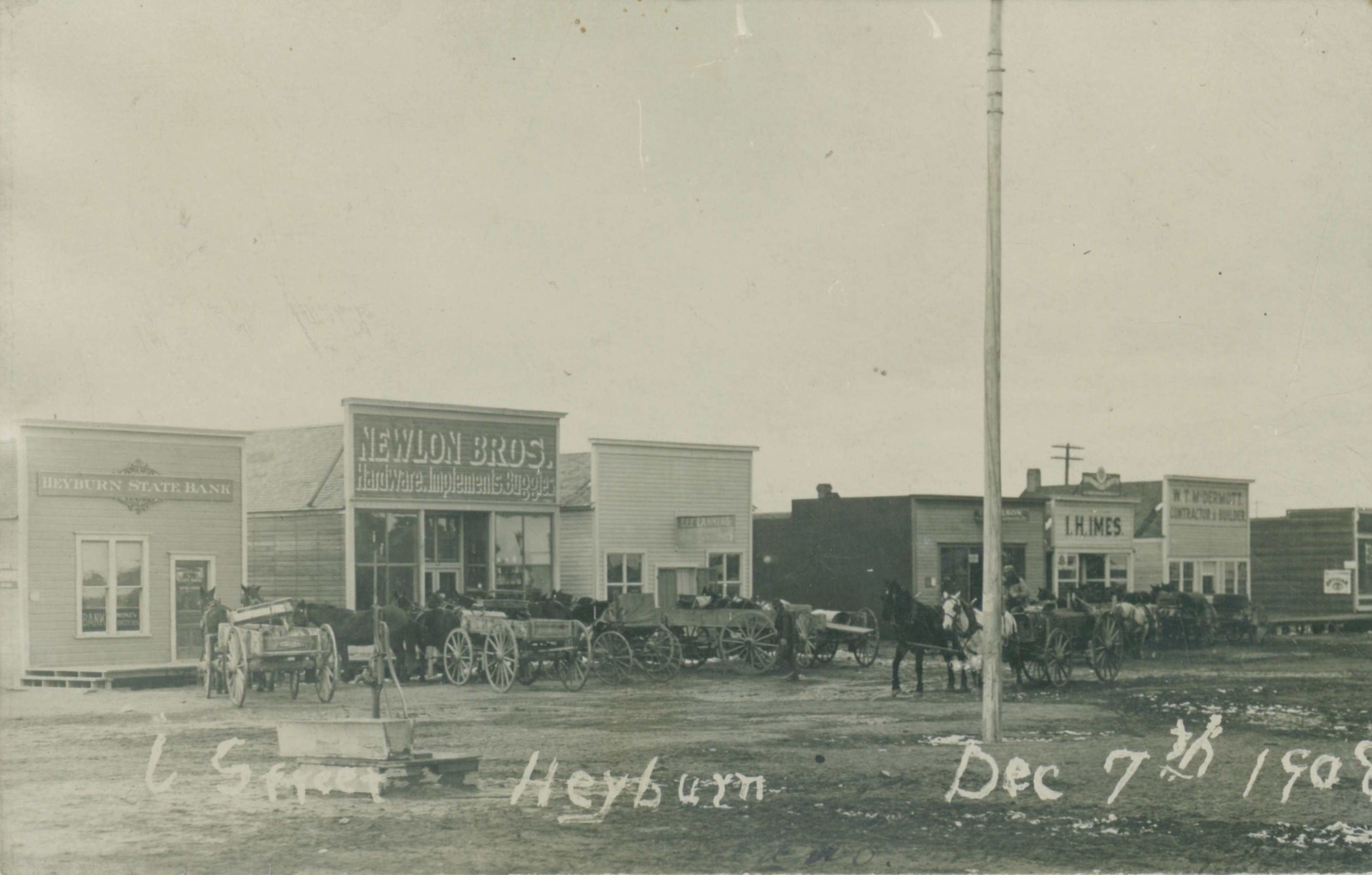
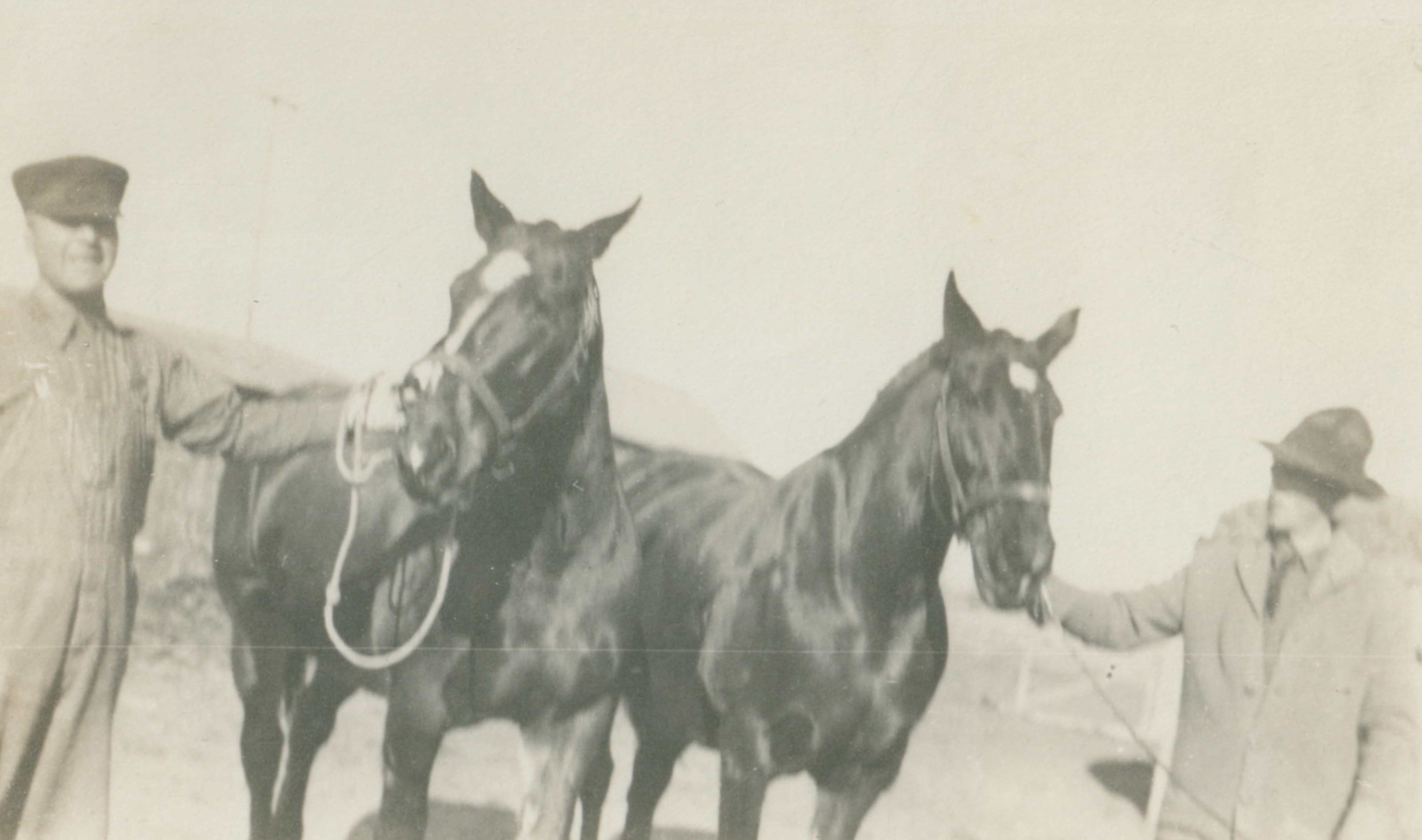
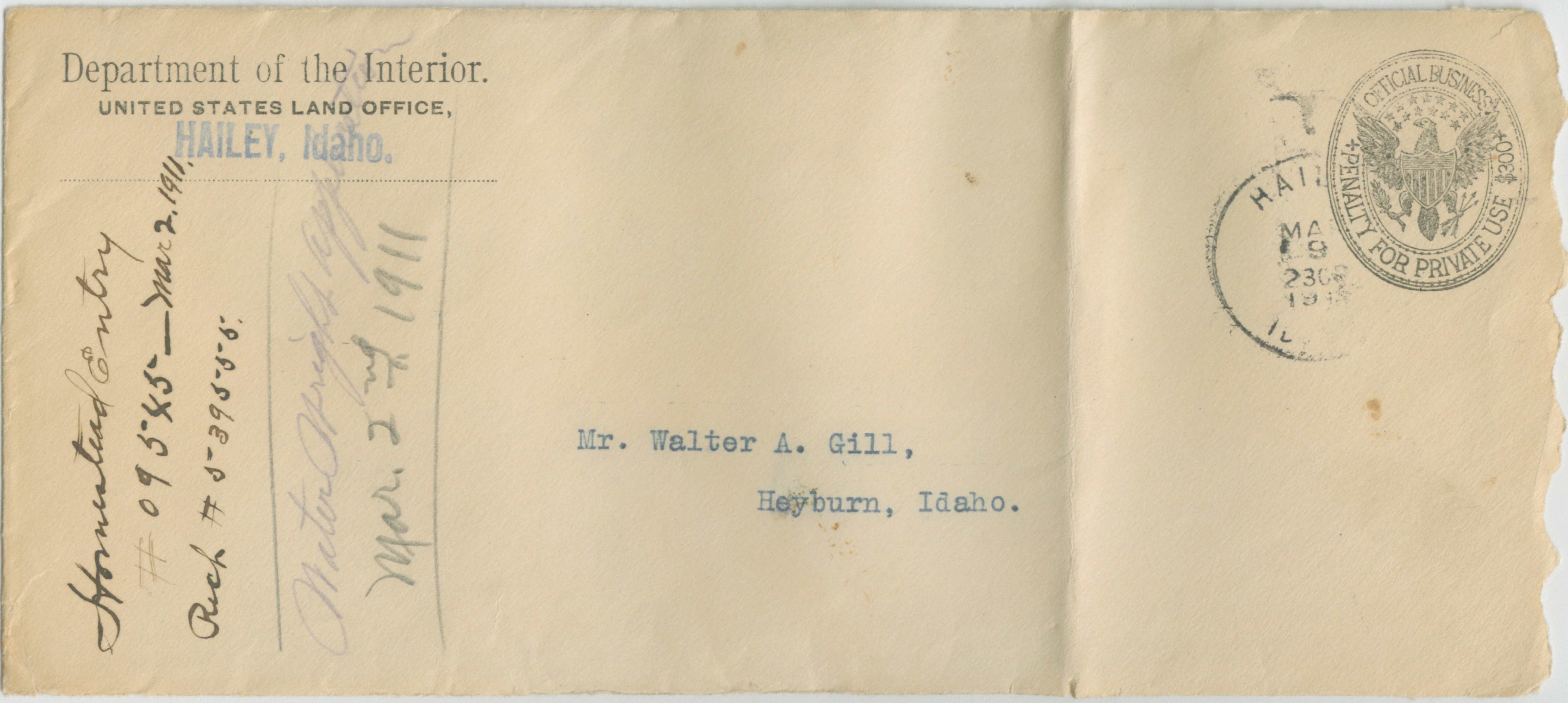
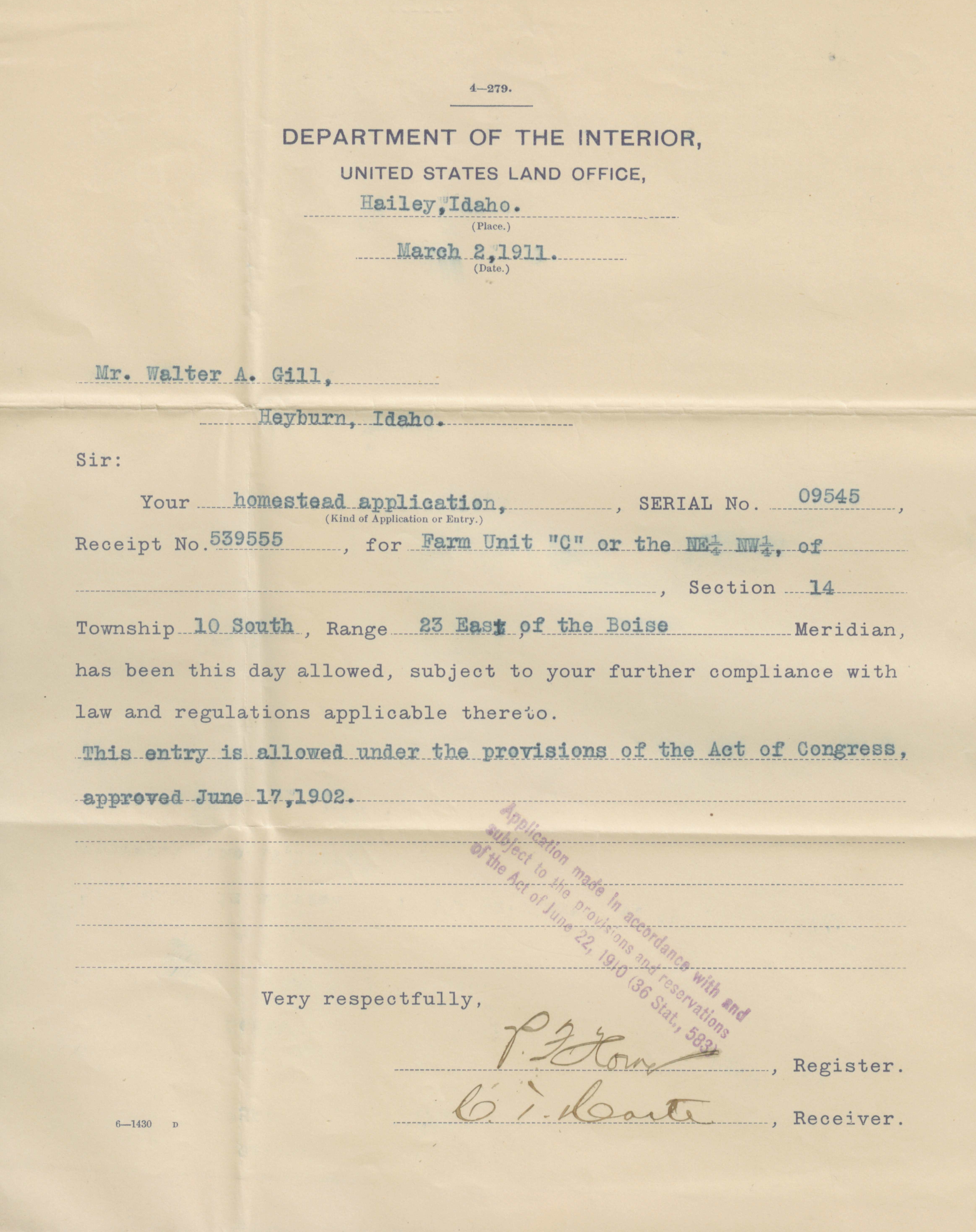
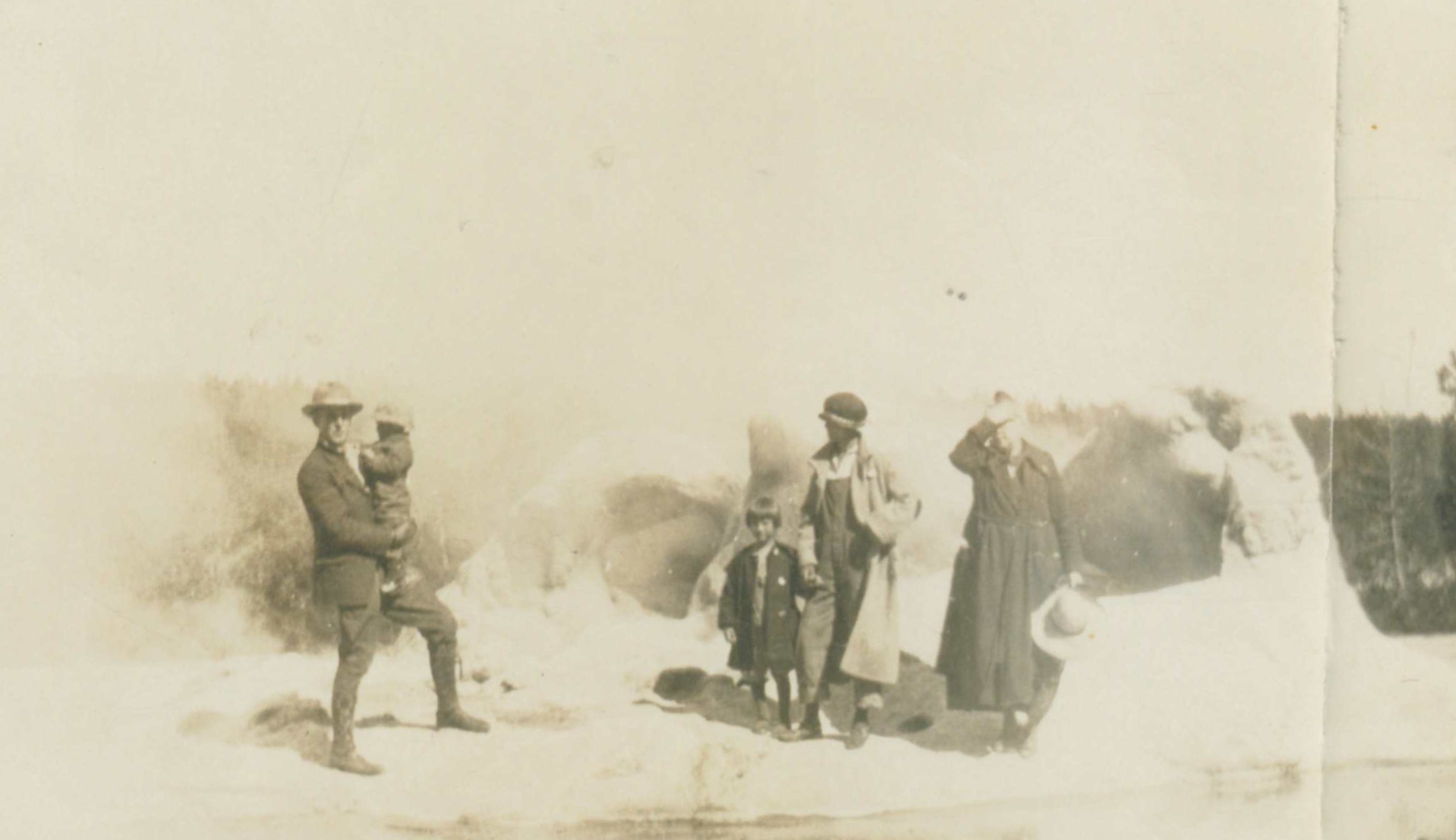
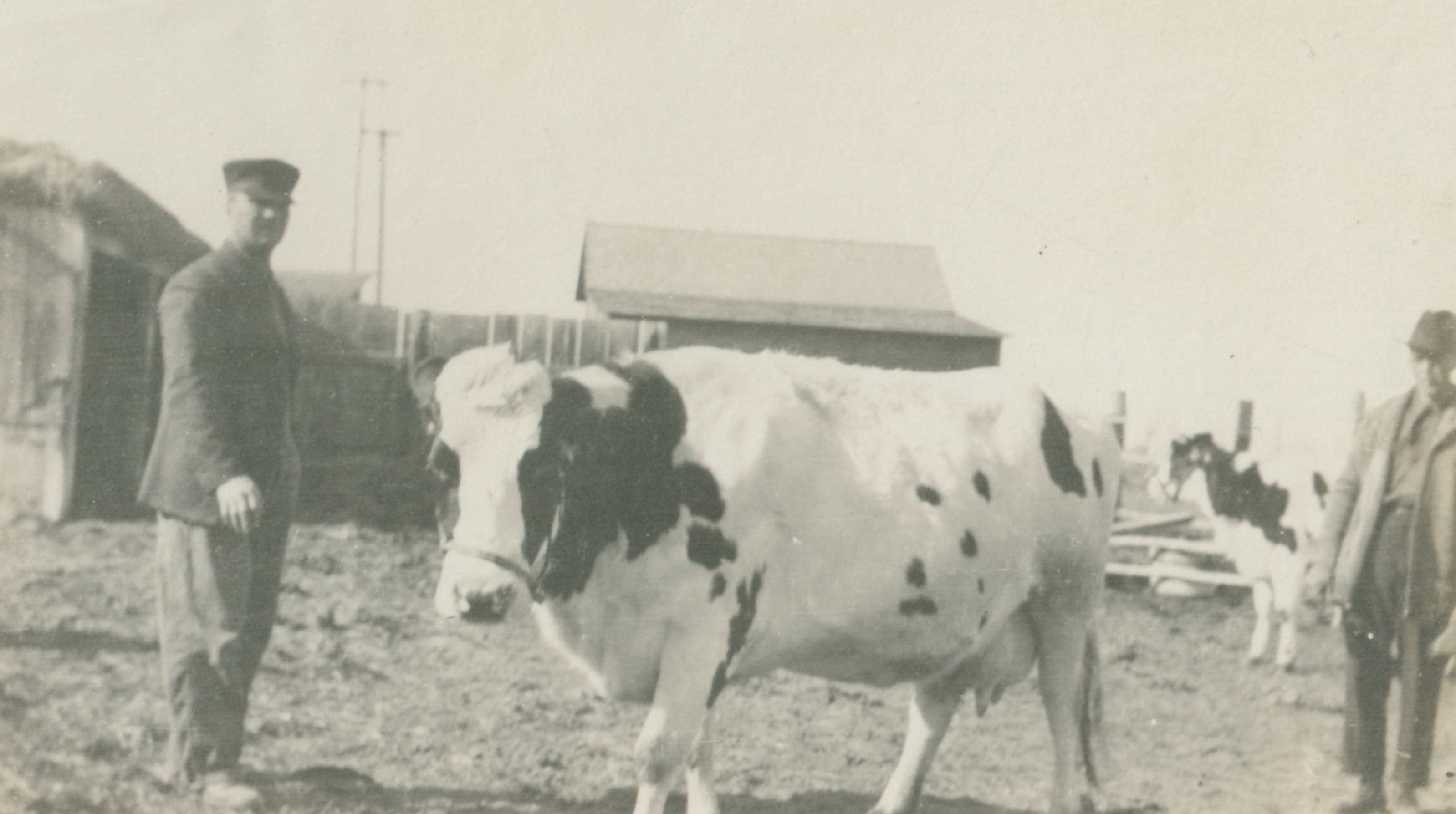
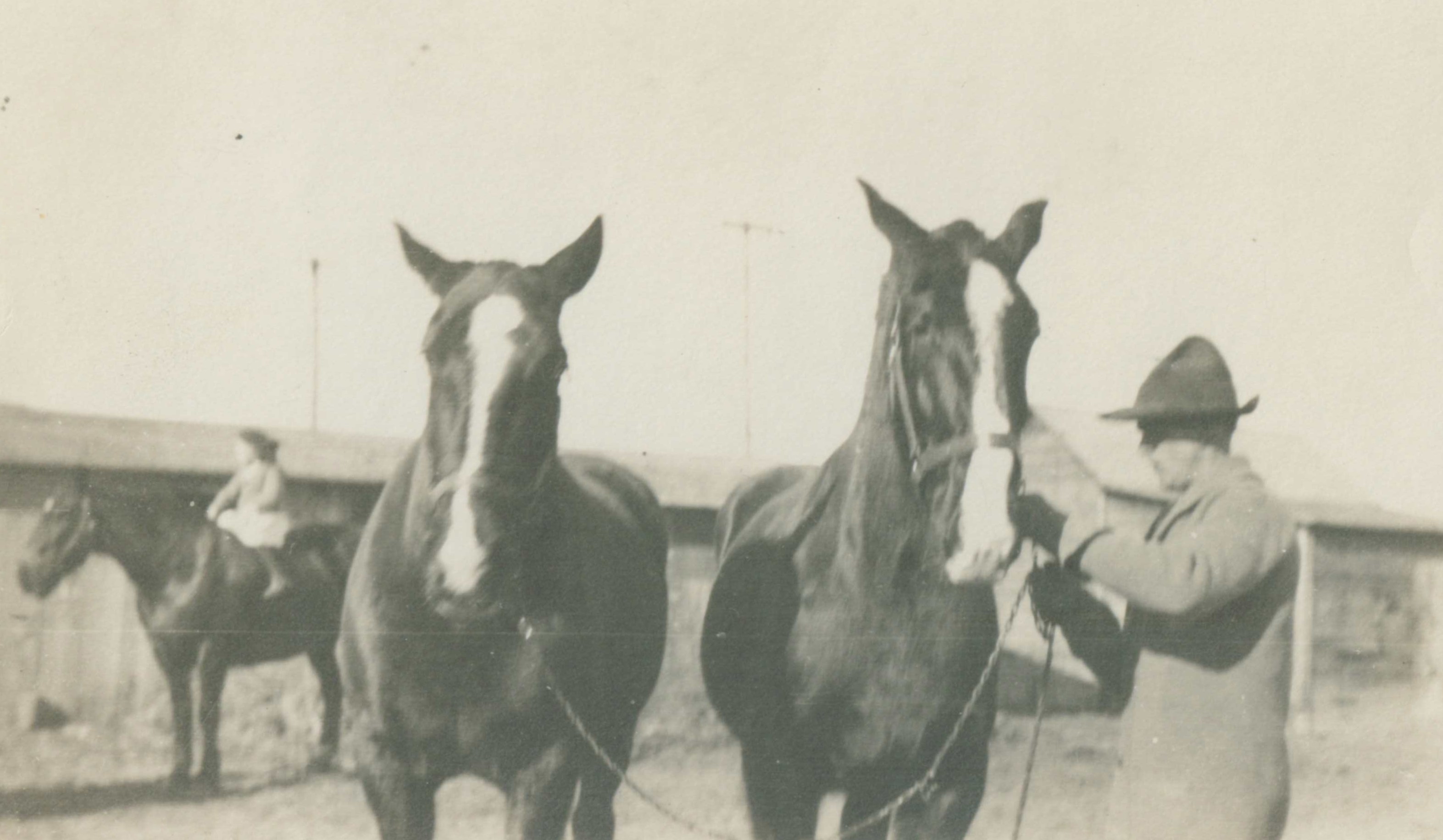
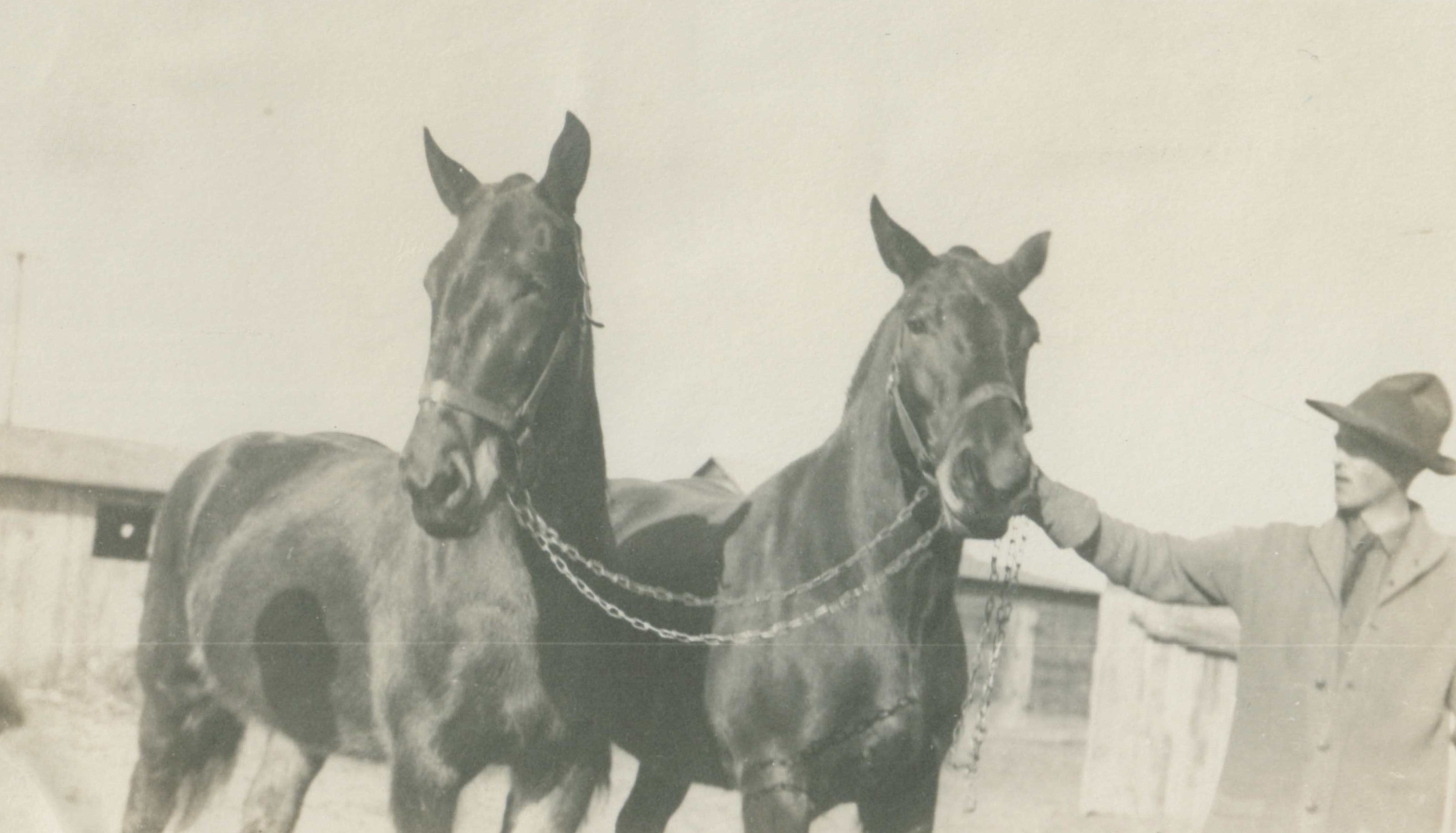
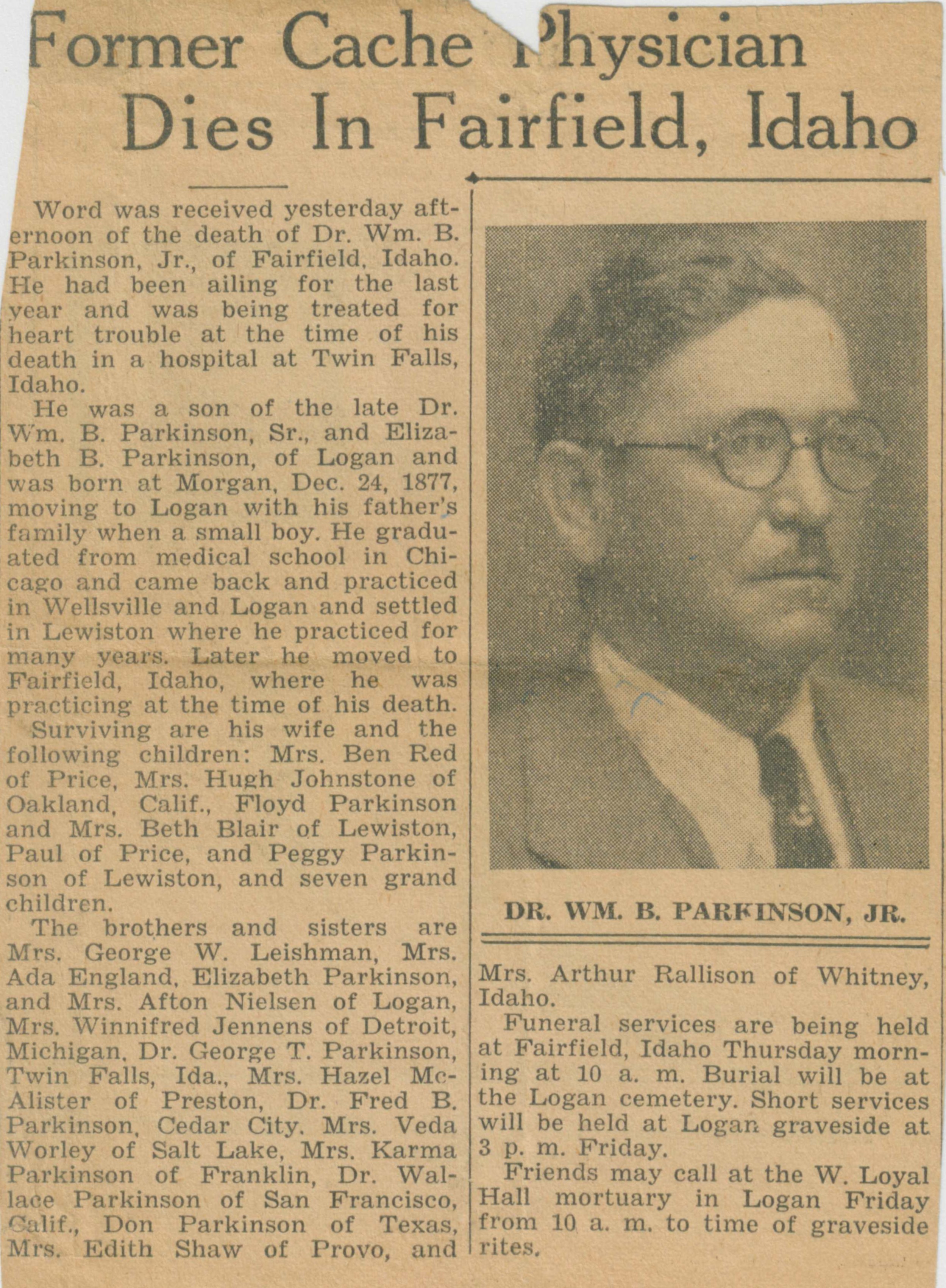


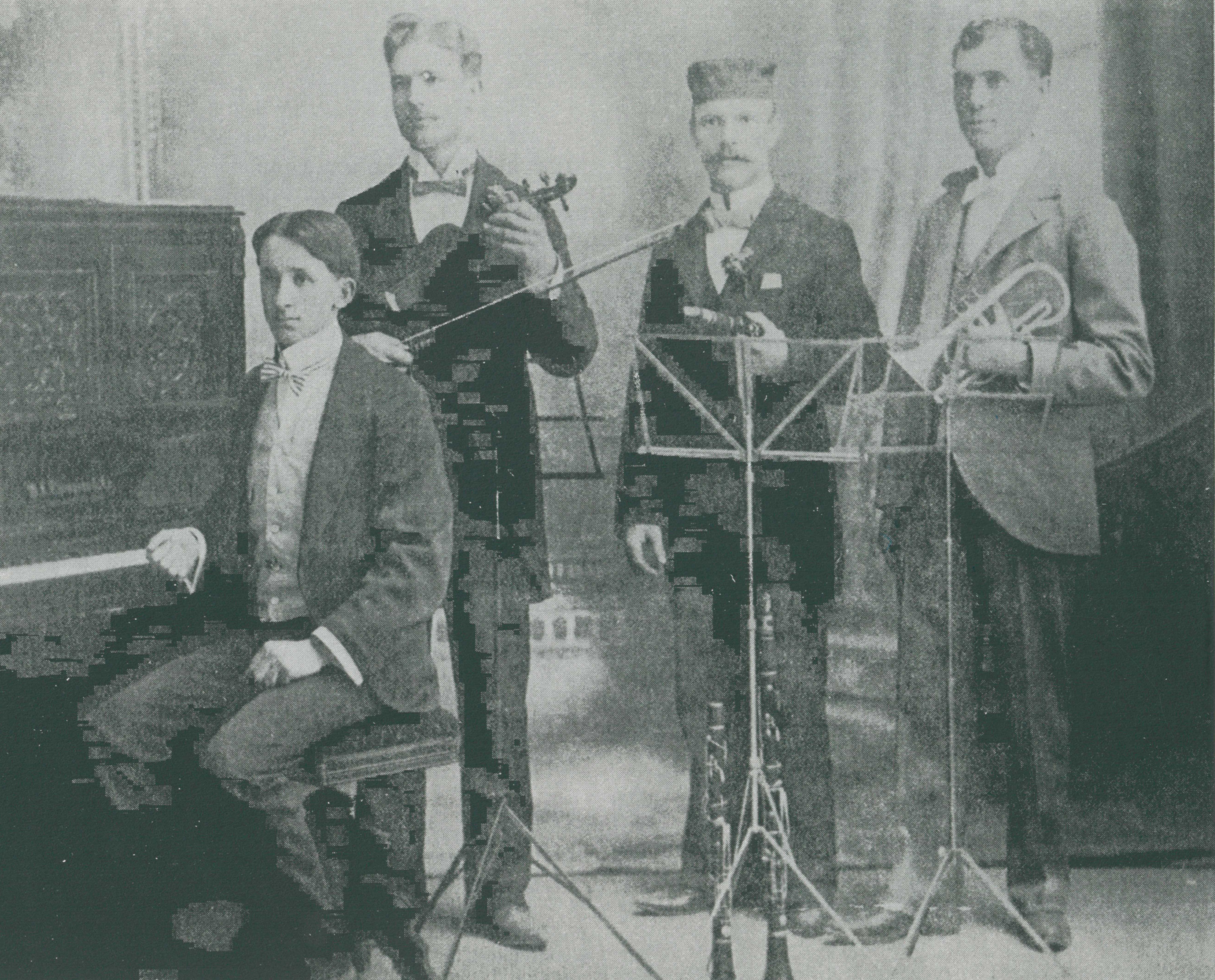
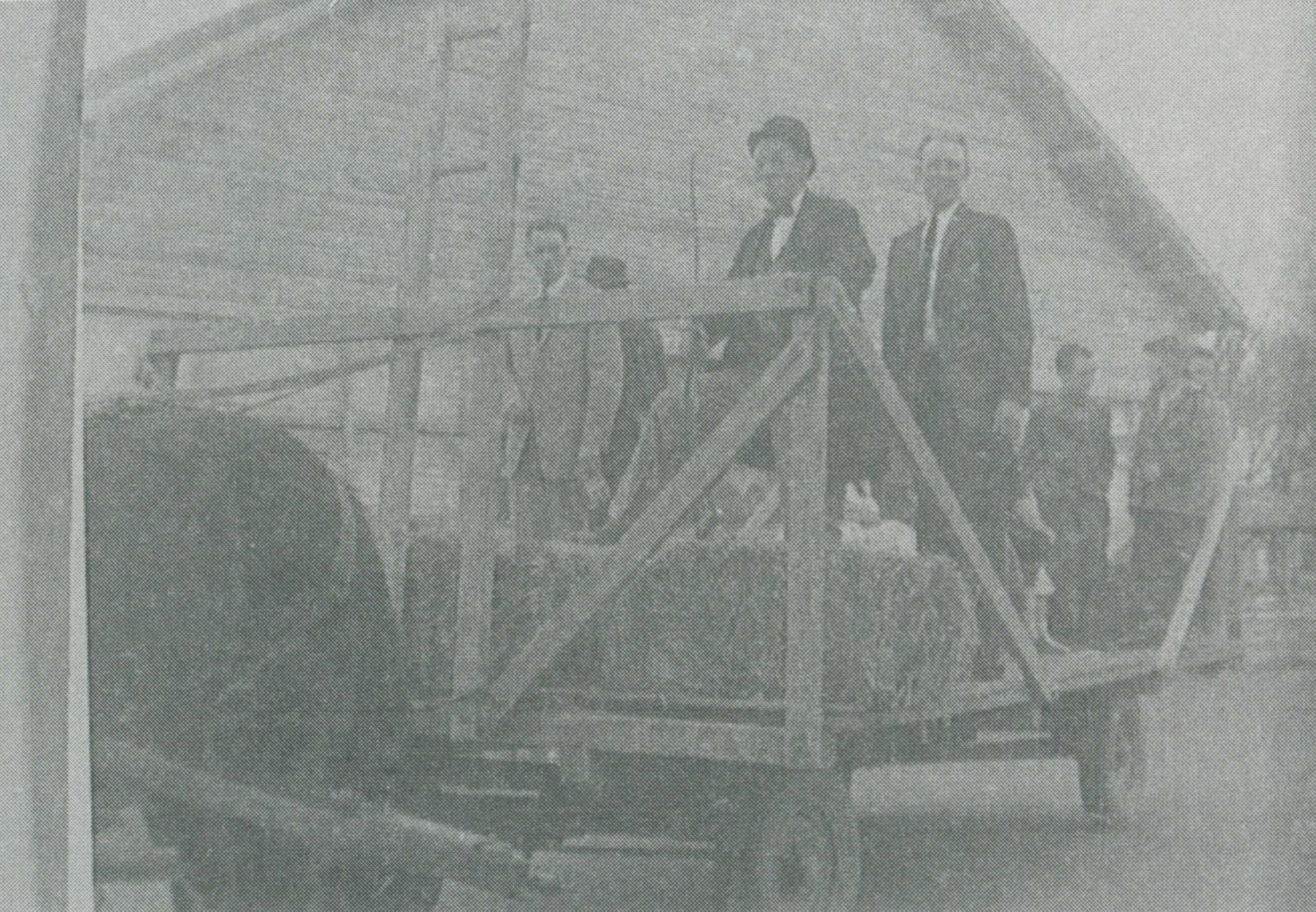
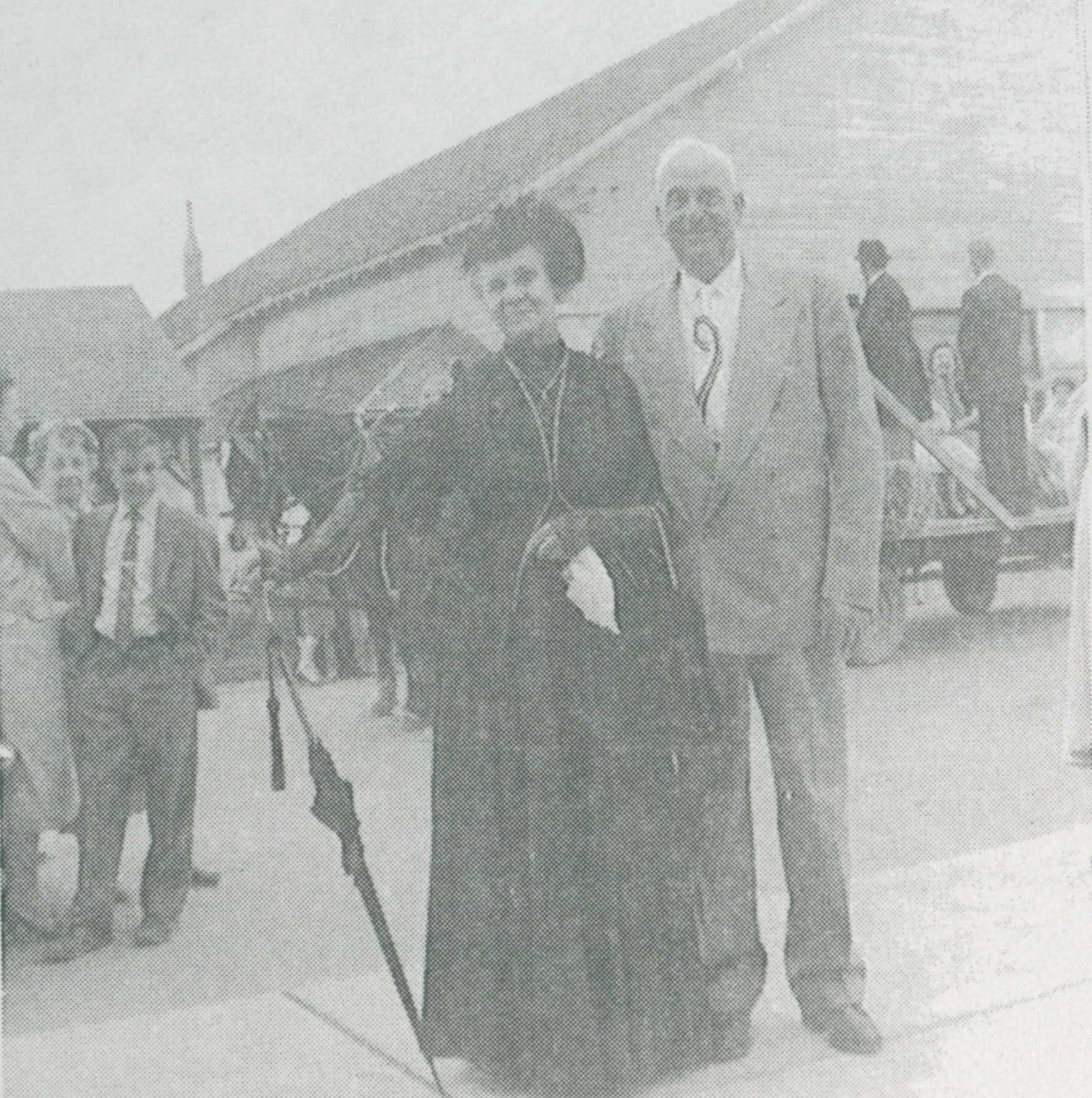

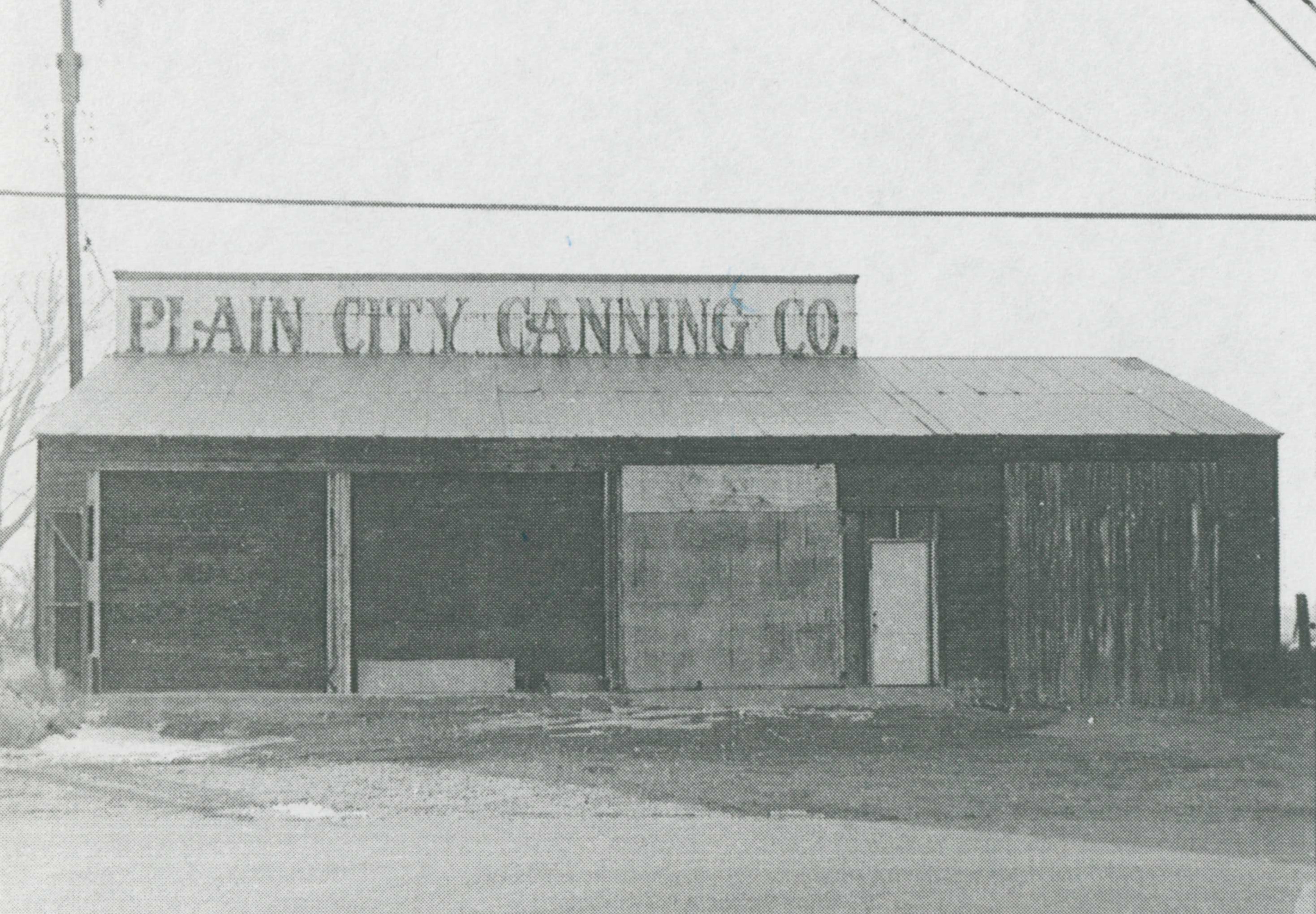

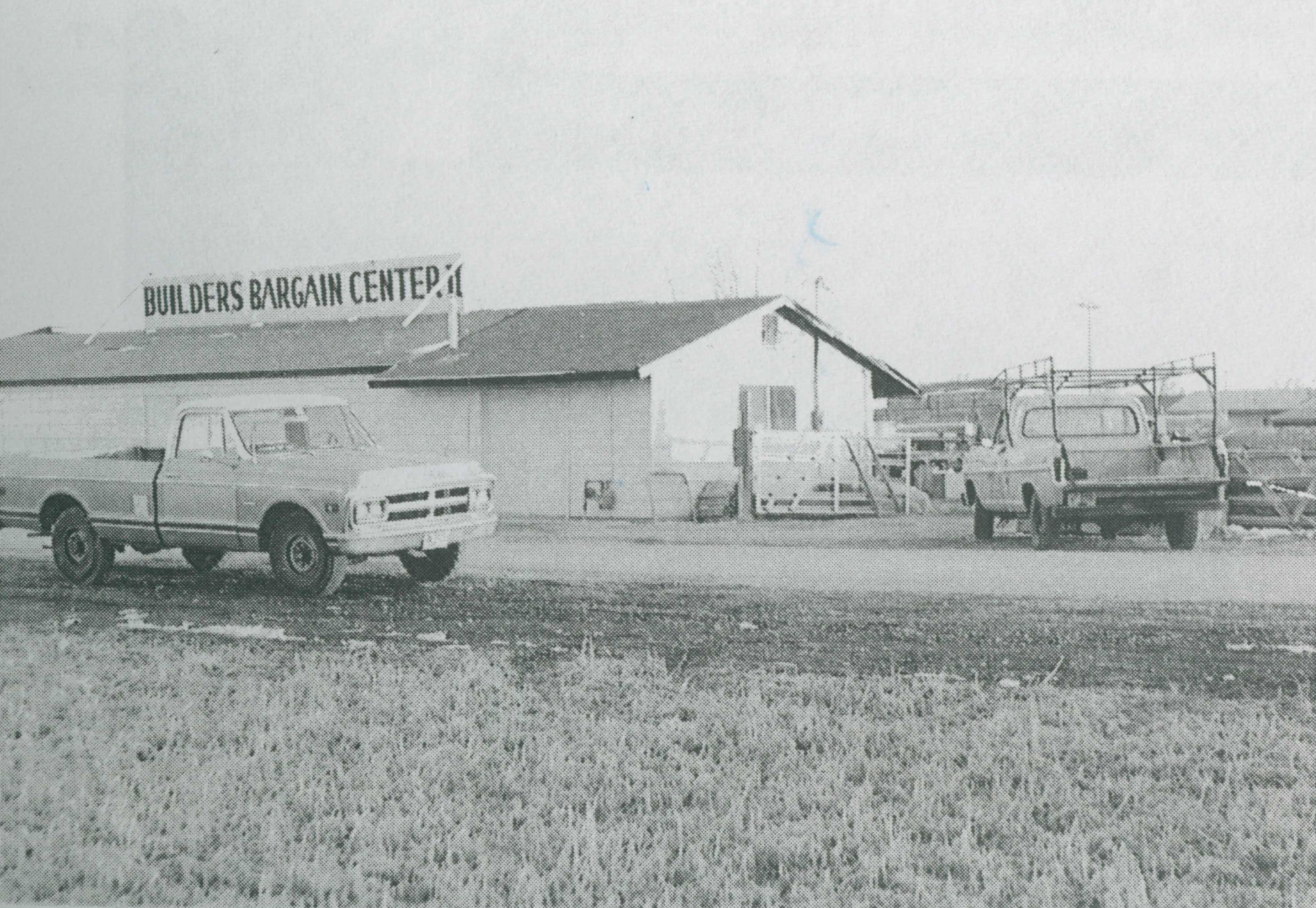


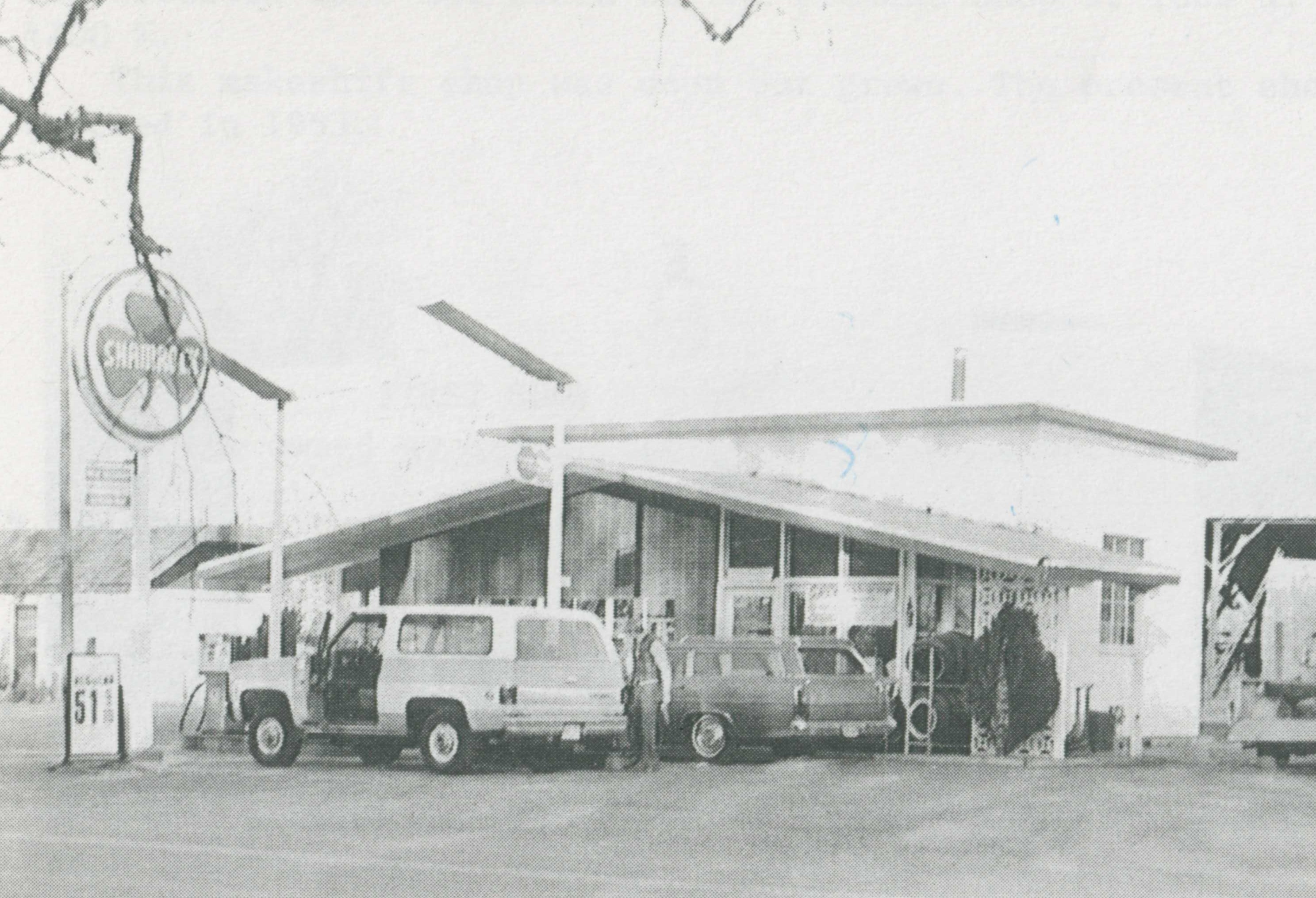

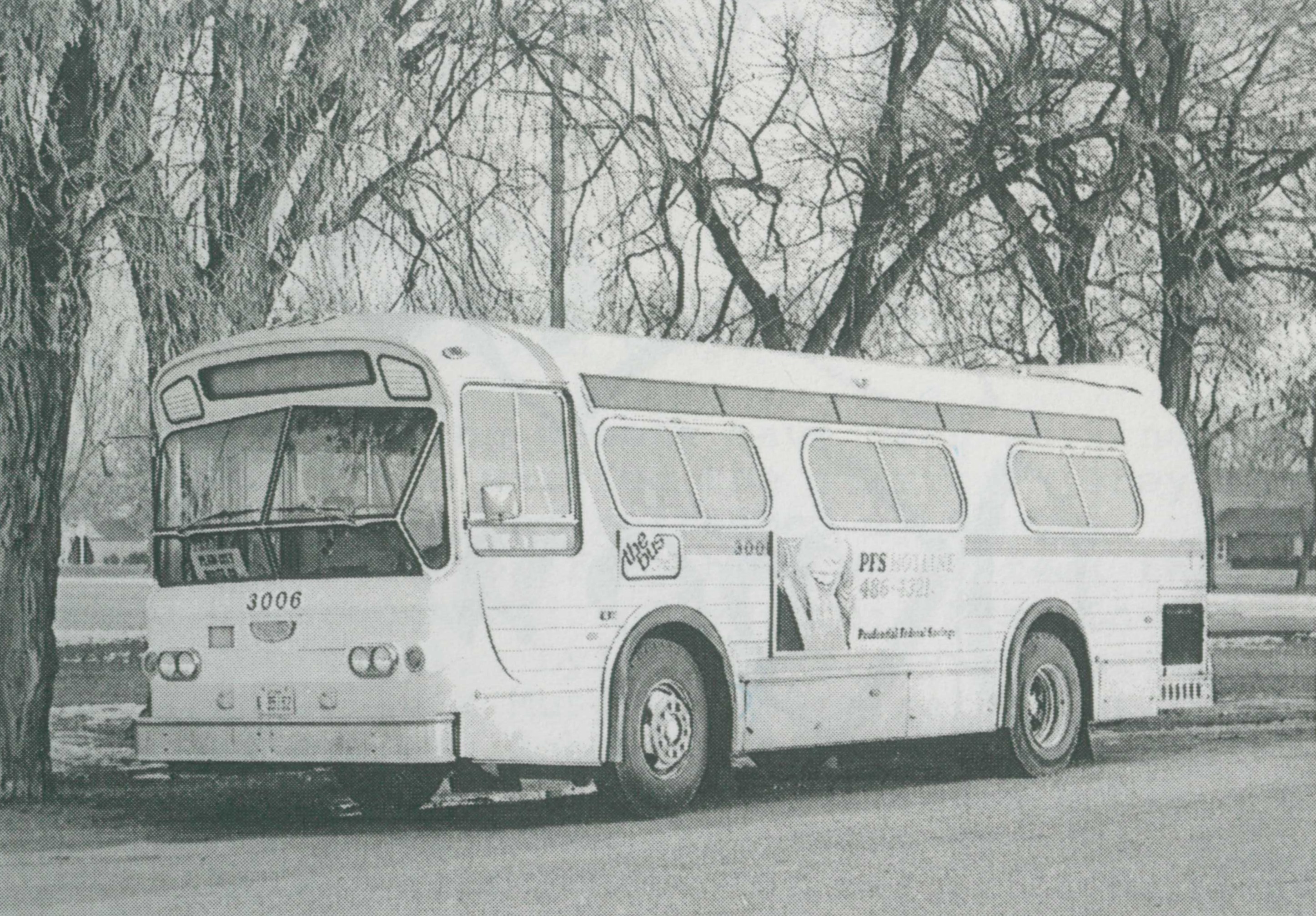
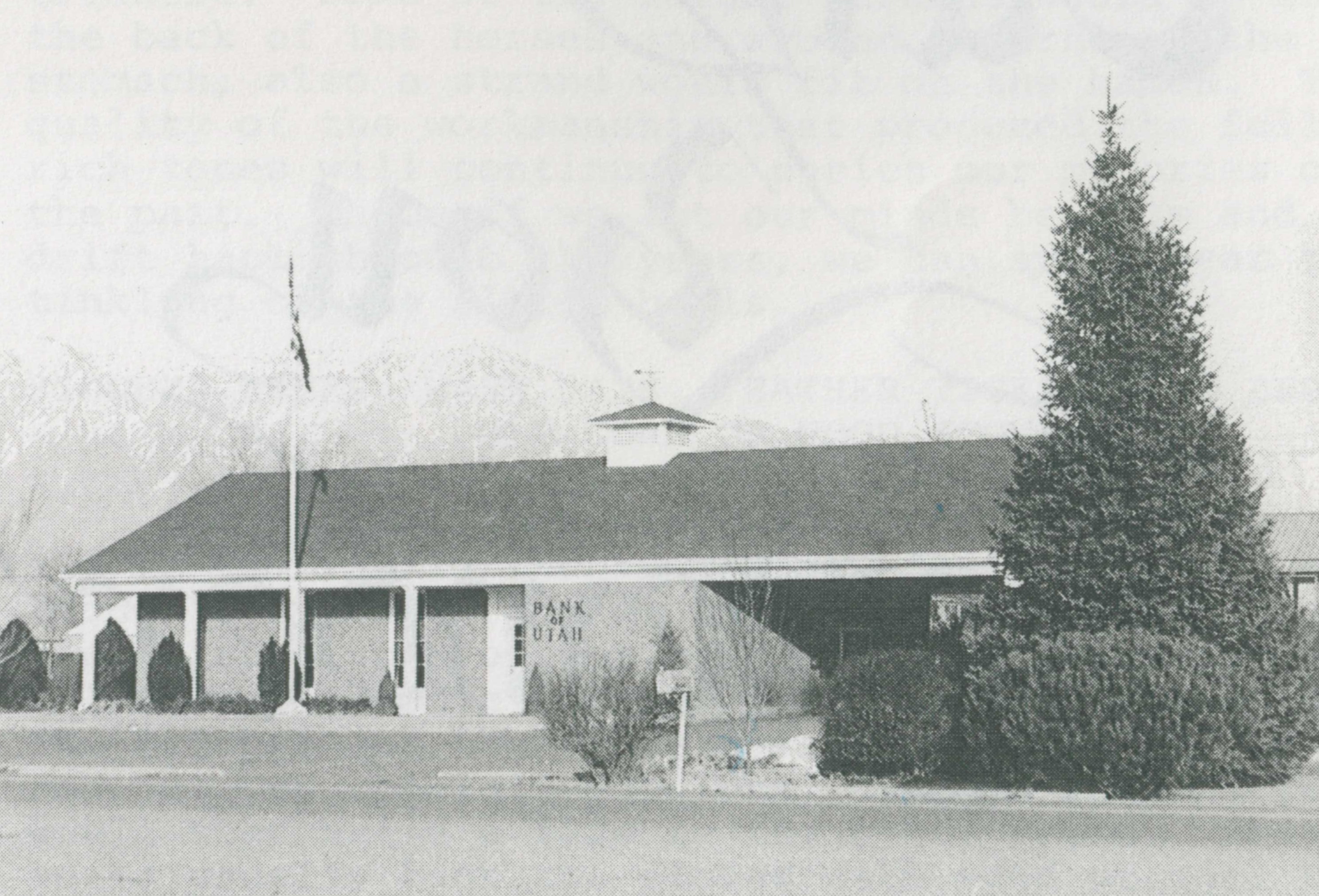


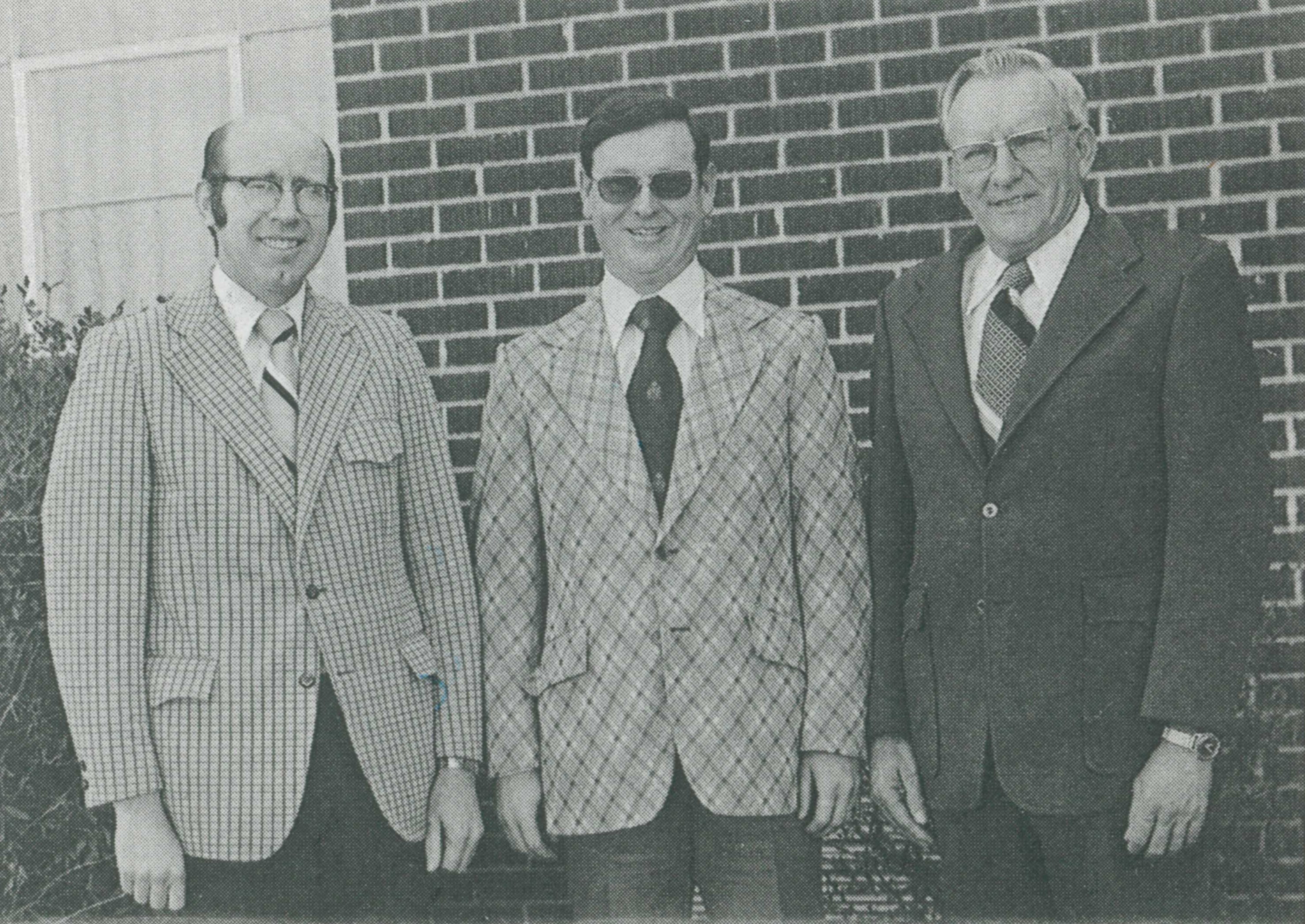


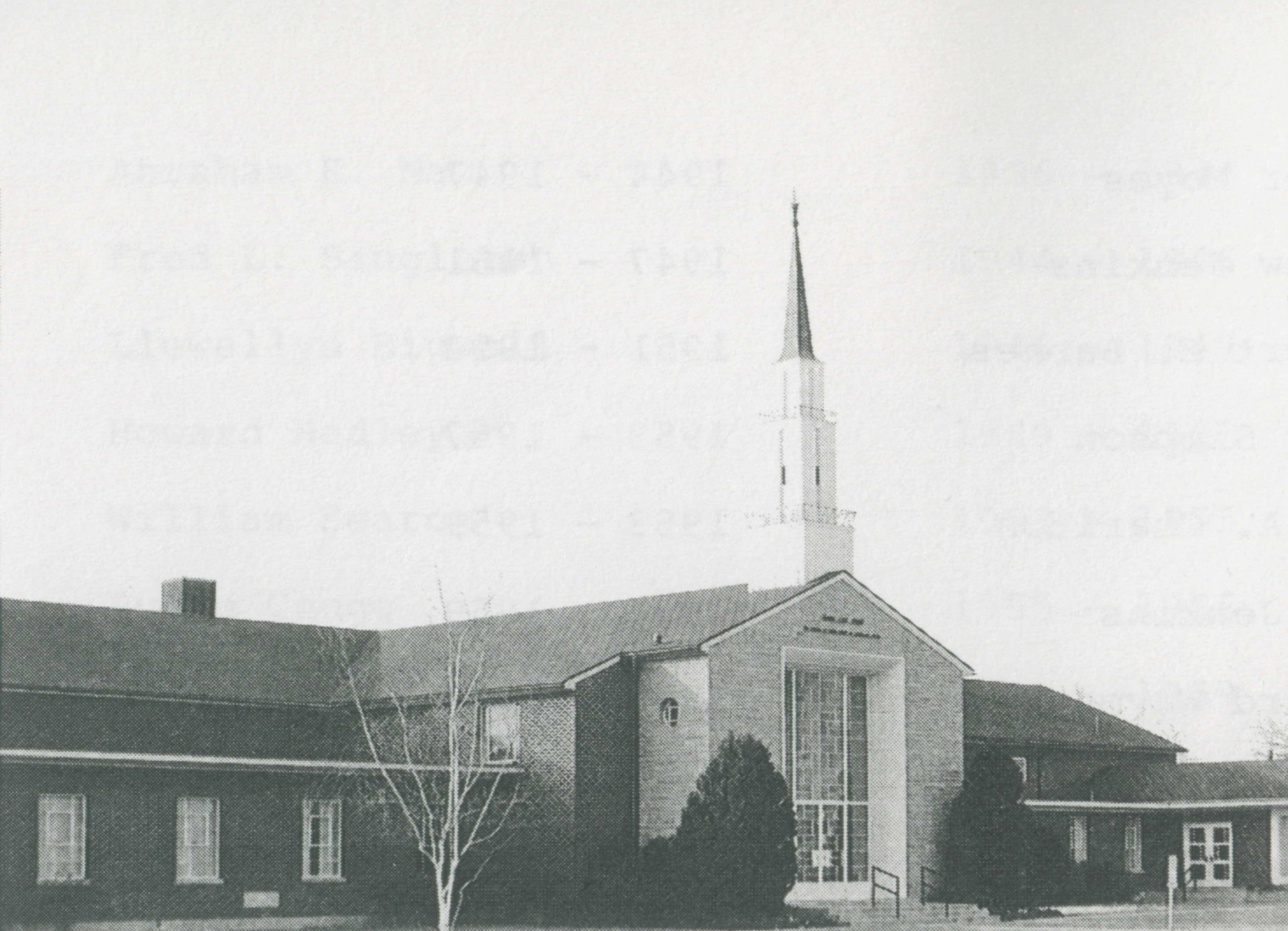
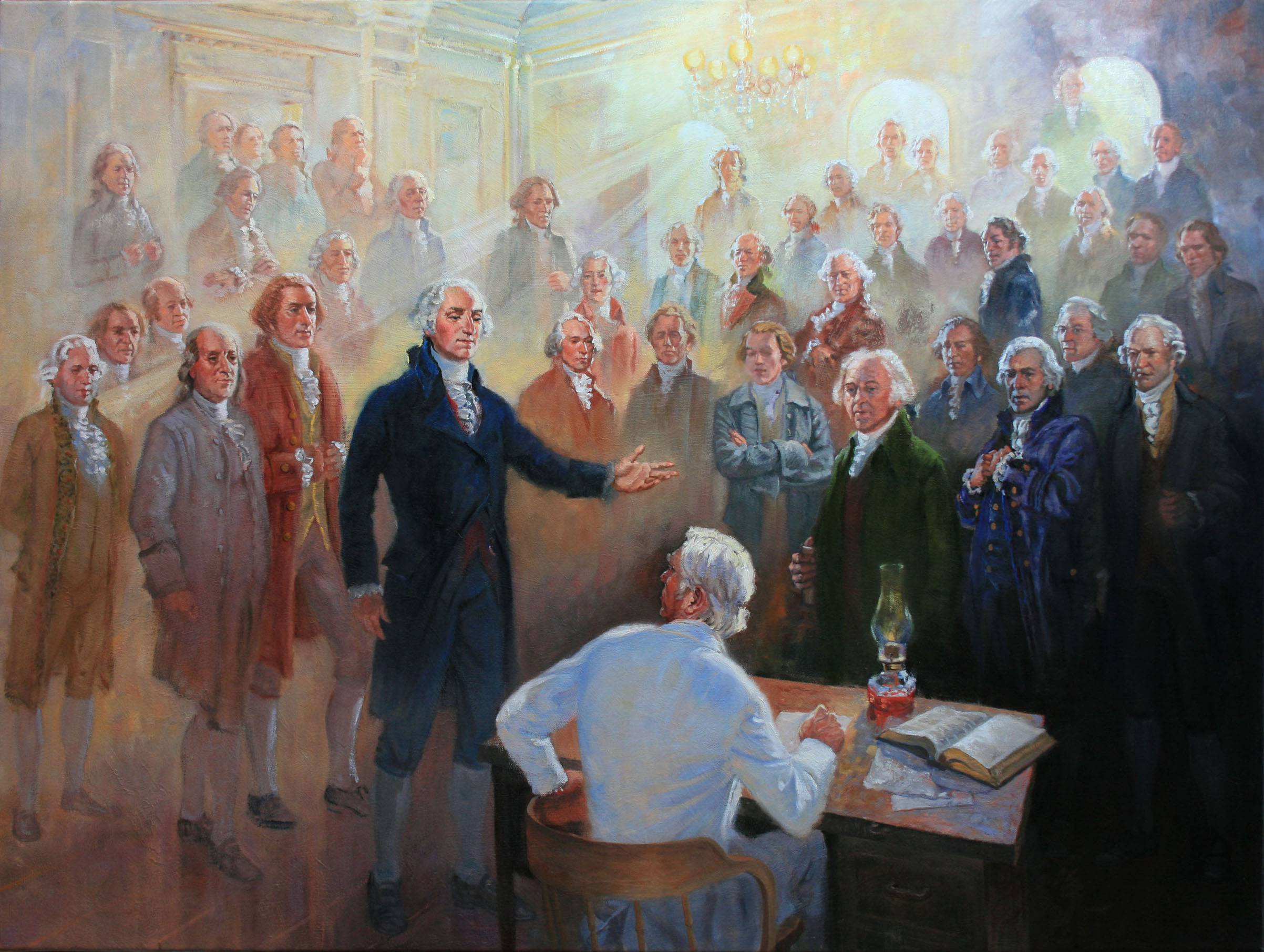

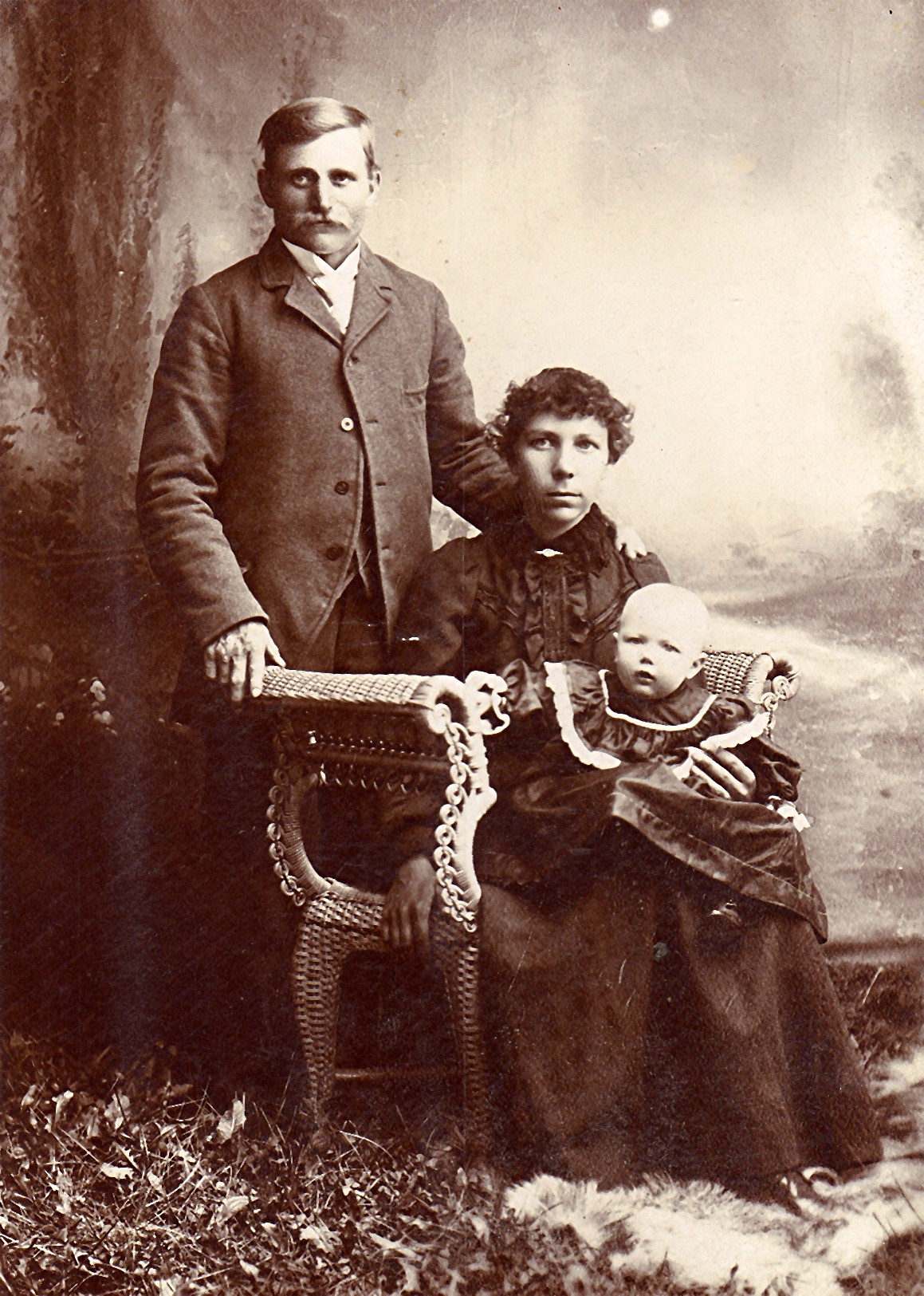


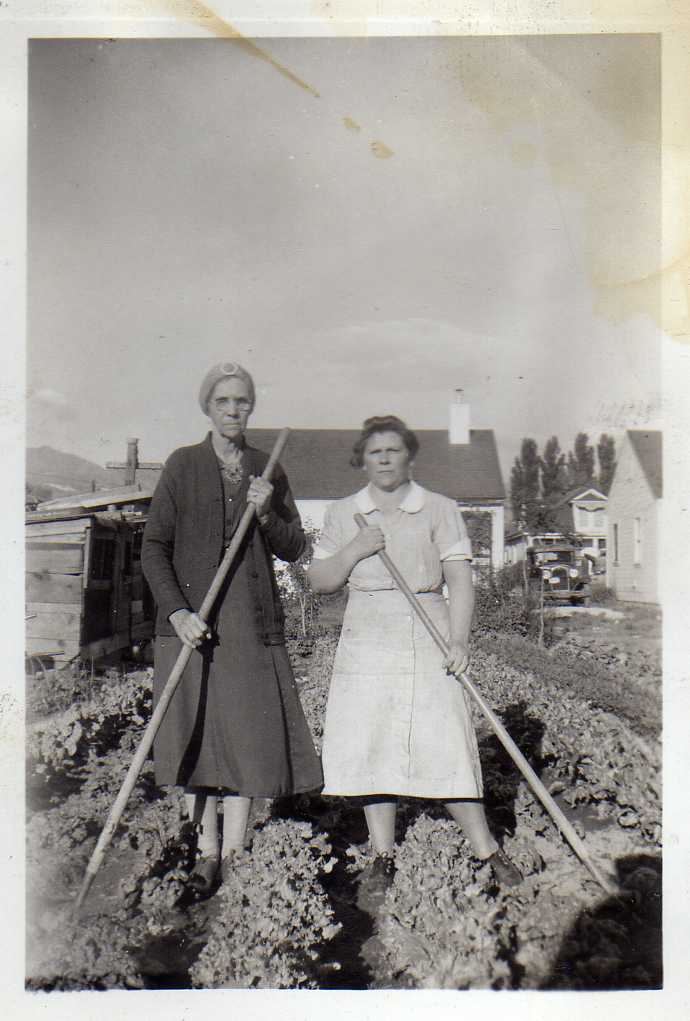

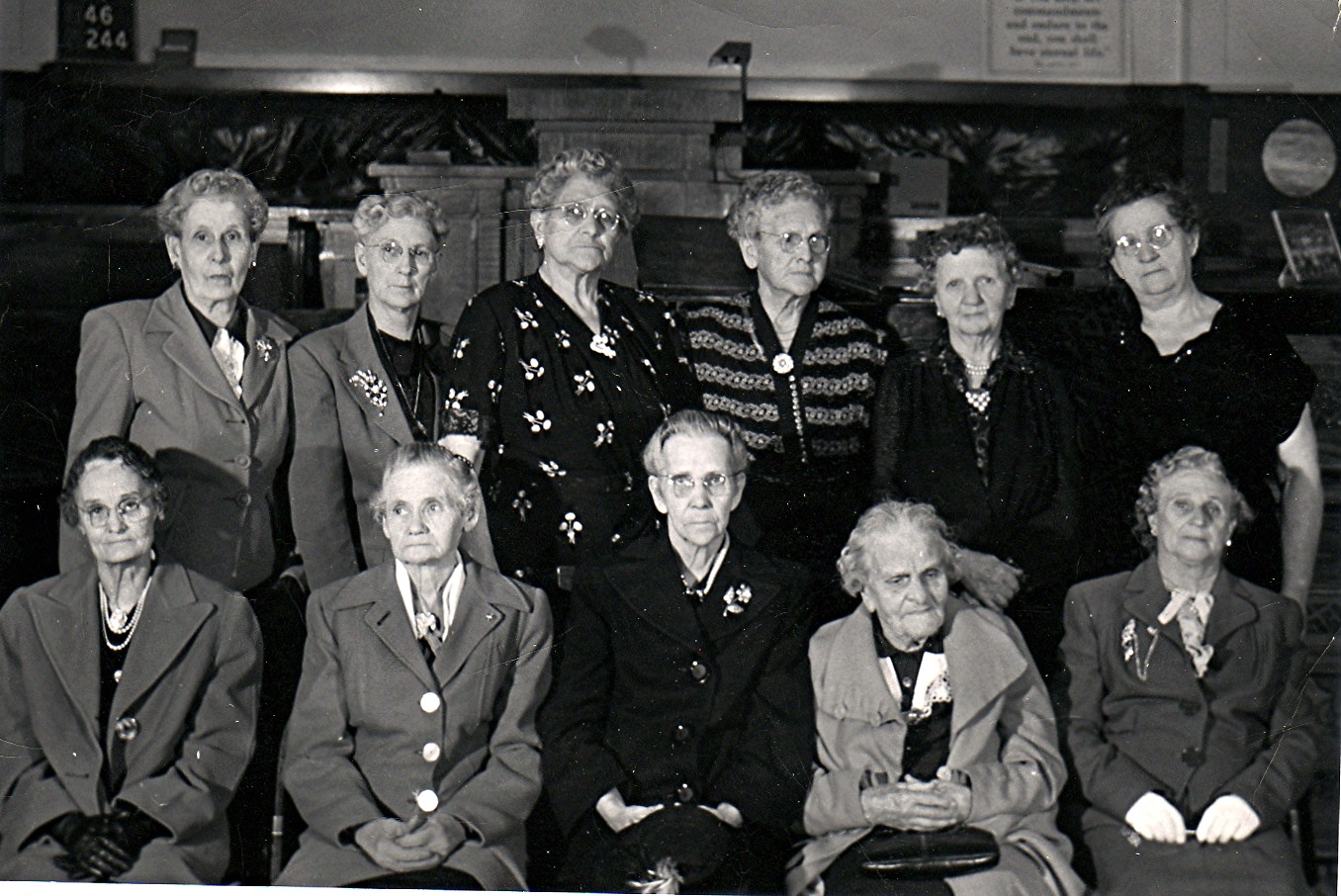


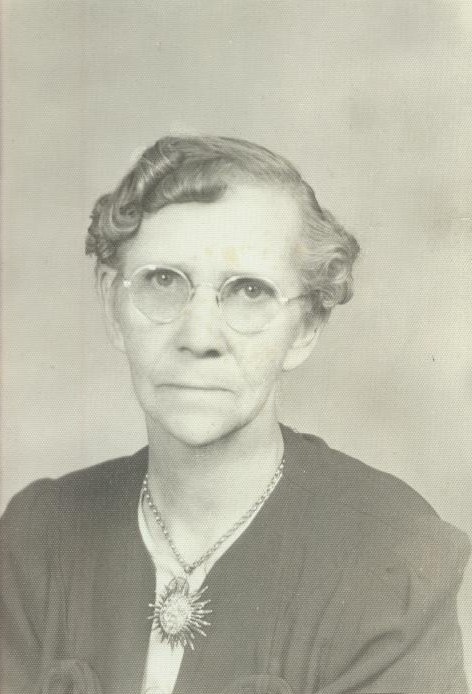


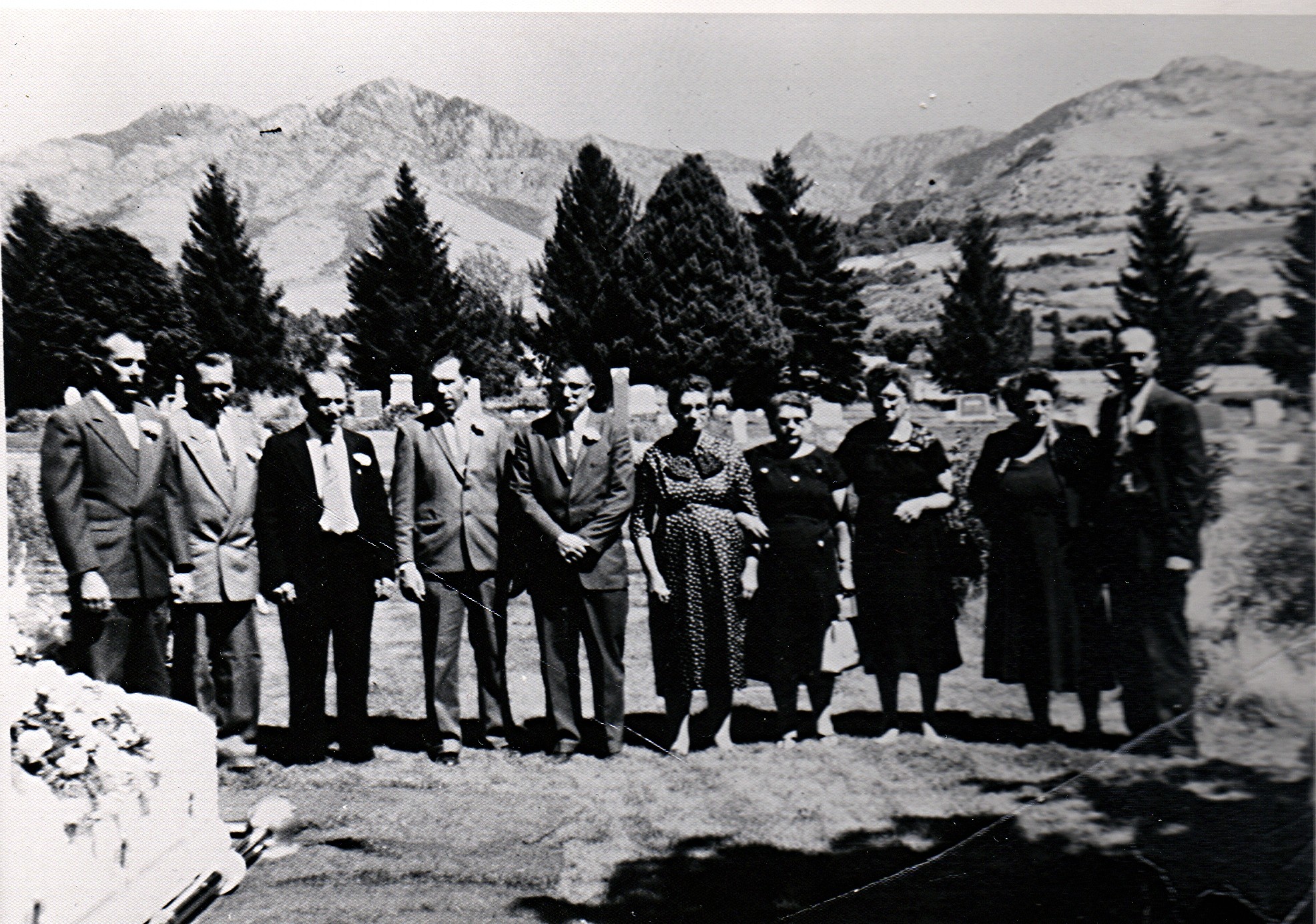
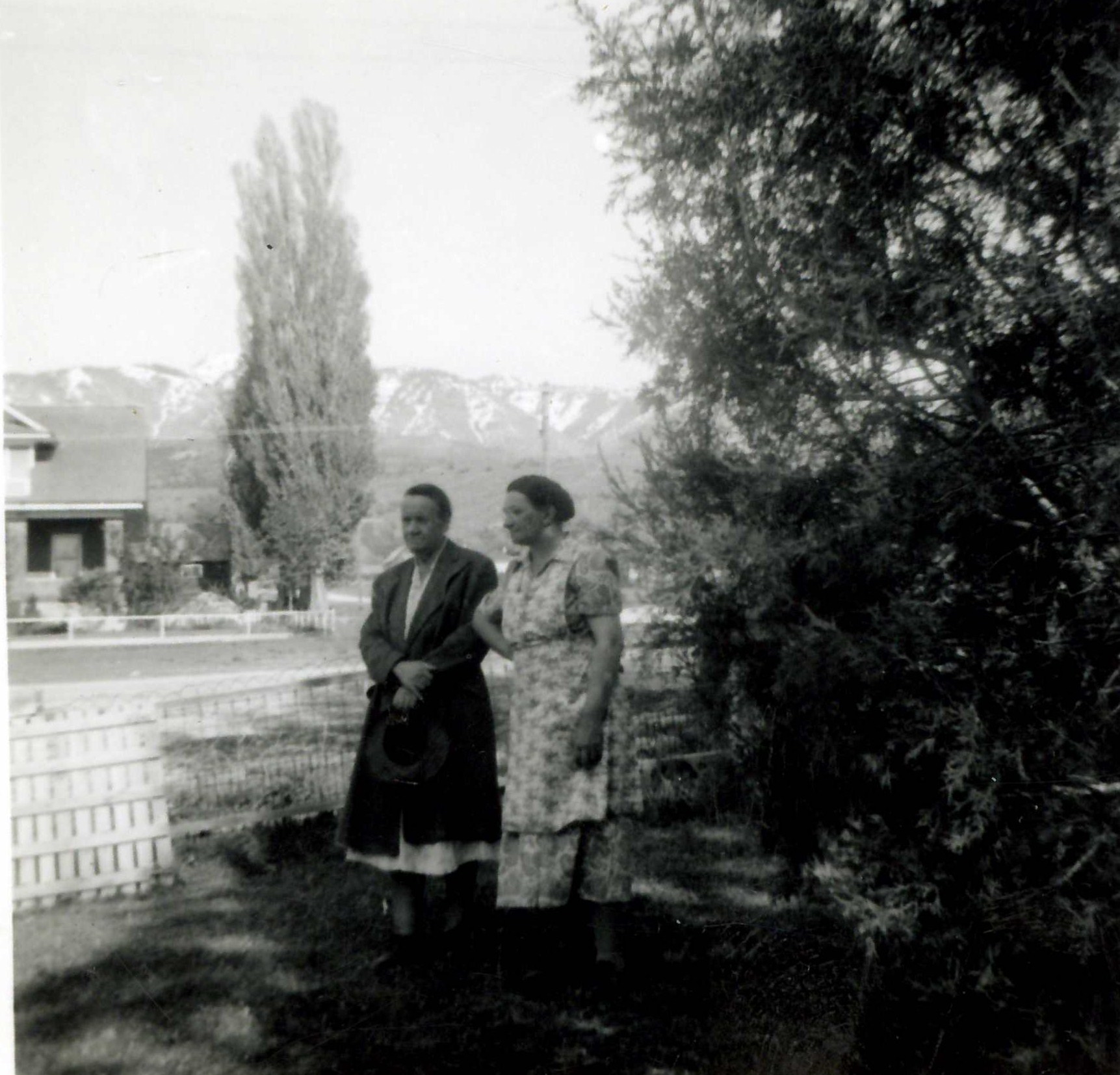


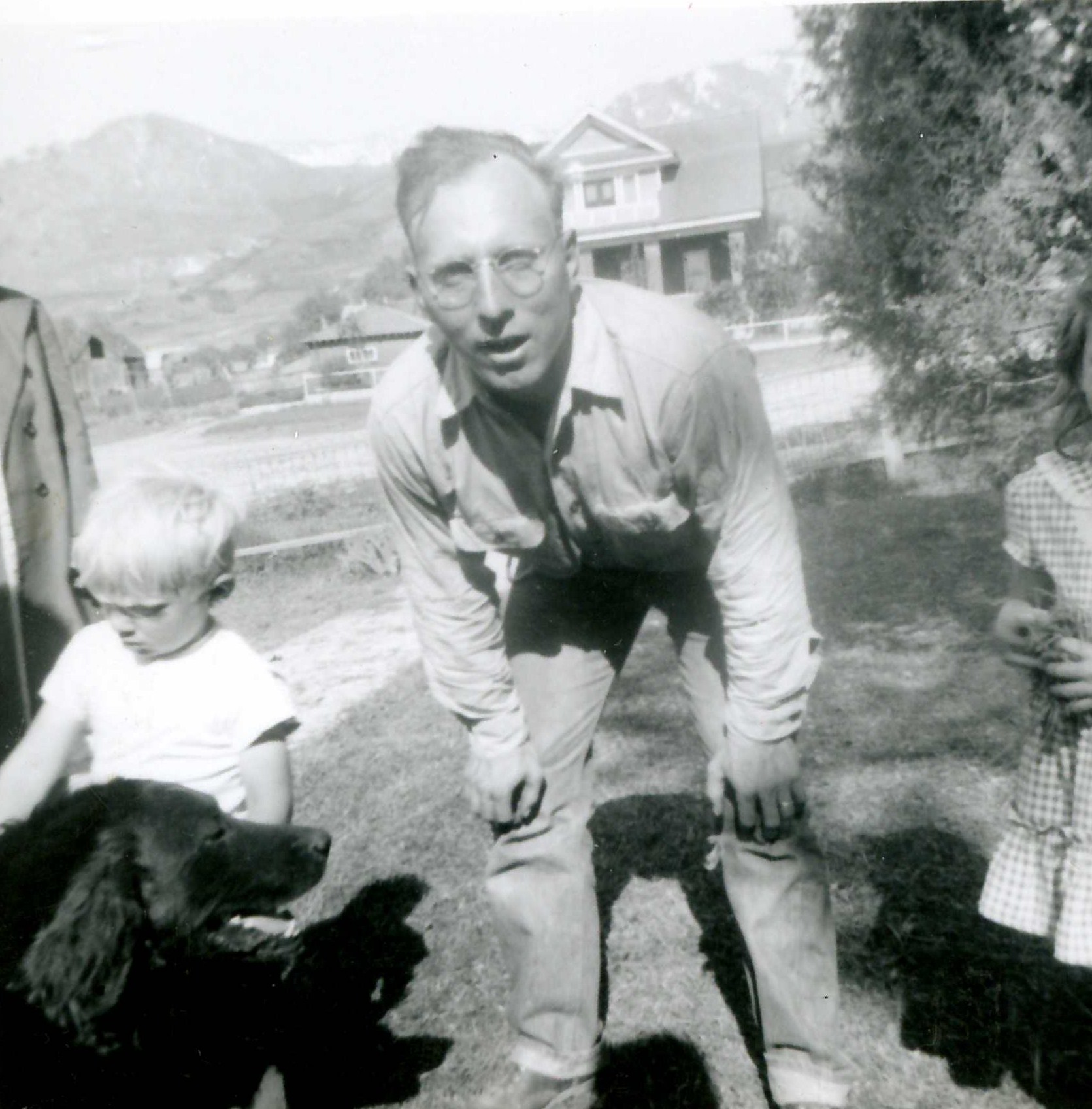
 Sagacity