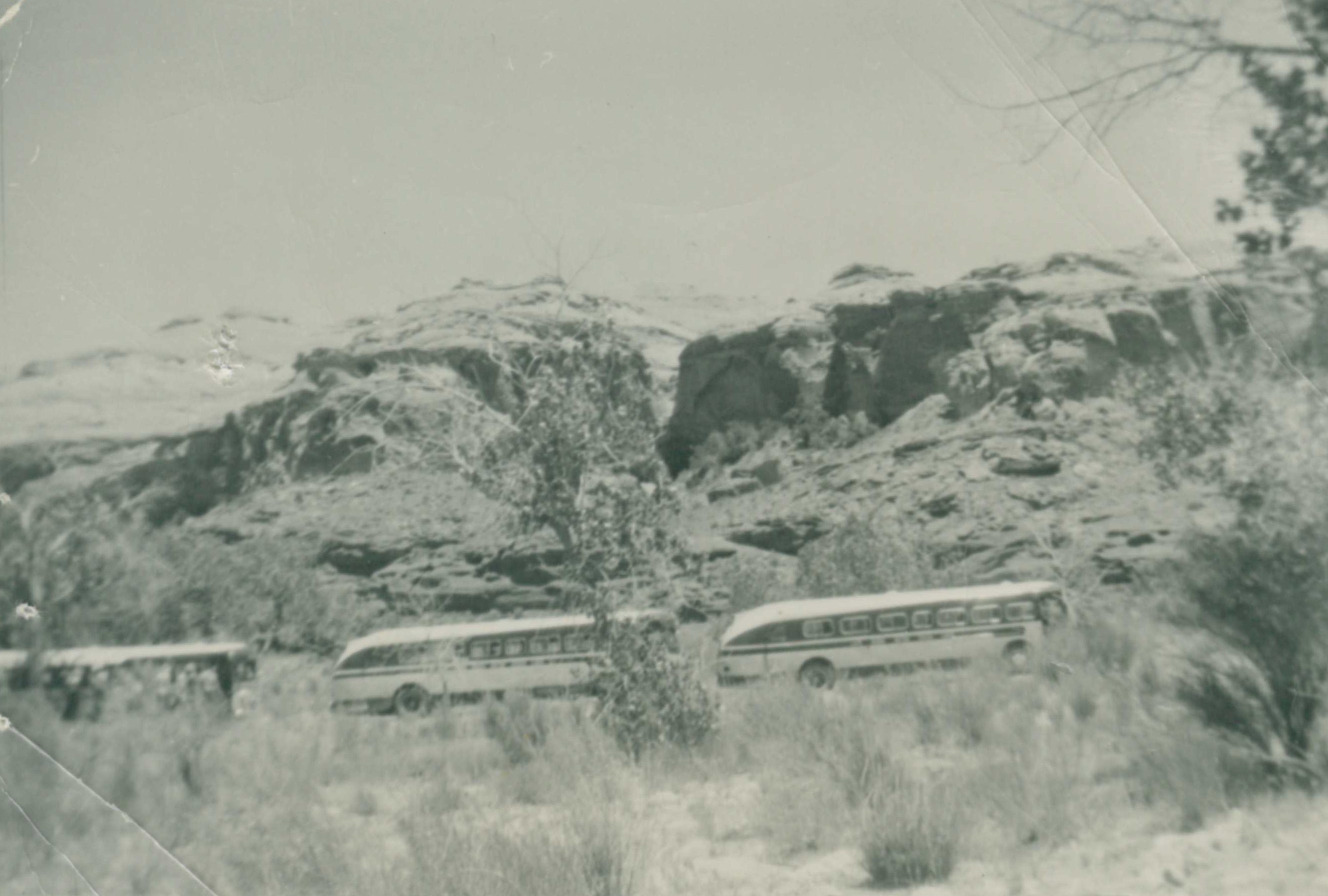
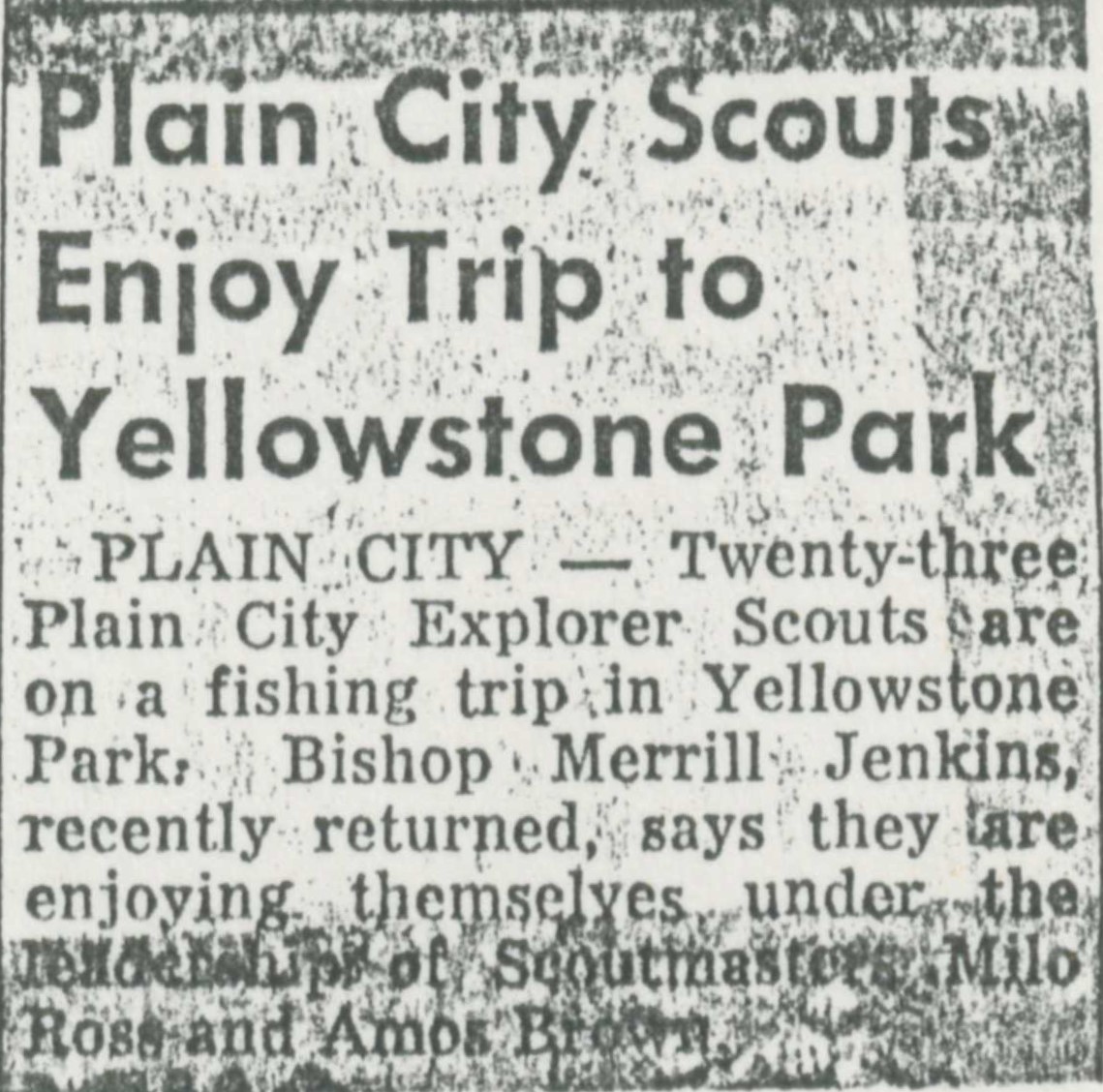
As I worked through the photos of Dave and Betty Donaldson, I stumbled on some pictures sent from Dad. Dad, Milo Paul Ross, attended the 1957 Boy Scout Jamboree in Valley Forge, Pennsylvania. I thought I would share those photos along with some other items I have scanned related to that trip. Since there were a couple of photos from the 1958 High Adventure Trip, I thought I would include those too.
First, be aware that the Great Salt Lake and Lake Bonneville Councils published a book about their trip. “Onward for God and My Country” was the motto. I have scanned the entire book – it is provided below.
The book says the trip occurred in July 1957. The book provides plenty of photos of the highlights. These few photos show what Dad thought was interesting enough to take pictures.
The trip took them east through a variety of states. Included was Chicago, Detroit, and Palmyra. Stops included the Sacred Grove and Smith Farm. Albany, Springfield, Boston, and New York City.
Dad does not recall the names or even knowing anyone in the photos at Jamboree.
I remember Dad talking about the Statue of Liberty. They climbed the stairs to the crown. He also indicated that at that time they let some of them climb to the torch. It was a very memorable experience. He also mentioned the Empire State Building and Independence Hall in Philadelphia. Vice President Nixon addressed the Scouts.
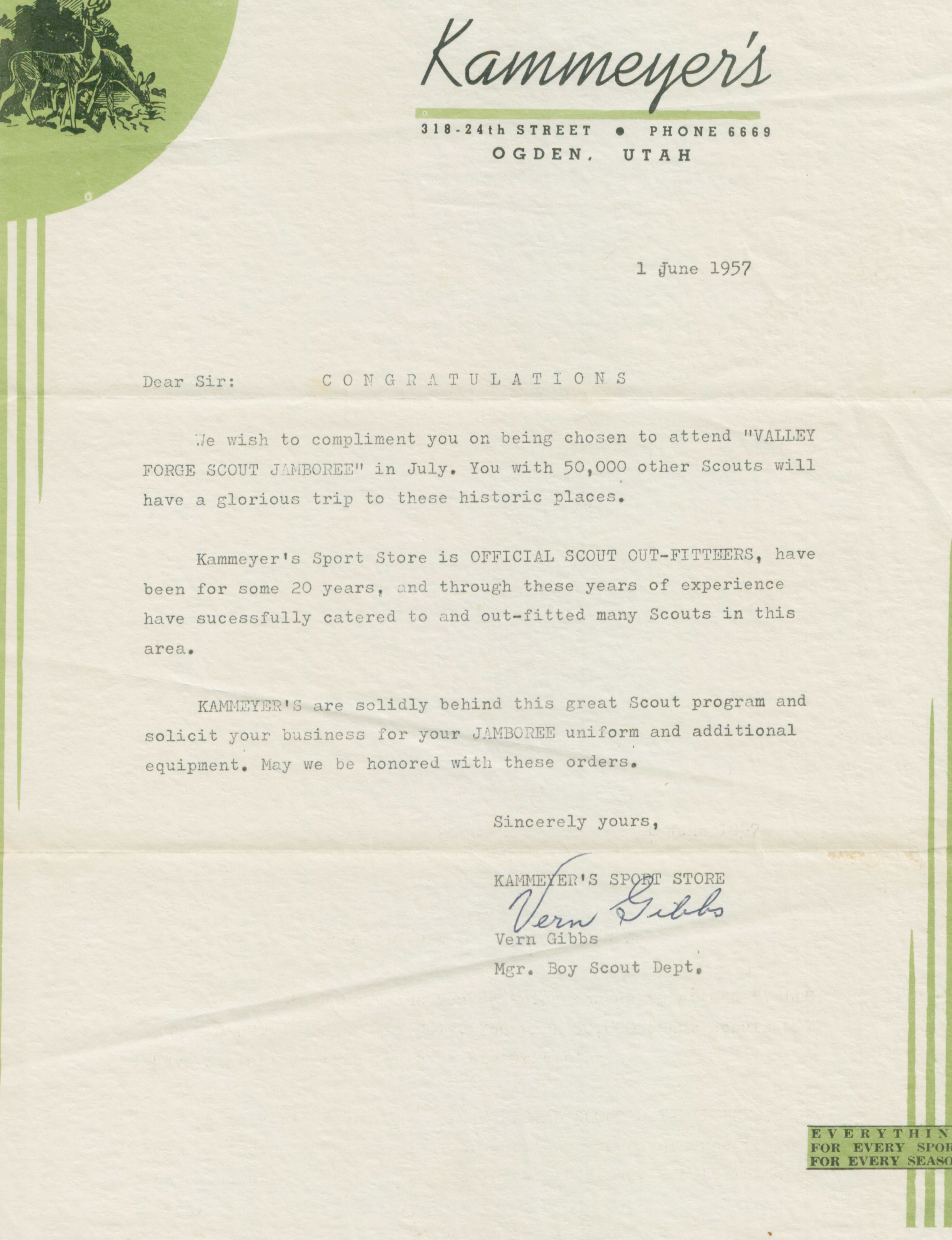
Kammeyer’s supported the Jamboree.
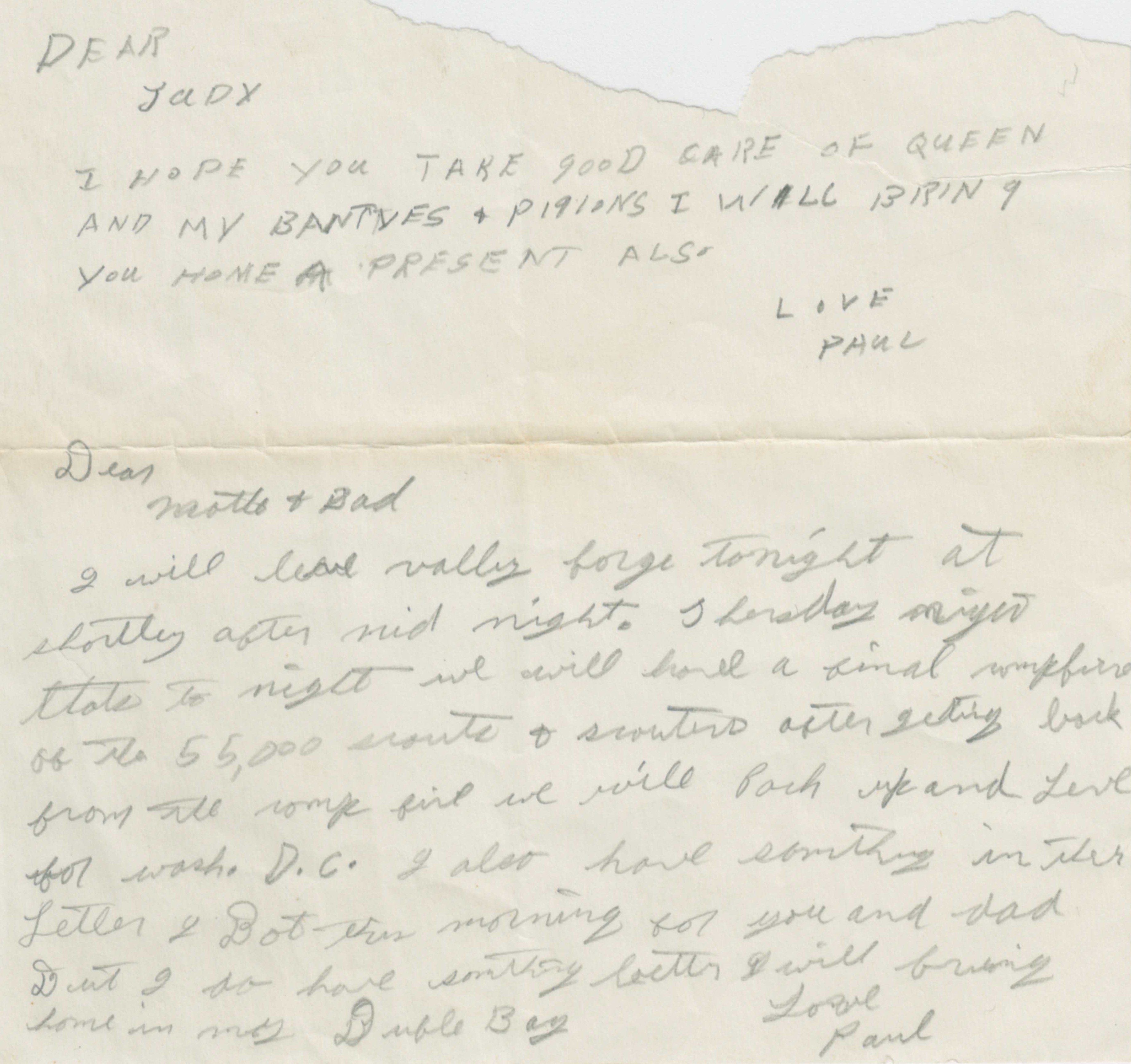
For those LDS Scouts, Harold B Lee and Delbert L Stapley spoke to the boys on Sunday. Here is a letter Dad wrote home while there.
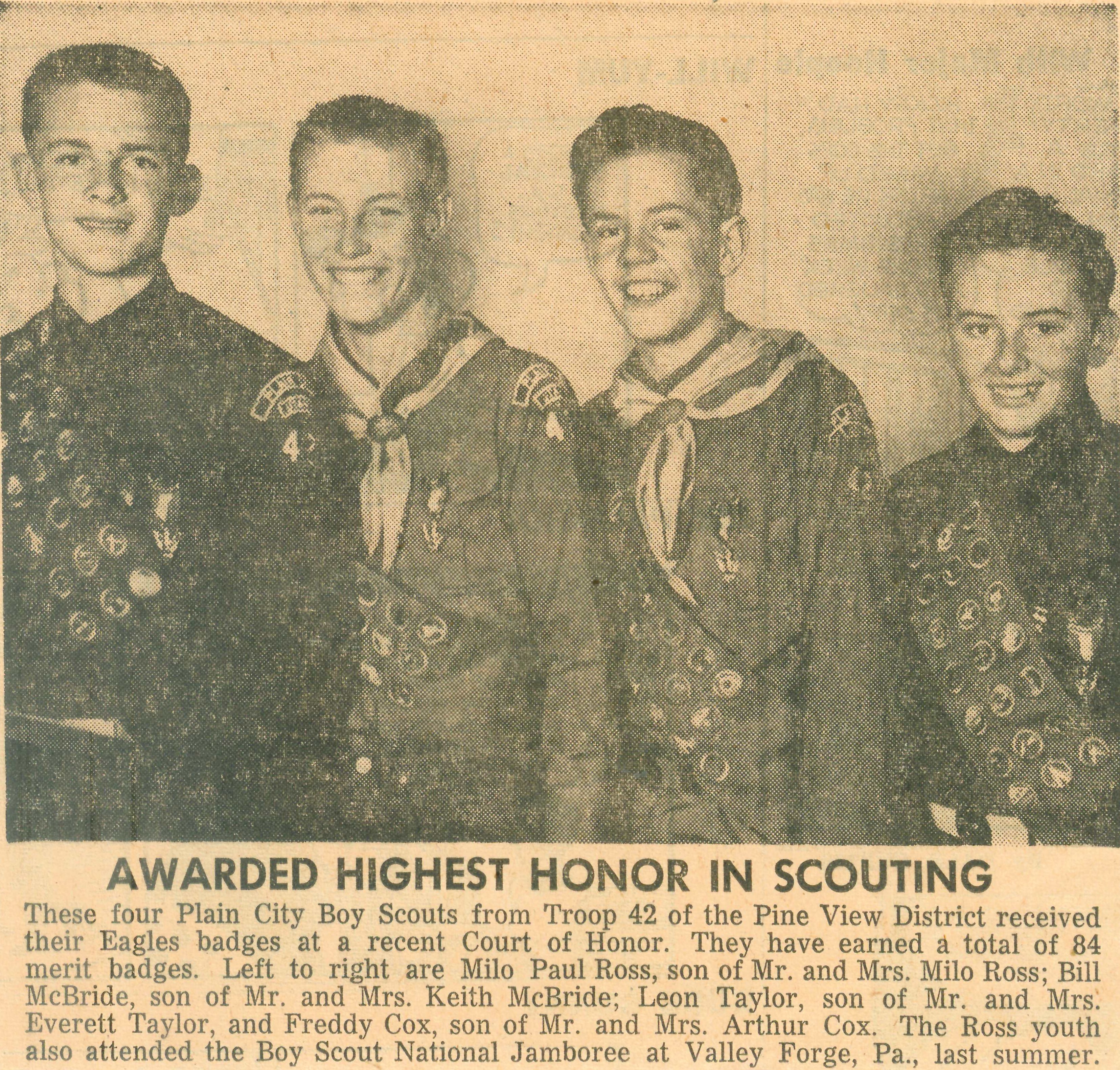
I previously wrote about Dad and scouting. Here is his Eagle Scout picture.
Milo Paul Ross achieved Eagle Scout
Here is a note Grandpa made about this picture.
Milo Ross, Bill McBride, Leon Taylor, Freddy Cox Eagle Announcement
Milo James Ross commented about Milo Paul Ross receiving his Duty to God award on 27 April 1959
Duty to God Award
Letter from Church Headquarters
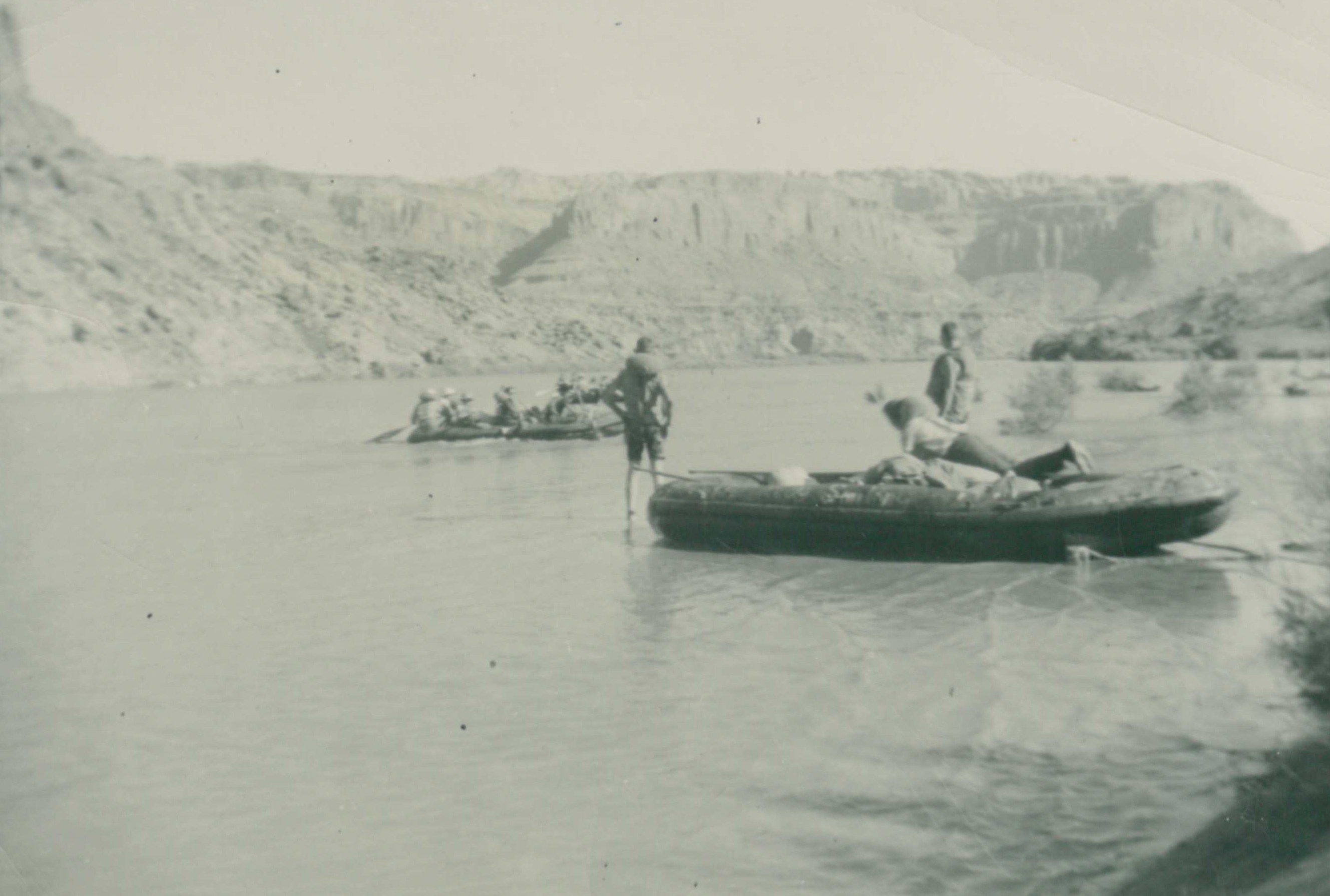
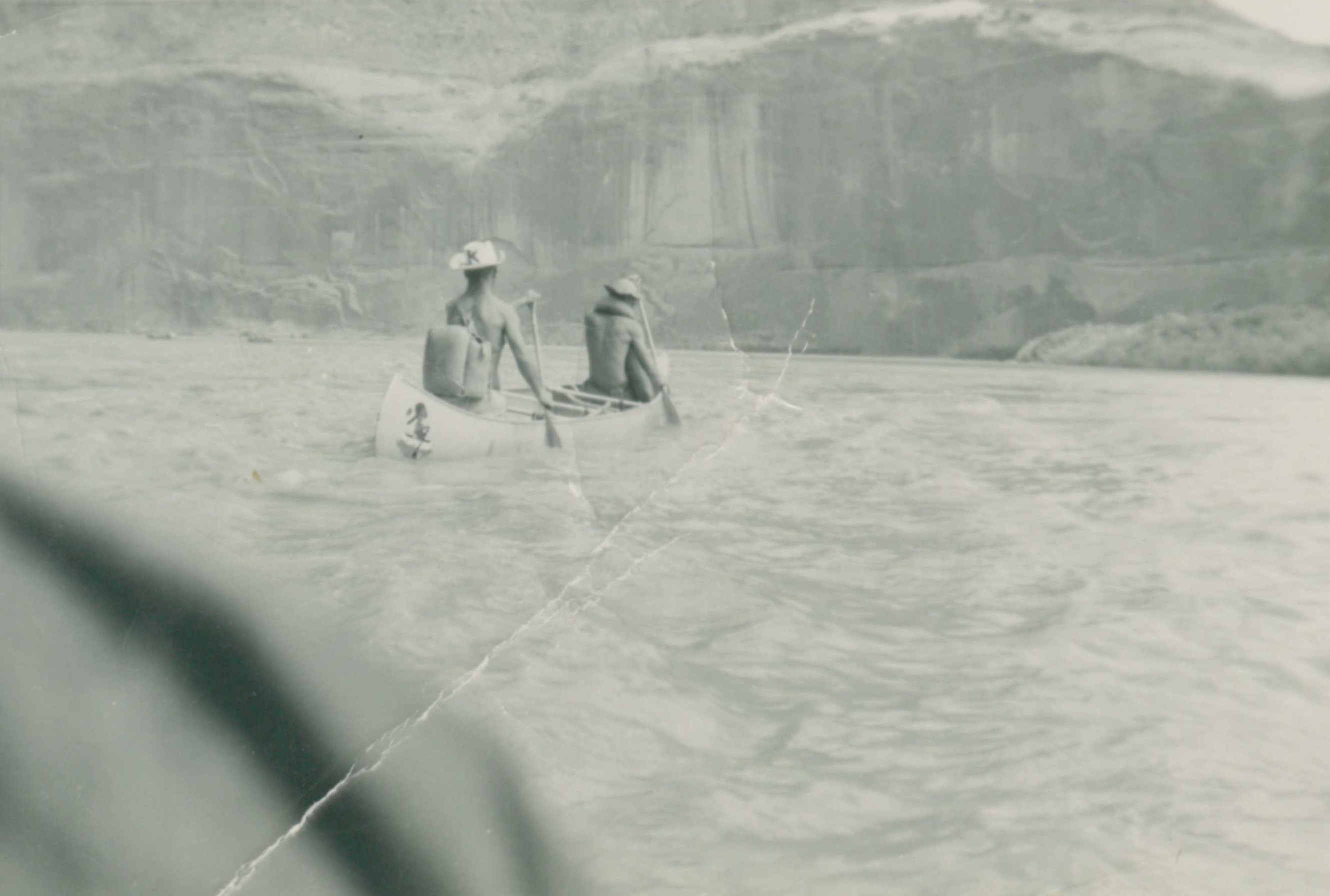
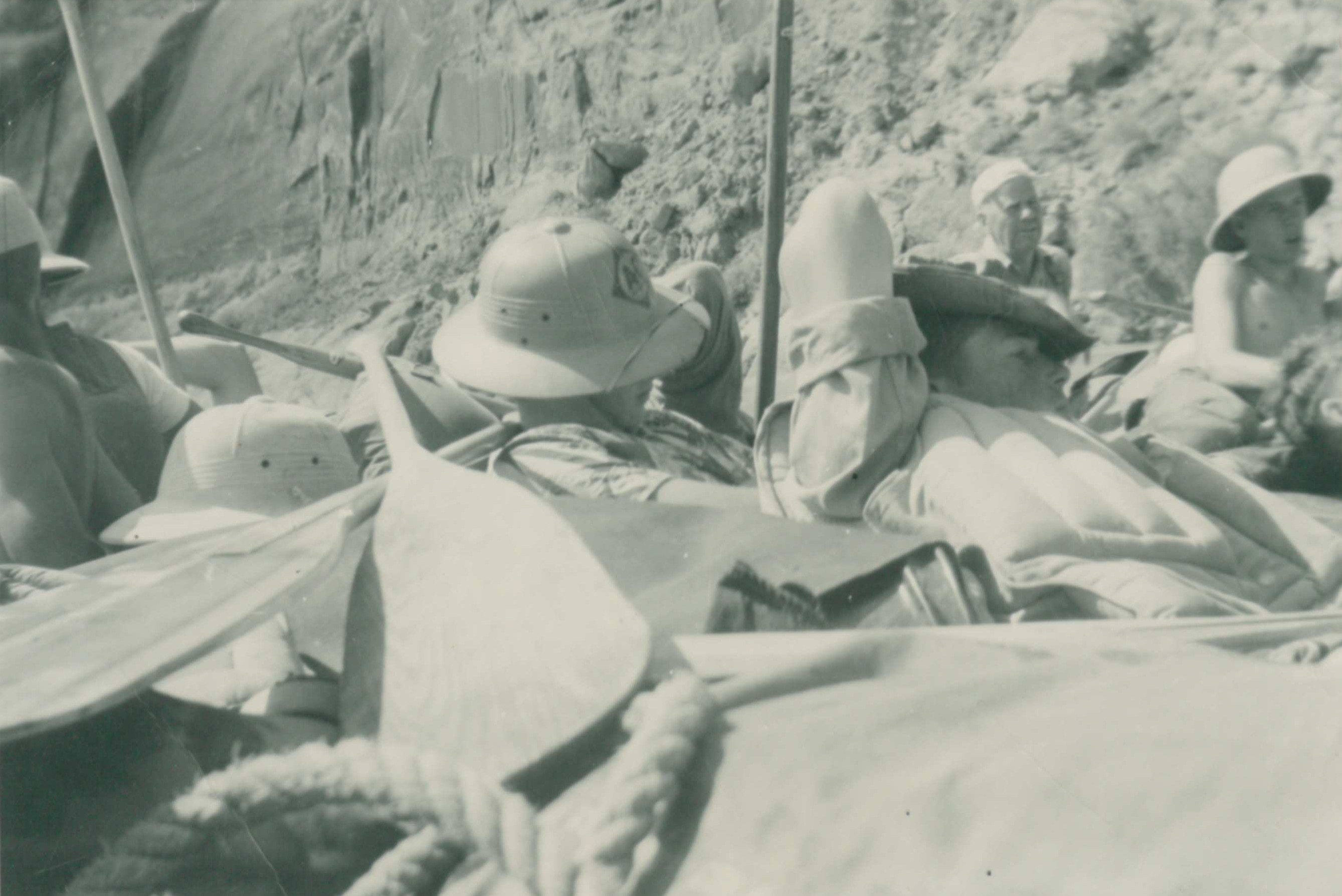
Here are a couple of the photos from the Colorado River rafting trip. Dad thinks there are more photos. He does not remember or recognize any of the individuals in the photos.
Dad remembered they had to pull out of the river to go around the Glen Canyon Dam construction.
~
~
~
~
Both of these were trips of a lifetime. Neither have been forgotten.
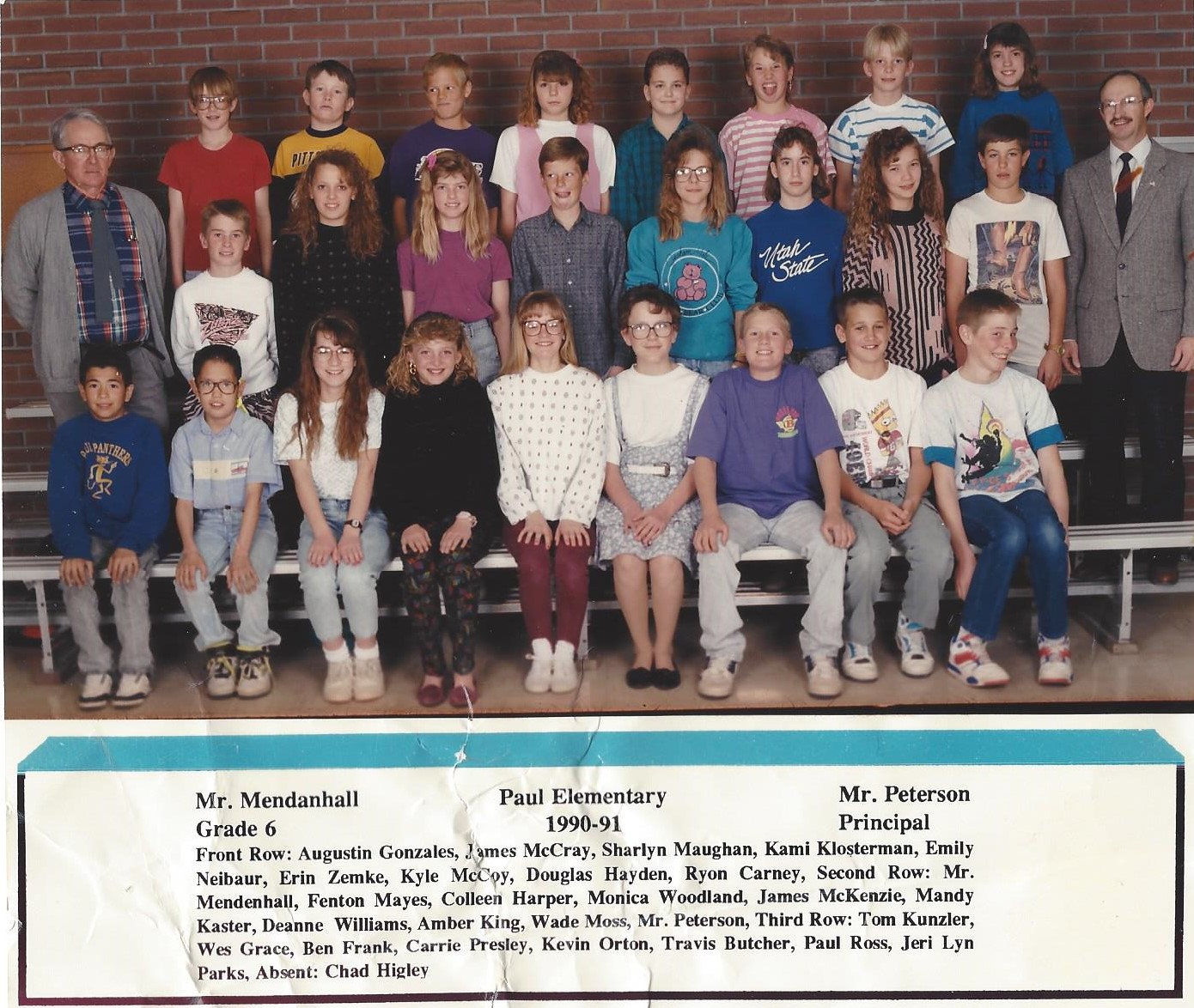
Front(l-r): Augustin Gonzales, James McCray, Sharlyn Maughan, Kami Klosterman, Emily Neibaur, Erin Zemke, Kyle McCoy, Douglas Hayden, Ryon Carney; Middle: James Mendenhall, Fenton Mayes, Colleen Harper, Monica Woodland, James McKenzie, Mandy Kaster, Deanne Williams, Amber King, Wade Moss, Frank Peterson; Back: Tom Kunzler, Wes Grace, Ben Frank, Carrie Presley, Kevin Orton, Travis Butcher, Paul Ross, Jeri Lyn Parks. Absent Chad Higley.
I have mentioned before when I shared class pictures from Paul Elementary for Kindergarten, 1st, 2nd, 4th, and 5th Grades, that I was glad to have other classmates who allowed me to scan the class photos. All mine were lost due to a flood in our basement while I was on my mission in 1998-2000. I am happy to report that the missing 3rd and 6th Grade pictures have been provided, thanks to Erin Zemke.
This is our 6th grade class picture from Paul Elementary, Paul, Idaho. This was the 1990 – 1991 school year.
Normally I organized photos with married names and dates. Since all are still alive, I will forgo any of the dates. I have added the married last name for the ones I know. If you have corrections, please let me know.
We moved into our new home in September 2022. The move from Fairmont Street to 200 South Road was only a little over a mile. It changed quite a few things. We changed elementary schools, we changed routes to work, we changed Wards, we changed Stakes, and we changed Precincts. We were in the Burley 4 Precinct and now are located, oddly, in the Starrh’s Ferry Precinct.
Starrh’s Ferry is a large Precinct, named after the historical ferry across the river. Here is the language from the historical marker:
“In 1880, George Starrh, a Snake River placer miner, started a ferry across Snake River one mile north of here.
“From 1880-2, freighters hauling supplies for a mining rush to Wood River used Starrh’s ferry (powered by river current when stiff winds were not blowing too hard), and local traffic lasted until Milner reservoir flooded out summer operations after 1904. But a small town with a post office (1909-12) remained there for more than a decade. During that time, nearby bridges replaced Starrh’s ferry.
Late last year the current Precinct Committeeman lost her husband and had some of her own health issues. In conversation she had indicated she did not think she would run again and I said I would be happy to run for the position so she did not have to worry. She was very gracious. Just weeks before the registration period she sounded like she might be planning to run again and suggested she let me know if she was going to do it. A few days before, she let me know she would not be running again. I had heard maybe another lady, Melissa Brown, would be running but nothing was confirmed and the current Committeeman didn’t say anything about another candidate. I threw my hat in the race on the first day for Candidate filing. That same day, Ms. Brown also filed for the same seat. The race was now on.
Before running, I also learned that Gem State Conservatives was building a coalition across the state to help committeeman run in contested races that were considered more mainstream Republican. The basic idea was that various individuals would assist candidates to help ‘right the Republican ship’ from the ‘conservative’ contingent of the party. A wide variety of aids would be made available from access to online registries to the covering of the costs for signs and postcards. There would be total autonomy on which resources we wanted to use, if any. Various meetings would be set up in order to help train on how to navigate the campaign website and even putting together a slogan. Also was the option of networking across the state to learn from other committeeman candidates. These all turned out to be very valuable resources. The meetings also helped provide encouragement in the topsy turvy emotions of a race.
I had assisted with various campaigns throughout the years, from U.S. Senator down to a city Mayor. The basic idea is always the same, connect with the voter. As I downloaded all the registered voters of my Precinct, I realized I already knew or had interacted with about 70% of them in some fashion over the past decade. When I started, the Starrh’s Ferry Precinct had 729 registered voters in roughly 396 households. Some of those are duplicates as married couples living with their parents, or college children, and more, are really not a separate household. There were 358 separate mailing addresses. The work started.
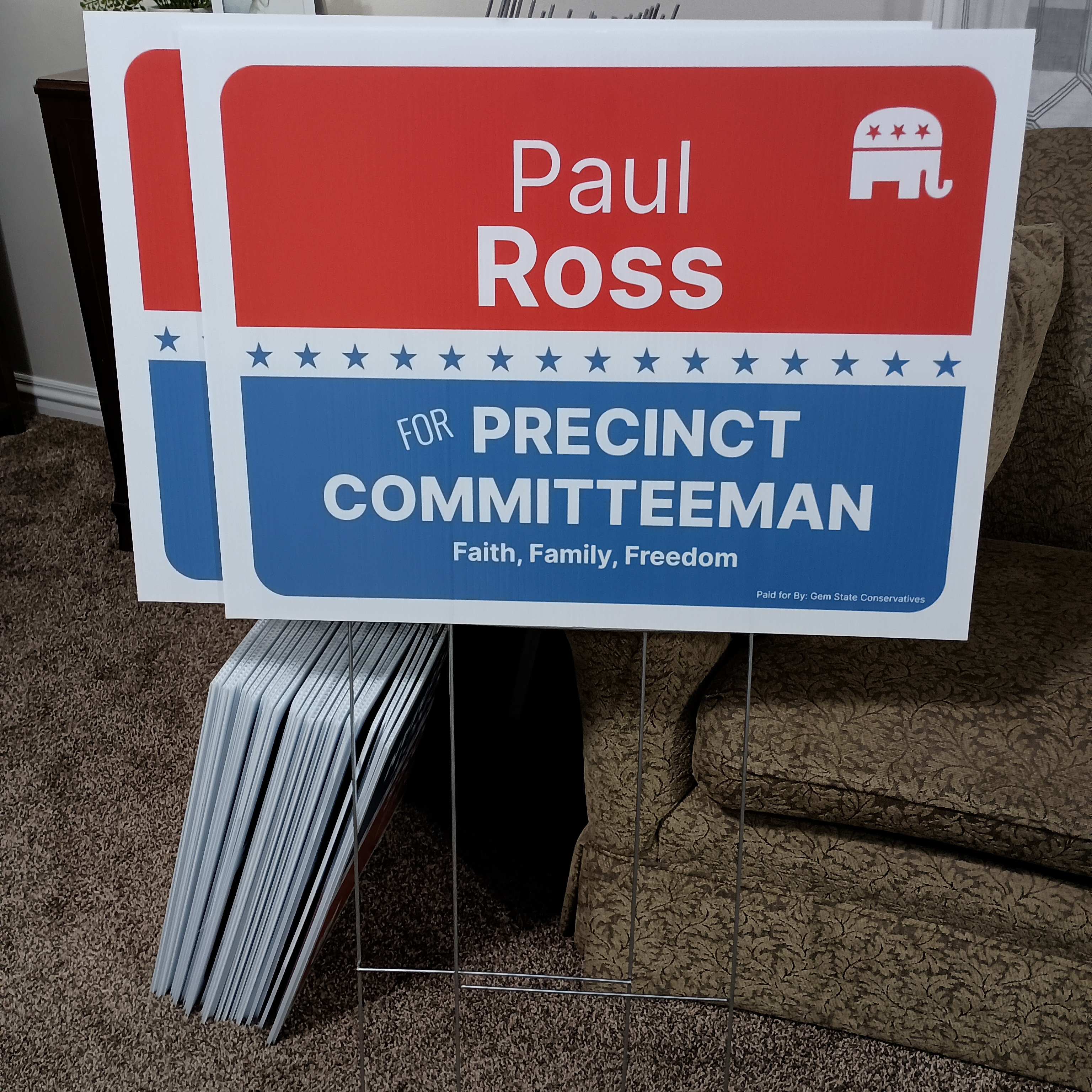
You can see the signs above. They are free to all candidates, but are generic and all basically the same. I was not in love with my short name in such a small fashion. You cannot cuss free signs though. I did my first mailer very early in the season as part of the Presidential Caucus. The Idaho Republican Party was kind enough to provide the Caucus jpeg. It brought about a dozen texts asking for more information. I dare say the flyer was effective as the Starrh’s Ferry Precinct was the best attended of the Precincts that caucused at Burley High School’s King Fine Arts Center.
The next stage was texting or calling every single person on the registered voter list. That turned out to be somewhat of a nightmare. My phone did not like texting over 700 people in two days in April. I did not want to use an auto-dialer. If someone wanted to reach out to me, I hoped they would do so. But then I could also avoid potential federal law on auto-dialers and all the disclosures that sometimes can get problematic. Just me, raw Paul Ross.
That drummed up another dozen conversations. Very helpful. Started quite a few conversations. Interesting how many people responded “STOP” but then were surprised and chatty when they realized a real person was sending out the text messages. A hurdle for me is that I still have my (801) prefix on my phone. Various said they don’t live in Utah. But it also helped cull the herd as many indicated they had moved, no longer lived in Idaho, and various other things. After a series of chats or text chains, a number of people were asking for more.
Now it was time to put up signs. The signs arrived near the end of April. I had my strategic war map of the precinct and where would be the best sites for signs. Gem State Conservatives provided 25 signs. Of course the signs on corners never get much attention. Nothing more than weeds. But well selected sites, with property owners taking ownership of the signs, is best. That conjures up conversations between neighbors, discussions about issues, and questions for candidates to find out their stances. That was less than a sign per square mile in Starrh’s Ferry! I had to be very strategic on which stretches and which houses. Most were very complimentary and willing to help. It was just taking the time to go and visit each site and get the signs up. Hopefully in a way that an Idaho wind wouldn’t remove it. We did have some crazy winds for many days. I did have to replace the stands on more than a dozen signs, more than half of the total signs.
Then the voting started. That is when people started doing some homework and reaching out to friends and family. The first week of voting I lost at least an hour a day from work in responding to texts and addressing questions. It is always nice when the majority of the precinct is already familiar with, knowledgeable of, or circumstantially aware of both the candidates. Discussion and contrasting seems to be easily done and people do it on their own after asking their own questions. I really did not have to present myself, usually just answering questions. I was also surprised by how many of the questions really did not have to deal with my precinct race, but rather the contested Sheriff race (between Jarrod Thompson and Travis Worthington) and the Legislative District 27B race (between Clay Handy and Pat Fields). By giving insight and answers to both of those races, and even the U.S. Representative race (between Mike Simpson, Scott Cleveland, and Sean Higgins), the answers I provided gave them the information they also felt they needed for the Precinct race.
We still have a week of early voting to go and then the election on May 21st. Here are some flyers I have seen for people. Steve Taggart, a friend of mine in Idaho Falls, is running for a Precinct in Bonneville County.
Here is the one for my opponent.
Since I already felt I have connected and did not need to do as much cold-call introductions, I kept mine to the more generic postcard.
There is the profile that is listed for Gem State Conservatives. Here is my biography:
Hi! I’m running for Republican Precinct Committeeman to represent Starrh’s Ferry on the County Rep. Committee. I have helped build and sustain our County party since 2014, serving as Chairman since 2022. I am involved in the community as an attorney, helping bring a public charter school, and more. I am asking for your vote on May 21. Contact me at paulnjross@hotmail.com
I guess we will see how things actually turn out on the 21st. But this week almost a dozen people texted or called to let me know that they voted early. The thought that they wanted to let me know makes me think it was for me (if they are in my Precinct). I voted on the first day early voting opened.
This week I will text everyone in my precinct again to encourage them to remember to vote, either early or on May 21st.
There are so many stories I want to share from discussions, but those will have to be in my journal and not in the public forum of my blog.
I was trying to find some photos and stumbled upon my Mom’s graduation pamphlet I had scanned a few years ago. Thought maybe it was time to share it, especially where I have seen some of her classmates have passed away recently.
1972 Baccalaureate and Commencement – Burley High School – Burley Idaho
These programs courtesy of the following Public Spirited Business Concerns
Amalgamated Sugar Co.
Burley Processing Co.
Burley Reminder
Cassia National Bank
First Federal Savings & Loan Assn., Burley Branch
First Security Bank
Guys ‘N Dolls
Idaho Bank & Trust Co.
Idaho First National Bank Burley Office
McCaslins
Ponderosa Inn
J. R. Simplot Food Processing Division
South Idaho Press
Class Officers
President Garth Beck
Vice President Bud Hoffbuhr
Secretary Jill Hinz
Executives Peggy Wood, Peggy Larson, Kaye Dawn Larson, Jeananne Gruwell, Jean Graham
Class Adviser Mr. David Peck
Baccalaureate Sunday, May 21, 1972 2:30 P.M.
Mr. Tom Gruwell , Principal, Presiding
Processional High School Band Mike Chesley, Conducting
Welcome Garth Beck Class President
Invocation Bud Hoffbuhr
Special Number Bel Canto Choir Elden Wood, Conducting “Battle Hymn of the Republic”
Address Dr. Walter R. Peterson
Cherubim Song Senior Octet
Benediction Calvin Pearson
Recessional High School Band
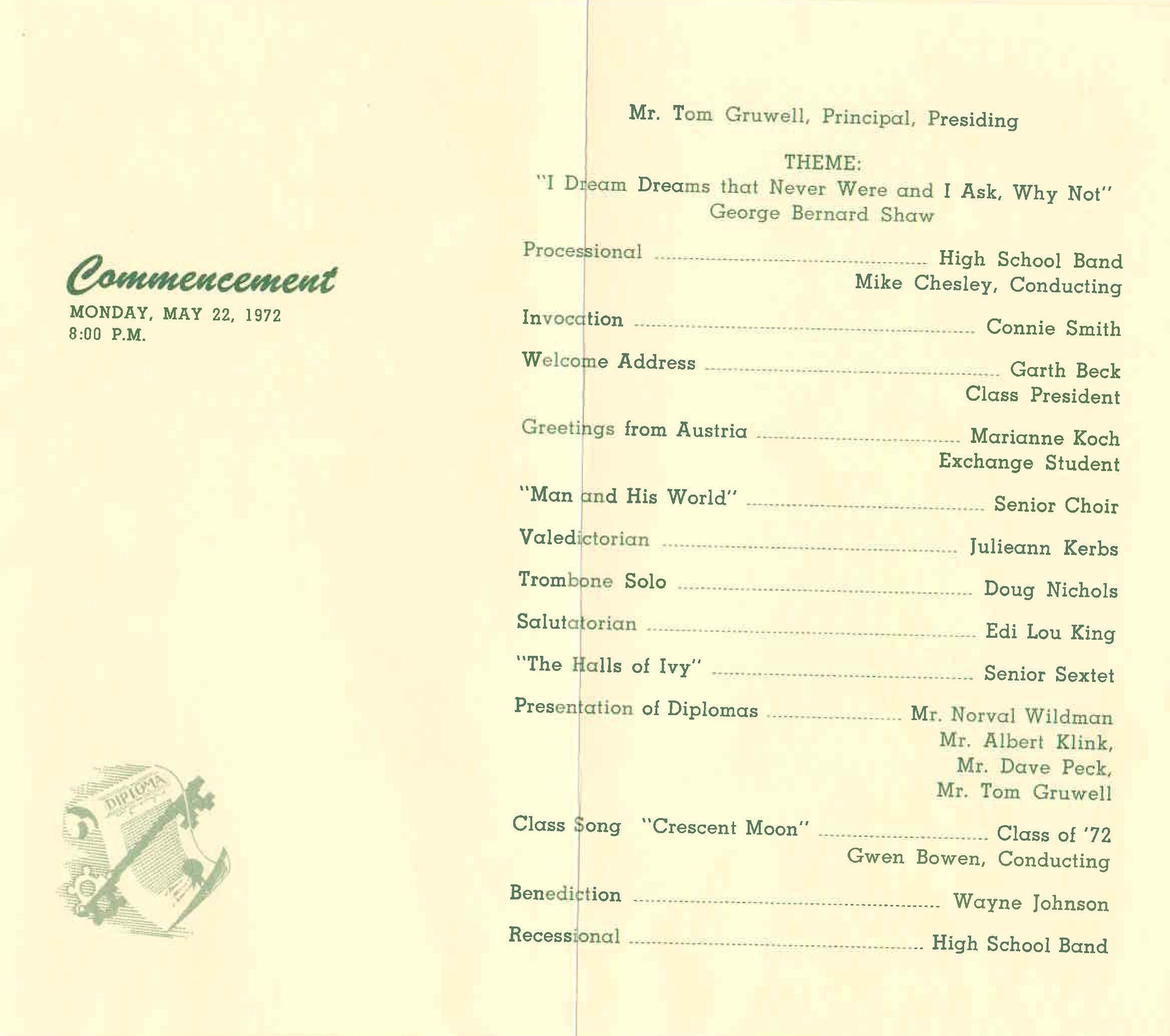
Commencement Monday, May 22, 1972 8:00 P.M.
Mr. Tom Gruwell, Principal, Presiding
THEME: “I Dream Dreams that Never Were and I Ask, Why Not” – George Bernard Shaw
Processional – High School Band – Mike Chesley, Conducting
Invocation – Connie Smith
Welcome Address – Garth Beck, Class President
Greetings from Austria – Marianne Koch – Exchange Student
“Man and His World” – Senior Choir
Valedictorian – Julieann Kerbs
Trombone Solo – Doug Nichols
Salutatorian – Edi Lou King
“The Halls of Ivy” – Senior Sextet
Presentation of Diplomas – Mr. Norval Wildman, Mr. Albert Klink, Mr. Dave Peck, Mr. Tom Gruwell
Class Song “Crescent Moon” – Class of ’72 – Gwen Bowen, Conducting
Benediction – Wayne Johnson
Recessional – High School Band
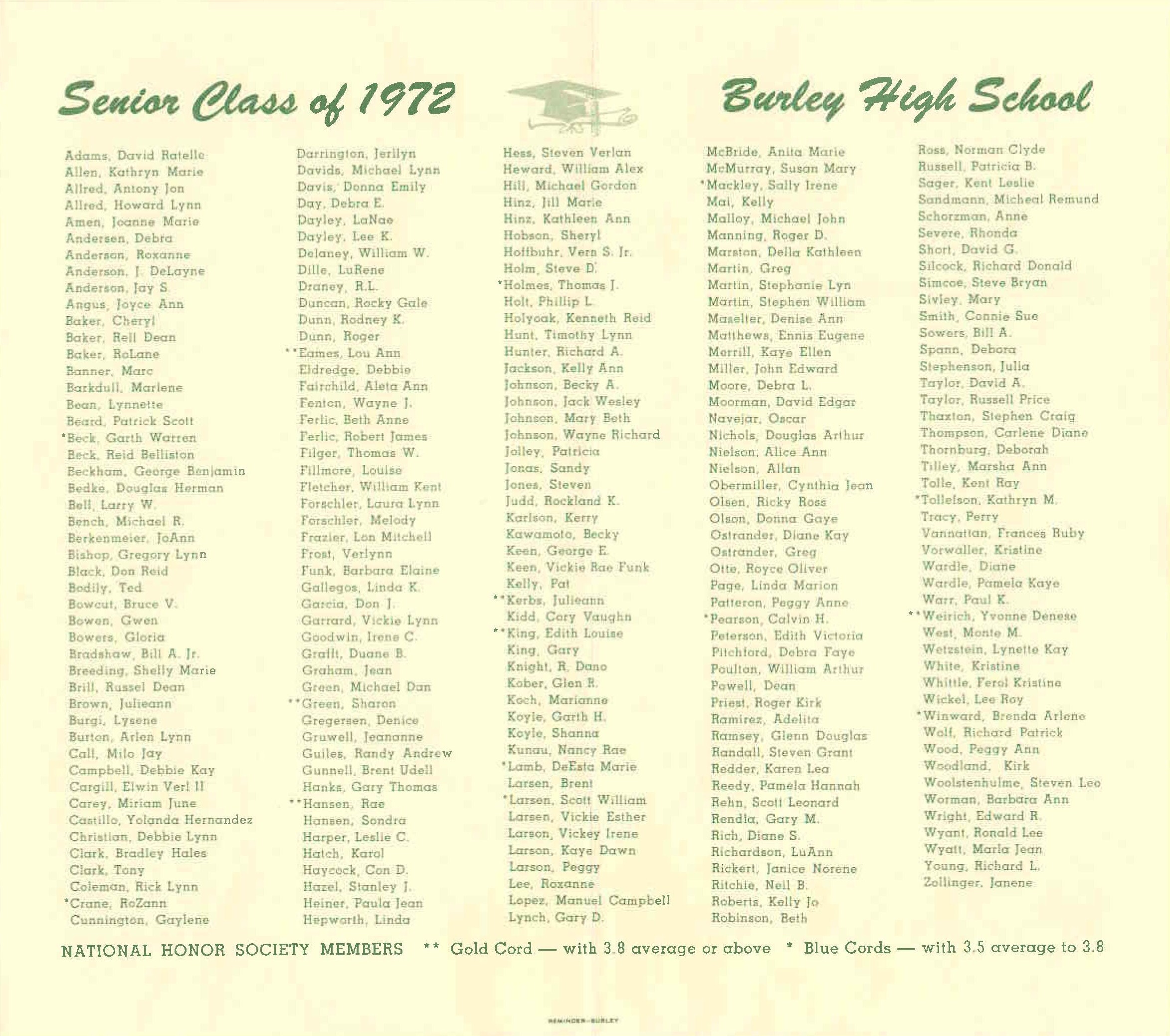
Adams, David Ratelle
Allen, Kathryn Marie
Allred, Anthony Jon
Allred, Howard Lynn
Amen, Joanne Marie
Andersen, Debra
Anderson, Roxanne
Anderson, Jerald DeLayne (1954 – 2017)
Anderson, Jay S
Anderson, Todd Michael (1953 – 1972)
Angus, Joyce Ann
Baker, Cheryl
Baker, Rell Dean
Banner, Marc
Barkdull, Marlene
Bewan, Lynnette
Beard, Patrick Scott
* Beck, Garth Warren (1953 – 2002)
Beck, Reid Belliston
Beckham, George Benjamin
Bedke, Douglas Herman
Bell, Larry W
Bench, Michael R
Berkenmeier, JoAnn
Bishop, Gregory Lynn
Black, Don Reid
Bodily, Ted O (1954 – 2019)
Bowcut, Bruce V
Bowen, Gwen
Bowers, Gloria
Bradshaw, Bill A Jr
Breeding, SHelly Marie
Briggs, Larry
Brill, Russel Dean
Brown, Julieann
Burgi, Lysene (1953 – 2016)
Burton, Arlen Lynn (1954 – 2014)
Call, Milo Jay
Campbell, Debra “Debbie” Kay (1954 – 2019) Johnson
Cargill, Elwin Verl II
Carey, Mirian June
Castillo, Yolanda Hernandez
Christian, Debbie Lynn
Clark, Bradley Hales
Clark, Antone “Tony” Lee (1954 -2015)
Coleman, Rick Lynn
* Crane, RoZann
Cunnington, Gaylene
Darrington, Jerilyn
Davids, Michael Lynn (1953 – 2020)
Davis, Donna Emily
Day, Debra E
Dayley, LaNae
Dayley, Lee K
Delaney, William W
Dille, LuRene
Draney, Rex Leonard (1953 – 2007)
Duncan, Rocky Gale (1954 – 2020)
Dunn, Rodney K
Dunn, Roger
** Eames, Lou Ann
Eldredge, Debbie
Farwell, Albert Michael (1952 – 2023)
Fairchild, Aleta Ann
Fenton, Wayne J
Ferlic, Beth Anne
Ferlic, Robert James
Filger, Thomas W
Fillmore, Louise
Fletcher, William Kent
Forschler, Laura Lynn
Forschler, Melody
Frazier, Lon Mitchell
Frost, Verlynn
Funk, Barbara Elaine
Gallegos, Linda K
Garcia, Don J
Garrard, Vickie Lynn
Goodwin, Irene Cecilia
Goold, Gary
Graf, Becky Ann (1954 – 2011) Moats, Kloer
Grafft, Duane Brian (1953 – 2006)
Graham, Jean
Green, Michael Dan
** Green, Sharon
Gregersen, Denice
Gruwell, Jeananne
Guiles, Randy Andrew (1953 – 2015)
Gunnell, Brent Udell
Hanks, Gary Thomas
** Hansen, Rae
Hansen, Sondra
Harper, Leslie C
Hatch, Karol (1953 – 2004) Kerr
Haycock, Con D
Hazel, Stanley Jarvis (1953 – 2008)
Heiner, Paula Jean
Hepworth, Linda
Hess, Steven Lerlan
Heward, William Alex
Hill, Michael Gordon
Hinz, Jill Marie
Hinz, Kathleen Ann
Hobson, Sheryl
Hoffbuhr, Vernard “Bud” Standley Jr (1954 – 1997)
Holm, Steve D
* Holmes, Thomas J
Holt, Phillip L
Holyoak, Kenneth Reid
Hunt, Timothy Lynn
Hunter, Richard A
Jackson, Kelly Ann
Johnson, Becky A
Johnson, Jack Wesley
Johnson, Mary Beth
Johnson, Wayne Richard (1953 – 2008)
Jolley, Patricia
Jonas, Sandy (1954 – alive)
Jones, Steven
Judd, Rockland K (1953 – 2012)
Karlson, Kerry
Kawamoto, Becky
Keen, George E
Keen, Vickie Rae Funk
Kelly, Pat
** Kerbs, Julieann
Kidd, Cory Vaughn
** King, Edith Louise
King, Gary
Knight, Robin Daniel (1953 – 2014)
Kober, Glen R
Koch, Marianne
Koyle, Garth H
Koyle, Shanna
Kunau, Nancy Rae
* Lamb, DeEsta Marie
Larsen, Brent
* Larsen, Scott William
Larsen, Vickie Esther
Larson, Vickey Irene
Larson, Kaye Dawn (1954 – 2019) Silcock
Larson, Peggy (1954 – 2016) Stirland
Lee, Roxanne
Lopez, Manuel Campbell
Loveland, Cynthia (1954 – 1981)
Loveland, Kevin R (1954 – 2008)
Lynch, Gary D
McBride, Anita Marie
McMurray, Susan Mary
* Mackley, Sally Irene
Mai, Kelly
Malloy, Michael John
Manning, Roger D
Marston, Della Kathleen
Martin, Gregory Max (1954 – 1975)
Martin, Stephanie Lyn
Martin, Stephen William
Maselter, Denise Ann (1954 – 2022) Rollins
Matthews, Ennis Eugene
Merrill, Kaye Ellen
Miller, John Edward
Moore, Debra Lynn (1954 – 2002)
Moorman, David Edgar (1953 – 1997)
Navejar, Oscar
Newcomb, Kathy Lorene (1954 – 2020) Bailey
Nichols, Doulgas Arthur
Nielson, Alice Ann
Nielson, Allan (1954 – 2020)
Obermiller, Cynthia Jean
Olsen, Ricky Ross
Olson, Donna Gaye
Ostrander, Diane Kay
Ostrander, Greg
Osterhout, Rex Dale (1954 – 2017)
Otte, Royce Oliver
Page, Linda Marion
Patteron, Peggy Ann
* Pearson, Calvin H
Peterson, Edith Victoria
Pitchford, Debra Faye
Poulton, William Arthur
Powell, Leslie Dean (1953 – 2005)
Priest, Roger Kirk
Ramirez, Adelita
Ramsey, Glenn Douglas
Randall, Steven Grant
Redder, Karen Lea
Reedy, Pamela Hannah
Rehn, Scott Leonard (1954 – 1994)
Rendla, Gary M
Rich, Diane S
Richardson, LuAnn
Rickert, Janice Norene
Ritchie, Neil B
Roberts, Kelly Jo
Robinson, Beth
Ross, Norman Clyde
Russell, Patricia B
Sager, Kent Leslie
Sandmann, Michael Remund
Schorzman, Anne
Severe, Rhonda
Short, David G
Silcock, Richard Donald
Simcoe, Steve Bryan
Sivley, Mary
Smith, Connie Sue
Sowers, Bill A
Spann, Debora
Stephenson, Julia
Taylor, David A (1953 – 2009)
Taylor, Russell Price (? – alive)
Thaxton, Stephen Craig
Thompson, Carlene Diane
Thornburg, Deborah
Telley, Marsha Ann
Tolle, Kent Ray
* Tollefson, Kathryn M
Tracy, Perry Alan (1953 – 2005)
Vannatian, Frances Ruby
Vorwaller, Kristine
Wardle, Diane
Wardle, Pamela Kaye
Warr, Dee Ann (1954 – 2013)
Warr, Paul K
** Weirich, Yvonne Denese
West, Monte M
Wetzstein, Lynette Kay
White, Kristine
Whittle, Ferol Kristine
Wickel, Lee Roy
* Winward, Brenda Arlene
Wolf, Richard Patrick
Wood, Peggy Ann
Woodland, Kirk
Woolstenhulme, Steven Leo
Worman, Barbara Ann
Wright, Edward R
Wyant, Ronald Lee
Wyatt, Marla Jean
Young, Richard LeRoy (1953 – 2022)
Zollinger Janene
National Honor Society Members
** Gold Cord – with 3.8 average or above
* Blue Cords – with 3.5 average to 3.8
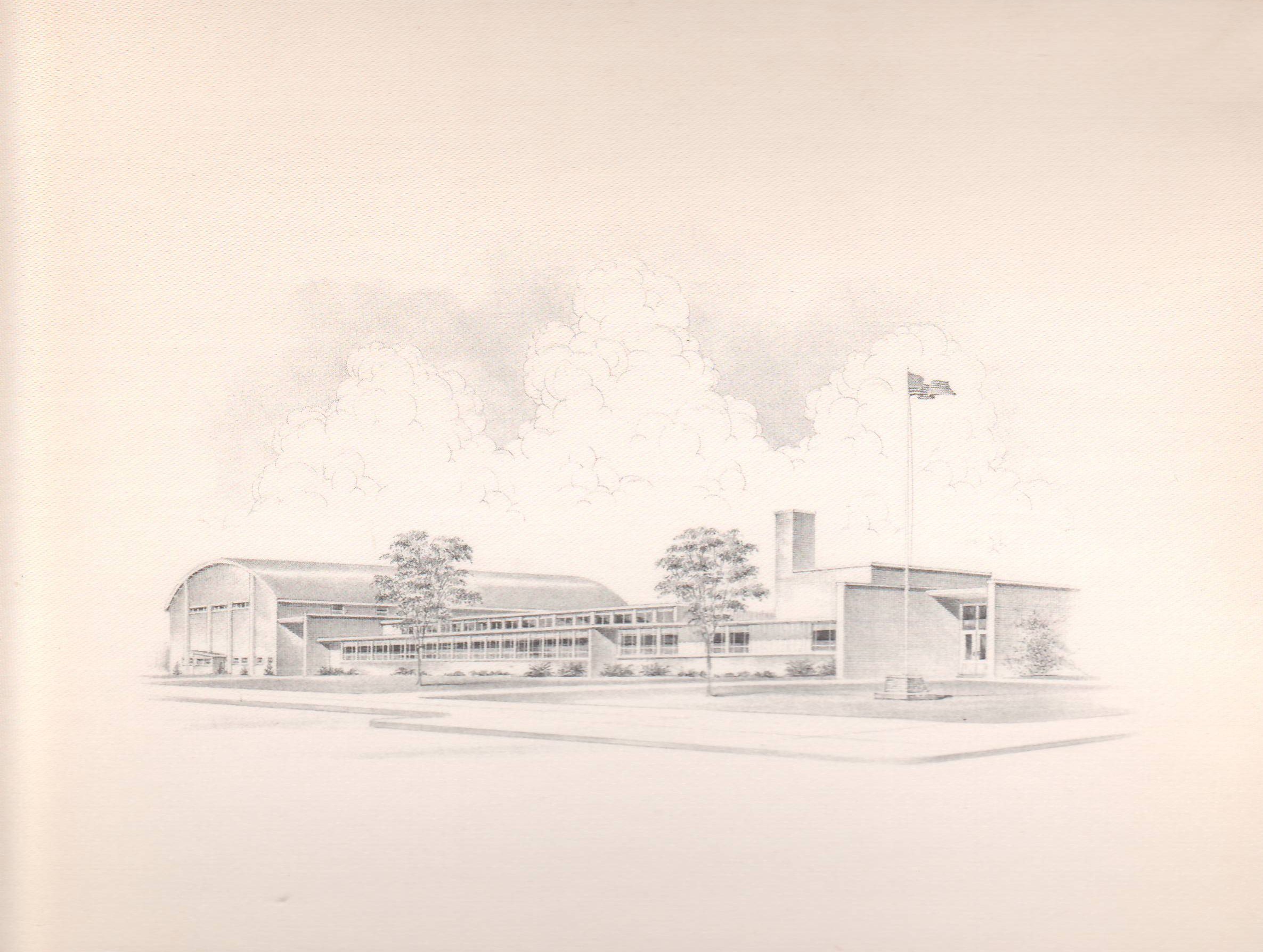
The sketch of the Burley High School on the front of the Diploma case.
Sandy Jonas Burley High School Diploma
Mom’s actual Diploma.
Burley High School – Burley, Idaho
This Certifies That Sandy Jonas has satisfactorily completed a Course of Study prescribed for Graduation from this School and is therefore awarded this Diploma.
Given in the month of May, nineteen hundred and seventy-two
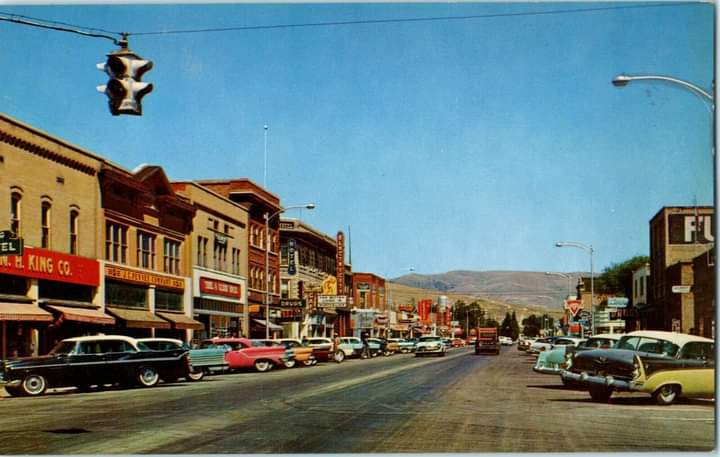
The first time I saw this picture I grabbed it for a number of reasons.
First, that looks like my car on the front right of the photo. That is clearly a 1956 Dodge car on the right in the same yellow, charcoal, and white as my car. Although when my car was repainted about 1984, the top and inside the fins around the taillights was also painted charcoal so that there is not any white on it at present. Mine is a Coronet. Looking closer at the photo, that car is likely a higher model as the chrome stripe goes up before the bumper, where the lower models went down. So it must be a Custom Lancer or Custom Royal. Here is a link to the different models and nuances of the 1956 Dodge lineup.
Aliza and 1956 Dodge Coronet
Second, I have been to Montpelier dozens of times in my life. Beginning in the 1980s with my Grandmother, Colleen Jonas, selling insurance. I came to love the town. Soda Springs and Montpelier both had the viaducts which stuck out in my mind. I immediately recognized the town.
Growing up in and near Burley, Idaho, I am familiar with the history of the King’s Variety Store chain. On the left is the M. H. King Co. Who in southern Idaho is not familiar with Milton Herman King and his variety or discount stores? I went looking and can see on Google that the King building in the photo is no longer present in Montpelier. However, the rest of the buildings on the north are still there, but some with some pretty drastic facade alterations. Even though King’s has now closed, Google still has one across the street on this picture. Apparently with the buildings the Dodge is parked in front of all gone.
Third, the red car in the picture appears to be the only 1958 model, I think. The rest all look like 1956 or earlier, so that red one might only be a 1957. This picture is likely in 1957 or 1958.
Fourth, my Dad, Milo Ross, spent quite a few summers in Montpelier growing up as my Great Uncle Chauncey De Orr Michaelson was born in Montpelier in 1922. He was married to my Grandma Gladys Ross’ sister, Dena Dorothy Donaldson. Richard Michaelson and Dad ran around Montpelier probably during the same time period as this photo. When we lived in Leefe, Wyoming, once and a while the family would have to come in or through Montpelier as well.
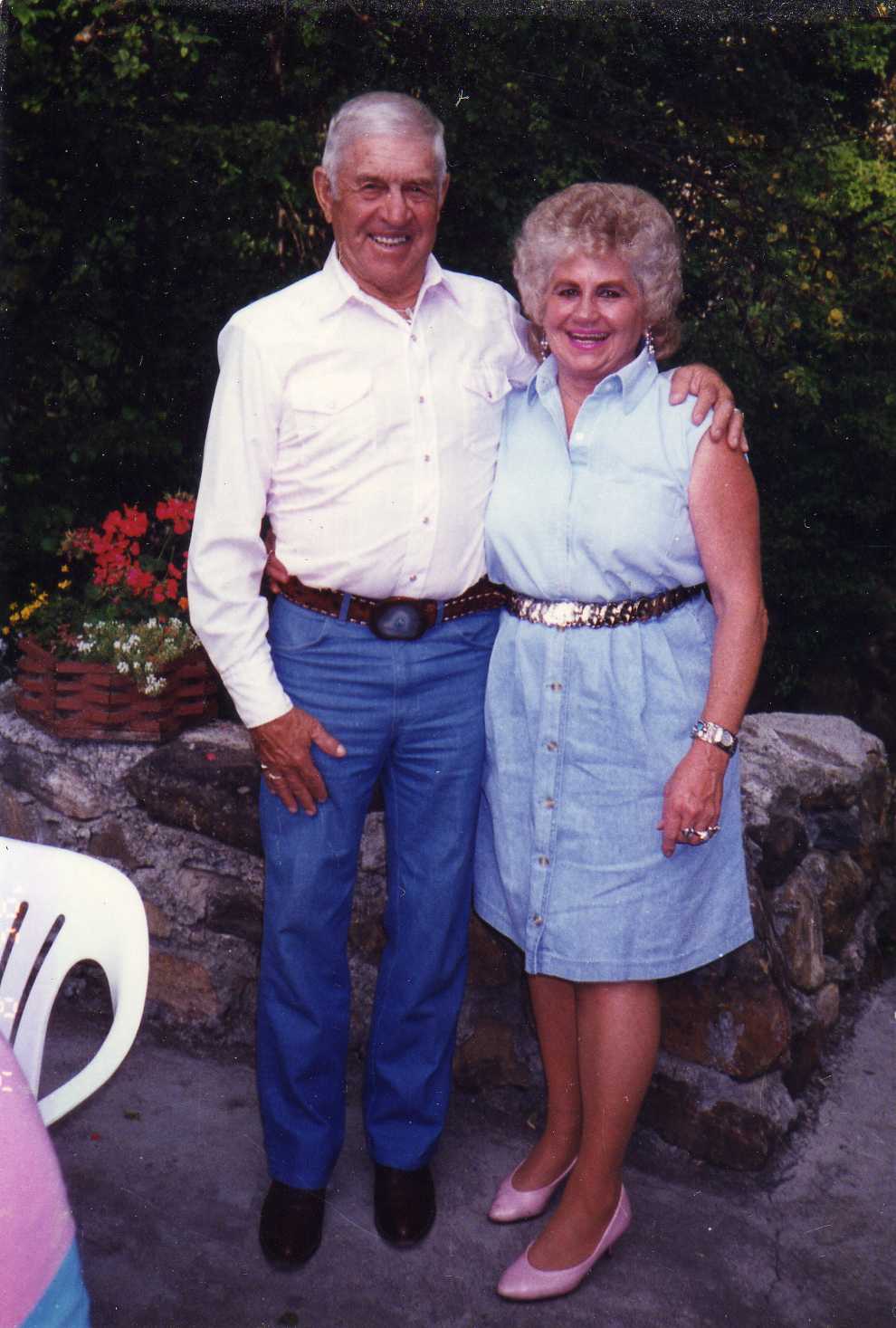
Fifth, my Grandma Jonas married Bud Lloyd who haled from the Montpelier area. Grandma and Bud met in the early 1990s while she was working in the Montpelier area. They dated and were married in 1998. Unfortunately she passed away in 1999. They are both buried in Dingle, just south of Montpelier.
Deer Cliff Inn 1998
Lastly, Montpelier has an announcement for a temple. This modern view will have a temple spire in it down the road, probably above that truck that looks like a garbage truck. Montpelier on the right side has a beautiful school that has been kept. I hope it continues to be kept and maintained. Bringing a temple to downtown Montpelier will do much to help rejuvenate the downtown area that seems to have struggled.
This photo is one of the photos I scanned that belong to Mel and Colleen Todd of Buhl, Idaho. On the back is written Ray King of Castleford.
Asked about Ray King, he said Ray’s sister Clois King was in his grade and Ray King was a year older. Lived on the southwest edge of Castleford. Said they were both really nice people, even as kids.
When I had researched Ray King in 2014 and a couple of times since, nothing seemed to match up. Well, time gets us all and he passed earlier this year. As far as I can tell, Clois is still alive.
Ray Clifton King was born 6 January 1928 in Castleford, Twin Falls, Idaho. He married Margaret Blanche Inama 2 July 1951 in Nampa, Canyon, Idaho. She passed away in 2015. Ray passed away 29 April 2021 in Payson, Utah, Utah. He is buried by his wife in Cherokee Memorial, Lodi, San Joaquin, California,
Salt Lake Temple, Revelations 14:6, And I saw another angel fly in the midst of heaven, having the everlasting gospel to preach unto them that dwell on the earth, and to every nation, and kindred, and tongue, and people,
This is an insightful article that came out with the Spring 2021 Clark Memorandum. I found myself enlightened by the introspection suggested. Enough that I was moved and want to share it with others. The author is Melissa Wei-Tsing Inouye, Senior Lecturer, University of Auckland, and Historian, Church History Department of The Church of Jesus Christ of Latter-day Saints.
Recently President Russell M. Nelson has called on the Latter-day Saints “to lead out in abandoning attitudes and actions of prejudice” and has pleaded with us “to promote respect for all of God’s children.” Additionally, President Dallin H. Oaks has challenged us to “root out racism.” These directives make some things very clear: We are part of the problem. We wouldn’t have to abandon “attitudes and actions of prejudice” if we didn’t have them already. And uprooting will be a long, hard project. I offer three perspectives I hope my fellow Church members will find helpful. First, the problem of racism is a social reality that affects all human beings. Second, the restored gospel provides us with tools and frameworks for dealing with racism: confess and forsake and turn weaknesses to strengths through humility. Third, we all need to ask the Lord, “What lack I yet?” How do we get to work?
1. We All Have Blind Spots
As an Asian American growing up in diverse Southern California, I rarely felt the sting of racism. Now that I live in Utah, I notice racism much more frequently. Some of my friends and family have experienced ugly, malicious barbs, but the racism I most frequently encounter in Utah is in the form of condescension. White people compliment me on my English. In other words, when they see me, they assume I am foreign and I don’t belong. Then they hear me, and they are surprised. Then they decide to tell me about this surprise: “Oh, you speak English very well!” They don’t say, “I hate Asians,” but their words say, “I consider people who look like me to be ‘normal’ and expect people who look like you to be ‘different than normal.’”
One BYU student, whose family emigrated from Uruguay and who, along with all of her siblings, has fair skin and blue eyes, reported that, in their new Utah ward, someone came up to her parents and said, “Oh, look, the Lamanite curse is already coming off from her! You must be blessed!” Sometimes the racism is about as explicit as it gets, like the swastika and racial slurs that appeared recently on a fence along the bike path my children ride to school.
Biologically speaking, racial categorizations have no basis in objective reality. They are figments of the human imagination and are an example of our weakness for sweeping generalities. Humans beings share 99.9 percent of their DNA with each other. Skin color, eye color, and hair texture and color are a pinch of that tiny 0.1 percent of difference that people arbitrarily use to make consequential guesses about each other’s hearts, minds, capacity, safety, and so on. We might as well link judgments about intelligence to people’s earlobe shape or language-learning ability to toe circumference. Yet over and over again, in every place, many people treading the same crooked ways for centuries creates ruts so deep and so wide it is hard for them to imagine other paths. As President Oaks has said, “Racism is probably the most familiar source of prejudice today, and we are all called to repent of that.” “All” means you and me. I have become increasingly aware of the perpetual need to work hard to not be inadvertently unkind as I have lived in places such as the United States, Germany, the People’s Republic of China, Taiwan, Hong Kong, and New Zealand. No one is immune to prejudice because no one can spend their life becoming embedded within every place and human circumstance in this wide world.
When I moved to New Zealand to take an academic position at the University of Auckland, I had some rough patches in my interactions with students and fellow professors. I discovered that the cultural traits Americans see in themselves of being friendly and optimistic can come off to New Zealanders as shallow and transactional, especially when the American (me) isn’t listening carefully to others around them. I remember sitting in my office when a Māori professor told me, kindly but candidly, how I had completely ignored his expertise and failed to acquire the level of cultural competence necessary for a university event I was planning. I remember thinking, “What do you mean I’m disrespecting people from marginalized groups? I’m Brown! I’m a woman!” Because of my past experiences receiving racism and ethnocentrism, I thought I was “exempt” from perpetuating them. But I was wrong.
Rooting out racism is a process of becoming aware of our blind spots and our great power to cause harm to others, especially to others on the margins. Unfortunately, unlike a pack of manufactured Toyotas and Fords on a highway, human blind spots are unique and change depending on who is around us. In the worst-case scenario, our cars are so big and heavy and fast that we don’t even notice when we knock small cars or pedestrians off the road.
Where are your blind spots? If you don’t know, you haven’t been looking.
2. The Racism in Our Past and Present Need Not Be in Our Future
Latter-day Saint theology explains that we came to mortal life, with its hardship and temptation, in order to learn and grow. Making mistakes and repenting is part of the plan. We have to be careful: a sin like racism is toxic enough to kill us spiritually. In the past, we have been affected by this illness. But if we heal from it, we can become stronger.
When I was experiencing cancer recurrence for a second time, some friends put me in touch with Dr. Mark Lewis. Even though he had never met me before, Dr. Lewis was kind enough to call to discuss my treatment. In the first few seconds of the call, he mentioned that he, too, was a cancer patient. He said, “I just had a scan the other day, and I’m waiting for the results.” In that moment, my confidence in Dr. Lewis took a giant leap.
No matter how knowledgeable, a doctor who has not had cancer cannot understand what it is like to feel in your body the pain, the shortness of breath, the needles and tubes and powerful medications, what it is like to walk past the open door of death on your way to the kitchen. Discovering Dr. Lewis was a cancer patient made me instantly trust him.
On a spiritual level, it is also true that some of the greatest healers are those who have known illness. Kylie Nielson Turley’s study of the Book of Alma points out that we have tended to see Alma’s story as the familiar tale of a rebellious teenager who eventually mellows out. However, the term “Alma the Younger” actually never appears in the Book of Mormon text. This label, along with some other things, has led us to believe he was young and rebellious. But Turley’s study shows it is actually probable that he was a mature adult, perhaps even in his 40s or 50s, when he repented and was born again. Alma may have been a full-fledged bad guy. But he became converted and began calling people to repentance. Because he had personally experienced the corrosive effects of sin, he had powerful authority to call others to repent.
This gives new meaning to Alma’s teaching about Christ: that He would
go forth, suffering pains and afflictions and temptations of every kind; and this that the word might be fulfilled which saith he will take upon him the pains and the sicknesses of his people. . . . [A]nd he will take upon him their infirmities, that his bowels may be filled with mercy, according to the flesh, that he may know according to the flesh how to succor his people.
According to this passage, Christ inhabited our infirmities in order to understand how to heal us. It wasn’t enough for Jesus to stop up others’ wounds and lift others’ sorrows. It was necessary for Him to feel wounds in His own flesh, to experience despair and injustice and life gone horribly wrong.
In summary, patients make trustworthy doctors. Repented sinners make compelling prophets. The experience of mortal weakness is what turned the popular rabbi Jesus into the Savior of all. We believe suffering from mistakes in mortality is necessary for growth and for becoming as God is.
Our imperfections on this issue of racism and prejudice are clear to anyone who studies Latter-day Saint history. The Church’s essay on race and the priesthood states:
In 1852, President Brigham Young publicly announced that men of black African descent could no longer be ordained to the priesthood. . . . Over time, Church leaders and members advanced many theories to explain the priesthood and temple restrictions. None of these explanations is accepted today as the official doctrine of the Church.
These “theories” and “explanations” by Latter-day Saint leaders and members included the idea that all Black people were descended from Cain and inherited the curse God placed upon him in the Book of Genesis; the teaching that interracial marriage was sinful, akin to letting a “wicked virus” into your system; and the notion that Black people were less valiant in the premortal life. Some who promulgated these theories also made other painful claims that Black people were “uncouth, uncomely, . . . wild,” and inferior to White people.
These statements, which sound so ugly to us today, reflect to a great extent the social and cultural assumptions with which these Latter-day Saint leaders were raised in 19th and 20th-century America. Comparable statements to those of Church leaders in the past were made by the great American president Abraham Lincoln and many others. In the same year that Bruce R. McConkie first published Mormon Doctrine, a popular book containing numerous theories and explanations, the Virginia couple Mildred and Richard Loving were arrested (and eventually sentenced to one year in prison) because their marriage violated a law banning interracial marriage in that state. At the time, similar laws existed in 24 other states, including Utah. No one is immune to culture. We must have empathy for those whom the passage of time turns into moral strangers, because someday, surely, those people will be us.
But significantly, as historian Paul Reeve has pointed out, throughout the 19th and 20th centuries there were people, including Latter-day Saints, who had done the intellectual and spiritual work to see beyond the evils of their day and cultivate knowledge of other people’s humanity and divinity. Over the course of his tenure as president of the Church, Joseph Smith evolved from supporting the enslavement of Black people based on Biblical passages about Canaan—a common Biblical interpretation of the day—to asking how the United States could claim “that all men are created equal” while “two or three millions of people are held as slaves for life, because the spirit in them is covered with a darker skin than ours.” During his presidency, Black men such as Elijah Able and Walker Lewis were ordained to the priesthood as elders and represented the Church as missionaries. In Nauvoo, Joseph and Emma developed a close relationship with Jane Manning, a Black Latter-day Saint. Jane lived and worked in their home, and at one point Joseph and Emma invited Jane to be eternally sealed to their family through adoption. Jane’s own words reflect her esteem for the Prophet, which must have in some part reflected his esteem for her. “I did know the Prophet Joseph,” she later testified. “He was the finest man I ever saw on earth.”
In the early 1850s, the apostle Orson Pratt opposed legalizing slavery in Utah and supported Black voting rights. “[T]o bind the African because he is different from us in color,” he said, “[is] enough to cause the angels in heaven to blush.”19 In May 1968, a month after the death of Martin Luther King Jr. sparked racial tensions around the United States, Hugh B. Brown of the First Presidency taught BYU students, “[A]void those who preach evil doctrines of racism. . . . Acquire tolerance and compassion for others and for those of a different political persuasion or race or religion.”
This gives us hope that we are not trapped in our cultures and times. It is possible to overcome the moral and cultural blinders of the societies in which we live. We will never escape them completely, but we can see more clearly.
Acknowledging the Latter-day Saints’ past racism is painful because it feels so wrong and because it did such harm. But, as laid out in Doctrine and Covenants 58:43, acknowledging wrongdoing is the first, essential step to leaving it behind: first, confess; then, forsake.
In this spirit, the Church’s essay on race and the priesthood declares:
Today, the Church disavows the theories advanced in the past that black skin is a sign of divine disfavor or curse, or hat it reflects unrighteous actions in a premortal life; that mixed-race marriages are a sin; or that blacks or people of any other race or ethnicity are inferior in any way to anyone else. Church leaders today unequivocally condemn all racism, past and present, in any form.
Our current Church leaders have taken increasingly bolder steps to lead out against racism. In 2018 they hosted the “Be One” celebration commemorating the 1978 end of the priesthood and temple ban and honoring the contributions of Black Latter-day Saint pioneers. In June 2020, President Nelson joined the national conversation on race in the wake of George Floyd’s death. He coauthored a joint op-ed with Derrick Johnson, Leon Russell, and the Reverend Amos Brown, three leaders of the National Association for the Advancement of Colored People (NAACP), calling for “government, business, and educational leaders at every level to review processes, laws, and organizational attitudes regarding racism and root them out once and for all.” This attention to “processes, laws, and organizational attitudes” called attention to the need for structural change.
In early October 2020, numerous speakers in general conference—including President Nelson, President Oaks, Sister Sharon Eubank, Elder Gerrit W. Gong, Elder Quentin L. Cook, and Elder Dale G. Renlund—condemned racism and presented the Latter-day Saints with a vision for a diverse, multiracial, multinational Church.
Finally, two weeks later in a BYU devotional, President Oaks delivered a comprehensive address on combating racism. Reiterating President Nelson’s recent charge to the Latter-day Saints to abandon “attitudes and actions of prejudice,” he said, “[W]e condemn racism by any group toward any other group worldwide,” and urged, “Now, with prophetic clarification, let us all heed our prophet’s call to repent, to change, and to improve.”
In asking us “to repent, to change, and to improve,” to “root out racism,” and to “clear away the bad as fast as the good can grow,” our current leaders are sending us a strong message: get rid of the bad stuff (i.e., do the work of anti-racism) and get on with the good stuff (i.e., work to establish Zion around the world).
Our leaders have made it clear that we each need to repent. Saying, “We are all good! No need for repentance here!” is disrespecting the Savior’s offer of atoning grace. We cannot “be saved in ignorance.” But if we humble ourselves and seek Christ’s help in moving forward, the errors and lack of knowledge in our past can turn to wisdom. Our stumbling because of racism in the past can be converted into eagerness to lead out in the future. Like Dr. Lewis, Alma, and Christ Himself, our memory of sickness can become a capacity to heal.
3. What Lack I Yet?
Here some might be thinking, “But I’m not racist. I don’t hate anyone.” It is a common misconception that racism means hate. Hate, along with fear, is a common symptom of racism, just like a cough or a sore throat is a symptom of covid-19. But hate is not all of what racism is.
At its core, racism is ignorance. It was ignorance that prompted those “You speak English so well!” people to say something to me—a stranger with brown eyes and dark skin—that they would not say to a stranger with blue eyes and light skin. It was ignorance that led Latter-day Saints in the past to find facile, speculative explanations for the priesthood and temple ban, like the “fence-sitters in the pre-existence” theory. The handy thing about this explanation was that it required no change in Church members’ existing worldview. The problem was that it also required ignoring Christ’s basic teachings, the second Article of Faith, the historical precedent set by Joseph Smith, and the fundamental implications of the phrase “children of God.”
Looking back at history, we wonder: How could a Latter-day Saint bishop like Abraham O. Smoot have enslaved Tom, a member of the Sugar House Ward over which he presided in Salt Lake City in the 1850s? How could the people of the United States in 1942 have approved of depriving my American-born grandparents Charles Inouye and Bessie Murakami of their civil rights, their property, and their livelihoods and imprisoning them behind barbed wire at Heart Mountain, Wyoming? In the UK, in Germany, in China, in Rwanda, in South Africa—throughout history, over and over again—we see people failing to see each other as fully human like themselves.
The frightening thing is that in all of these examples in the past, good-hearted people who strove to be morally upstanding were unaware of their stunning, reprehensible ignorance. How can we know we are not making the same mistakes?
On the score of racism, at least, history teaches us plenty of ways to avoid ignorance, if we are willing to put in the work. History can be our friend. If we study how ignorance looked in the past, we can better identify it in the present. If we can understand its potential to wound others and poison the worldviews of well-meaning people, we, as disciples of Christ, can develop the capacity and authority to heal.
Overcoming ignorance is not a simple matter of reading five blog posts and three conference talks and having a conversation with a Brown friend. We need to strive to know as God knows, see as God sees. Seeking learning that will show us the heart and mind of God involves hard work, radical humility, and perpetual self-improvement. But we believe in work, humility, and improvement. It is part of the plan.
If you do not have personal experience with how it feels to be regularly disrespected because of your skin color or how it feels to be constantly dismissed because you are a cultural minority, or if you don’t have peers outside your racial and cultural demographic, I humbly suggest you may lack wisdom.
I certainly know I do. Like me, you may need to ask for God’s help in filling this critical gap in your spiritual education. We, as Latter-day Saints around the world, have made sacred covenants to be one people, “bear[ing] one another’s burdens” and “mourn[ing] with those that mourn.” How can we keep these covenants if we ignore the burdens others bear or if we dismiss others’ mourning and deny that they have reason to grieve?
In a recent blog post, James C. Jones, a Black Latter-day Saint, explained that going out of our way for those “few” who are marginalized in society was what Jesus taught us to do. He wrote, “I’d like to go to church one day knowing that the people I worship Christ with—the same Christ who left the ninety-nine to find the one—won’t say ‘all sheep matter’ when I go to find the one.”
The fundamental equality of all before God the Creator dictates that Latter-day Saints do not dismiss others’ experiences of racism simply because we have not lived through these experiences ourselves. Jones also wrote:
Our very church is founded on the lived experience, revelatory as it is, of Joseph Smith. To devalue the lived experience of others is to desecrate the body-temple in which we all, prophet and prostitute alike, move about and understand this earthly life.
It is no sin to be born in a place where everyone looks the same, nor to be born into a culture in which certain assumptions about whole groups of people are taken for granted. But once we have grown to adulthood and come into the fold of God, which encompasses seven and a half billion sheep—all precious—we must put away the self-centered assumption that my view is always the best, my experience is universal, and it is only a problem if it is happening to me as one more childish thing.
If only I had joined the Church of Jesus Christ of Bald Generation X Asian Women Historians Raised in Orange County California, USA! How daunting is Christ’s charge in the great intercessory prayer, when He said that those who truly follow Him and testify of His divinity are those who will “be one” with each other! How daunting is the baptismal covenant given at the waters of Mormon to follow Christ! This covenant language wasn’t “we will bear the burdens of people in our neighborhood only” or “we will only bear burdens we, too, have personally experienced.”
Most people don’t think of it this way, but the most lasting outcome of successful missionary work is not having more people in the pews but inheriting more of the world’s thorniest problems. Missionary work is not about “claiming more people for our club” but about wiggling our shoulders into more yokes to pull many heavy loads.
The story of the young man in the gospels of Matthew and Mark is instructive. When the lifelong righteous, commandment-keeping, wealthy young man asked Jesus, “[W]hat good thing shall I do . . . ?” and “[W]hat lack I yet?” he was probably thinking Jesus would suggest another pious practice to slot into his “I’m-a-good-person” crown. Instead the Lord told him to give away all of his privilege. He asked the young man to seek parity with strangers at the very bottom rung of society. And the young man—who stood in front of the bona fide, miracle-working, in-the-flesh Jesus and in that instant received the Savior’s love—found he couldn’t do it. He didn’t want to do it.
The moral of the story is clear: no matter how awesome we think we are, the main question is still “What lack I yet?” (The more common question “What do they lack?” is beyond the scope of our agency.) Would we who yearn to see the Savior’s face be willing to literally stand before Him and hear Him say, “Come, follow me,” if it meant giving away our homes, our cars, our children’s college tuition fund, our dinner, our running water, our toothbrushes, and our family’s safety and becoming one with the poorest of the world’s poor? This is a troubling question. I am ashamed to say that I am not sure what I would do. But Jesus’s call to action is clear: even people who have eagerly kept the commandments all their lives may be holding something back. If we truly want to follow Him, we will dare ask, “What lack I yet?” and expect a difficult answer.
In the October 2020 general conference, Michelle D. Craig, first counselor in the Young Women General Presidency, cited the parable of the priest, the Levite, and the Samaritan (a classic blind spot story) and called on us to ask God for help overcoming our limited vision. She said: “Ask to see others as He does—as His true sons and daughters with infinite and divine potential. Then act by loving, serving, and affirming their worth and potential as prompted.”
In sum, we should stop thinking, “Racism is hate, and I don’t hate anyone, so I can sit this one out.” Instead, we should ask, “What lack I yet?” To root out racism, we must go beyond simply avoiding racial slurs or ignorantly repeating discredited theories and explanations. We must proactively seek opportunities to understand how our sisters and brothers have experienced racism and how we can start doing some things differently.
4. What Can We Actually Do?
The day after President Oaks called us to repent and do more to root out racism, I tried to think of something concrete that I could do immediately. I decided to find images of the Savior that do not depict Him with White, European features. Clearly, Jesus was a Middle Easterner; He looked like someone from the Middle East. He was a person of color. Over centuries, as Christianity spread to Europe, many European artists painted Jesus—quite understandably, as artists in Ethiopia and Japan and New Zealand and all places have done—as someone from their part of the world. They wanted to imagine a Savior who did not look like a foreigner (especially since for centuries many people from Europe feared and hated people from the Middle East). From a practical standpoint, the painters could only find local European models. One image I love, of Christ and the rich young man, was painted by German artist Heinrich Hofmann and has this European character.
In the globalized world of the 21st century, it is not difficult to imagine Jesus in His actual historical and geographic context. Now that I understand that the real Jesus looked like a Middle Eastern person, why would I want only images of Jesus as a White person of European descent? Therefore, the day after President Oaks’s talk, I went to Deseret Book and found an abundance of scenes of Jesus in the Bible and the Book of Mormon painted by Jorge Cocco Santángelo, a Latter-day Saint painter whose geometric, slightly abstract style depicts Christ without a specific set of “racial” features. Together, my family members picked out one of these beautiful images to display in our home. I subsequently came across a beautiful image of Christ and the rich young man painted by a Chinese artist in the first half of the 20th century and had it mounted on canvas. Now I am always on the lookout for other diverse ways artists have depicted the Savior of the world.
Here are some additional tips, developed in consultation with some fellow Latter-day Saints who have experienced racism in a Church setting.
5. Stop.
Please stop repeating harmful theories and explanations for the priesthood and temple ban that the Church has disavowed. If you are not sure what the Church’s current positions are, read the 2013 essay on race and the priesthood carefully; watch the First Presidency’s 2018 “Be One” celebration and pay attention to the history presented. Don’t invent new theories and explanations.
Please stop denying the racism of people in your family tree or national history who expressed racial supremacist views or enslaved others. Racism is a common historical detail, like the pattern of a bonnet or the construction of a wagon wheel. Whitewashing over this aspect of ancestors’ lives is refusing to accept them unless they conform to 21st-century expectations. I am sure all of these ancestors are now watching from the spirit world, having progressed beyond their mortal myopia, and rejoicing as their descendants use hindsight to avoid the same serious mistakes they made.
One beautiful example of “redeeming the dead” is the current work of Christopher Jones, a professor at BYU, to recover the history of Tom, the Black member of the Sugar House Ward in the 1850s. Tom was enslaved and brought to Utah by Hayden Thomas Church. Later, Church sold Tom to Abraham O. Smoot, Tom’s Bishop. Church is Jones’s ancestor. How better to participate in our ancestors’ salvation than to work on their behalf to repair broken things?
Please stop asking the question “Where are you from?” to people you have just met. Racial minorities get asked this question all the time by total strangers who are trying to figure out their ethnic and racial background because it seems so “different” and “unusual.” Know that if you ask this question right off the bat of someone from a racial minority group, you are presenting yourself as someone who is fixated on that person’s body as opposed to their character, experience, sense of humor, and so on. If you are curious about this question and get to know someone well, eventually they will tell you on their own.
6. Start.
Please start looking for the sin of racism in your life with the same eagle eyes you use to look out for pornography, violations of religious freedom, emergency preparedness situations, and other problems Church leaders have called to our attention. Apply the skill set you have already developed to spot problematic images, defend civil rights, and educate yourself about complex, largescale problems.
Please start speaking up without hesitation when someone uses racist, prejudiced, or ignorant speech, whether or not someone who will be personally hurt by this speech is in the room. Martin Luther King Jr. memorably pointed out the harm done by “the appalling silence of the good people.” In the case of racial slurs, of course, you would respond as with any foul and unacceptable language. To prepare for encountering racism in more general conversations, you can practice some ready responses ahead of time. For example:
“Whoa!” “That’s not funny.” “What point were you trying to make by saying that?” “Tell me what you mean by that?” “What I heard you say was _.”
Please start educating yourself about the experiences and viewpoints of people who are from a racial, ethnic, national, or class “group” with which you have little personal understanding. You can ask people to recommend resources that have been helpful to them or to their friends. The other day, for instance, I saw Isabel Wilkerson’s prizewinning books The Warmth of Other Suns and Caste on the shelves of Deseret Book. The digital Gospel Library on the Church’s website and app also has many resources.
Recently I heard the compelling interpretation that fasting is a form of collective mourning. By a little suffering and want in our bodies, we unite ourselves with those who experience suffering and want. By refusing self-satisfaction, we open ourselves to the experiences of those who do not have enough. As Jesus invited the rich young man to do, by giving away some of our power and security, we become closer to His people and therefore closer to Him.
Collective mourning is the work that lies ahead of us as Latter-day Saints as we seek to be one people—not just once a month but in everyday life. Perhaps in our daily study, or in a new five-minute “children of God” lesson segment of family home evening, we can grapple with the challenge of finding unity in diversity. For one great starting resource, see the rapidly expanding Global Histories page in the Church History section of the Gospel Library, which relates the stories of Latter-day Saints all over the world.
When we seek new light and knowledge, God will give liberally. May we heed our leaders’ calls to find unity with Saints around the world—not by expecting everyone “out there” to change their cultures to be like us but by realizing every one of us has a culture that is different from Christ’s “gospel culture” and that we are all shaped by assumptions indigenous to the neighborhood, county, and country in which we live. From Damascus to Draper, not one of us is “normal.” We are all deeply “ethnic,” with our own blind spots. We must all ask the Lord, “What lack I yet?” and step out to build the bridges of Zion.
This is a tall order, but this audacious, all-inclusive ambition to unite the whole human family in the present and in the past is what sets the Latter-day Saints apart. As we seek to honor our covenants, God will bear us up and make us equal to this task, I testify, in the name of Jesus Christ, amen.
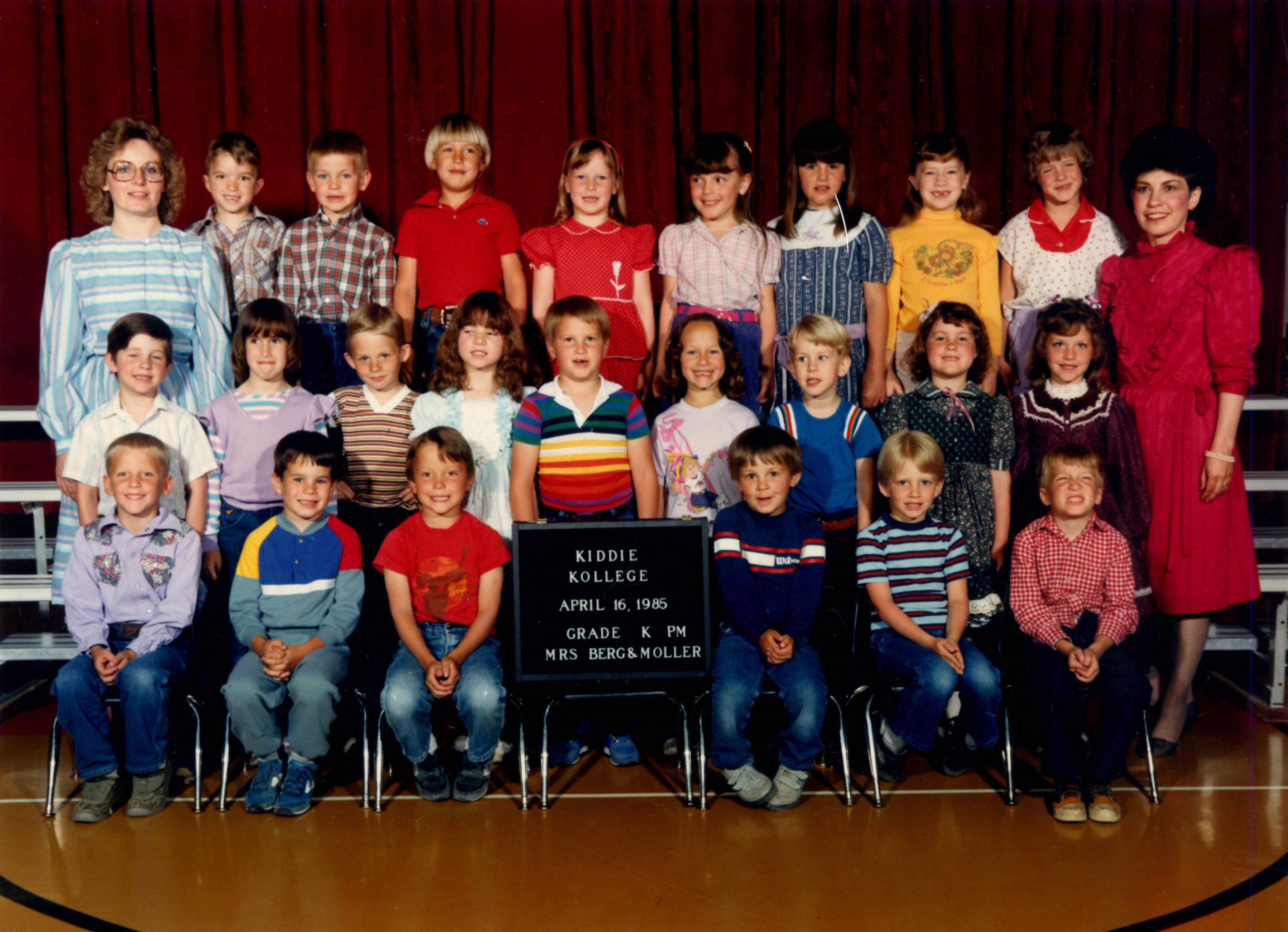
Back row (l-r): Sandra Berg, Danny Wright, Jim Cueva, Jared Fairchild, Bobie Jones, Erin Zemke, Jodie Larson, Hazel Patterson, Keri Jo King, Judy Moller; Middle row: Marshall Neilson, Deanne Williams, Bayden Neilson, Brandon Rogers, Logan Schenk, Desirae Paoli, Charlyn Maughan, Charlyn Robertson, Robyn Olson; Front row: Jacob Timmons, Benjamin Wilcher, Jesse Jensen, Michael Jurgensmeier, Paul Ross, Jedediah Lewis.
I mentioned this before, Bobie (Jones) Story let me scan some of our common school pictures. All mine were lost in a flood of our basement. I am happy to have copies again. (I am still missing Ms. Suhr for 3rd grade and Mr. Mendenhall for 6th grade. If you have a copy, please let me scan!)
This is our Kindergarten class picture from the Kiddie Kollege, Paul, Idaho. This was the 1984 – 1985 school year.
The Kiddie Kollege building is still there, northwest corner of N Main Street and W Idaho Street in Paul. It was converted to a laundromat for quite a few years, now being repurposed into some other building.
Normally I organize photos with married names and dates. Since all are still alive (as far as I know), I will forgo any of the dates. I have added the married last name for the ones I know. If you have corrections, please let me know.
Mrs. Sandra Berg
Mrs. Judy Moller
Jim Cueva
Jared Fairchild
Jesse Jensen
Bobie Jones married Story
Michael Jurgensmeier
Keri Jo King
Jodie Larson married Brunson
Jedediah Lewis
Charlyn Maughan (not on the class list but I am pretty sure I recognize her in the photo, an extra girl, missing a boy)
Bayden Neilson
Marshall Neilson
Robyn Olson married Powell
Hazel Patterson
Desirae Paoli
Charlyn Robertson married Darrington
Brandon Rogers
Paul Ross
Logan Schenk
Scott Spaulding (apparently in the picture, but I don’t have an unnamed boy)

















 Sagacity