The Burley Idaho Temple Open House ran 3 November 2025 to 22 November 2025. It was an amazing opportunity to invite the local and broader community to walk through a pinnacle of our worship. I attended 5 of the much more individual and personal tours on the 3rd through 5th with public leaders and distinguished guests. I wish everyone could attend these tours, which would often take 45 minutes to 60 minutes for the full tour. Some of these were guided by General Authorities, including Elders Steven R. Bangerter, Karl D. Hirst, and K. Brett Nattress.
On Thursday, the general public was welcome to attend open tours. Our first tour tried to do a small introduction in each room, but about half-way through that was abandoned to keep the lines moving. Every tour I attended afterward did not have any attempted presentations, other than to remind individuals to not take photos and to speak softly.
Amanda sneaked over and caught a personal tour on the 6th.
6 November 2025 – Amanda Ross attended individually
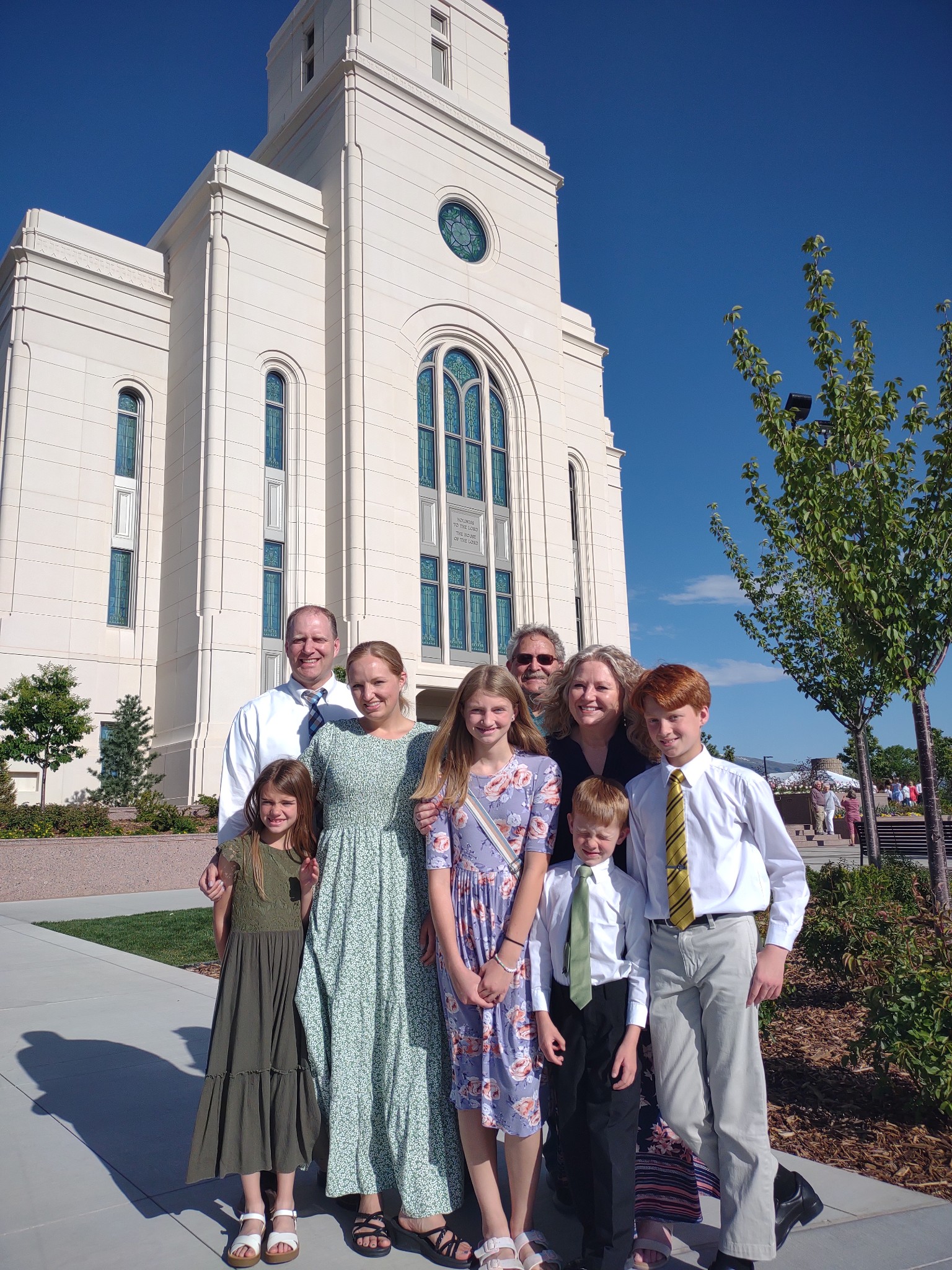
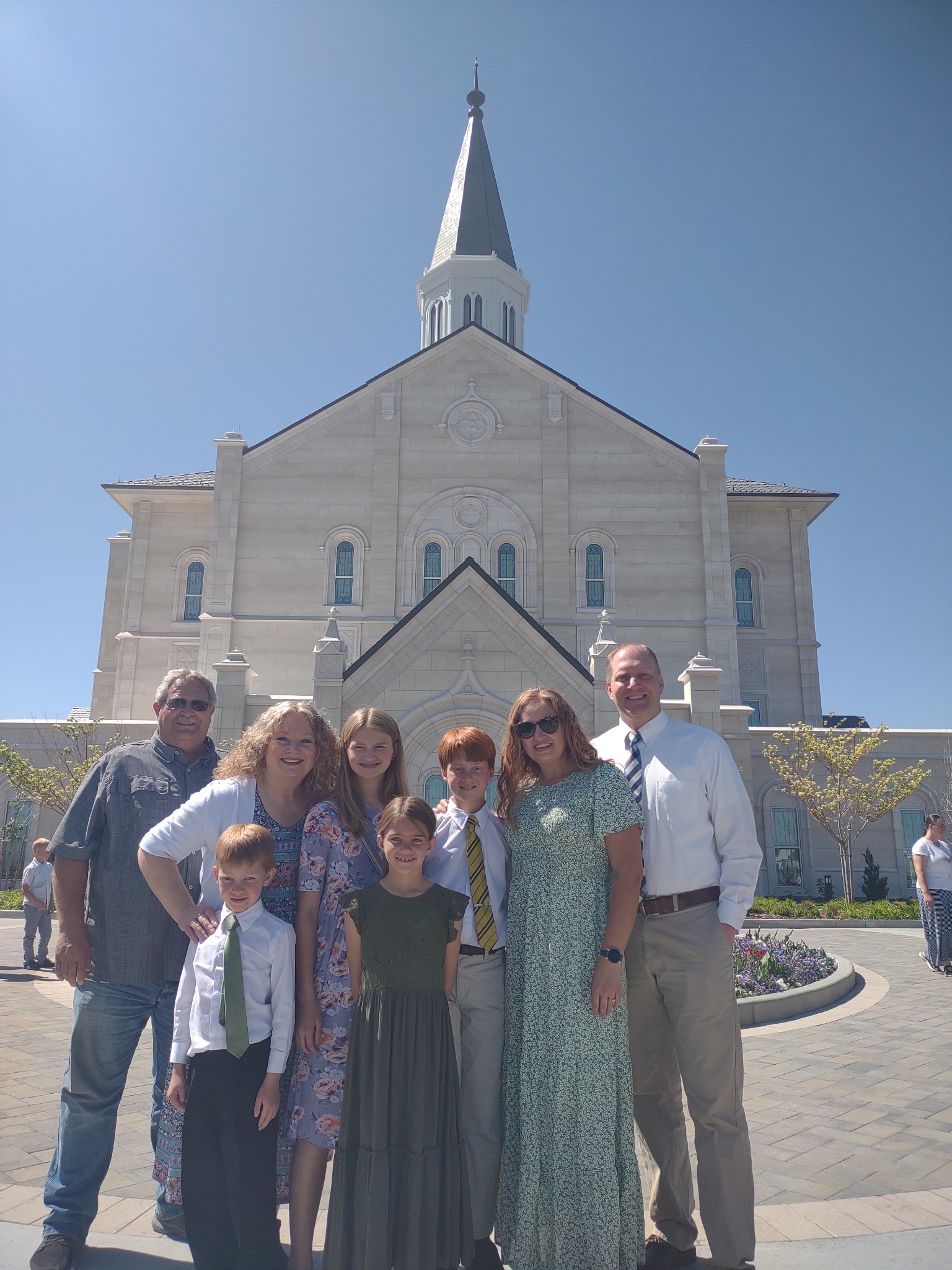
Amanda and I took our family on Friday 7 November 2025.
Saturday morning we attended with some friends. This was my 7th tour that first week!
8 November 2025 – Bud and Karen Marie Whiting, Amanda Ross, James Ross, Aliza Hales, Lea Pierucci Izama, Audra Hales, Aleah Hales, Anson Hales, Brad Hales, Paul Ross
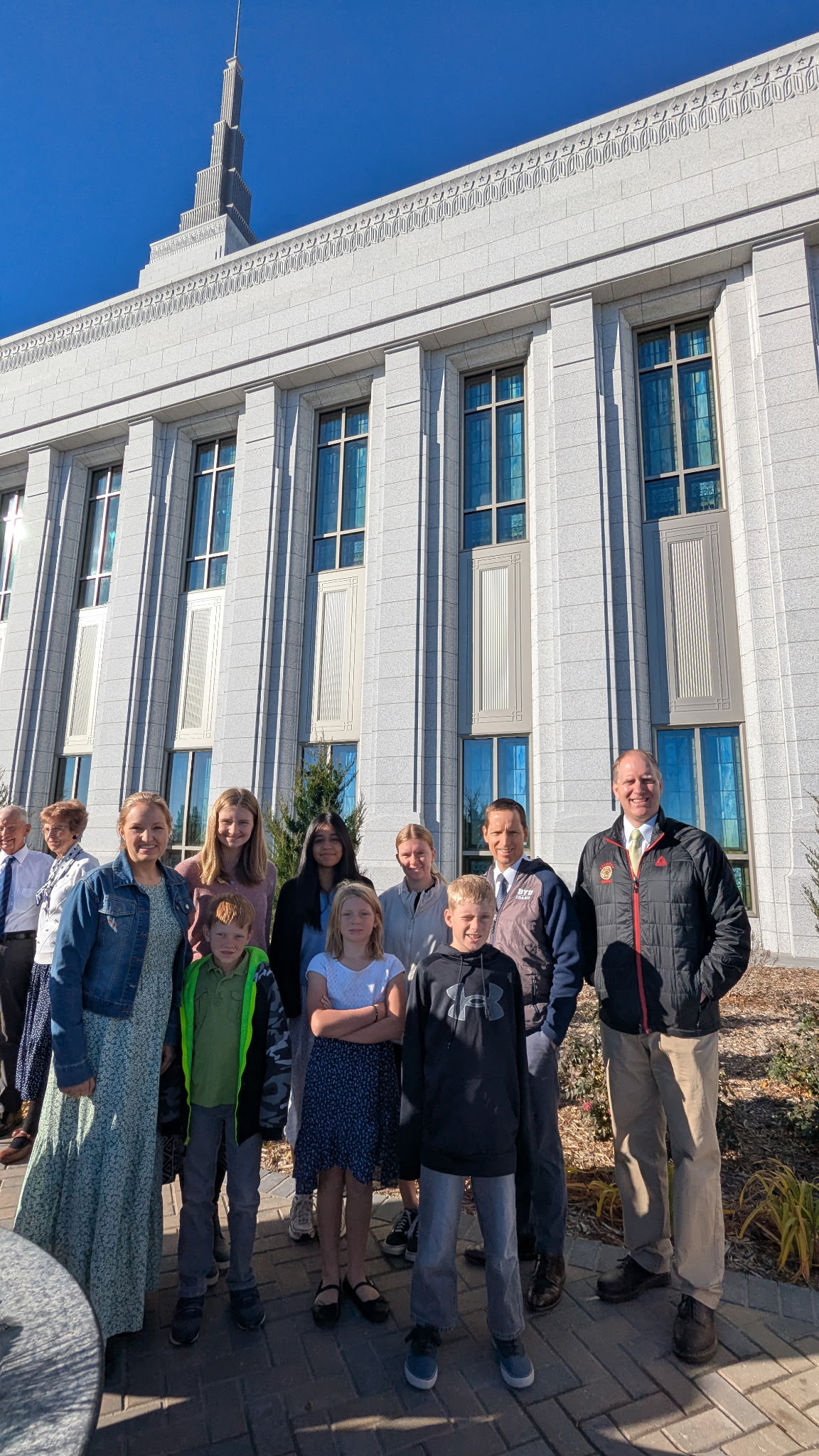
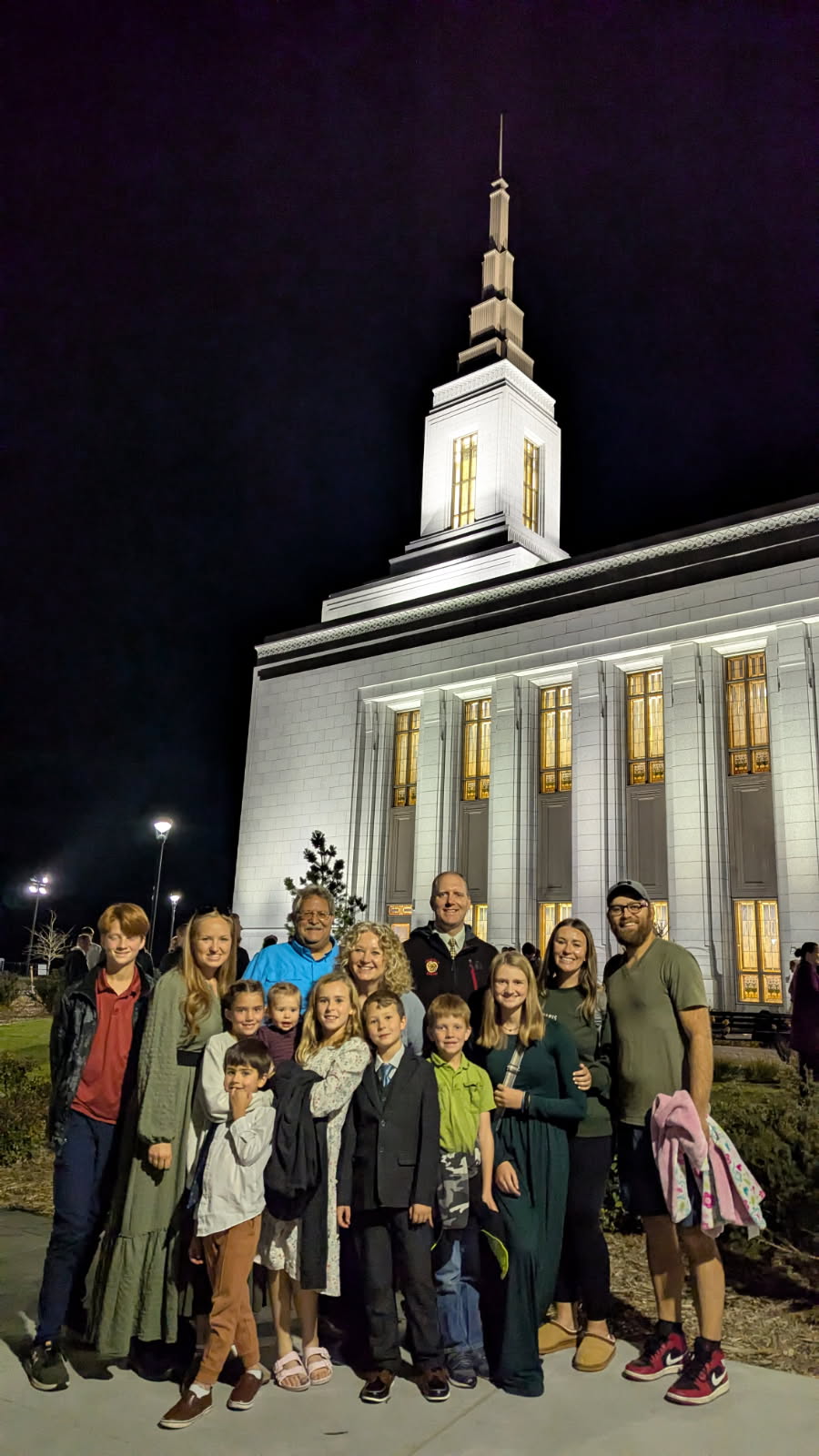
The next weekend, Amanda had a bunch of family come to town and also attend. This Friday night was my 4th tour of the second week.
14 November 2025 – Hiram Ross, Amanda Ross, Lillian Ross, Rowan Hemsley, Margo Hemsley, Bryan Hemsley, Olivia Hemsley, Jill Hemsley, Jack Hemsley, James Ross, Paul Ross, Aliza Ross, Jordan Hemsley, Derek Hemsley
I also got to attend some more times the third week. But my 4th tour in the third week was with my sister and brother-in-law.
22 November 2025 – Paul Ross, Andra and Wes Herbst
That makes 15 trips through the temple for the open house. I was also privileged to do temple security on 5 different occasions, all for the 9:00 PM to 1:00 AM shift. Here are some photos from that opportunity.
4 November 2025
4 November 2025
5 November 2025 – Paul Ross and Kevin Mower for the graveyard shift
10 November 2025 – Paul Ross and Tyson Smith for the graveyard shift
Amanda also got to do a security shift, parking shift, and foot covering (booty) shift.
12 November 2025 – Amanda Ross Parking Shift
12 November 2025 – Amanda Ross Security Shift
Some of the late night security shifts were great opportunities to reflect on the blessings we are now achieving with the ease and access of a temple so close.
When I received my first temple recommend for my own endowment, Paul Idaho Stake President, M. Gene Hansen, invited me to make a commitment to attend the temple every month at a minimum. I took that commitment. I agreed.
In Hazelton, Idaho, it took me roughly 2 1/4 hours to get to the Boise Idaho Temple (speed limits have increased since then); Idaho Falls Idaho Temple was just under 2 hours; Logan Utah Temple was about 2 1/2 hours, and Ogden Utah Temple was 2 1/2 hours. I was endowed in Logan in September 1998 with my Dad. I attended Logan and Boise before going on the mission. But it was at least half a day planning to attend the temple before the mission.
Within the Manchester England Mission is found the Preston England Temple. Attending the temple in the mission required coordination with members as the temple isn’t near public transportation and we relied on members to take us. We could only go on Preparation Day, which was Tuesday. That took some work, but I was able to attend every month of the mission (except for some months where some missionaries had abused the privilege and all missionaries lost temple attendance options for three months). Getting to the temple was within 1 hour for every area in which I served.
I lived in Branson Missouri for a couple of years. Our closest temple for Branson was the St. Louis Missouri Temple. That drive was at least 4 hours one way, often 4 1/2 hours. That required an entire day to be set aside and planned to drive, attend, and return home. Never missed a month in Branson. I sealed my Jonas grandparents together in St. Louis Missouri Temple. The Bentonville Arkansas Temple has been constructed much closer at about 2 hours. The Springfield Missouri Temple will be less than an hour away from Branson.
Amanda and I lived in Richmond Virginia for a couple of years. Our closest temple for Richmond was the Washington D.C. Temple. That drive was between 4 and 5 hours away, depending on beltway traffic. We would often go up and spend Friday night with family, attend the temple that night or in the morning, and then make our way back home. Washington D.C. Temple was closed for a bit, so to make the monthly trip, we had to go to the Raleigh North Carolina Temple. That was almost a 4 hour drive one direction. The new Richmond Virginia Temple is just outside the first neighborhood we lived in and within 10 minutes of the second neighborhood we lived.
When we moved back to Idaho, the Twin Falls Idaho Temple had been dedicated. That dropped the 2 to 2 1/2 hour drive time for all those temples to less than an hour, usually between 50-60 minutes. But it still takes time and planning to ensure I get there every month. This is double now that we also have a commitment to see that Aliza and Hiram are able to attend at least monthly.
Now, with the dedication of the Burley Idaho Temple in January, the temple will be between 5 to 6 minutes away.
Now I have to reevaluate. It seems the once a month commitment is not enough. I think that will remain the absolute minimum going forward for the rest of my life. It also seems I have no reason to not attend to at least one ordinance in the temple at least every week.
To show my gratitude to our Father and our Savior, I intend to attend the Burley Idaho Temple at least daily for the first 30 days it is open after dedication. Which isn’t as much as it seems if you consider it is not open on Sunday, Monday, or Thursday. Still working out what happens after the first 30 days.
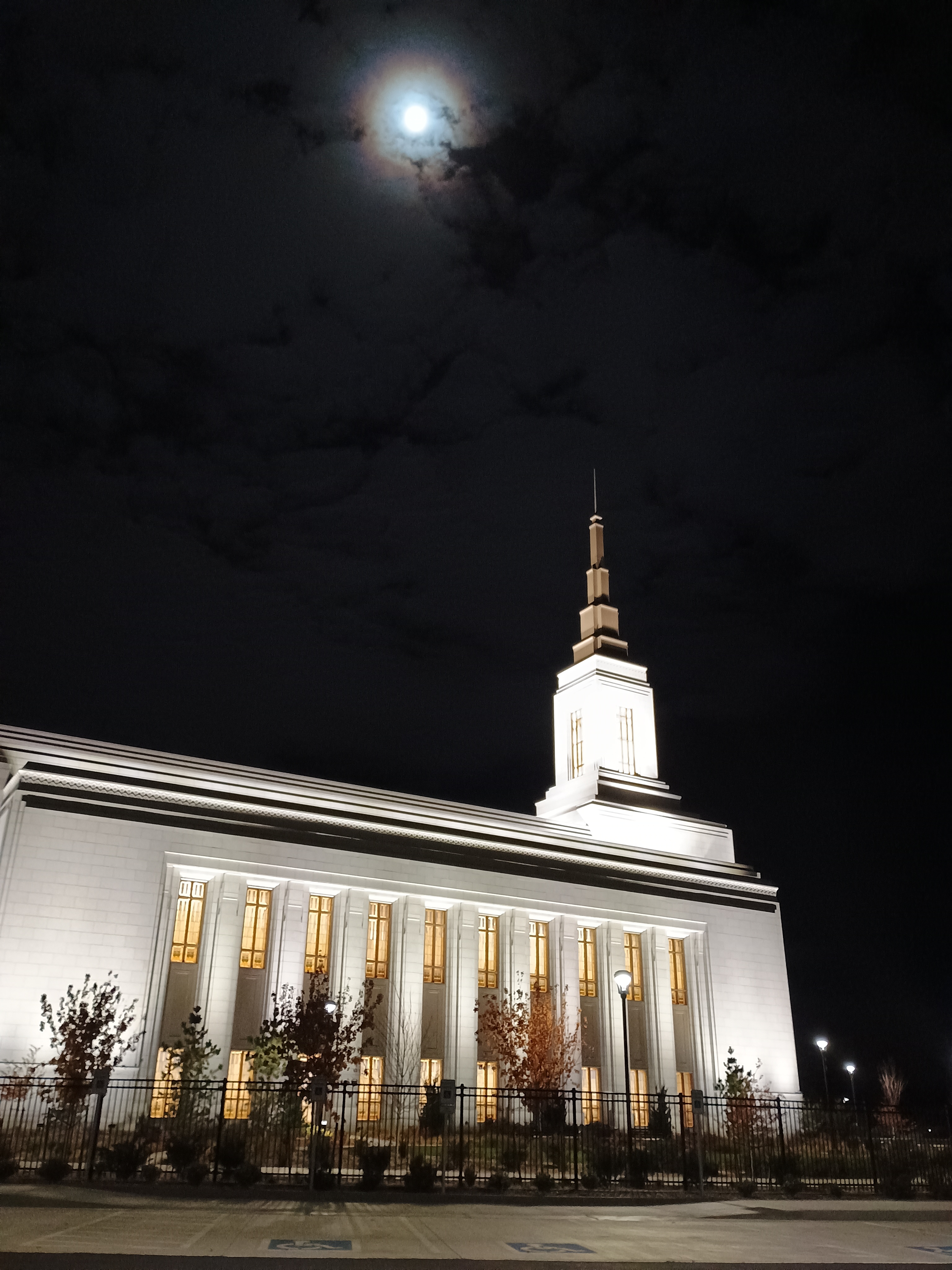
For the last three weeks I have found myself regularly humming The Spirit of God and also muttering the Hosanna Shout under my breath. I am looking forward to the dedication of the Burley Idaho Temple on 11 January 2026!
Time continues to march forward. It does not care what we think about it. Some want it faster, others want it slower, others want it to stop.
In preparation for Memorial Day, I was trying to think of something that would show that I truly hold in memory those who served in the military and especially those who died in that service. Hopefully here are a few things that show a more human side. I am not aware that I have any ancestor who has died in a war, especially in the service of the United States of America. I guess for that I am lucky and honored. But I have many who have served in the military.
Portrait of David Delos Donaldson after WWI
David Delos Donaldson is my paternal grandmother’s father. I tried to get a copy of his military records many years ago, but they were destroyed in a St. Louis, Missouri, fire long ago. I only know a few things. He worked in California as a pipe fitter/plumber at some point, but I believe that was for WWII. He went through basic training and ended up learning signaling. At some point he was allegedly in France and was exposed to the dreaded mustard gas, which injured his lungs. He smoked to settle his lungs as prescribed by doctors. He ended up dying from complications due to his lungs.
Here are some notes I have from 2006.
“I stumbled upon a registration form for my great grandfather, David Delos Donaldson, and WWI. He was working in Twin Falls, Idaho. The best part is, we never knew he went to Idaho, ever. Not only that, he was working there, and was exempted because he was working to support his younger siblings and mother. He did later enter the war, we don’t know when or how, but went to France in the Argonne and was gassed there. He suffered his whole life and eventually died from the mustard.
“With this information, I went to visit my Uncle Dave Donaldson because my Dad did not know anything. I picked his brain. We know little about my Great Grandfather before he married. Now we know he was working for Ballantyne Plumbing in Twin Falls in roughly April 1917. He served in WWI with two brothers. As mentioned, he was hit with mustard, spent some time in hospital, and he wasn’t getting better, so they sent him home. He married my Great Grandmother in 1919, Berendena Van Leeuwen. They had 5 children. During the great depression he worked down south as a plumber. Dave did not know where, but there was a possibility it was at the Hoover. When they went on a trip to Los Angeles, he insisted on stopping at Boulder City and the dam on the way home. Oh, we do know that before they got married, he worked as a plumber in Phoenix. How long we don’t know, but he could not bear the heat down there. During the depression when he worked down south, the family stayed in Ogden. Dave was young enough that he did remember his father coming home, but not where from. Again during WWII, the whole family moved to Napa, California and Great Grandpa was a plumber at the naval yard there, he made it sound like Oceanside. I do not know if there were any other naval bases down there. Then they moved back. The family must not have stayed down there, or he did not work the entire war, as my Grandpa and Grandma met in 1941-1942 at the Berthana on 24th street Ogden at a dance. They were married in April 1942, shortly before he left for war. Great Grandpa was a plumber by trade. He worked up until the 1950’s when his health failed him. He picked up smoking because it soothed his lungs. It sounds like the mustard burned his lungs the rest of his life. He would smoke to deaden the nerves. Dave told me this increased until he died. Even the last few years of his life, he had oxygen when he went places and when he slept. But he kept smoking. Dad told me of one of the few memories he had of his Grandpa. He went to visit him in Ogden, Grant Ave if I remember right, and he was laying in bed. There were newspapers all over the floor. He got into a coughing fit and coughed a big thing of phlegm up and it went on the floor. It was the combination of the irritation to the lungs from mustard and the smoking. It was what eventually killed him.
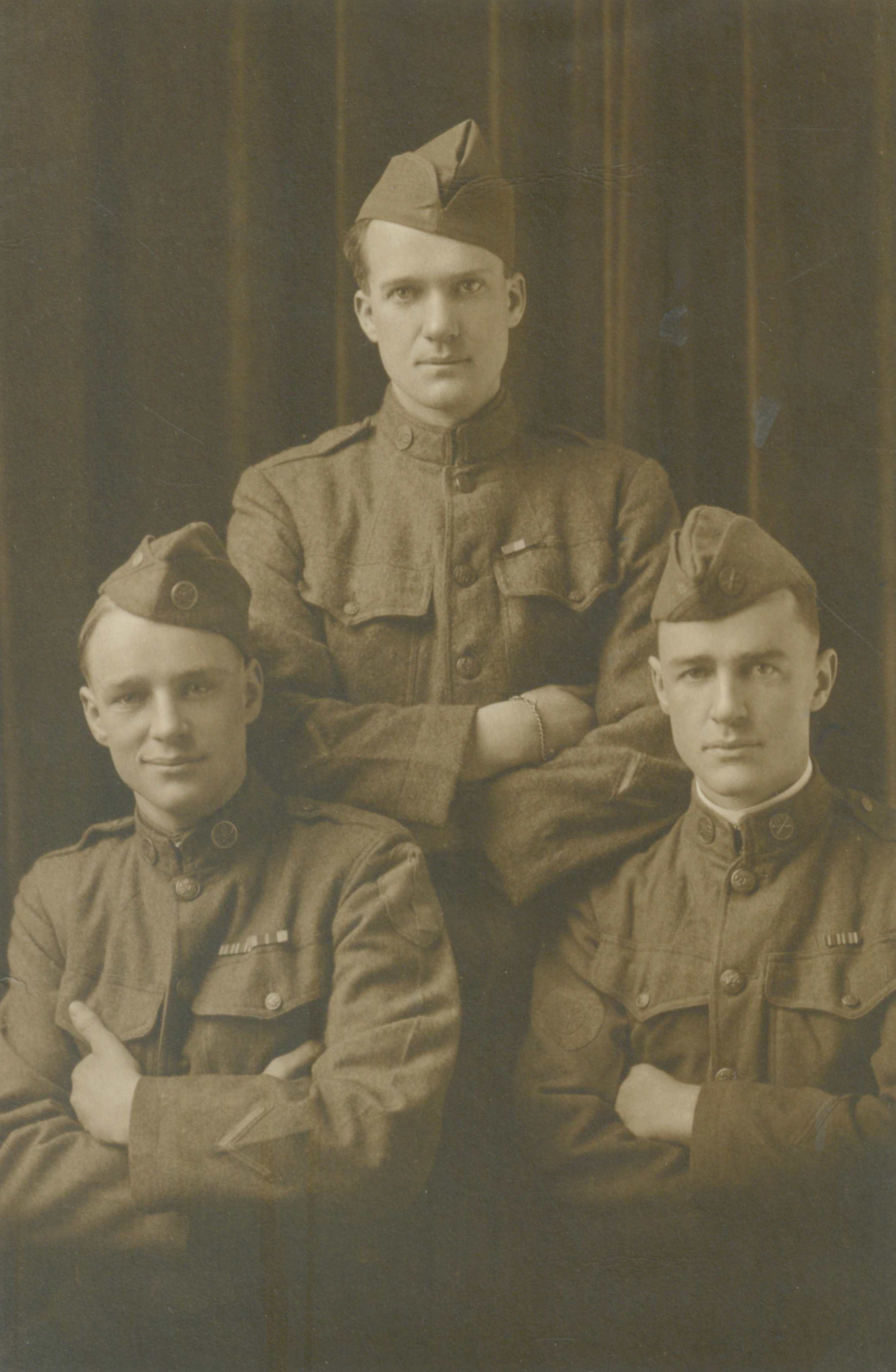
David Delos Donaldson (back), John Edmund Donaldson (left), and William George Donaldson
Here are some postcards David sent home to his mother. His father, William Scott Donaldson, died of cancer in 1913.
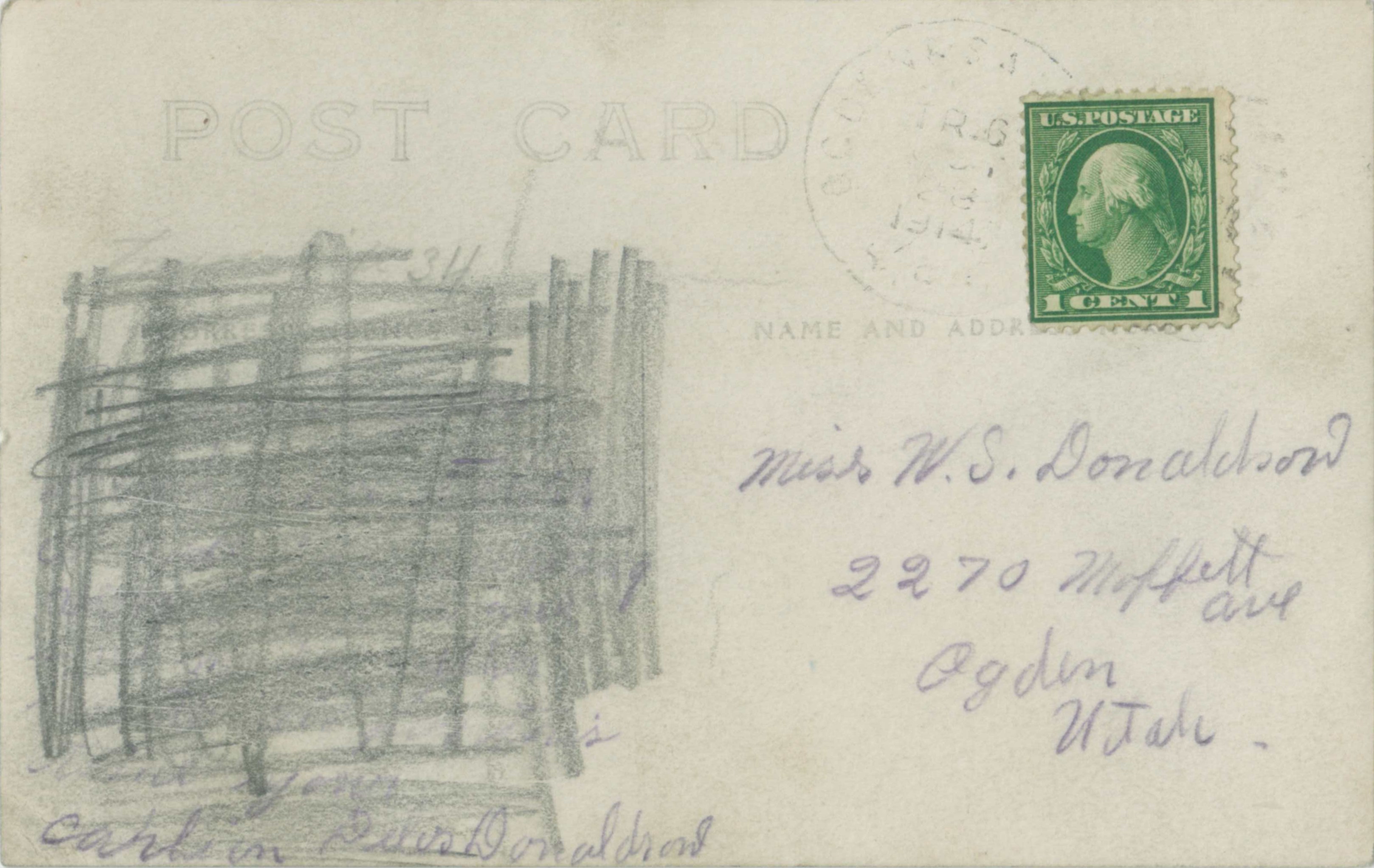
“Part of Carlin, Nev.”
I am not sure why the writing on the left is crossed out. But you can see Miss W. S. Donaldson 2270 Moffett Ave Ogden Utah. It says Carlin and Delos Donaldson. It might say “Yours” above it. The postmark is dated 1914, but I cannot make out the rest of it.
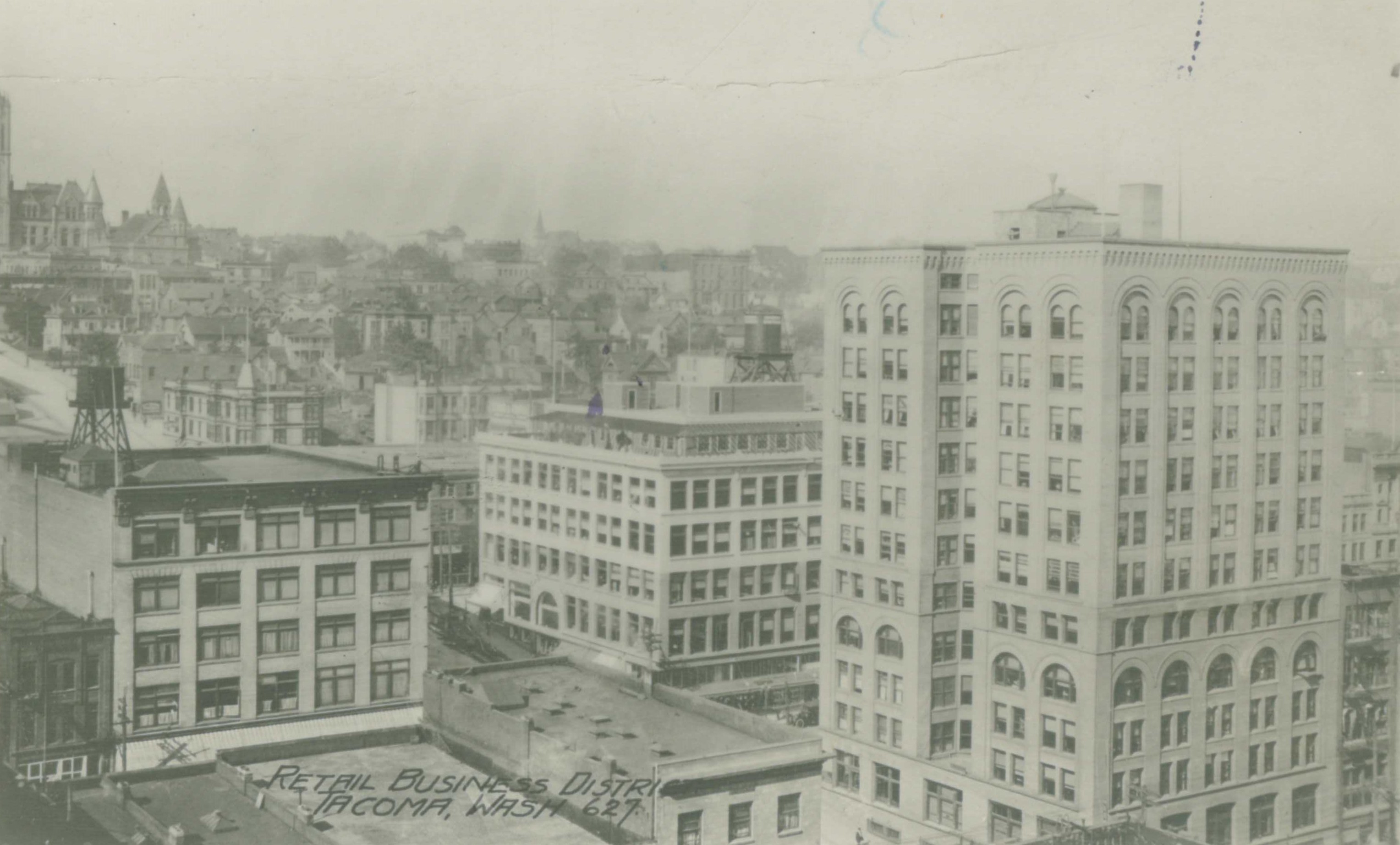
Retail Business District, Tacoma, Washington 1918
Dated 2 April 1918. “Dear mother got here all ok like it fine Write me as Private David D Donaldson 20th Co., 5th Bn., 166th Dep Brig. Camp Lewis, America Lake, Wn. Mrs. W.S. Donaldson 2270 Moffett Ave Ogden Utah”
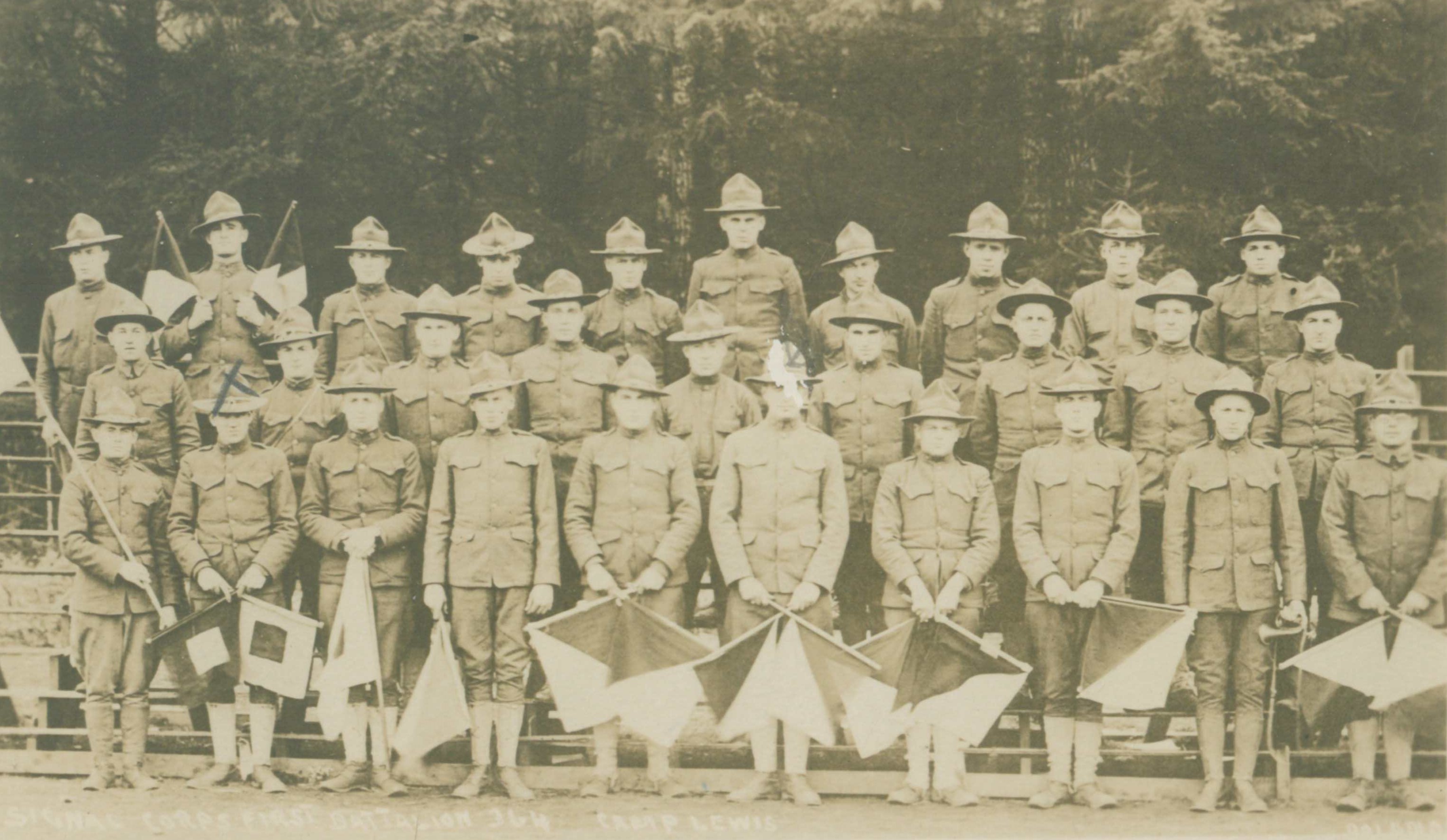
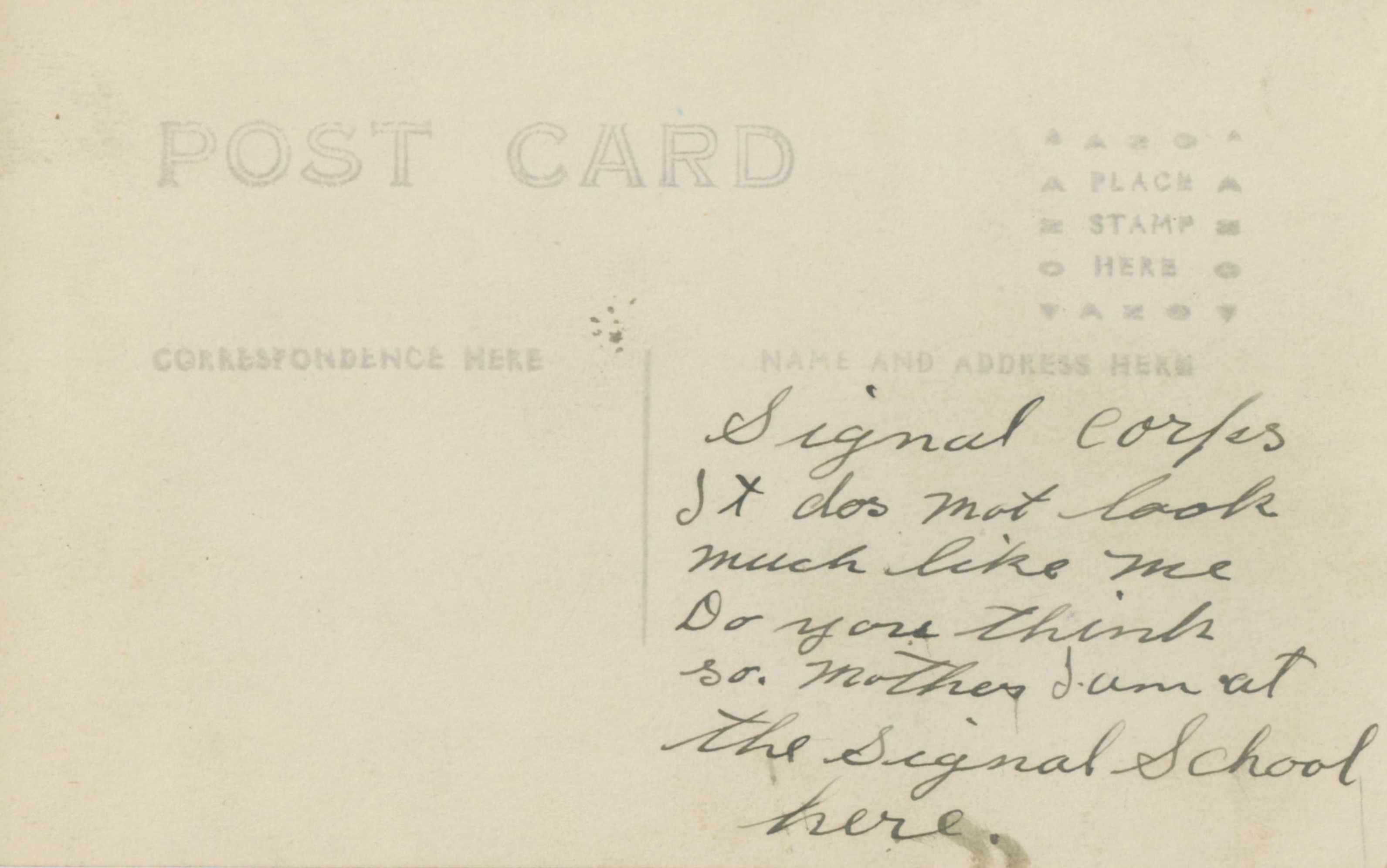
Front and back
“Signal Corps It does not look much like me Do you think so. Mother I am at the Signal School here.”
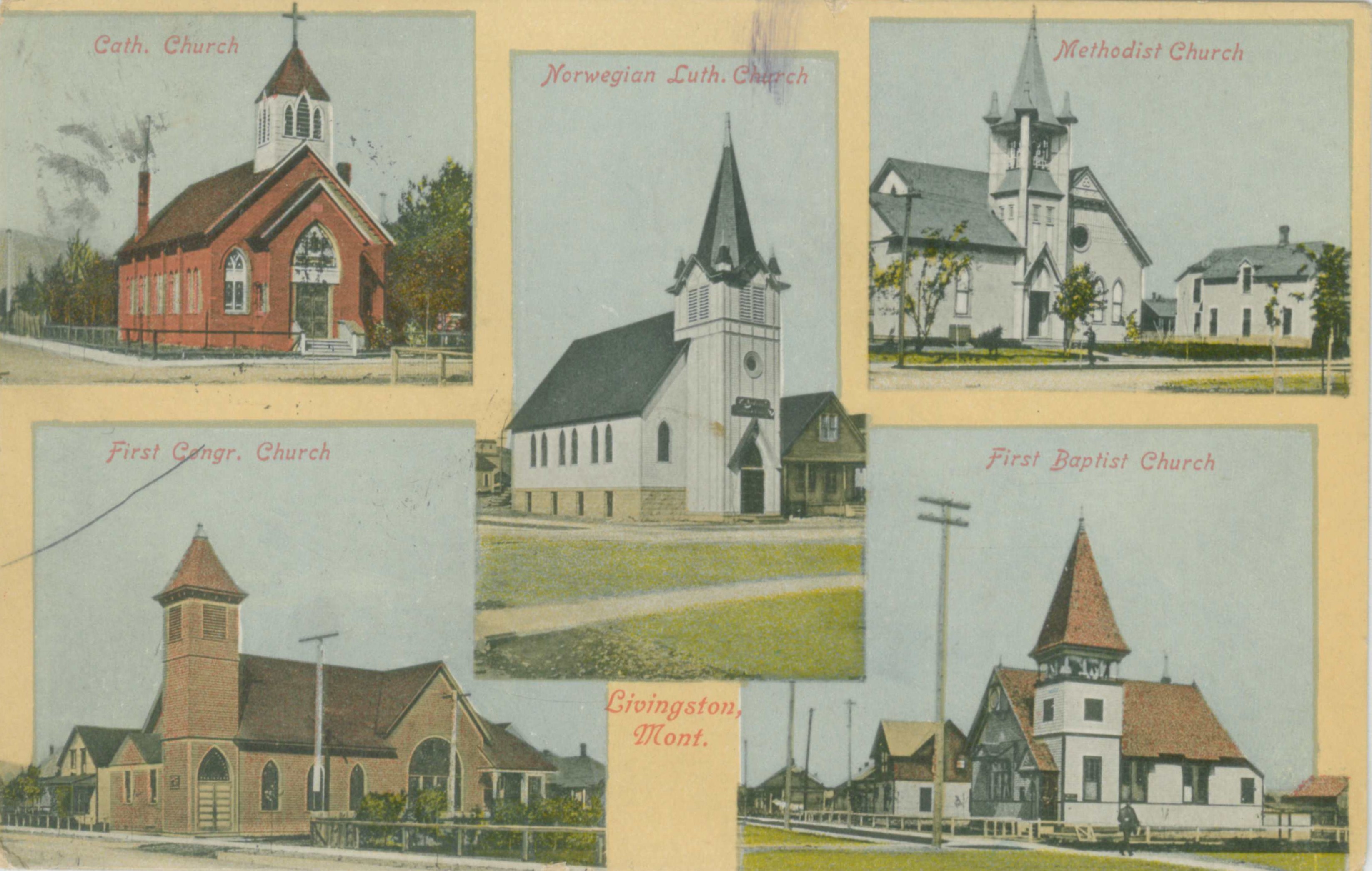
Front and back
Dated 28 June 1918. “Dear Mother just a line to say I am well and fair when I got in New York all for this time your son DDD. Written to Mrs. W. S. Donaldson 2270 Moffett Ave Ogden Utah
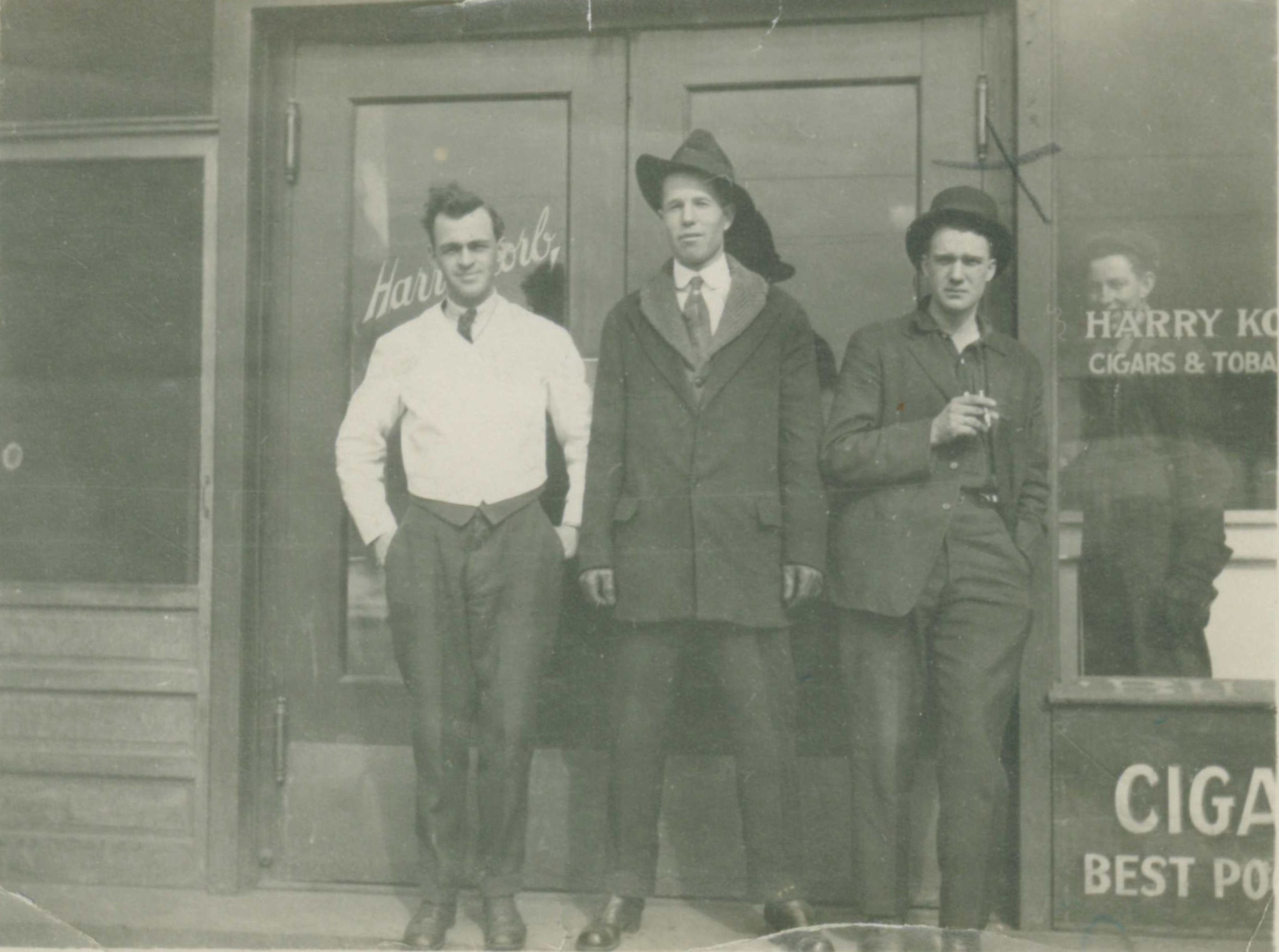
Harry Korb Cigars & Tobacco, known location with David standing in front of the store. Other three are unknown.
We might think it, but none of us are truly bullet-proof. This boy’s health was affected for the rest of his life by war. He did live to be 59 years old.
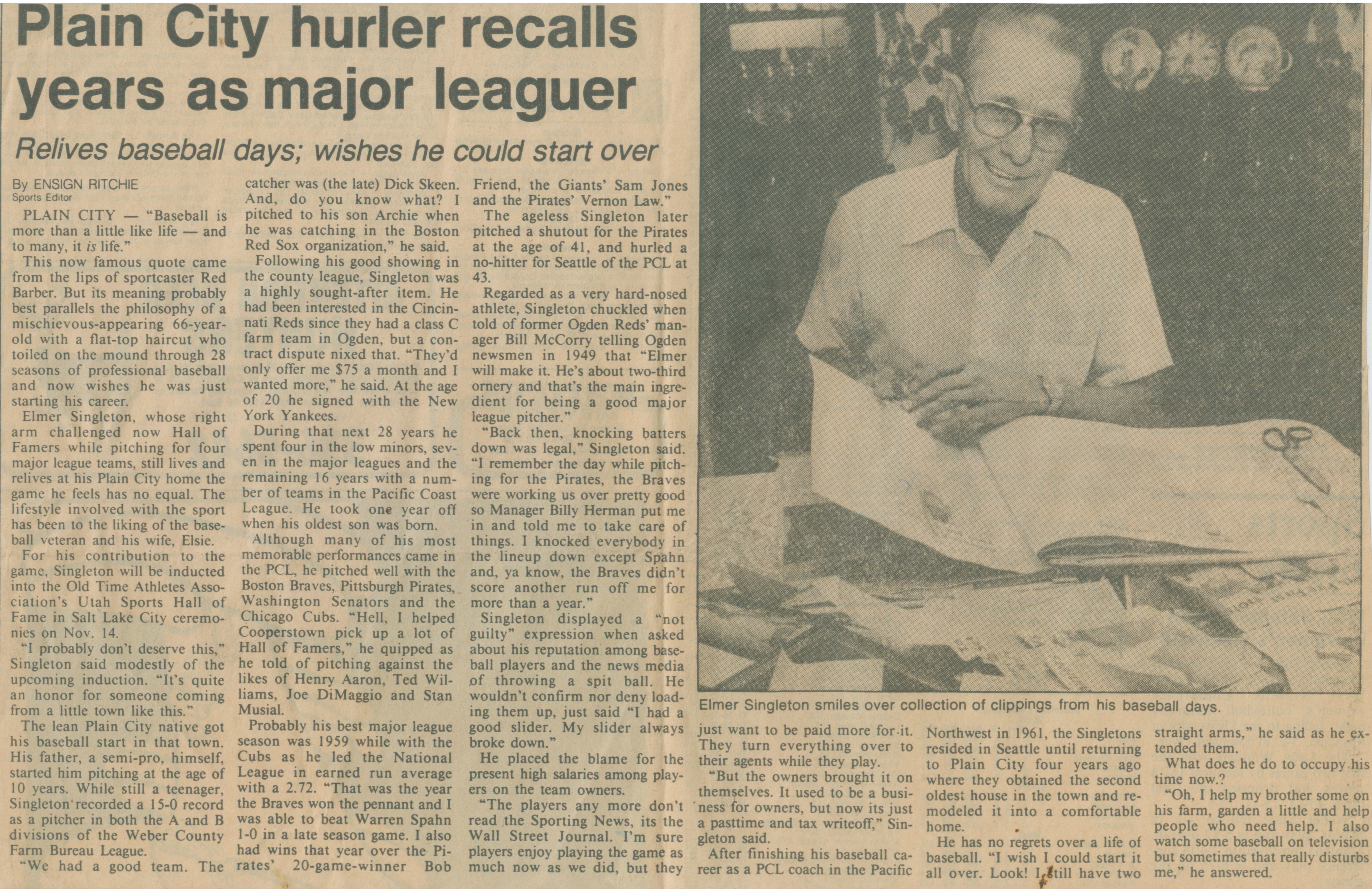
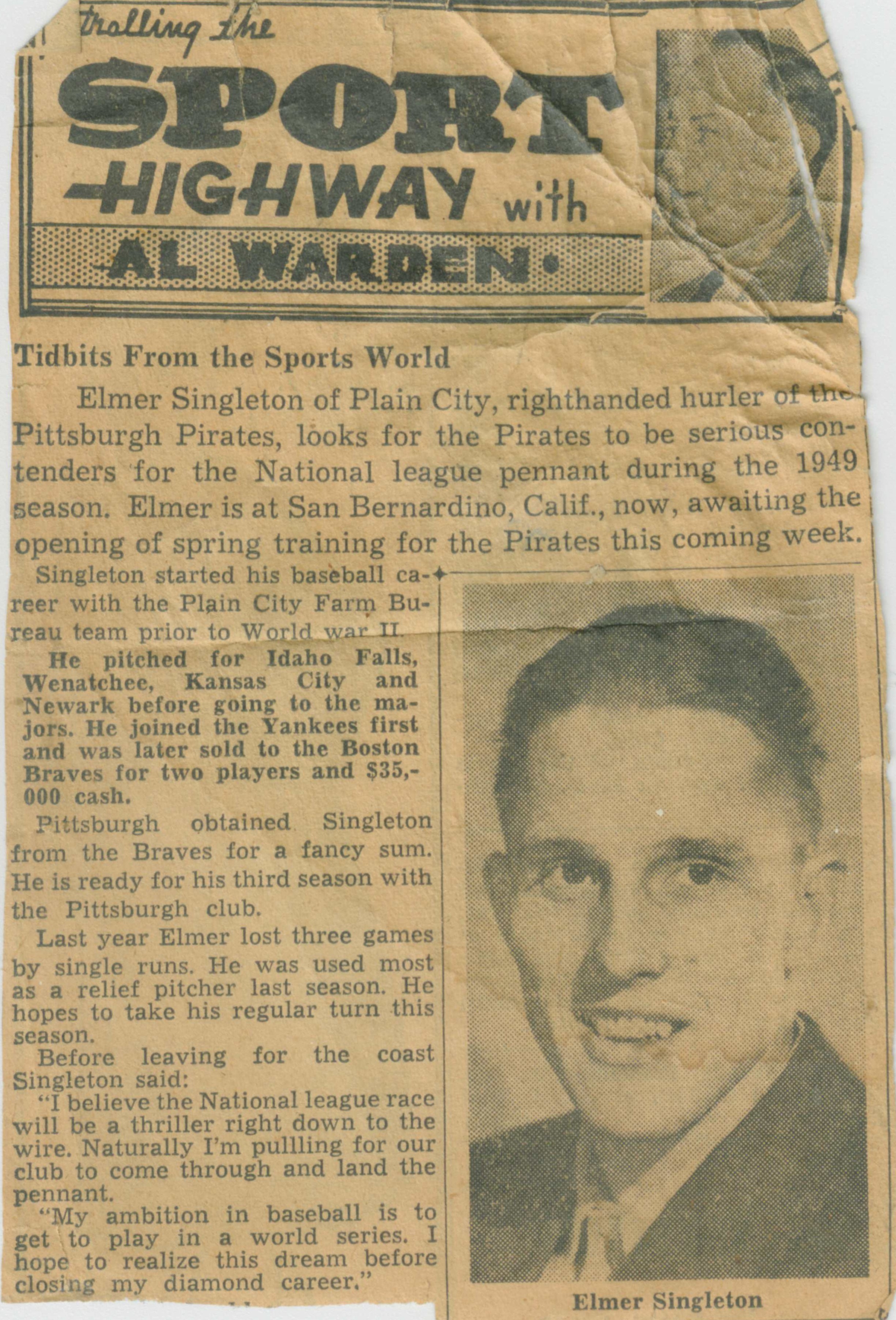
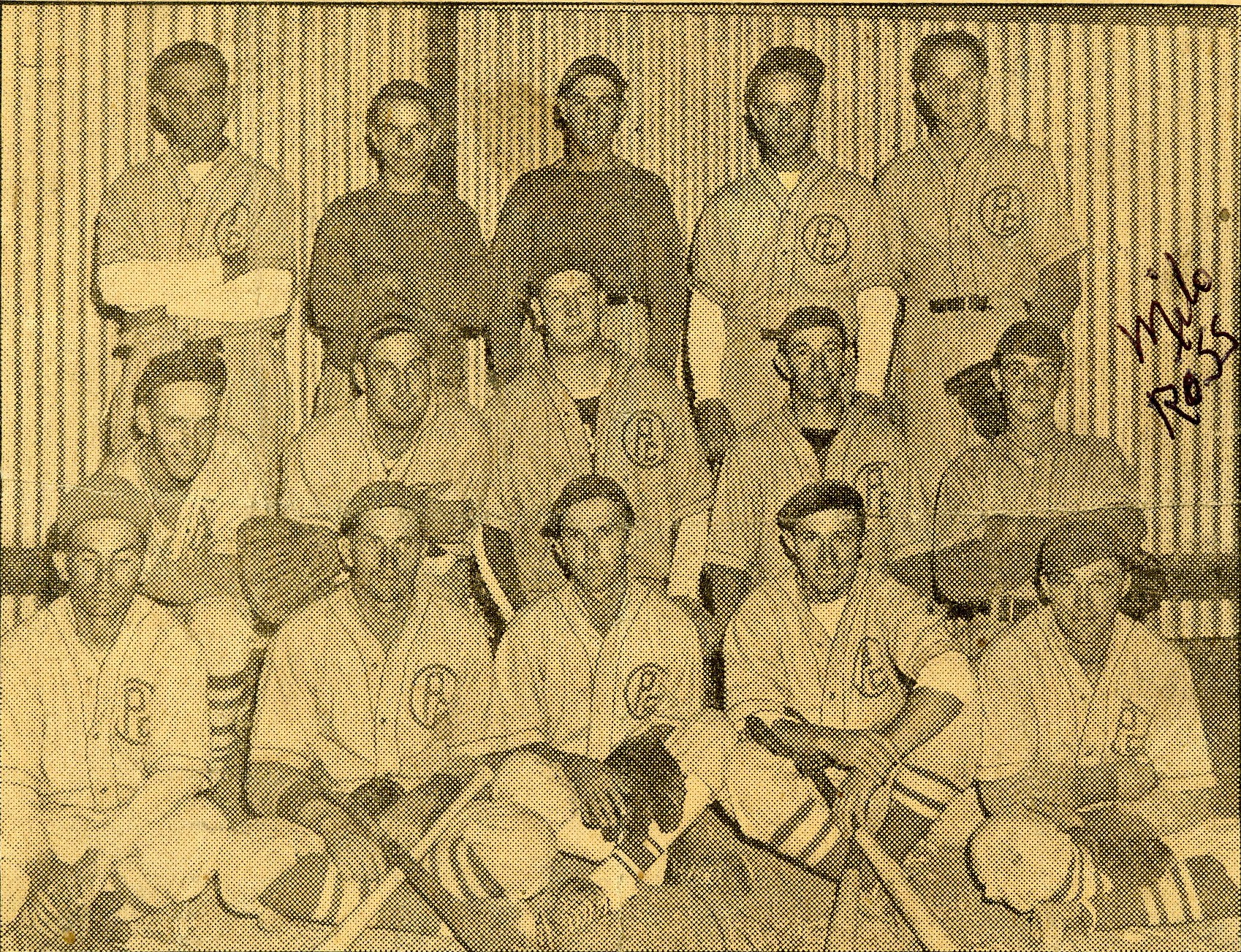
Here are four more clippings from my Grandparents, Milo & Gladys Ross. Grandpa talked quite a bit of baseball in Plain City from his youth. I have shared this photo too where he and Elmer played together on the same team. Visiting with Grandpa, multiple baseball players came up, but Elmer was the one that went on to some fame. Plain City’s history includes excerpts on Elmer.
“Plain City hurler recalls years as major leager
“Relives baseball days; wishes he could start over
“PLAIN CITY – “Baseball is more than a little like life – and to many, it is life.”
“This now famous quote came from the lips of sportcaster Red Barber. But its meaning probably best parallels the philosophy of a mischievous-appearing 66-year-old with a flat-top haircut who toiled on the mound through 28 seasons of professional baseball and now wishes he was just starting his career.
“Elmer Singleton, whose right arm challenged now Hall of Famers while pitching for four major league teams, still lives and relieves at his Plain City home the game he feels has no equal. The lifestyle involved with the sport has been to the liking of the baseball veteran and his wife, Elsie.
“For his contribution to the game, Singleton will be inducted into the Old Time Athletes Association’s Utah Sports Hall of Fame in Salt Lake City ceremonies on Nov. 14.
“”I probably don’t deserve this,” Singleton said modestly of the upcoming induction. “It’s quite an honor for someone coming from a little town like this.”
“The lease Plain City native got his baseball start in that town. His father, a semi-pro, himself, started him pitching at the age of 10 years. While still a teenager, Singleton recorded a 15-0 record as a pitcher in both the A and B divisions of the Weber County Farm Bureau League.
“”We had a good team. The catcher was (the late) Dick Skeen. And, do you know what? I pitched to his son Archie when he was catching in the Boston Red Sox organization,” he said.
Following his good showing in the county league, Singleton was a highly sought-after item. He had been interested in the Cincinnati Reds since they had a class C farm team in Ogden, but a contract dispute nixed that. “They’d only offer me $75 a month and I wanted more,” he said. At the age of 20 he signed with the New York Yankees.
“During that next 28 years he spent four in the low minors, seven in the major leagues and the remaining 16 years with a number of teams in the Pacific Coast League. He took one year off when his oldest son was born.
“Although many of his most memorable performances came in the PCL, he pitched well with the Boston Braves, Pittsburgh Pirates, Washington Senators and the Chicago Cubs. “Hell, I helped Cooperstown pick up a lot of Hall of Famers,” he quipped as he told of pitching against the likes of Henry Aaron, Ted Williams, Jo DiMaggio and Stan Musial.
“Probably his best major league season was 1959 while with the Cubs as he led the National League in earned run average with a 2.72. “That was the year the Braves won the pennant and I was able to beat Warren Spahn 1-0 in a late season game. I also had wins that year over the Pirates’ 20-game-winner Bob Friend, the Giants’ Sam Jones and the Pirates’ Vernon Law.”
“The ageless Singleton later pitched a shutout for the Pirates at the age of 41, and hurled a no-hitter for Seattle of the PCL at 43.
“Regarded as a very hard-nosed athlete, Singleton chuckled when told of former Ogden Reds’ manager Bill McCorry telling Ogden newsmen in 1949 that “Elmer will make it. He’s about two-third ornery and that’s the main ingredient for being a good major league pitcher.”
“”Back then, knocking batters down was legal,” Singleton said. “I remember the day when pitching for the Pirates, the Braves were working us over pretty good so Manager Billy Herman put me in and told me to take care of things. I knocked everybody in the lineup down except Spahn and, ya know, the Braves didn’t score another run off me for more than a year.”
“Singleton displayed a “not guilty” expression when asked about his reputation among baseball players and t news media of throwing a spit ball. He wouldn’t confirm nor deny loading them up, just said “I had a good slider. My slider always broke down.”
He placed the blame for the present high salaries among players on the team owners.
“”The players any more don’t read the Sporting News, its the Wall Street Journal. I’m sure players enjoy playing the game as much now as we did, but they just want to be paid more for it. They turn everything over to their agents while they play.
“”But the owners brought it on themselves. It used to be a business for owners, but now its just a pasttime and tax writeoff,” Singleton said.
“After finishing his baseball career as a PCL coach in the Pacific Northwest in 1961, the Singletons resided in Seattle until returning to Plain City four years ago where they obtained the second oldest house in the town and remodeled into a comfortable home.
“He has no regrets over a life of baseball. “I wish I could start it all over. Look! I still have two straight arms,” he said has he extended them.
“What does he do to occupy his time now?
“”Oh, I help my brother some on his farm, garden a little and help people who need help. I also watch some baseball on television but sometimes that really disturbs me,” he answered.
“Tidbits from the Sports World
“Elmer Singleton of Plain City, righthanded hurler of the Pittsburgh Pirates, looks for the Pirates to be serious contenders for the National league pennant during the 1949 season. Elmer is at San Bernardino, Calif., now, awaiting the opening of spring training for the Pirates this coming week.
“Singleton started his baseball career with the Plain City Farm Bureau team prior to World war II.
“He pitched for Idaho Falls, Wenatchee, Kansas City and Newark before going to the majors. He joined the Yankees first and was later sold to the Boston Braves for two players and $35,000 cash.
“Pittsburgh obtained Singleton from the Braves for a fancy sum. He is ready for his third season with the Pittsburgh club.
“Last year Elmer lost three games by single runs. He was used most as a relief pitcher last season. He hopes to take his regular turn this season.
“Before leaving for the coast Singleton said: “I believe the National league race will be a thriller right down to the wire. Naturally I’m pulling for our club to come through and land the pennant.
“”My ambition in baseball is to get to play in a world series. I hope to realize this dream before closing my diamond career.
“Elmer Singleton Rates Praise
“The “best pitched game” ever witnessed at Seals’ stadium went down in the record book as a defeat for Elmer Singleton, San Francisco right-hander, writes James McGee, San Francisco newspaperman.
“Singleton started his baseball career with Plain City in the Weber County Farm Bureau league back in 1938. Since that timehe has worn a number of major league uniforms.
“Writes McGee: “The big Seal righthander pitched 12 1/3 innings of no-hit ball against Sacramento, April 24, yet lost 1 to 0.
“”That was the best-pitched game I ever saw,” his manager, Tommy Heath, declared. But, as it turned out, it was not quite good enough. Singleton, who set a Seals stadium record and etched his name in Seal history, had the bad luck to meet a tough opponent, Jess Flores, Sacramento’s veteran righthander.
“Flores was effective. The Seals got to him for eight hits, compared to the three singles from Solons finally wrenched from the reluctant Singleton. But the three Solon hits came in succession in the first half of the thirteenth inning, Eddie Bockman, spelling Manager Joe Gordon at second base; Al White and finally Johnny Ostrowski did the damage, Bockman scoring.
“Singleton admitted he was tiring in the thirteenth.
“”It wasn’t that I pitched to so many hitters. It was the strain of the thing,” he said. “All through the early innings I knew I had a no-hitter going. I had to be careful with every pitch. I never pitched one before and I wanted it.”
“Umpire Don Silva vouched that Singleton was careful.
“”He had great stuff. His fast ball was good, but his curve was particularly good. And he was hitting the corners of the plate all the time,” said Silva. “His control was almost perfect.”
“Walked Four
“Singleton walked four men, one of them purposely. He retired the first 18 men to face him before he faltered and walked Bob Dillinger, first man to face him in the seventh.
“In the seventh, the Solons had him in jeopardy for the only time until they finally scored.
“Singleton was within one out of tying the Coast league record for no-hit innings when Bockman got the first hit, a sharp roller through the hole between third and short, in the thirteenth.
“Dick Ward, pitching for San Diego in 1938, went 12 and two-thirds innings of a 16-inning game against Los Angeles without a hit. He eventually won, 1 to 0.
“Ironically, the greatest game pitched at Seals stadium in its 22-year history was pitched in virtual privacy. Only 790 spectators were there at the start with about 1000 fans leaving the park before the end of the game.
“Sports Tid Bits
“Great Falls postmen have accepted the challenge of members of the Ogden post office and have wagered $125 that the Electrics finish ahead of the Reds in the 1952 Pioneer league race.
“Harold Stone of the Ogden post office department informed this corner of the acceptance Saturday night. Two years ago the Ogdenites lost a similar wager.
“George East, landowner of some of the finest duck shooting grounds of the area, is living like Noah of old at his home in West Warren. Genial George says that instead of duck problems, the trash fish from the lower Weber are visiting him and drinking out of his flowing well.
“The ducks have been winging their way annually in George’s direction for nearly four score years. Some years there has been so little water that the migratory birds have avoiding George’s feeding and nesting grounds. Not this year, however, George says as there is more water flooding the pasture lands than in many, many years.
“Herb Woods went out to look the situation over this week. George told Herb he could find his favorite blind by use of maps and a deep diving suit – but Herb did not want to get his nose wet.
“Hal Welch, our so-called game expert, says there is consternation among the sportsmen about the pheasants that will be lost because of their nests being destroyed by the floodwaters. He admits that there will be no shortages of mosquitoes for sportsmen, however.
“Screwy Situations
“The 1952 baseball season still is an infant but here are some of the crewy things that have taken place:
“An umpire – Scotty Robb – got fined, for pushing of all people, Manager Eddie Stanky, of the St. Louis Cardinals.
“Leo Durocher of the Giants protests Augie Guglielmo’s call of a third strike on one of his hitters but nothing happens. We thought questioning a third strike meant automatic banishment.
“A Phillie, Stan Lopata, fails to run from third base with two out, the batter reaches first on an error and Lopata is left stranded as the next batter is retired. And Manager Eddie Sawyer was coaching at third.
“”The Giants are leading the Braves by two runs in the eighth inning yet Leo Durocher lifts his number four hitters, temporarily Henry Thompson, for a pinch slugger. You don’t lift your number four batter in any situation, says wise baseball men, but then who says Thompson (not Bobby) is a number four hitter?
“Roy Campanella, a good number four hitter, bunts in a tie game. Another old baseball adage is that “you don’t bunt your number four hitter.” We disagree with that one. In this case Campy’s bunt paid off for the Dodgers as the next batter singled home the winning run.
“W.S.C. Loses
“PULLMAN (AP) – Idaho defeated Washington State 15-12 in Northern division gold matches Saturday.
“B. Elmer Singleton
“PLAIN CITY – Bert Elmer Singleton, passed away Friday, January 5, 1995 at his home in Plain City. He was born June 26, 1918 in Plain City, Utah, a son of Joseph and Sylvia Singleton.
“He married Elsie M. Wold January 20, 1939 in Ogden, Utah.
“He was a member of The Church of Jesus Christ of Latter-Day Saints.
“He played professional baseball for twenty-four seasons, originally signing with the New York Yankees Baseball Organization. His chosen vocation provided he and Elsie the opportunity to live in Pittsburgh, Pa., Boston, Mass., Chicago, Ill., Havana, Cuba, [Caracus, Venezuela], Seattle, Wash. and several other cities in the Midwest and on the West Coast.
“He retired from professional baseball in 1964 and returned to Plain City in 1980. Upon his return he actively lobbied for the Meals on Wheels program for Plain Cities Seniors. He helped with 4-H programs and worked with gifted children.
“He was chosen as Player of The Year for the State of Utah in 1939. He was inducted into the Utah Sports Hall of Fame in 1984. He was chosen as the Pacific Coast League most Valuable Player for years 1955 and 1956.
“Surviving are his sons, Joe F. of Chugiak, Alaska and Jerry E. of Tacoma, Washington and his brother, Don R. of Plain City. He has two grandchildren, Joe E and Shelby J., residing in Anchorage, Alaska.
“He was preceded in death by his loving wife Elsie on January 31, 1988 and brothers, Earl and Harold.
“Funeral services will be held Thursday, January 11th at 11 a.m. at Lindquist’s Ogden Mortuary, 3408 Washington Blvd.
Friends may call at the mortuary on Wednesday, January 10th from 6 to 8 p.m. and Thursday 10 to 10:45 a.m.
“Internment, Plain City Cemetery.
Back (l-r): William Freestone (manager), Norman Carver, Glen Charlton, Fred Singleton, and Elmer Singleton. Middle: Clair Folkman, Dick Skeen, Albert Sharp, Abe Maw, Milo Ross. Front: F. Skeen, Walt Moyes, Arnold Taylor, Lynn Stewart, Theron Rhead.
Before I talk about the Layton and Taylorsville Temples, I thought I better throw in another temple visit we made since I last updated. While on Spring Break this year, we made a stop in Vernal, Utah. While there, we scheduled and attended the Vernal Utah Temple with the kids. Glad we stopped to make another memory at another House of the Lord.
Hiram and Aliza at Vernal Utah Temple on 27 March 2024
Since the kids have a goal to attend the temple every month this year, we did also make it in April to the Twin Falls Temple. In May, while going to Utah for the open houses, we made sure to stop off and fulfill the monthly goal. May took us to Ogden Utah Temple.
Hiram and Aliza Ross at Ogden Utah Temple 17 May 2024
Later that evening, we attended the open house of the Layton Utah Temple with Amanda’s parents. Beautiful.
Paul, Lillian, Amanda, Aliza, James, and Hiram Ross with Bryan and Jill Hemsley 17 May 2024
We look forward to attending the temple after it is dedicated.
The next day we attended the open house for the Taylorsville Utah Temple, again with Amanda’s parents. We were also excited to run into the Brad and Rachel Hales family as well as Sarah Sanderson!
Bryan and Jill Hemsley with James, Aliza, Lillian, Hiram, Amanda, and Paul Ross 18 May 2024
It has been a crazy year for temple attendance and temple open houses. We have attended quite a few and quite a few are coming up for open houses. Wow, should be fun. It is exciting that the Kingdom and Church of God on the earth is in such a position to build so many beautiful houses to the Lord. We are blessed to attend the open houses and hopefully return some day to participate in holy ordinances there.
When I was interviewed for my first temple recommend in 1998, President Gene Hansen indicated he had a goal since he was first endowed to attend the temple every single month. He challenged me to do the same. As long as I have held a recommend, or I had permission to attend, I have attended the temple every single month since 1998. That meant a full day off of work in Missouri as it was a 4 hour drive one way from Branson, Missouri, to St. Louis, Missouri. Or from Richmond, Virginia, to Washington, D.C., that was a 4-5 hour drive and we often would go up and spend the night and return home on Saturday or Sunday depending on the circumstances.
Many open houses are upcoming, including Deseret Peak Utah; Casper Wyoming; Grand Junction Colorado; Elko Nevada; Syracuse Utah; Burley Idaho; Lindon Utah; Ephraim Utah; Smithfield Utah; Montpelier Idaho; Heber Valley Utah; Teton River Idaho; Salt Lake City Utah; Provo Rock Canyon Utah; Cody Wyoming; Lethbridge Alberta; Lehi Utah; and West Jordan Utah. Hopefully we can make some of the more exotic ones, particularly Birmingham England; Edinburgh Scotland; Honolulu Hawaii; and Vancouver British Columbia. We will see what our future holds.
I came upon this history and thought I would share it. Elizabeth Cartwright Sharp is the mother of my William Sharp. She was also the mother of Isabella Sharp Carlisle, Elizabeth Sharp Quayle, and James Sharp. I don’t know where she got all of her information, hopefully from being passed down. I will enter some updates in brackets.
LIFE HISTORY: Elizabeth Cartwright Sharp, written by Annie Thompson, (August 27, 1957).
“Elizabeth Cartwright Sharp was the daughter and only child, of George and Ann (Matthews) Cartwright, and was christened at Misson, Nottinghamshire, England, 20 December 1803. She died in St. Louis, Missouri, USA, probably late in the year 1850 [17 February 1851].
Elizabeth grew up a tall young lady, reared in an atmosphere of wealth and refinement. At the age of 17 her father died (burial 27 February 1820, age 46) and three years later, on 4 June 1823, her mother remarried to a widower named George Beighton. Little is known of this marriage except that George Beighton is purported to have gambled away at the races at Doncaster, the money belonging to Elizabeth’s mother.
On 29 December 1823, Elizabeth Cartwright was married at Mission to Thomas Sharp, and they became parents of eight children, four of whom died young in England; the other four, William, Isabella, Elizabeth and James emigrated to this country with their mother:
George Sharp, chr. 11 Nov 1824, Misson, Nottinghamshire, England
Mary Sharp, chr. 27 Nov 1825, “,”,”
William Sharp, born 10 Dec 1826, “,”,”
George Sharp, chr. 13 May 1826, “,”,”
Isabella Sharp, born 22 Dec 1831, “,”,”
Elizabeth Sharp, chr. 11 June 1834, “,”,”
Ann Sharp, chr. 29 July 1838, “,”,”
James Sharp, Born 7 Jan 1840, “,”,”
(Extract from the history of Isabella Sharp Carlisle)
Misson is a little town in the northern part of Nottinghamshire, in what used to be the Sherwood Forest, (made famous by the stories of Robin Hood). As well as having a historical setting, the place, at the time of Elizabeth Cartwright’s birth, was one of beauty, with its green pastures a bloom with cowslips.
Thomas Sharp died in 1841 at the age of 45 (buried 15 Jul 1841, Mission), leaving Elizabeth to care for the children.
Sometime about 1848, the LDS missionaries were preaching in the vicinity of Mission, and Elizabeth Sharp joined the LDS church, together with her eldest son, William, who was baptized 20 Jun 1848.
Elizabeth’s home was opened to the missionaries, and among the elders who stayed there was Elder George Emery.
Elizabeth Sharp decided to emigrate with her family to Utah, but her folks tried hard to discourage her from taking the hazardous trip; they told her if you leave for the west, “A red Indian will eat ye.” But Elizabeth’s determination prevailed, and in 1850 the family, consisting of the mother and her four children, booked passage for America. (The price of the ticket being twenty-five pounds sterling). They set sail from Liverpool, England, bound for New Orléans, Louisiana, USA, on 2 October 1850, on the sailing vessel “James Pennell”, commanded by Captain Fullerton. The voyage was a rough one and it took six weeks to reach their destination.
From New Orléans, they traveled by boat up the Mississippi River to St. Louis, Missouri, a trip that was not a healthy one.
Shortly after the family reached St. Louis, the mother took sick and died, and was buried there. This left the children on their own. They found employment and Elizabeth and James married and stayed in Missouri.
William Sharp married Mrs. Mary Ann Bailey Padley, a young widow who had joined the church in England.
Isabella Sharp was baptized into the church while in St. Louis, and Joseph Carlisle. Elizabeth Sharp married John Quayle, and settled around St. Louis, and had a family of three children.
James, who was about twelve years old when his mother died, made arrangements to come to Salt Lake City, but the company he was to travel with finally turned back. He then found employment with a meat-packing concern in St. Louis (in which he later became a partner), and married Eudora Mann and had a family of five children.
Elizabeth Sharp Quayle and James Sharp never joined the church.
Both William Sharp and Joseph Carlisle were good athletes, and while in St. Louis, they challenged anyone to a wrestling match that cared to accept. They became well-known in this respect and they had few who accepted their challenge.
In 1853, both William Sharp and his family, which now consisted of his wife Mary Ann, his step-son Lorenzo Padley, and daughter Annie. Elizabeth who was born in St. Louis, and Joseph Carlisle and his wife Isabella Sharp Carlisle, started their journey across the plains. They drove a wagon for Williams Jennings, a Salt Lake merchant and freighter, (whether they drove one wagon or two is not known). They came in the Moses Clawson Co., arriving in Salt Lake City about September 15, 1853. (Journal History, Aug 18, 1853, pg. 5-7; Church Emigrations Vol. 2, 2, 1851 to 1863).
Joseph and Isabella Sharp Carlisle settled in Mill Creek, Salt Lake County, Utah; and William and Mary Ann Sharp settled in Plain City, Weber County, Utah.
Annie Thompson
August 27, 1957
My relationship: Elizabeth Cartwright- Thomas Sharp
William Sharp
Milo Riley Sharp
Edward William Sharp
Edward Junior Sharp
Here is a history of Pet milk published in the Northside Journal in Jerome, Idaho. It provides some history of Pet Milk, aka Sego Milk. They also had a plant in Richmond, Utah, which is where my Grandfather, Norwood Jonas worked until it closed about 1967.
Pet Evaporated Milk
Buhl, ID
Compiled by Earl Gilmartin
Condensed History Pet Evaporated Milk Corporation
1885- It started with an idea of canning as a preservative in the small town of Highland, Illinois. After a $15,000 investment the Helvetia Milk Condensing Company was born (later to be renamed PET).
1895 – After overcoming a number of growing pains, more than half the company’s sales were in the West. The “Our PET” trademark is registered and becomes the official name for the company’s leading brand.
American fighting troops with a safe and convenient source of milk in Spanish-American War. At war’s end, the troops scattered home across the U.S. and many, remembering the high quality milk, brought it home to their families.
1914 – Once again, the U.S. government places large orders of PET to supply U.S. troops fighting overseas in World War I.
1929 – In the midst of the Great Depression PET becomes an important staple to American families and is able to expand its service to consumers with the creation of original recipes using PET products.
1941 – Again, PET is called upon to supply GIs fighting in World War II, as well as the citizens at home. More recipes, specifically designed with rationing limitations in mind are created to help families get a wholesome diet.
1950 – the combination of post-war prosperity and a baby boom result in more cans of PET Milk being sold than any other time in company’s 65-year history. PET also establishes its own test kitchens to develop and test new products and recipes.
1966 – PET began making “better for you” products including a Skimmed Milk and a 99% Fat Free Evaporated Skim Milk.
Today – PET Evaporated Milk continues to be a staple in millions of homes and is used in many different homes and is used in many different recipes, from main dishes, to soups, desserts and more.
We invite you to try the recipes on this site to create sensational food for your family!
Early History Pet Evaporated Milk
John Baptist Meyenberg (1847-1914) was an operator at the Anglo-Swiss milk condenser at Cham, Switzerland. Anglo-Swiss made sweetened condensed milk.
From 1866 through 1883, Meyenberg experimented with preservation of milk without the use of sugar. He discovered that condensed milk would last longer if heated to 120 C (248 F) in a sealed container, and hence could be preserved without adding sugar. When Anglo-Swiss declined to implement Meyenberg’s work, he resigned from the company and emigrated to the United States. John Meyenbert first moved to St. Louis, but soon transferred to Highland, Illinois , due to its large Swiss population. On 25 November 1884, U.S. Patents 308,421 (Apparatus for Preserving Milk) and 308,422 (Process for Preserving Milk) were issued to Meyenberg. Meyenburg associated with various local merchants, including John Wildi, Louis Latzer, Dr. Knoebel, George Roth and Fred Kaeser and, on February 14, 1885, organized the Helvetia Milk Condensing Company. In 1899, Meyenberg assisted Elbridge Amos Stuart in producing Carnation Evaporated Milk.
John Wildi was instrumental in marketing the product nationally and internationally, especially in areas where fresh milk or refrigeration were scarce. In 1895, the company registered the Pet trademark.
The Sterling company of Twin Falls leases the Buhl Creamery facility for one year. TFTN 11-11-1911
A transaction of importance to the dairymen of Buhl county was consummated on Saturday afternoon of last week when the Sterling Creamery Co of Twin Falls, secured by lease for a period of one year, the plant, business and good will of the Buhl Creamery, Milk Condensing, Cheese Manufacturing company of this city. The consideration was highly satisfactory and most remunerative to the local company, guaranteeing, as it does, a substantial market, paying a liberal consideration for the business and being in effect for a period of only one year.
Early History Pet Evaporated Milk
Funding universe
During the Spanish-American and First World wars, the U.S. government ordered huge supplies of evaporated milk, spurring Helvetia to build a second plant in Greenville, Illinois. By 1918 the company had a total of ten production sites in the Midwest, Pennsylvania, and Colorado. As World War I ended, Helvetia closed plants due to oversupply, reluctantly pulling out of western markets. Latzer sold the excess milk to St. Louis businessmen, who turned to him in 1920 when a strike by the local milk producers association limited the brokers’ supplies. The St. Louis strikers also convinced the Highland area farmers to strike, however , and Latzer was forced to close the plant.
By early 1921, Latzer’s son John ran Helvetia from its reestablied headquarters in nearby St. Louis. In 1923, Helvetica was renamed Pet Milk Company, after its best-selling evaporated milk brand.
Health & Home TFTN 7-3-1925
Many people are wont to confuse evaporated and condensed milk, but there is no similarity between the two. Condensed milk is a combination of sugar and milk and can be used only when both of these substances are desired. Evaporated milk is with about sixty per cent of the water removed and the nutrients content left intact.
Pet evaporated milk manufactured in Buhl, & other locations in the United States at the turn of the century.
Six Tons of Milk Received each day by Buhl Dairy Plant
TFDaily News 10-29-1927
About 12,000 lb of milk per day is being received at the Sego condenser which when evaporated makes 5760 tall cans. The product is being stored for the present at the plant.
Pet Milk became traded on the NY Stock exchange 1928
Funding Universe Our Dairy Industry TFIT 6-11-1929 aka Twin Falls Idaho Times
The phenomenal increase in dairying in Idaho is vividly set forth by figures just made public by Idaho Chamber of Commerce in its organization publication for June. Evaporated milk production in 1928 was 1,585,000 lbs, a gain of more then 4,000,000 lbs over 1927.
Employment for Additional 20 Seen; Better Times Indicated
TFIT 5-23-1933 aka Twin Falls Idaho Times
J Frank Smith field director and former manager of the Buhl plant, with E G Meyer production manager, have been supervising the overhauling of the machinery preparatory to opening the condensery. Floyd Englen, local manger, stated about 20 persons will be added to the pay roll.
The opening of the Buhl plant in addition to furnishing added employment will also serve as an outlet for the West End dairy products.
Pet Milk bought Sego Milk Products out of Salt Lake city in 1925, to expand it’s market.
Pet Evaporated Milk Peaked in 1950.
Funding Universe
After World War II Pet Milk began a slight movement into other markets. The company became the first to offer nonfat dry milk, and advance over the powdered milk developed in the 1920s. Sales soared due to the post-war baby boom, making 1950 the all-time-high sales year for Pet Evaporated Milk. Soon thereafter, fresh milk became readily available, however, and sales began a steady decline.
Pet Evaporated Milk diversifies in 1960’s
Funding Universe
Through restructuring, Pet Milk corporate reduced committee numbers, initiated a profit-centered divisional structure, and recruited marketing professionals. The company also planned new product development to wean itself from the declining milk market (as late as 1960, 95 percent of Pet Milk sales were in dairy products). By the early 1960s, diversification had begun in earnest.
Another of Pet Milk’s successful products at this time was Sego Liquid Diet Food, introduced in 1961. After competitors had opened up a market, Pet Milk brought in its own version, a thicker, high-protein drink available in variety of flavors. By 1965 Sego brought in $22 million to the company’s Milk Products Division sales.
In 1966, in order to reflect its enlarged and diversified product line, Pet Milk changed its name to Pet Incorporated.
Funding for these acquisitions came largely from a special credit Pet obtained through the sale of its portion of General Milk Co., a joint venture
Buhl Evaporated Milk to Close (1995 TFTN)
The bulk of this article is based on TFTN articles.
Buhl’s evaporated milk plant – which has provided Magic Valley jobs for 68 years will close June 20. Pillsbury Co executives told 64 workers Thursday morning that they’re shutting the plant which produces evaporated milk as a cost saving measure.
That means 300,000 fewer gallons of milk will be passing through Buhl each day. And a plant that each day produced 5000 cases of canned milk will be vacant. Eventually, the plant will be sold.
Evaporated milk production will shift to a company cannery in Greeneville, TN. But chances are slim that displaced workers will get to follow their jobs back East.
Bob and Janet Jonas, Mary Coley, Steve and Julie Coley
July 21, 1918 ~ August 12, 2014
OGDEN – Mary Elizabeth Jonas Coley passed away on August 12, 2014 at the age of 96. She was born on July 21, 1918 in St. Paul, Minnesota, and attended school in Owatana, Minnesota.
Mary married Sgt. Irwin J Jonas on June 17, 1943 in Rochester, Minnesota. He died at Normandy, France, on July 11, 1944, while serving in the U.S. Army. She married Arthur C. Coley on May 3, 1946. Arthur passed away on April 19, 2004.
She was a devoted wife, mother, grandmother, and homemaker. She loved her family dearly and was always there for them.
Mary volunteered in the PTA. She was employed at the Defense Depot Ogden, American Sportswear, and Brigham Apparel in Brigham City. She was a member of The Church of Jesus Christ of Latter-day Saints.
Mary and Art enjoyed fishing, hunting, camping, and traveling together. Mary loved to cook; she also enjoyed doing puzzles and embroidery.
Mary is survived by her two sons, Robert I. (Janet) Jonas, Roy, and Stephen G. (Julie) Coley, Roy; daughter, Sandra K. (Loran) Schnaidt, St. Louis, MO; daughter-in-law, Shirley Coley Larson, Farmington, NM; stepson, Lorus Evans, Hackensack, MN; six grandchildren, Rebecca, Christine, Dawn, Karla, Marne, and Kerry; 17 great-grandchildren; and seven great-great-grandchildren.
She was preceded in death by both of her husbands, Irwin J. Jonas, and Arthur C. Coley; son, Ronald G. Coley; and grandson, Robert I. Jonas II.
Funeral Services will be held Monday, August 18, 2014, at 11 a.m. at Lindquist’s Ogden Mortuary, 3408 Washington Blvd. Friends may visit with the family on Monday from 9:30 to 10:30 a.m. at the mortuary.
Interment, Lindquist’s Memorial Gardens of the Wasatch, 1718 Combe Road. In lieu of flowers, please send a donation to your favorite charity in memory of Mary Coley.
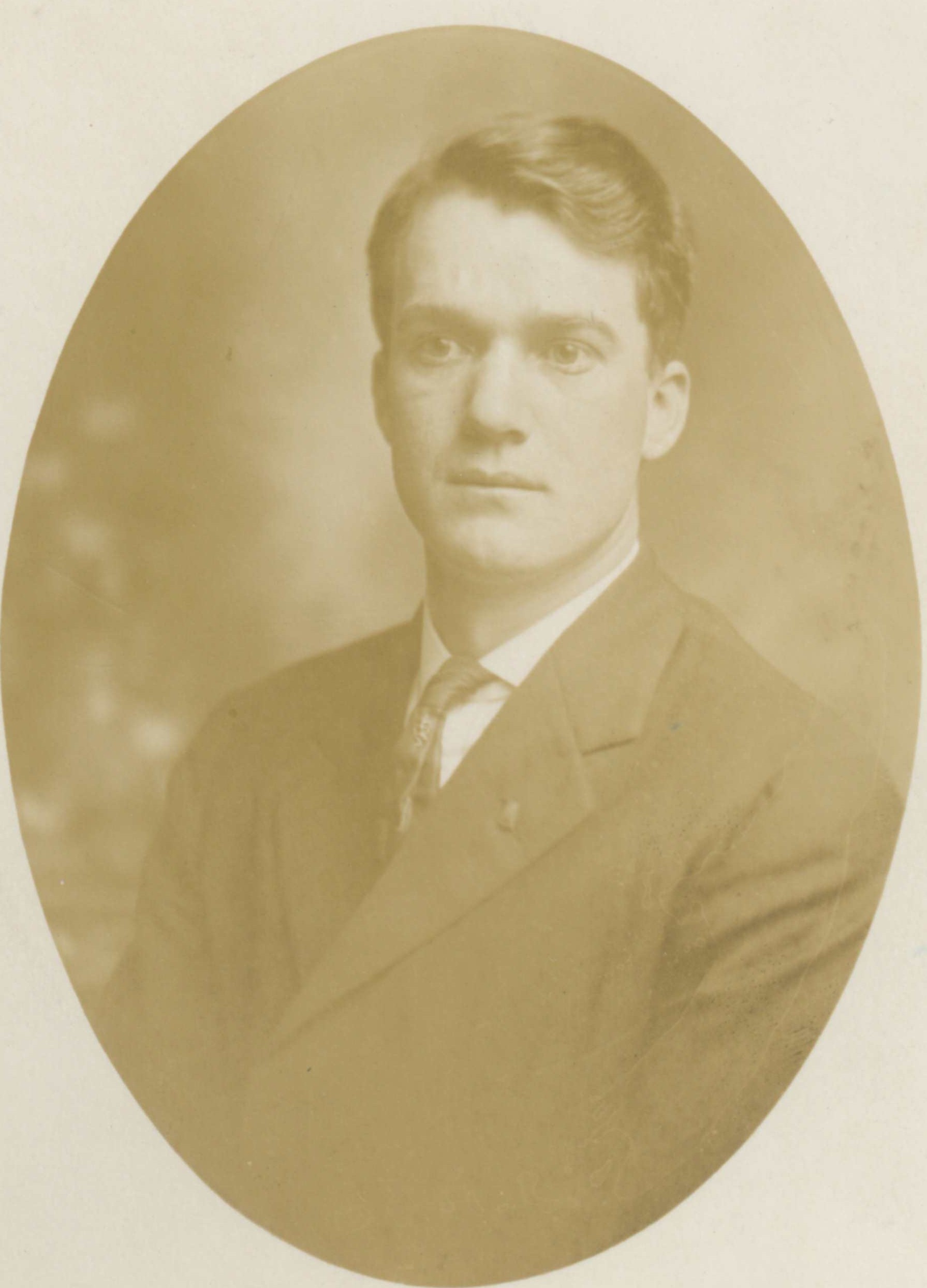
Here is a photograph of James Sharp. This is another of the photographs I have that I wish to make available to others.
James Sharp was born 7 January 1840 in Misson, Nottinghamshire, England to Thomas Sharp and Elizabeth Cartwright. I wrote about his parents, the family’s conversion to the LDS faith, and the trip to America in his brother’s short biography, Sharp-Bailey Wedding.
Siblings William and Isabella continued west with a LDS wagon train and James stayed behind with his sister Elizabeth in St Louis. (Read more about Elizabeth here.) James and Elizabeth did not join the LDS faith with their mother (Elizabeth), William, and Isabella.
James married Eudora Elvira Mann 3 March 1863 in Nashville, Davidson, Tennessee. Eudora “Dora” was born 1 May 1845 in Nashville. We do not know much of the life story, so how he met Dora and married her in Nashville we may never know. The two made their home in St. Louis though. James worked as a pork packer and initially started out in business with Patrick Muldoon around 1870. Here is the run down of the St. Louis directories.
1869 [FHL #980635] James Sharp with Muldoon and Sharp at 1612 Biddle.
1870 [Gould’s p. 797] shows the same.
1871 [Gould’s p. 601] the same, but also lists Sharp, James pork packer r[esident?] at 1119 N 17th. {FHL #980,636]
1872 shows Muldoon and Sharp at 1015 N 17th [N 17th goes from 1701 Market North to Angelica.]
1875 [p. 1171] Muldoon and Sharp, Pork Packers and Provision Dealers, 904 B’way.
1885 Sharp, James, Muldoon and Sharp 904 to 912 S 2d, r 2715 Mills. [There are now 7 pork packers listed, only 1 in 1875.]
1887, James C. Sharp is listed as a clerk at Muldoon and Sharp.
1888 is Sharp, James and Co., same address, te no. 2208.
1890 James Sharp and Co. now includes Sharp, James C. as cashier and Sharp,George as Clerk. All 3 at 3641 Finney Ave.
1895 Shows both James Sharp and James C. Sharp as packers, George W. Sharp as Manager and William M. Sharp as Clerk at James Sharp and Co., 904 S 2d. James C. now resides at 4354 Morgan, the other 3 still at 3641 Finney.
1896 and 1897 now show William M. as manager and George W. as supt.; James and James C. simply identifed as with Co.1898 directory is missing.
1899 Company not listed. James C. (same address) is broker; George W. is just listed, at 1811 Laflin; William M. and James are just listed, still living at 3641 Finney.
1900 James C. at Sharp and Westcott; George W., clerk at Manewal Lange Bakery, 3204 Morgan; William M. litho.,at home.
1901 James Sharp now resident at 4573 Page boul; James C. com. mer. 736 Bayard av; George W. still clerk at Manewal- Lange Bakery, resident at 3009 Easton. [William M. not listed]
1902 James C. mngr. Sharp Mnfg Co., 411 Fullerton bldg., r. 736 Bayard av;.George W. and William M. are both clerks, rresiding at 3156 Easton av.
1903 James still at 4573 Page boulevard; James C., ins., 721 Olive, r. 3732 Washington boul.
As you can probably tell from the information above, James put his children to work and included them in the business. James retired at 55 and turned the business over to his boys. By 1898 they had run the business in the ground, supposedly because of their like for being horsey (horse-racing).
James and Dora had 5 children.
Eudora Mann Sharp born 13 January 1864 and died 11 January 1938, both in St. Louis. She married Alexander A Bryden, who worked in the coal business.
Ida Lee Sharp born 8 October 1866 and died 23 December 1946, both in St. Louis. She was unmarried. She worked as a school teacher.
James Carlisle Sharp born 26 December 1868 in St. Louis and died 4 November 1952 in Valley Park, St. Louis, Missouri. He married Emma Manewal (and divorced) and Madeline C Grimm. He had a department store. Emma was the daughter of August Manewal, one of the confederation of bakers who formed the National Biscuit Company (NABISCO).
George W Sharp born 10 March 1871 in St. Louis and died in 1964 in Sand Springs, Tulsa, Oklahoma. Apparently he married a lady named Effie Olive, but we know nothing more about his life or her. He was badly disfigured after being kicked in the head by a horse at 3 years old.
William Muldoon Sharp born 4 October 1874 and died 24 March 1915, both in St. Louis. He also remained unmarried.
Eudora died 3 March 1894 of cerebral meningitis. She was listed as living at 3641 Finney Avenue. She was buried in the Bellefontaine Cemetery 5 March 1894.
James died at 68 years old on 24 February 1908 at the Bryden residence at 4573 Page Boulevard. He fell from a Page Avenue car (assuming trolley car) according to his obituary. He was on his way home from a lodge meeting when he stepped from a car in motion. He was injured in the fall on the 22nd, not clear how, and died on the 24th. He was a founder of St. George’s society and served as a treasurer for several year. He was also a member of the Merchants’ Exchange and a veteran member of the St. Louis Lodge No. 5, I.O.O.F. He was buried on the 24th, also at Bellefontaine Cemetery.

















 Sagacity