History of Mary Magdalina Wanner Wagstaff

“Our Mother”

by Edna Leona Wagstaff Owen

Our mother, Mary Magdalena Wanner was born September 12, 1873 at Atzenweiler, Neckarkreis, Wuerttemberg. Wuerttemberg is one of the States in the divided German nation.

Mother is a daughter of Johann Georg Wanner and Anna Maria Schmid, and was given the name of Maria Magdalina. After the family came to the United States, mother adopted the American spelling of Mary Magdalina which she used the remainder of her life.
Our mother and her brothers and sisters were very fortunate to have parents who were honorable, upright hard working people who loved their children and worked very hard to see that they got the very best they could. Both parents believed in God and had a strong faith that their prayers would be answered in providing them with the blessings they needed. They belonged to the Luteran Church, and tried to teach their children correct principles.

Mother was the 3rd child in a family of 10 children – 5 boys and 5 girls; two of her brothers died at an early age in Germany.

Between the ages of 7 and 8, mother took care of her younger brothers and sisters while her mother and father were working in the fields. She was told to get the children to sleep; and when they woke up she would bring them to the fields to their parents. She was anxious for the children to settle down and get to sleep, so she would hold her finger tips over their eye lids thinking this would make them go to sleep but when she took her fingers off they would be wide awake.

Mother started school at the age of 8 years and graduated when she was 14. She did not go to school after that.

From the age of 10 until 13 she herded cows on a big hillside. The family lived on a farm and everyone had to help. Their father was gone a great deal of the time as a road overseer, or working in the Black Forest to make a little extra money to help increase the family income. Mother had to do a lot of hard work such as getting wood from the canyon to use for fuel to heat the house and to cook with.

Another of her jobs was to lead the cows that pulled the plow. She also piled hay and gathered grain in the fields. Most of the work was done by hand and much of the time the hay was piled on the fence so it would dry.

A 9 years of age she learned to knit and she became very proficient in this art. She knitted all her life supplying her own family with socks, etc. She knitted scarfs, caps, socks and sweaters for the soldiers during both World War 1 and 2. Among the things she knitted was a beautiful white shawl for my first baby. She also knitted two choice sweaters for my husband, one of which he has been wearing on many occasions for over 40 years and it is still in good condition. He still uses it and it has been very useful to him throughout these 40 years.

When she was 11 years of age, she could not walk for a time because of a problem with her leg. At this time, it was necessary that she be put in a baby buggy and pushed 5 or 6 miles to see the doctor.

She went to the city of Ravensburg to work when she was 15 years of age. She took care of children, did washings, ironing, helped with the cooking as well as other household tasks. While working at this job, mother developed a sore on her hand which required that she be hospitalized for two or three weeks.

During the year 1891, mother’s father brought some missionaries to their home. These missionaries were representing the Church of Jesus Christ of Latter-day Saints. These missionaries were Jacob Zollinger from Providence, Utah, John Hassenfritz of the Bear Lake area, and John Federley of Salt Lake City, Utah. Incidentally, I got to meet Jacob Zollinger, a very fine man. After my marriage, whenever I sent to the Temple, Brother Zollinger was there.

After the missionaries had been teaching them the gospel for some time, the family became very much interested and decided they would like to join the church. Some of the family that were old enough were baptized in October, 1891, and became members of the only True Church. This brought peace to their minds and joy to their hearts. It didn’t take long for this family to decide that they wanted to leave their native land and come to the United States where they could have religious freedom and better opportunities for their family to provide for their wants and needs. Not so long after this, the oldest son came to this country with some returning missionaries. This was Uncle George.

In the spring of 1893 her mother and father made preparations to take their family to America. When all was ready, they said good-bye to their relatives, friends, their home and native land.

They rode the train for one day after which they took a boat up the Rhine River. After being on the boat for 3 or 4 days, they took the train for another day which took them to the North Sea. At the north sea they got on a large boat to go to Liverpool, England. The Sea was very rough and stormy. It took them another day to reach Liverpool where they boarded a big ship and sailed for America. They were on the ocean about two weeks before they reached New York where they stayed for two or three days. Then they took the train and started across the continent for Salt Lake City, Utah. They stopped at Chicago, Illinois for one day and one night; then continued on their way. After they got to Salt Lake City, they continued on their journey to Franklin, Idaho, arriving there the 18th June 1893. After their long hard tedious journey, they were all happy and anxious to get settled in their newly adopted homeland.

They were met by their brother George and Fred Nuffer with a team of horses and a wagon. They also brought a buggy with horses. They went to Fred Nuffer’s place in Cub River where her brother George had been working. They stayed at Nuffer’s place about one week. Her father soon started to look for a place to buy and settle down. He decided to take a trip over to the Bear Lake side to see what he could find. Grandpa took mother with him on this trip. They walked across mountains and had to cross the Cub River which was very swift and difficult for them to wade across. They spent one miserable night in the mountains listening to the bears growling. They saved some of their bread to give the bears in case they bothered them.

The next Sunday after arriving in Franklin, they all went to church in Glendale and had their membership records moved to that ward. The Ward Clerk in Glendale was William Addison Wagstaff who later became mother’s husband. Grandpa Wanner soon bought the home and farm of John Nuffer in Glendale. Grandpa and Grandma lived there a number of years and then sold it to their son Fred. Later he sold it to his son Bertus.

In a short time Mrs. Fred Nuffer got mother a job in Logan, Utah, doing house work for a lady by the name of Robin. Mother could not speak the English language at this time but with the help of this good family she was able to understand and speak a little.

Mother worked for the Robin’s until 1894, at which time she went to work for a family by the name of Card. She worked at Card’s about six months. She then returned to her home in Glendale for awhile. After a short rest, she went to work at the Section House in Preston, Idaho, helping a lady cook.

In April 1895, she went to General Conference of The Church in Salt Lake City, Utah. While she was there, she found a job doing housework for a banker by the name of Shutler (we are not sure of the spelling). Mother stayed at this place until November and then went home again for a while. Some time later mother worked for some people in Preston, Idaho, by the name of Hale. In 1896 mother returned to Logan and worked for a family by the name of Bishop.

In the spring of 1896 her mother wrote her and told her that her sister Louise was going to be the “Queen of May Day” celebration to be held in Glendale and she would like her to come home and be there on this occasion. Mother decided it would be fun and decided to be there.

On the day of the celebration mother accepted the invitation of William Addison Wagstaff to have lunch with him which seems to have been a big turning point in mother’s life. After they had their lunch they went for a stroll together. It appears that it was at this time that he proposed marriage to mother.

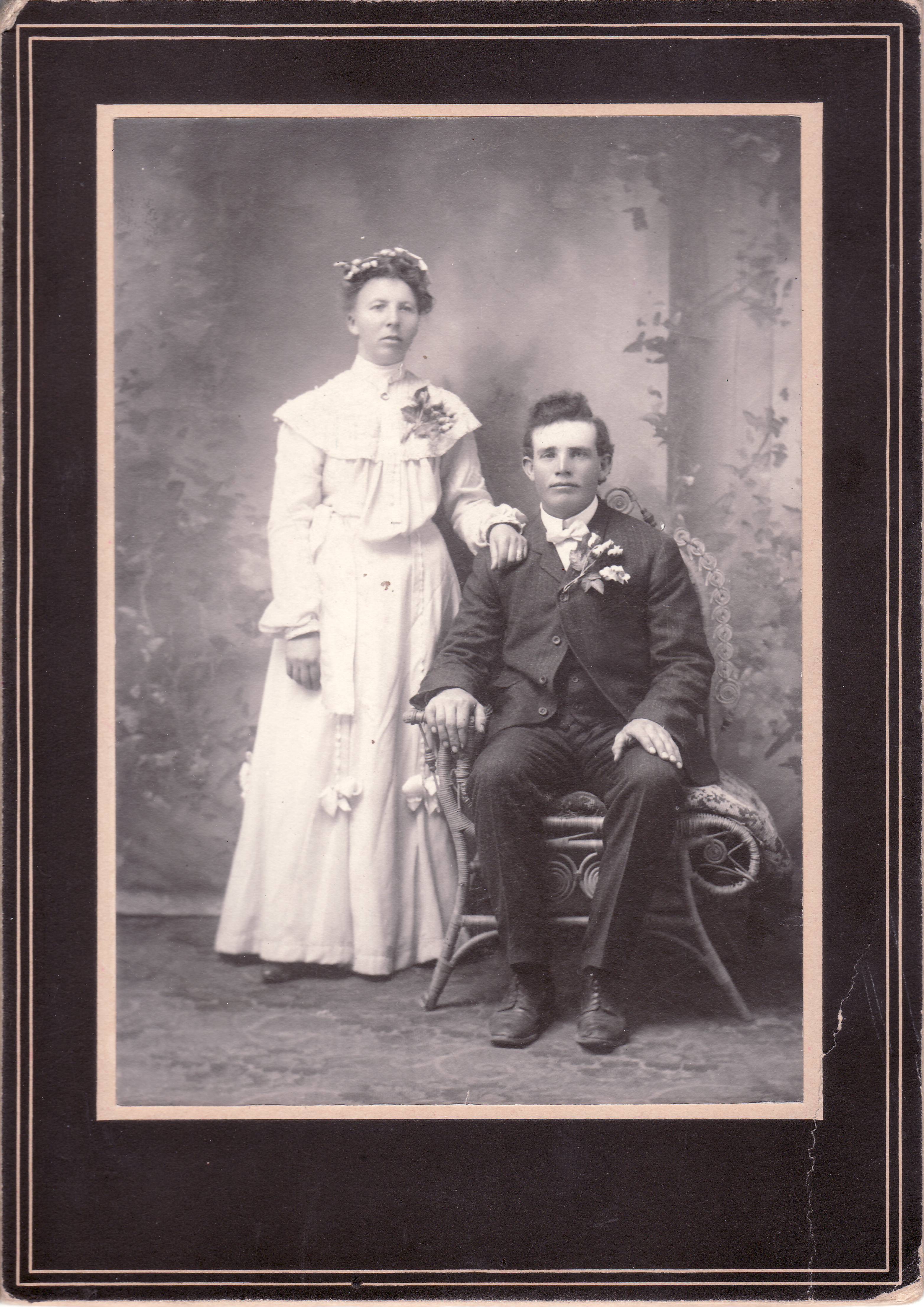
In a few days mother returned to her job in Logan, Utah. On 11 June 1896 W. A. took Mary’s sister Louise to Logan to take over her job so she could come back to Glendale to make preparations to be married. The next day they went to Preston to pick out material for her wedding dress and selected a cream cashmere trimmed in white silk. Her Tiara had orange blossoms on it. Looking at her picture now I think it must have been just beautiful.

On 16 June W. A. and Mary went to Logan with a wagon load of grain to sell for her father. After they got to Logan they purchased a plain yellow gold wedding band. She stayed with her sister Louise that night and on Wednesday 17 June 1896, W. A. and Mary were married for time and eternity in the Logan Temple by Marriner W. Merrill, The President of the Logan Temple. They spent their wedding night in Logan and returned to Glendale the next day, June 18th. That night Mary’s father and mother gave them a wedding supper at their home.
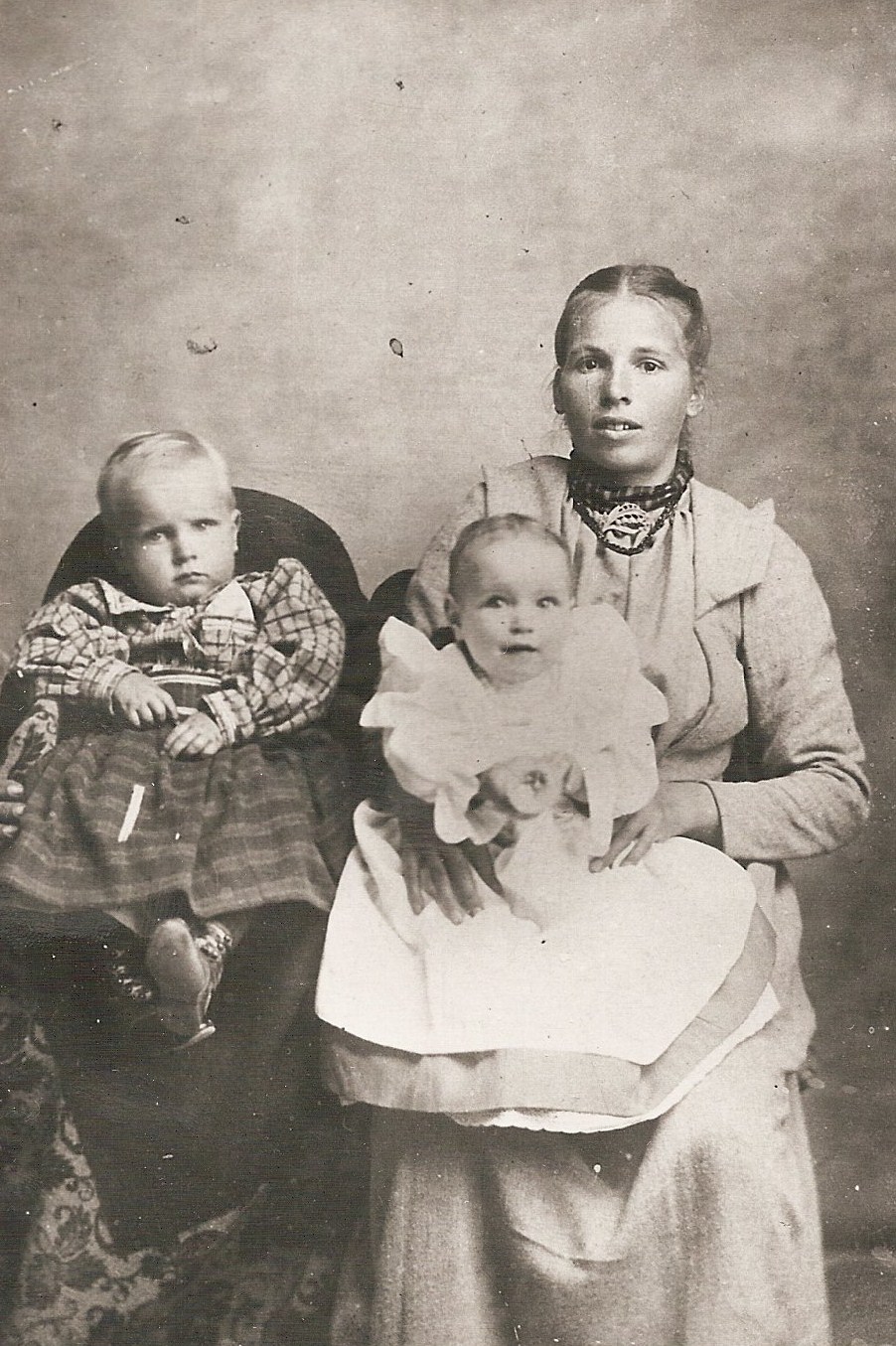
James, Annie, and Mary Wanner Wagstaff

Then mother went to live in the home where her husband and his mother resided. It was a log house with a dirt roof. This home was located about 5 miles North East of Preston, Idaho, in an area that is commonly called Glendale Flat. Mother took charge of the house and cared for her mother-in-law who had very serious leg trouble.

Right from the start mother worked side by side with her husband getting in the hay and grain. All the water for washing, bathing, drinking, etc. had to be hauled as they had no water on their place. Their cattle were driven to Worm Creek to drink. This Creek was about a mile from their home.

26 January 1897 mother’s first child was born, a tiny premature son. He was named George William. Our Dad held this tiny infant on his lap and fed it with a medicine dropper. He did everything he could to save his life but he passed away after 9 days.

Their second son named James Addison was born 24 June 1898; and 28 December 1899 her first baby girl, Annie Eliza was born. Our Dad and Mom and Dad’s mother were so very happy to have a son and a daughter to bless their home.
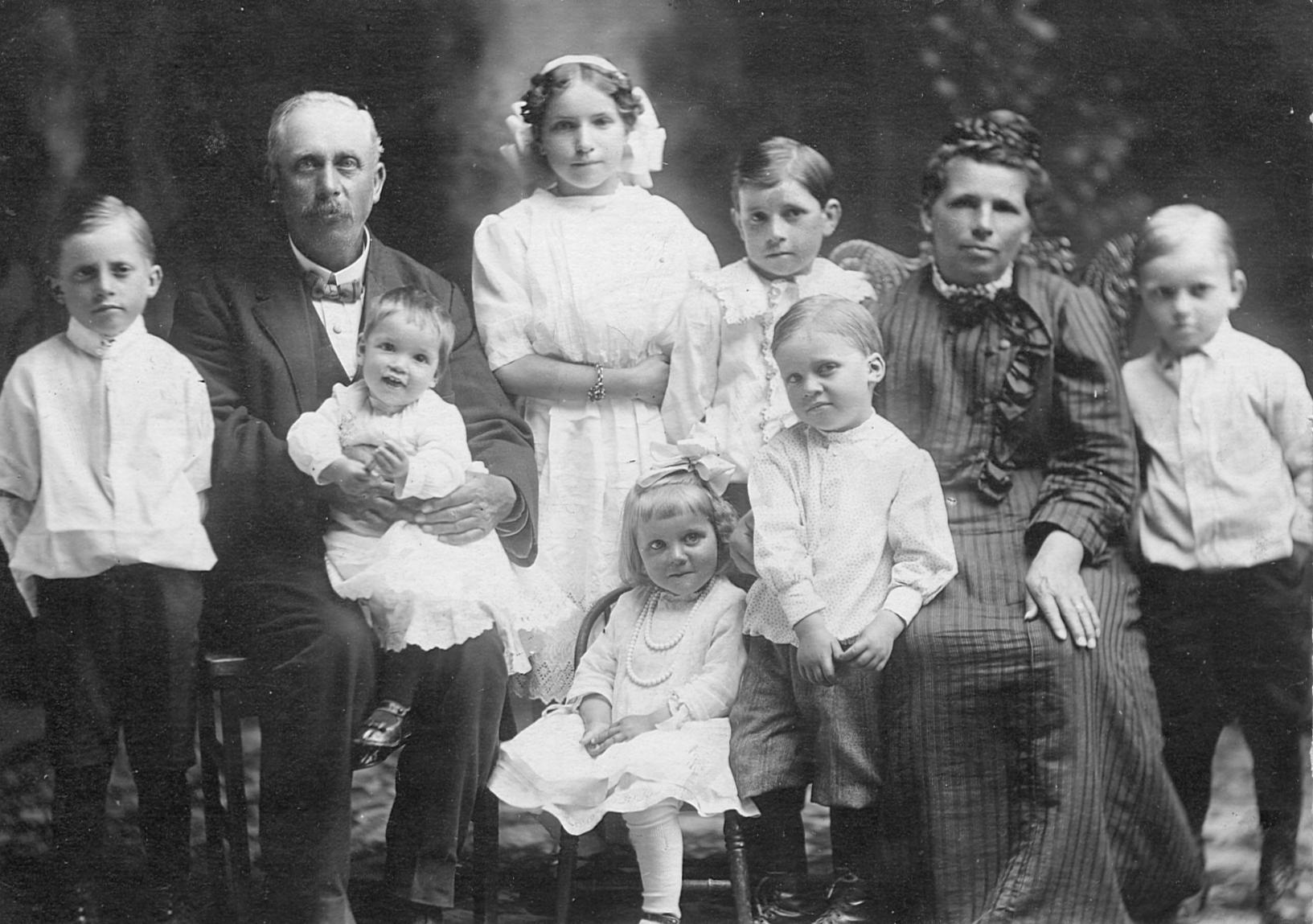
Back row: Willard, William, Annie, Parley, Maria, Jesse. Front row: Elsie, Edna, Herbert.

During the early part of mother’s married life, she worked in the Relief Society. Mother loved working in the Relief Society and did her part to make it a success.

In 1900 they moved to a two-room log house with a dirt roof. This house was located one mile from their first home. This move was made so they could be where there was water. This was a big help as they now had water from a well for culinary use as well as other things. Here they were able to have a nice garden with currants, both black and red, as well as gooseberries and raspberries. They could also have shade trees and fruit trees. I am sure this was a great blessing to them.

August 28, 1901, a son Wilford John was born. This made four children for them including the one who died. Dad and Mother were happy to have a family and Dad’s mother was thrilled to think she was now getting some grandchildren. Our Dad’s mother had a very sad time raising her family; our Dad being the only one of 4 children who lived to maturity.

Our Mother and Dad gave Dad’s mother kind and loving care for many years. She continued to have poor health. She was especially afflicted with varicose veins. Those finally turned into ulcers on her legs which had to be bandaged. One of their old neighbors has told us that she had her legs bandaged each day for over 35 years. She finally passed away in the early morning hours of December 2, 1902, and was buried in the cemetery at Glendale, Oneida County, Idaho.

The 9th of April 1903 Parley Leroy was born; and on 23 June 1903, our 22 months old brother Wilford John was drowned in a ditch just north of the house. Many people came from all around to help them at this sorrowful time in their life.

Children continued to come to bless this humble home and 3 March 1905 Willard Lesley was born. On 9 January 1907 Jesse Oleen was born. The 11th of November 1908 Herbert Spencer was born. Mother had now given birth to 7 sons and 1 daughter. She was very busy caring for them, her husband and home, as well as participating in church activities.

During the summer of 1909, they built a new house which had two rooms down and two rooms upstairs. It had a singled roof and later on was pebble-dashed.

It was in this home on a beautiful Sunday morning, 10 July 1910, the next child, a girl with hazel eyes and blond hair Edna Leona was born. The family as well as the Glendale Ward were delighted to see this baby girl come to the home where there were 7 sons and only 1 girl. 7th of August 1912 another daughter, Elsie Magdalina came to bless this home.

On the 19th of March 1913, sorry struck this home when their son James who had been ill a lot of his life passed away and was buried in the Glendale Cemetery.

On the 25 of March 1913 Mother had a patriarchal blessing by Patriarch Wm. Daines. This was a big comfort and a joy to Mother in later years.

The 8th of July 1915 Mother had her last child, a son she named Albert Wanner. Mother had a very difficult time at this birth and she was ill a long time after.

After Mother’s parents moved to Logan in 1910, she frequently went to visit them and did Temple work.

Very often Dad and Mom would drive their team and wagon and later a buggy to Preston; leave them there in the tie-yard and catch the U.I.C. to Logan to do two sessions at the Temple; then back to Preston to get their team; drive home about 4 miles. After Mother was married, she took every opportunity that came her way to go to the Temple. She loved to do this and it brought her great joy to be engaged in the Lord’s work.

Mother loved the outdoors and kept a beautiful garden and flowers; tended chickens and worked with her husband and children in the fields.

September 1918 Dad and Mom took their 3 daughters and youngest son Albert to Brigham City, Utah on the U.I.C. for Peach Day. They all had a delightful time, and enjoyed the trip very much.

During the summer of 1919 Dad and Mom and their 3 daughters and Albert again went on a visit. This tie to see Mother’s sister Pauline, who lived in Gentile Valley. They went in the white top buggy, and followed the road through the Bear Rivers narrows. This was a very narrow road and there was only a few places where people with teams could pass. Our Mother was very nervous going through the narrows. Dangerous things always made Mother worried and nervous. Mother was frightened when thunder and lightning storms were close to us, where she could see and hear it.

September 1919 Dad and Mother again took their 3 daughters and baby son on a trip. This time they took the train and went to see and learn more about where our Dad and lived and worked. They first went to Evanston, Wyoming, then Almy, Croydon and Ogden. They visited with many relatives and friends in Evanston, Almy and Croydon. Dad lived at both Almy and Croydon before coming to Idaho in 1884. For many years Dad wanted to take Mother on this trip to show her where he had lived and to meet some of his relatives and friends he had made before going to Idaho. This trip was the happy fulfillment of that wish.

Ogden, Utah was our last stop and while there Dad and Mother purchased the farm and home of his cousin and her husband Albert Phipps. This farm is located in West Weber, about five miles west of Ogden. It is an 80-acre irrigated farm. Less than half of which turned out to be good farm land.

Soon after they returned home, the news spread around that the Wagstaff family would soon be moving. Many friends and neighbors came to help in preparation for the move.

Before leaving Glendale, Mother’s good friend and neighbor Elizabeth Owen gave our family a nice going away party. Also the Glendale Ward did likewise and gave the folks a rocking chair as a token of their love and appreciation. After my brother Herbert got married, Mother gave the chair to him.

Mother had now lived in Glendale for over 25 years. She had many friends and neighbors that she loved and appreciated so much. In some ways she did not like to leave all they had worked so hard and sacrificed so much to get. Mother loved her home which had 3 new rooms added. They were now quite comfortable.

I’m sure Dad and Mother had given great thought to this venture before making the final decision to go away and start over in a strange kind of farming and among people they did not know. On the other hand they had become convinced that the move would provide better opportunities for their children. They did have 8 living children they loved with all their heart and soul. They also had great love and respect for each other. These things together with their strong testimony that Heavenly Father would bless them if they did what was right. They put their trust in God and bravely faced the future in their new environment. Little did they realize just what trials they would have to go through — even before they completely settled in their new home.

So it was in October 1919, Dad, Parley and Willard headed from Glendale to Ogden, Utah, with teams, wagons, and white top buggy loaded with family possessions. Jesse and Herbert stayed home and did the milking and tended animals. Parley and Willard stayed in Ogden, and Dad came back to Preston on U.I.C. With the help of faithful neighbors, the rest of the family possessions, cattle, chickens and furniture were put on the freight train and Dad went with them on to Ogden. Mom, us girls, Jesse, Herbert and Albert went on U.I.C. Little did he realize that when he arrived in Ogden, the officials would not let him take his animals home but quarantined them. It was a great shock to Dad when he had to pay over $1,000.00 for feed and care before he could get his animals. It is laughable now, but it wasn’t then when somehow the chickens got loose and were running all over the railroad yard with people trying to catch them. It must have been quite a sight to watch people scrambling around chasing chickens.

Our Dad left a paper in his own hand writing describing a few of the experiences our family had after we got to Ogden. The paper stats that in November 1919, the next month after we got there, Annie and Elsie came down with the Small Pox. Shortly after all the other children also came down. Dad and Mother had all 8 of us in one room and gave us patient loving care. I am sure it taxed their strength and was a great cause for worry and anxiety for them.

We had scarcely got over the Small Pox when all the children, Mother and Dad got the Influenza. We were a very sick group and our Mother was especially bad as she had Asthma along with the flu. Dad also got it but stayed up on his feet, caring for the rest of us and doing the chores. Our sister Annie and Anna Gregersen were working at a cafe in Ogden and roomed together and both of them had the flu. Our Dad went over to Ogden in the buggy every other day to take care of Annie and Anna and take them food. It became evident to our Dad that Anna was getting worse so he sent word for her parents to come. Annie and Anna were great friends and it was a great loss to Annie when her dear friend passed away 14 February 1920. I sometimes wonder how our Dad held up to the terrible work load and responsibility that was placed upon him at this time. Mother was worried about our Dad through all this.

When we first got to Ogden, we joined the Wilson Ward and Mother was put in as Relief Society Teacher. In August 1921 we joined the West Weber Ward. Before we joined the West Weber Ward, the Wilson Ward gave Mother a party and a beautiful bouquet of flowers. Mother was soon put in as a Relief Society Teacher. She continued to be a teacher until she moved to Ogden in 1935.

In June 1921 Mother and her three daughters went on a trip to Logan, Preston, Glendale and McCammon. In McCammon we visited with mother’s brother Gottlob and family. In Glendale we visited with old friends and neighbors and in Logan with Mother’s sisters and her parents.

In December 1921 Mother’s sister Pauline passed away and left her little family without a mother.

In September 1922 Uncle Wills family all got Typhoid Fever. Our Mother believed in being her brothers keeper so she took this family into one room of her home and nursed them back to health, except Annie who was in the hospital. After they got over this terrible disease, Mother continued to take care of the baby boy for some time.

In the ensuing years Mother continued her activities in taking care of her family and supported her husband in his work, church, etc. Mother loved to have chickens and she usually had a flock — this enterprise besides furnishing eggs and meat for her family helped out in providing extra income. She was active in Relief Society and regular in her attendance at Church and in paying her dues.

In January 1931 her daughters Edna and Annie went to Logan to attend the Utah State Agricultural College. This meant that Dad and Mom were alone except for Elsie, Albert, Herbert and Jesse who had come home again. That winter they did considerable visiting of friends and neighbors and Dad helped them with their genealogy. It was during the winter and spring that three old friends passed away and mother and dad attended their funerals — John Dobbs in Logan, Henry D Auger in Lewiston, and Mother’s dear friend and neighbor in Glendale, Elizabeth Owen.
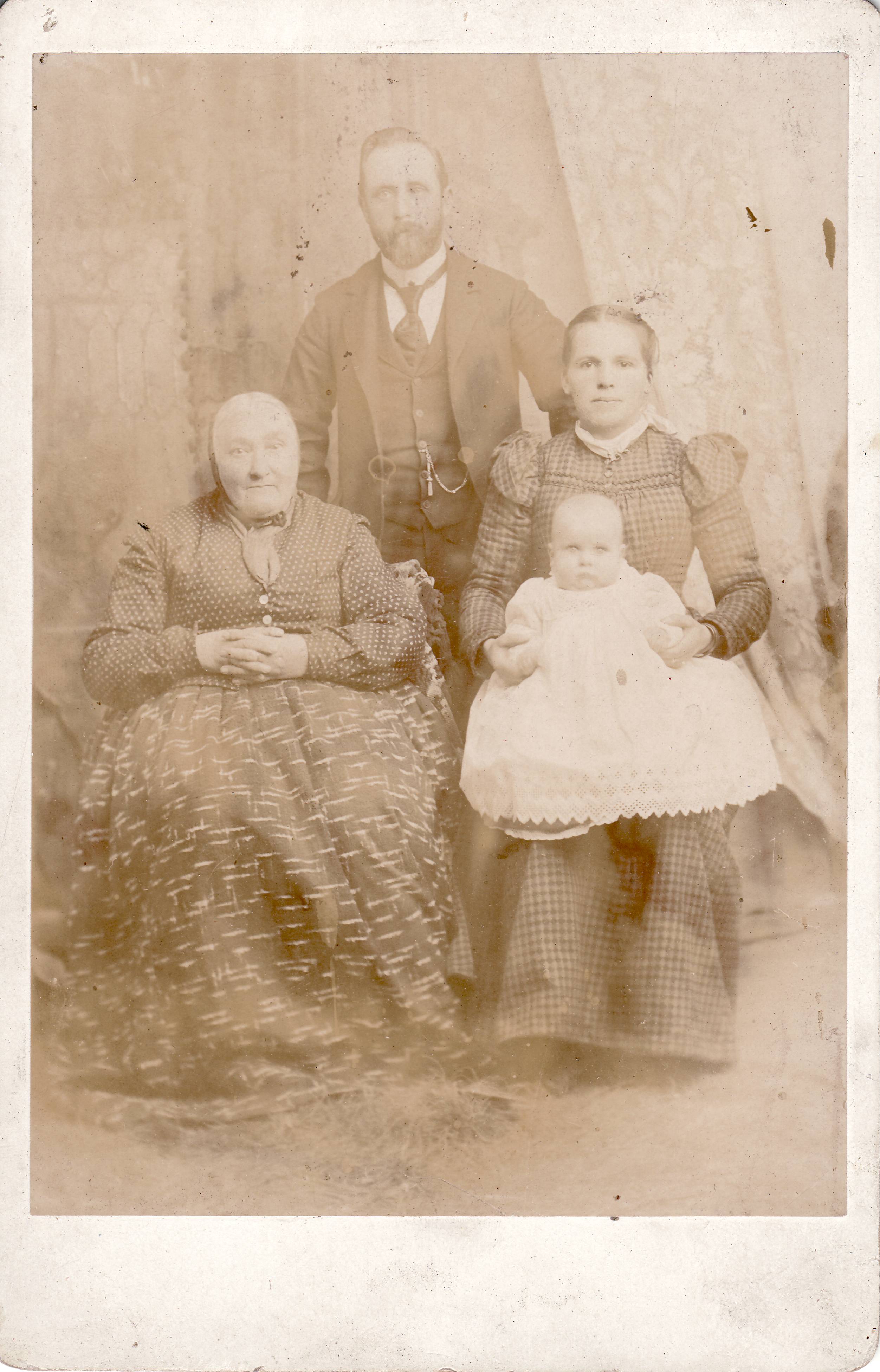
Mary Allsop Wagstaff (1826-1902) with William and Mary.

Little did Mother realize at the time that it would be less than a month when she would lose her devouted companion. Her husband had an operation for stomach ulcers in the Dee Hospital in Ogden the 29 May 1931 and passed away from Post Operative Pneumonia on 31 May. This was a terrible shock to Mother and she grieved very much. There was nothing for her to do except to go on alone without her companion. Life was hard for Mother at this time but she had all the loyal support her sons and daughters could give her. They all loved their Mother and did what they could do lighten the burden. Mother grieved long and hard over the loss of her dear husband but in time found her way to continue life and plan for the future.

Mother stayed on the farm and with the help of her children operated the farm the best they could. THe depression was on in full force and money was hard to come by. Through sheer frugality and wise management, they started to come out on top.

In January 1935, Mother, Annie and Elsie said good-bye to the farm and moved into Ogden. At first they moved into a rented house. They lived in two different rented houses.

In May 1939 Mother purchased a home at 2069 Jackson Ave in Ogden and this was her last home. Mother was comfortable in this home and she enjoyed having a little leisure time in which she could enjoy her flowers and listen to her favorite programs on the radio — Myrt and Marge was one of her specials — it all seemed so real to Mother.

20 December 1940 Mother’s oldest daughter Annie Eliza passed away. I am sure Mother missed Annie as Annie had been confined to the home with heart trouble for several years, during which time they had a lot of opportunity to enjoy each other.

In September 1941 Mother was honored on her birthday when her family gave her a dinner party at which time many of her children and grandchildren were present and Mother enjoyed it very much.

September 1943 an open house was held for her 70th birthday when many of her friends and relatives came.

April 1942 Mother had a serious operation from which she seemed to make a good recovery. FOr quite a few years after this Mother appeared to be in reasonably good health.

Time moved on for Mother as it does for us all. She had seen two world wars in which the people of her home land were heavily involved. I am sure Mother realized that many of her relatives were in action. She said little but seemed to think a lot about it. She had witnesses great changes in the lives of people including transportation, cars and trucks; telephones were beginning to gain in popularity and the radio was in almost every home. It was a thrill to Mother when she got her refrigerator. Tractors were in common use in farming and much of the back-breaking work was now done with machinery.

July 31, 1952 Mother had a mild stroke but was never confined to her bed completely. It did make a change in her life and I think she realized it. 23 of October 1952 after 3 months illness, Mother passed away at her home.

She had always been a hard working, devoted wife and Mother. She served as a Relief Society teacher for over 50 years. She paid her tithing, fast offerings and other donations. She kept her love for her family and her faith in God to the very end.

Her funeral was held 27 October at the Lindquist & Sons Mortuary in Ogden, Utah. It was a lovely funeral with lots of flowers and many friends and relatives attended. She was buried beside her dear husband in the cemetery at West Weber, Weber County, Utah.

THis little history of Mother was put together many years ago by her 3 daughters with her help in relating facts to us. Elsie brought it up to the time of Mother’s death.

I feel there is much more that could and should be said but I am sure each of her children have their own personal remembrances, as well as some of the grandchildren, but I would just like to add a little more that I don’t think has been mentioned.

I don’t remember a time when Mother did not have a lot of beautiful flowers. Geraniums that blossomed all winter long. She had morning glories, pansies, sweat peas, portulacas, pinks and others to mention a few.

Mother always made her laundry soap which was so good to use in cleaning the farm work clothes and so beautiful and white. She made many batches of soap for each of her married children as well as some of her neighbors.

When Dad and Mother killed a pig for home use, Mother worked so hard helping Dad cut it up, cure it and make delicious link sausages; and the head cheese she made was the best. There was always a piece of pork given to the neighbors.

She always churned her butter while on the farm and it was very good butter.

After we went to Ogden, Mother had a hot bed where she raised tomato and cabbage plants for themselves and others to plan in their fields.

Mother was a good cook and made the best bread, pies, rice pudding and soups. Oh! they were so good. When we had the threshers they always liked to be at our place for meals as they enjoyed the delicious meals Mother put on.

She loved to have her neighbors, friends and married children drop in for a good meal — and no one ever dropped in unexpected but that they were treated to a real meal or a snack.

After we moved to Ogden, it was the joy of her life to return to Preston to visit her dear friends, relatives and neighbors, and Dad somehow always found the necessary money so she could do that.

Mother was always clean and neat when she left home to go any place. She had beautiful long black hair that stayed dark until her death. She had a unique way of putting up her hair — hair styles changed but Mother’s never did. Many people commented on her lovely hair and the unique way she fixed it. Mother also had beautiful hats which she loved very much.

I would like to relate a little incident that happened in the summer of 1918. It was when we had a total eclipse of the sun. We did not have a radio or television and the paper hadn’t come. I guess Mother did not know the eclipse was coming. Dad had gone to town. I don’t know where the others were but Elsie, Albert, Jess and I were home with Mother. It started to get dark, then darker and darker. She became very excited and thought the end of the world was coming. She dashed out to gather the precious eggs — it was totally dark in the cop and the chickens had gone to roost. Mother was so relieved when it all passed over and the sun came out and best of all Dad came home.

One day during World War I, Dad was sitting at the breakfast table reading the paper. We knew, of course, about the German submarines sinking many of our food ships. Dad said rather nonchalantly, “Well, some more sugar has been sunk.” Mother became very excited and said, “Where?” Dad said, “In my postum,” and let out a roar.

Mother suffered with asthma most of her adult life and we all did everything we could to help out when she had a bad attack. Many mornings I remember Dad calling to us, “Come on and get up. Mother is sick.” We all rallied around and kept things going while she was down. If someone lit a match and let it burn, it would always bring on an attack of asthma. Many times when Mother was fighting for her breath we would all be frightened and I remember one time I ran to Bishop Ed. Bingham’s place to get him to come and administer to her.

Dad was always so kind, considerate and helpful to her especially when she was will; and her children were also.

Mother had a unique laugh and when something struck her as funny, she could really laugh. In a crowd you could always pick out Mother’s laugh. Several years at the July 24th celebration in West Weber she took the prize for laughing the longest and hardest. One year the prize was a leg of lamb; another time a beautiful Jordinere.

I remember that Mother had a pet lamb she loved and took very good care of it. She went to Logan for a few days to visit her mother. She wrote a letter home to use in English, but as a joke also wrote a note in Germany. We could not read the note so took it to a neighbor lady who could read German. The note said “Be sure and take good care of my lamb.” We all got quite a thrill out of this.

It was important to our Mother and Dad to see to it that each of their children were baptized in the Logan Temple. All their children were baptized except the last two. 30 March 1915 Dad and Mother took Jesse to Logan with the horse and buggy so he could be baptized. Then they stayed at grandpa’s and grandma’s home one night. When they couldn’t go they sent the children with Annie on the U.I.C. electric train.

At a George Washington party in the Glendale Ward, Vern Nelson tells this story. Mother was sitting on the front bench and Vern had to recite a poem. It was

Of all the girls in this world,

I’d marry none for riches,

I’d marry one six inches tall,

So she couldn’t wear my britches.

Vern changed the poem to read necktie instead of britches. Everyone expected him to say britches. He said Mother started to laugh and he had never seen anyone laugh so hard in his life.

A few years ago Meda Nelson Robinson told me as long as she lives she will never forget the blue and white granite kettle Mother used to make sandwiches in for us kids to eat between Sunday School and Sacrament Meeting when there was a little recess. They were usually just break and butter or sometimes a little sugar sprinkled on them, and always a cub cake with little currants in. She said that when Mother got the kettle out, that she and some of the ward kids would sally up to Mother hoping for at least a cup cake. She said sure enough Mother always had plenty and she would always get one, and how good they were.

Mother was kind and compassionate and believed that true happiness in life comes from serving others. Her friends and neighbors were often beneficiaries of her goodness, and if there was a new baby or sickness or sorrow in a home, she always found time to put on a clean apron and take a loaf of fresh baked bread, a pie, or fresh berries or something from her garden to cheer them.

She never lost sight of the purpose of life and the reasons for coming to America.

She abhorred cruelty to animals or humans.

She always had little sayings to put over a point such as “If a string is in a knot, patience will untie it. Patience can do many things; have you ever tried it.”; or “If there is a will, there is a way”; or “If at first you don’t succeed, try, try, again.”

When Mother passed away, she did not leave many possessions and no riches; but she did leave a legacy far superior to earthly things, and I’m sure we as a family appreciated that.

Mother had her dub of joy but she also knew sorrow. As I have raised my family, we had our share of sickness, accidents and near deaths and it has made me think about Mother. She must have been in great anxiety and pain over the loss of three of her children before they reached maturity.

Dad and Mother really loved each other and were always happy with each other. Dad got so much joy out of buying her special little things when she was ill such as oranges, or a can of oysters, or a bottle of soda water. They worked together as a team in whatever they did. Whether it was in the garden, cutting and curing meat or whatever, they enjoyed being together. They both enjoyed going in a cafe and having a snack like a hot beef sandwich or root beer and a sweet roll.

Mother really suffered and grieved deeply over the loss of her husband. Dad was just 70 and Mother 57 at the time. Many times we have found Mother out back of the house crying as if her heart would break — many times she was heard to say “If only papa was here.”

Mother is long since gone, but those of us who remember have a MEMORY that is SWEET and LASTING.

The Personal Story of Louise S. Bodrero

Another history in the records of Golden Rulon Andra.

“(Elsie Wagstaff Coleman read this history of Aunt Louise at our Reunion 21 June 1980)

“(Louise Sophie Wanner was born March 30, 1879.) I was born in Gruenkraut Germany. I can remember as little kids we stayed home. When we were I guess seven years old, we had to go to the Catholic school. There were no other schools around in those days. My Mother and Father didn’t always live in Gruenkraut. My father, John George Wanner was born in Hildritzhausen, Wuerttemburg, Germany, on October 18, 1845. His father was Johann Friederich Wanner, and his mother was Anna Maria Marquardt. My mother Anna Maria Schmid was born January 21, 1849 in Holzgerlingen, Wuerttemburg, Germany. Her father was Jacob Friederich Schmid and her mother was Salome Notter. In 1870 my father went to Russia to fight in the war. My parents were married the 6th. of June 1870. My Father died February 16, 1922 in Logan, Utah. My mother died December 9, 1929 in Logan Utah. The last days of their lives they lived in the 4th. Ward, and they are buried in the Logan Cemetery. My brother John George and sister Christena were born in Holzgerlingen, and my brothers, Johannes, Johannes Friederich, Frederich, Gottlob, and sisters Mary Magdalina, Pauline and Wilhelmina were all born in Gruenkraut, Germany.

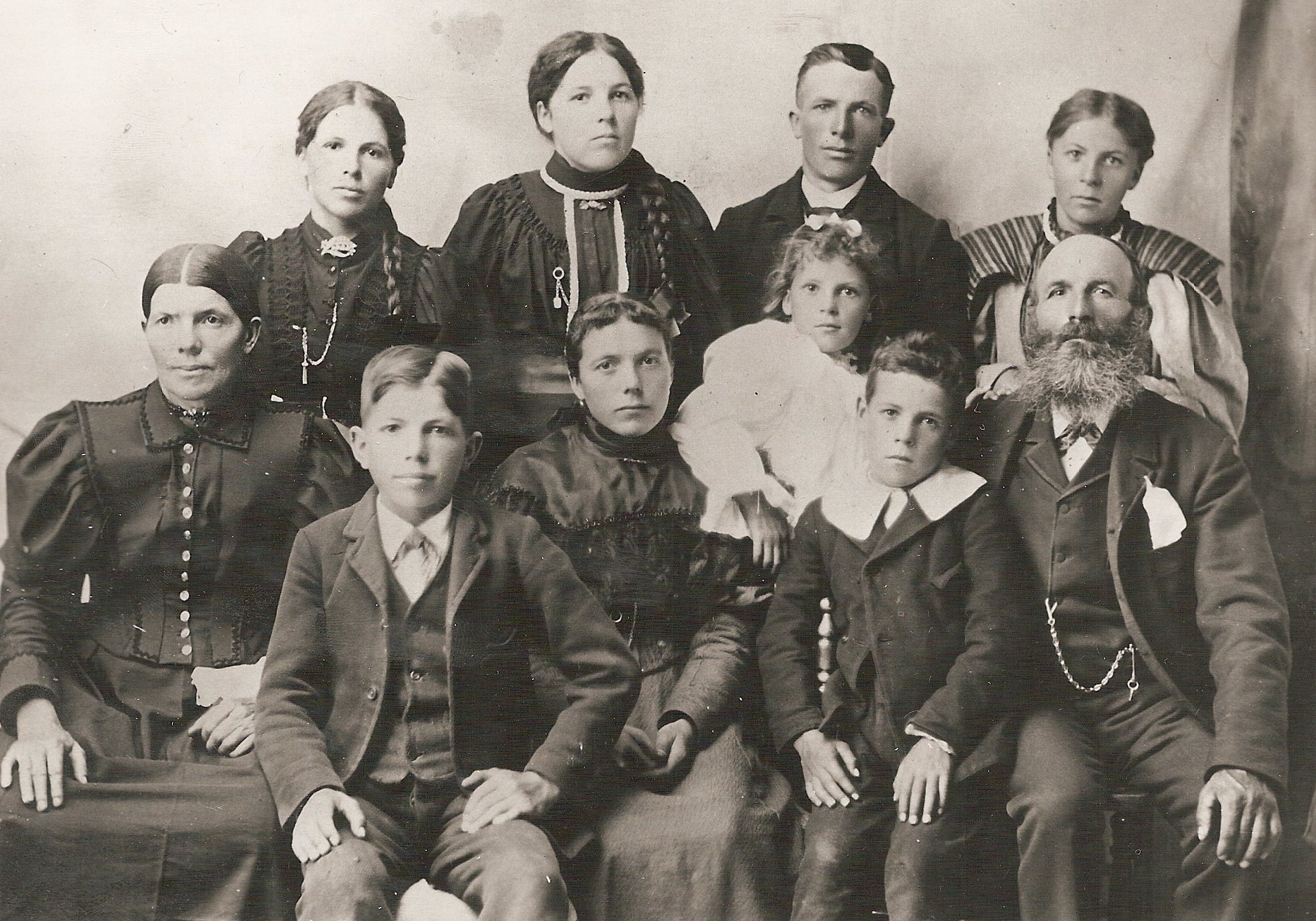
Wanner Family about 1895, back (l-r): Mary, Christine, George, and Pauline; front: Anna, Fred, Louisa, Wilhelmina, Gottlob, and John Wanner.

“To continue with my story- – we did so many things in life. First of all we were poor and had not much to live on. The folks had to move from Holzgerlingen to the new place in Gruenkraut. I remember we didn’t have much land. Father got a job working on the street. The grass grew high on the side of the road and we had to help gather the grass for the cows. We had to do this everyday before father went to work.

“We were poor in those days. We had to be up at 5 o’clock in the morning when we were big enough to work for other people. We worked every day in our lives to make a dollar. I would go out and work for other people whenever there was work. Some people had lots of land and we got plenty work there. They would come and get us to work when I was seven years old. I remember we never wasted any time. I remember when we had to go to a place to get vaccinated. I know I sure suffered a long time because my arm was so sore. They do this so that it will last a lifetime in the old country against disease.

“I remember how we got warm for the winter. Father would buy a yard of wood in the forest and we had to cut it down ourselves and haul that wood home with the cows and wagon. Some were long trees too and we would haul all the limbs and everything home. I am telling you, we had the yard so full of wood that we had no room for anything else till we had it shaped down and sawed up and put in its place. You know that was a job and we had to do all this before winter set in. We had a little wagon and we went to the woods in the summertime too, to get some dry wood. We did this many times and would always take home a wagonfull.

“In the old country they had fences in the lucerne fields. We had to put them up so we could hing the hay on them to dry after it got wet from the rain, so it would not mold. When it was dry we hauled it home. I remember we did all the farming with cows, they had them work all day and then milk them at night. Father worked on the street job for many years and mother and us children did most of the farming and in the fall we went picking hops. We never failed to make a little money in them. They have fields of hops in the old country. We always earned our winter’s money there. They have acres of hops there. We never wasted our time in the field.

“Another thing we did was go to the forest and pick fruit and go and sell it in the city. The people would sure buy it because the city was a long ways from the country where we lived. We had to walk all the way to the city. We raised hemp and mother would spin half the night making it into balls. She would take it to the factory and they made clothes out of it. We used to have many yards and would stretch it out on the grass in the summertime. It would go white and thats the way mother made our sheets and everything. We have in the old country the shoemaker, and he come to the house and make shoes for us. We also had the dressmaker come to the house. Sometimes they would stay at the house a week or more.

“When the grain was but, we had to out and clean the heads of the wheat. We cleaned sacks full each day for flour and one time right in the middle of the summer, the soldiers came in with their horses on some maneuvers or something. The horses mashed the grain and trampled all our crops up. I knew there was a big field of grand and they went right through it. They stayed around about a month or more. It sure was terrible.

“After a few years father bought a new farm and house about two miles away from the old one. It was a bigger house and more land and that’s where we lived until we came to America. Our house was a long house. We had four rooms and an upstairs. In the farmhouses of the old country we had everything under one roof– the pig pen and the hay loft. There was a big place in the floor where we threshed the wheat and other grain and we pulled all the hay up in the loft towards the roof. For a long time we threshed the wheat on this hard floor below with a stick and using a big klap, four or five of us would thresh the wheat and then would sieve the wheat from the chafe. But later, I can remember that we hired a thashmachine and the cows pulled it after that.

“I remember one time a wagon run over me. I believe it went over my arm. I don’t know how bad I got hurt, but it was plenty bad enough.

“Well, later on in that place not far away they built a Lutheran church and a school, too; and there we learned to knit our own stockings and do all kinds of sewing and crocheting. Yes, they built a nice church and school. They were very strict in those schools. If you were late a few minutes you would have to hold out your hand and the teacher would hit you so hard that your hand could feel it for a long time. It was one of those hard wood sticks. It wasn’t always our fault because we had to take the milk to the creamery in the morning in the snow and ice, and we could not go very fast, but there was no excuse at all. We had a lot to do before school, and if we didn’t have the lesson ready we were scared to go to school, ’cause if we were late we would sure get hit, and when you held out your hand they would do just what they wanted to do and it didn’t hurt them any.

“In the old country they sure celebrated Christmas. We had two Christmas trees every year and nice ones at that. We had applies tied from the bottom to the top and the step and the tree sure looked pretty every year. We only had white bread for Christmas and Holidays. I can remember how good that white bread was. We never saw it very often. it was only the rich who could buy that. There was only one bakery in Gruenkraut that had good bread and cakes, but we could never buy any. This is how we made our bread: We had a box of wood. Of course, it was clean. Father worked the dough and made enough for two or three weeks. It was mostly rye bread. It was hard and dark but we had to eat it. When Valentine’s Day came around, Mother made up cakes and they sure tasted good.

“We all the time raised our own meat. We raised pigs and salted and smoked the meat. We had our own grease. Mother made her own noodles all the time. She used lots of eggs–they were sure good. We had our cellar so full of potatoes, apples of all kinds and barrels of cider and barrels of sauerkraut. I can remember our cellar was full of all kinds of good things to eat.

“Well, about our garden. We had the prettiest garden you ever saw in the old country. The garden was laid out in a square and we had a path around all over with the vegetables in the background and flowers in front and we could walk all over the paths with flowers on each side. We didn’t need any ditches, but had to pack water when it didn’t rain. We always had a beautiful garden with flowers of all kinds.

“On Saturday we always had to clean the shoes for the whole family — shine them up for Sunday. We always went to church on Sunday. We never worked on Sunday. We were not allowed to work on Sunday, because in those days they would fine you if you did. You could not even get your hay in on Sunday, even when you could see rain coming.

“Well, I guess about in the year 1890, in the summertime, the Lord sent a man along that street in Gruenkraut where my father worked, who was a missionary from the Church of Jesus Christ of Latter Day Saints. He talked to my father a long time and he told father of the new and true Gospel and about Joseph Smith and showed him the Book of Mormon. This man talked to my father in German as he was a missionary to German. Well, it was dinnertime and father took this missionary to our home and father told him–“We’ll see mother”–and from that very day on this missionary stayed at our place. His name was Zollinger from Providence, Utah. When his time came to go home, the missionary took my brother George to America with him. After that we had three more missionaries–one from Bear Lake, one from Providence, and another one from Salt Lake City, who couldn’t speak the language, so we helped him learn the language. He would tell us English words and we would tell him German words. There wasn’t anybody who would listen to the missionaries for miles around–just one other family from Ravensburg–and they were the only ones that believed the message like us. We had room for them everytime they came. There was no place else for them to go and we were glad to have them.

“The missionary from Salt Lake–his name was Hubbard–decided to go tracting one day. It was his first time tracting. He didn’t come home for so late that we thought maybe he fell into one of the wells with water that were here and there. It was late in the evening and dark, so mother decided to put a candle in the window. He soon came back and told us that he had been lost for a long time until he saw the light in the window. There weren’t many houses when I lived there, but in seventy years since, I guess it is built up all over.

“(About this same time Grandma was writing her history, Mrs. Herbert Wagstaff and son came to visit her from California. Herbert Wagstaff was the son of sister Mary Magdaline. The son had recently returned from a mission to Germany, where he had taken colored slides of the big house in Gruenkraut as it stands today. Of this evening of reminising Grandma said:) “It was sure nice to see my old home again and see it still stand in Gruenkraut. It was nice to see it again after seventy years.”)

“Well, I lived in that community for 14 years. That’s when I graduated. We started to this country when I was fifteen, in May of 1893, and got here the 15th of June, 1893. We came by ship and docked first in Amsterdam, Holland, and then in London, England. And then from London, to New York City, where we went to a big high hotel. WE were 12 days on the ocean. We had a good time on the ship where we danced. One day there was a terrible storm which throwed water up on the dock and nobody could dance after that. From New York we boarded the train for Idaho. We were 6 days on the train. On the train we sang all across the United States. We couldn’t speak any English then nor for a long time. We got off the train on the 15th of June, 1893, in Franklin, Idaho, and my brother George was there to meet us. He had a wagon with three spring seats. Well, we never were so worried on our whole trip as we were in that wagon. That day the road was so bad–open ditches with water in, and the horses danced around before they would cross. I never say such a rough road in my life–hills and hollows, and then we saw a bunch of Indians. They were hanging dead squirrels on a line to dry. That was something new to us. Well, we got to the place where we were to stay. But father was as worried that he got off the wagon and walked all the way back to Franklin. Mother and the rest of us were so worried, because he didn’t come back for a few days. We stayed with some folks for about two months, then father built a place in Glendale, Idaho, and there we lived the rest of the summer.

“Towards fall there was a man who wanted to sell his place in Glendale and father bought that place. My father farmed in Glendale. Glendale had only a little meetinghouse and also a school. I went to school there that winter to learn the English language. From then on I worked wherever I could get a job. I worked washing, cleaning house and tending children. In a place where I worked their children got mumps and I got mumps too, and I suffered so much that I could never get better for a long time. When I got better I went to work again. One time in the winter I rode a horse to Preston, and I got the toothache so bad that I had to have it pulled out right there. I soon learned to ride a horse a lot–something I’d never done in the old country.

“I worked for Matthias Cowley in Preston one winter. I guess it was the year 1895. He used to take trips and travel in a buggy–he helped organize the Northwestern States Mission. Then I worked in Whitney, Idaho. They had plenty of sickness in homes there. In 1897 we moved down to Logan and to the 5th Ward. Then I worked in Millville and went to school there at the same time learning the language. After that I went to work in Logan. It was in the 3rd Ward one night in church I met Jeffrey Bodrero. We were married in the Logan Temple, March 16, 1898. My sister Wilhelmina married Jeffrey’s brother, Moses Bodrero, December 18, 1907. Jeffrey’s father was Domenico Marsiano Bodrero, and his mother was Maria Caterina Margherita Frank Bodrero. After we were married I went to work for Dominic Bodrero that summer, who lived by the courthouse, where I walked everyday from the 9th Ward and did washing by hand on a board up until the time of my first child. Later that year I tended to beets, but they didn’t grow very well because of too many wild oats. Jeffrey went to the canyon about every day to get lumber and to make a dollar. These are the years when I lived: Gruenkraut, German: 14 years; Glendale, Idaho: 5 years; Logan 9th Ward: 30 years; Logan 4th Ward–where I became a relief society teacher. I also did a lot of temple work.

“In the old country we had known a family names Speth for a long time. We used to go back and forth to each others homes all the time. There was a big dark forest between our two places, and we were sometimes afraid to go through it because it was dark, even in the day time. Father would send us kids over in the evenings too. Sometimes we went twice a week to see them. We always had to walk of course. We had no car. I can see it now and I will never forget it. They were really friends to us. The old people never joined the church, but the boys came over to America and settled in Providence and then joined the church. My granddaughter married a Speth grandson.

“My children’s names are: [Rosalie] Marie, John George, David Wanner, Eva Margaret, William Jeffrey, Parley Lorenzo, Louise Mary, Edward Theodore, Llewellyn Grant and Evelyn Jane.

Bodrero Family (l-r): Louisa, Louise, John, Parley, Rosalie, Jeffery, Jeffery, David, Eva

“My folks went to conference everytime there was one. We never had the chance to go because children had to stay home and do the work. I remember it was in the winter once and it was so cold my parents couldn’t go to the conference. They sure liked this Mormon Gospel from the first day my father met the missionary.

Wanner Reunion, Anna Schmid Wanner sitting, standing (l-r) Mary Carter Wanner, Wilhelmina Wanner Bodrero, Mary Wanner Wagstaff, Regina Nuffer Wanner, Louisa Wanner Bodrero, Christine Wanner Nuffer, and Rebecca Hicks Wanner

“(Louise Sophie Wanner Bodrero died February 1, 1967 in Logan, Utah)

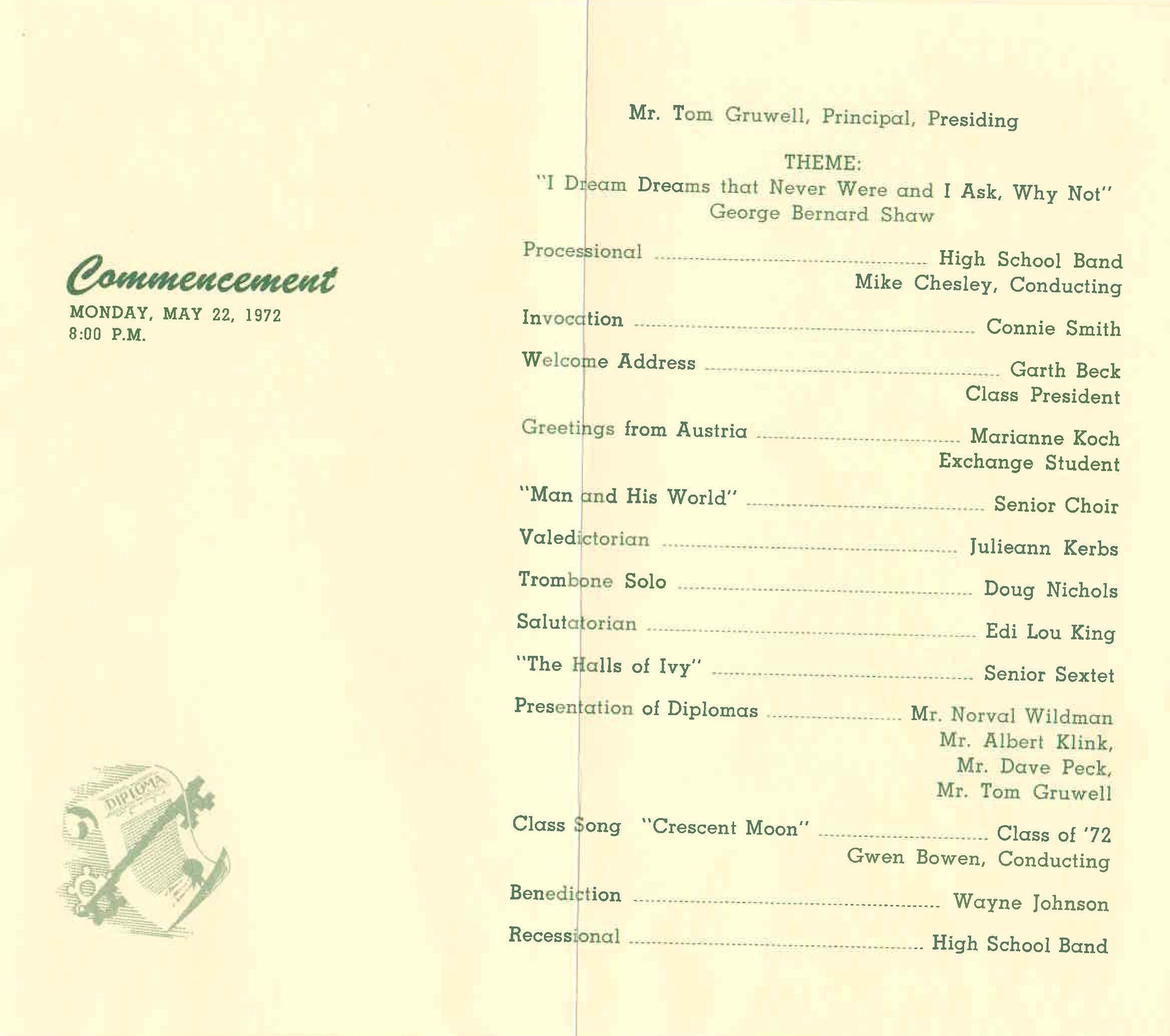
1972 Burley High School Commencement

I was trying to find some photos and stumbled upon my Mom’s graduation pamphlet I had scanned a few years ago. Thought maybe it was time to share it, especially where I have seen some of her classmates have passed away recently.

1972 Baccalaureate and Commencement – Burley High School – Burley Idaho

These programs courtesy of the following Public Spirited Business Concerns

Amalgamated Sugar Co.

Burley Processing Co.

Burley Reminder

Cassia National Bank

First Federal Savings & Loan Assn., Burley Branch

First Security Bank

Guys ‘N Dolls

Idaho Bank & Trust Co.

Idaho First National Bank Burley Office

McCaslins

Ponderosa Inn

J. R. Simplot Food Processing Division

South Idaho Press

Class Officers

President Garth Beck

Vice President Bud Hoffbuhr

Secretary Jill Hinz

Executives Peggy Wood, Peggy Larson, Kaye Dawn Larson, Jeananne Gruwell, Jean Graham

Class Adviser Mr. David Peck

Baccalaureate Sunday, May 21, 1972 2:30 P.M.

Mr. Tom Gruwell , Principal, Presiding

Processional High School Band Mike Chesley, Conducting

Welcome Garth Beck Class President

Invocation Bud Hoffbuhr

Special Number Bel Canto Choir Elden Wood, Conducting “Battle Hymn of the Republic”

Address Dr. Walter R. Peterson

Cherubim Song Senior Octet

Benediction Calvin Pearson

Recessional High School Band

Commencement Monday, May 22, 1972 8:00 P.M.

Mr. Tom Gruwell, Principal, Presiding

THEME: “I Dream Dreams that Never Were and I Ask, Why Not” – George Bernard Shaw

Processional – High School Band – Mike Chesley, Conducting

Invocation – Connie Smith

Welcome Address – Garth Beck, Class President

Greetings from Austria – Marianne Koch – Exchange Student

“Man and His World” – Senior Choir

Valedictorian – Julieann Kerbs

Trombone Solo – Doug Nichols

Salutatorian – Edi Lou King

“The Halls of Ivy” – Senior Sextet

Presentation of Diplomas – Mr. Norval Wildman, Mr. Albert Klink, Mr. Dave Peck, Mr. Tom Gruwell

Class Song “Crescent Moon” – Class of ’72 – Gwen Bowen, Conducting

Benediction – Wayne Johnson

Recessional – High School Band

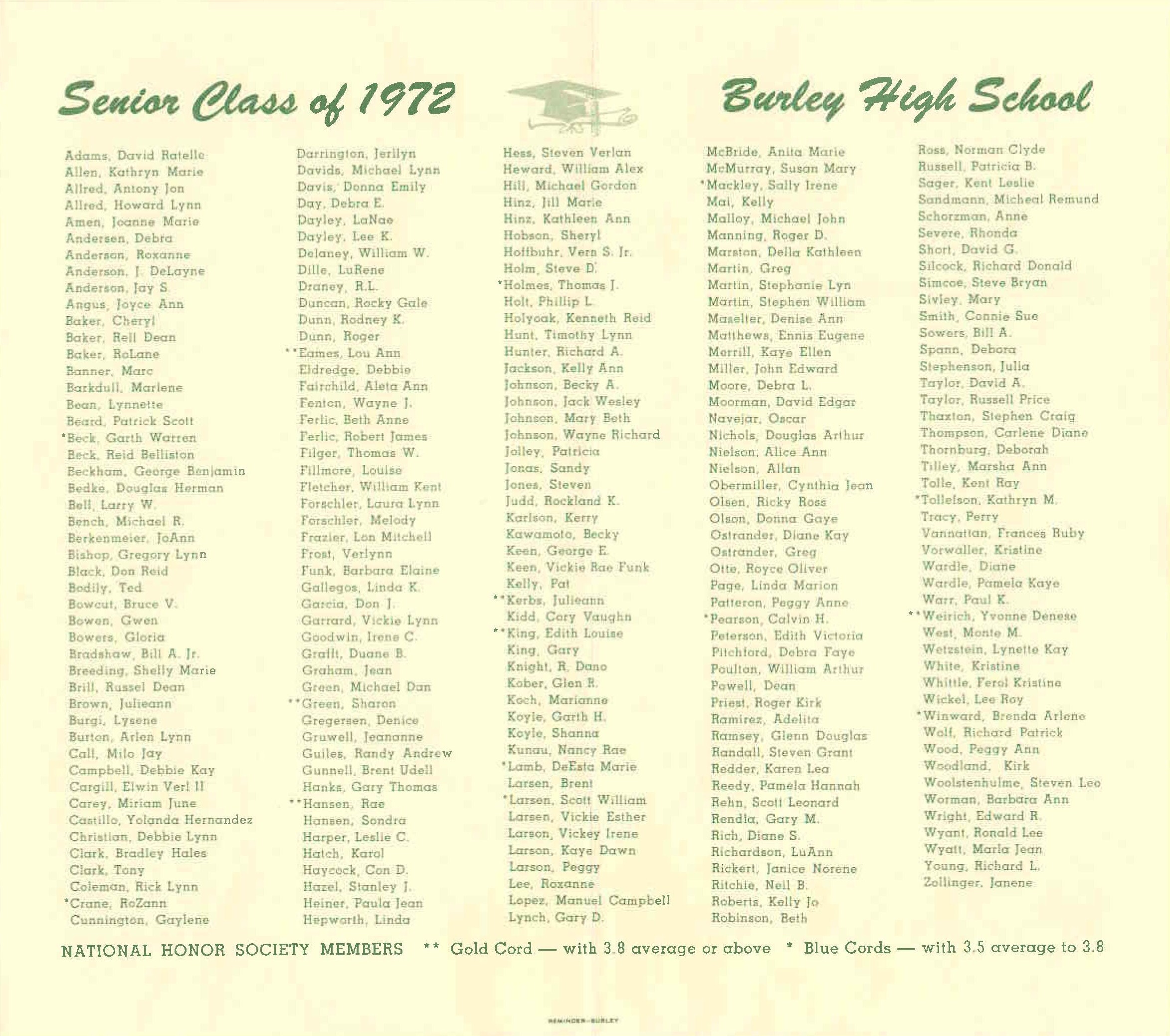
Adams, David Ratelle

Allen, Kathryn Marie

Allred, Anthony Jon

Allred, Howard Lynn

Amen, Joanne Marie

Andersen, Debra

Anderson, Roxanne

Anderson, Jerald DeLayne (1954 – 2017)

Anderson, Jay S

Anderson, Todd Michael (1953 – 1972)

Angus, Joyce Ann

Baker, Cheryl

Baker, Rell Dean

Banner, Marc

Barkdull, Marlene

Bewan, Lynnette

Beard, Patrick Scott

* Beck, Garth Warren (1953 – 2002)

Beck, Reid Belliston

Beckham, George Benjamin

Bedke, Douglas Herman

Bell, Larry W

Bench, Michael R

Berkenmeier, JoAnn

Bishop, Gregory Lynn

Black, Don Reid

Bodily, Ted O (1954 – 2019)

Bowcut, Bruce V

Bowen, Gwen

Bowers, Gloria

Bradshaw, Bill A Jr

Breeding, SHelly Marie

Briggs, Larry

Brill, Russel Dean

Brown, Julieann

Burgi, Lysene (1953 – 2016)

Burton, Arlen Lynn (1954 – 2014)

Call, Milo Jay

Campbell, Debra “Debbie” Kay (1954 – 2019) Johnson

Cargill, Elwin Verl II

Carey, Mirian June

Castillo, Yolanda Hernandez

Christian, Debbie Lynn

Clark, Bradley Hales

Clark, Antone “Tony” Lee (1954 -2015)

Coleman, Rick Lynn

* Crane, RoZann

Cunnington, Gaylene

Darrington, Jerilyn

Davids, Michael Lynn (1953 – 2020)

Davis, Donna Emily

Day, Debra E

Dayley, LaNae

Dayley, Lee K

Delaney, William W

Dille, LuRene

Draney, Rex Leonard (1953 – 2007)

Duncan, Rocky Gale (1954 – 2020)

Dunn, Rodney K

Dunn, Roger

** Eames, Lou Ann

Eldredge, Debbie

Farwell, Albert Michael (1952 – 2023)

Fairchild, Aleta Ann

Fenton, Wayne J

Ferlic, Beth Anne

Ferlic, Robert James

Filger, Thomas W

Fillmore, Louise

Fletcher, William Kent

Forschler, Laura Lynn

Forschler, Melody

Frazier, Lon Mitchell

Frost, Verlynn

Funk, Barbara Elaine

Gallegos, Linda K

Garcia, Don J

Garrard, Vickie Lynn

Goodwin, Irene Cecilia

Goold, Gary

Graf, Becky Ann (1954 – 2011) Moats, Kloer

Grafft, Duane Brian (1953 – 2006)

Graham, Jean

Green, Michael Dan

** Green, Sharon

Gregersen, Denice

Gruwell, Jeananne

Guiles, Randy Andrew (1953 – 2015)

Gunnell, Brent Udell

Hanks, Gary Thomas

** Hansen, Rae

Hansen, Sondra

Harper, Leslie C

Hatch, Karol (1953 – 2004) Kerr

Haycock, Con D

Hazel, Stanley Jarvis (1953 – 2008)

Heiner, Paula Jean

Hepworth, Linda

Hess, Steven Lerlan

Heward, William Alex

Hill, Michael Gordon

Hinz, Jill Marie

Hinz, Kathleen Ann

Hobson, Sheryl

Hoffbuhr, Vernard “Bud” Standley Jr (1954 – 1997)

Holm, Steve D

* Holmes, Thomas J

Holt, Phillip L

Holyoak, Kenneth Reid

Hunt, Timothy Lynn

Hunter, Richard A

Jackson, Kelly Ann

Johnson, Becky A

Johnson, Jack Wesley

Johnson, Mary Beth

Johnson, Wayne Richard (1953 – 2008)

Jolley, Patricia

Jonas, Sandy (1954 – alive)

Jones, Steven

Judd, Rockland K (1953 – 2012)

Karlson, Kerry

Kawamoto, Becky

Keen, George E

Keen, Vickie Rae Funk

Kelly, Pat

** Kerbs, Julieann

Kidd, Cory Vaughn

** King, Edith Louise

King, Gary

Knight, Robin Daniel (1953 – 2014)

Kober, Glen R

Koch, Marianne

Koyle, Garth H

Koyle, Shanna

Kunau, Nancy Rae

* Lamb, DeEsta Marie

Larsen, Brent

* Larsen, Scott William

Larsen, Vickie Esther

Larson, Vickey Irene

Larson, Kaye Dawn (1954 – 2019) Silcock

Larson, Peggy (1954 – 2016) Stirland

Lee, Roxanne

Lopez, Manuel Campbell

Loveland, Cynthia (1954 – 1981)

Loveland, Kevin R (1954 – 2008)

Lynch, Gary D

McBride, Anita Marie

McMurray, Susan Mary

* Mackley, Sally Irene

Mai, Kelly

Malloy, Michael John

Manning, Roger D

Marston, Della Kathleen

Martin, Gregory Max (1954 – 1975)

Martin, Stephanie Lyn

Martin, Stephen William

Maselter, Denise Ann (1954 – 2022) Rollins

Matthews, Ennis Eugene

Merrill, Kaye Ellen

Miller, John Edward

Moore, Debra Lynn (1954 – 2002)

Moorman, David Edgar (1953 – 1997)

Navejar, Oscar

Newcomb, Kathy Lorene (1954 – 2020) Bailey

Nichols, Doulgas Arthur

Nielson, Alice Ann

Nielson, Allan (1954 – 2020)

Obermiller, Cynthia Jean

Olsen, Ricky Ross

Olson, Donna Gaye

Ostrander, Diane Kay

Ostrander, Greg

Osterhout, Rex Dale (1954 – 2017)

Otte, Royce Oliver

Page, Linda Marion

Patteron, Peggy Ann

* Pearson, Calvin H

Peterson, Edith Victoria

Pitchford, Debra Faye

Poulton, William Arthur

Powell, Leslie Dean (1953 – 2005)

Priest, Roger Kirk

Ramirez, Adelita

Ramsey, Glenn Douglas

Randall, Steven Grant

Redder, Karen Lea

Reedy, Pamela Hannah

Rehn, Scott Leonard (1954 – 1994)

Rendla, Gary M

Rich, Diane S

Richardson, LuAnn

Rickert, Janice Norene

Ritchie, Neil B

Roberts, Kelly Jo

Robinson, Beth

Ross, Norman Clyde

Russell, Patricia B

Sager, Kent Leslie

Sandmann, Michael Remund

Schorzman, Anne

Severe, Rhonda

Short, David G

Silcock, Richard Donald

Simcoe, Steve Bryan

Sivley, Mary

Smith, Connie Sue

Sowers, Bill A

Spann, Debora

Stephenson, Julia

Taylor, David A (1953 – 2009)

Taylor, Russell Price (? – alive)

Thaxton, Stephen Craig

Thompson, Carlene Diane

Thornburg, Deborah

Telley, Marsha Ann

Tolle, Kent Ray

* Tollefson, Kathryn M

Tracy, Perry Alan (1953 – 2005)

Vannatian, Frances Ruby

Vorwaller, Kristine

Wardle, Diane

Wardle, Pamela Kaye

Warr, Dee Ann (1954 – 2013)

Warr, Paul K

** Weirich, Yvonne Denese

West, Monte M

Wetzstein, Lynette Kay

White, Kristine

Whittle, Ferol Kristine

Wickel, Lee Roy

* Winward, Brenda Arlene

Wolf, Richard Patrick

Wood, Peggy Ann

Woodland, Kirk

Woolstenhulme, Steven Leo

Worman, Barbara Ann

Wright, Edward R

Wyant, Ronald Lee

Wyatt, Marla Jean

Young, Richard LeRoy (1953 – 2022)

Zollinger Janene

National Honor Society Members

** Gold Cord – with 3.8 average or above

* Blue Cords – with 3.5 average to 3.8

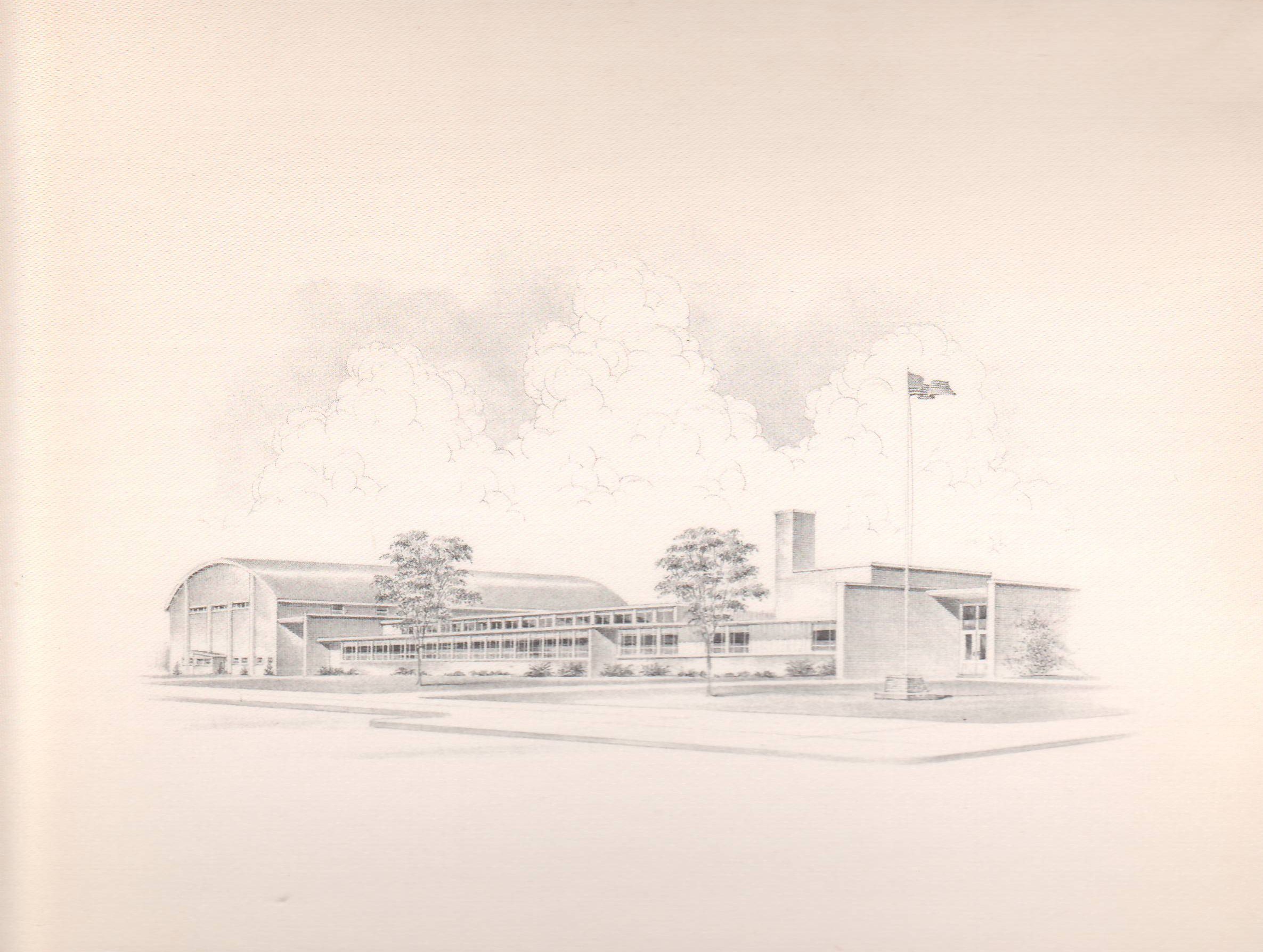
The sketch of the Burley High School on the front of the Diploma case.

Sandy Jonas Burley High School Diploma

Mom’s actual Diploma.

Burley High School – Burley, Idaho

This Certifies That Sandy Jonas has satisfactorily completed a Course of Study prescribed for Graduation from this School and is therefore awarded this Diploma.

Given in the month of May, nineteen hundred and seventy-two

Tom Gruwell – Principal

Harold W Blauer – Superintendent

W B Whiteley – Chairman Board of Education

Here is a copy of Mom’s Senior picture – 1972

History of Pauline W. Crossley

This history came into my hands from Golden Andra’s collection. A received a large stack of family history from his family. I am reviewing and making them available in this format. I typed this one about Pauline as typed, misspellings and errors too.

Pauline Wanner and Wiliam Henry Crossley

“This history was compiled August 3, 1993, by J. Allyne Kemp Crossley from two seperate histories, a story written by her son, Richard and information obtained from various family members, at a special request for he 1993 Wanner Reunion, which celebrates the 123rd year of the Wanner family.

“Pauline Wanner Crossley, daughter of Johann George and Ann Maria Schmid Wanner, was born in Atzenweiler, Neckarkreis, Wuertthemberg, Germany on April 1, 1884. Wuertthemberg, being one of the states of the divided nation of Germany. At the time of her birth, she joined a family of seven brothers and sisters, she being the eigth child. Following her birth two more children came to the family making a total of ten children: five boys and five girls, two of which died at an early age, while the family was still in Germany.

“Pauline and her brothers and sisters were very fortunate to have had parents who were honorable, upright, and hard-working people, who loved their children and worked very hard to see that they got the very best that they could provide. Both parents believed in God and had a strong faith that their prayers would be answered in providing them with the blessings they needed. They belonged to the Lutheran Church, and tried to teach their children correct principles.

“Sometime during the year of 1891, Johann, Pauline’s father, brought some missionaries to their home. These missionaries were representing the Church of Jesus Christ of Latter-day Saints, they were Jacob Zollinger [1845-1942] from Providence, Utah; John Hassenfritz, from the Bear Lake area, and John Federly of Salt Lake City, Utah.

“After the missionaries had been teaching them the Gospel for some time, the family became very interested and decided they would join the Church. Some of the family were old enough to be baptized and they became members of the Church of Jesus Christ of Latter-day Saints, in October 1891. Pauline waited until after the family arrived in America to be baptized on January 7th 1897, just three months before her 13th birthday. Joining the Church brought peace to their minds and joy to their hearts. It did not take long for the family to decide that they wanted to leave their native land, and come to the United States, where they could have religious freedom and better opportunities for their families, and to provide for their wants and needs.

“Not long after their baptism, some of the missionaries were preparing to return to their homes in the U.S. and Johann and Maria decided to send their older son, George to America with them, he’d be the first member of the family, to come to this country.

“In the Spring of 1893, Pauline’s parents began making the preparations to take the rest of their family to America, saying “Good-bye” to all their relatives, friends, and their native land.

“They had to ride the train for one day, afterwhich they took a boat up the Rhine River which took three of four days, then they took another train for another day, which took them to the North Sea. Here they got on another boat which was larger than the first, which would take them to Liverpool, England. The sea was very rough and the weather stormy, so it took another day before they reached Liverpool, where they boarded a big ship to sail to America.

“They were on the ocean for about 2 weeks, before they finally reached New York, where they stayed for two or three days. From New York, they took the train once again, and started their journey across the American Continent, for Salt Lake City, Utah, having to stop in Chicago, Illinois for one day and night. After arriving in Salt Lake City, they then continued their long and tedious journey to Franklin, Idaho where they arrived on the 18th of June 1893, all being very happy, and anxious, to get settled in their newly adopted homeland.

“They were met by their brother, and son, George and Mr. Fred Nuffer. Mr. Nuffer invited George, and all of his family to stay at his home, until they could find a place of their own, which was about one week.

“The Sunday following their arrival in Franklin, they all went to church, traveling to Glendale, where they had their membership records moved to, from the Branch in Germany.

“Grandpa Wanner soon bought the home and farm of John Nuffer’s in Glendale and the family lived there for a number of years before buying a home in Logan, Utah.

“Pauline worked hard on the farms that her father had bought – he bought several for his family to run. The members of Pauline’s family were all good workers and they all strived very hard to make a go of it, in this new land. Each of them was also very diligent in working for their beliefs, for their church, and for their Savior, Jesus Christ – including Pauline – she was a member of the Relief Society Presidency, while her children were still young she would take the “Black-top” and make many trips down to Thatcher.

“Not too much is known about Pauline’s romances, as a young lady, but her daughter, Annie, remembers hearing Pauline talk about a young man that she was engaged to, prior to Pauline’s engagement to her Dad, who was killed in an avalanche – Pauline only talked about it a few times.

“Pauline Wanner and William Henry Crossley, were married in the Logan Temple on December 14th 1904; Pauline was 20 and Will was 26 at the time, they both had dark brown hair but Will’s was curly.

“Will’s parents were John and Eliza Clements Crossley, he was born the 16th of October 1878 at Weston, Idaho and was baptized May 7th 1887. He had only one older brother, named Emanuel; one half brother, Levi, also lived with them while they were at home.

“To Pauline & Will were born four girls and five boys. Their first child, a beautiful baby girl, whom they named Florence, was born about 1905, she lived for about one year, then died in a very tragic fire. About one year later, another little girl was born whom they named Violet, she lived only two weeks; a third little baby girl, named Fern, was born on May 25th 1908 and she lived for only a few hours. Pauline was out helping to put up hay when a load tipped over on top of her, bringing the baby too soon. A 4th little baby girl, Annie Laurie, who’d be their only living daughter, was then born on April 30th 1909. *(According to Annie’s birth certif., she was born in March).

“Following the birth of Annie Laurie, the family grew with the addition of the boys, each arriving about two years apart from one another. Joseph Henry, arrived on April 14th 1911; Richard Wanner on January 27th 1913; Albert John was born June 28th 1915; Clarence William, who everyone knew as “Virgil” was born March 18th 1917; he died September 6th 1984, and is buried in McCammon; and then Cyril Chester was born on October 28th 1919. These children brought lots of joy to their mother, and I’m sure that had she have lost Annie, her only living girl, she would have just laid down and died right then —

“The Pioneer immigrants had to make many sacrifices and endure many tragidies in order that they could live their faith and belief in the Gospel of Jesus Christ – many having to leave their homeland and their families, worldly goods, even suffering sicknesses and surviving near starvation and freezing temperatures – But I can’t imagine the pain and heartache of having to watch a home that I’d help build with my own hands, be destroyed in a fire, along with a very precious baby daughter – Florence, when she was only about a year old.

“Pauline and Will had both dropped-off to sleep, forgetting to turn off their coal-oil lamp, and since the wick was bad, it filled the room with smoke as it burned – which woke Will up. He was so sick from the smoke, he couldn’t stand up to talk, he had to crawl about one block, or more to the neighbors, who ran back and were able to get Pauline out of the house – but because of all the excitement and all the turmoil, they forgot about Baby Florence. When Pauline came to all she said was, “The Baby! The Baby!” But it was too late!

“The folks said that another fire happened on the homestead, in Thatcher, at the middle place, because the children decided to build a bon-fire behind the stove in the kitchen – they said it was because the fire had ruined everything so bad, that that was their reason for building their last home, on the homestead, and also a reservoir.

“Will’s older brother, Emanuel, had moved to Thatcher on a homestead, about two years before he and Pauline decided to move – He was finally persuaded and he moved his family to Thatcher, where they homesteaded the place which adjoined his brother’s.

“All of Pauline’s children had a hard “row to hoe” while they were growing up – some made sure that they got a small education and others didn’t but all-in-all nothing was easy for them –

“The children would go barefooted a lot when they were little. One day their Dad noticed that the cows were down in the “stubble” so he instructed the children to go and get them, (they were barefooted, as usual). Annie’s little feet were so tender that with each step she took, the stubble scratched them, and caused them to bleed and each added step brought more scratches, and more bleeding, so she tried to take her time, being as careful as she could so that the rough stubble wouldn’t hurt her feet anymore than they were already hurting. Her Dad got really upset that she took so long to go and help get the cows (he didn’t realize her suffering).

“Then, there were the times when the children would get lost, even on their own place – One day the children were up in the pasture, watching their Dad put in fence posts for a fence, so he could fence-off the pasture. (The children were probably helping as well). One of the boys got tired, so he wandered away from the rest and laid down in the BIG, TALL brush and went to sleep. The whole family hunted and called – but he wasn’t found until sometime after dark.

“Earlier, when the family lived by the “WHEEL GATE”, Joe and Annie went wandering in the TALL Sage Brushes, east of their place. Most of the neighbors must have hunted all over, until the “wee” hours of the morning before they finally found them – the Sage Brushes were so HUGE, that they were just right for the children to make their own little “houses” in them.

“Pauline and Will were strict parents, and living on a farm wasn’t an easy life, to be sure, and everyone needed to work to help: the children even had their responsibilities on the farm —

“Joe and Annie, for example, had to go after the cows, on the hilly pasture land, (there were lots of trees and vegetation). One day, they had just got the cows going along the “cow-trail” through the hills and a bobcat began to follow them and they were scared to death!! After running the cows for awhile, Joe was right behind the cows, Annie next, and then their dog – the dog finally tangled with the bobcat and he took off through the trees – were they ever glad to get back home!

“Another time, Annie went out to take her brother, Richard, a sandwich, when a big buck decided to turn on her and Joe – the only one that could control him was Richard – the buck wouldn’t hurt him.

“Besides his farming – Will also had a “Threshing machine” and he’d go out and do threshing for other farmers, which gave his family a little added means for flour and cereal – He’d always take a load of wheat, by wagon, down to Preston, to have ground into flour and cereal.

That was the end of page 4. It seemed to be an abrupt end, but I cannot tell if there were more pages to the history or not.

German Branch of Oneida Stake

Necia Seamons article at Oneida Stake Academy

In 2018, I took the kids over to Preston, Idaho because there was a display on some of our Nuffer ancestors at the Oneida Stake Academy.  Necia Seamons has been good to write history of the area and do various research projects.  The Academy continues to be restored and progress is being made.

I thought these pages deserved their own entry for the history as well as reference to family.

“On April 19, 1896, the Oneida Stake of The Church of Jesus Christ of Latter-day Saints organized a German speaking branch based in Glendale.  Both John Nuffer and Charles August Nuffer served int he branch’s leadership, as did Joseph Moser, Mr. Kern, Alma Moser and William Addison Wagstaff.

“The first branch president was Jacob (Ira) Naef, who was Swiss.

“They gathered every two weeks, at first in the homes of members, and sometimes traveled as many as 20 miles for services from the towns of Glendale, Preston, Mink Creek, Whitney, St. Joseph and Franklin.

“‘The branch existed for 20 years, until Oneida Stake President Joseph S Geddes, in 1916, asked Charles August Nuffer, then branch president, to not hold meetings due to contentious sentiments toward the German speaking people.’

“‘During the latter part of the war, some of the people of Preston made it very hot for the German-speaking people, yet most of them were Swiss but that did not make any difference.’

“‘After the war, many of the German people moved away, so we never started to hold meetings anymore,’ said Charles August Nuffer.

“At the end of WWI, Preston resident gathered outhouses into the town square, what is now Benson Park (above), and called it the ‘Schitty of Berlin.’  They whooped and hollered and burned the mock city down.

“Willard and Austin Nuffer sons of John and Louisa Zollinger Nuffer, served the U.S. in WWI.  Willard also registered for WWII.

Necia Seamons article at Oneida Stake Academy

Brigham Young College 1915 Crimson Yearbook

I am a member of a Cache Valley Group on Facebook.  After some people posted a number of old photos, I asked if anyone knew if Brigham Young College had yearbooks and if someone had one for roughly 1915.  Within a day, Jennifer Johnson, a cousin of mine had found a copy of the Brigham Young College Crimson yearbook and made it available to me.  Here is a copy of the full 1915 Brigham Young College Crimson Annual if you are interested.

Sure enough, there on page 31 is my great-grandfather, Joseph Nelson Jonas (1893 – 1932).

Joseph Nelson Jonas’ Brigham Young College yearbook picture

Here is the full-page.  This is page 31 of the pdf.  The front of the yearbook says Crimson Annual 1915.  Page 4 shows that it includes the classes of 1915, 1916, 1917, and 1918.

Brigham Young College Crimson yearbook, page 31

Here are two copies of his diploma.

Joseph Jonas graduation diploma from Brigham Young College in Logan, Utah


I also found Joseph’s 1st cousin, once removed, Paul Ernest Nelson (1888-1970), was one of the teachers at BYC.  An interesting side note is that the page below states he, “Likes his Ensign.”  He and Martha Eunice Ensign were married 19 August 1914 in the Salt Lake Temple.  It also states he “[e]xpects to be a professor in psychology.”  Their first son, Paul Ensign Nelson, was born 26 June 1916 in Berkeley, California while he was attending school.

Brigham Young College yearbook, page 26

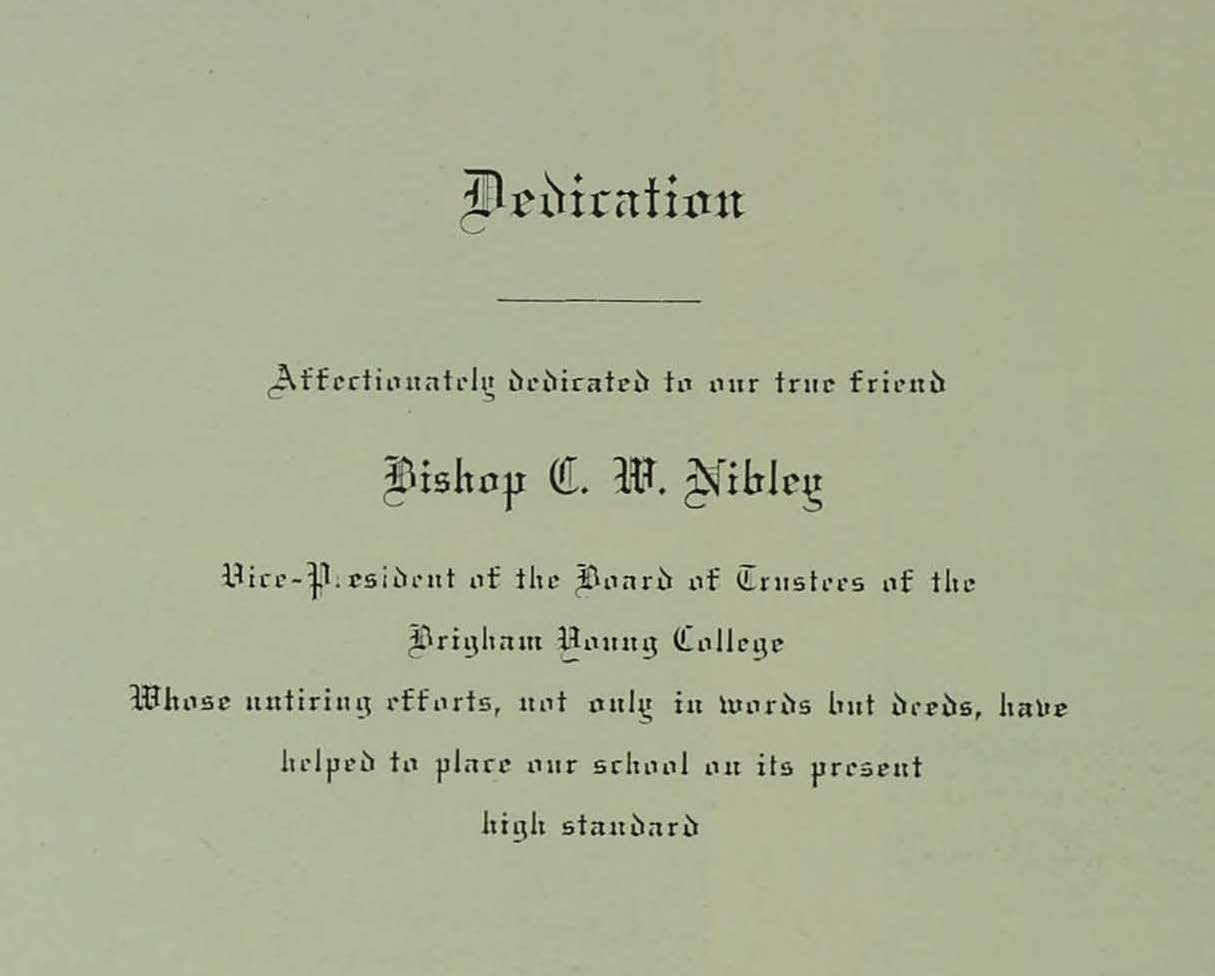
Here is a dedication to the Presiding Bishop of The Church of Jesus Christ of Latter-day Saints Charles Winder Nibley (1849-1931).

Dedication in 1915 Brigham Young College Crimson Annual to Charles Winder Nibley

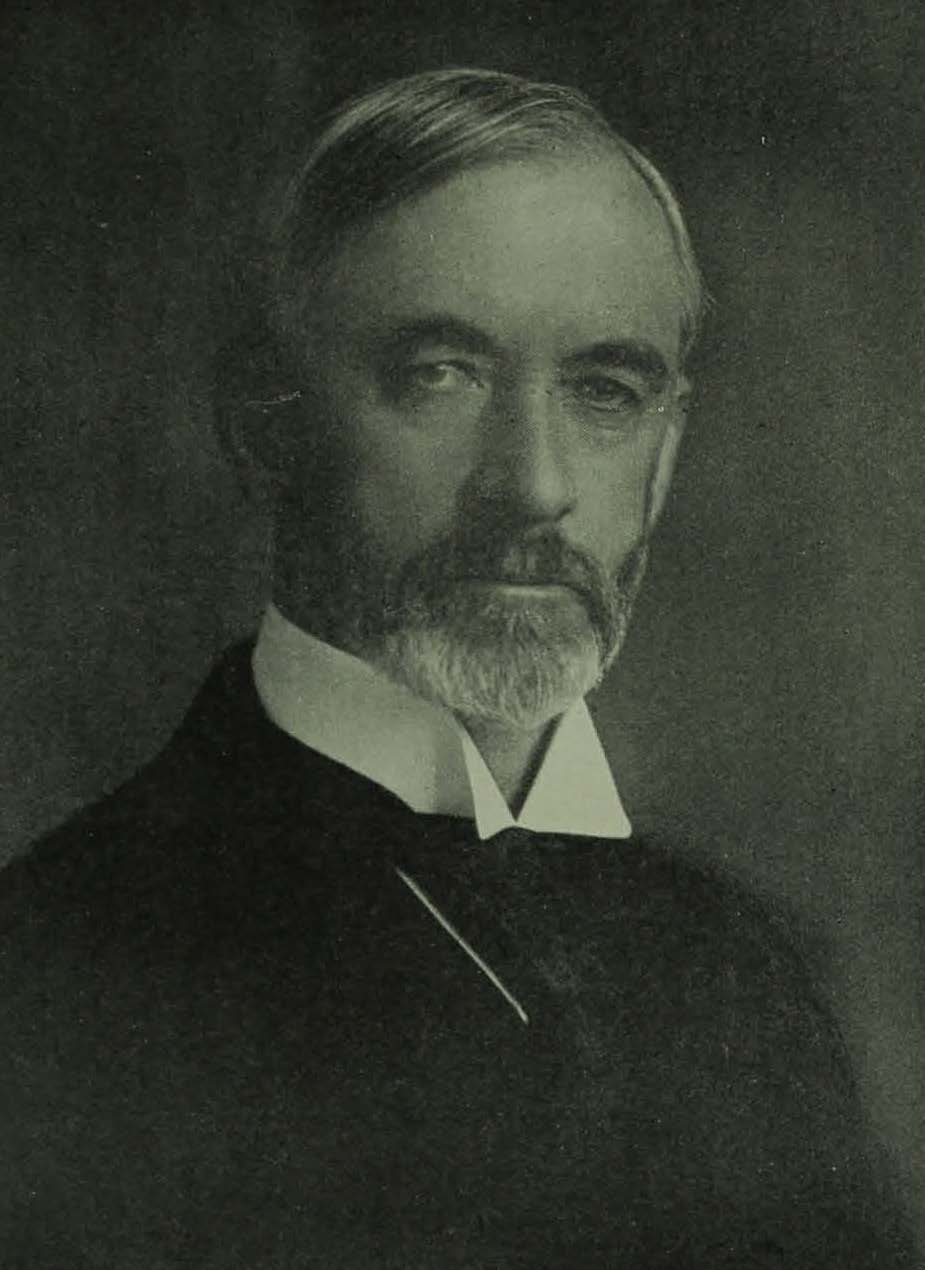
Charles W Nibley was the Presiding Bishop from 1907 to 1925.  He was a kind benefactor to Brigham Young College and as Presiding Bishop was involved with the school.  Bishop Nibley was released in 1925 and became a counselor to Heber Jeddy Grant until his death in 1931.  He is one of the few people to serve in the First Presidency of The Church of Jesus Christ of Latter-day Saints who was not an Apostle.

Charles Winder Nibley (1849-1931)

Brigham Young College was located in Logan, Utah.  It was founded by Brigham Young shortly before his death.  The college was meant for individuals from Northern Utah, Idaho, and Wyoming.  When The Church of Jesus Christ of Latter-day Saints closed all its academy’s in 1926, except Brigham Young University, it suffered the same fate.  The buildings were sold and became Logan High School.

As records become more and more available, who knows what else we may find of our ancestors.


Life History of Louisa Zollinger


Austin, Willard, Luther, Louis, Herman, Myron, John, Florance, Edwin, Louisa, Agnes, Karl, Athene Nuffer

Another entry from “We of Johann Christoph Nuffer, also known as: Neuffer, Nufer, Neufer,” The book was published in April 1990 by Dabco Printing and Binding Co in Roy, Utah. I will quote from the book itself.

The full title reads, “LIFE HISTORY OF LOUISA ZOLLINGER sketch written by JENNIE S. NUFFER early details furnished by MARY Z. BULLOCK and EDWIN J. NUFFER Written November, 20, 1952”

“Louisa Zollinger was born 24 January 1864, at Providence, Utah, the daughter of Ferdinand Zollinger and Louisa Meyer.  She was the eldest of five children, her brothers and sisters being Ferdinand (born 24 January 1866), Bertha (born 3 August 1867), Mary Elizabeth (born 3 March 1870), and Sarah (born 26 July 1875).  Two children died in infancy.

“Living in a pioneer community, Louisa was subjected to all the hardships and trials of her day.  She has related many incidents concerning Indians in the early days of Providence.  She received her education in the district school, having gone through the 8th reader.

“Louisa loved to sew, and before she was fifteen she took a dressmaking course from a lady by the name of Maggie Hyrion.  She learned to cut patterns to fit them to a model.

“She was a very spirited and independent girl, and being the eldest she enjoyed telling her brother and sisters what to do.  She did what she could to help with making a living.  When she was fifteen she worked for a time in the Blanchard Hotel in Logan.  One summer she spent working at the Box Elder dairy at two dollars per week.  She helped milk eighteen to twenty cows.  The next summer she worked at a Logan dairy where she helped with the milking and cheese making.

“Louisa was quite popular with the young people and attended the dances in the community.  One dress she used to wear is still remembered by her sister Mary.  A seamstress came to the home and remained one week to sew the dress, which was of black wool trimmed with heavy black satin.  The young crowd also enjoyed house parties, candy pulls, and sleight (sic) riding parties.

“September 18, 1884, she was married to .John Nuffer at Providence, Utah, and they were sealed in the Logan Temple 15 July 1891.  They then moved to Glendale, Idaho, where her husband had homesteaded and built a small rock house.  Here she made a home for her beautiful flowers.  Snakes were very numerous, and she often told how she would send the dog into the garden first to flush out the snakes before she went into pick vegetables.

“She returned to her mother’s home at Providence for the birth of her first son, Luther Jacob.  Her next two sons, John Willard and Louis Ferdinand, were born at Glendale.

“In the fall of 1890 the family moved to Preston, where her husband had been called by the Church to take charge and superintend the building of the Oneida Stake Academy.  They rented a home on State Street for about one year until John could get a home built for them, which was a four room frame house.  Two more sons were born here, Herman Christopher and Austin Eckertt.

“In the spring of 1895 her husband was called by the Church to go on a mission to Germany, his native land.  Although Louisa had five small sons and was expecting another child, she encouraged him to fulfill the call.  A few months after her husband’s departure, her sixth son, Karl Aaron, was born.  Louisa accepted her responsibilities gladly and cared for her little family.  They did not suffer for the necessities of life, as her husband had left her provided for, and they had two cows to provided (sic) them with milk.  She was also able to knit and sew for herself and children.

“Following her husband’s return her first daughter, Agnes Louisa, was born.  Shortly thereafter John built a larger house of rock for his family.  Myron David, Florence Myrtle, Edwin Joseph, and Athene Barbara were born in this home.  Louisa also raised her grandson Karl Luther, following the death of his mother [Luther’s son].

Karl Nuffer

“Two more lovely homes were built for her by her husband, one a red brick and the other a cement block, where she lived until her death.

“Louisa was very active in the Relief Society, and served as a visiting teacher for many years.  She was very outspoken in defending the things she believed in.  She encouraged her children to seek a higher education.  Seen have attended college, two have fulfilled missions, one son has served as a bishop of his ward, and all her children have gladly accepted positions in the various auxiliaries of the church.

“She taught her children industry and thrift.  She was generous in giving to the poor, and at the same time gave encouragement to all to better their lot.  She was a good cook and neat housekeeper, and her love of sewing was evidenced in the living clothes she made for herself and children.

“The first great sorrow in her life was the death of her son, Karl Aaron on 7 February 1905, at the age of ten years.  Herman Christopher died 23 August 1940, and Austin Eckertt 2 March 1944.

“During the latter part of her life her health was very poor, but with a strong will and determination she carried on her household duties.  Her last illness (cancer) was very painful, and she spent several weeks at the L.D.S. Hospital in Salt Lake City, and the Preston Memorial Hospital in Preston.  She was released to her home few days before her death on Thursday, 25 October 1945.  Besides her husband she was survived by eight of her children, all whom were at her bedside, also 30 grandchildren, and 22 great grandchildren.

“Beautiful and impressive funeral services were held the following Monday at 2 o’clock in the Preston First Ward Chapel.  Burial was in the Preston Cemetery on 29 October 1945.

“THE ZOLLINGER NAME

“Zollo was an old Teutonic name appearing in documents of the 9th century.  The story goes that the Zollingers operating a ferry across the Rhine River near the Lake Constance and charged a toll.  From this trade or occupation came the name Zoll, meaning toll collectors.  They were not the only ones engaged in this profession, for the Romans, prior to this time, had officials appointed to supervise river traffic and collect tolls.

“Farmers by trade, the Zollingers called their settlements Zollinc-hoven, meaning the farms of the Zolling clan.  In that day Zollic-hoven was the name of two different places, Zollikon and Zollikofen.  The present cities, Zollikon near Zurich and Zollikofen near Bern are ample evidences of the settlements and estates once occupied by the Zollingers centuries ago.

“In a manuscript appearing in the periodical of the Swiss Genealogical Society “Der Schweizer Sammler und Familienforscher” in 1935, page 57-58 and 84-85, is an essay with the title “Uber Namesforschung: Der name Zollinger”.  Its author, Gustav Zollinger, Dr. Dentist and member of the Swiss Genealogical Society brings to light in a very comprehensive way, the history and movements of our people in their many places and occupations, from which has evolved the name Zollinger in its many variable spellings.  His work is well documented with sources from court, land, census, death, parish, and tithing records.

History of Idaho: John Nuffer

Back l-r: Austin, Willard, Luther, Louis, Herman; Middle l-r: Myron, John, Florance, Edwin, Louisa, Agnes; Front l-r: Karl, Athene Nuffer

From “History of Idaho” and found in Volume III starting page 1197.  “A Narrative Account of Its Historical Progress, Its People and Its Principal Interests”  This book is by Hiram T. French, M.S.  The book also says it is Illustrated and published by The Lewis Publishing Company, Chicago and New York, 1914.

I found this book while at Utah State University originally.  I knew the history was inside but did not copy it then.  I finally returned a few years ago, found the book in the new library, and made a copy.  But at least I had it.  I found it just recently on Google Books.  This is John Nuffer, half-brother of my Regina Nuffer Wanner, not her father as some have previously indicated.  John went by John, his father John Christoph, went by Christoph and Christopher.  I have kept the spelling of the article.  You can also read his autobiography too.

“A quarter century’s residence at Preston constitutes Mr. John Nuffer one of the old timers of this vicinity.  The mere fact of long residence, however, is somewhat of an empty distinction without works accompanying such residence.  In the case of Mr. Nuffer there can be found ample evidence both of long residence and accomplishments in the realm of practical affairs and in good citizenship.  Mr. Nuffer in early life was a graduate of one of Germany’s foremost schools of architecture.  All his life he has been a builder and contractor and in Preston in particular probably much the greater part of the higher class public and residential buildings has been done under his supervision, or through his business organization.

“Mr. Nuffer was born in Wuertemberg, Germany, December 4, 1862.  He is a son of Christopher and Agnes Barbara (Spring) Nuffer.  The father, who was a wine grower in the old country, came to America in 1882, first settling at Logan, Utah, but a year later came to Oneida county, Idaho, where as one of the early settlers he took up land and was a homesteader and farmer until his death in 1908.  He was born in 1835.  The mother, who was born in Germany in 1838, died there in 1865.  Of two children, John is the older, while his brother Fred is also a resident of Preston.

“The grade schools of Germany were the source of Mr. Nuffer’s education up to his fourteenth year.  At that customary age, when the German youths take up an education for practical life, he entered the Royal Architectural College at Stuttgart, where he was a student for four terms, and on leaving school as a budding young architect, he followed his profession in his native country for four years, up to the time of the removal of his father to America, when he became a resident of the western county.  Mr. Nuffer has been largely engaged in contract work since coming to Idaho, and during the past ten years has had a large business of his own as an architect and builder.  A complete list of his work at Preston and vicinity would be too long, buth some of the more prominent structures should be mentioned.  They include the Oneida Stake Academy, consisting of two buildings; the Western [should be Weston] Tabernacle; the Preston Opera House; the McCammon public school, the grade public school: Fairview, Mapleton and Whitney public schools; the Tabernacle at Grace; the high school at Grace; the Latter Day Saints church in the First Ward; and most of the business blocks as well as many of the larger and more attractive residence structures in Preston.  Mr. Nuffer is a director and secretary-treasurer of the Cub River and Worm Creek Canal Company.

“His part in civic affairs has been hardly less important than in business.  For four years, or two terms, he served as justice of the peace of Preston; one term as village trustee, and was clerk of the village board for one term.  His politics is Democratic.  He is a high priest in the Church of the Latter Day Saints, and served a two years’ mission for the church in Germany.

“In November, 1885, at Logan, Utah, Mr. Nuffer married Miss Louise Zollinger, a daughter of Ferd and Louise (Meyer) Zollinger.  Her father died December 16, 1912, and her mother is living in Providence, Utah.  Her parents were pioneers of Utah in 1862, having crossed the plains to the then territory.

“The marriage of Mr. and Mrs. Nuffer has been blessed with a large family of eleven children, who are named as follows: Luther Jacob born at Providence in 1886, is a resident of Preston and is married and has two children; Willard John, born at Preston in 1888, is a graduate of Idaho State University in the law department and is a young lawyer at Downey, Idaho; Louis Ferd, born at Preston in 1889, is a school teacher in Preston; Herman Christ, born at Preston in 1891, is a student of civil engineering in the University of Moscow; Austin Eckart, born at Preston in 1893, is a high school student; Carl Joseph, born in 1895, died in 1904; Agnes Louise, born at Preston in 1898, is a schoolgirl; Myron David, born in 1900; Florence Myrtel, born in 1902, and Edwin Joseph, born in 1904, are all attending school; and Athene Barbara, born in 1907.

“As a successful man and long business builder in this section of Idaho, Mr. Nuffer has a very high opinion of the state and forecasts its taking place among the first of American states.  He has had a career of substantial self-advancement and practically all the propserity he has won due to his own labor.

“His fondness for home life has precluded any association without outside organizations except the church in which he has had a prominent part.

That ends the history from The History of Idaho.  I thought I would provide some additional details on the family.

John was born in Neuffen, Württemberg, Germany.

Louise was born in Providence, Cache, Utah.

Luther Jacob was born 21 June 1885 in Providence and died 27 January 1952 in Oak Grove, Clackmas, Oregon.  He married Rosa Morf and later Mary Crockett.

Willard John was born 19 January 1888 in Preston and died 27 January 1948 in San Bernardino County, California.  I am not aware that he ever married.

Louis Ferdinand was born 20 September 1889 in Glendale, Oneida (now Franklin), Idaho and died 19 August 1966 in Canby, Clackmas, Oregon.  He married Ruby May Jensen.

Herman Christopher was born 12 October 1891 in Preston and died 23 August 1940.  He married Virginia Pryde Simmons.

Austin Eckhert was born 6 August 1893 in Preston and died 2 March 1944 in Los Angeles, Los Angeles, California.

Karl Aron was born 6 September 1895 in Preston and died 7 February 1905 in Preston.

Karl Nuffer

Agnes Louise was born 11 May 1898 in Preston and died 28 June 1983 in Downey, Bannock, Idaho.  She married Raymond Hurst.

Myron David was born 21 July 1900 in Preston and died 24 November 1976 in Logan.  He married Camille Cole.

Florence Myrtle was born 19 October 1902 in Preston and died 23 March 1994 in Soda Springs, Caribou, Idaho.  She married Heber Wilford Christensen.

Edwin Joseph was born 25 August 1904 in Preston and died 21 June 1996 in Ogden, Weber, Utah.  He married Jennie Arrella Smart.

Athlene Barbara was born 21 November 1907 in Preston and died 23 November 1991 in Preston.  She married Adrian Biggs Hampton.