Hygiene and Sanitation Textbook used at Brigham Young College
On the 15th I wrote about my Grandfather’s 100th Birthday (Norwood Jonas) and noting it with a newspaper article found in a textbook that belonged to his parents. This is that book. This was a textbook for my Great Grandfather at Brigham Young College in Logan, Utah.
Joseph Nelson Jonas graduated from Brigham Young College on 3 June 1915. That is 109 years ago tomorrow. Here is a copy of his Diploma. I have written about his history previously. I have also written about his time at BYC previously too.
Joseph Jonas graduation diploma from Brigham Young College in Logan, Utah
The textbook is also interesting. It appears Hygiene and Sanitation written by Seneca Egbert has some serious staying power. I found this history of Mr. Egbert.
Dr. Seneca Egbert (1863-1939) and Nancy Egbert
“Dr. Egbert was a physician. He graduated from Princeton University in 1884 and received his medical degree from the University of Pennsylvania in 1888. Before graduating, Dr. Egbert had been a demonstrator of hygiene in the Medical Department of the University of Pennsylvania. While in this position, he worked with Professor Samuel G. Dixon to establish the first Laboratory of Hygiene in the University, and was made lecturer on hygiene for 1890-1891. In 1892 the Drexel Institute of Philadelphia hired Dr. Egbert for a similar position. In 1893 he was elected Professor of Hygiene and Sanitation in the Medico-Chirurgical College of Philadelphia, appointed Vice-Dean of the same college in 1897, and elected Dean in 1898. Once the Medico-Chirurgical College merged with the University of Pennsylvania, Dr. Seneca became a professor of hygiene. He was president of the Radnor Township Board of Health and he was esteemed as a public health authority.
“In 1897 Seneca Egbert and his wife, Nancy Bredin Egbert, bought part of the old Towne family farm. The home, now owned by Fred French, is located on Blueberry Lane.
“Dr. Egbert was widely published. His book, Manual of Hygiene and Sanitation (seven editions), appeared first in 1898, as did his Home Sanitation, a Manual for Housekeepers. In 1919 Personal Hygiene for Nurses was published. He also wrote numerous articles for medical journals, maintained an impressive lecture schedule, and was a history buff who strongly advocated for the creation and maintenance of historic sites. He was not hesitant about venturing his opinion openly, and on at least two occasions made suggestions to Philadelphia politicians which received limited consideration. Dr. Egbert “was an advocate for ‘pure air, pure milk, and pure water.’ He felt that if people in the United States had these ingredients the average span of life would be increased by seven and one-half years.” He pursued this philosophy in an article, “Pure Water for Philadelphia,” which proposed damming the Mullica River and its feeder streams at the head of the tide to form a reservoir all the way to Atsion, NJ, and then pump to a reservoir on the western side to flow towards the Cooper River and another reservoir, thence to be pumped under the Delaware in order to relieve the poor water quality in Philadelphia . It would have pumped a relatively small quantity, 450,000,000 gallons of water per year, to start. The potential value of his plan was not recognized, either then or, to judge from a 2011 Web comment, now.
“On another issue, the City of Philadelphia proposed clearing all buildings from three city blocks. In response to a request for ideas on how to use this space, Dr. Egbert suggested allocating some of the land to the federal government, some to the state and some to the city of Philadelphia. On a strip of land extending down the center of the whole space, Dr. Egbert suggested constructing thirteen buildings representing the thirteen original colonies, and calling the area Independence Square. Each building would house the contributions made by that state towards the forming of our Union. “The idea was considered ludicrous in design and in scope. Dr. Egbert was a physician, not an architect.”
“Despite his critics, Seneca Egbert was doggedly determined to maintain the quality of life for Americans. For example, he embraced the newest form of transportation, bicycling, and “saw cycling as a remedy for dyspepsia, torpid liver, incipient consumption, nervous exhaustion , rheumatism, and melancholia.”
“A portrait of Dr. Egbert was painted for the University of Pennsylvania by Nancy Egbert’s brother, Rae Sloan Bredin (1870-1937). Mr. Bredin was a member of the New Hope group of American impressionists and several of his paintings are owned by New York’s Metropolitan Museum of Art. Mr. Bredin was co-founder of the Philadelphia School of Design for Women and the New York School of Fine Arts. His portrait of Dr. Egbert hangs now in the home of Dr. David Egbert Sparks, Dr. and Mrs. Egbert’s grandson, who is a genealogist and retired head of libraries at Notre Dame.
“Like Dr. Thomas Montgomery Lightfoot, Dr. Egbert was a lecturer in the winter lecture series held during the years 1887-1895 sponsored by the Academy of Natural Sciences. Dr. Egbert’s lecture was titled, “The Prevention of Disease and the Preservation of Health.”
“Nelson’s own Parke Struthers wrote in A History of Nelson that like Dr. Egbert’s good friend Dr. Thomas Montgomery Lightfoot, Seneca Egbert “met his fellow Nelsonians on an equal footing, a trait in human relations reserved for only the Great.” Mr. Struthers also states that the Egberts were “gracious, active in town affairs, and interested in the people of Nelson.” With their friends Dr. Lightfoot and his wife, Dr. and Mrs. Egbert served on the committee to make arrangements for the celebration of the one hundred and fiftieth anniversary of the first settlement of Nelson 1767-1917.
Inside cover of Hygiene and Sanitation
Here is the writing inside the book:
Joseph N. Jonas 1915
394 So. 1st East
Logan, UT
Jonas Joseph
Richmond, Utah
1915
First written page inside Hygiene and Sanitation
Here is the writing on the second page of the book:
Here are two photos that came into my possession just in the past month. One from an unknown person on FamilySearch, the one above, and the whole Jonas family photo below found by my Uncle William Melycher in Jackie’s possessions. I have written of the Joseph and Lillian Jonas family before.
I am somewhat unsure what to make of the photo above. It is a colorized version of another photo I do not have. I have this one which appears to be a blurrier version.
Joseph and some friends at work after a game of shoes
It is obviously the same photo as the strange reflections and shapes in the window behind Joseph are in the colorized photo above. But whether they have another photo or the computer has somehow tried to enhance the one above, I don’t know. I am somewhat skeptical of the colorized photo above. For example, the dimple in his chin for which he was well-known is missing but you can see it in the photo where they are holding the horse shoes. It obviously messed up his temples and hairline.
However, some of the characteristics the photo pulls out, like his lower eyelids, is not in the blurry photo but can be seen in some degree in his Brigham Young College photo.
Joseph Nelson Jonas’ Brigham Young College yearbook picture
The photo is familiar to me, it seems to be mostly accurate, but I don’t know how it was done. Fascinating. I wrote on Joseph before, but he was born 19 November 1893 in Ellensburg, Kittitas, Washington and was electrocuted 6 September 1932 in Ogden, Weber, Utah.
He married Lillian Coley 6 September 1916 in Logan, Cache, Utah in the Logan Temple. They had the 8 children, the last just before his untimely death in 1932.
Joseph Nelson Jonas and Lillian Coley family, Joseph Herbert, Spencer Gilbert, Irwin John, Wilburn Norwood, Ellis Seth, Evan Reed, Lillian Annetta, LeReta Mary
This is another chapter of the Jonas history book compiled by Carvel Jonas. “The Joseph Jonas clan of Utah (including – early Jonas family history; early Nelson family history)” This one is on William Nelson Jonas.
John, Joseph, and William Jonas
“William had the same name as his great grandfather, William Jonas, although he never knew it in his life. Most likely he was named after his Uncle William Jonas. William Nelson Jonas, the second son and fifth child of Joseph Jonas and Annette Josephine Nelson, was born 2 December 1889, He was called “Bill” by his friends at church and “Willie” by his family at his home. His parents had, two years before his birth in 1887, sold their property 3 miles south of Ellensburg, Kittitas County, Washington State. But the family must have stayed in the area because William went to the public school in Ellensburg his 1st, 2nd, and 3rd elementary grades. The family then moved to a little town named Bristol, which is northwest of Ellensburg. When he was in his 4th grade the family was living in another town named Thorpe and he attended the school at Thorpe. Thorpe is another town northwest of Bristol. Sometime during this time William and his two brothers went to a neighbor’s place and swiped some apples. The kids also helped themselves to their cousin’s watermelon patch. in 1895, he went with his family to pick hops in Yakima. The 1900 census tells us that William and his family lived in another town which also is northwest of all the other towns mentioned. It is called Cle Elum. The family was renting a house in this western city. As far as we know the family always rented.
“William arrived in Crescent, Utah with his entire family 3 July 1901. He attended the public school in Jordan School District for the 5th, 6th, 7th, and 8th grades. He graduated 8 grade in Sandy. He was baptized a member of The Church of Jesus Christ of Latter-day Saints 10 January 1902, the same day his two brothers were baptized. When he was baptized he had just turned 12 years old by a little over a month. Up to that time he had been raised a Catholic. He was baptized in the Jordan River in South Jordan by his Uncle, Nels August Nelson. He was confirmed a member the same day by William Fairfard. There were no records found for William at the St. Andrew church in Ellensburg, so it is likely that his baptism was performed elsewhere. Shortly after he was baptized he was ordained a deacon in the Aaronic Priesthood. He remained a deacon until 6 January 1908 when he was ordained an Elder in the Melchizedek Priesthood by Bishop James P. Jensen. He was never ordained a Teacher or a Priest, which are the two offices traditionally held by young people in the Mormon Church before they are ordained an Elder. While he was a deacon he was called to be the secretary of the quorum. He was also the President of the deacons quorum for a few years. Perhaps after being raised in another church it was good training for William to remain a Deacon a little longer than usual. He belonged to the 7th Quorum of Elders in the Crescent Ward in Salt Lake County.
“During his stay in Crescent from 1901 to 1908 when he moved to Richmond, Utah, William helped his Uncle August on the family farm. According to August’s life story William and his brothers worked hard. It was understood that William and his brothers were to be given some land for the work they did on the Nelson farm. But the farm wasn’t given to anyone else because much of it was sold.
“William knew many of his cousins on his father’s side of the family until he was 12 years old. After July of 1901 he became familiar with all of his cousins on his mother’s side of the family by living with the Nelson family. William’s mother and this Uncle were the only two siblings in the Nelson family who had children of their own. One of his cousins from his mother’s side, Virgil Homer Nelson, wrote in his autobiography, “They (Rosa, John, William, and Joseph) gave me plenty of companionship. Our chief amusements were swimming, playing baseball, and skating.”
“William had a lot of farm land to discover. Virgil, August’s son, wrote that their farm, “…extended a mile along the east side of State Street and far to the east…a thousand acres of land in East Crescent and into the hill there.” On one occasion when William was in the area he found a dead man laying in a ditch.
“In the school year 1907 William went to the L.D.S. College, his first year in High School before moving to Richmond, Utah. William and his two brothers left Crescent and went to live with their only living sister, Rosa Jonas Andersen. When William had just turned 19 years he made this trip. One cold, snowing day in 1908 the three boys finally arrived at their sister’s home in Richmond, Utah. William worked four years for an August Larson in the summer and went to Brigham Young College at Logan for five years. Each year he received a sports letter in baseball.
Loretta Merrill, William Nelson Jonas
“On 19 September 1909 he was ordained a Seventy by Charles H. Hart, the same day his brother, John, was also ordained a Seventy. He remained a Seventy for over 40 years. On 1 May 1908 he received a Normal Diploma at Logan, Utah, Brigham Young College. 2 June 1911 he graduated from the BYU College and received a General High School Diploma. Two years later he received a college diploma. On 4 September 1913 he received a Grammar Grade County Teacher’s Certificate for Public Schools of Utah. His graduation diploma states that he “passed an examination satisfactory in writing, arithmetic, pedagogy, physiology, reading, drawing, orthography, English, grammar, U.S. History, geography, nature study, psychology, and history of Education.”
William Jonas “To Father”
“The following post cards have survived since 1912. This is the year prior to his graduation from the college and gives a few insights into his personal feelings and activities. All the cards are written to Karen Marie Thompson whom he later married.
“Logan, 4 October 1912 “Dear friend, The first dance will be given Friday night. It was announced in chapel this morning. I do wish you could be here. I’ll be up Sat. noon and we’ll go, if not say so. I have a fine place to stay, with aunt Felelia and my cousins. With best wishes Wm. N. Jonas.”
“Logan 240 E. 3rd North. Oct 11. 1912 “Dear friend: School is fine and full of life. How is work, school and everything in particular? There will be an oration given this morning, you ought to hear it. I’ll not be up Sat. would certainly like to, but– Wishing you an enjoyable time. Your Friend William”
“Logan240 E. 3rd N Oct 18, 1912 “Dear Friend: I would like to come up Sat. but as I have work and a class entertainment Sat. It is impossible. Then too I’ll be up a week from tonight. I wish you could be down here tonight, a lecture and a dance. Work Sat. and have a dance. Have a good time, Don’t be angry. With best regards and wishes as ever, your friend, Wm”
“Logan, Oct 30, 1912 “Dear friend, Hoping you a most happy birthday and many good wishes. There is a dance tonight, a lecture Thur. night and another dance Fri. Always something doing in Logan. Tell everybody hello. as ever your friend Wm. N.”
“Logan, Nov 7, 1912 “Dear friend, Congratulation on Nilson and the De. We had a good conference here Sun. Joseph F. and his son Hyrum will speak. How are all the folks? We are all fine. How is the candy mouse? Well, how is school life and activities…as good as ever here. With best wishes from Wm. N”
“Nov 19, 1912 “Dear Friend, your card was only rec’d. Hope the best of health for your Pa. I won a quarter on the game between 1st and 2nd yrs R.H.S. Sat or Fri. We have a couple of excellent Musical recitals the last week at the Logan Tab and Nibley Hall. Wm N. How do you like the house work for a change or are you a hallo kid?”
William Nelson Jonas, sitting middle, President of Wisconsin or Minnesota Conference, 1915 or 1916.
“William graduated from college soon after the above post cards were written, when he was 23 years old. 4 September 1913 when he received a Grammar Grade County Teacher’s Certificate for Public Schools. During 1913 he taught school at Lewiston and was principal of Wheeler School District. During this first year of teaching he received his endowments 22 May 1914, in the Logan Temple. After teaching for one year he was called on a mission for The Church of Jesus Christ of Latter-day Saints. He served for 27 months in the Northern States Mission. His only grandson who served a full time mission was called to the same mission about 60 years later. The mission was called the Minnesota-Wisconsin Mission in 1973. William was first given a minister’s certificate which was dated 2 June 1914 and was signed by the First Presidency of the Church. Several months earlier 16 April 1914, he had been called to the Switzerland and Germany Mission. He was to prepare to leave by 1 July 1914 and had a meeting with the Prophet at 9:00 A.M. that first day. However, he never went to Europe on his mission because of the First World War. He was then reassigned to the Northern States Mission, which had it’s mission headquarters in Chicago, Illinois. While he was on his mission he was called to preside over the Wisconsin Conference, 23 September 1915. He was next called to preside over the Minnesota Conference. 10 January 1916. While serving on his mission he lived at 2707 Clarke St. Milwaukee, Wisconsin; 31 South 5th Street La Crosse, Wisconsin; 247 North Gretto Street, St. Paul, Minnesota, and no doubt visited the mission home at 2555 North Sawyer Ave, Chicago, Illinois. He was released from his missionary service 20 August 1916.
William Jonas, seated with girl in white standing in front of him.
“After his mission he went to Cowley, Wyoming and served as a school principal. There were 18 graduates from the school that year. During the summer of 1917 he went to Provo, Utah, for 12 weeks of summer school. About this same time William went to Richmond, Utah for his father’s funeral. William was the person who gave the information for Joseph Jonas’ death certificate. He then went back to Wyoming and on the 28 February 1917 he registered in Big Horn County to teach school. Soon after that in the beginning of the school year of 1917 he accepted an offer to become coach of baseball and basketball teams at Dixie Normal College in St. George, Washington County, Utah. We have several pictures from the Dixie College School yearbook which was called “The Dixie”. Also, the following tributes from the same book. “Drafted (Class 1 A) It was under Coach Jonas that Cedar met their match in the Dixie basketball team. Favors the “Windsor Tie”.” And this one which was entitled “First Years”. “In September 1917, the D.N.C. found on hundred and five First Year’s invading it’s halls, with bewildered excitement. We did not remain in this state of unrest, however, for Father Jonas and Mother Watson soon had us under their protecting care. With their willing aid and the help of every Freshie, we came off the field on Founder’s Day, flying one blue ribbon and two red ones. The loyalty of our First Year Class was made evident by our purchase of a $100.00 Liberty Loan Bond and $75.00 in Thrift Stamps. We are justly proud of a Freshie lad who is a member of the D.N.C. debating team. Our class part early in December was very successful. If you do not believe us, As Jonas, Jr., and his partners.”
William Nelson Jonas WWI uniform
“The following 20 May 1918 William was inducted by the draft into the Army. On 25 May 1918 he was in a training camp. He went to camp Louise and then to Camp Kearney in California. On August 16, 1918 he left for France. Before he left he expressed to members of his family that he wouldn’t mind serving in the service if he didn’t have to kill people. To his relief he was a member of the medical detachment 145 artillery. He stayed five months in France. His army serial number was 3,127,617. He was a resident of St. George, but was inducted in Cache County. He was in Btry A 145 Fa by July 15, 1918. He went overseas from August 16, 1918 to January 4, 1919. He was honorable discharged January 24, 1919. He remained a private during his short stay. His Military records tell us that he was 28 8/12 years of age when he was inducted. He had brown eyes, brown hair and medium complexion. He was 5 feet 8 1/2 inches tall. He received paratyphoid shots 10 June 1918 for typhoid and was not wounded while he was gone. He is character was considered excellent. He was paid 24 dollars and 40 cents 24 January 1919 and was given travel pay back to Logan. During the voyage home William was so sick that he thought he might die. So he promised the Lord he would do whatever He wanted if his life would be spared. And he was faithful to that promise all his life.
“While William was in France he sent letters and post cards. One that still survives was sent to his cousin, Hubert Jonas, who lived in Washington State. The following is quoted from that card. “Camp DeSavage, France November 24, 1918. “Dear Cousin and Family, A Joyous Christmas from France. notice our gun ‘4 point 7’. 1898 date. The Regiment was organized 1916 on the Mexican border. 1918 France from the Beehive State Utah. had six weeks work in the hospital, am well near Bordeaux. Expect to move soon may be ‘over there’ too. Sure tickled. Best wishes and Love W. N. Jonas Sanitary Det. 145 FA Am. Ex. France.”
“While William was gone to war his older brother, John Jonas, died. John died 19 December 1918 and William arrived in New York 4 Feb 1915. He missed seeing his older brother for the last time by a little less than two months.
William Nelson Jonas and Karen Marie Thompson
“Two years after he got back from the Army he married Karen Marie Thompsen, 6 January 1921. They were married in the Logan Temple. Karen Marie was born 31 October 1892. She went to school in Richmond for eight years. She started when she was 8 years old and graduated at 15 years old. She had passed the sixth, seventh, and eight grades in two years. She worked in the Utah Condensory called Sego Mile, which canned milk. She worked for 13 years. Part of the time in the factory and part in the office. The company had an office in Logan in which she worked most of her 13 years. While she was working at Logan she also went to New Jersey Sewing Academy for nine weeks at night. On 9 March 1920 she received a patriarchal blessing. While she lived in the Murray area she was the quilt chairman in Relief Society for many years and went visiting teaching for many years. She loved flowers and had a flower garden most of the time.
“Mary, as she was called, was blessed by William G. Plonallsen 5 Jan 1893. She was baptized by Clarence L. Funk 1 September 1901. She was confirmed by Wallace K. Burnham 1 September 1901.
“Mary’s mother was named Jensine Caroline Christensen. She was born 11 April 1864 in Aarhus, Denmark. She joined The Church of Jesus Christ of Latter-day Saints in 1890 and came to America 6 July 1891. While she was sailing she met her husband, James Thomassen, who later changed his last name to Thompsen. They were married 24 December 1891. James Thompsen was never a member of the Church. He was immigrating to Richmond, Utah, to be with his older brother, John, and his younger sister, Johane Caroline. His brother, John Thomassen had joined The Church of Jesus Christ of Latter-day Saints 10 February 1869. He later immigrated to Utah to join the Saints. He was endowed 12 October 1875. John must have immigrated to America about that same year. It took his brother, James, about 16 years to follow his older brother to Utah. Caroline was converted to the Church by August S. Schow who was from Richmond Utah. That is one very important reason she moved to Richmond. Their children were the following: Karen Marie born 31 October 1892 ; Ebba born 31 April 1894; James born 6 September 1896; Alta born 12 August 1902; Leland and Stella were both still born April 1898; Michael born 13 July 1906. Caroline was a milliner in Denmark. She sold her hat shop and paid her ticket across the Atlantic to America. James was a carpenter and died at the age of 59. He was bitten by a pig and was poisoned. He suffered a great deal for four years before his death. James was born 19 August 1854 in Vildmose, Denmark and died 8 January 1913 in Richmond, Utah. Caroline died 17 July 1951 at 4:30 A.M. at daybreak on a Tuesday in Salt Lake City.
Vaughn, Gaylen, Karen, Maynard, William, and Delwyn Jonas with Alta, James, and Caroline Thompson
“William and Mary lived in Richmond, Utah, when they were first married. They went to the Benson Stake of the L.D.S. Church. In August of the same year (1921) they moved to Franklin, Idaho, so William could teach school. Mary worked checking ledgers for the Milk Condensory in Franklin, Logan, Richmond, and Hyrum during her life. By September of 1921 they moved to Thatcher, Idaho. They went to the Thatcher 2nd Ward in the Bannock Stake of the L.D.S. Church. William, his brother Joseph and his sister, Rosa with their families tried farming. William tried farming from Sept 1921 to Jun 1923 when they moved back to Logan. Apparently discouraged with farming William went to Park Valley, Utah, so he could teach school for one year. After school was over they moved back to Logan for a short while and then to Avon, Utah, for another teaching assignment. September 1924 William took an examination at West High School for the Post Office. He rated 3rd in his class with 93% – he got 5% for being a veteran. In August 1925 he started work for the post office. He worked there for 33 years and accumulated many days for not being sick. He worked the afternoon shift and would take the trolley car to town. He retired in 1958. His work consisted of being a supervisor and worked with the public weighing packages. His hours were from 3:00 P.M. to 11:00 P.M.
“L.D.S. Church records show that they moved into their home at 120 West Burton Ave in Salt Lake City the same month he was hired at the post office, August 1925. Mary’s mother also lived on Burton Ave. They were in the Burton Ward, Grant Stake. After they had lived on Burton Ave. where their son, Vaughn, was born they moved to 1854 East Clayborne in Salt Lake City in 1928. About 1931 they moved to 906 East 39th South in the Murray area. Then the family moved to 2964 South 9th East (where Carvel was born) in 1933. They lived there from 1933 to about 1942-43. Then they moved into the new home next door at 3974 South 9th East. When William first bought land in the Murray area he purchased 6 1/4 acres. William and his brother-in-law, Christian Andersen, built the home at 3974. Then they moved again to 3954 South 9th East in 1951. All three of the homes on 9th East were next door to each other. The home at 3954 was originally an Army barracks which was moved from Kearns and later remodeled by their son, Maynard. On 29 April 1962 they then moved to 1005 East 4025 South which was still in the Murray area. There they lived until each passed from this life to the next.
“William and Mary were the parents of 6 sons. The last son, William Thompson Jonas, was born what has been called a “blue baby”, and lived only 31 1/2 hours. He weighed 6 1/2 pounds and is buried in the Elysian Burial Grounds in Murray, Utah. He was blessed by his father the 22 October 1937. Their 3rd son, Gaylon Thompson Jonas, was killed 19 September 1944 on Peleliu Island in the Pacific Ocean. He had enlisted 19 August 1942 with the 2nd Mormon Battalion. He was awarded the Bronze Star, Purple Heart, Navy Citation Award, Pres. Citation, Navy Unit Cit., American Theater, Pac. with 3 stars. He was killed by a Japanese sniper’s bullet while removing a wounded man. He was killed while he was helping the fourth man that he helped that day. He had volunteered for the assignment.
“William blessed all six of his sons. He also confirmed 5 of them after they were baptized. Delwyn was blessed 2 April 1922 and confirmed 1 February 1931. Maynard was blessed 14 March 1925 and confirmed 3 December 1933. Vaughn was blessed 7 November 1926 and confirmed 4 November 1934. Carvel was blessed 17 September 1934 and confirmed 2 May 1943. William also ordained several of his sons to different offices in the Priesthood. Gaylen was ordained a Teacher 29 January 1940. Carvel a Deacon the 22 September 1944 and a Teacher 30 October 1949.
“William was actively involved in work for his Church all his life. He was Superintendent of the Sunday School of the Mill Creek Ward for 2 1/2 years. He served as Stake Supervisor of the gospel doctrine classes. During his gospel doctrine classes he would compare Catholic point of view with the L.D.S. view quite often according to his neighbor who attended his class. He also served as one of the Seven Presidents of the Seventy in his stake. He was a leader of the cottage meetings. And taught the genealogy class for many years and became one of the senior teachers of these genealogy classes. He was baptized for some of his dead ancestors and his wife’s dead ancestors. He served as a ward teacher for many years. He did all of the above including serving a full time mission for the Church before he was 50 years old (1940). After that on 20 Mary 1943 he received a missionary call from the Mill Creek Ward, Cottonwood Stake for a stake mission. He was set apart 26 March 1943 in the stake office at about 8:00 P.M. Afterwards he received another stake mission calling (this was his third mission). He and his wife Mary, were both called. William was set apart 12 May 194?. One of grandpa’s neighbors said that grandpa was considered a scriptorian by those who knew him in their ward, and that he had a hard time understanding why people didn’t recognize the truth in the scriptures. He was set apart Wednesday May 18, 1944 in the stake office at 176 Vine Street for this third mission. While William was on this stake mission his son, Gaylen, who was killed in World War II appeared to him twice requesting that his temple work be completed. His wife, Mary, was set apart 31 August 1949 so they could serve on a mission together. They received honorable releases from their stake missions 3 June 1951.
“When William was called on his second mission he wrote a letter which was printed in the Millcreek Courier, which was the ward paper. The following is quoted from that letter written March 1943, the same month he was called on his second mission. “Faith Unshaken Greetings to the boys in the service from Mill Creek; Recent events have not shaken my faith in the ultimate triumph of freedom and justice, for I was reared in a church where faith in God and belief that right will triumph eventually is too deeply ingrained in me to doubt its final victory. As long as we have faith at all in God, we must know that his is All-Powerful. That his will for the world is Justice and Right, and that eventually His purposes will be established here on earth. Good emerges slowly, but we must not doubt its victory.”
“”As to our country, my faith is our America, in its people, and in the American Way of Life, is unwavering. The United States is the greatest country on the earth, not because it is our country, but by comparison. It’s founding I believe to have been divinely ordained and that God had a mighty mission for the United States among the nations of the world.”
“”America was founded by our forefathers in prayer, in faith, and in the heroic spirit of sacrifice. Lives of comparative ease in their old country might have been theirs had they been willing to surrender their convictions. They chose the Hard Right rather than the Easy Wrong, and were ready to lay down their lives for freedom to worship God according to the dictates of their conscience. No matter what lies ahead, we must carry on to the best of our ability, doing our utmost from day to day, each in his own niche.”
“”After the Hard War No. I was over and the happy Peach had come, I experienced the most wonderful day of my life. February 4, 1919 we first saw the light reflections in the distance, then the lights, buildings, the land. Oh the shouts, “America”, “God’s country”, “Zion”, “Home Sweet Home”, ect. Believe me the statue of Liberty certainly faced the right way–in fact everything we saw was just O.K.”
“”I am now praying for a second great day to come soon, when this Hard War No. II is over and happy Peace is declared and my sons, Delwyn of the Army, Maynard of the Navy, and Gaylon of the Marines come marching home. Parents, fill in the names of your sons, and my God grant the day soon. Sincerely, William N. Jonas.”
“On 17 December 1950 William was ordained an High Priest making little over 40 years that he was a Seventy. He was ordained by Verl F. McMillian of the Mill Creek 2nd Ward in the Cottonwood Stake. After he was ordained an High Priest he was asked to teach the High Priest class for many years. He also became interested in doing the Jonas genealogical line. Around 1960-65 he wrote to places where his grandparents, Hubert and Mary Jonas lived after arriving in America. On 26 October 1960 he received a returned letter from the research department of the L.D.S. Church. He had paid people to help in the research. From this letter we were able to learn about the 1880 census of Nebraska where the family had lived. Another letter was received 13 April 1961 from the Register of Deeds, Monroe County, Michigan, written by the Genealogical Society research department. In behalf of William many land records for Hubert and Mary were then found. William wrote to the Texas State Department and Historical Society of Wisconsin hoping to find more information about our family. Also, he had driven to his place of birth, Ellensburg, Washington for some research and visited his cousin-in-law, Regina Jonas who was living in Vancouver at the time. The following is a quote from a letter he had written which shows the sincerity of his desires. “…this seems to be asking a lot. However, I will be glad to pay for services. Have you someone who is available for such work? I shall try to come to Ellensburg this summer if necessary. I thank you. William N. Jonas.” Many attempts were made to find out where the Jonas family had lived in Germany. Unfortunately, William never was able to discover that genealogy. But because of his efforts there were many clues for the author to use in what eventually lead to the discovery of the Jonas genealogy pedigree, and also this history book.
“The following are some observations about William that his children and friends have told me. William liked to garden. During hard economic times, and especially during the Great Depression, they always had a large vegetable garden. Although we don’t have the exact figures it was close to an half acre. They were able to provide for their family and also provided for a neighbor and his family who were experiencing financial difficulty. He enjoyed excellent, physical health all his life. He was in a car accident when he was older, about 1953-54. During the car accident the gear shifting know of a late model Cadillac punched his side. The knob was shaped like a tear drop. He was a passenger and had slid across the seat with his left side hitting the knob.
“After some of his children got back from their military service they thought they were in better physical shape than their father, who was in his 50’s. They oldest thought he could out arm wrestle his dad now. But William won the match.
“While he worked for the post office he played for the baseball team on the Industrial League. He was a good baseball player and had large knuckles on his left hand from catching baseballs.
“William was instrumental in helping his oldest son to get a job at the post office. He also helped his younger brother, Joseph, financially so he could go to college. William paid for the first month rent for his son, Carvel, when he was first married. Also, William and his wife, Mary, both visited Mr. and Mrs. Virgil Clayton and took pictures on several occasions of their grandson, Carvel Lee Jonas.
“William, when he lived on 9th East raised chickens, pigs, had a cow and an horse. Their children had pigeons and also dogs. They had an orchard of mostly apples, and grew hay and grain; potatoes and lots of vegetables. They had a chicken coop that was heated with a kerosene heater. On one occasion the chicken coop burned down and they lost all the chickens (perhaps as many as an hundred). While the chicken coop was burning William and his son, Maynard, tried to removed the heater and William was burned.
“One time William had bought a new pitch fork. He was able to carry so much hay at one time that the weight of the hay broke the handle of the new pitch fork.
“When William would read or study a book he would read with a pen or pencil and underline and make notes in the margins.
“A neighbor of William’s for over 25 years, Otto Hansen, said the William was very helpful in getting him a job for the post office. William had told him about the civil service test, and encouraged him to try and pass. This neighbor and his wife said that William and Mary were good neighbors and would do anything they could to give a helping hand to someone in need. They considered them to be very honest people. A story that they remember was when William was teaching the gospel doctrine class. Apparently, for a practical joke Mary would remove William’s notes that he had prepared to teach class with from his book. They said that they remember Bill saying, “Mary’s done it again.” Then he was left to use the scriptures and rely on memory and past study to make up a lesson on the spot.
“William died 14 April 1972. He suffered from senility for a few years before he died. Grandma had a neighbor put locks on the doors to keep grandpa Jonas from leaving without knowing where he was going. Even when he wasn’t at his best at the end of his life his thoughts were to go to the Church welfare farm and work. William had received an award for doing over 100 hours of volunteer work for the Church welfare farm in one year (1962), which made him 72-73 years of age.
“Even with the differences in personality of his sons, the one thing that they all agree on is that they had a very good father. Gaylen before he was killed in the war told his friend, “Blondy, I want you to (meet) my folks when we get a furlough, they are the best parents a guy could want.” His sons don’t agree on many things, but they all agree about how lucky they were to have such a wonderful father. That in itself is one of the finest tributes that a man could have.
“Merlin Andersen told me that he always had admired William’s language. William spoke as an educated man who had a firm grasp of the English language. William loved kids.
“Once William and Merlin were walking and they came to a creek. Merlin was wondering how he was going to cross because he didn’t feel like he could jump across and make the other side. Merlin was a young boy, but he remembers that William grabbed him and threw him easily to the other side of the creek.
This is another chapter of the Jonas history book compiled by Carvel Jonas. “The Joseph Jonas clan of Utah (including – early Jonas family history; early Nelson family history)” This one is on Joseph Nelson Jonas. I have written a biography of Joseph and Lillian previously.
Joseph and Margaret Jonas about 1899
“Joseph Nelson Jonas was born 19 March 1893 at or near Ellensburg, Kittitas, Washington State. He was the 6th child and 3rd son of Joseph Jonas and Annetta Josephine Nelson. He became the youngest of the family (a younger sister was born after Joseph, but she died a few hours after birth). Joseph was about three years old when his mother left the family and went to the Washington State Hospital in 1896. Joseph lived in the Ellensburg area with his father and siblings until he was 8 years old. On 3 July 1901 the family moved to Crescent, Utah. He was baptized a member of The Church of Jesus Christ of Latter-day Saints 10 Jan 1902 by Aug Nelson. His two older brothers were also baptized that same day.
John, Joseph, and William Jonas
“He worked on his Uncle August Nelson’s farm until he moved to Richmond, Utah, to live with his older sister, Rosa, in 1908 when he was 15 years old. He traveled the same day with his two older brothers. When he was 23 years old he married Lillian Coley. They were married 6 September 1916 in the Logan Temple. That same day they were each endowed with the temple ordinances for the first time. Joseph met his wife while he was living in Richmond. His wife’s family had a farm in Richmond where Joseph had hired on as a far laborer to help the family harvest hay.
“About 6 months after they met they were married. His wife was 18 years old and Joseph was five years older than his wife, age 23. They became the parents of eight children, the first six were boys and the last two were girls. Joseph went to work for the sugar factory in Lewiston, Utah. By about 1920 Joseph had moved to Thatcher, Idaho with his brother, William and his sister, Rosa. They operated a dry farm which grew grain. Joseph had a wooden red house which had a front room, bedroom and a kitchen. His sister lived about a mile away in her own home and William lived in Thatcher teaching school. At the farm Joseph and others operated a combine which was pulled by horses and had blades that were taller than the men. The animals were kept in a barn which was about a block from the house. They had five horses, a cow, pigs, chickens, domestic animals and a vegetable garden. One horse was white and was named “dime.” To mail letters and receive letters the boys would need to ride Dime. This horse, while carrying his son, Joseph H., ran as fast as it could go all the way from getting the mail one day. This experience scared the young boy who was about 5 or 6 years old, and he had to hold on for fear of his life. About 1924 or 1925 Joseph moved from Thatcher to Lewiston, Utah. Joseph drove the wagon which carried some of his sister’s children. He began working for the Utah-Idaho Central Railroad. This was an electric inter-urban trolley railroad that had 94 miles of track and went from Ogden, Utah north to Preston, Idaho. Joseph began working on a section gang, the same type of job his father, Joseph, had had. Joseph worked keeping the track in operating condition by repairing rotten timbers, hammering spikes or tightening the bolts which kept the track together. He worked seven days a week, some of the work was all night, but he was able to come home after a shift was over. While the family lived in Lewiston they lived in a train box car, which had the wheels removed. There were two box cars which were used by the family. They were close together and a ditch ran under their box car. One car was used as a storage shed, the other one was used as the family home. Once there was a tub of gas which was stored in the shed. This gas caught on fire, which started the shed to burn. Joseph went to his wife and told her to leave because the shed was on fire and it may cause the house to burn down (the two structures were close together). She didn’t believe him, but there was little time to convince her so he picked her up and carried her outside. The best way to stop the fire was to remove the burning tub of gas–Joseph must have thought. So he went into the shed, picked up the burning tub of gas and took it outside. Joseph’s brave act saved his home from burning, but they lost the shed and it’s contents. Joseph spent about two weeks in the Ogden Hospital with 2nd and 3rd degree burns.
Joseph and some friends at work after a game of shoes
“About 1927 Joseph was promoted to Section Foreman and moved to Ogden with his family. His father, Joseph, had been a section foreman in a leadership position, too. Joseph worked on the railroad line that went from Ogden to Huntsville, and also a line that went to Plain City. Joseph worked at one time on the Quinney Railroad Line. Except for the Thatcher home the family rented their homes until Joseph died. They lived at 17th St. and Wall Ave. in an apartment complex owned by the railroad called a section house. This was a long, wooden building that was divided into rooms. Joseph’s family was the only one that had a porch, a special privilege given to Joseph because he was the foreman. Joseph had a vegetable garden when he lived in Ogden. He was a very generous host and his visitors were always given a lot to eat when they visited their home. Joseph was active in the L.D.S. Church. He was a strict father and was not afraid to “switch” his children when they got into trouble. He stood about 5’6″ tall and was muscular. His nephew, Merlin Andersen, said that Joseph told him “I want to show you what a good wrestler is!” Next thing Merlin knew was that he was on the ground. Joseph was on the wrestling team at Brigham Young College (Logan), the school he graduated from. Joseph and his brother, William, went to college some of the same time together.
Joseph Nelson Jonas’ Brigham Young College yearbook picture
“Joseph liked to discuss religion. He would argue with his siblings his point of view with determination. After the discussion all the siblings would talk nice to each other and gave each other hugs and handshakes. They family moved to 103 17th Street in Ogden. On 1 Aug 1932 Joseph last child was born. He was very glad to have two daughters after having six sons in a row. September 6, 1932, a little over a month later, Joseph and Lillian had their 16th wedding anniversary. Joseph had gone to work as usual that day. He was welding some train track on the corner of Lincoln and 20th East in Ogden. One week before, while Joseph was working in front of the American Cannery, he had been shocked by electricity and landed on the ground. He got up and went right back to work that day. But it was a week later when Norwood, Joseph’s son, was bringing his father something to eat. Norwood saw his father welding when someone started to move the trolley car. Joseph was welding a ground wire. Grounds were put into the track to the electricity would go harmlessly into the earth. This time the electricity, cause by the trolley being moved, went to the ground which Joseph was touching. Joseph was killed Sept 6, 1932 on his 16th wedding anniversary. The Ogden City paper, dated Sept 8, 1932 carried the following obituary. “Ogden-Funeral services for Joseph Jonas, 39 of 103 Seventeenth Street, section foreman for the Utah-Idaho Central Railroad Company, who was electrocuted Tuesday afternoon, will be held Friday, at 10 A.M., in the Lindquist’s Chapel, with Bishop Huggins of the Tenth ward in charge. Investigations into the death of Mr. Jonas are being conducted by the railroad company.” He was buried in Richmond Cemetery where two of his sons, his wife, his brother, John, and his father, Joseph are also buried.
“Merlin Andersen gave me the following tidbits about his uncle, Joseph. “Joe always had cows so he could have enough milk for all his kids. He was an ambitious person-he had a way to get things done.”
“Lillian told me the following story. One day we went to the movies. This was when Lillian was about 5 months pregnant. When they had both decided to cross the road near the movie theater a car ran over both of her legs. Her legs weren’t broken, but were badly bruised. The other family felt so badly that the mother of the boy who was driving the car became good friends with Lillian. This mother visited and gave Lillian comfort during her recovery.
“Joseph Nelson Jonas had read the Bible so much that he could quote scriptures and could back up his knowledge by finding the scripture and showing it to people.
This is another chapter of the Jonas history book compiled by Carvel Jonas. “The Joseph Jonas clan of Utah (including – early Jonas family history; early Nelson family history)” This chapter relates to Rosa Nelson Jonas. Reviewing this information in FamilySearch shows some changes and updates to some of the information presented.
The following story was written by Rosa and is typed from a hand-written copy in the possession of her daughter, Verla Jonas Andersen Lythgoe.
“The story of Mrs. Rosa Jonas Andersen. Miss Rosa Nelson Jonas was born in Ellensburg, Kittitas County, Washington, on 5 Sep 1886, the third daughter of Annie Josephine Nelson Jonas and Joseph Jonas on a farm.
“Being Catholic, when about two months old, mother took me to church to be baptized, which was done by mother holding me in her arms, while the priest poured a few drops of water on my forehead. (St. Andrew church records this date 26 Sep 1886) In the meantime two persons stood by her side, one on each side of her, a man and a woman, they are called the God mother and father, they are to become your guardian in case anything happens to your parents.
“When I was about four years old, I followed a cousin of mine to school. Not understanding the rules of school, I would talk out loud and go from one seat to another, so the teacher asked me if I hadn’t better go home, my mother may need me. I told him oh, no she has got some more kids home. I said it so loud the whole room began to laugh. That got me, I was so hurt at being laughed at I never went back.
“The fall of 1895, we went to Yakima to pick hops. Although only nine years of age, it was a very interesting trip. People came from all parts of the country.
“One family in particular which attracted my attention was a family traveling in a covered wagon, which had on the outside “Olympia, Washington or bust.” While picking hops they turned their chickens loose, and every night they would go to roost in the back of the wagon, they had a place fixed just on the outside of the end gate. They stayed during the hop season, which lasts about a month or six weeks.
“We were paid one dollar a box and it took four, forty gallon barrels or what they called flour barrels to make a box of hops. The hops were grown in large fields like we grow beets which was one of the prettiest sights I ever seen, to see the way the hops grew. The rows were far enough apart to cultivate between with a cultivation horse. Large poles were even so far apart with strong wire over the top to which a strong cord was tied and fastened to a peg driven in the ground, the hop vine would wrap around this string as it grew. The hops were between six and nine inches long. The most interesting part of this occasion was the Indians, whose camp was just across from where we made our camp.
“We were afraid to go too close so we stood off at a distance and watched them put up their tents. The women or squaws as we call them, did all the work.
Rosa Nelson Jonas
“After we had been in camp about a week, while strolling through the bushes we came upon a squaw making a bed for a new baby, she dug a great big place in the ground, put a layer of rocks in it and made a fire on the rocks. Of course, we didn’t know what she was making but I did know she didn’t want us standing around watching her, and would make motions with her hands for us to go away. I told Mother and she said for us not to go around there any more, because the poor woman was sick.
“Well, we didn’t but one morning before sun up and the ground was white with frost, my sister and I went down to the river and to our great surprise we saw that same squaw that was sick with a tiny baby. We watcher her undress her baby and in the cold water she dipped it. We run home and told mother to come quick that an Indian was drowning her baby. She laughed and told us she was giving her baby its morning bath.
“Now in the Catholic Church the Sunday School has two classes, one that they call the catechism and the other the Bible. They are not allowed to go to Communion or partake of what we call the sacrament, until they graduate from the catechism (spelled Katakismn in her story) class. The day before you go to communion the whole class has to go to confession, which is quite an affair. I’ll try and describe how it is done. They is say, a large closet with a partition running through the center making two average sized closets, with dark maroon draperies hanging in each door way. You go to the right little room, and you’ll find a small bench, to the left, you kneel on it and you find a hole in the partition wall, that comes about to your chin, looking through that you see the Priest sitting in his nice comfortable overstuffed chair waiting to hear you confess your sins, which is done by your saying, “Father forgive me for telling a lie,” or whatever you done that was wrong since you went to confession last. Your punishment is if you haven’t a rosary to get one. It has from 25 to 20 beads each having a different design, each bead means a certain prayer. I had to get one of those beads and say six hail Mary’s every night before retiring and every morning before dressing and two Apostle Creeds so I must have been one of the worst, I thought well, I’ll just show you Priest-I’m not going to freeze my toes saying that while I was kneeling by the bed side, so I’d get up in the center of the bed, cover the quits over my head and bury my face in the pillow and start praying just as fast as I could, sometimes I’d skip a bead and sometimes two, but that did not make any difference because I was covered and no one could see me, and that old Apostle Creed it was too long to say once, say nothing about saying it twice, not me, I didn’t see any sense in learning prayers out of a book when I wanted something because I thought the Lord wouldn’t understand what I wanted.
“Well the next day at Communion all the girls wore white dresses with veils and wreaths on their heads, and boys in black. Up to the altar or railing covered in white you kneel down, put your hands under this white cover that goes over the railing, close your eyes, put your head back, open your mouth, put out your tongue and the priest will put this Communion on your tongue, don’t let it touch your teeth, close your mouth, bow your head. When he had given each one in the class a Communion you all arise and go to your seat. This Communion is about as large as a small sop cracker, I guess that is what it is from what I could see just partly closing my eyes. I wanted to see what he was going to give me anyway and I did. He took it out of a goblet with his forefinger and thumb and layed it on my tongue and stood there and drank the wine it was soaked in.
“In the year of 1901 July 3, I came to Utah. Feb 6, 1902 I was baptized into The Church of Jesus Christ of Latter-day Saints, by N[els]. A[ugust]. Nelson who took a pick and broke the ice in the Jordan River in South Jordan, Salt Lake County, and was confirmed the same day by Bishop James P. Jensen. In the year of 1903 I spent a week in the Salt Lake Temple being baptized for relatives and had my endowments and went through for those I was baptized for and had them sealed. This made me sixteen years of age when I had my endowments.
“In April 1902 I had my patriarchal blessing which (is) a great comfort and help to me because of the wonderful promise of temple work, and of the great relief it would be for those I did work for. It sure is a great comfort to go and read it and reread it. The more you read it, the more it means to you. “So girls, don’t miss getting your Patriarchal Blessing.”
“The following is Rosa’s blessing.
“A blessing given to Rosa Jonas, daughter of Joseph and Josephine Nelson Jonas born in Ellensburg, Kittitas Co, State of Washington.
“Sister Jonas in the name of the Lord Jesus Christ and by the power of the priesthood conferred upon me, I confer upon your a patriarchal blessing. In as much as you desire to know what God requires of you. If you are faithful you shall never be deceived. You have a knowledge that God lives and your prayer will be answered in those things that will be for your good.
“You are of Israel and are entitled to the blessings which the gospel imparts, and although young, God will increase your testimony. If you are humble, your heart will be fully satisfied. Be careful of the company that you keep. Be modest and careful in the selection of your companionship or you may be deceived. There is much for you to do in the Temples of the Lord, and many of your ancestors names will be presented to you and they will bless you for the labor that you performed for them in the flesh.
“God will give you judgement to select a man of God for a companion, who will lead you back into the presence of God from whence you came.
“Cherish virtue more than your life. Never allow yourself to step from the paths of truth and virtue for I seal this blessing upon you with all your born blessing and I seal you up unto Eternal Life, promising you that none of these blessings shall fail if humble on your part in the name of Jesus Christ, Amen.”
“Rosa lived with her Uncle August Nelson and did housework for her room and board. She wasn’t very tall and some of her children have said she would measure to their arms if their arms were held out horizontal with the ground. A guess she would be a few inches above five feet tall. She had thin brown hair and brown eyes. When she was young she had white hair, until it grew darker as she became a young woman. All her siblings had white hair when they were children. Her hair was probably thinned because of the typhoid epidemic which killed her older sister, Mary. At that time Rosa’s hair fell out by the hand full. Since Mary died 21 Sep 1899, Rosa would have been 13 years old when she lost her hair. Rosa was the only left handed sibling. I am told that Rosa would argue about religious doctrines with her brothers and would hit the stove with a pan to give emphasis to her point of view. Apparently these siblings would argue and defend their point of view vigorously for a few hours at a time. However, after their debates they were affectionate with each other and were able to be good friends after any discussions. They were very loyal to each other.
“A land record in Logan tells us that on the 8 Nov 1905 Rosa and her husband, Christian Andersen, first bought their house in Richmond, Utah. It was located at 137 East 1st South. They bought lots 2 and 3 for $500.00. They lived there until 2 Jun 1920 when they sold their house for $2400.00 and then moved to Thatcher, Idaho. While they were living in Richmond two of her brothers would live with them from time to time. William and Joseph would stay at her home when they came back from the Brigham Young College at Logan. She also lived within about a block of her other brother, John, who had bought a home. She was very helpful to her brothers by washing their clothes and given them a place to sleep when they came home during the weekends. Joseph, her youngest brother, often sought her for advise, and often would take the advice of his sister in substitute of the parental advice he missed. She lived in Thatcher, Idaho, with her two brothers on a far and after a short few years moved back to Richmond, Utah. Later (about 1922) the family moved to Preston, Idaho at 295 West 4th South, where she died years after. The following is quoted in the life story of her husband, Christian Andersen, and was written by their daughter, Mabel.
“Father met my mother, Rosa Nelson Jonas, about a year before they were married. One night (Christian) was singing and playing a lively song and mother and Aunt Delia walked into the dance hall and there sat father playing the accordion and singing this song. Mother took one look at him and said to Aunt Delia, “I should think he would be ashamed of himself.” She thought him repulsive at first. But later on in years she rocked his little kids to sleep and he sang these very same songs to us. Mother did not mind in the least. Aunt Delia and Grandma Andersen decided that Christian and Rosa were meant for each other, so Aunt Delia gave a party and invited the Andersen boys. They were a lively bunch and had a good time that night.”
“…Rosa made a nice cream cake with plenty of whipped cream on it. (Christian) came to see her that evening in his rubber tired buggy so he could eat it, batched by himself… On the way home father put the cake on the floor of the wagon so it would be safe. The high spirited horse became frightened and started to run away. Father pulled back on the lines and raised his foot up and set it down right in the middle of the cream cake! When he got home he cut around his foot print and ate what he could of the cake. As a result of these meetings father and mother were married on 29 Jun 1904 in the Salt Lake Temple.”
“Rosa wrote a letter to her oldest sister, Margaret, to apologize for not writing her until after she was married about her marriage. Joseph Jonas, her father, wrote back and said that Margaret would forgive her because she had died.
“Rosa became the mother of Christian’s two children, Pearl and Ivy, who were from Christian’s first marriage. “Rosa was strict and so was Christian.”
“Rosa and Christian moved into a house in Richmond, Utah. Christian added one room downstairs and two rooms upstairs and a bath. He made a stairway and maintained a “well groomed house and yard.” “We had a shanty or summer kitchen where “Rosa and her daughters” did the canning of fruit and washing. The shanty was a couple of rods from the backdoor. We had a cement sidewalk and a big stone rock for a step…” Their “home had the first running water in it to come out of the wall hot… We had the first electric light in Richmond.”
“Rosa and Christian had six children. The first five were born in Richmond. The last was born in Lewiston. They are the following children: Mabel Rosetta, born 23 Oct 1905; Cyrus Christian, born 21 Dec 1907; Cleone Annetta, born 24 Nov 1909; Merlin Jonas, born 19 Sep 1913; Verla Jonas, born 16 Mar 1917; Arvie Jonas, born 31 May 1921.
“I remember moving from the ranch at Thatcher to Lewiston. Mother was expecting Arvie and she rode in the back of the wagon on some hay. The meager furniture was loaded into the wagon drawn by Jupiter and a bay horse named Sailor. Verla was bundled up in blankets and quilts, also Merlin and I (Mabel). Snow was on the ground, it was cold. While we were pulling the dugway by Riverdale where it was icy and slick, ol’ Jupiter fell on his right front shoulder. This turned the front wheels of the wagon causing it to tip. But quick as a flash Jupiter was on his feet and gave a lunge throwing the wagon the other way. Sailor pulled his line and up the dugway we went. I always felt that I owed my life to Jupiter because if the wagon had gone over it would have dumped the stove on top of me…” Another night during the trip they stayed at a range house and they fixed breakfast for them. Joseph Nelson Jonas was driving the wagon.
“Rosa and Christian had one of the most beautiful homes. (They) had a beautiful garden bed of tulips; and beds of gladiolas…(their) lawns were nice and green with no weeds…In Richmond and Preston they used to have large raspberry patches. We girl used to get up at four in the morning and pick the berries before it would get too hot. Then again at five in the afternoon when it was cooler we would again go into the patch and pick berries. (Rosa) sold many of the berries to people living near.”
Rosa & Christian Andersen
“In the winter when the snow was deep a group of people would get together and decide to have a surprise on some member. The women would open the door and yell SURPRISE!!! In they would go and take all the furniture out of their room and take up the rug or carpet and start to dance. Christian would be there with the accordion. He would take a chair and sit in the corner and play all night. About midnight they ladies would give the rest of the people lunch. They would eat and dance some more. After the dance was over the men would carry the furniture back into the house again.”
“The following information was taken from the obituary of Rosa Nelson Jonas. “Preston-Mrs. Rosa Jonas Andersen, 64, died in a Preston hospital at midnight Tuesday. She served as president of the Young Women’s Mutual Improvement Association in the Preston Sixth Ward, as a Primary teacher, and for eight years was captain of the Hiawatha Camp, Daughters of Utah Pioneers. Funeral services will be conducted on Saturday noon in the Preston Sixth Ward Chapel by Bishop A.C. Lundgreen. Friends may call at the family home Friday evening and Sat. until time of the services. Burial will be in the Ogden Cemetery under the direction of the Webb Mortuary of Preston.”
Back(l-r): Ira Hillyard, Unknown, Bob Johnson, Junior Petterborg, Irwin Jonas, Unknown, Unknown. 2nd from Back: Unknown, Ruth Rich, Kaye Funk, Anna Lawrence, Joyce Larsen, Ruth Hutchinson, Nadine Johnson, Darrel Smith. Middle Row: Unknown, Unknown, Eva Kershaw, Lyle Wilding, Unknown, Afton Sorensen, Dorothy Nielson, Unknown, Norwood Jonas. 2nd from Front: Alvin Spackman, Bernice Frandsen, Unknown, Glacus Merrill, Joy Erickson, Unknown, Allen Spackman. Front: Garr Christensen, Oral Ballam Jr, LaMar Carlson, Unknown, Gail Spackman, Ivan Anderson, Warren Hamp.
This is Glacus Merrill’s class from what I believe is 1936. He taught class at Park School in Richmond, Cache, Utah. Several individuals have assisted me to name the individuals I have so far. There are too many unknowns that I hope to clarify in the future. If anyone can help, I would certainly appreciate it. My Grandfather, Norwood, and his brother, Irwin, are both in the photo. Irwin died in World War II, and I assume some of the rest did as well.
I have listed all the individuals below with some limited information I could find on them. At the very bottom is Glacus’ obituary.
Here is a copy of the obituary I found for Glacus. Wow, I wish my school teachers had been this amazing.
LOGAN – Glacus G. Merrill, 96, died of causes incident to age in Logan, Utah on Saturday, February 9, 2002. He was born May 27, 1905 in Richmond, Utah to Hyrum Willard and Bessie Cluff Merrill. He is a grandson of Marriner W. Merrill, a pioneer prominent in the settling of Cache Valley, an Apostle of the Lord Jesus Christ, and the first president of the Logan LDS Temple. He married Constance B. Bernhisel in 1925, and they were later divorced. He married Marie B. Bailey, March 24, 1945 in Washington D.C. Their marriage was later solemnized in the Logan LDS Temple.
While attending school, he participated in track and football at North Cache and Brigham Young College, where he graduated in 1925. Glacus graduated from Utah State University in 1935 and also attended the University of Utah and Chico State College in California. He is a graduate of the REI Radio Engineering School in Sarasota, Florida. He was the principal of the Richmond Park School for 11 years and served in the U.S. Navy for four years during World War II. He served an LDS mission to California from 1954-1955. While living in the East, he served as President of the West Virginia Farm Bureau and the State Black Angus Association. He is an honorary Kentucky Colonel. He also served as President and District Governor of Lions Clubs in Utah and West Virginia, and was a member of the Lions Club for 42 years. Glacus was Vice President of the West Virginia Broadcasters Association, and is a member of the USU Old Main Society. He established a Scholarship Fund in the Communications Department at USU. The Montpelier, Idaho Jaycees presented him with their outstanding Citizen’s Award. He was also a member of the Montpelier Rotary Club, Utah Farm Bureau, VFW and American Legion. He is a member of the “Around the World Club” having traveled around the world with his son, Gregory. He and his wife, Marie traveled extensively. Merrill was a popular Rodeo announcer in his early days. He authored the book “Up From the Hills” which was finished in 1988 and is available in area libraries.
Honored by the Utah Broadcasters as a pioneer in Radio Broadcasting, Merrill started his broadcasting career in 1938 as part owner and Program Director at KVNU Radio in Logan. After serving four years in the Navy, he built his first radio station Clarksburg, West Virginia. He owned and operated 11 other stations in West Virginia, Ohio, Maryland, Idaho and Utah, including stations in Montpelier, Idaho and Logan, Utah. He was well known for his frank and outspoken editorials, news and comments on KBLW in Logan. He has given over 7,000 newscasts and editorials always ending them with the saying, “Have Good Day Neighbor.” In 56 years of radio broadcasting, he trained several young broadcasters who are now making good.
As a hobby, wherever he lived, he operated a cattle ranch and farm. He served in many civic and church activities including counselor in the LDS Stake MIA, counselor in the East Central Stake Mission Presidency, 5 years as a Branch President and 11 years as District President in West Virginia. He also served as Deputy Scout Commissioner in Idaho and for 12 years taught the High Priest Class in the Logan 3rd Ward and served for several years as the High Priest Group Leader. He was an avid supporter of many missionaries in the area.
His wife, Marie preceded him in death on April 22, 1993, as well as six brothers and one sister. He is survived by his two daughters, Darla D. (Mrs. Dennis Clark) of Logan; Madge (Mrs. Melvin Meyer) of Smithfield; one son, G. Gregory (Joan) Merrill of Logan; nine grandchildren, 22 great-grandchildren and 10 great-great-grandchildren. Funeral services will be held at 12 Noon on Thursday, February 14, 2002, at the Logan 3rd Ward Chapel, 250 North 400 West, with Bishop Grant Carling conducting. Friends and family may call Wednesday evening, February 13th, at the Nelson Funeral Home, 162 East 400 Norther, Logan from 6 to 8 p.m. and on Thursday at the church from 10:30 to 11:30 a.m. Interment will be in the Richmond City Cemetery.
I am a member of a Cache Valley Group on Facebook. After some people posted a number of old photos, I asked if anyone knew if Brigham Young College had yearbooks and if someone had one for roughly 1915. Within a day, Jennifer Johnson, a cousin of mine had found a copy of the Brigham Young College Crimson yearbook and made it available to me. Here is a copy of the full 1915 Brigham Young College Crimson Annual if you are interested.
Sure enough, there on page 31 is my great-grandfather, Joseph Nelson Jonas (1893 – 1932).
Joseph Nelson Jonas’ Brigham Young College yearbook picture
Here is the full-page. This is page 31 of the pdf. The front of the yearbook says Crimson Annual 1915. Page 4 shows that it includes the classes of 1915, 1916, 1917, and 1918.
Brigham Young College Crimson yearbook, page 31
Here are two copies of his diploma.
Joseph Jonas graduation diploma from Brigham Young College in Logan, Utah
I also found Joseph’s 1st cousin, once removed, Paul Ernest Nelson (1888-1970), was one of the teachers at BYC. An interesting side note is that the page below states he, “Likes his Ensign.” He and Martha Eunice Ensign were married 19 August 1914 in the Salt Lake Temple. It also states he “[e]xpects to be a professor in psychology.” Their first son, Paul Ensign Nelson, was born 26 June 1916 in Berkeley, California while he was attending school.
Brigham Young College yearbook, page 26
Here is a dedication to the Presiding Bishop of The Church of Jesus Christ of Latter-day Saints Charles Winder Nibley (1849-1931).
Dedication in 1915 Brigham Young College Crimson Annual to Charles Winder Nibley
Charles W Nibley was the Presiding Bishop from 1907 to 1925. He was a kind benefactor to Brigham Young College and as Presiding Bishop was involved with the school. Bishop Nibley was released in 1925 and became a counselor to Heber Jeddy Grant until his death in 1931. He is one of the few people to serve in the First Presidency of The Church of Jesus Christ of Latter-day Saints who was not an Apostle.
Charles Winder Nibley (1849-1931)
Brigham Young College was located in Logan, Utah. It was founded by Brigham Young shortly before his death. The college was meant for individuals from Northern Utah, Idaho, and Wyoming. When The Church of Jesus Christ of Latter-day Saints closed all its academy’s in 1926, except Brigham Young University, it suffered the same fate. The buildings were sold and became Logan High School.
As records become more and more available, who knows what else we may find of our ancestors.
Another family history story. This one is interesting in that his Idaho case went before the United States Supreme Court in Davis v. Beason. This is the biography of Samuel Deer Davis (1859-1923) written by Dean G Grow, his great-grandson. Samuel Deer Davis married Mary Jane Williams, daughter of Sarah Jane Davis and John Haines Williams. Mary is the sister to David Davis Williams who I also previously shared his biography.
~
“This is the history of my great-grandfather, who was instrumental in the legal attempts that The Church of Jesus Christ of Latter-day Saints undertook to counter the continuing political and legal assault against the Church due to the practice of polygamy in the late 1880’s not only in Utah but in Idaho where he lived.
“Samuel D. Davis was born in Salt Lake City on 22 July 1859 to David Woodwell Davies and Mary Deer. Samuel’s father had been a missionary in his native Wales for seven years before coming to America. Aboard ship, David met his bride-to-be, Mary Deer, also a native of Wales. When they arrived in Kansas City, Missouri, it was too late in the year, creating a delay in getting to the Salt Lake Valley. So they decided to marry. This occurred on 25 November 1852, in Kansas City. They most likely traveled across the plains with a group of Welsh immigrants in the summer of 1853.
Samuel Deer Davis
“After arriving in Salt Lake Valley, David being a painter and a glazier, set up his home and they began their life there. David and Mary’s first son, David Thomas was born on 4 March 1854 in Salt Lake City. Their second son, Woodwell was born in 1856 in Salt Lake City. David was sealed to Mary on 2 March 1856 in the Presidents office in Salt Lake City. At the same time and place, he was sealed to Elizabeth Berry, thus becoming a polygamist. Elizabeth being a native of Bath, Summerset, England. Their third son, Samuel Deer as indicated earlier was born in 1859. They were all shown on the 1860 U. S. Census, living in the 8th Ward in Salt Lake City. It was soon after that, Woodwell died, date unknown. Their fourth and fifth sons, twins, Hyrum Eynon and Joseph were born on 15 August 1862. Joseph died as an infant, but Hyrum lived to adulthood. Their last son, Septimus was born and died soon after in 1864, probably about the time that his father David Woodwell, died of consumption (Tuberculosis) on 20 March 1864. Thus Mary was left with three boys ages 10, 5, and 2. I was unable to determine what happened to Elizabeth Berry.
Davis cabin in Samaria
“In November of 1864, Mary married a man named George R. McLaughlin of whom we can find no record of birth, death or census information. They had a son George R. Jr. who was born 27 August 1865. Their second child, Mary Ellen was born about 1866 and died soon after. Mary’s second husband, George treated her harshly and abandoned her many times. One time for almost a year. The last time, she heard he was living in Cheyenne, Wyoming and had no plans to return. She divorced him on the 20th of January 1868. Thus Mary was continuously left with four boys to feed and care for. It was soon after this that she became seriously ill and the doctor told her she would soon die. Her last son, George was a toddler at the time. A neighbor, Charles and Jemima Walker offered to adopt George and Mary regretfully consented as she didn’t want to leave such a young child. Not long after, Mary recovered and went back to the Walkers pleading with them to return her son, but they refused. They were still neighbors in the 1870 Census with the Walkers showing George as their son at age 5. George died 29 January 1889 at the age of 24 in a train accident returning to Sugar House, Utah from an outing with friends to Red Bluff Quarry.
“Toward the end of the year, Mary met John Evan Price, another Welshman and became a polygamous wife of his on 26 December 1870. Mary was 39 years of age and 14 years his junior. He was in good financial circumstances at this time according to their granddaughter. He had settled in Samaria, Oneida, Idaho on April 16, 1868 with one other family, being one of the first. He is also credited with giving Samaria it’s name. Several others settled there the next month. A branch of the Church was organized there in November of 1868. Elder Lorenzo Snow, then of the Twelve Apostles, visited in July of 1869 and approved of the city plot, encouraging the settlers to continue to build and plant there.
“John brought Mary and her children to Samaria after their marriage. Two additional children were born to this union, Margaret Ann Price on 10 January 1872 and Elizabeth Jane Price on 17 March 1875, both in Samaria. Unfortunately, John died within a few years on 22 June 1878 in Samaria leaving Mary a widow again. But this time she was left in good circumstances where she was able to sell off property to new immigrants to Samaria. She reverted back to her Davis name after 1880. Her sons were now getting older. Her oldest, David Thomas was married in Samaria to Amy Ann Sawyer on 7 January 1879 just 6 months after John Evan Price died. Mary was the postmistress of Samaria for many years and the Relief Society President for 17 years in Samaria. Eliza R. Snow stayed in her home during a conference in Samaria.
“Her second son, the subject of this manuscript, Samuel D., had no formal education but only that which was from his mother, Mary. He married Mary Jane Williams on 11 Oct 1882 in the Endowment House in Salt lake City. Their first child, Sarah Jane, was born in August of 1883 and died the same month. Their second child, Woodwell Williams was born 17 November 1884. It was during this time that his wife encouraged him to get some formal education. He started by attending the district school in Samaria. Afterward he attended the James Chandler school in Washakie, Utah. It was a great sacrifice and struggle as he continued to farm and support his family during that time. He had so much success as a scholar in Washakie, that in 1886 he attended the Brigham Young College in Logan, Utah. He also studied law during his evenings. His third child, Edgar Williams was born on 1 March 1887. He soon became a partner in a law firm in Malad, Idaho of Evans, Gibbs and Davis.
Mary Jane Williams and Samuel Deer Davis with Edgar and Woodwill Davis
“At this time there was much pressure on the local LDS communities by the Idaho politicians who were strongly anti-Mormon, about the Church practice of polygamy. 75% of the population lived in the eastern half of the state and about 20% of those were L. D. S. which meant that they represented a large voting block.
“These following steps were in relation to the 1884-1885 law, not the 1889 one which was taken to the Supreme Court.
“From E. Leo Lyman’s “Political Background of the Woodruff Manifesto”: “William Budge, the leading spokesman for the Church in Idaho, tried to bring as much pressure as he could on the outcome of the case. Budge used Utah Congressional delegate John T. Caine to generate pressures on the Judge Berry through political friends back home. He also traveled to the Blackfoot judicial headquarters to confer with Berry before he rendered his decision. The judge, who recorded the conversation as accurately as he could recall, claimed the Church leader first quoted U.S. Solicitor General Jenks as saying that if the test oath law was taken before the United States Supreme Court, “it would not stand for a moment.” Budge also stressed the crucial nature of the pending decision on the continued allegiance of the Idaho Mormons to the Democratic party (Berry 1888).
“Berry’s reply demonstrated considerable admiration for Mormon industry and economic accomplishments but firmly stated his intent to “administer the laws as they were.” He made it clear he could not allow political considerations to affect his decision and expressed regret that the Mormons could not bring their marriage relations into “regulation step” with the rest of American society (Berry 1888). The published decision {Idaho Daily Statesman, 17, 20 Oct. 1888; Wood River Times, 16, 17, 24 Oct. 1888) not only upheld the test oath but ruled the Mormon arguments that they no longer taught or practiced plural marriage were merely a temporary posture of no importance so long as the general Church had made no changes on the question. The kind of concession necessary to relieve the disfranchisement onslaught, Judge Berry stressed, was a formal renunciation of the doctrine at a Church general conference, not unlike what actually occurred several years later.”
“From the Encyclopedia Britannica: “They enacted a law in 1884-1885 that all county and precinct officers were required to take a test oath abjuring bigamy, polygamy, or celestial marriage; and under this law in 1888 three members of the territorial legislature were deprived of their seats as ineligible. An act of 1889, forbade in the case of any who had since the 1st of January 1888 practiced, taught, aided or encouraged polygamy or bigamy, their registration or voting until two years after they had taken a test oath renouncing such practices, and until they had satisfied the District Court that in the two years after they had been guilty of no such practices.”
“The earlier law had been tested by the Church in the territorial federal courts, but was unsuccessful. This 1889 law, regarding voting, was commonly called “The Idaho Test Oath” which meant essentially that if you were a member of the Church, whether practicing polygamy or not, you could not vote and was retroactive to January 1 the year before. It appears that the Church decided to test this law all the way to the United States Supreme Court.
“In Samaria on Oct 27, 1888, 26 men including Samuel D. Davis asked to have their names removed from the records of the Church with apparent approval of the Church leaders so that they could vote in the November 1888 election but primarily to provide a test case. There were about 30 in Malad City who did the same thing. The new law having been enacted after the men had voted, they were indicted almost a year later for conspiracy to break a law that wasn’t created until the following year. The case became known as “Davis vs. Beason” and can still be found today by searching the internet.
“From the Deseret News on September 21, 1889: “The perjury case against Mr. Evans of Malad having been disposed of in the District Court of that place, the next matters of importance tackled were the conspiracy cases. Indeed there was practically but one case, fifty six persons having been included in one indictment.
“The matter came up for trial before Judge Berry on Tuesday, Sept. 10th [1889]. There was much disappointment among the virulent anti-“Mormon” element over the result of the case of perjury against Mr. Evans and the officers said that in the conspiracy matter they would get a jury together that would convict this time. For this purpose they scoured the country and imagined they had got what they wanted when the panel was completed.
“The charge preferred in the indictment against the fifty-six defendants was substantially that they had conspired together to break the laws of Idaho Territory, notably the Idaho test oath law, by agreeing to vote at an election when they knew that they had no right to do so.
“The case was tried and at 6 p.m. on Wednesday was given to the jury. On Thursday the 12th at 2 p.m. the jury came into the court with a verdict, in which they found fifty-five of the defendants not guilty and one guilty. The latter was Samuel D. Davis of Samaria.
“A new trial was asked for Mr. Davis by counsel for the defense and denied, and the court sentenced him to pay a fine of $500. The fine was not paid and Mr. Davis placed in jail for a maximum of 250 days [$2 a day]. Judge Berry was applied to for a writ of habeas corpus which was also denied, and an appeal from his action was taken to the Supreme Court of the United States.
“The matter is in the best possible shape it could possibly assume for final adjudication. None of the acquitted fifty-five defendants can be again placed in jeopardy on the same subject, either under the title of conspiracy or any other. The appeal to the Supreme Court involves the validity of the infamous test oath law, which will therefore be decided one way or the other.
“The defense was conducted with marked ability, the attorneys being Mr. J. S. Rawlins of Salt Lake, and Mr. J. N. Kimball of Ogden. Mr. Standrod and “Kentucky Smith” appeared on the part of the prosecution.”
“From the above article it is clear that it was “arranged” in advance that one person would be the focal point for the test case. That person, having probably volunteered due to his legal schooling, was none other than Samuel D. Davis. He obviously knew that he would spend some time behind bars, but was willing to do that for the Church.
“To give a better idea of the named individuals in this case, they are as follows: Charles H. Berry, a former attorney general of Minnesota, later on, an associate justice of the Idaho Supreme Court who would have jurisdiction as the Judge in this case in Malad City. Joseph S. Rawlins was a city attorney in Salt Lake City and worked with Brigham Young and following Church leaders on matters of law. He later served in the Congress of the U. S. and assisted in gaining statehood for Utah. He was also known as the “Red-headed Reactor of the Rockies” because he made such a fight about the confiscation of the Church property. It was through his efforts that the property was eventually restored. J. N. Kimball also served as a defense attorney for the Church in Ogden. Drew W. Standrod came to Malad City, Idaho from Kentucky with his parents and took up the practice of law there. He was elected as the prosecuting attorney there twice and later became a judge moving to Pocatello. “Kentucky” Smith is actually H. W. Smith who was an anti-Mormon lawyer of prominence in Ogden, Utah and the author of the “Idaho Test Oath” law. He also later became a judge in Idaho. Sheriff Harvey G. Beason was an appointed sheriff who was just 29 years old at this time. His was the other name in the test case. He soon after moved to Montana and then to Gillette, Wyoming where he lived until his death in 1939.
“From another article in the Deseret News written in Samaria on September 30, 1889.
“”A very strange scene was witnessed here on the 25th inst. (Sept 1889) It will be remembered that Mr. Samuel D. Davis of this place was found guilty not long since at the District Court held at Malad City, of voting at the election held here last fall contrary to the provision of the anti-Mormon Test Oath law, and that he was sentenced to pay a fine of $500 and costs, pending payment of which he was sent to the county jail. He applied for a writ of habeas corpus which was denied by Judge Berry. Application was then made direct to Washington for a similar writ. Here it was thought the matter would rest for the present. But not so; on Sept. 13, Sheriff Beason came to Samaria and levied an attachment on Mr. Davis’ property having an order from the court to sell at public auction enough to cover fine and costs. On the 25th inst. said order was carried into effect. Sheriff Beason, Attorney Standrod, Treasurer D. Tovey, Commissioner P. Fredrickson and a few others came over. The sale began at 2 o’clock. Mr. Davis’ only horse was sold to Meyer Kohn of Malad, for $21.00. (Mr. Kohn has since offered to return the animal for the same price), which was about one-fifth his real value. Mr. Davis interest in the firm of Evans, Gibbs, & Davis was knocked off to Standrod for $190.00.
“It was the Intention to sell the little home where Mrs. Davis and her two little children reside, but the title being defective it was abandoned. This was all that could be found to sell and the sale came to a close.
“The sheriff seemed very dry after his labors for he and his companions indulged quite freely. They had apparently come over well prepared.”
“This article indicates that Samuel’s family also suffered because of the case. The article was incorrect in that there were “two little children” in the home. My grandfather, John Vincent “Vin” Davis was born on 6 July 1889 and was just a few months old when this took place, which means that there were two little children and one infant. It also indicates that his fine was reduced almost 40% by the $211.00 amount recovered in the sale. Therefore his sentence would be reduced by about 100 days, leaving 150 days remaining to be served. From the Deseret News on 11 January 1890, it indicates that the hearing was held in the U. S. Supreme Court, probably a day or two earlier. The hearing is several pages of arguments both for and against which I will not be discussing here. It can also be found on the internet by searching “Davis vs. Beason”. The ruling was handed down on 2 February 1890, upholding the Idaho law. At this time Samuel had been in jail for 113 days. I was unable to determine whether he remained the last 30 some days in jail or whether the Church paid the balance of the fine to release him or whether he was reimbursed for his personal losses. During this era many members sacrificed much for their belief.
“President Wilford Woodruff issued the “Manifesto” a few months later on 24 September 1890, ending plural marriage in the Church. The Idaho law was changed in 1893, the disqualification was made no longer retroactive, the two-year clause was omitted, and the test oath covered only present renunciation of polygamy, thus allowing members to vote once again. It took until the 1980’s to get similar wording in the Idaho State Constitution removed.
“Samuel D. Davis continued in his practice of law and in 1899 he was appointed Probate Judge of Oneida County, Idaho. He was twice elected to this office. In 1901, after the formation of the Idaho State Bar, he took the examination for the bar and was admitted to practice in all the courts of the state.
“His wife of 21 years, Mary Jane Williams Davis died on 19 March 1903 in Samaria. Later that year he moved his family of boys to Malad City to continue his practice and opened a new law office there. His brother-in-law, Isaac B. Evans, who had been on a mission in the south, introduced him to a woman in Salt lake City, whom he had known while on his mission. She was Alice Godwin, daughter of Handy Haywood Godwin and Elizabeth Ann Naylor Godwin. They were natives of Clinton, Sampson, North Carolina. She was a true daughter of the old south. Samuel was very interested and she was interested also, but I’m sure was concerned by the thought of finishing the raising of 7 boys. But apparently she was up to the task as they were married in the Salt Lake Temple on 13 November 1905. She bore him 3 more children. First, Mary Naylor Davis, 13 September 1906, second, Alice Deer Davis, 18 January 1908 and Samuel Godwin Davis on 6 March 1911, all in Malad City, Idaho.
“He continued in Malad City until moving to Salt Lake City about 1918. He was there in the January 1920 U. S. Census. He probably moved to Twin Falls, Idaho in the summer of 1920 to accept employment as the City Attorney. Two of his boys followed him there. One, Eugene, who was still living with him and the other, John Vincent and his family, who was still living in Samaria. In June of 1923, he was made the Twin Falls Police magistrate, but unfortunately, he died within 6 months on 13 December 1923. After the funeral, his body was shipped back to Samaria to be buried. His second wife, Alice moved to Salt Lake City, where she died 13 January 1945. Her body was also returned to Samaria to be buried.
“From the Twin Falls Times News: “Judge Davis was early admitted to the bar in Idaho, and served as county attorney and probate judge in Oneida county. He attracted wide attention in the early days by his success as an irrigation and criminal lawyer. It was his boast that some of Idaho’s best known attorneys had begun their legal training in his office. He was an active and prominent member of the L. D. S. Church serving as member of the High Council in Malad and Twin Falls.”
“Thus ended a long legal career in the State of Idaho and the life of a man who was willing to stand for his principles, even risking all his possessions at one time. He died at the age of 64, which would be considered still young by today’s standards. His part in the legal battle was apparently unknown to his children, grandchildren and their descendants. My mother did mention many years ago that she had heard about the voting issue. Those of his children as indicated earlier were very young and would not have known about the landmark legal case, unless he had related it to them. He was a good man and his story needed to be told, so that all would be aware of his sacrifice during another time of great difficulty in the history of the Church.“

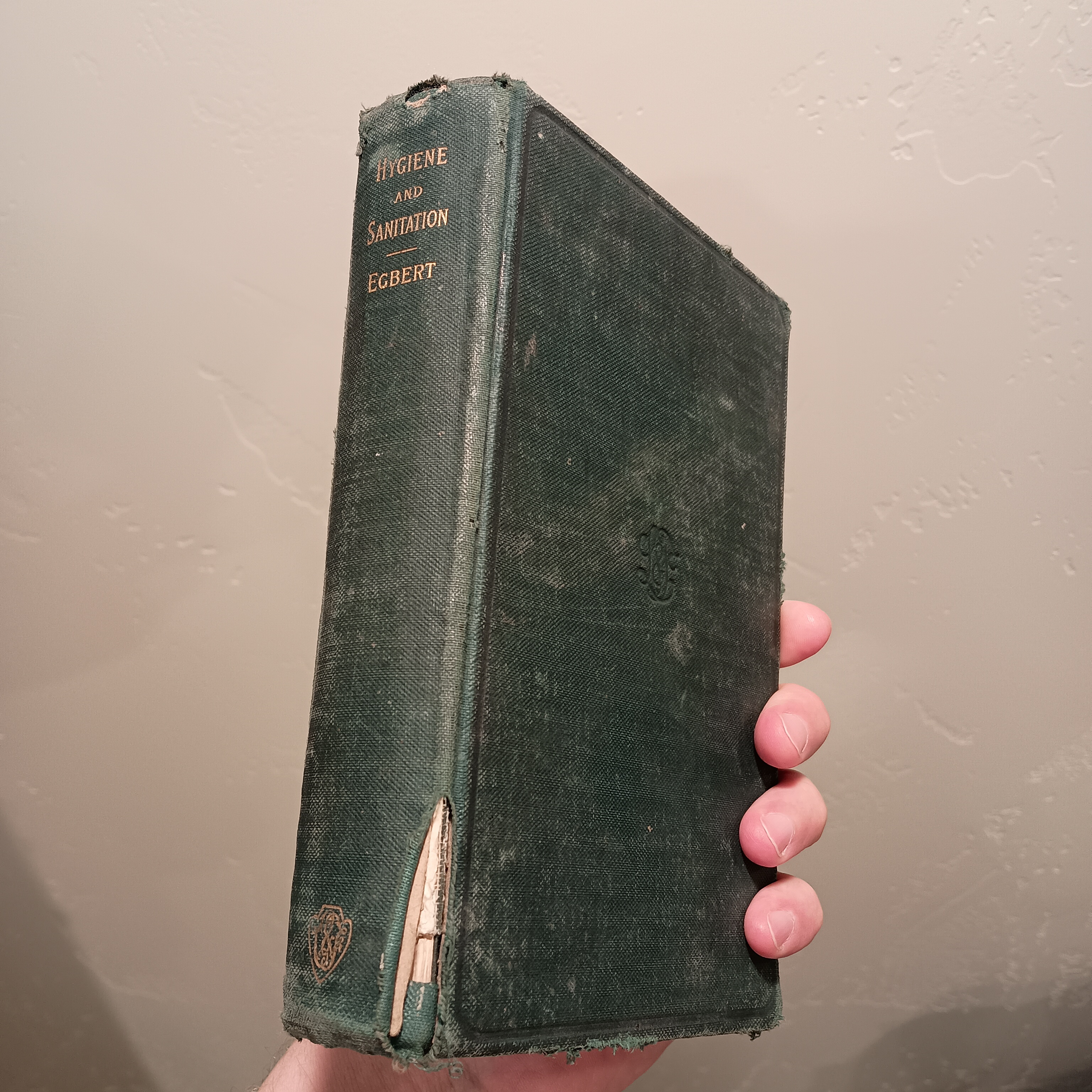


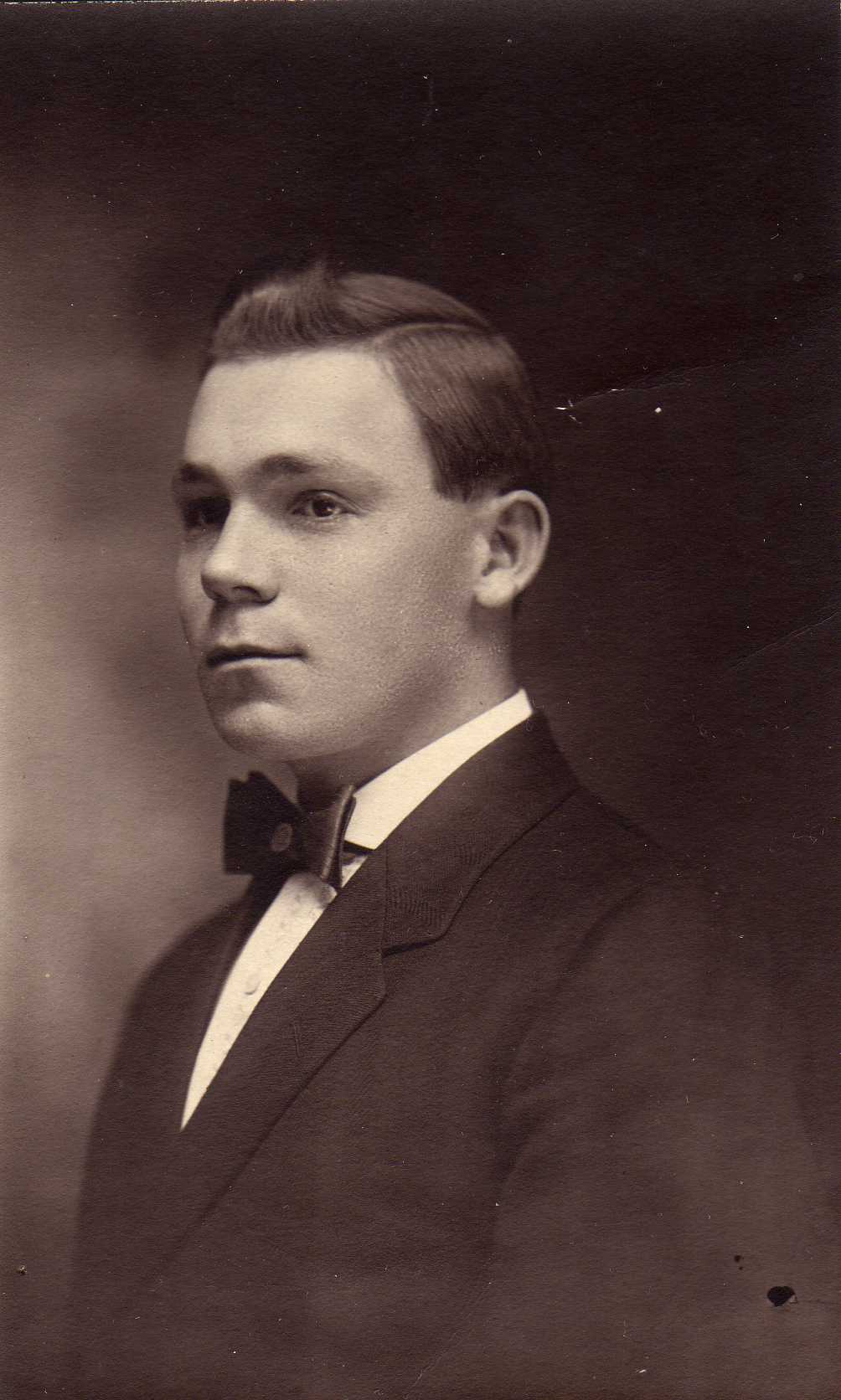


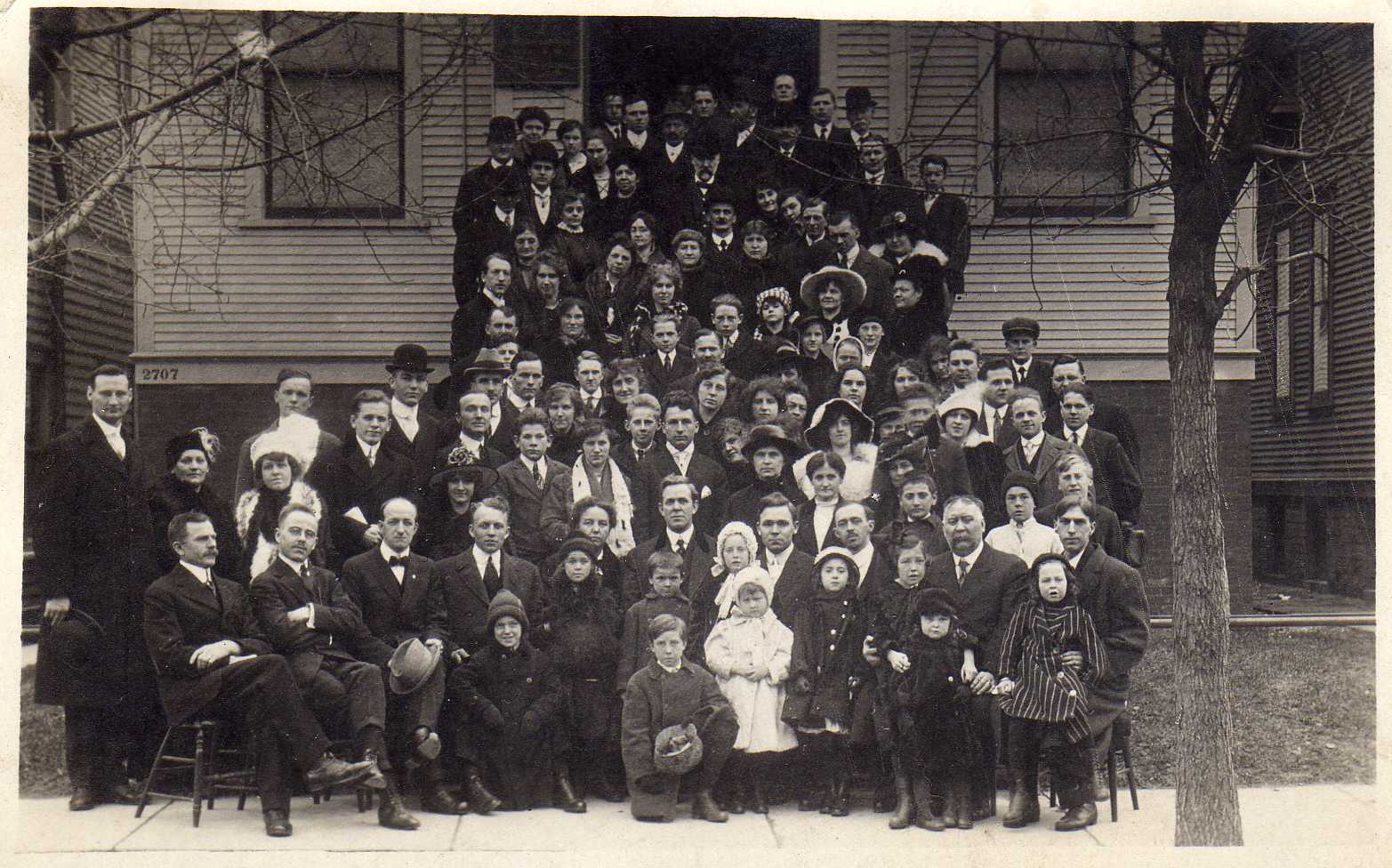
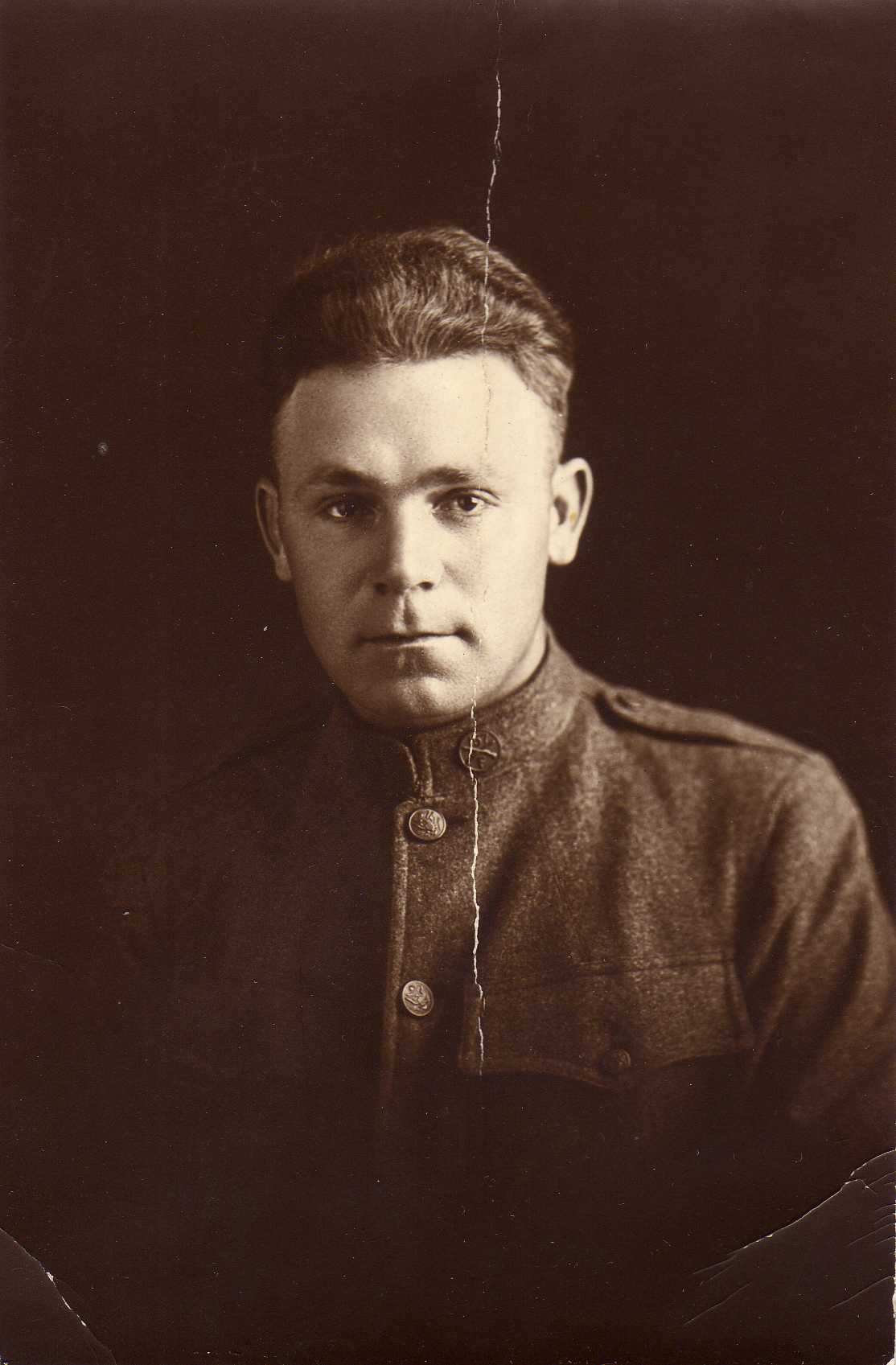

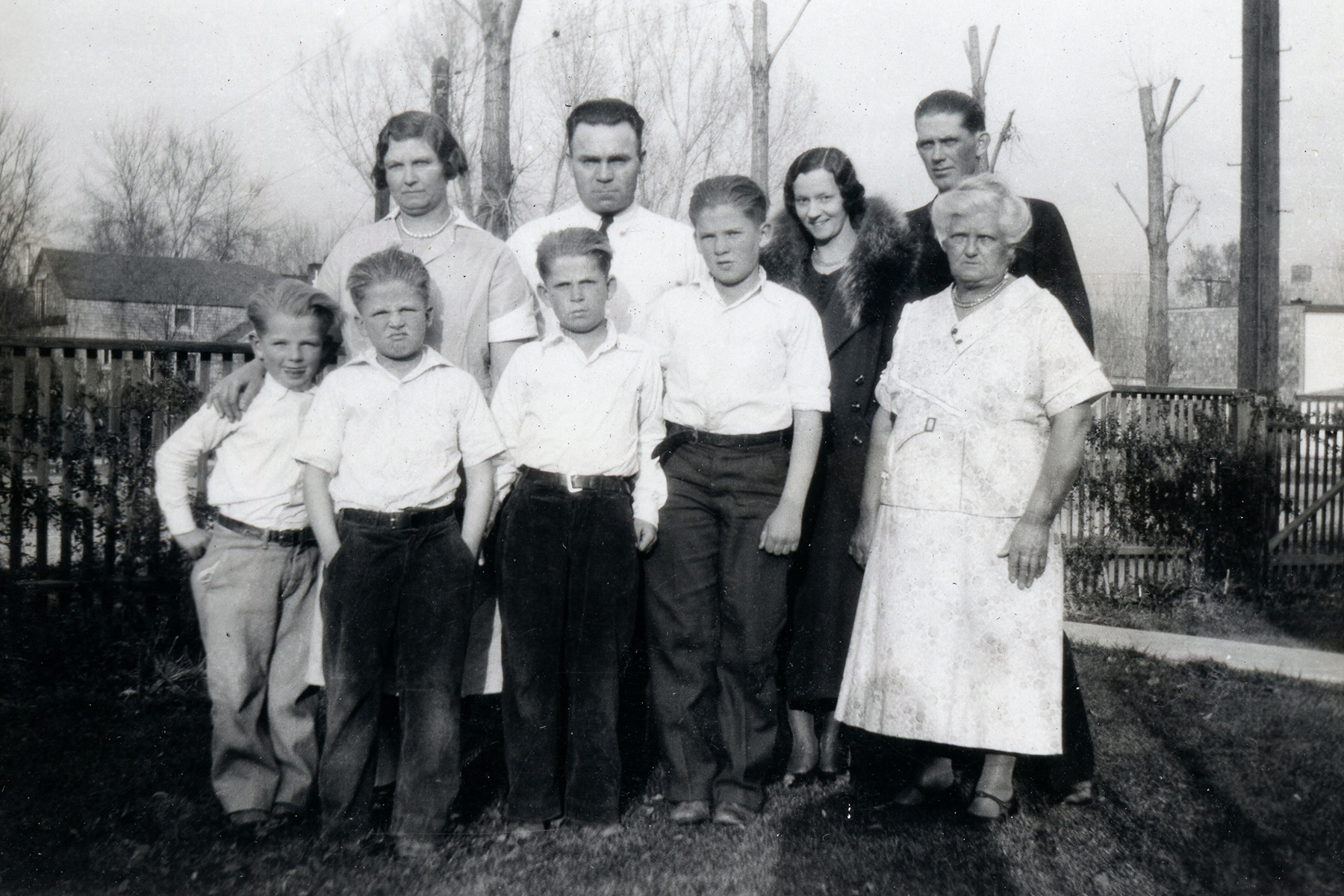

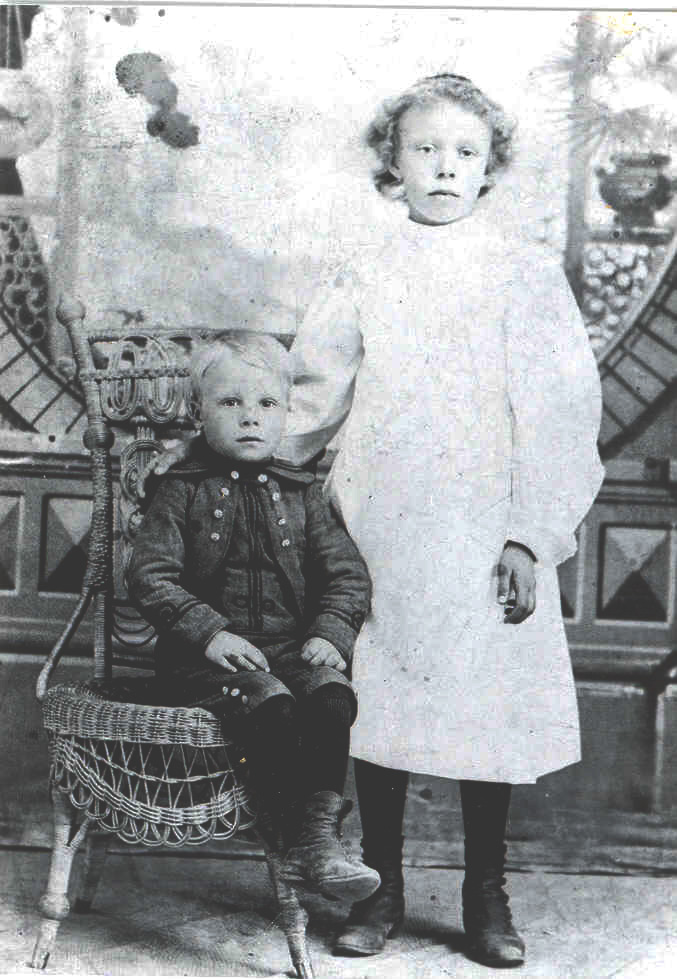


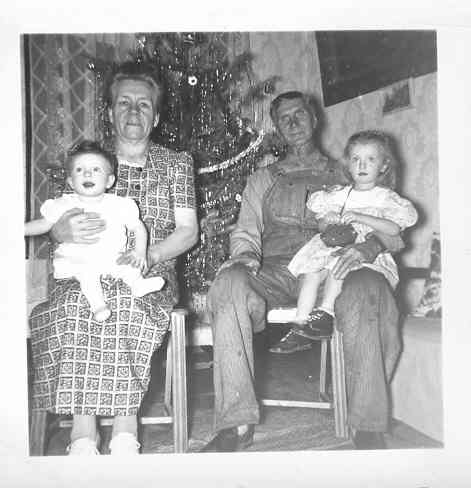
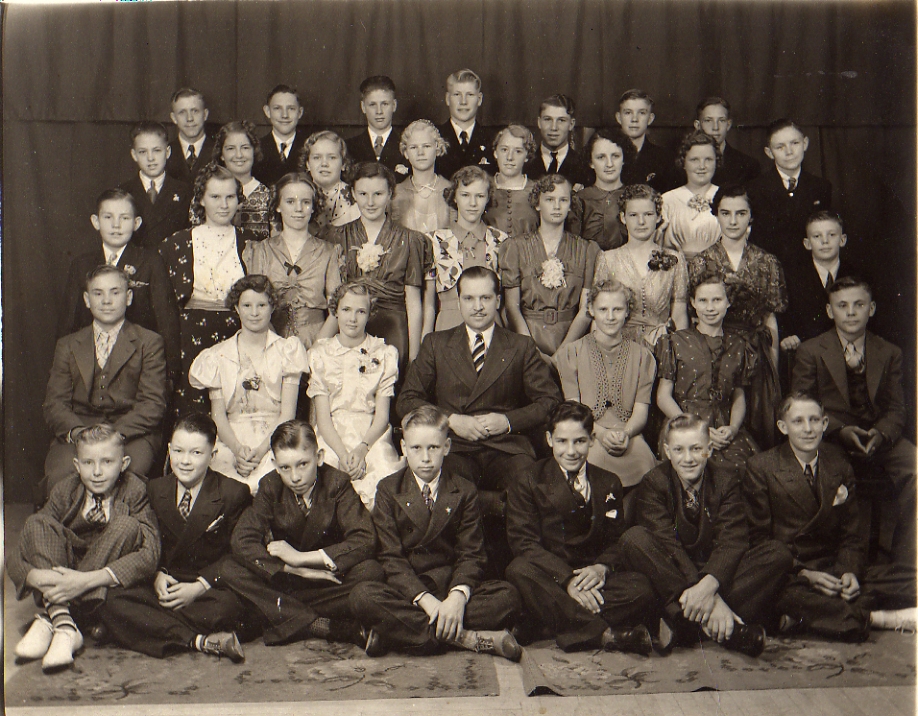


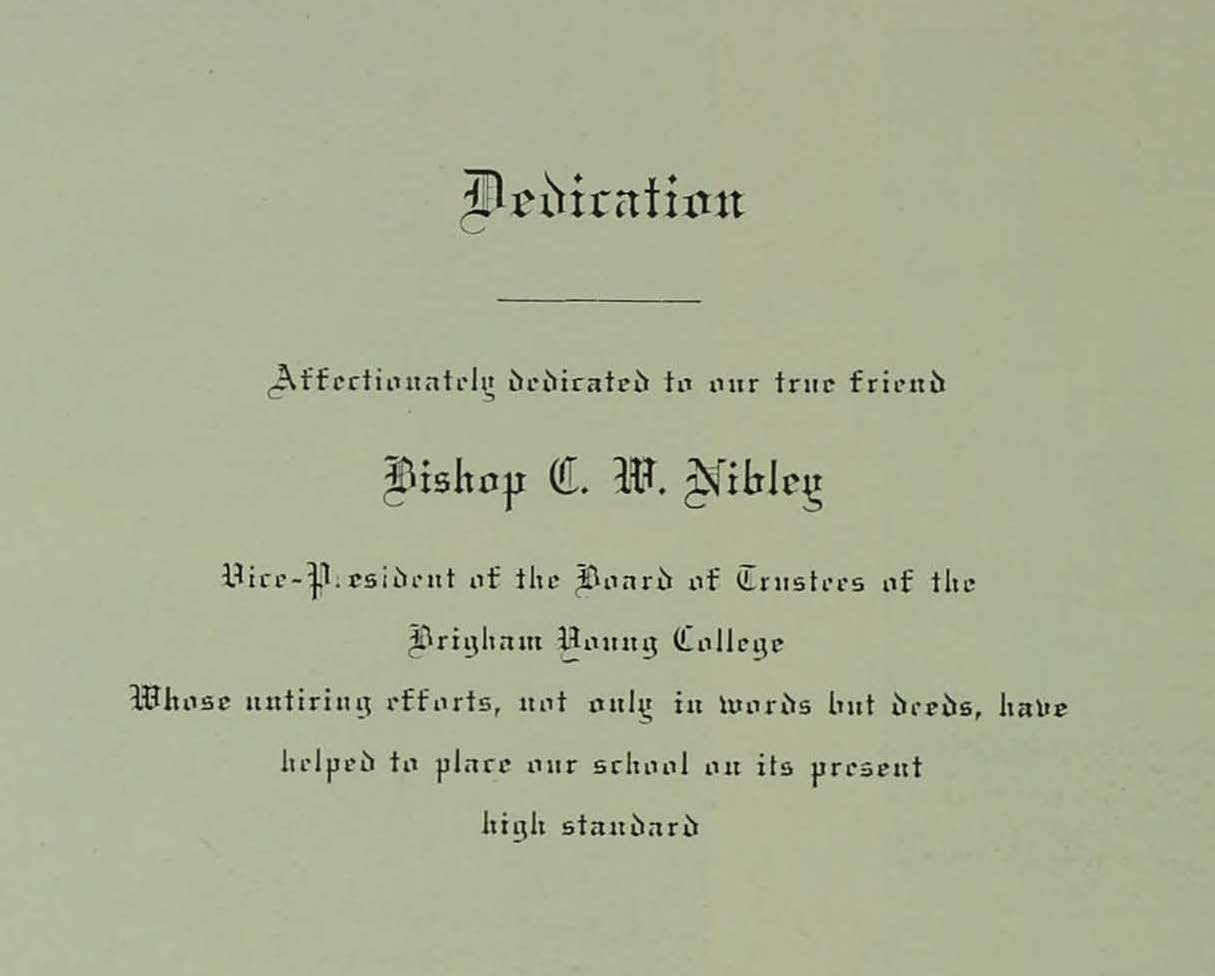
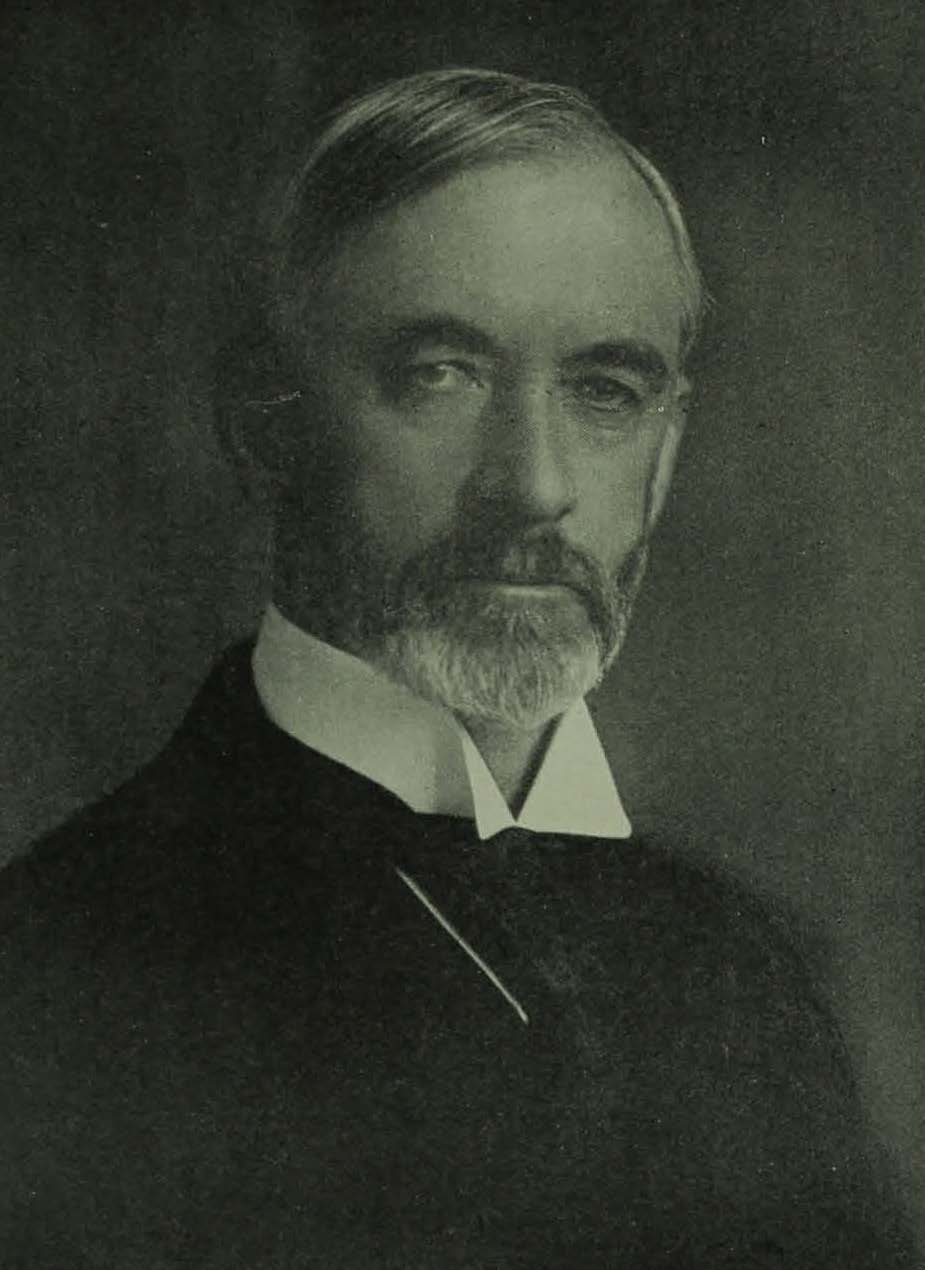


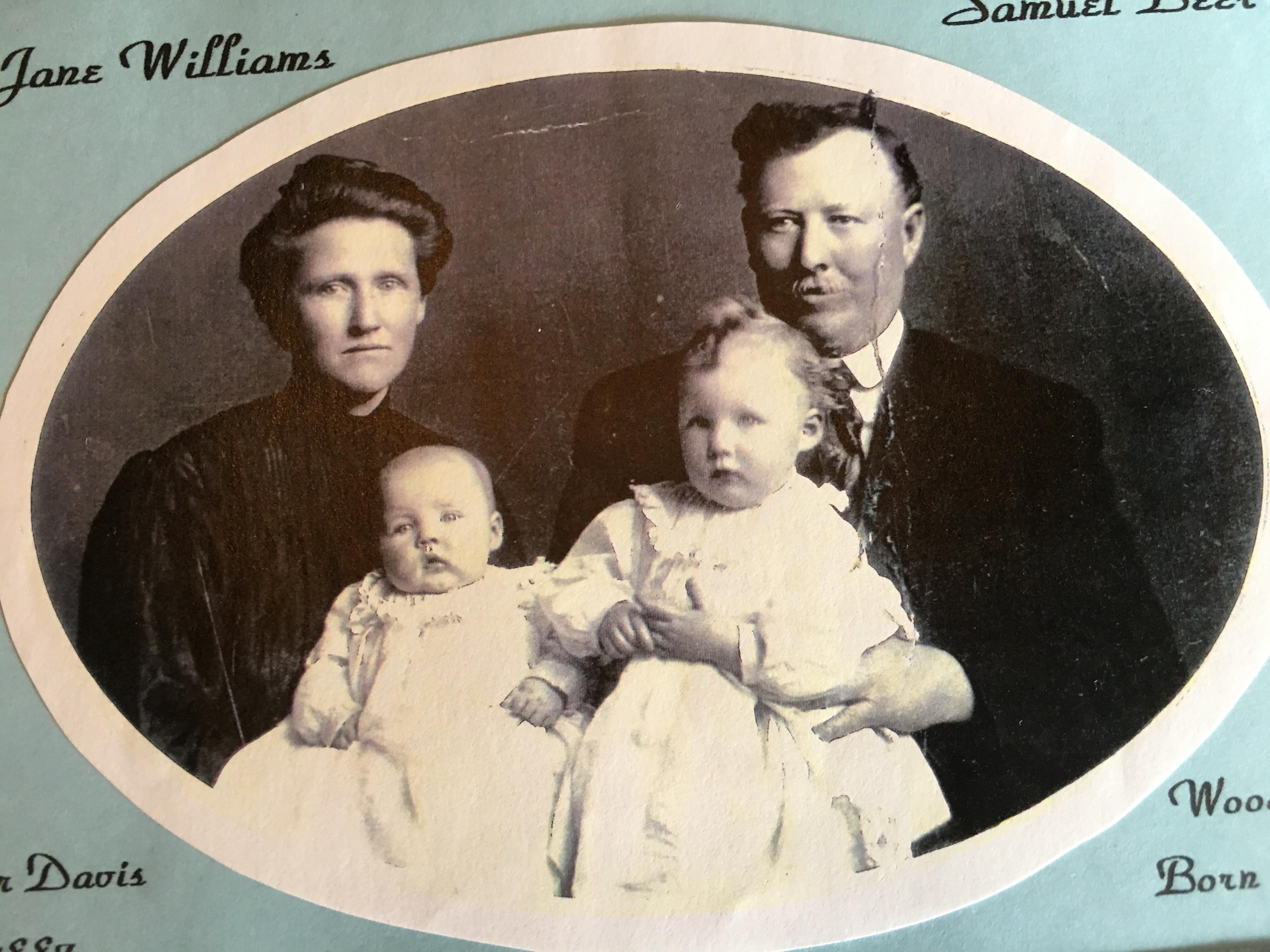
 Sagacity