As I worked through the photos of Dave and Betty Donaldson, I stumbled on some pictures sent from Dad. Dad, Milo Paul Ross, attended the 1957 Boy Scout Jamboree in Valley Forge, Pennsylvania. I thought I would share those photos along with some other items I have scanned related to that trip. Since there were a couple of photos from the 1958 High Adventure Trip, I thought I would include those too.
First, be aware that the Great Salt Lake and Lake Bonneville Councils published a book about their trip. “Onward for God and My Country” was the motto. I have scanned the entire book – it is provided below.
The book says the trip occurred in July 1957. The book provides plenty of photos of the highlights. These few photos show what Dad thought was interesting enough to take pictures.
The trip took them east through a variety of states. Included was Chicago, Detroit, and Palmyra. Stops included the Sacred Grove and Smith Farm. Albany, Springfield, Boston, and New York City.
Dad does not recall the names or even knowing anyone in the photos at Jamboree.
I remember Dad talking about the Statue of Liberty. They climbed the stairs to the crown. He also indicated that at that time they let some of them climb to the torch. It was a very memorable experience. He also mentioned the Empire State Building and Independence Hall in Philadelphia. Vice President Nixon addressed the Scouts.
Kammeyer’s supported the Jamboree.
For those LDS Scouts, Harold B Lee and Delbert L Stapley spoke to the boys on Sunday. Here is a letter Dad wrote home while there.
I previously wrote about Dad and scouting. Here is his Eagle Scout picture.
Milo Paul Ross achieved Eagle Scout
Here is a note Grandpa made about this picture.
Milo Ross, Bill McBride, Leon Taylor, Freddy Cox Eagle Announcement
Milo James Ross commented about Milo Paul Ross receiving his Duty to God award on 27 April 1959
Duty to God Award
Letter from Church Headquarters
Here are a couple of the photos from the Colorado River rafting trip. Dad thinks there are more photos. He does not remember or recognize any of the individuals in the photos.
Dad remembered they had to pull out of the river to go around the Glen Canyon Dam construction.
~
~
~
~
Both of these were trips of a lifetime. Neither have been forgotten.
Here are four more clippings from my Grandparents, Milo & Gladys Ross. Grandpa talked quite a bit of baseball in Plain City from his youth. I have shared this photo too where he and Elmer played together on the same team. Visiting with Grandpa, multiple baseball players came up, but Elmer was the one that went on to some fame. Plain City’s history includes excerpts on Elmer.
“Plain City hurler recalls years as major leager
“Relives baseball days; wishes he could start over
“PLAIN CITY – “Baseball is more than a little like life – and to many, it is life.”
“This now famous quote came from the lips of sportcaster Red Barber. But its meaning probably best parallels the philosophy of a mischievous-appearing 66-year-old with a flat-top haircut who toiled on the mound through 28 seasons of professional baseball and now wishes he was just starting his career.
“Elmer Singleton, whose right arm challenged now Hall of Famers while pitching for four major league teams, still lives and relieves at his Plain City home the game he feels has no equal. The lifestyle involved with the sport has been to the liking of the baseball veteran and his wife, Elsie.
“For his contribution to the game, Singleton will be inducted into the Old Time Athletes Association’s Utah Sports Hall of Fame in Salt Lake City ceremonies on Nov. 14.
“”I probably don’t deserve this,” Singleton said modestly of the upcoming induction. “It’s quite an honor for someone coming from a little town like this.”
“The lease Plain City native got his baseball start in that town. His father, a semi-pro, himself, started him pitching at the age of 10 years. While still a teenager, Singleton recorded a 15-0 record as a pitcher in both the A and B divisions of the Weber County Farm Bureau League.
“”We had a good team. The catcher was (the late) Dick Skeen. And, do you know what? I pitched to his son Archie when he was catching in the Boston Red Sox organization,” he said.
Following his good showing in the county league, Singleton was a highly sought-after item. He had been interested in the Cincinnati Reds since they had a class C farm team in Ogden, but a contract dispute nixed that. “They’d only offer me $75 a month and I wanted more,” he said. At the age of 20 he signed with the New York Yankees.
“During that next 28 years he spent four in the low minors, seven in the major leagues and the remaining 16 years with a number of teams in the Pacific Coast League. He took one year off when his oldest son was born.
“Although many of his most memorable performances came in the PCL, he pitched well with the Boston Braves, Pittsburgh Pirates, Washington Senators and the Chicago Cubs. “Hell, I helped Cooperstown pick up a lot of Hall of Famers,” he quipped as he told of pitching against the likes of Henry Aaron, Ted Williams, Jo DiMaggio and Stan Musial.
“Probably his best major league season was 1959 while with the Cubs as he led the National League in earned run average with a 2.72. “That was the year the Braves won the pennant and I was able to beat Warren Spahn 1-0 in a late season game. I also had wins that year over the Pirates’ 20-game-winner Bob Friend, the Giants’ Sam Jones and the Pirates’ Vernon Law.”
“The ageless Singleton later pitched a shutout for the Pirates at the age of 41, and hurled a no-hitter for Seattle of the PCL at 43.
“Regarded as a very hard-nosed athlete, Singleton chuckled when told of former Ogden Reds’ manager Bill McCorry telling Ogden newsmen in 1949 that “Elmer will make it. He’s about two-third ornery and that’s the main ingredient for being a good major league pitcher.”
“”Back then, knocking batters down was legal,” Singleton said. “I remember the day when pitching for the Pirates, the Braves were working us over pretty good so Manager Billy Herman put me in and told me to take care of things. I knocked everybody in the lineup down except Spahn and, ya know, the Braves didn’t score another run off me for more than a year.”
“Singleton displayed a “not guilty” expression when asked about his reputation among baseball players and t news media of throwing a spit ball. He wouldn’t confirm nor deny loading them up, just said “I had a good slider. My slider always broke down.”
He placed the blame for the present high salaries among players on the team owners.
“”The players any more don’t read the Sporting News, its the Wall Street Journal. I’m sure players enjoy playing the game as much now as we did, but they just want to be paid more for it. They turn everything over to their agents while they play.
“”But the owners brought it on themselves. It used to be a business for owners, but now its just a pasttime and tax writeoff,” Singleton said.
“After finishing his baseball career as a PCL coach in the Pacific Northwest in 1961, the Singletons resided in Seattle until returning to Plain City four years ago where they obtained the second oldest house in the town and remodeled into a comfortable home.
“He has no regrets over a life of baseball. “I wish I could start it all over. Look! I still have two straight arms,” he said has he extended them.
“What does he do to occupy his time now?
“”Oh, I help my brother some on his farm, garden a little and help people who need help. I also watch some baseball on television but sometimes that really disturbs me,” he answered.
“Tidbits from the Sports World
“Elmer Singleton of Plain City, righthanded hurler of the Pittsburgh Pirates, looks for the Pirates to be serious contenders for the National league pennant during the 1949 season. Elmer is at San Bernardino, Calif., now, awaiting the opening of spring training for the Pirates this coming week.
“Singleton started his baseball career with the Plain City Farm Bureau team prior to World war II.
“He pitched for Idaho Falls, Wenatchee, Kansas City and Newark before going to the majors. He joined the Yankees first and was later sold to the Boston Braves for two players and $35,000 cash.
“Pittsburgh obtained Singleton from the Braves for a fancy sum. He is ready for his third season with the Pittsburgh club.
“Last year Elmer lost three games by single runs. He was used most as a relief pitcher last season. He hopes to take his regular turn this season.
“Before leaving for the coast Singleton said: “I believe the National league race will be a thriller right down to the wire. Naturally I’m pulling for our club to come through and land the pennant.
“”My ambition in baseball is to get to play in a world series. I hope to realize this dream before closing my diamond career.
“Elmer Singleton Rates Praise
“The “best pitched game” ever witnessed at Seals’ stadium went down in the record book as a defeat for Elmer Singleton, San Francisco right-hander, writes James McGee, San Francisco newspaperman.
“Singleton started his baseball career with Plain City in the Weber County Farm Bureau league back in 1938. Since that timehe has worn a number of major league uniforms.
“Writes McGee: “The big Seal righthander pitched 12 1/3 innings of no-hit ball against Sacramento, April 24, yet lost 1 to 0.
“”That was the best-pitched game I ever saw,” his manager, Tommy Heath, declared. But, as it turned out, it was not quite good enough. Singleton, who set a Seals stadium record and etched his name in Seal history, had the bad luck to meet a tough opponent, Jess Flores, Sacramento’s veteran righthander.
“Flores was effective. The Seals got to him for eight hits, compared to the three singles from Solons finally wrenched from the reluctant Singleton. But the three Solon hits came in succession in the first half of the thirteenth inning, Eddie Bockman, spelling Manager Joe Gordon at second base; Al White and finally Johnny Ostrowski did the damage, Bockman scoring.
“Singleton admitted he was tiring in the thirteenth.
“”It wasn’t that I pitched to so many hitters. It was the strain of the thing,” he said. “All through the early innings I knew I had a no-hitter going. I had to be careful with every pitch. I never pitched one before and I wanted it.”
“Umpire Don Silva vouched that Singleton was careful.
“”He had great stuff. His fast ball was good, but his curve was particularly good. And he was hitting the corners of the plate all the time,” said Silva. “His control was almost perfect.”
“Walked Four
“Singleton walked four men, one of them purposely. He retired the first 18 men to face him before he faltered and walked Bob Dillinger, first man to face him in the seventh.
“In the seventh, the Solons had him in jeopardy for the only time until they finally scored.
“Singleton was within one out of tying the Coast league record for no-hit innings when Bockman got the first hit, a sharp roller through the hole between third and short, in the thirteenth.
“Dick Ward, pitching for San Diego in 1938, went 12 and two-thirds innings of a 16-inning game against Los Angeles without a hit. He eventually won, 1 to 0.
“Ironically, the greatest game pitched at Seals stadium in its 22-year history was pitched in virtual privacy. Only 790 spectators were there at the start with about 1000 fans leaving the park before the end of the game.
“Sports Tid Bits
“Great Falls postmen have accepted the challenge of members of the Ogden post office and have wagered $125 that the Electrics finish ahead of the Reds in the 1952 Pioneer league race.
“Harold Stone of the Ogden post office department informed this corner of the acceptance Saturday night. Two years ago the Ogdenites lost a similar wager.
“George East, landowner of some of the finest duck shooting grounds of the area, is living like Noah of old at his home in West Warren. Genial George says that instead of duck problems, the trash fish from the lower Weber are visiting him and drinking out of his flowing well.
“The ducks have been winging their way annually in George’s direction for nearly four score years. Some years there has been so little water that the migratory birds have avoiding George’s feeding and nesting grounds. Not this year, however, George says as there is more water flooding the pasture lands than in many, many years.
“Herb Woods went out to look the situation over this week. George told Herb he could find his favorite blind by use of maps and a deep diving suit – but Herb did not want to get his nose wet.
“Hal Welch, our so-called game expert, says there is consternation among the sportsmen about the pheasants that will be lost because of their nests being destroyed by the floodwaters. He admits that there will be no shortages of mosquitoes for sportsmen, however.
“Screwy Situations
“The 1952 baseball season still is an infant but here are some of the crewy things that have taken place:
“An umpire – Scotty Robb – got fined, for pushing of all people, Manager Eddie Stanky, of the St. Louis Cardinals.
“Leo Durocher of the Giants protests Augie Guglielmo’s call of a third strike on one of his hitters but nothing happens. We thought questioning a third strike meant automatic banishment.
“A Phillie, Stan Lopata, fails to run from third base with two out, the batter reaches first on an error and Lopata is left stranded as the next batter is retired. And Manager Eddie Sawyer was coaching at third.
“”The Giants are leading the Braves by two runs in the eighth inning yet Leo Durocher lifts his number four hitters, temporarily Henry Thompson, for a pinch slugger. You don’t lift your number four batter in any situation, says wise baseball men, but then who says Thompson (not Bobby) is a number four hitter?
“Roy Campanella, a good number four hitter, bunts in a tie game. Another old baseball adage is that “you don’t bunt your number four hitter.” We disagree with that one. In this case Campy’s bunt paid off for the Dodgers as the next batter singled home the winning run.
“W.S.C. Loses
“PULLMAN (AP) – Idaho defeated Washington State 15-12 in Northern division gold matches Saturday.
“B. Elmer Singleton
“PLAIN CITY – Bert Elmer Singleton, passed away Friday, January 5, 1995 at his home in Plain City. He was born June 26, 1918 in Plain City, Utah, a son of Joseph and Sylvia Singleton.
“He married Elsie M. Wold January 20, 1939 in Ogden, Utah.
“He was a member of The Church of Jesus Christ of Latter-Day Saints.
“He played professional baseball for twenty-four seasons, originally signing with the New York Yankees Baseball Organization. His chosen vocation provided he and Elsie the opportunity to live in Pittsburgh, Pa., Boston, Mass., Chicago, Ill., Havana, Cuba, [Caracus, Venezuela], Seattle, Wash. and several other cities in the Midwest and on the West Coast.
“He retired from professional baseball in 1964 and returned to Plain City in 1980. Upon his return he actively lobbied for the Meals on Wheels program for Plain Cities Seniors. He helped with 4-H programs and worked with gifted children.
“He was chosen as Player of The Year for the State of Utah in 1939. He was inducted into the Utah Sports Hall of Fame in 1984. He was chosen as the Pacific Coast League most Valuable Player for years 1955 and 1956.
“Surviving are his sons, Joe F. of Chugiak, Alaska and Jerry E. of Tacoma, Washington and his brother, Don R. of Plain City. He has two grandchildren, Joe E and Shelby J., residing in Anchorage, Alaska.
“He was preceded in death by his loving wife Elsie on January 31, 1988 and brothers, Earl and Harold.
“Funeral services will be held Thursday, January 11th at 11 a.m. at Lindquist’s Ogden Mortuary, 3408 Washington Blvd.
Friends may call at the mortuary on Wednesday, January 10th from 6 to 8 p.m. and Thursday 10 to 10:45 a.m.
“Internment, Plain City Cemetery.
Back (l-r): William Freestone (manager), Norman Carver, Glen Charlton, Fred Singleton, and Elmer Singleton. Middle: Clair Folkman, Dick Skeen, Albert Sharp, Abe Maw, Milo Ross. Front: F. Skeen, Walt Moyes, Arnold Taylor, Lynn Stewart, Theron Rhead.
Hygiene and Sanitation Textbook used at Brigham Young College
On the 15th I wrote about my Grandfather’s 100th Birthday (Norwood Jonas) and noting it with a newspaper article found in a textbook that belonged to his parents. This is that book. This was a textbook for my Great Grandfather at Brigham Young College in Logan, Utah.
Joseph Nelson Jonas graduated from Brigham Young College on 3 June 1915. That is 109 years ago tomorrow. Here is a copy of his Diploma. I have written about his history previously. I have also written about his time at BYC previously too.
Joseph Jonas graduation diploma from Brigham Young College in Logan, Utah
The textbook is also interesting. It appears Hygiene and Sanitation written by Seneca Egbert has some serious staying power. I found this history of Mr. Egbert.
Dr. Seneca Egbert (1863-1939) and Nancy Egbert
“Dr. Egbert was a physician. He graduated from Princeton University in 1884 and received his medical degree from the University of Pennsylvania in 1888. Before graduating, Dr. Egbert had been a demonstrator of hygiene in the Medical Department of the University of Pennsylvania. While in this position, he worked with Professor Samuel G. Dixon to establish the first Laboratory of Hygiene in the University, and was made lecturer on hygiene for 1890-1891. In 1892 the Drexel Institute of Philadelphia hired Dr. Egbert for a similar position. In 1893 he was elected Professor of Hygiene and Sanitation in the Medico-Chirurgical College of Philadelphia, appointed Vice-Dean of the same college in 1897, and elected Dean in 1898. Once the Medico-Chirurgical College merged with the University of Pennsylvania, Dr. Seneca became a professor of hygiene. He was president of the Radnor Township Board of Health and he was esteemed as a public health authority.
“In 1897 Seneca Egbert and his wife, Nancy Bredin Egbert, bought part of the old Towne family farm. The home, now owned by Fred French, is located on Blueberry Lane.
“Dr. Egbert was widely published. His book, Manual of Hygiene and Sanitation (seven editions), appeared first in 1898, as did his Home Sanitation, a Manual for Housekeepers. In 1919 Personal Hygiene for Nurses was published. He also wrote numerous articles for medical journals, maintained an impressive lecture schedule, and was a history buff who strongly advocated for the creation and maintenance of historic sites. He was not hesitant about venturing his opinion openly, and on at least two occasions made suggestions to Philadelphia politicians which received limited consideration. Dr. Egbert “was an advocate for ‘pure air, pure milk, and pure water.’ He felt that if people in the United States had these ingredients the average span of life would be increased by seven and one-half years.” He pursued this philosophy in an article, “Pure Water for Philadelphia,” which proposed damming the Mullica River and its feeder streams at the head of the tide to form a reservoir all the way to Atsion, NJ, and then pump to a reservoir on the western side to flow towards the Cooper River and another reservoir, thence to be pumped under the Delaware in order to relieve the poor water quality in Philadelphia . It would have pumped a relatively small quantity, 450,000,000 gallons of water per year, to start. The potential value of his plan was not recognized, either then or, to judge from a 2011 Web comment, now.
“On another issue, the City of Philadelphia proposed clearing all buildings from three city blocks. In response to a request for ideas on how to use this space, Dr. Egbert suggested allocating some of the land to the federal government, some to the state and some to the city of Philadelphia. On a strip of land extending down the center of the whole space, Dr. Egbert suggested constructing thirteen buildings representing the thirteen original colonies, and calling the area Independence Square. Each building would house the contributions made by that state towards the forming of our Union. “The idea was considered ludicrous in design and in scope. Dr. Egbert was a physician, not an architect.”
“Despite his critics, Seneca Egbert was doggedly determined to maintain the quality of life for Americans. For example, he embraced the newest form of transportation, bicycling, and “saw cycling as a remedy for dyspepsia, torpid liver, incipient consumption, nervous exhaustion , rheumatism, and melancholia.”
“A portrait of Dr. Egbert was painted for the University of Pennsylvania by Nancy Egbert’s brother, Rae Sloan Bredin (1870-1937). Mr. Bredin was a member of the New Hope group of American impressionists and several of his paintings are owned by New York’s Metropolitan Museum of Art. Mr. Bredin was co-founder of the Philadelphia School of Design for Women and the New York School of Fine Arts. His portrait of Dr. Egbert hangs now in the home of Dr. David Egbert Sparks, Dr. and Mrs. Egbert’s grandson, who is a genealogist and retired head of libraries at Notre Dame.
“Like Dr. Thomas Montgomery Lightfoot, Dr. Egbert was a lecturer in the winter lecture series held during the years 1887-1895 sponsored by the Academy of Natural Sciences. Dr. Egbert’s lecture was titled, “The Prevention of Disease and the Preservation of Health.”
“Nelson’s own Parke Struthers wrote in A History of Nelson that like Dr. Egbert’s good friend Dr. Thomas Montgomery Lightfoot, Seneca Egbert “met his fellow Nelsonians on an equal footing, a trait in human relations reserved for only the Great.” Mr. Struthers also states that the Egberts were “gracious, active in town affairs, and interested in the people of Nelson.” With their friends Dr. Lightfoot and his wife, Dr. and Mrs. Egbert served on the committee to make arrangements for the celebration of the one hundred and fiftieth anniversary of the first settlement of Nelson 1767-1917.
Inside cover of Hygiene and Sanitation
Here is the writing inside the book:
Joseph N. Jonas 1915
394 So. 1st East
Logan, UT
Jonas Joseph
Richmond, Utah
1915
First written page inside Hygiene and Sanitation
Here is the writing on the second page of the book:
I have two copies of the History of Plain City, Utah. The front indicates it is from March 17th 1859 to present. As far as I can tell, the book was written in 1977. At least that is the latest date I can find in the book.
One copy belonged to my Grandparents Milo and Gladys Ross. My Grandpa has written various notes inside the history which I intend to include in parenthesis whenever they appear. They add to the history and come from his own experience and hearing. This one is fun as it includes the history of my Great Great Great Grandparents William and Mary Ann Sharp and also references my Great Great Grandfather Milo Riley Sharp.
I will only do a number of pages at a time. I will also try to include scanned copies of the photos in the books. These are just scanned copies of these books, I have not tried to seek out originals or better copies.
History of Plain City March 17th 1859 to present, pages 58 through 75.
William MATHERS
Submitted by Augusta Nash
William Mathers was born in Scotland and came here as a convert to the church. He was a sort of an eccentric man, but he had many special talents and hobbies. He had the finest gun collection for many miles around and loved to decorate the stock with designs of inlaid gold. He was very efficient in this. He also was a taxidermist and did beautiful work in this field. There were few who could match this hunting abilities and the days when few men had enough money to engage in the sport, he became the guide and leader for many well to do men from the city when they came out to hunt. He also was the quarantine official in the days when contagious diseases were quarantined, and he filled this capacity with the utmost integrity, believing absolutely in the law.
Mr. Mathers withi his bag of ducks in front of his shop where he displayed his guns and taxidermy
FRED J. KENLEY
SUBMITTED BY AUGUSTA NASH
Fred J. Kenley started working as a rural mail carrier in 1902, from the main Post Office on Twenty Fourth Street in Ogden. A branch was soon established at Five Points known as Station A. From there two rural Carriers (Routes 2 and 3) and one city carrier sorted their mail and left for their routes. Mr. Kenley’s route (2) consisted of delivery through Harrisville, Farr West, Plain City, Slaterville, and Marriott. A distance of about thirty miles. His first conveyance being a horse and cart, later a buggy and horse. In 1916 he purchased his first Model T Ford. There is much that could be written about the difficulties of delivering the mail; bad weather, bad roads, etc., but he never missed one day. I became his substitute for a long time. He was retired in 1933 by Pres. Roosevelt to help provide jobs to younger men.
Mr. Kenley served the community in other ways. He was a great lover of music and played the clarinet. He with his brother William, who played the violin, and a friend Seth Harper, who played the piano, played for dances all over Weber County. For m any years they entertained in activities all over. Then Mr. Kenley had a choir. In those years almost everyone belonged to the choir. Their weekly practices were held and nothing took place over them. They sang for church, and for entertainment all over Weber County. He took great delight in the accomplishments of this choir. It was second only to the Ogden Tabernacle choir. He was a great scholar and teacher and a Scout Master.
Fred J. Kenley-his first conveyance being a horse & cart
Fred J. Kenley-his later conveyance being a horse & buggy
HISTORY OF PLAIN CITY AS SEEN BY MERLIN ENGLAND
I was born on December 17, 1895, on the same lot that now live on, in a little adobe room. Walter Draney was born on the same day in Plain city. We went to school together and he was a very dear friend. When I was six years old the school was where Walt Christensen lives now. If memory serves me right, Elmer Carver and I are the only two left that attended that school. I can remember three of my teachers; one was Merrill Jenkins’ mother, one was Mae Stewart, who lived just across the road from where I live now. The other was Mrs. Skeen, Ivy Carver’s mother. I can remember Dad tell about the first school which was on the south side of the square. Every Monday morning each of the students took 25 cents to pay the teacher for her wages.
When I was a Deacon, our Quorum took care of the meeting house. There were two stoves, one on each side. It was the Deacon’s work to keep coal and wood for the fires in the wintertime. Richard Lund was the Quorum teacher. Our meeting was Monday night. He had a good singing voice and we had to sing or he wanted to know why. On Saturdays, we would take two horses, a hay rack and our lunch to the north range and cut sagebrush for all the windows in Plain City. The next Saturday we would go in groups and cut the sagebrush into kindling for these ladies. We had a lot of good times and as I remember, there was very little swearing or taking the Lord’s name in vain at any time.
When we went to school, a child’s birthday was celebrated by a surprise party. We had many good times together. Our parties usually broke up at no later than 9:30, I can remember when the dance hall stood where Lynn Folkman’s new home is now. Sometimes later a dance hall was built west of where the church now stands. It later burned down. Many people enjoyed good times at the old dance hall. We had a picture show on Saturday nights. Pete Poulsen and William Hunt took charge of the tickets.
In those days my Father ran a store on the lot where I now live.
It would take all day with team and wagon to bring the dry goods from Ogden. I can remember when the first telephone came to Plain City. My Father gave the telephone company permission to put the switchboard in the back of the store. They took two of my sisters to be switchboard operators. Father and Abram Maw’s grandfather owned the first two telephones. When the phone was put throughout the town, it cost $1.00 a month. Many the night my Father came and got me out of bed and I saddled my pony and delivered a telephone message of a death or of a sick friend to someone in Plain City at all hours of the night. If you needed a doctor, it would take an hour for him to get out this far because it was all horse and buggy. If he needed to stay into the night, it was up to the person who called him to see that his horse was taken proper care of.
Some of the women brought their butter to trade for groceries. Mostly it was a 20 cent a pound trade. Salmon was 10 cents and 15 cents a can. You could buy a work shirt for 65 cents, a pair of shoes for $2.00
The first job I had to earn money was driving cows. I had to drive Father’s cows, so William Hunt and James Stewart hired me to drive their cows. I received 50 cents a month from each of them.
At one time in Plain City there were many people orchards. A lot of the apples were hauled to Salt Lake by team and wagon. It would take three days to go. If you were lucky, you could sell the apples in one day at anywhere from 40 cents to 60 cents a bushel. It would taker a whole day to get home again.
I can remember the first canning factory. They had to haul the cans from Ogden by team and rig with canvas wrapped around them. After the tomatoes were canned, they had to haul to West Weber or Ogden by team to the railroad.
My father, Thomas England, John Maw, and Lyman Skeen were the three men appointed to the committee to bring the railroad from Harrisville to Plain City and Warren. That increased the sugar beets by many acres because the railroad would do the hauling out.
The first gravel roads we had in Plain City were made with rock that was crushed at the west end of Pleasant View, North Ogden, and Ogden, and was hauled to Plain City and Hooper by team and wagon. The men would do it in the winter when work was hard to find. One man would put in three days a week, and then another would work the other three.
I married Florence Taylor February 4, 1914, in the Logan Temple. In 1916, I bought the old Boyd place where the family then lived. There was no school bus at the time, so the children had to get to school the best way they could. Then they would hurry home from school to do their chores and help their mother with dinner. I spoke to the picture shows they had on Saturday nights. Our car would leave home with our girls in it. By the time we got there, the car was full with one or two on the running board besides.
I hauled milk by team and wagon to Farr West to the skimming station and then hauled the whey back to the farmers. The plant was located near where Ernie Jensen now lives. Two years later, Weber Central Dairy brought the ole Black and Griffin Building on 26th and Wall, and I hauled milk there for six years.
When I was hauling milk, George Palmer, who was crippled quite badly, was put in as Bishop. He didn’t have an automobile and so once a month when I would pick up his milk, he would put the Church money in three different money sacks to three different banks and give it to me. I would take the money to the banks and being the receipts and the sacks back to him. Bishop Palmer told me many a time that he didn’t know how he could have done that service.
I am 80 years old. I have a wonderful family and I think the world of them. I good health and I am thankful for my parents and my name. I have lived in Plain City all of my life and I have many wonderful friends.
The year 1905 is the date given that the first telephone came to Plain City. The first telephone switchboard was located in the store owned by Thomas England. There were three long-distance lines. A system of record keeping was to have twenty calls, then registered.
The first exchange was operated by the family of Mr. England. Lillian England was the chief operator. Her salary was $25.00 a month. Lester England, Wilford England, and Hazel Kennedy were relief operators. They were paid $15.00 a month for their services. Service was provided for Weber, Warren, Plain City, Farr West, and possibly Slaterville.
Later, the telephone company lent money to build a telephone exchange building on the spot where marvel England’s home now stands. It was dismantled when no longer needed.
Telephones were few and far between in early Plain City. Mr. Thomas Jenkins told of walking from his home to the home of Henry T. Maw to use the phone in the middle of the night.
Later on, more telephones were installed; party lines with 8 to 10 families were common. The telephones helped to bring the boundaries of the town closer together.
The box-on-the-wall type of telephone was later replaced with the more modern cradle-portable phone. Then, a great step was taken with a few people having private lines, and reduction of parties on a line. This really helped to have all those rings eliminated for every other party on the line. Then more recently, many homes have telephones in the various rooms of their homes.
In the summer and fall of 1973, the biggest change took place. The old telephone lines were replaced with an underground cable with many lines in it. This helped most families to now have a private line. This removal of the old poles and wires has added much to the appearance of the town.
On December 17, 1976, Merlin England said, “today is my eight-first birthday, and it’s the first day in my life I have ever known when there wasn’t a telephone pole one-third of the way through the lot on the east side. Other poles have replaced the original one during my life time, but today the telephone company came and finished putting our lines underground and removed that pole.”
There are a few places in Plain City where the cable is still in the air. The initial project for private line services with the cable placed underground was during the spring and summer of 1973. The completion date for the big push was October of 1973.
The first telephone switchboard for Plain City was located in the back of the store owned by Thomas England. It was located on the same lot where Merlin England was born and lives, 4275 W 2650 N. The store was just west of the England home. The first two telephones in Plain City were those of the Senior Abram Maw and Thomas England. The charge of service was $1.00 per month. If a connection was wanted outside of the Plain City area, Lillian England, the switchboard operator would connect with the Ogden operator who would make further connections. There was no dial system at that time.
The telephone office and switchboard was later moved to the location on the lot where Marvel England now lives.
Merlin England and his wife, Florence, lived in this telephone building part of 1914 and 1915.
Merlin England and his wife, Florence, lived in this telephone building part of 1914 and 1915.
William Dolby Skeen
WILLIAM DOLBY SKEEN
SUBMITTED BY BEVERLY B. EDDY
William Dolby Skeen and Mary Davis Skeen were among the first settlers of Plain City. William Skeen owned the first settlers of Plain City. William Skeen owned a race track in the south end of Plain City, which was then called four mile, now known as Pioneer Village. He owned two famous race horses, which he brought from Europe.
William Dolby Skeen also built the first rock house in Plain City. The rocks used to build this house were hailed from the Hot Springs Mountain area.
Old Rock House build by William Dolby Skeen as it appears today.
THE OLD ROCK HOUSE
SUBMITTED BY NELDA ETHERINGTON
William Dolby and Caroline Skeen’s log house was one of the early ones in Plain City. After living in it for a short time, he added an adobe section to it. In 1862 he erected a stone house securing his rock at the Utah Hot Springs and hauling it in by oxen. William Sharp, an early brick mason, laid the stones and helped Thomas Singleton in doing the carpenter work. Mary Anne Skeen Etherington was born in the log cabin and was one of the first babies in Plain City.
Ebenezer Clawson Richardson purchased the rock house from William Skeen in 1868 and it remained in the Richardson family for almost a hundred years. The rock house is now owned by John Etherington, a Great-Grandson of William Skeen.
Two of Ebenezer’s three wives shared the house. Polly Ann Child, wife #2, had the west three rooms and her sister wife #3 Phebe, had the east rooms, with the kitchen in the center. Both shared the “Front Room”. There had been a stairway in the Front Room, but, it was taken out to make more room so the boys had only a ladder to a small balcony on the south side to get to their bedrooms.
The Richardsons were noted for their hospitality, and many parties and dances were held in the big front room. Ebenezer played the fiddle and also played it for the community dances and entertainment. At one time the boys had no shoes, which was not unusual for that day, so they pooled their money and bought a pair of shoes and the boys took turns wearing them at the dances.
Ebenezer was forced to go to California to work in the gold mines in 1873. While he was there his foot was crushed by a falling rock. Infection set in and he died on September 27, 1874. Two sisters Polly and Phebe continued to share the home until 1905 when Polly Ann died and Phebe bought her share.
The children grew up and one by one left to make homes of their own. Some of the boys brought their brides home for awhile. While one of the boys and his wife were living there, they had a set of premature twins which were buried under the grape vines that used to be in the center of the lot.
In September, 1907, Phobe’s son Charlie, decided to buy the Old Rock House with his wife Amanda, and their six children Joe, Sarah, Mary Lodisa, Orpha, and Angeline. They left Pocatello, Idaho with all their worldly belongings in two covered wagons. The Old Rock House was alive again with the clatter and clamor of children after having stood empty for a few months.
They loved it there and soon had a lot of dear friends. The three Grieve girls, Laura, Emma, and Ellen, the three Mc Elroy girls, Zara, Vesey, and Helen, and the Richardson girls all grew up like one happy family, sharing fun times and sometimes some squabbles, but always making up like real sisters. The Grieves’ had three tots, Willie, Violet, and Pete, little cherubs, mothered by all the girls until they didn’t know which house was their home. It was a lot of fun to sleep in the spooky upstairs in the hayloft in Mc Elroy’s barn, while Mary and Zara competed in who could tell the scariest ghost stories.
Sometimes, Mr. Mc Elroy would bring his Edison Phonograph over and play records all evening. Amanda Richardson always found something to serve for refreshments and Charlie would bring in a long plank to place across two chairs to make seating room for the neighbors and children. One of the favorite records was “Wearing of the Green” by Henry Louder.
The first Richardson to live I the Old Rock House were Ebenezer and Polly. Their children were Warren, Ebenezer, Angeline, and Levi. Phebe’s children were Amanda, Charles, Franklin, Cornelius, Chancy, Alfred, Myron, William Ezra, and Joseph having been born in the rock house. Ebenezer C. Richardson was the father of 34 children, not all which lived to maturity.
The old Rock house has been a home to many people, its memory will live on for a long time.
Skeen Family, Back (l-r) Alex, Catherine, and Frenz Denial Skeen; Front: Clara Loretta, Mary Davis, and William Delbert
Mary Davis Skeen was born in Llanelly, Wales, and arrived in Salt Lake Valley, Christmas Day 1856. On March 17, 1859, she arrived in Plain City with the first settlers. She was then a girl of thirteen years and was one of two single girls in the entire company.
Mary Davis Skeen went through all the hardships incidents to a pioneer life, but always bore these hardships bravely.
During an epidemic of small pox, she buried her last child. Three boys in all. Two of these children died in the same night. They were all buried at night and through fear of the dreaded disease, friends dared not to go near to offer their sympathy, in this dark hour. Six children were born to her after this.
It is believed that Mary Davis’ mother, Mary Eyenon Davis, had the first flower garden in Plain City.
MARY ANN BAILY PADLEY SHARP
WILLIAM SHARP
William Sharp, born December 10, 1825, in [Misson], Nottingham, England, married Mary Ann Padley in St. Louis. She was born November 28, 1828, in [Mattersey], Nottingham, England. They came across the plains in the Moses Clawson Company arriving in Salt Lake on September 15, 1853. They went to Lehi but the land was not too good and there was no good grazing for their cattle, so they left with the main group that settled in Plain City, arriving March 17, 1859. The children that came with them were Lorenzo Padley, Annie Elizabeth, and Milo Riley. Their daughter, Evelyn was the first white baby girl born in Plain City on October 12, 1859.
The family lived in a wagon box while they built a log and adobe cabin. William Sharp was a carpenter and mason and made some of the first adobe. He helped build many of the first buildings in Plain City.
Submitted by Albert Sharp
JOHN MAW
SUBMITTED BY IRENE SKEEN AND
DOROTHEA DeYOUNG
Many many men did a great deal to make Plain City what it is today and one of these was John Maw.
He was born in Plain City, January 16, 1868, the second son of Abraham and Eliza Tripp Maw, who had migrated here from Root, Lincolnshire, England. He received his formal education in the Plain City Public School and the Weber State Academy.
He married Annie C. Poulsen, daughter of Andreas Peder and Hansene Hansen Poulsen, November 5, 1890, in the Logan Temple. From this union came eight children, Wilmer J., Abram, Irene, and Ira (twins), R. Rufus, Gilbert E., George C., and Dorothea.
Mr. Maw, soon after his marriage, was associated with ZCMI store in Plain City for five years, following which he spent many years in the sheep business, along with farming. He had a large farm and gave many young men, at that time employment. To some, it was a lifetime career. At that time John Maw was given credit for “having taught many young men in Plain City to work”, because he was such a hard worker himself, he expected an honest day’s work for an honest day’s pay from those who worked for him. It was often said, “We receive extra pay for working for John Maw because of the extra good food his good wife serves.”
Much of his farming during his lifetime also included truck gardening. He was also engaged in the cattle business which he remained active in until the time of his death. One unfortunate experience he had with cattle happened in 1932. The cattle were crossing Frist Creek, north-west of Plain City, when the ice broke. He lost 42 head of cattle. He made the statement “Well, those who have them have to lose them, because the ones that don’t have them can’t.”
In 1896, Mr. Maw, with others, was instrumental in building canning factory in Plain City. He was a member of the board and later was appointed manager. In the spring of 1920 he purchased the building and moved part of it to be used as the John Maw & Sons Store (later known as W.J. Maw & Sons). This store stood on the property west of the present bowery and extended back to the south end of the present church parking lot. As time went on the building was added on to. The store began as a grocery, hardware, lumber, coal, potato, and onion business. In 1928 the company became a Case Farm Machinery Dealer. After 1937 additional machinery lines were added and in 1948 the Surge Dairy Equipment line was taken over. In the early days of the store there was a wrestling ring in the upstairs of the store and wrestling and boxing matches were held. Roller skating also took place in the upstairs. The warehouse across the street was built in 1940 for potato, onion, and equipment storage. In 1963 the property was sold to the LDS Church and the buildings were later torn down. He also owned the store for some time that is now the Plain City Confectionery in which was sold mainly dry goods and confections and items not sold in the other store.
John and Annie Maw
In 1907 & 1908 John Maw, Lyman Skeen and Mr. Eccles, head of the Utah – Idaho Railroad Company, negotiated for a railroad to Plain City. On Nov. 15, 1909 the first railroad was built into Plain City. This made a great difference in the lives of people living in the town because goods could be brought in and sent out more rapidly and people had transportation. Mr. Maw traveled to the east each spring to buy and ship home seed potatoes for the farmers, so with the railroad they could be brought directly to Plain City.
He served as Sheriff of Plain City for 16 years. Along with others, he was involved with overseeing the building of the addition to the old church, and upstairs amusement hall and classrooms. Some years later he helped to raise the money and helped to oversee the construction of the old dance hall. It was known, at the time, as the open-air dance hall because so much of it was screen with drop shutters. It was later closed in and modernized some. Still later it was completely remodeled and used by the church for various reason, but later burned down.
At the time the Utah Power & Light Company was wiring the town of Plain City for electricity, in about 1912, four men lived at john Maw’s home while working here. They first wired the town and then began wiring the houses. They hadn’t planned to connect any homes to the main line until all the homes were wired, but the working men found out that it was Mrs. Maw’s birthday on June 13th and decided to surprise her with the first lights in Plain City. They completed the hookup, even installing the light globes, and while the family were eating their evening meal one of the men slipped away and pushed the switch that turned all the lights on, inside and out. Every room of the two story house was lit up. Also Mrs. Maw’s family presented her with an electric washing machine that night. Because everyone had looked forward a long time with anticipation to having electricity there were many visitors at the Maw home that night.
With all the many things John Maw was interested in and accomplished, one would have to say that his great love, his greatest concern and his ability to look into the future was with the irrigation work he did. He was connected with the Plain City Irrigation Company and the Weber River Users Association. He was president of the Plain City Irrigation Co. for about twenty-five years and a director of the Weber River Users Association, generally spoken of as Echo Project, for the most of thirty-five years. In this time, he served as vice president and also a member of the executive committee. He was greatly involved and worked on installation of siphons under railroad tracks and under the Ogden River, enabling farmers of the district to get their irrigation water direct from the Weber River. During this project, which was a tremendous one, he lost of one of his best horses in quicksand. In this association with the Echo Dam Project, he purchased much of the land for that project.
One of the highlights of Mr. and Mrs. Maw’s married life was their trip to Europe to meet their youngest son George as he was returning from a mission to South Africa. They were able to visit the native lands of their parents and many others. They were gone for three months.
Mr. Maw was a very thoughtful man and deeply concerned about the welfare of others. While in business, for Christmas he would deliver a ton of coal to the widows and needy families. He would also kill some of his beef cattle and take meat to those people. Of course, he didn’t limit this to only Christmas time but as he saw peoples need.
At the time of his illness, he was in the hospital in extreme pain but even then he was worried about the water situation. We had such a dry spring and the crops were not coming up, so everyone was praying for rain, and whenever anyone entered his room he would say “Is it raining?”
He passed away May 27, 1936, at the age of sixty-eight. His funeral was held May 31st in the old Ogden Tabernacle. It was very strange – whether it was I answer to people’s prayers, a coincidence that it happened at that time, or as many people thought a tribute to him for his great work in irrigation and his concern for other people, that the rain came down in torrents, before, during, and for some time after the funeral. It was like the very heavens had opened to let down rain.
One speaker at the funeral said in tribute to him, “I think I can properly say that John Maw is as near a human dynamo as I have ever met. He was full of energy and spent an unusual active life. He thrived on obstacles. It seemed no obstacle was too great for him to tackle, and he usually succeeded. It just seemed to whet his determination to be under difficulties, and he always wanted to carry his load.” He has been missed greatly by his family, his friends and associates.
Maw’s warehouse built in 1940
Maw’s confectionery
LYMAN SKEEN HOME
The home was built about 1870 and was added onto several times. It is still standing and is owned today by George and Charleen Cook.
Right to Left… Lyman S. Skeen (1850), Sabra Alice Skeen (1887-91), Electa P. Dixon (1852), Isabelle Skeen (Charlton) ( 1889), Lyman Skeen (1871)-away at medical school, Charles Skeen (1872), Joseph Skeen (1876), David Skeen (1885), Emma Jane Skeen (1881), Electa Skeen (Johnson) (1879), and Mary Ellen Skeen (Rawson) ( 1883). Picture was taken in the summer of 1889.
AUGUSTA K. KENLEY HOME
Augusta K Kenley Home
Augusta K. Kenley was born in Germany and came here as a convert to the church. On September 23, 1894 there was a small church located directly across the road from her home. It was called the Poplar Branch and Sunday School, primary, Religious Classes, as well as day school were held here. Room was scarce and so for many years she prepared two or three rooms of her home every Sunday morning for the smaller children who marched over and had their classes in her home. She had small benches made to fit her children and each Sunday as she cleaned her rooms the benches were put into another room to be kept clean and dry for the next week. They were never put outside. It is not known exactly how many years this was carried out, but the church did away with the Poplar Branch and was joined with the Plain City people. The picture shows Augusta K. Kenley and her home. It was later moved by Lynn Folkman to 2230 North 4350 West and is still owned by him.
EARLY HOMES
Home of Andrew Peter Poulsen. Karan Kirstina, Pedar, Annie, Petra, Sena, Andrew Peter, Hans P. Poulsen
Later the home of Hans Poulsen, and now the home of Bernard Poulsen. The home has been remodeled.
Home of Jens Peter Folkman
The addition on the north or left side was the store run by Jens P. Folkman, and later by Peter M. Folkman. Peter M. Folkman built an addition to the store with a meat market and cooler for the meat.
HENRY JAMES GARNER
SUBMITTED BY RULON B. GARNER
Henry James Garner was born June 9, 1855, in Ogden, Utah. He was the son of Henry Garner and Melvina M. Browning. Henry Garner Sr. was the son of Phillip Garner who was a member of the Mormon Batallion. When mustered out in California, he returned to Utah, bringing the first pound of alfalfa seed to Utah.
Henry J. Garner was married to Eliza Ann Ballantyne January 31, 1884. Eight children were born by this union.
In 1894, Henry J. Garner came to Plain City as store manager for Zion Cooperative, where he worked from 1884 to 1894. The Plain City store was located on the northwest corner of his block from the town square. Later he and Robert Maw bought the store together and operated it as a partnership. They also owned some sheep. About a year later, Henry J. Garner bought a farm and a house (the O. J. Swenson property). He operated this first store until he bought one of the old smelter buildings out near the Utah Hot Springs. This was about 1906. The building was too large to move in one piece, so he employed George Streeter, who sawed the building in half, and he put bob sleighs under each half and when the snow was sufficient, they moved the smelter building and set it up about a half block south of the first store. There it was set on a foundation and reconditioned as a General Merchandise Store. The name of the store was Henry J. Garner & Sons. He operated this store and farm until 1922, when he sold them, and retired. He then operated a chicken business until 1925. He then sold out in Plain City and bought a house in Ogden, Utah, at 3135 Ogden Avenue.
In 1897, he was elected school trustee with S. P Draney and Milo Sharp. He served four years. The school districts were then consolidated and one large school house was built. Prior to this time, school was conducted in three, one-room school houses. On June 16, 1901, the L.D.S. Sunday School was organized with Henry J. Garner, Superintended, O. C. Raymond, first Assistant. and L. R. Jenkins, Second Assistant, Clara Jenkins as Secretary, and George Hunt, Treasurer. He served as first counsel to Bishop George W. Bramwell, with Peter M. Folkman as second counselor. On June 28, 1906, Bishop Bramwell resigned, and Henry J. Garner was selected as Bishop to fill his vacancy. Peter M. Folkman was first counselor, Peter B. Green, second counselor. Stake authorities present were L. W. Shurtliff and C. F. Middleton.
Henry J. Garner’s wife Eliza died of an accident with an electric washing machine on October 23, 1916. He married Jane Liddle Warner, May 1, 1918, in the Salt Lake Temple.
After Henry J. garner was released from the Bishopric, he was a member of the North Weber Stake of the L.D.S. Church until he moved to Ogden in 1925.
Henry J. Garner died April 6, 1934 at the age of 79.
Henry James Garner when he moved to Plain City in 1894
Henry J. Garner and wife Jane L. Warner Garner, Milton Garner, Leona Warner
Henry J. Garner
LYMAN SKEEN CONSTRUCTION CAMP
Lyman Skeen construction camp
These are part of the men and women, teams of horses and equipment, that worked and built the railroad near the Hot Springs. Left To Right: The man holding the hand plow on the left is Sant Manson. Charles Skeen is holding the white team. Blaine Skeen is the boy in front. Lyman Skeen is the man standing in front. Louis Carver, a son-in law of Lyman Skeen. He also served as timekeeper for the company. We cannot identify any of the others.
THE MC ELROY STORE
George and Martha Mc Elroy moved to Plain City from Philadelphia, Pa., with their two sons, George Jr. and Bill. They purchased the land where the garage and the “Old Mc Elroy Home” stands, from William and Mina Gampton for $600.00 in September, 1903.
Mr. Mc Elroy was a cabinet maker and some of his original carpenter work is still found in the front of the garage. He was an inventor and had several of his inventions patented, he build several homes in the Plain City area, some of which are still in use.
The carpenter shop was in the rear of the building and they had a candy shop in the front. Helen, Vesey, and Zara Mc Elroy worked in the candy shop after school, but when “Mas Mac” was there, she gave the candy away. Mr. Mc Elroy liked to tease the youngsters from school and would nail pennies on-to the counters. One of the old displays counters is still in use in the front of the garage.
The Mc Elroy store was the first building in Plain City to have electric lights. Mr. Mc Elroy was an agent for Modern Electric Company of 2422 Hudson Ave. in Ogden (now called Kiesel Ave.).
The Mc Elroys lived in Plain City for 28 years before moving to California. Their Son-in -Law Roland Etherington bought the carpenter shop and turned it into a garage, building onto the original shop several times. It was known as Roll’s Garage until 1959 when Roland died and his son John Etherington took it over and the name was changed to Jack’s Garage.
George Mc Elroy in front of his store
ROLL’S GARAGE
Roland Etherington purchased the “Mc Elroy Store” from Geo. Mc Elroy and opened Roll’s Garage in 1931. Roll Graduated from the Sweeney Automotive School, Kansas City, Mo.,
Some of the people who have worked for Roll are:
Lawrence Carver
Clair Folkman
Homer Poulsen
Don Jensen, from 1939 to the present
John Young
Sam Hori
Elmer Ericson
Marshall Ericson
And many others.
Additions were made to the garage in 1938, 1944, and 1955. The bulk Gas and Oil Plant was started in 1951. It was known as Jack & Roll’s Gas & Oil Company.
Roland Etherington died in 1959 and his John Etherington took over the business and changed the name to jack’s Garage.
History written by Frieda Andra. I previously shared the history of coming to America compiled by Deanne Yancey Driscoll. I understand this is the Boettcher family, not the spelling Frieda uses in the history.
Otto, Wilhelmina, Walter, William, Frieda, Clara Andra in 1907
My story begins in the old country – in Germany. My father, Friedrich Theodor Andra, died November 23, 1902, in Meissen, Sachsen, Germany. Mother, Wilhelmine Christina Knauke Andra, was left with five children, ranging in age from six months to nine years. The children’s names were: Frieda Minna, Walter Theodore, Wilhelm Friedrich, Clara Anna, and Otto Carl. My poor mother had to struggle to support us. She did small jobs at home and we children helped. I worked here and there to help along.
Theodor Andra
Three years later, while we were in the forest picking berries, Mother met a lady named Mrs. Bottcher. Mrs. Bottcher told her about some Mormon missionaries who were holding some meetings. So mother began attending the meetings. One by one we all joined the Church. Years later, after we were all baptized, mother invited the missionaries to our house. She fed them and let them hold their meetings there. However, the Lutheran pastor didn’t like it, particularly because Mother was a widow, and he gave her a very hard time.
Amalia, Christiana, Wilhelmina, Herman, Anna, and Klara Knauke
In 1909 the Bottcher family decided to go to America. Mother asked them if they would take her son, Willie. They agreed to do this. Mother gave them the money for Willie. When they arrived to Salt Lake City, they attended the German Meeting in the Assembly Hall. After they had been in America half a year, they sent Willie to do farm work for a man they had met at the German meeting. They didn’t even know where the farm was nor did they care. When they wrote to Mother, they said Willie was lost. When Mother told the people in Germany that her son was lost in America, they called her names and told her she was wicked to have let him go. But all the time God knew where Willie was. He was opening the way for us to go to America. Mother prayed to our Father in Heaven for her son’s safety and that she might be able to find him again. Her boss, Conrad Zinke, sent telegrams trying to locate Willie, but was unsuccessful.
Bill, Frieda, Otto, Christiana, and Walter Andra
One morning Mother was on her way to work when a light shone about her, and she heard a voice say “Go to America.” When she told her boss, he said he’d be glad to help her all he could. When he asked her if she had any money, she answered, “Very little.” He was so kind. He sent a man over to help pack, get the tickets, and get the money he’d given them exchanged for America currency. They gave us a big going-away party in the villa. The farewell dinner was held in their most beautiful room. They cried and hugged us as the said their good-bye. Our friends gave mother the rest of the money se needed to make the trip. Even my boyfriend, Mr. Knorr contributed. Grandmother Wilhelmine Richter Knauke and Aunt Augusta were at the depot to bid us farewell. They really thought Mother was foolish for going to America. They didn’t realize my mother had been inspired to go. She knew God would guide her if she were faithful. God in Heaven surely did guide us all the way to America. Glory be to him in the highest for all the wonderful blessings we have enjoyed.
William, Frieda, Christiana, Otto, Clara, and Walter Andra
Christiana Wilhelmina Knauke Andra Wendel
We left to America on the 5th of May in 1910. We traveled by train to Bremer Hafen. There we boarded a streamer: The north Deutcher Loyd. For two weeks I was terribly seasick. When we reached Philadelphia, the red salt was unloaded. Everybody was very kind to us there and people gave us money. The cook, who had become a good friend of mine, bought me a ring but my sister Clara insisted she wanted it, so I got the locket he had bought for her. Then we traveled to Galveston, Texas. When we arrived there, we freshened up and then my friend, the cook, showed us the town. He bought us some bananas, which we had never eaten before. We swallowed the chewing gun whole, as it was also strange for us, and then we all got stomach aches. We certainly enjoyed the cook. He was always kind to us and saw that we had good food to eat. Another fellow gave us a cake. When our train was due, we had to say our good-bye to these fine friends. It was quite rough on the train. We couldn’t talk much so we just enjoyed the scenery. Many funny things happened.
Wilhelmina Christiana Knauke Andra Wendel
After we arrived in Salt Lake City, we hired a hack, which is like a buggy but much nicer. The driver sits up very high. We couldn’t locate the Bottcher’s so we went to the L.D.S. President’s (John F. Smith) residence where their daughter Ida worked. Ida was so happy to see us. She sent us to her sister Clara’s. After visiting there, she gave us her mother’s address and we left to look for it as it was getting late.
Otto and William Andra, Unknown
Although we had come to America in the hopes of finding my brother, Willie, whom the lady had reported as lost, I know our coming to America was God’s plan. Our Father in Heaven works in a mysterious way, his wonders to perform. Our driver kept driving toward the address we had given him. As we came to 9 West and 4 North, he turned. This country was so different to us. Then Mother saw a little boy coming down the street and we stopped to ask him directions. Then Mother shouted, “That is my boy!” And sure enough, it was our brother. He couldn’t speak German. He just stood there trembling and pointing to where the place was. We all jumped out and hugged him. He had been on his way to the depot to meet our train. Mrs. Bottcher had told him we were coming when we had returned from Fairview where he had been working for that man. Two blocks away lived the lady we had been hunting. So we paid the driver $3 for driving us around all day. When we knocked at the lady’s house, she refused to let us in. For her excuse, she said, “Keep your things out there. I don’t want any lice in the house.” Of course, we knew we didn’t have lice, but we sat outdoors on some lumber, and she bought us a piece of bread and a drink of water. Her home was filthy. There was a pig in the house and the chickens were running in and out. What an awful place! When Mr. Bottcher came home, he invited us in and fed us.
John & Christiana “Mina” Wendel
Then the Sister Rigler came and said, “Come. There is an empty house you may stay in. I will give you a couple of blankets and a lantern.” It was about eleven o’clock by now and we were all very sleepy. We were even to tired to look around the house. We all slept soundly, grateful to have our brother Willie with us again. His hips were bleeding, and his feet were sore and bleeding also. He had not been cared for, only given a lot of cussing and lickings.
John & Christiana Wendel
In the morning we looked around the house. This house had been flooded during the time that the Jordan River had flooded this area. It had left dirt throughout the house. There were no windows. Outside there was a nig barn, and flowing well, and four large trees (Poplars). It was a beautiful day. Everything looked very green. Mother called us together to have our morning prayers. She thanked our Father in Heaven for all His goodness and for providing us with this home, which would be our paradise. We were so thankful to be in America. I have never heard a more inspiring prayer of life. The next morning Mrs. Rigler came back and told Mother who owned the house. We made arrangements to rent the house for $2.50 a month. Then Mrs. Rigler took Mother to town on a streetcar to buy a stove, just a small one, washboard, washtub, dishes, food, pans, and a dishpan. While Mother was gone, we scraped the dirt out. Sister Rigler bought glass for the windows and even helped Mother put them in. Walter made a cupboard from some lumber he found. We used orange crates for chairs. We were very busy that Saturday. Then on Sunday we attended Sunday School. The people were all very kind to us.
Christiana & John Wendel
We had arrived June 3. On June 5 I got a job for $5 a week plus rom and board at the boarding house. On June 6 Walter found a job at the flour mill (Hasler’s). He boarded with Mother. Willie worked at a slaughterhouse, so we were able to get meat to eat – tails, liver, etc. It was very good. Mother bought Willie a small red wagon which he took to market and bought home food we had never seen before. The cantalopes made us sick. We ate the corn raw, which didn’t make us feel any better. It wasn’t long before we learned which foods to cook and which food to eat raw.
Christiana and Frieda
Well, it wasn’t long before our little house was a cute little dream house, complete with furniture and curtains. Soon we had some baby chicks, a dog, and cat. Oh, those wonderful, happy days in a very wonderful country which was given to us by God. God Bless America.
Frieda Minna Andra
Christiana and John Wendel
P.S. On Sunday, June 20, 1965 we saw our old home – this very one we had immigrated to on June 4, 1910. The house had now been covered with shingles on the outside. The barn has been moved and the well is no longer there. It was such a joy to see this home we used to live in.
I previously wrote of an interesting incident I had with Aliza in the Plain City, Utah Cemetery. I have thought about that several more times as we have been back to visit. It seems fitting I finally follow up and provide some additional information on William and Martha Wayment.
Aliza with William and Martha Wayment tombstone in 2016
James, Amanda, Lillian, Aliza, and Hiram Ross with tombstones for Martha and William Wayment in 2020. My William Edward Stoker’s tombstone is in the background.
As you can see, there is a little biography poster for Memorial Day. The history there is pretty brief. I found a couple of histories on William and Martha. I am posting these two for the history to be available for my children, who are descendants of William and Martha Wayment. First is the history for William, then Martha.
“William Wayment (Whayment) was born to Joseph Wayment (Whaymond) and Mary Rook Wayment. He was born 14 May 1822, in Whaddon Parish, Cambridgeshire, England. He was a small and fragile baby, but survived through his parents loving care. William was christened on 2 June 1822, in Whaddon Parish, Cambridgeshire, England. Two years later, there is a christening record dated 6 June 1824, another brother, Robert, frail from birth, who sustained life for seven months, buried 23 January 1825. William was their only surviving child.
“There are several different accounts of Joseph and Mary Rook Wayment and their descendants. Another account is this; the couple also married 15 March 1813, and lived in Barrington, Cambridgeshire, where they had become the parents of six children, three of whom, Ann, John, and Joseph, had died prior to their moving to Whaddon about 1819. This would make William the seventh, instead of the first born. The only surviving child of this union that I can find recordson is William Wayment, our ancestor.
“Whaddon is a small town in the district of Roysten and County of Cambridge with a population at that time of about 319 people living in about 60 houses. The manor belonged to Lord Hardwicke. A famous old stone Parish has stood over the town for many years.
“Very little is known about William’s early years. It is known that he received some education and learned how to read and write. Most likely he went to work at an early age, as was custom for children of that time. It is most probable, his frail beginning coupled with his early work years and sometimes meager meals stunted his growth. He often referred to himself as ‘a runt.’ All of his sons were taller than he. Our best information indicates he was small of stature, about five feet and eight or nine inches in height. He was known as a laborer and sometimes a miner, likely working wherever he could be employed.
“His father, Joseph Wayment, died and was buried 12 July 1840, in Whaddon, Cambridgeshire, England. William was about eighteen or nineteen years of age
“Sometime after the death of his father, William began courting Martha Brown, a young, fair woman of the Bassingbourne Parish. The courtship bloomed and they were married Christmas day, 25 December 1841, in the Parish of Whaddon, Cambridgeshire, England. A clerk at Somerset House, England, pointed this out to Hollis R. Johnson when he requested and received a certified copy of their marriage certificate: William signed his last name as Whayment, giving his age as twenty and listed himself as a laborer. Martha gave her age as nineteen and listed herself as a spinster, a title used under English law for any woman who had never married. William and his bride made their home with his widowed mother, Mary Rook Wayment.
“The Wayment family lived in the same house in Whaddon, Cambridgeshire, England for more than 300 years, but like most others in England, they did not own the property. They only rented. When the Wayment family moved to America, the ancestral home was claimed by the government as a Post Office. The house was one of those quaint old, two story cottages, constructed of white stone masonry and had a thatched roof. Vines grew up the walls and flowers grew on either side of the cobblestone path leading to the entrance. The fireplace was large enough to walk in with seats built on either side of the fire. A kettle hung down, stopping just above the fire. Martha did all of the cooking and baking in this huge fireplace. Years later this house was put on the market and a member of the Wayment family, by the name of Waymond (Wayment), purchased this property. Wayment descendants still reside in this home today, 2006.
“William and Martha Brown Wayment began their married life under very limited circumstances. Although an extremely hard worker, William never accumulated much wealth. Coming from a wealthy family, their modest home and insufficient circumstances were a source of embarrassment at times for Martha. It has been said that Williams earnings were often around eight shillings a week (about two dollars U.S. money). With this money, there were food, clothing, coal and rent to pay for. By careful management they were able to take care of their children as they came into their family.
“Although not a proficient provider, William proved to be a very loving, a kind and caring husband. They had eight children together, six boys and two girls. Two children died early, one at one day the other at one year and three months. It is also said that he was an exemplary father.
“All William and Martha’s children were born in Whaddon, Cambridgeshire, England. 1) Male, Aaron Wayment born 14 Nov 1842 died 15 Nov 1842 2) Male, Joseph Wayment born 7 Feb 1844 died 20 Dec 1931 3) Male, Samuel Wayment 28 May 1846 died 1 Jul 1912 4) Male, William Wayment Born 1 Mar 1849 died 19 Jun 1850 5) Female, Emily Wayment born 15 Apr 1851 died 15 Mar 1925 6) Male, John Brown Wayment born13 Apr 1854 died 30 Sept 1923 7) Male, William Thomas Wayment born 29 Apr 1859 died 15 Feb 1943 8) Female, Martha Wayment born 25 Mar 1863 died 19363
“All their children were taught to be responsible and dependable workers. But as one granddaughter, Thora Wayment Shaw stated, “it seemed necessary for them to come to America to develop their full potential.”
“As their children became old enough, they hired out to work for farmers in the area. Their work included keeping birds out of the cherry trees, pulling poppies out of grain fields and other needed farm work. Among other things, they learned to stand the bundles of grain up in small groups, called “shocks” to dry. When dry, the grain was then piled into high pointed stacks to help shed the rain while awaiting to be threshed. Some of the farmers were very hard on these young workers. Often the children would leave home at five o’clock in the morning and work until they were called for breakfast between eight and nine o’clock. Sometimes the meal was very meager. They would break around noon for lunch then continue to work until seven at night. Joseph and William T. describe one of their employers as “the meanest man on earth.”
“At that time in history, they wore a peculiar type of “smock” clothing. William T. said that it resembled a long sack with sleeves coming out of the corners and a hole in the end between the sleeves to put your head through. This ‘smock’ came down below the knees, which prevented a person from taking a long step. To jump a ditch or run, the “smock” had to be pulled up. Often the jumper landed in the water of the ditch, much to his embarrassment and to the amusement of others. If the “smock” became wet, it seemed to shrink and stick tight to the body it was covering. Usually one had to have help to get out of a wet “smock.”
“William and Martha Brown Wayment were contacted by the first Mormon missionaries in their area. William Wayment listened to their message becoming convinced of the truthfulness of the gospel. He was baptized into the Church of Jesus Christ of Latter-day Saints on 28 May 1850. He and his wife Martha opened up their home to the missionaries. This was a very courageous act on their part, because many people in their community stirred up hate to prevent the spread of the gospel. This malevolence made it necessary for the Saints to hold their meetings in different houses and to hold baptisms at night to avoid the mobs that were continually a threat to them. William was ordained an elder in the church 5 March 1876. Between 1850 and 1878, the traveling LDS missionaries always found a bed to sleep in and meals with the Wayment family. William and Martha’s home was also used as a place for the Saints and friends to meet and hear the gospel. William Wayment and George East, both our great-grandfathers, were great friends, tracted together and loved to do missionary work together before they came to America.
“Martha was one of the first to accept the message of the gospel brought by the Elders, however, due to the objections and threats of disinheritance she prolonged her baptism. Martha was baptized on 1 May, 1857, about seven years after her husband embraced the gospel. When word, of her accepting the gospel and being baptized into the Church of Jesus Christ of Latter-day Saints, reached her father, Samuel Brown, he disinherited her, cutting her off with only a few shillings. However, this did not change her mind. Setting an example with her husband, they taught their children the principles of the gospel. All of their children were baptized into the church. Joseph, Samuel, and Emily were baptized by John Jacklin on 7 May 1860.
“The first test of faith and understanding of the gospel for William Wayment came with the illness and death of his mother, Mary Rook Wayment. She died 19 March 1853, and was buried four days later in Whaddon, Cambridgeshire, England, beside her husband. William had fulfilled his final obligation to his mother.
“In the spring of 1863, William and Martha were experiencing some challenging and sobering thoughts. A new baby girl had been born to them 25 Mar 1863. Their oldest son, Joseph, was planning to leave their home to journey with a group of Saints to the Utah Territory in the United States. After careful consideration, the Wayment family set up a mutual plan to migrate to America and the land of Zion. They would all work together to save money, then send one at a time until they were all settled in the Utah Territory. At that time, Joseph worked with his father in the fossil diggings or fossil mines earning money for his transportation.
“On 4 June 1863, William and Martha’s oldest living son, Joseph, listed as Joseph Whaymond, age 19, was the first to leave, sailing from London, England, emigrating to the United States of America aboard the Amazon. This was a large 1600 ton ship, but Joseph was seasick almost all the way across the Atlantic. Arriving in New York 20 July 1863, he took the train to a point on the Missouri River, then by boat up the river to Florence, Nebraska. From there he walked and drove an ox team in Captain McCarthy’ the Dixie Company all the way to Salt Lake City, Utah Territory. It took four months to make the trip from his father’s home.
“Joseph was sent to Salt Creek, Utah, by Brigham Young, to help settle this area. Joseph planted the first fruit trees in Warren. He was the first road supervisor and the father of the first born white child of Warren, Sarah Wayment Hansen. In England, William and Martha continued to guide their children in the gospel. John was baptized and confirmed by John Jacklin on 15 April 1866.
“The passenger’s manifest of 1868, show Samuel and Casting Chapman Wayment emigrated to New York that year aboard the Constitution. Arriving in New York 6 August 1868, they continued across the continent by train to Fort Bento, then by covered wagon in the John Gillespie Company to Salt Lake City. Five years later in 1873, John followed Joseph and Samuel to America on the ship Nevada,and onto the Salt Creek District of Utah, which later was named Warren.
“Samuel Wayment first worked and lived in Deweyville and Cove Fort before settling in the Salt Creek District. They built their home at 1239 North 5900 West where Chester Wayment lived and now Matthew Wayment lives. On that very spot, the first house that Samuel and Castina built burnt to the ground along with the barn. The animals were cooked, so the people who had come to help put out the fire went home, retrieved knives, pots and pans and returned to cut up the meat.
“After Samuel and Castina left for America, William and Martha remained in England with only three children at home. On 4 March 1872, John Brown (Whayment) was ordained a priest by George Wilkins. On 31 May 1873, William Thomas (Whayment) was baptized by John Jacklin. The spirit of gathering to Zion continued to work with the Wayment family.
“The sixth child, John Brown, completed preparations, and at age 19, booked passage on the ship Nevada and sailed from Liverpool, England, 9 July 1873. Arriving in New York, he headed to Utah Territory to join his brothers. John lived with his brother Joseph in what they called “Bachelor Headquarters” in Salt Creek.
“The saving of money was slow and hard to come by so when William T. became about ten years of age, he began working in the fossil fields to help earn passage to America. Part of the time he pushed a wheelbarrow around the mine, which was very difficult for a lad of his age. He worked in the Fossil Fields until the goal was reached. (This was work in the peat bogs. Peat is compact, dark-brown organic material with high carbon content, built up by the partial decay and carbonization of vegetation in the acid water of bogs. Dried peat was and is compressed into briquettes, used in European Countries as fuel, although it is not as efficient as coal because of its large content of water and ash. Peat can also be used for mulching and soil improvement.)
“According to early church records of Norwich Conference, Martha (Whayment) was baptized 13 September 1874, by John Jacklin. On 5 March 1876, William (Whayment) was ordained an Elder by Shadrack Empey. On 4 April 1876, William (Whayment) baptized Sarah East, daughter of George East, Sr. and Rhoda Stanford East into The Church of Jesus Christ of Latter-day Saints. (Sarah was sister to Javes East, who is father of Hazel Caroline East Wayment, our grandmother, who married Theodore Wayment, grandson of William Wayment.) The following week, Sarah East, her parents and six brothers and a sister left England for Utah Territory. They sailed from Liverpool, England, on the ship Wyoming,13 September 1876. Sarah East became a daughter-in-law to William and Martha when she married their son John Brown Wayment. This took place on 7 October 1877, in Weber County, Utah.
“After John Brown left home, the family continued to unite their efforts. Final preparations to emigrate to Utah Territory were made in the spring of 1878. With their savings and help from their sons in Utah, they booked passage on the sea going vessel, the Nevada. The Nevada was Mastered by H. Gadd who hailed his home as Glasgow, Scotland. After leaving their port of departure, Liverpool, England, the ship docked in Queenstown, Ireland, where they picked up more passengers. William and family were numbered among the 443 passengers who made their crossing in steerage, as he was unable to supply the coin for being listed among those 54 passengers in the ship’s cabins. His trade was listed as a farmer. They then made sail for New York where they arrived there on 5 June 1878. There were no deaths at sea recorded on this voyage, however, the people in steerage welcomed a male infant on 30 May 1878, with the surname of Larsen.
“Martha Wayment East, later in life, told granddaughter, Rhea Marriott, “The weather was good all the way over and the ocean was calm to what it usually was, but I was seasick practically all the way. After traveling on water for ten days, we reached Castle Gardens, New York. While we were there, I bought a tomato for two pennies, the first I had ever tasted. From Castle Gardens we boarded Pullman cars to Philadelphia. We changed here to immigrant cars which were very uncomfortable. It was beautiful in the east, but gradual signs of habitation vanished and scenes about us were dry and barren. It was all so strange here, away out west, and very different from what we had expected it to be.”
“Arriving in Ogden, Utah Territory, 13 June 1878, the family was met by Joseph and Samuel. After fifteen years, this was a joyful reunion. They were then taken to Samuel’s home. After living there a few months, William followed the instructions of church leaders and settled in the Salt Creek area, to help build up the Salt Creek District.
“William and family continued to live with Samuel and Castina, while they built a log house. Their log home was located about a quarter-of-a-mile south of the present corner of 5900 West and 700 North and about 200 yards west of the present county road. There were some trees at that spot, but it was dry and hot. Stumps of these trees marked the spot for many years. William built a bowery next to the house to give a little more shade from the sun. Russian Olive trees grew on this spot for years to give shade to sheep and cattle. Living on the land was a basis to apply later for Homestead rights. William applied for homestead rights to this quarter section of land. The logs for their home were hauled from the Wasatch Mountain Range along with firewood. These trips took several days and they would camp out along the way, where they had several encounters with bears.
“In this new and strange land they had to acclimatize to the semiarid climate. This was indeed a marked change from the verdant area of their home in England. They planted cottonwood trees, yellow roses, tea vines and any other plants that would grow fast. They helped establish the community and met the hardships endured by other families pioneering new homes. Martha Wayment East said, “It was hard work, but we had a good time in our work of making a town.
“William was a farmer and a rancher. He also owned a prize set of horses that he entered in shows and contests.
“Daughter Martha would become the first school teacher in Salt Creek. William T. would become the first residing bishop of Warren and would sustain that calling for 17 years.
“On 5 January 1882, William and Martha traveled to Salt Lake City, Utah, to the endowment house, where they both received their own endowments and were sealed in marriage for time and all eternity.
“Their daughter, Emily Wayment Negus, with her husband, William, and three of their children, sailed from Liverpool, England, 2 September 1882, on the ship Wyoming. Two of this couple’s children had died and were buried in England. With the arrival of Emily and her family, William and Martha once again had all their living children and grandchildren around then to enjoy, but this was short lived.
“A year and three months later after their sealing, in the spring, William contracted Typhoid fever and inflammation. He succumbed to the illness nine days later on 17 May 1883. He was buried in the Plain City Cemetery, Plain City, Weber, Territory of Utah. His death left his beloved wife, Martha, four sons and two daughters, Joseph, Samuel, John and William T., Emily W. Negus and Martha Wayment without their patriarch. William was also survived by eighteen living grandchildren, all living in the Salt Creek area.
“His obituary said he was an honest, industrious and truthful man, a kind husband and an exemplary father. His house was always open to the servants of God, as a haven of rest and hospitality. His faith was unshaken in the principles of Eternal Life, and he had died as he had lived, a faithful Latter-day Saint. He was interred in the Plain City Cemetery, being conveyed thither by a large concourse of sorrowing relatives and friends.
“Compiled by Joan Wayment Creamer
Sources; West Warren History 1975, Warren History 1995, Ogden Junction Database, New York passenger lists 1851-1891, Daughters of the Utah Pioneers, Alma W.& Martha M. Hansen, June Wayment Orton, Mildred Wayment Bird.
Back (l-r): Sarah, Martha, Leonard, Mary; Middle: Hannah, Joseph, Ann, Martha; Sitting: Walter Wayment
Here is the history for Martha Brown Wayment.
“On 26 May 1823, Martha Brown became the fourth child born to Samuel and Mary Wade Brown in Bassingbourne, Cambridgeshire, England. She was their only girl who survived infancy.
“Cambridgeshire, a flat coastal plain is located in the southeast part of England. The climate is moderate with much rainfall which produces abundant vegetation. This area produced peat bogs where many men worked.
“Martha’s grandfather, William Brown of Whaddon, has been described as a very wealthy farmer. His son, Samuel, Martha’s father, was disinherited after he fell in love and married a servant girl, Mary Wade who worked for his parents.
“After being disinherited, young Samuel and his wife, Martha’s parents, moved to Bassingbourne where he became a butcher by trade. He also acquired and owned some land and sheep. Later he expanded his business and is said to have become a very well-to-do merchant. Samuel and Mary Wade Brown were good, moral people and highly respected in the community of Bassingbourne.
“The Bassingbourne Parish register records this couple of having nine children, seven boys and two girls. All were born in Bassingbourne. 1) William Brown, christened 24 July 1814, and died 13 January 1894, age 80 2) Martha Brown, christened 15 September 1816, and died 27 June 1817, 9 months 3) Samuel Brown, Jr, born Sept.1818, christened 11 Oct.1818, died January 1890, age72 4) Martha Brown, born 26 May 1823, christened, 20 Jul.1823, and died 12 Apr.1905, age 82 5) Thomas Brown, christened 28 July 1827, and died 21 July 1901, age 74 6) John Brown christened 30 May 1829, and died 18 March 1906, age 77 7) Joseph Brown, christened 25 September 1831, and died in August 1903, age 72 8) Richard Brown, born 15 February 1835, and died 3 April 1835, 2 months 9) Simeon Brown, born September 1840, and died 14 December 1872, age 32.
“It is said that the Browns were a family of large men, with each son being more than six feet in height. They also claim to have had a longevity of life, however only one of them lived to be more than eighty, and that was Martha Brown Wayment. The others, except the two infants and Simeon, lived full lives into their seventies.
“Martha Brown Wayment’s Brothers; William, Thomas and John, joined the English army between the ages of twenty and twenty-five. Because of their height, ‘well over six feet,’ these men were chosen to serve in the King’s Guard and marched in the changing of the Guard at Buckingham Palace. Thomas and John deserted the Army and came to America. Thomas’s arrival in America was by quite by accident. The ship he booked passage on wrecked and he was the only survivor. After floating in the Atlantic Ocean for three days, he was rescued by an American vessel, which brought him on to America. Later he married a woman named Lavina and called Clyde County, Kansas their home. They had no children. Thomas wrote to the English government requesting his pension which was given to all English soldiers. The English government replied, telling him they’d give him all that he was entitled to if he returned to England and give up his citizenship in America. Thomas declined and elected to stay in America.
“After coming to America, John Brown changed his name to John Clark. He took a wife and settled in Minnesota. They had a large family. Several years before William T. Wayment died, one of John’s daughters came to Utah and visited with him. She also stayed at the home of Martha Wayment East. That was the last recorded communication with the Clark families from Minnesota.
“William served fourteen years in the English Army, then returned to his home in Bassingbourne. He fought in the Crimean War, Battle of Enlseman and the Russian War of 1848. After the Russian War he returned to England and received a service pension for the remainder of his days.
“When Samuel Brown, Martha’s father, was too old to work any longer, Samuel Jr. took over his father’s business. Joseph also remained home, making his living as a common laborer. When Samuel Sr. died, he bequeathed all his cash earnings to his youngest son, Simeon. Simeon died of alcoholism at the age of thirty-two.
“Martha Brown Wayment; Samuel and Mary Wade Brown provided their children with the best education available. Martha worked in her father’s butcher shop. From her mother, she learned to be frugal, clean and how to keep a neat, tidy house. It has been said about Martha that she was sometimes upset by the unclean habits of some of the older members of the family around her in England.
“In a Relief Society Lesson Publication, Pamphlet #32, dated December 1910, contains short biographies and testimonies of outstanding pioneer women of the North Weber Stake. Martha Brown Wayment told: “When about twelve years of age, there was a strange preacher came there, called a ‘Mormon.’ They were very desirous of hearing what he had to say and went to a meeting. When dinner time came, she seeing them without dinner, no place to go and no money to buy it with, she told her mother that she would go without dinner if she would let the preacher have it, but her mother was not so inclined.” (Martha Brown would have been fourteen years of age when she saw the first missionaries. The first missionaries arrived in Liverpool, England, 20 July 1837.)
“Sometime after the summer of 1840, Martha Brown met William Wayment. Their courtship culminated into a Christmas day wedding the following year. They were married, 25 December 1841, in the Parish of Whaddon Cambridgeshire, England. A copy of their marriage certificate shows William signed his last name as Whayment, listed his age as twenty and his occupation as a laborer.
“Martha gave her age as nineteen, listed herself as a spinster, a title used under English law for any woman who had never married. Martha and her new husband moved in with William’s widowed mother, Mary Rook Whayment.
“The Whayment home was a white vine-covered masonry, two-story cottage, with a thatched roof. The main floor contained two rooms. The largest room had a walk-in fireplace on one end with built in seats on opposite interior walls. The cooking was done in kettles hanging in this fireplace.
“Martha and William began their lives together under very limited circumstances. Though William was a hard worker, they never accumulated much wealth. It is said that William earnings sometimes amounted to eight shillings a week which is equivalent to about two U. S. dollars. Their modest home and limited circumstances was a source of embarrassment at times for Martha. But by careful management they were able to take care of their growing family.
“As a young bride and living in her mother-in-law’s home, Martha found that circumstances and conditions were not always pleasant. One day at the most distressing of times, Martha threatened to leave the Whayment home and her husband. She went into a small room or clothes closet to get some of her things. Her mother-in-law quickly closed the door, locked her in and kept her there until Martha promised not to leave. Satisfactory adjustments were made and Martha kept her promise to stay.
“All William and Martha’s children were born in Whaddon, Cambridgeshire,England. 1) Male, Aaron Wayment born 14 Nov 1842 died 15 Nov 1842, age 1 day 2) Male, Joseph Wayment born 7 Feb 1844 died 20 Dec 1931, age 78 3) Male, Samuel Wayment 28 May 1846 died 1 Jul 1912, age 66 4) Male, William Wayment Born 1 Mar 1849 died 19 Jun 1850, age 1 year 5) Female, Emily Wayment born 15 Apr 1851 died 15 Mar 1925, age 74 6) Male, John Brown Wayment born 13 Apr 1854 died 30 Sept 1923, age 69 7) William Thomas Wayment born 29 Apr 1859 died 15 Feb 1943, age 84 8) Martha Wayment born 25 Mar 1863 died 1936, age 73.
Martha and Martha Wayment
“All their children were taught to be responsible and dependable workers. But as one granddaughter, Thora Wayment Shaw stated, “it seemed necessary for them to come to America to develop their full potential.”
“Cambridge was predominantly agricultural, producing wheat and other grains, sugar beets, fruits and vegetables. At an early age, the children hired out to work, working for these farmers in the area.
“Around the age of fourteen, Martha had heard the message of the LDS missionaries and recognized the truth of the gospel. At that point her parents would not allow her to be baptized into the Church of Jesus Christ of Latter-day Saints. Especially after some incidents occurred that seemed to involve the missionaries and turned many people living in Cambridgeshire against the Mormons. Although they were convinced of the truth, William and Martha delayed joining the church due to her family’s bitterness and influence in their community.
“Martha and William listened to the messages, the Elders of The Church of Jesus Christ of Latter-days Saints brought to the area, of the restoration of the true gospel of Jesus Christ. William became convinced of the truthfulness of the gospel they were preaching and was baptized 28 May 1850. This was not a safe thing to do in those days as many were violently against the preaching of the restored gospel. Martha also opened her home up for place to meet, to share the gospel with other Saints and friends. Between the years of 1853 and 1878, the traveling Elders always found a home with Mrs. Wayment. During that time, their house was used for a meeting house for the Saints. The Elders who traveled in that section of the country always found the family ready to share their meals and beds with them as many can testify.
“Seven years after her husband had embraced the gospel, Martha was baptized on 1 May 1857. Some have criticized Martha for waiting so long to be baptized into the Church, however, she was living in extenuating circumstances. Due to the religious persecutions heaped on the early Saints, they had to meet in secrecy. Martha was one of the first ones to become interested in the restoration of the gospel. When word of her accepting the gospel reached her father in Bassingbourne, he disinherited her, cutting her off with only a few shillings. Her father then used his influence in the Parish to oppose all new members and the spread of the Gospel of Jesus Christ. However, this did not change her mind. Martha’s testimony of its divinity sustained her. She helped set the example and taught their children the principles of the gospel. With her husband, she encouraged her children to join the Church, and all of them were baptized into the Church of Jesus Christ of Latter-day Saints.
“In the spring of 1863, Joseph, the oldest son, determined to go to America, to gather with the Saints in Zion. At this time, both him and his father, William, were working in the fossil diggings. (This was work in the peat bogs. Peat is a compact, dark-brown organic material with high carbon content, built up by the partial decay and carbonization of vegetation in the acid water of bogs. Dried peat was and is compressed into briquettes, used in European Countries as fuel, although it is not as efficient as coal because of its large content of water and ash. Peat can also be used for mulching and soil improvement.)
“The family set up a plan and fund for their relocation to the Utah Territory in America. Joseph, the oldest, was first to go. He left 4 June 1863. He was followed by Samuel and his new bride Castina Frances Ann Chapman. They sailed 24 June 1868. Two years after Samuel left, Emily married William Negus. They made their home in Whaddon for the next 12 years. Their sixth child, John Brown completed his preparations, and at age nineteen he left for America on 9 July 1873, aboard the Amazon.
“In 1871, their daughter, Emily and her husband William welcomed their first child, a son they named John. Their joy was short-lived, for when John turned eight-and-a-half months, Emily contracted typhoid fever and developed severe complications. Martha Brown Wayment, took her grandson, John and raised him until he was three years old. At that time, he was returned home to his mother who had finally recovered from her ordeal. Emily was very grateful for the loving help she received from her mother and her sister Martha. Due to the closeness John had developed with his Grandmother Wayment, Emily would often strap pack-baskets on the back of their donkey, where John would ride when they went to visit his grandparents.
“Their son Joseph had sent back to England, a marriage proposal for a local girl. It is likely that Martha gave encouragement to Ann Reed to accept her son’s Joseph’s proposal and join him in the Utah Territory. Ann completed the necessary preparations leaving Liverpool on 24 June 1874.
“It took almost another five years, continued efforts, working in the fossil fields for William and his son William T. to earn enough money for them, along with Martha and young Martha, to emigrate to America. By the spring of 1878, they were making the final preparations to emigrate to Zion. With their savings and some help from their sons in Utah, they booked passage on the ship Nevada, and sailed from Liverpool, England, 25 May 1878. This was fifteen years after theirfirst son, Joseph had emigrated to Utah Territory. After arriving in New York, they boarded a Pullman train which took them to Philadelphia. There they changed to immigrant cars, which were very uncomfortable.
“By rail they arrived in Ogden, Utah Territory, 13 June 1873, and were met by their son’s Joseph and Samuel. William and Martha followed the instructions of the church leaders and settled in the Salt Creek area. They lived with Samuel and Castina while William and William T. built a log house located about a quarter-of-a-mile south of the present corner of 5900 West and 700 North and about 200 yards west of the present county road. There were some trees at that spot, but it was dry and hot. Stumps of these trees marked the spot for many years. William built a bowery next to the house to give a little more shade from the sun. Russian Olive trees grew on this spot for years to give shade to sheep and cattle. Living on the land was a basis to apply later for Homestead rights
“In this new and strange land they had to acclimatize to the semiarid climate. This was indeed a marked change from the verdant area of their home in England. They planted cottonwood trees, yellow roses, tea vines and any other plant that would grow fast. They helped establish the community and met the hardships endured by other families pioneering new homes. Martha Wayment East said, “It was hard work, but we had a good time in our work of making a town.”
“Their daughter Emily, her husband William Negus and their three living children arrived in the fall of 1882. Martha once again rejoiced at having all of her children and grandchildren around her again.
“Martha and William Wayment continued being active in the Church they had learned to love. On 5 January 1883, they traveled to Salt Lake City, where they received their endowments and were sealed in marriage in the Endowment House.
“That spring, William contracted Typhoid fever and succumbed to this decease on 17 May 1883, at age 61 years and 3 days. He left Martha, his beloved wife, four sons and two daughters; Joseph, Samuel, John and William T., Emily W. Negus and Martha Wayment. Also, eighteen grandchildren.
“Martha Brown soon found herself completely alone. Her daughter, Martha, married Edward Marriott. Then her youngest son, William Thomas Wayment, married Maud Mary Bullock 4 July 1883. Daughter Martha was soon divorced from Edward Marriott and moved back home with her Mother. After her daughter returned to teaching school, Martha helped take care of her grandson, Arthur. Her daughter Martha then married David East on 25 December 1885, Arthur spent most of his time living with his grandmother Wayment.
“Martha was able to do her own work and lived near her daughter, Martha for more than twenty years. She continued to enjoy her church meetings, her children and her grandchildren. But she was never without problems.
“Emily’s husband, William Negus, met his death trying to uncouple the double tree to loose the team when the horses floundered in crossing a swollen stream on the North edge of Warren. William Negus drowned along with his horses on 31 March 1890.
“Martha was not idle. On 16 November 1885, she received her citizenship paper. Her husband had applied for his but died before they were granted. In 1886 Martha Brown Wayment received an important document for a land grant. It was, “the original grant of Homestead given to Martha Wayment, widow of William Wayment (deceased). The south east quarter of section two in the township six north range three west of Salt Lake Meridian in Utah Territory, containing 160 acres.” Signed by Grover Cleveland, President of the United States, and dated 18 October 1886. This tract of land is located on the west side of the present road 5900 West and extending from about 300 North then extending west to the Little Weber River. Martha gave four acres of this tract of land to her daughter Martha Wayment East for a home site. The rest of the tract was given to her son, William Thomas Wayment, and used to pasture his horses and cattle. Martha Brown Wayment’s log house was moved north to be nearer her daughter Martha’s home.
“Martha said that in her lifetime, she had read the Bible about one hundred times. She could quote scriptures freely and read the scriptures regularly to some of her grandchildren. She was always faithful and devoted to the Church and taught her children to live the same way. Martha was a very religious person. She read widely of any Church literature available. Her son, William T. said she read all the books he brought back from his mission.
“It was also said of Martha that she had the ability to handle any problems that arose in her family. She could discern and counsel sensitive situations with solutions in a way that helped hold her family together. Her daughter Emily said, “I learned how to keep a clean home and how to cook good meals from my mother.”
“Martha Brown Wayment was an outspoken person. She was described by her grandson, Chester T. Wayment for being set in her ways, but he loved to go to her home, because she always was kind to him. ” She would buy groceries from a traveling ‘grocery man’ and among her purchases was always a bag of gumdrops. Martha would enjoy the sugar off the outside of the gumdrops, then dry the off and feed them to her grandchildren. Chester said, “I ate many of those gumdrops and if I tried not to she would get very angry. She did this to all her grandkids.”
“In her later years, Martha had become very heavy, but she continued to care for most of her needs and enjoyed good health up to the time of her death. On that day, she had been visiting her daughter Emily. While returning home, she saw the traveling grocery wagon heading to her home. She hastened to arrive before him. Arriving about the same time, she told him she would need time to gather her eggs first. Martha used eggs as payment for her groceries. She asks him to come back, so he didn’t have to wait on her while she gathered and cleaned the eggs. When the grocery man returned, he could not find Martha any where, nor did she answer when he called out for her. Later her lifeless body was found in her outhouse (outside toilet). It was determined that she had died of a massive stroke or heart attack. Bishop William L. Stewart had met Martha by the old school house at noon, and reported, “she was walking quite smart,” on the day she died.
“From the Standard, Ogden, Utah, Saturday evening 18 April 1905, Column 2, pg. 7, Vol. 35. MRS. WAYMENT BURIED, The funeral services, over the remains of the late Mrs. Martha Brown Wayment, who died at her home in Warren on Wednesday last, (12 April 1905), were held at the Warren Meeting House at two o’clock yesterday afternoon. (Friday 14 April 1905.)
“”The services were presided over by Bishop William L. Stewart and the ward furnished the music. The speakers were, DR. H.C. Wadman, Frank Barrows, Joseph V. East, Thomas H. Bullock, John F. Burton, George W. Larkin and Bishop Stewart.
“”The speakers eulogized the life of the deceased, referring especially to her religious convictions, her kindly disposition, her affection for her family, and of her true friendship. The meeting house was entirely too small to accommodate the large number of relatives and friends. A large funeral cortege followed the remains to the Plain City Cemetery, where they placed in her last resting place. The grave was dedicated by Joseph H. Folkman.”
“Her death was 12 April 1905. She was laid to rest next to her husband William Wayment in the Plain City Cemetery. She was survived by four sons and two daughters, Joseph, Samuel, John and William T. Wayment, Emily W. Negus Mullen and Martha Wayment. Also, surviving was 46 grandchildren and 25 great grandchildren. The posterity of William and Martha Brown Wayment now numbers well over two thousand.
“Two recipes brought over from England by our Wayment Grandmother; Martha Brown Wayment.
YORKSHIRE PUDDING, 1 pt. of sifted flour salt, 1 pt. of milk, 4 eggs, Beat well. About 3/4 hour before the roast is done, pour off dripping from the pan-leaving enough to keep pudding from sticking. Bake 3/4 hour.
“OLD ENGLISH MINCE MEAT, 3 lbs. Beef chopped fine, 1 lb. Suet, 10 lbs. Apples (green) chopped, 3 lbs. Raisins, 1 lb. Currents, ½ lb. Lemon peel, ½ lb. Orange peel, ½ lb. Citron, ½ gal. hard cider, 1 tsp. Allspice, 1 tsp. Nutmeg, 1 tsp. Cinnamon, tsp. Cloves, 3 cups Brown sugar, Salt to taste, Boil slowly until fully cooked, then seal in bell jars. Makes about 10 quarts. May let set for a few days to improve flavor.
“Sources; West Warren History 1975, Warren History 1965, Warren History 1995, Database New York passenger lists 1851-1891, Daughters of the Utah Pioneers, Alma W.& Martha M. Hansen, June Wayment Orton, Mildred Wayment Bird, Bishop William L. Stewart Journal.
Uncle Donald Andra passed away recently. I wanted to share his obituary and a number of the good photos I have of him.
Donald Wanner Andra, 82, passed away on Friday, May 6, 2016 at his home in Chubbuck. He was under the care of Hospice and it made his passing a little easier knowing he had been well cared for.
He was born the seventh of twelve children on 15 Jul 1933 in Preston, Idaho, to William Fredrick and Mary Louise Wanner Andra. He married Carolyn Jepsen in Pocatello on 10 Aug 1951 and again in the Logan, Utah Temple on 17 Apr 1953. He met Phyllis Beverly McKinney while working in New York and married her 21 Sep 1957 in Hogansburg and they were sealed 21 Jul 1958 in the Logan, Utah Temple. Both marriages ended in divorce. He met and married Lolane Schiess 7 Feb 1973 in Pocatello and they were sealed 6 Jun 1974 in the Salt Lake City, Utah Temple.
Don worked on the family farm near Preston growing up. He owned and operated Don’s Chubbuck Tire for more than 18 years. He raised, admired, and showed quarter horses for most of his life. He enjoyed hunting deer, elk, pheasant, antelope, moose, and more. He loved sports, especially baseball and football when his own family was involved. He regularly worked in the garden, tinkered in the shed building trailers and other useful things, and preferred a good game, laugh, or joke.
Don and Lolane served two missions together in the Washington DC North Mission assigned to as workers in the Washington DC Temple from Aug 2007 to Jan 2009 and the Idaho Pocatello Employment Resource Center Mission from June 2010 to Dec 2011.
Don and Lolane wintered each winter in St. George relishing their time together with family and seeking yard sales.
Don is survived by his beloved wife of 43 years, Lolane; five children, Lori Kaye Gleim (Larry) of Orem; Vicki Lee Shope (Alfred) of St George; Timothy Don Andra (Diane) of Boise; Jonathan Andra (Carrie) of Boise; Toni Lyn Andra of Pocatello; two step-children, Mark J Buffat (Tanna) of Pocatello; Cari Lyn Minnesota (Larry) of South Jordan; three siblings, Ross Leslie Andra (Adelaide) of Salt Lake; Dale Andra (Judy) of St George; Larry Eugene Andra (Barbra) of Preston; 23 grandchildren, and 19 great-grandchildren. He was preceded in death by his parents; eight siblings, William Fredrick Andra, June Johnson, Mildred Beck, Golden Rulon Andra, Colleen Mary Lloyd, Sergene Jensen, Robert Lee Andra, and Dennis Willard Andra.
A viewing will be held on Tuesday, May 10, 2016 from 6-8 pm at Colonial Funeral Home 2005 S. 4th Ave. Pocatello, ID 83201, 208-233-1500.
Funeral services will be held on Wednesday, May 11, 2016 at 11 am at the LDS Chubbuck 3rd Ward Chapel, 4773 Independence Ave. Chubbuck, ID 83202, with a viewing for one hour prior to the services at the church.
Interment, with Military Honors, will follow at Restlawn Memorial Gardens, 2864 S. 5th Ave. Pocatello, ID.
Sergene, Ross, Donald, Jon Wanner, unknown, Kay Wanner, Larry, Dennis, Sharon Johnson, Dale
Donald, Sergene, Dale, Ross, Dennis
Donald, Dale, Ross, two unknowns
Donald, Millie, Larry
1960s Reunion: William, Donald, Larry, Bill, Golden, Dale, Ross
My beautiful picture
1982 Reunion: Larry, Dale, Colleen, Ross, Sergene, Donald, Golden
1984 Reunion: Ross, Colleen, June, Millie, William, Golden, Donald, Larry
1910 -COMING TO AMERICA, written by Frieda and Clara Andra
The story of the Andra Family Coming to America written by sisters Frieda and Clara Andra, compiled by Deanne Yancey Driscoll.
Frieda begins: “My story begins in the Old Country – in Germany. My father, Friedrich Theodor Andra, died November 23, 1902 in Meissen, Sachsen, Germany. Mother, Wilhelmine Christina Knauke Andra, was left with five children, ranging in age from six months to nine years. The children’s names were: Frieda Minna, Walter Theodor, William Friedrich, Clara Anna and Otto Carl. My poor Mother had to struggle to support us. She did small jobs at home and we children helped. I worked here and there to help along.
Clara wrote, “In 1905, my oldest brother (Walter) who was twelve worked where ever he could to earn some money to help mother.”
Clara wrote the following about their conversion to the Mormon Church, “The blueberries were ripening, and we always picked buckets of them to sell. So, on one of these outings, mother met a family by the name of Boettcher, she started to tell Mother about a new religion they had joined. She invited Mother to one of the meetings. It was the beginning of a wonderful new life for Mother and us children, as the next year we met many new friends. Mother loved this new church and its teachings. It was a wonderful good way to live.”
Frieda also wrote her memories of their conversion: “Three years later, while we were in the forest picking berries, Mother met a lady named Mrs. Boettcher. Mrs Boettcher told her about some Mormon Missionaries who were holding some meetings. So Mother began attending the meetings. One by one we all joined the church. Years later, after we were all baptized, Mother invited the missionaries to our house. She fed them and let them hold their meetings there. However, the Lutheran pastor didn’t like it, particularly because Mother was a widow and he gave her a very hard time.”
Frieda continues her story: “In 1909, the Boettcher family decided to go to America. Mother asked them if they would take her son, Willie. (Bill was young and he could go for a cheaper fare.) They agreed to do this. Mother gave them the money for Willie. When they arrived in Salt Lake City, they attended the German Meeting in the Assembly Hall. After they had been in America half a year, they sent Willie to do farm work for a man they had met at the German meeting. They didn’t even know where the farm was nor did they care.”
“When they wrote to Mother, they said Willie was lost. When Mother told the people in Germany that her son was lost in America, they called her names and told her she was wicked to have let him go. But all the time God knew where Willie was. He was opening the way for us to go America. Mother prayed to our Father in Heaven for her son’s safety and that she might be able to find him again. Her boss, Conrad Zinke, sent telegrams trying to locate Willie but was unsuccessful. One morning Mother was on her way to work when a light shone about her and she heard a voice say, “Go to America.” When she told her boss, he said he would be glad to help her all he could. When he asked her if she had any money, she answered ‘Very little.’ He was so kind. He sent a man over to help pack, and get the tickets, and get the money he’d given them exchanged for American currency. They gave us a big going away party in their villa. The farewell dinner was held in the most beautiful room. They cried and hugged us as they said good-by. Our friends gave Mother the rest of the money she needed to make the trip. Even my boyfriend Paul contributed. Grandmother Wilhelmine Richter Knauke and Aunt Augusta were at the depot to bid us farewell. They really thought Mother was foolish for going to America. They didn’t realize my Mother had been inspired to go. She knew God would guide her if she was faithful. God in Heaven surely did guide us all the way to America. Glory be to him in the highest for all the wonderful blessings we have enjoyed.” (Otto left for America on the 5th of May in 1910. He was 7 years old and would turn 8 on the voyage.)
William Fredrick Andra wrote: “I was born on Feb 11, 1898, in Meissen, Saxony, Germany to Wilhelmina and Theodor F. Andra. My father died when I was about four years old. I was baptized in the Elbe River in April 1909 and came to the United States the following month of May. I left at the age of eleven, one year ahead of the same boat, but were for some reason delayed a month. The boat that they (his family) had intended to take sank in mid-ocean.“The Lord moves in mysterious ways, his wonders to perform!”
Frieda continued: “We left for America on the 5th of May in 1910. We traveled by train to Bremerhaven, Germany. There we boarded a steamer: The North Deutcher Loyd. For two weeks I was terribly seasick. When we reached Philadelphia, the rock salt was unloaded. Everybody was very kind to us there and people gave us money. The cook, who had become a good friend of mine, bought me a ring but my sister Clara insisted she wanted it, so I got the locket he had bought for her. Then we traveled to Galveston, Texas. When we arrived there, we freshened up and my friend, the cook, showed us the town. He bought us some bananas, which we had never eaten before. We swallowed the chewing gum whole, as it was also strange to us, and then we all got stomach aches. We certainly enjoyed the cook. He was always kind to us and saw that we had good food to eat. Another fellow gave us a cake. When our train was due, we had to say good-bye to these fine friends. It was quite rough on the train. We couldn’t talk much so we enjoyed the scenery. Many funny things happened.“


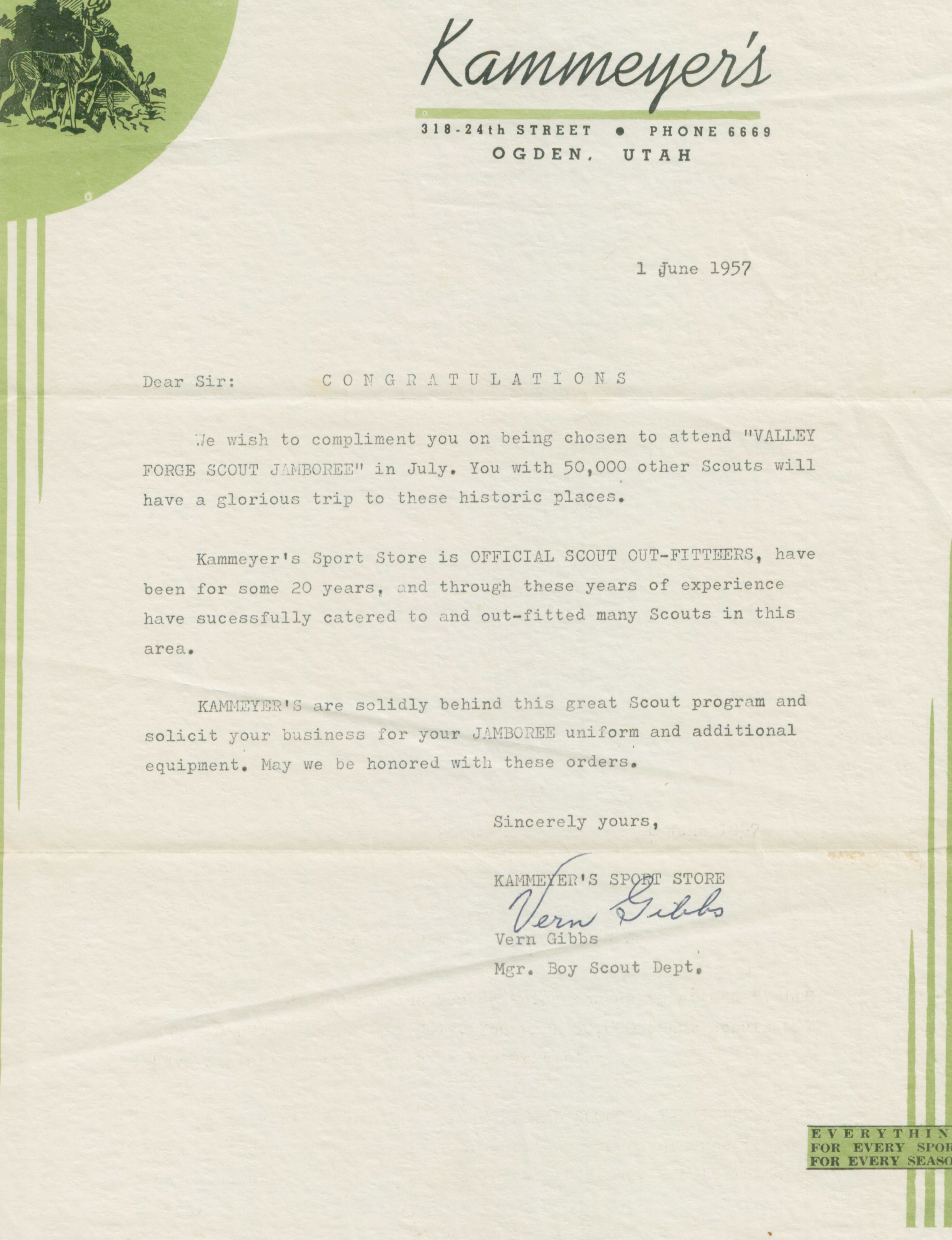
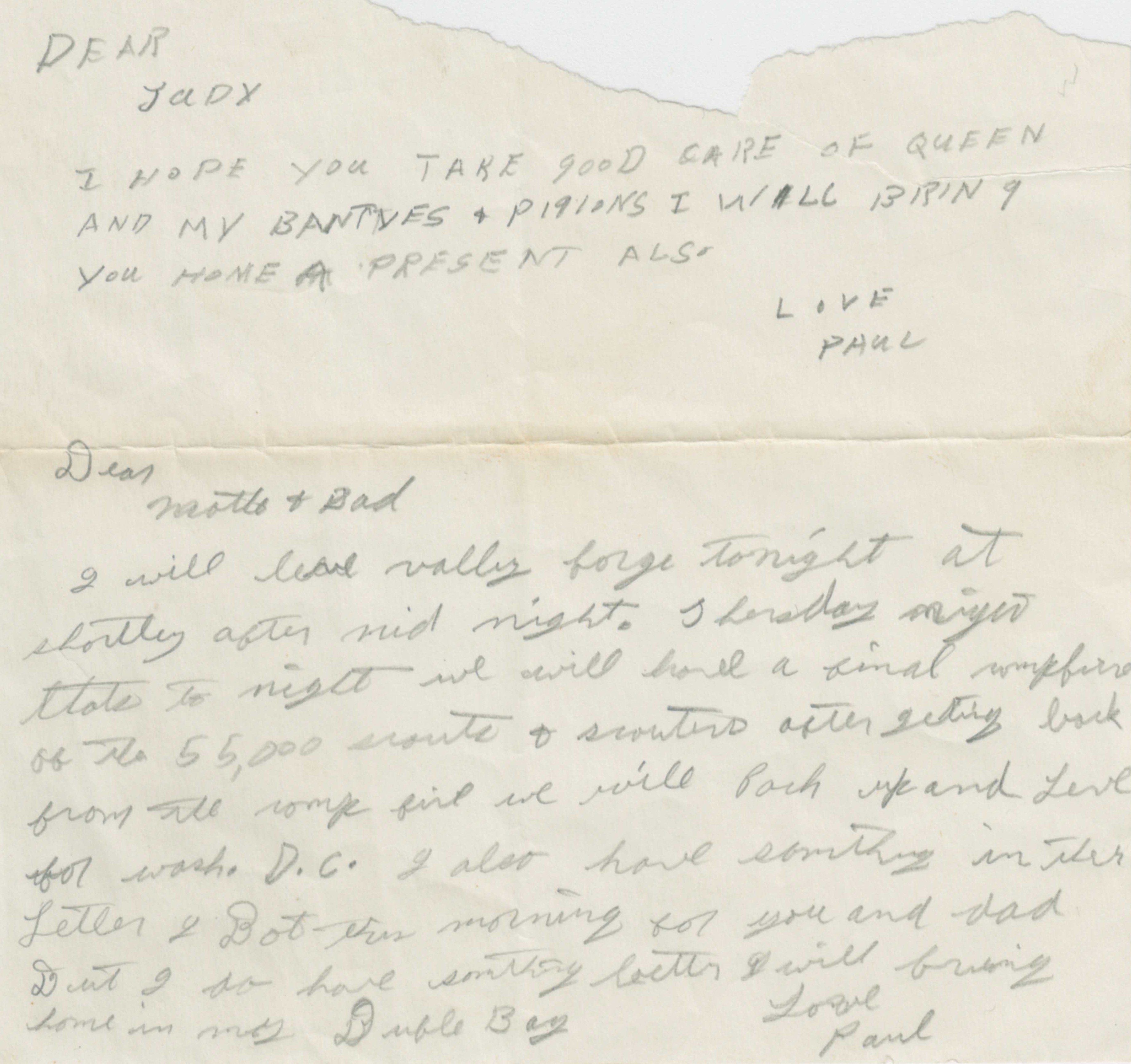

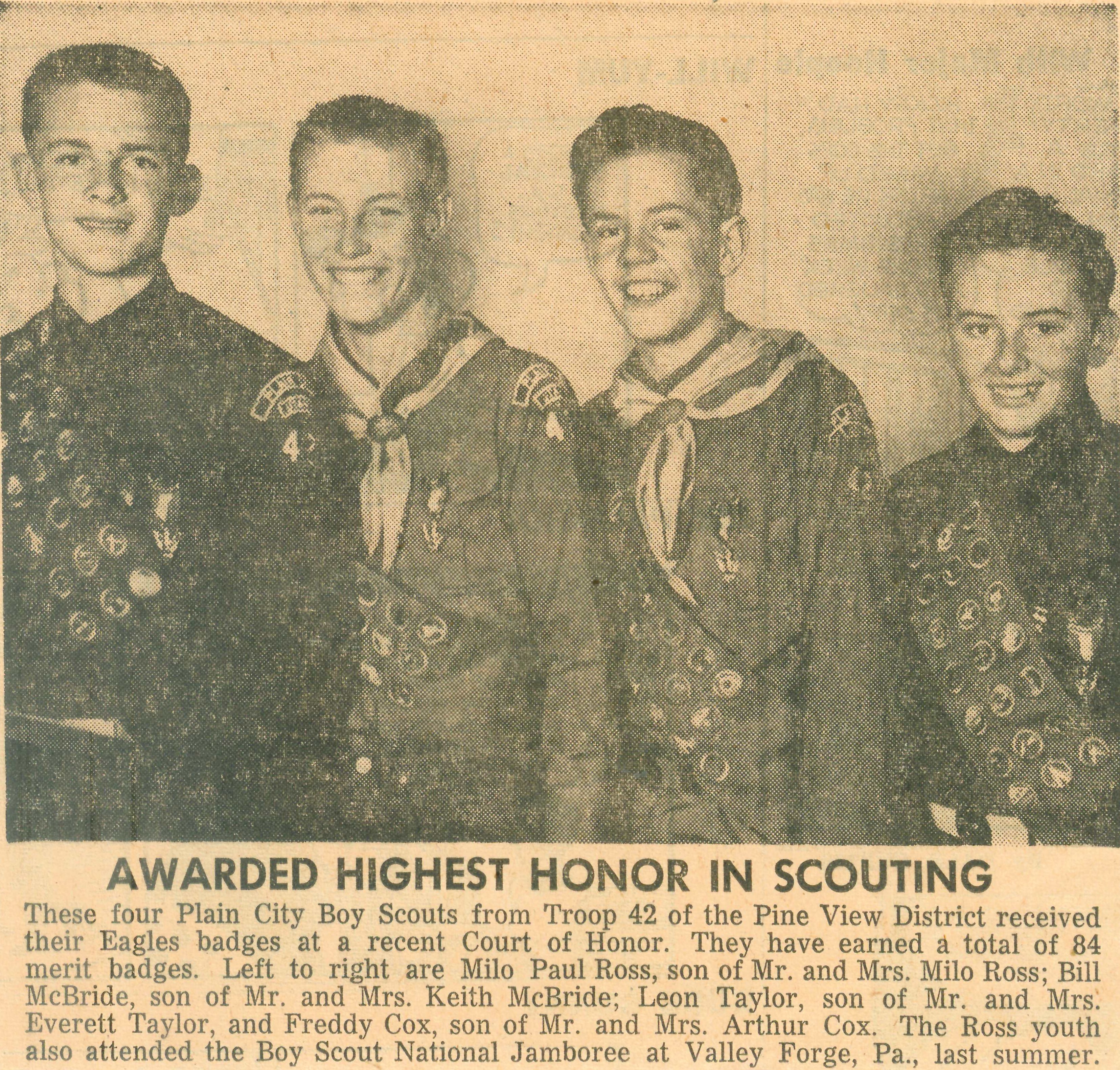


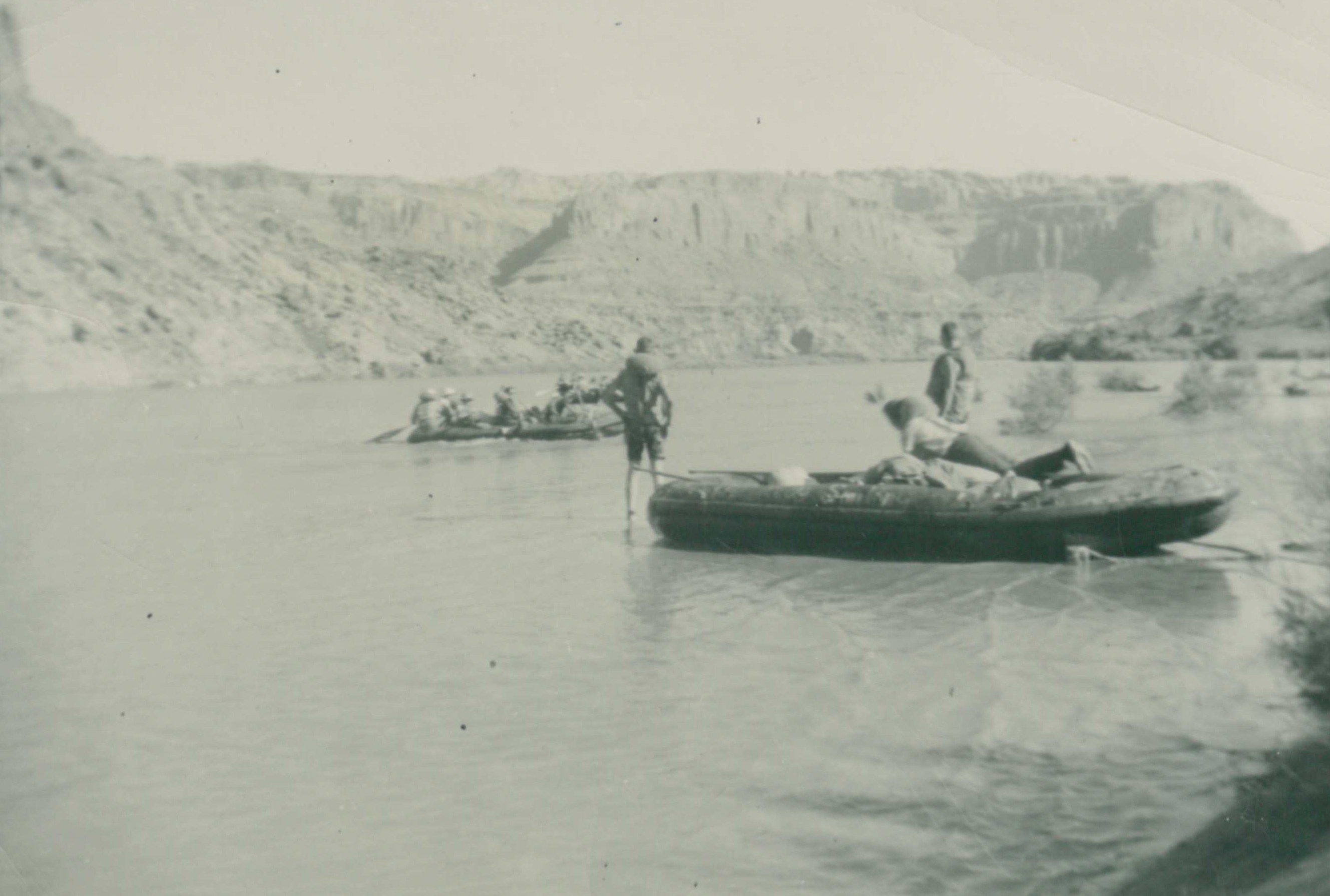
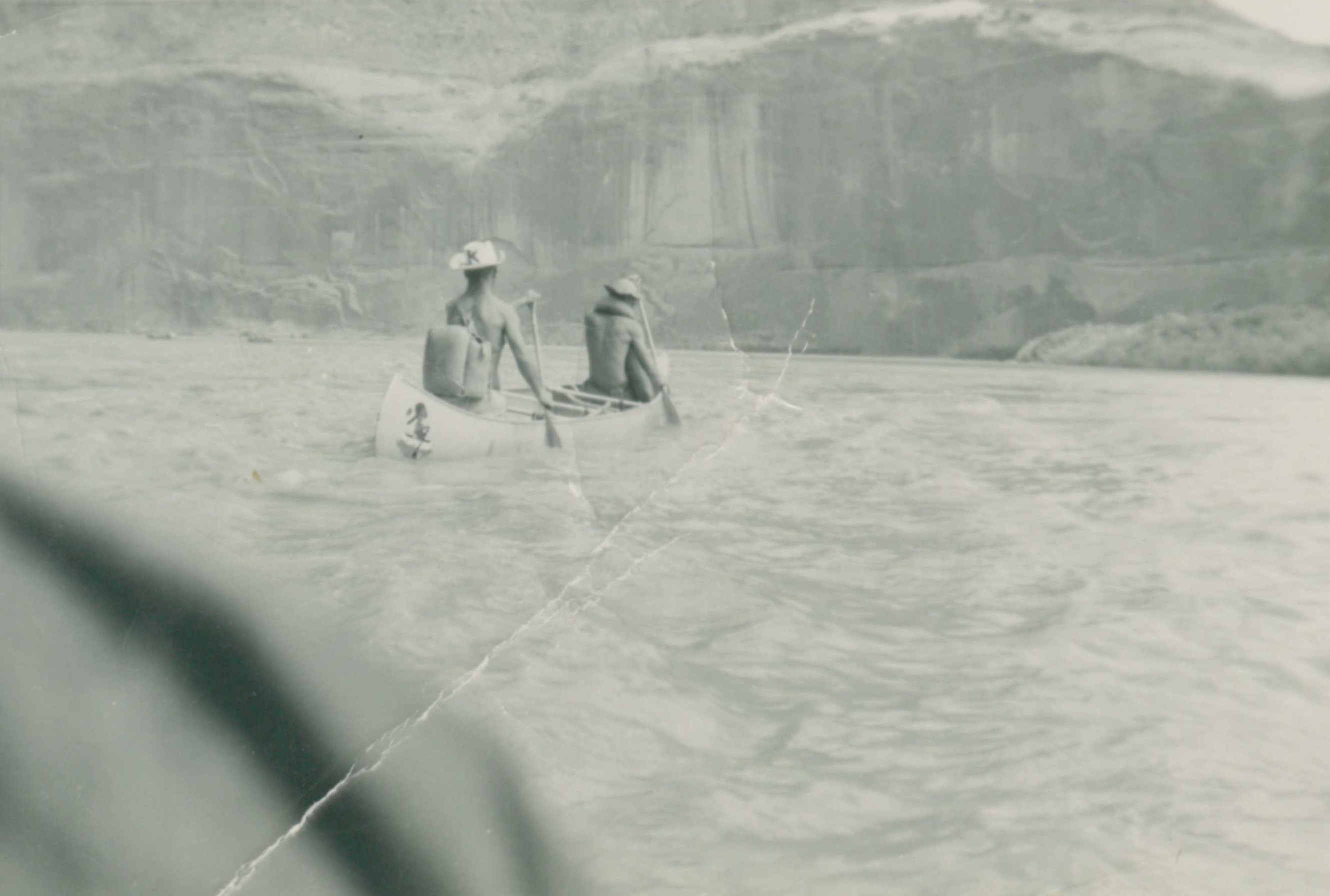
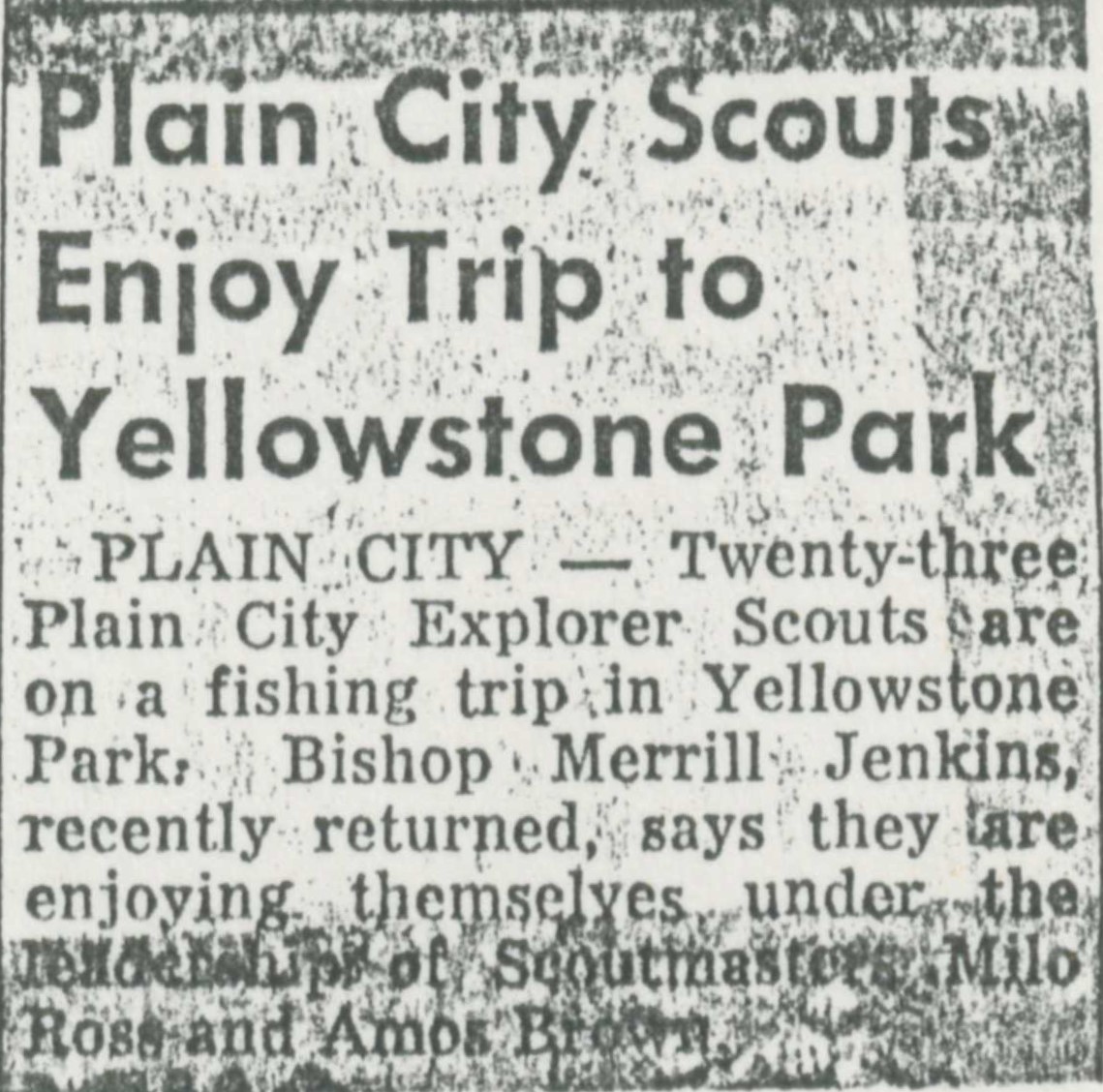
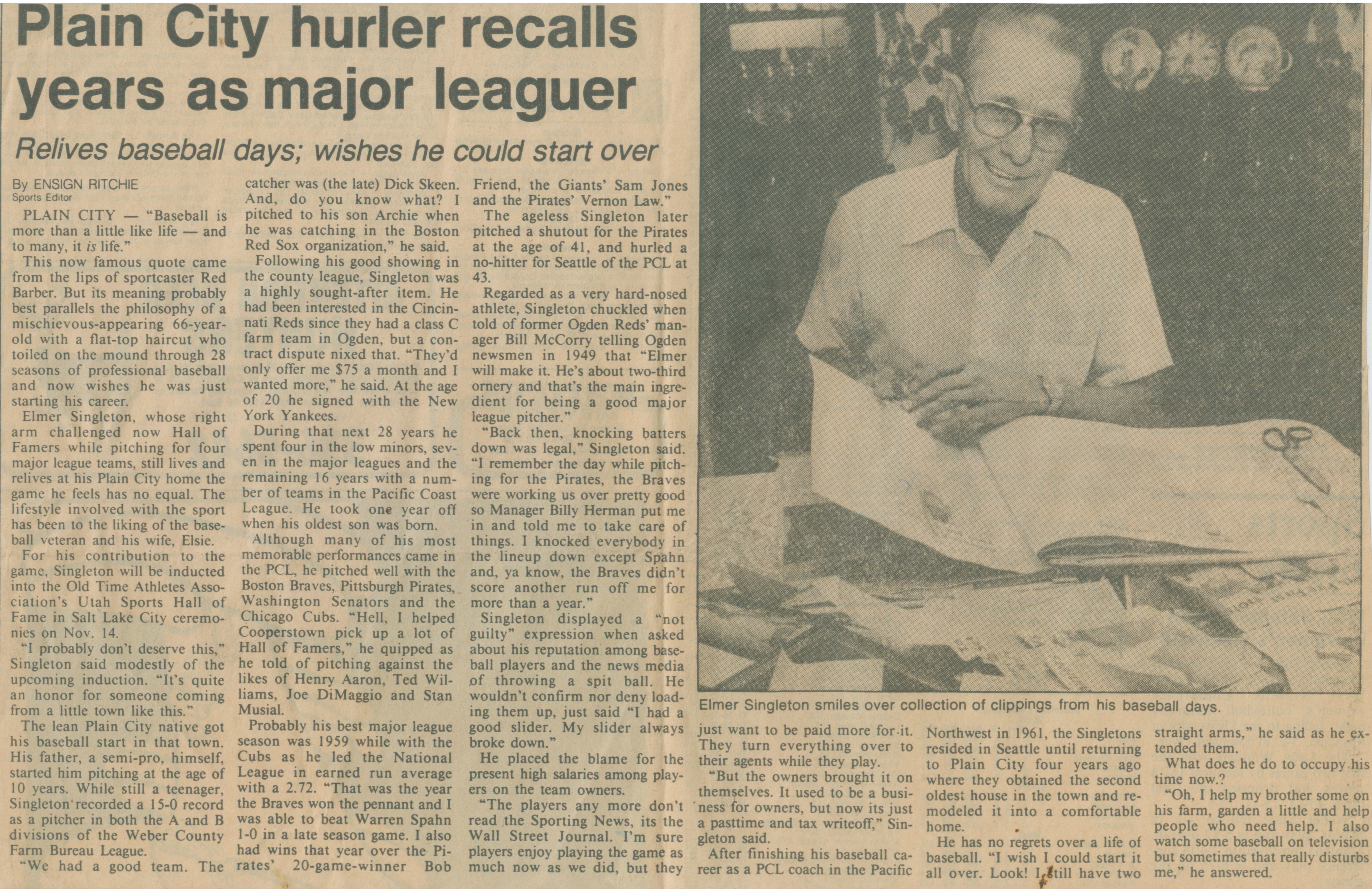
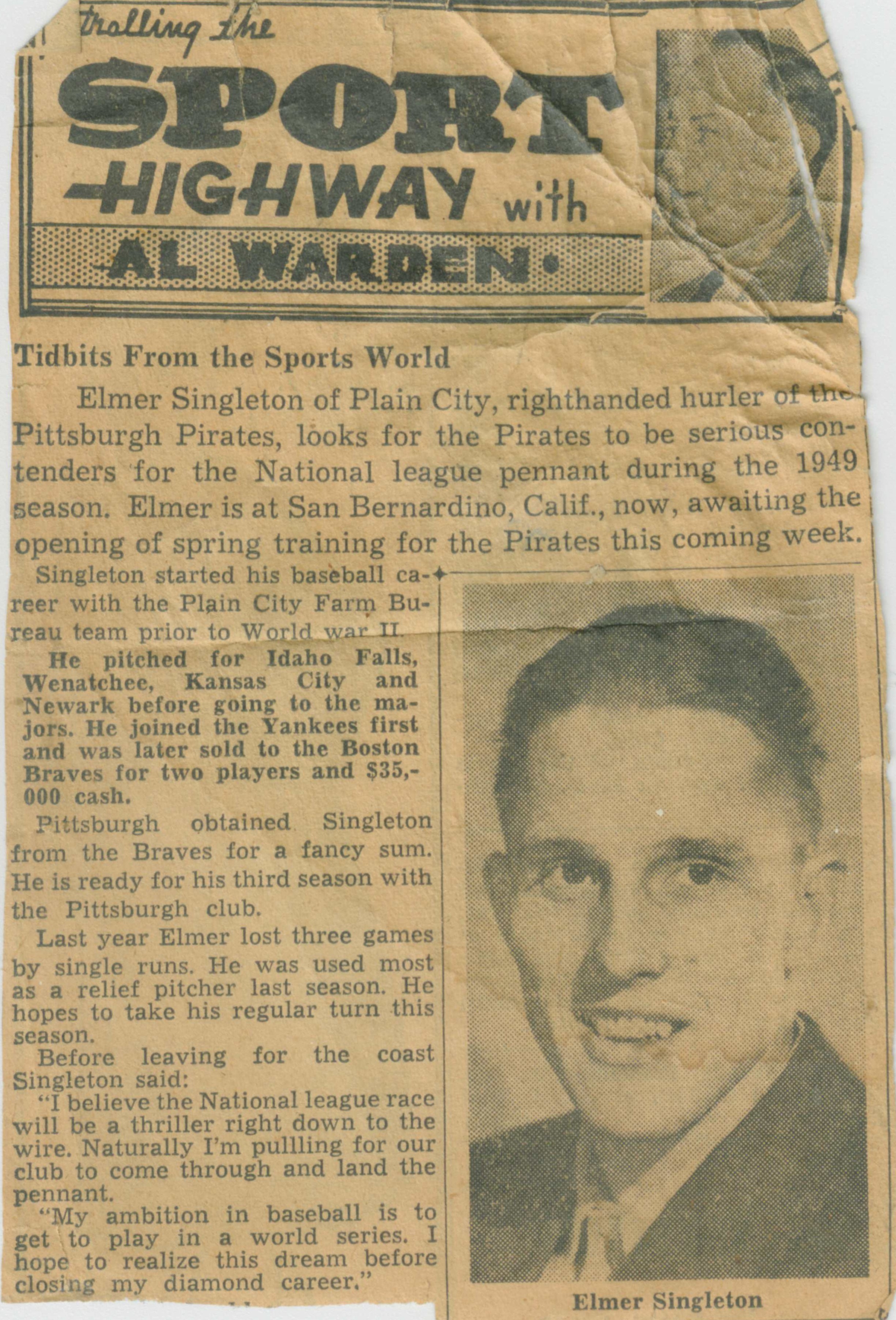


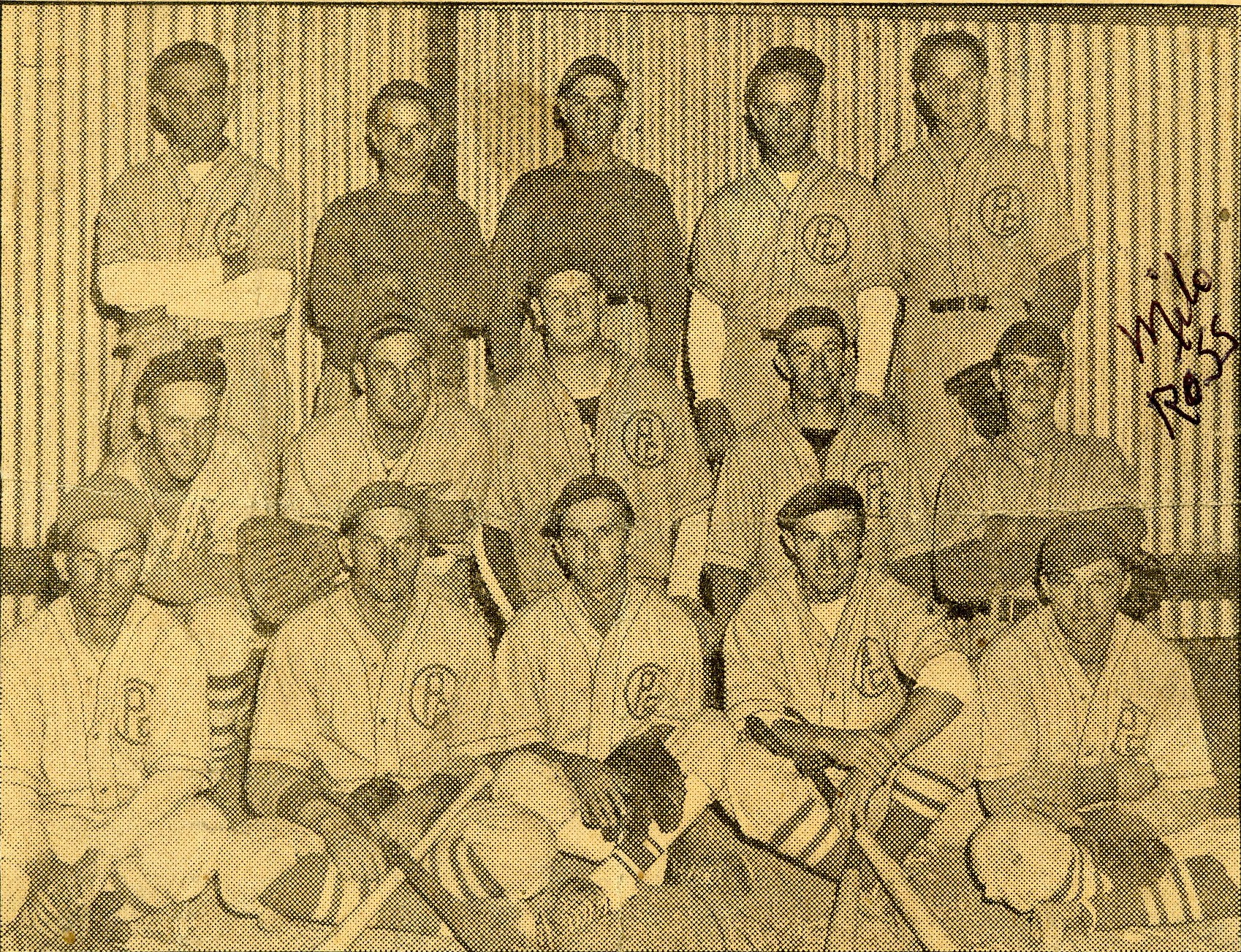
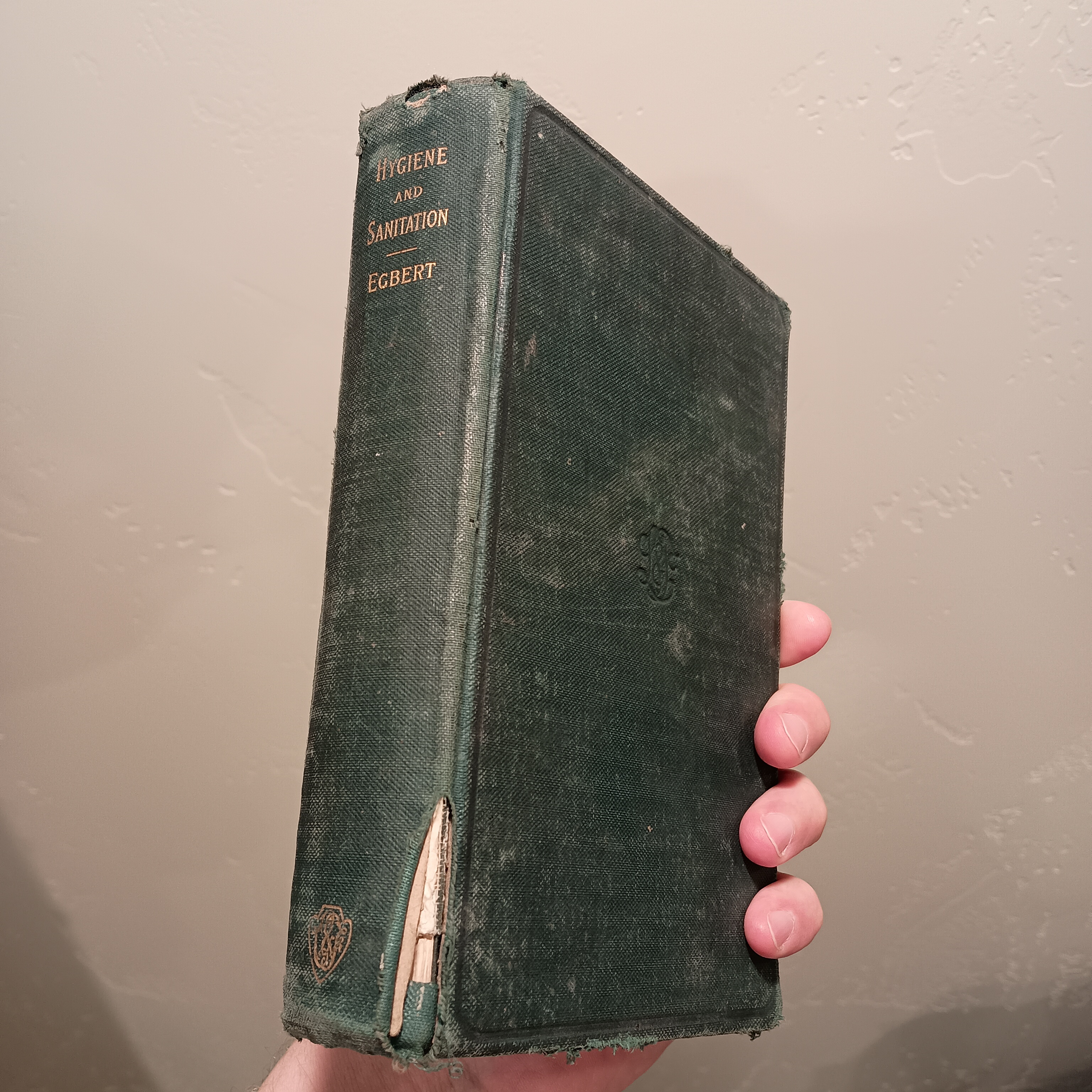




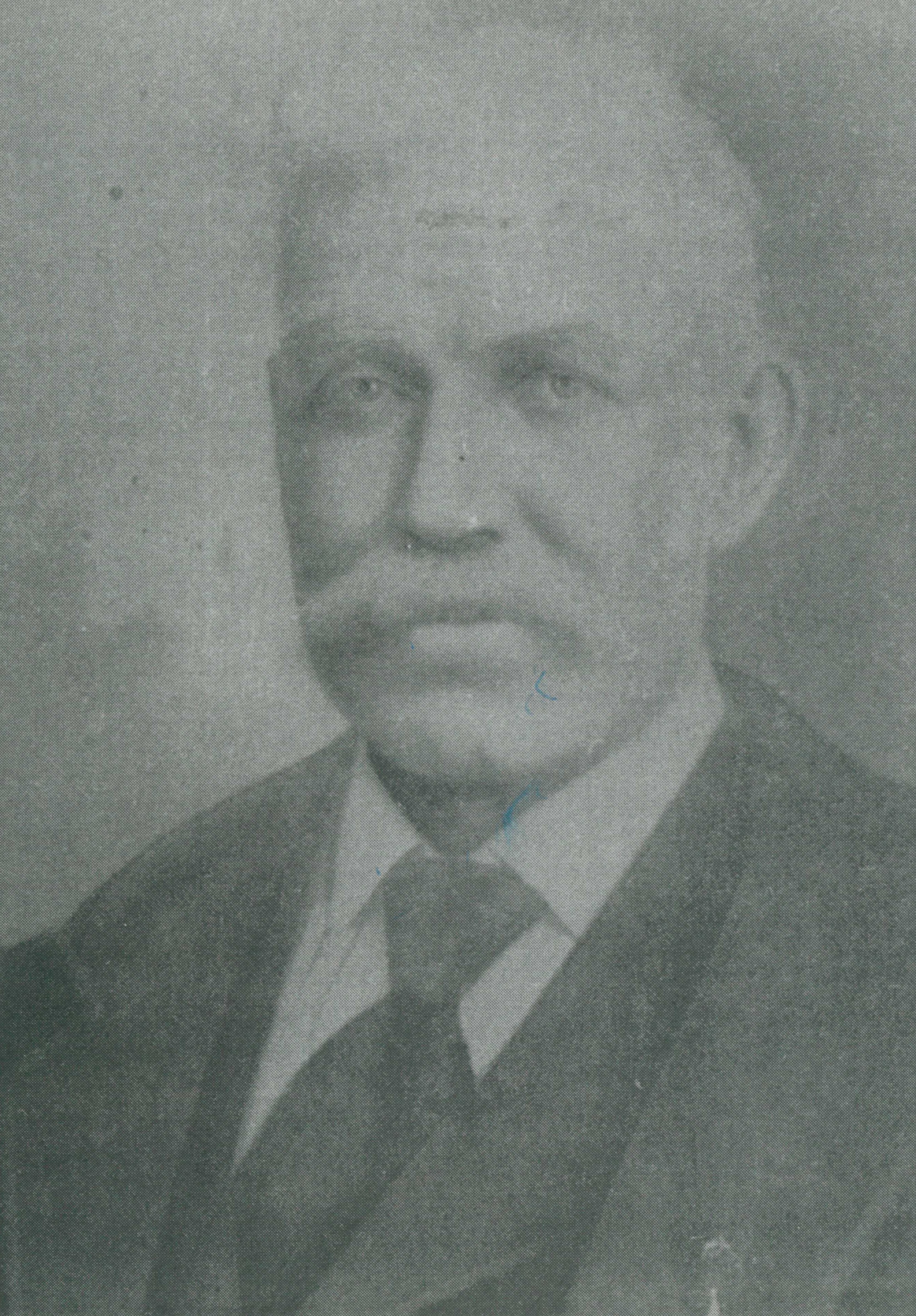
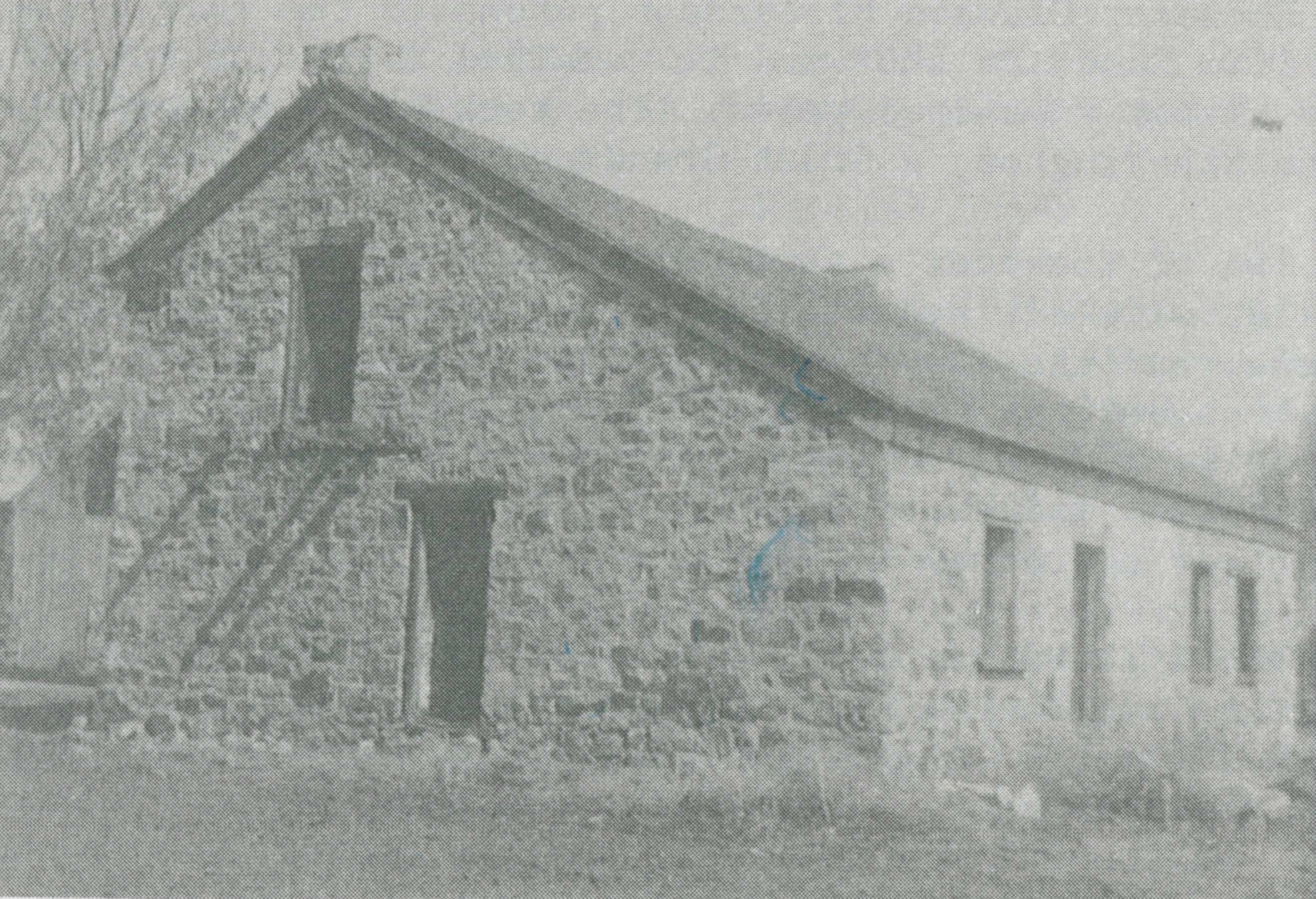

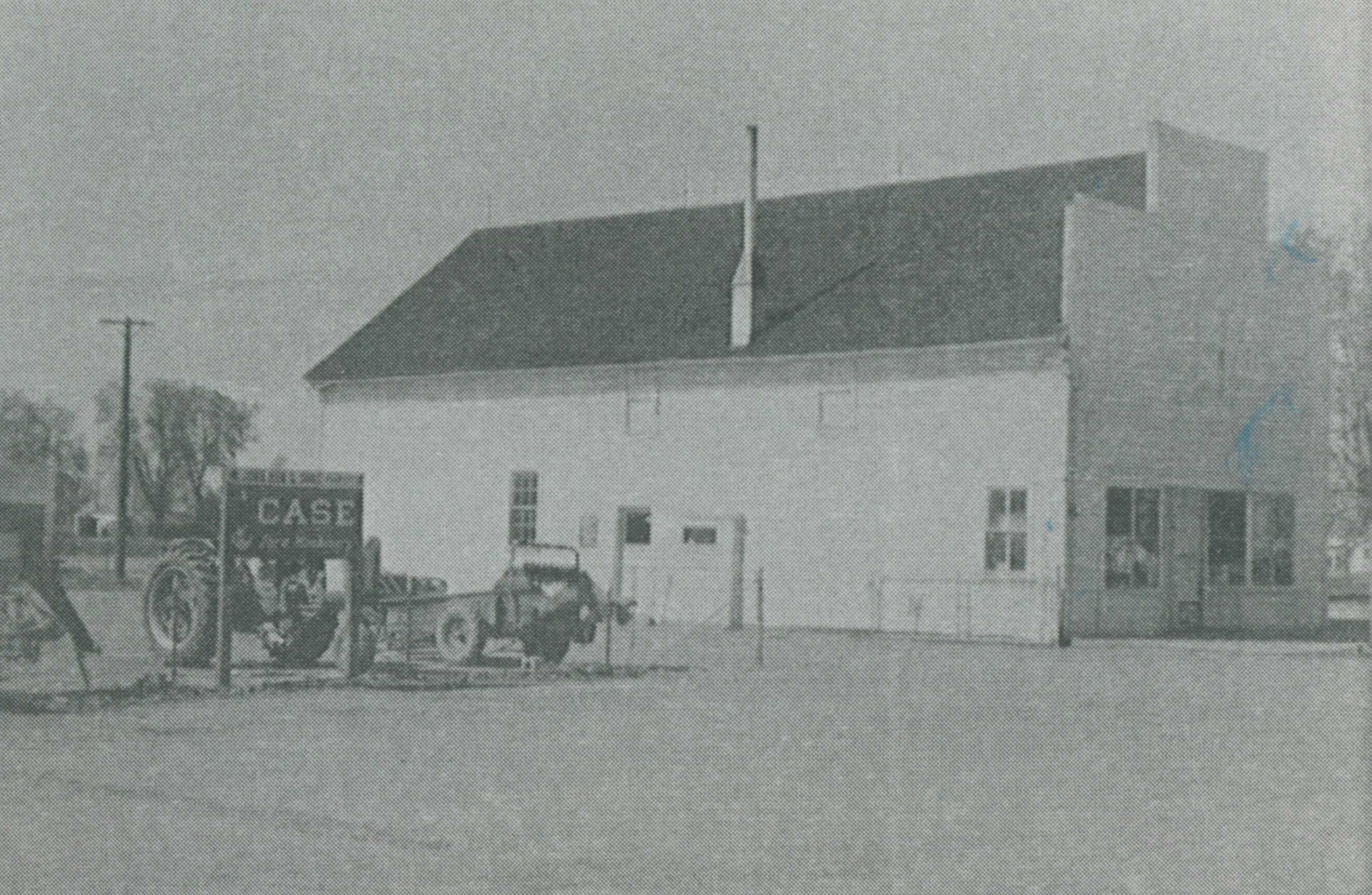

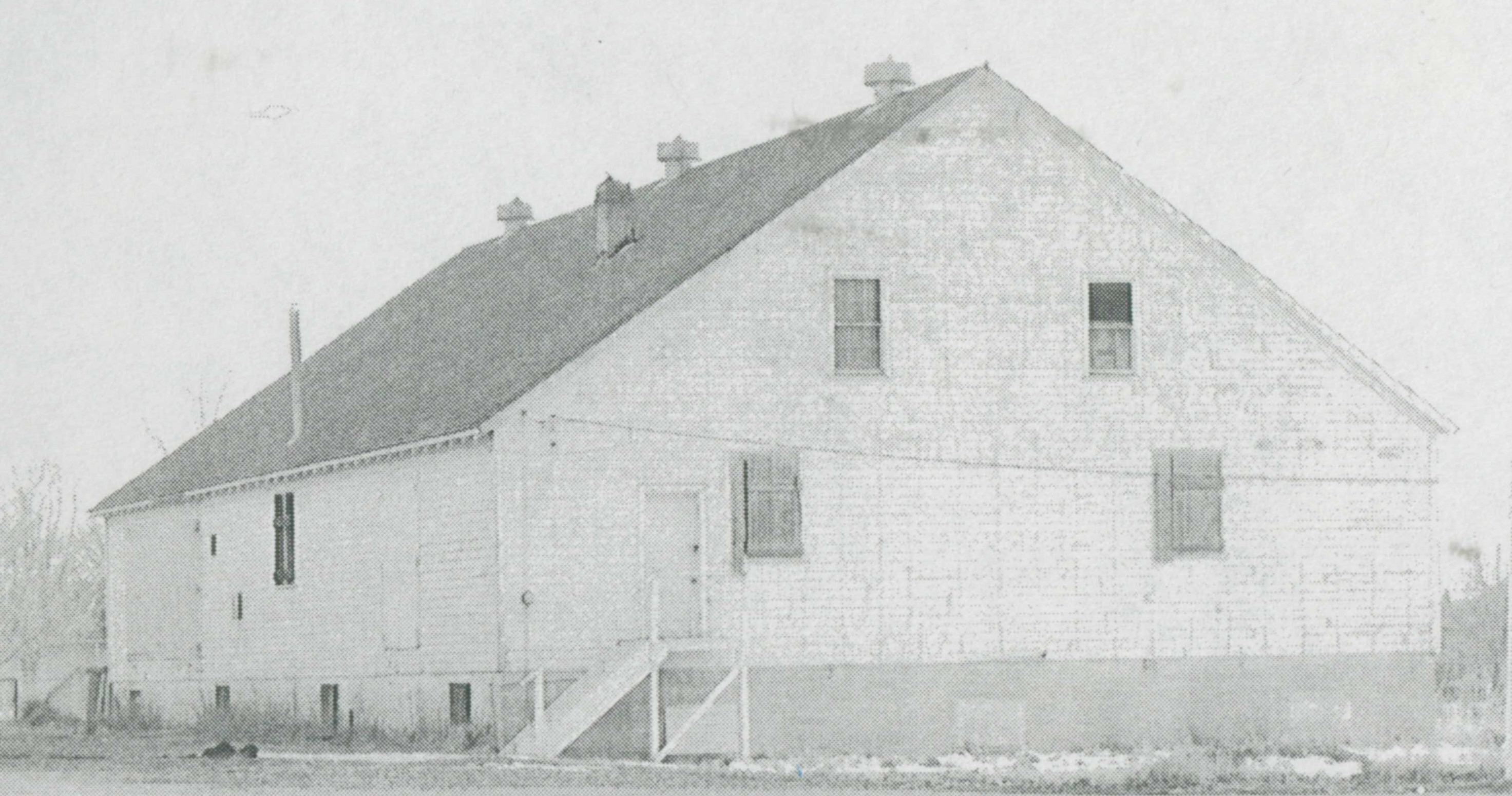
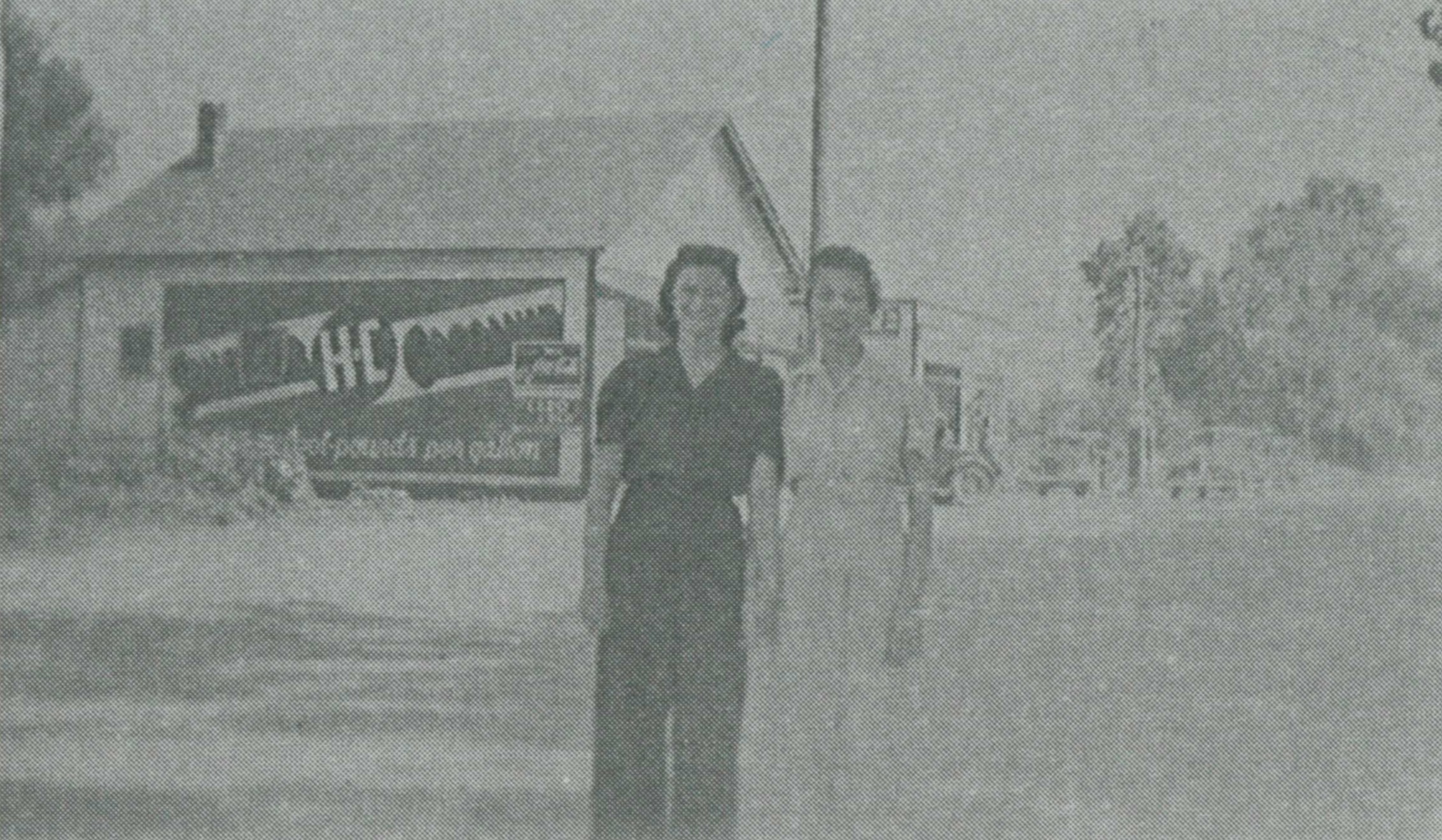


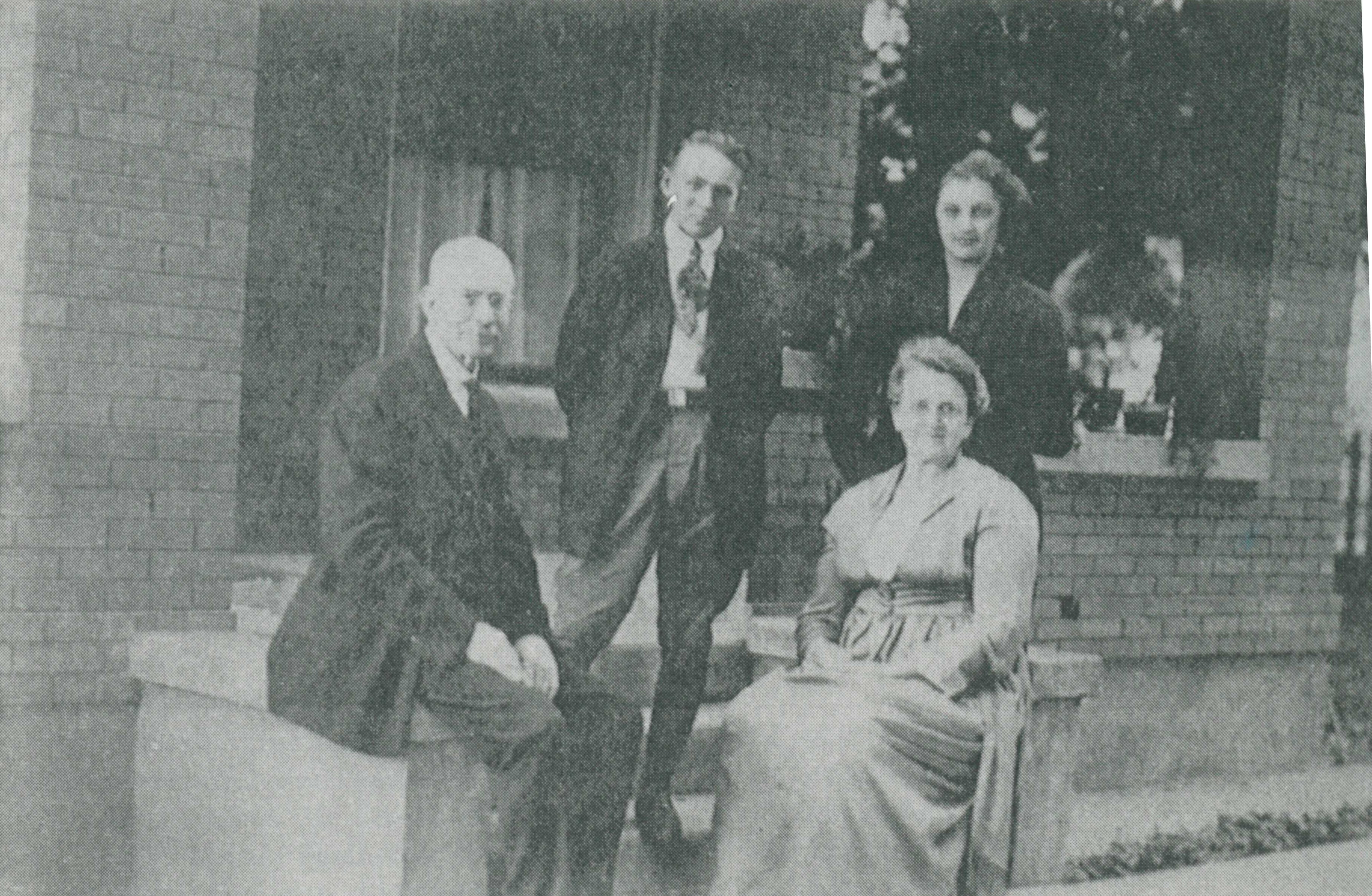
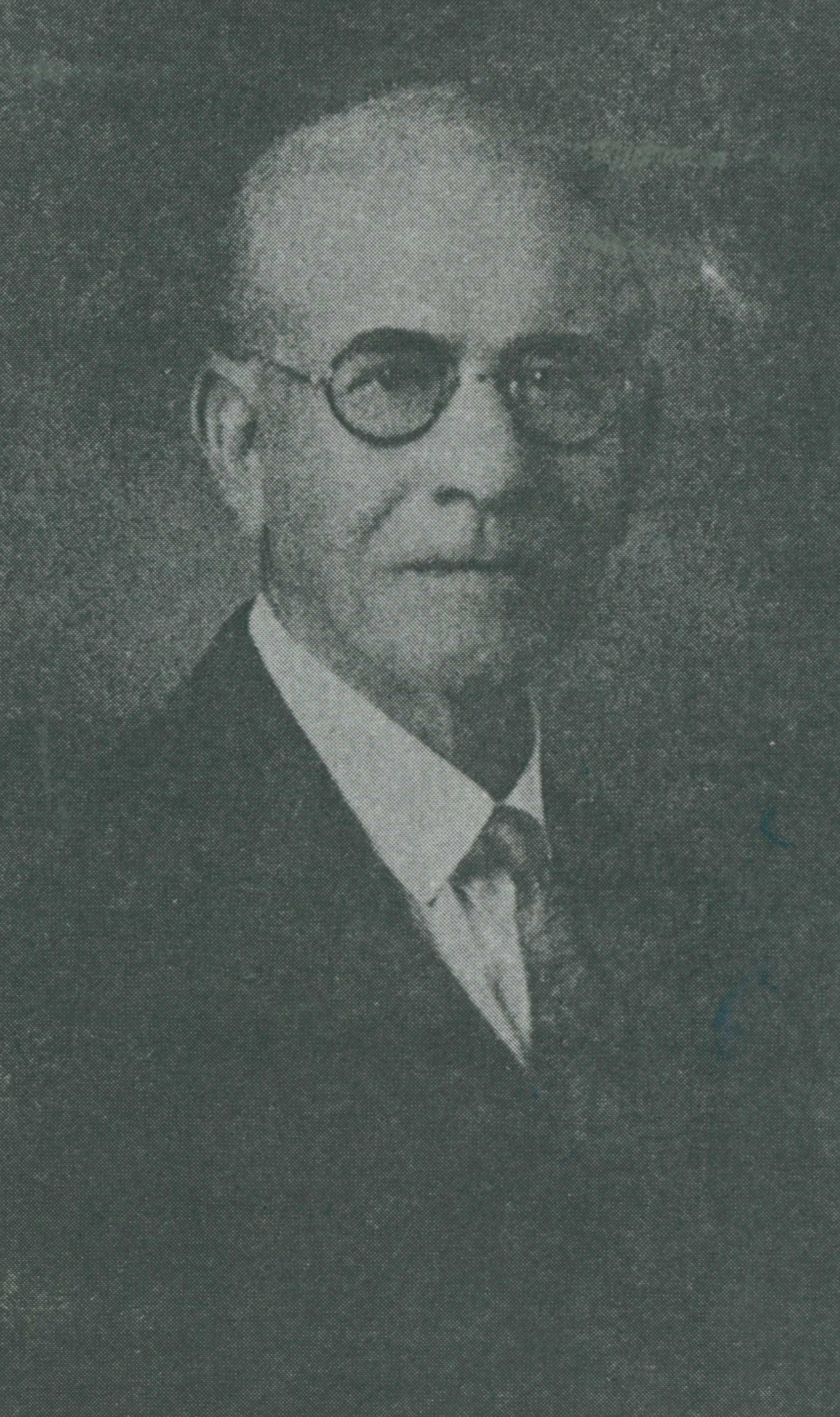


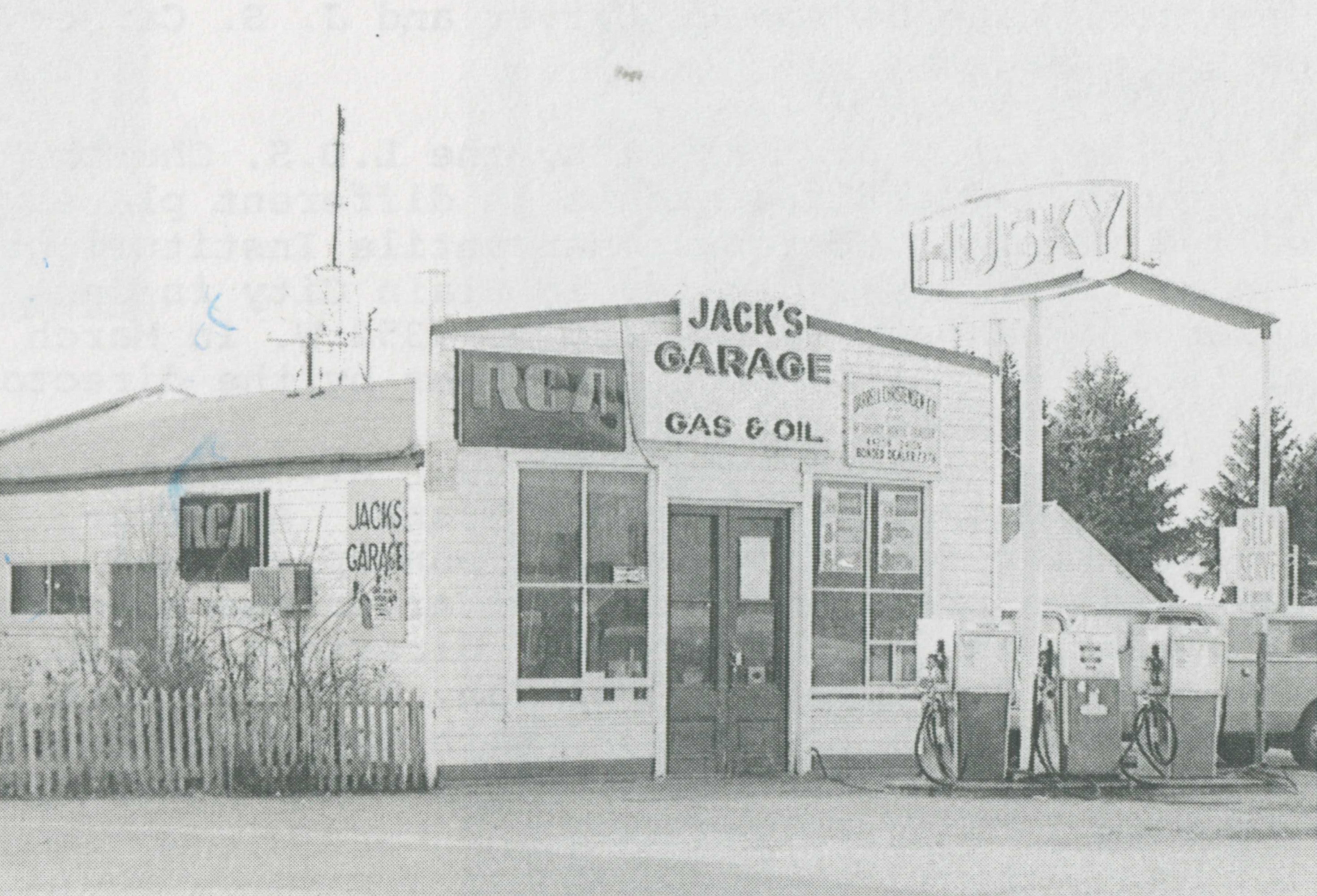

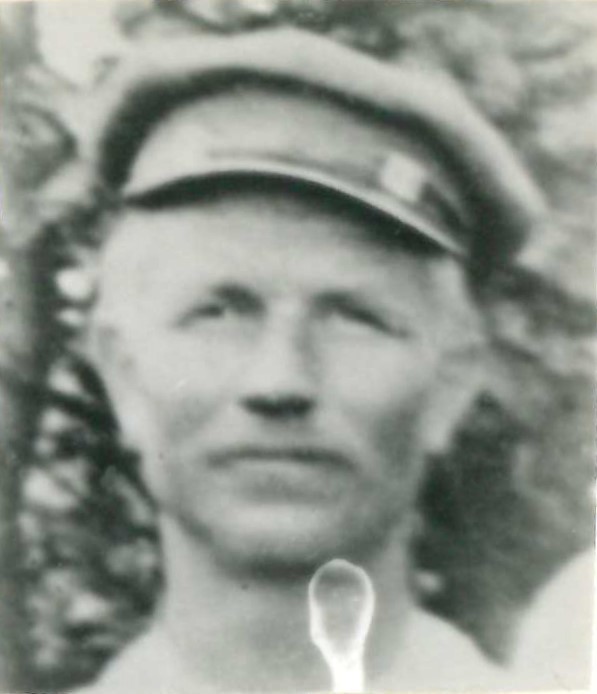
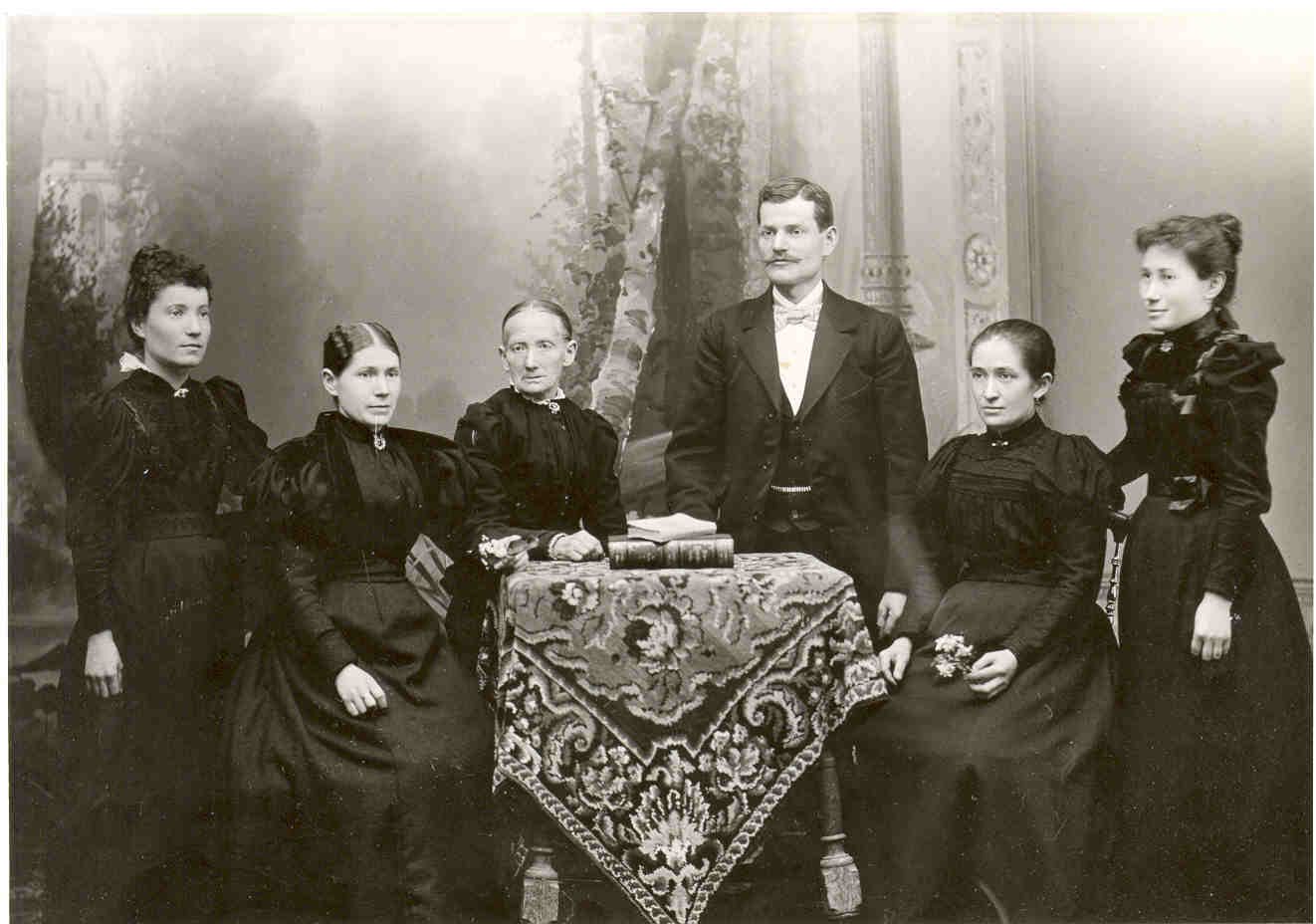

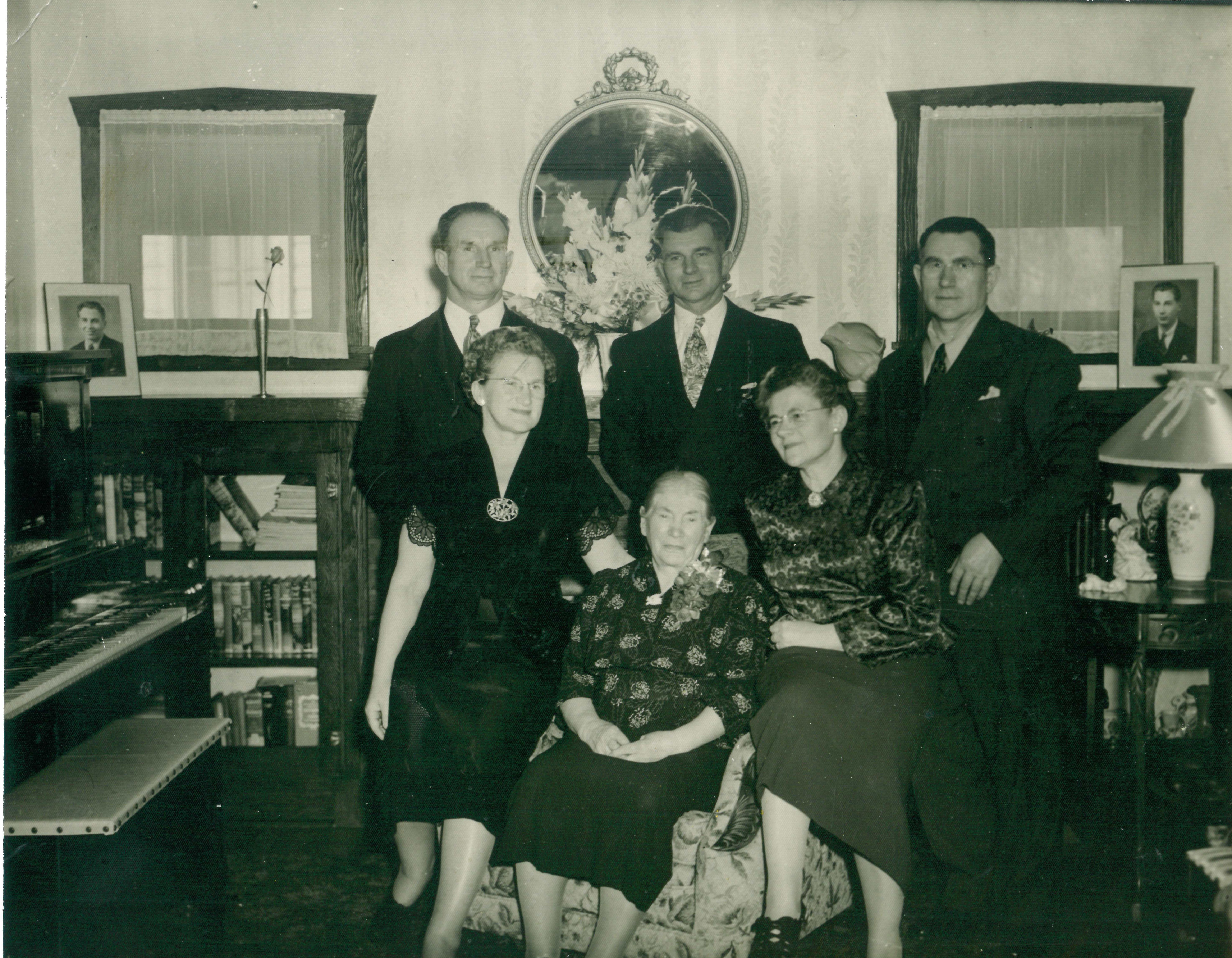


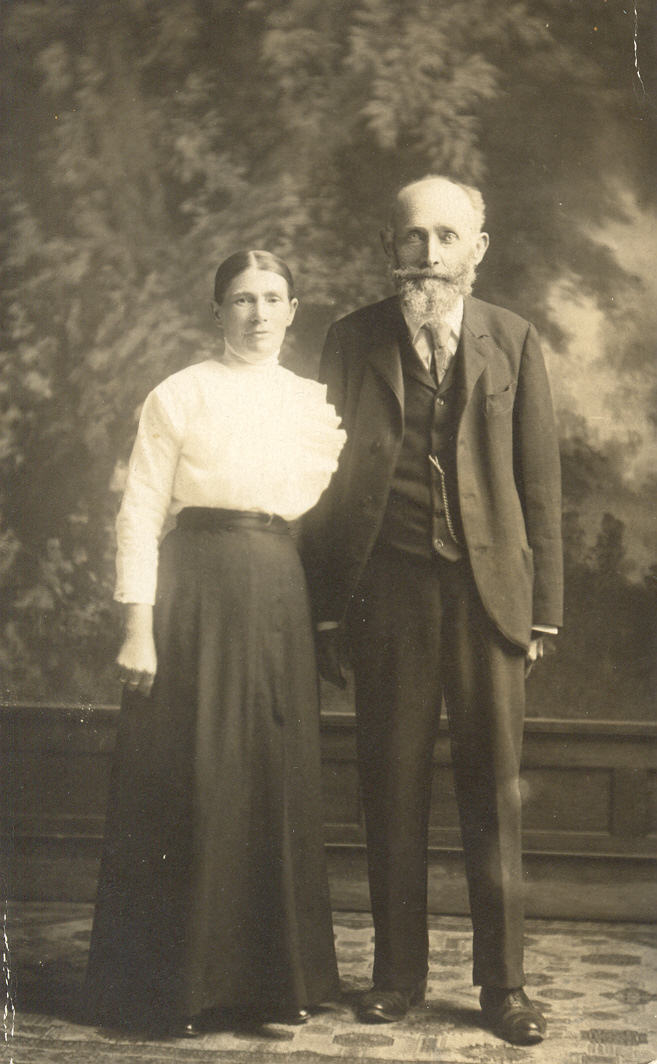


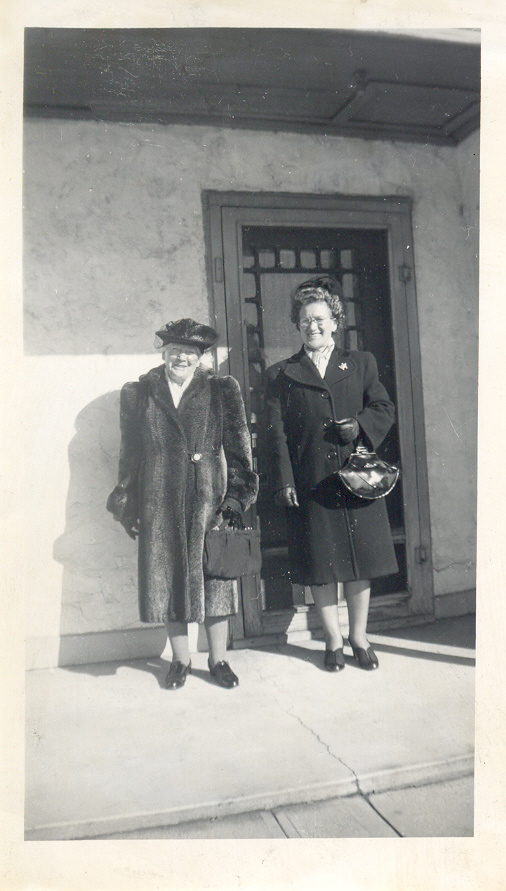


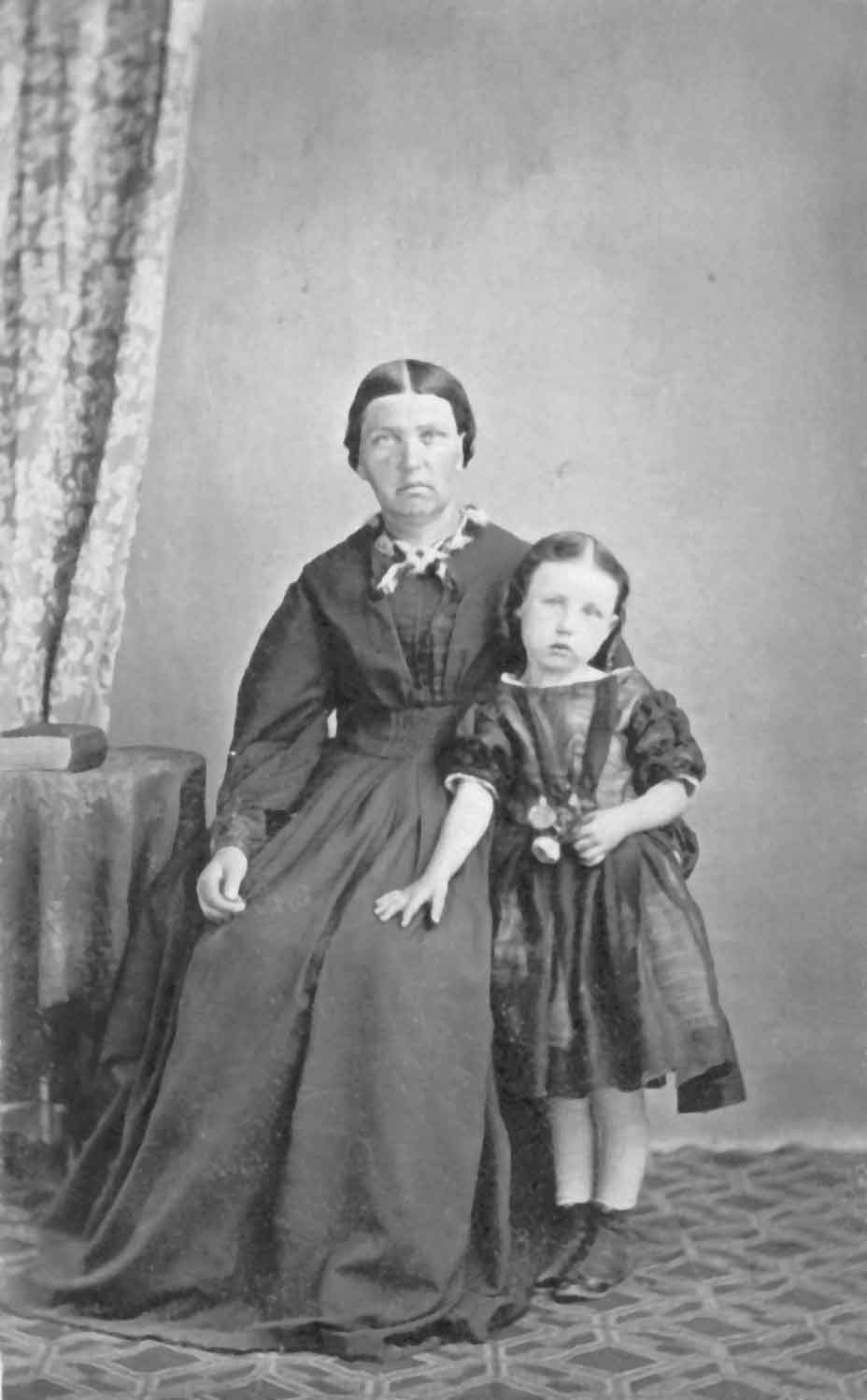

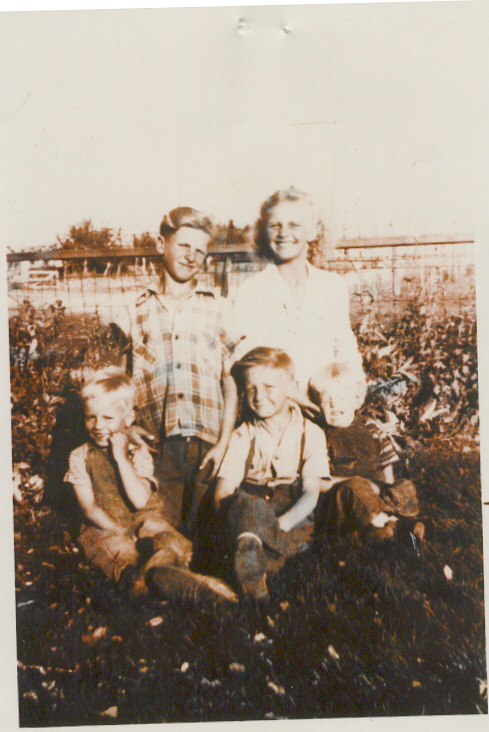


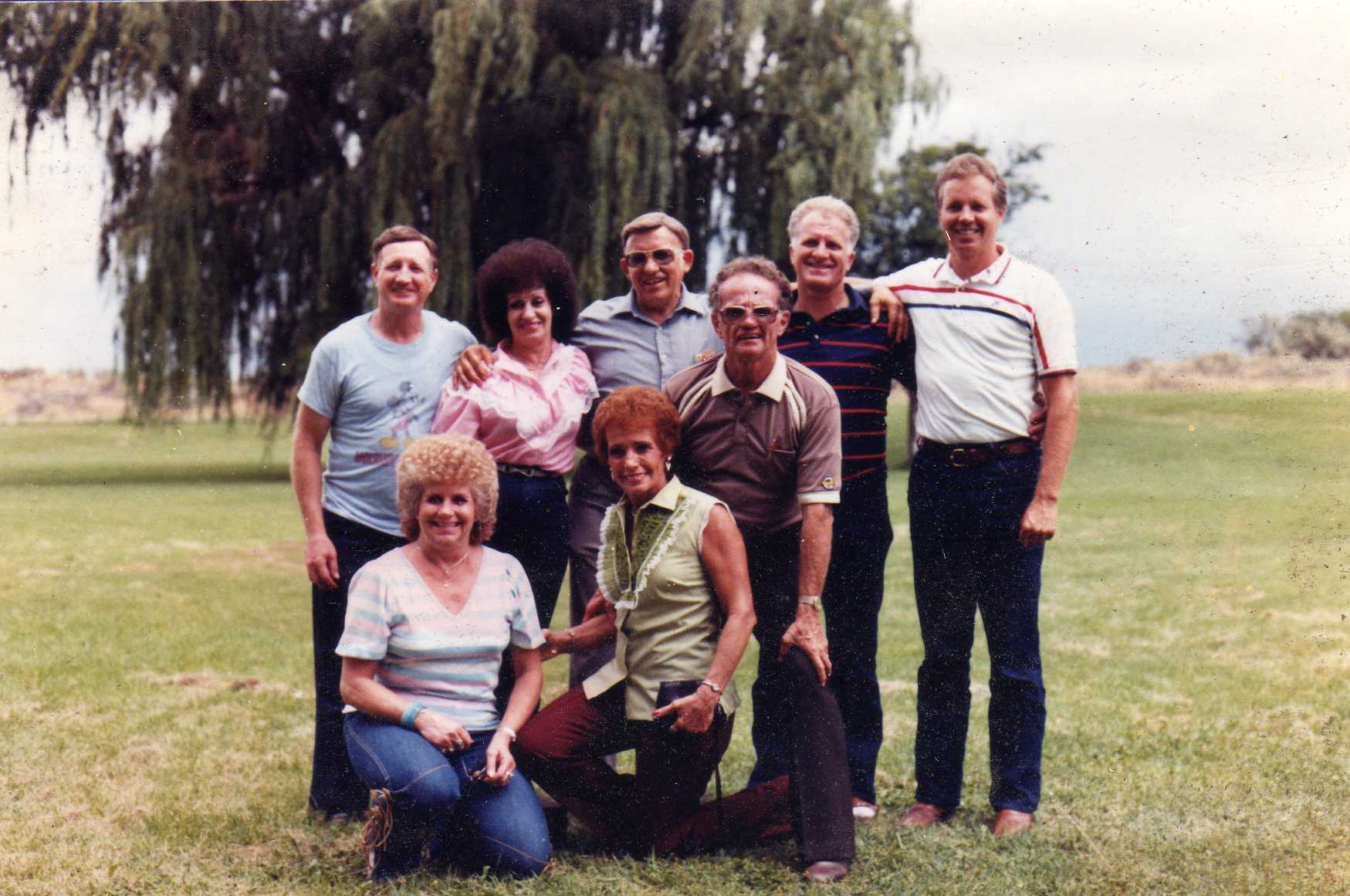
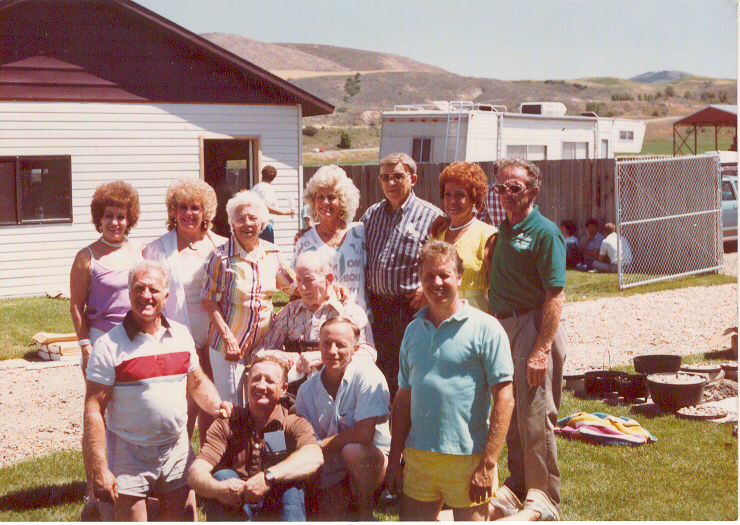






 Sagacity