The Scotsman who doesn’t love the Thistle

Whenever I see this picture, I think of “The Scotsman” from Utah State University.  It is not the formal fight song, but has been used as a song from the university for over 90 years.

Show me the Scotsman who doesn’t love the thistle.
Show me the Englishman who doesn’t love the rose.
Show me the true blooded Aggie from Utah
Who doesn’t love the spot . . .
Where the sagebrush grows!

Here is a version of it caught by ESPN for your viewing pleasure.  You have to be patient to get to it as the broadcast proceeds: ESPN Scotsman. You can see some other videos of the Scotsman from this link.  Listening to it and remembering my experiences with the crowd still makes my hair stand on end.  Here are a couple of the other chants: Aggie Cheers.  This includes the Scotsman, I believe, and Winning Team/Losing Team.  The later two chants arose after I graduated in 2005 but show that Aggie spirit is still well and alive.

It was not until we arrived in Scotland that we saw the marvel that the Scottish Thistle really is!  Look at the size of this thistle compared to Amanda, who is 5’6″.  Growing up in Idaho we had what we call Canadian Thistle, but it rarely reached half this height.

Legend tells that the Scottish were protected by the thistle when conquerors came upon them at night and hoping to attack in stealth.  Unfortunately the conquerors were thwarted by the mighty thistle as it caused some of the men to shriek in pain and alerted the clansmen of the impending attack.  It has been used as a Scottish emblem since the 13th century.  I wonder if the English used the rose for the same reason?  I do not think the Aggie will find the sagebrush to be of the same value, unless it is the delayed response of the morning after when the ticks are discovered!

At any rate, when in Scotland, stop and smell the thistle (as you can see Amanda doing).  I can admit, I love the sagebrush, and I definitely love one of the spots where the sagebrush grows: Logan, Utah.

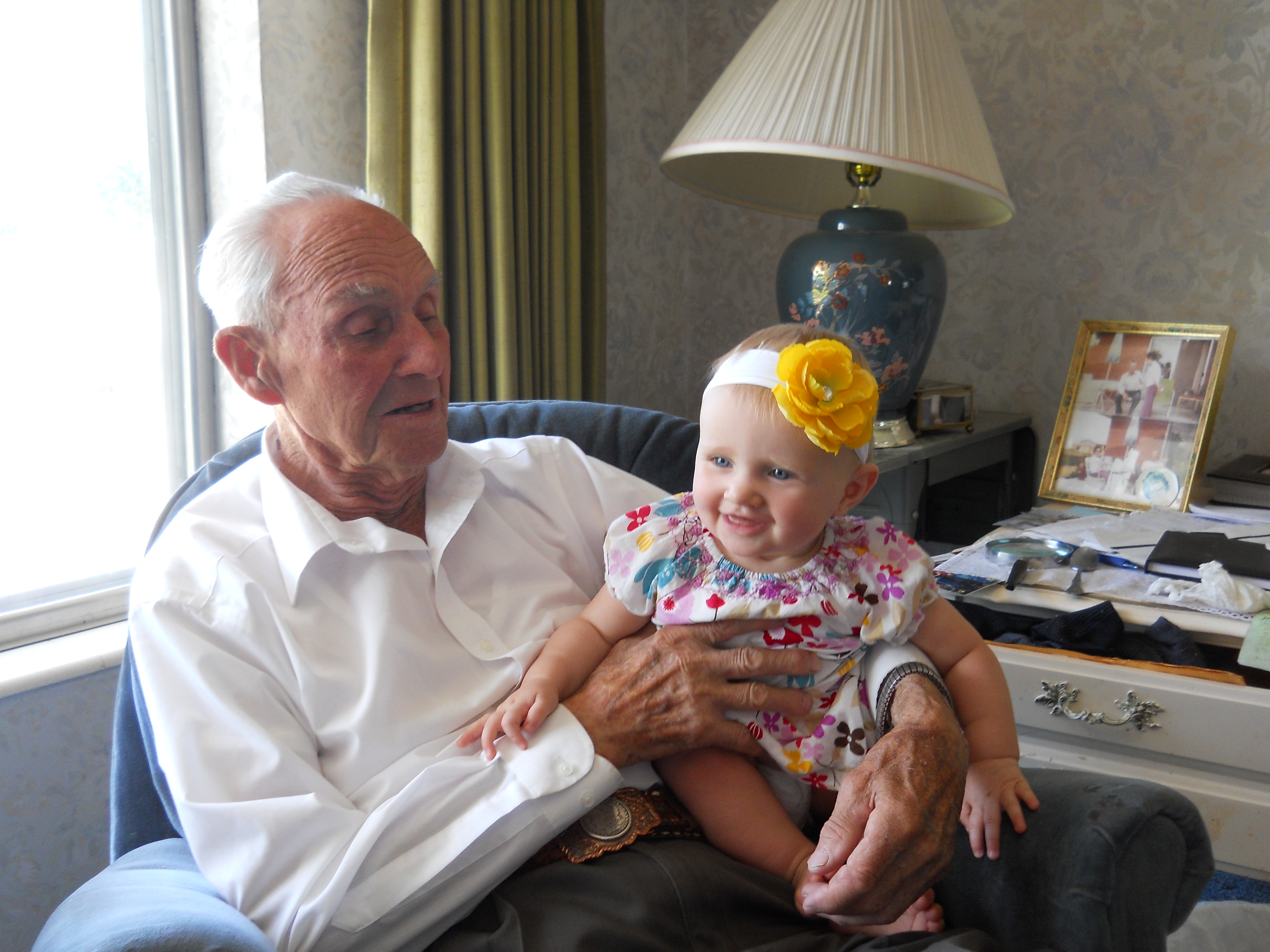
Aliza’s Four Generations

Maybe it is a product of our day where people live longer, but Aliza is fortunate to have 3 of her great grandparents living at this time.  For family history purposes, I thought I might post these pictures of Aliza with her great grandparents.  Further, I thought I would post a picture or two that Amanda and I have with our great grandparents.

Here is a picture of Aliza with Amanda’s paternal grandfather, DeLece (“D”) Hemsley. This picture was taken at a party in Kaysville, Utah for Amanda’s brother, Derek, upon coming home from his two-year mission in July.  We took the opportunity for a couple of photos with family.

(l-r): DeAnne, D, and Bryan Hemsley with Aliza and Amanda

This is Amanda’s paternal grandmother, Shanna Thompson.  This photo was also at Derek’s party.

(l-r): Mel and Shanna Thompson; Paul, Aliza, and Amanda; Bryan and Jill Hemsley

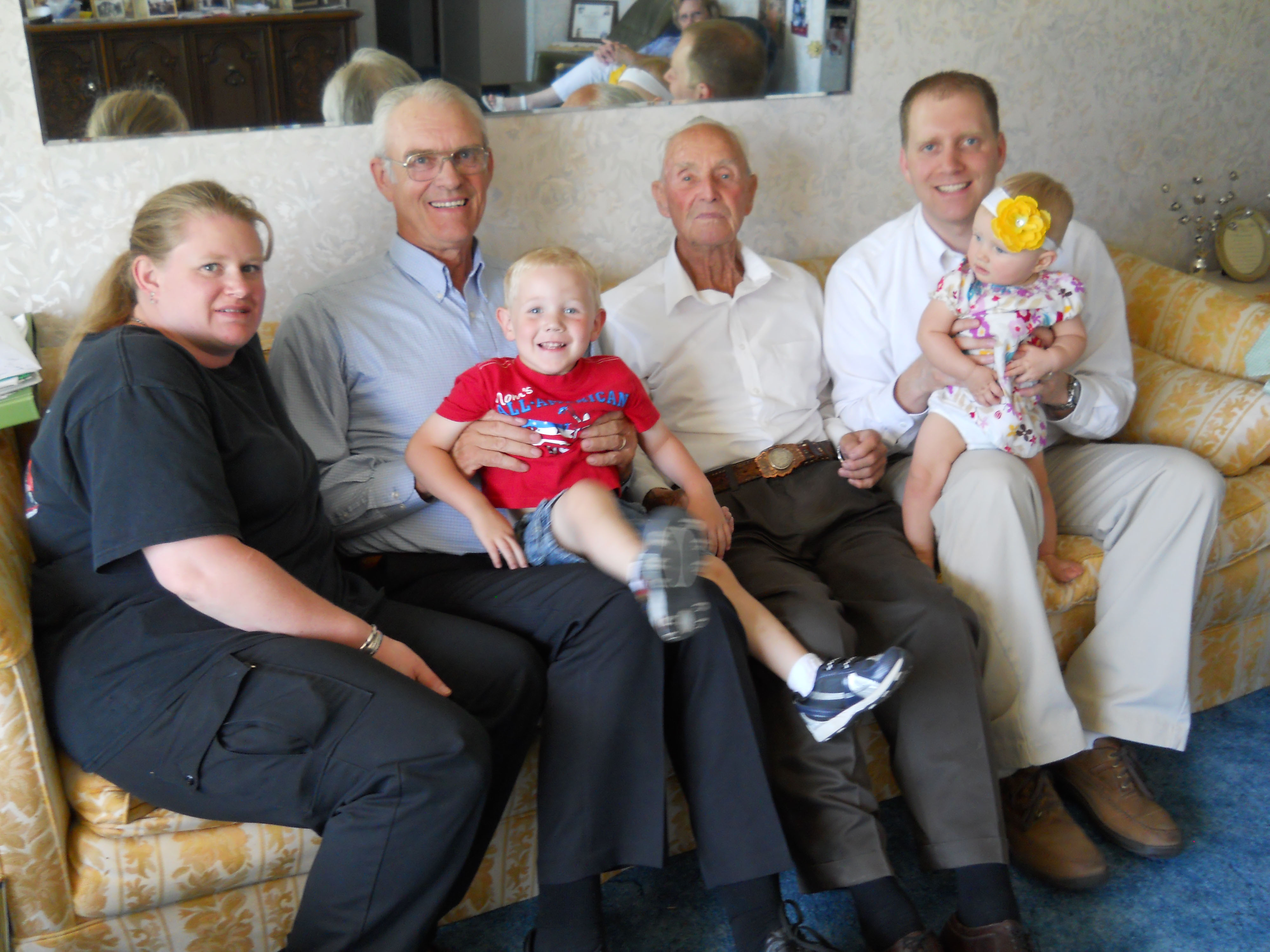
Lastly, here is my paternal grandfather, Milo Ross.  We took these pictures, the day after at Derek’s homecoming party, at Grandpa’s house in Plain City, Utah.  I will post three pictures because I think they are good photos.  This first one shows a great smile on Grandpa, Aliza, and Amanda.  I also like the profile of Grandpa.

Grandpa’s first sight of Aliza

I like this one because Aliza looks as cute as she always does.  For being 90, Grandpa can sure pick her up and throw her in the air with ease.

Here is one we took of the four generations with my sister, Andra, and her son, Daniel. Grandpa has two of his great grandchildren in this picture (and Dad has two of his grandchildren).

Andra, Milo (Jr), Daniel, Milo (Sr), Paul, Aliza

Fortunately, Aliza has now had her photo taken with all of her living Great Grandparents.  Amanda was also fortunate to have such a photograph with all of her living Grandparents and Great Grandparents.  Even more, ALL great grandparents and grandparents are in the same photo!  Here is that photo from the day of her baby blessing in Kaysville.  LeRoy, D, Shanna, and Clara are all Amanda’s Grandparents.  Belle is D’s mother.  Walter and June are Shanna’s father and step-mother.

Back (l-r): LeRoy Holden, D Hemsley, Bryan, Jill, and Amanda Hemsley, Mel and Shanna Thompson. Front: Clara Holden, Belle Hemsley, June and Walter Hansen.

I had three Great Grandparents who were alive when I was born.  Unfortunately, I do not seem to have a photo in my possession with my Andra Great Grandparents despite the fact that I was 10 and 11 years old when they passed.  Oddly, I have pictures of my Great Grandpa and Grandma Andra that I was present when the photo was taken, like the one below.  This is my mother’s maternal grandparents about 1989.

Mary and Bill Andra

This is my mother’s paternal grandmother and some of the rest of the family at her sister’s funeral, Edna Coley Neilson.  My Great Grandma Lillian Bowcutt (remarried in 1953 after her husband Joseph Jonas died in 1932) is in the center of this photo and is the mother to the two ladies beside her and the four men in front.  I am more of a footnote in the photo, but at least I have one with Great Grandma Bowcutt in the same picture.

Far back (l-r): Unknown, Larry Talbot, Unknown (completely unseen), and Unknown. Middle: Jimmie Jonas, Hilma Jonas, Lillian Talbot, Lillian Bowcutt, LeReta Andersen, Lona Jonas, Colleen Elliott.  Front: Spencer Jonas, Joseph Jonas, Ellis Jonas, Evan Jonas, Paul Ross, Jackie Jonas, Andra Ross.

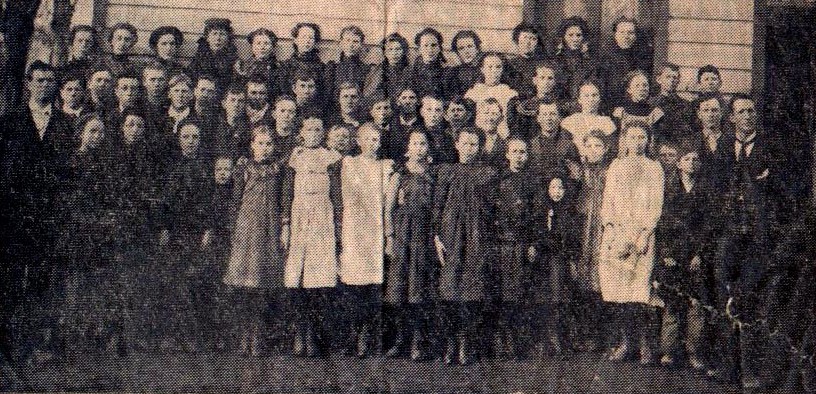
1895 Plain City Student Body

Back (l-r): Eva Edwards, Ada Skeen, Isabell Skeen, Unknown Rogers, Cecile Richardson, Grace Draney, Aseal Ipson, Beatrice Cottle, Ethel Garner, Josie Bramwell, Edna Garner, Unknown Rogers, Amanda Olsen, Rachel Garner, Freda Wheeler, Murald Hodson, Alfred Skeen. Middle: Frank Vause, William Knight, Clarence Richardson, Grant Hansen, James Hunt, Delwin Sharp, William Skeen, Chester Davis, Ace Draney, Lee Boyd, Eli Lund, Richard Bates, Alfred Coy, Parley Hansen, Edward Folkman, Jesse Lund, Charles Bramwell, Stella Hodson, Etta Lund, Ella Hodson, Luman Green, Walter Maw. Front: Charles Maw, Ruby Stoker, Annie Cottle, Edna Hansen, Susie Boyd, Gertrude Knight, Hazel Spiers, Rose Liljenquist, Nellie Maw, Martha Hansen, Mabel Ipsen, Maude Marriott, Daisy Coy, Alminda Lund, Joseph Skeen.

Here is a picture of the Plain City, Weber, Utah school student body in 1895.  Apparently this was the entire student body and this photo was reproduced in the 15 March 1959 copy of the Ogden Standard-Examiner.  I have a couple of relatives in the picture and that is probably why my Grandpa and Grandma Ross pulled it from the paper and have kept it with their possessions.  The names all come from that same paper caption although both of the unknown Rogers just have Miss.  If anyone knows where to get a clearer scan of the photo, I would appreciate it as this 60 year old paper isn’t the best version.  I do not think the school in Plain City had another name besides the Plain City School.

I looked up the information for each individual.  I found most of them, except for a couple whose names were just not in Plain City or they must have only been there a short time.  Sometimes with those old clippings whoever gave them the names might have put a married last name rather than a maiden.  Hopefully someone can correct the rest of the names.  The two principals I could not nail down because of the difference in age I could not define and there were so many with the same name within 30 years of the age of most of these students.  I put the one I think is most likely but welcome corrections.

Eva Edwards (?-?)

Ada Myrtle Skeen (1885-1977) married Daniel Popple Williams (1881-1919) and Edsin Byrum Allred (1881-1960).

Isabell Electa Skeen (1889-1963) married Thomas Etherington Charlton (1887-1956).

Unknown Rogers (?-?)

Cecile May Richardson (1888-1975) married Robert Clyde Hellewell (1887-1967).

Grace Elizabeth Draney (1887-1972) married James Burt Atkinson (1880-1935).

Aseal Andrew Ipson (1889-1981) married Lucy Isabell Knight (1883-1989).

Mary Lew Beatrice Cottle (1887-1971) married Claud Leslie Kimball (1885-1958).

Ethel Garner (1886-1968) married Ephraim William Manning (1884-1970).

Josephine “Josie” Trena Bramwell (1887-1973) married Joseph Herman McCowan (1886-1964).

Mary Edna Garner (1888-1948) married Horace William Wayment (1885-1969).

Unknown Rogers (?-?)

Amanda Christine Olsen (1888-1968) married George Daniel Moyes (1889-1958).

Rachel Ann Garner (1889-1980) married George Leo Sandberg (1887-1949).

Freda Wheeler (?-?)

Murald Vinson Hodson (1887-1970) married Elda Herriot Barnett (1895-1979).

David Alfred Skeen (1885-1969) married Bertha Kerr (1885-1976).

Francis “Frank” Freedom Vause (1883-1974) married Vera Jaquetta Child (1885-1961).

William Thomas Knight (1881-1973) married Eliza Alzina Taylor (1886-1963).

Clarence Richardson (1883-1976) married Louie Marie Rawson (1881-1982).

Martin Grant Hansen (1883-1925) married Alice Maud King (1881-1951).

James Hunt (?-?)

Delwin Sharp (1884-1969) married Violet Grieve (1881-1964).  Obviously related to my Sharp line.

William Delbert Skeen (1884-1940).  Not sure this is the right William Skeen, but pretty sure.

Chester Davis (1883-1948) married Nellie Clark (1891-1950).

William “Ace” Hamilton Draney (1885-1979) married Ethel Skeen (1883-1979) and Vera Ann Toombs (1895-1977).

Levi “Lee” Alfred Boyd (1883-1972).

Eli Edgar Lund (1884-1955) married Mary Millie Hutchins (1882-1947).

Thomas Richard Bates (1884-1969) married Dora Evaline Taylor (1885-1981)

Alfred Jonathan Coy (1882-1957) married Mabel Adella Ipsen (1885-1954).

George Parley Hansen (1886-1968) married Criesta Zenobia Anderson (1889-1979).

George Edward Folkman (1885-1914) married Florence Evaline Maw (1888-1969).  Florence’s mother was a Sharp.

Jesse Leander Lund (1886-1918) married Myrtle John Hawkley (1895-1960).

Charles Bramwell (1885-1971) married Annie Myrtle Shupe (1888-1968).

Estella Dora Hodson (1887-1981) married Parley Paul Taylor (1886-1974).

Etta Letitia Lund (1887-1968) married Robert Alfred Witten (1873-1937).

Ella Doris Hodson (1887-1968) married James Earl McFarland (1889-1951).

Luman Peter Green (1886-1980) married Veda Jane Walker (1888-1981).

Walter Maw (1887-1912) married Della Neal (1888-1961).

Charles Maw, I think this is Charles Edward Maw (1875-1950).  Principal.

Ruby Stoker (1885-1965) married George Angus Spears (1878-1943).  She is a relative through our Stoker line.

Annie Jane Cottle (1881-1974) married Joseph Pierce Stock (1878-1954).

Edna Rebecca Hansen (1884-1958) married John Elmer Robson (1884-1930).

Susan “Susie” Emma Boyd (1885-1969) married August Steiner (1874-1949).

Gertrude Knight (1886-1970) married Hyrum Ezra Richardson (1886-1962).

Hazel Spiers (1885-1941) married Austin Tracy Wintle (1884-1977).

Rose Liljenquist (?-?)

Millie Maw (1884-1951) married Charles Joseph Buckley (1884-1959).

Martha Catherine Hansen (1887-1963) married Henry Merwin Thompson (1885-1976).

Mabel Adella Ipsen (1885-1954) married Alfred Jonathan Coy (1882-1957).

Maude Marriott (1880-1972) married Wallace Ridgeway Bell (1881-1947).

Daisy Louise Coy (1884-1968) married Hyrum Parley Hogge (1883-1941).

Alminda Drucella Lund (1881-1966) married Harold Waldermar Johnson (1888-1967).

Joseph Skeen, I think this is Joseph Lawrence Skeen (1857-1915).  Assistant Teacher.

Grant Bagley’s Class

Back (l-r): Richard Thompson, Dallin Bell, Lowell Andersen, Lenard Christofferson, Dale Andrus.  Third: Earl Egan, Robert Anderson, Gilda Grey, Tess Carlson, Joan Atkinson, Phyllis Christensen, Nancy Traveller, Joyce Whittle, Edward Johnson, Burt Erickson, Grant Bagley.  Second: Afton Bright, Elaine Thompson, Shirley Spackman, Shirley Albiston, Norma Hunt, Beverly Thompson, Ludean Burbank, Renee Murray, Lillian Jonas.  Front: Monte Merrill, LaVar Spackman, Dick Skidmore, Gerald Larsen, Richard Lewis, Claine Skidmore.

Here is another photograph from Park Elementary in Richmond, Cache, Utah.  Fortunately, with the help of several we have been able to name all the individuals of this 7th Grade Class of Mr. Grant Lyle Bagley.  I believe the list is correct, hopefully with correct spelling of names.  This photo was roughly the spring of 1943.  The ones without dates I assume are all still living because the databases I check do not show anything on them.  Although some have common names which does not help.  If I have it, I have provided additional information after the names.  I am happy to add more if anyone should know more.

Richard Thompson

Dallin Ray Bell (1931-1988) married Elaine Blanche Tew (1930-2005).

Lowell Andersen (1930-Alive) married LeRita Mary Jonas (1932-Alive).

Lenard Christofferson

Joseph Dale Andrus (1931-1986)

Earl Delbert Egan (1931-1990)

Robert Henry Anderson (1931-1990) married Julia Corinne Cowger (1924-2004).

Gilda Grey

Tess Carlson married Wade Christensen

Joan Atkinson

Phyllis Christensen

Nancy Traveller

Joyce Whittle (1931-2019) married John Rees (1929-1999)

Edward Johnson

Burt Erickson married Ardell.

Grant Lyle Bagley (1903-1949) married Nellie Adelaide Cartwright (1908-2009).  Poor lady was widowed for 60 years!

Afton May Bright (1931-1994) married  John Cleve Olson (1929-2018).

Elaine Thompson

Shirley Spackman married Darwin Rawlings (1919-2011).

Shirley Albiston married Gary H Larsen (1931-2005).

Norma Hunt

Beverly Thompson (1930-1970)

Ludean Burbank married Christensen.

Renee Murray (1931-1996) married Harry Lawrence Holloway (1929-1996).

Lillian Jonas (1930-2009) married Ray Laurence Talbot (1926-1980).

Monte L Merrill married Eunice Tidwell.

LaVar Hadley Spackman (1930-2011) (Backwards with Dick Skidmore??) married Kathryn Bell and Theola Newman Buttars.

Dick Skidmore  (Backwards with LaVar Spackman??)

Gerald “Jerry” Larsen

Richard Lewis

Claine Bullen Skidmore (1931-2012)

Oral Ballam’s Class

Back (l-r): Gerald Larson, Claine Skidmore, Richard Thompson, Lowell Andersen, Lenard Christofferson, Dale Andrus, Dallin Bell, LeVar Spackman, Richard Lewis. Third: Renee Murray, Lillian Jonas, Afton Bright, Ludean Burbank, Shirley Spackman, Tess Carlson, Phyllis Christensen, Elaine Thompson, Nancy Traveller.  Second: Joan Atkinson, Beverly Thompson, Norma Hunt, Oral Ballam, Shirley Albiston, Joyce Whittle, Edith Smith.  Front: Edward Johnson, Dick Skidmore, Monte Merrill, Burt Erickson, Melvin Hodges, Robert Anderson, Earl Egan.

Here is a photograph from Park Elementary in Richmond, Cache, Utah.  These names were given to me by one person with some clarification and correction from a couple of more.  I believe the list is overall correct, I hope the spelling of the names are all right.  I presume this photo was taken about 1944.  I do not know anything more about the teacher, Oral Lynn Ballam, either.  I could not find anything on the rest of the individuals so I assume they are still all living.  If I have it, I provide more information after the names.

Gerald “Jerry” Larson

Claine Bullen Skidmore (1931-2012) married Beth Stoddard.

Richard Thompson

Lowell Andersen (1930-2016) married LeRita Mary Jonas (1932-2018).

Lenard Christofferson

Joseph Dale Andrus (1931-1986)

Dallin Ray Bell (1931-1988) married Elaine Blanche Tew (1930-2005).

LaVar Hadley Spackman (1930-2011) married Kathryn Bell and Theola Newman Buttars.

Richard Lewis

Renee Murray (1931-1996) married Harry Lawrence Holloway (1929-1996).

Lillian Jonas (1930-2009) married Ray Laurence Talbot (1926-1980).

Afton May Bright (1931-1994) married  John Cleve Olson (1929-2018).

Ludean Burbank married Christensen.

Shirley Ann Spackman (1931-1976) married Darwin Rawlings (1919-2011).

Tess Carlson married Wade Christensen.

Phyllis Christensen

Elaine Thompson

Nancy Traveller

Joan Atkinson

Beverly Thompson (1930-1970)

Norma Hunt

Oral Lynn Ballam (1901-1993) married Delis Lamb (1901-1981).

Shirley Albiston married Gary H Larsen (1931-2005).

Joyce Whittle (1931-2019) married John Rees (1929-1999)

Edith Elizabeth Smith (1930-1950) married Roy Ariel Sorenson Jr (1924-1998)

Edward Johnson

Dick Skidmore

Monte O Merrill  married Eunice Tidwell.

Burt Erickson married Ardell.

Melvin “Dell” Abraham Hodges (1930-1979)

Robert Henry Anderson (1931-1990) married Julia Corinne Cowger (1924-2004).

Earl Delbert Egan (1931-1990)

The Last Wagon

"To Them of the Last Wagon" by Lynn Fausett

In honor of Pioneer Day, here is a talk given in 1947 by J. Reuben Clark that has always touched me.  I think of it fairly regularly, especially when I find myself in a position of following others whose opinions or ideas just do not seem to make much sense to me.  I am reminded of my duty not to murmur and to do what I can and have the faith that the rest will just work out.  I just need to do the very best I can in the realm I life.  The caravan/wagon train moves on.

“At the near close of this one hundredth year of the entering into these valleys of your fathers and your mothers, some of yours and mine, I wish to speak a few further words of humble tribute and thanksgiving to them, and especially to the meekest and lowliest of them, those great souls, majestic in the simplicity of their faith and in their living testimony of the truth of the restored gospel, to those souls in name unknown, unremembered, unhonored in the pages of history, but lovingly revered round the hearthstones of their children and their children’s children who pass down from generation to generation the story of their faith and their mighty works, and the righteousness of their lives and living, those souls who worked and worked, and prayed and followed, and wrought so gloriously.

“I would not take away one word of praise or gratitude, honor or reverence from the great men who led these humble ones of ours. They were mighty men in brain and brawn, in courage and valor, in honesty and in love of truth, living near the Lord—Brothers Brigham and Heber and Wilford and Willard and Charles, the two Orsons and Parley, and John and George and Erastus and Lorenzo and Daniel and Joseph and Jedediah, and a host of other giants, each and all richly blessed with the Lord’s divine love and with that gift of the Holy Ghost that made them leaders truly like unto Moses of old. I yield, we yield, to no one in our gratitude for them and for their work of directing the conquest of the wilderness and of saving men’s souls. Their names shine lustrously on those pages of history which record only the doings of the makers of epochs—those choice spirits, chosen before the foundation of the world, to be the leaders and builders of dispensations of God’s dealings with men; and these leaders of ours to be the builders of that dispensation which of old was named the Dispensation of the Fulness of Time. Unnumbered eternities will remember and honor them.

“But I should like now and here to say a few words about those who trod after where those giants led, some in the same companies that the Brethren piloted, some in later companies following that year and the years after, some in the fateful handcarts with their unexcelled devotion, heroism, and faith, all trickling forward in a never-failing, tiny stream, till they filled the valley they entered and then flowed out at the sides and ends, peopling this whole wilderness-waste which they fructified, making it to fulfil the ancient prophecy that the desert should blossom as the rose.

I would like to say something about the last wagon in each of the long wagon trains that toiled slowly over the plains, up mountain defiles, down steep, narrow canyons, and out into the valley floor that was to be home—this last wagon: last, because the ox team that pulled it was the smallest and leanest and weakest, and had the tenderest feet of any in the train; it was slow starting, and slow moving; last, because worn and creaking, it took more time to fix and to grease, for young Jimmy generally had trouble in getting the wagon jack under the “ex”; last, because its wind-rent cover was old and patched and took hours to mend and tie up to keep out the storm; last, because the wife, heavy with child, must rest till the very moment of starting; last, because sickly little Bill, the last born, poorly nourished, must be washed and coaxed to eat the rough food, all they had; last, because with all his tasks—helping little Bill, cooking and cleaning up the breaksfast,—Mother was not able to help much—Father took a little longer to yoke his cattle and to gird himself for the day’s labor; last, because his morning prayers took a few more minutes than the others spent—he had so many blessings to thank the Lord for and some special blessings to ask the Lord to grant, blessings of health and strength, especially for his wife, and for little Bill, and for the rest, and then the blessings for himself that his own courage would not fail, but most of all for the blessing of faith, faith in God and in the Brethren who sometimes seemed so far away. For they were out in front where the air was clear and clean and where they had unbroken vision of the blue vault of heaven. The Brethren had really visioned the glory of the Lord, who walked near them, put his thoughts into their minds; his spirit guided and directed them, petitioned thereto by the thousands of Saints who were back in Winter Quarters, back in Iowa, back in the States, and beyond, even across the waters, for the faithful poured out their souls in fervent prayer to Almighty God that the Brethren should be inspired. The Saints buoyed up the Brethren out in front with encouragement, with praise, and sometimes even with adulation. Knowing the Brethren were prophets of God, the Saints gave them full confidence, daily, almost hourly, expressed. The Brethren lived in a world of commendation from friends and the tried and true Saints. Rarely was their word or their act questioned by the faithful Saints. This was as it should be and had to be to carry out the Lord’s purposes.

“But back in the last wagon, not always could they see the Brethren way out in front, and the blue heaven was often shut out from their sight by heavy, dense clouds of the dust of the earth. Yet day after day, they of the last wagon pressed forward, worn and tired, footsore, sometimes almost disheartened, borne up by their faith that God loved them, that the restored gospel was true, and that the Lord led and directed the Brethren out in front. Sometimes, they in the last wagon glimpsed, for an instant, when faith surged strongest, the glories of a celestial world, but it seemed so far away, and the vision so quickly vanished, because want and weariness and heartache and sometimes discouragement were always pressing so near. When the vision faded, their hearts sank. But they prayed again and pushed on, with little praise, with not too much encouragement, and never with adulation. For there was nearly always something wrong with the last wagon or with its team—the off ox was a little lame in the right front shoulder; the hub of the left front wheel was often hot; the tire of the hind wheel on the same side was loose. So corrective counsel, sometimes strong reproof, was the rule, because the wagon must not delay the whole train.

“But yet in the last wagon there was devotion and loyalty and integrity, and above and beyond everything else, faith in the Brethren and in God’s power and goodness. For had not the Lord said that “not even a sparrow falleth unnoticed by the Father, and were they not of more value than sparrows?” And then they had their testimony burning always like an eternal fire on a holy altar, that the restored gospel was true, and that Joseph was a prophet of God, and that Brigham was Joseph’s chosen successor.

“When the train moved forward in the early morning sun and the oxen with a swinging pull that almost broke the tongue got that last wagon on the move, the dust in the still morning air hung heavy over the road. Each wagon from the first stirred up its own cloud, till when the last wagon swung into line, that dust was dense and suffocating. It covered the last wagon and all that was in it; it clung to clothes; it blackened faces; it filled eyes already sore, and ears. The wife, soon to be a mother, could hardly catch her breath in the heavy, choking dust, for even in the pure air she breathed hard from her burden. Each jolt of the wagon, for those ahead had made wagon ruts almost “ex” deep, wrung from her clenched lips a half-groan she did her best to keep from the ears of the anxious, solicitous husband plodding slowly along, guiding and goading the poor dumb cattle, themselves weary from the long trek. So through the long day of jolting and discomfort and sometimes pain, sometimes panting for breath, the mother, anxious only that the unborn babe should not be injured, rode, for she could not walk; and the children walked, for the load was too heavy and big for them to ride; and the father walked sturdily alongside and prayed.

“When in the evening the last wagon creaked slowly into its place in the circle corral, and the Brethren came to inquire how the day had gone with the mother, then joy leaped in their hearts, for had not the Brethren remembered them? New hope was born, weariness fled, fresh will to do was enkindled; gratitude to God was poured out for their knowledge of the truth, for their testimony that God lived, that Jesus was the Christ, that Joseph was a prophet, that Brigham was his ordained successor, and that for the righteous a crown of glory awaited that should be theirs during the eternities of the life to come. Then they would join in the songs and dancing in the camp, making the camp’s gaiety their own, as much as Mother’s condition would permit.

“Then the morning came when from out that last wagon floated the la-la of the newborn babe, and mother love made a shrine, and Father bowed in reverence before it. But the train must move on. So out into the dust and dirt the last wagon moved again, swaying and jolting, while Mother eased as best she could each pain-giving jolt so no harm might be done her, that she might be strong to feed the little one, bone of her bone, flesh of her flesh. Who will dare to say that angels did not cluster round and guard her and ease her rude bed, for she had given another choice spirit its mortal body that it might work out its God-given destiny?

“My mother was one of those babes so born in 1848, ninety-nine years ago.

Another morning came, when courageous little Bill, who, with a hero’s heart, had trudged through long days of hot sun and through miles of soggy mud in the rain, his little body drenched, little Bill, weak and wan, must be crowded in to ride with Mother, for he was sick from a heavy cold. Months before, on that cold winter’s night when they had fled Nauvoo for their lives to escape the fiendish wrath of a wild mob, Bill became dangerously ill with pneumonia, which left him with weak lungs. This old illness now returned. He grew worse and worse. The elders came and prayed he might get well. But the Lord wanted little Bill with him. So a few mornings later a weeping mother and a grief-stricken father and that last wagon swung into place in the line, leaving beside the road, under some scrub brush a little mound, unmarked save for heaped-up rocks to keep out the wolves, a mound that covered another martyr to the cause of truth.

“So through dust and dirt, dirt and dust, during the long hours, the longer days—that grew into weeks and then into months, they crept along till, passing down through its portals, the valley welcomed them to rest and home. The cattle dropped to their sides, wearied almost to death; nor moved they without goading, for they too sensed they had come to the journey’s end.

“That evening was the last of the great trek, the mightiest trek that history records since Israel’s flight from Egypt, and as the sun sank below the mountain peaks of the west and the eastern crags were bathed in an amethyst glow that was a living light, while the western mountainsides were clothed in shadows of the rich blue of the deep sea, they of the last wagon, and of the wagon before them, and of the one before that, and so to the very front wagon of the train, these all sank to their knees in the joy of their souls, thanking God that at last they were in Zion. “Zion, Zion, lovely Zion, beautiful Zion, Zion, City of our God.” They knew there was a God, for only he could have brought them triumphant, militant, through all the scorn, the ridicule, the slander, the tarrings and featherings, the whippings, the burnings, the plunderings, the murderings, the ravishings of wives and daughters, that had been their lot, the lot of their people since Joseph visioned the Father and the Son.

“But hundreds of these stalwart souls of undoubting faith and great prowess, were not yet at their journey’s end.

“Brother Brigham again called them to the colors of the kingdom of God, and sent them to settle the valleys, near and remote, in these vast mountains of refuge. So again they yoked their oxen and hitched up their teams, and putting their all in the covered wagon, this time willingly, unwhipped by the threat of mob cruelty and outrage, they wended their slow way to new valleys, again trusting with implicit faith in the wisdom and divine guidance of their Moses. The very elements obeyed their faith, faith close kin to that which made the world.

“These tens of thousands who so moved and so built were the warp and the woof of Brother Brigham’s great commonwealth. Without them Brother Brigham had failed his mission. These were the instruments—the shovelers, the plowers, and sowers and reapers, the machinists, the architects, the masons, the wood-workers, the organ builders, the artisans, the mathematicians, the men of letters, all gathered from the four corners of the earth, furnished by the Lord to Brother Brigham and the prophet leaders who came after, that he and they might direct the working out of His purposes. These wrought as God inspired Brother Brigham and the other prophets to plan, all to the glory of God and the upbuilding of his kingdom.

“Upright men they were, and fearless, unmindful of what men thought or said of them, if they were in their line of duty. Calumny, slander, derision, scorn left them unmoved, if they were treading the straight and narrow way. Uncaring they were of men’s blame and censure, if the Lord approved them. Unswayed they were by the praise of men, to wander from the path of truth. Endowed by the spirit of discernment, they knew when kind words were mere courtesy, and when they betokened honest interest. They moved neither to the right nor to the left from the path of truth to court the good favor of men.

“So for a full hundred years, urged by the spirit of gathering and led by a burning testimony of the truth of the restored gospel, thousands upon tens of thousands of these humble souls, one from a city, two from a family, have bidden farewell to friends and homes and loved ones, and with sundered heartstrings, companioned with privation and with sacrifice even to life itself, these multitudes have made their way to Zion, to join those who were privileged to come earlier, that all might build up the kingdom of God on earth—all welded together by common hardship and suffering, neverending work and deep privation, tragic woes and heart-eating griefs, abiding faith and exalting joy, firm testimony and living spiritual knowledge—a mighty people, missioned with the salvation, not only of the living, but of the dead also, saviors not worshipers of their ancestors, their hearts aglow with the divine fire of the spirit of Elijah, who turns the hearts of the fathers to the children and of the children to the fathers.

“And thousands upon thousands of these tens of thousands, from the first till now, all the elect of God, measured to their humble calling and to their destiny as fully as Brother Brigham and the others measured to theirs, and God will so reward them. They were pioneers in word and thought and act and faith, even as were they of more exalted station. The building of this intermountain empire was not done in a corner by a select few but by this vast multitude flowing in from many nations, who came and labored and wrought, faithfully following their divinely called leaders.

“In living our lives let us never forget that the deeds of our fathers and mothers are theirs, not ours; that their works cannot be counted to our glory; that we can claim no excellence and no place, because of what they did, that we must rise by our own labor, and that labor failing we shall fail. We may claim no honor, no reward, no respect, nor special position or recognition, no credit because of what our fathers were or what they wrought. We stand upon our own feet in our own shoes. There is no aristocracy of birth in this Church; it belongs equally to the highest and the lowliest; for as Peter said to Cornelius, the Roman centurion, seeking him:

“… Of a truth I perceive that God is no respecter of persons: But in every nation he that feareth him, and worketh righteousness, is accepted with him.” (Acts 10:34-35)

“So to these humble but great souls, our fathers and mothers, the tools of the Lord, who have, for this great people, hewed the stones and laid the foundations of God’s kingdom, solid as the granite mountains from which they carved the rocks for their temple, to these humble souls, great in faith, great in work, great in righteous living, great in fashioning our priceless heritage, I humbly render my love, my respect, my reverent homage. God keep their memories ever fresh among us, their children, to help us meet our duties even as they met theirs, that God’s work may grow and prosper till the restored gospel of Jesus Christ rules all nations and all peoples, till peace, Christ’s peace, shall fill the whole earth, till “righteousness shall cover the earth even as the waters cover the mighty deep.” Let us here and now dedicate all that we have and all that we are to this divine work.

Sharp – Bailey Wedding

James and the late Sarah Goodlad Bailey are pleased to announce the marriage of their daughter Mary Ann Bailey to William Sharp, son of Thomas and Elizabeth Cartwright Sharp.  William and Mary Ann were married at Loup Fork, Howard, Nebraska on 10 July 1853.

William is a farmer and mason and they will make their home wherever they are called to settle once they arrive in the Utah Territory.

Due to the circumstances of this family, it is pretty unlikely an announcement would have been written.  Everything about these families was in motion.  Family members on both sides were strewn all over the world and their lives were still recovering from a number of personal blows.  While this was probably a high point, they knew there was a long road still ahead of them.

William was born the third of eight children born to Thomas and Elizabeth Cartwright Sharp 10 December 1825 in Misson, Nottinghamshire, England.  He spent his life as a mason.  We do not know where or how he learned it.  His father, Thomas, is listed as an “Ag Lab”, which is probably an agricultural laborer on the 1841 English Census (he died that same year).

In 1848, the LDS missionaries came to visit in Misson.  William was the first of his family that we know who joined the church on 20 June 1848.  His mother followed 11 August 1849 and his sister Isabella 16 September 1849. The story tells the family was friendly and open towards the missionaries.  One of the missionaries was supposedly George R Emery (?-?).

Elizabeth Sharp was determined to emigrate with her family to Utah.  Her family attempted to discourage her by warning her about the dangers of the American Indians.  Nevertheless, she departed with William, Isabella, Elizabeth, and James.  The other four children had died as infants.  The family purchased tickets at 25 pounds sterling in Liverpool.  The family set sail on the “James Pennell” on 2 October 1850 commanded by Captain James Fullerton.  The LDS leaders on board were Christopher Layton (1821-1898) and William Lathrop Cutler (1821-1851) leading the company all the way to Zion.  Right before hitting the waters of the Mississippi the ship encountered a storm where the masts were broken and the ship drifted for a couple of days.  Luckily, a pilot boat found them and another ship (that left two weeks later from Liverpool) and tugged them to New Orleans, Louisiana.  The ship arrived at dock on the 22 November 1850 in New Orleans.  From there the entire group boarded the “Pontiac” and continued to St. Louis, Missouri where they found work and spent the winter.  The family struggled with sea sickness and chills and fevers that beset them in New Orleans and St. Louis.  Despite having crossed the Atlantic, Elizabeth, the mother of the family died 17 February 1851 in St. Louis (and buried in Bellefontaine Cemetery).

This left the four siblings to fend for themselves.  William and Isabella both still desired to move on with the Saints to Utah.  William became fast friends with Mary Ann Bailey Padley, a widow who had lost her husband before leaving England.  They were such good friends that Anne Elizabeth Padley (she went by Sharp her whole life though) was born 31 October 1852.  Isabella married Joseph Carlisle, who had arrived two years earlier, on 18 May 1853 in St. Louis.  That same day the Moses Clawson Company, “St. Louis Company,” departed from St. Louis.  Joseph and Isabella Carlisle, along with William Sharp and Mary Padley (with her son Lorenzo Padley and new infant Anne), left with the company.  Joseph and William were well respected because they apparently were very good athletes and challenged anyone to a wrestling match.

The Sharps and Carlisles drove a wagon for William Jennings, a Salt Lake City merchant and freighter.  The outfitting was done in Keokuk, Iowa.  The company for traveling over the plains was formally organized in Kanesville, Iowa.  On the trail, William and Mary Ann Padley were married 10 July 1853 in Loup Fork, Nebraska.  The company arrived in Salt Lake City between the 15th and 20th of September the same year.

Mary Ann was born the first of seven children born to James and Sarah Goodlad Bailey 28 November 1828 in Mattersey, Nottinghamshire, England.  James was a blacksmith and died somewhere in the 1860’s.  The Bailey family were practicing members of the Church of England.  Mary Ann attended school and obtained training in millinery and sewing.  Sarah died in 1843 and James remarried to a lady named Harriet.  Mary Ann met missionaries of The Church of Jesus Christ of Latter-day Saints and converted.  She was baptized 20 October 1846.  Her parents dismissed her from the home for becoming a Mormon.

Shortly after, she met William Padley, another LDS member and a tailor, and married him 4 February 1847 in Sheffield, Yorkshire, England.  They had a boy born to them in 1847 or 1848 named Lorenzo Joseph Padley.  William was ill when Lorenzo was born and died 22 February 1850.  Alone with a new son, she went back to her parents who would not have anything to do with her unless she gave up her religion.  With that, she determined she would move to Zion.  She sailed from Liverpool on 8 January 1851 on the “Ellen” with James Willard Cummings (1819-1883) as the leader of the company.  The ship did have a pretty bad episode with measles and what others thought was whooping cough.  She arrived in New Orleans 14 March 1851.    On the 19th they left for St. Louis on the “Alleck Scott” and arrived on the 26th.  Mary Ann and Lorenzo stayed in St. Louis while the company moved on.  As mentioned above, she met William Sharp and his family while living in St. Louis.

They settled in Lehi, Utah, Utah for a couple of years but had a number of issues with range for the cattle and some other minor squabbles.  Water was also not found to be very dependable in the Lehi area. During this time, William and Mary Ann gave birth to two children, William and Isabella in 1854 and 1856, but both died as infants.  Milo Riley was born 23 July 1857.  I have written of Milo and his family previously at this link: Sharp-Stoker Wedding.

William learned of land north near Ogden, Weber, Utah that was going to be opened up from some of the Saints passing through Lehi (abandoning Salt Lake City before the arrival of Johnson’s Army).  These Lehi Saints were told of ample land and good water that was available west of Ogden.  A scouting expedition went to search out the area in the fall of 1858 and visited with Lorin Farr (1820-1909) who told them of the available plain to the west.

The Sharp family left with other Lehi Saints on 10 March 1859 to travel to this new area.  The group of about 100 arrived 17 March 1859 at what is present day Plain City, Weber, Utah.  The company arrived at about 5 PM during the middle of a snowstorm.  The company lined up the wagons to protect them from the wind and dug a hole in the ground for the campfire.  Reports indicate that snow was pretty deep and conditions pretty uncomfortable.  Plain City apparently lived up to its name with some sagebrush that rose over 4 feet tall from the high water table beneath the soil.

William Sharp put his carpentry and masonry skills to work making adobe brick and helping build the first homes in Plain City.  William and Mary Ann lived in one of these homes.  William served in the Plain City band, the Plain City Z.C.M.I. board, a builder, and a city leader.  William and Mary Ann’s daughter, Evelyn, was the first girl born in Plain City in October 1859.  Victorine Mary was born 8 April 1862 and ended the children William and Mary Ann would have.  Mary Ann kept busy sewing and making suits, coats, and other required jobs.  Each of her daughters learned to become dressmakers.

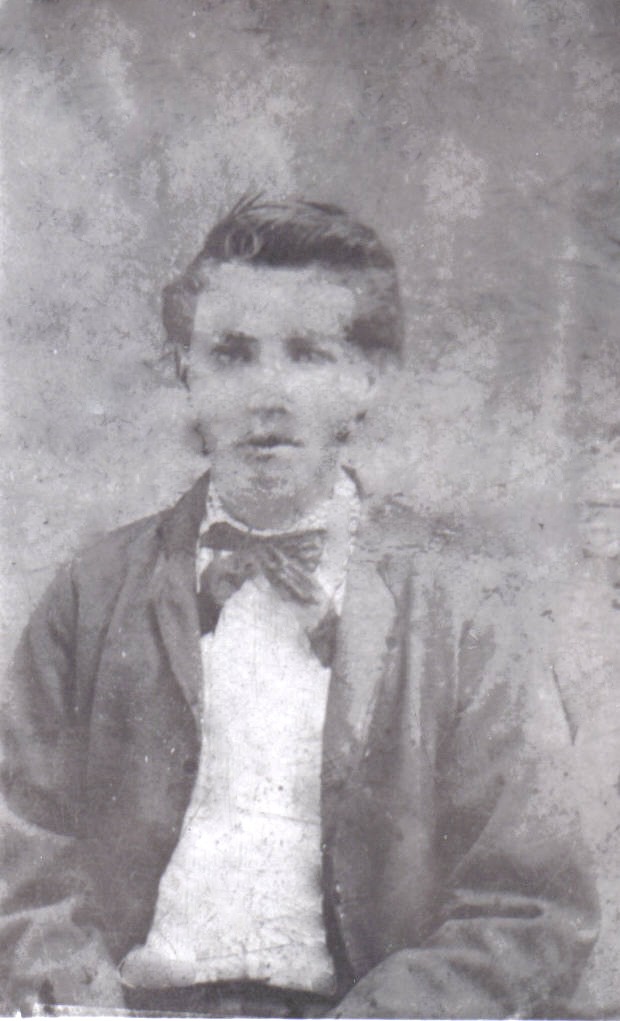
Lorenzo Padley died 24 July 1866 in Plain City.  The photo we have of him is pretty scratched, but here is a cleaned up photo, but it is not perfect.  It is hard to tell what is his nose and what was deformities in the photo.
Anne Elizabeth married Daniel Clayborne Thomas 29 January 1872 in Salt Lake City at the Endowment House.  After six children she died in 1891 in Plain City.

Mary Ann moved out on Christmas Eve 1875 and refused to come back to William.  William sued for divorce and Franklin Dewey Richards (1821-1899) granted the divorce (in probate court!) on 19 May 1876.

All was not well in Zion during these years in Plain City.  Family lore has it that when a Bishop (Lewis Warren Shurtleff (1835-1922), branch president 1870-1877, bishop 1877-1883) extended himself beyond what the members felt was right, these families made sure it was known.  The final straw came when Bishop Shurleff started telling the members what they would give as tithing.  These were not just on the fringe members, but good standing members of the church in the area.  William Sharp began construction on St. Paul’s Episcopal Church in 1877 for many of these disaffected members (Still standing today and owned by the Lions in Plain City).  For whatever reason a significant group of members were excommunicated between 1877 and 1882.  Many of Plain City’s leading members were excommunicated.  Excommunicated 31 January 1879 were William Sharp (the same who built the new church), Mary Ann Sharp (listed separately because of the divorce), William Skeen, Edwin Dix, George Musgrave (father of their future daughter-in-law), Thomas Musgrave, Thomas Singleton, Thomas Davis, George W Harris, Jonathan Moyes, John Moyes, Winfield Spiers, James Wadman, Robert Davis, John Davis, and Thomas Robson.  These lists also have “and wife” as well as “and family” which seems to indicate that this list may have included spouses and families.  Many of these families returned to the church after time away, some individuals never did.

Milo Riley married Mary Ann Stoker (aka Lillian or Lilly Musgrave) 11 May 1879 in Plain City in the little church William built.  He died in 1916 in Plain City.  Read about them here.

This same year, William remarried to the widow of Charles McGary, Charlotte Elizabeth Earl, in 1879.  We do not know exactly when or where.

Evelyn Carlisle married James Henry Taylor 16 January 1880 in Plain City.  She died in 1941 in Oregon.

Victorine Mary married Robert Edward Maw 8 April 1883 in Plain City.  She died in 1945 in Ogden.

Mary Ann continued to work as a dressmaker until she could not do so any more due to age.  She lived with her Granddaughter Elizabeth Taylor from before 1900 and even moved with her to Baker City, Baker, Oregon.  Mary Ann moved back to Plain City not long after Beth married.
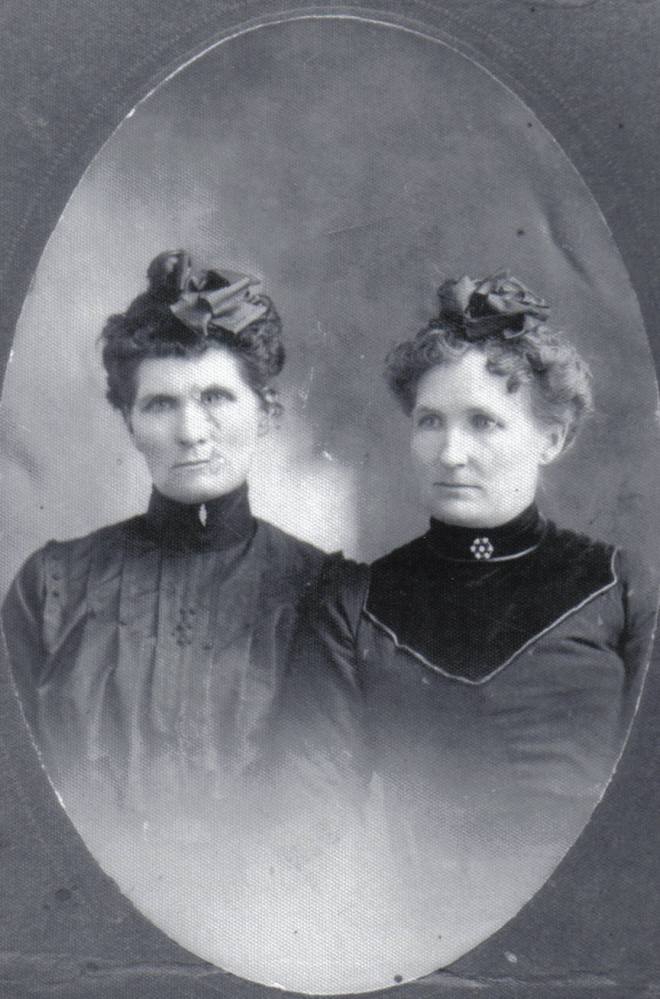
William died at 950 Washington Ave in Ogden on 22 December 1900 at 75 years and was buried two days later in the Ogden cemetery.  Mary Ann died 30 October 1913 in Plain City at 85 years and was buried there three days later.

Benson Stake Recognition

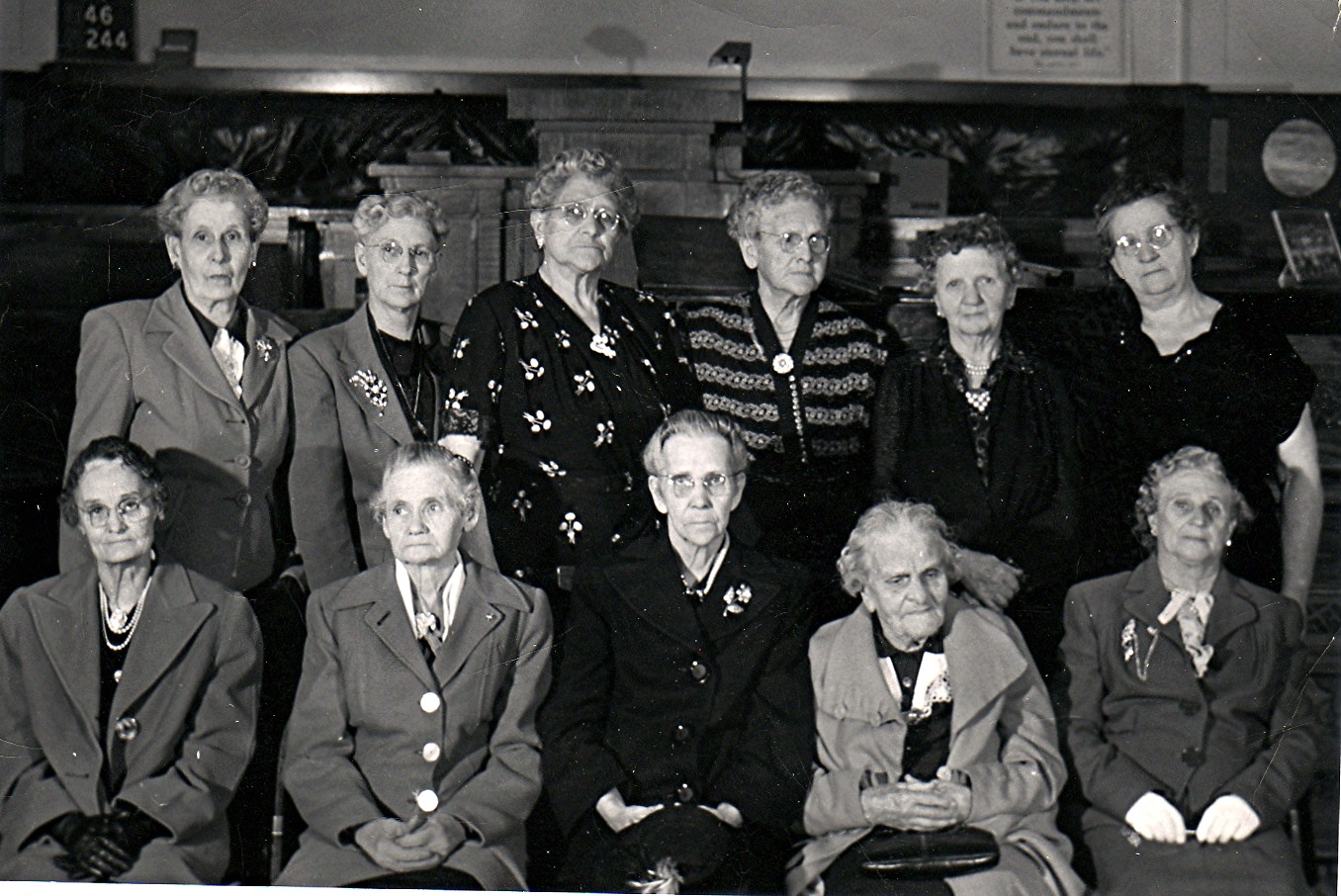
Back (l-r): Lydia Leavitt, Estella Blair, Sarah Preece, Susanna Allen, Livinia Wilcox, Clara Wheeler. Front: Lavina Poulsen, Christensia Hansen, Martha Coley, Martha Lewis, Sarah Snelgrove.

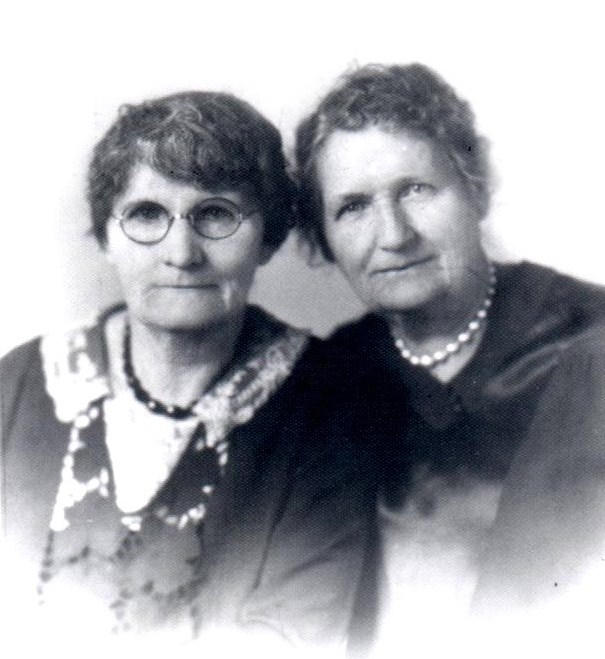
Here is a photograph I thought I would share.  It tells its own story.  This photo was taken on 25 April 1948 in the Benson Stake Tabernacle.  The photo is honoring those Visiting Teachers who have been faithful in going out for 40+ years in the Benson Stake.  The Benson Stake was headquartered in Richmond, Cache, Utah (later renamed to Richmond Stake), not Benson.

Mind you, at that time, this was not just an organization you automatically became a member of when you joined the church.  This was a separate membership with dues requirements for the organization.  You even received a membership card.  Not only are these women faithful in Visiting Teaching for 40 years, but they had volunteered to be a member of the Relief Society for that many years and actively participated.  Martha Coley in the front middle is my Great, Great Grandmother.  How many Visiting Teachers today qualify for faithful Visiting Teaching for 40 years?

Here is Martha Christiansen Coley’s daughter’s Relief Society membership card.  Lillian Coley married Joseph Nelson Jonas and after his death remarried to Lorenzo (Ren) Bowcutt.

Here is some more information I could find on the individuals in the photo.

Lydia Elnora Karren (1879-1959) married Edward Leavitt (1876-1957).  They probably lived in Lewiston, Cache, Utah.

Estella Nora Glover (1883-1952) married Ephraim Isaac Blair (1882-1943).  They probably lived in Lewiston.

Sarah () married Preece ().  Cannot find records, either have the name wrong or she moved from Cache Valley.

Susanna “Susie” Elizabeth Preece (1863-1953) married Andrew Bickmore Allen (1859-1941).  They probably lived in Cove, Cache, Utah.

Livinia Merriam Henson (1871-1950) married James Franklin Wilcox (1869-1951), previously married to an Levi Knapp Allen (1842-1928).  They probably lived in Cove.

Clara Deseret Stephenson (1880-1951) married Joseph Henry Wheeler (1882-1963).  They probably lived in Lewiston or Trenton, Cache, Utah.

Lavina Ellen Hawkeswood (1877-1954) married John James Poulsen (1871-1948).  They lived in Lewiston.  Interesting note, Martha Christiansen Coley’s husband, Herbert Coley, and Lavina are 1st cousins once removed!  Do you think these two ladies sitting on the front row knew of that relationship?

Christensia () married Hansen ().  Cannot find records, either have the name wrong or she moved from Cache Valley.

Martha Christiansen (1879-1961) married Herbert Coley (1864-1942).  They lived in Richmond.

Martha Ann Kingsbury (1850-1950) married William Crawford Lewis (1830-1908).  She was 98 years old in this picture!  They probably lived in Richmond.

Sarah Ann Gaunt (1878-1963) married Owen Elmo Snelgrove (1880-1973).  They probably lived in Richmond.