History of Plain City Pt 9

I have two copies of the History of Plain City, Utah. The front indicates it is from March 17th 1859 to present. As far as I can tell, the book was written in 1977. At least that is the latest date I can find in the book.

One copy belonged to my Grandparents Milo and Gladys Ross. My Grandpa has written various notes inside the history which I intend to include in parenthesis whenever they appear. They add to the history and come from his own experience and hearing. 

I will only do a number of pages at a time. I will also try to include scanned copies of the photos in the books. These are just scanned copies of these books, I have not tried to seek out originals or better copies.

History of Plain City March 17th 1859 to present, pages 141 through 149.

BONA VISTA IMPROVEMENT DISTRICT

SUBMITTED BY FLOYD PALMER

              This most important new culinary water system has made life a little more pleasant in this community and surrounding areas. It was turned into the lines just a century after sturdy pioneer families first put together temporary shelters and tapped several sweet water springs which they found in the area.

              It replaces old flowing wells, bringing precious waster from the depths of the earth. In early days many deep and surface wells dug, covered over, and fenced off to keep children from falling in. They were first fitted with “pitcher” pumps, a short-handled affair which were the “pumper” out in a short time. Even the farm animals had to depend on well water pumped to the surface by hand.

              Later, the easier to work, long-handled pumps were installed. These were followed by power pumps connected to a small storage tank. This was the ultimate in a private water supply.

              In 1955, a Weber County man, Linn C. Baker, was a member of the State legislature. He is the one who sponsored the bill to create special improvement districts. The reason he was the sponsor of this bill was due to his work in the Health Department for the State of Utah. As he studied samples of water sent to him from the outlying towns, he became aware of the amount of contamination there was in the drinking water in certain areas, Plain City was among the highest on the list. This was traceable to shallow surface wells being used, also septic tanks with poor drainage.

              Soon after the Weber Basin Conservancy District was organized, Plain City wanted to purchase one-thousand-acre feet of water. Their request was held in abeyance until a line could be built from Ogden Canyon. This, however, was never done.

              Elmer Carver was on the executive committee of Weber Basin Project. Through the encouragement of Commissioner Carver, Mr. Ezra Fjeldsted, manager of Weber basin Project, and Linn Baker, all met with the Plain City Town Board to get something started. Floyd A. Palmer, a member of the Town Board, was asked to represent Plain City on a committee of surrounding towns in Weber and Davis counties. Mr. Ezra Fjeldsted acted as chairman of this group and several meetings were held in both counties which Mr. Palmer attended.

              Following this, a public meeting was held in Plain city. Farr West, and Harrisville were asked to join in. This was for the purpose of starting a culinary water system. The results of this meeting, from all groups attending, were to go ahead, also to contact other nearby towns and get their feelings about joining in.

              A series of meetings were held in Farr West, Harrisville, Slaterville, Marriott, Wilson Lane, and Plain City. Other towns were invited to attend. Ezra Fjeldsted represented Weber Basin, Floyd A. Palmer represented Plain City, Dick Groberg represented Farr West, Kenneth Brown represented Harrisville, Clifford Blair represented Marriott and Slaterville, and Arthur W. Sorensen represented Wilson Lane. The meetings were all met with a great deal of enthusiasm and interest.

              Plain City Town Board consisted of Lee Olsen, President, Floyd A. Palmer, Elvin H. Maw, Merrill Jenkins, Blair Simpson, as members. A culinary water system was a prime item of the agenda in 1956. The town board along with several local residents were well organized to promote the need for a water supply to replace the surface wells and pumps.

              On July 19, 1956, Elmer Carver, Chairman of the Board of County Commissioners of Weber County, State of Utah, signed a certified documents that there be and is hereby created within Weber County, Utah, a Water Improvement District to be known and designated as the BONA VISTA WATER IMPROVEMENT DISTRICT, the same to embrace and include all real property lying within the following boundaries, to-wit: (SETS FORTH DETAILED LEGAL DESCRIPTION OF DISTRICT BOUNDARIES WHICH BOUNDARIES EMBRACE LANDS HEREIN ABSTRACTED – Abstracter)

              That the following-named persons are appointed as the Board of Trustees of said Bon Vista Water Improvement District:

                               Floyd A. Palmer, Plain City

                               Richard Groberg, Farr West

                               Kenneth Brown, Harrisville

                               Clifford Blair, Marriott-Slaterville

                               Arthur Sorensen, Wilson Lane

              This resolution shall take effect immediately and shall be recorded in the office of the Weber County Clerk. Recorded August 22, 1956.

Following this appointment from the Weber County Commission, the board held a short meeting. It was necessary to elect a chairman, after a discussion of each of the board members. Kenneth Brown was appointed as chairman.

              The first order of business was to secure professional and legal help. Mr. Jack Richards was appointed attorney. Jack Reeves, of the firm of Nelson, Reeves and Maxwell, was appointed engineer. They were appointed to do the field work and present the plans and drawings back to the board.

              When the plans were completed, the board spent much time deciding the most feasible and economical areas to run the lines in. Also, to give each town a fair share of the project. Following this, it was necessary to project estimated costs. The board spent many months getting costs and deciding on types and kinds of pipes and materials to use on the project. The overall plans had to look attractive and feasible in order to get a bonding company to handle the bonds.

              The first step made to secure the bond issue was to get signed pledge cards with an agreement to pay $250.00 for a waster connection. This was a requirement. Committees were organized with Floyd A. Palmer, Richard Groberg, Kenneth Brown, Clifford Blair, and Arthur Sorensen acting as chairman in each of their respective towns. The result was very successful, all those serving on these committee are deserving of much credit for their untiring effort and accomplishments.

              On August 20, 1957, a bond election was held to see if the residents would approve a $900,000.00 bond issue. The vote was 490 yes and 82 no. Edward L. Burton Company was retained as Fiscal Agent, and $698,000.00 was sold in General Obligation Bonds, and the system was under way.

              On April 14, 1958, a contract was awarded to Smith-Scott Pipe Company to furnish cement mortar-lined steel pipe for the main lines.

              Also, on April 14, 1958, a contract was awarded to Knudson Construction Company to install water mains in the Harrisville-Randall area which was Phase I of the project.

              Also, on April 14, 1958, a contract was awarded to Chicago Bridge & Iron Company to furnish and erect a 250,000.00 gallon elevated storage tank in Plain City.

              On April 28, 1958, Theron Palmer was hired as General Superintendent to oversee construction and to get it ready to serve and operated as a system.

              On May 27, 1958, an office was rented from the E. B. Stone Estate on the corner of 9th and Washington. The district still maintains its offices here. The building was purchased by the district in 1969 and has been remodeled.

              On May 27, 1958, negotiations were begun with the State Department of Welfare of obtain ownership of a spring located in Garner’s Canyon in North Ogden. The spring was used at the time by the welfare department at the Industrial School property for culinary use and irrigation use.

              On May 27, 1958, Weber Basin let a contract to Statewide Construction Company to build the 16-inch transmission line from 4000 South on U-84, down into the district where Bona Vista could connect to it.

              Also, on May 27, 1958, a piece of property located at 4100 West on 2200 North in Plain city, was purchased from Vern Palmer to construct the elevated tank.

Bona Vista Water Storage Tank

              Raymond Concrete Title Company moved in and drove concrete pilings 80 feet into the ground to support the tank.

              Gerald Larkin was then awarded a contract to construct a foundation so Chicago Bridge and iron could begin erection.

              On July 3, 1958, a contract was awarded to Bert Robinson Construction Company to build lines in the Farr West and Plain City.

              Also, on July 3, 1958, Standard Plumbing Supply Company was awarded a contract to furnish materials for service lines.

              On July 17, 1958, the Weber County Commission agreed to purchase 60 fire hydrants to go on the system to be located by the Weber County Fire Chief.

              On July 17, 1958, Smedley construction Company was awarded a bid to construct lines in the Slaterville, Marriott, and Wilson area for $44,975.00. The same day Mac Construction Company of Salt Lake City was awarded the bid to construct our North Ogden Reservoir for $16,911.00. This is a concrete underground reservoir.

              On August 11, 1958, an agreement was reached with the Welfare Department to obtain full use of the spring in North Ogden. Weber-Box Elder water was purchased to replace the Welfare Department’s share of the spring.

              On February 11, 1959, work began on the plans and site for a reservoir in the Roy area.

              On March 23, 1959, it was decided to run a line on the North Plain City Road.

              On August 27, 1959, it was decided to either buy or condemn the Hansen property for a reservoir.

              A bid to build a tank in Roy was awarded to Wehyer Construction Company for #31,403.80 on September 23, 1959.

              Negotiations began to buy an eight-foot well from the Farr West Stake for $31,403.80 on September 23, 1959.

              Linn C. Baker resigned as Secretary on January 1, 1961. He had been with the district since it began.

              On December 6, 1961, it was decided to construct extensions to existing mains in the amount of $90,000.00 General Obligation Bonds were sold to finance these extensions. Waterfall Construction Company did the job.

              All though the summer of 1961, the Farr West well was tested to see if it would hold up.

              On February 28, 1962, President Wimmer signed the Warranty Deed on the Farr West well and property. On January 16, 1963, it was decided to put heat lights on our Roy tank. This was the first such installation in this area and it drew a lot of attention.

              The Utah State Health Department studied the plans for use of the plans for use of the existing well in Farr West and decided against allowing it to be used because of its depth. A change application was then filled with the State Engineer to drill the well to a deeper depth.

              On May 10, 1963, a contract with Wesley Stoddard was made to drill a well in Farr West for $21,632.00 plus $4,700.00 for the test hole to see how deep the well would have to go.

              A meeting was held at the Farr West Pump House building on January 20, 1964. This building was contracted by the Bona Vista Water employees. The piping was also done by employees of Bona Vista.

              R. W. Coleman Company was awarded a contract for $18,877.50 to change some lines under the interstate highway on November 22, 1965.

              Negotiations began on March 28, 1966, with Weber Basin on the North Ogden Well, which was later drilled and is used in the system now.

              Water meters were deemed necessary and were bought by bid from Waterworks Equipment Company and E. C. Olsen Company on October 28, 1968.
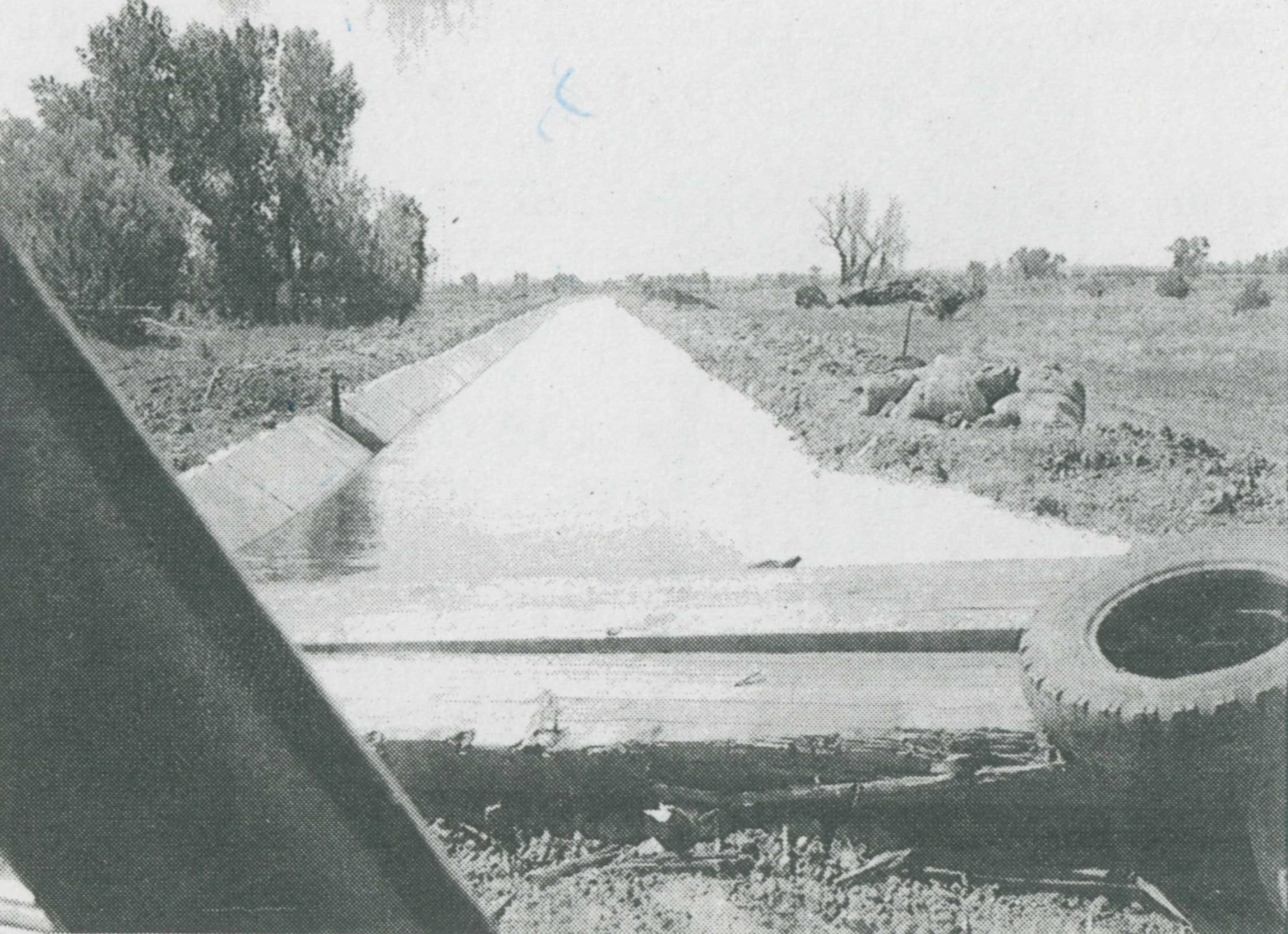
New Plain City Canal

BEGINNING OF PLAIN CITY IRRIGATION WATER

              1859 Before the summer was over some water had been brought in their new ditch from Four Mile Creek to Plain City. In 1860, the Canal was completed to Mill Creek, the following year to Broom’s Creek and in 1862 to the Ogden River. The Right of Way in Weber River was purchased in 1873 at a cost of $2000.

              In 1899 Samuel Wayment drilled an Artesian Well 249 feet deep producing additional water for the settlers. He also was in charge of the iron work and the building of the Chief Canning Factory in Plain City.

PLAIN CITY IRRIGATION-CEMENTING OF THE MAIN CANAL

SUBMITTED BY Wayne Skeen

              For many years the Plain City Irrigation Company received it’s water from the Weber River. The diversion point into the canal was just north of the old American Packing Plant that was later called the Swift Meat Packaging Plant. The Irrigation Company had a large Plank Head Gate in the Weber River that forced the water into the Plain City Irrigation Company Canal because of high waters in the spring this gate would wash out and it was necessary to make a gravel and dirt dam each year using horses, scrapers, and even large bulldozers. In recent years this became a major problem.

              The government began planning the Willard Project in 1960. This project would interfere to a certain extent with the existing canal used by the Irrigation Company because big Willard Bay Canal would be built in part of our existing canal and would also cross it in part of our existing canal and would also cross it in other areas. The leaders of this project wanted to provide a turn out from the big canal into the Plain City Irrigation Canal. The corporation of our company was necessary to give them the right to use the area affected by the construction of the Willard Bay Canal. The logical point of diversion would be west of the Farr West Church House. This meant that some new construction would be necessary to get the water into the old canal. It was in need of some repairs and it was at this time that the idea of a new cement lined canal was entertained.

              Directors who served during this period of construction were as followed:

              President                               Abram Maw                1959-60

              President                               Alvin J. Robson           1961-65

              Vice President                       Walt Christensen        1959-64

              Vice President                       Carl Taylor                  1965

                                                            Bert Hunt

                                                            Charles Heslop

                                                            Keith Blanch

                                                            Mike Panunzio

              Secretary                               Wayne Skeen              1959-65

              High lights of the minutes of the meetings during the construction period are as follow:

August 11, 1959

              Ogden City had extra water for sale this year which was allocated out to various canal companies. A motion was made by Alvin Robson that this water be purchased to see them through the current season. It would be paid by those stock holders who subscribed for the extra water.

April 4, 1960

              The meeting was called to discuss the new canal. Charles Heslop was assigned to work on interested free money from the Utah Water & Power board for the construction. Alvin Robson was assigned to work with the Soil Conservation on the completion of the surveying of the canal, and additional monies.

July 12, 1960

              A meeting was held to discuss a possible shortage of water for the remainder of the year. Time was changed from 20 shares per hour to 25 shares per hour.

January 9, 1961

              A priority was established with the Utah Water an Power board for interest free money and application made for $100,000.00

              A survey showed that there was a 10% loss of water between the River turn out and the Point of use.

March 8, 1961

              The Irrigation Company received a $10,000.00 cash settlement for their rights in the old canal from the O.U.R.D. Railroad Company that passes through their yards.

              Alvin Robson, Carl Taylor, and Walt Christensen was to secure information regarding tiling of the canal from Victor Lund’s corner up to the Jesse Singleton property where the canal leaves the road and runs back into the fields.

April 20, 1961

              A report was given by Alvin Robson regarding the tiling of the lower part of the canal. There were mixed emotions about tiling this section of the canal because of the fall and the amount of water to be delivered. “Alvin Robson commented as the discussion went on concerning the piping verses the cement lining. The stockholders are residents of this town and should have some concern towards the improvements and beautification of the community and that an open cement lined canals to greet the people entering the town is not very inviting and once it was constructed it would never be changed in our life time.”

              Keith Blanch speaking as a town board member expressed his opinion regarding the beautification and eliminating hazards in the community and felt that it was worth while and the tax payers should help with the construction of the Irrigation Company in piping this section of the canal.

              Glen Charlton and Lee Olsen from the town board were present. An opinion was asked from the town board members. Mr. Charlton felt it was a worth while project as long as it was right. Mr. Olsen commented that it was a good thing as long as it was sufficient to meet the needs of the water users.

              The town board members agreed to cover the pipe that was laid with dirt. It was agreed that 2880 feet of 36 inch tile would be laid this spring from the old beet dump corner to Victor Lund’s corner.

April 27, 1961

              The Town board members present: Dee Cook, Glen Charlton, Kent Jenkins, and Lee Olsen. Mr. Covey from Utah State University was also present.

              Further discussion concerning cost of construction of the concrete pipe continued. Keith Blanch made a motion that the town board and property owners should join with the Irrigation Company in the cost of the 36 inch tile to be laid. Motion seconded by Carl Taylor

              Mr. Robson suggested the property owners who would benefit from the lining of the canal pay $1.25 per foot frontage towards the pipe. The Town Board said they could only participate within the city limits and they would contribute $4,000.00 over a 10 year period. The bids were to be sent to Secretary Wayne Skeen by March 30, 1961.

April 30, 1961

              The purpose of this meeting was to open bids. Utah Concrete Pipe Company received bids for 36 inch concrete pipe at $8.75 per foot. Waterfall Construction Company was awarded the laying of the pipe at $1.55 per foot.

              Abram Maw made the motion that the project not be stopped at the beet dump corner but continue up to the up to the weir east of the water tower (where the pipe portion of the canal now starts) if the property owners will contribute $1.25 per foot. Motion seconded by Keith Blanch.

              Charles Heslop ad Elvin Maw were asked to approach these property owners and get their approval to pay the $1.25 and also contact all stock holders and get their signature for government participation thru the Soil Conservation.

              Charles and Elvin were successful in getting all the names except Jesse Singleton who would not accept any government monies and would not pay the $1.25 per foot to tile in front of his property.

              Alvin Robson contracted Howard Singleton, Jesse’s boy and he agreed to pay the $1.25 but only up to the old house that sat in the field and that is where the concrete pipe starts today. Alvin Robson tried to convince the Director’s that they should at the company’s cost tile the remainder of the ditch along the road because any future expansion of the community would by hampered by open ditch reducing the width of the road. This motion turned down.

              Walter Christensen made the motion that Alvin Robson meet with the Soil Conservation to discuss details of cost and tiling and lining the canal.

April 31, 1961

              Alvin East, Maurice Skeen, and Owen Wayment from the Warren Irrigation Company met with the directors to discuss details and sign a contract for the exchange of Ogden and Weber River which would benefit both companies. The contract was signed.

              Mr. Daniel Lawrence from the Utah Water & Power Board attended the meeting. Keith Blanch made the motion that Alvin Robson and Wayne Skeen be given the power to enter into a contract with the Utah Water & Power Board for the total cost of $1,300.000.00 and formulate all details.

May 3, 1961

              Junior Taylor was appointed as Water Master of the year.

May 15, 1961

              The purpose of this meeting was to discuss the Weber Basin Project with E.J. Feldstead and commissioner Wilmer Carver. They needed additional votes to finish construction of the Willard Bay. A proposed addition would cost seventeen million dollars.

June 5, 1961

              The purpose of the meeting was to see what should be done because it appeared that there would be a water shortage before the end of the year. It was proposed that we only run off water until the stream reached a point that we could not water properly and then start to use our shortage water and put turns on 1/3 basis.

September 27, 1961

              The new project was discussed and it was recommended that the company hire an engineer and begin construction on the upper end of the new canal.

              There were many problems that came out of the construction of this canal. It would be necessary to get some dirt to construct the pad for the canal. The company purchased some ground at the upper end of the canal from Max Stander. Then got the dirt that was necessary to build the upper end of the canal and then leveled the ground and gave it back to Mr. Stander. They also purchased additional dirt from Robert Penman. This dirt was trucked from his property just south of the Weber River and west of the main road. The dirt was hauled by farmers using their beet trucks, etc.. The new pad was made in the old canal banks where possible, but there was some trading of land etc. to straighten out the canal. There was also a problem in getting someone to dig out the canal to the size and shape required to allow 50 seconds feet of water at one time. The company asked for bids, but they only received one because the equipment needed to shape the canal was not available. In order to get the project moving Alvin Robson caught a bus on Ogden and went to the Fuller Forms Company in Arizona to see if they had some type of equipment that could be used. He purchased a right to one of their slip forms that could be used in forming and pouring the concrete. He returned to Ogden and worked with the Ogden Iron Works on 23rd Street and Grant Avenue where the construction of the slip forms took place. The next problem was to begin the construction of the project. Dean Hadley of Taylor was hired to do most of the big equipment work. Local farmers also helped with their equipment. The Soil Conservation furnished the engineering on the project. Herbert Issackson of Pleasant View was the surveyor. One of the major problems that existed and is still a yearly discussion is the amount of water delivered from the existing head gates. The government required that curtained head gates must be varied in size for them to participate financially.

Oct 1962

              There was much contention and personal feelings during the construction of how it should be done. Some people left the jobs and never came back, but the project was finally finished. The construction created problems for some but most of the inconveniences were ratified by the Irrigation Company. New bridges were built, land was leveled, damages to property was crops were paid for during the construction. The Company paid for fencing materials with the property owners installing the fences. Cattle that used to walk across the stream would fall into the new lined canal and couldn’t get out. The Company paid for some of the cattle that were lost before the agreement to install fencing was made.
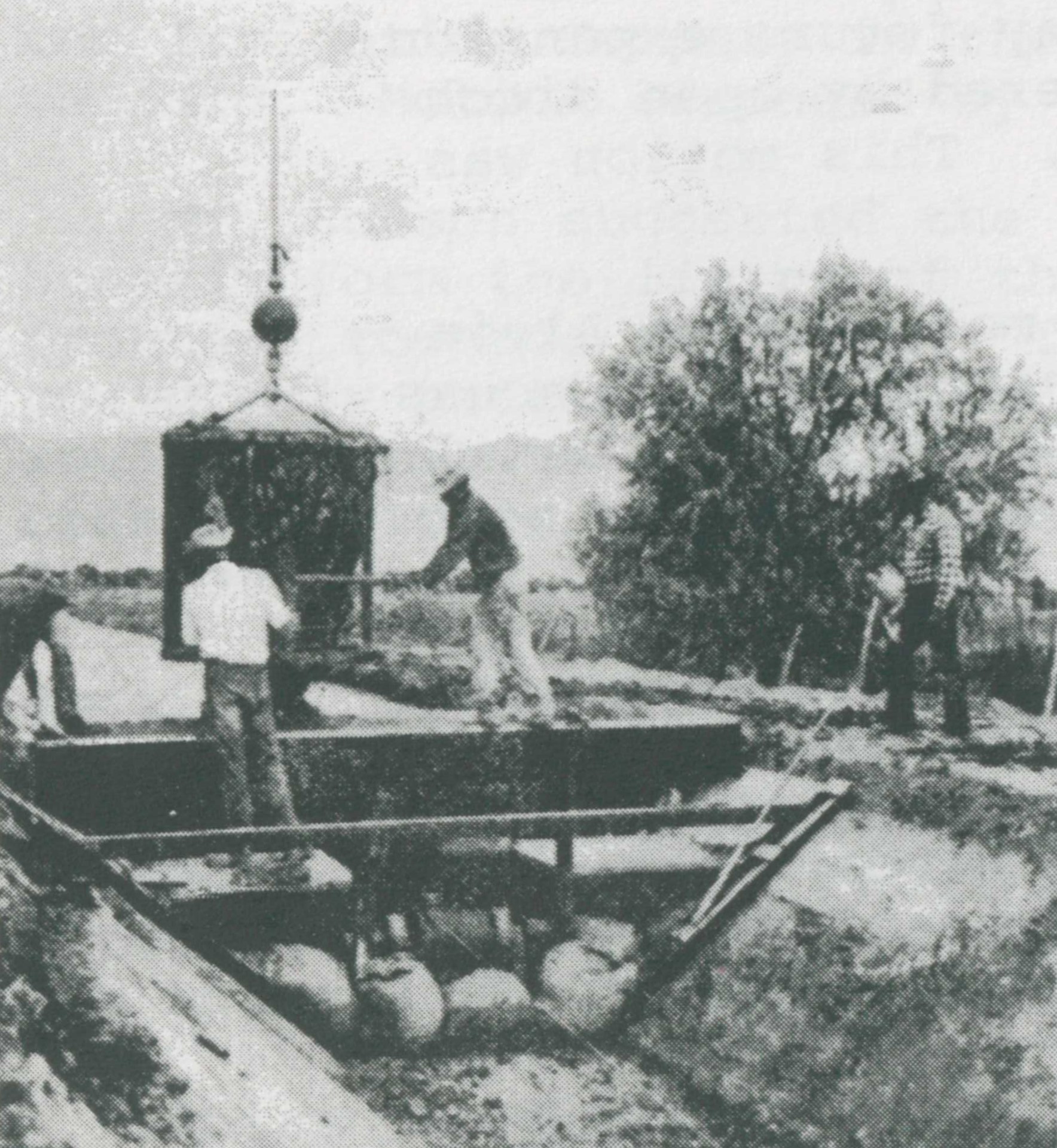
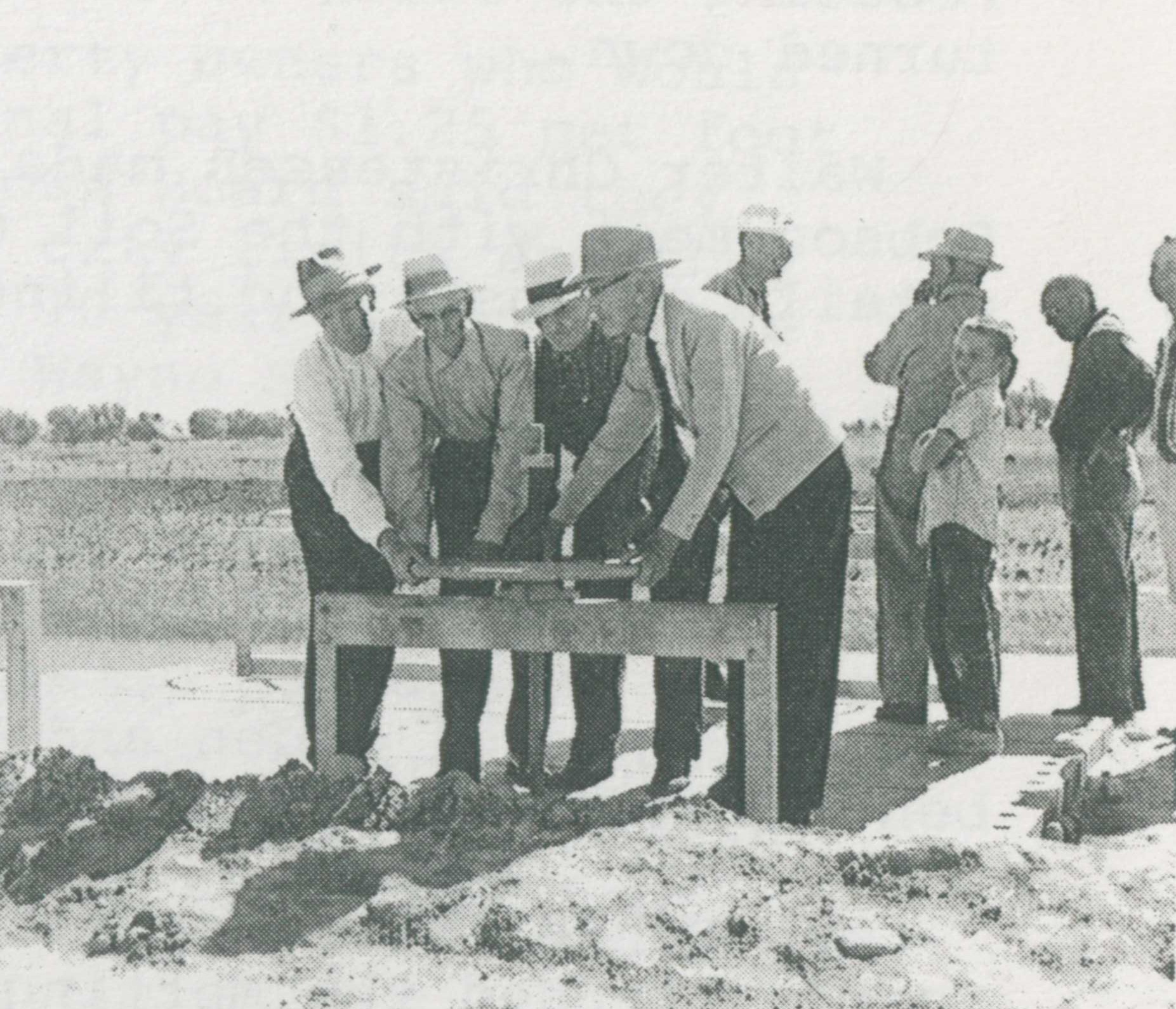
              The total cost of the project was $199,754.08. The amount of $122,918.61 was borrowed from Utah Water & Power Board. This money was interest free if a yearly payment was made by November 30th each year. The last payment of $8.257.06 will be paid on November 30, 1977. Other cost not being paid by the stockholders come from the Soil Conservation and the sale of pieces of the old canal, and the town board. Vice President Bill Hatch of the First Security bank was also an asset in the financing of the canal.

              We borrowed monies from the First Security Bank as construction went on to pay for cost on a daily basis. On December 31, 1974, the company owed the First Security bank $60,000.00 Alvin Robson and Wayne Skeen met with Mr. Hatch in May regarding this bill. Mr. Hatch said that the bank needed some type of security for this loan. There was nothing to give him because out rights to the canal had been given to the Utah Water and Power Board. Alvin Robson and Wayne Skeen then approached Mr. Lawrence of the Utah Water and Power Board asking them for more money for the project explaining the situation with the bank. Alvin Robson explained that they might just as well take over the ownership of the canal because the bill had to be paid. There was nothing to offer as security because the Utah Water and Power board had everything that the company owned. Later, Mr. Lawrence of the Utah Water and Power Board gave the Irrigation Company an additional $30,000 which helped to delete that note at the First Security Bank.

*********
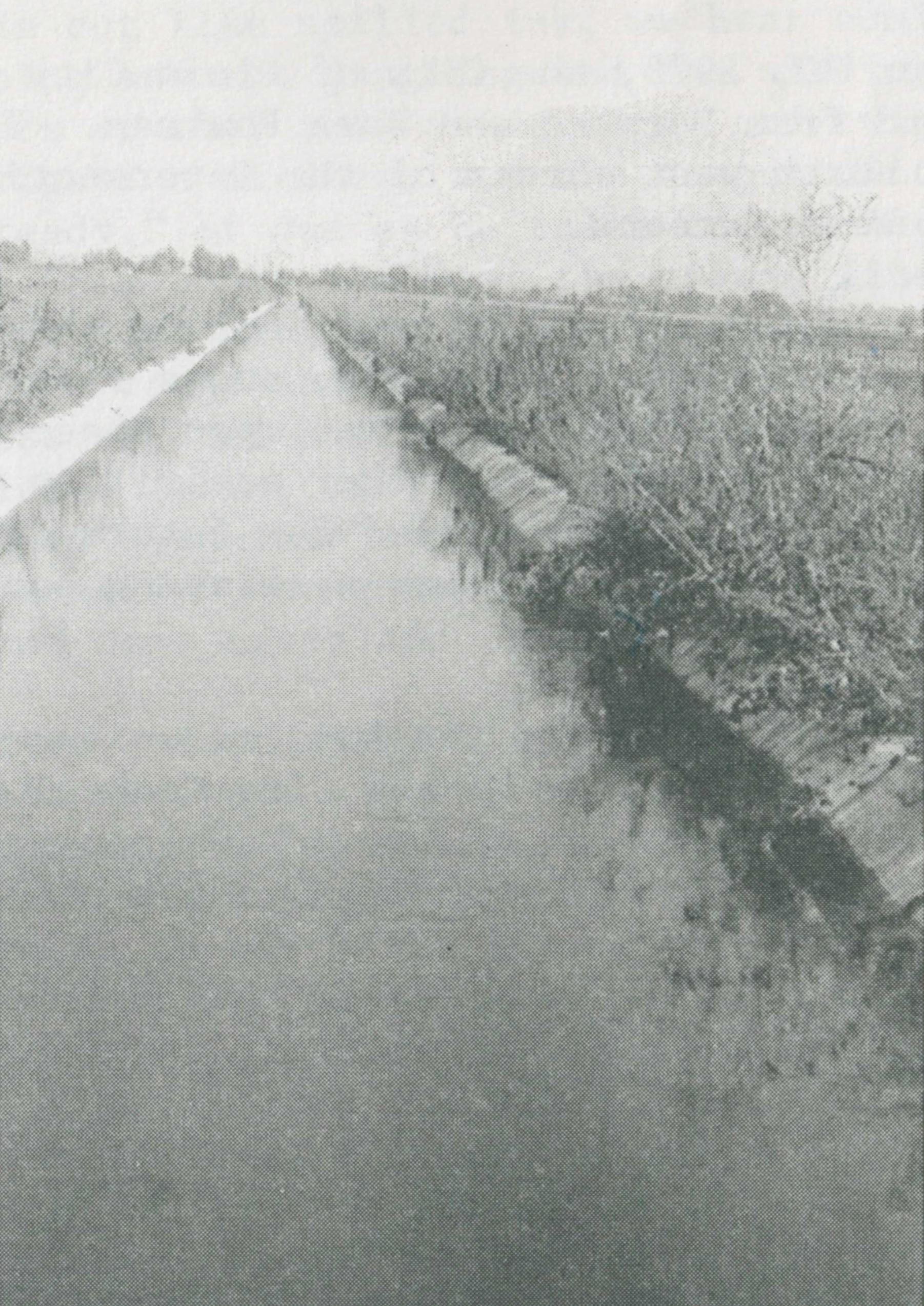
Canal after completion

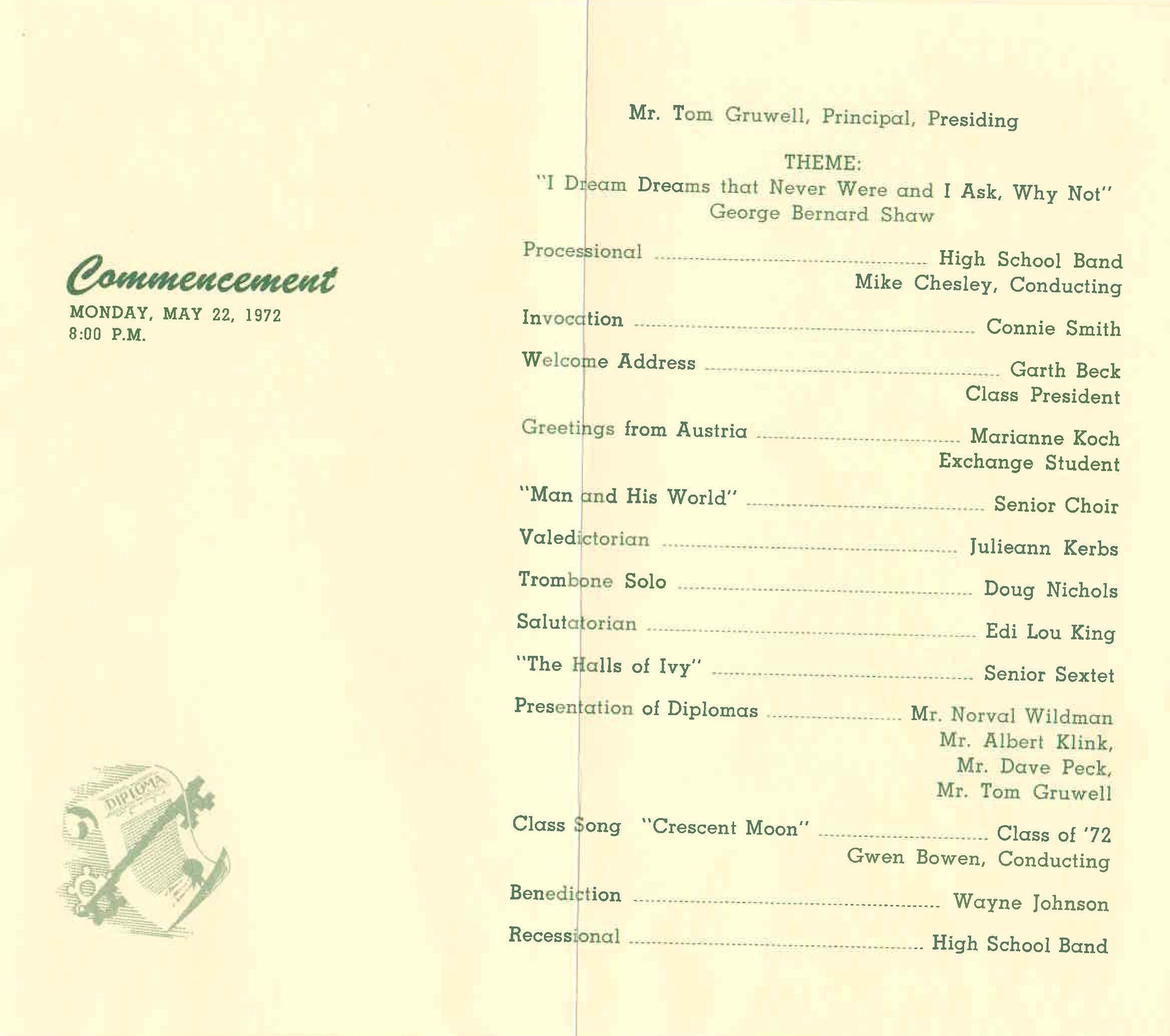
1972 Burley High School Commencement

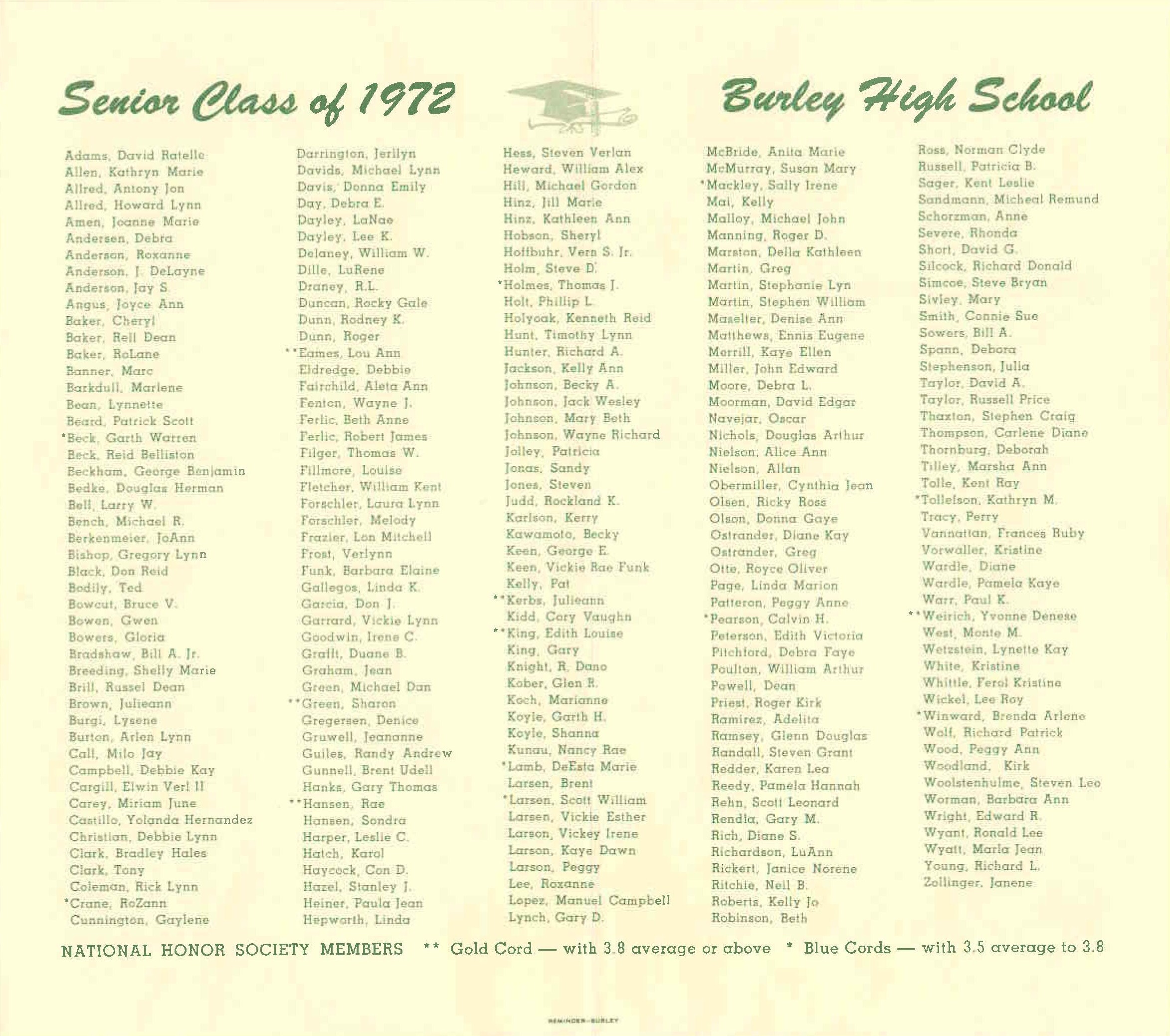
I was trying to find some photos and stumbled upon my Mom’s graduation pamphlet I had scanned a few years ago. Thought maybe it was time to share it, especially where I have seen some of her classmates have passed away recently.

1972 Baccalaureate and Commencement – Burley High School – Burley Idaho

These programs courtesy of the following Public Spirited Business Concerns

Amalgamated Sugar Co.

Burley Processing Co.

Burley Reminder

Cassia National Bank

First Federal Savings & Loan Assn., Burley Branch

First Security Bank

Guys ‘N Dolls

Idaho Bank & Trust Co.

Idaho First National Bank Burley Office

McCaslins

Ponderosa Inn

J. R. Simplot Food Processing Division

South Idaho Press

Class Officers

President Garth Beck

Vice President Bud Hoffbuhr

Secretary Jill Hinz

Executives Peggy Wood, Peggy Larson, Kaye Dawn Larson, Jeananne Gruwell, Jean Graham

Class Adviser Mr. David Peck

Baccalaureate Sunday, May 21, 1972 2:30 P.M.

Mr. Tom Gruwell , Principal, Presiding

Processional High School Band Mike Chesley, Conducting

Welcome Garth Beck Class President

Invocation Bud Hoffbuhr

Special Number Bel Canto Choir Elden Wood, Conducting “Battle Hymn of the Republic”

Address Dr. Walter R. Peterson

Cherubim Song Senior Octet

Benediction Calvin Pearson

Recessional High School Band

Commencement Monday, May 22, 1972 8:00 P.M.

Mr. Tom Gruwell, Principal, Presiding

THEME: “I Dream Dreams that Never Were and I Ask, Why Not” – George Bernard Shaw

Processional – High School Band – Mike Chesley, Conducting

Invocation – Connie Smith

Welcome Address – Garth Beck, Class President

Greetings from Austria – Marianne Koch – Exchange Student

“Man and His World” – Senior Choir

Valedictorian – Julieann Kerbs

Trombone Solo – Doug Nichols

Salutatorian – Edi Lou King

“The Halls of Ivy” – Senior Sextet

Presentation of Diplomas – Mr. Norval Wildman, Mr. Albert Klink, Mr. Dave Peck, Mr. Tom Gruwell

Class Song “Crescent Moon” – Class of ’72 – Gwen Bowen, Conducting

Benediction – Wayne Johnson

Recessional – High School Band

Adams, David Ratelle

Allen, Kathryn Marie

Allred, Anthony Jon

Allred, Howard Lynn

Amen, Joanne Marie

Andersen, Debra

Anderson, Roxanne

Anderson, Jerald DeLayne (1954 – 2017)

Anderson, Jay S

Anderson, Todd Michael (1953 – 1972)

Angus, Joyce Ann

Baker, Cheryl

Baker, Rell Dean

Banner, Marc

Barkdull, Marlene

Bewan, Lynnette

Beard, Patrick Scott

* Beck, Garth Warren (1953 – 2002)

Beck, Reid Belliston

Beckham, George Benjamin

Bedke, Douglas Herman

Bell, Larry W

Bench, Michael R

Berkenmeier, JoAnn

Bishop, Gregory Lynn

Black, Don Reid

Bodily, Ted O (1954 – 2019)

Bowcut, Bruce V

Bowen, Gwen

Bowers, Gloria

Bradshaw, Bill A Jr

Breeding, SHelly Marie

Briggs, Larry

Brill, Russel Dean

Brown, Julieann

Burgi, Lysene (1953 – 2016)

Burton, Arlen Lynn (1954 – 2014)

Call, Milo Jay

Campbell, Debra “Debbie” Kay (1954 – 2019) Johnson

Cargill, Elwin Verl II

Carey, Mirian June

Castillo, Yolanda Hernandez

Christian, Debbie Lynn

Clark, Bradley Hales

Clark, Antone “Tony” Lee (1954 -2015)

Coleman, Rick Lynn

* Crane, RoZann

Cunnington, Gaylene

Darrington, Jerilyn

Davids, Michael Lynn (1953 – 2020)

Davis, Donna Emily

Day, Debra E

Dayley, LaNae

Dayley, Lee K

Delaney, William W

Dille, LuRene

Draney, Rex Leonard (1953 – 2007)

Duncan, Rocky Gale (1954 – 2020)

Dunn, Rodney K

Dunn, Roger

** Eames, Lou Ann

Eldredge, Debbie

Farwell, Albert Michael (1952 – 2023)

Fairchild, Aleta Ann

Fenton, Wayne J

Ferlic, Beth Anne

Ferlic, Robert James

Filger, Thomas W

Fillmore, Louise

Fletcher, William Kent

Forschler, Laura Lynn

Forschler, Melody

Frazier, Lon Mitchell

Frost, Verlynn

Funk, Barbara Elaine

Gallegos, Linda K

Garcia, Don J

Garrard, Vickie Lynn

Goodwin, Irene Cecilia

Goold, Gary

Graf, Becky Ann (1954 – 2011) Moats, Kloer

Grafft, Duane Brian (1953 – 2006)

Graham, Jean

Green, Michael Dan

** Green, Sharon

Gregersen, Denice

Gruwell, Jeananne

Guiles, Randy Andrew (1953 – 2015)

Gunnell, Brent Udell

Hanks, Gary Thomas

** Hansen, Rae

Hansen, Sondra

Harper, Leslie C

Hatch, Karol (1953 – 2004) Kerr

Haycock, Con D

Hazel, Stanley Jarvis (1953 – 2008)

Heiner, Paula Jean

Hepworth, Linda

Hess, Steven Lerlan

Heward, William Alex

Hill, Michael Gordon

Hinz, Jill Marie

Hinz, Kathleen Ann

Hobson, Sheryl

Hoffbuhr, Vernard “Bud” Standley Jr (1954 – 1997)

Holm, Steve D

* Holmes, Thomas J

Holt, Phillip L

Holyoak, Kenneth Reid

Hunt, Timothy Lynn

Hunter, Richard A

Jackson, Kelly Ann

Johnson, Becky A

Johnson, Jack Wesley

Johnson, Mary Beth

Johnson, Wayne Richard (1953 – 2008)

Jolley, Patricia

Jonas, Sandy (1954 – alive)

Jones, Steven

Judd, Rockland K (1953 – 2012)

Karlson, Kerry

Kawamoto, Becky

Keen, George E

Keen, Vickie Rae Funk

Kelly, Pat

** Kerbs, Julieann

Kidd, Cory Vaughn

** King, Edith Louise

King, Gary

Knight, Robin Daniel (1953 – 2014)

Kober, Glen R

Koch, Marianne

Koyle, Garth H

Koyle, Shanna

Kunau, Nancy Rae

* Lamb, DeEsta Marie

Larsen, Brent

* Larsen, Scott William

Larsen, Vickie Esther

Larson, Vickey Irene

Larson, Kaye Dawn (1954 – 2019) Silcock

Larson, Peggy (1954 – 2016) Stirland

Lee, Roxanne

Lopez, Manuel Campbell

Loveland, Cynthia (1954 – 1981)

Loveland, Kevin R (1954 – 2008)

Lynch, Gary D

McBride, Anita Marie

McMurray, Susan Mary

* Mackley, Sally Irene

Mai, Kelly

Malloy, Michael John

Manning, Roger D

Marston, Della Kathleen

Martin, Gregory Max (1954 – 1975)

Martin, Stephanie Lyn

Martin, Stephen William

Maselter, Denise Ann (1954 – 2022) Rollins

Matthews, Ennis Eugene

Merrill, Kaye Ellen

Miller, John Edward

Moore, Debra Lynn (1954 – 2002)

Moorman, David Edgar (1953 – 1997)

Navejar, Oscar

Newcomb, Kathy Lorene (1954 – 2020) Bailey

Nichols, Doulgas Arthur

Nielson, Alice Ann

Nielson, Allan (1954 – 2020)

Obermiller, Cynthia Jean

Olsen, Ricky Ross

Olson, Donna Gaye

Ostrander, Diane Kay

Ostrander, Greg

Osterhout, Rex Dale (1954 – 2017)

Otte, Royce Oliver

Page, Linda Marion

Patteron, Peggy Ann

* Pearson, Calvin H

Peterson, Edith Victoria

Pitchford, Debra Faye

Poulton, William Arthur

Powell, Leslie Dean (1953 – 2005)

Priest, Roger Kirk

Ramirez, Adelita

Ramsey, Glenn Douglas

Randall, Steven Grant

Redder, Karen Lea

Reedy, Pamela Hannah

Rehn, Scott Leonard (1954 – 1994)

Rendla, Gary M

Rich, Diane S

Richardson, LuAnn

Rickert, Janice Norene

Ritchie, Neil B

Roberts, Kelly Jo

Robinson, Beth

Ross, Norman Clyde

Russell, Patricia B

Sager, Kent Leslie

Sandmann, Michael Remund

Schorzman, Anne

Severe, Rhonda

Short, David G

Silcock, Richard Donald

Simcoe, Steve Bryan

Sivley, Mary

Smith, Connie Sue

Sowers, Bill A

Spann, Debora

Stephenson, Julia

Taylor, David A (1953 – 2009)

Taylor, Russell Price (? – alive)

Thaxton, Stephen Craig

Thompson, Carlene Diane

Thornburg, Deborah

Telley, Marsha Ann

Tolle, Kent Ray

* Tollefson, Kathryn M

Tracy, Perry Alan (1953 – 2005)

Vannatian, Frances Ruby

Vorwaller, Kristine

Wardle, Diane

Wardle, Pamela Kaye

Warr, Dee Ann (1954 – 2013)

Warr, Paul K

** Weirich, Yvonne Denese

West, Monte M

Wetzstein, Lynette Kay

White, Kristine

Whittle, Ferol Kristine

Wickel, Lee Roy

* Winward, Brenda Arlene

Wolf, Richard Patrick

Wood, Peggy Ann

Woodland, Kirk

Woolstenhulme, Steven Leo

Worman, Barbara Ann

Wright, Edward R

Wyant, Ronald Lee

Wyatt, Marla Jean

Young, Richard LeRoy (1953 – 2022)

Zollinger Janene

National Honor Society Members

** Gold Cord – with 3.8 average or above

* Blue Cords – with 3.5 average to 3.8

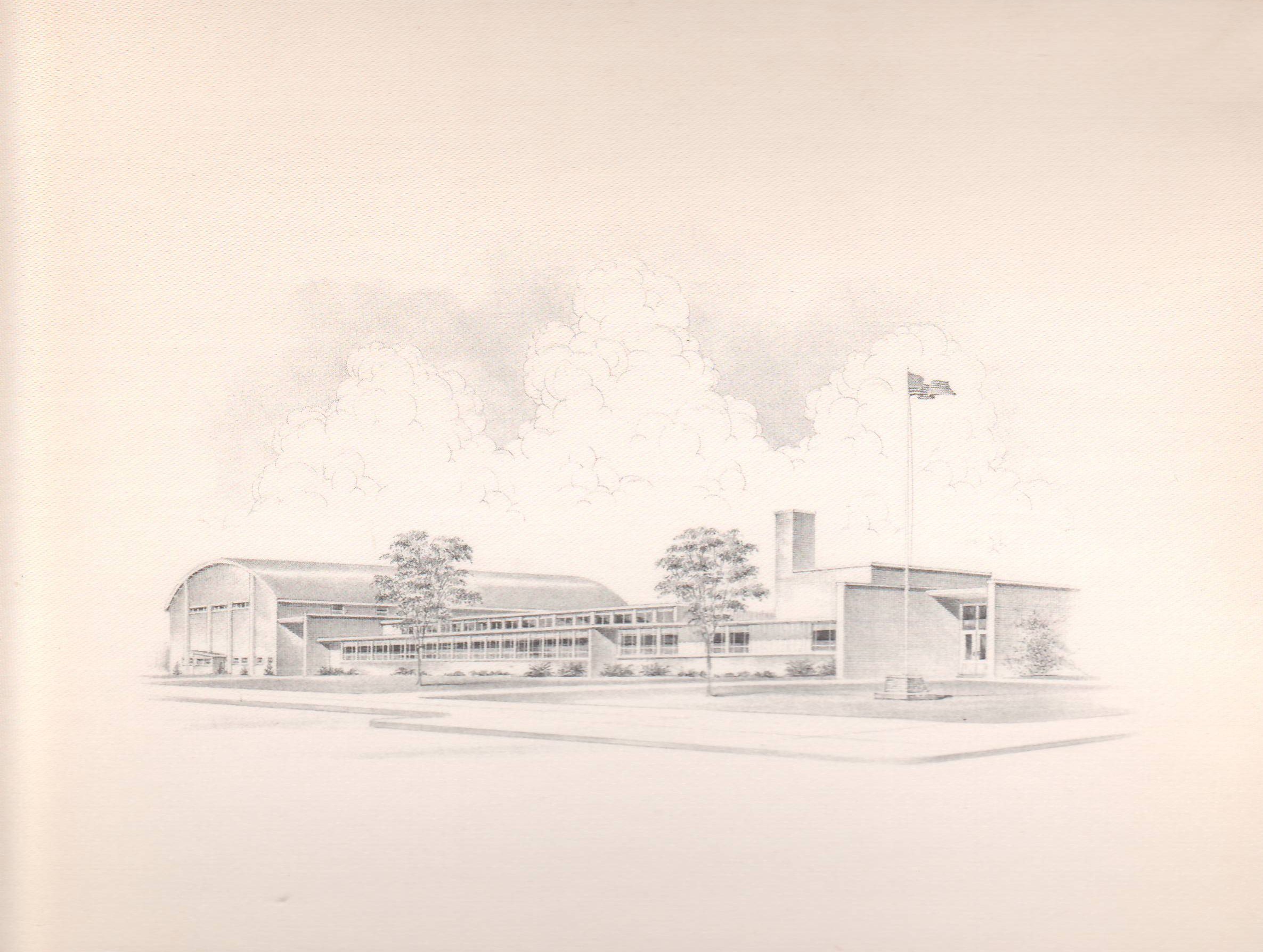
The sketch of the Burley High School on the front of the Diploma case.

Sandy Jonas Burley High School Diploma

Mom’s actual Diploma.

Burley High School – Burley, Idaho

This Certifies That Sandy Jonas has satisfactorily completed a Course of Study prescribed for Graduation from this School and is therefore awarded this Diploma.

Given in the month of May, nineteen hundred and seventy-two

Tom Gruwell – Principal

Harold W Blauer – Superintendent

W B Whiteley – Chairman Board of Education

Here is a copy of Mom’s Senior picture – 1972

Logan Tabernacle

Logan Tabernacle looking north on Logan Main Street

This photo was shared on a social media website a time back. It struck me. The Cache County Courthouse cupola on the left and the Logan Tabernacle on the right.

I previously shared comments of memories in this tabernacle. Here are some of those comments.

The Logan Tabernacle is where I attended Stake Conference for all the years I attended Utah State University. I graduated from Logan Institute of Religion in this building. I recall Dad pointing out that my hair was getting thin from his vantage point on the balcony. I was sustained in this building and spoke at a Stake Conference. I sat at the feet and heard the teachings of H. David Burton and Vaughn J. Featherstone, as well as our own Stake Presidency, Thomas Cherrington, James Jenkins, and Roger McEvoy. I still remember some of their talks. I recall entertaining visiting British guests, like the Byroms and Gores, in this building. Moreover, this building had historical significance to the area and my own ancestors in the valley.

Logan Tabernacle July 2020, Aliza Ross on the right

Logan, Utah

Logan Tabernacle July 2020

The morning of 26 July 2020 I awoke at a motel in Logan, Utah, with my four children. We were on the last day of a trip where Amanda had the weekend to pamper herself. Since we were in Logan, I took the kids around to some of the sites that were important to me. I am not including any of the graveyard pictures that I have shared earlier in visiting the resting sites of family members. This was the same trip we stopped to visit the Paris Tabernacle.

Hiram, Aliza, Lillian, and James Ross on the steps of the Logan Tabernacle in July 2020

The Logan Tabernacle is where I attended Stake Conference for all the years I attended Utah State University. I graduated from Logan Institute of Religion in this building. I recall Dad pointing out that my hair was getting thin from his vantage point on the balcony. I was sustained in this building and spoke at a Stake Conference. I sat at the feet and heard the teachings of H. David Burton and Vaughn J. Featherstone, as well as our own Stake Presidency, Thomas Cherrington, James Jenkins, and Roger McEvoy. I still remember some of their talks. I recall entertaining visiting British guests, like the Byroms and Gores, in this building. Moreover, this building had historical significance to the area and my own ancestors in the valley. In those years, I had numerous councilors, including David Ackerman, Tyler Buswell, David Moss, Jon Phillips, and Guy Schauerhamer. Secretaries were the amazing Kalynne Call (now Jensen) and Jessica Pollard (now Westerberg).

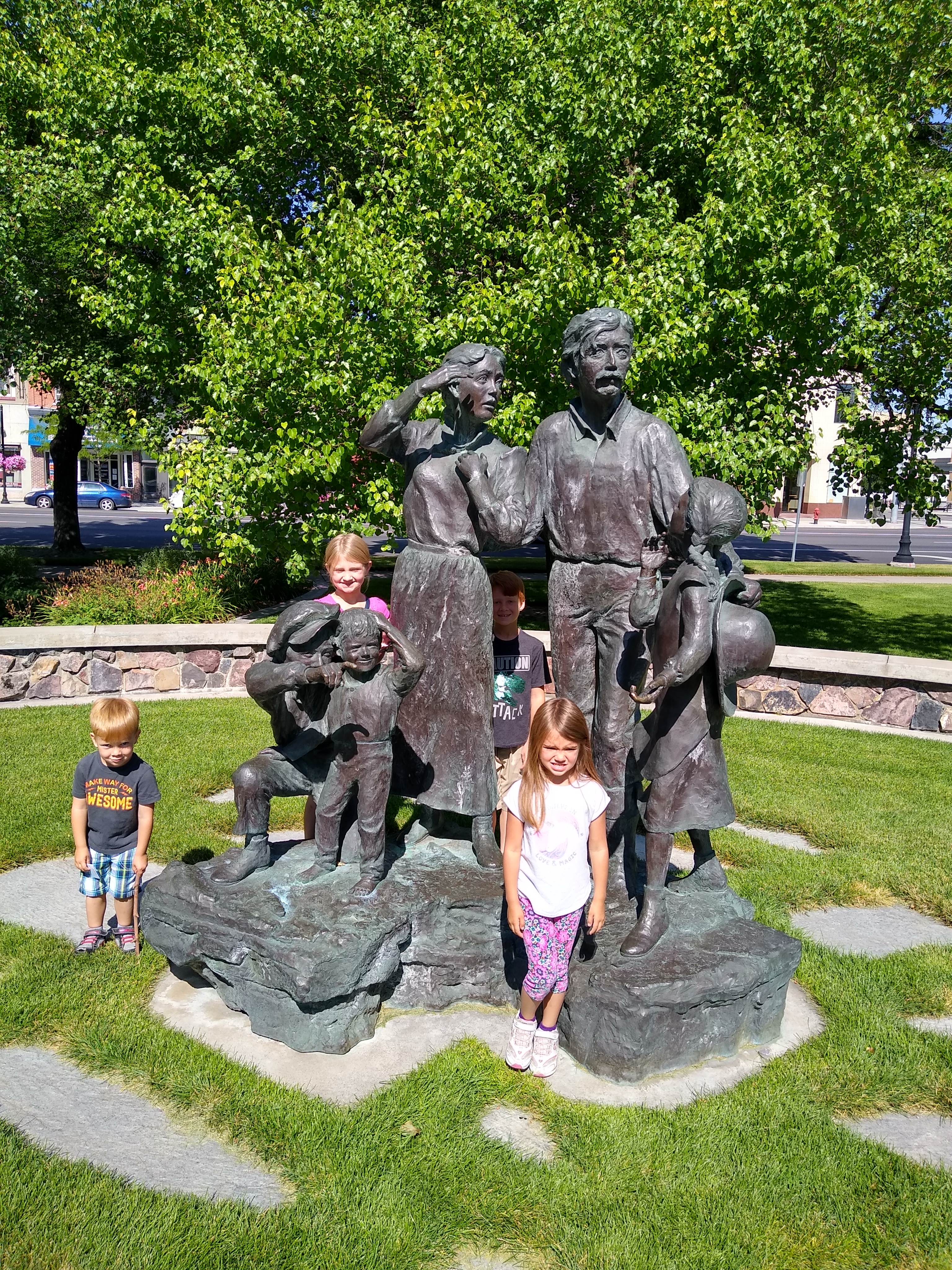
“Family and the Covenant” sculpture at Logan Tabernacle with James, Aliza, Hiram, and Lillian Ross in July 2020

Of course we had to stop at Dentist Office. 655 Darwin Avenue #6, Logan, Utah 84321, was my apartment for several years. That upper right room window was above my bed for those years. I shared a photo of it from 2012 previously. I also listed some of the poor unfortunate souls who also had to reside in close proximity to me!

Hiram, Aliza, Lillie, and James Ross in front of the Dentist Office on Darwin Avenue.

The next stop included the Logan Institute of Religion. This building is harder to capture in a picture with all the new apartment complexes so near the front of it. What was known then as the oldest and largest Institute of The Church of Jesus Christ of Latter-day Saints. I don’t know if that still holds true. I attended the Institute before my mission and when my Mom disowned me, I knuckled down and took a dozen or so Institute credits. I can attribute much of my religious underpinnings and knowledge to this time. Some of the teachers that profoundly touched me included John Fowles, Rhett James, and Michael Cooley. After the mission, various teachers, including Gene Van Shaar (who I also knew in Springfield, Missouri at what was then Southwest Missouri State University).

Aliza and Hiram Ross at Logan LDS Institute

Of course we had to make a stop at the David B. Haight Alumni House. The history of this location I have shared before. Suffice it to say, I kissed my future wife for the first time here and also asked her to marry me in this same spot. The large painting of David B. Haight is no longer hanging in the lobby inside these doors.

Hiram, Lillian, James, and Aliza Ross at David B. Haight Alumni House in July 2020

Having jumped from the Dentist Office, to the Institute, to the Alumni House, it was obviously easy to jump to Old Main. On the walk over, I snapped this picture of the Logan Temple. Since it was Sunday, we couldn’t get inside the fence so we just drove by it.

Logan Temple in July 2020

Old Main was the home of my college, then the College of Humanities, Arts, and Social Sciences (HASS). I attended most of my major classes in this building. I knew this building like the back of my hand.

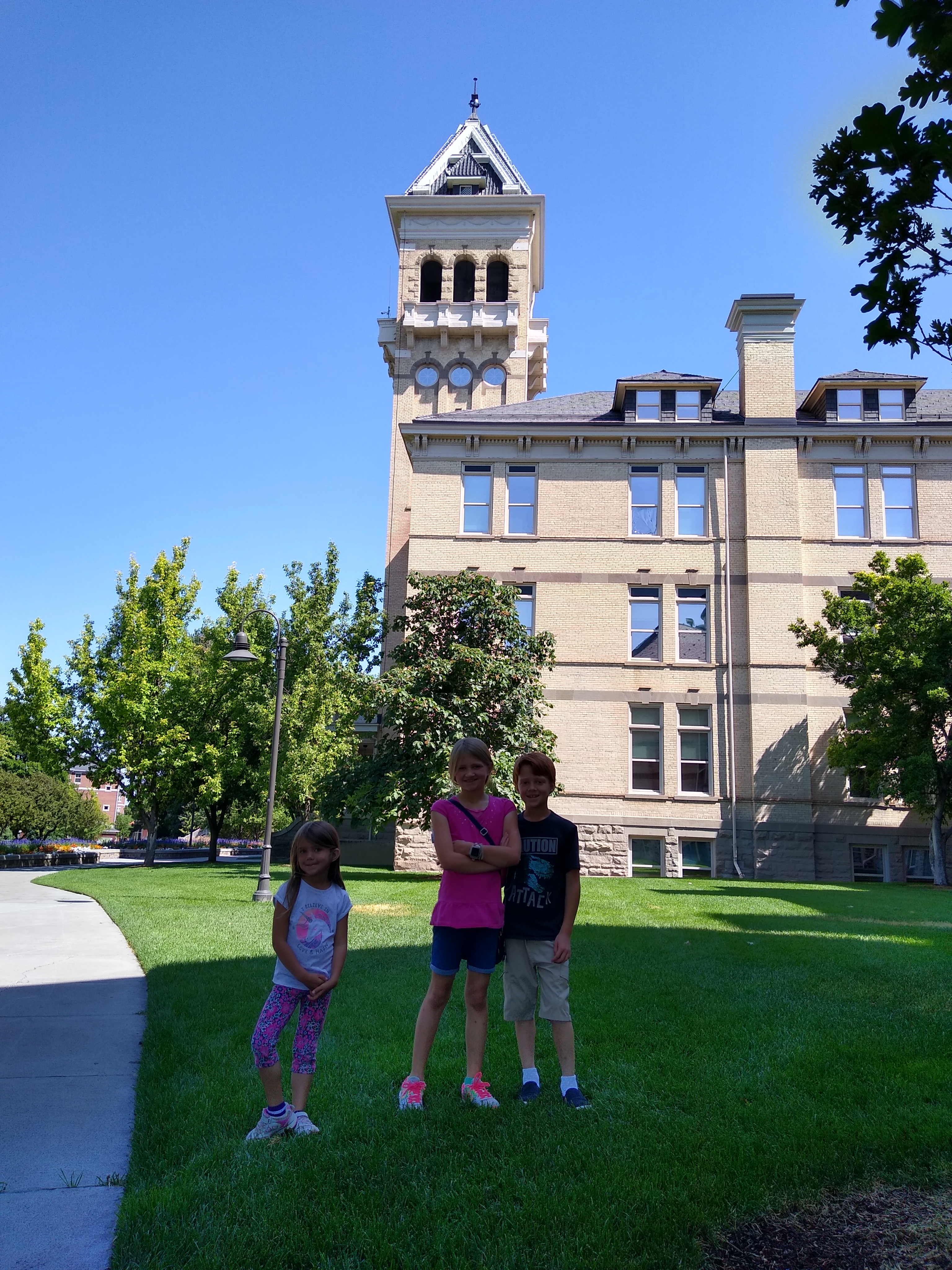
Lillian, Aliza, and Hiram Ross at Old Main of Utah State University in July 2020

I have stood in that tower overlooking the valley a number of times, usually a locked door confines you to the round windows. I have shared some historical photos of the building.

Lillie, Aliza, Hiram, and James Ross at the flower beds in front of Old Main.

I have also shared how my own family contributed to the building of this iconic building.

Lillie, Aliza, Hiram, and James Ross on west steps of south Old Main in July 2020

The photo above is interesting due to the silly children, but also the red sandstone that came from the Nuffer Quarry near Mapleton, Idaho. Both the pillar and stones in and under the brick. Of course, a visit to Old Main Hill for a child would not be complete without rolling down the hill. I also noticed how many of the old huge trees have now left the hill.

Old Main Hill in July 2020

The trip to Logan was memorable for the kids and I recalled many memories from my time attending. Maybe Amanda can attend at a future time. Logan holds fondness and great memories for me. Now we have some more.

William and Martha Wayment

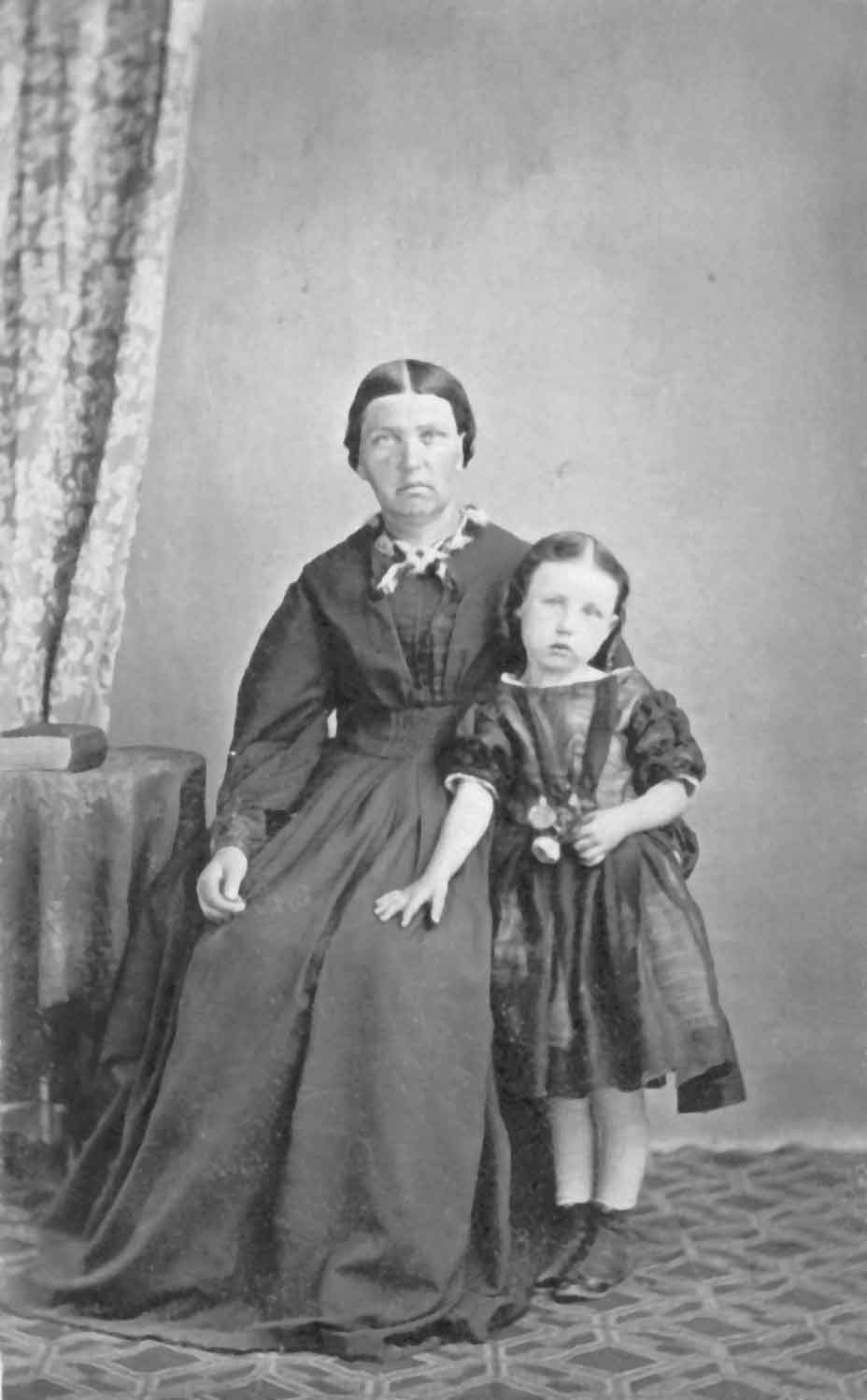
William and daughter, Martha Wayment

I previously wrote of an interesting incident I had with Aliza in the Plain City, Utah Cemetery. I have thought about that several more times as we have been back to visit. It seems fitting I finally follow up and provide some additional information on William and Martha Wayment.

Aliza with William and Martha Wayment tombstone in 2016
James, Amanda, Lillian, Aliza, and Hiram Ross with tombstones for Martha and William Wayment in 2020. My William Edward Stoker’s tombstone is in the background.

As you can see, there is a little biography poster for Memorial Day. The history there is pretty brief. I found a couple of histories on William and Martha. I am posting these two for the history to be available for my children, who are descendants of William and Martha Wayment. First is the history for William, then Martha.

“William Wayment (Whayment) was born to Joseph Wayment (Whaymond) and Mary Rook Wayment. He was born 14 May 1822, in Whaddon Parish, Cambridgeshire, England. He was a small and fragile baby, but survived through his parents loving care. William was christened on 2 June 1822, in Whaddon Parish, Cambridgeshire, England. Two years later, there is a christening record dated 6 June 1824, another brother, Robert, frail from birth, who sustained life for seven months, buried 23 January 1825. William was their only surviving child.

“There are several different accounts of Joseph and Mary Rook Wayment and their descendants. Another account is this; the couple also married 15 March 1813, and lived in Barrington, Cambridgeshire, where they had become the parents of six children, three of whom, Ann, John, and Joseph, had died prior to their moving to Whaddon about 1819. This would make William the seventh, instead of the first born. The only surviving child of this union that I can find recordson is William Wayment, our ancestor.

“Whaddon is a small town in the district of Roysten and County of Cambridge with a population at that time of about 319 people living in about 60 houses. The manor belonged to Lord Hardwicke. A famous old stone Parish has stood over the town for many years.

“Very little is known about William’s early years. It is known that he received some education and learned how to read and write. Most likely he went to work at an early age, as was custom for children of that time. It is most probable, his frail beginning coupled with his early work years and sometimes meager meals stunted his growth. He often referred to himself as ‘a runt.’ All of his sons were taller than he. Our best information indicates he was small of stature, about five feet and eight or nine inches in height. He was known as a laborer and sometimes a miner, likely working wherever he could be employed.

“His father, Joseph Wayment, died and was buried 12 July 1840, in Whaddon, Cambridgeshire, England. William was about eighteen or nineteen years of age

“Sometime after the death of his father, William began courting Martha Brown, a young, fair woman of the Bassingbourne Parish. The courtship bloomed and they were married Christmas day, 25 December 1841, in the Parish of Whaddon, Cambridgeshire, England. A clerk at Somerset House, England, pointed this out to Hollis R. Johnson when he requested and received a certified copy of their marriage certificate: William signed his last name as Whayment, giving his age as twenty and listed himself as a laborer. Martha gave her age as nineteen and listed herself as a spinster, a title used under English law for any woman who had never married. William and his bride made their home with his widowed mother, Mary Rook Wayment.

“The Wayment family lived in the same house in Whaddon, Cambridgeshire, England for more than 300 years, but like most others in England, they did not own the property. They only rented. When the Wayment family moved to America, the ancestral home was claimed by the government as a Post Office. The house was one of those quaint old, two story cottages, constructed of white stone masonry and had a thatched roof. Vines grew up the walls and flowers grew on either side of the cobblestone path leading to the entrance. The fireplace was large enough to walk in with seats built on either side of the fire. A kettle hung down, stopping just above the fire. Martha did all of the cooking and baking in this huge fireplace. Years later this house was put on the market and a member of the Wayment family, by the name of Waymond (Wayment), purchased this property. Wayment descendants still reside in this home today, 2006.

“William and Martha Brown Wayment began their married life under very limited circumstances. Although an extremely hard worker, William never accumulated much wealth. Coming from a wealthy family, their modest home and insufficient circumstances were a source of embarrassment at times for Martha. It has been said that Williams earnings were often around eight shillings a week (about two dollars U.S. money). With this money, there were food, clothing, coal and rent to pay for. By careful management they were able to take care of their children as they came into their family.

“Although not a proficient provider, William proved to be a very loving, a kind and caring husband. They had eight children together, six boys and two girls. Two children died early, one at one day the other at one year and three months. It is also said that he was an exemplary father.

“All William and Martha’s children were born in Whaddon, Cambridgeshire, England. 1) Male, Aaron Wayment born 14 Nov 1842 died 15 Nov 1842 2) Male, Joseph Wayment born 7 Feb 1844 died 20 Dec 1931 3) Male, Samuel Wayment 28 May 1846 died 1 Jul 1912 4) Male, William Wayment Born 1 Mar 1849 died 19 Jun 1850 5) Female, Emily Wayment born 15 Apr 1851 died 15 Mar 1925 6) Male, John Brown Wayment born13 Apr 1854 died 30 Sept 1923 7) Male, William Thomas Wayment born 29 Apr 1859 died 15 Feb 1943 8) Female, Martha Wayment born 25 Mar 1863 died 19363

“All their children were taught to be responsible and dependable workers. But as one granddaughter, Thora Wayment Shaw stated, “it seemed necessary for them to come to America to develop their full potential.”

“As their children became old enough, they hired out to work for farmers in the area. Their work included keeping birds out of the cherry trees, pulling poppies out of grain fields and other needed farm work. Among other things, they learned to stand the bundles of grain up in small groups, called “shocks” to dry. When dry, the grain was then piled into high pointed stacks to help shed the rain while awaiting to be threshed. Some of the farmers were very hard on these young workers. Often the children would leave home at five o’clock in the morning and work until they were called for breakfast between eight and nine o’clock. Sometimes the meal was very meager. They would break around noon for lunch then continue to work until seven at night. Joseph and William T. describe one of their employers as “the meanest man on earth.”

“At that time in history, they wore a peculiar type of “smock” clothing. William T. said that it resembled a long sack with sleeves coming out of the corners and a hole in the end between the sleeves to put your head through. This ‘smock’ came down below the knees, which prevented a person from taking a long step. To jump a ditch or run, the “smock” had to be pulled up. Often the jumper landed in the water of the ditch, much to his embarrassment and to the amusement of others. If the “smock” became wet, it seemed to shrink and stick tight to the body it was covering. Usually one had to have help to get out of a wet “smock.”

“William and Martha Brown Wayment were contacted by the first Mormon missionaries in their area. William Wayment listened to their message becoming convinced of the truthfulness of the gospel. He was baptized into the Church of Jesus Christ of Latter-day Saints on 28 May 1850. He and his wife Martha opened up their home to the missionaries. This was a very courageous act on their part, because many people in their community stirred up hate to prevent the spread of the gospel. This malevolence made it necessary for the Saints to hold their meetings in different houses and to hold baptisms at night to avoid the mobs that were continually a threat to them. William was ordained an elder in the church 5 March 1876. Between 1850 and 1878, the traveling LDS missionaries always found a bed to sleep in and meals with the Wayment family. William and Martha’s home was also used as a place for the Saints and friends to meet and hear the gospel. William Wayment and George East, both our great-grandfathers, were great friends, tracted together and loved to do missionary work together before they came to America.

“Martha was one of the first to accept the message of the gospel brought by the Elders, however, due to the objections and threats of disinheritance she prolonged her baptism. Martha was baptized on 1 May, 1857, about seven years after her husband embraced the gospel. When word, of her accepting the gospel and being baptized into the Church of Jesus Christ of Latter-day Saints, reached her father, Samuel Brown, he disinherited her, cutting her off with only a few shillings. However, this did not change her mind. Setting an example with her husband, they taught their children the principles of the gospel. All of their children were baptized into the church. Joseph, Samuel, and Emily were baptized by John Jacklin on 7 May 1860.

“The first test of faith and understanding of the gospel for William Wayment came with the illness and death of his mother, Mary Rook Wayment. She died 19 March 1853, and was buried four days later in Whaddon, Cambridgeshire, England, beside her husband. William had fulfilled his final obligation to his mother.

“In the spring of 1863, William and Martha were experiencing some challenging and sobering thoughts. A new baby girl had been born to them 25 Mar 1863. Their oldest son, Joseph, was planning to leave their home to journey with a group of Saints to the Utah Territory in the United States. After careful consideration, the Wayment family set up a mutual plan to migrate to America and the land of Zion. They would all work together to save money, then send one at a time until they were all settled in the Utah Territory. At that time, Joseph worked with his father in the fossil diggings or fossil mines earning money for his transportation.

“On 4 June 1863, William and Martha’s oldest living son, Joseph, listed as Joseph Whaymond, age 19, was the first to leave, sailing from London, England, emigrating to the United States of America aboard the Amazon. This was a large 1600 ton ship, but Joseph was seasick almost all the way across the Atlantic. Arriving in New York 20 July 1863, he took the train to a point on the Missouri River, then by boat up the river to Florence, Nebraska. From there he walked and drove an ox team in Captain McCarthy’ the Dixie Company all the way to Salt Lake City, Utah Territory. It took four months to make the trip from his father’s home.

“Joseph was sent to Salt Creek, Utah, by Brigham Young, to help settle this area. Joseph planted the first fruit trees in Warren. He was the first road supervisor and the father of the first born white child of Warren, Sarah Wayment Hansen. In England, William and Martha continued to guide their children in the gospel. John was baptized and confirmed by John Jacklin on 15 April 1866.

“The passenger’s manifest of 1868, show Samuel and Casting Chapman Wayment emigrated to New York that year aboard the Constitution. Arriving in New York 6 August 1868, they continued across the continent by train to Fort Bento, then by covered wagon in the John Gillespie Company to Salt Lake City. Five years later in 1873, John followed Joseph and Samuel to America on the ship Nevada,and onto the Salt Creek District of Utah, which later was named Warren.

“Samuel Wayment first worked and lived in Deweyville and Cove Fort before settling in the Salt Creek District. They built their home at 1239 North 5900 West where Chester Wayment lived and now Matthew Wayment lives. On that very spot, the first house that Samuel and Castina built burnt to the ground along with the barn. The animals were cooked, so the people who had come to help put out the fire went home, retrieved knives, pots and pans and returned to cut up the meat.

“After Samuel and Castina left for America, William and Martha remained in England with only three children at home. On 4 March 1872, John Brown (Whayment) was ordained a priest by George Wilkins. On 31 May 1873, William Thomas (Whayment) was baptized by John Jacklin. The spirit of gathering to Zion continued to work with the Wayment family.

“The sixth child, John Brown, completed preparations, and at age 19, booked passage on the ship Nevada and sailed from Liverpool, England, 9 July 1873. Arriving in New York, he headed to Utah Territory to join his brothers. John lived with his brother Joseph in what they called “Bachelor Headquarters” in Salt Creek.

“The saving of money was slow and hard to come by so when William T. became about ten years of age, he began working in the fossil fields to help earn passage to America. Part of the time he pushed a wheelbarrow around the mine, which was very difficult for a lad of his age. He worked in the Fossil Fields until the goal was reached. (This was work in the peat bogs. Peat is compact, dark-brown organic material with high carbon content, built up by the partial decay and carbonization of vegetation in the acid water of bogs. Dried peat was and is compressed into briquettes, used in European Countries as fuel, although it is not as efficient as coal because of its large content of water and ash. Peat can also be used for mulching and soil improvement.)

“According to early church records of Norwich Conference, Martha (Whayment) was baptized 13 September 1874, by John Jacklin. On 5 March 1876, William (Whayment) was ordained an Elder by Shadrack Empey. On 4 April 1876, William (Whayment) baptized Sarah East, daughter of George East, Sr. and Rhoda Stanford East into The Church of Jesus Christ of Latter-day Saints. (Sarah was sister to Javes East, who is father of Hazel Caroline East Wayment, our grandmother, who married Theodore Wayment, grandson of William Wayment.) The following week, Sarah East, her parents and six brothers and a sister left England for Utah Territory. They sailed from Liverpool, England, on the ship Wyoming,13 September 1876. Sarah East became a daughter-in-law to William and Martha when she married their son John Brown Wayment. This took place on 7 October 1877, in Weber County, Utah.

“After John Brown left home, the family continued to unite their efforts. Final preparations to emigrate to Utah Territory were made in the spring of 1878. With their savings and help from their sons in Utah, they booked passage on the sea going vessel, the Nevada. The Nevada was Mastered by H. Gadd who hailed his home as Glasgow, Scotland. After leaving their port of departure, Liverpool, England, the ship docked in Queenstown, Ireland, where they picked up more passengers. William and family were numbered among the 443 passengers who made their crossing in steerage, as he was unable to supply the coin for being listed among those 54 passengers in the ship’s cabins. His trade was listed as a farmer. They then made sail for New York where they arrived there on 5 June 1878. There were no deaths at sea recorded on this voyage, however, the people in steerage welcomed a male infant on 30 May 1878, with the surname of Larsen.

“Martha Wayment East, later in life, told granddaughter, Rhea Marriott, “The weather was good all the way over and the ocean was calm to what it usually was, but I was seasick practically all the way. After traveling on water for ten days, we reached Castle Gardens, New York. While we were there, I bought a tomato for two pennies, the first I had ever tasted. From Castle Gardens we boarded Pullman cars to Philadelphia. We changed here to immigrant cars which were very uncomfortable. It was beautiful in the east, but gradual signs of habitation vanished and scenes about us were dry and barren. It was all so strange here, away out west, and very different from what we had expected it to be.”

“Arriving in Ogden, Utah Territory, 13 June 1878, the family was met by Joseph and Samuel. After fifteen years, this was a joyful reunion. They were then taken to Samuel’s home. After living there a few months, William followed the instructions of church leaders and settled in the Salt Creek area, to help build up the Salt Creek District.

“William and family continued to live with Samuel and Castina, while they built a log house. Their log home was located about a quarter-of-a-mile south of the present corner of 5900 West and 700 North and about 200 yards west of the present county road. There were some trees at that spot, but it was dry and hot. Stumps of these trees marked the spot for many years. William built a bowery next to the house to give a little more shade from the sun. Russian Olive trees grew on this spot for years to give shade to sheep and cattle. Living on the land was a basis to apply later for Homestead rights. William applied for homestead rights to this quarter section of land. The logs for their home were hauled from the Wasatch Mountain Range along with firewood. These trips took several days and they would camp out along the way, where they had several encounters with bears.

“In this new and strange land they had to acclimatize to the semiarid climate. This was indeed a marked change from the verdant area of their home in England. They planted cottonwood trees, yellow roses, tea vines and any other plants that would grow fast. They helped establish the community and met the hardships endured by other families pioneering new homes. Martha Wayment East said, “It was hard work, but we had a good time in our work of making a town.

“William was a farmer and a rancher. He also owned a prize set of horses that he entered in shows and contests.

“Daughter Martha would become the first school teacher in Salt Creek. William T. would become the first residing bishop of Warren and would sustain that calling for 17 years.

“On 5 January 1882, William and Martha traveled to Salt Lake City, Utah, to the endowment house, where they both received their own endowments and were sealed in marriage for time and all eternity.

“Their daughter, Emily Wayment Negus, with her husband, William, and three of their children, sailed from Liverpool, England, 2 September 1882, on the ship Wyoming. Two of this couple’s children had died and were buried in England. With the arrival of Emily and her family, William and Martha once again had all their living children and grandchildren around then to enjoy, but this was short lived.

“A year and three months later after their sealing, in the spring, William contracted Typhoid fever and inflammation. He succumbed to the illness nine days later on 17 May 1883. He was buried in the Plain City Cemetery, Plain City, Weber, Territory of Utah. His death left his beloved wife, Martha, four sons and two daughters, Joseph, Samuel, John and William T., Emily W. Negus and Martha Wayment without their patriarch. William was also survived by eighteen living grandchildren, all living in the Salt Creek area.

“His obituary said he was an honest, industrious and truthful man, a kind husband and an exemplary father. His house was always open to the servants of God, as a haven of rest and hospitality. His faith was unshaken in the principles of Eternal Life, and he had died as he had lived, a faithful Latter-day Saint. He was interred in the Plain City Cemetery, being conveyed thither by a large concourse of sorrowing relatives and friends.

“Compiled by Joan Wayment Creamer

Sources; West Warren History 1975, Warren History 1995, Ogden Junction Database, New York passenger lists 1851-1891, Daughters of the Utah Pioneers, Alma W.& Martha M. Hansen, June Wayment Orton, Mildred Wayment Bird.

Back (l-r): Sarah, Martha, Leonard, Mary; Middle: Hannah, Joseph, Ann, Martha; Sitting: Walter Wayment

Here is the history for Martha Brown Wayment.

“On 26 May 1823, Martha Brown became the fourth child born to Samuel and Mary Wade Brown in Bassingbourne, Cambridgeshire, England. She was their only girl who survived infancy.

“Cambridgeshire, a flat coastal plain is located in the southeast part of England. The climate is moderate with much rainfall which produces abundant vegetation. This area produced peat bogs where many men worked.

“Martha’s grandfather, William Brown of Whaddon, has been described as a very wealthy farmer. His son, Samuel, Martha’s father, was disinherited after he fell in love and married a servant girl, Mary Wade who worked for his parents.

“After being disinherited, young Samuel and his wife, Martha’s parents, moved to Bassingbourne where he became a butcher by trade. He also acquired and owned some land and sheep. Later he expanded his business and is said to have become a very well-to-do merchant. Samuel and Mary Wade Brown were good, moral people and highly respected in the community of Bassingbourne.

“The Bassingbourne Parish register records this couple of having nine children, seven boys and two girls. All were born in Bassingbourne. 1) William Brown, christened 24 July 1814, and died 13 January 1894, age 80 2) Martha Brown, christened 15 September 1816, and died 27 June 1817, 9 months 3) Samuel Brown, Jr, born Sept.1818, christened 11 Oct.1818, died January 1890, age72 4) Martha Brown, born 26 May 1823, christened, 20 Jul.1823, and died 12 Apr.1905, age 82 5) Thomas Brown, christened 28 July 1827, and died 21 July 1901, age 74 6) John Brown christened 30 May 1829, and died 18 March 1906, age 77 7) Joseph Brown, christened 25 September 1831, and died in August 1903, age 72 8) Richard Brown, born 15 February 1835, and died 3 April 1835, 2 months 9) Simeon Brown, born September 1840, and died 14 December 1872, age 32.

“It is said that the Browns were a family of large men, with each son being more than six feet in height. They also claim to have had a longevity of life, however only one of them lived to be more than eighty, and that was Martha Brown Wayment. The others, except the two infants and Simeon, lived full lives into their seventies.

“Martha Brown Wayment’s Brothers; William, Thomas and John, joined the English army between the ages of twenty and twenty-five. Because of their height, ‘well over six feet,’ these men were chosen to serve in the King’s Guard and marched in the changing of the Guard at Buckingham Palace. Thomas and John deserted the Army and came to America. Thomas’s arrival in America was by quite by accident. The ship he booked passage on wrecked and he was the only survivor. After floating in the Atlantic Ocean for three days, he was rescued by an American vessel, which brought him on to America. Later he married a woman named Lavina and called Clyde County, Kansas their home. They had no children. Thomas wrote to the English government requesting his pension which was given to all English soldiers. The English government replied, telling him they’d give him all that he was entitled to if he returned to England and give up his citizenship in America. Thomas declined and elected to stay in America.

“After coming to America, John Brown changed his name to John Clark. He took a wife and settled in Minnesota. They had a large family. Several years before William T. Wayment died, one of John’s daughters came to Utah and visited with him. She also stayed at the home of Martha Wayment East. That was the last recorded communication with the Clark families from Minnesota.

“William served fourteen years in the English Army, then returned to his home in Bassingbourne. He fought in the Crimean War, Battle of Enlseman and the Russian War of 1848. After the Russian War he returned to England and received a service pension for the remainder of his days.

“When Samuel Brown, Martha’s father, was too old to work any longer, Samuel Jr. took over his father’s business. Joseph also remained home, making his living as a common laborer. When Samuel Sr. died, he bequeathed all his cash earnings to his youngest son, Simeon. Simeon died of alcoholism at the age of thirty-two.

“Martha Brown Wayment; Samuel and Mary Wade Brown provided their children with the best education available. Martha worked in her father’s butcher shop. From her mother, she learned to be frugal, clean and how to keep a neat, tidy house. It has been said about Martha that she was sometimes upset by the unclean habits of some of the older members of the family around her in England.

“In a Relief Society Lesson Publication, Pamphlet #32, dated December 1910, contains short biographies and testimonies of outstanding pioneer women of the North Weber Stake. Martha Brown Wayment told: “When about twelve years of age, there was a strange preacher came there, called a ‘Mormon.’ They were very desirous of hearing what he had to say and went to a meeting. When dinner time came, she seeing them without dinner, no place to go and no money to buy it with, she told her mother that she would go without dinner if she would let the preacher have it, but her mother was not so inclined.” (Martha Brown would have been fourteen years of age when she saw the first missionaries. The first missionaries arrived in Liverpool, England, 20 July 1837.)

“Sometime after the summer of 1840, Martha Brown met William Wayment. Their courtship culminated into a Christmas day wedding the following year. They were married, 25 December 1841, in the Parish of Whaddon Cambridgeshire, England. A copy of their marriage certificate shows William signed his last name as Whayment, listed his age as twenty and his occupation as a laborer.

“Martha gave her age as nineteen, listed herself as a spinster, a title used under English law for any woman who had never married. Martha and her new husband moved in with William’s widowed mother, Mary Rook Whayment.

“The Whayment home was a white vine-covered masonry, two-story cottage, with a thatched roof. The main floor contained two rooms. The largest room had a walk-in fireplace on one end with built in seats on opposite interior walls. The cooking was done in kettles hanging in this fireplace.

“Martha and William began their lives together under very limited circumstances. Though William was a hard worker, they never accumulated much wealth. It is said that William earnings sometimes amounted to eight shillings a week which is equivalent to about two U. S. dollars. Their modest home and limited circumstances was a source of embarrassment at times for Martha. But by careful management they were able to take care of their growing family.

“As a young bride and living in her mother-in-law’s home, Martha found that circumstances and conditions were not always pleasant. One day at the most distressing of times, Martha threatened to leave the Whayment home and her husband. She went into a small room or clothes closet to get some of her things. Her mother-in-law quickly closed the door, locked her in and kept her there until Martha promised not to leave. Satisfactory adjustments were made and Martha kept her promise to stay.

“All William and Martha’s children were born in Whaddon, Cambridgeshire,England. 1) Male, Aaron Wayment born 14 Nov 1842 died 15 Nov 1842, age 1 day 2) Male, Joseph Wayment born 7 Feb 1844 died 20 Dec 1931, age 78 3) Male, Samuel Wayment 28 May 1846 died 1 Jul 1912, age 66 4) Male, William Wayment Born 1 Mar 1849 died 19 Jun 1850, age 1 year 5) Female, Emily Wayment born 15 Apr 1851 died 15 Mar 1925, age 74 6) Male, John Brown Wayment born 13 Apr 1854 died 30 Sept 1923, age 69 7) William Thomas Wayment born 29 Apr 1859 died 15 Feb 1943, age 84 8) Martha Wayment born 25 Mar 1863 died 1936, age 73.

Martha and Martha Wayment

“All their children were taught to be responsible and dependable workers. But as one granddaughter, Thora Wayment Shaw stated, “it seemed necessary for them to come to America to develop their full potential.”

“Cambridge was predominantly agricultural, producing wheat and other grains, sugar beets, fruits and vegetables. At an early age, the children hired out to work, working for these farmers in the area.

“Around the age of fourteen, Martha had heard the message of the LDS missionaries and recognized the truth of the gospel. At that point her parents would not allow her to be baptized into the Church of Jesus Christ of Latter-day Saints. Especially after some incidents occurred that seemed to involve the missionaries and turned many people living in Cambridgeshire against the Mormons. Although they were convinced of the truth, William and Martha delayed joining the church due to her family’s bitterness and influence in their community.

“Martha and William listened to the messages, the Elders of The Church of Jesus Christ of Latter-days Saints brought to the area, of the restoration of the true gospel of Jesus Christ. William became convinced of the truthfulness of the gospel they were preaching and was baptized 28 May 1850. This was not a safe thing to do in those days as many were violently against the preaching of the restored gospel. Martha also opened her home up for place to meet, to share the gospel with other Saints and friends. Between the years of 1853 and 1878, the traveling Elders always found a home with Mrs. Wayment. During that time, their house was used for a meeting house for the Saints. The Elders who traveled in that section of the country always found the family ready to share their meals and beds with them as many can testify.

“Seven years after her husband had embraced the gospel, Martha was baptized on 1 May 1857. Some have criticized Martha for waiting so long to be baptized into the Church, however, she was living in extenuating circumstances. Due to the religious persecutions heaped on the early Saints, they had to meet in secrecy. Martha was one of the first ones to become interested in the restoration of the gospel. When word of her accepting the gospel reached her father in Bassingbourne, he disinherited her, cutting her off with only a few shillings. Her father then used his influence in the Parish to oppose all new members and the spread of the Gospel of Jesus Christ. However, this did not change her mind. Martha’s testimony of its divinity sustained her. She helped set the example and taught their children the principles of the gospel. With her husband, she encouraged her children to join the Church, and all of them were baptized into the Church of Jesus Christ of Latter-day Saints.

“In the spring of 1863, Joseph, the oldest son, determined to go to America, to gather with the Saints in Zion. At this time, both him and his father, William, were working in the fossil diggings. (This was work in the peat bogs. Peat is a compact, dark-brown organic material with high carbon content, built up by the partial decay and carbonization of vegetation in the acid water of bogs. Dried peat was and is compressed into briquettes, used in European Countries as fuel, although it is not as efficient as coal because of its large content of water and ash. Peat can also be used for mulching and soil improvement.)

“The family set up a plan and fund for their relocation to the Utah Territory in America. Joseph, the oldest, was first to go. He left 4 June 1863. He was followed by Samuel and his new bride Castina Frances Ann Chapman. They sailed 24 June 1868. Two years after Samuel left, Emily married William Negus. They made their home in Whaddon for the next 12 years. Their sixth child, John Brown completed his preparations, and at age nineteen he left for America on 9 July 1873, aboard the Amazon.

“In 1871, their daughter, Emily and her husband William welcomed their first child, a son they named John. Their joy was short-lived, for when John turned eight-and-a-half months, Emily contracted typhoid fever and developed severe complications. Martha Brown Wayment, took her grandson, John and raised him until he was three years old. At that time, he was returned home to his mother who had finally recovered from her ordeal. Emily was very grateful for the loving help she received from her mother and her sister Martha. Due to the closeness John had developed with his Grandmother Wayment, Emily would often strap pack-baskets on the back of their donkey, where John would ride when they went to visit his grandparents.

“Their son Joseph had sent back to England, a marriage proposal for a local girl. It is likely that Martha gave encouragement to Ann Reed to accept her son’s Joseph’s proposal and join him in the Utah Territory. Ann completed the necessary preparations leaving Liverpool on 24 June 1874.

“It took almost another five years, continued efforts, working in the fossil fields for William and his son William T. to earn enough money for them, along with Martha and young Martha, to emigrate to America. By the spring of 1878, they were making the final preparations to emigrate to Zion. With their savings and some help from their sons in Utah, they booked passage on the ship Nevada, and sailed from Liverpool, England, 25 May 1878. This was fifteen years after theirfirst son, Joseph had emigrated to Utah Territory. After arriving in New York, they boarded a Pullman train which took them to Philadelphia. There they changed to immigrant cars, which were very uncomfortable.

“By rail they arrived in Ogden, Utah Territory, 13 June 1873, and were met by their son’s Joseph and Samuel. William and Martha followed the instructions of the church leaders and settled in the Salt Creek area. They lived with Samuel and Castina while William and William T. built a log house located about a quarter-of-a-mile south of the present corner of 5900 West and 700 North and about 200 yards west of the present county road. There were some trees at that spot, but it was dry and hot. Stumps of these trees marked the spot for many years. William built a bowery next to the house to give a little more shade from the sun. Russian Olive trees grew on this spot for years to give shade to sheep and cattle. Living on the land was a basis to apply later for Homestead rights

“In this new and strange land they had to acclimatize to the semiarid climate. This was indeed a marked change from the verdant area of their home in England. They planted cottonwood trees, yellow roses, tea vines and any other plant that would grow fast. They helped establish the community and met the hardships endured by other families pioneering new homes. Martha Wayment East said, “It was hard work, but we had a good time in our work of making a town.”

“Their daughter Emily, her husband William Negus and their three living children arrived in the fall of 1882. Martha once again rejoiced at having all of her children and grandchildren around her again.

“Martha and William Wayment continued being active in the Church they had learned to love. On 5 January 1883, they traveled to Salt Lake City, where they received their endowments and were sealed in marriage in the Endowment House.

“That spring, William contracted Typhoid fever and succumbed to this decease on 17 May 1883, at age 61 years and 3 days. He left Martha, his beloved wife, four sons and two daughters; Joseph, Samuel, John and William T., Emily W. Negus and Martha Wayment. Also, eighteen grandchildren.

“Martha Brown soon found herself completely alone. Her daughter, Martha, married Edward Marriott. Then her youngest son, William Thomas Wayment, married Maud Mary Bullock 4 July 1883. Daughter Martha was soon divorced from Edward Marriott and moved back home with her Mother. After her daughter returned to teaching school, Martha helped take care of her grandson, Arthur. Her daughter Martha then married David East on 25 December 1885, Arthur spent most of his time living with his grandmother Wayment.

“Martha was able to do her own work and lived near her daughter, Martha for more than twenty years. She continued to enjoy her church meetings, her children and her grandchildren. But she was never without problems.

“Emily’s husband, William Negus, met his death trying to uncouple the double tree to loose the team when the horses floundered in crossing a swollen stream on the North edge of Warren. William Negus drowned along with his horses on 31 March 1890.

“Martha was not idle. On 16 November 1885, she received her citizenship paper. Her husband had applied for his but died before they were granted. In 1886 Martha Brown Wayment received an important document for a land grant. It was, “the original grant of Homestead given to Martha Wayment, widow of William Wayment (deceased). The south east quarter of section two in the township six north range three west of Salt Lake Meridian in Utah Territory, containing 160 acres.” Signed by Grover Cleveland, President of the United States, and dated 18 October 1886. This tract of land is located on the west side of the present road 5900 West and extending from about 300 North then extending west to the Little Weber River. Martha gave four acres of this tract of land to her daughter Martha Wayment East for a home site. The rest of the tract was given to her son, William Thomas Wayment, and used to pasture his horses and cattle. Martha Brown Wayment’s log house was moved north to be nearer her daughter Martha’s home.

“Martha said that in her lifetime, she had read the Bible about one hundred times. She could quote scriptures freely and read the scriptures regularly to some of her grandchildren. She was always faithful and devoted to the Church and taught her children to live the same way. Martha was a very religious person. She read widely of any Church literature available. Her son, William T. said she read all the books he brought back from his mission.

“It was also said of Martha that she had the ability to handle any problems that arose in her family. She could discern and counsel sensitive situations with solutions in a way that helped hold her family together. Her daughter Emily said, “I learned how to keep a clean home and how to cook good meals from my mother.”

“Martha Brown Wayment was an outspoken person. She was described by her grandson, Chester T. Wayment for being set in her ways, but he loved to go to her home, because she always was kind to him. ” She would buy groceries from a traveling ‘grocery man’ and among her purchases was always a bag of gumdrops. Martha would enjoy the sugar off the outside of the gumdrops, then dry the off and feed them to her grandchildren. Chester said, “I ate many of those gumdrops and if I tried not to she would get very angry. She did this to all her grandkids.”

“In her later years, Martha had become very heavy, but she continued to care for most of her needs and enjoyed good health up to the time of her death. On that day, she had been visiting her daughter Emily. While returning home, she saw the traveling grocery wagon heading to her home. She hastened to arrive before him. Arriving about the same time, she told him she would need time to gather her eggs first. Martha used eggs as payment for her groceries. She asks him to come back, so he didn’t have to wait on her while she gathered and cleaned the eggs. When the grocery man returned, he could not find Martha any where, nor did she answer when he called out for her. Later her lifeless body was found in her outhouse (outside toilet). It was determined that she had died of a massive stroke or heart attack. Bishop William L. Stewart had met Martha by the old school house at noon, and reported, “she was walking quite smart,” on the day she died.

“From the Standard, Ogden, Utah, Saturday evening 18 April 1905, Column 2, pg. 7, Vol. 35. MRS. WAYMENT BURIED, The funeral services, over the remains of the late Mrs. Martha Brown Wayment, who died at her home in Warren on Wednesday last, (12 April 1905), were held at the Warren Meeting House at two o’clock yesterday afternoon. (Friday 14 April 1905.)

“”The services were presided over by Bishop William L. Stewart and the ward furnished the music. The speakers were, DR. H.C. Wadman, Frank Barrows, Joseph V. East, Thomas H. Bullock, John F. Burton, George W. Larkin and Bishop Stewart.

“”The speakers eulogized the life of the deceased, referring especially to her religious convictions, her kindly disposition, her affection for her family, and of her true friendship. The meeting house was entirely too small to accommodate the large number of relatives and friends. A large funeral cortege followed the remains to the Plain City Cemetery, where they placed in her last resting place. The grave was dedicated by Joseph H. Folkman.”

“Her death was 12 April 1905. She was laid to rest next to her husband William Wayment in the Plain City Cemetery. She was survived by four sons and two daughters, Joseph, Samuel, John and William T. Wayment, Emily W. Negus Mullen and Martha Wayment. Also, surviving was 46 grandchildren and 25 great grandchildren. The posterity of William and Martha Brown Wayment now numbers well over two thousand.

“Two recipes brought over from England by our Wayment Grandmother; Martha Brown Wayment.

YORKSHIRE PUDDING, 1 pt. of sifted flour salt, 1 pt. of milk, 4 eggs, Beat well. About 3/4 hour before the roast is done, pour off dripping from the pan-leaving enough to keep pudding from sticking. Bake 3/4 hour.

“OLD ENGLISH MINCE MEAT, 3 lbs. Beef chopped fine, 1 lb. Suet, 10 lbs. Apples (green) chopped, 3 lbs. Raisins, 1 lb. Currents, ½ lb. Lemon peel, ½ lb. Orange peel, ½ lb. Citron, ½ gal. hard cider, 1 tsp. Allspice, 1 tsp. Nutmeg, 1 tsp. Cinnamon, tsp. Cloves, 3 cups Brown sugar, Salt to taste, Boil slowly until fully cooked, then seal in bell jars. Makes about 10 quarts. May let set for a few days to improve flavor.

“Sources; West Warren History 1975, Warren History 1965, Warren History 1995, Database New York passenger lists 1851-1891, Daughters of the Utah Pioneers, Alma W.& Martha M. Hansen, June Wayment Orton, Mildred Wayment Bird, Bishop William L. Stewart Journal.

Theophilus and Martha France

In an odd twist of fate, I thought I might share my latest story in search of the family of Theophilus and Martha France.  I stumbled on this photograph when scanning the photos of my Great Great Grandmother.  She married Herbert Coley, whose sister, Martha Ann, is shown above.  This photo was in the collection, likely from Martha France herself, to my Great Great Grandfather Herbert.  The photo just had the two names written on the back of the photo.

Since, I have tried to track down the family with little or no success.  I will give some of the limited history I know at this point and then close with my latest little find.

Theophilus was born 26 December 1863 in Dudley, Staffordshire, England.  He married Martha Ann Coley 4 November 1891 in Logan, Cache, Utah in the Logan LDS Temple.  Martha was born 18 August 1860 in Lutley, Worcestershire, England to Stephen and Hannah Maria Rogers Coley.

Theophilus was a musician that took the family to various places chasing performing and music instructions.  Mostly in Cache Valley, but also taking in a jaunt to Salina, Sevier, Utah.

Theophilus France, in the middle, nicknamed Foghorn

Theophilus France, in the middle, nicknamed Foghorn

Born to the family were 5 children.

Ada France born 1 April 1893 in Franklin, Franklin, Idaho and died 14 February 1957 in Caldwell, Canyon, Idaho.  She married Henry James Flippence.

Marguerite France born 19 October 1894 in Franklin and died 20 Mar 1936 in Logan.  She married George Bright.

Franklin Bank, circa 1895

Franklin Band, circa 1895, Theophilus France is sitting second from the right, supposedly as the leader

Wilford France born 25 Mar 1897 in Lewiston, Cache, Utah and died 28 August 1986 in Los Angeles County, California.  He married Elsie Arvilla Brown.

John France born 22 May 1899 in Lewiston and died 18 June 1953 in Salt Lake City, Salt Lake, Utah.  He married Meryln Burton.

Beatrice France born 16 October 1901 in Lewiston and died 14 October 1997 in Salt Lake City.  She married Robert Wallace Ekenstam.

From the census records, it appears Martha may have had a son (maybe a brother) named Frank.  He appears and then disappears.  He may be a cousin who came over from England with Martha and then died, married, or just moved away.  I cannot trace him down again, so this is one question I have always wanted to answer.  But finding a member of this family has not proved easy.

I knew Theophilus and Martha are buried in the Lewiston Cemetery.  Her brother, George, and their parents, Stephen and Hannah, my Great Great Great Grandparents are also buried there.  Theophilus died 30 October 1923 in Lewiston.  Martha died 18 July 1949 in Parma, Canyon, Idaho.

George Bright and Marguerite Coley had at least 8 children, but only one of them lived to marry.  I knew her name was Gennevieve Bright and that she had married a man by the name of Elvon Monson Jensen 22 April 1947.  He died in 1990 and trying to track down a lady Monson in Utah or Idaho, especially where she could have remarried, seemed an impossible task.  I left it there and tried some of the other lines.

In 2011, I was in my office and visiting with the wife of the other attorney from who I rent office space.  I knew Kent was from Preston and in a lull of the conversation asked the name of Kent’s parents.  She mentioned Elvon and Gennevieve.  I could not tell where, but I knew that Elvon Jensen was in my family history.  That night I looked him up and sure enough, there he was.  I rent office space in Burley, Idaho from my 3rd cousin, once removed!  Kent’s children are my 4th cousins.

It was with some sweet satisfaction that I was able to provide a copy of the photograph of Theophilus and Martha above to him.  He had not seen a picture of them before.  I asked that he put me in contact with the member of his family who does the family history on the France/Coley line.  Maybe I can help bridge some of the divide and flesh out more fully the Coley line in Utah and Idaho.

The picture above of Theophilus and Martha was scanned in 2006.  Who knew that I would be providing a photo of ancestors to a line who did not have a photograph.  Maybe there will be more such stories in the future with all the photos I have and continue to make available.  We can only hope.  Here is a photo of Martha later in life, I don’t know how old she was at the time.

Martha Coley

Martha Coley

Prairie Home Companion

Well, I just put out a whole philosophical e-mail and thought I would take a moment to do an actual update on life.
I am sitting here listening to Prairie Home Companion enjoying a few good laughts.  Earlier I listened to Die Frau Ohne Schatten (The woman without a shadow) by Richard Strauss.  It was fascinating to listen to.  Made me want to learn my German.  Funny how music can take us other places.
I have just finished my second week at Bank of America.  Things are going very well.  I am learning many more things about mortgages and all the documentations that attend.  The lessons mostly center around learning the DOS-based system they use for processing all these loans.  I have to admit it is a very detailed system that handles thousands of people working on it at all times with large amounts of information.  Impressive as that it, they tell us it has only gone down once in the last 10 years!  They have replaced one or two systems with Windows applications and they crash regularly so they are not in any rush to be replacing the old DOS-based system.  Therefore, I have to learn the codes and names to navigate the system to check and update information.  They teach us how to check the documents and how to put it into the system.  We were done covering the documents within the first week.  I have found out the position I will be in is basically an assistant underwriter.  It has a whole host of names, but currently it is Home Servicing Specialist (HSS).
Last Saturday and Sunday we had Stake Conference.  I think it was the most powerful Stake Conference I have ever been to.  I have been to some very good ones.  Two were in the Logan Tabernacle (one for the Logan University 4th Stake the other for the Logan University 5th Stake), another in the Springfield Missouri South Stake Center, and the last I can think of was a Stake Conference for the Chester Stake in Wrexham, Wales.  The most impressive part in Missouri was the music and the unity I felt within the congregation.  The Chester Stake was powerful for the fact of some amazing talks given, one particularly by our mission president.  The one for the 5th Stake at USU was that it was basically turned into a stake testimony meeting.  That in and of itself changed the tenor of the meeting but all were invited by name by the Stake Presidency.  The last one for the 4th Stake, I can think of two conferences in particular.  One had Elder Burton, the Presiding Bishop and the other was all the Presidency’s remarks.  President Cherrington usually gave a great talk at all conferences.  So this conference is in good company.  It wasn’t the first conference I have been to with an apostle, but this one had an apostle acted as we expect them to.  Elder Holland gave some powerful comments.
In Priesthood he taught us about Satan binding our tongues, the difference between lips and hearts, and the difference between forms of power and the real thing.  He basically told us we are doing too many things without our hearts and without conviction.  Time to step up to act in the name of the priesthood like we are expected to do.  In Saturday evening, we were taught how we live in a broken world.  Whether you like it or not, things are not perfect.  He taught us about the Atonement and how all broken things will be restored to their proper order at the right time.  Then he pounded out the importance of not whining, not complaining, and going forward in our lives with faith.  He was very direct in those who complain or say something is wrong in life.  He said nobody has the right to complain or wallow in the misery when the Savior took care of them for us.  Time to walk in faith, get up, and be about doing good.  The Sunday session proved to be just as good.  He spoke about his personal experiences of President Hinckley and his prophetic calling.  It was fascinating to learn more about the personal life of a prophet.  He spoke to us about the importance of the gospel and the role of the church.  Again, the topic had to do with looking beyond ourselves and seeing the big picture.  He ended with the importance and the role of the Holy Ghost.  How as latter day saints we live below our privileges and don’t claim the rights that are ours.  We do not appreciate what has been given to us and need to wake up.
Even though I have heard similar talks, the basic point is the power by which he spoke, namely the Spirit of God.  It literally took the message directly to my heart.  I noticed at a couple of points how my bosom literally trembled at what it was he was speaking.  I recognize the power which he conveyed.
In other news, we have been looking for a second car.  With Amanda needing to travel long distances for school this fall, it isn’t going to work to have one car.  So we are looking for a nice little car under $5,000.  So far it has been a miserable failure.  There are very few cars that are below that limit and what we are finding feel like questionable deals.  We went to look at a little Audi A4 for $4,700 and he sold the car at noon.  So we took a little Passat for a drive that he said he would sell to us for $4,000.  It only has 103,000 miles on it.  We took it for a test drive and something about the transmission raised all sorts of red flags for me.  We will have to see if something else pops up.  I may be too picky.  I don’t want a car that smells of smoke or animals.  I would like one which runs well.  I would like one that isn’t completely ugly, like a stationwagon.  Most people take such bad care of cars.  Many have rips in the seats, big marks in the doors or dash, and more.  I keep waiting for someone to give us one so we don’t have to take on a little more debt, but that probably won’t happen soon.  We will have to keep you updated.
Well, I believe that is enough of an update for now.