Working through the family history book of Golden Andra that was given to me, I opened a page to scan some photos and found a surprise. Behind that photo were some ordination certificates. These are originals. I thought I better get them scanned and preserved. I also uploaded them to FamilySearch and got them linked with the names in the documents.
I think they are valuable for family history. They are also a peek into church history. This gives us the missionaries who baptized and confirmed my Great Grandfather in Germany. I have provided some limited biographies at the end.
Also an original Notification of Birth Registration for Robert Lee Andra, son of William and Mary, who died at birth. I am not sure why the United States Department of Commerce is issuing this Notification, or the Bureau of the Census. There is some history behind this I am not aware. Last, a copy of William’s obituary.
Priest Ordination Certificate (Front)
Priest Ordination Certificate (Back)
Elder Ordination Certificate (Front)
Elder Ordination Certificate (Back)
High Priest Ordination Certificate (Front)
High Priest Ordination Certificate (Back)
Robert Andra Birth Certificate
I had to do some history on individuals listed on the certificates. Some fascinating individuals, obviously some of them local church leaders.
James Richard Bodily – born 11 February 1872 in Hyde Park, Cache, Utah – died 12 April 1967 in Preston, Franklin, Idaho
Wilford Woodruff Emery – born 16 October 1880 in Salt Lake City, Salt Lake, Utah – died 10 September 1954 in Salt Lake City.
John Edward Hanks – born 30 August 1877 in Salem, Utah, Utah – died 5 July 1970 in Salt Lake City.
William Gibson Palmer – born 16 July 1884 in Croydon, Morgan, Utah – died 15 May 1977 in Preston.
Henry Helaman Rawlings – born 8 April 1893 in Fairview, Oneida, Idaho – died 14 February 1984 in Fairview.
Adelbert Augustine Taylor – born 9 April 1883 in Springerville, Apache, Arizona – died 15 November 1948 in San Felipe de Híjar, San Sebastián del Oeste, Jalisco, Mexico.
Luther Hovey Twitchell – born 17 October 1878 in Salt Lake City – died 15 April 1962 in Bountiful, Davis, Utah.
I have two copies of the History of Plain City, Utah. The front indicates it is from March 17th 1859 to present. As far as I can tell, the book was written in 1977. At least that is the latest date I can find in the book.
One copy belonged to my Grandparents Milo and Gladys Ross. My Grandpa has written various notes inside the history which I intend to include in parenthesis whenever they appear. They add to the history and come from his own experience and hearing.
I will only do a number of pages at a time. I will also try to include scanned copies of the photos in the books. These are just scanned copies of these books, I have not tried to seek out originals or better copies.
History of Plain City March 17th 1859 to present, pages 166 through 184. That is the end of the Plain City History!
Can you Remember or Did you know?
By Lyman N Cook
The following articles are a collection of stories and events that have been a part of Plain City. These are in no way a complete list of the stories that could be told. We have older people who can remember the colorful events and stories, the eras of history, and they should be told and recorded. I hope these people will do so while they are here to tell them. I have touched upon a few. Whether the stories are good or bad, it has been my purpose or intent to have all the questions and answers, but merely to help your mind reflect upon the beautiful memories of Plain City.
Please, as readers, do not take any personal offense or injury to any of the stories. They were not written with any unkindness in mind, but hopefully you will enjoy them.
The stories are, in reality, a tribute and a compliment to the early settlers of Plain City. I cannot comprehend the magnitude of courage and strength, and the hardships those early pioneer men and women endured. How unselfishly they worked and planned for the betterment of Plain City to make it a better place for you and I to live today.
I have a deep personal feeling that we owe them everything.
The most interest and pleasure that the book has brought to me has been the fact that I have had an opportunity to visit in the homes of so many wonderful and interesting people. Compiling, reading, and writing the history has so fascinated and compelled me that I have stayed up all night, only to find in the morning that I am just as refreshed as if I had slept all night.
The following people have been so kind and helpful to me in writing the stories. They have told me stories, and refreshed my memory. I feel a deep appreciation for them, and I feel that they should be recognized. They are: Mrs. Lavina Thomas (on tape), Lyle Thomas, Byron Carver, Lee Carver, Laura Musgrave, George Knight, Clyde Hadley, Amy Robson, Harvey and Jennie Cook, Dick and Luella Skeen, Bill and Nonie Freestone, Irene Skeen, Ivy Skeen Marsden, and many others: Kris Ewert, for her printing. A special thanks to all. And also Ina Poulsen.
“TRUE STORIES AND COLORFUL EVENTS OF PLAIN CITY “
SLEIGH BELLS
One of the pleasant memories of a cold, crisp, clear pioneer winter night, was the jingling of sleigh bells as families made their way to church or to visit with friends or neighbors. The rich sound of their ringing through the hollow night air could be heard all over town. First starting out faintly and then increasing in volume as they approached their destination. It would seem that the still, peaceful night was just made for the ringing of the sleigh bells.
Almost all the families had a string of sleigh bells that were a prized possession, and a family treasure. Some of the larger strands would go across the back of the horses and around underneath the stomach, also a strand would fit on the hames. The quality of the workmanship that produced the full, rich tones will continue to enrich our memories of the past. Maybe if we lost our minds be calm and drift back through the years, we can still hear the tinkling of the sleigh bells.
PIONEER HOMES, WASH DAYS, FEATHER TICKS, COLD BEDROOMS, OLD COAL, OR WOOD STOVES
The pioneer home was usually built with two rooms, and as the family income and new family members came along, they would add an addition of bedrooms, and a dining room, parlor, or living room. There was usually a large cook stove for the parlor and dining room. The kitchen was the center of activity in the home, and only on special occasions, or when company came, would they build a fire in the other rooms. They would usually bank the stoves with wood or coal to last as long as possible. But by morning, the fire was always out. They would have two or three coal buckets, and a kindling box, and some member of the family had the chore to see what they were always full. It took a strong constitution to roll out of bed on a cold winter morning and make the fire, and wait for it to get warm.
Monday morning in the home was washday. It would start very early and last all day. They would heat the water in a copper-bottom boiler and would usually boil the clothes to help get them clean. They used a homemade lye soap. The women scrubbed the clothes on a scrub board usually placed in a metal washtub, and after scrubbing, would rinse the clothes two and three times. They would then be hung on the clothesline to dry. There was a special pride taken in the wash and to tell a woman that she hung out a pretty wash was to pay her a special tribute.
The pioneer families would usually wait until cold weather to kill meat. They would cure it, salt brine it, or dry it. For fresh meat, they would put it in a flour sack and hang it high on the north side of the house. When they wanted fresh meat they would go outside, climb the ladder, or use a pulley to bring the flour sack in. They would cut off what meat they wanted and return the flour sack out on the north side. It was not uncommon to see flour sacks hanging from the north side of most homes.
The bedrooms were usually located on the north side on the north side of the house, and were the furtherest from the stoves. It was like going into another world, or the north pole to go to bed. If you slept with a brother or sister, you would try to get them to go to bed first so they could warm the bed. The frost and ice crystals would collect on the window glass usually forming in the fall and never leaving until spring. It would usually be about a half-inch thick on the glass. The frost crystals would form in beautiful designs and patterns on the windows.
The straw tick or mattress was made with a cover and filled with straw. Each year they would empty the straw, wash the cover, and refill it with new straw when they thrashed in the fall. They would place a feather tick on top of the straw tick, and it was filled with feathers from geese and ducks. It was really warm and soft. The sheets, blankets, and quilts were piled on the bed until they were so heavy that it was hard to turn over. It was especially nice when the dog would sleep on your side of the bed, as he made an excellent footwarmer. What a breed of people to survive the cold, hard time of pioneer life.
INDIANS
There seems to be no evidence of any Indian violence or hostilities in Plain City. However, they would visit the homes of the early settlers and ask for food. As a sign of friendship to the Indians, they would always give them food. It was a very frightening experience for the pioneer women to have the Indians call when the men were in the field working and they were home alone. The children were especially scared, and were taught to be very careful when they were around.
There were people alive today in Plain City that can remember when Indians would come into town and camp. Some favorite campgrounds were across from Paul Costley’s garage, and across the street north of George Cook’s home. The white kids always played close to home when Indians were in town, and they never went anywhere at night.
The Indians squaws would go to every home and ask or beg for food. The homes that were generous would be visited several times. The Indians would stay for several days, and they would then load their treasures and leave and go north. The Indians must have liked the people of Plain City because they returned each year for many, many years.
PERRY BOAT
The ferry boat and landing was located near where the river bridge crosses the Weber River on the Plain City, West Weber road on 4700 West. It provided a river crossing for people, cattle, sheep, horses, and wagons. The ferry was made of logs tied together, and a large molasses boiler and pole was used to push the ferry across the river.
In the spring when the flood waters covered all of the low lands, the ferry would run from the hill on the north side near the Warren canal to the hill on the south as you enter West Weber. When the water receeded, the ferry returned to the channel. It has been said that in the spring the Indians would come to the hill and if the ferry was on the West Weber side, they would call across the river until the ferry came to get them. Sarah Richardson Hodson could imitate the Indian’s call for the ferry. She seemed to know more abut the ferry than anyone we knew of.
It might be important to include information about the times before all of the times before all of the reservoirs were built to hold back and store the early run-off water. Almost every spring the river would leave its channel and flood the low lands of Slaterville, Plain City, West Weber, Warren and West Warren. During some years the water would be so deep the road was closed. As a boy I can remember traveling 4700 West when the water would be up to the running boards of the Model A. The last year of excessive water was in 1952.
Not too much is known about the ferry, but it lends itself to another colorful era of interesting Plain City history.
POST OFFICE
The Plain City Post Office was located where Neta Charlton’s home is located, or one block North of the school on the northeast corner. It was run by Charlie Neal and his wife, Pussy Neal. He ran the Post office for 25 years from 1877 or 1878 until 1902 or 1903 when the government closed the Post Office, and the mail was brought into Plain city by Fred Kenley and delivered by horse and buggy.
Merl England has in his possession a letter that was postmarked Plain City, Utah, August 8, 1891.
Pussy Neal had, and kept a start of live yeast and would sell it to the women of the town to use in mixing bread. Annie Skelton would send her daughter, Nonie Skeen Freestone, down to the Neal’s for yeast. It didn’t take many trips before Nonie developed a real taste for live yeast. She would buy a three-pound lard bucket full, but by the time she walked five blocks home, she would have half of the bucket drank. She claims that it was quiet a tasty drink.
EARLY BAPTISMS
A very important date in the lives of young eight-year-old people was their baptism. Nowadays this ordinance is performed in a stake center with a very beautiful font. Before this time, this ordinance was performed in canals, rivers, lakes, and ponds. One of the most popular places to be baptized was the First Rock Crossing, or seck, as it was called. This was located on Center Street next to George West’s home, long before the canal was cemented. There was a row of poplar trees along the street, and the children would dress behind the trees. Some people would take their children up the street in the buggy and dress them, and then return for the baptism.
There were usually just two baptisms a year, one in the late spring and the other in the early fall. As a result, there were usually several children to be baptized at a time. The children would sit on a log and wait for their turn.
Some of the young people went down to the river and were baptized. The location on the river was near where the present bridge is located. They used willow trees to dress behind. Laura Musgrave and Royal Carver were tow that were baptized in the river.
George knight told me that he was baptized in the Warren Canal about where the present pump is located. This was a colorful era of the past and should help to rekindle some pleasant memories for those who participated.
THE PRIVY, CRANNY, ROOSEVELT, OR ALIAS, THE ONE-HOLER, OR THE TWO-HOLER
There was a great deal of social status involved and a real pride taken in building, caring for, and beautifying the outdoor privy. Some of the seats were made of select lumber and sanded and smoothed to the point where they were quite comfortable. And on the other extreme, some seats were rough and slivery. Some families were careful to make the privy weather proof, while others you could look out the cracks in every direction.
You could usually tell the size of the family in the house, whether it be large or small, by the size of the property. Is it a one or a two holer?
Some of the families, to prove to the world that their cranny was something special, and a respected place, would cut beautiful designs in the top of the door. I never quite figured out whether the hole in the door was for ventilation, or simply to study the wonders of the sky at night. Some of the designs were a half moon shape, a diamond shape, star, or just a round circle.
The Skeen girls, Ivy Skeen Marsden, Lenora Skeen Freestone, and Jennie Skeen Cook, still maintain to this day that their little brother, Dick Skeen, learned to throw the baseball so very well by practice throwing at the privy. He would wait until the girls would get inside and lock the door, then he would open up the rocks, clods, green pears, or anything to keep them pinned down. Dick’s favorite was the dirt clod. He would aim for the hole in the door and throw the clod through. The clod would hit the wall, break up and shower the girls with dust and dirt. He would then really laugh when the girls would cry, scream, and holler for their mother to come and rescue them from their brother.
Halloween was a risky time for outdoor privies. One of the favorite Halloween pranks for the kids was to spend the night tipping over crannies. The only thing that I would like to say on the subject now is that I am ashamed and sorry, and I must report that I am one of the parents who feel like the kids of today are going to the dogs.
During the depression and late thirties, and prior to World War II, the government had a P.W.A. and W. P. A. program. Workmen would come to your home and build outside crannies. They had a cement floor and a lid on the seat. They were weatherproof, and most people who owned one felt like that was the next best thing to running water. They were called “Roosevelts.”
Usually an old Sears catalog would act as a years supply of toilet tissue.
Some of the more discreet families would keep a pot, or thunderjug in the house for emergencies during the cold stormy winter nights. This fact was considered the family’s dark, deep secret, and was usually emptied before dawn.
With the exception of two years in the Navy, I used the outdoor privy for 26 years, and first four years after I was married. We sometimes hear it would be nice to go back to the good old days, but certainly not to the days of the outdoor privy.
SCHOOLS
The first school was in George Musgrave’s dugout. He later held school in a one-room adobe.
The first public school was built on the south of the square. It was built out of adobe. It was one room.
There was a school located on the northeast corner of the square. The town and ward used this building for some social functions. It was built of adobe in 1873 or 1874.
The North school was located where Walter Christensen now lives.
The South school is still standing and was remodeled by Harvey Cook into a home. It is located where Gordon Sorensen now lives, and across from Eldon Weston’s home. This home was built of brick.
The Poplar School was located across from Augusta Nash’s home.
I have been led to believe that there was school classes being held in all these four schools at the same time. This world be shortly before and after 1900.
EARLY STORIES
There have been at least ten stores and meat markets in Plain City up the present time. Some of the stores have stayed in the same place, but have had several different owners. I’ll just mention where the old stores were located. There were two Coy Stores. They were owned by Sarah Coy and Eliza Coy. One was across the street about where Mildred Sparks now lives. This is about 2200 North and 4650 West. The old ZCMI store was where B & C foods is now located. Garner’s store was where the pool hall is now. England’s store was where Merlin England’s now lives. McElroy’s store was where Jack’s Garage is now located. Stoker’s was located one block behind the school where Gordon McFarland lives. Maw’s was located just west of the bowery.
John Vause built and operated a meat market just north of Adela Carver’s home. Some of Steve Knight’s family operated a meat market about where White’s Café is today. Peter M. Folkman had a meat market across from the school on the east side.
Most of these early stores would trade merchandize for eggs and butter. This was especially nice for the kids of the town because they could take one egg or more and trade for candy. There wasn’t hen’s nest that was safe in Plain City. Laura Musgrave tells of how she would get Nonie Freestone and they would raid Nonie’s father’s chicken coop for eggs to go to the store for candy. There was real safety for Laura, as she always has been real sharp in having Nonie in her own father’s coop with her.
BLACKSMITH SHOPS
Christopher Folkman was the first one in Plain City. He learned his trade in Denmark. It was located near Leslie Maw’s home and Elmer Carver’s home.
Janus Lund’s Blacksmith shop was located near Dennis Lund’s home. He died in 1908.
Rall J. Taylor started his shop in 1908 and the building still stands just north of Kirt Knight’s garage.
Lew Ericson’s shop was located on the property of Neta Charlton.
George Davis’ shop was near Phil Alsup’s old home and across the street from Thomas.
Lee Gould’s shop was located near where Florence and Carl Hodson now live.
Farley’s shop was located near where Sterling Thompson now lives.
Lyman Skeen’s shop was located just south of his old home. The property is now owned by George Skeen Cook.
THE EARLY DENTIST
Lyman Skeen acted as the early dentist, and his only speciality was pulling teeth. He had a special pair of forceps which are still in the possession of the family.
People came from all of Plain City to have their teeth pulled. In those days they didn’t have any dental check-ups, or fill any decayed teeth. If a person got a cavity, they endured it until the tooth would ache and then Lyman Skeen would pull the tooth.
He was a large man and once he hooked onto the tooth, he had very little trouble getting it out.
Some of his children report that when anyone came to have their teeth pulled, they would run into the house and hide under the bed and hold their ears so they couldn’t hear the person holler or scream.
Lee Carver tells the story about as a boy going down to Lyman Skeen’s and having a tooth pulled. He was told if he would sit still and not holler to scream, and act like a man, that Lyman would pay him .25 cents. It certainly must be one of the rare cases of a dentist paying his patient.
George Knight told me he made a trip to Lyman Skeen’s home to have his tooth pulled. He was told that if he would take it like a man and not holler or yell, that he could drive the mules and wagons. After the tooth was out they went out and harnessed the mules and hooked them to the wagon and George drove the mules to his home. George said that there was nothing that Lyman could have done to make him feel more important and give him a bigger thrill than to sit on the seat with Lyman and drive those large mules home. He was so excited that he forgot what he had gone down there for.
Ina Poulsen tells the story of her toothache when she was a girl. It was a large double tooth, and it had ached for days. She finally decided that having it pulled couldn’t hurt any more than the ache, so she went to see Lyman Skeen. She walked down to his place in the evening and they were eating supper. She said he got right up from the table and didn’t even finish his meal to pull her tooth. Annie got the forceps and sat her in his large grandfather chair. Again, the Skeen kids scattered and hid from the noise. Ina did mention that she did holler and scream, but it was all over in a minute. She said he was really good at pulling teeth. It also gives some insight into the quality, character, and gentleness of Lyman Skeen.
ICE HOUSE
An Interesting part of the history of Plain City was the old ice house. It was located across from the school on the property where Clara Folkman now lives and sat behind the old home. In the winter when the Four Mile reservoir, river and other water would freeze hard enough, they would cut it with ice saws. They would then haul it by team and bobsleigh to the ice house for storage.
Peter M. Folkman owned and operated the ice house, and in the winter he would have as many as twenty men working for him. They would work through the winter and would fill a rather large building with ice. They would cover it with wild hay and sawdust so it wouldn’t melt so fast in the heat and it would last all summer.
They would sell it to the people of Plain City for their use in the old wooden ice chest, for making ice cream, mainly for parties, and for whatever else their need was.
MARTIN SMITH AND THE MEAT WAGON
One of the colorful characters that would come into Plain City was Martin Smith. He owned a team of skinny horses and a closed-in meat wagon, and peddled fresh meat from door to door. He would come into town two or three times a week. He always carried a green willow switch, and would open the meat box, and use the switch to chase the flies out.
The lady of the house would come out to the wagon and look over the variety of cuts, or I would imagine he would cut whatever they wanted. A favorite pass time of the kids of the days was to try and sneak weeneys when he was busy with their mother. He was a sharp enough businessman that he made sure he always got enough money to pay for the weiners.
It sounds rather primitive in todays worlds, but it filled a need and is another colorful chapter out of the past.
GEORGE MOYES AND HIS MILK TRUCK
George Moyes had the first milk truck in Plain City. He delivered the milk to some of the homes in Plain City. It was George that was coming home from the dairy and discovered the fire in the dummy had started and burned Charlie Taylor’s barn. He used his load of milk to help put out the fire. I don’t know of anyone today who wouldn’t like to own that little truck.
THE EARLY THRASHERS
A colorful time on the farm was thrashing time. The first machines were horse powered, and were a great improvement over the hand method. These colorful pictures are some of the early steam-powered thrashers. There were men who owned their own machines and would do custom work for their neighbors. When the thrashers would move onto a farm, it would usually take several days to complete the farmer’s field.
While the thrashers were at the farm, it was the responsibility if the farmer to feed the men three meals a day. This consisted of many of the neighbors who helped each other. They worked hard and they required large meals. The women worked all day long to prepare the meals. The phrase, “I have cooked enough food for the thrashers,” was probably coined during this era. The farmer had to take care of the horses also.
The men usually carried their own bedrolls and slept on the new fresh straw.
Arthur Skeen and Frances Thomas owned and operated thrashing machines that I remember.
THE GYPSY HORSE TRADERS
The horse trader would come into Plain City once or twice a year. They would arrive in large white-top wagons leading a large number of horses. Some of the camping areas where they would stay were; out by the beet dump, by the water tower, on the square, and in the lot across from the Lyman Skeen home where George Cook now lives. They would stay about a week and would camp or live in their wagons.
The kids were frightened at the sight of the traders and the week they were in town they placed close to home and never ventured far from home at night. The traders were famous for taking things that didn’t belong to them.
As a boy I can remember the trader camps and walking through them with my father. Because of the shady characters and the stories I had been told, I can remember of never letting go of my father’s hand. To see the people involved and the many horses there were, made a lasting impression upon my young mind.
If any of the townspeople needed a horse or team, or wanted to sell any horses, they would bring their horses, or come to the traders camp. They would barter, trade, or sell. In order to make a sharp deal they would dicker all day. There were many stories told of how sharp a deal they made or how badly they got stung by the horse traders.
LYMAN DUMP
There were two beet dumps in Plain City. One was located across from the water tower, the other was the Lyman Dump located one-half mile west of the canning factory where the railroad tracks crossed 5100 West. It was named after Lyman Skeen because of his work on the railroad to that plant, and on into Warren. John Vause was the weigh master and was more or less in charge of the dump. They would haul the beets with teams and wagons to the dump, where they would be loaded on to the rail cars and taken to Wilson Lane for processing. At times the cars were not available ad they would pile the beets by hand. The pile had to be six feet high and stacked just right. When cars were available, the factory would pay the farmers thirty cents a ton to load the beets by hand and then into the cars.
A story is told of a certain farmer that would bring beets to the dump. The drivers were supposed to stay on the wagon to weigh their beets over with the wagons loaded, and then back their wagons across empty. This farmer would get off the empty wagon, stay on the scales, but would reach up and take hold of a board on the scale house, and pull most of his weigh off the scales. John Vause used to say, “ Look at that fat old ____. He thinks he is fooling me, but I always take 200 pounds off whether he is on the scale or not,”
Mervin Thompson was there ad tells a story about Lyman Skeen hauling a large beet rack full of beets to the dump with a four-horse hitch. The lead team was fine large horses and the back team was large mules. The dump was elevated with a steep incline up to a platform where the wagon would stop and be unloaded. It was high enough to clear a rail car and the beets ran down into the car. The decline from the platform was steep. He made his approach with the team struggling to pull the heavy wagon up the incline. As the teams lunged forward down over the decline. Lyman sprang to his feet and held the mules back so the wagon rode up against the rumps of the mules, and he moved the lead horses out fast enough to keep out of the way. He never lost a sugar beet. It was truly a great display of fine horsemanship. It was truly his ability with the horses that saved him and his team from death or injury.
He calmly made a circle around to the approach incline and took the teams up the incline. This time he was ready for them and the mules and horses stopped where they were supposed to. As the teams came down off the decline, they knew they had been taught a valuable lesson by a skillful master.
THE SWIMMING HOLES
If anything in this world can turn a man into a boy again, it is the pleasant memories of the old swimming hole. The warm summer days with friends and the happy, carefree times are the most memorable in a life time. There seems to be a special magnetic force that pulls and draws boys to water. It is especially difficult to try and explain to parents that special force, and why it was so necessary to go swimming so much. We lived in the water and the longest part of the day was the one hour we had to wait for our dinner to digest before we could go in swimming again.
Every irrigation canal, pond, river, or creek had their favorite swimming hole. The favorite holes in Plain City were not by the First and Second Rock Crossing, the canal, but Four Mile, Draney headgates, and the Anderson hole in the river. The Anderson hole was located just below the Warren pump by the bend in the river and northeast of the bridges. One could tell by the number of ponies, wagons, and buggies, that there was always a large crowd, and from the laughter and the noise, you could tell they were having a great time. The Anderson hole was secluded enough, and no girls around. For the men and boys it was pure skinny dipping. If any boy had shown up with a swimming suit in those days, they would have laughed him out of town.
The Anderson hole was the place all of the men and boys took their Saturday night bath. George Knight tells the story that he counted 65 men and boys swimming at one time in the river. Sant Madsen was the oldest at 65, and there was a young boy of about 6 years of age.
Wilford, or “Wiff” Skeen was considered the most gifted and powerful swimmers around this country. During World War I he swam on a Navy swim team. Gordon Thompson and George Knight said that Wiff was the most beautiful swimmer they had ever seen. Fred Kenley, I think, was I the Navy and traveled throughout the world. He said in all his travels that Wiff was the best Swimmer he had ever seen. He would put his little brother, Dick Skeen, on his back and swim out into the middle of the river. Dick must have been real little then, but he would dump him off and make him swim to shore while he carefully watched. Someone lost a shovel in Anderson hole and Wiff dove down to the bottom and brought it up, supposedly the only man to ever touch bottom.
Ogden City, Swifts, and the By-Products, began to dump raw sewage into the river and ruined probably the greatest memory maker in all of Plain City. It just seems so strange that man has a habit of always destroying his own best things in life.
DRIVING THE COWS TO THE PASTURE
The people who milked cows for their own use or who later on milked cows to sell the milk to the creamery, would usually drive their own cows to pasture during the summer months. The pasture was located one, two, or three miles from home. It would require taking the cows out in the morning and returning them in the evening. This responsibility usually fell to the younger members of the family and required a cow pony. In those days everyone’s home, yard, and farm area were fenced so the cows traveling to and from the pastures did not create a problem. During the hot, dry summer weather, the roads and trails of the cows were very dusty. It was very difficult to follow the cows very closely as the dust was so heavy.
One of these pastures was called the West Pasture. It was located north and west from Ivan Moyes’ home. This pasture was owned by several different people. The number of cattle they would put in the pasture was based on the amount of the pasture that they owned. In the evening the first person to the gate would open it and let the cows out. The cows, from force of habit, would follow the same trail to the town park where they would feed. It was not uncommon to see twenty-five or thirty milk cows feeding on the square in the early evening. The farmers would go to the square, collect their cows, and take them home.
For those who played baseball, football, or just played on the square, there were some real hazards involved after the cows had been there.
Modern feeding and milking techniques have eliminated the need for the daily move to the pasture and also the need for the fenced-in yards.
CANNING FACTORIES
Another very important industry in Plain City was the growing and canning of tomatoes. The first factory built in Plain city was across the street from Loyd Olsen’s at 1900 North 4700 West. Laura Grieves Musgrave tells of working in this factory filling the cans with tomatoes. She was just a girl at the time, and expressed how happy she was to be able to earn money in those days. At that time there was no child labor laws.
Part of this factory was later moved near the square and used by the maw family for their store and other buildings.
The second canning factory still stands at 1975 North 4650 West, and was used for many years. The sandy loam soil of Plain City seemed to be ideal for the tomatoes to grow and helped to give them the flavor, quality, and yield that rarely can be equaled. Times were very tough to earn money in those days, and many men and women would work at the factory in the fall of the year to help supplement their income. This factory was built in 1925.
The empty cans would be shipped in by railroad and the processed tomatoes would be shipped out to the railroad.
The events that impressed my memories most about the factory, were the lines of loaded wagons and trucks waiting to be unloaded. While the farmers waited for boxes, or to be unloaded, or for their tomatoes to be graded, they would visit by the hour. The stories and the tall tales that would be told during that time will long be remembered. It used to fascinate me to watch the women peel the tomatoes. The full pans would be scalded and go around on a belt. The women would take a full pan, core and peel the tomatoes, and when the pan was full, they would put their number in the pan and return it to the belt. They were paid by the pan, and it amounted to five cents to ten cents a pan. In later years it raised from eight cents to ten cents a pan. The fastest peelers could peel about 60 pans a day.
Some of the fastest peelers were Dorothy Christensen, Thelma Hodson Wayment, Doris Hodson Chugg, and Ruth Arave Taylor, deceased. Whether peeling tomatoes, cutting potatoes, thinning beets, wall papering, or whatever, Ruth Taylor, as I remember her, had to be the hardest working woman I ever know. I always marveled at her ability.
Can your minds eye visualize the smoke coming from the tall stack, and the pleasant tomato odor that drifted along the air currents through the town of Plain City.
PEA VINERS – PEA WAGONS
One of the early industries, or cash crops of Plain City was from the raising of peas. It t must be remembered that in the very early times, the settlers were only interested and concerned about food to keep them through the winter. As they worked and improved their homes, the roads, and the irrigation system, their ability to products more and vary their crops increased. It was then that they branched out into the pea industry.
The main pea viner was located on 2200 north, about a half mile west of 4650 West, on the north side of the street. It provided work for some of the men of the community, to stack the pea vines. In the winter the farmers fed the vines to their cattle.
The farmers would plant the peas in the early spring, and the harvest would begin about the 4th of July. The pea vines would be out with a horse-drawn mower. They would pitch them on a wagon and haul them to the vines by a team of horses.
As young boys we would look forward to the horse-drawn pea wagons on their way to the viner. We would run out into the street and catch the wagon, pull off a big armful of peas, carry them into the shade, and eat peas all day long. I don’t believe that peas gave you as severe a belly ache as green apples, but it ran a close second. More important, we were ready to go after the first wagon the next day. As a young man, I pitched the peas on the wagon in the fields, and off at the viner.
Later, another viner was built out east. It was located about one-half mile east of the water tower.
In 1949, I was building my house and my friend and neighbor, Louis R. Jenkins, would come frequently and visit. He said, “You have a nice location, but when the wind is right you may be able to smell the pea viner, but you know, that’s a good smell.” I never forgot his statement though the pea industry lasted only a very few years after that date. But, who could ever forget the potent odor that came after the vines and the juices fermented. No wonder the people who hauled pea vines had very little, if any, sinus problems.
Epilogue: Included should be the smell and the people who would haul the feed fresh beet pulp.
TRAPPERS
The Plain City area is situated where there was many creeks, drains, sloughs, ponds, and water areas for the muskrats to live. It seemed to me at one time to another, about every young man was involved in trapping. This could have been an inborn spirit in each young boy to be a trapper or a mountain man. The season would usually start in the fall until the water froze, and then again in the spring when the ice left. It came at a time when jobs were hard to find for young men and provided spending money for them. Trapping provided a good source of money for me when I was going to high school. The hide buyers would usually pay from thirty-five cents to a dollar and a quarter, depending on the size of the hide.
A good trapper could usually catch around 100 rats a day. I know one trapper that brought and paid for a new car during one trapping season. Some of the better trappers in Plain City that I can remember were, Elwin Taylor, Everett Taylor, Lyman Thomas, and Joe Wheeler.
NICK NAMES
Practically no one grew up in Plain City without having a nick name tacked on to him or her, because of something they did, said, or the way they acted, or some mannerism. It was not all uncommon for a group of Plain City boys, just to impress a girl friend, to talk and call the individual by their nick name, and the girls never knew who they were talking about. On the other hand, someone may come into the town and ask for Don Singleton, Darrell Christensen, Boyce England, Elwin Taylor, Horace Knight, LaGrand Hadley, George Cook, Clair Folkman, Lynn Folkman, Eldon Weston, or Jay Freestone, only to be told that they didn’t know anyone living here by that name. But had they asked for “Seebo, ““Breezy,” “Buzz,” “Bunny,” “Skinner,” “Gandy Goose or Pety Hadley,” “Joe,” “Ober,” “Homer,” or “Grass,” the townspeople could tell them right away where they lived.
Some of these people whose names will be mentioned have passed away, and it is my purpose to pay tribute, and add to their good names, rather than take anything away from them. Some have also moved away, but they got their name in Plain City.
There are so many names that I simply can’t remember them all, but here are a few: “Buss” Lyman Skeen, “Rip” Ronald Skeen, “Geg” Garry Skeen, “Brig” Orson Knight, “Snide” Elmer Carver, “Suitcase” Blair Simpson, “Huss” Harold Hadley, “Tubby” Frank Hadley, “Duke” “ Frog” Kenneth Christensen, “Fooz” Grant Lund, “Hazel” Kenneth Lund, “Bud” Richard Dallinga, “Cirk” Keith Lund, “Sodie” Elmer Hipwell, “Diff” Jack Etherington, “Tiff” Clyde Skeen, “Taa” Jack Freestone, “Sunny” Lyman Freestone, “Bub” Howard Freestone, “Cork” Carl Hodson, “Tumbleweed” Don Van Sickle, “Red” Lyman Cook, “Chic” Dee Cook, “Heater” Bert Cook, “Beef” Wheat Taylor, “Big Chub” Charles Fulmer, “Little Chub” Robert Fulmer, “Buddles” Rulon Jenkins, “Curley” Quenten Jenkins, “Bun” Ray Hadley, “Weiny” Dwaine Hadley, “Mustard” Bill Hadley, “Napkin” Dennis Hadley.
“Punken” Elmer Ericson, “Eif” Kent Jenkins, “Perk” Ray Coy, “Bear” Ronald Hogge, “Stinne” Wayne Skeen, “Hinke” Verl Rawson, “Toad” Loyd Knight, “Tarzan” Thayne Knight, “Dob” Blaine Knight, “Ikee” Ivan Hodson, “Grit” Dean Moyes, “Bud” Knight, “Lym” Skeen, “Beaver” Gordon Hadley, “Trapper” Durland Hadley, “Deddy” Darrell Thompson, “Pubby” Vernal Moyes, “Sam” Lyle Thomas, “Gonnie” Kenneth Woods, “Jim” Theron Rhead, “Mag” Noel England, “Jim” Elwin Skeen, ‘Bones” Bob Folkman, “Swede” Brent Taylor, “Curly” Davis, “Mayor” Dean Baker. “Wimpy” Loren Facer, “Tooley” Louis Poulsen, “Dick” Elwood Skeen, “Mud” Claude Rhead, “Weeser” Gene Lund, “Fiddler” Elmo Rhead, “Hook” Harold Hobson, “Roan” Harold Ross, “Mike” Milo Ross, “Wheeler” Keith Blanch, “Luke” John Nash, “Tom” Vandel Maw, “Joe” John Maw, “Judge” Thayne Robson, “Bushy” Wayne Cottle, “Pickus” Paul Coy, “George” Cliff Folkman, “Willie” Warren Williams, “Wally” Wallace Knight, “Cruzz” Kent Robson, “Evert” Bill England, “Tom” Merrill Jenkins, “Aus” Bob Wade, “Cougar” Norman Carver, “English” Wayne Carver.
Something more interesting than the names is how each one got their nickname. You should ask some of them sometimes. We should announce from Plain city to the world that we have had for the last 55 years, the original ”Jaws” Paul Knight. It is very distressing and disturbing to read where some outsider has taken the name “Jaws” and capitalized on it, made a film, and grossed more than 25 million dollars, when the original “Jaws” had been in Plain City all along.
When we analize the personality, the good times, and especially the stories, I doubt that anyone in Plain City would take 25 million from our original “Jaws.”
THE PEST HOUSE OR PRIMITIVE HOSPITAL
The constant underlying fears that pioneers and early settlers lived with daily was the threat of disease, illness, or sickness. There just weren’t any doctors or medicine available, and if anyone got sick, they either got well on their own, or they didn’t make it.
If a dreaded disease, or plague, as it was called struck the early settlers, many of them felt like it was God’s way of punishing them for things they had done or for the things they had not done. There were so many mysteries and superstitions concerning that, that people acted and responded in what now might be considered strange ways. The people felt the best thing to do was to isolate the sick people, and as a result of this type of thinking, the pioneers built the Pest House. To make sure it was really isolated, the people went about a mile west of town on the bank of First Creek and built Pest house. The Pest House was located on the bank of the creek. There were some tall poplar trees surrounding the building, but have since been removed. Clyde tells me that information was handed down and told to him about the spot where the Pest House was located. Years ago there was some evidence of a building there.
When a person got sick, they would take him to the Pest house to get better. They were usually left alone to care for themselves. Someone from the town would take food and water, and provide some care, but for the most part, it was just a kill or cure method. In most cases the patients, if they died, expired from exposure or lack of care rather than from the disease because the building was poorly constructed.
During the Smallpox epidemic of 1871, or about then, there weren’t any public meetings held in Plain City from September until the next March. The people lived in total fear of the disease.
The William Skeen family was hit very hard with Smallpox and they lost four children. It has been told that while his family was very sick, he called for the church and they were fearful, they refused to go help. His friends also turned away. This good man was left to bury his four children all alone, and some of them at night. He was so disappointed in the Elders of the church and his friends, that he left the church and he named one of his sons that was born later “Frenz Denial.”
IMPORTANT FACTS
Ivan Skeen Marsden and Lona Ipson Watson were the first lady missionaries to leave from Plain City in 1914. They served in the Eastern States Mission.
The first car reported to be in Plain City was Dr. Rich, who drove out to treat a patient.
It mentions that Richie owned the first car. Some of the other early car owners were Tom England, John Maw, Lyman Skeen, and others. Later, Lyman Skeen owned an eight-passenger Chandler.
Sammy Sampson was one of the early barbers.
There are seven children of original settlers living today in1977 that we know about. There may be others. Four of them live in Plain City. They are:
Ada Skeen William Allred
Victoria Sharp Hunt
Mary Sharp Richardson
Ivy Skeen Marsden
Lenora Skeen Freestone
Jennie Skeen Cook
Elwood “Dick” Skeen
It is remarkable when you think after 118 years that there are still children of the first settlers still living.
Richard Lund was the early fiddle player in the town.
LYMAN SKEEN, OWNER OF GREAT HORSES
Lyman Skeen owned and loved great horses. He had two large barns full of fine Stallions, besides many work teams that he used in his construction business. He worked in Utah, Wyoming, and Idaho, on construction building canals, road beds, and whatever. He knew horses flesh and people would bring their horses from all over the country to have him doctor their horses.
Lyman made three trips to Europe to buy horses. On one occasion, he bought six head of Shire horses in England and brought them by ship to the United States, and by rail to Ogden. He also brought a little Englishman named Tommy ____ to take care of the horses and train them.
When they arrived in Ogden Lyman took Blaine Skeen, Elmer Skeen, Orson Knight, and others to help bring the horses home. Orson Knight tells before they brought them to Plain City, they paraded them down Washington Boulevard. He mentioned that no boy could have been prouder to lead those large horses down Washington. He said the little Englishman walked beside the horses with a whip, and he would crack the whip and the horses would rare up and prance and put on quite a display for the large horses.
Sline was probably the greatest Shire horse to ever come into the State of Utah, or the West. The little Englishman is holding Sline in the picture.
The Skeen kids can remember frequently someone yelling “Sline’s out.” and he would always prance up through the lot. Lyman would send his boys out to catch Sline, but they never could catch him. Lyman would sit back and watch his proud horse run and exercise, and when Lyman felt like he had enough, he would walk out and up to Sline and lead him to the barn. Whenever Sline had been he left hoof prints about a foot square through the garden.
“SLINE” – Importe I Three-year-old Shire Colt
L. SKEEN
LYMAN SKEEN WITH HIS SHIRE HORSE.
One of these big Shire horses died at the age of three days. It was raised on a bottle by Annie Skeen, wife of Lyman Skeen.
SAMMY SAMPSON THE BARBER
Sammy Sampson barbered in his home which was located across the street from Dell Sharp’s home. He was one of the early barbers. Byron Carver tells of getting his hair cut there when he was a boy. He said, “You could ask for any type of a cut you wanted, but you only got one cut, mostly bad,” I can see Byron chuckle ass a twinkle from the past came into his eyes. “Oh it was bad,” he said, “and as long as you had any hair left, Sammy would keep cutting.”
On one occasion he went to get his hair cut when it was hot and Sammy was cooking something that didn’t smell too good. Some of the men who had gathered were smoking El-rope-o cigars, and Byron was getting light headed as he sat in the chair. As Sammy worked him over he became more ill. Sammy soaped his neck and shaved it with a large thick, straight razor, that scraped more than it cut. Sammy kept a pan of hot water on the stove with a wash cloth on it that he used to wash the soap off. As he laid that hot cloth on Byron’s neck, Byron rolled off the chair and fainted dead away. When he came to, big Lafe Skeen was holding him on his lap. That was one hair cut Byron will always remember, and as long as he is alive the memory of Sammy Sampson the barber will live on.
Sammy charged 5 to 10 cents a haircut in those days, and trim and shave on the older men was 15 cents.
THE RACE TRACK, PLAIN CITY’S FIRST
William Skeen owned some very fine racehorses and he built a racetrack to train his horses. The neighbors would meet on occasion and race their horses to test the speed against their neighbors horses. Stories have been told that there were some very exciting races held at the track. It was located near four mile reservoir.
They tell the story of a man from Ogden, who was quite a footracer and he was supposed to have challenged and bragged that he could beat a horse in a certain distance. It was well talked up and word spread around, and the race was held. There was a little money that changed hands quite a crowd. But you know, no one can remember who won the race. It was another colorful time in early Plain City.
THE WEDNESDAY NIGHT SHOW
Growing up as a kid during the late twenties, thirties and into the early forties here in Plain City was quite an eventful time. It seemed that the world moved at a slower more relaxed pace and there was time to enjoy visiting and to crate your own entertainment and fun. Depression times were very hard for most families, with very little one and barely the necessities of life. There was very little money available for entertainment and if you had any entertainment, you created your own. They were carefree happy times. As a kid you were lucky if you got into Ogden once a month or even once during the summer. By comparison with today, all the entertainment seems to be provided for the young people and all they have to do is show up with money and everything is provided for them.
In the summer kids games and ball games were a very big thing and something was going on every day and night. Hide and seek, run sheepy run, kick the can, and whatever else anyone could think up were always popular. Skating and sleigh riding were the fall and winter games. You would skate all day and build fires at night so you could skate even longer.
Sometimes in the thirties the movies began to be very popular. Someone from Ogden would bring a movie out to Plain City every Wednesday night. It was held in the upstairs of the old church house and there would be two to three hundred people or more watching the show. The admission was ten cents and hardly anyone ever missed the Wednesday night movie. There was usually a serial episode before the regular movie and it would last for about weeks. It would lead you up to an exciting climax and then announce, “To be continued next week.” I can remember they would be the longest weeks ever, waiting to get back to the show to see what happened. Tail Spit Tommy always a big feature with the serials.
There were some very spooky shows and I can recall small kids screaming and crying, and they would have to leave the show. The shows were scary, but the spooky part was walking home at night after the show. You were always extra light on your feet, and with any strange sound out of the blackness of the night, you would be at a full gallop and double your stride. Ah, but they were good times.
The automobile and the war, and the latest movie hits in Ogden all led to the down fall of the Wednesday night show in Plain City. It was a colorful era in Plain City and one that everyone seemed to enjoy.
A TRIBUTE TO BETTY
Somehow the roads of Plain City look and seem a little different now days without the familiar figure of Betty. Her shopping bag in hand, her figure that time and age had bent a little, and limp that the years had brought on, headed up the road to Ogden. Time had also slowed her steps, but not her to walk to town.
Probably Betty was born fifty years too late to fit in well with a changing society. He life was the simple life, and her wants and needs were few. She was very string willed, proud, and stubborn in some regards. She was very determined not to be pressured into joining the modern world.
Some people say she was eccentric, old, strange, but she was a rugged individualist who refused to conform to anyones standards but her own. As a result of her ways the young people would sometimes tease and torment Betty. But in her own way she ignored them and went her way. Is it not strange that we from our own little worlds are so willing to unfairly judge other people by out own knowledge and standards. Especially if their standards and personality traits do not measure up or lower down to our own.
I wouldn’t begin to know how many thousands of times Betty walked to Ogden, and back with groceries, even after she was around seventy five years of age. I suppose before we could fairly evaluate Betty we should ask the women of Plain City how many times they have walked to Ogden, and back home. Their were many people who were good to Betty and wanted to help her, but she seemed determined and happy to do things her own way.
Betty was a hard worker and she worked for many people in Plain City. Later she worked in Ogden doing housework. I carried mail in Ogden for thirty years and would see Betty working at some of the finest homes in Ogden. Her family paid me a tribute when they asked me to speak at her funeral.
Betty will be remembered as one of Plain City’s remarkable characters. If we let our memories wander a little, and though our minds eye we might still catch a glimpse of a shadow of Betty walking to town.
I have two copies of the History of Plain City, Utah. The front indicates it is from March 17th 1859 to present. As far as I can tell, the book was written in 1977. At least that is the latest date I can find in the book.
One copy belonged to my Grandparents Milo and Gladys Ross. My Grandpa has written various notes inside the history which I intend to include in parenthesis whenever they appear. They add to the history and come from his own experience and hearing.
I will only do a number of pages at a time. I will also try to include scanned copies of the photos in the books. These are just scanned copies of these books, I have not tried to seek out originals or better copies.
History of Plain City March 17th 1859 to present, pages 123 through 140.
SPORTS IN PLAIN CITY
By Lyman H. Cook
Plain City’s most prominent claim to fame has been through the sports program and the great players and teams that the town has produced. I know of no other town to community in this state, to possibly out of state, that can equal the accomplishments in the total sports program as the town of Plain City. I don’t know how many hundred championships or trophies this town has won in baseball, basketball, softball, volleyball, and Jr. Posses, over the last 75 years or more. We include the young teams and people in the town, and also the girls. These trophies and championships came from local, county, multi-county, state, stake division, region, multi-region, and All Church basketball, softball, and volleyball, which is the largest leagues in the world.
On February 14, 1977, at 3:30 PM, there were 226 trophies in the trophy cases at the Plain City Church. I couldn’t begin to estimate the number of trophies in the homes here in Plain City. Can you comprehend the number of teams involved and especially the number of people involved on the teams in accomplishing this great record.
There seems to be a special spirit, or force, ambition, or drive, that compels players to excel and teams to win. The will to win in Plain City is the strongest I have ever known. We have been accused of playing dirty, or being poor sports, but in answer to these charges, I would submit the phrase: We just play hard, and the spirit of competition just brings out the best in us. In Plain City you don’t hope you can win, you are expected to win. Some communities dislike us for our sports program because it is so strong, and in reality, they judge their success of their season by the fact of whether they can beat Plain City or not. I realize these are rather potent and strong statements, but never the less, they are all true.
We dedicate this section of sports to all the people who have ever played on a team in Plain City. We realize that some names will be missed and it is not our intent to forget anyone, but we can’t remember all, and this is all of the sports material that has been turned in for the history. If your name is left off, write it in, and if you were star of the team, write that in also.
We have asked for and received personal write-ups on a few people who have signed professional contracts or have distinguished themselves in certain sports. We recognize them for their talents in that they in turn have brought special recognition to Plain City. I am sure these talented athletes would be the first to recognize their fellow members, for they realize that no one man is bigger or better than the whole team, and in this light, we recognize the teams they played on.
From 1944 until the present, there were three basketball teams that went to All Church and won two second places. Commencing in 1951 through 1954, we played in four fast-pitch All Church Tournaments. We won a second-place finish and eight-place finish.
In 1953, we played on a volleyball team that went to the All Church Tournament and won the Sportsmanship Trophy, which was a great honor. The team that played were: Dee Cook, Lyman Cook, Wayne Cottle, Wayne Skeen, Blair Simpson, Kenneth Lund, Harold Hadley, and others we couldn’t remember.
There were teams that went to the All Church Slow Pitch Tournaments from Pain City for three years. They won two All Church Championships, and a third-place finish. There have been some excellent younger teams in baseball, basketball, and softball, and a Junior team last year (1976) won a second-place in a
The All Church program.
This was one of the early teams of Plain City, and this picture was taken around 1910. They played together for many years, and they won several championships.
Top Row: L to R: Joe Hunt, Tooley Louis Poulsen, Preston Thomas, Parley Taylor, Jack Hodson.
Middle Row: L to R: Mr. Anderson, Coach, Jim Thomas, Melvin Draney
Bottom row: L to R: Oscar Richardson, Joe Singleton
Louis Poulsen
Tooley Poulsen played on many championship teams, and played several positions, mainly second base and catcher.
This was one of the first Mutual basketball teams in Plain City. They played their games in the upstairs of the old hall. Lyle Thomas reports that you didn’t have to be polished to play on this team, just big and rough, for there was very little whistle blowing in those days. This picture was taken in about 1925, and they won several championships.
Back Row: L to R: Rulon Jenkins, Lyle Palmer, Marion Sneed, Milton Garner
Front Row L to R: Theo Thompson, Ralph Robson, Coach Ellis Giles
This was the 1930 Plain City Baseball team. They played for State Champion ship.
Top Row: L to R: Horace Knight, Albert Sharp, Walter Christensen
Middle Row: L to R: Floyd Palmer, Angus Richardson, Arnold Taylor, Walter Moyes, Abram Maw, William Freestone
Bottom Row: L to R: Clair Folkman, Gilbert Taylor, Dick Skeen, Fred Singleton, Frank Skeen, Elmer Carver
BASEBALL AND EARLY SPORTS
By Elwood (Dick) Skeen
Baseball was Plain City’s most favorite sport. Baseball in Plain City in the early 1920’s and 1930’s was composed of the Plain City Bull Dogs with the following players taking part:
Louis Poulsen
Joe Singleton
Walter Draney
Elmo Rhead
Parley Taylor
Joe Hunt
Elvin Maw
Oscar Richardson
John Hodson
They represented Plain City in the Weber County Farm Bureau League, composed of North Ogden, Hooper, Roy, and Clinton. There were many good ball players in those days that played on the teams. The town park at that time was covered with salt grass. There were no base lines, no pitcher mounds. But, on a Saturday afternoon the park was filled with people that came from all over the county to watch the games. Horses and wagons lined the park.
Foot racing was also a great sport at that time, and Plain City had one of the best in Walter Draney, who was not only fast, but also a great athlete.
As time passed and the older players began to drop out, the chance came for us younger players to take over. In 1925 I caught my first Farm Bureau game at Liberty with Ezra Taylor doing the pitching. Then, the other players that made up our team for the next few years started to play. We had our share of victories. In fact, we had more than our share of wins.
Finances at that time were hard to come by. We did what we could to raise money to continue supporting the team. In 1928, the ball team put on the first Black and White Day with Mervin Thompson and Joseph Skeen showing their cattle. An old-time refreshment stand, soda water, ice cream, candy bars, and popcorn, which sold for 5¢. Also, some drinks that were not sold at the stand.
Our uniforms were furnished by Plain City individuals and business firms from Ogden. Suits would have the name of the giver on the back. Decoration day and the Fourth of July were our most celebrated days with all kinds of sports for those who wished to perform. A baseball game and a dance in the evening would top the day.
We would get the best team from Ogden to play on these days so that we could show what was leading up to the best team we had. In 1930, we won the Weber County Farm Bureau League, and the town bought us new uniforms to go to Lagoon to play Sandy, Utah, for thy State Championship. We lost by a close score. Our players were:
Gilbert Taylor
Walter Moyes
Arnold Taylor
Frank Skeen
Horace Knight
Albert Sharp
Fred Singleton
Abram Maw
Walter Christensen
Clair Folkman
Dick Skeen
Bill Freestone was the manager. Angus Richardson was the coach. Elmer Carver took care of finances, and Floyd Palmer and Byron Carver were scorekeepers. We played in tournaments at Brigham City and Ogden, and some out-of-state games were played.
We continued playing, but soon the gang started drifting different ways and our days were coming to an end. The league started to dwindle and later, folded up with the workload increase. Baseball was soon lost to the towns in Weber County.
Left to Right: Nalon Taylor, Bert Cook, Howard Gibson, Bud Dallinga, Wayne Cottle, Thayne Robson, Bill Stokes, Rulon Jenkins, Coach
The Desert News Sport Best Two MIA Teams
Page 10 – Salt Lake City, Utah-Saturday, March 11, 1944
Bottom Row: L to R: Carl Taylor, Carl Hodson, Fred Singleton, Coach, Blair Simpson, Glen Charlton
Top Row: L to R: Frank Hadley, John Nash, Lyman Cook, Ray Cottle
Ray Cottle, Center: First Team All Church
Frank Hadley, Forward: Second Team All Church
Lyman Cook, Guard: Second Team All Church
Blair Simpson, Guard: Honorable Mention
This team played for All Church Championship in 19441. They played Grantsville, Utah, and lost to them for the title. The games were played in the old Desert Gym, by the Hotel Utah. The teams stayed four nights in the Hotel Utah. They ate, slept, and played basketball.
Top Row L to R:
Alf Charlton, Athletic Director
Lyman Cook, Ronald Skeen, Kenneth Lund, Grant
Lund, Wayne Skeen, Clair Folkman, Coach
Bottom Row L to R:
Harold Hadley, Elmer Hipwell, Bill Stokes, Dee
Cook, Blair Simpson
This was the Plain City M-Men Team that played after World War II, in 1946, for several years and won several state championships and played in the division tournaments.
Winner of the district three double elimination softball tournament of the L.D.S. church was this fast moving team from Plain City in the Farr West Stake. In the lineup (front row) F. Hadley, 2b; Cook 3b; B. Simpson, 5b; D. Christensen, rf; T. Musgrave. Of; L. Cook, lf; coach; G. Charlton, of; W. Cottle. 1b; R. Cottle, p, and K. Jenkins, c.
Plain City Romps To 12-4 Win
Over Centerville for L. D. S.
District Three Softball Title
PLAIN CITY SOFTBALL TEAM OF 1951
By Lyman Cook
Plain City has always been a very strong baseball town, and the feeling was that softball was a game for girls, or you played softball at family reunions. In 1951 the Farr West Stake started a softball program and wanted teams to participate. I was Ward Athletic Director at that time and asked these players to play. This was the first softball team organized in Plain City. We won the Stake and District III. We then went on to the All Church Tournament in Salt Lake City. We won some and lost some, not too eventful. I coached the team the first year we played. This was a fast-pitch team.
L. D. S. Division III Champs
Repeating their last year’s victory in the L.D.S. division III softball tournament, the Plain City team came through again last night at Ogden softball park to beat Hoytsville 9 to 6. Front row Left to right: M. Heslop, E. Hadley, C. Taylor, D. Cook, A. Maw and G. Charlton: back row, lerft to right: R. Cottle, W. Skeen, W. Cottle, L. Cook, B. Simpson, and D. Skeen, coach. Absent from photo: Jenkins, V. Stokes and R. Skeen.
PLAIN CITY WARD SOFTBALL TEAM OF 1952
By Lyman Cook
In 1952 we repeated as stake champions and also won the Division III Championship again. We went to the All Church Tournament again and played very well. We played for the All Church Championship, but lost to Pocatello 10th Ward in a good game. Blair Simpson was voted Most Valuable Player of the tournament. Wayne Cottle made the All Church Team. There may be others. This was also a fast-pitch team. Dick Skeen was the coach.
This team played Farm Bureau Baseball and won the
Championship around 1950:
Top Row: L to R:
Junior Taylor, Wayne Skeen, Don Singleton, Bert Cook,
Glen Charlton, Kent Jenkins, Clair Folkman, Coach
Bottom Row: L to R:
“Buss” Lyman Skeen, Frank Hadley, Wayne Cottle, Ray
Charlton, John Maw, Dee Cook
This team played Pleasant Grove for All Church Champion-
Dee Cook, Manager, Darrell Christensen, Robert Folkman,
Bert Cook, Kenneth Lund, Wayne Cottle, Kent Jenkins, Coach
Many county and Northern Utah Championships were obtained by this team that was sponsored by the Town Board in the late 1950’s to middle 1960’s.
COACHES: Clair Folkman – Blair Simpson
TEAM MEMBERS: POSITIONS:
Blair Simpson P- IF
Wayne Cottle IF
Cy Freston IF
LaGrand Hadley OF – P
Archie Skeen C
Gaylen Hansen C – P – IF
Bobby Taylor P – OF
George Cook IF
Reid Nielson IF P
Ted Favero IF –
Dennis Anderson P
Garry Skeen OF
Lynn Folkman OF
Bud Parker IF – OP
Tom Seager OF
Harold Hadley IF
Harold Marriott IF
******
PLAIN CITY WARD FASTPITCH TEAM
1960, 1961, 1962
This team won the Stake, Region, and Division Championships, and represented the ward in All-Church competition with a successful number of victories.
COACH: Elmer Carver
TEAM MEMBERS:
Tom Seager, P Blair Simpson, SS
Gaylen Hansen, C LaGrand Hadley, LF
Wayne Cottle, 1st Robert Folkman, CF
George Cook, 2nd Dee Cook, RF
Cy Freston, 3rd Don Singleton, IF
Blaine Eckman, QF Gar Hunter, 1st – OF
THE PLAIN CITY BULLDOGS
This is one of the very first Weber County Recreation Teams in Plain City. Many of these players went on playing baseball for many years.
Front Row: L to R:
Dick Skeen, Coach, Fred Palmer, Darrel Thompson, Kenneth Hogge, George Cook, Ronald Sharp.
Back Row: L to R:
Archie Skeen, Brent Taylor, Wayne Poulson, Jay Freestone, Robert Folkman, LaGrand Hadley
PLAIN CITY SECOND WARD
ALL – CHURCH CHAMPIONSHIP TEAM
1963 – 1ST Place
1964 – 1st Place
1965 – 3rd Place
This team represented the Plain City 2nd Ward and Plain City Town by winning 64 and losing only two games over a three-year span. Many players received All – Church recognition. In the championship game the first year the team hit 11 home runs and pulled off a triple play for the victory.
Back Row: L to R: Not in Photo
Garry Skeen Archie Skeen
Gaylen Hansen Ken Searcy
George Cook Jay Freestone
Gar Hunter Val Taylor
Jerry Bradford Mel Cottle
Lynn Folkman Gordon Singleton
Bishop Rulon Chugg Jim Beasley
Don Singleton
Front Row: L to R: Gary Hill
Bishop Orlo Maw
Jerry Moyes
Doug Palmer
Dale Searcy
Blair Simpson
LaGrand Hadley
All – Church Honors:
Gar Hunter
Jerry Bradford
Ken Searcy
Gaylen Hansen
Archie Skeen
Blair Simpson, Most Valuable Player
BLAIR SIMPSON
and
ELMER SINGLETON
of the
PITTSBURGH PIRATES
1948
“Two cousins met”
ELMER SINGLETON
Elmer Singleton started pitching for the Farm Bureau League in Plain City. He pitched for several championship teams. He signed a professional contract with Cincinnati, and played at Wenatchee, Washington in 1939, his first year. He played for Idaho Falls, Portland, and Oklahoma City. He moved on up to the big league and played with the following teams:
Cincinnati
Yankees
Chicago
Kansas City
Boston
Pittsburgh
Washington in 1950
Toronto
San Francisco
Seattle
He was in professional baseball for 27 or 28 years, the last eight years as a player coach.
He pitch two no hitters, one at San Francisco, and the other at Seattle. Elmer won the Player of the Year Award at Seattle in 1956. There is a baseball card with Elmer’s picture on it with the Chicago Cubs. It reads:
“This will be Elmer’s 17th year in professional baseball.
He started back in 1940 and after 11 uneventful seasons,
got red hot to become one of the top hurlers on the
Pacific Coast. In 1952 at San Francisco, he won 17, followed
with 15 triumphs in 1953 and moved to Seattle in 1956.
He had the best Pacific Coast Earned Run Average.”
Elmer told us that before he left to play professional baseball, the people of Plain City honored him at a banquet. They gave him a ball glove, and he still has it. He is listed in the Sports Record along with his accomplishments. Elmer was a great baseball pitcher. The only picture we have of Elmer is with Blair Simpson. Elmer and Blair are cousins,
BLAIR SIMPSON
BY Blair Simpson
I attended school at Plain City before going to Weber High School. At Weber High School I participated on the track team, played some basketball and pitched for the Weber High baseball team.
After graduating from Weber High School in 1944, I was drafted into the army for two years.
In 1948, I signed a professional baseball contract with the Pittsburgh Pirates organization. While playing with the Pirates, I played with the following cities:
Santa Rosa, California
Pittsburg, California
Modesto, California
Hutchinson, Kansas
Waco, Texas
Charleston, South Carolina
I was a pitcher and had to quit because of an injury to my knee.
After retiring from professional baseball, I played a considerable amount of baseball with Plain City and other teams in the Ogden area, such as:
Ogden Ford Sales
Heitz Heating
Wasatch Time
I was selected on the All Star Baseball Team composed of 16 players from the State of Utah.
I also played on many softball teams in the Ogden area such as Fisher Hess, Utah General Depot, Fred M. Nyes, Savon, and others.
In 1952, I was named the Most Outstanding Player in the “All Church Fastpitch Softball Tournament” in Salt Lake City and was also named to the All Church All Star Team in 1953.
In 1963, o received the Most Outstanding Player Award in the All Church Softball Slow Pitch Tournament. In 1964, I again received the most Outstanding Player Award in the slow pitch division of the All Church Tournament held in Salt Lake City. The year 1964 was one of my most memorable occasions in All Church Softball as I hit four consecutive home runs in one game.
I would like to give a lot of credit to whatever successes I have enjoyed in athletics to the talented town of Plain City.
WAYNE COTTLE
By Wayne Cottle
I was born November 30, 1928, in Ogden, Utah. I lived in Plain City all my life. I attended Plain City Elementary and Junior High. I played basketball in the 9th and in the 10th grades for Plain City. L. Rulon Jenkins was our coach and our principal. We played against Hooper, North Ogden, Huntsville, and Weber High School.
In the Fall of 1945, I started Weber High School, playing football, basketball, baseball, and track for both years. In 1947, I played to a tie for the Region I Championship with Box Elder. We played off the tie breaker at Ogden High School, beating Box Elder for the first Region I Championship for many years. I won the Region I scoring title. We entered the State Tournament in Salt Lake City and we lost to Granite, who became the State Championships, in the semi-finals. I was the recipient of the Standard Examiner KLO Watch Award for being the outstanding athlete of the year.
I entered Weber Junior College in the Fall of 1947. After about a month of practice I became one of the starting forwards. We played in several tournaments winning 3rd place in the Compton California Invitational. We played an independent schedule that year. In 1948-49 Weber became a member of the ICAC Conference. We won the conference and played Snow Junior College Tournament. We won the game and I was voted the tournament’s Outstanding Player Ward. We went to the national finals in Hutchinson, Kansas. We won our first game, then we met two defeats.
In the Fall of 1949, I entered Brigham Young University. I was on the team that won the Skyline Conference Championship for the first in many years. We went to the NCAA at Kansas City, Missouri. We lost to Baylor University, then beat UCLA for 3rd place. The next year we accepted a bid to enter the National Invitational Championship and two of our players were voted All American.
I graduated from BYU in 1951, came back to Plain City and started to play basketball with the Ward team. From the 1951- 1952 season until the creation of the Plain City 2nd Ward in 1960, we never lost a league game in the Farr West Stake. The year of the creation of the Plain City 2nd Ward, they beat us once and we beat them once. We played off the Stake Championship at Wahlquist Jr. High, and we won the team and the championship. After that season, the Church specified an age limit and I was area championships and went to the All Church several times.
WAYNE COTTLE
Brigham Young University
BERT COOK
He attended Plain City School where he was active in athletics. He graduated and attended Weber High School in 1947 and 1948., where he participated in football, basketball, baseball, and track. In 1948, he was selected on the Class A State All Star Team, in which Weber High School won the championship. He also won the All American in boys Award in baseball at John Affleck Park in 1948. From this he won a trip to Chicago.
He played for the Plain City baseball team for the Farm Bureau and Ogden City League.
From 1948 until 1952 he attended Utah State university at Logan, Utah, where he started on the first five as a freshman, and later in the year played in the AAU Tournament and was selected on the All Tournament Team.
In 1951 – 1952, he lead the conference in scoring and was voted All Conference both years. In 1952 he was voted All American in basketball where his Number 6 jersey was retired at Utah State University being the first one in the history of the school. That same year he was selected on the All Conference Team, and traveled with the Harlem Globe Trotters and the College All Star for several games. Later that year, he signed a contract with the New York Knickerbockers and was drafted into the service where he played for Fort Lee, Virginia Military team in which he lead the scoring and was later voted to the Second Army All Star Team.
He served his country in the Far East Command in 1954, being released in 1955, when he rejoined the Knicks until 1956. After a serious knee injury he returned to Plain City and played for the Plain City Ward and the Ogden City League.
He played on the 1956 team that won second place and he made First Team All Church.
At Weber High School I participated in basketball, baseball, and football and was productive and beneficial. After graduation in 1954, I attended Utah State University for two years on a football scholarship. Next, I received a University of Utah Scholarship in baseball. That year 1958, was a successful year with a batting of .350. The next year was even more eventful. My batting average jumped to .490. The .490 batting average was good enough to lead the Skyline Conference, plus I was fortunate to lead the NCAA in homeruns and RBI’s. These statistics and the efforts of the University of Utah Sports Publicity Department lead to my selection as the “First Team Catcher on the College All -American baseball Team”. As a result of this honor, I was selected the “Most Valuable Player in NCAA, District 7.” The year was 1959.
Opportunities were available to sign a professional baseball contract with the New York Yankees, Chicago Cubs, Boston Red Sox, and the Phillies. In 1959 I signed a bonus contract with the Boston Red Sox.
During the next three years I played in the following leagues: Sophomore League in Alpine, Texas: North Carolina League in Raleigh, North Carolina; Midwest League in Waterloo, Iowa; and the Eastern League in Johnstown, Pa. Winter ball was played in Bradenton, Florida.
In 1962, spring training was held in Deland, Florida. Because of a successful spring training I was invited to join the Triple A League in Seattle, Washington, “The Seattle Rainiers.” All Star Catcher honors were received in 1960, 1961, and 1962. In 1963 I was invited to spring training with the parent ball club, The Boston Red Sox. At the completion of spring training I was again assigned to the Seattle Rainiers.
Some of the great stars helping the young players were: Ted Williams, Bobby Doerr, Rudy York, Johnny Pesky, and Mel Parnell. As of this year, 1977, the only teammate of mine still with the Boston Red Sox is Carl Yastrzemski.
I have two copies of the History of Plain City, Utah. The front indicates it is from March 17th 1859 to present. As far as I can tell, the book was written in 1977. At least that is the latest date I can find in the book.
One copy belonged to my Grandparents Milo and Gladys Ross. My Grandpa has written various notes inside the history which I intend to include in parenthesis whenever they appear. They add to the history and come from his own experience and hearing. This one is fun as it includes the history of my Great Great Great Grandparents William and Mary Ann Sharp and also references my Great Great Grandfather Milo Riley Sharp.
I will only do a number of pages at a time. I will also try to include scanned copies of the photos in the books. These are just scanned copies of these books, I have not tried to seek out originals or better copies.
History of Plain City March 17th 1859 to present, pages 58 through 75.
William MATHERS
Submitted by Augusta Nash
William Mathers was born in Scotland and came here as a convert to the church. He was a sort of an eccentric man, but he had many special talents and hobbies. He had the finest gun collection for many miles around and loved to decorate the stock with designs of inlaid gold. He was very efficient in this. He also was a taxidermist and did beautiful work in this field. There were few who could match this hunting abilities and the days when few men had enough money to engage in the sport, he became the guide and leader for many well to do men from the city when they came out to hunt. He also was the quarantine official in the days when contagious diseases were quarantined, and he filled this capacity with the utmost integrity, believing absolutely in the law.
Mr. Mathers withi his bag of ducks in front of his shop where he displayed his guns and taxidermy
FRED J. KENLEY
SUBMITTED BY AUGUSTA NASH
Fred J. Kenley started working as a rural mail carrier in 1902, from the main Post Office on Twenty Fourth Street in Ogden. A branch was soon established at Five Points known as Station A. From there two rural Carriers (Routes 2 and 3) and one city carrier sorted their mail and left for their routes. Mr. Kenley’s route (2) consisted of delivery through Harrisville, Farr West, Plain City, Slaterville, and Marriott. A distance of about thirty miles. His first conveyance being a horse and cart, later a buggy and horse. In 1916 he purchased his first Model T Ford. There is much that could be written about the difficulties of delivering the mail; bad weather, bad roads, etc., but he never missed one day. I became his substitute for a long time. He was retired in 1933 by Pres. Roosevelt to help provide jobs to younger men.
Mr. Kenley served the community in other ways. He was a great lover of music and played the clarinet. He with his brother William, who played the violin, and a friend Seth Harper, who played the piano, played for dances all over Weber County. For m any years they entertained in activities all over. Then Mr. Kenley had a choir. In those years almost everyone belonged to the choir. Their weekly practices were held and nothing took place over them. They sang for church, and for entertainment all over Weber County. He took great delight in the accomplishments of this choir. It was second only to the Ogden Tabernacle choir. He was a great scholar and teacher and a Scout Master.
Fred J. Kenley-his first conveyance being a horse & cart
Fred J. Kenley-his later conveyance being a horse & buggy
HISTORY OF PLAIN CITY AS SEEN BY MERLIN ENGLAND
I was born on December 17, 1895, on the same lot that now live on, in a little adobe room. Walter Draney was born on the same day in Plain city. We went to school together and he was a very dear friend. When I was six years old the school was where Walt Christensen lives now. If memory serves me right, Elmer Carver and I are the only two left that attended that school. I can remember three of my teachers; one was Merrill Jenkins’ mother, one was Mae Stewart, who lived just across the road from where I live now. The other was Mrs. Skeen, Ivy Carver’s mother. I can remember Dad tell about the first school which was on the south side of the square. Every Monday morning each of the students took 25 cents to pay the teacher for her wages.
When I was a Deacon, our Quorum took care of the meeting house. There were two stoves, one on each side. It was the Deacon’s work to keep coal and wood for the fires in the wintertime. Richard Lund was the Quorum teacher. Our meeting was Monday night. He had a good singing voice and we had to sing or he wanted to know why. On Saturdays, we would take two horses, a hay rack and our lunch to the north range and cut sagebrush for all the windows in Plain City. The next Saturday we would go in groups and cut the sagebrush into kindling for these ladies. We had a lot of good times and as I remember, there was very little swearing or taking the Lord’s name in vain at any time.
When we went to school, a child’s birthday was celebrated by a surprise party. We had many good times together. Our parties usually broke up at no later than 9:30, I can remember when the dance hall stood where Lynn Folkman’s new home is now. Sometimes later a dance hall was built west of where the church now stands. It later burned down. Many people enjoyed good times at the old dance hall. We had a picture show on Saturday nights. Pete Poulsen and William Hunt took charge of the tickets.
In those days my Father ran a store on the lot where I now live.
It would take all day with team and wagon to bring the dry goods from Ogden. I can remember when the first telephone came to Plain City. My Father gave the telephone company permission to put the switchboard in the back of the store. They took two of my sisters to be switchboard operators. Father and Abram Maw’s grandfather owned the first two telephones. When the phone was put throughout the town, it cost $1.00 a month. Many the night my Father came and got me out of bed and I saddled my pony and delivered a telephone message of a death or of a sick friend to someone in Plain City at all hours of the night. If you needed a doctor, it would take an hour for him to get out this far because it was all horse and buggy. If he needed to stay into the night, it was up to the person who called him to see that his horse was taken proper care of.
Some of the women brought their butter to trade for groceries. Mostly it was a 20 cent a pound trade. Salmon was 10 cents and 15 cents a can. You could buy a work shirt for 65 cents, a pair of shoes for $2.00
The first job I had to earn money was driving cows. I had to drive Father’s cows, so William Hunt and James Stewart hired me to drive their cows. I received 50 cents a month from each of them.
At one time in Plain City there were many people orchards. A lot of the apples were hauled to Salt Lake by team and wagon. It would take three days to go. If you were lucky, you could sell the apples in one day at anywhere from 40 cents to 60 cents a bushel. It would taker a whole day to get home again.
I can remember the first canning factory. They had to haul the cans from Ogden by team and rig with canvas wrapped around them. After the tomatoes were canned, they had to haul to West Weber or Ogden by team to the railroad.
My father, Thomas England, John Maw, and Lyman Skeen were the three men appointed to the committee to bring the railroad from Harrisville to Plain City and Warren. That increased the sugar beets by many acres because the railroad would do the hauling out.
The first gravel roads we had in Plain City were made with rock that was crushed at the west end of Pleasant View, North Ogden, and Ogden, and was hauled to Plain City and Hooper by team and wagon. The men would do it in the winter when work was hard to find. One man would put in three days a week, and then another would work the other three.
I married Florence Taylor February 4, 1914, in the Logan Temple. In 1916, I bought the old Boyd place where the family then lived. There was no school bus at the time, so the children had to get to school the best way they could. Then they would hurry home from school to do their chores and help their mother with dinner. I spoke to the picture shows they had on Saturday nights. Our car would leave home with our girls in it. By the time we got there, the car was full with one or two on the running board besides.
I hauled milk by team and wagon to Farr West to the skimming station and then hauled the whey back to the farmers. The plant was located near where Ernie Jensen now lives. Two years later, Weber Central Dairy brought the ole Black and Griffin Building on 26th and Wall, and I hauled milk there for six years.
When I was hauling milk, George Palmer, who was crippled quite badly, was put in as Bishop. He didn’t have an automobile and so once a month when I would pick up his milk, he would put the Church money in three different money sacks to three different banks and give it to me. I would take the money to the banks and being the receipts and the sacks back to him. Bishop Palmer told me many a time that he didn’t know how he could have done that service.
I am 80 years old. I have a wonderful family and I think the world of them. I good health and I am thankful for my parents and my name. I have lived in Plain City all of my life and I have many wonderful friends.
The year 1905 is the date given that the first telephone came to Plain City. The first telephone switchboard was located in the store owned by Thomas England. There were three long-distance lines. A system of record keeping was to have twenty calls, then registered.
The first exchange was operated by the family of Mr. England. Lillian England was the chief operator. Her salary was $25.00 a month. Lester England, Wilford England, and Hazel Kennedy were relief operators. They were paid $15.00 a month for their services. Service was provided for Weber, Warren, Plain City, Farr West, and possibly Slaterville.
Later, the telephone company lent money to build a telephone exchange building on the spot where marvel England’s home now stands. It was dismantled when no longer needed.
Telephones were few and far between in early Plain City. Mr. Thomas Jenkins told of walking from his home to the home of Henry T. Maw to use the phone in the middle of the night.
Later on, more telephones were installed; party lines with 8 to 10 families were common. The telephones helped to bring the boundaries of the town closer together.
The box-on-the-wall type of telephone was later replaced with the more modern cradle-portable phone. Then, a great step was taken with a few people having private lines, and reduction of parties on a line. This really helped to have all those rings eliminated for every other party on the line. Then more recently, many homes have telephones in the various rooms of their homes.
In the summer and fall of 1973, the biggest change took place. The old telephone lines were replaced with an underground cable with many lines in it. This helped most families to now have a private line. This removal of the old poles and wires has added much to the appearance of the town.
On December 17, 1976, Merlin England said, “today is my eight-first birthday, and it’s the first day in my life I have ever known when there wasn’t a telephone pole one-third of the way through the lot on the east side. Other poles have replaced the original one during my life time, but today the telephone company came and finished putting our lines underground and removed that pole.”
There are a few places in Plain City where the cable is still in the air. The initial project for private line services with the cable placed underground was during the spring and summer of 1973. The completion date for the big push was October of 1973.
The first telephone switchboard for Plain City was located in the back of the store owned by Thomas England. It was located on the same lot where Merlin England was born and lives, 4275 W 2650 N. The store was just west of the England home. The first two telephones in Plain City were those of the Senior Abram Maw and Thomas England. The charge of service was $1.00 per month. If a connection was wanted outside of the Plain City area, Lillian England, the switchboard operator would connect with the Ogden operator who would make further connections. There was no dial system at that time.
The telephone office and switchboard was later moved to the location on the lot where Marvel England now lives.
Merlin England and his wife, Florence, lived in this telephone building part of 1914 and 1915.
Merlin England and his wife, Florence, lived in this telephone building part of 1914 and 1915.
William Dolby Skeen
WILLIAM DOLBY SKEEN
SUBMITTED BY BEVERLY B. EDDY
William Dolby Skeen and Mary Davis Skeen were among the first settlers of Plain City. William Skeen owned the first settlers of Plain City. William Skeen owned a race track in the south end of Plain City, which was then called four mile, now known as Pioneer Village. He owned two famous race horses, which he brought from Europe.
William Dolby Skeen also built the first rock house in Plain City. The rocks used to build this house were hailed from the Hot Springs Mountain area.
Old Rock House build by William Dolby Skeen as it appears today.
THE OLD ROCK HOUSE
SUBMITTED BY NELDA ETHERINGTON
William Dolby and Caroline Skeen’s log house was one of the early ones in Plain City. After living in it for a short time, he added an adobe section to it. In 1862 he erected a stone house securing his rock at the Utah Hot Springs and hauling it in by oxen. William Sharp, an early brick mason, laid the stones and helped Thomas Singleton in doing the carpenter work. Mary Anne Skeen Etherington was born in the log cabin and was one of the first babies in Plain City.
Ebenezer Clawson Richardson purchased the rock house from William Skeen in 1868 and it remained in the Richardson family for almost a hundred years. The rock house is now owned by John Etherington, a Great-Grandson of William Skeen.
Two of Ebenezer’s three wives shared the house. Polly Ann Child, wife #2, had the west three rooms and her sister wife #3 Phebe, had the east rooms, with the kitchen in the center. Both shared the “Front Room”. There had been a stairway in the Front Room, but, it was taken out to make more room so the boys had only a ladder to a small balcony on the south side to get to their bedrooms.
The Richardsons were noted for their hospitality, and many parties and dances were held in the big front room. Ebenezer played the fiddle and also played it for the community dances and entertainment. At one time the boys had no shoes, which was not unusual for that day, so they pooled their money and bought a pair of shoes and the boys took turns wearing them at the dances.
Ebenezer was forced to go to California to work in the gold mines in 1873. While he was there his foot was crushed by a falling rock. Infection set in and he died on September 27, 1874. Two sisters Polly and Phebe continued to share the home until 1905 when Polly Ann died and Phebe bought her share.
The children grew up and one by one left to make homes of their own. Some of the boys brought their brides home for awhile. While one of the boys and his wife were living there, they had a set of premature twins which were buried under the grape vines that used to be in the center of the lot.
In September, 1907, Phobe’s son Charlie, decided to buy the Old Rock House with his wife Amanda, and their six children Joe, Sarah, Mary Lodisa, Orpha, and Angeline. They left Pocatello, Idaho with all their worldly belongings in two covered wagons. The Old Rock House was alive again with the clatter and clamor of children after having stood empty for a few months.
They loved it there and soon had a lot of dear friends. The three Grieve girls, Laura, Emma, and Ellen, the three Mc Elroy girls, Zara, Vesey, and Helen, and the Richardson girls all grew up like one happy family, sharing fun times and sometimes some squabbles, but always making up like real sisters. The Grieves’ had three tots, Willie, Violet, and Pete, little cherubs, mothered by all the girls until they didn’t know which house was their home. It was a lot of fun to sleep in the spooky upstairs in the hayloft in Mc Elroy’s barn, while Mary and Zara competed in who could tell the scariest ghost stories.
Sometimes, Mr. Mc Elroy would bring his Edison Phonograph over and play records all evening. Amanda Richardson always found something to serve for refreshments and Charlie would bring in a long plank to place across two chairs to make seating room for the neighbors and children. One of the favorite records was “Wearing of the Green” by Henry Louder.
The first Richardson to live I the Old Rock House were Ebenezer and Polly. Their children were Warren, Ebenezer, Angeline, and Levi. Phebe’s children were Amanda, Charles, Franklin, Cornelius, Chancy, Alfred, Myron, William Ezra, and Joseph having been born in the rock house. Ebenezer C. Richardson was the father of 34 children, not all which lived to maturity.
The old Rock house has been a home to many people, its memory will live on for a long time.
Skeen Family, Back (l-r) Alex, Catherine, and Frenz Denial Skeen; Front: Clara Loretta, Mary Davis, and William Delbert
Mary Davis Skeen was born in Llanelly, Wales, and arrived in Salt Lake Valley, Christmas Day 1856. On March 17, 1859, she arrived in Plain City with the first settlers. She was then a girl of thirteen years and was one of two single girls in the entire company.
Mary Davis Skeen went through all the hardships incidents to a pioneer life, but always bore these hardships bravely.
During an epidemic of small pox, she buried her last child. Three boys in all. Two of these children died in the same night. They were all buried at night and through fear of the dreaded disease, friends dared not to go near to offer their sympathy, in this dark hour. Six children were born to her after this.
It is believed that Mary Davis’ mother, Mary Eyenon Davis, had the first flower garden in Plain City.
MARY ANN BAILY PADLEY SHARP
WILLIAM SHARP
William Sharp, born December 10, 1825, in [Misson], Nottingham, England, married Mary Ann Padley in St. Louis. She was born November 28, 1828, in [Mattersey], Nottingham, England. They came across the plains in the Moses Clawson Company arriving in Salt Lake on September 15, 1853. They went to Lehi but the land was not too good and there was no good grazing for their cattle, so they left with the main group that settled in Plain City, arriving March 17, 1859. The children that came with them were Lorenzo Padley, Annie Elizabeth, and Milo Riley. Their daughter, Evelyn was the first white baby girl born in Plain City on October 12, 1859.
The family lived in a wagon box while they built a log and adobe cabin. William Sharp was a carpenter and mason and made some of the first adobe. He helped build many of the first buildings in Plain City.
Submitted by Albert Sharp
JOHN MAW
SUBMITTED BY IRENE SKEEN AND
DOROTHEA DeYOUNG
Many many men did a great deal to make Plain City what it is today and one of these was John Maw.
He was born in Plain City, January 16, 1868, the second son of Abraham and Eliza Tripp Maw, who had migrated here from Root, Lincolnshire, England. He received his formal education in the Plain City Public School and the Weber State Academy.
He married Annie C. Poulsen, daughter of Andreas Peder and Hansene Hansen Poulsen, November 5, 1890, in the Logan Temple. From this union came eight children, Wilmer J., Abram, Irene, and Ira (twins), R. Rufus, Gilbert E., George C., and Dorothea.
Mr. Maw, soon after his marriage, was associated with ZCMI store in Plain City for five years, following which he spent many years in the sheep business, along with farming. He had a large farm and gave many young men, at that time employment. To some, it was a lifetime career. At that time John Maw was given credit for “having taught many young men in Plain City to work”, because he was such a hard worker himself, he expected an honest day’s work for an honest day’s pay from those who worked for him. It was often said, “We receive extra pay for working for John Maw because of the extra good food his good wife serves.”
Much of his farming during his lifetime also included truck gardening. He was also engaged in the cattle business which he remained active in until the time of his death. One unfortunate experience he had with cattle happened in 1932. The cattle were crossing Frist Creek, north-west of Plain City, when the ice broke. He lost 42 head of cattle. He made the statement “Well, those who have them have to lose them, because the ones that don’t have them can’t.”
In 1896, Mr. Maw, with others, was instrumental in building canning factory in Plain City. He was a member of the board and later was appointed manager. In the spring of 1920 he purchased the building and moved part of it to be used as the John Maw & Sons Store (later known as W.J. Maw & Sons). This store stood on the property west of the present bowery and extended back to the south end of the present church parking lot. As time went on the building was added on to. The store began as a grocery, hardware, lumber, coal, potato, and onion business. In 1928 the company became a Case Farm Machinery Dealer. After 1937 additional machinery lines were added and in 1948 the Surge Dairy Equipment line was taken over. In the early days of the store there was a wrestling ring in the upstairs of the store and wrestling and boxing matches were held. Roller skating also took place in the upstairs. The warehouse across the street was built in 1940 for potato, onion, and equipment storage. In 1963 the property was sold to the LDS Church and the buildings were later torn down. He also owned the store for some time that is now the Plain City Confectionery in which was sold mainly dry goods and confections and items not sold in the other store.
John and Annie Maw
In 1907 & 1908 John Maw, Lyman Skeen and Mr. Eccles, head of the Utah – Idaho Railroad Company, negotiated for a railroad to Plain City. On Nov. 15, 1909 the first railroad was built into Plain City. This made a great difference in the lives of people living in the town because goods could be brought in and sent out more rapidly and people had transportation. Mr. Maw traveled to the east each spring to buy and ship home seed potatoes for the farmers, so with the railroad they could be brought directly to Plain City.
He served as Sheriff of Plain City for 16 years. Along with others, he was involved with overseeing the building of the addition to the old church, and upstairs amusement hall and classrooms. Some years later he helped to raise the money and helped to oversee the construction of the old dance hall. It was known, at the time, as the open-air dance hall because so much of it was screen with drop shutters. It was later closed in and modernized some. Still later it was completely remodeled and used by the church for various reason, but later burned down.
At the time the Utah Power & Light Company was wiring the town of Plain City for electricity, in about 1912, four men lived at john Maw’s home while working here. They first wired the town and then began wiring the houses. They hadn’t planned to connect any homes to the main line until all the homes were wired, but the working men found out that it was Mrs. Maw’s birthday on June 13th and decided to surprise her with the first lights in Plain City. They completed the hookup, even installing the light globes, and while the family were eating their evening meal one of the men slipped away and pushed the switch that turned all the lights on, inside and out. Every room of the two story house was lit up. Also Mrs. Maw’s family presented her with an electric washing machine that night. Because everyone had looked forward a long time with anticipation to having electricity there were many visitors at the Maw home that night.
With all the many things John Maw was interested in and accomplished, one would have to say that his great love, his greatest concern and his ability to look into the future was with the irrigation work he did. He was connected with the Plain City Irrigation Company and the Weber River Users Association. He was president of the Plain City Irrigation Co. for about twenty-five years and a director of the Weber River Users Association, generally spoken of as Echo Project, for the most of thirty-five years. In this time, he served as vice president and also a member of the executive committee. He was greatly involved and worked on installation of siphons under railroad tracks and under the Ogden River, enabling farmers of the district to get their irrigation water direct from the Weber River. During this project, which was a tremendous one, he lost of one of his best horses in quicksand. In this association with the Echo Dam Project, he purchased much of the land for that project.
One of the highlights of Mr. and Mrs. Maw’s married life was their trip to Europe to meet their youngest son George as he was returning from a mission to South Africa. They were able to visit the native lands of their parents and many others. They were gone for three months.
Mr. Maw was a very thoughtful man and deeply concerned about the welfare of others. While in business, for Christmas he would deliver a ton of coal to the widows and needy families. He would also kill some of his beef cattle and take meat to those people. Of course, he didn’t limit this to only Christmas time but as he saw peoples need.
At the time of his illness, he was in the hospital in extreme pain but even then he was worried about the water situation. We had such a dry spring and the crops were not coming up, so everyone was praying for rain, and whenever anyone entered his room he would say “Is it raining?”
He passed away May 27, 1936, at the age of sixty-eight. His funeral was held May 31st in the old Ogden Tabernacle. It was very strange – whether it was I answer to people’s prayers, a coincidence that it happened at that time, or as many people thought a tribute to him for his great work in irrigation and his concern for other people, that the rain came down in torrents, before, during, and for some time after the funeral. It was like the very heavens had opened to let down rain.
One speaker at the funeral said in tribute to him, “I think I can properly say that John Maw is as near a human dynamo as I have ever met. He was full of energy and spent an unusual active life. He thrived on obstacles. It seemed no obstacle was too great for him to tackle, and he usually succeeded. It just seemed to whet his determination to be under difficulties, and he always wanted to carry his load.” He has been missed greatly by his family, his friends and associates.
Maw’s warehouse built in 1940
Maw’s confectionery
LYMAN SKEEN HOME
The home was built about 1870 and was added onto several times. It is still standing and is owned today by George and Charleen Cook.
Right to Left… Lyman S. Skeen (1850), Sabra Alice Skeen (1887-91), Electa P. Dixon (1852), Isabelle Skeen (Charlton) ( 1889), Lyman Skeen (1871)-away at medical school, Charles Skeen (1872), Joseph Skeen (1876), David Skeen (1885), Emma Jane Skeen (1881), Electa Skeen (Johnson) (1879), and Mary Ellen Skeen (Rawson) ( 1883). Picture was taken in the summer of 1889.
AUGUSTA K. KENLEY HOME
Augusta K Kenley Home
Augusta K. Kenley was born in Germany and came here as a convert to the church. On September 23, 1894 there was a small church located directly across the road from her home. It was called the Poplar Branch and Sunday School, primary, Religious Classes, as well as day school were held here. Room was scarce and so for many years she prepared two or three rooms of her home every Sunday morning for the smaller children who marched over and had their classes in her home. She had small benches made to fit her children and each Sunday as she cleaned her rooms the benches were put into another room to be kept clean and dry for the next week. They were never put outside. It is not known exactly how many years this was carried out, but the church did away with the Poplar Branch and was joined with the Plain City people. The picture shows Augusta K. Kenley and her home. It was later moved by Lynn Folkman to 2230 North 4350 West and is still owned by him.
EARLY HOMES
Home of Andrew Peter Poulsen. Karan Kirstina, Pedar, Annie, Petra, Sena, Andrew Peter, Hans P. Poulsen
Later the home of Hans Poulsen, and now the home of Bernard Poulsen. The home has been remodeled.
Home of Jens Peter Folkman
The addition on the north or left side was the store run by Jens P. Folkman, and later by Peter M. Folkman. Peter M. Folkman built an addition to the store with a meat market and cooler for the meat.
HENRY JAMES GARNER
SUBMITTED BY RULON B. GARNER
Henry James Garner was born June 9, 1855, in Ogden, Utah. He was the son of Henry Garner and Melvina M. Browning. Henry Garner Sr. was the son of Phillip Garner who was a member of the Mormon Batallion. When mustered out in California, he returned to Utah, bringing the first pound of alfalfa seed to Utah.
Henry J. Garner was married to Eliza Ann Ballantyne January 31, 1884. Eight children were born by this union.
In 1894, Henry J. Garner came to Plain City as store manager for Zion Cooperative, where he worked from 1884 to 1894. The Plain City store was located on the northwest corner of his block from the town square. Later he and Robert Maw bought the store together and operated it as a partnership. They also owned some sheep. About a year later, Henry J. Garner bought a farm and a house (the O. J. Swenson property). He operated this first store until he bought one of the old smelter buildings out near the Utah Hot Springs. This was about 1906. The building was too large to move in one piece, so he employed George Streeter, who sawed the building in half, and he put bob sleighs under each half and when the snow was sufficient, they moved the smelter building and set it up about a half block south of the first store. There it was set on a foundation and reconditioned as a General Merchandise Store. The name of the store was Henry J. Garner & Sons. He operated this store and farm until 1922, when he sold them, and retired. He then operated a chicken business until 1925. He then sold out in Plain City and bought a house in Ogden, Utah, at 3135 Ogden Avenue.
In 1897, he was elected school trustee with S. P Draney and Milo Sharp. He served four years. The school districts were then consolidated and one large school house was built. Prior to this time, school was conducted in three, one-room school houses. On June 16, 1901, the L.D.S. Sunday School was organized with Henry J. Garner, Superintended, O. C. Raymond, first Assistant. and L. R. Jenkins, Second Assistant, Clara Jenkins as Secretary, and George Hunt, Treasurer. He served as first counsel to Bishop George W. Bramwell, with Peter M. Folkman as second counselor. On June 28, 1906, Bishop Bramwell resigned, and Henry J. Garner was selected as Bishop to fill his vacancy. Peter M. Folkman was first counselor, Peter B. Green, second counselor. Stake authorities present were L. W. Shurtliff and C. F. Middleton.
Henry J. Garner’s wife Eliza died of an accident with an electric washing machine on October 23, 1916. He married Jane Liddle Warner, May 1, 1918, in the Salt Lake Temple.
After Henry J. garner was released from the Bishopric, he was a member of the North Weber Stake of the L.D.S. Church until he moved to Ogden in 1925.
Henry J. Garner died April 6, 1934 at the age of 79.
Henry James Garner when he moved to Plain City in 1894
Henry J. Garner and wife Jane L. Warner Garner, Milton Garner, Leona Warner
Henry J. Garner
LYMAN SKEEN CONSTRUCTION CAMP
Lyman Skeen construction camp
These are part of the men and women, teams of horses and equipment, that worked and built the railroad near the Hot Springs. Left To Right: The man holding the hand plow on the left is Sant Manson. Charles Skeen is holding the white team. Blaine Skeen is the boy in front. Lyman Skeen is the man standing in front. Louis Carver, a son-in law of Lyman Skeen. He also served as timekeeper for the company. We cannot identify any of the others.
THE MC ELROY STORE
George and Martha Mc Elroy moved to Plain City from Philadelphia, Pa., with their two sons, George Jr. and Bill. They purchased the land where the garage and the “Old Mc Elroy Home” stands, from William and Mina Gampton for $600.00 in September, 1903.
Mr. Mc Elroy was a cabinet maker and some of his original carpenter work is still found in the front of the garage. He was an inventor and had several of his inventions patented, he build several homes in the Plain City area, some of which are still in use.
The carpenter shop was in the rear of the building and they had a candy shop in the front. Helen, Vesey, and Zara Mc Elroy worked in the candy shop after school, but when “Mas Mac” was there, she gave the candy away. Mr. Mc Elroy liked to tease the youngsters from school and would nail pennies on-to the counters. One of the old displays counters is still in use in the front of the garage.
The Mc Elroy store was the first building in Plain City to have electric lights. Mr. Mc Elroy was an agent for Modern Electric Company of 2422 Hudson Ave. in Ogden (now called Kiesel Ave.).
The Mc Elroys lived in Plain City for 28 years before moving to California. Their Son-in -Law Roland Etherington bought the carpenter shop and turned it into a garage, building onto the original shop several times. It was known as Roll’s Garage until 1959 when Roland died and his son John Etherington took it over and the name was changed to Jack’s Garage.
George Mc Elroy in front of his store
ROLL’S GARAGE
Roland Etherington purchased the “Mc Elroy Store” from Geo. Mc Elroy and opened Roll’s Garage in 1931. Roll Graduated from the Sweeney Automotive School, Kansas City, Mo.,
Some of the people who have worked for Roll are:
Lawrence Carver
Clair Folkman
Homer Poulsen
Don Jensen, from 1939 to the present
John Young
Sam Hori
Elmer Ericson
Marshall Ericson
And many others.
Additions were made to the garage in 1938, 1944, and 1955. The bulk Gas and Oil Plant was started in 1951. It was known as Jack & Roll’s Gas & Oil Company.
Roland Etherington died in 1959 and his John Etherington took over the business and changed the name to jack’s Garage.


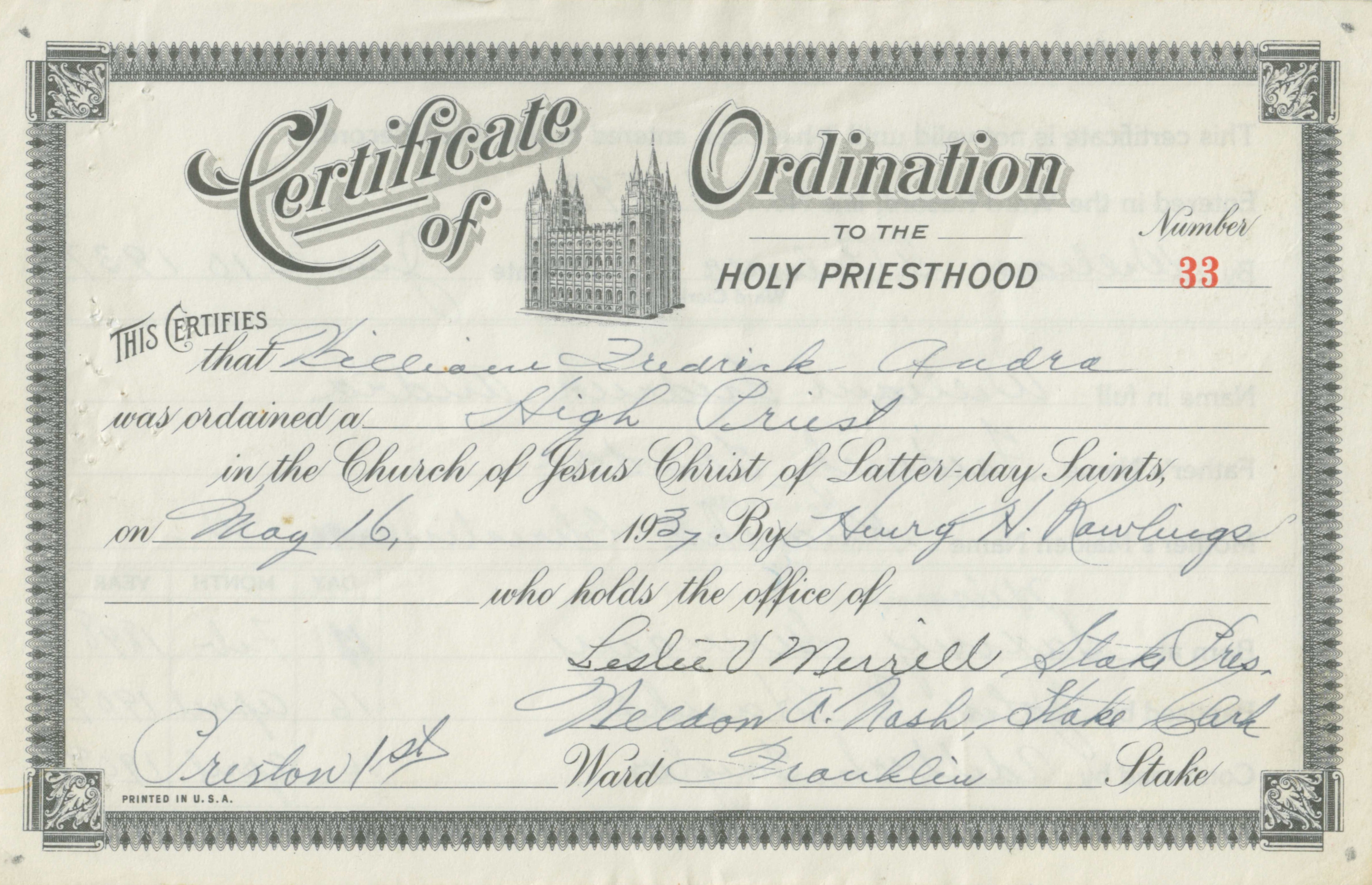

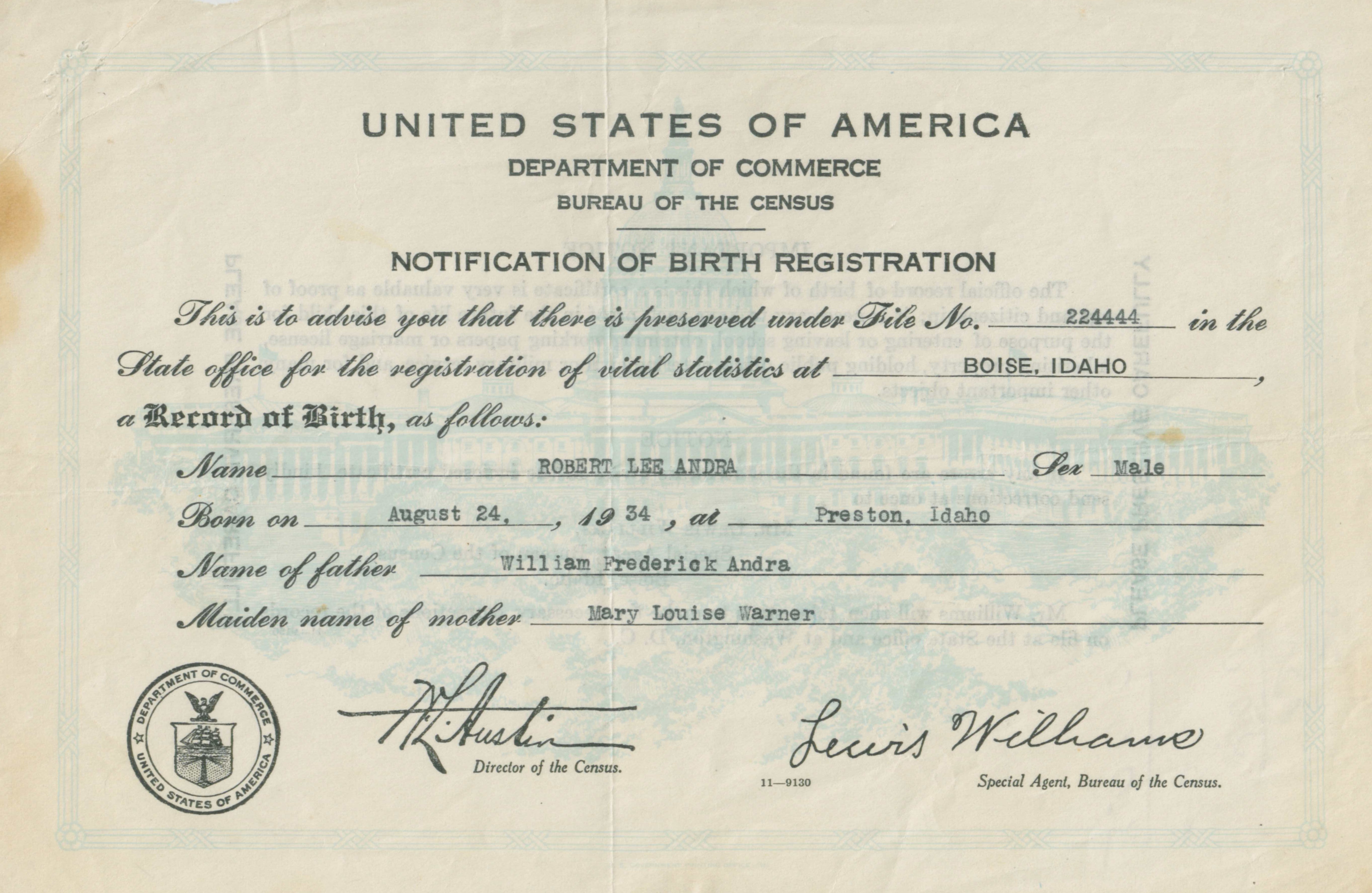
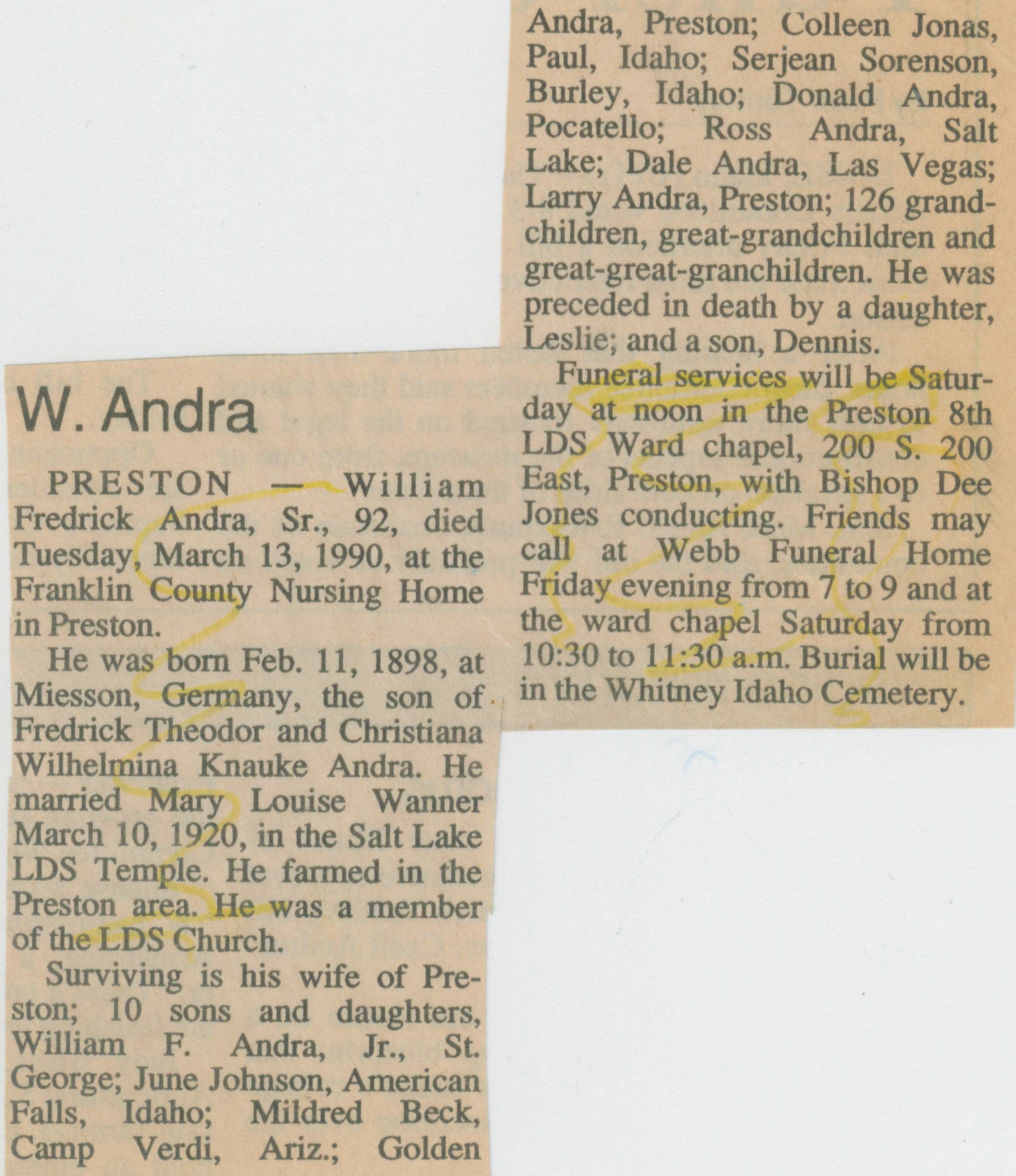

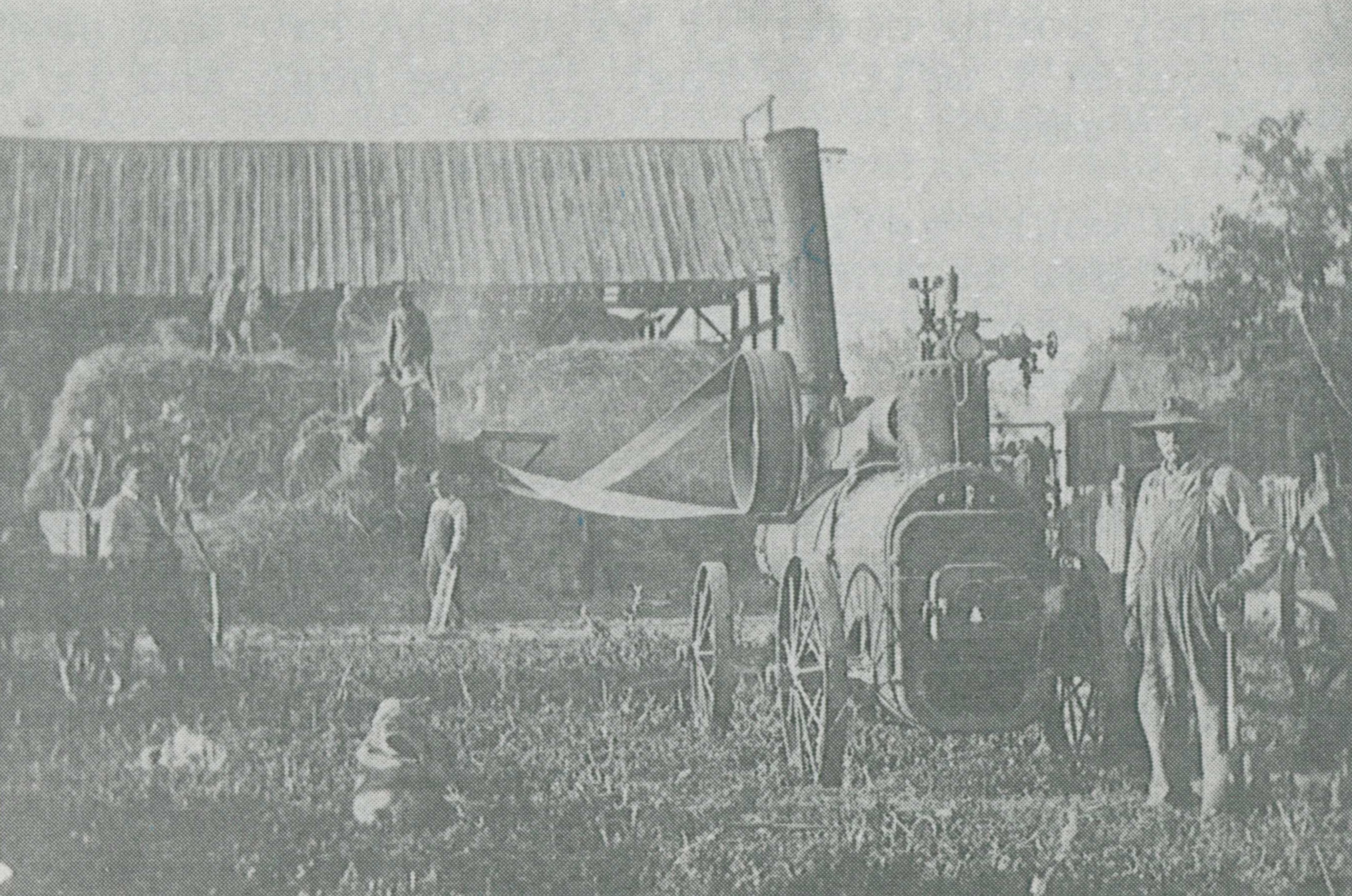
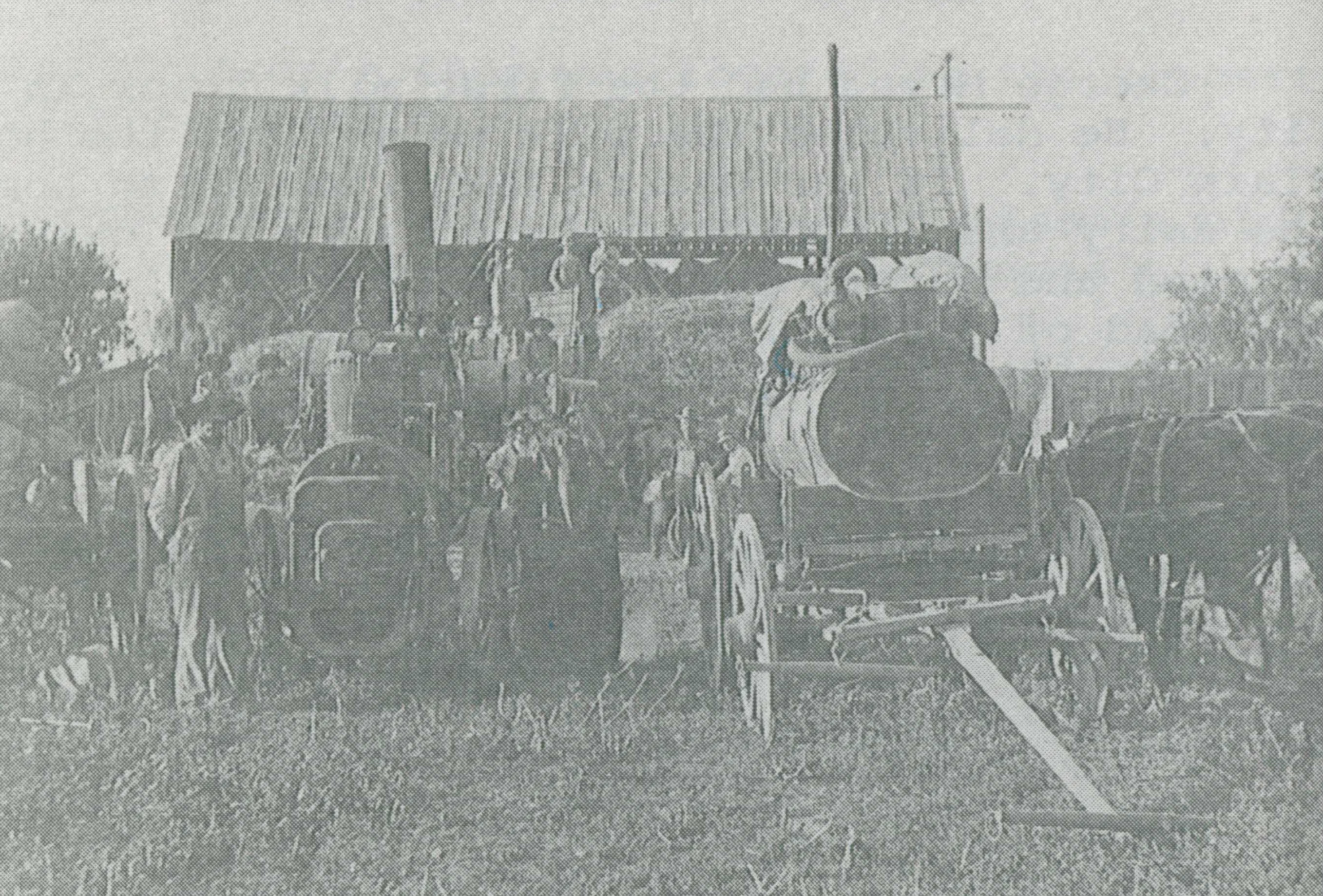
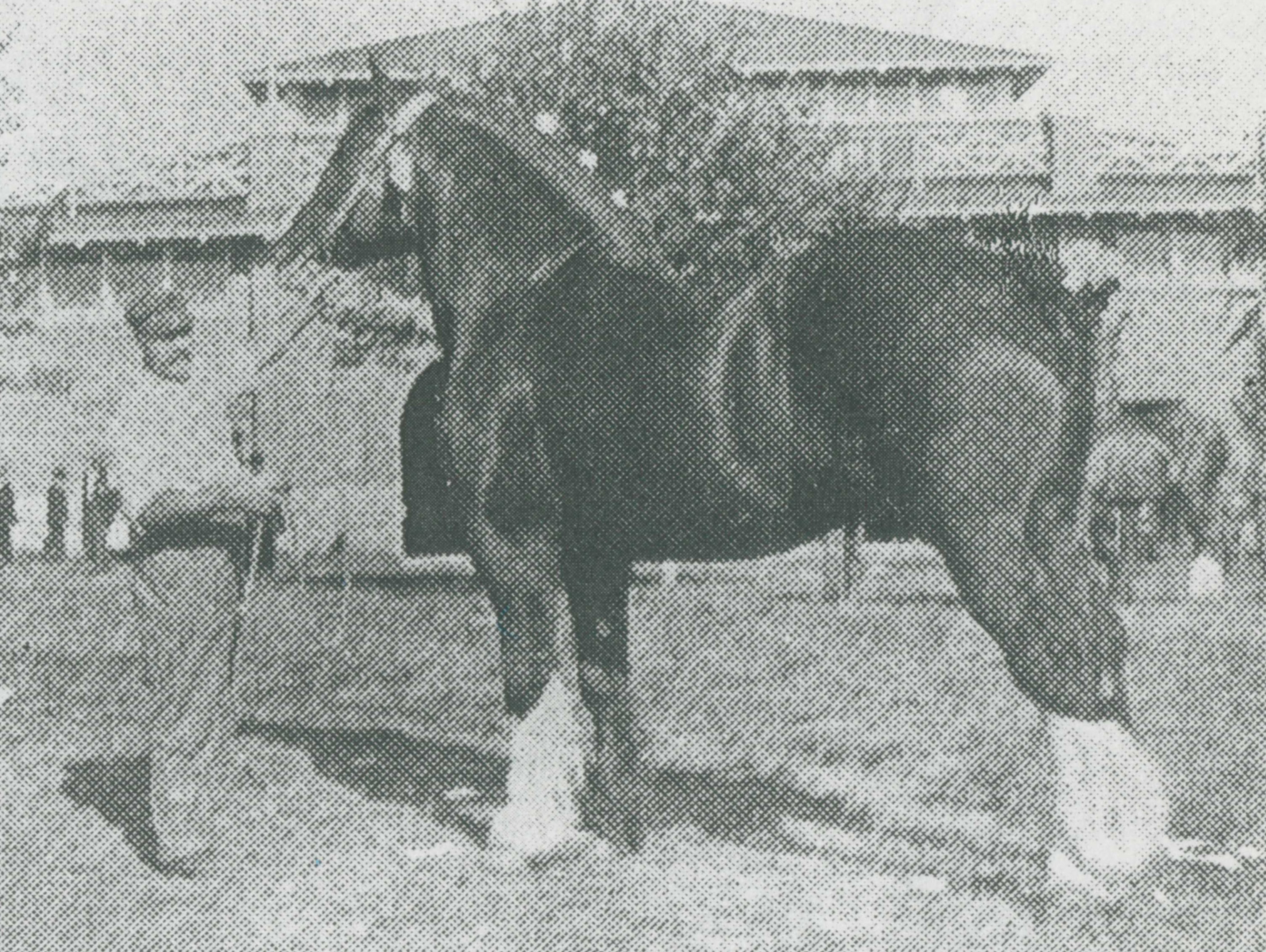
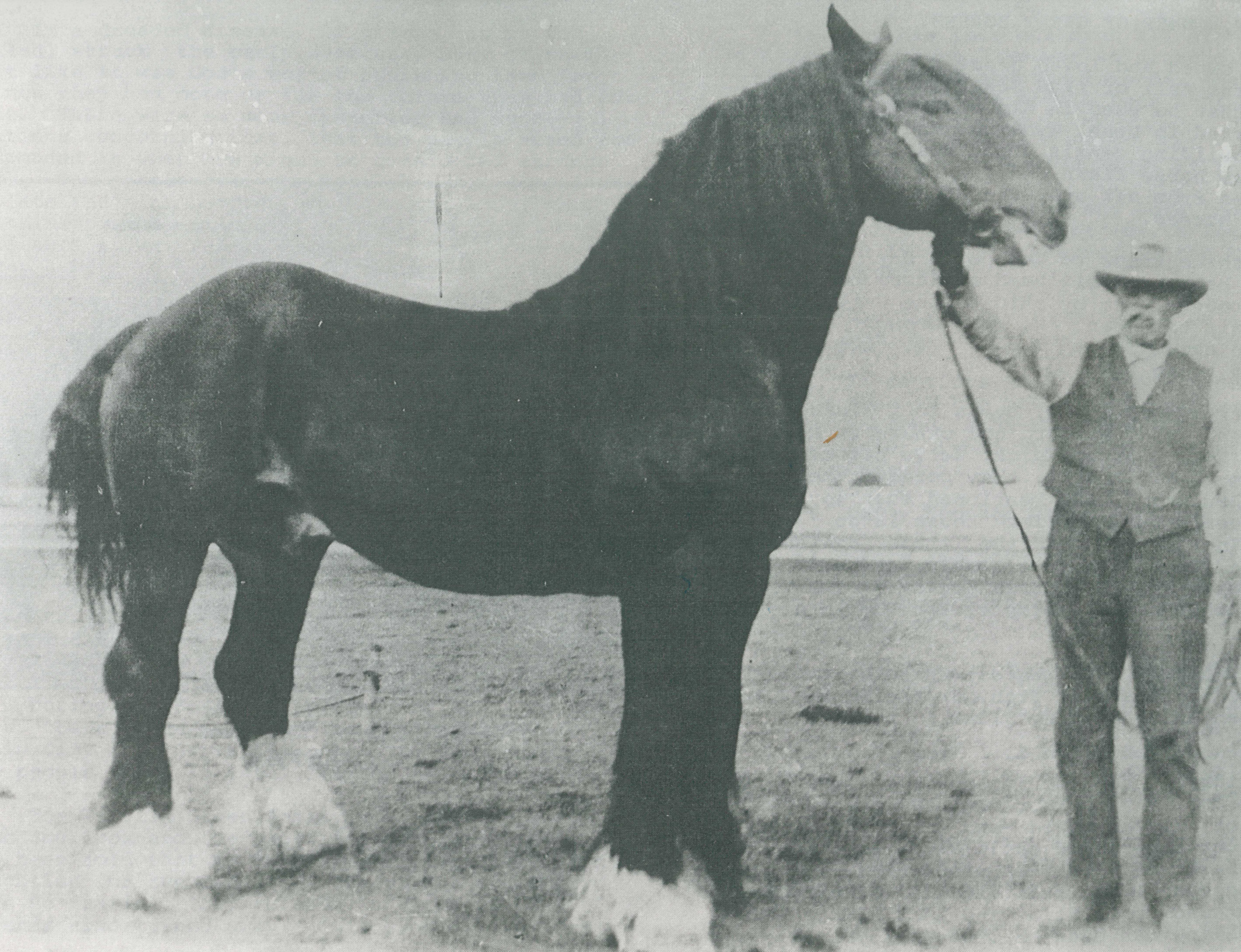


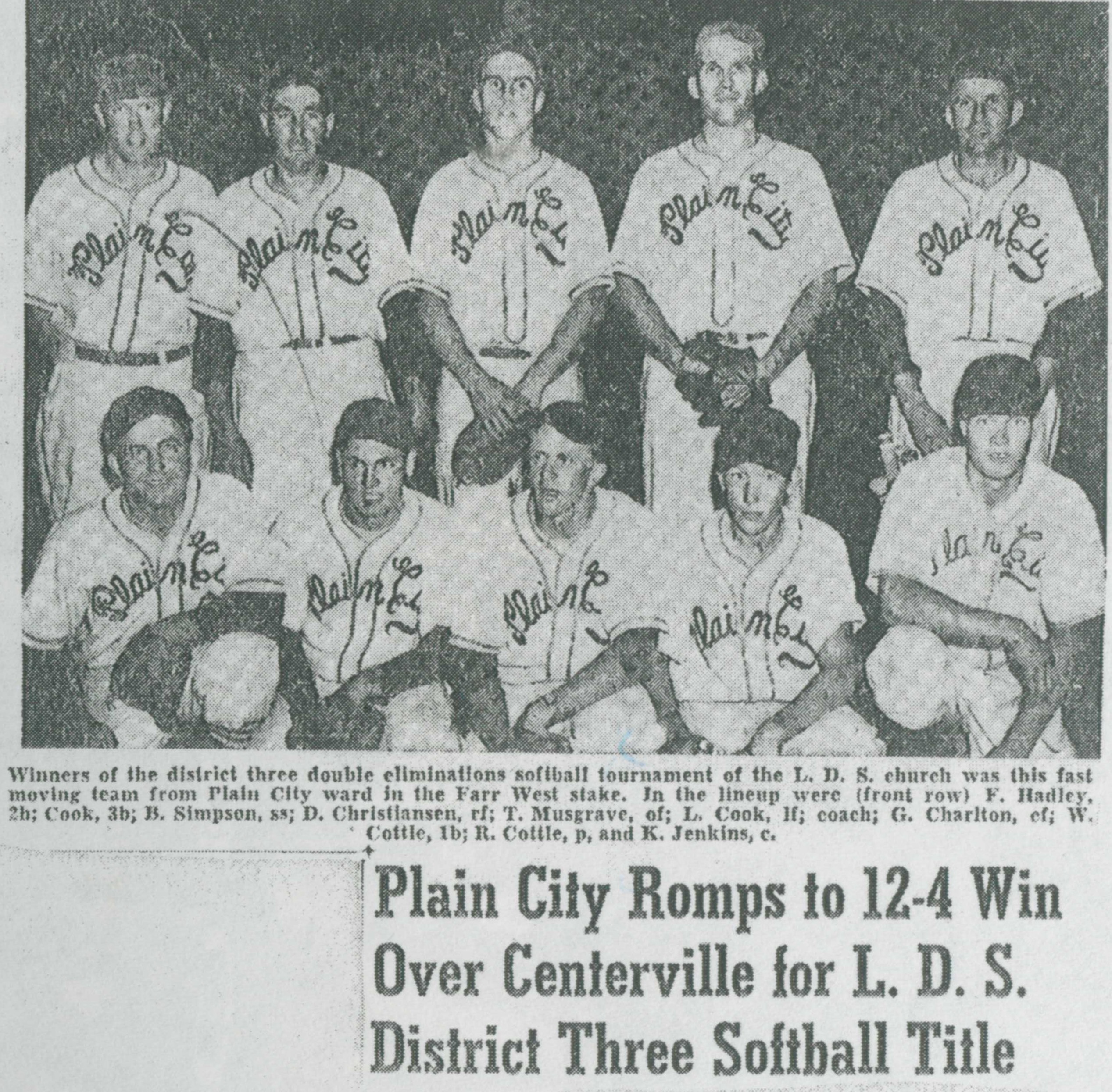
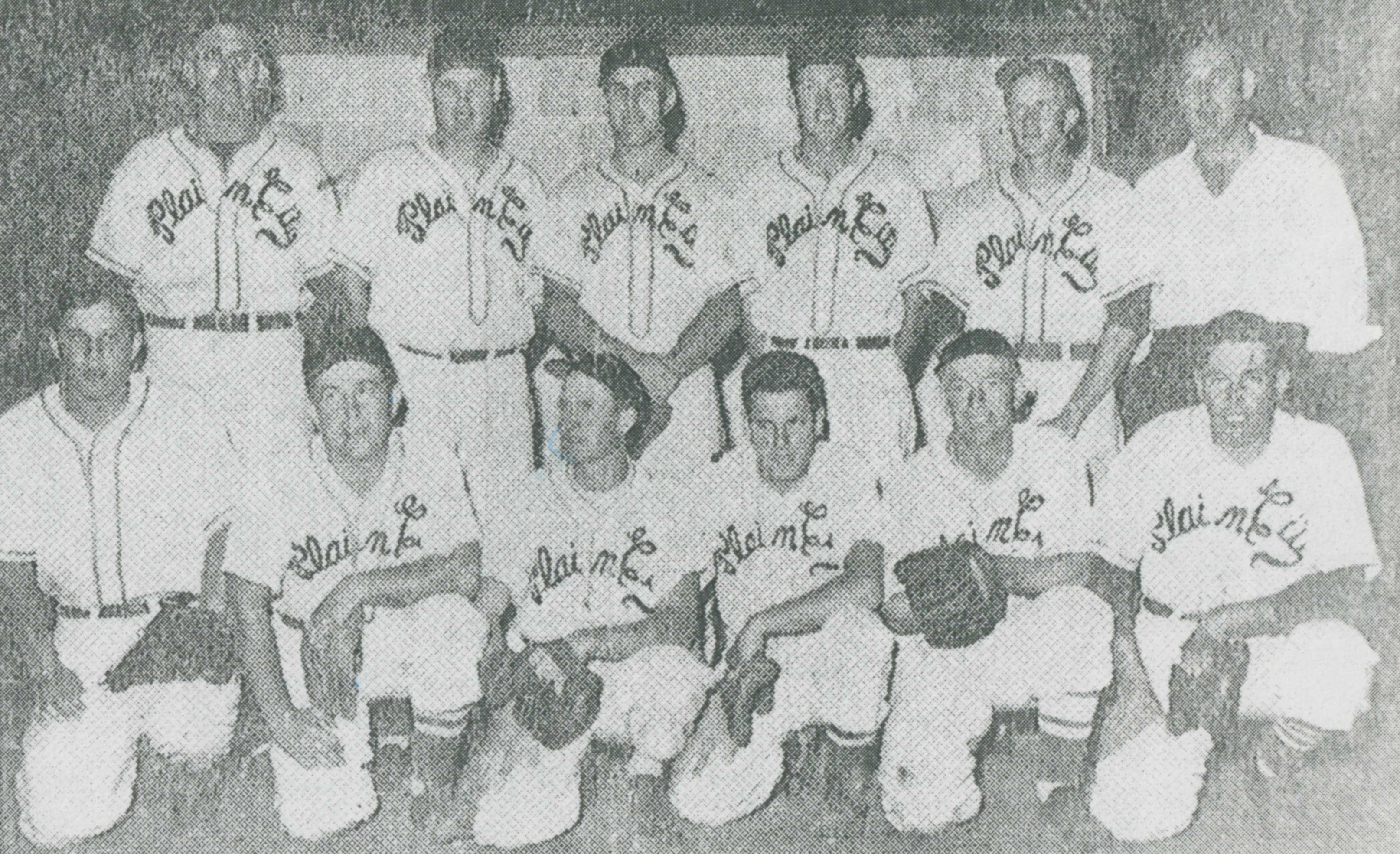


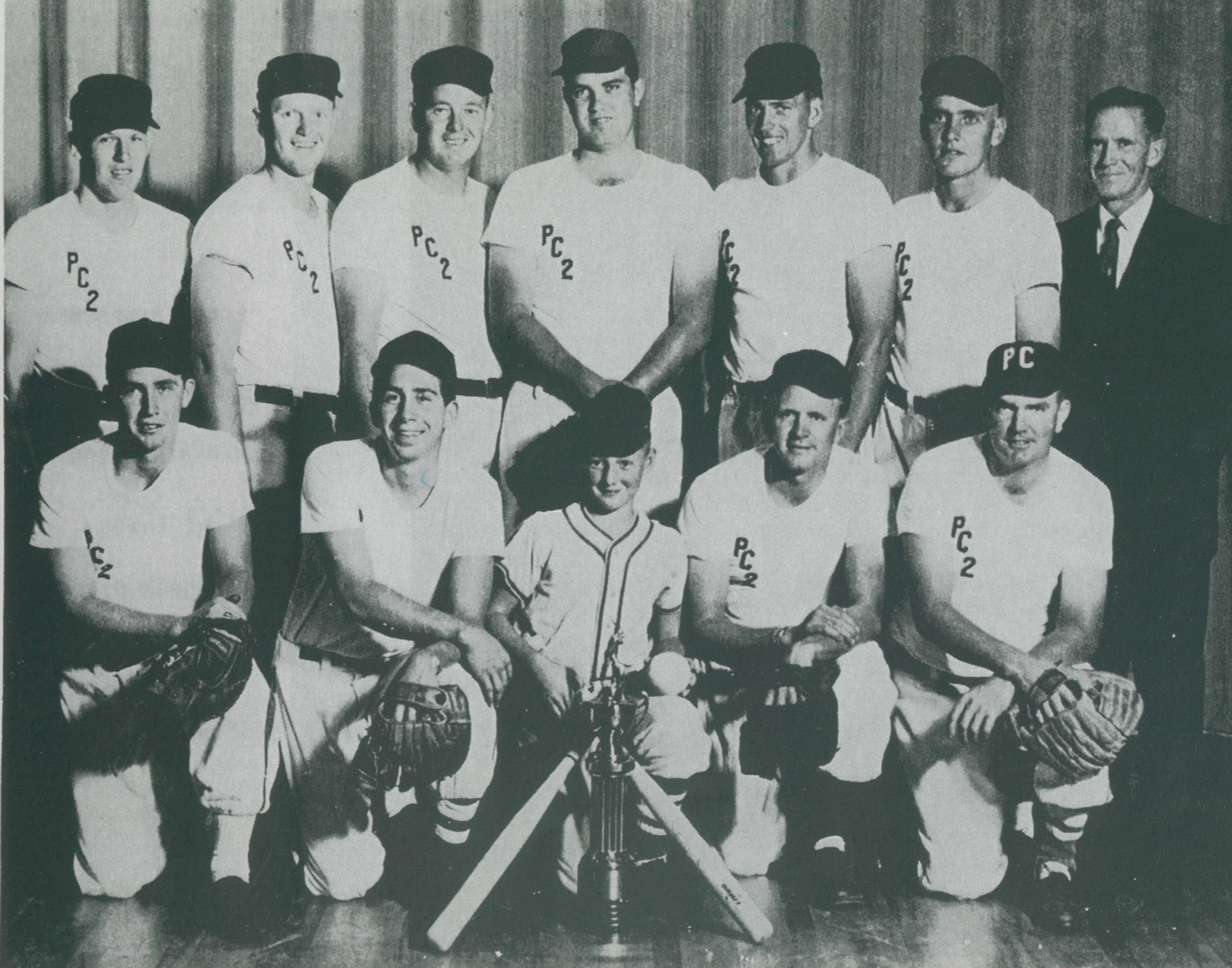

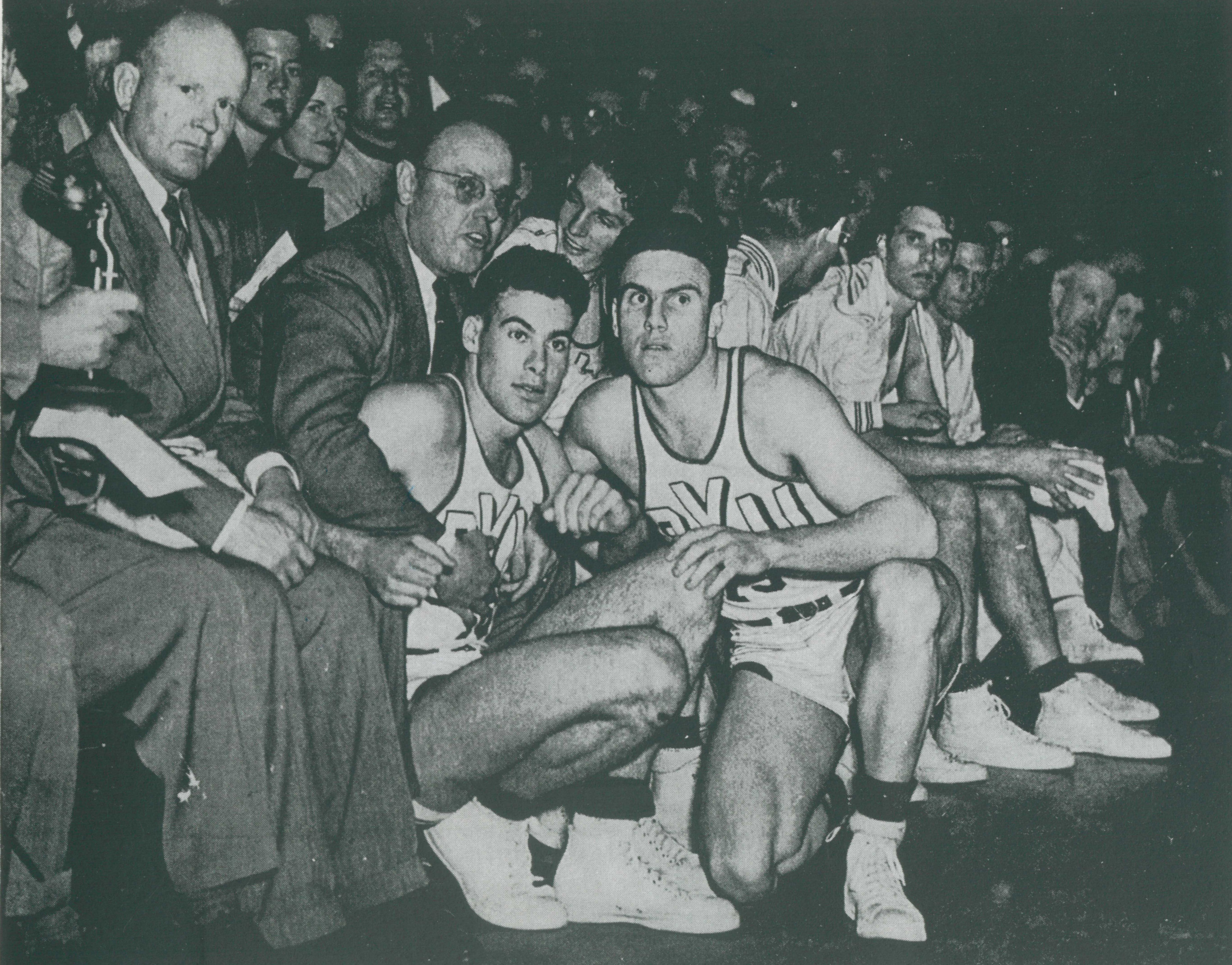




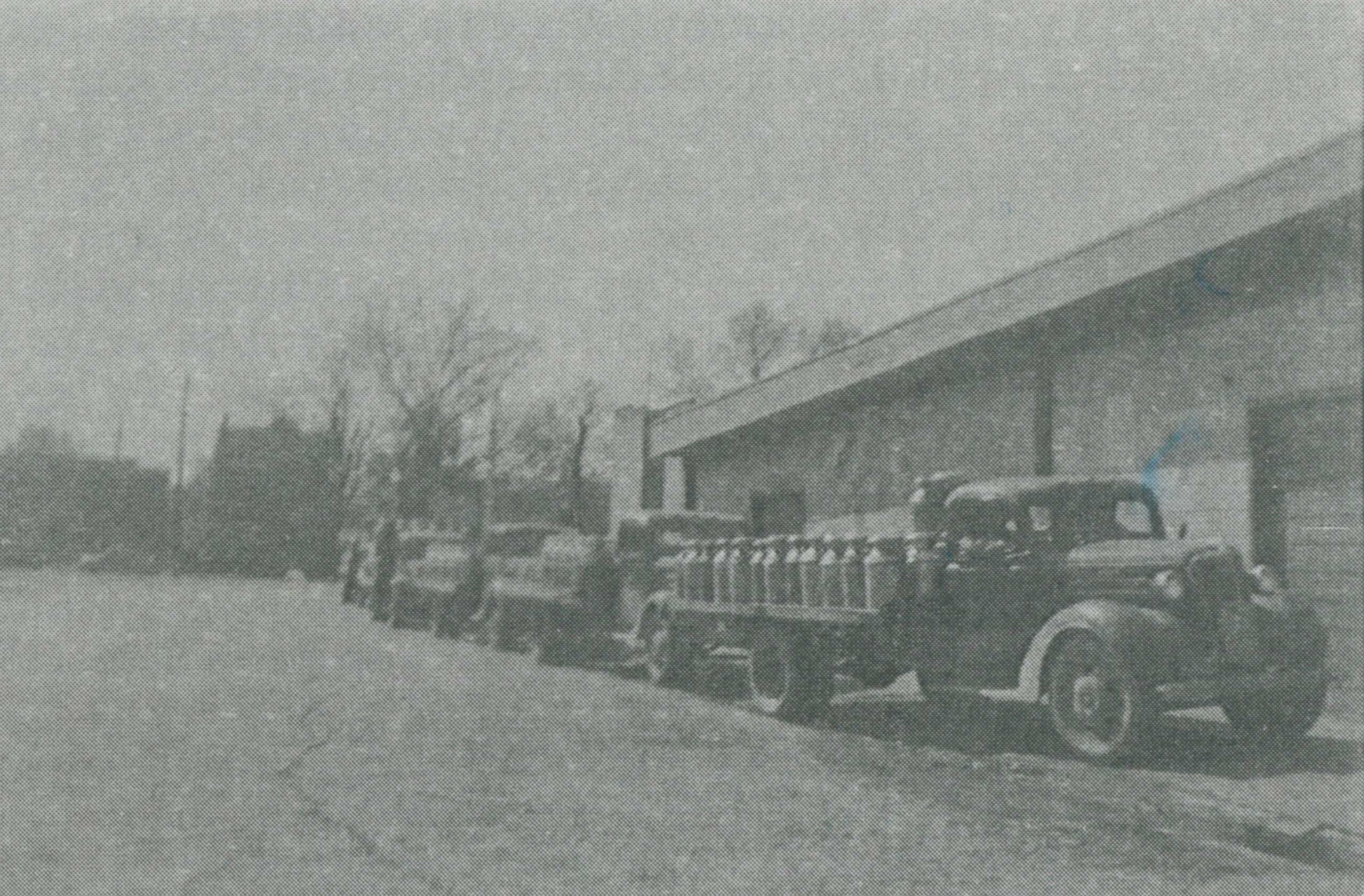
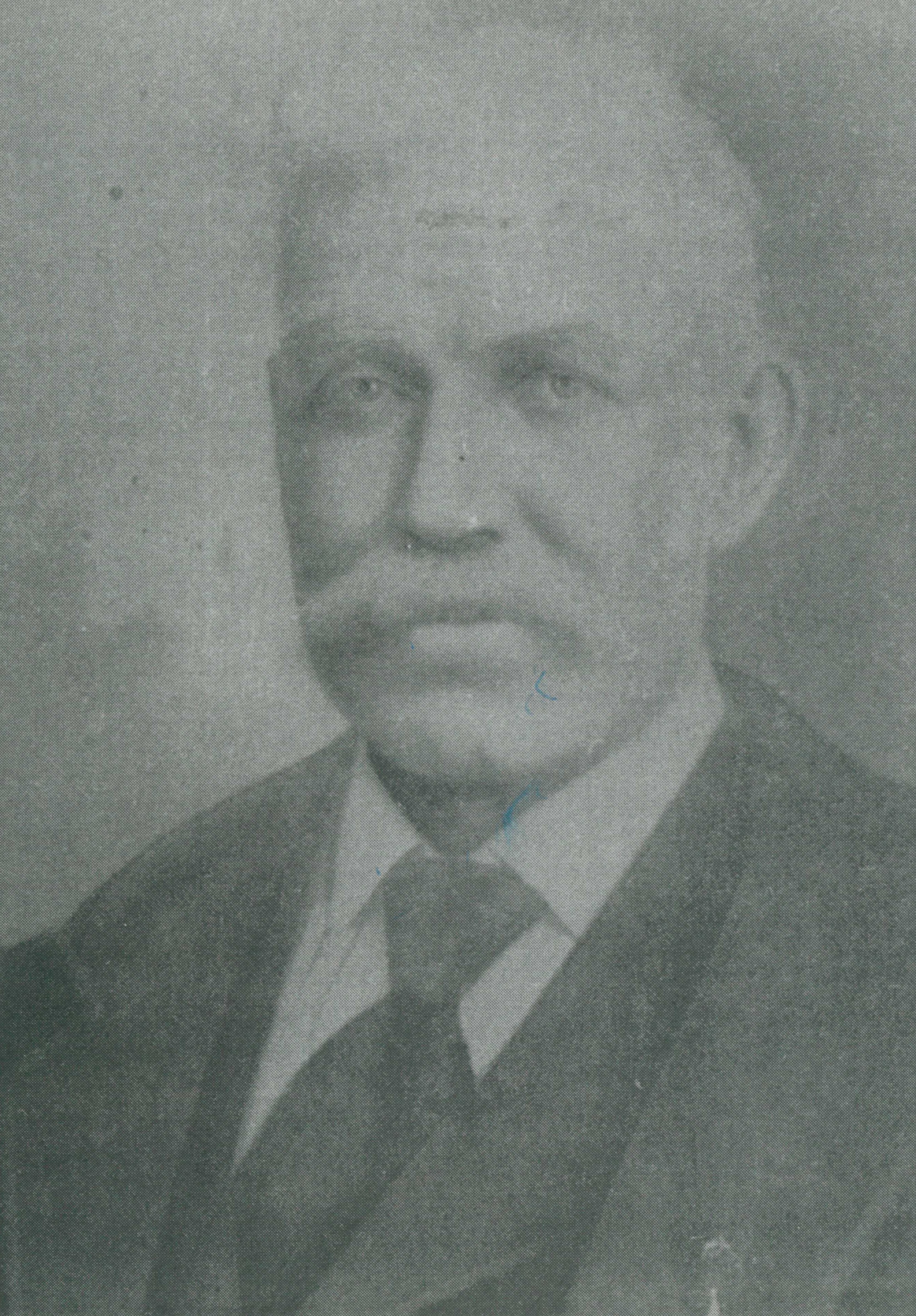
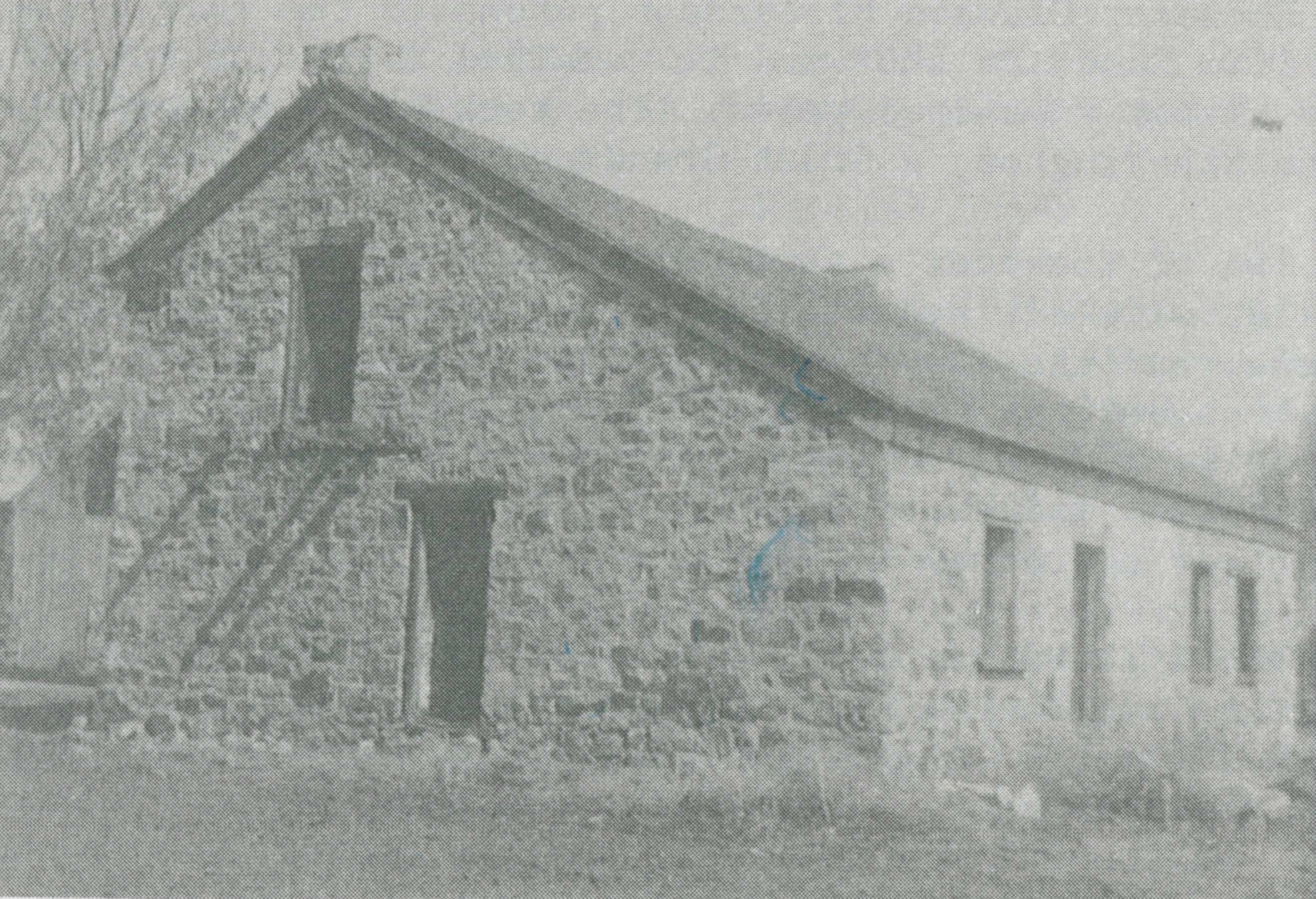

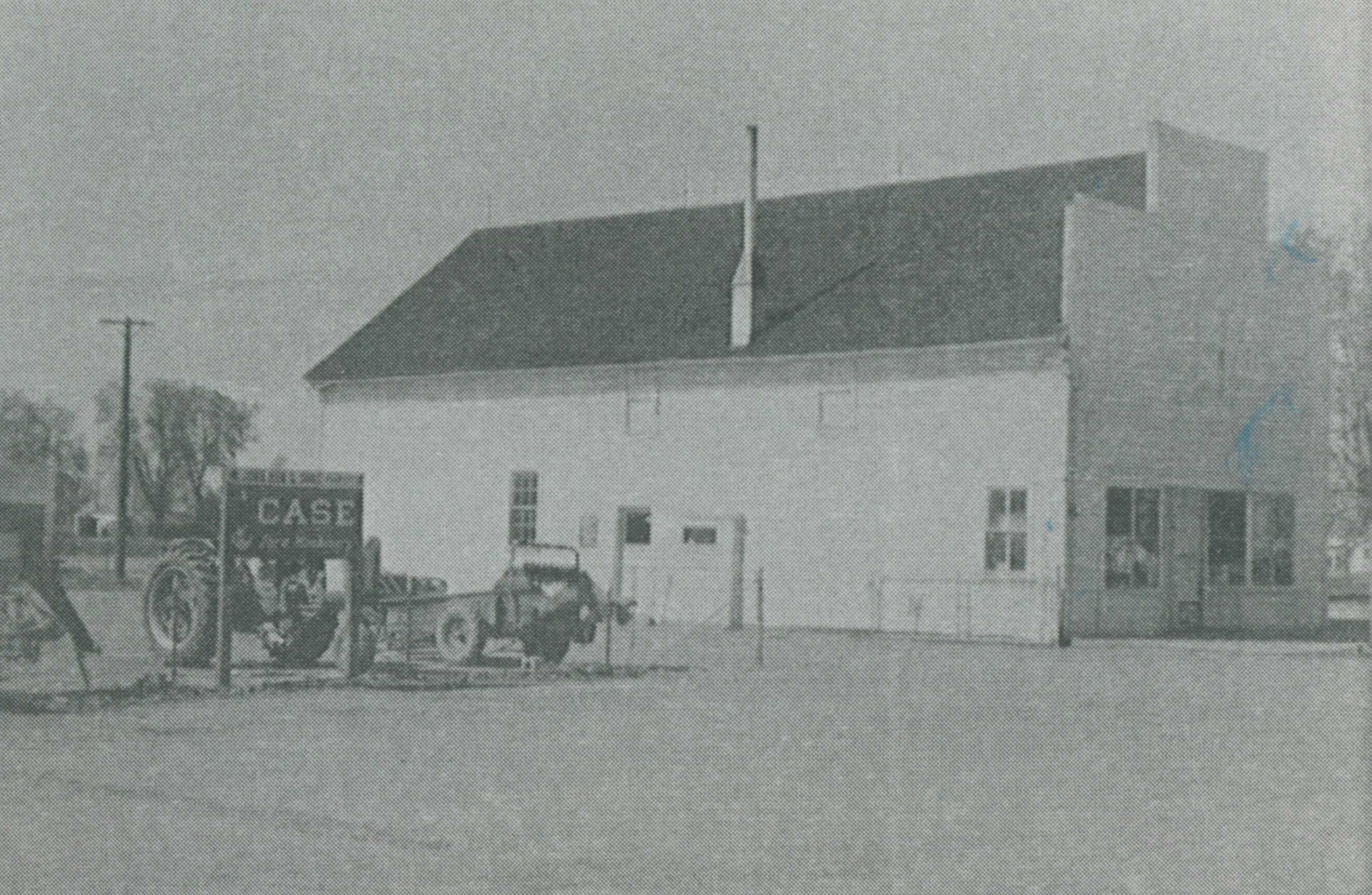

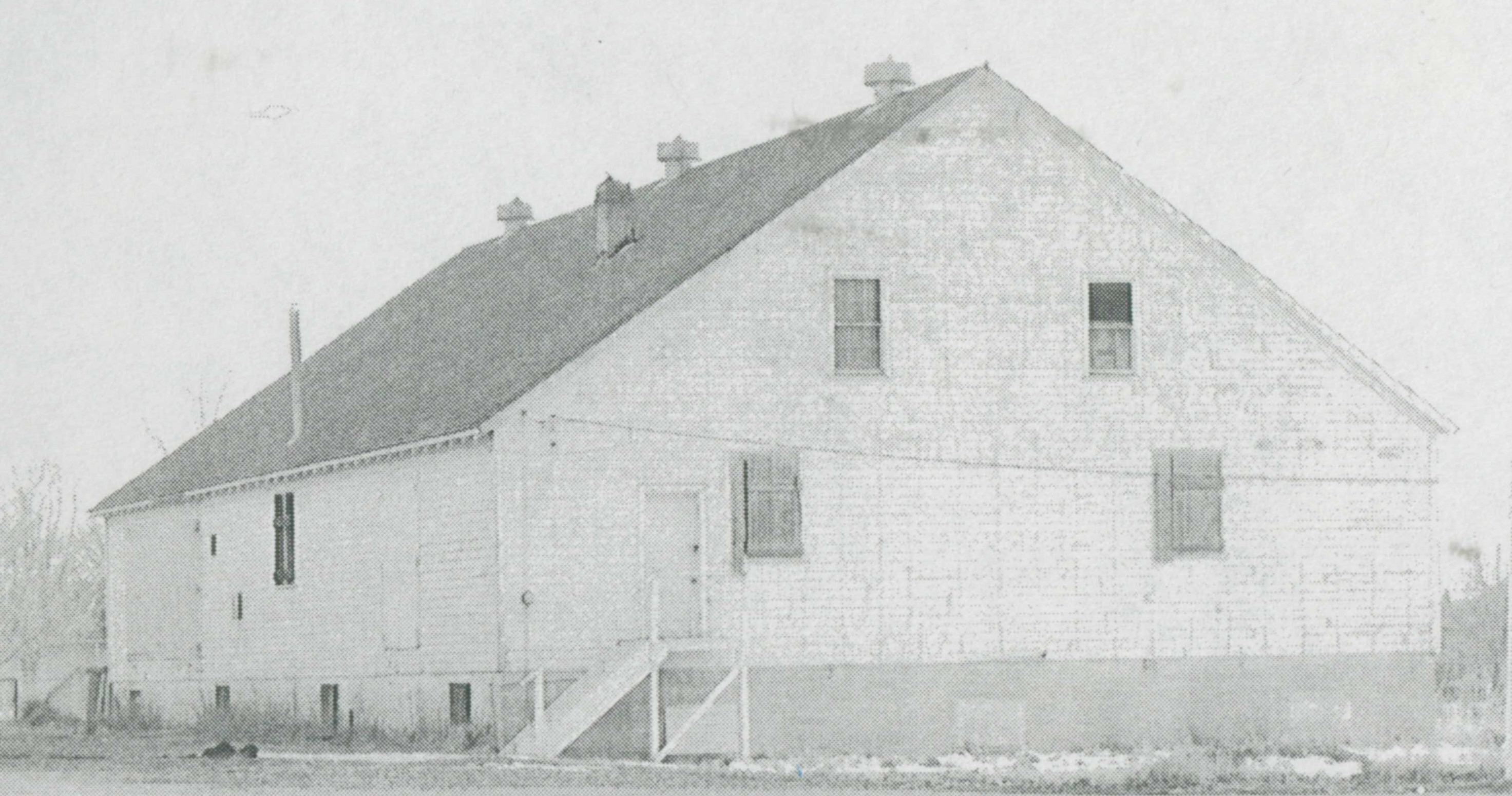
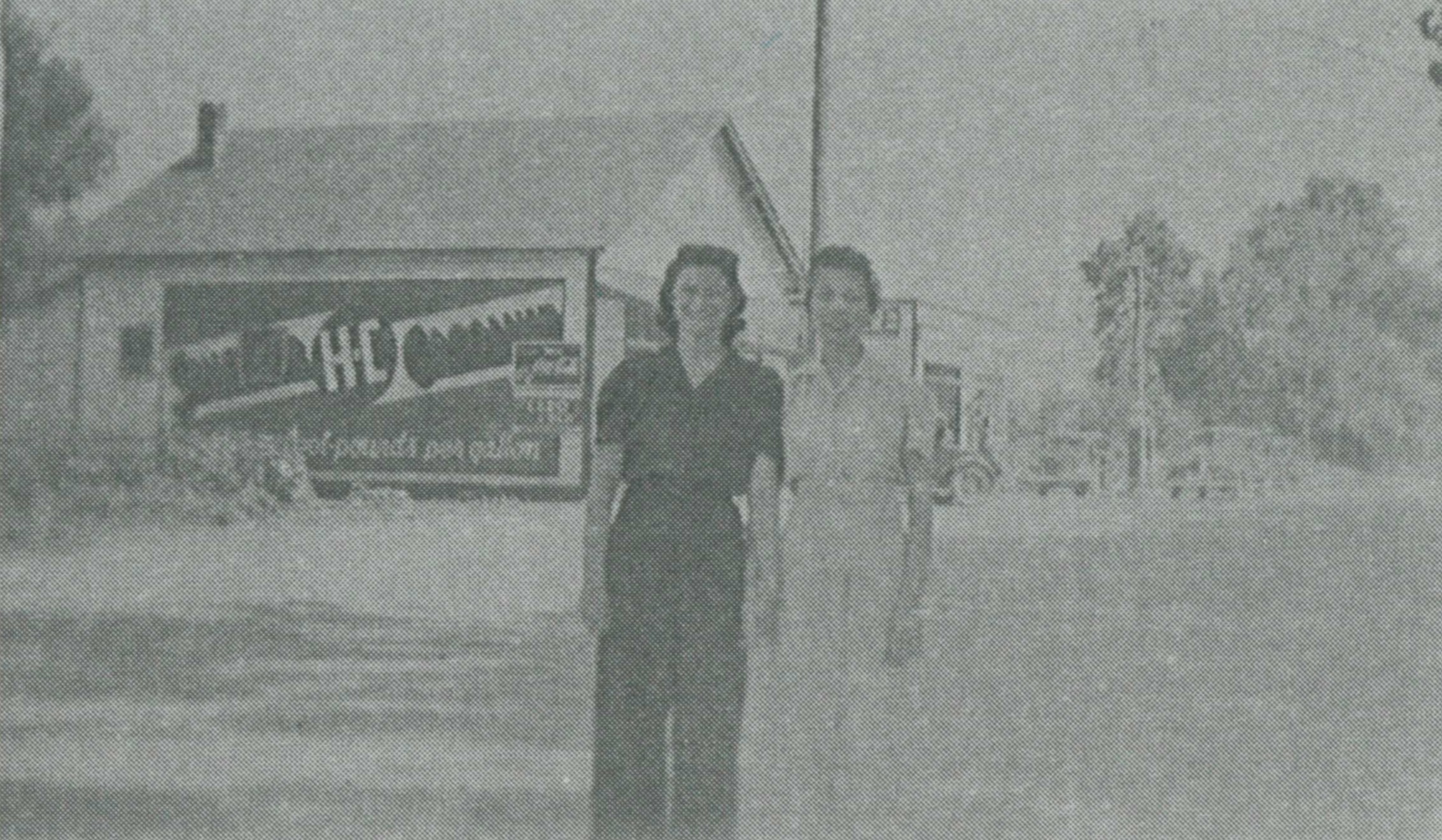


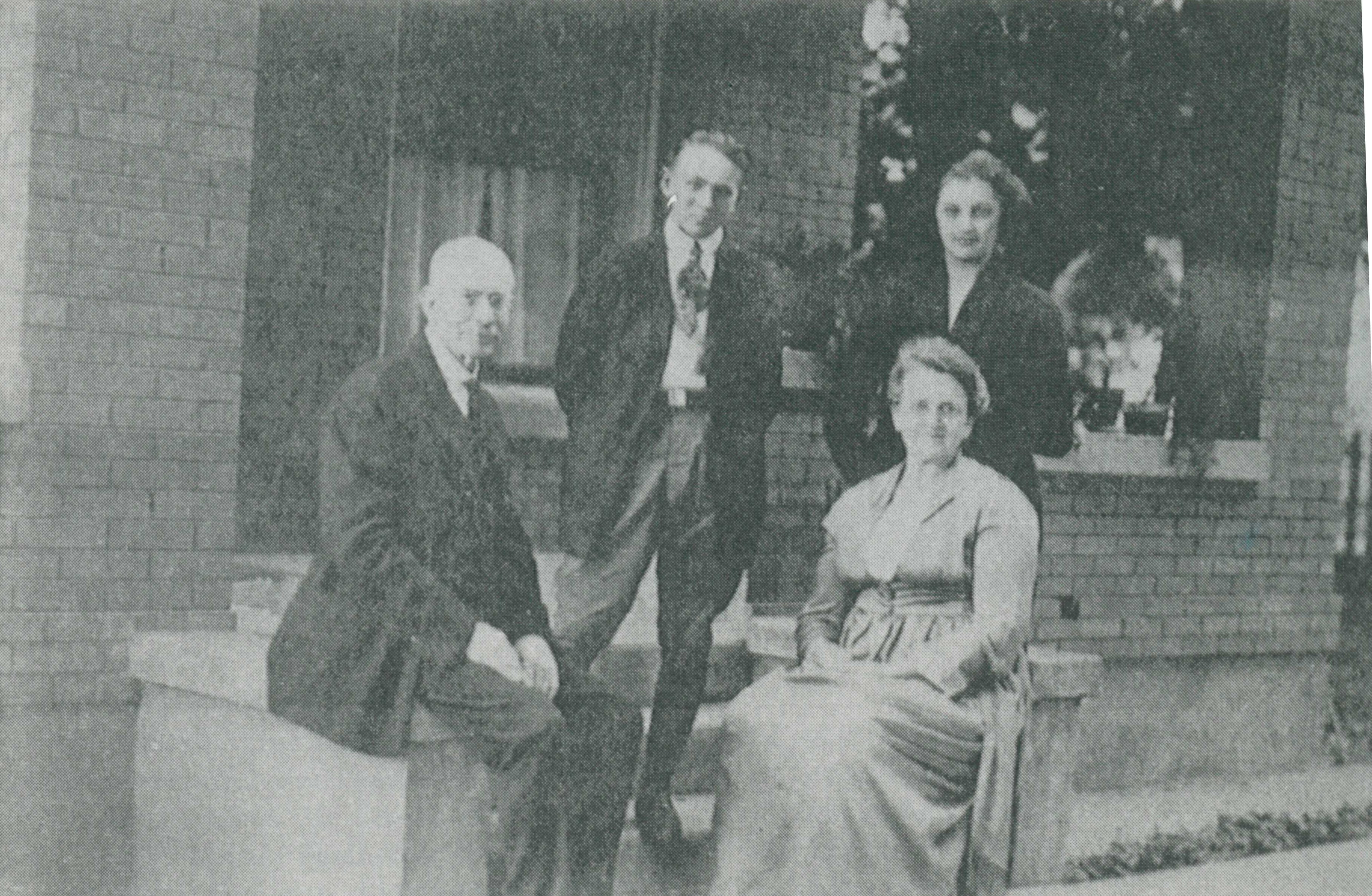
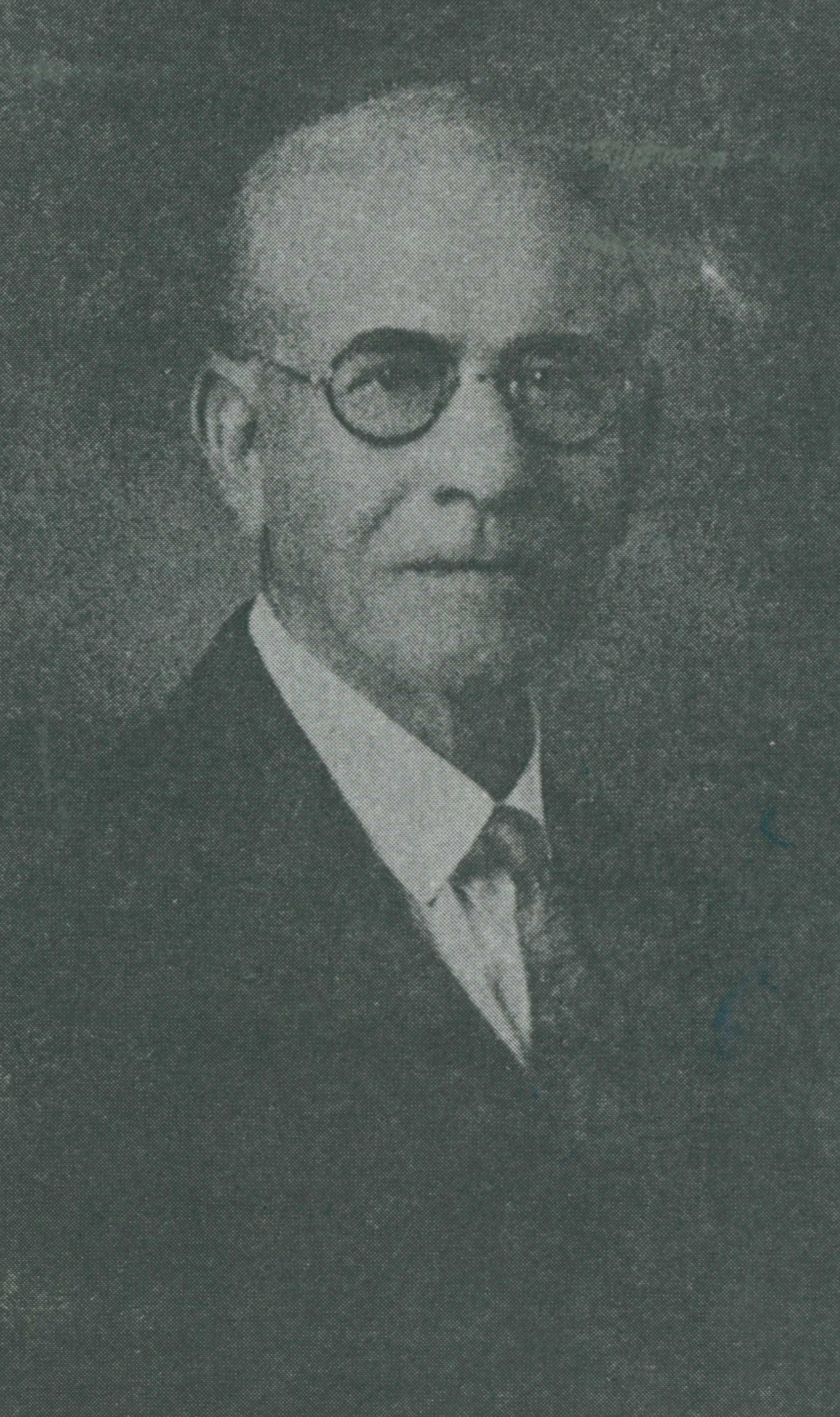


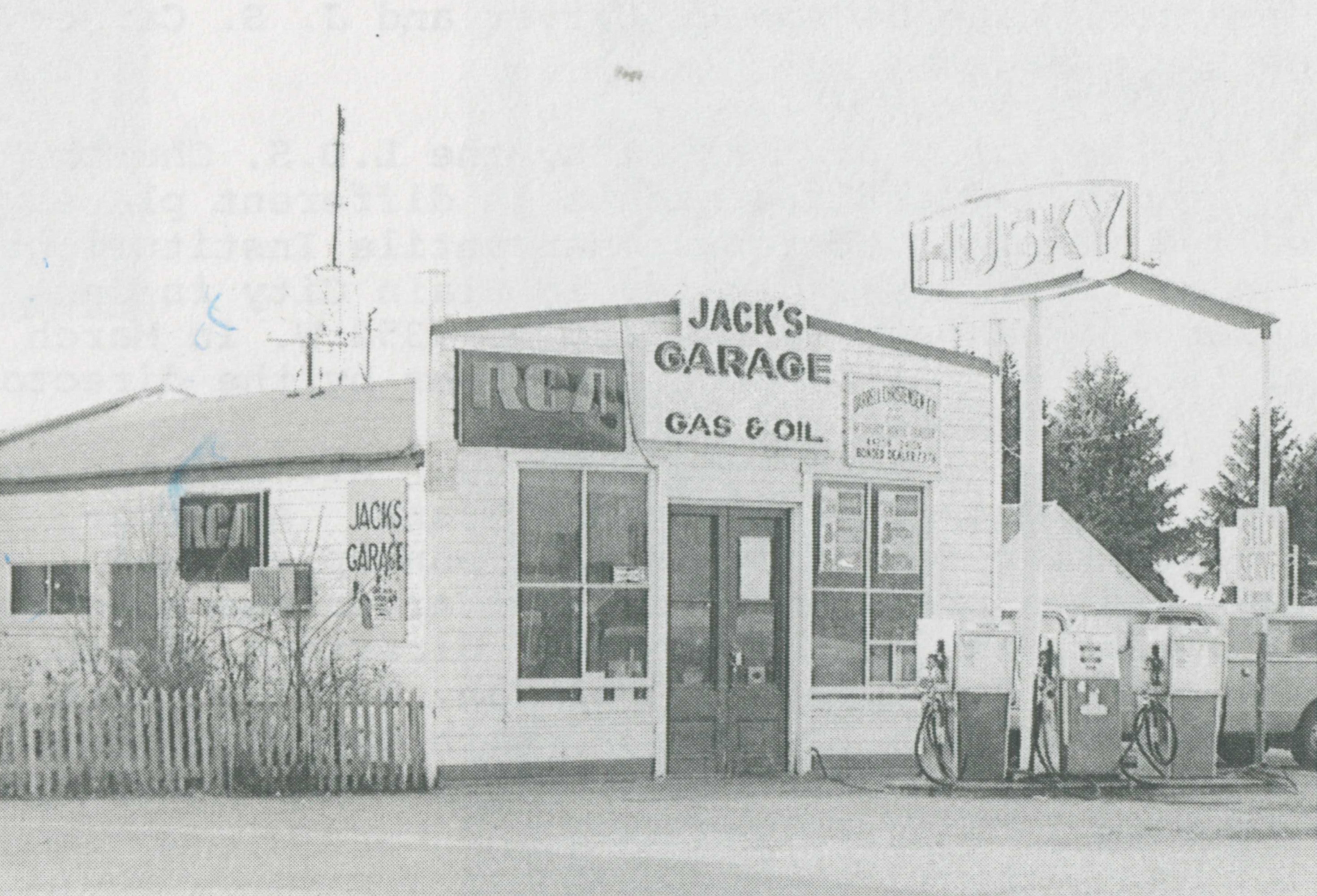
 Sagacity