Sarah Myler, Mary Mylder, Ruby Myler, and Leila Myler
I came upon a stack of Van Leeuwen and Bremer photos from my cousin Jennie Bremer Britzman’s estate.
I worked through all the photos, sorted and scanned them. The ones I recognized I uploaded to FamilySearch. The ones I did not, I shared with other Van Leeuwen family online. Nearly all of the photos were named. This one above was one that nobody seemed to recognize.
The back of it only said the following in four rows:
“top Sarah
“Mary
“bottom Ruby right
“Leila left
I presumably had 4 sisters, or closely related girls, with the names of Sarah, Mary, Ruby, and Leila.
Since these were of some relationship or linkage to the Bremer/Van Leeuwen families, I posted on an Ogden website. Almost immediately I had an obituary that was shared with me.
I started researching Mary Myler Standing and everything seemed to fall into place. Reviewed their profiles on FamilySearch confirmed it. They looked like these girls and were the right age. One of them even had a similar photo of the same age, probably the same dress and same day. Not only had I found the family, these four sisters are relatives of Amanda and my kids through the Buttar/Keep line.
I am still not clear on how or why the photo might have been in with the stack of photos. My only hunch is that these girls grew up in Clarkston, Utah and somehow knew the Bremer family of Richmond, Utah.
Here is the obituary:
WASHINGTON TERRACE – Our precious, courageous mother, Mary Myler Standing died at home, Thursday morning, October 31, 2002 of cancer, with her testimony of her Savior, Jesus Christ, and her membership in The Church of Jesus Christ of Latter-day Saints still strong. She was generous to those in need, the Church Missionary Program, Humanitarian Aid and Perpetual Education Fund. Mary Standing was born January 7, 1912, in Clarkston, UT to George Joseph Myler and Rachel Buttars Myler, the third of six children. She grew up in Clarkston, UT and graduated from North Cache High School. She worked on the family farm with her dad. She was a good horse rider and loved to race her horse with anyone willing. She always loved music. In her youth she would play the organ to accompany her dad playing the violin. She married Joseph Rulon Standing of Fielding, UT on January 21, 1933 and sealed in the Logan Temple December 16, 1937. They were blessed with six daughters. Mary always sewed for her daughters through the years, even though many of those years she had to use a treadle sewing machine late into the night. She provided an atmosphere of music in her home for her daughters. This required her working outside of the home part-time so that she could afford to have a piano and have them take music lessons. Later, when living in Denver, she gave free piano lessons to young people in her ward who could not afford lessons. She was famous for her wonderful home-made fudge and Boston Crème candy. Kids came from all over the Terrace on Halloween and asked, “Is this the place where you get the home-made candy?” (She also made “melt-in-your-mouth” pie crusts.) Mary always welcomed everyone, expected or not, into her home for meals or for just a place to spend the night. Everyone always felt welcome. During World War II, Mary and Rulon moved from Fielding, UT to Ogden so he could work at the Ogden Arsenal. Mary worked at the Washington Terrace Drug Store, Ballard & Carter Electronics, and eventually became a professional seamstress, both in the Ogden area and Denver, CO, for 11 years. Mary retired as a professional seamstress in Denver in 1974. When her husband retired from Chevron in 1975, they returned to Washington Terrace to live. Mary and her husband celebrated their Golden Wedding Anniversary in Ogden in 1983; they were one month short of their 66th anniversary at his death on December 15, 1998. Mary has served in numerous teaching and executive positions in The Church of Jesus Christ of Latter-day Saints. She and her husband served as ordinance workers in the Ogden Temple for a number of years. Mary always made the Savior and His Church her number one priority in her life. Her teachings and example of honesty, integrity, and testimony have been unwavering throughout her life. Her grandchildren and great-grandchildren loved her and visited her often. They felt the love and interest she had for each of them. She is survived by a sister, Vendalyn Apgood of Clarkston, UT and brother, George Blaine Myler of Mesa, AZ. She is also survived by five daughters: Lois Howell (Don), Centerville, UT; Doris Hancock (Harlen), St. George, UT; Linda Anderson Lucas (Gary), North Ogden, UT; Susan Rideout (Mack) and Retta James (Rick), both of Salt Lake City, UT, and 20 grandchildren and 46 great-grandchildren, numerous step-grandchildren and step great-grandchildren whom she loved with great devotion. She was preceded in death by her husband; daughter, Kathleen Standing; parents; and three sisters, Leila Thompson, Sarah Godfrey, Ruby Godfrey. The family wishes to thank Dr. Frank Haglund, McKay Dee Hospital Staff, and CNS Hospice staff, especially Michelle Miller, Doris Valentine, and Queenie Aydelott. Viewings will be held Sunday evening, Nov. 3rd, from 6 p.m. to 8 p.m. at Leavitt’s Mortuary, 836 36th St., in Ogden, UT, and Monday morning, from 10:45 a.m. to 11:45 a.m. at Washington Terrace Third Ward, 4900 S. 300 W. The services follow in the chapel at 12 noon. Burial will be at the Fielding, UT Cemetery.
Wilford Woodruff’s vision of the Founding Fathers requesting Temple Ordinances
We are moving soon, but the Burley 11th Ward gave me another chance to address them. Since I received a number of requests for a copy of the talk, which is really just a collage of various items I could find online, the Journal of Discourses, the Saints second and third volumes, and other various histories. Here is the text of the talk I wrote, that does not mean it is the talk I gave…
I first addressed the freedoms we have as contrasted in the Saints third volume related to Germany. I said the word Jew and Israel from the stand and did not fear reprisal. I listen to free radio anytime I want and even seek out British radio from time to time and there is nothing illegal. Lastly, we could congregate without the worry of those in our midst about what was said or in the actual act of meeting.
Then to the following:
Declaration of Independence – We hold these truths to be self-evident, that all men are created equal, that they are endowed by their Creator with certain unalienable Rights, that among these are Life, Liberty and the pursuit of Happiness.
George Washington: “The success, which has hitherto attended our united efforts, we owe to the gracious interposition of Heaven, and to that interposition let us gratefully ascribe the praise of victory, and the blessings of peace.”
Alexander Hamilton: “The Sacred Rights of mankind are not to be rummaged from among old parchments or musty records. They are written . . . by the Hand of Divinity itself.” “For my own part, I sincerely esteem it a system, which without the finger of God, never could have been suggested and agreed upon by such a diversity of interests.”
Thomas Jefferson: “The God who gave us life gave us liberty at the same time.”
John Adams: “As I understand the Christian religion, it was, and is, a revelation.”
Benjamin Franklin: “The longer I live the more convincing Proofs I see of this Truth. That God Governs in the Affairs of Men!—And if a Sparrow cannot fall to the Ground without his Notice, is it probable that an Empire can rise without his Aid?—We have been assured, . . . in the Sacred Writings, that ‘except the Lord build the House, they labour in vain that build it.’ I firmly believe this;—and I also believe that without his concurring Aid we shall succeed in this political building no better than Builders of Babel.”
James Madison: “It is impossible for the man of pious reflection not to perceive in it a finger of that Almighty hand which has been so frequently and signally extended to our relief in the critical stages of the revolution.”
Samuel Adams: “Revelation assures us that ‘Righteousness exalteth a Nation’—Communities are dealt with in this World by the wise and just Ruler of the Universe. He rewards or punishes them according to their general Character.”
Charles Pinckney: “When the great work was done and published, I was . . . struck with amazement. Nothing less than that superintending hand of Providence, that so miraculously carried us through the war, . . . could have brought it about so complete, upon the whole.”
On May 4, 1842, he called to his side nine of the most faithful of his brethren—Hyrum Smith, Brigham Young, Heber C. Kimball, Willard Richards, Newell K. Whitney, and others—and later their wives came with them to the upper floor of the Red Brick Store in Nauvoo.
Joseph was seeking to fulfill the promise from D&C 124, given in 1841, which the Lord would reveal to Joseph “all things pertaining to this house, and the priesthood thereof, and the place whereon it shall be built.”
He had started, “If it should be the will of God that I might live.” Then he corrected and said, “It is not the will of the Lord that I should live, and I must give you, here in this upper room, all those glorious plans and principles whereby men are entitled to the fulness of the priesthood.” He proceeded in an improvised and makeshift way to do so.
We have from Brigham Young that after they had received these blessings the Prophet said: “Brother Brigham, this is not arranged right. But we have done the best we could under the circumstances in which we are placed, and I wish you to take this matter in hand and organize and systematize all these ceremonies.”
Brigham Young later said, “I did so. And each time I got something more, so that when we went through the temple at Nauvoo I understood and knew how to place them there. We had our ceremonies pretty correct.”
While the Nauvoo Temple was started in 1841, the first endowments were performed in the winter of 1845 and into 1846. Baptisms had started in the Mississippi River prior to the temple and moved into the temple baptistery soon after it was completed and dedicated, well before the rest of the temple was done. Brigham, leading the church, was personally overseeing the organization and perfection of the endowment and other ordinances that started in Nauvoo.
After arriving in Salt Lake City, the church used the top floor of the Council House, starting in 1852 until the Endowment House was completed in 1855. It was in this building that endowments, prayer circles, some missionary training, and some setting aparts were conducted. The use of the Endowment House ended in 1877 with the completion of the St George Temple. That building stood until Wilford Woodruff heard that unauthorized sealings were occurring there and ordered it razed in 1889.
The St George Temple was the only one completed during Brigham Young’s 30 year tenure as President. It was dedicated on 1 January 1877 in three dedicatory prayers under the direction of Brigham. The baptistery by Wilford Woodruff, the main floor by Erastus Snow, and the sealing room by Brigham Young Jr. Wilford Woodruff served as St George Temple President from 1877 to 1884. Brigham had to be carried up the stairs, but he stood and spoke in the Assembly Room.
“When I think upon this subject, I want the tongues of seven thunders to wake up the people,” he declared. “Can the fathers be saved without us? No. Can we be saved without them? No. And if we do not wake up and cease to long after the things of this earth, we will find that we as individuals will go down to hell.”
Brigham lamented that many Saints were pursuing worldly things. “Supposing we were awake to this thing, namely the salvation of the human family,” he said, “this house would be crowded, as we hope it will be, from Monday morning until Saturday night.”
On 9 January 1877, the first baptisms for the dead were performed in the St George Temple. The first endowment for the dead was performed on 11 January 1877. Brigham and Wilford personally oversaw the ordinances being performed. Wilford began wearing a white suit, starting the trend that continues to this day.
All endowments to this point had been done and passed by word of mouth. It was in St George, far from Salt Lake City, that the ordinances were first written down. Brigham also wanted to make sure the record was preserved and that they were standardized. They were read to Brigham time and time again who would then approve or continue to revise the ordinances. Brigham went home to Salt Lake City in April 1877. He stopped and dedicated the spot for the Manti Temple on the way home.
Wilford Woodruff then wrote in his journal on Sunday 19 August 1877, “I spent the evening in preparing a list of the noted men of the 17 century and 18th, including the signers of the Declaration of Independence and presidents of the United States, for baptism on Tuesday the 21 Aug 1877.”
His journal entry for August 21 reads, “I, Wilford Woodruff, went to the temple of the Lord this morning and was baptized for 100 persons who were dead, including the signers of the Declaration of Independence. … I was baptized for the following names.” He then listed the names of one hundred men.
Elder Woodruff continued his journal entry: “When [John Daniel Thompson] McAllister had baptized me for the 100 names, I baptized him for 21, including Gen. Washington and his forefathers and all the presidents of the United States that were not on my list except Buchanan, Van Buren, and Grant.” (The work for these presidents has since been done.)
“It was a very interesting day,” Elder Woodruff continued. “I felt thankful that we had the privilege and the power to administer for the worthy dead, especially for the signers of the Declaration of Independence, that inasmuch as they had laid the foundation of our Government, that we could do as much for them as they had done for us.
“Sister Lucy Bigelow Young went forth into the font and was baptized for Martha Washington and her family, and seventy of the eminent women of the world. I called upon the brethren and sisters who were present to assist in getting endowments for those that we had been baptized for today.” (Wilford Woodruff’s journal, typescript, vol. 7, Church History Library; spelling and punctuation modernized.)
The first public mention of these events was made nearly a month after the baptisms were performed. In an address in the Tabernacle on Temple Square on 16 September 1877, Elder Woodruff first told publicly of the visitation of the signers of the Declaration of Independence.
“You have had the use of the Endowment House for a number of years, and yet nothing has ever been done for us. We laid the foundation of the government you now enjoy, and we never apostatized from it, but we remained true to it and were faithful to God. (Conference Report, April 10, 1898; Discourses of Wilford Woodruff, pp. 160-61)
During the 68th Annual General Conference of the Church which was held in April 1898, President Woodruff recounted the sacred experience:
I am going to bear my testimony to this assembly, if I never do it again in my life, that those men who laid the foundation of this American government and signed the Declaration of Independence were the best spirits the God of heaven could find on the face of the earth. They were choice spirits, not wicked men. General Washington and all the men that labored for the purpose were inspired of the Lord.
Another thing I am going to say here, because I have a right to say it. Every one of those men that signed the Declaration of Independence, with General Washington, called upon me, as an Apostle of the Lord Jesus Christ, in the Temple at St. George, two consecutive nights, and demanded at my hands that I should go forth and attend to the ordinances of the House of God for them. Men are here, I believe, that know of this, Brother John D. T. McAllister, David H. Cannon and James S. Bleak. Brother McAllister baptized me for all those men, and then I told these brethren that it was their duty to go into the Temple and labor until they had got endowments for all of them. They did it. Would those spirits have called up on me, as an Elder in Israel to perform that work if they had not been noble spirits before God? They would not. (Wilford Woodruff, Conference Report, April 1989, pp. 89-90.)
“They waited on me for two days and two nights,” he said,
“I thought it very singular, that notwithstanding so much work had been done, and yet nothing had been done for them.” (Journal of Discourses, 19:229.)
I was also present in the St. George Temple and witnessed the appearance of the Spirits of the Signers….the spirits of the Presidents….and also others, such as Martin Luther and John Wesley….Who came to Wilford Woodruff and demanded that their baptism and endowments be done. Wilford Woodruff was baptized for all of them. While I and Brothers J.D.T. McAllister and David H Cannon (who were witnesses to the request) were endowed for them. These men… laid the foundation of this American Gov., and signed the Declaration of Independence and were the best spirits the God of Heaven could find on the face of the earth to perform this work. Martin Luther and John Wesley helped to release the people from religious bondage that held them during the dark ages. They also prepared the people’s hearts so they would be ready to receive the restored gospel when the Lord sent it again to men on the earth.” (Personal journal of James Godson Bleak – Chief Recorder of the St. George Temple.)
In 1986, some of the staff of the Family History Library’s LDS Reference Unit were assigned to compile and computerize all the existing genealogical data on the founding fathers, to identify their families, and to document completed temple ordinances for each. For purposes of the project, a founding father was identified as one who had signed one or more of the following documents: the Articles of Association (1774), the Declaration of Independence (1776), the Articles of Confederation (1778), or the Constitution (1787).
The library study of 1986 revealed that there were no sealings of children to parents performed at the time the baptisms and endowments were performed. As a note, the ongoing revelation related to sealings to parents was not revealed until 1894. It was then that the Law of Adoption, or sealing to prominent church leaders, was discontinued and we were encouraged to do genealogical work to compile the pedigree of the entire human family. It was then that the Utah Genealogical Society was founded that has snowballed into the fantastic work of FamilySearch and all its appendages.
He also recorded that George Washington, John Wesley, Benjamin Franklin, and Christopher Columbus were ordained High Priests at the time.
Temple work was performed on behalf of the following well-known and respected men and women in the St. George Utah Temple in August 1877.
Founding Fathers: William Hooper (NC), Joseph Hewes (NC), John Penn (NC), Button Gwinnett (GA), Lyman Hall (GA), George Walton (GA), Edward Rutledge (SC), Thomas Heyward Jr. (SC), Thomas Lynch (SC), Arthur Middleton (SC), Samuel Chase (MD), William Paca (MD), Thomas Stone (MD), Charles Carroll (MD), George Wythe (VA), Richard Henty Lee (VA), Thomas Jefferson (VA), Benjamin Harrison (VA), Thomas Nelson Jr. (VA), Francis Lightfoot Lee (VA), Carter Braxton (VA), Robert Morris (PA), Benjamin Rush (PA), Benjamin Franklin (PA), John Morton (PA), George Clymer (PA), James Smith (PA), George Taylor (PA), James Wilson (PA), George Ross (PA), Caeser Rodney (DE), George Read (DE), Thomas McKean (DE), Philip Livingston (NY), Francis Lewis (NY), Lewis Morris (NY), Richard Stockton (NJ), John Witherspoon (NJ), Francis Hopkinson (NJ), John Hart (NJ), Abraham Clark (NJ), Josiah Bartlett (NH), William Whipple (NH), Matthew Thornton (NH), Samuel Adams (MA), John Adams (MA), Robert Treat Paine (MA), Elbridge Gerry (MA), Stephen Hopkins (RI), William Ellery (RI), Roger Sherman (CN), Samuel Huntington (CN), William Williams (CN), and Oliver Wolcott (CN).
Note: Temple work was not done for John Hancock or William Floyd as it had already been completed previously.
Presidents of the United States: George Washington, John Adams, Thomas Jefferson, James Madison, James Monroe, John Quincy Adams, Andrew Jackson, William Henry Harrison, John Tyler, James Knox Polk, Zachary Taylor, Millard Fillmore, Franklin Pierce, Abraham Lincoln, and Andrew Johnson. Temple work was not done for James Buchanan, Martin Van Buren, or Ulysses S. Grant.
Other eminent men baptized by Wilford Woodruff in the St. George Utah Temple in August 1877 include: Sir Edward Gibbon, Johann Wolfgang von Goethe, Oliver Goldsmith, Henry Grattan, Humboldt, Alexander von Irving, Washington Jackson, Thomas Jonathan “Stonewall” Johnson, Samuel Juarez, Benito Pablo Kemble, John Philip Liebig, Baron Justus von Livingstone, David Macaulay, Thomas Babington Nelson, Lord Horatio O’Connell, Daniel Peabody, George Powers, Hiram Reynolds, Sir Joshua Schiller, Johann Christoph Friedrich von Scott, Sir Walter Seward, William Henry Stephenson, George Thackeray, William Makepeace, Vespucci, Amerigo Webster, Daniel Wesley, John Wordsworth, William Parepa, Count Dimitrius, Martha Washington and her family, John Washington (Great Grandfather of George Washington), Sir Henry Washington, Lawrence Washington (Brother of George Washington), Augustine Washington (Father of George Washington), Lawrence Washington (Father of Augustine), Lawrence Washington, Daniel Park Custis, John Park Custis (Son of Daniel and Martha Parke Custis), and Martin Luther.
Eminent Women baptized include: Jean Armour (1767—1834) of Scotland, Jean Armour Burns (Wife of Robert Burns) (1759—1796), Jane Austen (1775—1817) of England, novelist, Mary Ball (1708—1789) of America, Mary Ball Washington (Mother of George Washington) (1732—1799), Sarah Bernard (1800—1879) of England, Sarah Barnard Faraday (wife of Michael Faraday (1791—1867), Charlotte Bronte (1816—1855) of England, novelist, Felicia Dorothea Browne (1793—1835) of England, Elizabeth Barrett Browning (1806—1861) of England, poet, (wife of Robert Browning) (1812—18?), Martha Caldwell Calhoun (d. 1802) of America (mother of John Caldwell Calhoun) (1782—1850), Martha Parke Custis (1755—1773) of America (Daughter of Martha Washington) (1732—1802), Martha Dandridge Washington (1732—1802) of America (wife of George Washington) (1732—1799), Rachel Donelson Jackson (1767—1828) of America (wife of Andrew Jackson (1767—1845), and Abigail Eastman Webster (1737—1816) of America (mother of Daniel Webster (1782—1852), to name but a few. Temple work was performed for a total of 70 eminent women.
During most of our national history Columbus and the Founders were considered heroes with determination and foresight. Cities, rivers, and many other places were named after them. More recently there has been a wide spread effort, designed especially to indoctrinate young people, which slanders Columbus, the Founders and their accomplishments. Columbus is held personally responsible for centuries of mistreatment of Native Americans. The Founders are portrayed as being greedy and motivated by selfish interests. All of this is as astonishing as it is misleading.
From the Lord’s perspective among the most important events of the history of the world was the discovery and founding of America. 1 Ne 11-14. Nephi was referring to Columbus when he wrote: “I looked and beheld a man among the Gentiles, who was separated from the seed of my brethren by the many waters; and I beheld the Spirit of God, that it came down and wrought upon the man; and he went forth upon the many waters, even unto the seed of my brethren, who were in the promised land” 1 Ne 13:12. By the Founders “the Lord God will raise up a mighty nation…even on the face of this land.” 1 Ne 22:7.
Go on to life and history of George Ross of Pennsylvania, signer of Declaration of Independence.
This is another chapter of the Jonas history book compiled by Carvel Jonas. “The Joseph Jonas clan of Utah (including – early Jonas family history; early Nelson family history)” This one is on William Nelson Jonas.
John, Joseph, and William Jonas
“William had the same name as his great grandfather, William Jonas, although he never knew it in his life. Most likely he was named after his Uncle William Jonas. William Nelson Jonas, the second son and fifth child of Joseph Jonas and Annette Josephine Nelson, was born 2 December 1889, He was called “Bill” by his friends at church and “Willie” by his family at his home. His parents had, two years before his birth in 1887, sold their property 3 miles south of Ellensburg, Kittitas County, Washington State. But the family must have stayed in the area because William went to the public school in Ellensburg his 1st, 2nd, and 3rd elementary grades. The family then moved to a little town named Bristol, which is northwest of Ellensburg. When he was in his 4th grade the family was living in another town named Thorpe and he attended the school at Thorpe. Thorpe is another town northwest of Bristol. Sometime during this time William and his two brothers went to a neighbor’s place and swiped some apples. The kids also helped themselves to their cousin’s watermelon patch. in 1895, he went with his family to pick hops in Yakima. The 1900 census tells us that William and his family lived in another town which also is northwest of all the other towns mentioned. It is called Cle Elum. The family was renting a house in this western city. As far as we know the family always rented.
“William arrived in Crescent, Utah with his entire family 3 July 1901. He attended the public school in Jordan School District for the 5th, 6th, 7th, and 8th grades. He graduated 8 grade in Sandy. He was baptized a member of The Church of Jesus Christ of Latter-day Saints 10 January 1902, the same day his two brothers were baptized. When he was baptized he had just turned 12 years old by a little over a month. Up to that time he had been raised a Catholic. He was baptized in the Jordan River in South Jordan by his Uncle, Nels August Nelson. He was confirmed a member the same day by William Fairfard. There were no records found for William at the St. Andrew church in Ellensburg, so it is likely that his baptism was performed elsewhere. Shortly after he was baptized he was ordained a deacon in the Aaronic Priesthood. He remained a deacon until 6 January 1908 when he was ordained an Elder in the Melchizedek Priesthood by Bishop James P. Jensen. He was never ordained a Teacher or a Priest, which are the two offices traditionally held by young people in the Mormon Church before they are ordained an Elder. While he was a deacon he was called to be the secretary of the quorum. He was also the President of the deacons quorum for a few years. Perhaps after being raised in another church it was good training for William to remain a Deacon a little longer than usual. He belonged to the 7th Quorum of Elders in the Crescent Ward in Salt Lake County.
“During his stay in Crescent from 1901 to 1908 when he moved to Richmond, Utah, William helped his Uncle August on the family farm. According to August’s life story William and his brothers worked hard. It was understood that William and his brothers were to be given some land for the work they did on the Nelson farm. But the farm wasn’t given to anyone else because much of it was sold.
“William knew many of his cousins on his father’s side of the family until he was 12 years old. After July of 1901 he became familiar with all of his cousins on his mother’s side of the family by living with the Nelson family. William’s mother and this Uncle were the only two siblings in the Nelson family who had children of their own. One of his cousins from his mother’s side, Virgil Homer Nelson, wrote in his autobiography, “They (Rosa, John, William, and Joseph) gave me plenty of companionship. Our chief amusements were swimming, playing baseball, and skating.”
“William had a lot of farm land to discover. Virgil, August’s son, wrote that their farm, “…extended a mile along the east side of State Street and far to the east…a thousand acres of land in East Crescent and into the hill there.” On one occasion when William was in the area he found a dead man laying in a ditch.
“In the school year 1907 William went to the L.D.S. College, his first year in High School before moving to Richmond, Utah. William and his two brothers left Crescent and went to live with their only living sister, Rosa Jonas Andersen. When William had just turned 19 years he made this trip. One cold, snowing day in 1908 the three boys finally arrived at their sister’s home in Richmond, Utah. William worked four years for an August Larson in the summer and went to Brigham Young College at Logan for five years. Each year he received a sports letter in baseball.
Loretta Merrill, William Nelson Jonas
“On 19 September 1909 he was ordained a Seventy by Charles H. Hart, the same day his brother, John, was also ordained a Seventy. He remained a Seventy for over 40 years. On 1 May 1908 he received a Normal Diploma at Logan, Utah, Brigham Young College. 2 June 1911 he graduated from the BYU College and received a General High School Diploma. Two years later he received a college diploma. On 4 September 1913 he received a Grammar Grade County Teacher’s Certificate for Public Schools of Utah. His graduation diploma states that he “passed an examination satisfactory in writing, arithmetic, pedagogy, physiology, reading, drawing, orthography, English, grammar, U.S. History, geography, nature study, psychology, and history of Education.”
William Jonas “To Father”
“The following post cards have survived since 1912. This is the year prior to his graduation from the college and gives a few insights into his personal feelings and activities. All the cards are written to Karen Marie Thompson whom he later married.
“Logan, 4 October 1912 “Dear friend, The first dance will be given Friday night. It was announced in chapel this morning. I do wish you could be here. I’ll be up Sat. noon and we’ll go, if not say so. I have a fine place to stay, with aunt Felelia and my cousins. With best wishes Wm. N. Jonas.”
“Logan 240 E. 3rd North. Oct 11. 1912 “Dear friend: School is fine and full of life. How is work, school and everything in particular? There will be an oration given this morning, you ought to hear it. I’ll not be up Sat. would certainly like to, but– Wishing you an enjoyable time. Your Friend William”
“Logan240 E. 3rd N Oct 18, 1912 “Dear Friend: I would like to come up Sat. but as I have work and a class entertainment Sat. It is impossible. Then too I’ll be up a week from tonight. I wish you could be down here tonight, a lecture and a dance. Work Sat. and have a dance. Have a good time, Don’t be angry. With best regards and wishes as ever, your friend, Wm”
“Logan, Oct 30, 1912 “Dear friend, Hoping you a most happy birthday and many good wishes. There is a dance tonight, a lecture Thur. night and another dance Fri. Always something doing in Logan. Tell everybody hello. as ever your friend Wm. N.”
“Logan, Nov 7, 1912 “Dear friend, Congratulation on Nilson and the De. We had a good conference here Sun. Joseph F. and his son Hyrum will speak. How are all the folks? We are all fine. How is the candy mouse? Well, how is school life and activities…as good as ever here. With best wishes from Wm. N”
“Nov 19, 1912 “Dear Friend, your card was only rec’d. Hope the best of health for your Pa. I won a quarter on the game between 1st and 2nd yrs R.H.S. Sat or Fri. We have a couple of excellent Musical recitals the last week at the Logan Tab and Nibley Hall. Wm N. How do you like the house work for a change or are you a hallo kid?”
William Nelson Jonas, sitting middle, President of Wisconsin or Minnesota Conference, 1915 or 1916.
“William graduated from college soon after the above post cards were written, when he was 23 years old. 4 September 1913 when he received a Grammar Grade County Teacher’s Certificate for Public Schools. During 1913 he taught school at Lewiston and was principal of Wheeler School District. During this first year of teaching he received his endowments 22 May 1914, in the Logan Temple. After teaching for one year he was called on a mission for The Church of Jesus Christ of Latter-day Saints. He served for 27 months in the Northern States Mission. His only grandson who served a full time mission was called to the same mission about 60 years later. The mission was called the Minnesota-Wisconsin Mission in 1973. William was first given a minister’s certificate which was dated 2 June 1914 and was signed by the First Presidency of the Church. Several months earlier 16 April 1914, he had been called to the Switzerland and Germany Mission. He was to prepare to leave by 1 July 1914 and had a meeting with the Prophet at 9:00 A.M. that first day. However, he never went to Europe on his mission because of the First World War. He was then reassigned to the Northern States Mission, which had it’s mission headquarters in Chicago, Illinois. While he was on his mission he was called to preside over the Wisconsin Conference, 23 September 1915. He was next called to preside over the Minnesota Conference. 10 January 1916. While serving on his mission he lived at 2707 Clarke St. Milwaukee, Wisconsin; 31 South 5th Street La Crosse, Wisconsin; 247 North Gretto Street, St. Paul, Minnesota, and no doubt visited the mission home at 2555 North Sawyer Ave, Chicago, Illinois. He was released from his missionary service 20 August 1916.
William Jonas, seated with girl in white standing in front of him.
“After his mission he went to Cowley, Wyoming and served as a school principal. There were 18 graduates from the school that year. During the summer of 1917 he went to Provo, Utah, for 12 weeks of summer school. About this same time William went to Richmond, Utah for his father’s funeral. William was the person who gave the information for Joseph Jonas’ death certificate. He then went back to Wyoming and on the 28 February 1917 he registered in Big Horn County to teach school. Soon after that in the beginning of the school year of 1917 he accepted an offer to become coach of baseball and basketball teams at Dixie Normal College in St. George, Washington County, Utah. We have several pictures from the Dixie College School yearbook which was called “The Dixie”. Also, the following tributes from the same book. “Drafted (Class 1 A) It was under Coach Jonas that Cedar met their match in the Dixie basketball team. Favors the “Windsor Tie”.” And this one which was entitled “First Years”. “In September 1917, the D.N.C. found on hundred and five First Year’s invading it’s halls, with bewildered excitement. We did not remain in this state of unrest, however, for Father Jonas and Mother Watson soon had us under their protecting care. With their willing aid and the help of every Freshie, we came off the field on Founder’s Day, flying one blue ribbon and two red ones. The loyalty of our First Year Class was made evident by our purchase of a $100.00 Liberty Loan Bond and $75.00 in Thrift Stamps. We are justly proud of a Freshie lad who is a member of the D.N.C. debating team. Our class part early in December was very successful. If you do not believe us, As Jonas, Jr., and his partners.”
William Nelson Jonas WWI uniform
“The following 20 May 1918 William was inducted by the draft into the Army. On 25 May 1918 he was in a training camp. He went to camp Louise and then to Camp Kearney in California. On August 16, 1918 he left for France. Before he left he expressed to members of his family that he wouldn’t mind serving in the service if he didn’t have to kill people. To his relief he was a member of the medical detachment 145 artillery. He stayed five months in France. His army serial number was 3,127,617. He was a resident of St. George, but was inducted in Cache County. He was in Btry A 145 Fa by July 15, 1918. He went overseas from August 16, 1918 to January 4, 1919. He was honorable discharged January 24, 1919. He remained a private during his short stay. His Military records tell us that he was 28 8/12 years of age when he was inducted. He had brown eyes, brown hair and medium complexion. He was 5 feet 8 1/2 inches tall. He received paratyphoid shots 10 June 1918 for typhoid and was not wounded while he was gone. He is character was considered excellent. He was paid 24 dollars and 40 cents 24 January 1919 and was given travel pay back to Logan. During the voyage home William was so sick that he thought he might die. So he promised the Lord he would do whatever He wanted if his life would be spared. And he was faithful to that promise all his life.
“While William was in France he sent letters and post cards. One that still survives was sent to his cousin, Hubert Jonas, who lived in Washington State. The following is quoted from that card. “Camp DeSavage, France November 24, 1918. “Dear Cousin and Family, A Joyous Christmas from France. notice our gun ‘4 point 7’. 1898 date. The Regiment was organized 1916 on the Mexican border. 1918 France from the Beehive State Utah. had six weeks work in the hospital, am well near Bordeaux. Expect to move soon may be ‘over there’ too. Sure tickled. Best wishes and Love W. N. Jonas Sanitary Det. 145 FA Am. Ex. France.”
“While William was gone to war his older brother, John Jonas, died. John died 19 December 1918 and William arrived in New York 4 Feb 1915. He missed seeing his older brother for the last time by a little less than two months.
William Nelson Jonas and Karen Marie Thompson
“Two years after he got back from the Army he married Karen Marie Thompsen, 6 January 1921. They were married in the Logan Temple. Karen Marie was born 31 October 1892. She went to school in Richmond for eight years. She started when she was 8 years old and graduated at 15 years old. She had passed the sixth, seventh, and eight grades in two years. She worked in the Utah Condensory called Sego Mile, which canned milk. She worked for 13 years. Part of the time in the factory and part in the office. The company had an office in Logan in which she worked most of her 13 years. While she was working at Logan she also went to New Jersey Sewing Academy for nine weeks at night. On 9 March 1920 she received a patriarchal blessing. While she lived in the Murray area she was the quilt chairman in Relief Society for many years and went visiting teaching for many years. She loved flowers and had a flower garden most of the time.
“Mary, as she was called, was blessed by William G. Plonallsen 5 Jan 1893. She was baptized by Clarence L. Funk 1 September 1901. She was confirmed by Wallace K. Burnham 1 September 1901.
“Mary’s mother was named Jensine Caroline Christensen. She was born 11 April 1864 in Aarhus, Denmark. She joined The Church of Jesus Christ of Latter-day Saints in 1890 and came to America 6 July 1891. While she was sailing she met her husband, James Thomassen, who later changed his last name to Thompsen. They were married 24 December 1891. James Thompsen was never a member of the Church. He was immigrating to Richmond, Utah, to be with his older brother, John, and his younger sister, Johane Caroline. His brother, John Thomassen had joined The Church of Jesus Christ of Latter-day Saints 10 February 1869. He later immigrated to Utah to join the Saints. He was endowed 12 October 1875. John must have immigrated to America about that same year. It took his brother, James, about 16 years to follow his older brother to Utah. Caroline was converted to the Church by August S. Schow who was from Richmond Utah. That is one very important reason she moved to Richmond. Their children were the following: Karen Marie born 31 October 1892 ; Ebba born 31 April 1894; James born 6 September 1896; Alta born 12 August 1902; Leland and Stella were both still born April 1898; Michael born 13 July 1906. Caroline was a milliner in Denmark. She sold her hat shop and paid her ticket across the Atlantic to America. James was a carpenter and died at the age of 59. He was bitten by a pig and was poisoned. He suffered a great deal for four years before his death. James was born 19 August 1854 in Vildmose, Denmark and died 8 January 1913 in Richmond, Utah. Caroline died 17 July 1951 at 4:30 A.M. at daybreak on a Tuesday in Salt Lake City.
Vaughn, Gaylen, Karen, Maynard, William, and Delwyn Jonas with Alta, James, and Caroline Thompson
“William and Mary lived in Richmond, Utah, when they were first married. They went to the Benson Stake of the L.D.S. Church. In August of the same year (1921) they moved to Franklin, Idaho, so William could teach school. Mary worked checking ledgers for the Milk Condensory in Franklin, Logan, Richmond, and Hyrum during her life. By September of 1921 they moved to Thatcher, Idaho. They went to the Thatcher 2nd Ward in the Bannock Stake of the L.D.S. Church. William, his brother Joseph and his sister, Rosa with their families tried farming. William tried farming from Sept 1921 to Jun 1923 when they moved back to Logan. Apparently discouraged with farming William went to Park Valley, Utah, so he could teach school for one year. After school was over they moved back to Logan for a short while and then to Avon, Utah, for another teaching assignment. September 1924 William took an examination at West High School for the Post Office. He rated 3rd in his class with 93% – he got 5% for being a veteran. In August 1925 he started work for the post office. He worked there for 33 years and accumulated many days for not being sick. He worked the afternoon shift and would take the trolley car to town. He retired in 1958. His work consisted of being a supervisor and worked with the public weighing packages. His hours were from 3:00 P.M. to 11:00 P.M.
“L.D.S. Church records show that they moved into their home at 120 West Burton Ave in Salt Lake City the same month he was hired at the post office, August 1925. Mary’s mother also lived on Burton Ave. They were in the Burton Ward, Grant Stake. After they had lived on Burton Ave. where their son, Vaughn, was born they moved to 1854 East Clayborne in Salt Lake City in 1928. About 1931 they moved to 906 East 39th South in the Murray area. Then the family moved to 2964 South 9th East (where Carvel was born) in 1933. They lived there from 1933 to about 1942-43. Then they moved into the new home next door at 3974 South 9th East. When William first bought land in the Murray area he purchased 6 1/4 acres. William and his brother-in-law, Christian Andersen, built the home at 3974. Then they moved again to 3954 South 9th East in 1951. All three of the homes on 9th East were next door to each other. The home at 3954 was originally an Army barracks which was moved from Kearns and later remodeled by their son, Maynard. On 29 April 1962 they then moved to 1005 East 4025 South which was still in the Murray area. There they lived until each passed from this life to the next.
“William and Mary were the parents of 6 sons. The last son, William Thompson Jonas, was born what has been called a “blue baby”, and lived only 31 1/2 hours. He weighed 6 1/2 pounds and is buried in the Elysian Burial Grounds in Murray, Utah. He was blessed by his father the 22 October 1937. Their 3rd son, Gaylon Thompson Jonas, was killed 19 September 1944 on Peleliu Island in the Pacific Ocean. He had enlisted 19 August 1942 with the 2nd Mormon Battalion. He was awarded the Bronze Star, Purple Heart, Navy Citation Award, Pres. Citation, Navy Unit Cit., American Theater, Pac. with 3 stars. He was killed by a Japanese sniper’s bullet while removing a wounded man. He was killed while he was helping the fourth man that he helped that day. He had volunteered for the assignment.
“William blessed all six of his sons. He also confirmed 5 of them after they were baptized. Delwyn was blessed 2 April 1922 and confirmed 1 February 1931. Maynard was blessed 14 March 1925 and confirmed 3 December 1933. Vaughn was blessed 7 November 1926 and confirmed 4 November 1934. Carvel was blessed 17 September 1934 and confirmed 2 May 1943. William also ordained several of his sons to different offices in the Priesthood. Gaylen was ordained a Teacher 29 January 1940. Carvel a Deacon the 22 September 1944 and a Teacher 30 October 1949.
“William was actively involved in work for his Church all his life. He was Superintendent of the Sunday School of the Mill Creek Ward for 2 1/2 years. He served as Stake Supervisor of the gospel doctrine classes. During his gospel doctrine classes he would compare Catholic point of view with the L.D.S. view quite often according to his neighbor who attended his class. He also served as one of the Seven Presidents of the Seventy in his stake. He was a leader of the cottage meetings. And taught the genealogy class for many years and became one of the senior teachers of these genealogy classes. He was baptized for some of his dead ancestors and his wife’s dead ancestors. He served as a ward teacher for many years. He did all of the above including serving a full time mission for the Church before he was 50 years old (1940). After that on 20 Mary 1943 he received a missionary call from the Mill Creek Ward, Cottonwood Stake for a stake mission. He was set apart 26 March 1943 in the stake office at about 8:00 P.M. Afterwards he received another stake mission calling (this was his third mission). He and his wife Mary, were both called. William was set apart 12 May 194?. One of grandpa’s neighbors said that grandpa was considered a scriptorian by those who knew him in their ward, and that he had a hard time understanding why people didn’t recognize the truth in the scriptures. He was set apart Wednesday May 18, 1944 in the stake office at 176 Vine Street for this third mission. While William was on this stake mission his son, Gaylen, who was killed in World War II appeared to him twice requesting that his temple work be completed. His wife, Mary, was set apart 31 August 1949 so they could serve on a mission together. They received honorable releases from their stake missions 3 June 1951.
“When William was called on his second mission he wrote a letter which was printed in the Millcreek Courier, which was the ward paper. The following is quoted from that letter written March 1943, the same month he was called on his second mission. “Faith Unshaken Greetings to the boys in the service from Mill Creek; Recent events have not shaken my faith in the ultimate triumph of freedom and justice, for I was reared in a church where faith in God and belief that right will triumph eventually is too deeply ingrained in me to doubt its final victory. As long as we have faith at all in God, we must know that his is All-Powerful. That his will for the world is Justice and Right, and that eventually His purposes will be established here on earth. Good emerges slowly, but we must not doubt its victory.”
“”As to our country, my faith is our America, in its people, and in the American Way of Life, is unwavering. The United States is the greatest country on the earth, not because it is our country, but by comparison. It’s founding I believe to have been divinely ordained and that God had a mighty mission for the United States among the nations of the world.”
“”America was founded by our forefathers in prayer, in faith, and in the heroic spirit of sacrifice. Lives of comparative ease in their old country might have been theirs had they been willing to surrender their convictions. They chose the Hard Right rather than the Easy Wrong, and were ready to lay down their lives for freedom to worship God according to the dictates of their conscience. No matter what lies ahead, we must carry on to the best of our ability, doing our utmost from day to day, each in his own niche.”
“”After the Hard War No. I was over and the happy Peach had come, I experienced the most wonderful day of my life. February 4, 1919 we first saw the light reflections in the distance, then the lights, buildings, the land. Oh the shouts, “America”, “God’s country”, “Zion”, “Home Sweet Home”, ect. Believe me the statue of Liberty certainly faced the right way–in fact everything we saw was just O.K.”
“”I am now praying for a second great day to come soon, when this Hard War No. II is over and happy Peace is declared and my sons, Delwyn of the Army, Maynard of the Navy, and Gaylon of the Marines come marching home. Parents, fill in the names of your sons, and my God grant the day soon. Sincerely, William N. Jonas.”
“On 17 December 1950 William was ordained an High Priest making little over 40 years that he was a Seventy. He was ordained by Verl F. McMillian of the Mill Creek 2nd Ward in the Cottonwood Stake. After he was ordained an High Priest he was asked to teach the High Priest class for many years. He also became interested in doing the Jonas genealogical line. Around 1960-65 he wrote to places where his grandparents, Hubert and Mary Jonas lived after arriving in America. On 26 October 1960 he received a returned letter from the research department of the L.D.S. Church. He had paid people to help in the research. From this letter we were able to learn about the 1880 census of Nebraska where the family had lived. Another letter was received 13 April 1961 from the Register of Deeds, Monroe County, Michigan, written by the Genealogical Society research department. In behalf of William many land records for Hubert and Mary were then found. William wrote to the Texas State Department and Historical Society of Wisconsin hoping to find more information about our family. Also, he had driven to his place of birth, Ellensburg, Washington for some research and visited his cousin-in-law, Regina Jonas who was living in Vancouver at the time. The following is a quote from a letter he had written which shows the sincerity of his desires. “…this seems to be asking a lot. However, I will be glad to pay for services. Have you someone who is available for such work? I shall try to come to Ellensburg this summer if necessary. I thank you. William N. Jonas.” Many attempts were made to find out where the Jonas family had lived in Germany. Unfortunately, William never was able to discover that genealogy. But because of his efforts there were many clues for the author to use in what eventually lead to the discovery of the Jonas genealogy pedigree, and also this history book.
“The following are some observations about William that his children and friends have told me. William liked to garden. During hard economic times, and especially during the Great Depression, they always had a large vegetable garden. Although we don’t have the exact figures it was close to an half acre. They were able to provide for their family and also provided for a neighbor and his family who were experiencing financial difficulty. He enjoyed excellent, physical health all his life. He was in a car accident when he was older, about 1953-54. During the car accident the gear shifting know of a late model Cadillac punched his side. The knob was shaped like a tear drop. He was a passenger and had slid across the seat with his left side hitting the knob.
“After some of his children got back from their military service they thought they were in better physical shape than their father, who was in his 50’s. They oldest thought he could out arm wrestle his dad now. But William won the match.
“While he worked for the post office he played for the baseball team on the Industrial League. He was a good baseball player and had large knuckles on his left hand from catching baseballs.
“William was instrumental in helping his oldest son to get a job at the post office. He also helped his younger brother, Joseph, financially so he could go to college. William paid for the first month rent for his son, Carvel, when he was first married. Also, William and his wife, Mary, both visited Mr. and Mrs. Virgil Clayton and took pictures on several occasions of their grandson, Carvel Lee Jonas.
“William, when he lived on 9th East raised chickens, pigs, had a cow and an horse. Their children had pigeons and also dogs. They had an orchard of mostly apples, and grew hay and grain; potatoes and lots of vegetables. They had a chicken coop that was heated with a kerosene heater. On one occasion the chicken coop burned down and they lost all the chickens (perhaps as many as an hundred). While the chicken coop was burning William and his son, Maynard, tried to removed the heater and William was burned.
“One time William had bought a new pitch fork. He was able to carry so much hay at one time that the weight of the hay broke the handle of the new pitch fork.
“When William would read or study a book he would read with a pen or pencil and underline and make notes in the margins.
“A neighbor of William’s for over 25 years, Otto Hansen, said the William was very helpful in getting him a job for the post office. William had told him about the civil service test, and encouraged him to try and pass. This neighbor and his wife said that William and Mary were good neighbors and would do anything they could to give a helping hand to someone in need. They considered them to be very honest people. A story that they remember was when William was teaching the gospel doctrine class. Apparently, for a practical joke Mary would remove William’s notes that he had prepared to teach class with from his book. They said that they remember Bill saying, “Mary’s done it again.” Then he was left to use the scriptures and rely on memory and past study to make up a lesson on the spot.
“William died 14 April 1972. He suffered from senility for a few years before he died. Grandma had a neighbor put locks on the doors to keep grandpa Jonas from leaving without knowing where he was going. Even when he wasn’t at his best at the end of his life his thoughts were to go to the Church welfare farm and work. William had received an award for doing over 100 hours of volunteer work for the Church welfare farm in one year (1962), which made him 72-73 years of age.
“Even with the differences in personality of his sons, the one thing that they all agree on is that they had a very good father. Gaylen before he was killed in the war told his friend, “Blondy, I want you to (meet) my folks when we get a furlough, they are the best parents a guy could want.” His sons don’t agree on many things, but they all agree about how lucky they were to have such a wonderful father. That in itself is one of the finest tributes that a man could have.
“Merlin Andersen told me that he always had admired William’s language. William spoke as an educated man who had a firm grasp of the English language. William loved kids.
“Once William and Merlin were walking and they came to a creek. Merlin was wondering how he was going to cross because he didn’t feel like he could jump across and make the other side. Merlin was a young boy, but he remembers that William grabbed him and threw him easily to the other side of the creek.
Uncle Donald Andra passed away recently. I wanted to share his obituary and a number of the good photos I have of him.
Donald Wanner Andra, 82, passed away on Friday, May 6, 2016 at his home in Chubbuck. He was under the care of Hospice and it made his passing a little easier knowing he had been well cared for.
He was born the seventh of twelve children on 15 Jul 1933 in Preston, Idaho, to William Fredrick and Mary Louise Wanner Andra. He married Carolyn Jepsen in Pocatello on 10 Aug 1951 and again in the Logan, Utah Temple on 17 Apr 1953. He met Phyllis Beverly McKinney while working in New York and married her 21 Sep 1957 in Hogansburg and they were sealed 21 Jul 1958 in the Logan, Utah Temple. Both marriages ended in divorce. He met and married Lolane Schiess 7 Feb 1973 in Pocatello and they were sealed 6 Jun 1974 in the Salt Lake City, Utah Temple.
Don worked on the family farm near Preston growing up. He owned and operated Don’s Chubbuck Tire for more than 18 years. He raised, admired, and showed quarter horses for most of his life. He enjoyed hunting deer, elk, pheasant, antelope, moose, and more. He loved sports, especially baseball and football when his own family was involved. He regularly worked in the garden, tinkered in the shed building trailers and other useful things, and preferred a good game, laugh, or joke.
Don and Lolane served two missions together in the Washington DC North Mission assigned to as workers in the Washington DC Temple from Aug 2007 to Jan 2009 and the Idaho Pocatello Employment Resource Center Mission from June 2010 to Dec 2011.
Don and Lolane wintered each winter in St. George relishing their time together with family and seeking yard sales.
Don is survived by his beloved wife of 43 years, Lolane; five children, Lori Kaye Gleim (Larry) of Orem; Vicki Lee Shope (Alfred) of St George; Timothy Don Andra (Diane) of Boise; Jonathan Andra (Carrie) of Boise; Toni Lyn Andra of Pocatello; two step-children, Mark J Buffat (Tanna) of Pocatello; Cari Lyn Minnesota (Larry) of South Jordan; three siblings, Ross Leslie Andra (Adelaide) of Salt Lake; Dale Andra (Judy) of St George; Larry Eugene Andra (Barbra) of Preston; 23 grandchildren, and 19 great-grandchildren. He was preceded in death by his parents; eight siblings, William Fredrick Andra, June Johnson, Mildred Beck, Golden Rulon Andra, Colleen Mary Lloyd, Sergene Jensen, Robert Lee Andra, and Dennis Willard Andra.
A viewing will be held on Tuesday, May 10, 2016 from 6-8 pm at Colonial Funeral Home 2005 S. 4th Ave. Pocatello, ID 83201, 208-233-1500.
Funeral services will be held on Wednesday, May 11, 2016 at 11 am at the LDS Chubbuck 3rd Ward Chapel, 4773 Independence Ave. Chubbuck, ID 83202, with a viewing for one hour prior to the services at the church.
Interment, with Military Honors, will follow at Restlawn Memorial Gardens, 2864 S. 5th Ave. Pocatello, ID.
Sergene, Ross, Donald, Jon Wanner, unknown, Kay Wanner, Larry, Dennis, Sharon Johnson, Dale
Donald, Sergene, Dale, Ross, Dennis
Donald, Dale, Ross, two unknowns
Donald, Millie, Larry
1960s Reunion: William, Donald, Larry, Bill, Golden, Dale, Ross
My beautiful picture
1982 Reunion: Larry, Dale, Colleen, Ross, Sergene, Donald, Golden
1984 Reunion: Ross, Colleen, June, Millie, William, Golden, Donald, Larry
Amanda and I are struggling to keep up with visiting the new Utah Temples. In 2006 we had a goal to visit all then eleven Utah Temples. We ended up hitting Bountiful, Jordan River, Logan, Manti, Monticello, Mt. Timpanogos, Ogden (before rebuilt), Provo, St George, Salt Lake, and Vernal.
In the intervening years and miles for us, Brigham City, Draper, Oquirrh, and Ogden have been dedicated (or rededicated).
Since we arrived back in the Intermountain West, we have struggled to get to these new temples. Now with a family and two work schedules, taking the time to hit the new Utah Temples has taken a little more time and effort. Here is a picture of our visit to the Draper Temple in 2013.
Draper Utah Temple
We had better hurry to catch up some because Cedar City, Payson, and Provo City are all in the works.
I thought I would write on my Great Grandfather’s brother in anticipation of his birthday, he would be 125 this year. Growing up, I never knew of Uncle John Nelson Jonas likely because nobody in my family ever knew him. He passed away at the ripe age of 30 in 1918, a victim of Influenza. The family knew of his widow as she lived on Main Street in Richmond, Cache, Utah and associated with their children. Since I have some pictures of his family, I thought I would make them available. My Great Grandfather Joseph Nelson Jonas did not live to be much older and so personal memories of him were lost many decades ago as well.
John Nelson Jonas was the fourth of seven children born in the marriage of Annetta Josephine Nelson and Joseph Jonas 14 August 1888 in or near Ellensburg, Kittitas, Washington. He was christened 10 September 1888 at St. Andrews in Ellensburg. About 1896, John’s mother, Annie, went to the Eastern Washington Hospital for the Insane in Fancher, Spokane, Washington (she is listed as Ann J Jonas). She was in and out of hospitals throughout her life but as John was one of the older children, he would have known his mother a little better.
Annie got out of the Eastern Washington Hospital 31 October 1899 and went home to Ellensburg and continued to be a handful for the family. The family on the 1900 Census was in Cle Elum, Kittitias, Washington. Although that census does not include Annie and the census that year has Joseph Sr in both Cle Elum and Spokane about two weeks apart in June 1900. Annie must have been back in Fancher. Annie’s sister, Charlotte, visited in 1901. Due to Annie’s mental and emotional state, and with Joseph’s approval, the Jonas family went to Utah to stay temporarily with Annie’s brother, Nels August Nelson. Uncle August lived in Crescent, Salt Lake, Utah and the Jonas party arrived 3 July 1901 from Washington.
John, Joseph, and William Jonas probably right before moving to Utah in 1901. The photo is stamped with Ellensburg on the matting.
Joseph for one reason or another went back to Washington with the oldest child Margaret. Nels suggested it was legal issues; it might have just been the farm that needed attention. Annie’s issues were such that Nels and his wife, Fidelia, signed an affidavit of insanity and had her admitted to the Utah State Hospital 1 November 1901.
Joseph had been raised as a Catholic and Annie Nelson had been raised LDS. Annie decided she did not like LDS men and wanted to marry a Gentile and did so. The children were raised Catholic in Washington. Now in Utah, Uncle August made sure the children learned about the LDS faith. The three boys, John, William, and Joseph, elected to be baptized LDS on 10 January 1902 in Crescent by their Uncle August in an ice-covered Jordan River. All three were confirmed 12 January 1902 by Jaime P Jensen. Rosa joined 6 February 1902, also in Crescent under the hand of Uncle August in a hole chipped in the Jordan River. Margaret did not join as she stayed near her father in Washington.
In 1904, Rosa married a boy, Christian Andersen, from Richmond. They married in Salt Lake City, Salt Lake, Utah. They moved to 137 E 100 S in Richmond. John and his brothers resided with Uncle August until after their mother passed in 1907, then they would regularly and for prolonged periods stay with Rosa in Richmond. William and John were both ordained Elders 6 January 1908 in Crescent. In Richmond, both were again ordained Seventies 19 September 1909 by Charles Hart (1866 – 1934, 1st Council of Seventy). John was endowed in the Logan LDS Temple 1 October 1909 and left to serve in the Southern States Mission. He left 10 October 1909, arrived at Chattanooga, Hamilton, Tennessee 18 Oct, Montgomery, Montgomery, Alabama 21 Oct, and formally starting 25 October 1909. The 1910 Census lists John at home in Crescent.
I understand John attended Brigham Young College in Logan but I don’t know any of the details of when or if he graduated. Nellie told her nephew, Ellis Jonas, that John was the only one of the brothers who could keep a level head. Just remember the source of that compliment – his wife.
John met Nellie Armina Andersen, a cousin of Rosa’s husband Christian, while staying in Richmond. Nellie and John fell in love and were married 5 June 1912 in the Logan, Cache, Utah at the LDS Temple.
John and Nellie (Andersen) Jonas
The above photo indicates it was taken in Salt Lake City at Cusworth’s Studio. We don’t know the occasion, but it must have been something to dress up for, or just a sitting for a portrait. Either way, the photo was shared with my Great Grandmother.
The wedding announcement in the Logan Republican on 25 June 1925, “On June 5th Mr. John Jonas and Miss Nellie Anderson of this place were married in the Logan Temple. Mr. Jonas is managing his Uncle’s farm at Murray, Utah. After a family reception at the home of the bride’s mother, Mrs. Armina Anderson, the couple departed for Murray where they will make their future home.”
John and Nellie had three children.
Calvin Andersen Jonas born 6 August 1913 and died 17 June 1991 both in Richmond. He married Viola Florence Chapman (1921 – 2006) on 30 March 1957 in Elko, Elko, Nevada. Calvin lived in his mother’s home until he passed away and then Viola remained in the same home until her passing. It was Calvin who took the land and created a trailer park on the rest of the property to the welcome or chagrin of Richmond. Calvin and Viola did not have any children, although Viola brought children to the marriage from her previous marriage. I last visited Viola about 2005 and Viola had her daughter Dixie living with her to take care of her, the trailer park, and their ceramic store.
Melvin Andersen Jonas born 13 March 1917 in Richmond and drowned 16 Jul 1944 in San Marcos, Hays, Texas while he was in training at San Marcos Army Air Field. Apparently he had just married Doris Everts on 17 March 1944 somewhere in Texas. It is not believed they had any children. Melvin was a lieutenant in the Army.
Melvin’s Portrait before leaving for the war
John and Nellie purchased a home 3 April 1917 on the corner of Main and 200 E in Richmond (now 195 E Main). The entire lot one, block 25 of Richmond City came with the home for $1,200.00. They moved in when Melvin was only a few days old. When John registered for the World War I Draft, he indicated he was a laborer at Utah Condensed Milk Company in Richmond.
I have included a copy of the full Draft Registration. It is interesting to note John’s signature on the first page.
Nellie became pregnant and while with their third children tragedy struck. John caught the spreading Influenza virus in the epidemic of 1918 and passed away shortly before Christmas on 19 December 1918 at home in Richmond. Nellie gave birth to their last child months later.
Our cousin, Carvel Jonas wrote of John’s death, “‘Prior to 1974, 38 major flu outbreaks had been recorded, including the disastrous pandemic in 1918 which attached an estimated 500 million people, leaving 20 million dead,’ according to Science Digest March 1975. The severity of the 1918 pandemic was due to the fact that it lasted for more than 14 months; ordinary epidemics in the average community last no more than six weeks before running their course,’ quoted from ‘The Encyclopedia of Common Diseases, p 722; by the Staff of Prevention Magazine, co 1976’. Unfortunately John was one of the estimated 20 million who died.”
Carvel also writes, “Before John died he would play hide and seek with his two boys. After John died the boys thought that their father was still playing the game and would try to find him when Nellie would come home.”
His obituary in the Deseret News stated, “Funeral of John Jonas. Richmond, Dec 30 – Funeral services were held Sunday for John Jonas who died of Pneumonia, following influenza. Mrs. A. A. Thomas and W.J. Thomas of Salt Lake furnished music. The speakers were Bishop P.N. Nelson, Bishop J.L. McCarrey, and A.S. Schow. The deceased is survived by a wife and two small children and several brothers and sisters. The flu conditions have so well improved that the local health board has permitted the opening of places of amusement.”
Armina Andersen Jonas was born 5 March 1919 in Richmond and died 30 March 2011 in St. George, Washington, Utah. She married Don Farnes (1916 – 1978) 10 March 1937 in Logan. Don was gone by the time I was born, but I remember stopping to visit Armina at her home in Kimberly, Twin Falls, Idaho with my Grandma in the late 1980’s. I stopped the last time in Kimberly about 2008 shortly before she moved to live with her daughter in Southern Utah.
Calvin, Armina, Nellie, and Melvin Jonas about 1925
Nellie remarried to Arnold Thornley (1893 – 1969) on 14 April 1926 in Logan. It must not have been a very long marriage as very few seemed to remember him.
Nellie continued to live in their home until she passed away 11 December 1953 in Salt Lake City of myocarditis.
Her obituary stated, “Nellie A. Jonas – Richmond, Cache County – Mrs. Nellie Andersen Jonas, 64, died Friday night in a Salt Lake hospital after an operation. Born July 26, 1889 at Richmond, daughter of George and Armina Carson Andersen. Resident in Richmond entire life. Married to John N. Jonas in 1912, in Logan L.D.S. Temple. He died in 1918. Active in L.D.S. Church…” I need to get a copy of the full obituary to share it.
John and Nellie are buried together in the Richmond Cemetery. All three children are buried within a stone’s throw. John’s father and Nellie’s parents are also a stone’s throw away.
Standing(l-r): Harve Carlisle, Frank Carlisle. Sitting: Fred Carlisle, Joe Carlisle, Jim Carlisle.
I thought I would share this photo because I have it and do not know how many others do. This is the five sons of Isabella Sharp and Joseph Carlisle. Isabella is the sister to my William Sharp, who I have written about previously at this link: Sharp-Bailey Wedding. Here are some of the details of the family, but I do not really know much more. They have a pretty large family with plenty of family historians so I will let them write the Carlisle history (which I know they have probably already done)
Joseph Carlisle was born 21 July 1826 in Sherwood on the Hill, Nottinghamshire, England and died 17 March 1912 in Millcreek, Salt Lake, Utah.
Isabella Sharp was born 22 December 1831 in Misson, Nottinghamshire, England and died 29 March 1904 in Salt Lake City, Salt Lake, Utah. Her parents were Thomas Sharp and Elizabeth Cartwright Sharp. If you search her brother, mentioned above, you can read more about her parents and family.
Joseph and Isabella were married 18 May 1853 in St. Louis, St. Louis, Missouri.
Joseph Richard Carlisle was born 19 December 1854 in Millcreek and died 2 April 1935 in Salt Lake City. He married Lily Naomi Titcomb 29 November 1853 in Salt Lake City in the Endowment House.
Isabella Jane Carlisle was born 12 April 1857 in Salt Lake City and died 1 April 1928 in Salt Lake City. She married Joseph William Walters 3 January 1875 in the Endowment House.
Thomas Matthew Carlisle was born 12 April 1857 in Salt Lake City and died 10 March 1869 in Millcreek.
James Sharp Carlisle was born 4 September 1859 in Millcreek and died 2 December 1938 in Millcreek. He married Keturah White 11 February 1885 in Logan, Cache, Utah in the Logan Temple.
Ezra Taylor Carlisle was born 14 August 1861 in Millcreek and died 12 February 1862 in Millcreek.
Elizabeth Ann Carlisle was born 24 November 1862 in Millcreek and died 6 November 1881 in Millcreek. She was engaged to married John Calder Mackay and obviously died before that marriage could take place. On 21 December 1881 in St. George, Washington, Utah Isabella performed Elizabeth’s eternal ordinances in the St. George Temple. Isabella also stood in as proxy as Elizabeth was sealed to John Mackay, who accompanied Isabella to St. George.
William Frederick Carlisle was born 14 November 1864 in Millcreek and died 5 January 1922 in Millcreek. He married Sarah Ann Rogers 23 December 1897 in the Salt Lake Temple.
Harvey Cartwright Carlisle was born 22 September 1866 in Millcreek and died 3 July 1935 in Holladay, Salt Lake, Utah. He married Lucy Carline Cahoon 21 January 1891 in the Logan Temple. After her death he married Amelia Annie Towler 16 January 1901 in the Salt Lake Temple. After her death he married Emily Steven McDonald 19 July 1923 in the Salt Lake Temple.
Herbert Towle Carlisle was born 23 August 1868 in Millcreek and died 25 October 1870 in Millcreek.
Orman Carlisle was born 8 May 1871 in Millcreek and died 9 May 1871 in Millcreek.
Carrie Brown Carlisle was born 18 November 1872 in Millcreek and died 15 July 1873 in Millcreek.
Ether Franklin Carlisle was born 11 September 1873 in Millcreek and died 4 May 1915 in Salt Lake City. He married Maude Miller Harman 10 November 1897 in the Salt Lake Temple.
Rosamond Pearl Carlisle was born 29 July 1875 in Millcreek and died 13 June 1921 in Murray, Salt Lake, Utah. She married Uriah George Miller 19 February 1902 in the Salt Lake Temple.
The family certainly lost quite a few children. But all those who lived to marry did so in a LDS temple, or its equivalent at the time.
George Henry and Minnie Van Leeuwen are pleased to announce the marriage of their daughter Dena to David Delos Donaldson, son of Mary Elizabeth Donaldson and the late William Scott Donaldson. David and Dena were married in Salt Lake City, Salt Lake, Utah on 16 July 1919.
David is currently an independent plumber in Ogden, Weber, Utah.
The couple will return to make their home at 2310 Grant Avenue in Ogden, Utah.
David Delos Donaldson (he went by Dave, his son also went by Dave or Davie, so to keep them clear, I will refer to father as David and son as Dave) was born 26 March 1894 in Evanston, Uinta, Wyoming. He was the second of seven children born to William Scott Donaldson and Mary Elizabeth Williams. I have previously written of David’s parents at this link: Donaldson-Williams. David grew up in Evanston, Uinta, Wyoming and Park City, Summit, Utah before moving to 2270 Moffits Avenue, now 2270 Ogden Avenue, in Ogden, by the time he was six. He lived at this address until he moved to Twin Falls, Twin Falls, Idaho to work for Ballantyne Plumbing Company as a Sham Filler. When he registered for the World War I draft on 5 June 1917, he was living on Shoshone Street North in Twin Falls and listed that his mother and two siblings were dependent on him. He may have listed this in hopes of not being drafted.
Ballantyne Plumbing & Heating Company was newly incorporated (about 1916) by Varsell Ballantyne who had just moved from Ogden. Varsell had been one of the incorporators of The Ogden Plumbing, Gas & Steam Fitting Company in 1904 or 05. He had worked in the same spheres as David’s father and probably felt some desire to help the Donaldson family and invited David to Twin Falls. He may also have been the master to which David was an apprentice, or another plumber worked with in the Ogden PG&S Company. While David worked for Ballantyne Plumbing Company, it was located at 145 Second Avenue East in Twin Falls. David lived on Shoshone Street North, probably not far from his employment.
The draft card indicates that he had gray eyes, black hair, and stood tall and stout. David served in the U.S. Army during World War I. When he was finally drafted, he went to Utah to report with his two brothers who were also drafted (another brother would also serve in World War I). Unfortunately, the government cannot find his service paperwork and very little is known of his time served. His obituary indicates he served in the 91st Division of the Army. We do not know his dates, but this division fought in the Battle of Saint-Mihiel in 1918 and went on to fight in the Meuse-Argonne Offensive through the rest of the year. It was in the Meuse-Argonne Offensive that David would receive his life lasting injuries to his lungs from the dreaded gasses of World War I. One lung collapsed and never worked again, the other lost a large percentage of its capacity. He would receive weekly treatment for the rest of his life (over 30 years) for these injuries at the Veterans Hospital in Salt Lake. He became a member of the Disabled American Veterans, Ogden Chapter 4.
l-r: Ed, David, and George Donaldson
Berendena Van Leeuwen, who went by Dena, was born 28 December 1898 in Ogden. She was the 10th of 12 children born to Gerhardus Hendrik and Hermina Janzen Van Leeuwen. I have written of George and Minnie’s marriage here: Van Leeuwen – Janzen Wedding.
Nine of these children would live to adulthood and marry. Both parents joined the LDS church in 1887 and immediately sought to immigrate to Zion. The family immigrated to Utah in 1888. Gerhardus waited until the next year to immigrate. Gerhardus had fallen from a ladder at work giving him head injuries that lead to epileptic seizures and bouts of insanity. These considerations were perceived as mental illness at the time and could have kept the family from being admitted had they all come together. The Van Leeuwen’s immigrated from Arnhem, Gelderland, Netherlands. In the United States, Dena’s parents were known as George Henry and Minnie Van Leeuwen. The Van Leeuwen family lived at various places in Ogden, mostly near Wall Avenue and 33rd Street. Her father worked as a carpenter, more on the finishing side, for employment. George may have even known of the Donaldson family. Dena was baptized in the LDS church 7 November 1907 in Ogden. The family was extremely tight knit and was known for their large and very tasty family meals. If company came over, a meal was put on.
George’s head and mental injuries continued to worsen as the years passed. The family either had to keep him safe or calm him down before. By the time 1911 rolled around, his fits were becoming uncontrollable. Dena referred to her “Daddy” as tender and sweet and then at the switch he would become angry and threatening. He had made enough threats and raised enough raucous that neighbors called the police. George was committed to the Utah State Mental Hospital in Provo, Utah, Utah in 1911 when Dena was 13. The family tried to get him out and succeeded. Unfortunately, he lost control again and ended up spending the rest of his life in the mental hospital. The family would drive down nearly every weekend to pick up “Daddy” and keep him for the weekend before taking him back. By the mid 1920’s, they could not even take him home on the weekends his condition was that poor and uncontrollable. “Momma Minnie,” as she was known to friends, died in 1921 in Ogden. George died in 1932 in Provo.
Dena as one of the youngest children of the family was known among siblings as telling slight variations of stories to other siblings such that it would cause some contention within the ranks. While the siblings were never distant from each other, a feud of one sort or another was always brewing or being fought. It would always pass, but Dena often started many of the feuds and received a bit of flak for it.
David returned from the war and met Dena Van Leeuwen. We do not know about the courtship or how they met. We do not know why they chose to be married in Salt Lake. David and Dena took a honeymoon to California.
David resumed work as a plumber in the 1920’s in the Ogden area. Between 1920 and 1928, 5 children were born to David and Dena, all in Ogden. Twins named Dena Dorothy and Dora Mary were born 28 May 1920.
Gladys Maxine arrived 20 September 1921. Here is a picture of the three kids with Gladys against the wheel of the car.
Maxine appeared 3 August 1924. Lastly a boy, David William came 25 November 1928.
A shot of all 5 children on the front porch of the home that David built at 629 8th Street in Ogden.
Here is a picture of the home from the side. You can see from this point that the home is probably older than 1920’s and that Dave probably added the addition onto the back rather than building the entire home.
In 1930, the family lived at 753 Browning Avenue in Salt Lake. We do not know how long they were there, but they moved back pretty quickly to Ogden living on 8th Street. Times were hard during the 1930’s so David went to Boulder City, Clark, Nevada to work on the building of the new Boulder Dam (later named Hoover). He also headed to Napa, Napa, California to work in the shipyards as a pipe fitter, primarily on submarines. Jennie Bremer, a niece to David and Dena, told of a funny story when David was replacing the plumbing in their home after a serious earthquake in Los Angeles. David was deathly afraid of earthquakes and while he was working in the basement or under a cupboard if an aftershock hit he would rise up and run from the house. He told Jennie at one point that he did not want to be caught in the basement if the house should fall. Well, being little kids, they played with this some. They would sneak to the window of the room he was working in and shake the screen and windows in a way that sounded like an earthquake. She said it was funny to see a man as big as “Uncle Dave” to hop up and run out of a room like that. They would laugh and laugh over it. They made sure not to do it too often so he would not suspect anything and she does not believe he ever knew of the joke they would pull on him at least once every time he visited. She did comment it was a bit sad to see him winded for a while after he hopped and ran, but the guilt from it would only come later in life as she realized what she had done to him.
David would often visit family to help with their homes or other needs. He also come home to Ogden fairly regularly on the weekends to visit the family. He finally found employment in Ogden at the Ogden Depot in 1937 as Supervisor of Maintenance. In 1939, the family returned to visit the area David had worked, Donaldson extended family in the bay area, and the 1939 San Francisco World Fair.
After World War II, the family moved to 639 Wall Avenue.
Life in the 1940’s treated the Donaldson family much better, even despite the war. David still had his penny-pinching ways. Dave would refer to David as the “King of the Tight Wads.” Dave started working about 12 years old as a shoe polisher at a barber shop on Washington Ave. David had told Dave that now he was 12, he was expected to be a man and take care of himself, that the Donaldson household would no longer be carrying him. When he brought his paycheck home, David would take half of it for the family. This incensed Dave over the years and he quit reporting his full pay to his father, who took half of it. David even went on to require Dave to pay rent for his space upstairs in the Wall Ave home. Sometime between 1942 and 1945, David’s mother’s husband had passed away and she wanted to move in with the Donaldson family. David tried to get Dave to move his bed to the back porch so his mother could take the upstairs. Dave made it very clear he would move his bed, but it would be out of the house and he would never come back. David’s mother did not move in and Dave kept his “apartment” even after he married.
David insisted that Dena only needed two dresses and no more. The family would often buy her dresses, shoes, or other things for her birthday and Christmas, so she did not ultimately go without. But he refused to buy for himself or for her. Dave and Betty Donaldson got a pretty serious scolding one time for buying Dena a crystal berry bowl indicating that it was going to spoil Dena and the family.
Dena grew up LDS and David did not. Dena saw that all her children were raised LDS with little difficulty from David. Apparently smoking is what kept him from being baptized. When the time would come for Gladys to marry, the Bishop determined that he was not going to allow them to be married in the temple without David being a member. David had made it known he did not want any of his girls to marry a poor boy and would not submit. All four of the girls married in the next two years, and then Dave in 1953. Interestingly, David never joined the LDS church, but the family put it into the obituary that he was a member. Gladys ended up being married in the Donaldson home on 8th Street, but David refused to allow the Donaldson Bishop to do the honors, so the Plain City Bishop of Glady’s husband, Milo Ross, performed the wedding.
Dena married Chauncey De Orr Michaelson 7 December 1943.
Maxine married Sterlin Delaino Telford 24 December 1943.
Dora married Malcolm Claire Birch 11 September 1943.
Dave married Betty May Oram 12 April 1953.
Maxine, Gladys, Dena and Dora Donaldson (don't know which is which of the twins)
David retired in 1949 from the Ogden Defense Depot due to his physical condition and inability to breathe. About this time, the family took a trek to visit family and friends throughout the west and to see some national and church historical sites. Included was Hoover Dam, St. George Utah Temple, Mesa Arizona Temple, Cove Fort, Lake Mead, Las Vegas, Los Angeles, and San Francisco.
The family, not caring about the thoughts of others, loaded the car and set off. Dena, who loved and raised canaries, insisted they come with her. So the canaries rode in cages that were wired to the outside of the car (and the canaries lived through the entire trek). Dave joked that driving around they looked like the Beverly Hillbillies in their early 40’s sedan with bird cages wired to the back of the car.
David would claim that the only relief he could receive for his lungs was through smoking cigarettes which would calm his breathing and ease the pain. Remembering also, this was also a slogan for some cigarette companies! He picked up smoking while still in the military, but he would become a chain smoker very early on. The smoking would later aid in his death from emphysema. It was not uncommon at all for David to light one cigarette from the one he was finishing. He was also known as a dirty smoker among the family in that he would allow the ashes to fall anywhere and would even throw his butts on the floor in the house, in the toilet, or even leave them in the drain of the bathtub after he finished bathing.
David’s lung issues would come back to haunt him more and more as the years passed. The cigarettes were no longer delaying the pain or inevitable loss. His emphysema would come in fits to such a degree that he would be confined to bed and the family would have to place newspaper on the floor around the bed to catch the black phlegm (sometimes bloody) he would cough up. His emphysema would become more and more restraining on his life in the last 5 years of his life. It was the reason he had to take such an early retirement. In the end, he had a couple of days where he was coughing and could not breathe and went to the Veteran’s Hospital in Salt Lake City. After a two day stay, the chronic lung disease caused a cor pulmonale that took his life on 24 September 1953. Four days later, he was buried in Ogden City Cemetery.
Dena moved on with her life and kept busy visiting and spending time with family. Dave, who had recently married and was living in an apartment upstairs, decided it was time for a major cleaning of the house. They completely and thoroughly cleaned the home, wall-papered and replaced wall-paper, and replaced the carpets and furniture to remove all the cigarette smoke grease and filth.
Betty told me that as long as she knew the family that she really loved Dena. She said everyone loved Dena. She said that when she remembers the home in Ogden on Wall, that every time she drove into the driveway that the curtains would part and a Dena’s curly white hair, bright blue eyes, and big smile poke through with a little wave. Apparently she had an infectious laugh which was both giddy and happy.
Four of her siblings were still alive and she had 11 grandchildren by the time 1955 rolled around. Then one day she was visiting at the home of Jane (Jantjen in the Dutch) Bremer, her sister. Dena needed to hurry off and Jane warned her that she should not go. Jane was known in the family for having the gift of foretelling the future. Jane told Dena that if she left at that time she would be in a terrible accident. Dena gave no heed and left to go on her way. Dena was known by all to speed, and she was doing so this day. Sure enough, as she drove north on Wall Avenue in Ogden and at reaching 2nd street, a truck made a left hand turn from the right lane and hit the rear passenger side of the 1955 Oldsmobile. Her vehicle was sent careening and slammed broadside into a telephone pole on the north east corner of the intersection (133 feet from the point of impact). The initial hit threw her into the passenger side of the front seat with the passenger door open, her leg partially out of the opened door. Then the impact collapsed the dashboard in on her and slammed the open passenger door on her leg. She broke her hip, leg, and back with a number of other injuries. The door had closed and latched on her leg and had to be cut open. She was taken to the hospital where the family did not expect her to live. She underwent a pretty major hip and back operation.
Dena was put into a full body cast for the next six months that reached all the way up to her armpits. Dave created this bar with a rope/cloth over the bed by which she could lift herself up so they could place a bedpan under her to do her business. Betty would help her do the business, clean her up, and make sure her needs were tended. The cast was eventually removed but she could not properly walk or get around very well. She was pretty much confined to her home for the rest of her days. At times a little heat came into a relationship and she would go spend some time with one of her other children, but she came back. She had a terribly heavy hospital bed she used these last few years. Dave made it clear early on that once he moved that bed out of the house again, he was not ever moving it back in so her stays elsewhere were of short duration.
Dave and Betty would take Dena around to visit places and get out of the house. Betty joked that Dena loved to go fishing and that she could catch fish in the gutter if she tried. She had a gift for catching fish. Dave and Betty set up a little camp chair so she could fish on camping trips. They would leave her be for a while and she would giggle at the birds and once and a while one would fly to her. She giggled openly and happily at everything. Her grandson, Milo Ross, remembers her in the full body cast but yet she would smile and the whole world would smile with her. He thought she was a funny lady with tongue twisters, slight Dutch accent, and catchy little jingles.
Dena had problems with her body that come from inactivity, like regular kidney stones and other painful problems. But she always had a twinkle in her eye and a contagious laugh. She never, if ever, complained about the lot cast to her in life.
On the 5th of March, 1959, Betty Donaldson, Dena’s daughter-in-law had finished work and was headed to the theater to catch a matinee. She felt a distinct impression that she should go home. Dave was at work and she had the whole afternoon free, so she did not see the need to go home. As she waited in line at the theater, she knew she needed to go home so she caught the bus. She made it home and all was well. She changed her clothes and then Dena called up to her. Dena had this sinking feeling in her chest, was not feeling very well, and was asking Betty for help. Betty called the Dr. and for an ambulance. Dave, who never called home from work, had felt impressed to call home. Betty was just headed up to the hospital. Dave met her there. Dena had suffered kidney failure which lead to a heart attack and she passed away that evening around 10:30 PM. She was buried four days later next to David in the Ogden City Cemetery.


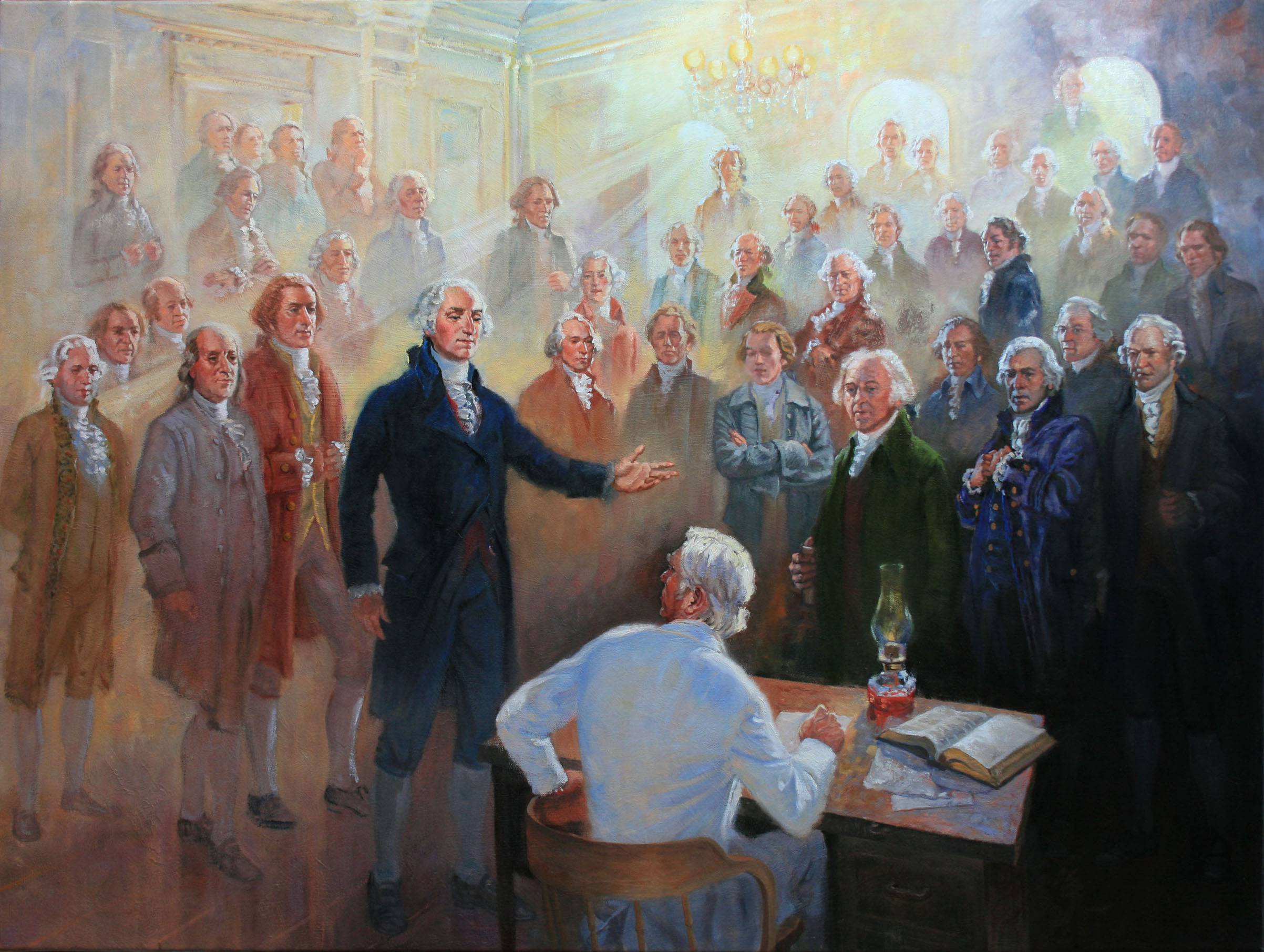

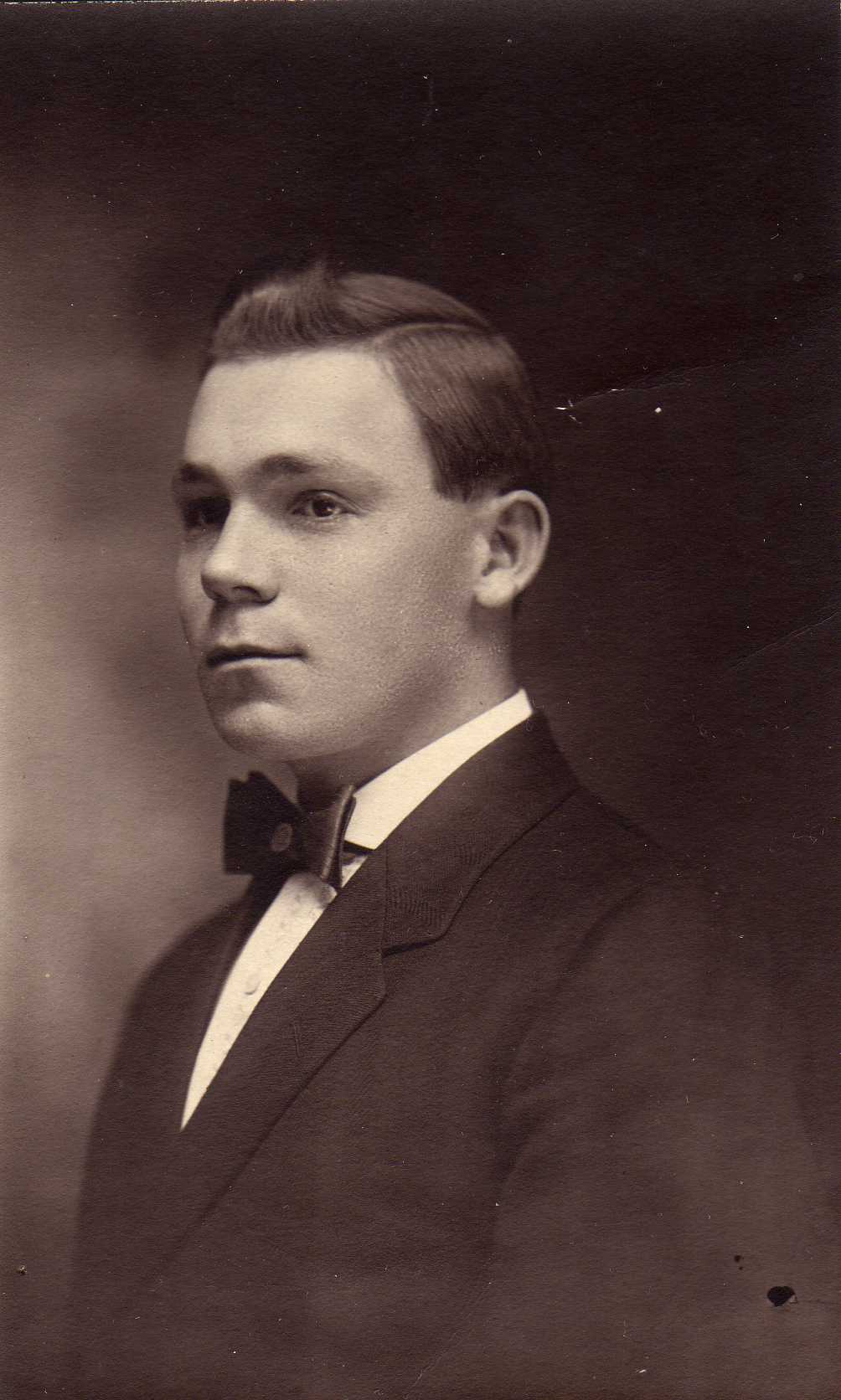


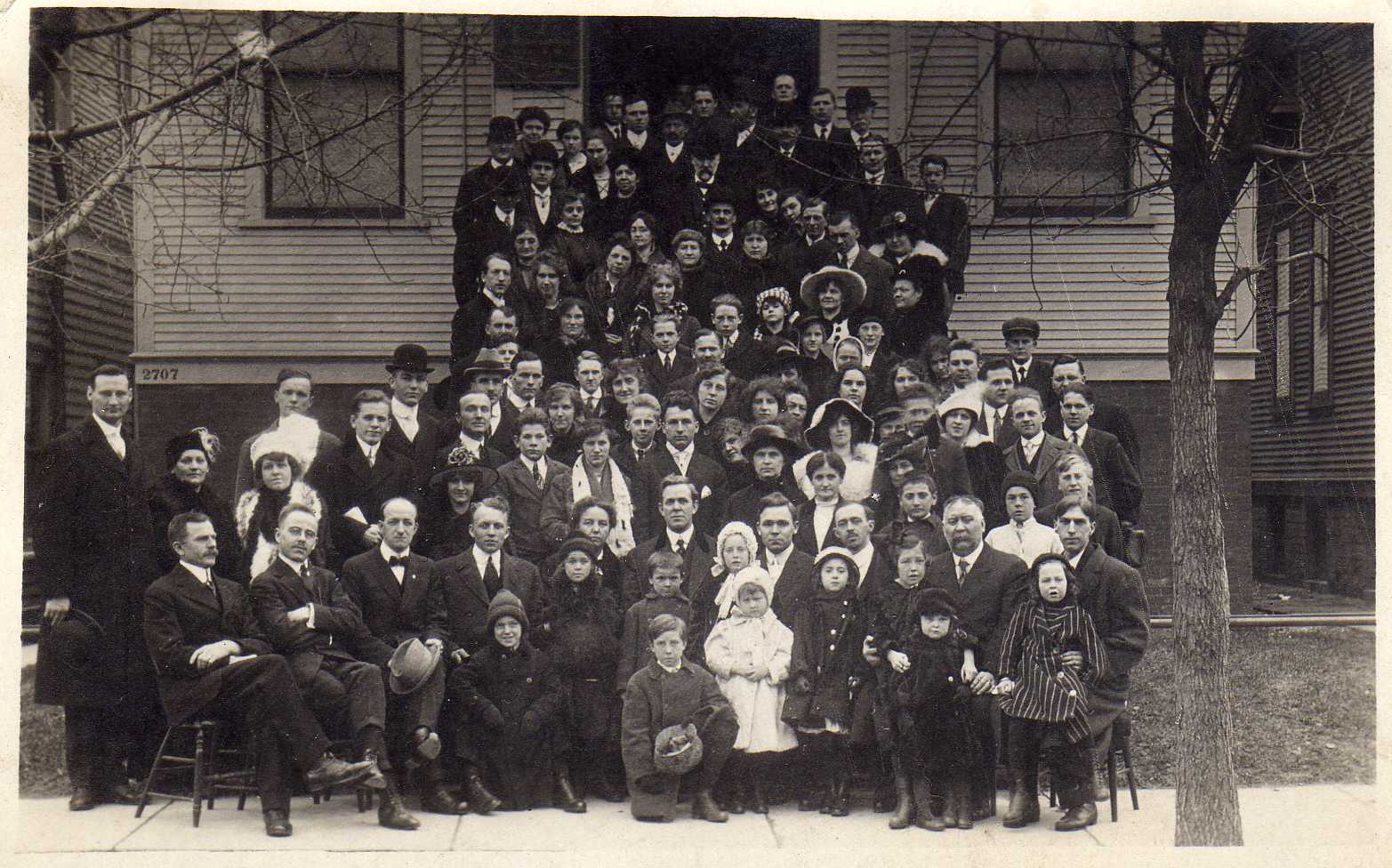
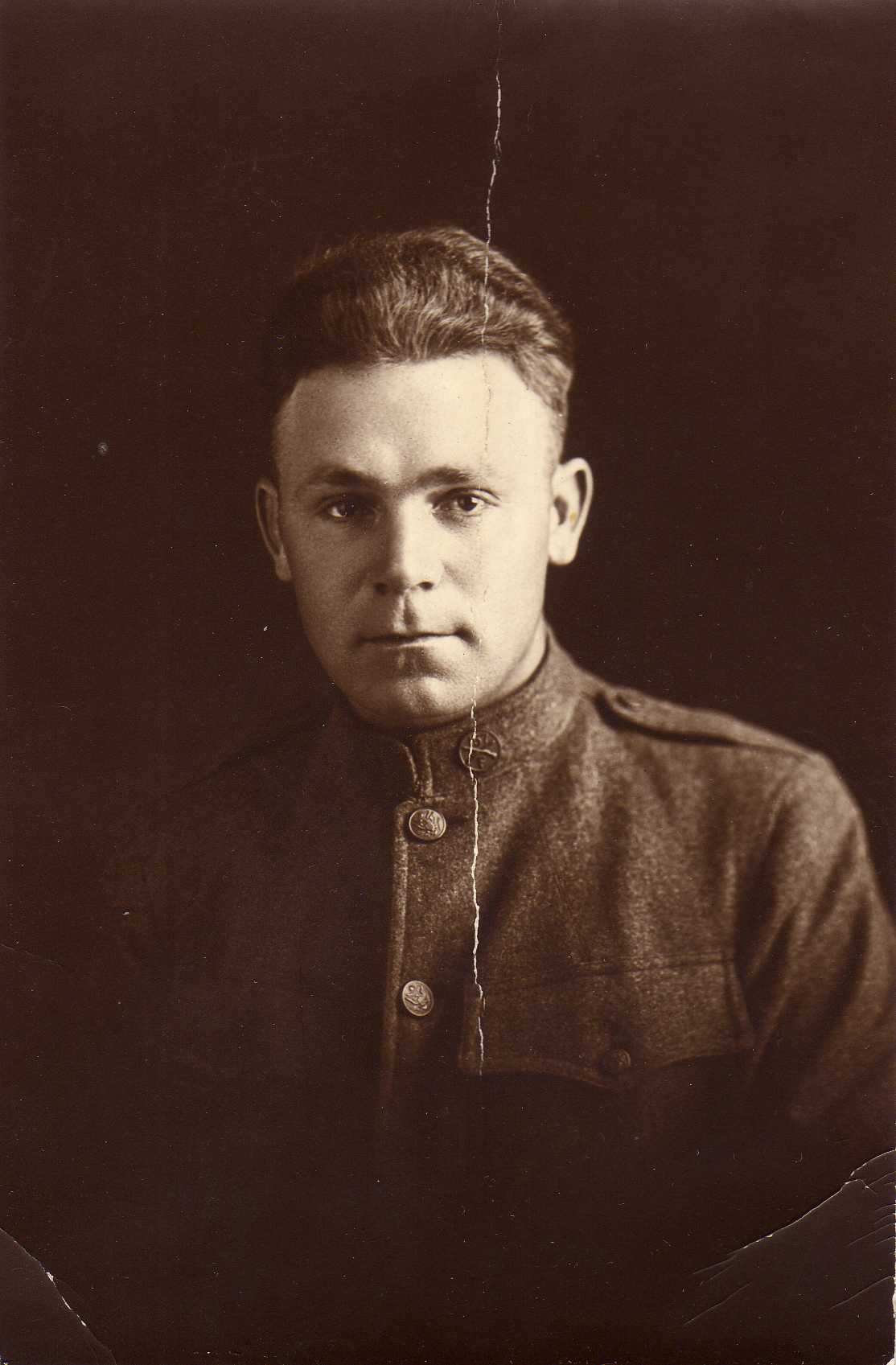

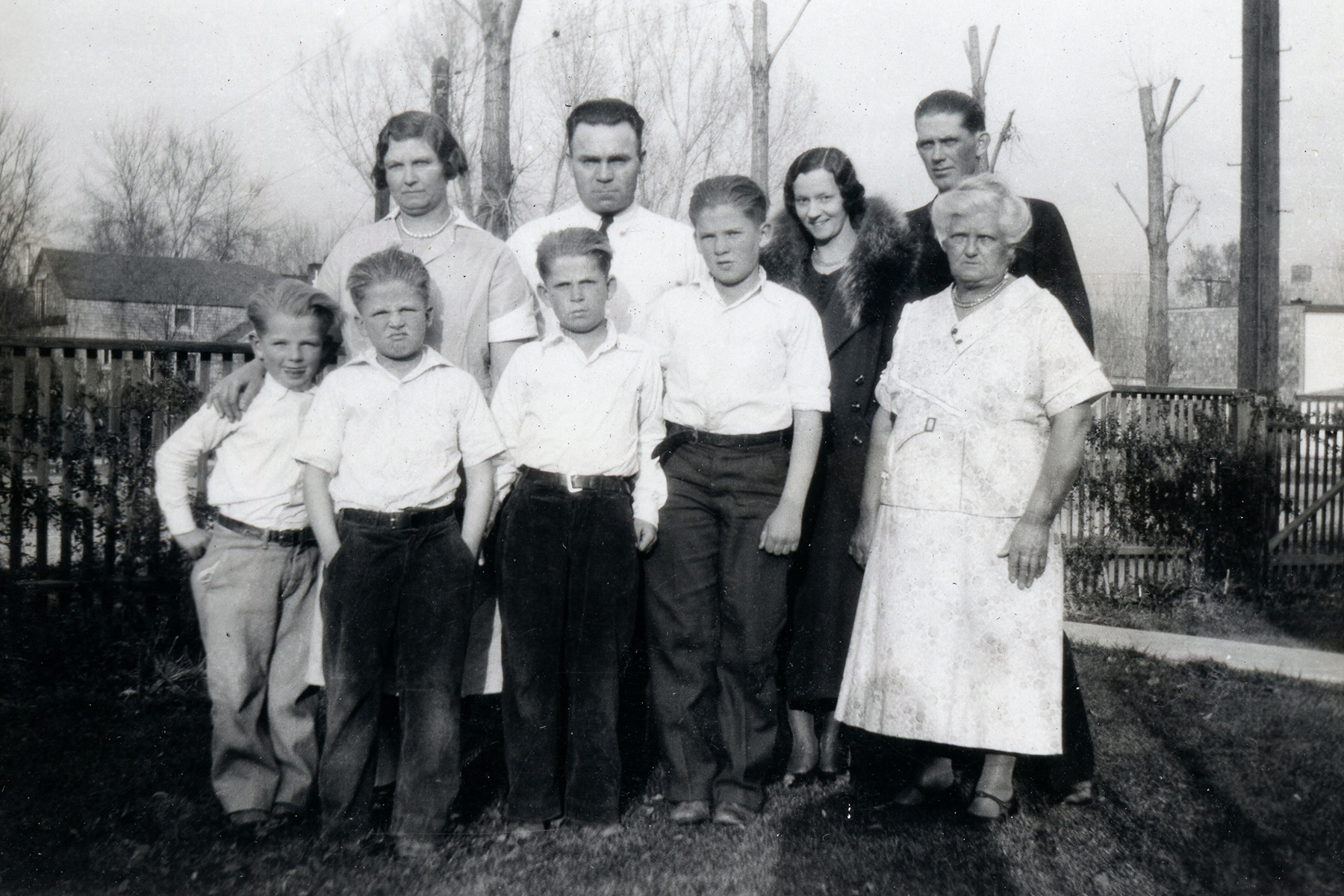


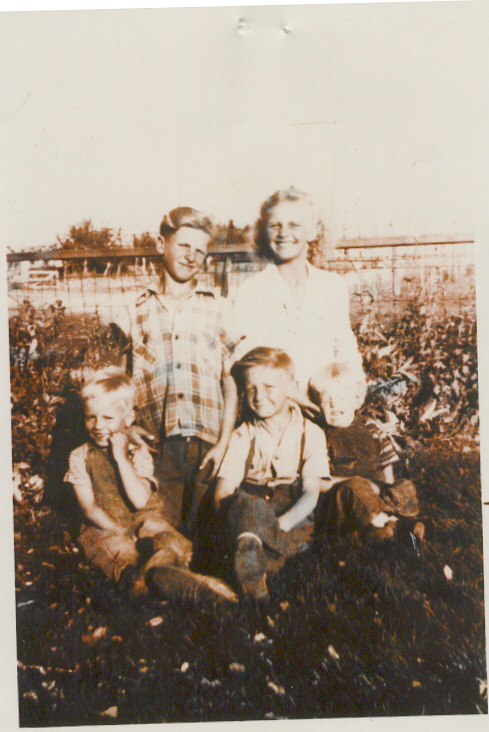


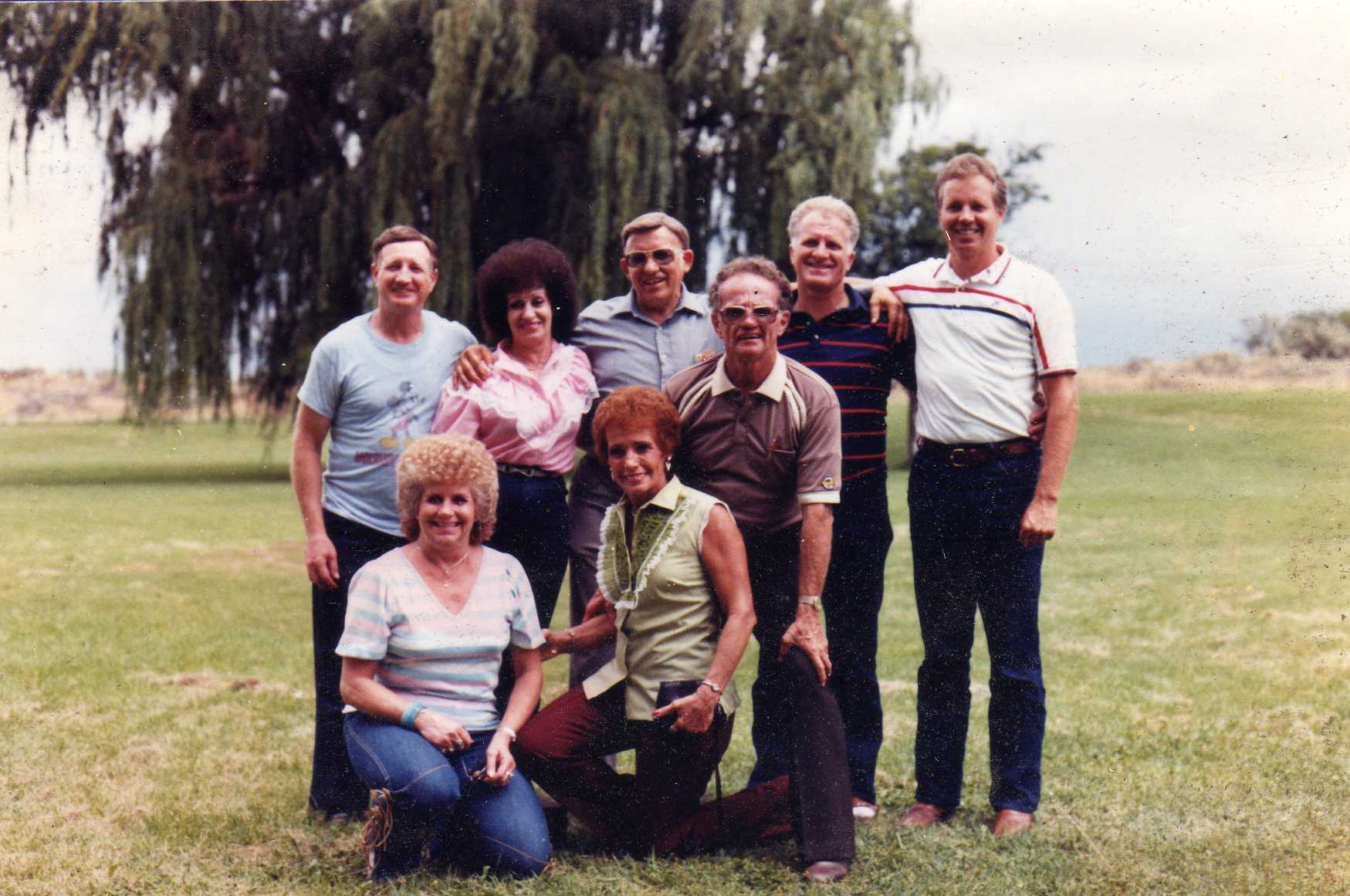
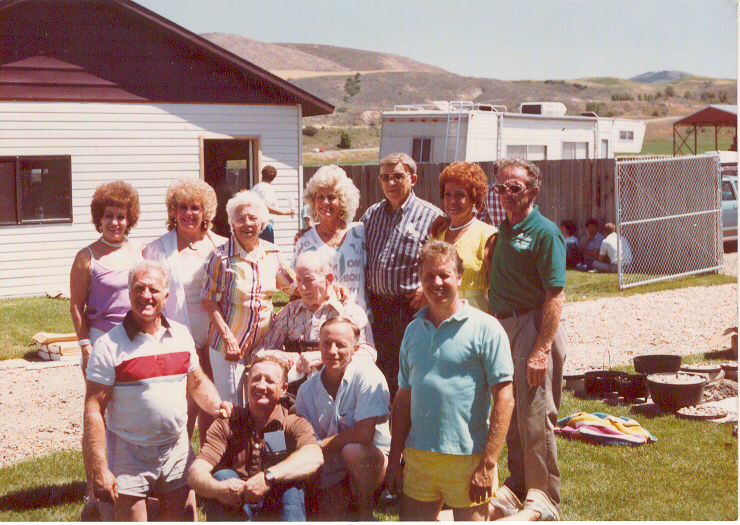





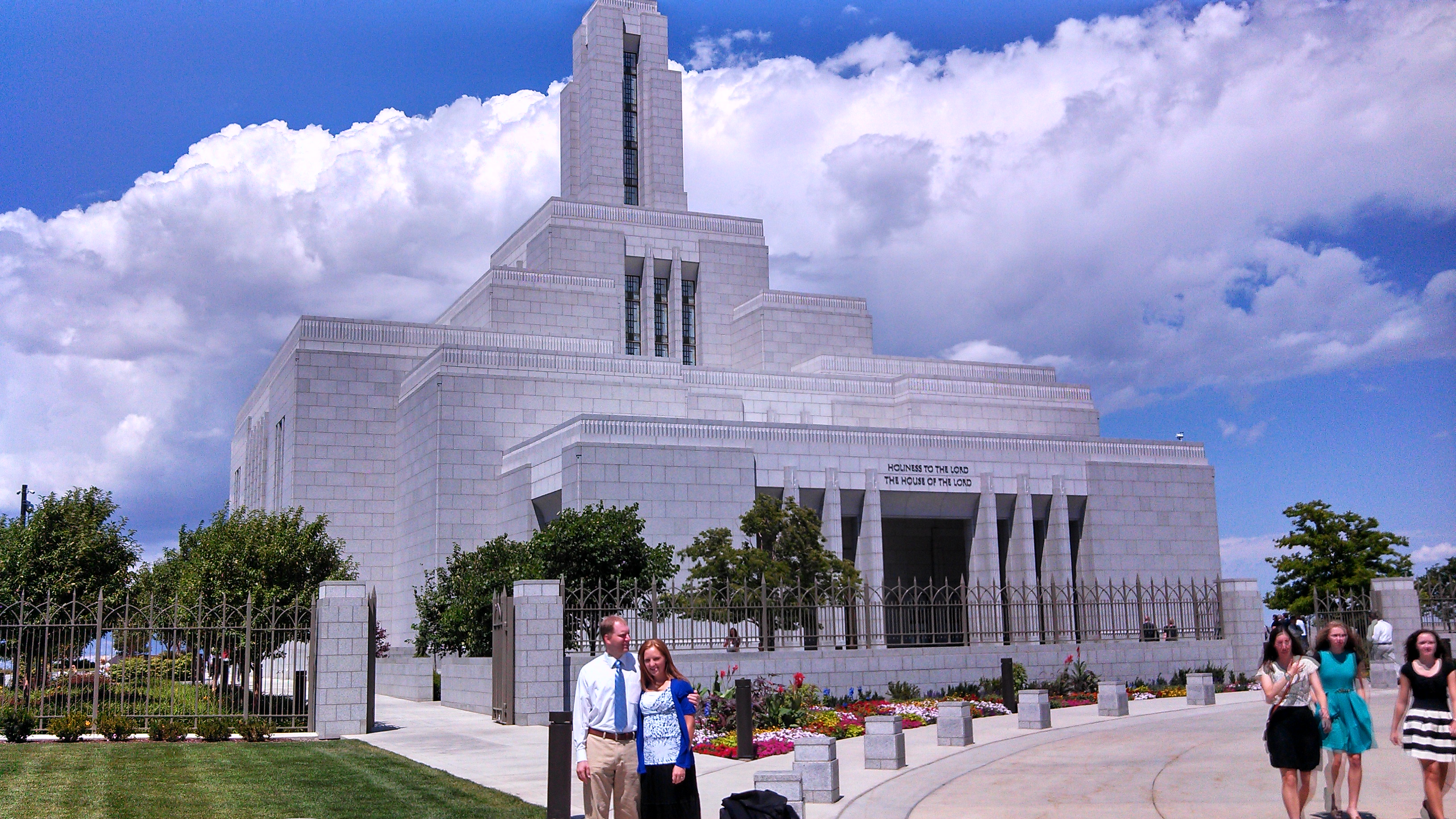
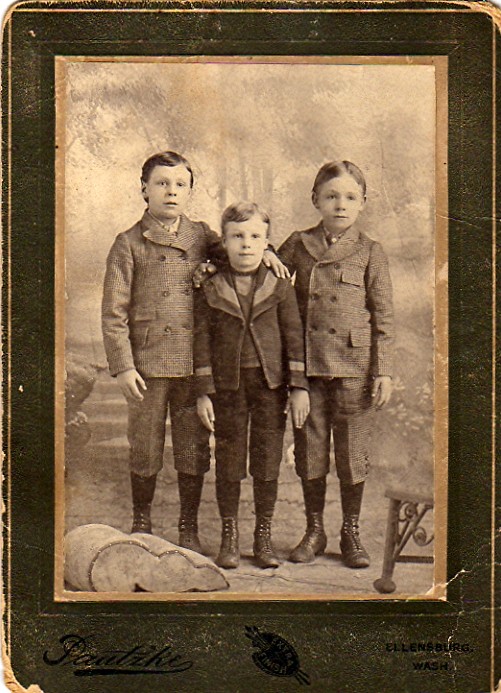

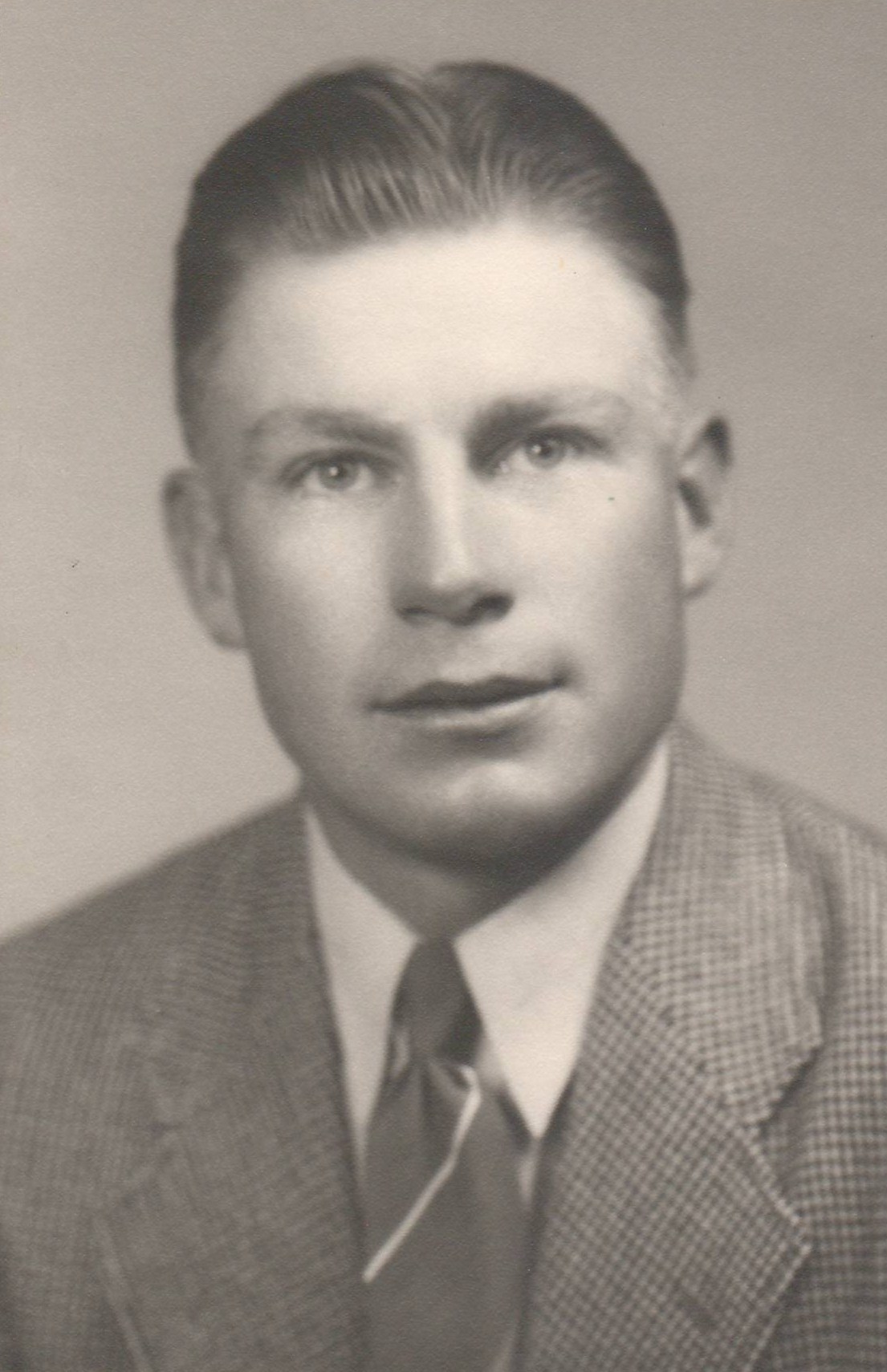
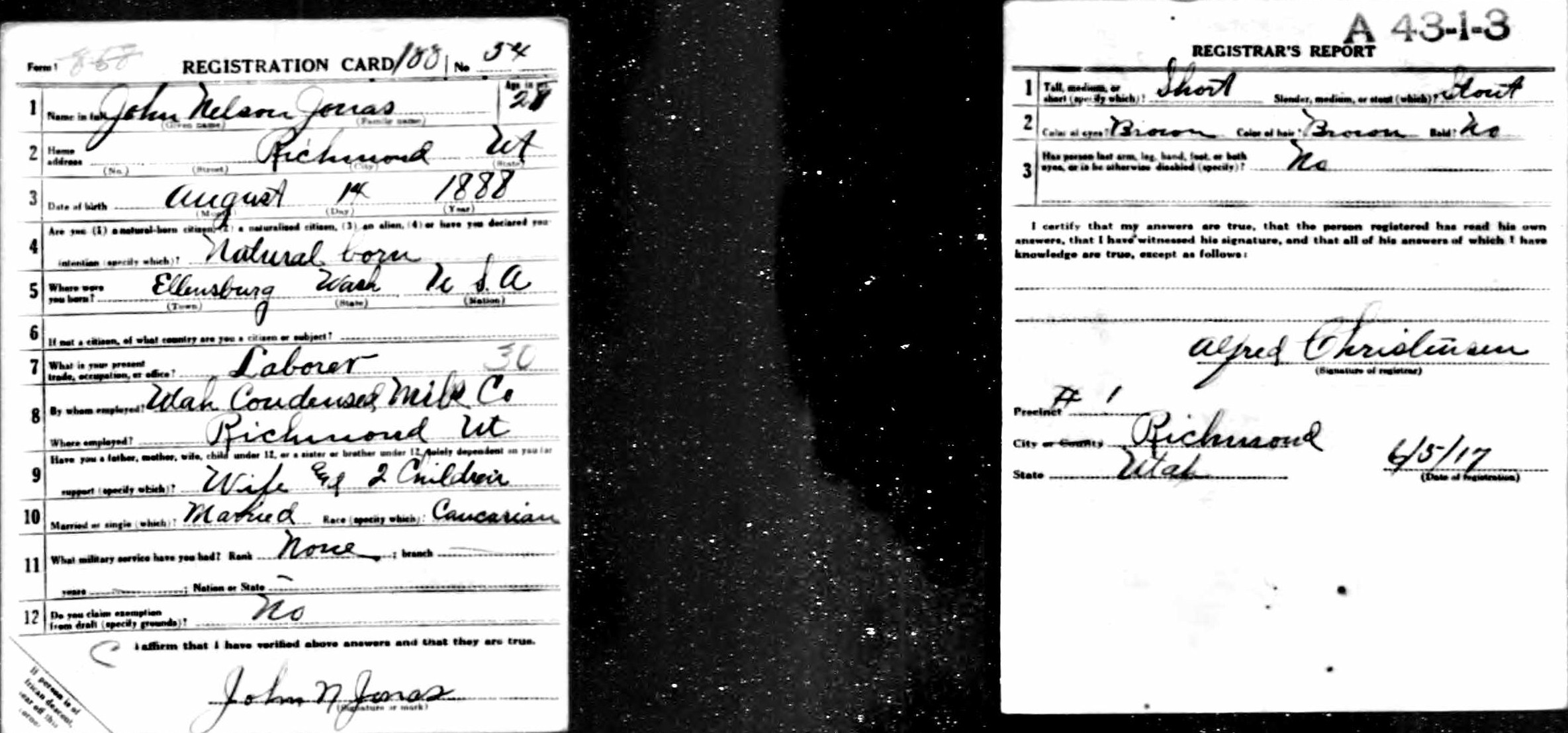
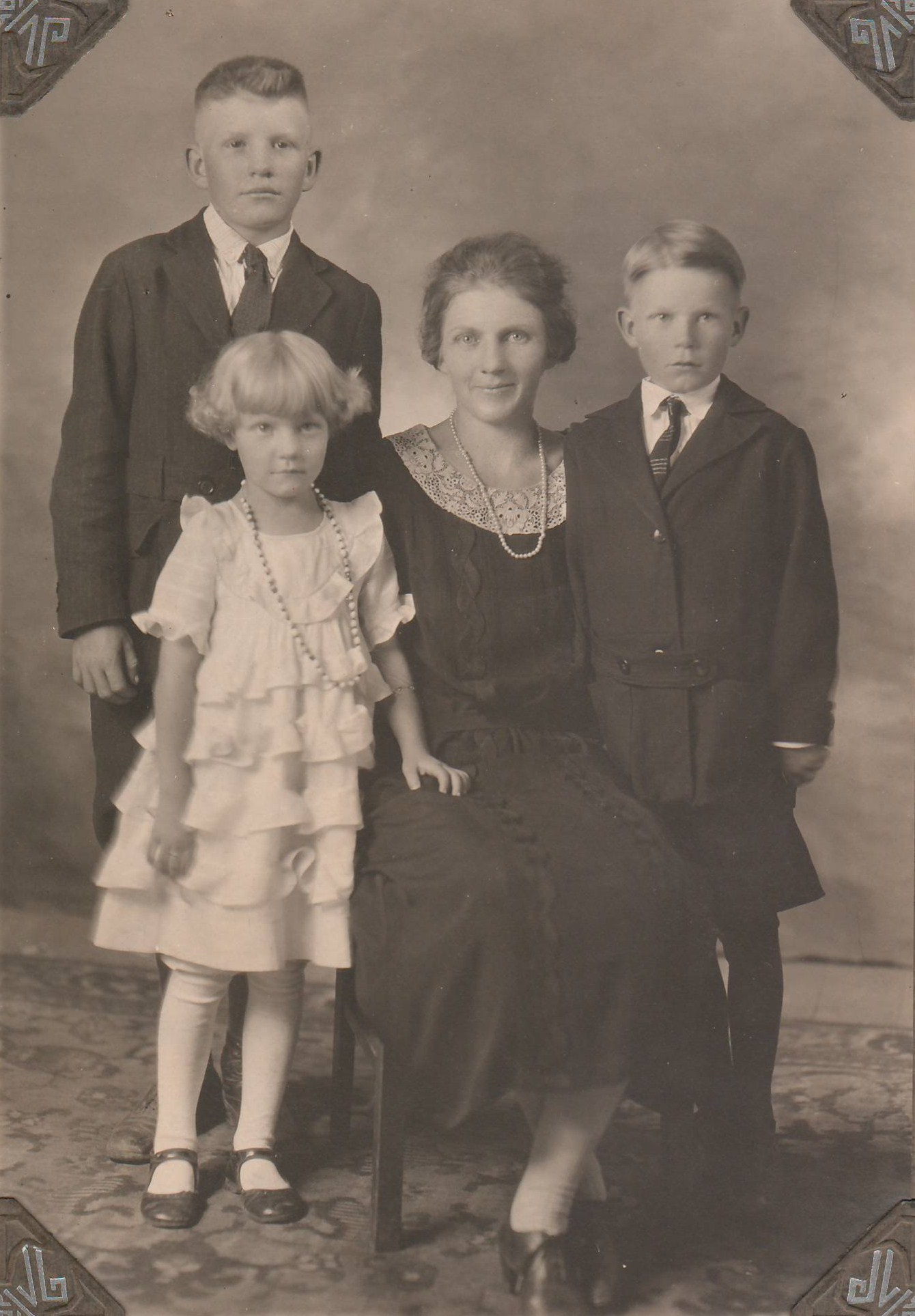





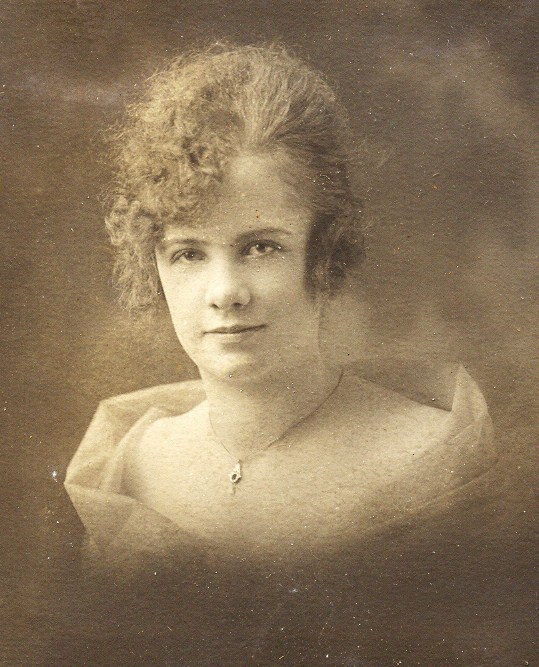
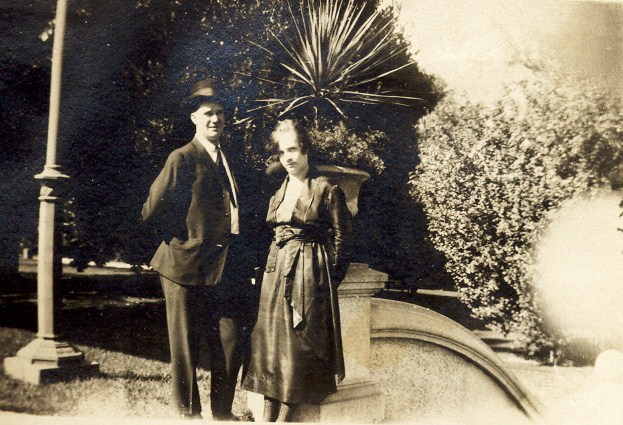

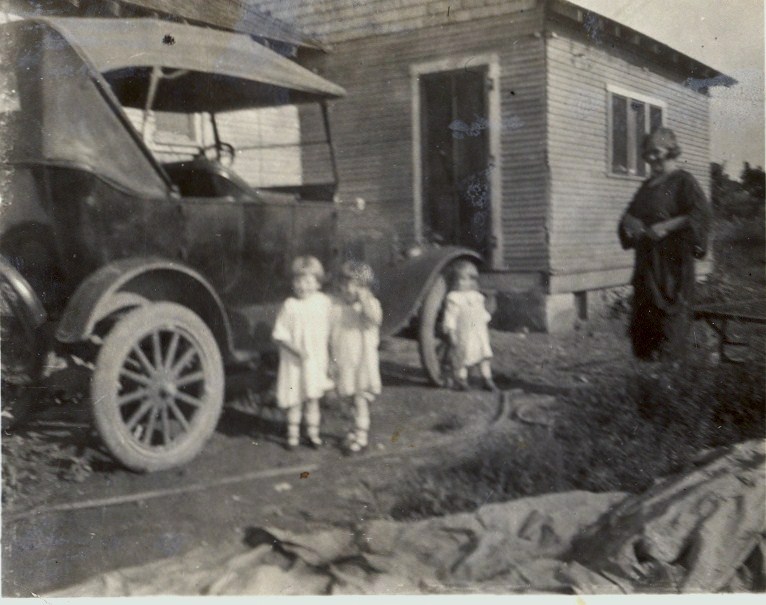
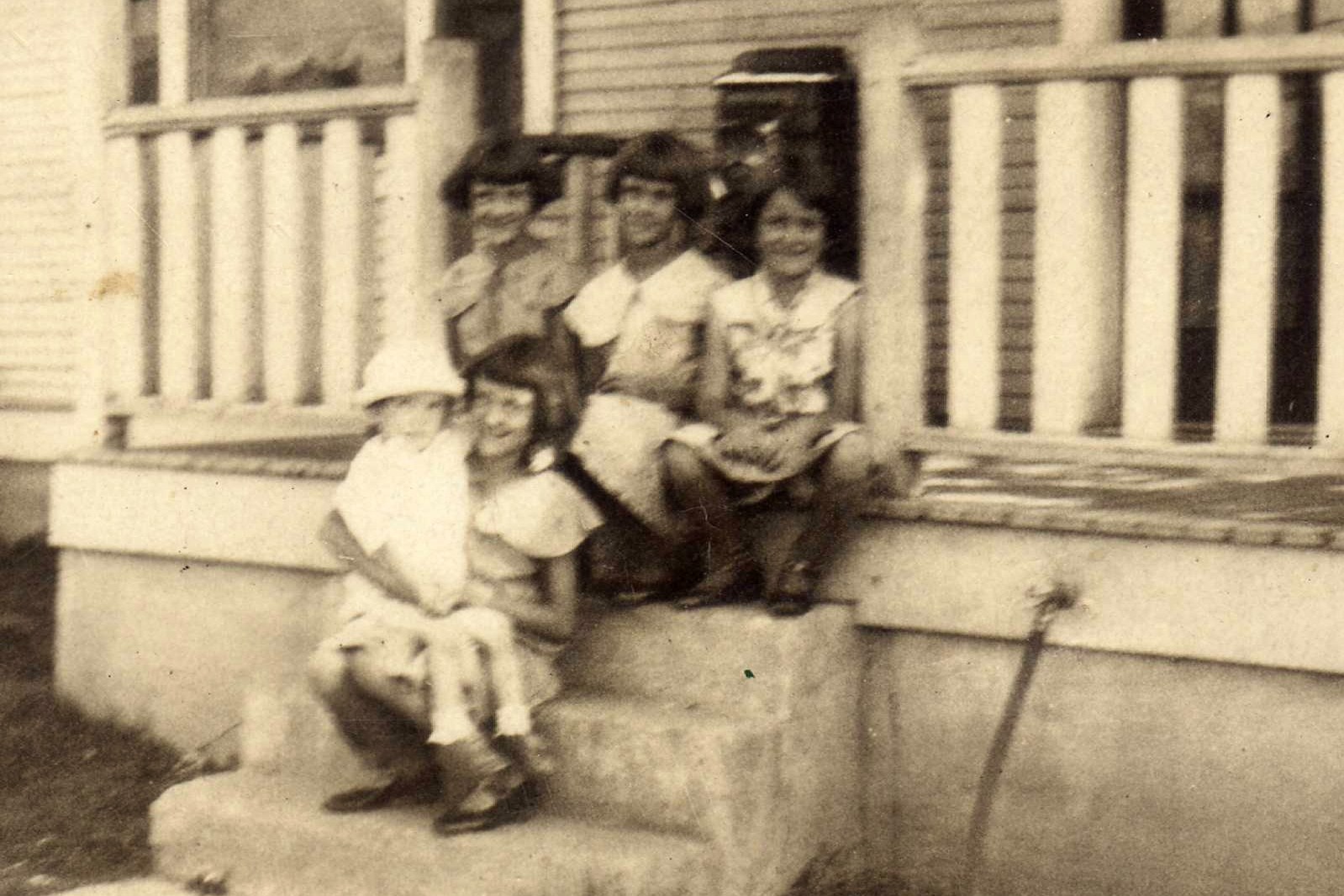

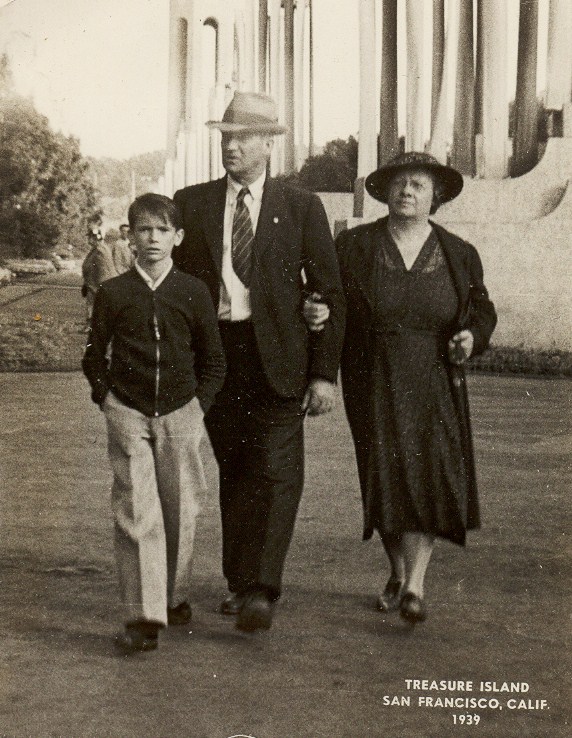
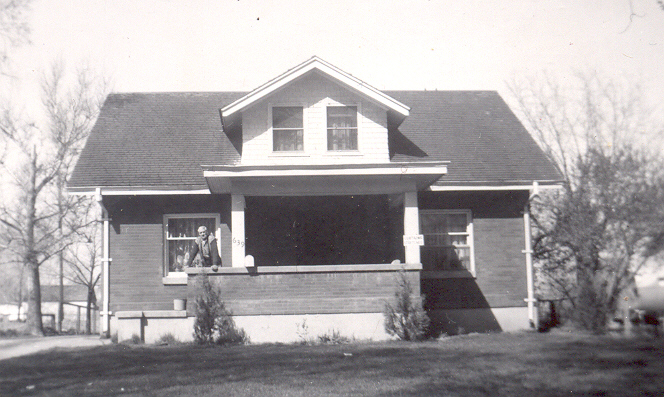
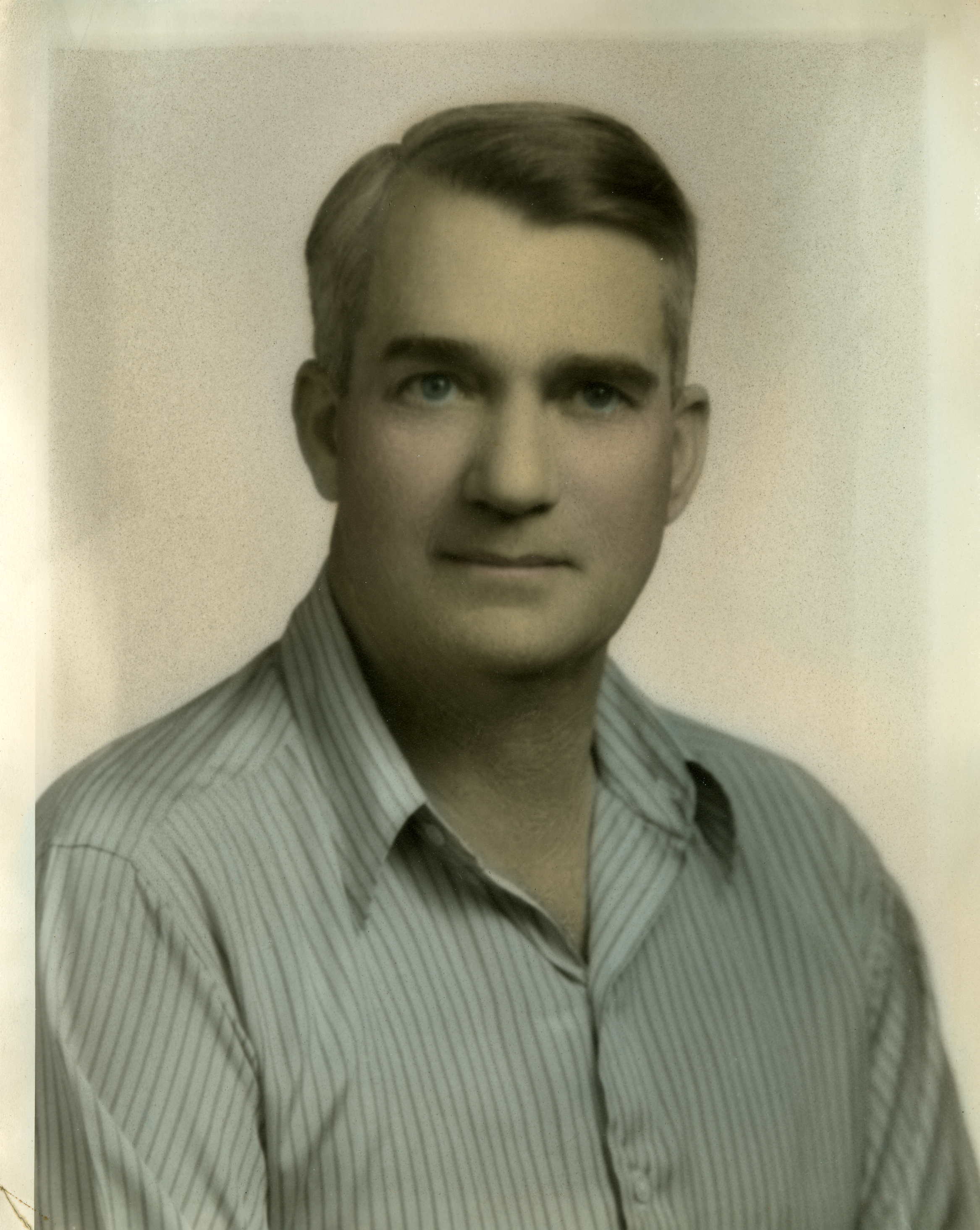
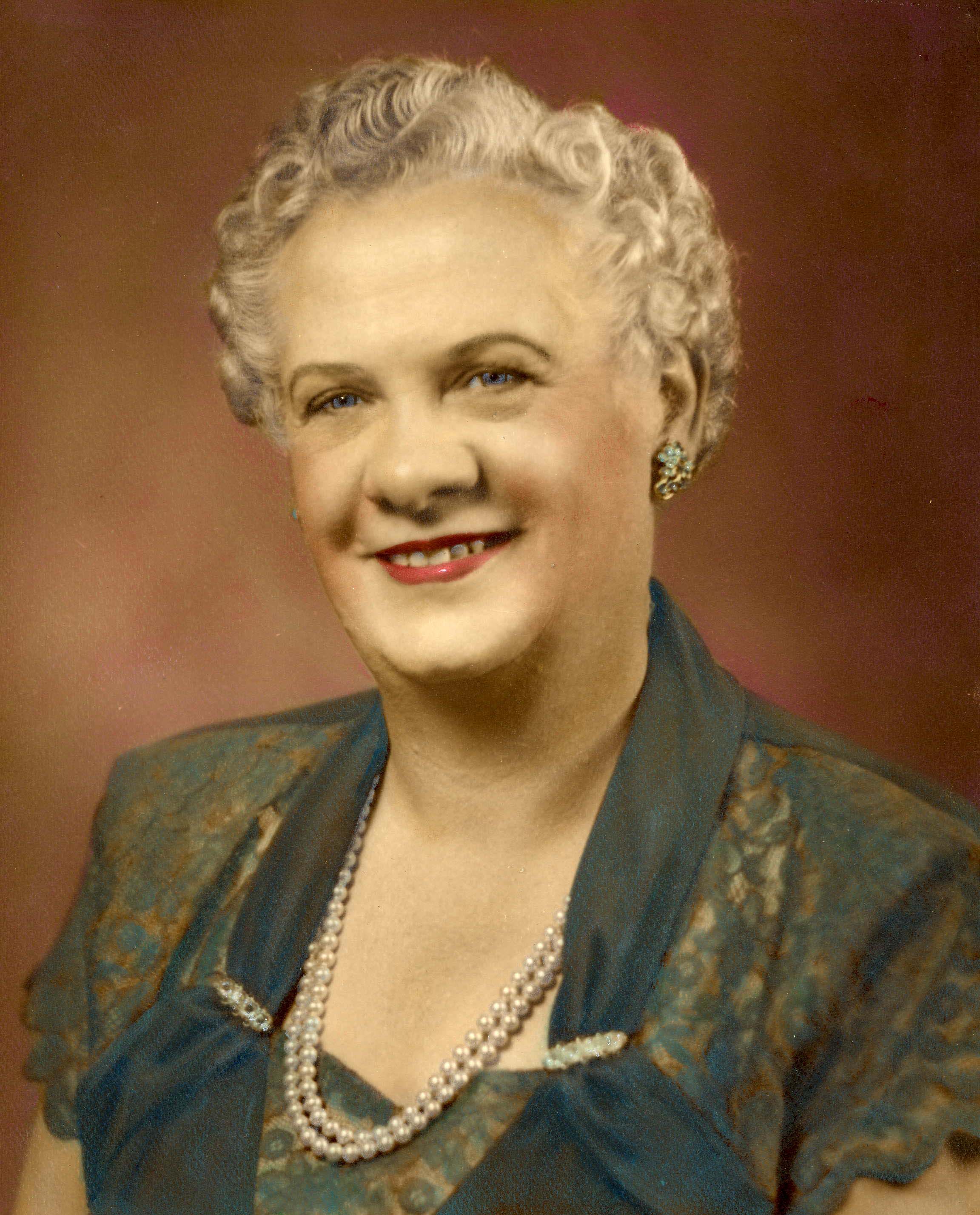

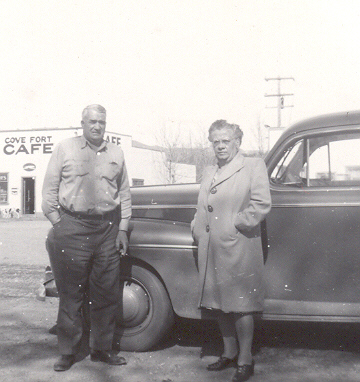

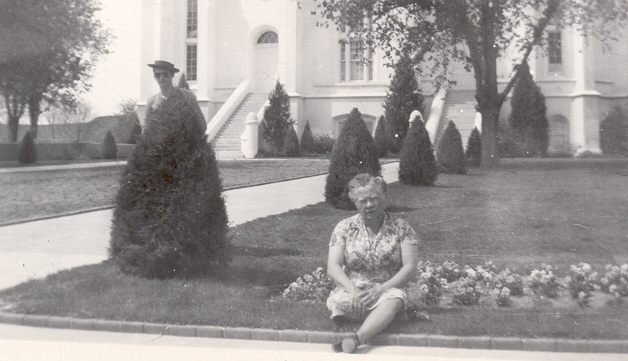


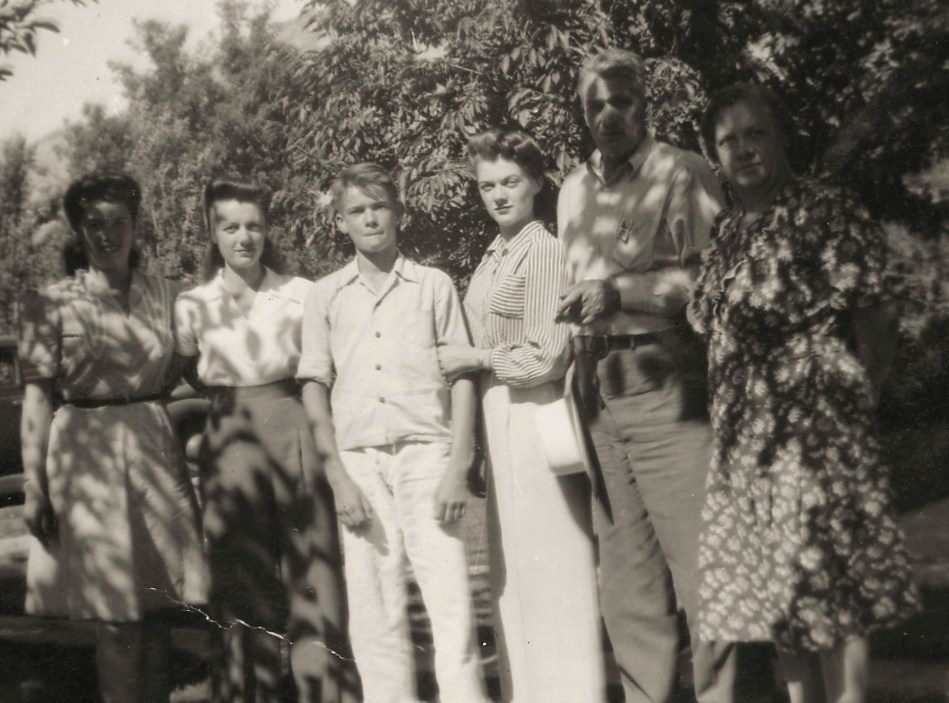
 Sagacity