History of Plain City Pt 11

I have two copies of the History of Plain City, Utah. The front indicates it is from March 17th 1859 to present. As far as I can tell, the book was written in 1977. At least that is the latest date I can find in the book.

One copy belonged to my Grandparents Milo and Gladys Ross. My Grandpa has written various notes inside the history which I intend to include in parenthesis whenever they appear. They add to the history and come from his own experience and hearing. 

I will only do a number of pages at a time. I will also try to include scanned copies of the photos in the books. These are just scanned copies of these books, I have not tried to seek out originals or better copies.

History of Plain City March 17th 1859 to present, pages 166 through 184. That is the end of the Plain City History!

Can you Remember or Did you know?

By Lyman N Cook

            The following articles are a collection of stories and events that have been a part of Plain City. These are in no way a complete list of the stories that could be told. We have older people who can remember the colorful events and stories, the eras of history, and they should be told and recorded. I hope these people will do so while they are here to tell them. I have touched upon a few. Whether the stories are good or bad, it has been my purpose or intent to have all the questions and answers, but merely to help your mind reflect upon the beautiful memories of Plain City.

            Please, as readers, do not take any personal offense or injury to any of the stories. They were not written with any unkindness in mind, but hopefully you will enjoy them.

            The stories are, in reality, a tribute and a compliment to the early settlers of Plain City. I cannot comprehend the magnitude of courage and strength, and the hardships those early pioneer men and women endured. How unselfishly they worked and planned for the betterment of Plain City to make it a better place for you and I to live today.

            I have a deep personal feeling that we owe them everything.

            The most interest and pleasure that the book has brought to me has been the fact that I have had an opportunity to visit in the homes of so many wonderful and interesting people. Compiling, reading, and writing the history has so fascinated and compelled me that I have stayed up all night, only to find in the morning that I am just as refreshed as if I had slept all night.

            The following people have been so kind and helpful to me in writing the stories. They have told me stories, and refreshed my memory. I feel a deep appreciation for them, and I feel that they should be recognized. They are: Mrs. Lavina Thomas (on tape), Lyle Thomas, Byron Carver, Lee Carver, Laura Musgrave, George Knight, Clyde Hadley, Amy Robson, Harvey and Jennie Cook, Dick and Luella Skeen, Bill and Nonie Freestone, Irene Skeen, Ivy Skeen Marsden, and many others: Kris Ewert, for her printing. A special thanks to all. And also Ina Poulsen.

“TRUE STORIES AND COLORFUL EVENTS OF PLAIN CITY “

SLEIGH BELLS

            One of the pleasant memories of a cold, crisp, clear pioneer winter night, was the jingling of sleigh bells as families made their way to church or to visit with friends or neighbors. The rich sound of their ringing through the hollow night air could be heard all over town. First starting out faintly and then increasing in volume as they approached their destination. It would seem that the still, peaceful night was just made for the ringing of the sleigh bells.

            Almost all the families had a string of sleigh bells that were a prized possession, and a family treasure. Some of the larger strands would go across the back of the horses and around underneath the stomach, also a strand would fit on the hames. The quality of the workmanship that produced the full, rich tones will continue to enrich our memories of the past. Maybe if we lost our minds be calm and drift back through the years, we can still hear the tinkling of the sleigh bells.

PIONEER HOMES, WASH DAYS, FEATHER TICKS, COLD BEDROOMS, OLD COAL, OR WOOD STOVES

            The pioneer home was usually built with two rooms, and as the family income and new family members came along, they would add an addition of bedrooms, and a dining room, parlor, or living room. There was usually a large cook stove for the parlor and dining room. The kitchen was the center of activity in the home, and only on special occasions, or when company came, would they build a fire in the other rooms. They would usually bank the stoves with wood or coal to last as long as possible. But by morning, the fire was always out. They would have two or three coal buckets, and a kindling box, and some member of the family had the chore to see what they were always full. It took a strong constitution to roll out of bed on a cold winter morning and make the fire, and wait for it to get warm.

            Monday morning in the home was washday. It would start very early and last all day. They would heat the water in a copper-bottom boiler and would usually boil the clothes to help get them clean. They used a homemade lye soap. The women scrubbed the clothes on a scrub board usually placed in a metal washtub, and after scrubbing, would rinse the clothes two and three times. They would then be hung on the clothesline to dry. There was a special pride taken in the wash and to tell a woman that she hung out a pretty wash was to pay her a special tribute.

            The pioneer families would usually wait until cold weather to kill meat. They would cure it, salt brine it, or dry it. For fresh meat, they would put it in a flour sack and hang it high on the north side of the house. When they wanted fresh meat they would go outside, climb the ladder, or use a pulley to bring the flour sack in. They would cut off what meat they wanted and return the flour sack out on the north side. It was not uncommon to see flour sacks hanging from the north side of most homes.

            The bedrooms were usually located on the north side on the north side of the house, and were the furtherest from the stoves. It was like going into another world, or the north pole to go to bed. If you slept with a brother or sister, you would try to get them to go to bed first so they could warm the bed. The frost and ice crystals would collect on the window glass usually forming in the fall and never leaving until spring. It would usually be about a half-inch thick on the glass. The frost crystals would form in beautiful designs and patterns on the windows.

            The straw tick or mattress was made with a cover and filled with straw. Each year they would empty the straw, wash the cover, and refill it with new straw when they thrashed in the fall. They would place a feather tick on top of the straw tick, and it was filled with feathers from geese and ducks. It was really warm and soft. The sheets, blankets, and quilts were piled on the bed until they were so heavy that it was hard to turn over. It was especially nice when the dog would sleep on your side of the bed, as he made an excellent footwarmer. What a breed of people to survive the cold, hard time of pioneer life.

INDIANS

            There seems to be no evidence of any Indian violence or hostilities in Plain City. However, they would visit the homes of the early settlers and ask for food. As a sign of friendship to the Indians, they would always give them food. It was a very frightening experience for the pioneer women to have the Indians call when the men were in the field working and they were home alone. The children were especially scared, and were taught to be very careful when they were around.

            There were people alive today in Plain City that can remember when Indians would come into town and camp. Some favorite campgrounds were across from Paul Costley’s garage, and across the street north of George Cook’s home. The white kids always played close to home when Indians were in town, and they never went anywhere at night.

            The Indians squaws would go to every home and ask or beg for food. The homes that were generous would be visited several times. The Indians would stay for several days, and they would then load their treasures and leave and go north. The Indians must have liked the people of Plain City because they returned each year for many, many years.

PERRY BOAT

            The ferry boat and landing was located near where the river bridge crosses the Weber River on the Plain City, West Weber road on 4700 West. It provided a river crossing for people, cattle, sheep, horses, and wagons. The ferry was made of logs tied together, and a large molasses boiler and pole was used to push the ferry across the river.

            In the spring when the flood waters covered all of the low lands, the ferry would run from the hill on the north side near the Warren canal to the hill on the south as you enter West Weber. When the water receeded, the ferry returned to the channel. It has been said that in the spring the Indians would come to the hill and if the ferry was on the West Weber side, they would call across the river until the ferry came to get them. Sarah Richardson Hodson could imitate the Indian’s call for the ferry. She seemed to know more abut the ferry than anyone we knew of.

            It might be important to include information about the times before all of the times before all of the reservoirs were built to hold back and store the early run-off water. Almost every spring the river would leave its channel and flood the low lands of Slaterville, Plain City, West Weber, Warren and West Warren. During some years the water would be so deep the road was closed. As a boy I can remember traveling 4700 West when the water would be up to the running boards of the Model A. The last year of excessive water was in 1952.

            Not too much is known about the ferry, but it lends itself to another colorful era of interesting Plain City history.

POST OFFICE

            The Plain City Post Office was located where Neta Charlton’s home is located, or one block North of the school on the northeast corner. It was run by Charlie Neal and his wife, Pussy Neal. He ran the Post office for 25 years from 1877 or 1878 until 1902 or 1903 when the government closed the Post Office, and the mail was brought into Plain city by Fred Kenley and delivered by horse and buggy.

            Merl England has in his possession a letter that was postmarked Plain City, Utah, August 8, 1891.

            Pussy Neal had, and kept a start of live yeast and would sell it to the women of the town to use in mixing bread. Annie Skelton would send her daughter, Nonie Skeen Freestone, down to the Neal’s for yeast. It didn’t take many trips before Nonie developed a real taste for live yeast. She would buy a three-pound lard bucket full, but by the time she walked five blocks home, she would have half of the bucket drank. She claims that it was quiet a tasty drink.

EARLY BAPTISMS

            A very important date in the lives of young eight-year-old people was their baptism. Nowadays this ordinance is performed in a stake center with a very beautiful font. Before this time, this ordinance was performed in canals, rivers, lakes, and ponds. One of the most popular places to be baptized was the First Rock Crossing, or seck, as it was called. This was located on Center Street next to George West’s home, long before the canal was cemented. There was a row of poplar trees along the street, and the children would dress behind the trees. Some people would take their children up the street in the buggy and dress them, and then return for the baptism.

            There were usually just two baptisms a year, one in the late spring and the other in the early fall. As a result, there were usually several children to be baptized at a time. The children would sit on a log and wait for their turn.

            Some of the young people went down to the river and were baptized. The location on the river was near where the present bridge is located. They used willow trees to dress behind. Laura Musgrave and Royal Carver were tow that were baptized in the river.

            George knight told me that he was baptized in the Warren Canal about where the present pump is located. This was a colorful era of the past and should help to rekindle some pleasant memories for those who participated.

THE PRIVY, CRANNY, ROOSEVELT, OR ALIAS, THE ONE-HOLER, OR THE TWO-HOLER

                        There was a great deal of social status involved and a real pride taken in building, caring for, and beautifying the outdoor privy. Some of the seats were made of select lumber and sanded and smoothed to the point where they were quite comfortable. And on the other extreme, some seats were rough and slivery. Some families were careful to make the privy weather proof, while others you could look out the cracks in every direction.

            You could usually tell the size of the family in the house, whether it be large or small, by the size of the property. Is it a one or a two holer?

            Some of the families, to prove to the world that their cranny was something special, and a respected place, would cut beautiful designs in the top of the door. I never quite figured out whether the hole in the door was for ventilation, or simply to study the wonders of the sky at night. Some of the designs were a half moon shape, a diamond shape, star, or just a round circle.

            The Skeen girls, Ivy Skeen Marsden, Lenora Skeen Freestone, and Jennie Skeen Cook, still maintain to this day that their little brother, Dick Skeen, learned to throw the baseball so very well by practice throwing at the privy. He would wait until the girls would get inside and lock the door, then he would open up the rocks, clods, green pears, or anything to keep them pinned down. Dick’s favorite was the dirt clod. He would aim for the hole in the door and throw the clod through. The clod would hit the wall, break up and shower the girls with dust and dirt. He would then really laugh when the girls would cry, scream, and holler for their mother to come and rescue them from their brother.

            Halloween was a risky time for outdoor privies. One of the favorite Halloween pranks for the kids was to spend the night tipping over crannies. The only thing that I would like to say on the subject now is that I am ashamed and sorry, and I must report that I am one of the parents who feel like the kids of today are going to the dogs.

            During the depression and late thirties, and prior to World War II, the government had a P.W.A. and W. P. A. program. Workmen would come to your home and build outside crannies. They had a cement floor and a lid on the seat. They were weatherproof, and most people who owned one felt like that was the next best thing to running water. They were called “Roosevelts.”

            Usually an old Sears catalog would act as a years supply of toilet tissue.

            Some of the more discreet families would keep a pot, or thunderjug in the house for emergencies during the cold stormy winter nights. This fact was considered the family’s dark, deep secret, and was usually emptied before dawn.

            With the exception of two years in the Navy, I used the outdoor privy for 26 years, and first four years after I was married. We sometimes hear it would be nice to go back to the good old days, but certainly not to the days of the outdoor privy.

SCHOOLS

  1. The first school was in George Musgrave’s dugout. He later held school in a one-room adobe.
  2. The first public school was built on the south of the square. It was built out of adobe. It was one room.
  3. There was a school located on the northeast corner of the square. The town and ward used this building for some social functions. It was built of adobe in 1873 or 1874.
  4. The North school was located where Walter Christensen now lives.
  5. The South school is still standing and was remodeled by Harvey Cook into a home. It is located where Gordon Sorensen now lives, and across from Eldon Weston’s home. This home was built of brick.
  6. The Poplar School was located across from Augusta Nash’s home.

I have been led to believe that there was school classes being held in all these four schools at the same time. This world be shortly before and after 1900.

EARLY STORIES

            There have been at least ten stores and meat markets in Plain City up the present time. Some of the stores have stayed in the same place, but have had several different owners. I’ll just mention where the old stores were located. There were two Coy Stores. They were owned by Sarah Coy and Eliza Coy. One was across the street about where Mildred Sparks now lives. This is about 2200 North and 4650 West. The old ZCMI store was where B & C foods is now located. Garner’s store was where the pool hall is now. England’s store was where Merlin England’s now lives. McElroy’s store was where Jack’s Garage is now located. Stoker’s was located one block behind the school where Gordon McFarland lives. Maw’s was located just west of the bowery.

            John Vause built and operated a meat market just north of Adela Carver’s home. Some of Steve Knight’s family operated a meat market about where White’s Café is today. Peter M. Folkman had a meat market across from the school on the east side.

            Most of these early stores would trade merchandize for eggs and butter. This was especially nice for the kids of the town because they could take one egg or more and trade for candy. There wasn’t hen’s nest that was safe in Plain City. Laura Musgrave tells of how she would get Nonie Freestone and they would raid Nonie’s father’s chicken coop for eggs to go to the store for candy. There was real safety for Laura, as she always has been real sharp in having Nonie in her own father’s coop with her.

BLACKSMITH SHOPS

  1. Christopher Folkman was the first one in Plain City. He learned his trade in Denmark. It was located near Leslie Maw’s home and Elmer Carver’s home.
  2. Janus Lund’s Blacksmith shop was located near Dennis Lund’s home. He died in 1908.
  3. Rall J. Taylor started his shop in 1908 and the building still stands just north of Kirt Knight’s garage.
  4. Lew Ericson’s shop was located on the property of Neta Charlton.
  5. George Davis’ shop was near Phil Alsup’s old home and across the street from Thomas.
  6. Lee Gould’s shop was located near where Florence and Carl Hodson now live.
  7. Farley’s shop was located near where Sterling Thompson now lives.
  8. Lyman Skeen’s shop was located just south of his old home. The property is now owned by George Skeen Cook.

THE EARLY DENTIST

            Lyman Skeen acted as the early dentist, and his only speciality was pulling teeth. He had a special pair of forceps which are still in the possession of the family.

            People came from all of Plain City to have their teeth pulled. In those days they didn’t have any dental check-ups, or fill any decayed teeth. If a person got a cavity, they endured it until the tooth would ache and then Lyman Skeen would pull the tooth.

            He was a large man and once he hooked onto the tooth, he had very little trouble getting it out.

            Some of his children report that when anyone came to have their teeth pulled, they would run into the house and hide under the bed and hold their ears so they couldn’t hear the person holler or scream.

            Lee Carver tells the story about as a boy going down to Lyman Skeen’s and having a tooth pulled. He was told if he would sit still and not holler to scream, and act like a man, that Lyman would pay him .25 cents. It certainly must be one of the rare cases of a dentist paying his patient.

            George Knight told me he made a trip to Lyman Skeen’s home to have his tooth pulled. He was told that if he would take it like a man and not holler or yell, that he could drive the mules and wagons. After the tooth was out they went out and harnessed the mules and hooked them to the wagon and George drove the mules to his home. George said that there was nothing that Lyman could have done to make him feel more important and give him a bigger thrill than to sit on the seat with Lyman and drive those large mules home. He was so excited that he forgot what he had gone down there for.

            Ina Poulsen tells the story of her toothache when she was a girl. It was a large double tooth, and it had ached for days. She finally decided that having it pulled couldn’t hurt any more than the ache, so she went to see Lyman Skeen. She walked down to his place in the evening and they were eating supper. She said he got right up from the table and didn’t even finish his meal to pull her tooth. Annie got the forceps and sat her in his large grandfather chair. Again, the Skeen kids scattered and hid from the noise. Ina did mention that she did holler and scream, but it was all over in a minute. She said he was really good at pulling teeth. It also gives some insight into the quality, character, and gentleness of Lyman Skeen.

ICE HOUSE

            An Interesting part of the history of Plain City was the old ice house. It was located across from the school on the property where Clara Folkman now lives and sat behind the old home. In the winter when the Four Mile reservoir, river and other water would freeze hard enough, they would cut it with ice saws. They would then haul it by team and bobsleigh to the ice house for storage.

            Peter M. Folkman owned and operated the ice house, and in the winter he would have as many as twenty men working for him. They would work through the winter and would fill a rather large building with ice. They would cover it with wild hay and sawdust so it wouldn’t melt so fast in the heat and it would last all summer.

            They would sell it to the people of Plain City for their use in the old wooden ice chest, for making ice cream, mainly for parties, and for whatever else their need was.

MARTIN SMITH AND THE MEAT WAGON

            One of the colorful characters that would come into Plain City was Martin Smith. He owned a team of skinny horses and a closed-in meat wagon, and peddled fresh meat from door to door. He would come into town two or three times a week. He always carried a green willow switch, and would open the meat box, and use the switch to chase the flies out.

            The lady of the house would come out to the wagon and look over the variety of cuts, or I would imagine he would cut whatever they wanted. A favorite pass time of the kids of the days was to try and sneak weeneys when he was busy with their mother. He was a sharp enough businessman that he made sure he always got enough money to pay for the weiners.

            It sounds rather primitive in todays worlds, but it filled a need and is another colorful chapter out of the past.

GEORGE MOYES AND HIS MILK TRUCK

            George Moyes had the first milk truck in Plain City. He delivered the milk to some of the homes in Plain City. It was George that was coming home from the dairy and discovered the fire in the dummy had started and burned Charlie Taylor’s barn. He used his load of milk to help put out the fire. I don’t know of anyone today who wouldn’t like to own that little truck.

THE EARLY THRASHERS

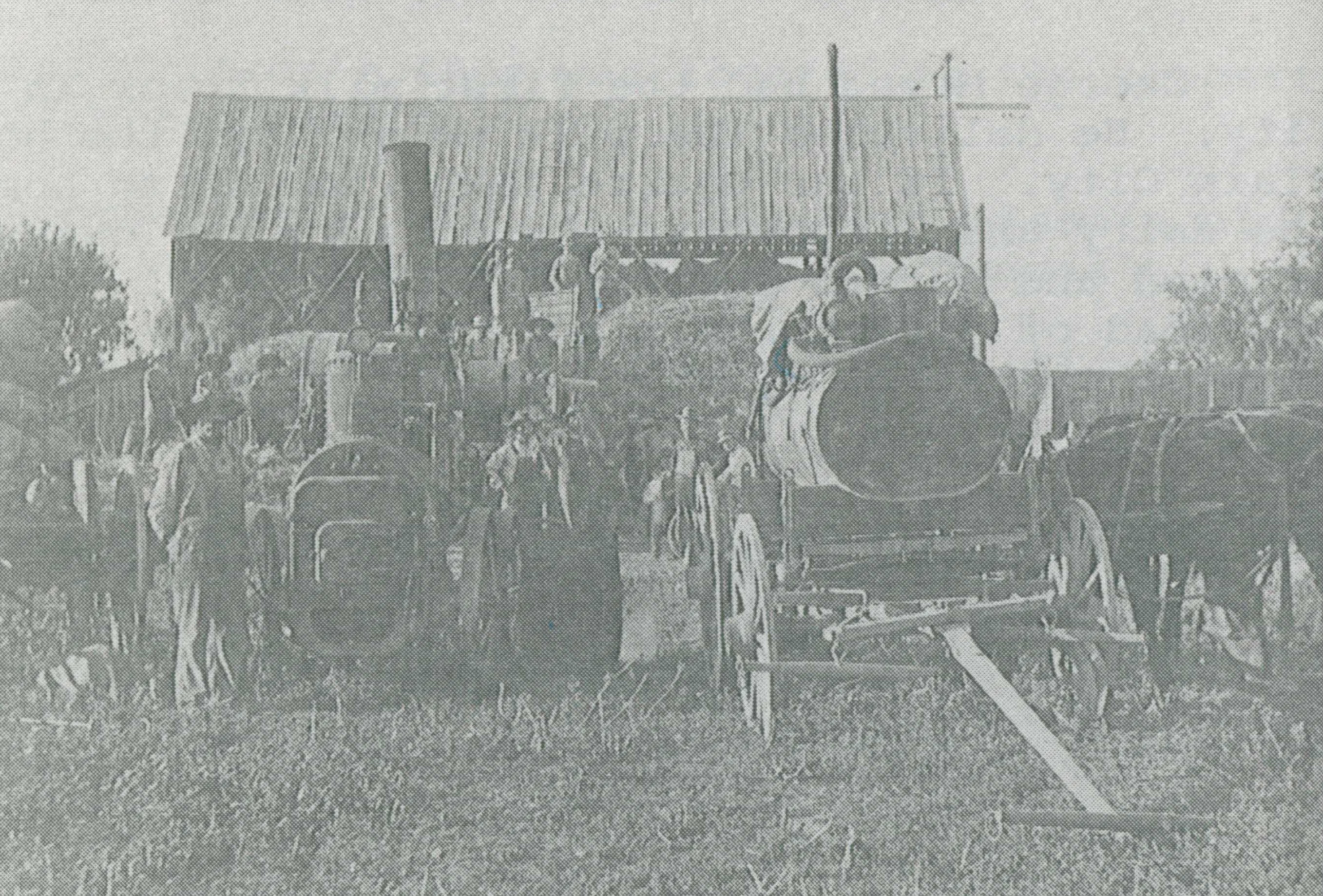
            A colorful time on the farm was thrashing time. The first machines were horse powered, and were a great improvement over the hand method. These colorful pictures are some of the early steam-powered thrashers. There were men who owned their own machines and would do custom work for their neighbors. When the thrashers would move onto a farm, it would usually take several days to complete the farmer’s field.
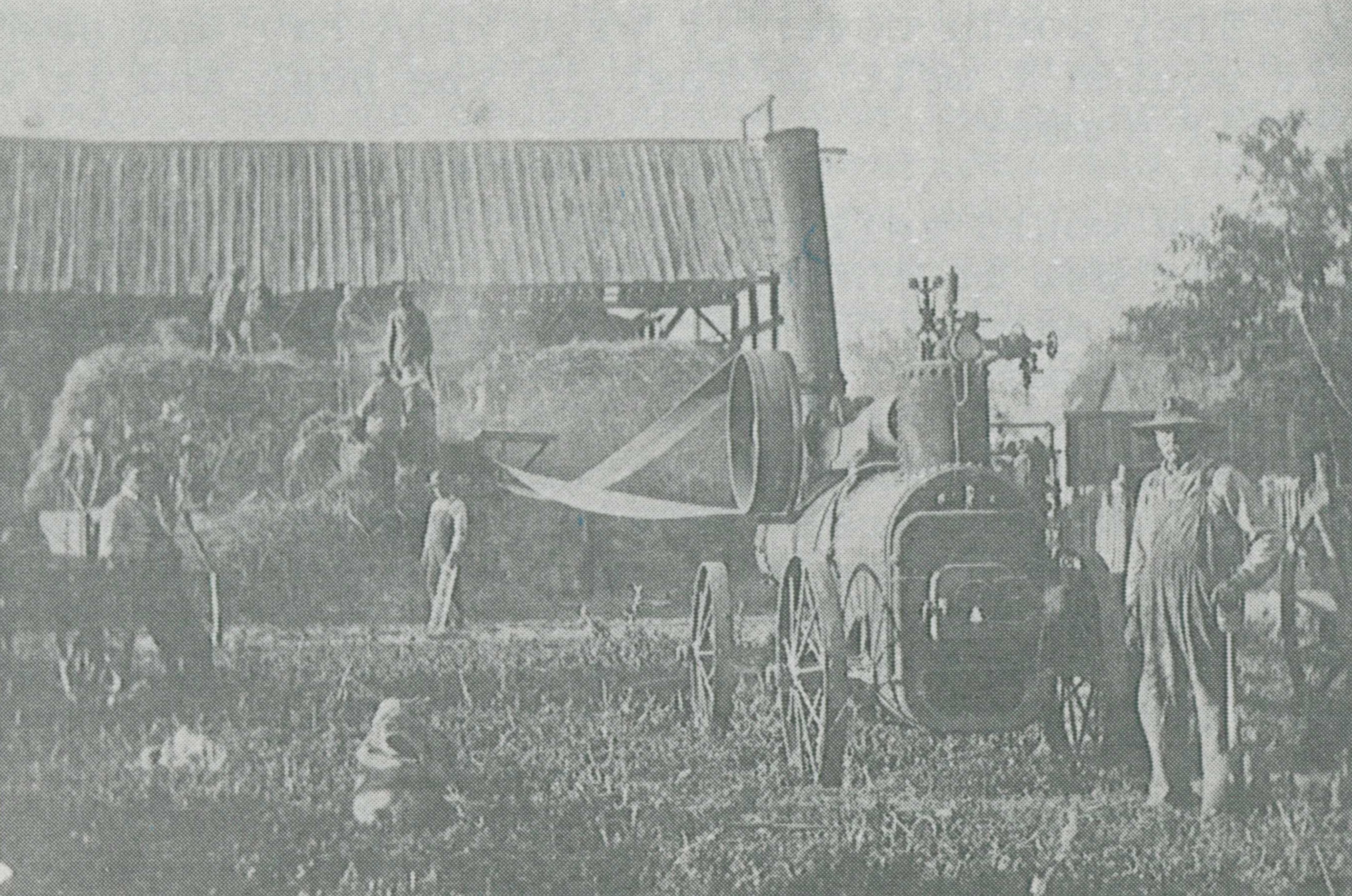
            While the thrashers were at the farm, it was the responsibility if the farmer to feed the men three meals a day. This consisted of many of the neighbors who helped each other. They worked hard and they required large meals. The women worked all day long to prepare the meals. The phrase, “I have cooked enough food for the thrashers,” was probably coined during this era. The farmer had to take care of the horses also.

            The men usually carried their own bedrolls and slept on the new fresh straw.

            Arthur Skeen and Frances Thomas owned and operated thrashing machines that I remember.
THE GYPSY HORSE TRADERS

            The horse trader would come into Plain City once or twice a year. They would arrive in large white-top wagons leading a large number of horses. Some of the camping areas where they would stay were; out by the beet dump, by the water tower, on the square, and in the lot across from the Lyman Skeen home where George Cook now lives. They would stay about a week and would camp or live in their wagons.

            The kids were frightened at the sight of the traders and the week they were in town they placed close to home and never ventured far from home at night. The traders were famous for taking things that didn’t belong to them.

            As a boy I can remember the trader camps and walking through them with my father. Because of the shady characters and the stories I had been told, I can remember of never letting go of my father’s hand. To see the people involved and the many horses there were, made a lasting impression upon my young mind.

            If any of the townspeople needed a horse or team, or wanted to sell any horses, they would bring their horses, or come to the traders camp. They would barter, trade, or sell. In order to make a sharp deal they would dicker all day. There were many stories told of how sharp a deal they made or how badly they got stung by the horse traders.

LYMAN DUMP

            There were two beet dumps in Plain City. One was located across from the water tower, the other was the Lyman Dump located one-half mile west of the canning factory where the railroad tracks crossed 5100 West. It was named after Lyman Skeen because of his work on the railroad to that plant, and on into Warren. John Vause was the weigh master and was more or less in charge of the dump. They would haul the beets with teams and wagons to the dump, where they would be loaded on to the rail cars and taken to Wilson Lane for processing. At times the cars were not available ad they would pile the beets by hand. The pile had to be six feet high and stacked just right. When cars were available, the factory would pay the farmers thirty cents a ton to load the beets by hand and then into the cars.

            A story is told of a certain farmer that would bring beets to the dump. The drivers were supposed to stay on the wagon to weigh their beets over with the wagons loaded, and then back their wagons across empty. This farmer would get off the empty wagon, stay on the scales, but would reach up and take hold of a board on the scale house, and pull most of his weigh off the scales. John Vause used to say, “ Look at that fat old ____. He thinks he is fooling me, but I always take 200 pounds off whether he is on the scale or not,”

            Mervin Thompson was there ad tells a story about Lyman Skeen hauling a large beet rack full of beets to the dump with a four-horse hitch. The lead team was fine large horses and the back team was large mules. The dump was elevated with a steep incline up to a platform where the wagon would stop and be unloaded. It was high enough to clear a rail car and the beets ran down into the car. The decline from the platform was steep. He made his approach with the team struggling to pull the heavy wagon up the incline. As the teams lunged forward down over the decline. Lyman sprang to his feet and held the mules back so the wagon rode up against the rumps of the mules, and he moved the lead horses out fast enough to keep out of the way. He never lost a sugar beet. It was truly a great display of fine horsemanship. It was truly his ability with the horses that saved him and his team from death or injury.

            He calmly made a circle around to the approach incline and took the teams up the incline. This time he was ready for them and the mules and horses stopped where they were supposed to. As the teams came down off the decline, they knew they had been taught a valuable lesson by a skillful master.

THE SWIMMING HOLES

            If anything in this world can turn a man into a boy again, it is the pleasant memories of the old swimming hole. The warm summer days with friends and the happy, carefree times are the most memorable in a life time. There seems to be a special magnetic force that pulls and draws boys to water. It is especially difficult to try and explain to parents that special force, and why it was so necessary to go swimming so much. We lived in the water and the longest part of the day was the one hour we had to wait for our dinner to digest before we could go in swimming again.

            Every irrigation canal, pond, river, or creek had their favorite swimming hole. The favorite holes in Plain City were not by the First and Second Rock Crossing, the canal, but Four Mile, Draney headgates, and the Anderson hole in the river. The Anderson hole was located just below the Warren pump by the bend in the river and northeast of the bridges. One could tell by the number of ponies, wagons, and buggies, that there was always a large crowd, and from the laughter and the noise, you could tell they were having a great time. The Anderson hole was secluded enough, and no girls around. For the men and boys it was pure skinny dipping. If any boy had shown up with a swimming suit in those days, they would have laughed him out of town.

            The Anderson hole was the place all of the men and boys took their Saturday night bath. George Knight tells the story that he counted 65 men and boys swimming at one time in the river. Sant Madsen was the oldest at 65, and there was a young boy of about 6 years of age.

            Wilford, or “Wiff” Skeen was considered the most gifted and powerful swimmers around this country. During World War I he swam on a Navy swim team. Gordon Thompson and George Knight said that Wiff was the most beautiful swimmer they had ever seen. Fred Kenley, I think, was I the Navy and traveled throughout the world. He said in all his travels that Wiff was the best Swimmer he had ever seen. He would put his little brother, Dick Skeen, on his back and swim out into the middle of the river. Dick must have been real little then, but he would dump him off and make him swim to shore while he carefully watched. Someone lost a shovel in Anderson hole and Wiff dove down to the bottom and brought it up, supposedly the only man to ever touch bottom.

            Ogden City, Swifts, and the By-Products, began to dump raw sewage into the river and ruined probably the greatest memory maker in all of Plain City. It just seems so strange that man has a habit of always destroying his own best things in life.

DRIVING THE COWS TO THE PASTURE

            The people who milked cows for their own use or who later on milked cows to sell the milk to the creamery, would usually drive their own cows to pasture during the summer months. The pasture was located one, two, or three miles from home. It would require taking the cows out in the morning and returning them in the evening. This responsibility usually fell to the younger members of the family and required a cow pony. In those days everyone’s home, yard, and  farm area were fenced so the cows traveling to and from the pastures did not create a problem. During the hot, dry summer weather, the roads and trails of the cows were very dusty. It was very difficult to follow the cows very closely as the dust was so heavy.

            One of these pastures was called the West Pasture. It was located north and west from Ivan Moyes’ home. This pasture was owned by several different people. The number of cattle they would put in the pasture was based on the amount of the pasture that they owned. In the evening the first person to the gate would open it and let the cows out. The cows, from force of habit, would follow the same trail to the town park where they would feed. It was not uncommon to see twenty-five or thirty milk cows feeding on the square in the early evening. The farmers would go to the square, collect their cows, and take them home.

            For those who played baseball, football, or just played on the square, there were some real hazards involved after the cows had been there.

            Modern feeding and milking techniques have eliminated the need for the daily move to the pasture and also the need for the fenced-in yards.

CANNING FACTORIES

            Another very important industry in Plain City was the growing and canning of tomatoes. The first factory built in Plain city was across the street from Loyd Olsen’s at 1900 North 4700 West. Laura Grieves Musgrave tells of working in this factory filling the cans with tomatoes. She was just a girl at the time, and expressed how happy she was to be able to earn money in those days. At that time there was no child labor laws.

            Part of this factory was later moved near the square and used by the maw family for their store and other buildings.

            The second canning factory still stands at 1975 North 4650 West, and was used for many years. The sandy loam soil of Plain City seemed to be ideal for the tomatoes to grow and helped to give them the flavor, quality, and yield that rarely can be equaled. Times were very tough to earn money in those days, and many men and women would work at the factory in the fall of the year to help supplement their income. This factory was built in 1925.

            The empty cans would be shipped in by railroad and the processed tomatoes would be shipped out to the railroad.

            The events that impressed my memories most about the factory, were the lines of loaded wagons and trucks waiting to be unloaded. While the farmers waited for boxes, or to be unloaded, or for their tomatoes to be graded, they would visit by the hour. The stories and the tall tales that would be told during that time will long be remembered. It used to fascinate me to watch the women peel the tomatoes. The full pans would be scalded and go around on a belt. The women would take a full pan, core and peel the tomatoes, and when the pan was full, they would put their number in the pan and return it to the belt. They were paid by the pan, and it amounted to five cents to ten cents a pan. In later years it raised from eight cents to ten cents a pan. The fastest peelers could peel about 60 pans a day.

            Some of the fastest peelers were Dorothy Christensen, Thelma Hodson Wayment, Doris Hodson Chugg, and Ruth Arave Taylor, deceased. Whether peeling tomatoes, cutting potatoes, thinning beets, wall papering, or whatever, Ruth Taylor, as I remember her, had to be the hardest working woman I ever know. I always marveled at her ability.

            Can your minds eye visualize the smoke coming from the tall stack, and the pleasant tomato odor that drifted along the air currents through the town of Plain City.

PEA VINERS – PEA WAGONS

            One of the early industries, or cash crops of Plain City was from the raising of peas. It t must be remembered that in the very early times, the settlers were only interested and concerned about food to keep them through the winter. As they worked and improved their homes, the roads, and the irrigation system, their ability to products more and vary their crops increased. It was then that they branched out into the pea industry.

            The main pea viner was located on 2200 north, about a half mile west of 4650 West, on the north side of the street. It provided work for some of the men of the community, to stack the pea vines. In the winter the farmers fed the vines to their cattle.

            The farmers would plant the peas in the early spring, and the harvest would begin about the 4th of July. The pea vines would be out with a horse-drawn mower. They would pitch them on a wagon and haul them to the vines by a team of horses.

            As young boys we would look forward to the horse-drawn pea wagons on their way to the viner. We would run out into the street and catch the wagon, pull off a big armful of peas, carry them into the shade, and eat peas all day long. I don’t believe that peas gave you as severe a belly ache as green apples, but it ran a close second. More important, we were ready to go after the first wagon the next day. As a young man, I pitched the peas on the wagon in the fields, and off at the viner.

            Later, another viner was built out east. It was located about one-half mile east of the water tower.

            In 1949, I was building my house and my friend and neighbor, Louis R. Jenkins, would come frequently and visit. He said, “You have a nice location, but when the wind is right you may be able to smell the pea viner, but you know, that’s a good smell.” I never forgot his statement though the pea industry lasted only a very few years after that date. But, who could ever forget the potent odor that came after the vines and the juices fermented. No wonder the people who hauled pea vines had very little, if any, sinus problems.

Epilogue:         Included should be the smell and the people who would haul the feed fresh beet pulp.

TRAPPERS

            The Plain City area is situated where there was many creeks, drains, sloughs, ponds, and water areas for the muskrats to live. It seemed to me at one time to another, about every young man was involved in trapping. This could have been an inborn spirit in each young boy to be a trapper or a mountain man. The season would usually start in the fall until the water froze, and then again in the spring when the ice left. It came at a time when jobs were hard to find for young men and provided spending money for them. Trapping provided a good source of money for me when I was going to high school. The hide buyers would usually pay from thirty-five cents to a dollar and a quarter, depending on the size of the hide.

            A good trapper could usually catch around 100 rats a day. I know one trapper that brought and paid for a new car during one trapping season. Some of the better trappers in Plain City that I can remember were, Elwin Taylor, Everett Taylor, Lyman Thomas, and Joe Wheeler.

NICK NAMES

            Practically no one grew up in Plain City without having a nick name tacked on to him or her, because of something they did, said, or the way they acted, or some mannerism. It was not all uncommon for a group of Plain City boys, just to impress a girl friend, to talk and call the individual by their nick name, and the girls never knew who they were talking about. On the other hand, someone may come into the town and ask for Don Singleton, Darrell Christensen, Boyce England, Elwin Taylor, Horace Knight, LaGrand Hadley, George Cook, Clair Folkman, Lynn Folkman, Eldon Weston, or Jay Freestone, only to be told that they didn’t know anyone living here by that name. But had they asked for “Seebo, ““Breezy,” “Buzz,” “Bunny,” “Skinner,” “Gandy Goose or Pety Hadley,” “Joe,” “Ober,” “Homer,” or “Grass,” the townspeople could tell them right away where they lived.

            Some of these people whose names will be mentioned have passed away, and it is my purpose to pay tribute, and add to their good names, rather than take anything away from them. Some have also moved away, but they got their name in Plain City.

            There are so many names that I simply can’t remember them all, but here are a few: “Buss” Lyman Skeen, “Rip” Ronald Skeen, “Geg” Garry Skeen, “Brig” Orson Knight, “Snide” Elmer Carver, “Suitcase” Blair Simpson, “Huss” Harold Hadley, “Tubby” Frank Hadley, “Duke” “ Frog” Kenneth Christensen, “Fooz” Grant Lund, “Hazel” Kenneth Lund, “Bud” Richard Dallinga, “Cirk” Keith Lund, “Sodie” Elmer Hipwell, “Diff” Jack Etherington, “Tiff” Clyde Skeen, “Taa” Jack Freestone, “Sunny” Lyman Freestone, “Bub” Howard Freestone, “Cork” Carl Hodson, “Tumbleweed” Don Van Sickle, “Red” Lyman Cook, “Chic” Dee Cook, “Heater” Bert Cook, “Beef” Wheat Taylor, “Big Chub” Charles Fulmer, “Little Chub” Robert Fulmer, “Buddles” Rulon Jenkins, “Curley” Quenten Jenkins, “Bun” Ray Hadley, “Weiny” Dwaine Hadley, “Mustard” Bill Hadley, “Napkin” Dennis Hadley.

            “Punken” Elmer Ericson, “Eif” Kent Jenkins, “Perk” Ray Coy, “Bear” Ronald Hogge, “Stinne” Wayne Skeen, “Hinke” Verl Rawson, “Toad” Loyd Knight, “Tarzan” Thayne Knight, “Dob” Blaine Knight, “Ikee” Ivan Hodson, “Grit” Dean Moyes, “Bud” Knight, “Lym” Skeen, “Beaver” Gordon Hadley, “Trapper” Durland Hadley, “Deddy” Darrell Thompson, “Pubby” Vernal Moyes, “Sam” Lyle Thomas, “Gonnie” Kenneth Woods, “Jim” Theron Rhead, “Mag” Noel England, “Jim” Elwin Skeen, ‘Bones” Bob Folkman, “Swede” Brent Taylor, “Curly” Davis, “Mayor” Dean Baker. “Wimpy” Loren Facer, “Tooley” Louis Poulsen, “Dick” Elwood Skeen, “Mud” Claude Rhead, “Weeser” Gene Lund, “Fiddler” Elmo Rhead, “Hook” Harold Hobson, “Roan” Harold Ross, “Mike” Milo Ross, “Wheeler” Keith Blanch, “Luke” John Nash, “Tom” Vandel Maw, “Joe” John Maw, “Judge” Thayne Robson, “Bushy” Wayne Cottle, “Pickus” Paul Coy, “George” Cliff Folkman, “Willie” Warren Williams, “Wally” Wallace Knight, “Cruzz” Kent Robson, “Evert” Bill England, “Tom” Merrill Jenkins, “Aus” Bob Wade, “Cougar” Norman Carver, “English” Wayne Carver.

             Something more interesting than the names is how each one got their nickname. You should ask some of them sometimes. We should announce from Plain city to the world that we have had for the last 55 years, the original ”Jaws” Paul Knight. It is very distressing and disturbing to read where some outsider has taken the name “Jaws” and capitalized on it, made a film, and grossed more than 25 million dollars, when the original “Jaws” had been in Plain City all along.

            When we analize the personality, the good times, and especially the stories, I doubt that anyone in Plain City would take 25 million from our original “Jaws.”

THE PEST HOUSE OR PRIMITIVE HOSPITAL

            The constant underlying fears that pioneers and early settlers lived with daily was the threat of disease, illness, or sickness. There just weren’t any doctors or medicine available, and if anyone got sick, they either got well on their own, or they didn’t make it.

            If a dreaded disease, or plague, as it was called struck the early settlers, many of them felt like it was God’s way of punishing them for things they had done or for the things they had not done. There were so many mysteries and superstitions concerning that, that people acted and responded in what now might be considered strange ways. The people felt the best thing to do was to isolate the sick people, and as a result of this type of thinking, the pioneers built the Pest House. To make sure it was really isolated, the people went about a mile west of town on the bank of First Creek and built Pest house. The Pest House was located on the bank of the creek. There were some tall poplar trees surrounding the building, but have since been removed. Clyde tells me that information was handed down and told to him about the spot where the Pest House was located. Years ago there was some evidence of a building there.

            When a person got sick, they would take him to the Pest house to get better. They were usually left alone to care for themselves. Someone from the town would take food and water, and provide some care, but for the most part, it was just a kill or cure method. In most cases the patients, if they died, expired from exposure or lack of care rather than from the disease because the building was poorly constructed.

            During the Smallpox epidemic of 1871, or about then, there weren’t any public meetings held in Plain City from September until the next March. The people lived in total fear of the disease.

            The William Skeen family was hit very hard with Smallpox and they lost four children. It has been told that while his family was very sick, he called for the church and they were fearful, they refused to go help. His friends also turned away. This good man was left to bury his four children all alone, and some of them at night. He was so disappointed in the Elders of the church and his friends, that he left the church and he named one of his sons that was born later “Frenz Denial.”

IMPORTANT FACTS

  1. Ivan Skeen Marsden and Lona Ipson Watson were the first lady missionaries to leave from Plain City in 1914. They served in the Eastern States Mission.
  2. The first car reported to be in Plain City was Dr. Rich, who drove out to treat a patient.
  3. It mentions that Richie owned the first car. Some of the other early car owners were Tom England, John Maw, Lyman Skeen, and others. Later, Lyman Skeen owned an eight-passenger Chandler.
  4. Sammy Sampson was one of the early barbers.
  5. There are seven children of original settlers living today in1977 that we know about. There may be others. Four of them live in Plain City. They are:

                                          Ada Skeen William Allred

                                          Victoria Sharp Hunt

                                          Mary Sharp Richardson

                                          Ivy Skeen Marsden

                                          Lenora Skeen Freestone

                                          Jennie Skeen Cook

                                          Elwood “Dick” Skeen

      It is remarkable when you think after 118 years that there are still children of the first settlers still living.

  • Richard Lund was the early fiddle player in the town.

LYMAN SKEEN, OWNER OF GREAT HORSES

            Lyman Skeen owned and loved great horses. He had two large barns full of fine Stallions, besides many work teams that he used in his construction business. He worked in Utah, Wyoming, and Idaho, on construction building canals, road beds, and whatever. He knew horses flesh and people would bring their horses from all over the country to have him doctor their horses.

            Lyman made three trips to Europe to buy horses. On one occasion, he bought six head of Shire horses in England and brought them by ship to the United States, and by rail to Ogden. He also brought a little Englishman named Tommy ____ to take care of the horses and train them.

            When they arrived in Ogden Lyman took Blaine Skeen, Elmer Skeen, Orson Knight, and others to help bring the horses home. Orson Knight tells before they brought them to Plain City, they paraded them down Washington Boulevard. He mentioned that no boy could have been prouder to lead those large horses down Washington. He said the little Englishman walked beside the horses with a whip, and he would crack the whip and the horses would rare up and prance and put on quite a display for the large horses.

            Sline was probably the greatest Shire horse to ever come into the State of Utah, or the West. The little Englishman is holding Sline in the picture.

            The Skeen kids can remember frequently someone yelling “Sline’s out.” and he would always prance up through the lot. Lyman would send his boys out to catch Sline, but they never could catch him. Lyman would sit back and watch his proud horse run and exercise, and when Lyman felt like he had enough, he would walk out and up to Sline and lead him to the barn. Whenever Sline had been he left hoof prints about a foot square through the garden.
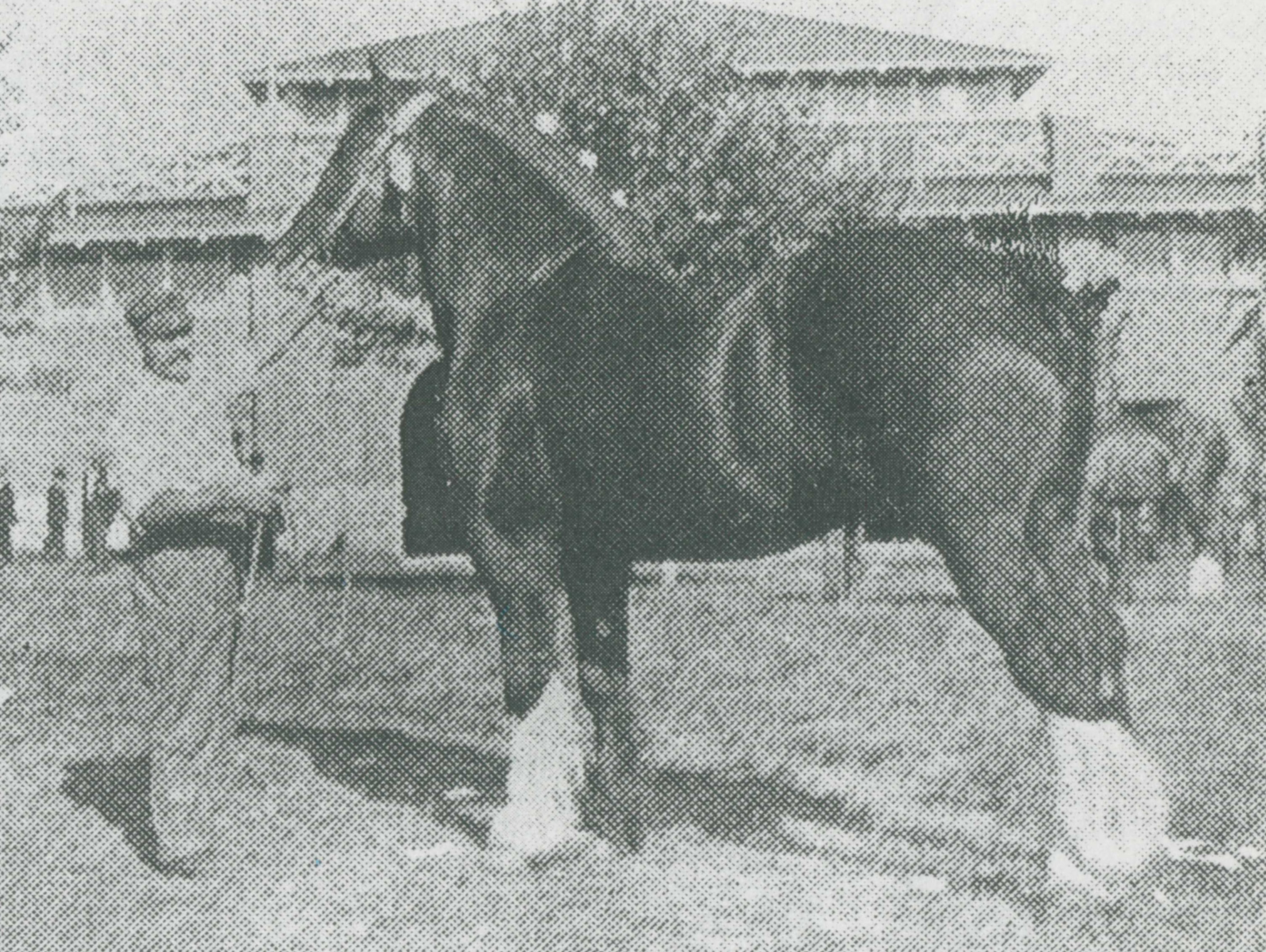
SLINE” – Importe I Three-year-old Shire Colt

L. SKEEN
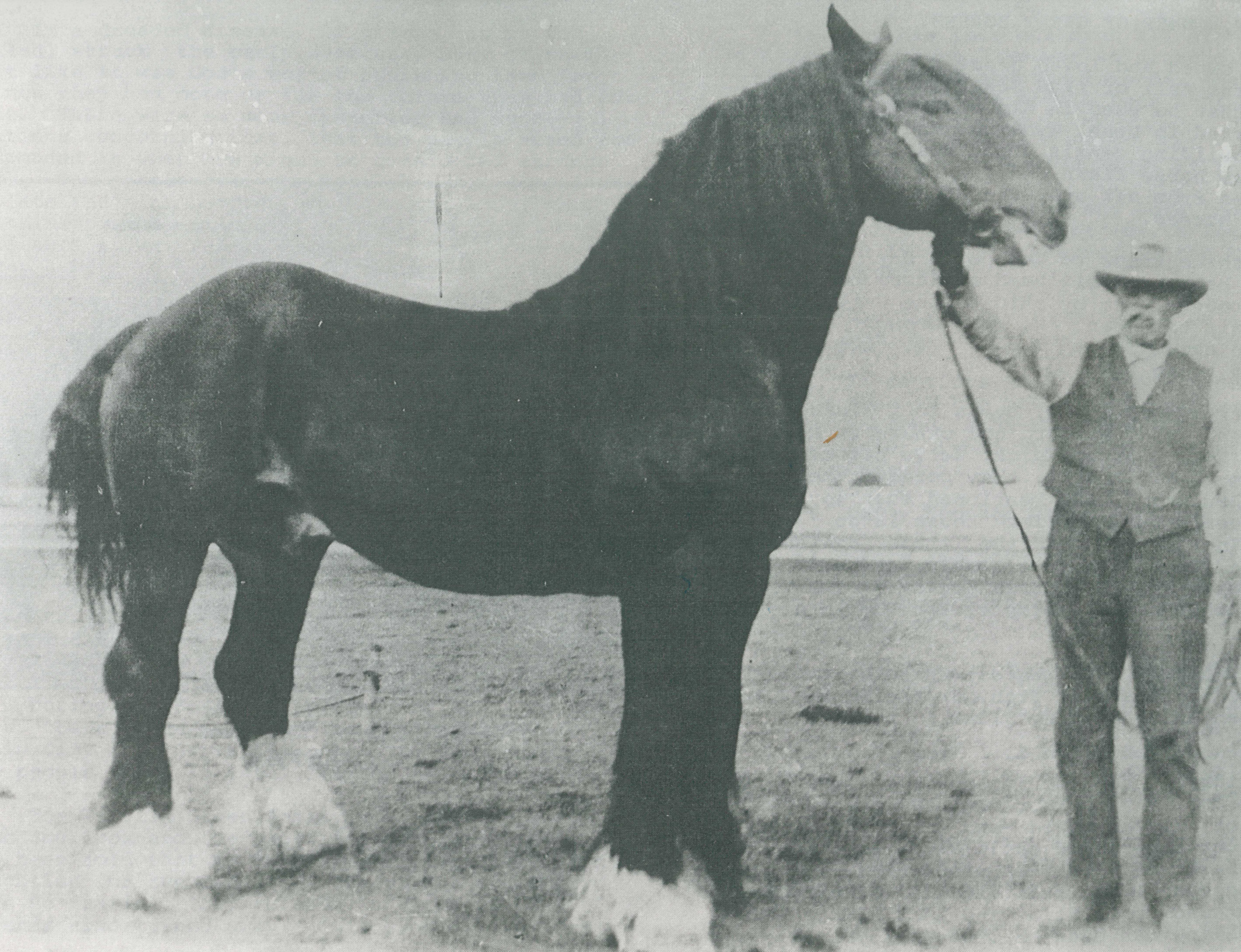
LYMAN SKEEN WITH HIS SHIRE HORSE.

One of these big Shire horses died at the age of three days. It was raised on a bottle by Annie Skeen, wife of Lyman Skeen.

SAMMY SAMPSON THE BARBER

            Sammy Sampson barbered in his home which was located across the street from Dell Sharp’s home. He was one of the early barbers. Byron Carver tells of getting his hair cut there when he was a boy. He said, “You could ask for any type of a cut you wanted, but you only got one cut, mostly bad,” I can see Byron chuckle ass a twinkle from the past came into his eyes. “Oh it was bad,” he said, “and as long as you had any hair left, Sammy would keep cutting.”

            On one occasion he went to get his hair cut when it was hot and Sammy was cooking something that didn’t smell too good. Some of the men who had gathered were smoking El-rope-o cigars, and Byron was getting light headed as he sat in the chair. As Sammy worked him over he became more ill. Sammy soaped his neck and shaved it with a large thick, straight razor, that scraped more than it cut. Sammy kept a pan of hot water on the stove with a wash cloth on it that he used to wash the soap off. As he laid that hot cloth on Byron’s neck, Byron rolled off the chair and fainted dead away. When he came to, big Lafe Skeen was holding him on his lap. That was one hair cut Byron will always remember, and as long as he is alive the memory of Sammy Sampson the barber will live on.

            Sammy charged 5 to 10 cents a haircut in those days, and trim and shave on the older men was 15 cents.

THE RACE TRACK, PLAIN CITY’S FIRST

            William Skeen owned some very fine racehorses and he built a racetrack to train his horses. The neighbors would meet on occasion and race their horses to test the speed against their neighbors horses. Stories have been told that there were some very exciting races held at the track. It was located near four mile reservoir.

            They tell the story of a man from Ogden, who was quite a footracer and he was supposed to have challenged and bragged that he could beat a horse in a certain distance. It was well talked up and word spread around, and the race was held. There was a little money that changed hands quite a crowd. But you know, no one can remember who won the race. It was another colorful time in early Plain City.

THE WEDNESDAY NIGHT SHOW

            Growing up as a kid during the late twenties, thirties and into the early forties here in Plain City was quite an eventful time. It seemed that the world moved at a slower more relaxed pace and there was time to enjoy visiting and to crate your own entertainment and fun. Depression times were very hard for most families, with very little one and barely the necessities of life. There was very little money available for entertainment and if you had any entertainment, you created your own. They were carefree happy times. As a kid you were lucky if you got into Ogden once a month or even once during the summer. By comparison with today, all the entertainment seems to be provided for the young people and all they have to do is show up with money and everything is provided for them.

            In the summer kids games and ball games were a very big thing and something was going on every day and night. Hide and seek, run sheepy run, kick the can, and whatever else anyone could think up were always popular. Skating and sleigh riding were the fall and winter games. You would skate all day and build fires at night so you could skate even longer.

            Sometimes in the thirties the movies began to be very popular. Someone from Ogden would bring a movie out to Plain City every Wednesday night. It was held in the upstairs of the old church house and there would be two to three hundred people or more watching the show. The admission was ten cents and hardly anyone ever missed the Wednesday night movie. There was usually a serial episode before the regular movie and it would last for about weeks. It would lead you up to an exciting climax and then announce, “To be continued next week.” I can remember they would be the longest weeks ever, waiting to get back to the show to see what happened. Tail Spit Tommy always a big feature with the serials.

            There were some very spooky shows and I can recall small kids screaming and crying, and they would have to leave the show. The shows were scary, but the spooky part was walking home at night after the show. You were always extra light on your feet, and with any strange sound out of the blackness of the night, you would be at a full gallop and double your stride. Ah, but they were good times.

            The automobile and the war, and the latest movie hits in Ogden all led to the down fall of the Wednesday night show in Plain City. It was a colorful era in Plain City and one that everyone seemed to enjoy.

A TRIBUTE TO BETTY

            Somehow the roads of Plain City look and seem a little different now days without the familiar figure of Betty. Her shopping bag in hand, her figure that time and age had bent a little, and limp that the years had brought on, headed up the road to Ogden. Time had also slowed her steps, but not her to walk to town.

            Probably Betty was born fifty years too late to fit in well with a changing society. He life was the simple life, and her wants and needs were few. She was very string willed, proud, and stubborn in some regards. She was very determined not to be pressured into joining the modern world.

            Some people say she was eccentric, old, strange, but she was a rugged individualist who refused to conform to anyones standards but her own. As a result of her ways the young people would sometimes tease and torment Betty. But in her own way she ignored them and went her way. Is it not strange that we from our own little worlds are so willing to unfairly judge other people by out own knowledge and standards. Especially if their standards and personality traits do not measure up or lower down to our own.

            I wouldn’t begin to know how many thousands of times Betty walked to Ogden, and back with groceries, even after she was around seventy five years of age. I suppose before we could fairly evaluate Betty we should ask the women of Plain City how many times they have walked to Ogden, and back home. Their were many people who were good to Betty and wanted to help her, but she seemed determined and happy to do things her own way.

            Betty was a hard worker and she worked for many people in Plain City. Later she worked in Ogden doing housework. I carried mail in Ogden for thirty years and would see Betty working at some of the finest homes in Ogden. Her family paid me a tribute when they asked me to speak at her funeral.

            Betty will be remembered as one of Plain City’s remarkable characters. If we let our memories wander a little, and though our minds eye we might still catch a glimpse of a shadow of Betty walking to town.

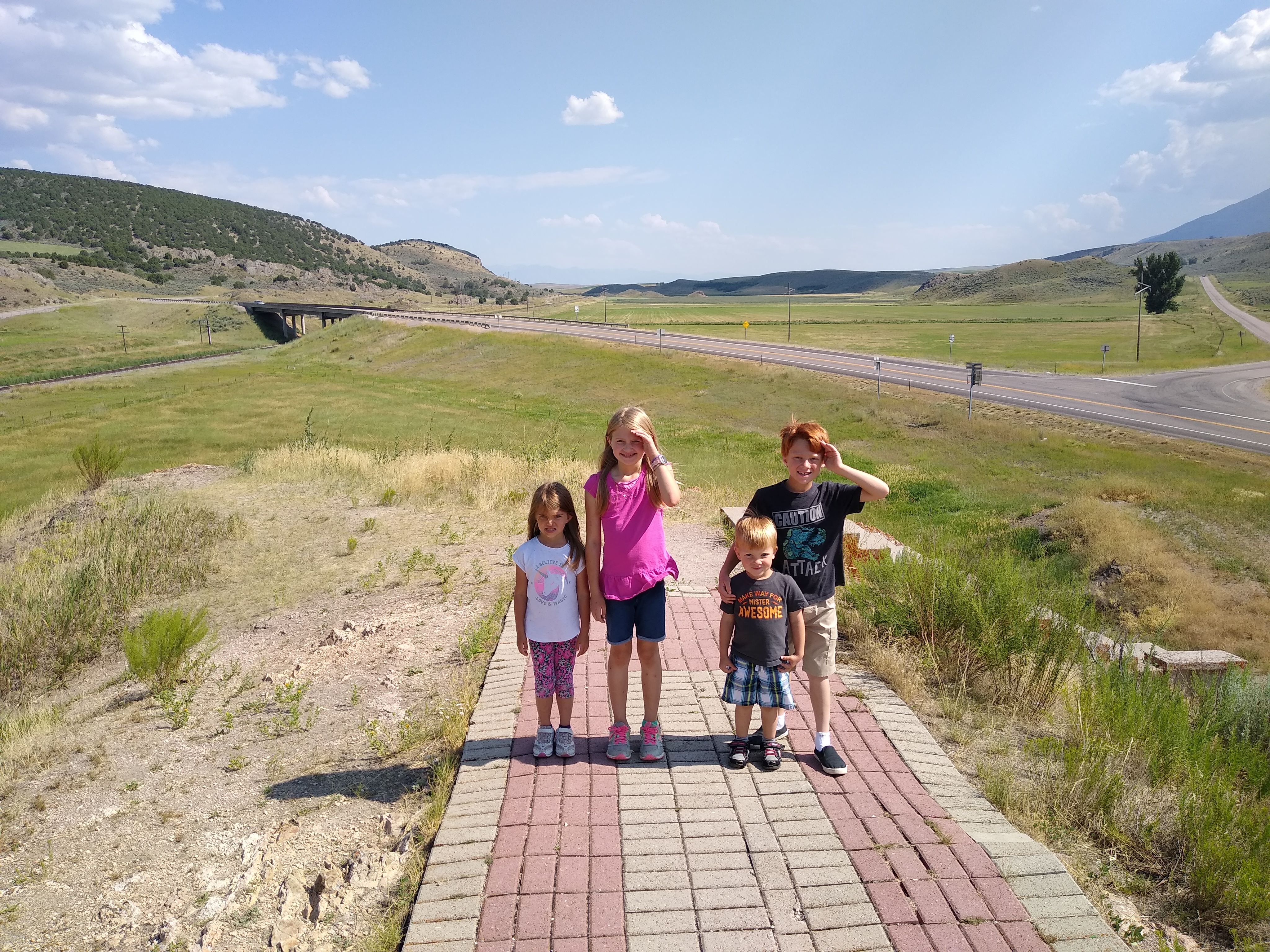
Red Rock Pass 2020

Four years ago, I took the kids on a trip. As was tradition for me as a kid, we always stop at Red Rock Pass when driving past. I shared that story and history in a previous post from 2018. That post also had photos of a younger Aliza and Hiram. Now I share these photos from two years later on 26 July 2020. I will have to take more pictures as time pass to show the timelessness of the pass and the marching of time on growing children.

James, Lillie, Hiram, and Aliza Ross climbing Red Rock Pass.
Lillie, Aliza, James, and Hiram Ross

In the background, you can see the road on the right headed to Oxford, Clifton, Dayton, and Weston, Idaho. On the left, the state highway continues on to Swanlake, Winder, and Preston.

History of Pauline W. Crossley

This history came into my hands from Golden Andra’s collection. A received a large stack of family history from his family. I am reviewing and making them available in this format. I typed this one about Pauline as typed, misspellings and errors too.

Pauline Wanner and Wiliam Henry Crossley

“This history was compiled August 3, 1993, by J. Allyne Kemp Crossley from two seperate histories, a story written by her son, Richard and information obtained from various family members, at a special request for he 1993 Wanner Reunion, which celebrates the 123rd year of the Wanner family.

“Pauline Wanner Crossley, daughter of Johann George and Ann Maria Schmid Wanner, was born in Atzenweiler, Neckarkreis, Wuertthemberg, Germany on April 1, 1884. Wuertthemberg, being one of the states of the divided nation of Germany. At the time of her birth, she joined a family of seven brothers and sisters, she being the eigth child. Following her birth two more children came to the family making a total of ten children: five boys and five girls, two of which died at an early age, while the family was still in Germany.

“Pauline and her brothers and sisters were very fortunate to have had parents who were honorable, upright, and hard-working people, who loved their children and worked very hard to see that they got the very best that they could provide. Both parents believed in God and had a strong faith that their prayers would be answered in providing them with the blessings they needed. They belonged to the Lutheran Church, and tried to teach their children correct principles.

“Sometime during the year of 1891, Johann, Pauline’s father, brought some missionaries to their home. These missionaries were representing the Church of Jesus Christ of Latter-day Saints, they were Jacob Zollinger [1845-1942] from Providence, Utah; John Hassenfritz, from the Bear Lake area, and John Federly of Salt Lake City, Utah.

“After the missionaries had been teaching them the Gospel for some time, the family became very interested and decided they would join the Church. Some of the family were old enough to be baptized and they became members of the Church of Jesus Christ of Latter-day Saints, in October 1891. Pauline waited until after the family arrived in America to be baptized on January 7th 1897, just three months before her 13th birthday. Joining the Church brought peace to their minds and joy to their hearts. It did not take long for the family to decide that they wanted to leave their native land, and come to the United States, where they could have religious freedom and better opportunities for their families, and to provide for their wants and needs.

“Not long after their baptism, some of the missionaries were preparing to return to their homes in the U.S. and Johann and Maria decided to send their older son, George to America with them, he’d be the first member of the family, to come to this country.

“In the Spring of 1893, Pauline’s parents began making the preparations to take the rest of their family to America, saying “Good-bye” to all their relatives, friends, and their native land.

“They had to ride the train for one day, afterwhich they took a boat up the Rhine River which took three of four days, then they took another train for another day, which took them to the North Sea. Here they got on another boat which was larger than the first, which would take them to Liverpool, England. The sea was very rough and the weather stormy, so it took another day before they reached Liverpool, where they boarded a big ship to sail to America.

“They were on the ocean for about 2 weeks, before they finally reached New York, where they stayed for two or three days. From New York, they took the train once again, and started their journey across the American Continent, for Salt Lake City, Utah, having to stop in Chicago, Illinois for one day and night. After arriving in Salt Lake City, they then continued their long and tedious journey to Franklin, Idaho where they arrived on the 18th of June 1893, all being very happy, and anxious, to get settled in their newly adopted homeland.

“They were met by their brother, and son, George and Mr. Fred Nuffer. Mr. Nuffer invited George, and all of his family to stay at his home, until they could find a place of their own, which was about one week.

“The Sunday following their arrival in Franklin, they all went to church, traveling to Glendale, where they had their membership records moved to, from the Branch in Germany.

“Grandpa Wanner soon bought the home and farm of John Nuffer’s in Glendale and the family lived there for a number of years before buying a home in Logan, Utah.

“Pauline worked hard on the farms that her father had bought – he bought several for his family to run. The members of Pauline’s family were all good workers and they all strived very hard to make a go of it, in this new land. Each of them was also very diligent in working for their beliefs, for their church, and for their Savior, Jesus Christ – including Pauline – she was a member of the Relief Society Presidency, while her children were still young she would take the “Black-top” and make many trips down to Thatcher.

“Not too much is known about Pauline’s romances, as a young lady, but her daughter, Annie, remembers hearing Pauline talk about a young man that she was engaged to, prior to Pauline’s engagement to her Dad, who was killed in an avalanche – Pauline only talked about it a few times.

“Pauline Wanner and William Henry Crossley, were married in the Logan Temple on December 14th 1904; Pauline was 20 and Will was 26 at the time, they both had dark brown hair but Will’s was curly.

“Will’s parents were John and Eliza Clements Crossley, he was born the 16th of October 1878 at Weston, Idaho and was baptized May 7th 1887. He had only one older brother, named Emanuel; one half brother, Levi, also lived with them while they were at home.

“To Pauline & Will were born four girls and five boys. Their first child, a beautiful baby girl, whom they named Florence, was born about 1905, she lived for about one year, then died in a very tragic fire. About one year later, another little girl was born whom they named Violet, she lived only two weeks; a third little baby girl, named Fern, was born on May 25th 1908 and she lived for only a few hours. Pauline was out helping to put up hay when a load tipped over on top of her, bringing the baby too soon. A 4th little baby girl, Annie Laurie, who’d be their only living daughter, was then born on April 30th 1909. *(According to Annie’s birth certif., she was born in March).

“Following the birth of Annie Laurie, the family grew with the addition of the boys, each arriving about two years apart from one another. Joseph Henry, arrived on April 14th 1911; Richard Wanner on January 27th 1913; Albert John was born June 28th 1915; Clarence William, who everyone knew as “Virgil” was born March 18th 1917; he died September 6th 1984, and is buried in McCammon; and then Cyril Chester was born on October 28th 1919. These children brought lots of joy to their mother, and I’m sure that had she have lost Annie, her only living girl, she would have just laid down and died right then —

“The Pioneer immigrants had to make many sacrifices and endure many tragidies in order that they could live their faith and belief in the Gospel of Jesus Christ – many having to leave their homeland and their families, worldly goods, even suffering sicknesses and surviving near starvation and freezing temperatures – But I can’t imagine the pain and heartache of having to watch a home that I’d help build with my own hands, be destroyed in a fire, along with a very precious baby daughter – Florence, when she was only about a year old.

“Pauline and Will had both dropped-off to sleep, forgetting to turn off their coal-oil lamp, and since the wick was bad, it filled the room with smoke as it burned – which woke Will up. He was so sick from the smoke, he couldn’t stand up to talk, he had to crawl about one block, or more to the neighbors, who ran back and were able to get Pauline out of the house – but because of all the excitement and all the turmoil, they forgot about Baby Florence. When Pauline came to all she said was, “The Baby! The Baby!” But it was too late!

“The folks said that another fire happened on the homestead, in Thatcher, at the middle place, because the children decided to build a bon-fire behind the stove in the kitchen – they said it was because the fire had ruined everything so bad, that that was their reason for building their last home, on the homestead, and also a reservoir.

“Will’s older brother, Emanuel, had moved to Thatcher on a homestead, about two years before he and Pauline decided to move – He was finally persuaded and he moved his family to Thatcher, where they homesteaded the place which adjoined his brother’s.

“All of Pauline’s children had a hard “row to hoe” while they were growing up – some made sure that they got a small education and others didn’t but all-in-all nothing was easy for them –

“The children would go barefooted a lot when they were little. One day their Dad noticed that the cows were down in the “stubble” so he instructed the children to go and get them, (they were barefooted, as usual). Annie’s little feet were so tender that with each step she took, the stubble scratched them, and caused them to bleed and each added step brought more scratches, and more bleeding, so she tried to take her time, being as careful as she could so that the rough stubble wouldn’t hurt her feet anymore than they were already hurting. Her Dad got really upset that she took so long to go and help get the cows (he didn’t realize her suffering).

“Then, there were the times when the children would get lost, even on their own place – One day the children were up in the pasture, watching their Dad put in fence posts for a fence, so he could fence-off the pasture. (The children were probably helping as well). One of the boys got tired, so he wandered away from the rest and laid down in the BIG, TALL brush and went to sleep. The whole family hunted and called – but he wasn’t found until sometime after dark.

“Earlier, when the family lived by the “WHEEL GATE”, Joe and Annie went wandering in the TALL Sage Brushes, east of their place. Most of the neighbors must have hunted all over, until the “wee” hours of the morning before they finally found them – the Sage Brushes were so HUGE, that they were just right for the children to make their own little “houses” in them.

“Pauline and Will were strict parents, and living on a farm wasn’t an easy life, to be sure, and everyone needed to work to help: the children even had their responsibilities on the farm —

“Joe and Annie, for example, had to go after the cows, on the hilly pasture land, (there were lots of trees and vegetation). One day, they had just got the cows going along the “cow-trail” through the hills and a bobcat began to follow them and they were scared to death!! After running the cows for awhile, Joe was right behind the cows, Annie next, and then their dog – the dog finally tangled with the bobcat and he took off through the trees – were they ever glad to get back home!

“Another time, Annie went out to take her brother, Richard, a sandwich, when a big buck decided to turn on her and Joe – the only one that could control him was Richard – the buck wouldn’t hurt him.

“Besides his farming – Will also had a “Threshing machine” and he’d go out and do threshing for other farmers, which gave his family a little added means for flour and cereal – He’d always take a load of wheat, by wagon, down to Preston, to have ground into flour and cereal.

That was the end of page 4. It seemed to be an abrupt end, but I cannot tell if there were more pages to the history or not.

2020: The Year of the Dead

This wasn’t intentional.  Not sure why or how it happened, but it did.

Anyone who knows me knows that I stop and visited deceased people and ancestors anytime I am in the neighborhood.  Kinda like stopping in to visit any other cousin or friend when you are driving through, are in town, and have some time.  Ancestors are very accommodating whenever you want to stop in and visit.  Maybe COVID-19 just gave us more time.

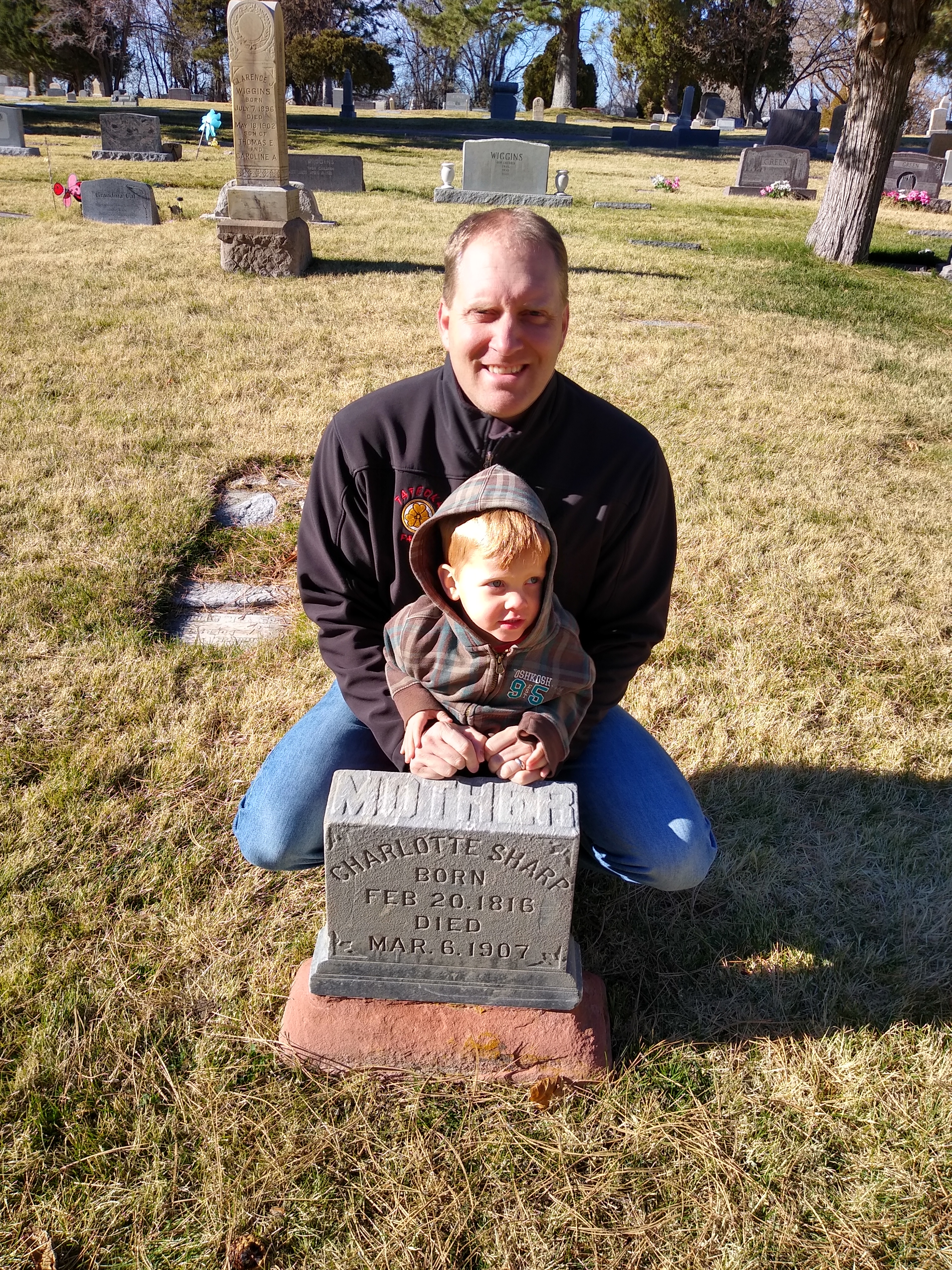
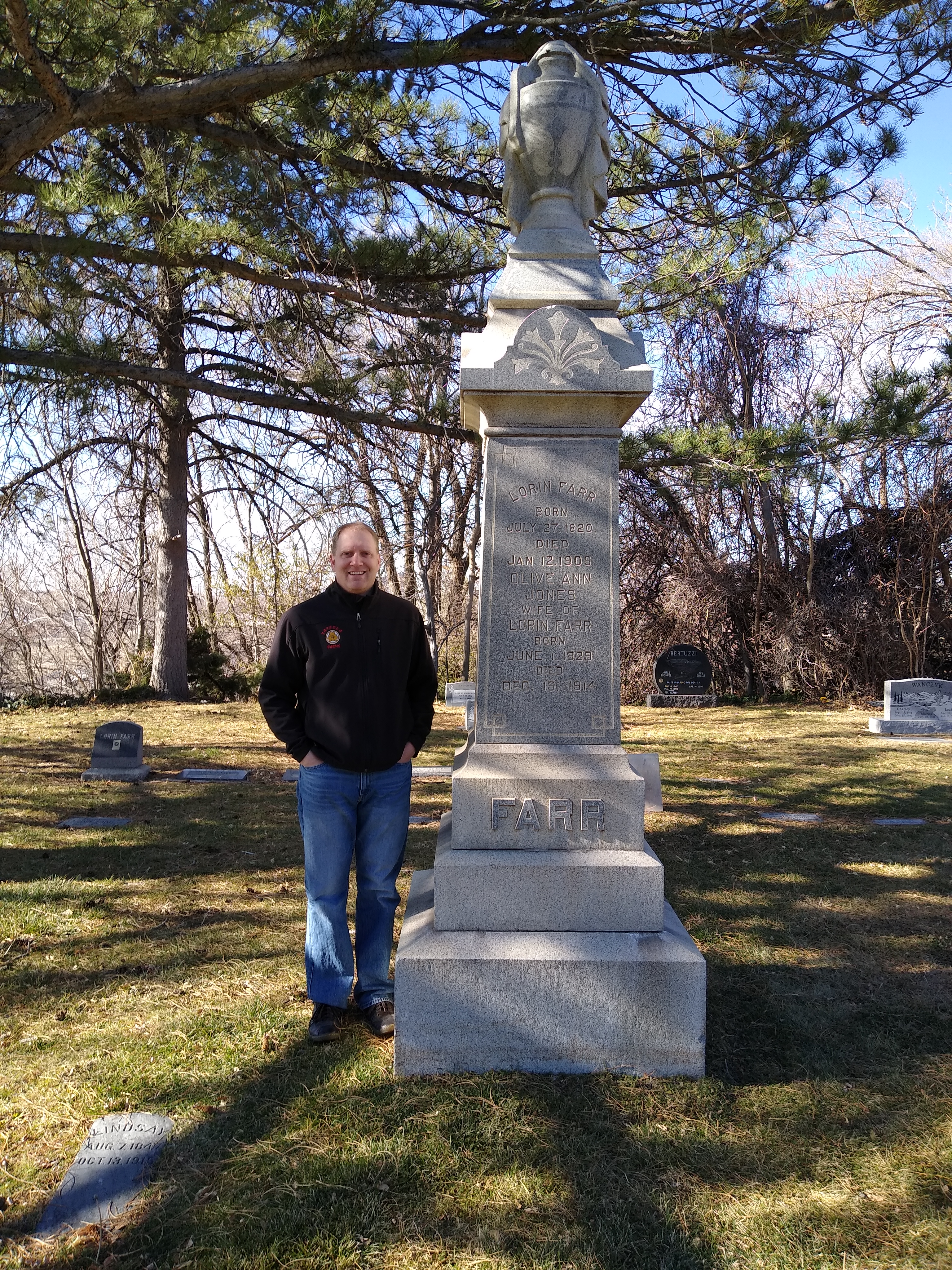
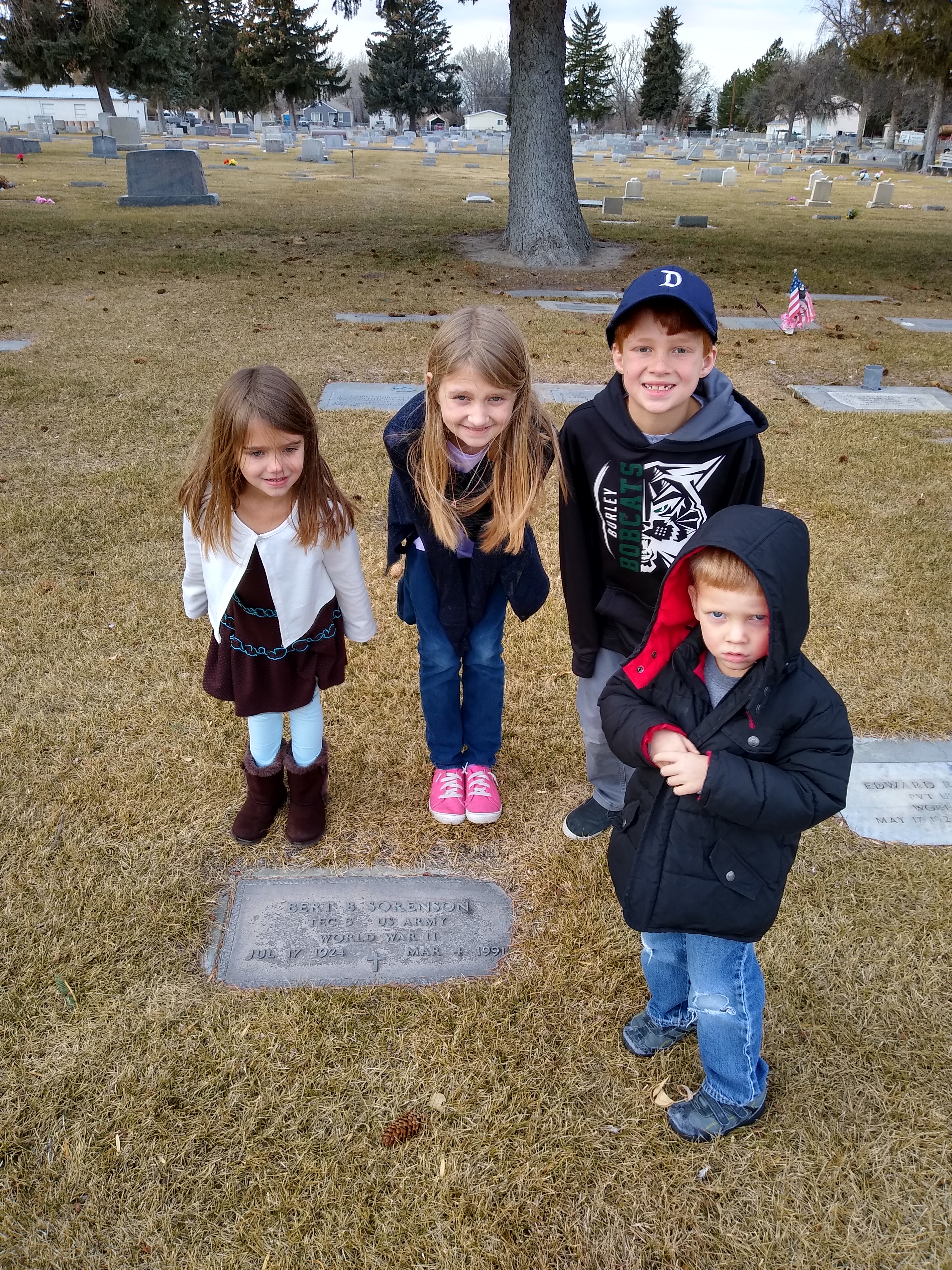
I have the following ancestors who are buried somewhat nearby, western United States.  I will link each ancestor I have written about previously if you want additional information.  Here are my ancestors and where they are buried.

As of this writing, I see there are two ancestors that I haven’t stopped and visited in the last few years and got pictures with the kids and the tombstone, Christiana Andra in Salt Lake City and William Sharp in Ogden (I now have the goal to get it done before the end of the year).  I also have a couple of known ancestors without tombstones, David and Gwenllian Jordan in Ogden, Utah, Hubert Jonas in Ellensburg, Washington (but we got pictures at the grave), and Damey Ross in Olivehurst, California (who we visited after hours and couldn’t even locate the grave).  We should remedy that but we may just have to stop and get pictures with their grave locations.

I also cheat and use the 2016, 2018, and 2019 photos with three ancestors, Johanna Benson in Spring City, Utah in 2018, John William Ross in San Bruno, California in 2016, and James Thomas Ross/Meredith in Fresno, California in 2019.  I could do a 2020 photo for Johanna, but I am not going to California just to redo a tombstone photo with the two Ross ancestors.

Grandparents

Milo & Gladys Ross – Plain City, Utah

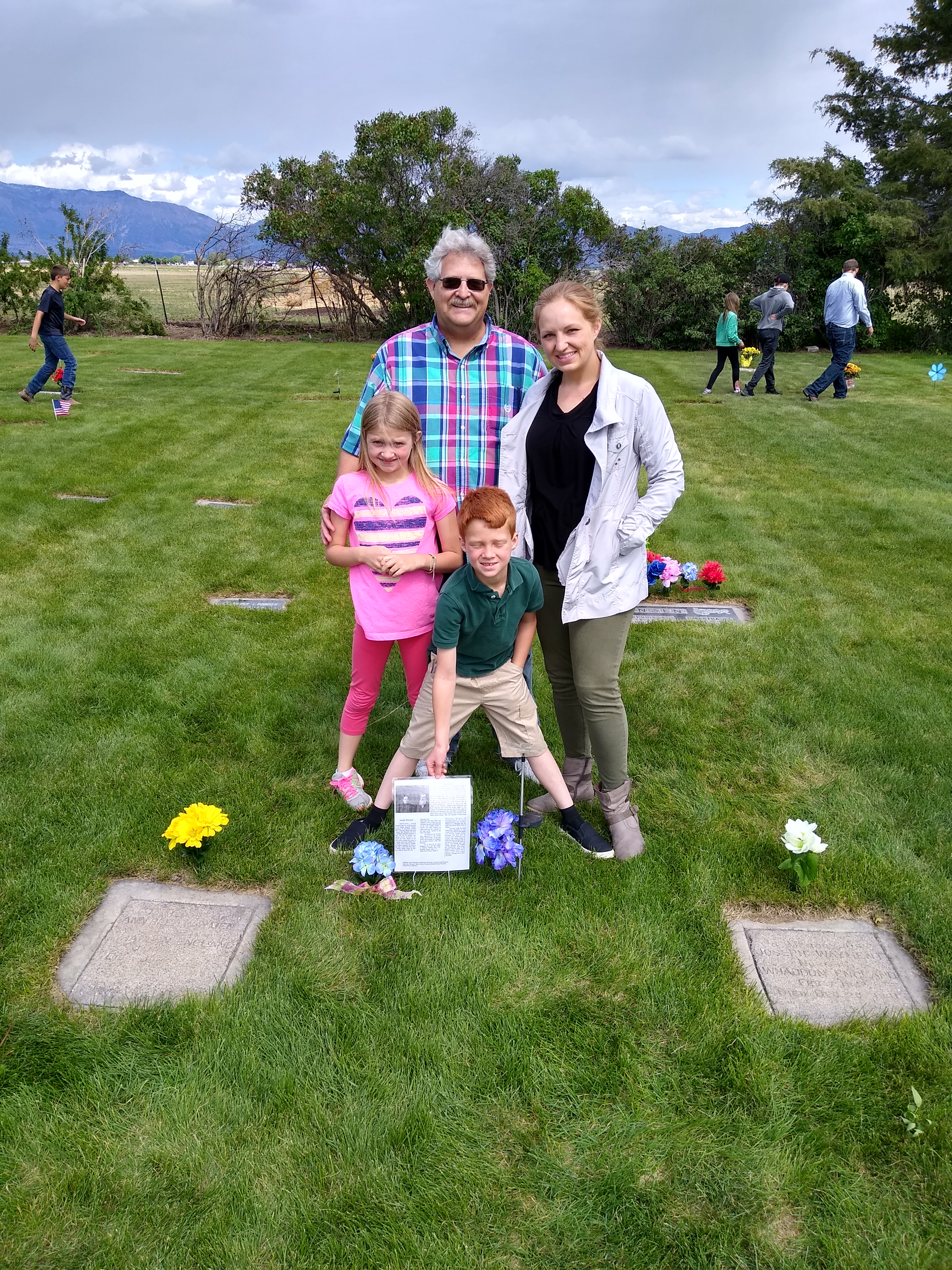
Lillian, Paul, Aliza, and Hiram Ross with tombstone of Gladys Maxine Donaldson (1921-2004) and Milo James Ross (1921-2014) on 23 May 2020.

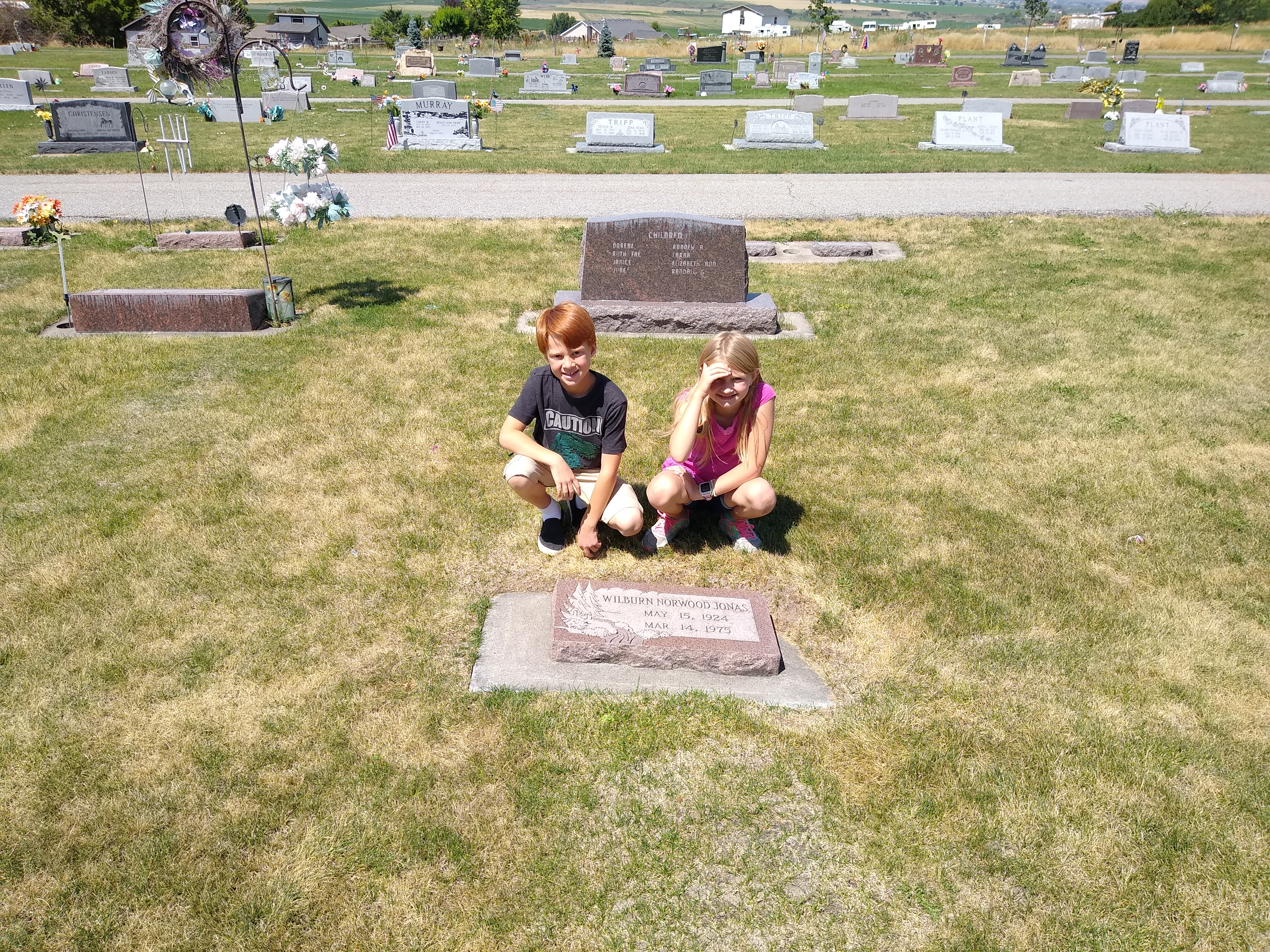
Norwood Jonas – Richmond, Utah

Hiram and Aliza Ross with tombstone of Wilburn Norwood Jonas (1924-1975) on 26 July 2020.

Colleen Lloyd – Dingle, Idaho

Lillian, Hiram, James, and Aliza Ross with tombstone of Colleen Mary Andra (1928-1999) and Ivan W Lloyd (1919-2011) on 25 July 2020.

Great Grandparents

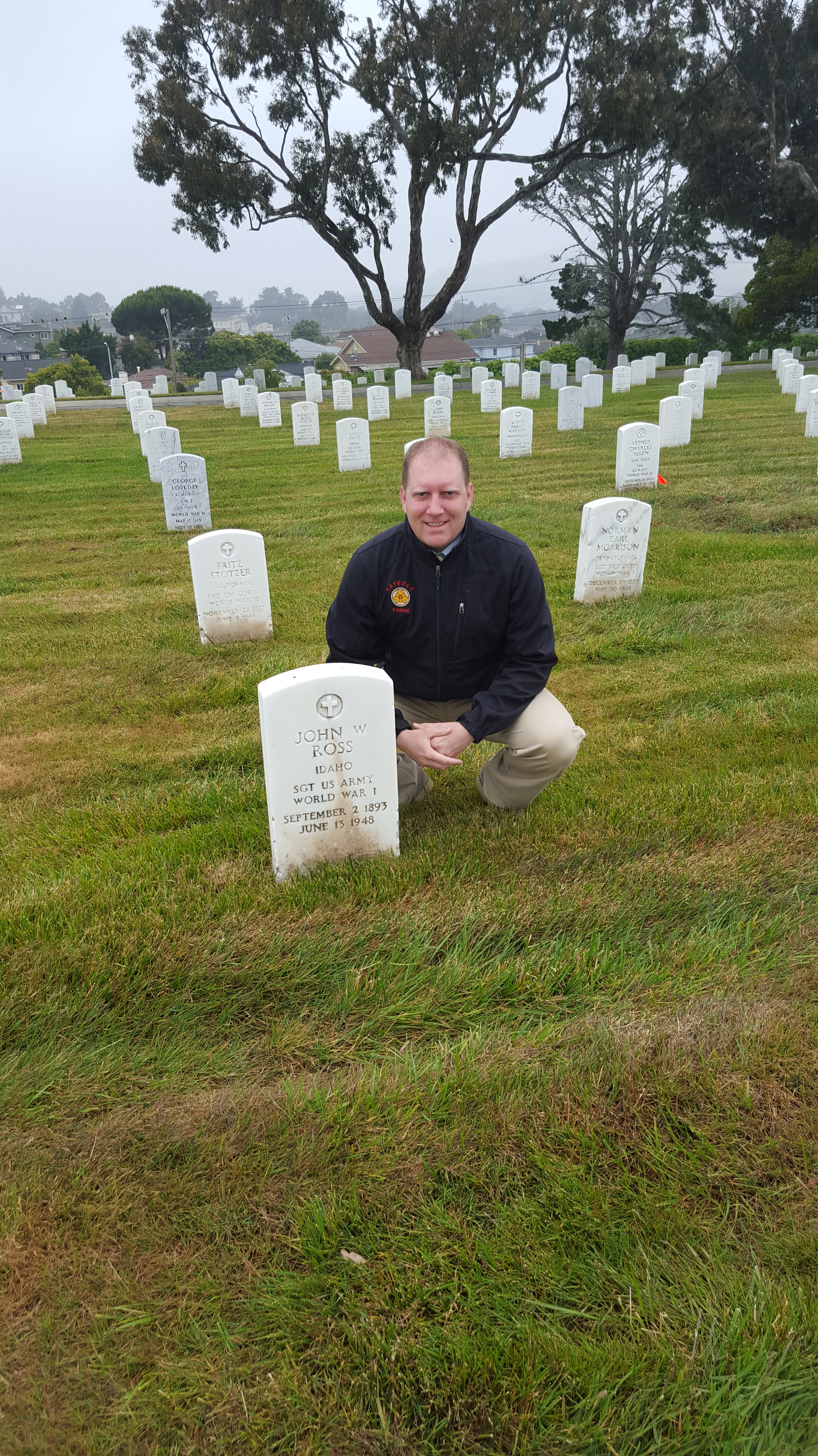
John Ross – Golden Gate National, San Bruno, California

Paul Ross with tombstone of John William (Jack) Ross (1890-1948) on 24 May 2016.

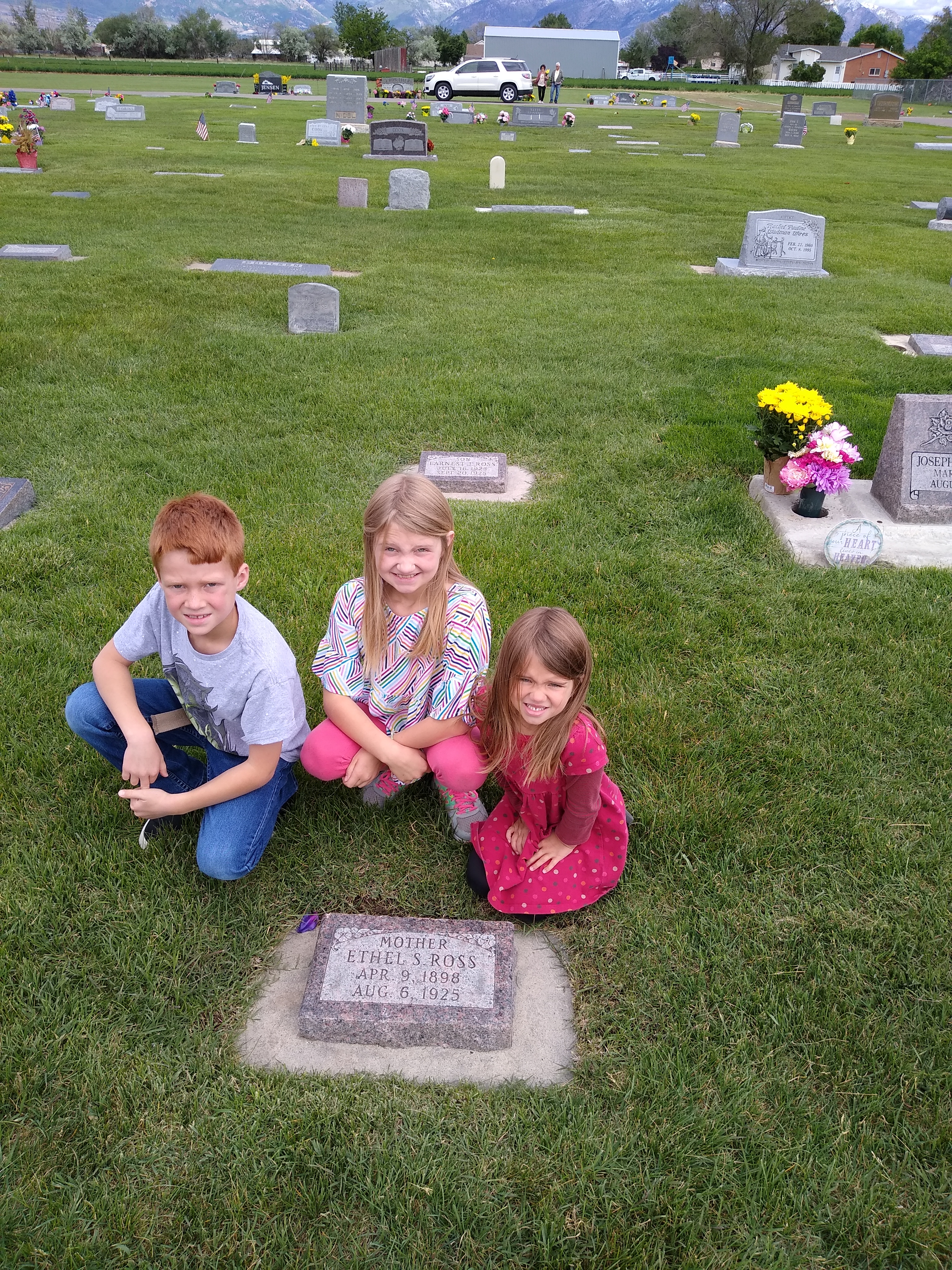
Ethel Ross – Plain City, Utah

Hiram, Aliza, and Lillian Ross with tombstone for Ethel Sharp Ross (1898-1925) on 23 May 2020.

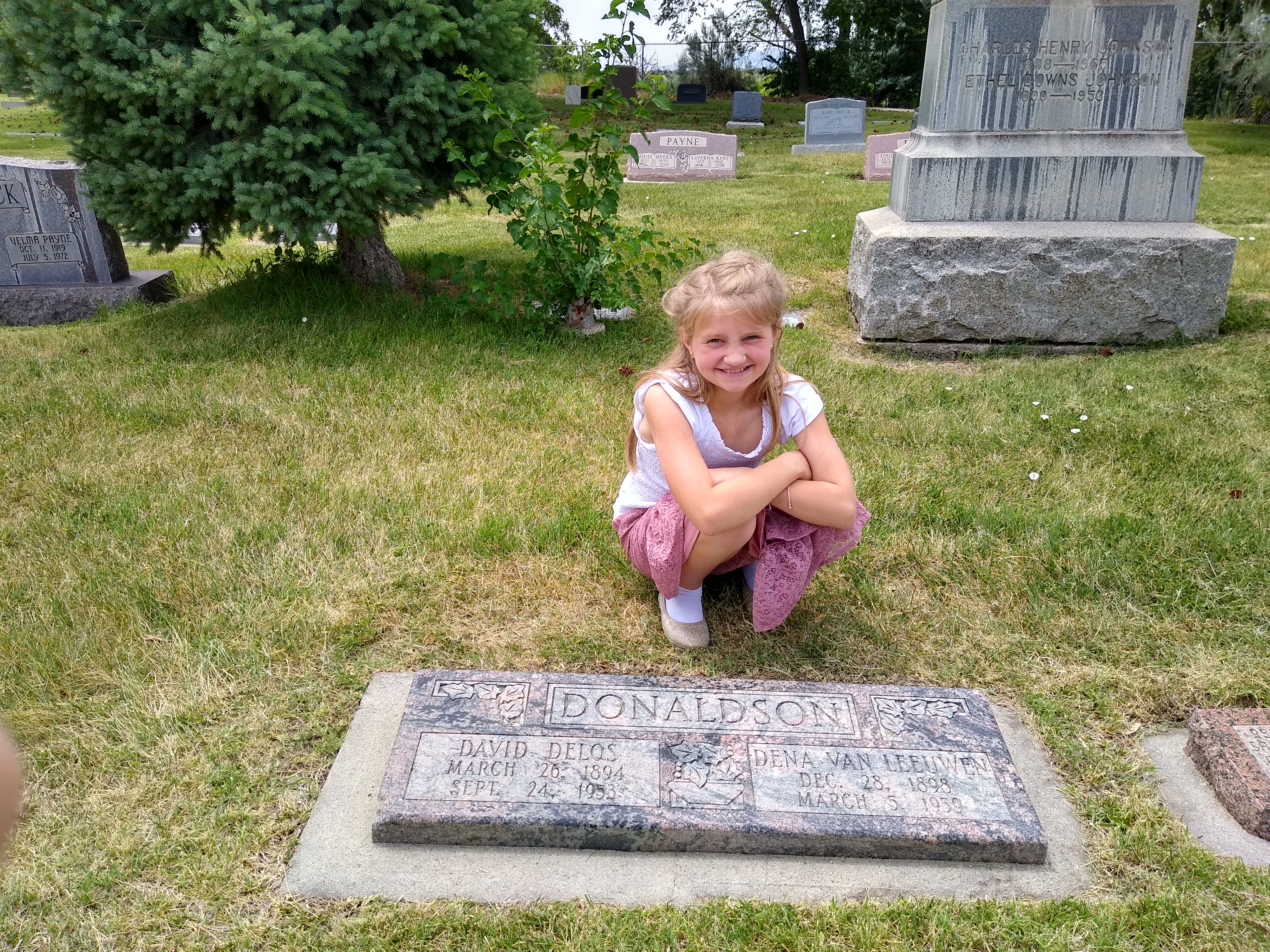
Delos & Dena Donaldson – Ogden, Utah

Aliza Ross with tombstone for Berendena Van Leeuwen (1898-1959) and David Delos Donaldson (1894-1953) on 28 June 2020.

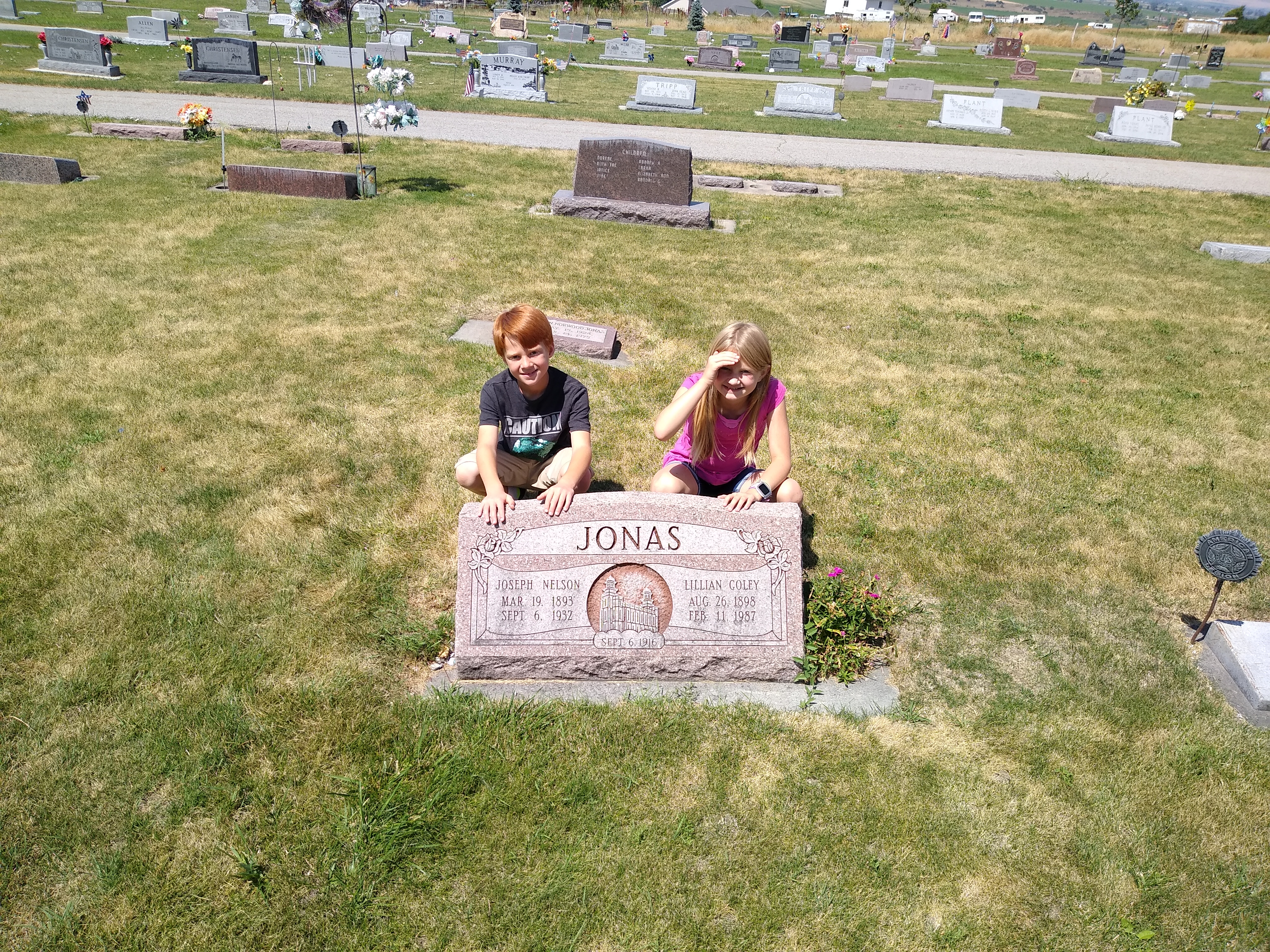
Joseph & Lillian Jonas – Richmond, Utah

Hiram and Aliza Ross with tombstone of Lillian Coley (1898-1987) and Joseph Nelson Jonas (1893-1932) on 26 July 2020.

Bill & Mary Andra – Whitney, Idaho

Lillian (in background by Wanner tombstone), James, Aliza, and Hiram Ross with tombstone of Mary Louise Wanner (1901-1991) and William Fredrick Andra (1898-1990) on 26 July 2020.

Great Great Grandparents

James Ross/Meredith – Belmont Memorial, Fresno, California

Paul, Aliza, and Hiram Ross with tombstone of James Thomas Ross (aka James R Meredith)(1869-1951) on 10 May 2019.

Damey Graham Ross – Sierra View, Olivehurst, California

Damey Catherine Graham Ross doesn’t have a tombstone, but we visited her grave in 2016 in the evening.  No photo.

Milo & Lillie Sharp – Plain City, Utah

Aliza, Paul, Lillian, and Hiram Ross with tombstone of Mary Ann Bailey (1828-1913), Mary Ann (Lillian “Lillie” Musgrave) Stoker (1861-1935) and Milo Riley Sharp (1857-1916) on 23 May 2020. Mary Ann Bailey is the mother of Milo Riley Sharp, don’t confuse mother Mary Ann with spouse Mary Ann. We shorten our Lillian’s name to Lillie’s spelling in her honor.

William & Mary Donaldson – Ogden, Utah

Aliza Ross with tombstones of Mary Elizabeth Williams (1869-1951) and William Scott Donaldson (1865-1913) on 28 June 2020.

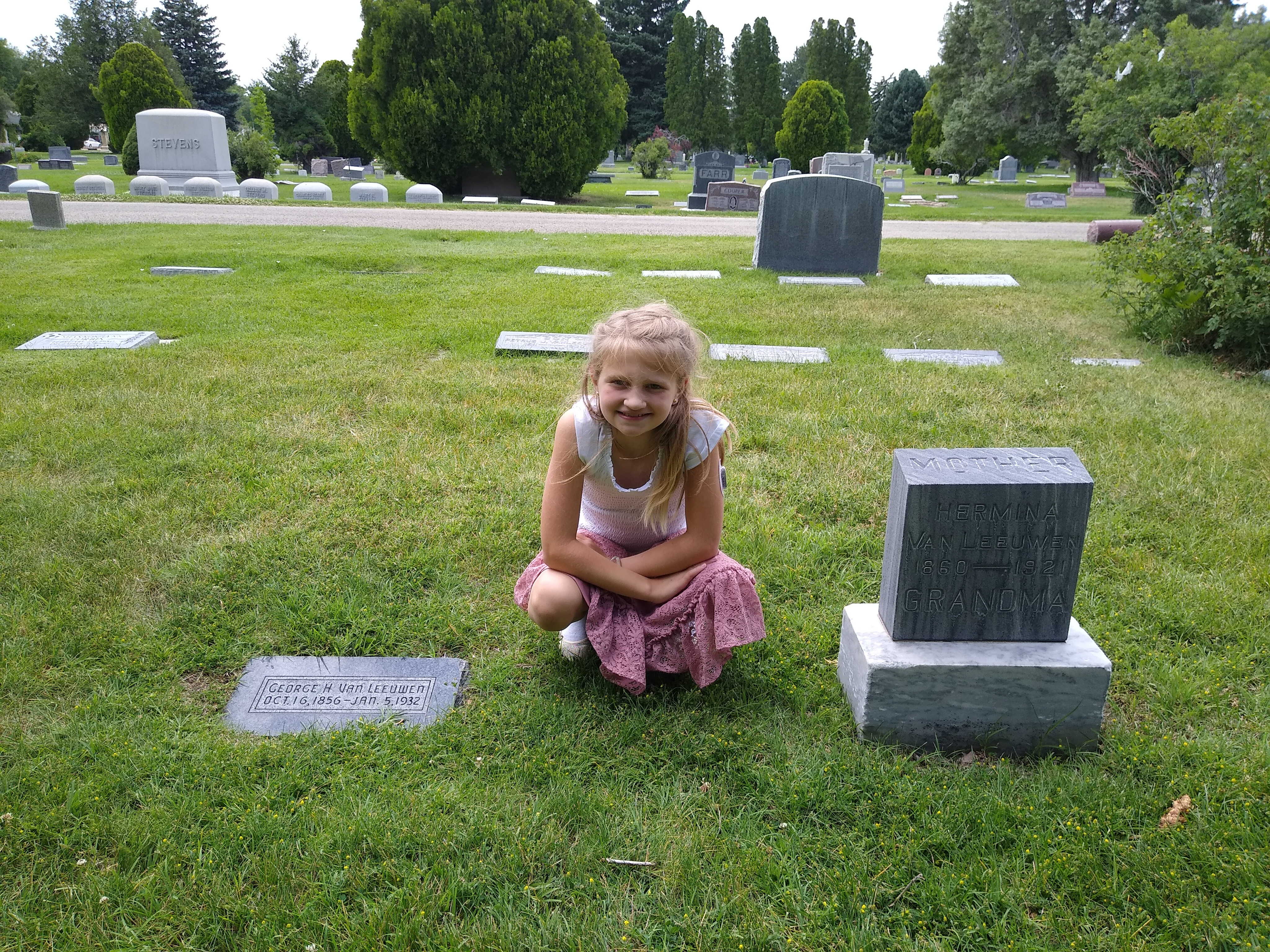
George & Minnie Van Leeuwen – Ogden, Utah

Aliza Ross with tombstones for Hermina Jansen (1860-1921) and George Henry (Gerhardus Hendrick) Van Leeuwen (1856-1932) on 28 June 2020.

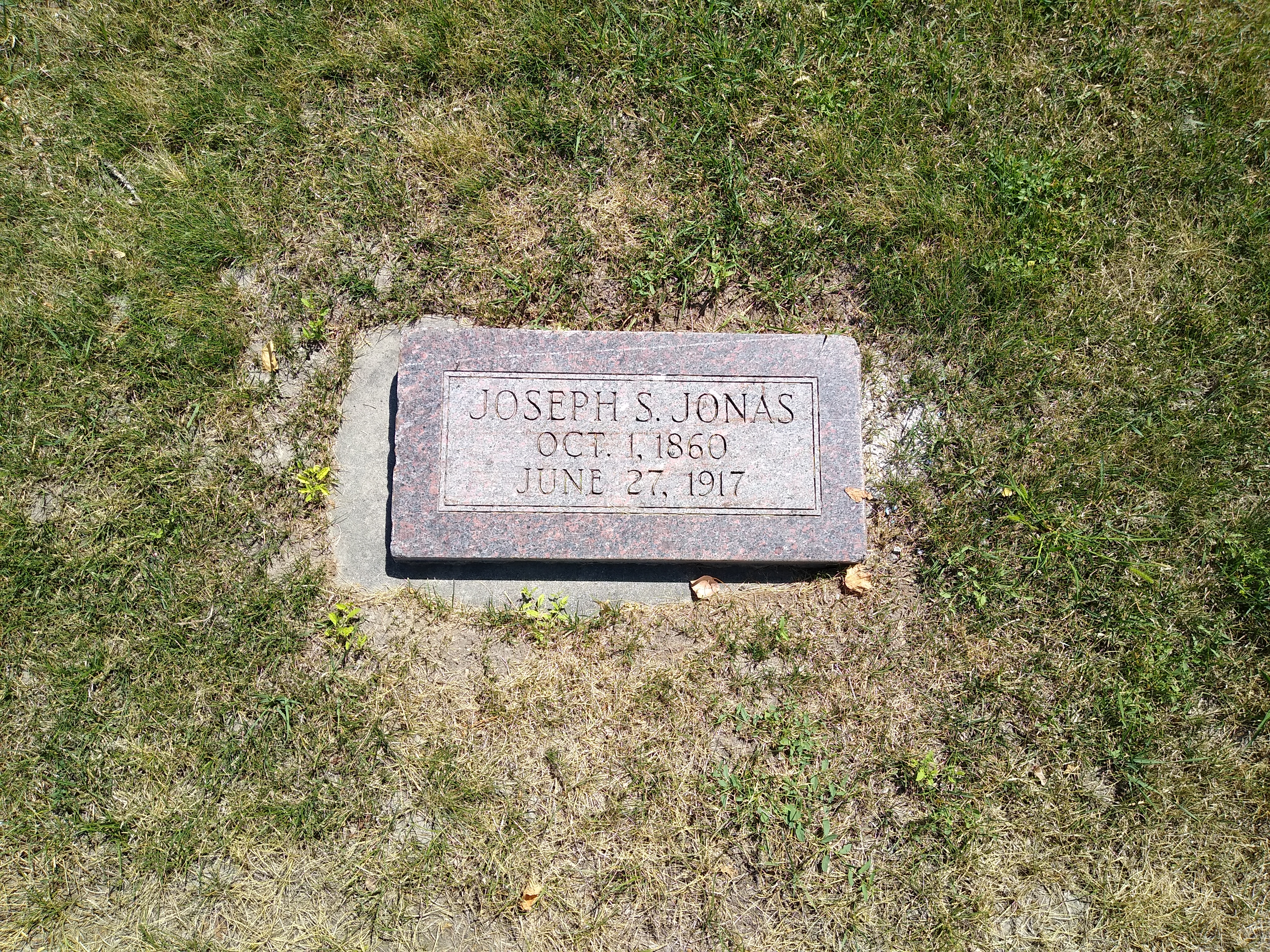
Joseph Jonas – Richmond, Utah

Tombstone of Joseph Jonas (1859-1917) on 26 July 2020.  The S is a mistake put there by someone.  Some have put his mother’s maiden name “Schumacher” there, but we have yet to find any evidence of that middle initial or name.

Annie Jonas – Crescent, Sandy, Utah

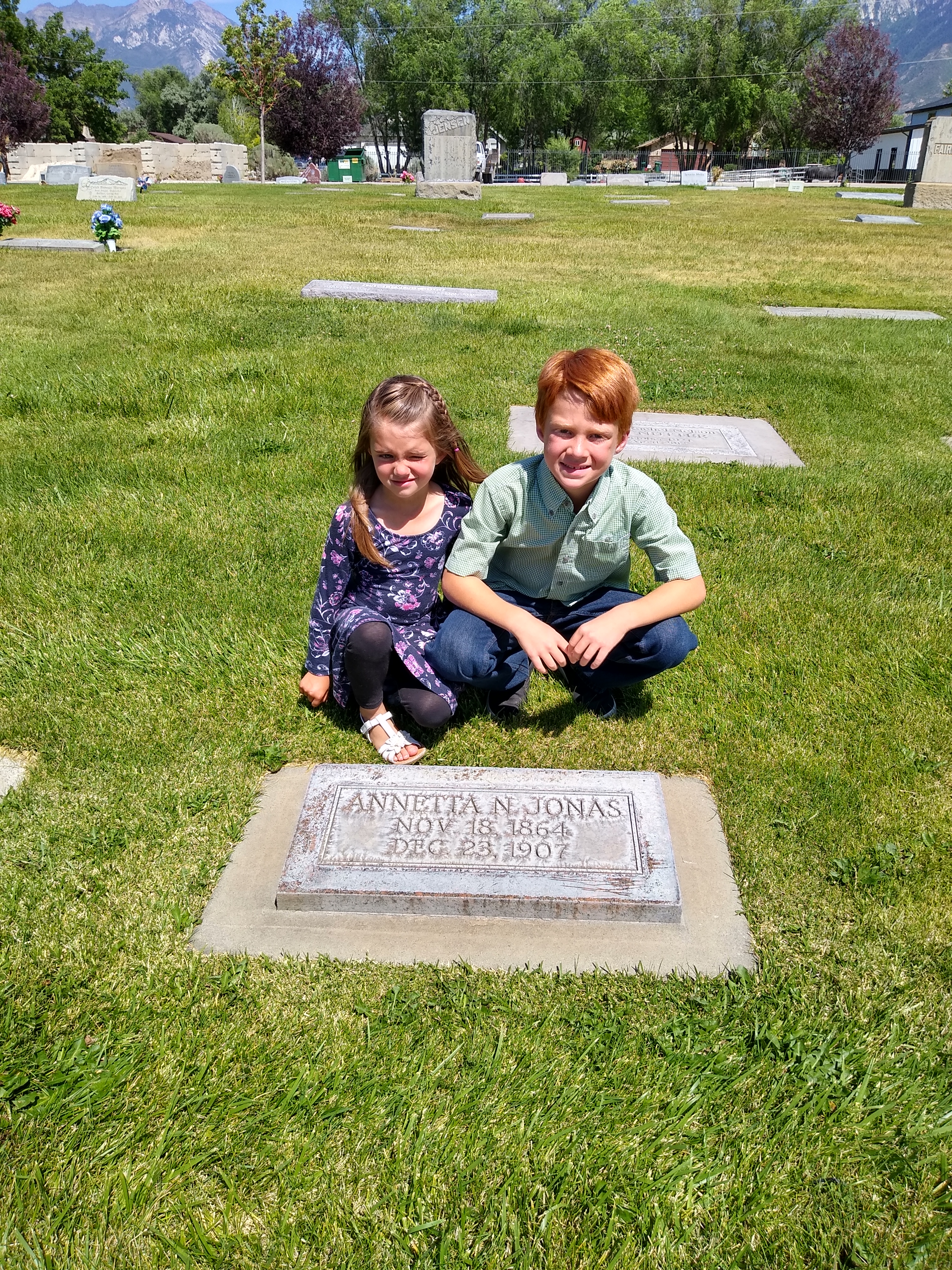
Lillian and Hiram Ross with tombstone of Annetta Josephine Nelson Jonas (1864-1907) on 11 July 2020.

Herbert & Martha Coley – Richmond, Utah

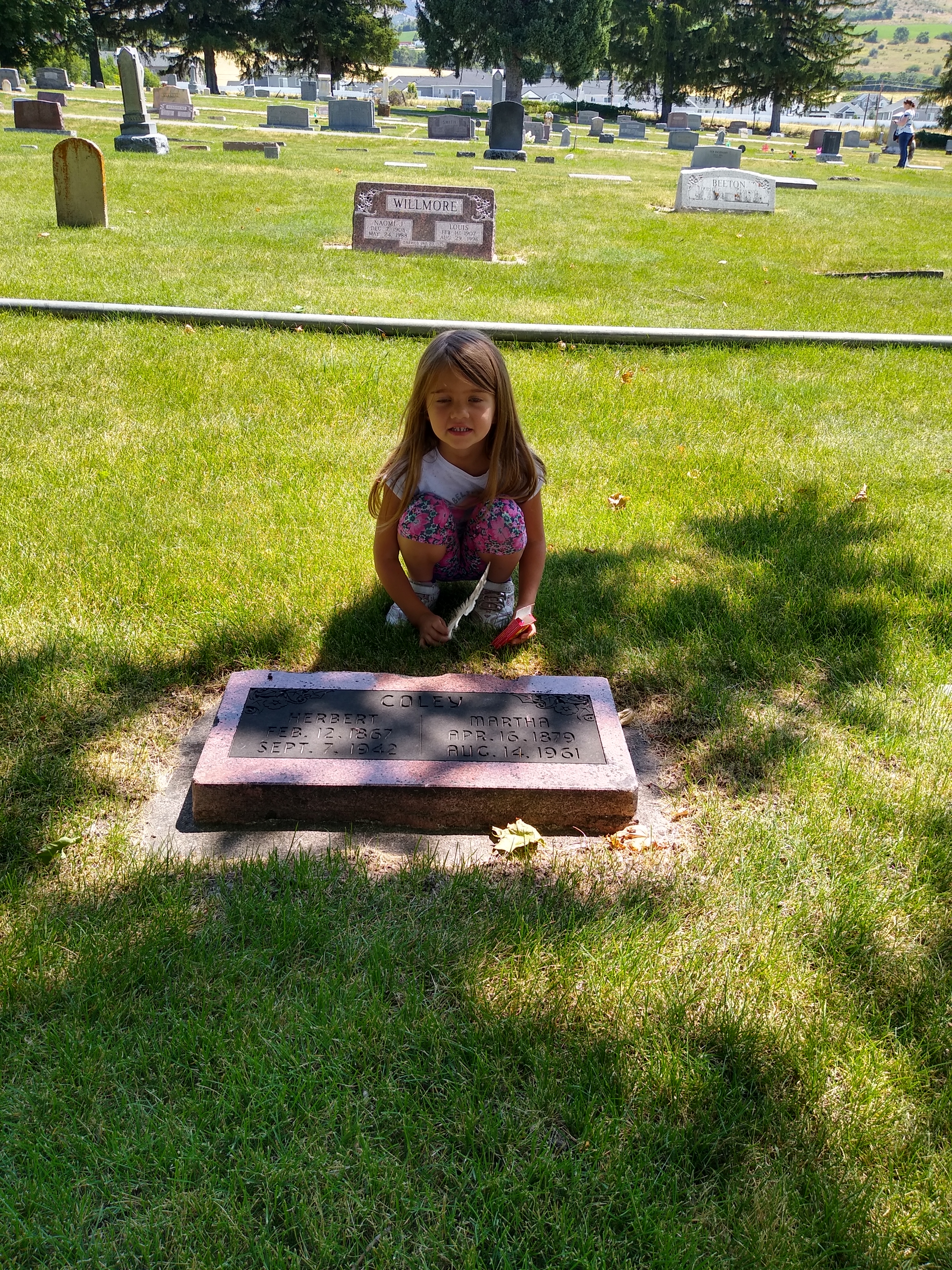
Lillian Ross with tombstone of Martha Christiansen (1879-1961) and Herbert Coley (1864-1942) on 26 July 2020.

Christiana Andra – Wasatch Memorial, Latona Section, Salt Lake City, Utah

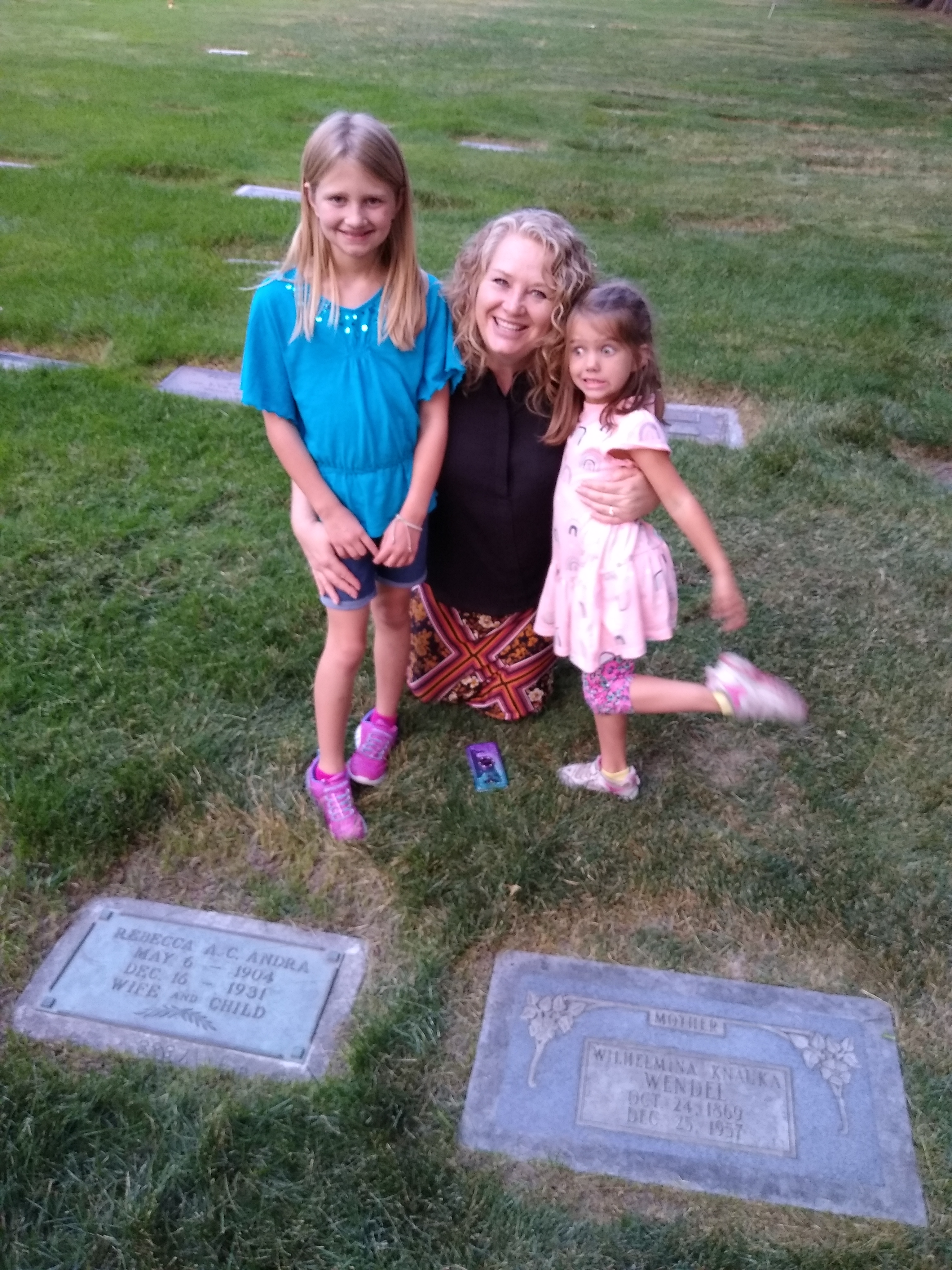
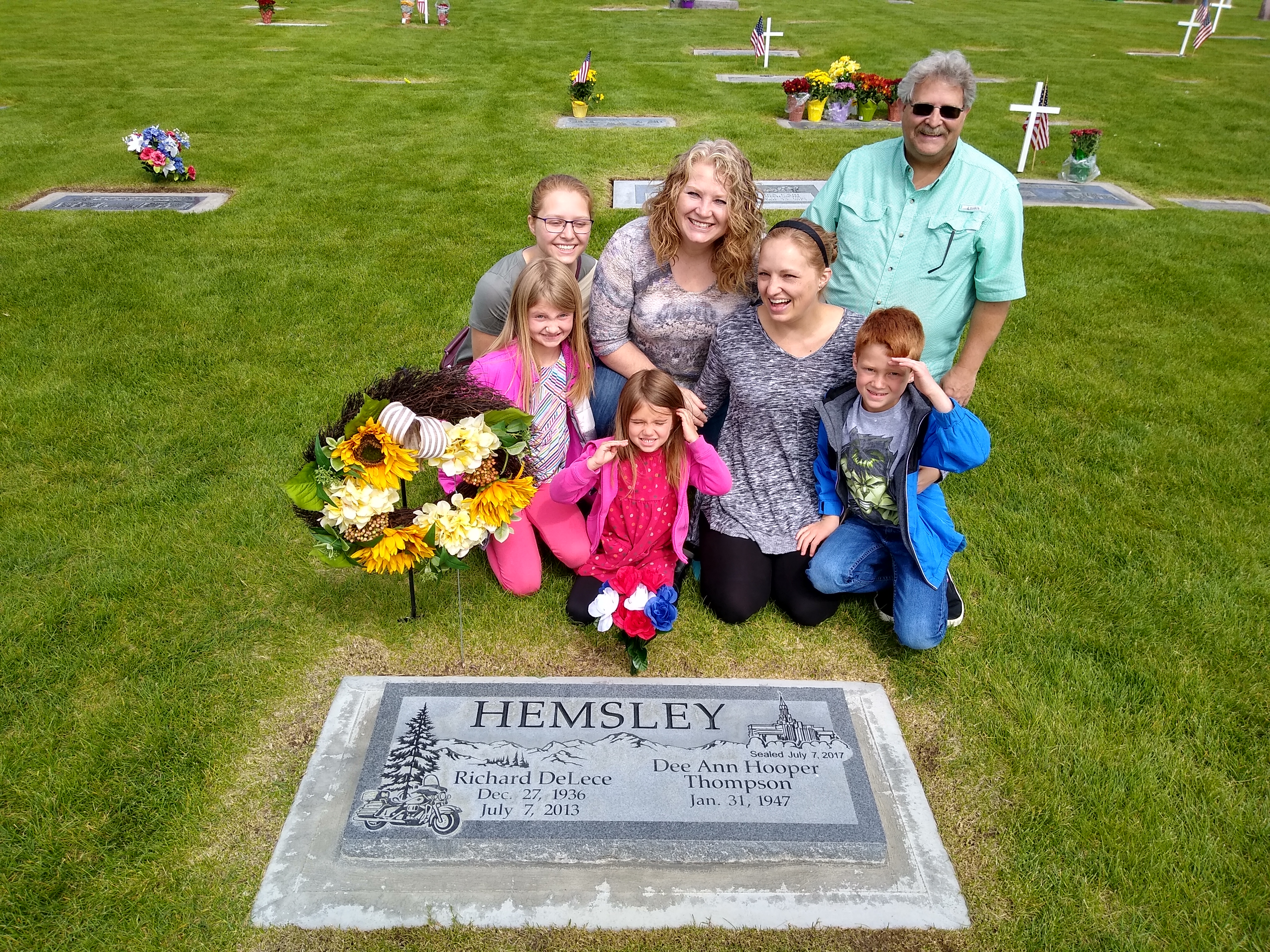
Aliza Ross, Jill Hemsley, Lillian Ross with tombstone of Christiana Wilhelmina Knauke (1869-1957), widow of Friedrich Theodor Andra, on 6 September 2020.  She went by Wilhelmina in the United States and married Johann Wendel, as I have written previously.  The other grave is her daughter-in-law and grandson, Rebecca Emelia Christensen (1904-1931) and Otto Carl Andra (1929-1929).

George & Regina Wanner – Whitney, Idaho

Hiram and Aliza Ross with tombstone of Regina Frederike Nuffer (1869-1942) and John George Wanner (1870-1947) on 26 July 2020.

Great Great Great Grandparents

William Sharp – Ogden, Utah

Lillie, Paul, Aliza, and Hiram Ross with tombstone of William Sharp on 27 November 2020.  This was the first time I had ever been to William’s grave.

Mary Sharp – Plain City, Utah

Aliza, Paul, Lillian, and Hiram Ross with tombstone of Mary Ann Bailey (1828-1913), Mary Ann (Lillie Musgrave) Stoker (1861-1935) and Milo Riley Sharp (1857-1916) on 23 May 2020. Mary Ann Bailey is the mother of Milo Riley Sharp, don’t confuse mother Mary Ann with spouse Mary Ann. We shorten our Lillian’s name to Lillie’s spelling in her honor.

William Stoker – Plain City, Utah

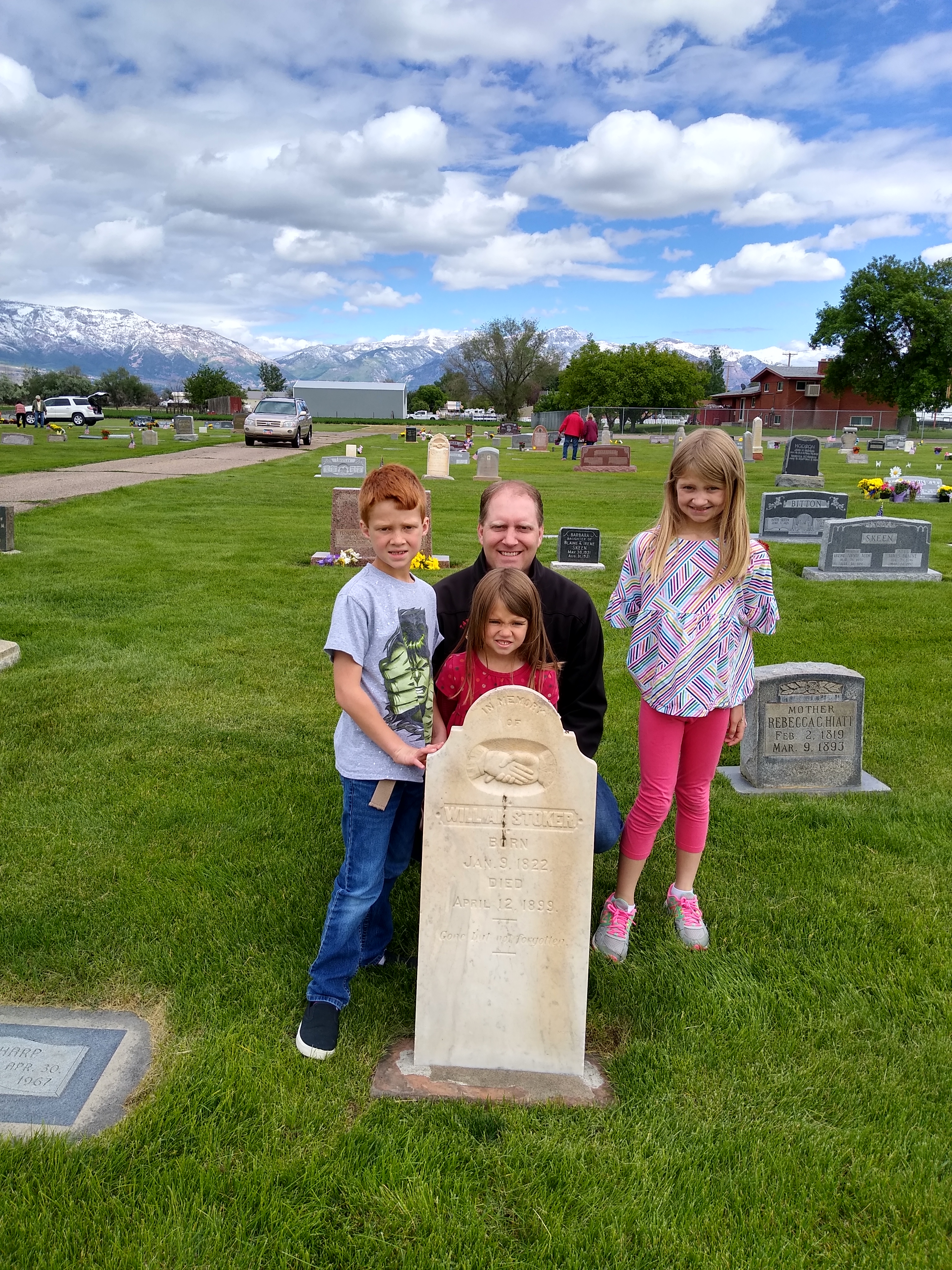
Hiram, Paul, Lillian, and Aliza Ross with tombstone of William Edward Stoker (1827-1899) on 23 May 2020.

David & Gwenllian Williams – Ogden, Utah

Aliza, Lillie, Paul, James, and Hiram Ross at the graves of Gwenllian Jordan (1842-1900) and David D Williams (1832-1911) on 27 November 2020.  Neither have a tombstone. 

Hubert Jonas – Holy Cross, Ellensburg, Washington

Lillian Ross with tombstone of Emma Schriber Jonas (1855-1898), wife of William Jonas on 5 August 2020. William and his father Hubert both do not have tombstones and are buried next to Emma.

John & Annie Nelson – Logan, Utah

Hiram, James, Lillian, and Aliza Ross with tombstone for Agnetta Benson (Bengtsson)(1832-1873) and John Nelson (Johann Nilsson)(1827-1902) on 25 July 2020.

Stephen & Hannah Coley – Lewiston, Utah

Aliza Ross with tombstone of Hannah Maria Rogers (1832-1894) and Stephen Coley (1830-1913) on 26 July 2020.

Olle Christiansen – Richmond, Utah

Lillian Ross with the tombstone of Olle Christiansen (1853-1900) on 26 July 2020.  This tombstone notes his wife’s burial in Portland, Oregon.

Constance Christiansen – Multnomah Park, Portland, Oregon

Paul, Aliza, and Lillian Ross with tombstone of Constance Josephine Eliza Jorgensen Christiansen (1857-1932) on 8 August 2020.  Portland apparently isn’t watering their cemeteries this year.

John & Anna Wanner – Logan, Utah

James, Aliza, Hiram, and Lillian Ross with tombstone of Anna Maria Schmid (1849-1929) and John George Wanner (1845-1922) on 25 July 2020.

John & Eva Nuffer – Preston, Idaho

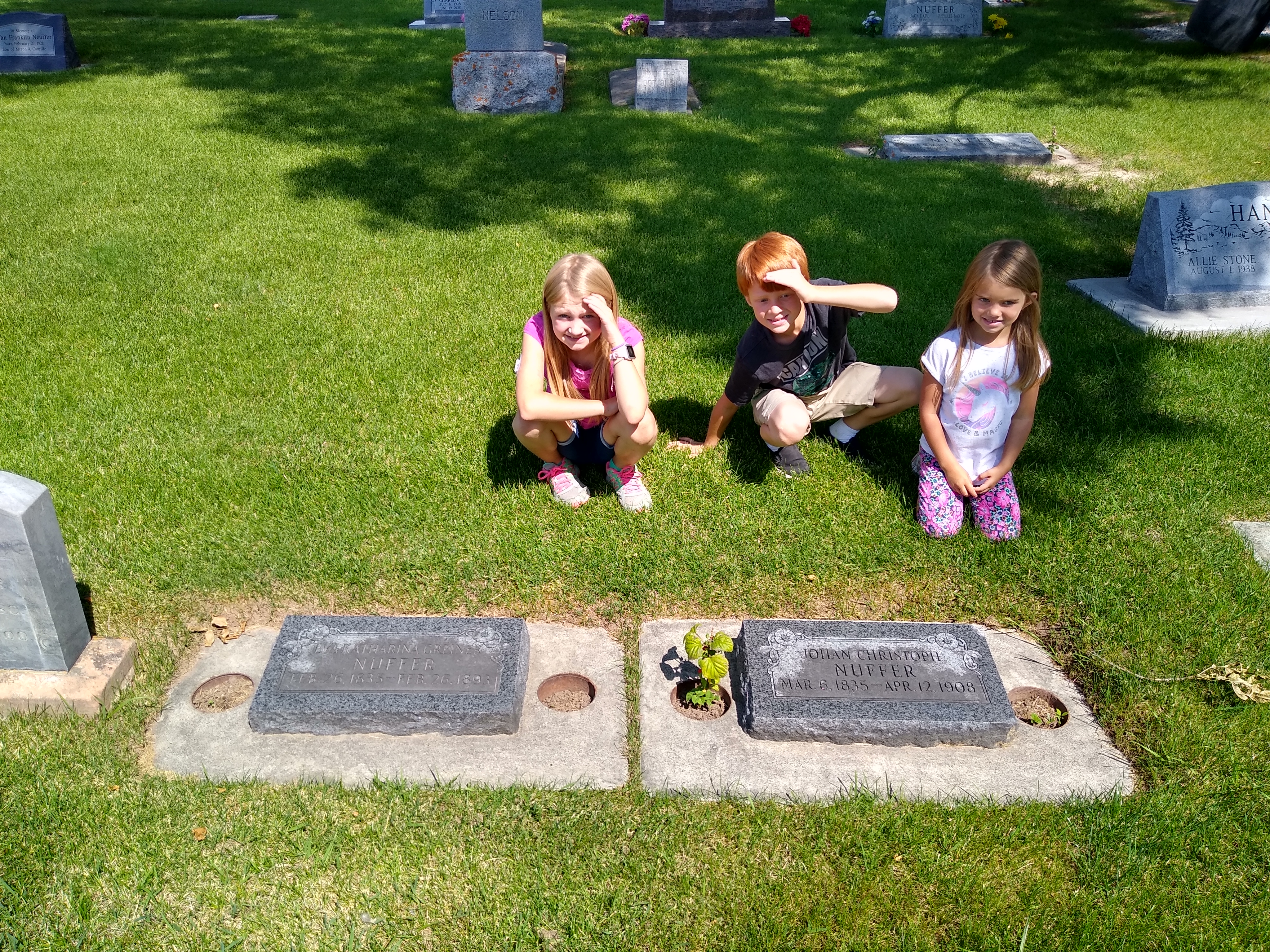
Aliza, Hiram, and Lillian Ross with tombstones of Eva Katharina Greiner (1835-1893) and Johann Christoph Nuffer (1835-1908) on 26 July 2020.

Great Great Great Great Grandparents

John Williams – Ogden, Utah

James, Lillie, Aliza, Paul, and Hiram Ross at the tombstone of John Williams (1797-1876) on 27 November 2020.

David & Margret Jordan – Brigham City, Utah

Paul, Aliza, Lillian, and Hiram Ross with tombstones for Margret Watkins (1816-1902), David Jordan (1820-1893) and Thomas Jordan (1857-1880) on 23 May 2020. Thomas is the son of David and Margret.

Johanna Benson – Spring City, Utah

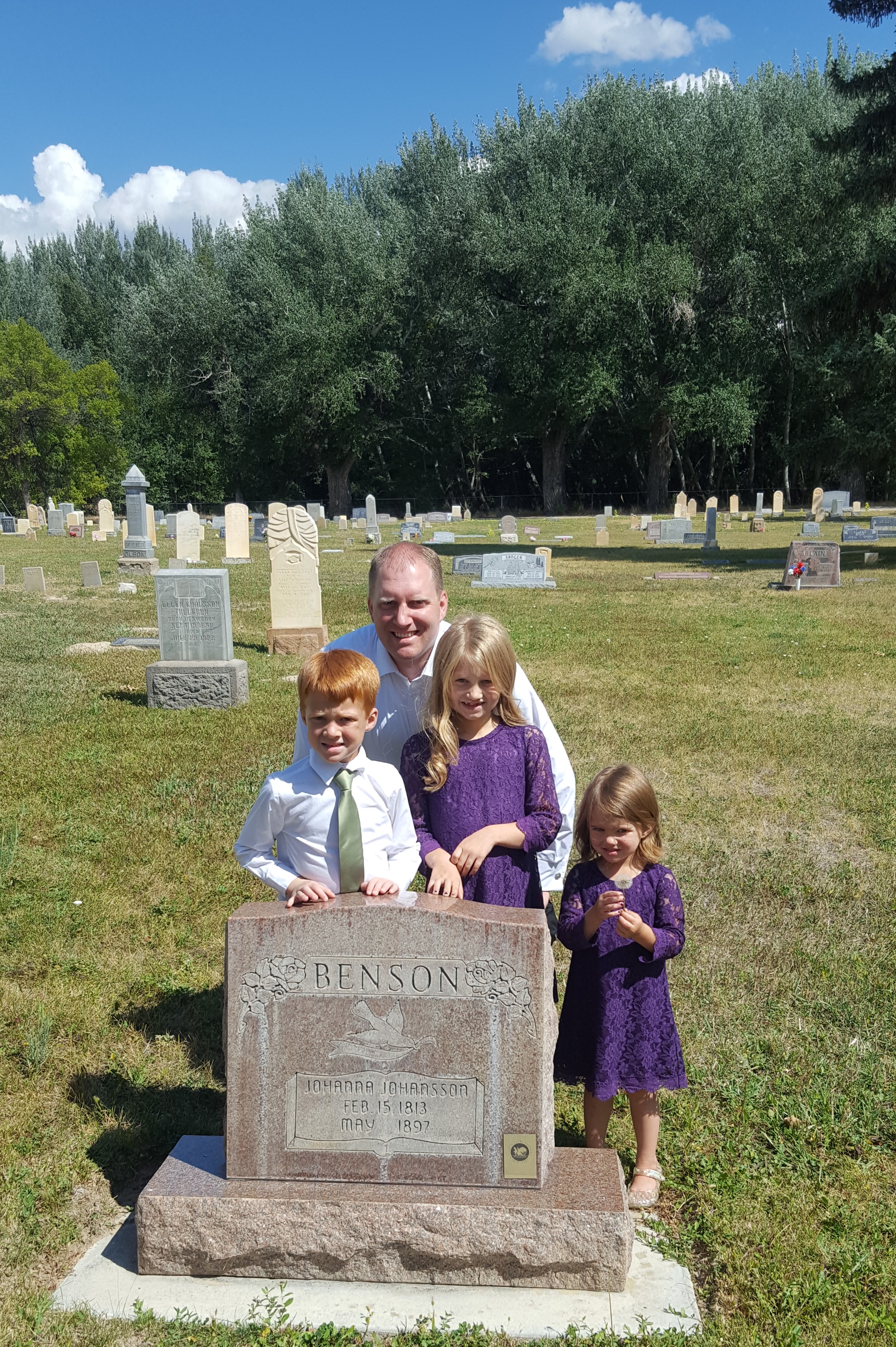
Paul, Aliza, Hiram, and Lillian Ross with tombstone of Johanna Johannsson Benson (Bengtsson)(1813-1897) on 7 September 2018.  I know I am cheating, it wasn’t 2020.  But it was recent.

Olavus & Hanna Jorgensen – Richmond, Utah

Aliza Ross with tombstones of Hanna Mathea Christensen (1831-1900) and Olavus Jorgensen (1830-1904) on 26 July 2020.

Others visited this year.

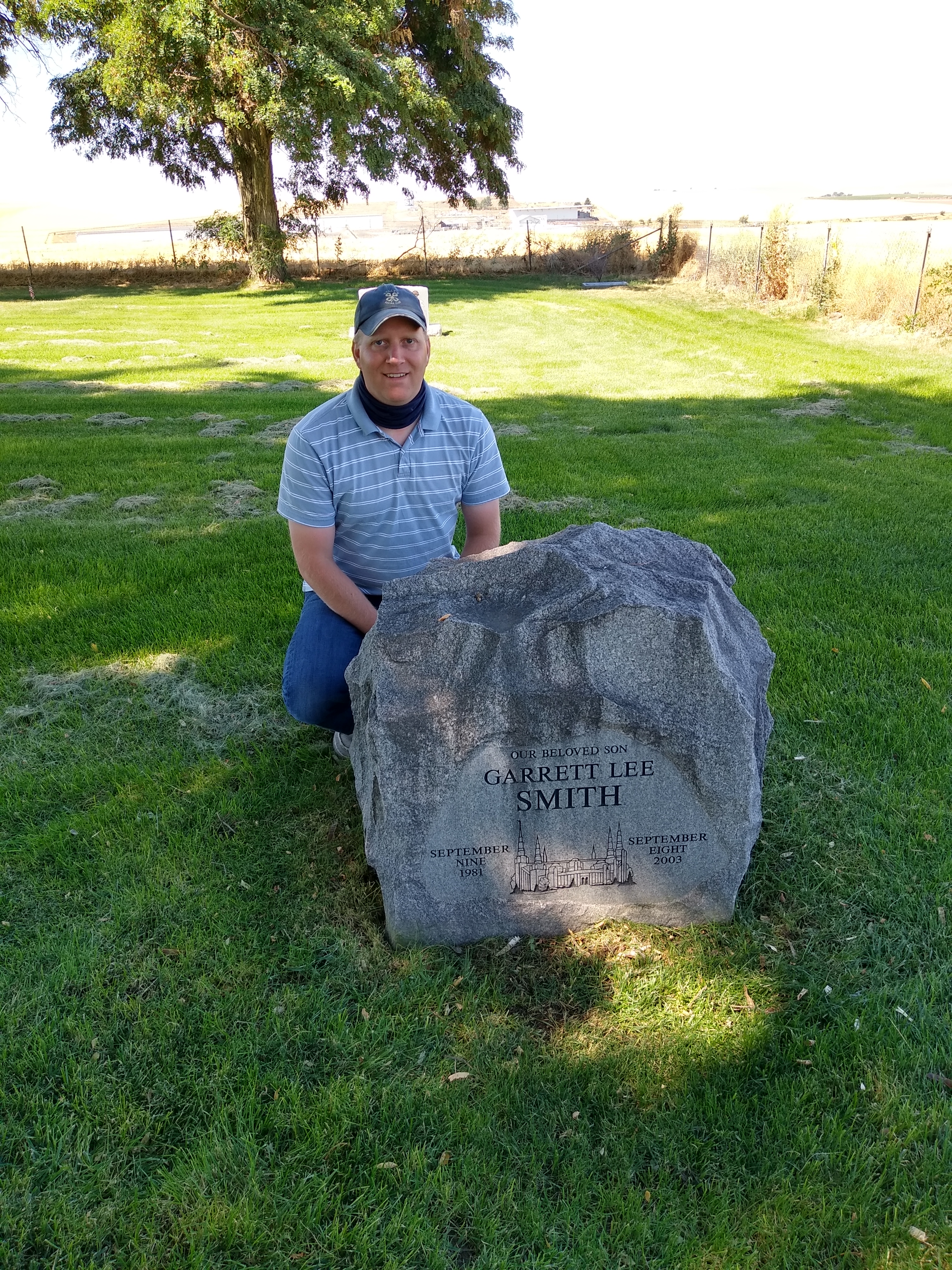
Garrett Lee Smith – Weston, Oregon

Paul Ross with tombstone of Garrett Lee Smith (1981-2003) on 9 August 2020.  Garrett was my last missionary companion.

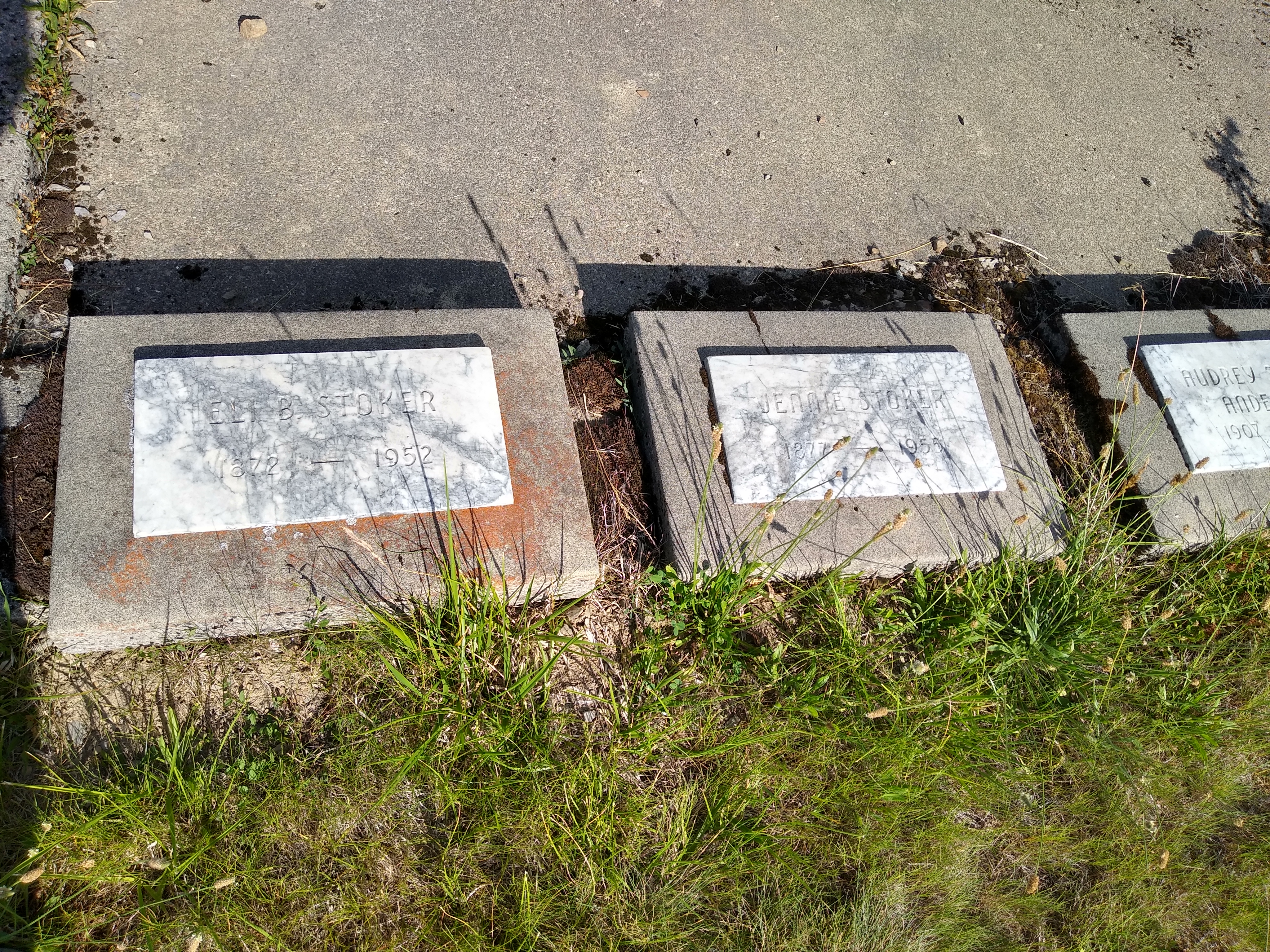
Eli Benjamin Stoker – Mullan, Idaho

Tombstone of Eli Benjamin Stoker (1870-1952) on 3 August 2020.  Eli is the half-brother to my Mary Ann Stoker Sharp.

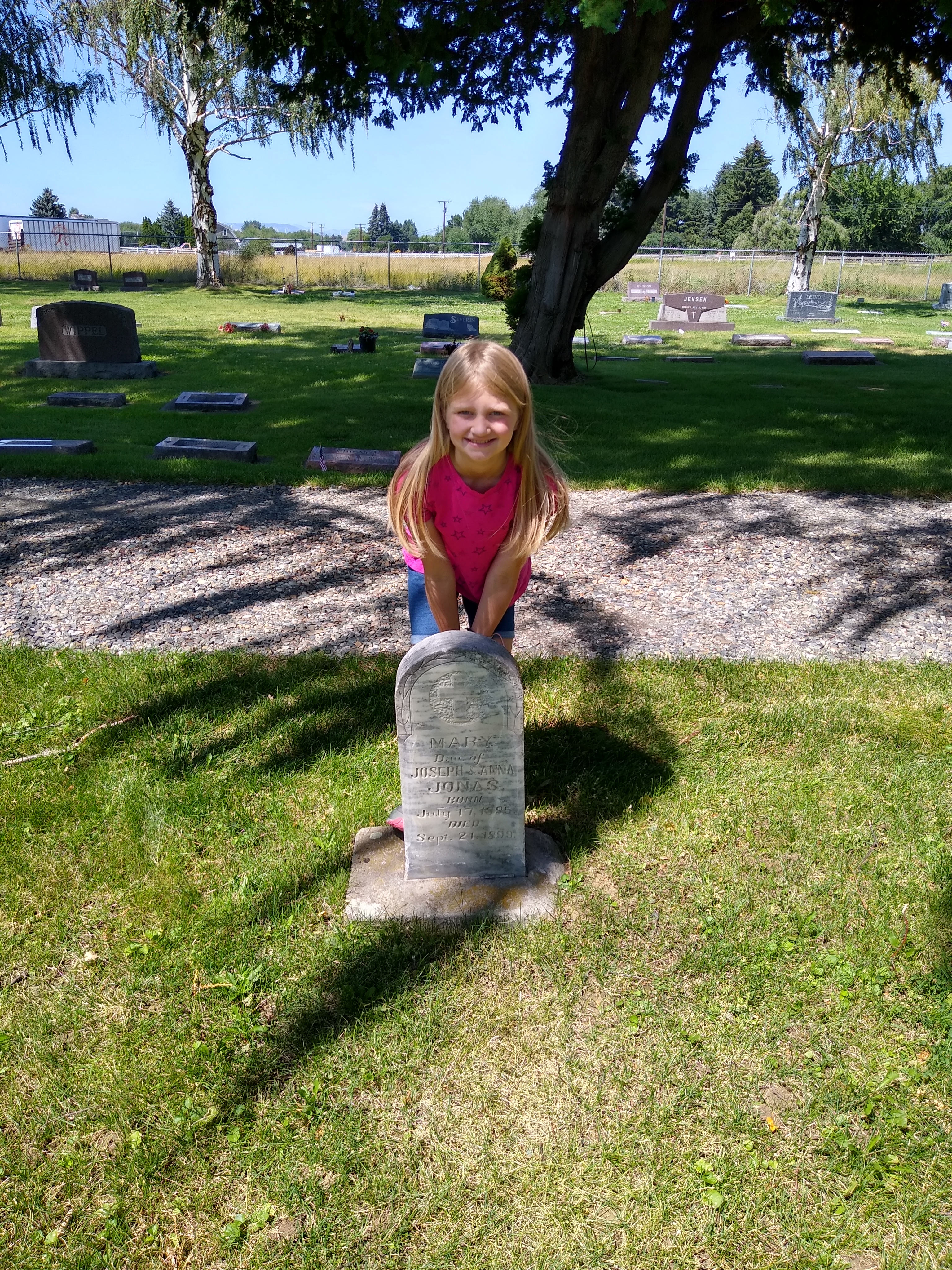
Mary Nelson Jonas – Holy Cross – Ellensburg, Washington

Aliza Ross with tombstone of Mary Nelson Jonas (1885-1899) on 5 August 2020.  Mary is the sister to my Joseph Nelson Jonas.

Ezra & Flora Benson – Whitney, Idaho

Aliza and James Ross with tombstone of Flora Smith Amussen (1901-1992) and Ezra Taft Benson (1899-1994) on 26 July 2020.  Many know Ezra as the 13th President of The Church of Jesus Christ of Latter-day Saints and Secretary of Agriculture under President Eisenhower.

Spackman Plot Marker – Lewiston, Utah

Aliza Ross with the Spackman Plot Marker. She recognized and wanted a picture with the Pacman tombstone on 26 July 2020.

Walter Theodor Andra – Logan, Utah

Aliza, Hiram, and Lillian Ross with tombstone of Walter Theodor Andra (1896-1967) on 25 July 2020.  Walter is brother to my Bill Andra.

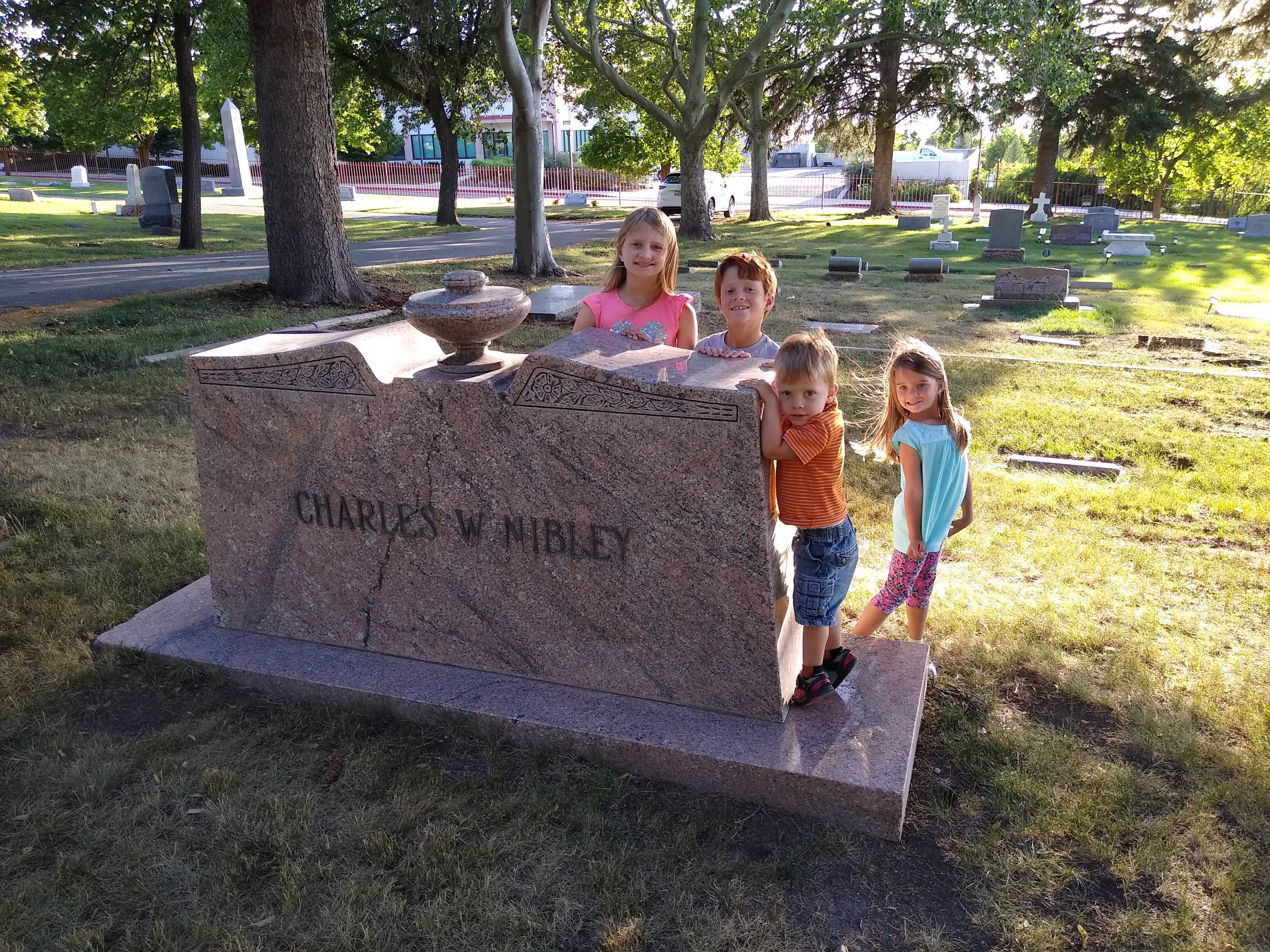
Charles Wilson Nibley – Logan, Utah

Aliza, Hiram, James, and Lillian Ross with tombstone of Charles Wilson Nibley (1849-1931) on 25 July 2020.  Charles is known for various positions and business interests, but most will know him as a member of the First Presidency (non-apostle) to President Heber J Grant of The Church of Jesus Christ of Latter-day Saints.

Moses Thatcher – Logan, Utah

Lillian, Hiram, and Aliza Ross with tombstone of Moses Thatcher (1842-1909) on 25 July 2020.  Moses is known for various positions and business interests, but most will know him as a an Apostle of The Church of Jesus Christ of Latter-day Saints.

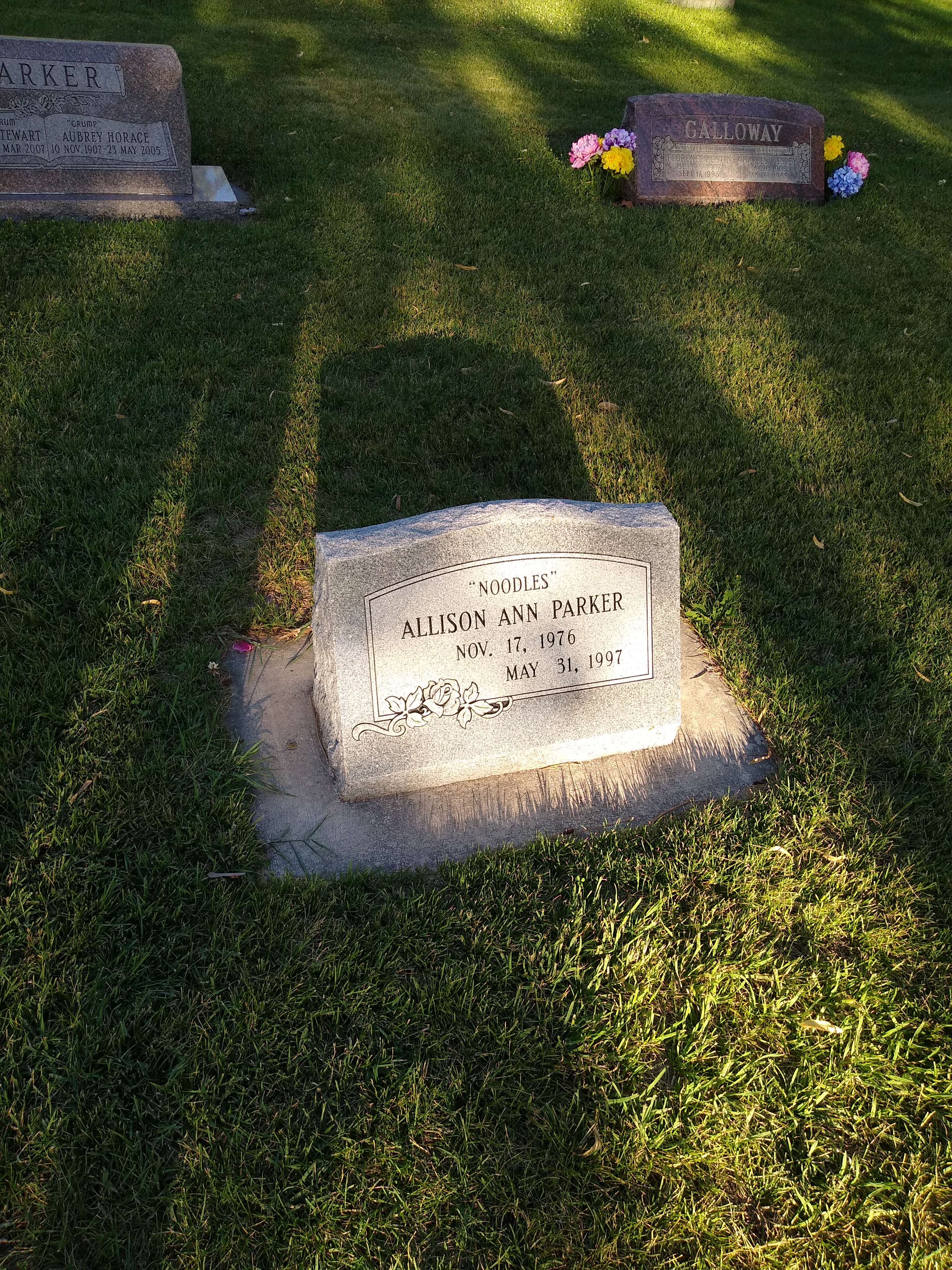
Allison Ann Parker – Logan, Utah

Tombstone of Allison Ann Parker (1976-1997) on 25 July 2020.  Allison is a friend and brother of my high school friends Ryan and Russell Parker.  She passed away after a tragic accident driving back to Utah after our Senior Prom date night in 1997.

Peter Maughan – Logan, Utah

James, Aliza, Lillian, and Hiram Ross with tombstone of Peter Maughan on 25 July 2020.  Peter is known for various positions and business interests, as one of the founders of Cache Valley, Utah.

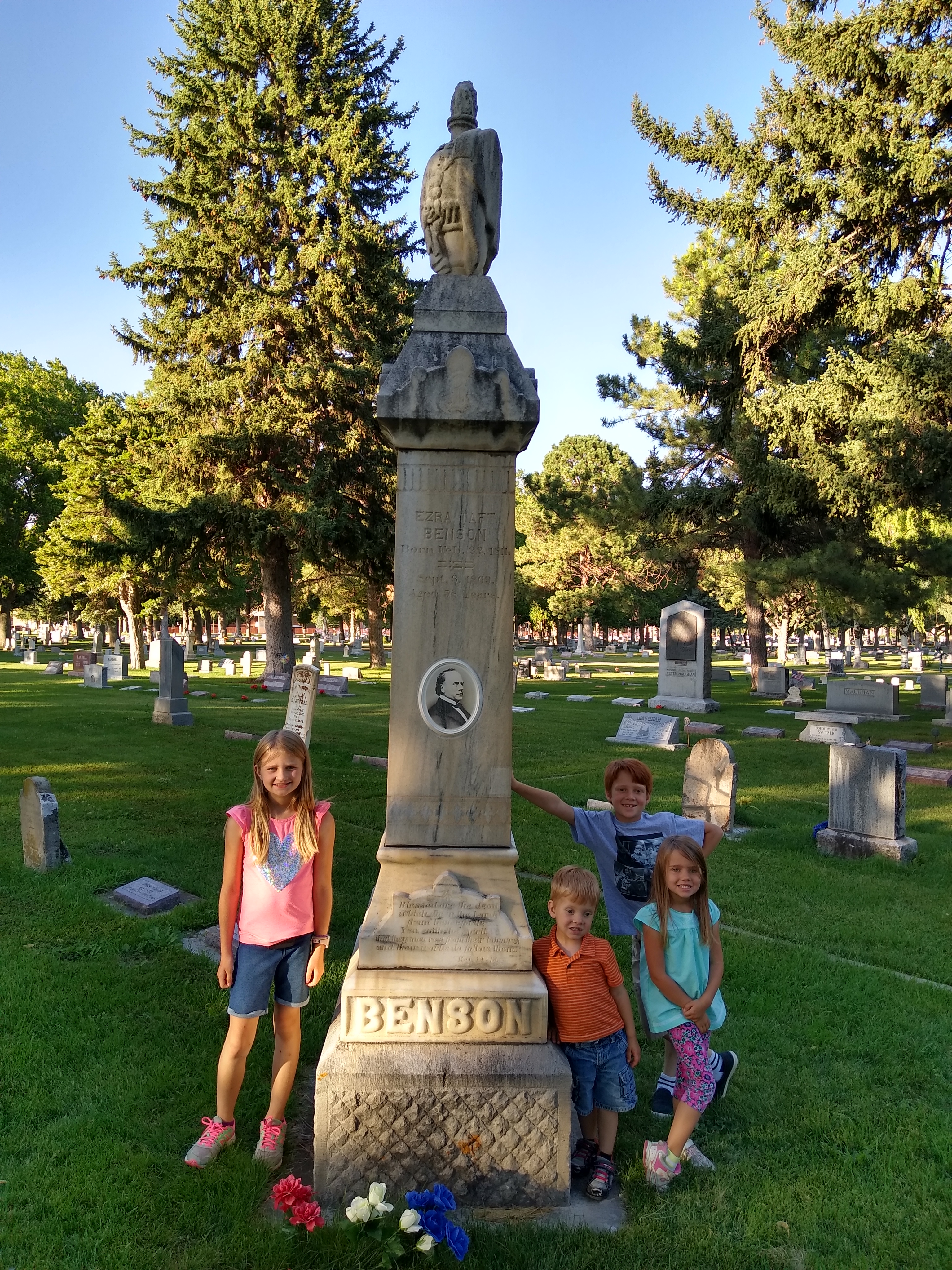
Ezra Benson – Logan, Utah

Aliza, James, Hiram, and Lillian Ross with tombstone of Ezra Taft Benson (1811-1869) on 25 July 2020.  Ezra is known for various positions and business interests, but most will know him as a an Apostle of The Church of Jesus Christ of Latter-day Saints.

Nels Nelson – Crescent, Sandy, Utah

Hiram and Lillian Jonas with tombstone of Nels August Nelson (Nilsson)(1857-1935) on 11 July 2020. He is the brother to my Annetta “Annie” Jonas.

Stanley Spatig – West Warren, Utah

Tombstone of Stanley Hazen Spatig (1940-2013). Son of Eva Virtue Wanner Spatig, sister to my Mary Louise Wanner Andra.

Joseph & Ann Wayment – West Warren, Utah

Bryan Hemsley, Amanda, Aliza, and Hiram Ross with tombstones of Ann Reed (1852-1931) and Joseph Wayment (1844-1931). Amanda’s Great Great Great Grandparents on 24 May 2020.

Louis & Martha Hansen – West Warren, Utah

Bryan Hemsley, Aliza, Amanda, and Hiram Ross with tombstone of Sarah Eveline Judkins (1886-1943), Louis Alma Hansen (1876-1951), and Martha Ann Wayment (1877-1908) on 24 May 2020. Louis and Martha are Amanda’s Great Great Grandparents.

Walter & Myrtle Hansen – West Warren, Utah

Bryan & Jill Hemsley with Aliza, Lillian, Amanda, and Hiram Ross with tombstone of Myrtle Thompson (1902-1959) and Walter Wayment Hansen (1904-1995) on 24 May 2020. Walter and Myrtle are Amanda’s Great Grandparents.

Evan & Lona Jonas – Lindquist Memorial Gardens of the Wasatch, Ogden, Utah

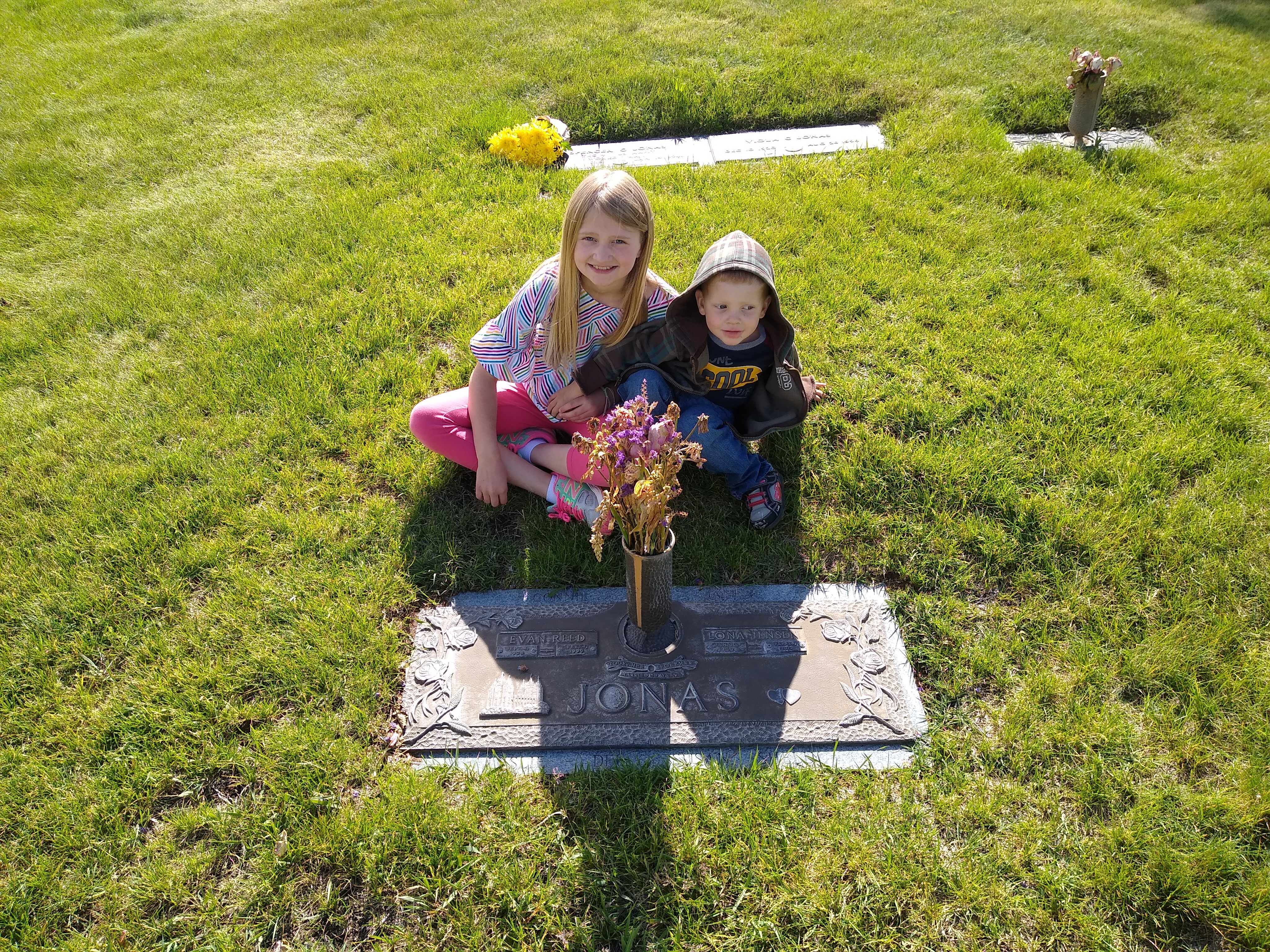
Aliza and James Ross with tombstone for Lona Rae Jensen (1930-2012) and Evan Reed Jonas (1928-1999) on 23 May 2020. Evan is the brother to my Norwood Jonas.

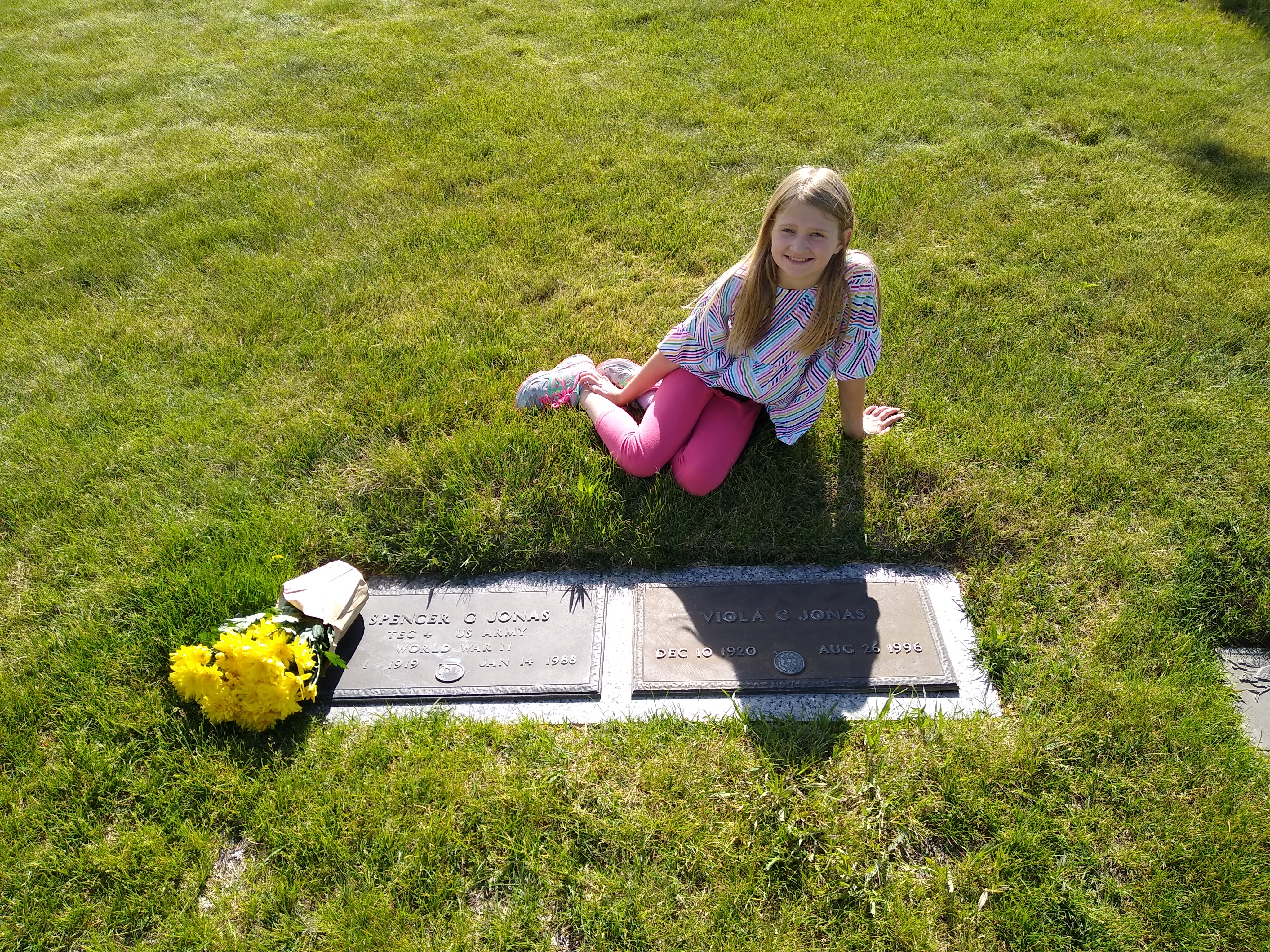
Spencer & Jimmie Jonas – Lindquist Memorial Gardens of the Wasatch, Ogden, Utah

Aliza Ross with tombstone of Viola Amelia (Jimmie) Cole (1920-1996) and Spencer Gilbert Jonas (1919-1988) on 23 May 2020. Spencer is the brother to my Norwood Jonas.

Melvin Thompson – Lindquist Memorial Gardens of the Wasatch, Ogden, Utah

Amanda, James, Aliza, Lillian, Hiram Ross, Bryan and Jill Hemsley, and Alyssa Smart with tombstone of Melvin J Thompson (1925-2018) on 23 May 2020. Mel is Amanda step-Grandpa.

Merle & Belle Hemsley – Lindquist Memorial Gardens of the Wasatch, Ogden, Utah

Bryan & Jill Hemsley, Hiram, Lillian, Aliza, and Amanda Ross with tombstone for Belle Sarah Peterson (1917-2003) and Richard Merle Hemsley (1912-1962) on 23 May 2020. Merle and Belle are Amanda’s Great Grandparents.

Ellen Weller – Hooper, Utah

Tombstone of Ellen Watton Weller (1828-1894) on 23 May 2020. I stumbled upon this tombstone in Hooper. I was walking around, felt inspired to walk over, and looked at this one knowing there was a link. Name looked vaguely familiar. Half-sister to my Hannah Maria Rogers Coley. Didn’t know she was buried in Hooper, FamilySearch didn’t have it either. Her and Joseph Weller are now documented and updated.

Dee Hemsley – Hooper, Utah

Alyssa Smart, Bryan and Jill Hemsley, Aliza, Lillian, Amanda, and Hiram Ross with tombstone of Richard DeLece Hemsley (1936-2013) on 23 May 2020.  Dee is Amanda’s grandfather.

William & Martha Wayment – Plain City, Utah

James, Amanda, Lillian, Aliza, and Hiram Ross with tombstones for Martha Brown (1823-1905) and William Wayment (1822-1883) on 23 May 2020. William and Martha are Amanda’s Great Great Great Great Grandparents.  The tombstone above Aliza’s head is William Edward Stoker mentioned above, my Great Great Great Grandfather.

Lorenzo Snow – Brigham City, Utah

Hiram, Lillian, and Aliza Ross with tombstone for Lorenzo Snow (1814-1901) on 23 May 2020. Lorenzo Snow is known as the 5th President of The Church of Jesus Christ of Latter-day Saints.

David & Ruby Haight – Wasatch Memorial, Salt Lake City, Utah

Aliza & Lillian Ross, Jill Hemsley, with tombstone of Ruby Olson (1910-2004) and David Bruce Haight (1906-2004) on 6 September 2020.  David Haight is known as an Apostle of The Church of Jesus Christ of Latter-day Saints and I previously interacted with him regarding marriage.

Charlotte Sharp – Ogden, Utah

James and Paul Ross at the tombstone of Charlotte Elizabeth Earl (1816-1907) on 27 November 2020.  Charlotte married my William Sharp (1826-1900) after she was widowed of her first husband Charles James McGary (1808-1875). 

Lorin Farr – Ogden, Utah

Paul Ross with tombstone of Lorin Farr (1808-1907) on 27 November 2020.  Lorin Farr was the first Stake President of the Weber Stake which covered all the territory of all my ancestors in Ogden and Plain City.  He was also the first Mayor of Ogden.

Thomas Marsh – Ogden, Utah

Paul Ross with tombstone of Thomas Baldwin Marsh (1800-1866) on 27 November 2020.  Thomas Marsh is known as the first Apostle of The Church of Jesus Christ of Latter-day Saints, who had he remained faithful, would have been President before Brigham Young.

Sergene Sorenson – Pleasant View, Burley, Idaho

Lillie, Hiram, Aliza, and James Ross with tombstone of Sergene Sorenson (1932-2013) on 2 January 2021. Sergene is the sister to my Grandma Colleen.

Scott Sorenson – Pleasant View, Burley, Idaho

James, Lillie, Hiram, and Aliza Ross with tombstone of Scott Sorenson (1951-2001) on 2 January 2021.
Lillie, Hiram, Aliza, and James Ross with tombstone of Bert Sorenson (1924-1991) on 2 January 2021.

History of Idaho: John Nuffer

Back l-r: Austin, Willard, Luther, Louis, Herman; Middle l-r: Myron, John, Florance, Edwin, Louisa, Agnes; Front l-r: Karl, Athene Nuffer

From “History of Idaho” and found in Volume III starting page 1197.  “A Narrative Account of Its Historical Progress, Its People and Its Principal Interests”  This book is by Hiram T. French, M.S.  The book also says it is Illustrated and published by The Lewis Publishing Company, Chicago and New York, 1914.

I found this book while at Utah State University originally.  I knew the history was inside but did not copy it then.  I finally returned a few years ago, found the book in the new library, and made a copy.  But at least I had it.  I found it just recently on Google Books.  This is John Nuffer, half-brother of my Regina Nuffer Wanner, not her father as some have previously indicated.  John went by John, his father John Christoph, went by Christoph and Christopher.  I have kept the spelling of the article.  You can also read his autobiography too.

“A quarter century’s residence at Preston constitutes Mr. John Nuffer one of the old timers of this vicinity.  The mere fact of long residence, however, is somewhat of an empty distinction without works accompanying such residence.  In the case of Mr. Nuffer there can be found ample evidence both of long residence and accomplishments in the realm of practical affairs and in good citizenship.  Mr. Nuffer in early life was a graduate of one of Germany’s foremost schools of architecture.  All his life he has been a builder and contractor and in Preston in particular probably much the greater part of the higher class public and residential buildings has been done under his supervision, or through his business organization.

“Mr. Nuffer was born in Wuertemberg, Germany, December 4, 1862.  He is a son of Christopher and Agnes Barbara (Spring) Nuffer.  The father, who was a wine grower in the old country, came to America in 1882, first settling at Logan, Utah, but a year later came to Oneida county, Idaho, where as one of the early settlers he took up land and was a homesteader and farmer until his death in 1908.  He was born in 1835.  The mother, who was born in Germany in 1838, died there in 1865.  Of two children, John is the older, while his brother Fred is also a resident of Preston.

“The grade schools of Germany were the source of Mr. Nuffer’s education up to his fourteenth year.  At that customary age, when the German youths take up an education for practical life, he entered the Royal Architectural College at Stuttgart, where he was a student for four terms, and on leaving school as a budding young architect, he followed his profession in his native country for four years, up to the time of the removal of his father to America, when he became a resident of the western county.  Mr. Nuffer has been largely engaged in contract work since coming to Idaho, and during the past ten years has had a large business of his own as an architect and builder.  A complete list of his work at Preston and vicinity would be too long, buth some of the more prominent structures should be mentioned.  They include the Oneida Stake Academy, consisting of two buildings; the Western [should be Weston] Tabernacle; the Preston Opera House; the McCammon public school, the grade public school: Fairview, Mapleton and Whitney public schools; the Tabernacle at Grace; the high school at Grace; the Latter Day Saints church in the First Ward; and most of the business blocks as well as many of the larger and more attractive residence structures in Preston.  Mr. Nuffer is a director and secretary-treasurer of the Cub River and Worm Creek Canal Company.

“His part in civic affairs has been hardly less important than in business.  For four years, or two terms, he served as justice of the peace of Preston; one term as village trustee, and was clerk of the village board for one term.  His politics is Democratic.  He is a high priest in the Church of the Latter Day Saints, and served a two years’ mission for the church in Germany.

“In November, 1885, at Logan, Utah, Mr. Nuffer married Miss Louise Zollinger, a daughter of Ferd and Louise (Meyer) Zollinger.  Her father died December 16, 1912, and her mother is living in Providence, Utah.  Her parents were pioneers of Utah in 1862, having crossed the plains to the then territory.

“The marriage of Mr. and Mrs. Nuffer has been blessed with a large family of eleven children, who are named as follows: Luther Jacob born at Providence in 1886, is a resident of Preston and is married and has two children; Willard John, born at Preston in 1888, is a graduate of Idaho State University in the law department and is a young lawyer at Downey, Idaho; Louis Ferd, born at Preston in 1889, is a school teacher in Preston; Herman Christ, born at Preston in 1891, is a student of civil engineering in the University of Moscow; Austin Eckart, born at Preston in 1893, is a high school student; Carl Joseph, born in 1895, died in 1904; Agnes Louise, born at Preston in 1898, is a schoolgirl; Myron David, born in 1900; Florence Myrtel, born in 1902, and Edwin Joseph, born in 1904, are all attending school; and Athene Barbara, born in 1907.

“As a successful man and long business builder in this section of Idaho, Mr. Nuffer has a very high opinion of the state and forecasts its taking place among the first of American states.  He has had a career of substantial self-advancement and practically all the propserity he has won due to his own labor.

“His fondness for home life has precluded any association without outside organizations except the church in which he has had a prominent part.

That ends the history from The History of Idaho.  I thought I would provide some additional details on the family.

John was born in Neuffen, Württemberg, Germany.

Louise was born in Providence, Cache, Utah.

Luther Jacob was born 21 June 1885 in Providence and died 27 January 1952 in Oak Grove, Clackmas, Oregon.  He married Rosa Morf and later Mary Crockett.

Willard John was born 19 January 1888 in Preston and died 27 January 1948 in San Bernardino County, California.  I am not aware that he ever married.

Louis Ferdinand was born 20 September 1889 in Glendale, Oneida (now Franklin), Idaho and died 19 August 1966 in Canby, Clackmas, Oregon.  He married Ruby May Jensen.

Herman Christopher was born 12 October 1891 in Preston and died 23 August 1940.  He married Virginia Pryde Simmons.

Austin Eckhert was born 6 August 1893 in Preston and died 2 March 1944 in Los Angeles, Los Angeles, California.

Karl Aron was born 6 September 1895 in Preston and died 7 February 1905 in Preston.

Karl Nuffer

Agnes Louise was born 11 May 1898 in Preston and died 28 June 1983 in Downey, Bannock, Idaho.  She married Raymond Hurst.

Myron David was born 21 July 1900 in Preston and died 24 November 1976 in Logan.  He married Camille Cole.

Florence Myrtle was born 19 October 1902 in Preston and died 23 March 1994 in Soda Springs, Caribou, Idaho.  She married Heber Wilford Christensen.

Edwin Joseph was born 25 August 1904 in Preston and died 21 June 1996 in Ogden, Weber, Utah.  He married Jennie Arrella Smart.

Athlene Barbara was born 21 November 1907 in Preston and died 23 November 1991 in Preston.  She married Adrian Biggs Hampton.

In Memory of Lowell Hansen, Bryce Sanderson, and Garrett Smith

With the suicide of a dear young man, Bryce Allen Sanderson, I thought I would share these thoughts and this talk once again.  In memory of Garrett Lee Smith and Lowell Eugene Hansen.  Both of them forced the concept of suicide into my life and required I come to some understanding of the idea.  I wanted to give some memories of these two individuals and the doctrinal concepts surrounding suicide.  What is suicide?  How does God look at suicide?  How am I supposed to deal with suicide?  How does God deal with those who commit suicide?  I hope this talk will help address some of these questions as we all ponder once again this unthinkable act, that brings upon a person their own death.

Lowell Hansen was an acquaintance I knew in Paul, Idaho.  I was young enough that I knew who he was, but did not really know anything about him.  After I was charged by a bull at our house, I remembered that within days he appeared at our home and removed the charge from the bull.  I watched him shoot, hang, gut, clean, and cut the bull.  It was fascinating.  I remember recognizing the butcher truck each time when I would see it on the road or at some other location.  I knew he built a log home because I always saw the truck parked near it.  Years later after I became involved in the same congregation and came to know him a little more as Brother Hansen.  It was not until I returned from my mission that I realized he even had a family.  I moved back to home in the fall of 2002 and I was assigned as a Home Teacher to one of Lowell’s daughters.  It was only then I really started to get to know the Hansen family more on a personal level.  It was shortly after that Lowell decided to end his life much like he did that bull.  I attempted to help minister, however weakly, somewhat to the needs of his daughter and her then boyfriend.  The talk I reproduce in full below was given at his funeral and has provided much of the basis for my feelings and ideas on suicide.  I have gained my own testimony of the talk and testify openly of its principles and truth.

Garrett Smith was on a bit more personal level for me.  I first learned of him in Manchester, England when he was assigned my companion as a new missionary.  I was called as a trainer to him, although I only knew of him as Elder Smith.  We served together, 24 hours a day, for 6 weeks.  We had many a conversation and became close friends.  I had some frustrations with him due to some of his learning disabilities and my lack of patience.  He knew of this and I do not think it always helped in our relationship.  When the 6 weeks were up, we had both profoundly influenced the other.  He convinced me that I should consider leaving civil engineering and looking more into political science and law.  I think I had convinced him that his disabilities were not a very good excuse for settling for mediocrity.  I left England to return home in 2000 and he finished in 2002.  We had planned several occasions where we would get together for old time’s sake, but they kept falling through due to poor scheduling and other issues.  We finally set a date to get together on the 13th of September in 2003.  I was going to drive down to Orem, Utah where he was and spend the weekend.  Unfortunately, I received a phone call that week only to find he had hanged himself in a closet after consuming alcohol and sleeping pills.  I had a great desire to attend his funeral so a roommate from Logan drove with me to Pendleton, Oregon for the funeral.  I took a copy of the talk from Lowell’s funeral with me and gave it to Garrett’s parents.  Garrett’s mom, Sharon, later thanked me for the talk.  Our Mission President, Phil Wightman, spoke at the funeral and while I doubt he had read the talk, he referenced very similar themes as Hyrum Smith did at Lowell’s funeral (Hyrum Smith was Lowell’s Mission President too).  Sometimes I find myself wondering what Garrett’s life would be like if he wasn’t reposing at Weston, Oregon.

I lost the talk over the years and had repeated requests come to me for a copy of it.  Those asking were mostly individuals I had shared with at the time of Garrett’s funeral who were moved by it and wanted to give a copy of it when someone else took their life.  I had probably a dozen requests for the talk in 2010, so I ended up contacting Lowell’s widow for a copy.

Here is a copy of the talk by Hyrum Smith given 6 December 2002 at the funeral of Lowell Eugene Hansen in Paul, Idaho.  At the end, I will give some other thoughts I remember Phil Wightman giving at Garrett’s funeral.

~

My brothers and sisters, I wasn’t really sure until about 3 o’clock this morning why I was asked to be here, but somewhere around three, I knew.  The spirit indicated to me that I am uniquely qualified to speak here today, and I’ll share with you why as I share some thoughts with you.

I’m honored and humbled that Emma Jean asked me to be here.  When she called Monday, I was stunned as I’m sure all of you were.

Public speaking is not something that is foreign to me.  I do it for a living.  I’ve spoken before thousands of audiences, but never an assignment like this.  I’d like to begin by suggesting that we are met here today in the house of God.  That same God who sent Jesus here to help us.  We meet today in the name of Jesus Christ who died to save us.  I would ask that you keep that in mind as I share a few thoughts with you this morning.

I’d like to begin by sharing four scriptures with you that describe, as many scriptures do, how our Father in Heaven, and our Savior feel about us.  I think we need to be especially reminded of that.  I’d like to go first with the 29th section of the Doctrine and Covenants and read verse 5 “Lift up your hearts and be glad for I am in your midst and am your advocate with the Father.  And it is His good will to give you the kingdom.”  I would then take you to the 62nd section of the Doctrine and Covenants and read verse 1, “Behold and hearken, o ye Elders of my church saith the Lord your God.  Even Jesus Christ, your advocate, who knoweth the weakness of man and how to succor them who are tempted.”  Now go with me to John, Chapter 3, verse 16, “For God so loved the world that He gave His only begotten Son.  That whosoever believeth in Him should not perish, but have everlasting life.  For God sent not his Son into the world to condemn the world but that the world, through Him, might be saved.”  Last I would take you back to the Doctrine and Covenants, in section 18.  “Remember the worth of souls is great in the sight of God.  For behold, the Lord, your Redeemer, suffered death in the flesh.  Wherefore He suffered pain of all men that all men might repent and come unto Him.  And He hath risen again from the dead that He might bring all men unto Him on conditions of repentance.  And how great is His joy in the soul that repenteth.”  I share those scriptures with you, brothers and sisters, as a preamble to what I would ask you to consider as we have met here today.

This wonderful man, father, husband, son, brother, missionary, I knew him well as a missionary.  He was one of the great missionaries of our mission – most of the Idaho people were.  He made a big mistake the other night.  Huge mistake.  He knows that he made that mistake now.  It cost him his life.  But only his body died the other night.  His soul, his spirit, his brain, his mind are still very much alive – very active.  It’s like going into another room.

I was led to a talk that Elder Jeffrey Holland gave at a very similar funeral.  Jeff Holland and I served as missionaries in the same mission, British mission, lots of years ago.  He’s a very dear friend.  He was asked to speak at the funeral of a young man who had taken his life.  This is what Elder Holland said, and I am going to interject Lowell’s name into these remarks, because they fit perfectly today.  “We’re here to celebrate Lowell’s life, not his death.  We’re here to praise the Lord and love God for the atonement and the resurrection, but we’re also here to say, particularly to the youth in this congregation and others who struggle, that Lowell made a mistake.  Now he would be the first to say that.  Someone said, ‘A man to be good, and I would add a woman, must imagine intensely and comprehensively – he must put himself in the place of another – the pains and pleasures of the man that has become his own.  Until he can do that, he must never sit in judgment on a man or his motives.’  We need a better vocabulary, Emma Jean.  We know what we mean when we use the language of death.  But the master of heaven and earth, the Savior of the world, the Redeemer of all mankind, the living Resurrection said that, “When you live and believe in Him, you never die.”  So, we’ll let Lowell go for a while.  But he’s not dead, in any eternal sense, and you know that.  You know that now, you’ll know it tomorrow, and you’ll know it next week.  You’ll especially know it when he is spiritually close to you, whispers to you in your dreams, helps through the veil to raise your grandchildren.  You’ll know that Lowell lives.  It is important to me to bear testimony to you that Lowell lives – just as we testify that God lives and Jesus lives.  We testify that Lowell lives and spiritually and is loved of God and of us.  We miss him.  Death was an intruder this week.  We weren’t ready.  We do miss him and we are sorry, but none of that diminishes the brightness of his life.  The grandeur of God’s plans – the reality of life and the resurrection – of eternity and the Celestial kingdom.  Lowell is being buried with all the promises and symbols of his covenants safely around him.  God in his mercy will work out all the arrangements even as Lowell works out his acknowledgement of his mistake.”  Un-quote.

Those are words of an Apostle of God.  I would like to pose five questions to you now.  The first of which no one has an answer for, but I think we need to deal with it, because I don’t think there is a person in this room that hasn’t asked this question in the last five days.  The second, third, and fourth question, I came from southern Utah this morning, to answer.  Because there are answers to those three questions, and I believe I can answer them for you.  The fifth question, only the people in this room can answer.  I don’t know what that answer will be, but I’m going to pose it.

Here’s the first question, which has been on the minds and lips of probably everyone.  “What was he thinking about?”  What possibly could have driven him to make this mistake?  What’s the answer?  I don’t know.  Nobody here knows.  What sort of despair and anguish and pain causes someone to do that?  I don’t know!  He made a mistake, so we really don’t know the answer to that question.  But that’s not the important question.

The second question, the one that I think I am uniquely qualified to answer, and one of the reasons why I think I was asked to be here is, “What is Lowell thinking now?”  Lowell’s very much alive.  He thinks, he breathes; he has probably had an opportunity to walk with his Father in Heaven.  DO you want me to tell you what he is thinking now?  He’s afraid.  He’s sorry.  He’s in anguish.  He’s suffering.  He’s wishing he hadn’t done it.  I know that.  How do I know?  Several years ago, I made some big mistakes.  We all make mistakes.  Hopefully not as big as the ones I made.  Because of those mistakes, it was required that I lose my membership in the church for several years.  And after I went through the process of approaching my Bishop and my Stake President, and going through the church judicial system – which is amazing, I found myself asking the first question a lot.  What was I thinking?  I couldn’t even answer that question for me.  But I know what I thought about after.  I know about the pain.  I know about the anguish.  I know about the suffering.  It’s awful!  So rest assured, and knowing Lowell as I know him – the integrity of this man, he’s in a lot of pain.

Third question, “Will the Lord allow Lowell to repent?”  Every natural instinct in your body knows the answer to that question – Of course!  He allows everyone to repent.  There’s a myth that floats around the church from time to time.  It suggests that people who take their lives have committed an unpardonable sin.  I’m here to tell you today that’s just flat not true.  The Lord will allow Lowell to repair that mistake.  He’ll walk him through it.  He’ll help him do it.  He’s going to allow that.

Fourth question, “Will the Lord forgive him?”  Every natural instinct in your body knows the answer to that question.  The answer is yes.  He will.  He will forgive him.  And Lowell will receive all the blessings that he rightly deserves from a wonderful life.

Those are the three questions I can answer with surety.  The fifth question, I can’t.  The fourth question was, “Will the Lord forgive him?”  The answer is yes.  The fifth question is, “Will you?”  I know from sad experience that lots of people don’t.  But the Lord has asked us to forgive.  He said, “I the Lord will forgive whom I choose to forgive, but of you, you’re required to forgive all men.”  I need to talk about forgiveness for a moment.  Does the mistake that Lowell made the other night blot out all the good that this man did in his life?  No!  Elder Holland reflected on that.  He was a wonderful missionary.  He was a great father.  He was a great man.  He was dedicated to his Father in Heaven.  Like many of us, he made some mistakes, one big one.  It doesn’t blot out everything he was.  We heard of a wonderful tribute from a beautiful daughter today about the kind of dad he was.  None of that gets wiped out.

As I went through the initial stages of my repentance process, one of the major sources of the anguish was the worry that no one would forgive me.  Because I somehow got it in my mind as I grew up in the church, that to ultimately forgive someone, for a transgression, you had to forget it.  Because we were taught in the scriptures, that when repentance was real and complete, the Lord forgets.  How does He do that? He forgets!  Wow!  Can we, mortals, reach a level of spiritual maturity where we can forget what happened the other night?  I don’t think so.  Do you think that anybody in this room will ever forget that Lowell took his life?  Not in this life.  I don’t think so.  Do you think anyone, who knows me well, will forget that I was excommunicated from the church?  Nope – Hyrum Smith…business leader, great, great grandson of the prophet’s brother, Hyrum?  No one will ever forget that!  Do you think my kids will forget that?  No!  BUT, and this is one of those moments where the spirit instructs and saves, in the middle of the night, the spirit taught a great lesson.  Forgiveness doesn’t mean forgetting.  Forgiveness means remembering – but it doesn’t matter any more.  I think we can achieve that.  I think we can reach a point, as mortals, where we can remember and have forgiven to the point where, in remember, it just doesn’t matter anymore.  I challenge each to deal with the fifth question, “Will you forgive him?”  I believe you can – you must!  That’s what the Lord wants you to do.  But you’ll never forget.

I want to share a concept with you that has helped me think through a number of things.  During the Vietnam War, I was in the military during that period of time; there was a man by the name of Stockdale.  He was an admiral.  He was the highest-ranking man to spend time at the Hanoi Hilton as a prisoner of war.  And while he was in the prison, for about six years, he discovered that there were three basic types of people incarcerated in that prison.  He discovered the same thinking that Victor Frankl discovered at Auschwitz during the Second World War.  Victor Frankl wrote about it in his book, “Man’s Search for Meaning.”  Then Stockdale wrote about it, and it has become known and has been written about in a number of books since – the Stockdale paradox.  The three groups of people that he discovered were these.  There were pessimists, optimists, and realists.  And this is how he defined each group.  The pessimists saw the brutal facts around him and quit.  The optimist had boundless faith and ignored the brutal facts.  The realist saw the brutal facts, but had faith they could be dealt with.

The reason I share this with you is that in this book, when he wrote about this he said the interesting thing about these three groups is that the first two groups of people died in the camps at Vietnam.  Died!  Didn’t make it back!  I understood why the pessimists didn’t make it.  They saw the brutal facts.  They were in the middle of South-East Asia.  They were 8,000 miles from help and the Marines aren’t going to get in here.  We’re going to be here forever, and they died.  And some very healthy bodies died.

The second group stunned me!  The optimists died!  How come the optimists died?  Because the optimists had boundless faith but were not willing to look at the brutal facts.  And they said to each other, “You know we’ll be out of here by Christmas.”  “We’ll be out of here by Valentines.”  Every rustle in the bush was the Marines coming to save them.  And when every rustle in the bush wasn’t the Marines coming to save them and when they weren’t out by Christmas, and when they weren’t out by Valentines, they died.  They gave up and died.

The realists survived.  They saw the brutal facts.  “We’re in the middle of South-East Asia.  We’re not going to be rescued for a long time, but you know what guys, we’ll stick together.  We can handle this.”  And they did.

A good friend, by the name of Jensen, was in our mission – Lowell knew him – served six years in that prison.  There were several LDS fellows there, and the way they kept themselves sane was they would try and remember LDS hymns.  They would tap by Morse code on the bars of the jail, and they would send what they could remember of each hymn.  They gathered lots of hymns.  And one hymn they worked on for four years.  They got the first three verses in about 18 months, but the fourth verse took two and a half years to get.  They finally got the fourth verse.  When they got back, there was only three verses.  They had created their own verse, but they survived.  Now why do I share that here?  I want to ask you the question as what are you going to do about this issue?  Pessimists see the brutal facts – Our dad killed himself.  It’s pretty awful.  Nothing so wrong, it’s awful!  And you can give up – if you want.  The optimist ignores the facts – puts on a smiley face and pretends it didn’t happen.  And the optimists live a lie.  The realist sees the brutal facts – We lost our dad, our husband, our son – pretty awful.  We’ve got to gather together and help each other now to survive financially and economically.  We’ve got to get through school.  We’ve got to do stuff that dad normally would have helped us with.  It isn’t going to be easy.  The optimist has the faith that we can do it.  And so I’m asking you today, “What are you going to be?”

On the 19th of October of last year, not this year, but 2001, Steven Covey and I, we have a business together, were asked by Mayor Giuliani of New York City, if we would come back to Manhattan and do a free, one day, workshop for the families of those affected by the 9/11 disaster.  He told that their mid-town Manhattan Sheraton had donated their ballroom.  They donated our rooms to stay.  Would you come back?  We’ve got people in some real pain.  Would you come back and speak?  We said, “We’re there!”  We got there on a Thursday night.  The seminar was to be on Friday.  I got there about midnight.  I’ve been in Manhattan many, many times.  As I flew up the East river, I was coming from Chicago, and saw the lights where the World Trade Center used to be, it was kind of an eerie feeling.  It was a very different landscape now.

At five o’clock the next morning, Mayor Giuliani had arranged for a tour, a private tour of ground zero for Steven and me.  At that point, which was just five weeks after the event; sixteen hundred policeman had surrounded ground zero, and had blocked it off.  You couldn’t get down there without a police escort.  We had to go through four checkpoints to get to ground zero.  About 5:15 in the morning, we found ourselves standing on the street in front of where the Marriott Hotel used to be. It used to be called the Vista Hotel.  I’ve stayed in that Hotel many times.  Only I wasn’t really standing on the street.  I was standing on 16 feet of compacted debris.  And as we stood there looking at this horrific hole in the ground, the policeman who had been assigned to be our guide began to tell us his story.

He said, “You know, I was here that day.  I was standing on the street right about where we are.  I heard this big bang, I looked up, and all this stuff came flying out of the World Trade Center.”  He said, “You know, it looked like paper when it all came out until it started hitting the ground.  It was fifty foot I-beams killing everyone it hit.”  He said, “I watched 34 people jump from those towers.  Four of them holding hands.  I watched eight firemen lose their lives from falling people.”  I’m not even believing this.  Then he looked at me and said, “Mr. Smith, how many computers do you think there were in the World Trade Center?”  I said, “Probably a lot.”  He said, “We haven’t found one!”  I said, “How come?”  “3,000 degree fire.  It’s still burning.”  As he was talking, a crane pulled a big I-beam out of the rubble, and the end of the I-beam was dripping molten steel.  Then he said, “You know the second plane hit and then the building started to come down – we all thought we were dead.  We got under a car, and somehow we lived.”  That’s how our morning started.

When we got back to the hotel at about 7:30, we had to shower.  We were covered with soot.  At 8:00, this meeting began.  There were 2,000 people jammed into a ballroom designed for 1,500.  People were sitting on the floor.  It started by two New York policemen and two New York Firemen, carrying the American flag in.  I will tell you, It’s hard.  And then the Harlem girls choir, sixty young women from Harlem, filed in and sang three patriotic songs, and the music that came out of those kids was amazing.  I was very grateful that Steven Covey had to speak first because I was a mess.  He spoke for two hours, and then I had to speak for two hours.  As I approached the front of the room, there were people all around on the floor.  A fireman, about half way back, in uniform, stood up, and he said, “Mr. Smith, are you going to tell us how we get of bed in the morning when we just don’t give a darn anymore?”  That’s how it started.  It turned out to be one of the toughest, and ultimately the most rewarding experiences I’ve had.  I said these words to the fireman – and I want to say these words to you – Emma Jean and the children, and their extended family, and everybody here.  If you don’t remember a think I’ve said, remember this statement.  I said to this fireman, “Pain is inevitable.  Misery is an option.”  And he seemed a little stunned.  Now what do I mean by that?  The fact is, brothers and sisters, bad things happen to good people.  They just do.  Airplanes fly into buildings.  Rivers overflow their banks.  Dams break and flood out villages.  Accidents happen – people die prematurely.  Bad stuff happens to good people.  How we choose to deal with the pain is ultimately a measure of who we are.

That’s why the Lord gave us the gospel of Jesus Christ.  To help us deal with the pain.  Some of the most serene, magnificent, wonderful people I’ve ever known have gone through some major pain in their lives.

Will the Lord forgive?  Yes!  Ten days ago, tomorrow, President Hinckley and Elder Maxwell, laid their hands on my head and restored all my blessings.  Not just some of them.  All of them.  And President Hinckley mentioned three times in the most amazing blessing I’ve ever heard, all the blessings.  I’m here to testify to you today that that will happen to Lowell.  He’ll be there.  He’ll be ready, Emma Jean.  He’ll welcome you with all his blessings.  So the challenge for us as the living – to go on.

When the pioneers came across the plains, they periodically had to stop and bury the dead.  And the scene was always the same.  There’d be a family standing around the grave, and if you looked off into the distance, you could see the wagons – and the wagons were ready to go.  The wagons had riders in them.  They were waiting for the family to get through with that funeral so that they could move on because they knew, “If we don’t move on, then we’ll die!”  They buried their dead, and they moved on.

Well, the wagons are surrounding the building, and they’re ready for us to move on.  We pulled off the highways of our lives to pay tribute to a great human being – who made a mistake that can be fixed.  And when we’re through here today, we’ll get back in our wagons and move on.  We’ll survive.  Don’t ever forget the brutal facts, but never lose faith that they can be dealt with.  I bear you my testimony that God lives.  Jesus is the Christ.  He loves everybody in the room.  He’ll take care of Lowell.  He’ll take care of us too.  I bear that witness in the name of Jesus Christ, amen.

~

Here are a few more thoughts from my memory of Phil Wightman’s talk from Garrett’s funeral.  The talk centered around the scripture in 1 Corinthians 13:12-13 which states, “For now we see through a glass, darkly; but then face to face: now I know in part; but then shall I know even as also I am known. And now abideth faith, hope, charity, these three; but the greatest of these is charity.”

In essence, since I went to the funeral with Lowell’s funeral talk in my mind (in fact, my friend, Taylor Willingham, read it to me again on the drive up and I gave a copy to Garrett’s parents) the basics of the talk were the same.  Brother Smith approached it with some practical questions and answers to those questions.  President Wightman approached it from a doctrine side that we do not really know what goes on in the minds of these individuals when suicide is completed.  But we have to have charity, love them and their families, and move forward.  In the end, the Lord will sort all things out.

Rest in peace Garrett and Lowell.  I look forward to meeting up with you both again some day.  Until then, I hope we all can appreciate the suicidal act and hopefully help avoid it in the future, and work forward from those who do commit this unthinkable deed.

First published 5 Jun 2011.

John Nuffer

John and Louisa Nuffer Family

Back l-r: Austin, Willard, Luther, Louis, Herman; Middle l-r: Myron, John, Florance, Edwin, Louisa, Agnes; Front l-r: Karl, Athene Nuffer

Here is a copy of the autobiography of John Nuffer, brother to siblings Regina Wanner (my great great Grandmother) and Charles August Nuffer.

“I was born December 4, 1862 at Neuffen, Wuerttemberg, Germany, the eldest son of [John] Christopher and Agnes Barbara Spring Nuffer. After attending the common grade schools for eight years I was confirmed in the Lutheran Church, at age of thirteen years.

“I was apprenticed to an architect builder in the building trade in the city of Stuttgart where I labored with the stone cutters and masons six months in the summer time, and attended the Architectural college the six remaining months alternately for three years, when I received my diploma as a journeyman in the building trade. The following spring I emigrated with my father’s family to America the first week in May 1880.

“My mother died when I was four years old. There was another boy, Fred, of the same mother, a year and a half old when she died. Father married another woman, Eva Katrina Greiner. Through her influence the family joined the Church.

“This is how the Nuffer family joined the Mormon Church:

“In the year 1879 the missionary, Henry Flam, a distant relative of the Nuffer family came to the city of Neuffen, the State of Wuerttemberg, Germany, preaching his religion to the family of John Christopher Nuffer in a cottage meeting. The following families attended the meeting: Jacob Schweitzer, Anton Lalatin, Abraham Kneiting. They all joined the Church and in 1880, immigrated to Utah, with the exception of the Kneiting family who emigrated in 1881. Now Eva Katrina Nuffer, wife of John Christopher Nuffer, being a very religious woman accepted the doctrine first, being somewhat out of harmony in her belief with the States’ Kirche, (State Church), the Lutheran Church, especially on the doctrine of child baptism, vicarious atonement and the punishment for Adam’s transgression. It was she who kept the doctrines before the others, so when Elder John Theurer followed Elder Henry Flam, the following year to visit them, the four families Nuffer, Schweitzer, Lalatin and Kneiting were ready to be baptized by Elder Theurer, which took place at the house of Christopher Nuffer. There was a running millrace at the rear of the house which they dammed off with planks. The baptism took place at night to keep them from disturbance, for there was much hostility in the town. The town parson especially made a tirade against it in his Sunday sermon. To avoid persecution, they decided to emigrate as soon as possible.

“They sold their holdings at once at auction sale, at a great loss to the real value. In the first days of May 1880 the three families Nuffer, Schweitzer and Lalatin left Neuffen by team to the capitol of the state, Stuttgart, from where they took the train to Mannheim (Home of Men) on the Rhine River. Here they joined a party of about thirty from Switzerland under the leadership of Elder John Theurer. From Mannheim they took two boats down the River Rhine to the North Sea. Here they took the steamer to Hull, England and then crossed England on the railroad to Liverpool. Here more Saints joined them. They left Liverpool in the company of about two hundred. After three weeks on the Atlantic Ocean they arrived in New York. From here the leaders chartered a special train which in about a weeks time went directly to Ogden, Utah, where they were royally received by some of the Saints.

“The Nuffer family then went to Logan (1880). I was baptized on the first Tuesday in August in the Blacksmith Fork River by Nicholas Summers, confirmed by John Lederman. I got a job working on the Logan Temple the first winter as a stonecutter. Father’s family bought a home in Providence and settled there. The second year I worked in Salt Lake on the Deseret University building for contractor Elias Morris as a stonecutter and mason.

“In 1882 I went with Tom Ricks to Montana to do some mason work on the Great Northern Railroad. I stayed there about six months. I came back to Logan and worked on the Logan Temple helping to finish the baptismal font and helped to point (to point is to fill and finish carefully the joints with mortar) the Temple until it was finished on the outside. In the fall of 1883 I persuaded father’s family to sell their home and we moved into Idaho and took up a homestead in Worm Creek, Oneida County, then called Preston, now called Glendale.

“On September 18, 1884, I married Louisa Zollinger and was sealed in the Logan Temple in 1891. She was the daughter of Ferdinand and Louisa Meier Zollinger. We lived at Glendale until the fall of 1890 when we moved to Preston, having been called by the Church to take charge and superintend the building of the Oneida Stake Academy.

“In the spring of 1895, I was called on a mission to Germany. I worked in the city of Stuttgart eleven months, presiding over that branch and baptized five persons. From there I went to Nuremberg where I labored six months. From there I was called to Mission headquarters in Bern, Switzerland, to edit the “Stern”, the German edition of the Millennial Star. While there I translated B.H. Roberts’ “The Gospel”, and Wilford Woodruff’s “Experiences”, and “The Key to Theology” into the German language, which were published as serials in the “Stern”.

“In the summer of 1897 I received my release and taking charge of a company of Saints, I arrived in Salt Lake the third of July and arrived at my home in Preston on the 4th of July 1897.

“After coming home I was contracting building in partnership with Joseph S. Geddes, building several residences, the Weston Tabernacle, The First Ward chapel, and several school houses and other buildings. After that I opened an architect office and planned most of the older business blocks, the Opera House, State Bank building, the Oneida Stake Science building and several other school buildings outside of Preston at McCammon and Grace.

“When Preston was organized into a village I served four years as a village trustee, and two years as village clerk until Preston was organized into a city.

“Eleven children were born to us: Luther Jacob, John Willard, Louis Ferdinand, Herman Christopher, Austin Ekert, Karl Aaron, Agnes Louise, Myron David, Florence Myrtle, Edwin Joseph and Athene Barbara.

“The foregoing was told to Jennie Smart Nuffer

September 1938

John Nuffer raised apples for many years. His orchard was located at the family home East on Fourth South Street. When he retired from public office, he continued to look after his fruit raising as well as dairy cattle. He was very proud of the fine fruit he raised and never over-charged for his produce. His health failed very fast following the death of his wife on October 1945 and he followed her in death on June 4, 1946. He was buried in the Preston Cemetery. He was a High Priest.

Charles August Nuffer

This is the life history of Charles August Nuffer.  He wrote this autobiography on 28 January 1949.  I have maintained the language and spellings of the original document.  I also wrote a quick overview of his life previously.

This is a brief history of the life of Charles August Nuffer, son of Johann Christopher Nuffer and Eva Katherina Greiner Nuffer. I was born June 18th 1871 in Neuffen, Wurtemberg, Germany. When about eight years old I remember going with my father and mother to a neighbor’s home where the Mormon Elders were holding a meeting, one was Elder John Theurer of Providence, Utah. Some week later, one morning on getting up the floor was all wet, I asked my mother why, all that she said was that they were baptized members of the Mormon Church last night in the Mill Race back of our house.

It was not long after when they began to make arrangements to emigrate to America. After they had sold their home and land to get money for the voyage except what they could take with them, and that was not very much, they still had to borrow a few hundred dollars before they could go. They borrowed this money from the Schweitzer family that had also joined the Church, and came on the same ship with us, also the Lalatin family that had become members of the Church. So in the month of May 1880 they all bid farewell to friends and the land of their birth for the Gospel’s sake, and set sail on the steamer Wisconsin, for New York, U. S. A. (Early in the morning before daylight we left home in a covered wagon for the City of Stuttgart. I was carried in some bedding as I was sick with the measles and was not well enough to walk. From Stuttgart we went to Manheim and from there by boat on the Rhine to Holland and over the North Sea to London, where everybody was sick the next morning but myself, I think I was just getting over the measles.)

Young Charles August Nuffer

Young Charles August Nuffer

The first place we came to was called Castle Garden where all our belongings were examined. They also gave all the emigrants a little book, the New Testament to take along free. In those days most of the streets of New York were paved with cobble rock. After a few days rest we went by train to Collinston. Arriving in Logan we were taken by a family of Saints that gave us food and lodging for about three weeks by the name of Shaggo in North Logan. After three weeks we found a little old log house with one room and a dirt roof and plenty of bed bugs to keep us company. It was on a vacant lot on the street going to the College just east of the canal. We lived there about a month, as father bought a house and lot of Jacob Engle, full of cobble rock where we intended to make a living but we found it hard going. The house was built of small cobble stone and in the winter at night the walls would get all white with frost. Father would go out where ever he could get some work, he worked on the threshing machines and I went with him to help and he got a bushel of wheat a day. Grandma Spring, Regine and I went out in the north field to glean wheat, we would cut the heads off and put them in a sack. Father threshed them out with the flail and it made about sixteen bushels, so about all father could do is to earn for us so that we could have something to eat while John and Fred were earning money to pay for the place.

Fred went to Idaho working on the Railroad and John worked for Mr. Summers a contractor who later recommended to the Stake Presidency to take charge of building the Stake Academy after we had moved to Idaho. It seems to me the Lord had already begun to open up the way for our life’s mission in this part of the land.

When we arrived in Providence the potatoes were in full bloom on the lot which looked good, at least we would have potatoes to eat. We had to get the wood from the hills near by. They had bought a team and an old wagon so we went to get some wood. Father told me to drive, as I drove out the  gate and over a little ditch the tongue dropped down and the reach came up and the team ran away and I fell under the horses feet. I received a broken shoulder and the horses ran around the block and back in the gate, my first time driving a team, at ten years old.

While living in Providence I went to school a few months during the winters of 1881 and 1882 and learned to speak English. My teacher was Mrs. Mary Neaf Maughn, the mother of Mrs. A. E. Hull and Maughn the brush man, and Peter Maughn was the other teacher.

I was baptized when I was 9 years old by Mr. Campbell the grandfather of Mrs. C. M Crabtree of this ward. My sister Mary was born here October 11, 1881. She died in Mapleton, Idaho, October 5, 1900. I look back to my young days while living in Providence, and I still have many friends there, but my parents had to look forward to some other place for our future and to find the place for our life’s mission. It seems the Lord prepared the way. One of our neighbors, a German family had a daughter married to John Miles who was living at Wormcreek and she wanted him to move to Providence where her mother lived so we traded places. We lived in Providence from June 1880 until October 1883. So from here we go to Idaho the place the Lord had chosen for us to build our future home.

We loaded what we could on our wagon and Mr. Miles the rest on his as he helped us move and all together it was not very much, but it was all the poor teams could pull over the kind of roads there were at that time. On arriving at Wormcreek we found a place with a house on it, a log house about 14 by 16 feet, all one room, with dirt floor, no fence around it and no plowed land, and when it rained the mud would run down the walls and we had to set pans on the bed to catch the rain. Father, Mother, Regine, Adolph, Mary and I lived there then. Fred was out in Oregon but he came later that fall with two big horses and John was working in Logan, I think with Mr. Summers. During the winter John rode the biggest horse to Providence as he was going with Louise Zollinger whom he later married. The horse got warmed up too much and got a sore leg and they finally had to shoot him. John and Fred were in Providence most of that winter as their grandmother lived there and Fred was going with Anna Rinderknecht.

As we did not have much hay we bought two stacks of straw from Jap Hoarn and Tom Miles, the first lived in Richmond and the other in Smithfield as they were only on their farms in the summer. The snow as so deep Regine and I filled some big sacks we had brought from the Old Country with straw and tied on the hand sled and pulled it over the rested snow for home. The Miles were the only family that were living on the Creek besides us on what is now known as the Webster Ranch, and we lived on what is now known as the Fred Wanner Place. The Miles Family ran out of feed for their cattle so in March they shoveled a path over to the south side of the hills where the wind and sun had taken the snow off the grass and it had started to grow. When they drove the cattle through the path you could not see them because the snow was so deep. So with the help of the Lord we pulled through the Winter of 1884. In the Spring John and Fred came back and began to fence and plow the land and plant crops. Later John went over to Oxford to the Land Office to file on the land for himself as he had helped most to pay for the home in Providence. As father wanted a homestead of his own, one Spring day it was on the first of May he sent over the divide between Worm creek and Cub River to find a place where he could make a home for the rest of the family. When he returned he said that no one had gone over there before him that spring, as the snow had not melted yet. That was in the spring of 1885, so during that summer John and Fred were raising the crops and helped father build a log house and we put in some crops so we have something to eat for the winter. As we did not have much of a team they had Joe Nilsen come up from Preston to plow some along the Creek, he had a big team and a sulky plow. But that was not all, we had to fight squirrels and grasshoppers. What we raised that summer had to see us through the Winter, and it was not any too much.

Fred went up Wormcreek and got some logs and had them sawed at the Moorhead and Thomas Sawmill on the Cub River. But we found that there was only enough for the roof and none for the floor and ceiling. They had lumber at the sawmill but they would sell us any for wheat and the store in Franklin did not pay cash for it. Father had already laid some logs down to put the floor on so we just had to step over them all winter but maybe it was a good thing as we got the warmth from the earth as we only had a lumber roof over us 14 feet to the top and just a four hole cook stove to warm the house and wood to burn, and it was not all dry. Still we were happy and thanked the Lord for what we had. Mother would read a chapter from the Bible, we would have prayer and we would go to bed early. (Clayborn  Moorhead told me some years later that Joseph Thomas intended to take up my Father’s Homestead but he was not old enough then so my father was first. He said those Germans can’t make a living there, they will starve to death and I will get the land anyway. But, I think he did not know as much as he thought, he didn’t know we had put our trust in God.)

On Christmas Day 1884 Father sent me over to John’s (Grandma Spring was keeping house for him that winter), after twenty-five pounds of flour. The snow as up to my knees. After that flour was gone we had to grind the wheat in the coffee mill as no one went to the store anymore that winter until Father and I each carried a basket of eggs to the store in Franklin on the 2nd of March, over two feet of :frozen snow to buy some groceries. We could not busy much as we had no money. Mother raised some sugar beets in the garden, as we had no sugar she but some beets in the oven and baked them and put them in a cloth to get some syrup to make her yeast. She cut some up in little squares and browned them in the oven and ground them up to make coffee. Mother would also put the wheat in the oven to dry and brown it just a little so it would grind better and we used it for bread and mush. Finally the cow went dry so we had no milk for some time and no sugar, but we got through the winter without any sickness. We thanked our Heavenly Father for what we had and lived by faith in our Heavenly Father as we had no Church organization of any kind at that time there.

It seems the Lord wanted a tried people to build the Valleys of the Mountains for when we began to raise crops that we might have food for the next winter, we had to fight the squirrels and the grasshoppers. We worked with faith that did not falter and as I remember we never got discouraged for we felt the Lord was on our side.

April 1949

When I was going on 21 years of age I was looking for a homestead to file on. East of my father’s place, about 40 rods from our house in a hollow there was a nice little spring by a service berry bush coming out of a sandstone formation, where I decided to make my home. Not being of age to take up land, I moved a little log building with a dirt roof on it, that my father had used for a granary, onto the land. I had a bed in it and would sleep there some nights. I prayed to the Lord that he would protect it for me, that no one would file on it as I was not yet twenty-one, and not old enough to take up land. There was a man by the name of George Kent, down on the river. His wife told me there was a relative of theirs in Lewiston, Clyde Kent, who was going to jump that land, as they called it those days. I told them that I did not believe he would be that mean. I wanted to start life for myself as soon as I was 21. So on June 17, 1893, I was on my way to Blackfoot, Idaho by train in company of John McDonald, whose fare I paid to Blackfoot, and return as a witness for me as to my age. There was no bridge across Bear River to Dayton at that time. We stopped at Pocatello over night; it was not much of a town at that time, mostly railroad shops and saloons. We arrived at Blackfoot on June 18th, on my 21st birthday to file on that homestead. When I told them at the land office of the land I wanted to take up, they told me there was a man there some months before, the man I spoke of. Not giving up hope altogether we looked over the plat, and I found there was 40 acres all to itself, not filed on. After looking things  over for awhile I said to Mr. McDonald that is the land my cabin and the spring of water is on; so I filed on it and returned home. Arriving on Sunday afternoon my mother said there was a man and his wife looking at your place, as they thought that I had lost out. My family with me felt to thank the Lord that I had a place to build my home on.

As Fred and I started to quarry sandstone on my father’s place that fall, I hauled some sandstone in the Spring to build me a house, but during that winter 1893, my mother came down with pneumonia and died within a week on the 26th of February 1893. She was buried in the Preston Cemetery. She was about the 2nd or 3rd person buried there, as the new cemetery had been started that year.

The following Spring the Wanner family came to Mapleton, from Germany, on my birthday June 18th, which was a Sunday. This was the first time that I had seen my life’s companion, as they came to my brother Fred’s place, where they lived until they found a home to live in. Christine was their oldest daughter and I fell in love with her at first sight. My sister Regine was home again from Montana, her husband had left her, she had a little girl Katy. Christine stayed with her until she went to Millville to work for the Pittgins family for about three months for seventy-five cents a week and her board and some old clothes. When she left they gave her $6.00 and she gave it to her father as he told her she had to earn some money yet before she got married.

That fall as I started to haul stone to build a house, besides taking care of my father’s farm—Adolph helping me, as my father was away most of that summer to Bear Lake and other places, because he didn’t feel like staying home after Mother died. When he came back he brought with him Sister Weirman, and married her in the Logan Temple. Well, during this time I had started to build my house. We dug a hole in the ground and poured water in and mixed it. That was what we used to lay up the walls, and the house is still standing. By New Years the house was finished and cleaned, but we had no furniture or anything else to put in it, but still we made our arrangements to get married. We were baptized by Heber Taylor on 26 June 1894 in Cub River and confirmed by Edward Perkins at Mapleton on the 27 Jun 1894. We were married 1st February 1894 in the Logan Temple by Marriner W. Merrill, president of the temple. (Read Christina’s biography here.)  We made the trip by team and wagon, as there was no snow on the ground in the valley. We put our team in the Tithing Barn, as the Lalladine family were the caretakers. After returning from the temple, for supper we were invited by Charles O. Card at their home on depot street, as Mary Wagstaff’s mother’s sister was working at their home, and we spent our first night with them. He is the Card after which the city of Cardston, in Canada was named, as he later moved to Canada.

As I have said before, after we got the house finished we had nothing to put in it and had no money to get married with, so I asked Grandpa Wanner if he would loan me $10.00 and I would pay him back when I raised a crop. He let me have the money with which we bought our marriage license, and a few dishes for the house. We borrowed a table and an old set of knives and forks from my sister Regina, as she did not need them at that time. We returned them again when she got married to George Wanner a year or so later. We paid Grandpa in seed grain the next fall with many thanks to him for his kindness. For our wedding present Grandpa and Grandma gave us a bedstead to sleep on, as we had no furniture. I nailed some boards together for a cupboard for dishes. Stepmother Weirman Nuffer made some of our temple clothes and the garments were made out of factory. She was helpful to us in many ways, so that was the beginning of our family life in a humble way and we were happy together.

As Adolph was still at home, he and I ran my father’s farm, and I fenced my 40 acres, and started to plant some of it as fast as I could break it up. I helped Fred in the sandstone quarry to get a little money to buy a few things till we raised a crop. The Wanner family bought John’s place on Worm Creek for $2000 and became very successful farmers.

Will pass over a year or so till the first child Clara was born 10 August 1895, Louise 19 Nov 1896, Anna the 8 January 1899, Bertha 9 Jun ‘900, Fred 21 October 1901, Joseph 18 May 1904, Ida 15 Jun 1906. These children were all born in Mapleton.

From here on my main occupation was farming and quarrying sandstone. I cut grain with a binder for people in Mapleton at one dollar an acre. In the winter I worked with Fred on the Mink Creek Canal, blasting the rock with black and giant powder, making the canal from seven to ten feet wide. I worked out four hundred dollars in ditch stock and finally sold it for forty cents on the dollar. I received $1.50 a day in cash so that is all I got for my work, and we had to sleep in a tent in the wintertime and cook our meals but it build the canals so the people would get water for their land and could raise crops.

When Fred moved to Preston I took over the stone quarry. I was also ditch rider for the Preston Cub River Canal for a number of years, making a trip a day while the canal was full, at a dollar a trip. While runnig the quarry I delivered stone for some of the Preston business buildings and for the Lewiston Meetinghouse. During this time we were also taking care of John and Fred’s grandmother for a number of years. As the family was getting larger I built another room on the house as mother was busy taking care of Grandma Spring, and John was going on a mission to Germany. They decided to send Grandma Spring to Blackfoot where she died a year of so later. I think it was in the year of 1897, when Mother and I drove to Blackfoot with the team and buggy to take the rest of our homestead, that we had lost by that Mr. Kent beating me to it before I was of age.  While at Blackfoot we called at the hospital to see Grandma Spring.  They told us she had died before Christmas the year previous, and they had sent no word of her death to anyone.  A few words more while at the land office it seems the Lord had always prepared the way for us.  As we entered the land office the first person we met was President George Parkinson, who knew us well.  Without his help our trip might have been in vain, as it was difficult to take up land when another party had filed on it.  At the time we made this journey this was the frontier of the west.  Where Downey is now there was not one hours and from Pocatello to Blackfoot was all desert, not a house, only the Indian Reservation.  I carried my shotgun with us for safety.  We could say much more, but it would take too long to tell it.

From here on it made a lot of work; to fence the land and break it up and get it ready to farm and to make a living for the family.  From here on I will begin tow rite of some of my work in the Church for which we have left our native land.  On April the 19th, 1896 the Stake Presidency, George Parkinson, Brother Cowley, Solomon Hale came to Glendale to form a German Organization, so we could hold meeting every two weeks, as there were many families Swiss and German that could not speak English. Addison Wagstaff was Ward Clerk and took the minutes. Brother Jacob I. Naef was chosen as President. It was not until 5 Jul 1896 that his counselors were chosen, Brother Jacob Schneider, first, Charles A. Nuffer second counselor. We held our meetings in the homes of the people on their farms and wherever they lived. They traveled with farm wagons a distance of20 miles one way to Mink Creek, Weston, Riverdale, Whitney, Treasureton, Mapleton, Preston and Glendale, there places were we held meetings. Some years later when Joseph Moser became President, I became one of his counselors, also brother Kern. After some years John asked to be released and I became President ofthe Branch on the 21st of March 1915, with Brother Kern and Alma Moser as my counselors. During this time we held the meeting in the old tithing office, later in the new one at Preston, until the 13th of August 1916, we held our last meeting. During the later part of the war some of the people of Preston made it very hot for the German speaking people yet most of them were Swiss, but that did not make any difference. So President Geddes came to me and asked me not to hold anymore meetings. After the war many of the German people had moved away so we never started to hold the meetings anymore, and I never was released to this day. That closes up this chapter of the German Saints of this part here, so I will go on to some of my other duties in the Church. Making in all twenty years that we held German Meetings with the people of Franklin Stake.

Now going back to the year 1899, when I ws called as second counselor to Bishop Edward Perkins in the Mapleton Ward. When Orron J. Merrill moved to Preston I took his place and his son Preston my place in the Bishopric. I was chairman of the School Board for six years, and Brother Merrill was the Clerk, and when he moved away his son was appointed in his place. While on the school board I had a schoolhouse built in the upper end of the District, with Harrison R. Merrill as the first teacher. That way the children of the upper end would not have to go so far to school. The children in the lower part of the Ward met in the old meeting house. While I was in the Bishopric Brother 0. J. Merrill was the Ward Clerk and clerk of the school board. After his father moved to Preston, 0. P. Merrill, his son, was the Ward Clerk and clerk of the School Board. Speaking of schools the first school that was held in Mapleton was in the winter of 1886, when Bishop Perkins went to Lewiston to school. He let the people of the Ward have a school room so they all got together and employed Hirum Johnson as their teacher. All children from seven years up to thirty, married men and young ladies went to school there all in one room. Some came from Franklin and Nashsville. I was feeding cattle for Harrison Thomas that winter and lived with Olive Sweet, she had to board me as she was living in their house, and they paid $150 for my schooling and $.45 for a book. I had to chop all the wood for the family. I was fifteen years old. This school house which was built by the efforts of the people of the upper part of the District, was the first schoolhouse built in Mapleton Ward with H. R. Merrill as its first teacher.

In 1899 in June I was ordained a High Priest by George Parkinson, President of the Oneida Stake, and we labored unitedly together in the Ward. Bishop Perkins was very kind to prepare me for this work, and in his home he read the Book of Mormon and the Doctrine and Covenants to me. So, that I may more fully understand the Gospel, and that I might be an example to the people of the Ward, and he taught me the Law of Tithing, and that we may be worthy to receive all the blessings that the Gospel had in store for His faithful children. So on the 21st of February 1900, we were recommended to the Logan temple to receive our second washing and anointing by President Morgan, a blessing that not so many have received, which is the greatest blessing anyone can receive in the House of the Lord, for which I have tried to be thankful all the days of my life.

In the Spring of the same year, as there was a severe drought in Southern Utah, President Lorenzo Snow went to St. George, and met with the people there and told them if they would pay an honest tithing the Lord would bless them and send rain to save their crops. As the church was in a very bad financial condition at that time. So on returning to Salt Lake City President Snow called a special meeting of all the General Authorities of the Church to meet in the temple on the Law of Tithing, on June the 2nd at 9:00 A. M. And as Bishop Perkins had taken so much interest in me he asked me to go with him, only the Bishops were called. All the General Authorities spoke in the Meeting, after which they all shouted “Hosanna to the Lord”. We were in the Temple from 9:00 A.M. until5:00 P.M. The meeting was in the room known as the Celestial Room. At the close of the meeting President Snow said, “If you will go home and pay an honest tithing, the Church will be freed from debt, and the Lord will forgive you of your past neglect, and I promise you your homes will never burn.” From that time forth I always paid a full tithing as long as I lived on this earth. This blessed land of America, which God has blessed above all other lands. So these are some of the blessings that your mother and I received through Bishop Perkins being so kind to me. In appreciation for the blessing the Lord has given us, I desired to do my full duty in my calling with the people of this ward, and we had many opportunities to be called out day and night in time of sickness and death, among the people. We labored together eight years and had much joy in our labors.

I have given you some of the ways I made a living for the family. To make a living during this time and to care for the family, I farmed, raised hogs and horses, milked cows, separating the milk and selling the cream, and making butter getting $.10 a pound at the store. The most I received while selling cream from six to seven cows was $35 a month. I also sold cream separators to the people of Franklin and Preston to make a little extra money. I cut grain with the binder for the people in Mapleton. I quarried stand stone for the Lewiston Meetinghouse, and some buildings in Preston. The Riter Brothers Drug Store and other buildings. For the hogs we received $4.00 per hundred.

I had now lived on Worm Creek, Mapleton twenty-four years and I have related only some parts of my life. During this time in my life it was necessary for us to look toward the future, and seven children had been born to us in our first home. As the family got larger I built room onto the house. During this time my sister Mary was working for a family in Logan and as she was not feeling so well she came home and we needed someone to help mother as Bertha was a baby at that time. But in September Mary came down with pneumonia and died the 5th October 1900.  She had been born in Providence, Utah the 11th of October 1881. At that time most of our children were sick with scarlet fever, but they got well with our care and the help of the Lord as it was hard to get a doctor.

Before leaving Mapleton, speaking of building I feel to give some information pertaining to my father after his third wife died, Mrs. Weirman. He married Mrs. Shaub of Logan and bought the house of her son Gene. He lived in Logan a few years but he wanted to come back to Mapleton again and wanted me to build him a house in my orchard. I bought some sawed square log from Kall Wheeler, and build him the house. He paid for the materials and I did the work free, and I moved them up from wagon by team, but it was only a few years until he wanted to move again. He had already lived in Preston twice before. The first time where Ernest Porter lived, and before that out where Jim Smart’s place is. I then began to haul tone to Preston and John laid up the walls in 1907. In all the houses he lived in were one in Providence, two in Logan, one in Worm Creek, three in Mapleton and three in Preston and he died the 121h Aprill908. When I started to build my home after his death I moved his wife back to Logan with team and wagon.

I will pass over some years as things went on as usual. We began to look to the schooling of the children, as there was not much opportunity in Mapleton. I bought five acres of land in Preston and during the winter of 1905 and 1906, I began to haul sandstone from the quarry for the building of our home. I also planted trees in the spring of 1906, as there was nothing on the land whatever, only a fence around it. So this was the plan for us to move to Preston, not to improve ourselves better financially, but to make it better for Mother and all of us.

The Bishop was called to go on a mission, and I was in line for Bishop as things looked at that time. Mother was already alone so much with the family and I had so many meetings to go to at night. I was still in the German Organization, and I was so far away. I had from two and a half to three miles to ride on horseback to meeting to the home of Brother Merrill or the Bishop. In all the eight years I labored in the ward only one ward was held in our home. I leave the rest for you to answer whey we made this move which needed much consideration and prayer, and the guiding care of our Heavenly Father in making this move.

So in the Spring of 1907, after renting the farm to Hart Wheeler of Mapleton, I built a frame house sixteen feet by twenty feet to have a place to live in. Also, we had a tent for some of the children to sleep in, so I would have the family with me while I was there building our home. I built the barn a place for the cows and chickens. I hauled logs for the bam and most of the lumber for the house from the sawmill on Cub River during the summer. In October of 1907, when the frame house and the bam were built we all moved to Preston. We were all glad especially the children, when they could see the train and hear it when it came to turn on the Y. So this was a great change for all. This was the first time I lived in town, since we left Providence. So in the Spring of 1908, as soon as the snow was gone I began to dig the foundation for the house and laying up the walls; doing the work myself. Our second home in which all the children were brought to men and womanhood. This was the most happy period of our life. In order to get the large stones on the wall we had to roll them up some logs, as they were too heavy to lift. I hired Adolph to help with the work for a while, but before I got the walls finished I took down with Typhoid Fever. Adolph and Mr. Peterson finished the walls. This was in the latter part of September, and I did not know any more of the building of the house till it was finished so the family could move in. Preston was a baby then and I remember that he cried so much it must have been hard for Mother. I can’t give much detail concerning my sickness, only that Mr. States was my doctor and a lady Mary Bodily was my nurse. Brother Arnold Shuldhess, the editor of the German paper “Beobachter”, was up from Salt Lake City and came and administered to me when I first took sick. When Miss Bodily had to go some other place they got Maude Stocks for my nurse. They gave me very little food; mostly brandy and whiskey, as food is most dangerous in Typhoid, at least that was the way they used to do for Typhoid Fever at that time. I never used liquor at other times in my life.

Before I forget, my sister Regina, about the year 1886 also came home from Logan where she had been working and came down with Typhoid and there were no doctors here as there was no town of Preston here then. If there had been we would not have had any money to pay them; so her mother treated her the best she knew with tea from different herbs. Our prayers and faith were in God and she lived and got well, so we did the best we could under different ways and conditions. I will again go on with my own case. The latter part of October as I remember, I began to improve in health and they began to give me some food, as I was getting very hungry and I thought I would not get enough to eat anymore. Mother was very much afraid she might give me too much to eat, as that is the most dangerous time of the disease. The first time I went out doors again was the beginning of November. The trees were all yellow and I went up town to vote on November 6th 1908. I am sorry to say that this was not the end of our grief and sickness, so we had to start all over again and as I write these few lines it fills my eyes with tears when I think of that dear Mother that never gave up, that watched over you all night and day with faith in God for a better day. The Lord heard our prayers and she had the privilege to bring you up to manhood and womanhood, but that was not the end of our trials as stated before.

When Clara and Anna came down with the fever we had to get Doctor Emery, as Doctor States lived in Franklin. As they had to come most every day and we had a nurse that did not belong to the Church. She stayed at Preston Rooming house and we had trouble with her as I will tell you later when I get to that. By this time we were living in the new house. I think it was sometime in December. But, under the care of the new doctor and the new nurse the girls did not show any improvement. It was not long till they came down with pneumonia and week after week they did not get any etter. The nurse had a lady friend that visited some time in the evening. One day I found some empty whiskey bottles in a pile of stone that was beside the house. I at once told the Doctor we did not want his nurse any longer. He said he had a Nuffer barn place in Weston for her. He said that we would be responsible if something went wrong with the girls. I told him I was willing to take the responsibility. The nurse left and shortly she came down with the fever at the rooming house. It was only a week or ten days till the girls were up on their feet again. It was now the latter part of February and what a relief it was especially for that dear Mother, when all could rest again.

Now during my sickness some of the people of Mapleton had been told by Doctor States that there was not much hope for me to get over my sickness and mother heard of it. She prayed to the Lord saying that if he would spare my life she promised Him she would let me go on a mission, under almost any conditions whenever called. So during the summer of 1909, I worked at whatever I could find to earn something to take care of the family, and to keep out of debt, and fmd planted what we could on the lot for the next winter. Sometime if February of 1910, I received a letter from Box B, as it was called in those days, when anyone was called on a mission. I did not know anything as to a call for a mission when I received the letter stating if I could accept this call, if I could be in Salt Lake City on April the 18th. I do not know if Bishop H. Geddes had told the authorities of the Church anything of my financial condition or not, as I remember he did not to me; which was very limited at this time nor did he tell me anything about being called on a mission. We did not hesitate for a moment, but told them that I would be there at the above date. As we had no porch on the south side of the house I went to work on it before leaving. I also built a shed for the white top buggy so it would be under shelter while I was away. On the 15th ofFeb 1910, Laura was born at home with Mrs. Nancy Beckstead in attendance, which made it still harder for me to leave you all alone. I also planted some garden before leaving. So in the morning of April the 18th, I was on my way, Clara going with me to Salt Lake as mother did not want me to leave alone. That way she could hear from me just a little longer, Clara was then nearing 15 years of age and Laura was going on two months.

As I remember I was set apart for my mission by Jonathan C. Campbell to the Eastern States Mission to labor under Ben E. Rich. After a few days in Salt Lake I left with other Elders for New York City, stopping at Des Moines, Omaha, Chicago, Buffalo and on to New York. After a few days there I was appointed by Ben E. Rich to labor in West Pennsylvania, with Elder Hyrum Nelson from Cleveland, Idaho. I was then sent by way of Philadelphia to Pittsburgh with Heber D. Clark as our president. We were then sent out in the country two hundred miles tracting on the way, where there was a Branch of the Church in Buck Valley. It would be too much to give my missionary account, it is written in my missionary journals, those red books in this home. As we met in Conference in Pittsburgh, with Ben E. Rich and all the Elders in February of 1912 I was released to return home. It was most difficult for mother to carry on any longer with the large family as she had to borrow most of the money while I was away, as it was a dry season, and Mr. Wheeler, the one that bought the farm did not make any payments and the Bank charged 12% interest.

When I arrived home Laura, it was on her birthday, was two years old. One great blessing while on this mission was that I did not have one day of sickness and Mother and the children all had good health, for which we thanked the Lord with all our hearts. It was February the 15th 1912 when I arrived at home in time to make arrangements for a new life in caring for the family again, and to pay off the money we had borrowed. But, before I could do that I had to borrow some more to buy a team with which to go to work. I borrowed $700 off of Grandpa Wanner; the team cost $300. On the 15th July 1912, I purchases thirty two acres from Mr. Charles Nelson west of town on time payment, at one hundred dollars per acre. I then planted it in hay and grain, and the same year a hail storm came and destroyed the crop of wheat. I then went hauling sand and gravel for a living, and helped Uncle John with the haying.

On returning home I was asked by President Joseph Geddes to visit the wards of the Stake with the High Council for two years. It was before the Stake was divided. I also was asked to take my place again in the German Organization Meetings, one or two times a month. During this time I was serving as a Ward Teacher, a Sunday School Teacher, and quite a number of years as the class leader of the High Priests group in the ward, at Priesthood meeting, so I had plenty to keep me busy. I was also the ward Chairman ofthe Anti-Tobacco and Liquor campaign. During the First World War, I was called as a Counselor to Peter Hanson, who was Stake Superintendent of the Religion Class until the Stake was divided. In all six years, once or twice a month on Sunday or week days we would go out in the Ward to find someone to teach Religion Class in the schools, or to visit the schools that had teachers as we found it necessary. I was called as Chairman of the Genealogical Organization of the Ward. When the Ward was divided, and your mother and I worked in the Genealogical Organization. We were released when Orion Jensen was Bishop. During the years of 1923,24,25, and 26, I was called to baptize the children of the Franklin Stake. Charles F. Hawkes had done that work before. Also, at times I was called on to baptize children of the 2nd Ward at the Stake House. While in the old Church House I was a teacher in the Sunday School in the different departments at different times.

On October 30, 1916 I bought the farm in Dayton of June Jensen, Sam Morgan and H. A. Peterson of Logan, at the price of $5,500 so we would have work for the boys, so they would not have to go away from home to find work. For a number of years we had to dry farm, before we could get water. We finally got thirty shares at $130 an acres. As the land was all under bond it cost me $800 to buy the rest of the land out and we had to pay $7 per acres to get a ditch thru the Eccles Farm. I traded the land in Preston to Sam Morgon at $125 an acre that helped some. I had to clear off some thirty-five acres of sage with axes all by hand. That was all we had to do that kind of work for number of years. I had the cabin on the west hill of Peterson’s and had to carry the water from a spring below the hill in Petersons’ for cooking and vitrolling the wheat. I had to get a right-of-way from Brother McCarry at a spring to water the horses. We also had a stable on the hill for the horses. Usually we would fill our grub box on Monday morning and stay till Saturday and Mother and the girls would take care of things at home during the week. When we got water on the farm we moved up on the flat to the west of the farm. We went down the creek for water to use. We then built another room and Fred moved over with his family for the summer to help with the work as we rented the Miles farm and a year or so later Miles bought a house that we moved on his farm, for Fred and his family to live in. Later on we built another room onto it.

Preston helped us with the work after school closed and Joseph moved in up stairs when he got married, working with Roy at the car bam at the U. I. C. Railroad. In 1929 we built a house on the farm for Joseph to move in, as we had more work all the time. The cost of the house was $1250. Then came the crash of 1929, when wheat dropped to 30 cents a bushel and hogs to $4 per hundred and beets $4 a ton. To pay our debts and pay for the house all of us got together with a lot of hard work and the help of the Lord we pulled through. We also sold some hay for $5 per ton. In the Spring while the boys were thinning the beets, I was doing the summer fallowing, with the gang plow, with six horses; for a number of years. We started out with only three horses on the farm for a number of years. We could not raise hay without water. We had to haul the hay for the horses from town. Also, for the headers Mother would come over and cook for them. At the first harvest we did not have very much, and I was away trying to earn some money to pay for the heading. Louise and Preston drove over and brought them their dinner. I also went up to Glendale one summer and helped Fred Wanner and Hyrum Jensen get up their hay. They gave me a ton of hay for three days work with wagon and team and I would haul it over to the farm. That was during the early part of our farming that I am writing on this page some of our hardships.

In order to make some money to pay for the farm and to live, as we only raised grain, as we had no water on the farm, I would work on the header and do stacking. Also, I would go out with Fred Nuffer and Fred Steuri doing cement work for school houses, and other buildings. I worked for Joseph Moser as a carpenter on the Gymnasium, also did cement work, while Fred was hauling gravel. I hauled the first load of gravel for that building, also hauled gravel for the Jefferson School Building. I worked for Struve on the 4’h Ward Meeting house doing cement work on many houses in town. I had my team hauling gravel when they built the first sidewalks in Preston, until they were finished, then to the City Water Reservoir. When the Utah-Idaho Central Railroad was built I worked on the cut south of town ten hours a day for $2. Again I helped Joseph Moser when he built the beet dump, the high line by Tom Clayton’s place. I then got a job on the dump with the Sugar Co., loading beets on the cars. The next two years I was tare man for the company, and got lots of scoldings from the farmers, but the company treated me well. They used to pile any beets on the ground in large piles in different places, and haul them on the cars later. So, the boys Fred, Joseph and I would haul beets the rest of the fall. We would leave right after daylight and work until dark, so when Sunday came we were glad to get a short rest and go to Church, or I would be called to visit some Ward in the Stake in the interest of religion class to get in into the school, and on Monday back to work.

Going back to the farm work, in the fall of 1931 and 1932 I bought a herd of sheep to fatten, then took them to Denver to market to help get out of debt. While Fred was living on the Miles place and Joseph on the farm there was some difficulty, I do not know what it was, and Joseph moved back to town. Fred moved into the house on the farm and young Fred Wanner moved in where Fred had lived, as he had him working for him in 1936. I bought a tractor to do the farming, and did the summer fallowing with it that Spring. As Charles Nelson was janitor of the Ward House he asked me if l did not want to take the janitor job. So I had another job, which the girls helped me with at $11 a month, but it all helped. That was during the First World War.

Thinking it was time to retire from farming at the age of sixty-six I sold the farm in 193 7 to my son Fred. In Jun 1937 I bought the Dodge car and the Gamble home. The next year the McCarry farm. The summer of 1937 we went on a trip, Mother and I, Louise, the twins, and Joe and Gretta to Los Angeles, visiting Jim Cummings and Fred Nuffer. From there to San Francisco, then on Highway 1001 , the Redwood Road to Portland, Oregon up the Columbia River to Boise, Idaho and back. I had to come home after over two weeks absence. Mother and I had been to Los Angeles by train to visit Jim and Anna, when they lived at Beverly Glen, and again when she died the 25 January 1928. As given before the third time to California and again to San Francisco to the fair. Mother and I, Louise, Joe and Gretta, when Gretta took sick. After Mothers death, myself and Louise, Ida and Gilbert, went to Los Angeles the fourth time. Later when Jimmy Cummings was married I went on the bus to his wedding. Some years after Mother’s death, I and Louise and the twins went on a trip by car to Zions National Park, Cedar Breaks, and Bryce’s Canyon and to Yellowstone. The first time we went to Yellowstone National Park with Mother, Louise, Roy and Clara. The last time we went Louise, the twins, Donald and Joe and Getta and I went. We also went a few time to Nephi to the Roundup.

These years while Ward Chairman of the Genealogical Committee, we assisted the Stake in getting up large excursions to the temple on the U. I. C. Railroad, every month. All during our married life we would go to the temple every years as often as we were able to go. We carried on research work through the Genealogical Office in Salt Lake City, and we received sheets of names on the Nuffer and Wanner line, and my mothers Griener line, all at our own expense. I have the sheets in my trunk with the work all completed as you will find them there.

For twenty years after buying the Chevrolet car and the Dodge, we went to the Temple, whenever we could once or twice a month with a full car of people from the 2nd and 1st ward, until I took sick in December 1948. Since then I have been to the Temple three times. I am writing this May 11, 1950.While going to the Temple one February morning early it was snowing and the road was slick. I had with me in the car Mother, Louise, Brother and Sister Rindlisbacher and Mrs. Clarence Corbridge. As I was getting near the Utah line I felt there was trouble ahead. I was going about twenty-five miles an house, when George Wanner passed me. When half a mile over the Utah line the car struck a bump in the road and turned over in the barrow pit then over on its side. At that time a car came and took all but Mother and I and Louise to the Temple. Then came Orion Jensen and took Mother and Louise to the Preston Clinic to be examined by the doctor. I stayed with the car until Petterborg came. The damage on the car was over a hundred dollars.

Some months later Mother began to have pains in her back and kept getting worse as time went on. During July she got so bad I took her to the Preston Hospital for an xray. She was there for a week, and Doctor Cutler said we had better take her to the L. D. S. Hospital in Salt Lake as they could not do anymore for her there. We went to Salt Lake July 24th we were told that she had tumor of the spine. She was there for a week, when we were told that they could not do more for her so we bought her home. She died the 10th August 1940.
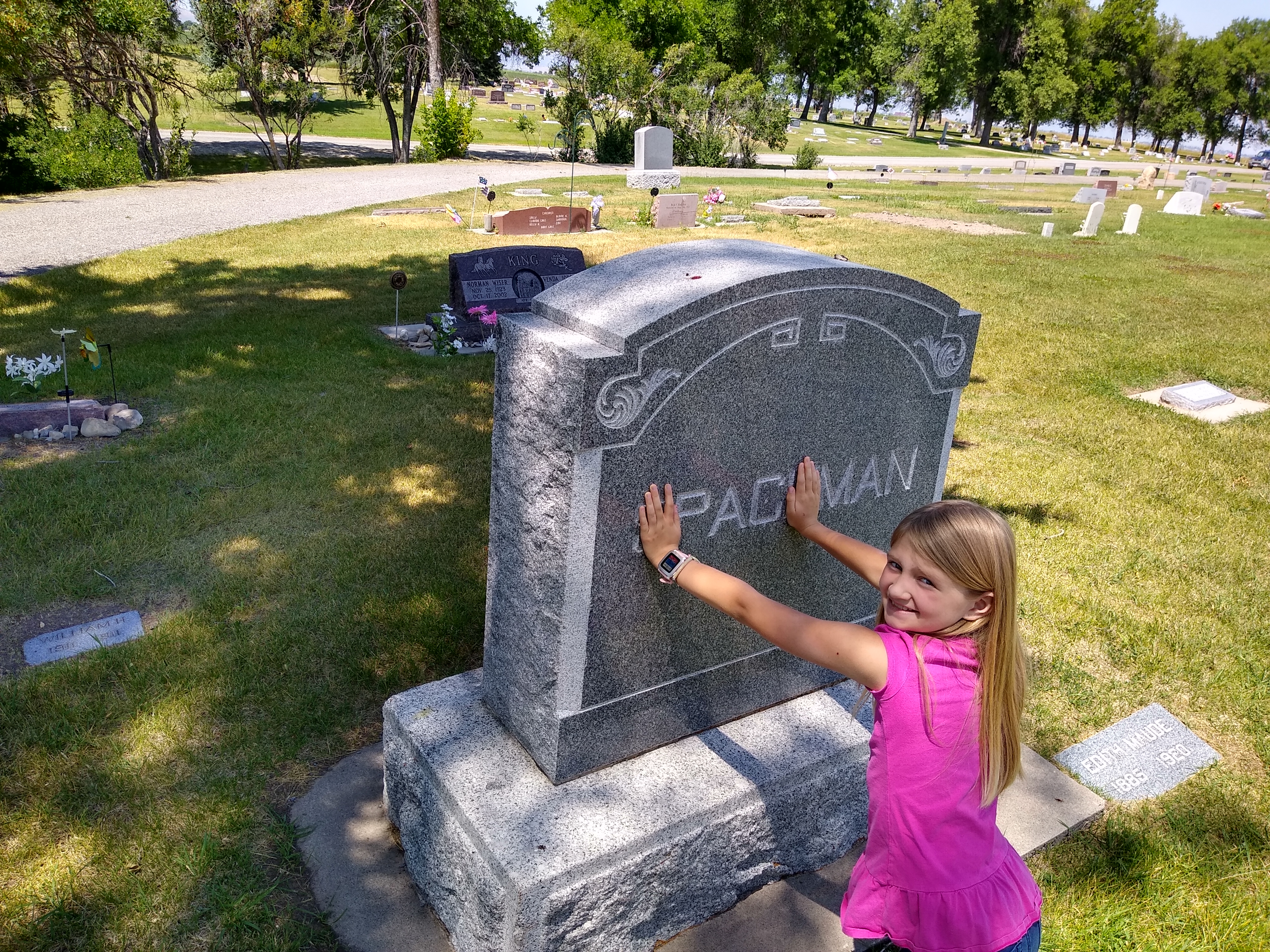
1 February 1949

Dear Children of Mine,

If your Mother was alive as I am writing, we would be celebrating our 55th Wedding Anniversary, but as it has fallen my lot I’m all alone in this home where you all have been brought up under her loving influence and with my deepest love for you all. I shall ever thank God, my Heavenly Father for the gospel and its blessings.