
I have two copies of the History of Plain City, Utah. The front indicates it is from March 17th 1859 to present. As far as I can tell, the book was written in 1977. At least that is the latest date I can find in the book.
One copy belonged to my Grandparents Milo and Gladys Ross. My Grandpa has written various notes inside the history which I intend to include in parenthesis whenever they appear. They add to the history and come from his own experience and hearing.
I will only do a number of pages at a time. I will also try to include scanned copies of the photos in the books. These are just scanned copies of these books, I have not tried to seek out originals or better copies.
History of Plain City March 17th 1859 to present, pages 76 through 106.
HISTORY OF THE OLSEN GROCERY STORE
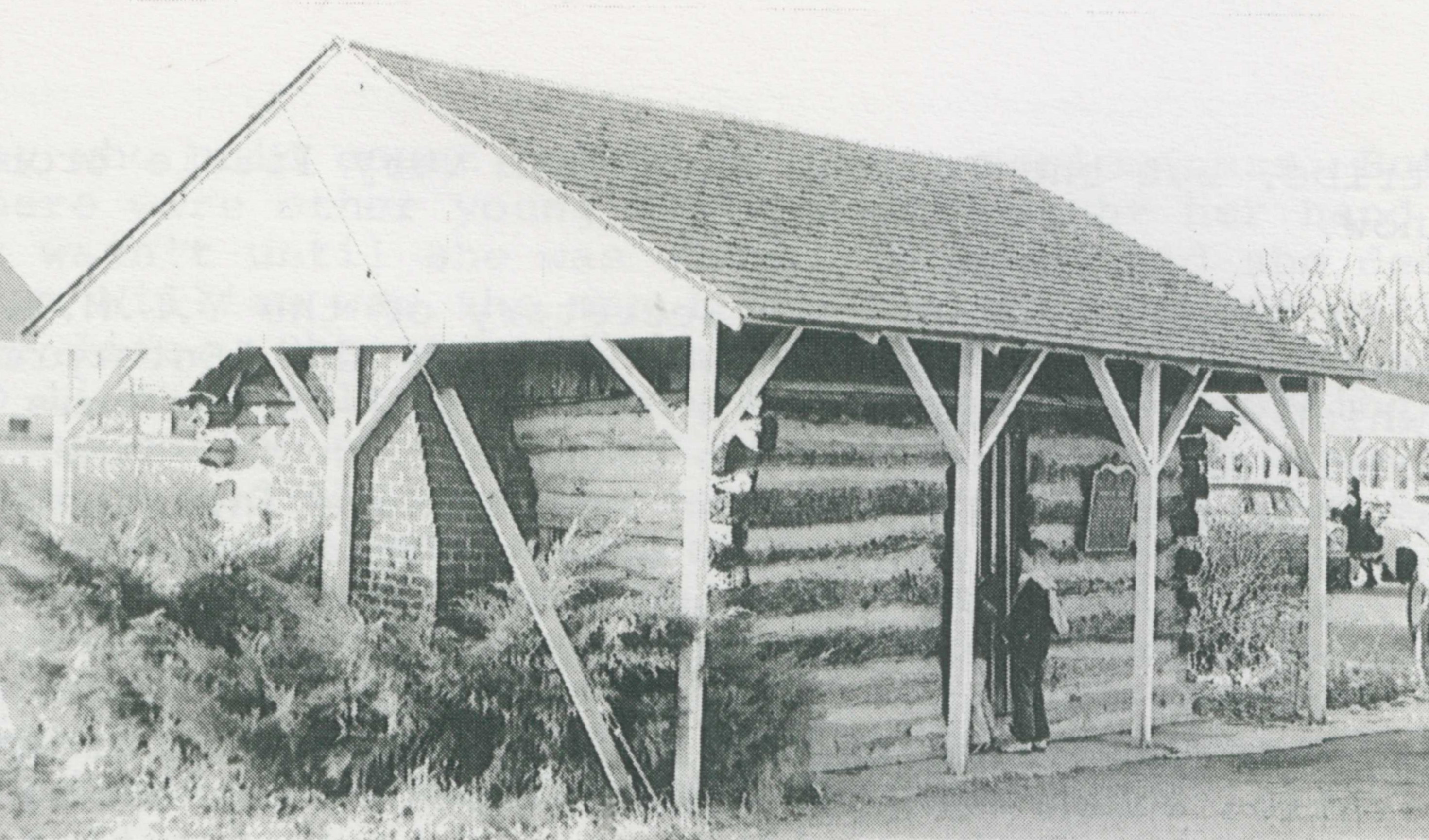
Two of the earliest merchants in Plain City were A. M. Schoemaker and William Van Dyke. Mr. Shoemaker had a little store just east of the old adobe meeting house. Van Dyke’s store was just across the street from the southwest corner of the public square on the sight of the John Maw store where the Plain City bowery now stands.
The Cooperative Mercantile Institution was organized in 1869 with John Spiers as President, J. P. Green, C .O. Folkman, George Folkman and Andrew Ipson as directors, and George H. Carver and J. S. Carver as the managers.
In the early days of Utah, the L .D. S. Church organized cooperative stores in different places called “Zions Cooperative Mercantile Institutions.” One of these was organized in Plain City in Jens Peter Folkman’s home at 2480 N. 4350 W. in March of 1869. He was appointed manager by the directors.
The capitol stock was $500.00. Mr. Folkman continued as manager for several years. At a reorganization some time later, John Spiers was retained as president and John Carver was elected vice president of the board of directors, which was composed of Jeppe G. Folkman, William Sharp and Alexander Marian Shoemaker, with George Bramwell as secretary and William G. McGuire as secretary-treasurer.
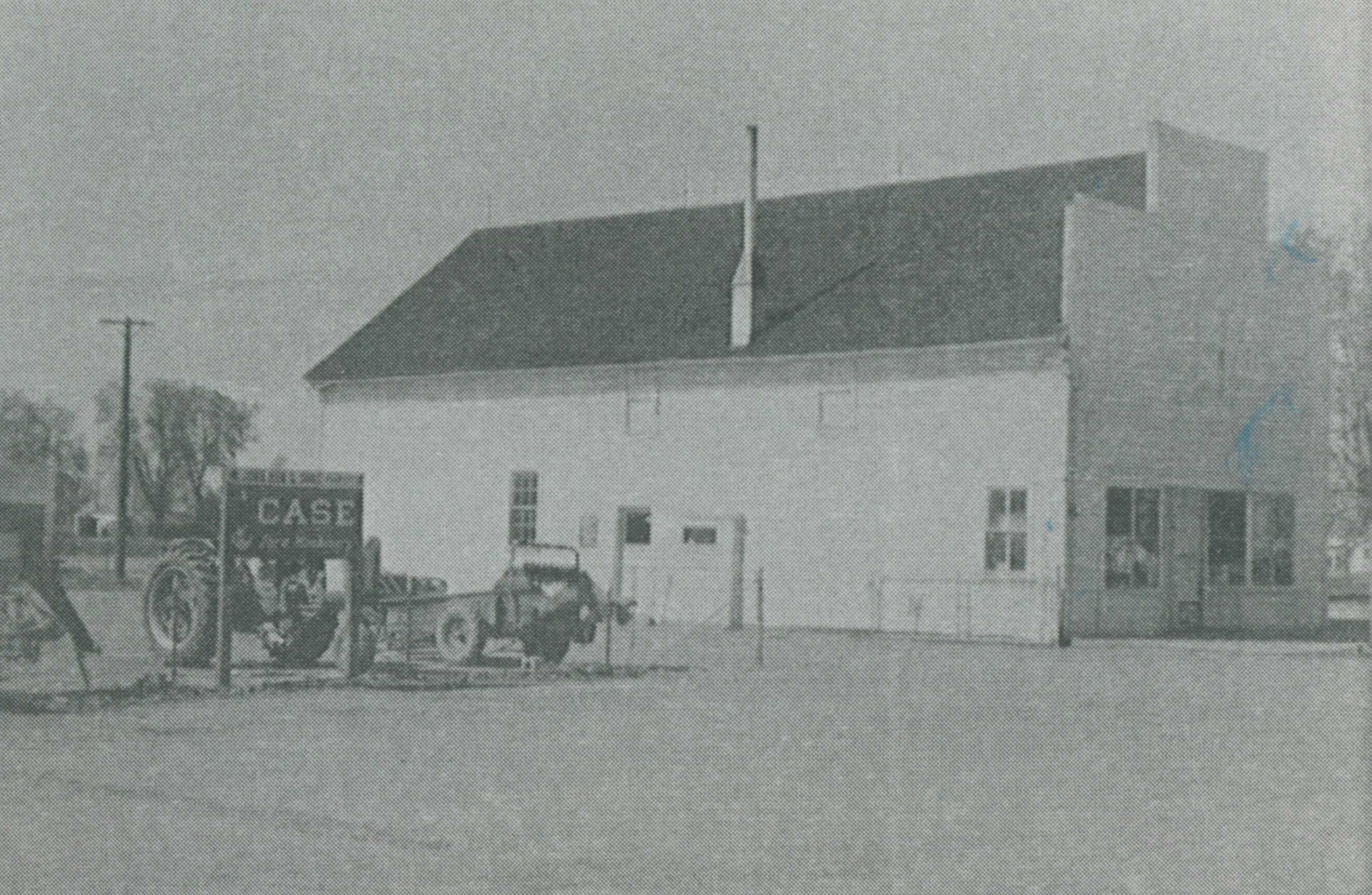
Finally a corner was bought by the company from Mr. Hansen in 1889, where Carl Olsen’s store is now situated. (1959) A frame building was erected and here Jens Peter Folkman continued as manger until the store was closed by Z.C.M.I. on account of bankruptcy cause through too many bad debts.
It was reopened by the parent store in Ogden and was managed by George and James Carver but was closed again for the same reason as before.

George W. Bramwell and his brother, Henry, bought the stock of goods and ran the store as a private business. Z.C.M.I. took over once more and hired George W. Bramwell to run it as a branch of their store.
It was next sold to Henry J. Garner and Robert W. Maw. They sold it to Thomas England. Thomas England sold his store to Peter J. and Evelyn Christensen, who rented it out for a time, then later sold it to Carl Olsen in 1925.
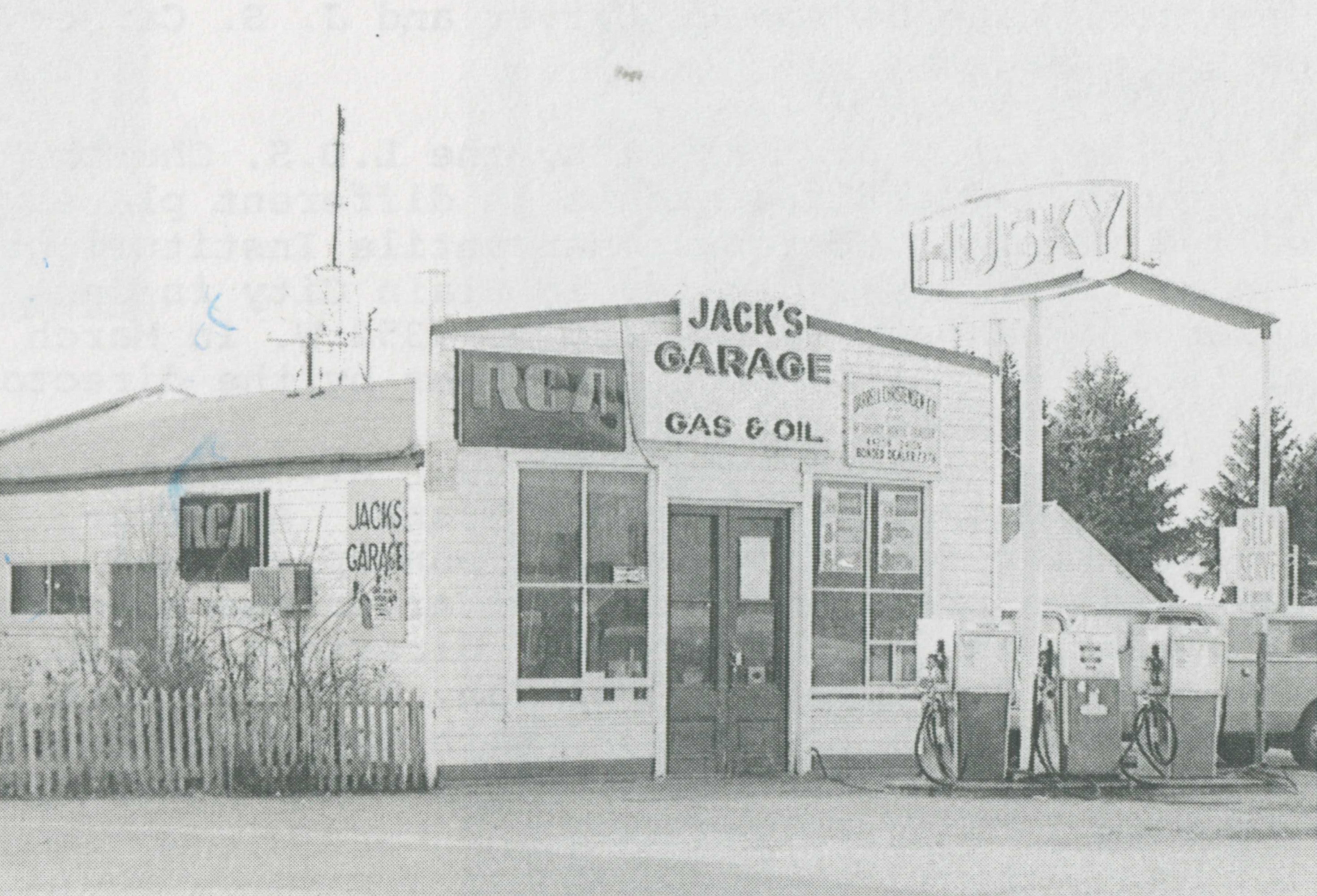
In the early days of the Olsen stores Parvin Produce Company of Ogden established the business of shipping potatoes from Plain City. They were located at the Olsen store and when they discontinued business, Carl Olsen and Wilmer J. Maw started shipping potatoes. Mr. Olsen loaded his cars at the end of the railroad spur in front of Roll’s Garage, now Jack Etherington’s Garage at 2415 N. 4425 W. and Mr. Maw loaded his cars by the “John Maw & Sons” store where they bowery now stands.


The above was taken from a Historical Study of Plain City, Weber County, Utah, by Fern Olsen Taylor. A thesis was submitted for her Master of Science Degree in 1959.
The Utah Oregon Lumber Company business was purchased by Carl Olsen from Wilmer L. Maw, and at this time Annie Knight Geddes came to work for Mr. Olsen. Coal was also sold. Many loads of potatoes, coal, etc., were weighed on the scales located just south of the store.
Oscar Richardson worked with Carl in the produce shipping and George Elvie Weatherston worked with him in the store for a short time.
Carl opened the store with the help of his family, Lucille, Lee, Fern, Don, and Loyd.
A beautiful ice cream fountain was purchased and installed in the northwest part of the store. There were marble counter tops, malt machines, syrup dispensers and necessary equipment to make malts, splits, sundaes and many, many hand-dipped ice cream cones. A half dozen stools lined the counter. The choice of flavors then were chocolate, vanilla, or strawberry. A popular item was the candy punch-board that was a temptation some had a hard time resisting.
In 1939 Carl remodeled the back of the store. The partition at the east end and the swinging doors were moved, making room for a meat counter and meat cooler. More shelves and more groceries were added. Heat was provided by a coal heaterola. A shed was built by the store about 1889 and was used until 1949 for various purposes, a lumber storage shop, a barber shop and also later for a meat market. It faced the road and was located just south of the store.
In March, 1941, cold storage lockers were installed. The store was enlarged and a full-time butcher, Ralph Vause, came to work to serve the locker patrons. Many deer at hunting time were cleaned and dressed, filling the meat coolers to overflowing.
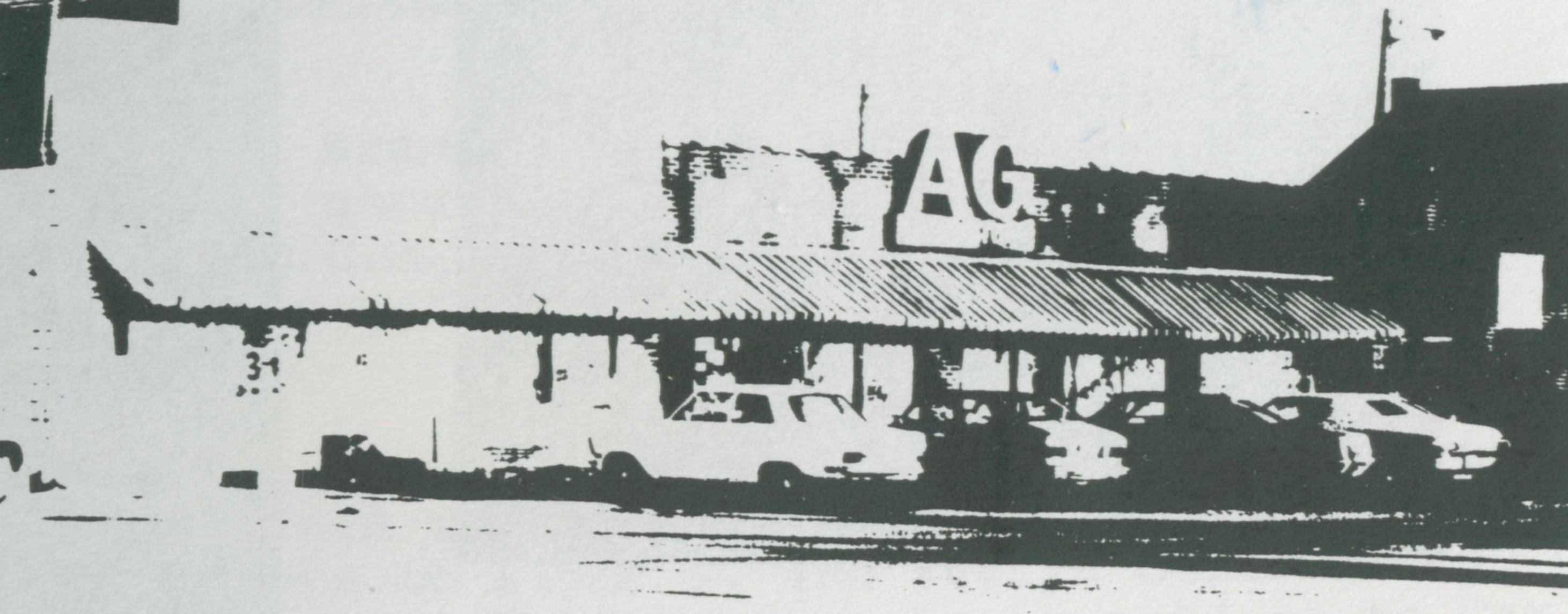
Carl Olsen sold his store to two of his sons, Lee and Don in April 1947. The store became “I.G.A.” and then later “A.G.“ Lee and Don enlarged the store, adding the brick building extending the south wall to the confectionery. The frame shed was moved to the back of the store and connected to a metal storage shed connecting the back of the store.
On July 9, 1949, the grand opening was held. Children came to the store from near and far to buy penny candy, a special treat.
Mr. Carl Olsen passed away February 25, 1955.
The Olsen family owned and operated the store for half a century and enjoyed a wonderful association with Plain City and the neighboring communities.
On April 18, 1973, Don and marge Olsen, and Lee and Clara Olsen sold the store to Perry and Sonia Merrill of Pleasant View. They Operated the store for three years and sold it to Elliot and Gayle Casperson. It is now the “B and C Market.” May 24, 1976.
COPY OF DOCUMENT PLACED AT THE BASE OF MONUMENT HONORING SERVICEMEN
August 26, 1944
To whom so ever of the dim and distant future, may come in possession of these documents, let it be known that:
We, the people of Plain City, Utah through our Committee for the men in Service with the aid of the people in the community do erect and dedicated this memorial, of everlasting granite, to honor the memory of those who, from our community, were enlisted and served in the Armed Forces of these United States of America and fought for its principles of Freedom, Justice and Democracy in the Second Great World War, which we have faith will culminate as all our country’s war have, in victory.
Today, August 26, 1944, when hostilities have been raging for 32 months, as we solemnly and proudly honor all Servicemen and Women, especially those who left from our community, and whose names are cut and will be cut in this monument, this war, cruel and savage beyond description is being waged across the seas, gravely threatening to destroy our freedom.
May God and justice destroy the forces and the barbarious leaders of those aggressor nations before they make it necessary for this nation of ours to again, by force of its arms, defend itself and the principles on which it was founded.
We, as a people are deeply grateful for the services and sacrifices made, not only the men who served in the war, but all those who fought and for those who died to defend this great nation since the first clash of arms in the battles of Lexington and Concord, we honor and revere the memory of them all. So in the erection of an everlasting memorial those, who left this country beginning 32 months ago to serve in the Armed Forces of these United States, to keep alive the flame of liberty and pass on to our posterity the stories of their brave and noble deeds, even beyond the time that this granite shall have crumbles to dust obliterating the names carved here on.
May we never again be called to erect other similar memorials because our country was again at war.
But rather, would we as a people whole heartedly join together to sponsor a shaft to commemorate the beginning of an era of eternal lasting peace without the horrors of war.
A BRIEF HISTORY OF PLAIN CITY
A group of men from Lehi came in the fall of 1858 and looked over the town, they also made a preliminary survey for a canal site, using a sixteen foot two by four grooved out and set on a three-legged tripod, with water in the groove to act as a level. This preliminary survey was made to the big levee that fall of 1858, some work was done on the big levee that fall, until it was necessary for the men to return to their homes in Lehi.
On March 17, 1859, a company of about 100 people arrived in Plain City about 5 o’clock in the afternoon. They camped in a hollow in the south part which later became Samuel Draney’s lots. The wagons were lined up east and west for protection against the north winds. Although snow was deep, they soon dug a big hole and built a fire making it as comfortable as possible.
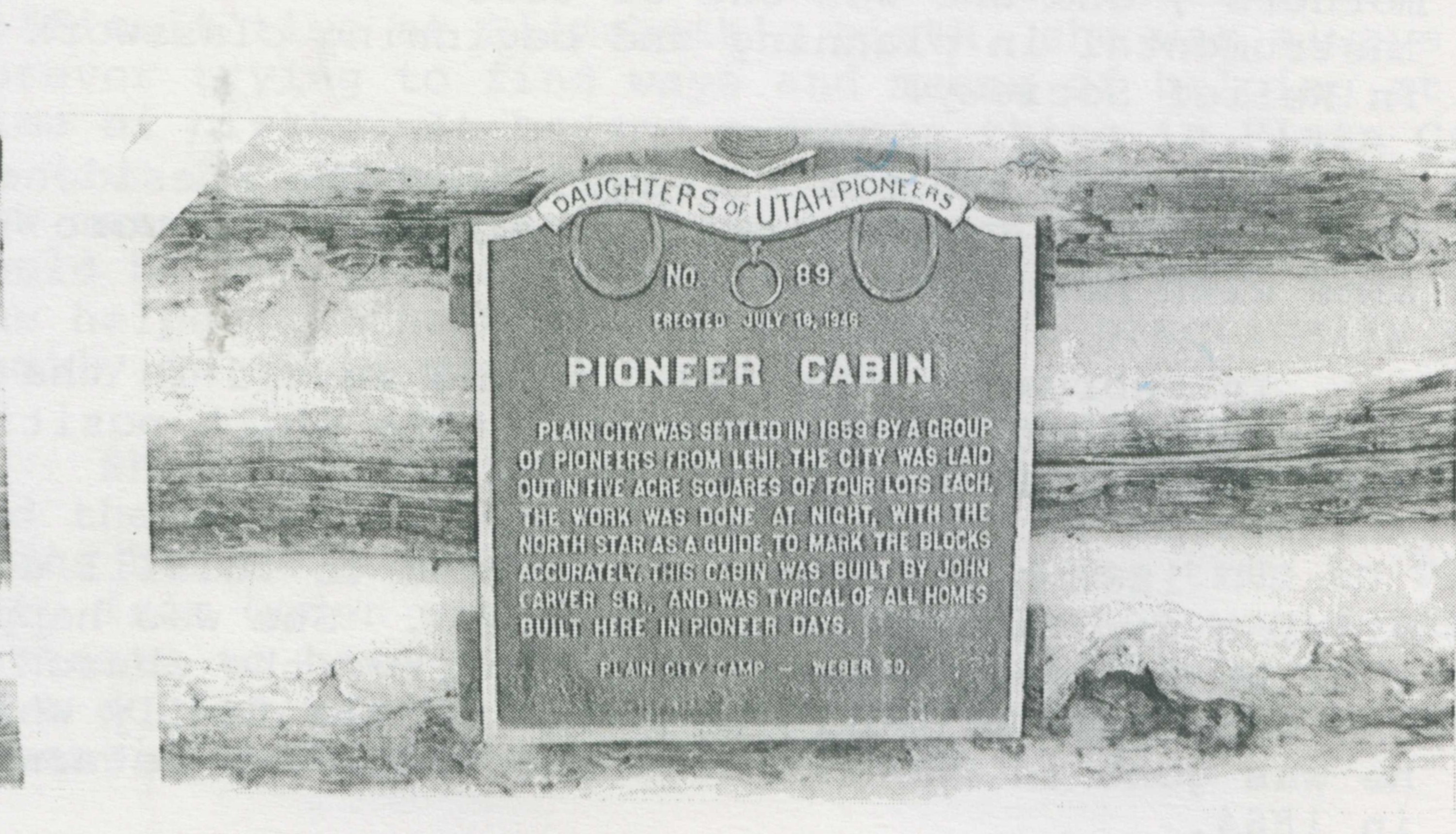
One of the first things to do after arrivals was to survey the townsite and assign lots to the settlers, so they could get some kind of shelter for their families. Joseph Grue states that John Spiers and others who surveyed Plain City had in mind their home, the city of Nauvoo, and followed the pattern as nearly as possible. They surveyed the town at night using the north star and three tall poles just below it, as a working guide. The measuring chain was a piece of rope which they dragged along over the deep snow through which they waded. The original plat was six blocks long and three blocks wide, running north and south. Each block contained five acres and is divided into four lots. Each settler was allowed some choice in the selection of his lot, and each shelter was allowed twenty acres of farm land on the out shirts.
The Plain City canal was commenced in May of 1859 shortly after part of the crops were planted and completed to four mile creel that first year and later to Mill Creek and then to Ogden River, which relieved the situation somewhat during seasons when water was plentiful, but was of little benefit in dry seasons, the Plain City irrigation company under the supervision from the beginning.
Mr. Rollett, a Frenchman, introduced the culture of asparagus to Plain City, the seed came from France in 1859. This became one of the leading industries of Plain City, as the soil and climate are especially adapted to its culture. Plain City asparagus had become known far and near, and at the present time the asparagus in handled by the Plain City Asparagus. They ship asparagus to all parts of the United States.
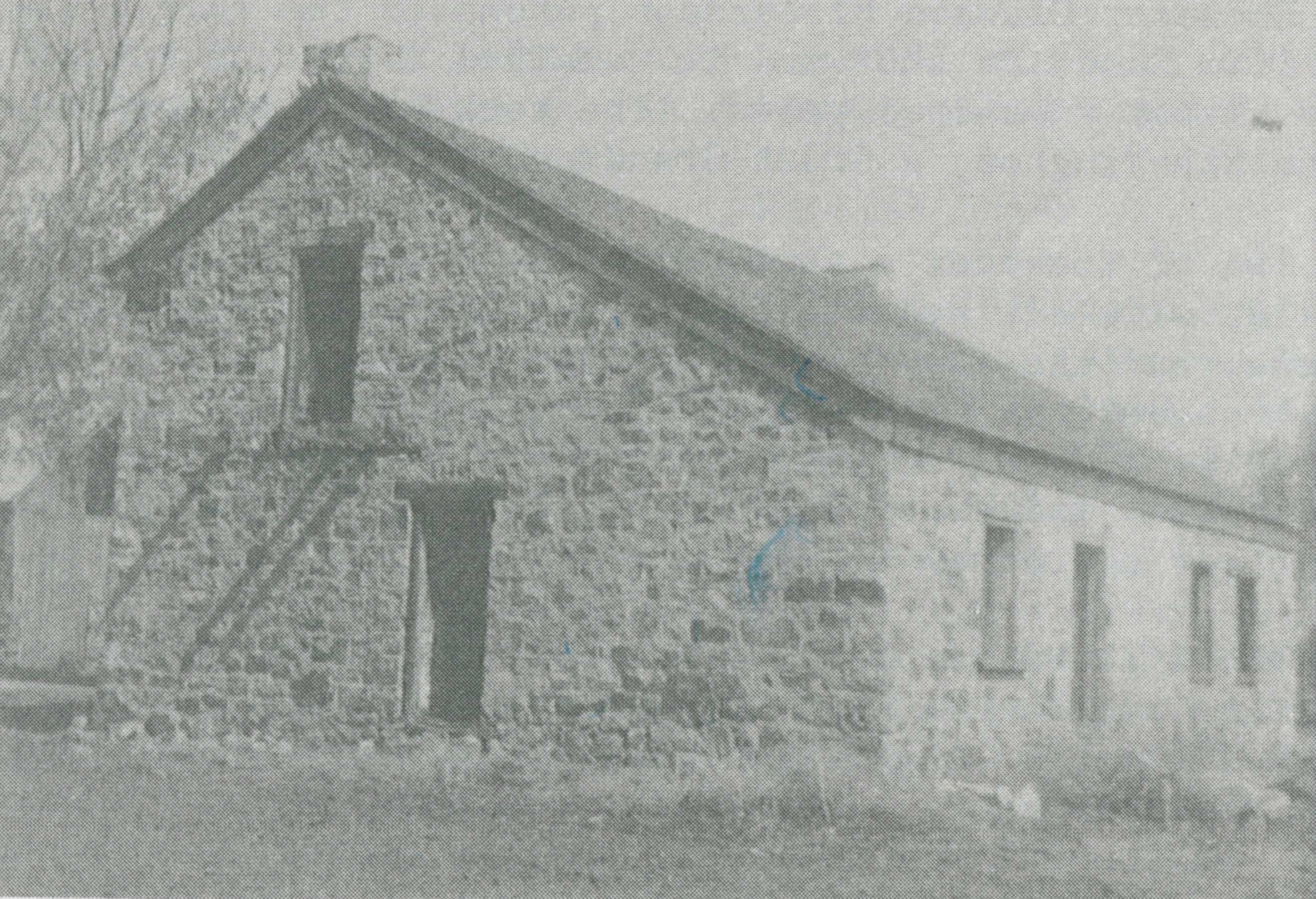
Early homes were dugouts, then log cabins and later adobe. The first stone house was built by William Skeen in 1862 or 1863, by hauling rock from Hot Springs, northeast of Plain City.
The first school and meeting house was built in 1859. It was of log and adobe and was located on the south side of the public square. This adobe building was used as a meeting house, school house, amusement and dance hall for a number of years.
George Musgrave was the first Plain City school teacher. His first school was held in his dugout on his lot.
The First Relief Society was organized January 3, 1868, with Almira Raymond President. The first Primary was organized in 1881 with Susannah Robinson President. The first Mutual Improvement Association was organized in 1876 with William England as President.
An Episcopalian Church was built in 1877, and was used as a school and church. At that time, it had about 75 members. The building is still standing and still in use (Lions Club House).
Evelyn Sharp was the first white baby girl to be born in Plain City, and Thomas Singleton was the first white boy. They were born in 1859.
People of Plain City have always fostered amusement and entertainment of various kinds. In the early days they always had a brass band, a choir, dramatic association, and a baseball team. Regardless of all the hardships endured by the early settlers, recreation was always enjoyed. Dances were held in the old adobe school house on the south side of the square in winter and in the bowery near it in summer. They danced on the hard dirt floor at first, many of them in their bare feet. Most of the dances were square dances, at various times music was furnished by comb bands.
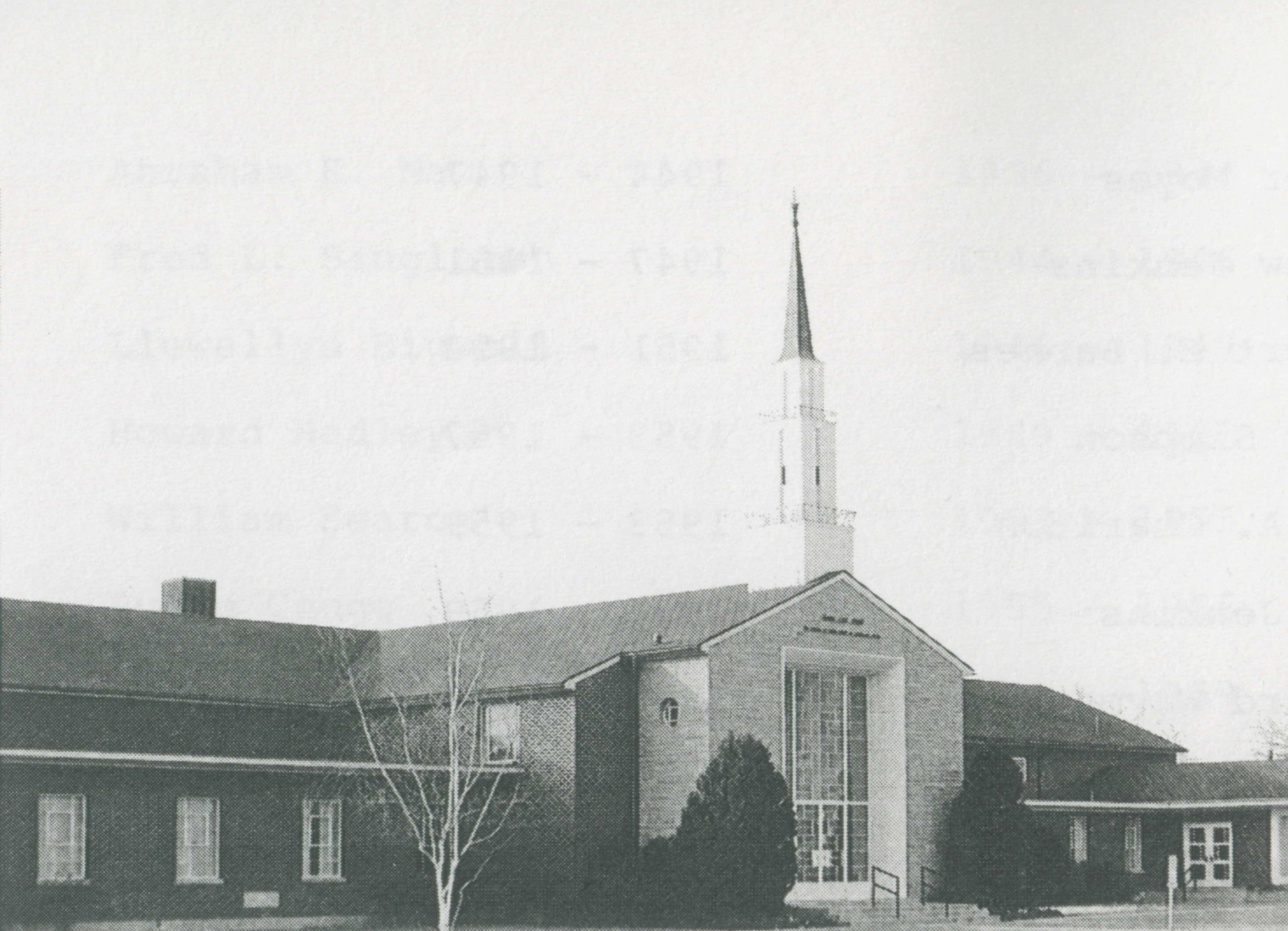
The first real meeting house that was built expressly for ward purposes is the present brick structure commenced in 1884 and finished in 1889.
The following men have been Bishops of Plain City Ward since it was first organized in the order listed: W. W. Raymond, L. W. Shurtliff, George W. Bramwell, Henry J. Garner, Henry T. Maw, Gilbert Thatcher, Wilmer J. Maw, George A. Palmer, Charles Heslop and the present Bishop Elvin H. Maw.
Plain City is principally a farming and dairy community, with sugar beets, onion, tomatoes, potatoes, peas, grain, alfalfa and asparagus being grown as the principal crops.
A branch of the North Ogden Canning Factory is located in Plain City and tomatoes are grown and processed each year. The canning factory was completed in 1925.
Many of the men of the community have profitable dairy herds, and each year a “Dairy Day” is held on the town square, prize stock being shown. Stock is shown from all parts of the state.
A Junior High School is located in the center of town, where approximately 225 children attend. L. Rulon Jenkins is now the principal of the school.
At the present time, Plain City has a population of approximately 800 inhabitants.
Each year on March 17 a “homecoming” celebration is held to commemorate the settling of the town.
Plain City was incorporated this year of 1944 with the town board as follows: Dean Baker, Chairman, W. Albert Sharp, Fred L. Singleton, Floyd A. Palmer, L. Rulon Jenkins and Don E. Carver as Secretary.
**************
The committee for the servicemen was selected about one year ago, and appointed by the Ward Bishopric, for the purpose of paying tribute and honor to the fellows and girls who enter the service.
The first funds were collected through a scrap iron drive, which was initiated by Dean Baker. The support of all the people of Plain City was gained by soliciting, and many tons of irons was donated by members of the town.
The task of securing the names to be placed on the monument and helping to plan its erection was done by the Committee for the Men and Women in the Service with William Freestone as Chairman, Elbert J. Moyes, Elmer P. Carver, John A. Hodson, Dean Baker, Mrs. Frank V. Skeen, Mrs. W. Albert Sharp, and Mrs. Vern L. Palmer.
As the original plans for the erection of his memorial called for only those who had been honored at Plain City, we deeply regret that names of some of the fellows who are in the Service, who have been residents at some time previous to their entering the service, will not appear on this monument.
We, the Committee for Servicemen, representing the people of Plain City extend our thanks and heartfelt appreciation to all individuals whose combined efforts have made the erection of this monument possible. The primary objective of this committee is to uphold and defend the Constitution of the United States of America and be to service to the community, state and nation and to transmit to our posterity the principles of justice, freedom, and democracy.
This everlasting and beautiful monument is sturdy and tough and is truly symbolic of the sterling qualities and character of the men whose names it will bear until it shall have been worn away to dust by the elements of time and returned to mother nature from when it came.
As duly requested, this document was written and prepared by Mrs. Frank V. Skeen, Mrs. W. Albert Sharp, and Mrs. Vern L. Palmer, together with the aid of the other members of the committee, and whose sincerest hope and aim was that the full honor and credit due, is bestowed on the citizens of Plain City who form a part of the great until by which this nation was founded and is governed. May the heritage of these rights of quality and self government never be taken away from those to whom it rightfully belongs – the people.

BEET GROWING IN PLAIN CITY
SUBMITTED BY RUTH K. FOWERS
The sugar beet industry was one of the early farming activities in Plain City.
The ground was prepared late in the fall and early spring for planting the seed much the same as it is today except horse drawn machinery was used instead of tractor operated ones.
After the seed sprouted and the young plants grew a few inches in height, the rows were cultivated, and a thinning of the plants was required since the seeds were drilled close together. Segregated seeds had not been developed at that time. This thinning process was that of spacing the beet plants several inches apart to allow the young plant to grow. This was usually done with a short handled hoe and hand labor. A good beet thinner might be able to cover an acre a day.

The best crop required another hoeing or two and cultivating to eliminate the weed growth. Regular irrigation was necessary to give moisture to the growing plants.
In October the beets were matured and ready for harvesting. Again this process required much manual labor and the use of horse powered machinery.
The beets were dug using a beet digger. The beet leaf was cut from the beet itself by hand using a long beet knife. Then the beets were thrown into rows or piles to be gathered up with a large beet fork to be placed on a specially built box on which they could be hauled to the beet dump.
Sometimes young members of the family, who were too young to lift the beet fork full of beets, could assist with the beet loading by grasping the tail of the beet and giving it just enough of a throw to allow to them to load in the beet box.
With a team and wagon they were then transported to the beet dump and emptied into either a railroad beet car or placed in the beet pile.

Double hitch teams and wagons load of beets ready to leave the field.
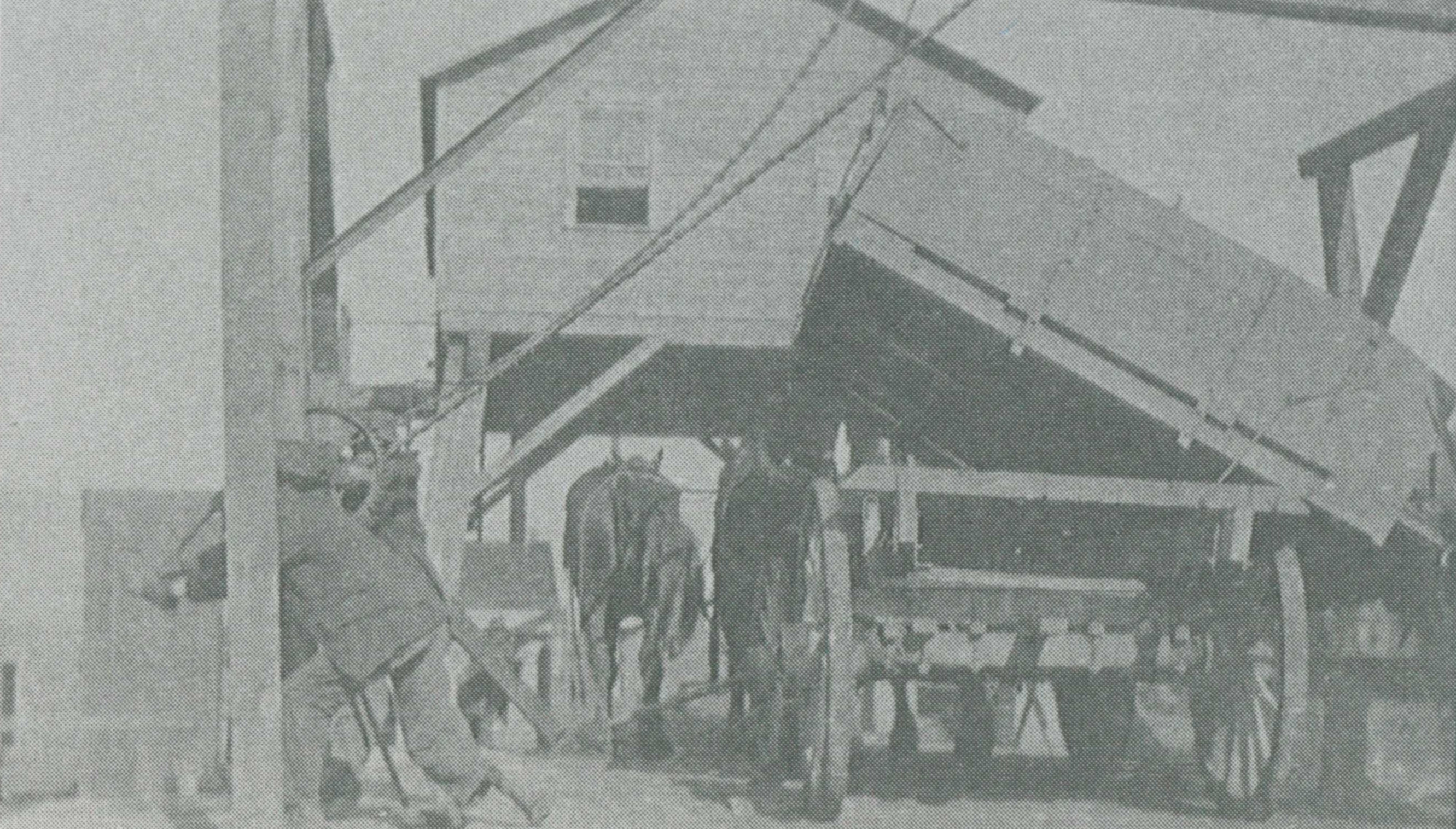
Unloading the wagon by means of a hand turned pulley which lifts one side of the wagon and dumps them into the hopper.

From the hopper the beets are elevated to be dropped into the railroad cars.

When the beets were brought in faster than the railroad cars could be loaded they were piled for later loading.

The beets were transported to the Amalgamated Sugar Factory where another process was utilized to manufacture refined sugar to be used in homes, industries, eating establishments or wherever possible.
In 1958, in Weber County, the average yield was 16.3 tons per acre. According to an article which appeared in the Ogden Standard Examiner on October 19, 1959, Mike Pannanzio averaged 28.8 tons per acre on a 13-acre piece. On a four acre piece, the yield was better than 30 tons per acre. This farm situated near the site of the Plain City beet dump which was located just north of 4100 West 1975 North.
The beet dump has since been removed and a modern housing development now occupied the site.

RALL TAYLOR’S OLD BLACKSMITH SHOP
He started his business in 1908, ad was still in business in the Forties. We understand this building was a part of the first canning factory in Plain City, and was moved to this location.
DAIRY DAYS
BY WILLIAM FREESTONE
The first Dairy Days held in Plain City was in May of 1926. The purpose was to finance the Plain City baseball team.
William Freestone was the manager for the team with Elmer Carver, finance, Angus Richardson was coach, Floyd Palmer and Byron Carver were score keepers, and Rufus Maw, umpire.
The general committee consisted of William Freestone, Chairman for the day, with Elmer Carver, Floyd Palmer, Merwin Thompson, Angus Richardson, Byron Carver, and Rufus Maw assisting. The entire team also worked hard to make a successful day.
The day was well organized. There was a big exhibit of cattle from all around the area, especially the Holstein Breeders Association. The local dairy men have full support to the day.
The afternoon programs consisted of a game between Plain City and Clinton. Horse racing and horse pulling contest were also on the program. The successful day ended in the evening with a big dance held in the town hall.
Dairy Days have continued to this day under various managements.
This information was obtained from William Freestone, Elwood Skeen, and Walter Christensen.
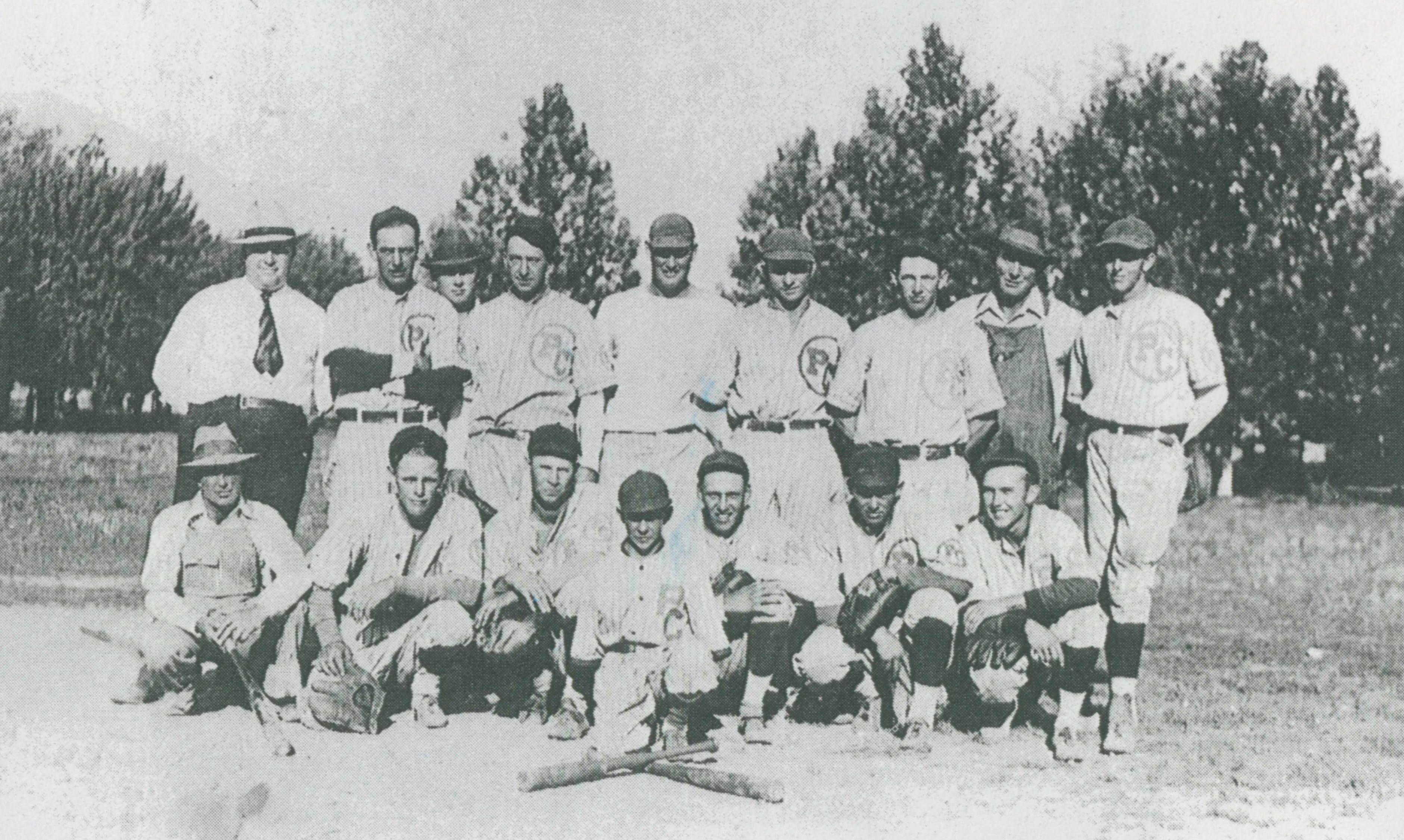
This picture is the baseball team that the first Dairy Days was organized to sponsor and finance.
Top Row L to R: Angus Richardson, Coach; Bill Freestone, Manager; Alf Charlton, Transportation; Horace Knight, Dick Skeen, Walt Moyes, Abe Maw, Tooley Poulsen, Clark Taylor
Bottom Row L to R: Rufus Maw, Umpire; Fred Singleton, Louie Giles, Clair Folkman, Frankie Skeen, Arnold Taylor, Wally Knight, bat boy
DAIRY DAYS
BY HAROLD THOMPSON
Merwin Thompson came to Plain City in 1907. He had lived briefly in Ogden during which time he worked on a big cattle and sheep outfit in Eden, Utah. Before that, he lived in Scipio, Millard County.
He ran the farm which was later owned by himself and his brother, Gordon. This farm was not very level when he and his brothers took it over, and they levelled it with horses and fresno Scrapers. They then established a fine irrigation system.
During the 1920’s Merwin acquire four fine registered Holstein heifers from Joseph Skeen of Warren. From his beginning, he developed a high producing registered milking herd.
In the late 1920’s he helped organized the Plain City Black and White Days and served for over forty years as a director of that exhibition. In the beginning, the show was for Holsteins-Friesias Cattle only. Later, it was expanded to include all dairy cattle.
At the time of his death, his dairy farm, dairy buildings and dairy was one of the best farms in Weber County.

The Ralph Robson family have participated in Dairy Days for many years. Shown are two animals they have shown.

DAIRY DAYS
BY FLOYD PALMER
This was first known as Plain City Black and White Days. It was sponsored by the Plain City Farm Bureau, as a fund-raising project for the baseball team. Later, it was sponsored by Holstein Breeders and the Plain City Farm Bureau. The financial help came from local people and business firms in the area.
Members of the Ogden Chamber of Commerce, along with the “Ogden Livestock Show” committee and the Weber County Commissioners, all became interested in lending their support tot eh growing need for an expanded show. These people were influential in getting the three-county shows (Jersey Show, Coliseum-Guernsey Show, Huntsville-Holstein Show, lain City) to combine their shows, and this is how it became known as the “Plain City Dairy Day.”
This move with the support of local people reaching out for help, was the means of getting the Weber County Commissioners and the State Legislature to give financial help for the show. It is also supported by many individuals and firms in a financial way. The officers now consist of the following:
MANAGEMENT
Orlo S. Maw . . . . . . . . . . . . . . . . . Manager
J. W. Hatch . . . . . . . . . . . . . . . . . . Secretary
Floyd A. Palmer . . . . . . . . . . . . . . .Treasurer
Harold Thompson, Tharold Quale, Fay Boyer . Invitation
Lee Olsen . . . . . . . . . . . . . . . . . . . . . Financial Chairman
Directors
Byron Thompson . . . . . . . . . . . . . . . . Holstein Department
Ronald R. Smout . . . . . . . . . . . . . . . . Guernsey Department
Verl Poll . . . . . . . . . . . . . . . . . . . . . . . Jersey Department
Burns Wangsgard . . . . . . . . . . . . .. . . Junior Department

Plain City has become the home of one of the largest Dairy Shows in the State of Utah. It is held annually around the middle of May and is open to all breeds of dairy cattle. The opening day is devoted to the Junior divisions. This is limited to bonafide 4-H Club members and F. F A. Future Farmers Only. The second day is designated for the Open division. It is also held under strict rules, such as, Registration Certificates, State Health Standards are required, including Health Certificates and blood tests.
The management is well planned and organized. It consists of General Management, Directors, Clerks, and special committees, Finance, Premiums and Entries, Junior Department, Junior Judging Classes, Publicity, Cattle Supervisor, Grounds and Dinner, Special Awards Committee, and Tractor Driving Contest.
Many of the very finest dairy herds in the United State of Utah are on exhibition here.
The judging is by top quality judges, usually out of state judges are used foe the open division. The junior department is also very selective to get the best judges possible. Rules adopted by the Purebred Cattle Association of Utah are strictly enforced for the Open Division. The Junior Division is placed according to the Danish System of judging.
The Junior Division exhibits 150 to 175 animals. The open Division exhibits 250 to 200 animals. The breeds are mostly Holstein, Jersey, Guernsey, and Brown Swiss. Cash rewards run from $1600 to $2000. Ribbons are also awarded in both Open and Junior Divisions. Special awards are given to the juniors in Fitting and Showmanship, Outstanding Exhibitor, Best Club Group of Animals, (five animals owned by at least three exhibitors.)
One of the outstanding special awards is the Frank M. Browning Memorial Award. A Swiss Cow Bell is given to the outstanding 4-H exhibitor. Other
Other special awards are: Lynn Richardson Award to the outstanding F.F.A Exhibitor; Smoot Dairy Award which is a special prize to the 2nd and 3rd place 4-H boy in fitting and showmanship; Five Points Drug Company which is a special prize to the 2nd and 3rd place F.F.A member in fitting the showmanship; Utah Holstein-Friesian Association Award, which is a trophy for the three best females bred and owned by exhibitor: Weber Chapter F.F.A. which is a belt to the F.F.A. exhibitor taking best care of his exhibits: Read Bros. Halter to the 4-H member under 13 years of age placing highest in fitting and showmanship: John Chugg Halter to the 4-H member placing highest in showmanship only: C. W. Cross Gift Certificate to the F.F.A. boy placing highest in fitting and showmanship: Curtis Breeding Service Halter to the 4-H club member over 13 years of age placing highest in fitting and showmanship: Federal Land bank Award to Grand Champion Cow: Commercial Security Bank: Production Class, 14 cash awards and ribbons.
Mr. Robert P. Stewart, Principal of the Plain City Elementary School takes very active part in the success of Dairy Days. For several years Mr. Stewart has organized a dairy class at the school. Paul Knight has furnished the facilities. The calves have been furnished by Paul Knight and Archie Hunt. The school instructors have been Ray Hull and Steven Gertsch. Both boys and girls have entered the Dairy Class activity. In addition to oral instructions, they feed, groom, care and prepare the calves to be shown in the ring to be judge. As many ass 25 very enthusiastic youth have taken part. The award money has been divided among the participants.
The Plain City School, under the direction of Principal Stewart, has served an annual Dairy Day Dinner. This has been an outstanding attraction to many state and local officials, business, and dairy people. The food is always delicious, and the service is excellent. French-grown Plain City asparagus is always included in the meal.
The faculty and P.T.A. operate the concession stand on the park for the two-day dairy show. This serves a worthwhile purpose for the school and those attending the day’s events. The school children have been good to help clean the grounds after.
Since this Dairy Days started, small dairy herds have almost become extinct. They have been forced to grow larger and develop better grades of producing animals. We now have dairy herds entering this show from Utah dairy farms that are recognized as top dairy herds of the nation. They also exhibit their cattle at national shows.
This Plain City Town Board takes an active part in helping to promote the success of Dairy Days. The last few years they have provided help to put up the tie racks, take them down, and clean up the grounds.
Over the years, the Dairy Days Committees have replaced the old pole fences with a new set of painted tie racks that can be moved after the show is over. They also have a moveable loading chute for the cattle.
The 1977 Plain City Dairy Days will be listed on the program as the Forty-Eight Annual Show. This takes it back to 1929 for the beginning of Plain City Black and White Days. It would seem appropriate to list and give credit to some of the management people that have served fifteen years or more. They include:
Ralph Robson Merwin Thompson
Clair Folkman Floyd A. Palmer
Lee Olsen John Chugg
J . W. Hatch Fay Boyer
Robert (Bob) Penman Edgar Smoot
Verl Poll Clifford Smout
Mary Papageorge Kogianes Burns Wangsgard
Lynn Richardson Byron Thompson
A L Christensen
Plain City has the largest all-breed dairy show in the State of Utah.

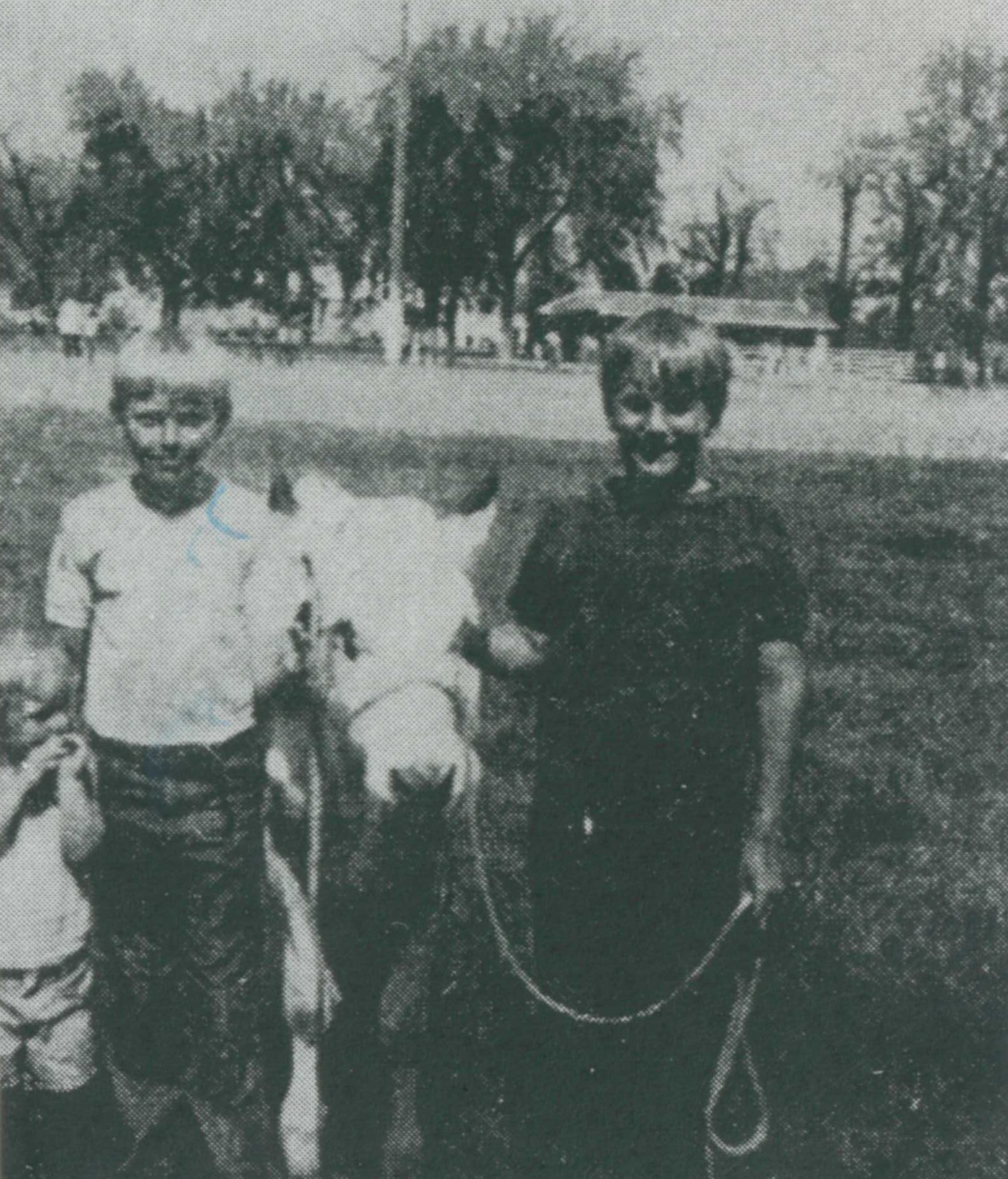
Plain City School Students take great pride in learning how to train and groom their loaned animals for the Dairy Days Show. For them it means a full day away from the books while they get the real learning of being part of a real livestock show.
PLAIN CITY CEMETERY
SUBMITTED BY Floyd Palmer
The old of the Plain City Cemetery grounds came about only once a year. This was when the tulips came into blossom for about two weeks. After this it was solid mass of tea vines and weeds.
A newspaper article that appeared in the Ogden standard Examiner in the spring of 1938 was submitted by Roxy Heslop.
Bloom Wave Will Appear No More
Spring of 1938 Roxey Heslop

BLANKET OF FLOWERS…. The field of varicolored tulips being admired by 14-year-old Idona Maw of Plain City will be dug up and replaced with grass and shrubbery as a part of the improvement program underway at the Plain City Cemetery. The tulips will be taken out as soon as they cease blooming, Wilmer J. maw announced. An elaborate sprinkling system fed by a 700-foot artesian well will be laid throughout the cemetery. The well recently completed, flows 40 gallons per minute. The blanket of blooms will be removed because of the short of tulip lives. Bulbs will be given free to persons interested in obtaining them for replanting. (Standard-Examiner photo)
The new beautification program started in the year 1937. It came about through Floyd A. Palmer and his affection for his mother, Emma Jane Carver Palmer, who had suffered a long illness. She had said to him many times that she hoped someone would keep the weeds and tea vines from growing on her grave in the Plain City Cemetery.
Following her death on May 26, 1937, Floyd went to Bishop Charles L. Heslop and asked of something could be done to improve the Cemetery grounds. Bishop Heslop was quick to say, “…yes, and I would like to make you the Chairman of a committee to start the project.” Following their conversation Walter J. Moyes and Art M. Simpson was called in by the Bishop to assist on the committee. The preliminary took several months of work and study to formulate a workable plan for the project.
It was decided to drive a flowing well for the water. Raising the necessary money was the next step. Local lot owners were contacted and letters were sent to those living in and out of the state. We asked for $5.00 per lot and stated we would drive a well large enough to handle all that participated. The response was good and very few questioned the feasibility of the project. A 2 ½ pipe was washed 730 feet deep for the well. It required continuous drilling and was necessary to haul water in to drill with. Wesley and Virgil Stoddard from West Point did the drilling. The well was flowing a beautiful stream of water in May, 1938. The people were happy to have water available for flowers on Memorial Day.
Pipe lines were laid to service each lot from stand pipes with a hose connection. Our Cemetery Sexton, Walter J. Moyes, agreed to care for the lots for $6.00 a season. The owners were to help prepare the lots for seeding. Much credit is due to Walter for the first lawn planted and their care. Some lots were seeded in the Fall, of 1938. Others, in the spring of 1939. As each lot was improved, it made a new appearance.

This caretaker system continued to grow each year through 1934. Then the flow of water became inadequate to serve all desiring lawns. This, along with public interest, led to developing a way to extend caretaker service to all lots. Through the counsel and help of many interested town residents, it was decided that the best method would be to levied to finance the project on a sound basis. Rulon Jenkins gave much help and assistance to get things started for the Town Incorporation. It was necessary to raise money to finance the preliminary work of surveying, engineering fees, Attorney fees, etc. Our first annual Potato Day Celebration, July 4, 1943, was a financial success. Dean Baker was the Chairman of this and many others worked hard on the committee. The profit was used toward the Incorporation of the town.
Petitions were circulated through the town of Plain City and were presented to the Board of County Commissioners of Weber County on November 27, 1943, certified as follow:
“That they have read the said petition, including the names of signors thereof, and what they are acquainted with each of the signors whose names appear as following: L. Rulon Jenkins certifies to names appearing opposites the number 1 to 50, inc.; Dean Baker certifies to names appearing opposite the numbers 101 to 150, inc,; W.A. Sharp certifies to names opposites numbers 201 to 253, inc,; and they believe each of said respective signatures to be true and genuine.”
The board of Weber County Commissioner approved a RESOLUTION to take effect and be in force from and after 5 O’Clock P.M. on the 13th day of January, A. D 1944, creating the TOWN OF PLAIN CITY.
A Board consisting of a President and four Trustee was appointed by the County Commissioners. The following named persons were appointed, to-wit: Dean Baker, President, L. Rulon Jenkins, Fred L. Singleton, Albert Sharp, and Floyd A. Palmer Trustee, to hold office until the next municipal election. Bond was fixed at $500.00 each.
The Board then moved ahead with plans to complete the Cemetery improvement. Potato Day, July 4th, again brought some revenue and a one mill levy on property tax in November, 1944, was enough to purchase pipe and get it installed with mostly donated labor, in Fall, 1944. In the spring of 1945, the caretaker building was relocated on the west side of the cemetery for a pump house. A new pressure pump was purchased and placed in the building with a connection to the irrigation ditch. This furnished plenty of water to sprinkle the entire cemetery.
Walter Johnson was Sexton at this time and was employed on a full time scale. There was a big job to be done preparing the lots to be seeded. Many concrete coping, large trees, obnoxious weeds, fences, and undesirable shrubs had to be removed. After this, it was necessary to haul in some top soil, spade and level the lots to prepare them for seeding to grass. This took several months and required a lot of donated labor. Mr. Johnson is deserving of much of the credit for his extra efforts and hard work.
The next change came about through the action of our State Legislature. The 1945 Session made it possible to organized Cemetery Maintenance Districts throughout the State. A one mill Property tax levy can be levied. After a thorough investigation and holding public meetings, the Town Board and public favored creating a Cemetery District.
In pursuance to Chapter 17, Session Laws of Utah, 1945, property owners of Plain City, Utah, filed a petition with the Board of County Commissioners for organization of a Cemetery Maintenance District. The Board set Monday, June 11, 1945, at 11 O’Clock A.M. in the session room for the purpose of hearing objections of any taxpayer within the proposed District boundaries. No objections were recorded.
An election was held in Plain City, Tuesday, July 17, 1945, for the organization of the Plain City Cemetery District. There were 407 legal registered voters, less non-property owners, leaving a total of 310 legal registered voting taxpayers. The official canvas of votes cast were as follows:
Total Vores Cast 233
Yes 222
No 10
Spoiled 1
The Board if County Commissioners of Weber County, State of Utah, met pursuant to Chapter 17, Session Laws of Utah, 1945 at 10:30 A.M. on Thursday, July 19, 1945, in the session room and organized the Plain City Cemetery District, and that the following be recommended to the Governor of the State of the Utah, as the first Commissioners of said subdistricts:
Albert Sharp, District Number One
Floyd A. Palmer, District Number Two
Charles Helsop, District number Three
There being no further business the meeting adjourned.
(Signed) L . M. Hess, Chairman
At the next election LeRoy Folkman replaced Charles Heslop as a Commissioner. They are as follows:
Floyd A. Palmer, Chairman
Albert Sharp
LeRoy Folkman, Secretary
During 1952, a new brick building was constructed for the pump house and caretaker. A 60’ Flag Pole was installed. Memorial Day Services were held at the Cemetery on May 30th.
In the spring of 1953, Charles Telford was employed as a full time Sexton and Caretaker. Mr. Johnson had requested to be released because of health. Mr. Telford had great pride in his work and did an excellent job as caretaker. He always went the extra mile to help keep the grounds in beautiful shape. New chain link fencing and gates were installed at different times around the boundaries of the Cemetery.
It has been necessary to open new lots on the north side of the Cemetery. These have been seeded and made a part of the new area. There had been good planning for future growth when this extra land was purchased.
Charles Telford was stricken with a stroke while he was working at the Cemetery on June 9, 1963. He was found by a neighbor living by the Cemetery, after Lulu, had phoned her to tell Charles his dinner was ready. Mr. Telford never recovered from this. After going to the hospital he was taken to the Roy hospital where he passed away on September 25, 1967. The town of Plain City is very grateful to Charles and Lavina Telford for their faithful work.

The Sexton and Caretaker job was then taken over by Jerry Bradford and LeRoy Folkman. They have continued with very fine devoted service to the town.
In 1967, Floyd A. Palmer moved to Ogden and when the election came that fall, Abraham Maw was voted in to take his place on the Board. By then, Floyd had been helping with the Cemetery growth and improvement for 30 years. He is grateful for the opportunity to be a part of this excellent town and Church programs that has gone on. Also to work with so many fine people who will continue their service and may this responsibility be passed on to those who will have a desire to continue.
SERVICEMEN’S MONUMENT
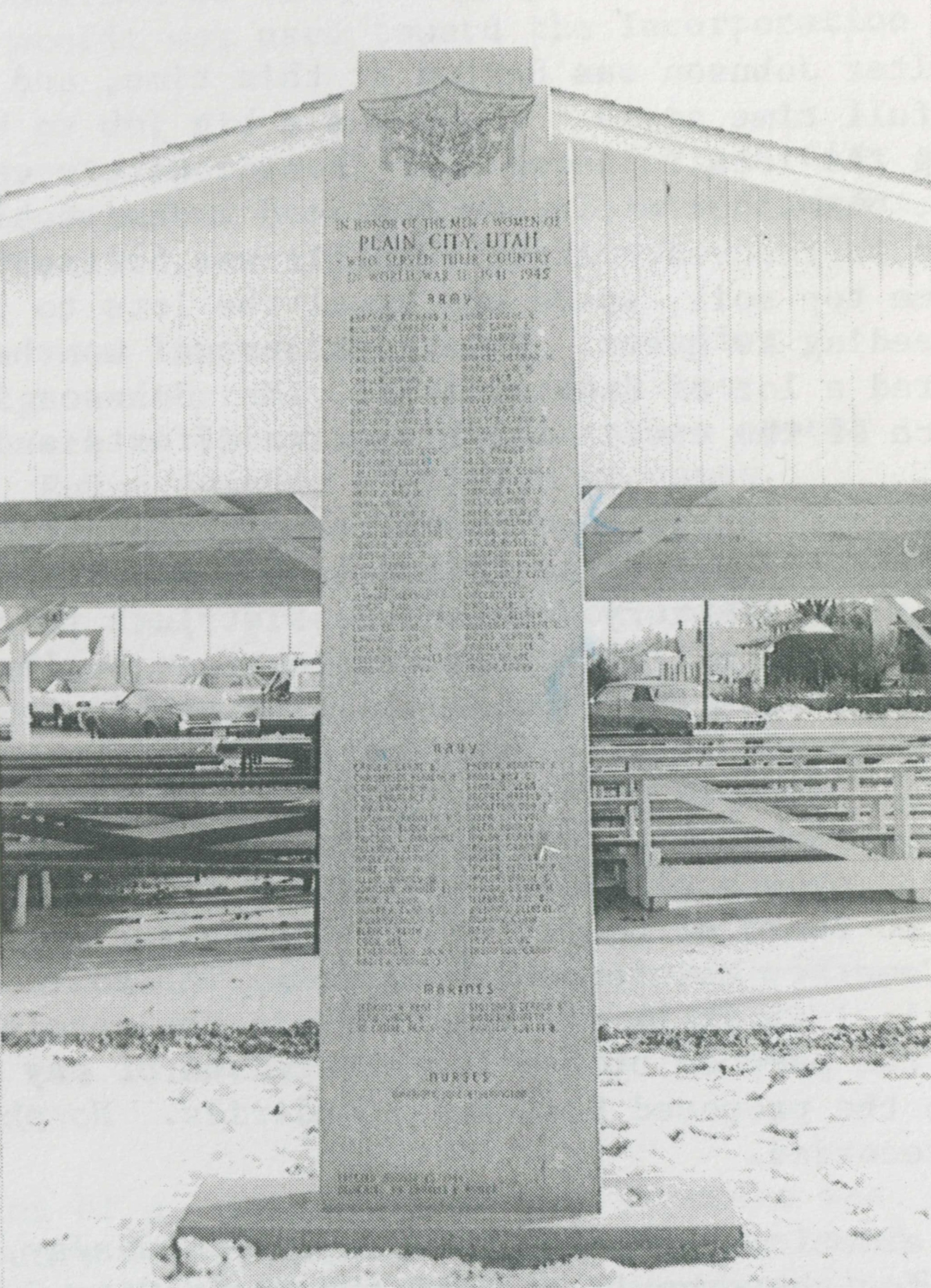
This monument was built to honor the Servicemen who serve in World War II. Photo shows it as it stands today in front of the Town Bowery and Church parking lot.
THE FOLLOWING WAS TAKEN FROM DEEDS IN POSSESSION OF MRS. GEORGE WEATHERSTON:
The townsite of Plain City was established. An act of Congress April 24, 1820, entitled, “An Act Making Further Provision For The Sale Of The Public Lands, Etc.”
Six hundred forty acres of land were provided for people of this townsite.
“Now know ye that the United States of America, by these present, do give and grant unto the said Franklin D. Richards, Judge of Weber County, in trust as aforesaid, and this successor in said trust above described, the tract as described.”
Signed: Ulysses S. Grant, USA
Utah became a territory in 1872.
INCORPORATION AND GOVERNMENT OF PLAIN CITY
In Utah the community affairs were first conducted by the President Elder, and later by the Bishopric of the L.D.S. Ward.
As all community members wanted a voice in the governing of the town, it became necessary to formulate a system whereby elections could be held and others could be voted into office.
A group public-interested men spent many hours promoting the incorporation of Plain City. Petitions had to be formulated and circulated to gain interest and cooperation of the townspeople.
A Committee had been chosen to help beautify the Plain City Cemetery. They found that the only way service could be maintained was to incorporate and thereby secure money through a tax levy.
On January 13, 1944, the Articles of Incorporation for the town of Plain City were filed in the Weber County Clerk’s office in Ogden, Utah.
Adoption of a resolution designating Plain City as an incorporated town was made and action was taken by Weber County Commissioners, George F. Simmons, Lyman M. Hess and Joseph Peterson. Appointment of a “President of the Town Board” and four “Trustees” was made to serve as a governing body until the next municipal election two years later.
A nomination was made by L. Rulon Jenkins that Dean Baker serve as President. The following were appointed to serve:
President of the Town Board . . . Dean Baker
Trustees . . . . . . . . . . . . . . . . . . . . .L. Rulon Jenkins
Floyd A. Palmer
Albert Sharp
Fred L. Singleton
The cemetery district was officially created on July 19, 1945.
Town board meeting were held in the Plain City School.
Formerly, the county had jurisdiction over road improvement. Now, the town board had to assume the responsibility or road upkeep and new construction. The state tax funds, based on the population of the town, could now be secured for improvement of roads and culverts. Later, it would be used law enforcement, public works, recreation, etc.
In November, 1945, the first municipal election was held in the plain City. In 1946, the following elected men took office:
President of the Town Board . . . Elmer Carver
Trustee . . . . . . . . . . . . . . . . . . . . .Floyd A. Palmer
Albert Sharp
Elwood “Dick” Skeen
Fred L. Singleton, Town Clerk
In November, 1948, the following elected men took office:
President of the Town Board . . . Elmer Carver
Trustees . . . . . . . . . . . . . . . . . . . . Floyd A. Palmer
Lawrence W. Jenkins
Clair Folkman
Lewis Vincenti
In 1948, the town board directed a beautification project on the Town Square. The five-acre park was leveled and sodded in the spring of 1949. Dairy Days had to be held on the school grounds and on neighboring property.
A granite monument was erected on the Church ground honoring those who had served in World War II.
In November, 1948, President Elmer Carver was elected to the position of Weber County Commissioner. On April 12, 1949, the duties of President of the Town Board were taken over by Floyd A. Palmer, who was appointed to succeed Mr. Carver to the post. Meetings were held with three Trustees until a fourth could be appointed. They met in the home of President Palmer.
On January 1, 1950, the following men took the oath of office:
President of the Town Board . . . . . . . . Clair M. Folkman
Trustees. . . . . . . . . . . . . . . . . . . . . . . . . .Lewis Vincenti (4-year term)
Lee Olsen (2-year term)
Elvin H. Maw (2-year term)
Dean Baker (2-year term)
Elvin H. Maw was appointed Town Clerk. Meetings were held at Clair Folkman’s home.
Plain City’s assessed valuation for 1950 was $390,220.00
An annual celebration was held each year on July 4th. It was called “Potato Day.” A queen and her attendants were chosen to reign over the day. The affair was sponsored by the Town Board and the Cemetery Committee to raise funds for the upkeep of the cemetery and other purposes.
Walter Johnson was employed as caretaker of the cemetery.
On October 2, 1950, Frank Anderson became the Town Marshall. He served until August of 1951.
In 1951, Plain city joined the Municipal League. It was made up of cities and towns in the State of Utah. Years later, the name was changed to “Utah League of Cities and Towns.”
The population of Plain “City in 1951 was 829. The elected men of Plain City would now hold office four years instead of two years.
In January, 1952, the Trustees elected to the Board were:
Trustees . . . . . . . . . . . . . Lee Olsen
Earl Hadley
Holdover Trustees. . . . . .Elvin H. Maw, Town Clerk
Lewis Vincenti
On April 7, 1952, Frank Hadley was appointed to fill the unexpired term of Earl Hadley, who passed away April 4, 1952.
On April 6, 1953, Rulon Chugg was appointed to fill the unexpired term of Lewis Vincenti, who passed away December 1, 1952.
In May 1953, a flagpole was installed at the Plain City Cemetery.
The Town Board discussed the possibility of bringing the following elected officers:
President of the Town Board . . . . . . . . Lee Olsen
Trustees . . . . . . . . . . . . . . . . . . . . . . . . . Merrill Jenkins
Blair Simpson
Frank Hadley
Elvin H. Maw, Town Clerk
Town Board meetings were now held at President Lee Olsen’s home and at the L.D.S Church.
Gordon Thompson was serving on the Mosquito Abatement District.
Plain City voted to have supervised control of the town dump. Victor Lund, Ezra Richardson, Elwin Taylor, Verl Stokes, and later Carston Illum have been employed as supervisors.
Plain City signed an application for culinary water.
Lights were installed on the town square for night games and recreation. A dedication ceremony was held and President Lee Olsen threw the switch for the first time on July 2, 1954.
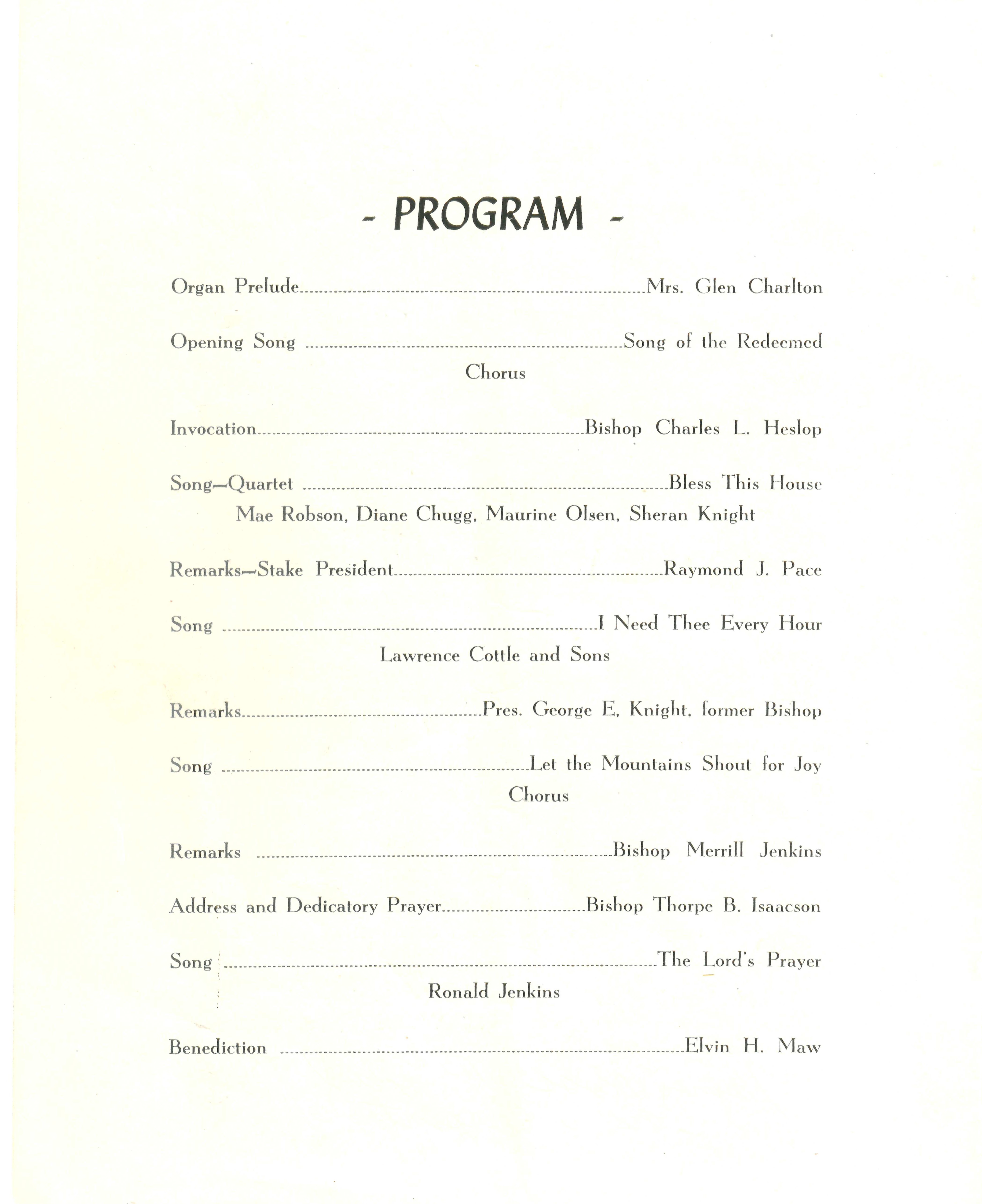
On November 7, 1954, the new L.D.S Church was dedicated.
In 1955, public restroom were constructed on the north side of the recreation hall.
On October 25, 1955, the new addition to the Plain City School was dedicated.
A motion was made that the Town Board assist the Lion’s Club in building a water tower.
On January 2, 1956, Elvin H. Maw, Town Clerk, administered the Oath of Office to the following-elected trustees:
Trustees . . . . . . . . . . . . Floyd A. Palmer
Elvin Maw
Holdover Trustees. . . . Merrill Jenkins
Blair Simpson
The Town Board sponsors and assists the Plain City “Dairy Days” show each year.
Floyd A. Palmer was assigned to serve on the Board of Trustee in the Bona Vista Water District. Theron Palmer was Superintendent of Bona Vista.
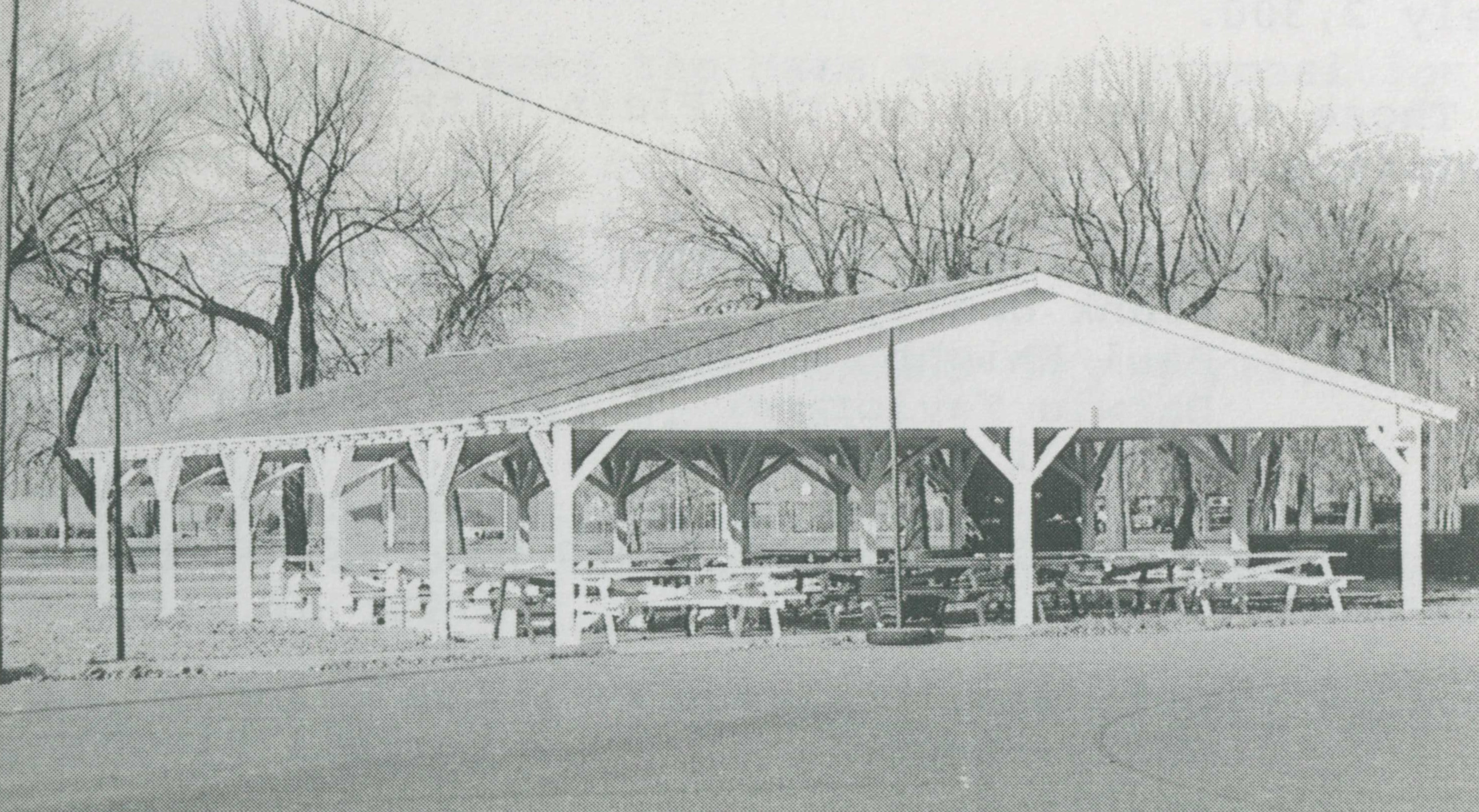
The Town Board assisted the Lions Club and the Plain City Ward in building a bowery and fireplace south of the Town Square in 1957. This was completed in 1958.
Property was purchased from Llewellyn Hipwell, located west if the Lions Clubhouse for the purpose of building a Town Hall.
In January, 1958, Town Clerk, Elvin H. Maw, administrated the Oath of Office to the following elected officials:
President of the Town Board . . . . . . . . . Kent Jenkins
Trustees . . . . . . . . . . . . . . . . .. . . . .. . . . . Glen Charlton
Holdover Trustees. . . . . . . . . . . . . . . . . . Floyd A. Palmer
Elvin H. Maw, Town Clerk
The Board signed an ordinance with Bona Vista Water District and construction of a culinary water system was begun. Surface wells and pitcher pumps would soon be a memory. The above information was taken from:
- A book “ A Historical Study of Plain City “ by Fern Olsen Taylor.
- Ogden Standard Examiner news clipping
- Research by Clara Olsen
In 1958, Lee Carver contracted the building of the 20’ x 44’ Town Hall. In May, the new municipal building was completed to serve the Town of Plain City, under the direction of President Lee Olsen, Trustees: Floyd A. Palmer, Glen Charlton, Kent Jenkins, Elvin H. Maw, Town Clerk.
Zoning ordinances were passed.
Work on the Willard Bay was underway.
On March 17, 1959, Plain City celebrated its Centennial year. It was observed with a week of outstanding events. We wore pioneer clothing, walked to church and enjoyed many programs as we honored pioneer ancestors. One special feature was the presentation of a pageant written by a Plain City native, Mrs. Gwendolyn Jenkins Griffin, called “Sand In The Shoes.” A large cast of characters, choir, and band members participated. Wheatly and Fen Taylor were program chairmen.
A large water tower storage tank is now an important new part of the scenery in the Plain City area.
In May, 1959, letters were sent to all residents of Plain City, informing them that they were required to obtained building permits. Walter Moyes was assigned to be the building inspector.
On January 2, 1959, Theron Palmer reported that the water was turned into Plain City water lines.
In 1960, two newly-elected Trustee took Office:
Trustees . . . . . . . . . . . . . Keith Blanch
Dee Cook
Holdover Trustees . . . . .Kent Jenkins
Glen Charlton, Town Clerk
The Plain City Ward was divided June 12.
The Plain City Town Board is now working with Mountain Fuel Supply Company to have natural gas piped into the town. The project is to be completed in 1961.
Plain City board members are organized a “Zoning Board.”
Plain City Improvement Council for community development was organized with executive committee members as follow:
Mayor, Lee Olsen Merrill Jenkins
Rulon Chugg Carl Taylor
Lyman Cook Clair Folkman
Mrs. Rosella Maw
In 1961, it was decided that the 40-year-old Recreation Hall would be renovated. Many hours were spent by dedicated men and women on this project.
The Plain City Town Board considered purchasing property from Bernard Poulsen for a park. It was voted down.
The population of Plain City now is near 1,5000. (Standard Examiner)
The 1962 elected officials for this term were:
President of the Town Board . . . . . . . Kent Jenkins
Trustees . . . . . . . . . . . . . . . . . . . . . . . . Glen Charlton
Holdover Trustees . . . . . . . . . . . . . . . . Keith Blanch
Dee Cook
The Town Board approved an ordinance governing subdivisions. The board is stressing enforcement of building permits.
In January 1964, Trustees were elected to the Board:
Trustees . . . . . . . . . . . . . . Keith Blanch
Dee Cook
Holdover Trustees . . . . . . Kent Jenkins
Glen Charlton
Cherrill Knight became the City Recorder.
In 1965, George Fisher was hired as the Plain City Chief of Police, Later, Howard Zeigler was hired as a deputy.
In 1966, the following men were elected and took office in January:
President of the Town Board . . . . . . . Keith Blanch
Trustees . . . . . . . . . . . . . . . . . . . . . . . .Kent Jenkins
Vernal Moyes
Holdover Trustees . . . . . . . . . . . . . . . .Dee Cook
Rulon Chugg was appointed to fill the unexpired term of Keith Blanch.
The Town Board is supporting the Summer Recreation Program, and junior Posse activities.
George Weatherston was the first Justice of the Peace in Plain City. He resigned in 1966, and Keith Daley was appointed to that office.
On June 3, 1967, Plain City received a proclamation signed by Governor Rampton:
“Where Govern Rampton did declare Plain City a City of the Third Class.”
The former title of “President of the Town Board” will now be changed to “Mayor”. Keith Blanch was the first to be officially called “Mayor of Plain City.”
The title of “Trustees” will be changed to “Councilmen”. There will now be five councilmen instead of four.
In April 1967, the recently renovated recreation hall was destroyed by fire.
In 1968, three new councilmen were elected and installed. The Oath of Office was administered by Keith Daley:
Councilmen . . . . . . . . . . . . .Rulon Chugg
James E. Brown
Lynn P. Folkman
Holdover . . . . . . . . . . . . . . .Kent Jenkins
Vernal Moyes
In November, 1968, Plain City approved the “Sewer Bond Issue” by a 228 to 69 vote. Plans for the project are underway with work to be completed in 1969.
Mayor Keith Blanch became the manager of the Plain City-Farr West Sewer System.
“Mans First Trip To The Moon” – July, 1969.
In January, 1970, the following officials took the Oath of Office:
Mayor . . . . . . . . . . . . . . Keith Blanch
Councilmen . . . . . . . . . .Kent Jenkins
Melvin Cottle
Vernal Moyes
Holdover Councilmen. . Lynn Folkman
Rulon Chugg
Cherrill Knight resigned her position as City Recorder and Lucille White took her place.
Plain City annexed 57 acres of land bordering on the South of the town to become “Pioneer Village.”
A Railroad line was constructed along the north side of Plain City extending to little Mountain where the Great Salt Lake Minerals and Chemical Corporation is located.
On November 27, 1971, the new Bank of Utah was dedicated in Plain City.
Two newcomers and one incumbent won elections in 1972. Keith Daley administered the Oath of Office to :
Councilmen . . . . . . . . . . . . .Darwin Taylor
Wayne Cottle
Lynn Folkman
Holdover Councilmen. . . . . .Vernal Moyes
Kent Jenkins
On October 23, 1973, the council asked for bids and plans for new restrooms to be constructed west of the concession stand on the Town Square. They accepted the bid of Verl Rawson for $5,000.00
In January 1974, Keith Daley, justice of the Peace, administered the Oath of Office to the following who were elected in November, 1973:
Mayor. . . . . . . . . . . . . . . . . . . . Lee Olsen
Councilmen. . . . . . . . . . . . . . . . David Thomas
William VanHulten
Holdover Councilmen. . . . . . . . Wayne Cottle
Darwin Taylor
Lynn P. Folkman
In 1974 Kelly Hipwell was hired as full-time “Public Works Director” for Plain City. Walter Johnson and Elbert Moyes have served as Public Works’ employees. Carson Illum is presently “Plain City Public Works” employee.
Lucille White resigned and Diane Taylor became the City Recorder.
Plain City endorsed the Mass Transit Proposition.
The new Weber High School was dedicated March 28, 1974, in Pleasant View. Plain City students attend Weber High School and Wahlquist junior High School.
England Builder’s Lumber Company was heavily damaged by fire on April 6, 1975.
The Lions building was restored by the Plain City Lion’s Club. The building was formerly the Episcopal Church built in 1877.
Residents of Plain City were asked to post “House Numbers”.
Ground breaking was held for the new “Pioneer Park” racetrack in the northeast part of Plain City, in 1975.
“The Bicentennial Year” – 1976 – three new councilmen were elected:
Councilmen . . . . . . . . . . . . . . . . . . . . . Ralph A. Taylor
Delmar L. Tanner
Holdover Councilmen . . . . . . . . . . . . .David Thomas
William VanHulten
In July, 1976, the assessed valuation of Plain City was $2,862.521.000.
New subdivision ordinances have been formed.
The property of Bernard Poulsen was purchased for a park. The 20 acres will be developed for posse drills and future recreation.
The Utah Transit Bus Service was initiated in Plain City in 1977.
The population in March of 1976, was approximately 2,300.
Those now serving on the Plain City Planning Commission are:
Boyd Parke, Chairman
Frank Hadley
Paul Knight
Darwin Taylor
Farrell Bingham
Those now serving on the Plain City Board of Adjustments:
Orlo Maw, Chairman Lee Painter
Garry Skeen Farrell Bingham
Archie Hunt
The above information beginning in 1959, was taken from the Ogden Standard Examiner newspaper articles and the Plain City Council minutes.
Clara Olsen


Mayors


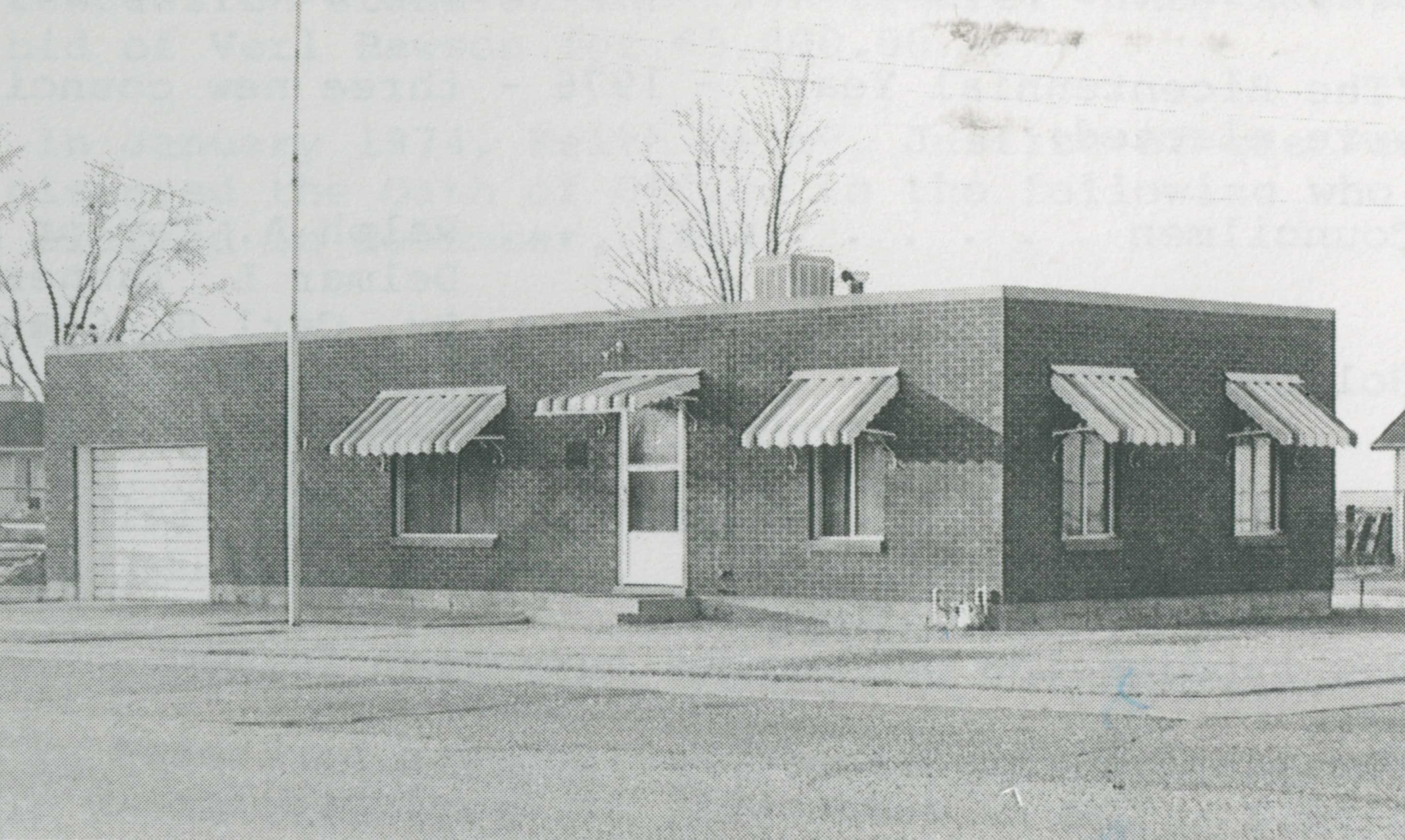
Dean A. Baker
Submitted By Beverly B. Eddy
The town of Plain City was incorporated, approved and effective January 13, 1944. Dean A. Baker worked many long hours helping to organize the Town Board when Plain City was incorporated and served as Plain City’s first mayor, January 13, 1944.
During World War II (with the help of scouts) Dean gathered scrap iron from all over the surrounding area, hauled it to Plain City and piled it in the town square, to help in the was effort. According to a letter he has from the Governor of Utah, Plain City collected more iron than any other community in the state of Utah. When the iron was sold, the money was used to help finance the incorporation of the town and to build a monument (located in the center of town) honoring all the Plain City men and women who served in the armed services.
Dean Baker helped organized the first Plain City cemetery District in the State of Utah, July 19, 1945.
The Plain City Lion’s Club was chartered May 11, 1948 with 65 charter members. Dean Baker was chosen for their charter president. The history of the Plain City Lion’s Club is an inspiring one of unselfish service to the community.
Some years ago, Dean was asked (in an interview concerning the Lion’s International) how he felt about his Lion’s Club activities? His answer was “I’ve enjoyed everything I have ever done in the Lion’s Club and was always well paid in the satisfaction that comes from doing something for others. But the Lion’s have done more for me that I ever did for them. When I was seriously ill and recovering at home after some major surgery, the Plain City Lion’s came down to my place and harvested over 20 acres of corn for me. They showed up here with over 20 trucks, tractors and corn Choppers, harvested my crop, hauled it to the pits and put it away. Then they all went home and harvested their own crops. But nine was the first crop harvested. You ask me what I think of the Lion’s Club? Mister, I love ‘em.” –and great big tears rolled unashamedly—the guy really meant it. The Lion’s Club has done this for many other people. The Lion’s Club is the largest service club in the world.
Some years ago Dean Baker acquired the old Episcopalian Church building (built in 1878) in Plain City. He offered this building to the Lion’s Club for a club house. In order for the club to finance the purchase (which would return only his investment in the property) he deeded the property to the club and allowed them to sell two-thirds of it. This raised part of the funds and the club put on queen contest and other promotions to raise the balance. Dean organized and helped with these promotions until the money was raised.
The Lion’s have completely remodeled the building several times. They now have a beautiful clubhouse, which they have turned over to the Town Board for use as a Civic Center available to all.
Dean Baker was an Air Raid Warden in Plain City and went to meetings every week. Just about the whole time of the war. Meetings were held at the City and County building in Ogden.
Dean was chairman of the first Potato Day Queen Contest Celebration, which was held for many years thereafter. At this celebration there were well over one hundred horses. They held horse shows, children’s races and parades. The celebration committee gave away horses and saddles and other prizes and still made $1,000 or more for the town. This was one of the biggest events of the year and everyone participated. There were wrestling matches. Flag raising ceremonies to start the day off. Later in the day, Dean held a Rodeo in his pasture just west of the town square by his barn. Many of the young boys and girls riding calves. Horse races were also held. Everyone had a great day.

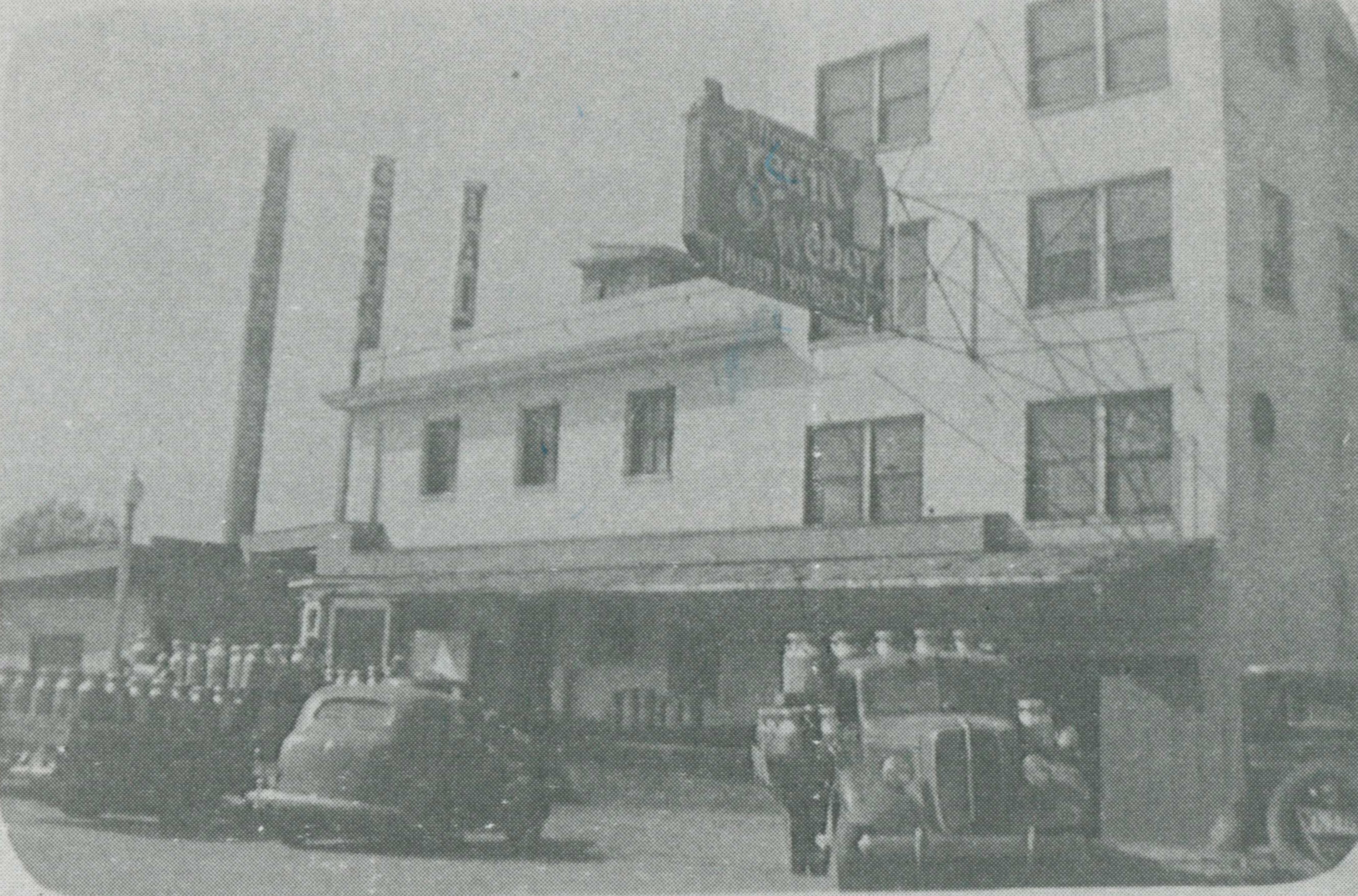
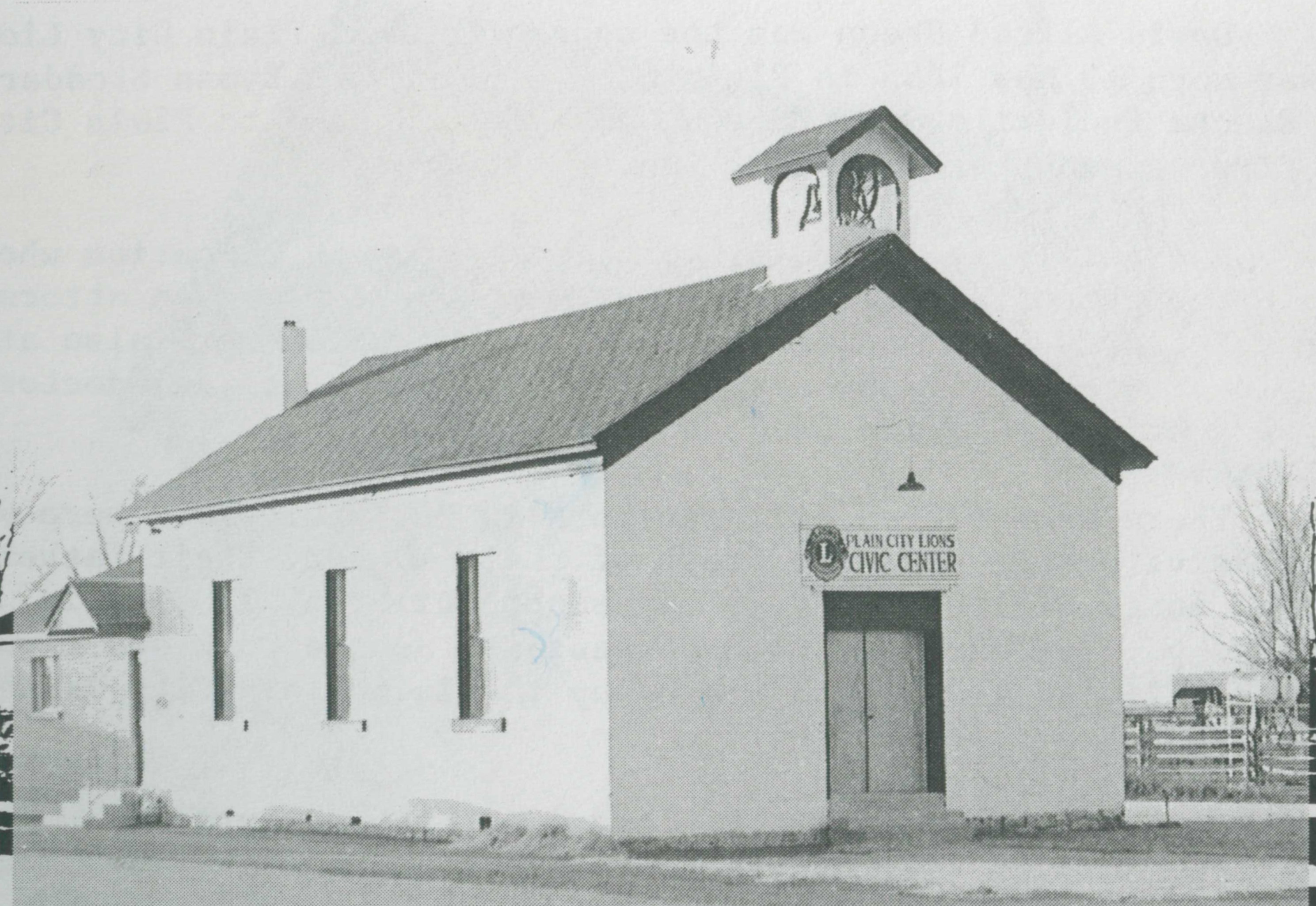
It was nearly one hundred years ago that a small band of families broke away from the Mormon Church in Plain City, Utah, to once again embrace the Episcopal faith. That summer of 1876, representatives of these 13 families met with the Rev. James Gillogly to ask his help in forming a new congregation.
Rev. Gillogly encouraged the brethren by traveling to Plain City from Ogden, where the tiny congregation would hold church services in the public school house. The ten mile trip was made regularly, regardless of weather conditions.
Finally, an appeal was made through the “Spirit of Missions” asking church members in the east for money to build a church. A corner lot of one acre was purchased for $150, and another $100 was all it took for the people of Plain City to build their long-awaited church.
The resulting dusty red, adobe brick building is a monument to the perseverance of those early settlers. Erected in 1877, the building still stands today—and is in better shape than ever because of the recent Bicentennial efforts of the Plain City Lions Club. [Built by William Sharp]
The Lions actually took an active interest in the old church on 1952. Members needed a place to meet, but with no other space available, decided that the church was the most likely spot.
They intended to buy the building, but were hampered by the lack of funds in the club’s coffers. Turning down the offer of a loan from two businessmen in town, the club raised their funds through a Memorial Day celebration and the sale of two lots from the church’s one acre of ground.
The building was finally theirs. Members fixed it up, and even added a modern new kitchen, restrooms and a furnace room. By 1974, however, the old structure had nearly succumbed to weather, time and vandalism.
The Bicentennial restoration of the original church was voted to be a most appropriate way to celebrate America’s heritage. A new roof was put on. Double doors decorated the front entrance. Aluminum windows and screens were attached to keep the harsh weather out. Cement windows sills were built to replace the rotting wood. Inside, a new hardwood floor and draperies finished the church’s now-modern décor.
Wheatley Taylor, club president, took a personal interest in the church’s “memorial bell,” carted to the little western town in 1878 to sit atop the building’s belfry. “We believe it is the first church bell to ring in Plain City,” he said, adding, “When we took the bell down, the wood just came apart in our hands.”
Taylor scoured the state in search of a craftsman who could repair the cracks in the metal bell. While cleaning the bell, he found an inscription which explains the bell’s name. Engraved on the huge 500 pound bell is the inscription, “in Memorial Rev. James Lee Gillogly Obit XIV Feb. MDCCCLXXXI.”
The bell now sits atop the church, nestled in a new belfry.
Once again, the Lions Club coffers were exhausted. The club made application to the Bicentennial Committee for funds and also asked that the building be named a historical site. Cooperation was received on both counts, Lions report.
The building has turned into a true civic center for the 2,000 residents of Plain City. The Lions Club entertains townspeople by scheduling special programs in the completely-renovated building.
Other civic groups also use the center for their special purpose. When town meetings draw an overflow crowd, they are naturally moved next door to the larger quarters of the Lions Civic Center.
Clean, light and airy, with sparkling new metal chairs, the interior belies the building’s historic façade.
Although most of the work was done recently as part of the club’s Bicentennial efforts, members’ original restoration work back in the 1950’s has not been forgotten. In 1962, the Plain City Lions Club was presented with the state’s D. A . Skeen Award, in honor of the past International President who spent his childhood years in Plain City.
Through much hard work and effort by the Lions, not only is the building now restored, but so are the integrity and strength that forged it in the beginning a hundred years ago.
DAVID ALFRED SKEEN
Submitted by Roxy Heslop
David Alfred Skeen was the sponsor of the Plain City Lions Club. He was born 13 May 1885 in Plain City, the son of Lyman Stoddard Skeen and Electra Phelomila Dixon Skeen. His father came to Plain City with the first group that arrived 17 March 1959.
The family seemed to be very interested in education when few people thought of attending college. D. A. Skeen was an attorney in Salt Lake. His brothers, Jedidiah D. and W. Riley were also attorneys. His oldest brother Lyman, 14 years older, was a medical doctor who was very brilliant but passed away at the age of 35.
There were eleven children born in Plain City and were very progressive people. At thew death of their mother, their father married Annie Skelton and they had eight children all born in Plain City. Ivy Marsden, Leona Freestone, Jennie Cook and Elwood Skeen are living (1977) and are happy to claim Plain City is a choice place.
D. A. Skeen, founder of Lionism in Utah, charter member and first president in 1921 of the Salt Lake City Lion’s Club is a native Utah son. He was born at Plain City. Lion D. A. Skeen served as District Governor of District 28 in 1922. At that time District 28 included all of Utah and part of Idaho. He continued to be very active in Lionism and was elevated to the position of International President in 1944.
During the United Nations Conference held in San Francisco in 1945 he served with Melvin Jones, founder of Lionism, as a Consultant and Special Delegation. He was a Consultant and Special Delegate to the Paris Peace Conference in 1946. He was an ardent supporter if the United Nations and was a member of the Board of Directors of the American Association for the United Nations.
Past President Skeen has served with distinction and has witnessed the growth and development of Lionism throughout the World.

























 Sagacity