Plain City Hurler

Here are four more clippings from my Grandparents, Milo & Gladys Ross. Grandpa talked quite a bit of baseball in Plain City from his youth. I have shared this photo too where he and Elmer played together on the same team. Visiting with Grandpa, multiple baseball players came up, but Elmer was the one that went on to some fame. Plain City’s history includes excerpts on Elmer.
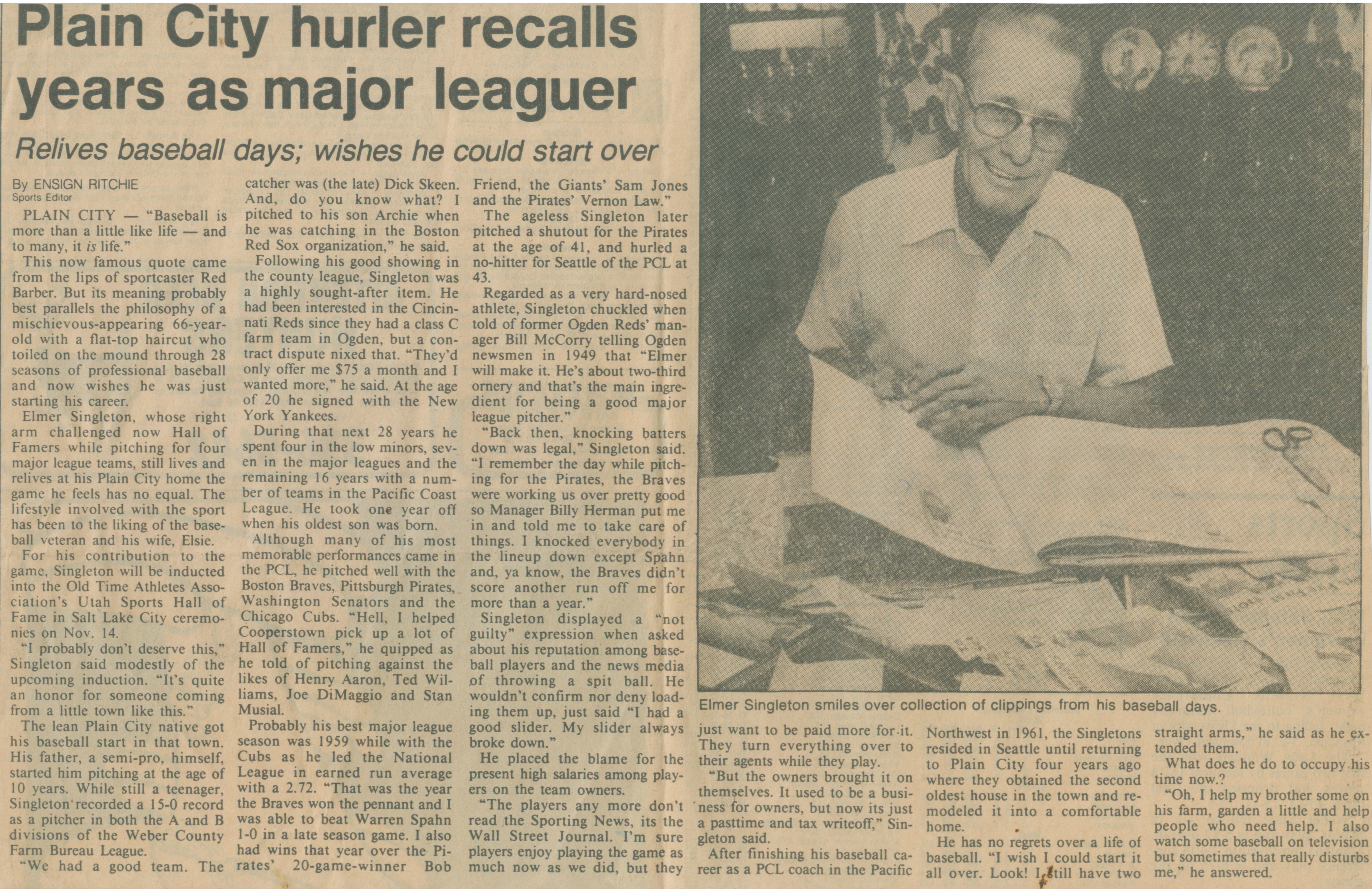
“Plain City hurler recalls years as major leager

“Relives baseball days; wishes he could start over

“PLAIN CITY – “Baseball is more than a little like life – and to many, it is life.”

“This now famous quote came from the lips of sportcaster Red Barber. But its meaning probably best parallels the philosophy of a mischievous-appearing 66-year-old with a flat-top haircut who toiled on the mound through 28 seasons of professional baseball and now wishes he was just starting his career.

“Elmer Singleton, whose right arm challenged now Hall of Famers while pitching for four major league teams, still lives and relieves at his Plain City home the game he feels has no equal. The lifestyle involved with the sport has been to the liking of the baseball veteran and his wife, Elsie.

“For his contribution to the game, Singleton will be inducted into the Old Time Athletes Association’s Utah Sports Hall of Fame in Salt Lake City ceremonies on Nov. 14.

“”I probably don’t deserve this,” Singleton said modestly of the upcoming induction. “It’s quite an honor for someone coming from a little town like this.”

“The lease Plain City native got his baseball start in that town. His father, a semi-pro, himself, started him pitching at the age of 10 years. While still a teenager, Singleton recorded a 15-0 record as a pitcher in both the A and B divisions of the Weber County Farm Bureau League.

“”We had a good team. The catcher was (the late) Dick Skeen. And, do you know what? I pitched to his son Archie when he was catching in the Boston Red Sox organization,” he said.

Following his good showing in the county league, Singleton was a highly sought-after item. He had been interested in the Cincinnati Reds since they had a class C farm team in Ogden, but a contract dispute nixed that. “They’d only offer me $75 a month and I wanted more,” he said. At the age of 20 he signed with the New York Yankees.

“During that next 28 years he spent four in the low minors, seven in the major leagues and the remaining 16 years with a number of teams in the Pacific Coast League. He took one year off when his oldest son was born.

“Although many of his most memorable performances came in the PCL, he pitched well with the Boston Braves, Pittsburgh Pirates, Washington Senators and the Chicago Cubs. “Hell, I helped Cooperstown pick up a lot of Hall of Famers,” he quipped as he told of pitching against the likes of Henry Aaron, Ted Williams, Jo DiMaggio and Stan Musial.

“Probably his best major league season was 1959 while with the Cubs as he led the National League in earned run average with a 2.72. “That was the year the Braves won the pennant and I was able to beat Warren Spahn 1-0 in a late season game. I also had wins that year over the Pirates’ 20-game-winner Bob Friend, the Giants’ Sam Jones and the Pirates’ Vernon Law.”

“The ageless Singleton later pitched a shutout for the Pirates at the age of 41, and hurled a no-hitter for Seattle of the PCL at 43.

“Regarded as a very hard-nosed athlete, Singleton chuckled when told of former Ogden Reds’ manager Bill McCorry telling Ogden newsmen in 1949 that “Elmer will make it. He’s about two-third ornery and that’s the main ingredient for being a good major league pitcher.”

“”Back then, knocking batters down was legal,” Singleton said. “I remember the day when pitching for the Pirates, the Braves were working us over pretty good so Manager Billy Herman put me in and told me to take care of things. I knocked everybody in the lineup down except Spahn and, ya know, the Braves didn’t score another run off me for more than a year.”

“Singleton displayed a “not guilty” expression when asked about his reputation among baseball players and t news media of throwing a spit ball. He wouldn’t confirm nor deny loading them up, just said “I had a good slider. My slider always broke down.”

He placed the blame for the present high salaries among players on the team owners.

“”The players any more don’t read the Sporting News, its the Wall Street Journal. I’m sure players enjoy playing the game as much now as we did, but they just want to be paid more for it. They turn everything over to their agents while they play.

“”But the owners brought it on themselves. It used to be a business for owners, but now its just a pasttime and tax writeoff,” Singleton said.

“After finishing his baseball career as a PCL coach in the Pacific Northwest in 1961, the Singletons resided in Seattle until returning to Plain City four years ago where they obtained the second oldest house in the town and remodeled into a comfortable home.

“He has no regrets over a life of baseball. “I wish I could start it all over. Look! I still have two straight arms,” he said has he extended them.

“What does he do to occupy his time now?

“”Oh, I help my brother some on his farm, garden a little and help people who need help. I also watch some baseball on television but sometimes that really disturbs me,” he answered.
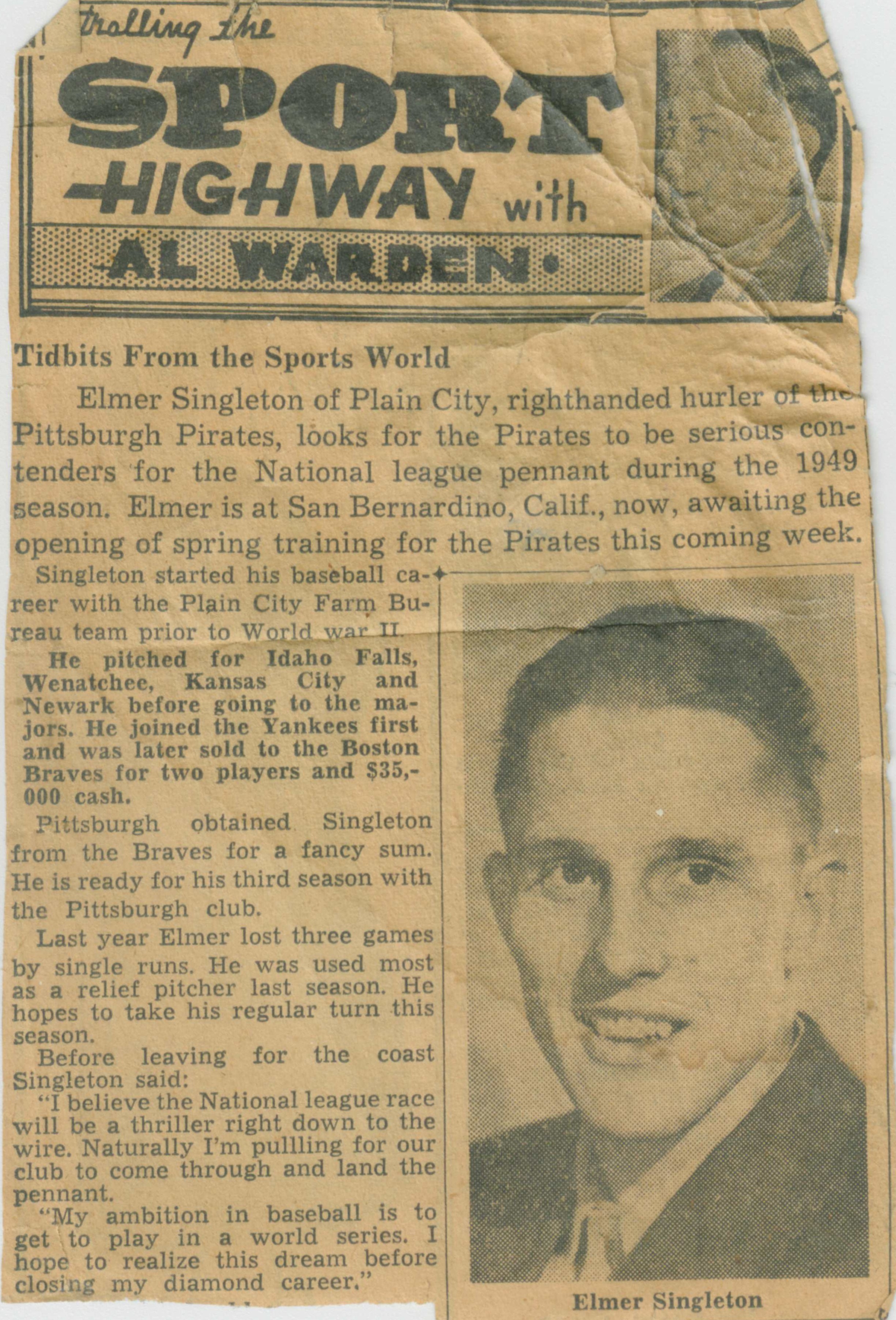
“Tidbits from the Sports World

“Elmer Singleton of Plain City, righthanded hurler of the Pittsburgh Pirates, looks for the Pirates to be serious contenders for the National league pennant during the 1949 season. Elmer is at San Bernardino, Calif., now, awaiting the opening of spring training for the Pirates this coming week.

“Singleton started his baseball career with the Plain City Farm Bureau team prior to World war II.

“He pitched for Idaho Falls, Wenatchee, Kansas City and Newark before going to the majors. He joined the Yankees first and was later sold to the Boston Braves for two players and $35,000 cash.

“Pittsburgh obtained Singleton from the Braves for a fancy sum. He is ready for his third season with the Pittsburgh club.

“Last year Elmer lost three games by single runs. He was used most as a relief pitcher last season. He hopes to take his regular turn this season.

“Before leaving for the coast Singleton said: “I believe the National league race will be a thriller right down to the wire. Naturally I’m pulling for our club to come through and land the pennant.

“”My ambition in baseball is to get to play in a world series. I hope to realize this dream before closing my diamond career.

“Elmer Singleton Rates Praise

“The “best pitched game” ever witnessed at Seals’ stadium went down in the record book as a defeat for Elmer Singleton, San Francisco right-hander, writes James McGee, San Francisco newspaperman.

“Singleton started his baseball career with Plain City in the Weber County Farm Bureau league back in 1938. Since that timehe has worn a number of major league uniforms.

“Writes McGee: “The big Seal righthander pitched 12 1/3 innings of no-hit ball against Sacramento, April 24, yet lost 1 to 0.

“”That was the best-pitched game I ever saw,” his manager, Tommy Heath, declared. But, as it turned out, it was not quite good enough. Singleton, who set a Seals stadium record and etched his name in Seal history, had the bad luck to meet a tough opponent, Jess Flores, Sacramento’s veteran righthander.

“Flores was effective. The Seals got to him for eight hits, compared to the three singles from Solons finally wrenched from the reluctant Singleton. But the three Solon hits came in succession in the first half of the thirteenth inning, Eddie Bockman, spelling Manager Joe Gordon at second base; Al White and finally Johnny Ostrowski did the damage, Bockman scoring.

“Singleton admitted he was tiring in the thirteenth.

“”It wasn’t that I pitched to so many hitters. It was the strain of the thing,” he said. “All through the early innings I knew I had a no-hitter going. I had to be careful with every pitch. I never pitched one before and I wanted it.”

“Umpire Don Silva vouched that Singleton was careful.

“”He had great stuff. His fast ball was good, but his curve was particularly good. And he was hitting the corners of the plate all the time,” said Silva. “His control was almost perfect.”

“Walked Four

“Singleton walked four men, one of them purposely. He retired the first 18 men to face him before he faltered and walked Bob Dillinger, first man to face him in the seventh.

“In the seventh, the Solons had him in jeopardy for the only time until they finally scored.

“Singleton was within one out of tying the Coast league record for no-hit innings when Bockman got the first hit, a sharp roller through the hole between third and short, in the thirteenth.

“Dick Ward, pitching for San Diego in 1938, went 12 and two-thirds innings of a 16-inning game against Los Angeles without a hit. He eventually won, 1 to 0.

“Ironically, the greatest game pitched at Seals stadium in its 22-year history was pitched in virtual privacy. Only 790 spectators were there at the start with about 1000 fans leaving the park before the end of the game.

“Sports Tid Bits

“Great Falls postmen have accepted the challenge of members of the Ogden post office and have wagered $125 that the Electrics finish ahead of the Reds in the 1952 Pioneer league race.

“Harold Stone of the Ogden post office department informed this corner of the acceptance Saturday night. Two years ago the Ogdenites lost a similar wager.

“George East, landowner of some of the finest duck shooting grounds of the area, is living like Noah of old at his home in West Warren. Genial George says that instead of duck problems, the trash fish from the lower Weber are visiting him and drinking out of his flowing well.

“The ducks have been winging their way annually in George’s direction for nearly four score years. Some years there has been so little water that the migratory birds have avoiding George’s feeding and nesting grounds. Not this year, however, George says as there is more water flooding the pasture lands than in many, many years.

“Herb Woods went out to look the situation over this week. George told Herb he could find his favorite blind by use of maps and a deep diving suit – but Herb did not want to get his nose wet.

“Hal Welch, our so-called game expert, says there is consternation among the sportsmen about the pheasants that will be lost because of their nests being destroyed by the floodwaters. He admits that there will be no shortages of mosquitoes for sportsmen, however.

“Screwy Situations

“The 1952 baseball season still is an infant but here are some of the crewy things that have taken place:

“An umpire – Scotty Robb – got fined, for pushing of all people, Manager Eddie Stanky, of the St. Louis Cardinals.

“Leo Durocher of the Giants protests Augie Guglielmo’s call of a third strike on one of his hitters but nothing happens. We thought questioning a third strike meant automatic banishment.

“A Phillie, Stan Lopata, fails to run from third base with two out, the batter reaches first on an error and Lopata is left stranded as the next batter is retired. And Manager Eddie Sawyer was coaching at third.

“”The Giants are leading the Braves by two runs in the eighth inning yet Leo Durocher lifts his number four hitters, temporarily Henry Thompson, for a pinch slugger. You don’t lift your number four batter in any situation, says wise baseball men, but then who says Thompson (not Bobby) is a number four hitter?

“Roy Campanella, a good number four hitter, bunts in a tie game. Another old baseball adage is that “you don’t bunt your number four hitter.” We disagree with that one. In this case Campy’s bunt paid off for the Dodgers as the next batter singled home the winning run.

“W.S.C. Loses

“PULLMAN (AP) – Idaho defeated Washington State 15-12 in Northern division gold matches Saturday.

“B. Elmer Singleton

“PLAIN CITY – Bert Elmer Singleton, passed away Friday, January 5, 1995 at his home in Plain City. He was born June 26, 1918 in Plain City, Utah, a son of Joseph and Sylvia Singleton.

“He married Elsie M. Wold January 20, 1939 in Ogden, Utah.

“He was a member of The Church of Jesus Christ of Latter-Day Saints.

“He played professional baseball for twenty-four seasons, originally signing with the New York Yankees Baseball Organization. His chosen vocation provided he and Elsie the opportunity to live in Pittsburgh, Pa., Boston, Mass., Chicago, Ill., Havana, Cuba, [Caracus, Venezuela], Seattle, Wash. and several other cities in the Midwest and on the West Coast.

“He retired from professional baseball in 1964 and returned to Plain City in 1980. Upon his return he actively lobbied for the Meals on Wheels program for Plain Cities Seniors. He helped with 4-H programs and worked with gifted children.

“He was chosen as Player of The Year for the State of Utah in 1939. He was inducted into the Utah Sports Hall of Fame in 1984. He was chosen as the Pacific Coast League most Valuable Player for years 1955 and 1956.

“Surviving are his sons, Joe F. of Chugiak, Alaska and Jerry E. of Tacoma, Washington and his brother, Don R. of Plain City. He has two grandchildren, Joe E and Shelby J., residing in Anchorage, Alaska.

“He was preceded in death by his loving wife Elsie on January 31, 1988 and brothers, Earl and Harold.

“Funeral services will be held Thursday, January 11th at 11 a.m. at Lindquist’s Ogden Mortuary, 3408 Washington Blvd.

Friends may call at the mortuary on Wednesday, January 10th from 6 to 8 p.m. and Thursday 10 to 10:45 a.m.

“Internment, Plain City Cemetery.
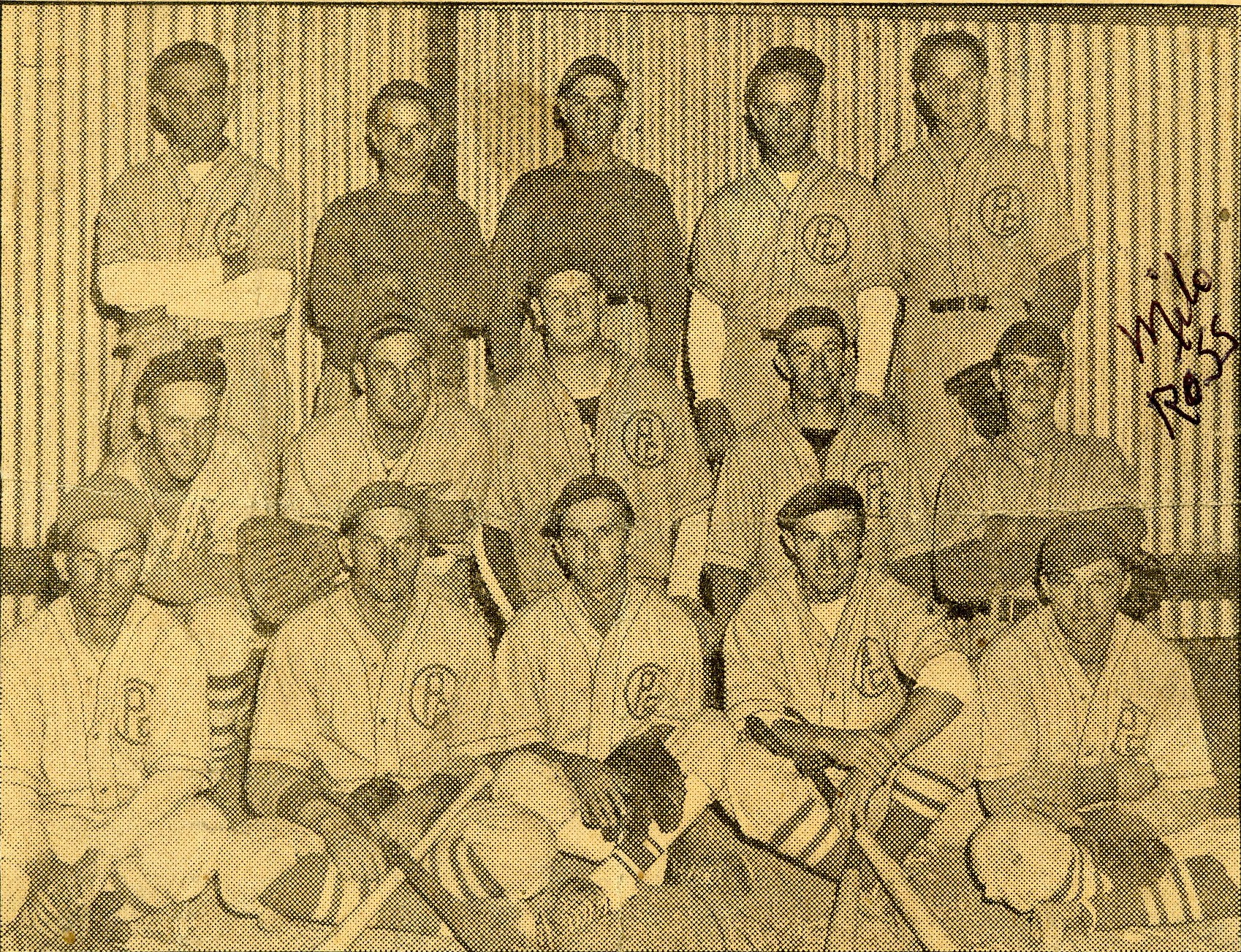
Back (l-r): William Freestone (manager), Norman Carver, Glen Charlton, Fred Singleton, and Elmer Singleton. Middle: Clair Folkman, Dick Skeen, Albert Sharp, Abe Maw, Milo Ross. Front: F. Skeen, Walt Moyes, Arnold Taylor, Lynn Stewart, Theron Rhead.

History of Plain City Pt 8

I have two copies of the History of Plain City, Utah. The front indicates it is from March 17th 1859 to present. As far as I can tell, the book was written in 1977. At least that is the latest date I can find in the book.

One copy belonged to my Grandparents Milo and Gladys Ross. My Grandpa has written various notes inside the history which I intend to include in parenthesis whenever they appear. They add to the history and come from his own experience and hearing. 

I will only do a number of pages at a time. I will also try to include scanned copies of the photos in the books. These are just scanned copies of these books, I have not tried to seek out originals or better copies.

History of Plain City March 17th 1859 to present, pages 123 through 140.

SPORTS IN PLAIN CITY

 By Lyman H. Cook

            Plain City’s most prominent claim to fame has been through the sports program and the great players and teams that the town has produced. I know of no other town to community in this state, to possibly out of state, that can equal the accomplishments in the total sports program as the town of Plain City. I don’t know how many hundred championships or trophies this town has won in baseball, basketball, softball, volleyball, and Jr. Posses, over the last 75 years or more. We include the young teams and people in the town, and also the girls. These trophies and championships came from local, county, multi-county, state, stake division, region, multi-region, and All Church basketball, softball, and volleyball, which is the largest leagues in the world.

            On February 14, 1977, at 3:30 PM, there were 226 trophies in the trophy cases at the Plain City Church. I couldn’t begin to estimate the number of trophies in the homes here in Plain City. Can you comprehend the number of teams involved and especially the number of people involved on the teams in accomplishing this great record.

            There seems to be a special spirit, or force, ambition, or drive, that compels players to excel and teams to win. The will to win in Plain City is the strongest I have ever known. We have been accused of playing dirty, or being poor sports, but in answer to these charges, I would submit the phrase: We just play hard, and the spirit of competition just brings out the best in us. In Plain City you don’t hope you can win, you are expected to win. Some communities dislike us for our sports program because it is so strong, and in reality, they judge their success of their season by the fact of whether they can beat Plain City or not. I realize these are rather potent and strong statements, but never the less, they are all true.

            We dedicate this section of sports to all the people who have ever played on a team in Plain City. We realize that some names will be missed and it is not our intent to forget anyone, but we can’t remember all, and this is all of the sports material that has been turned in for the history. If your name is left off, write it in, and if you were star of the team, write that in also.

            We have asked for and received personal write-ups on a few people who have signed professional contracts or have distinguished themselves in certain sports. We recognize them for their talents in that they in turn have brought special recognition to Plain City. I am sure these talented athletes would be the first to recognize their fellow members, for they realize that no one man is bigger or better than the whole team, and in this light, we recognize the teams they played on.

            From 1944 until the present, there were three basketball teams that went to All Church and won two second places. Commencing in 1951 through 1954, we played in four fast-pitch All Church Tournaments. We won a second-place finish and eight-place finish.

            In 1953, we played on a volleyball team that went to the All Church Tournament and won the Sportsmanship Trophy, which was a great honor. The team that played were: Dee Cook, Lyman Cook, Wayne Cottle, Wayne Skeen, Blair Simpson, Kenneth Lund, Harold Hadley, and others we couldn’t remember.

            There were teams that went to the All Church Slow Pitch Tournaments from Pain City for three years. They won two All Church Championships, and a third-place finish. There have been some excellent younger teams in baseball, basketball, and softball, and a Junior team last year (1976) won a second-place in a

The All Church program.

            This was one of the early teams of Plain City, and this picture was taken around 1910. They played together for many years, and they won several championships.

Top Row: L to R:          Joe Hunt, Tooley Louis Poulsen, Preston Thomas, Parley Taylor, Jack Hodson.

Middle Row: L to R:     Mr. Anderson, Coach, Jim Thomas, Melvin Draney

Bottom row: L to R:    Oscar Richardson, Joe Singleton

Louis Poulsen

            Tooley Poulsen played on many championship teams, and played several positions, mainly second base and catcher.

            This was one of the first Mutual basketball teams in Plain City. They played their games in the upstairs of the old hall. Lyle Thomas reports that you didn’t have to be polished to play on this team, just big and rough, for there was very little whistle blowing in those days. This picture was taken in about 1925, and they won several championships.

Back Row: L to R:        Rulon Jenkins, Lyle Palmer, Marion Sneed, Milton Garner

Front Row L to R:        Theo Thompson, Ralph Robson, Coach Ellis Giles

            This was the 1930 Plain City Baseball team. They played for State Champion ship.

Top Row: L to R:          Horace Knight, Albert Sharp, Walter Christensen

Middle Row: L to R:    Floyd Palmer, Angus Richardson, Arnold Taylor, Walter Moyes, Abram Maw, William Freestone

Bottom Row: L to R:    Clair Folkman, Gilbert Taylor, Dick Skeen, Fred Singleton, Frank Skeen, Elmer Carver

BASEBALL AND EARLY SPORTS

By Elwood (Dick) Skeen

            Baseball was Plain City’s most favorite sport. Baseball in Plain City in the early 1920’s and 1930’s was composed of the Plain City Bull Dogs with the following players taking part:

                                                      Louis Poulsen

                                                      Joe Singleton

                                                      Walter Draney

                                                      Elmo Rhead

                                                      Parley Taylor

                                                      Joe Hunt

                                                      Elvin Maw

                                                      Oscar Richardson

                                                      John  Hodson

            They represented Plain City in the Weber County Farm Bureau League, composed of North Ogden, Hooper, Roy, and Clinton. There were many good ball players in those days that played on the teams. The town park at that time was covered with salt grass. There were no base lines, no pitcher mounds. But, on a Saturday afternoon the park was filled with people that came from all over the county to watch the games. Horses and wagons lined the park.

            Foot racing was also a great sport at that time, and Plain City had one of the best in Walter Draney, who was not only fast, but also a great athlete.

            As time passed and the older players began to drop out, the chance came for us younger players to take over. In 1925 I caught my first Farm Bureau game at Liberty with Ezra Taylor doing the pitching. Then, the other players that made up our team for the next few years started to play. We had our share of victories. In fact, we had more than our share of wins.

            Finances at that time were hard to come by. We did what we could to raise money to continue supporting the team. In 1928, the ball team put on the first Black and White Day with Mervin Thompson and Joseph Skeen showing their cattle. An old-time refreshment stand, soda water, ice cream, candy bars, and popcorn, which sold for 5¢. Also, some drinks that were not sold at the stand.

            Our uniforms were furnished by Plain City individuals and business firms from Ogden. Suits would have the name of the giver on the back. Decoration day and the Fourth of July were our most celebrated days with all kinds of sports for those who wished to perform. A baseball game and a dance in the evening would top the day.

            We would get the best team from Ogden to play on these days so that we could show what was leading up to the best team we had. In 1930, we won the Weber County Farm Bureau League, and the town bought us new uniforms to go to Lagoon to play Sandy, Utah, for thy State Championship. We lost by a close score. Our players were:

                                                      Gilbert Taylor

                                                      Walter Moyes

                                                      Arnold Taylor

                                                      Frank Skeen

                                                      Horace Knight

                                                      Albert Sharp

                                                      Fred Singleton

                                                      Abram Maw

                                                      Walter Christensen

                                                      Clair Folkman

                                                      Dick Skeen

            Bill Freestone was the manager. Angus Richardson was the coach. Elmer Carver took care of finances, and Floyd Palmer and Byron Carver were scorekeepers. We played in tournaments at Brigham City and Ogden, and some out-of-state games were played.

            We continued playing, but soon the gang started drifting different ways and our days were coming to an end. The league started to dwindle and later, folded up with the workload increase. Baseball was soon lost to the towns in Weber County.

Left to Right: Nalon Taylor, Bert Cook, Howard Gibson, Bud Dallinga, Wayne Cottle, Thayne Robson, Bill Stokes, Rulon Jenkins, Coach

The Desert News Sport                       Best Two MIA Teams

Page 10 – Salt Lake City, Utah-Saturday, March 11, 1944

Bottom Row: L to R:     Carl Taylor, Carl Hodson, Fred Singleton, Coach, Blair Simpson, Glen Charlton

Top Row: L to R:             Frank Hadley, John Nash, Lyman Cook, Ray Cottle

            Ray Cottle, Center:                  First Team All Church

            Frank Hadley, Forward:           Second Team All Church

            Lyman Cook, Guard:               Second Team All Church

            Blair Simpson, Guard:             Honorable Mention

            This team played for All Church Championship in 19441. They played Grantsville, Utah, and lost to them for the title. The games were played in the old Desert Gym, by the Hotel Utah. The teams stayed four nights in the Hotel Utah. They ate, slept, and played basketball.

                                                                        Top Row L to R:

                                                                        Alf Charlton, Athletic Director

                                                                        Lyman Cook, Ronald Skeen, Kenneth Lund, Grant

                                                                        Lund, Wayne Skeen, Clair Folkman, Coach

                                                                        Bottom Row L to R:

                                                                        Harold Hadley, Elmer Hipwell, Bill Stokes, Dee

                                                                        Cook, Blair Simpson

            This was the Plain City M-Men Team that played after World War II, in 1946, for several years and won several state championships and played in the division tournaments.

______________________________________________________________________________

                                                            SUNDAY MORNING, AUGUST 19, 1951

                                                                        District Three Winners

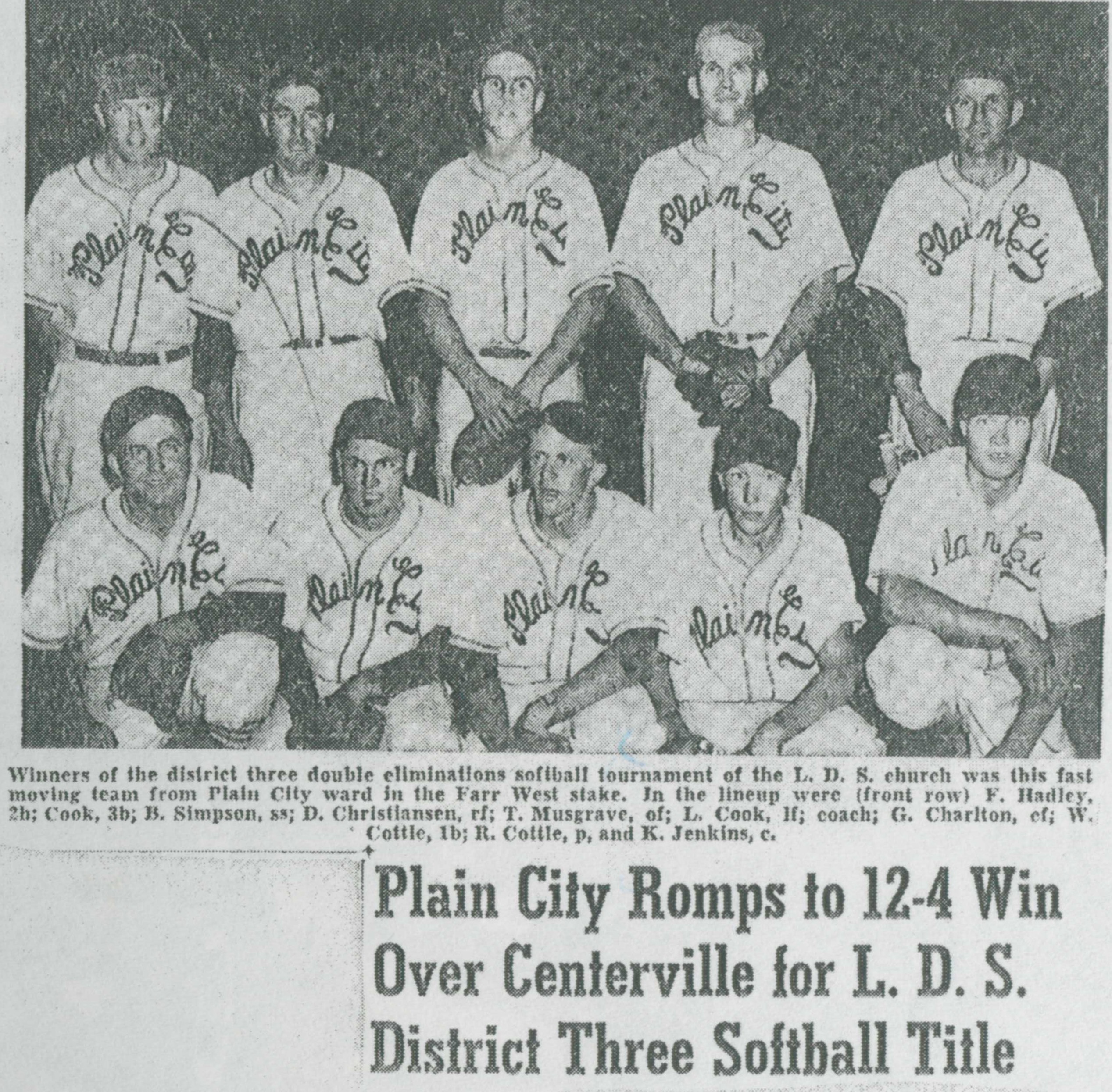
Winner of the district three double elimination softball tournament of the L.D.S. church was this fast moving team from Plain City in the Farr West Stake. In the lineup (front row) F. Hadley, 2b; Cook 3b; B. Simpson, 5b; D. Christensen, rf; T. Musgrave. Of; L. Cook, lf; coach; G. Charlton, of; W. Cottle. 1b; R. Cottle, p, and K. Jenkins, c.

                                                      Plain City Romps To 12-4 Win

                                                      Over Centerville for L. D. S.

                                                      District Three Softball Title

PLAIN CITY SOFTBALL TEAM OF 1951

                                                                        By Lyman Cook

            Plain City has always been a very strong baseball town, and the feeling was that softball was a game for girls, or you played softball at family reunions. In 1951 the Farr West Stake started a softball program and wanted teams to participate. I was Ward Athletic Director at that time and asked these players to play. This was the first softball team organized in Plain City. We won the Stake and District III. We then went on to the All Church Tournament in Salt Lake City. We won some and lost some, not too eventful. I coached the team the first year we played. This was a fast-pitch team.

                                                            L. D. S. Division III Champs

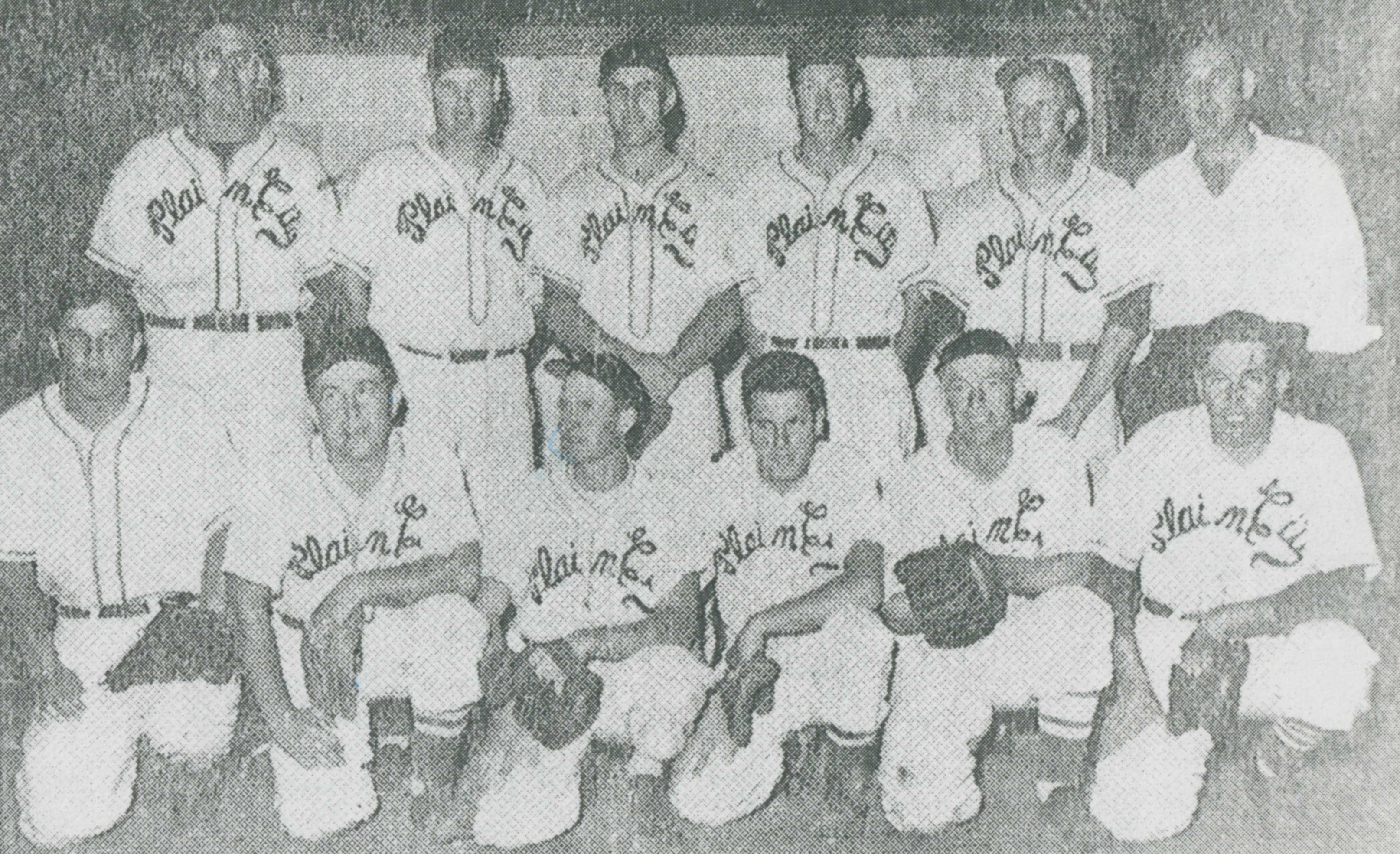
Repeating their last year’s victory in the L.D.S. division III softball tournament, the Plain City team came through again last night at Ogden softball park to beat Hoytsville 9 to 6. Front row Left to right: M. Heslop, E. Hadley, C. Taylor, D. Cook, A. Maw and G. Charlton: back row, lerft to right: R. Cottle, W. Skeen, W. Cottle, L. Cook, B. Simpson, and D. Skeen, coach. Absent from photo: Jenkins, V. Stokes and R. Skeen.

            PLAIN CITY WARD SOFTBALL TEAM OF 1952

                                                                                    By Lyman Cook

            In 1952 we repeated as stake champions and also won the Division III Championship again. We went to the All Church Tournament again and played very well. We played for the All Church Championship, but lost to Pocatello 10th Ward in a good game. Blair Simpson was voted Most Valuable Player of the tournament. Wayne Cottle made the All Church Team. There may be others. This was also a fast-pitch team. Dick Skeen was the coach.

                                              This team played Farm Bureau Baseball and won the

                                                            Championship around 1950:

                                                            Top Row: L to R:

                                                            Junior Taylor, Wayne Skeen, Don Singleton,  Bert Cook,

                                                            Glen Charlton, Kent Jenkins, Clair Folkman, Coach

                                                            Bottom Row: L to R:

                                                            “Buss” Lyman Skeen, Frank Hadley, Wayne Cottle, Ray

                                                            Charlton, John Maw, Dee Cook

                                              This team played Pleasant Grove for All Church Champion-

                                                            Ship in 1956. They took second place.

                                                            Bottom Row: L to R:

                                                            Quinten Jenkins, Archie Skeen, LaGrand Hadley, Brent

                                                            Taylor, Ronald Sharp

                                                            Back Row: L to R:

                                                            Dee Cook, Manager, Darrell Christensen, Robert Folkman,

                                                            Bert Cook, Kenneth Lund, Wayne Cottle, Kent Jenkins, Coach

            Many county and Northern Utah Championships were obtained by this team that was sponsored by the Town Board in the late 1950’s to middle 1960’s.

COACHES:                                     Clair Folkman – Blair Simpson

TEAM MEMBERS:                         POSITIONS:

Blair Simpson                                P- IF

Wayne Cottle                                     IF

Cy Freston                                          IF

LaGrand Hadley                            OF – P

Archie Skeen                                        C

Gaylen Hansen                              C – P – IF

Bobby Taylor                                 P – OF

George Cook                                        IF

Reid Nielson                                  IF   P

Ted Favero                                    IF –

Dennis Anderson                           P

Garry Skeen                                   OF

Lynn Folkman                                OF

Bud Parker                                    IF – OP

Tom Seager                                   OF

Harold Hadley                               IF

Harold Marriott                            IF

******

PLAIN CITY WARD FASTPITCH TEAM

1960, 1961, 1962

              This team won the Stake, Region, and Division Championships, and represented the ward in All-Church competition with a successful number of victories.

COACH:                                         Elmer Carver

TEAM MEMBERS:

Tom Seager, P                                     Blair Simpson, SS

Gaylen Hansen, C                                LaGrand Hadley, LF

Wayne Cottle, 1st                                Robert Folkman, CF

George Cook, 2nd                                Dee Cook, RF

Cy Freston, 3rd                                     Don Singleton, IF

Blaine Eckman, QF                              Gar Hunter, 1st – OF

THE PLAIN CITY BULLDOGS

              This is one of the very first Weber County Recreation Teams in Plain City. Many of these players went on playing baseball for many years.

Front Row: L to R:

Dick Skeen, Coach, Fred Palmer, Darrel Thompson, Kenneth Hogge, George Cook, Ronald Sharp.

Back Row: L to R:

Archie Skeen, Brent Taylor, Wayne Poulson, Jay Freestone, Robert Folkman, LaGrand Hadley

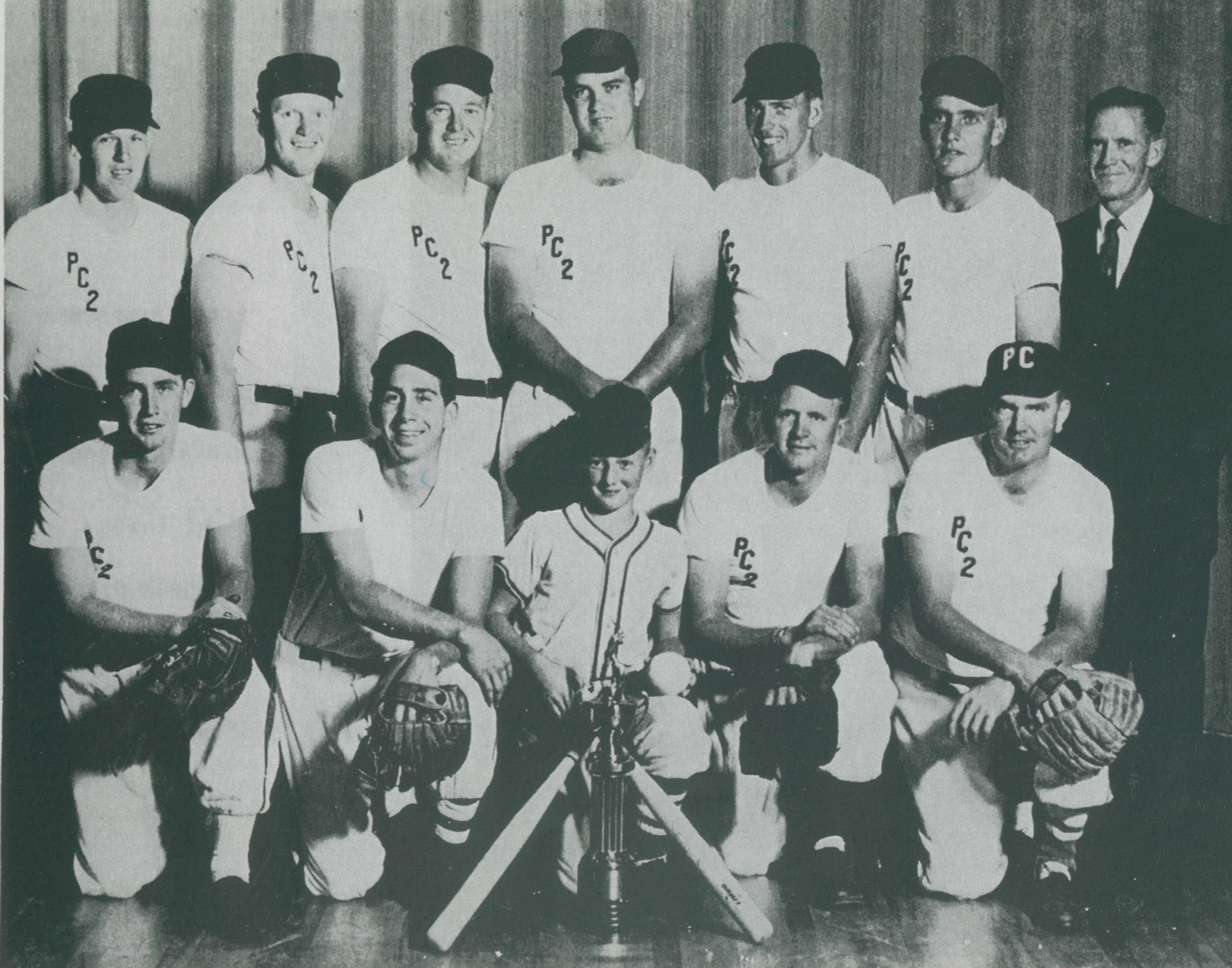
PLAIN CITY SECOND WARD

ALL – CHURCH CHAMPIONSHIP TEAM

1963 – 1ST Place

1964 – 1st Place

1965 – 3rd Place

              This team represented the Plain City 2nd Ward and Plain City Town by winning 64 and losing only two games over a three-year span. Many players received All – Church recognition. In the championship game the first year the team hit 11 home runs and pulled off a triple play for the victory.

Back Row: L to R:                                            Not in Photo

Garry Skeen                                                     Archie Skeen

Gaylen Hansen                                                Ken Searcy

George Cook                                                    Jay Freestone

Gar Hunter                                                      Val Taylor

Jerry Bradford                                                 Mel Cottle

Lynn Folkman                                                  Gordon Singleton

Bishop Rulon Chugg                                        Jim Beasley

                                                                        Don Singleton

Front Row: L to R:                                           Gary Hill

                                                                        Bishop Orlo Maw

Jerry Moyes

Doug Palmer

Dale Searcy

Blair Simpson

LaGrand Hadley

All – Church Honors:

Gar Hunter

Jerry Bradford

Ken Searcy

Gaylen Hansen

Archie Skeen

Blair Simpson, Most Valuable Player

BLAIR SIMPSON

and

ELMER SINGLETON

of the

PITTSBURGH PIRATES

1948

“Two cousins met”

ELMER SINGLETON

              Elmer Singleton started pitching for the Farm Bureau League in Plain City. He pitched for several championship teams. He signed a professional contract with Cincinnati, and played at Wenatchee, Washington in 1939, his first year. He played for Idaho Falls, Portland, and Oklahoma City. He moved on up to the big league and played with the following teams:

Cincinnati

Yankees

Chicago

Kansas City

Boston

Pittsburgh

Washington in 1950

Toronto

San Francisco

Seattle

              He was in professional baseball for 27 or 28 years, the last eight years as a player coach.

              He pitch two no hitters, one at San Francisco, and the other at Seattle. Elmer won the Player of the Year Award at Seattle in 1956. There is a baseball card with Elmer’s picture on it with the Chicago Cubs. It reads:

              “This will be Elmer’s 17th year in professional baseball.

                 He started back in 1940 and after 11 uneventful seasons,

                  got red hot to become one of the top hurlers on the

                  Pacific Coast. In 1952 at San Francisco, he won 17, followed

                  with 15 triumphs in 1953 and moved to Seattle in 1956.

                  He had the best Pacific Coast Earned Run Average.”

              Elmer told us that before he left to play professional baseball, the people of Plain City honored him at a banquet. They gave him a ball glove, and he still has it. He is listed in the Sports Record along with his accomplishments. Elmer was a great baseball pitcher. The only picture we have of Elmer is with Blair Simpson. Elmer and Blair are cousins,

              BLAIR SIMPSON

                                                      BY Blair Simpson

              I attended school at Plain City before going to Weber High School. At Weber High School I participated on the track team, played some basketball and pitched for the Weber High baseball team.

              After graduating from Weber High School in 1944, I was drafted into the army for two years.

              In 1948, I signed a professional baseball contract with the Pittsburgh Pirates organization. While playing with the Pirates, I played with the following cities:

                                                            Santa Rosa, California

                                                            Pittsburg, California

                                                            Modesto, California

                                                            Hutchinson, Kansas

                                                            Waco, Texas

                                                            Charleston, South Carolina

              I was a pitcher and had to quit because of an injury to my knee.

              After retiring from professional baseball, I played a considerable amount of baseball with Plain City and other teams in the Ogden area, such as:

                                                            Ogden Ford Sales

                                                            Heitz Heating

                                                            Wasatch Time

              I was selected on the All Star Baseball Team composed of 16 players from the State of Utah.

              I also played on many softball teams in the Ogden area such as Fisher Hess, Utah General Depot, Fred M. Nyes, Savon, and others.

              In 1952, I was named the Most Outstanding Player in the “All Church Fastpitch Softball Tournament” in Salt Lake City and was also named to the All Church All Star Team in 1953.

              In 1963, o received the Most Outstanding Player Award in the All Church Softball Slow Pitch Tournament. In 1964, I again received the most Outstanding Player Award in the slow pitch division of the All Church Tournament held in Salt Lake City. The year 1964 was one of my most memorable occasions in All Church Softball as I hit four consecutive home runs in one game.

              I would like to give a lot of credit to whatever successes I have enjoyed in athletics to the talented town of Plain City.

WAYNE COTTLE

                                                      By Wayne Cottle

              I was born November 30, 1928, in Ogden, Utah. I lived in Plain City all my life. I attended Plain City Elementary and Junior High. I played basketball in the 9th and in the 10th grades for Plain City. L. Rulon Jenkins was our coach and our principal. We played against Hooper, North Ogden, Huntsville, and Weber High School.

              In the Fall of 1945, I started Weber High School, playing football, basketball, baseball, and track for both years. In 1947, I played to a tie for the Region I Championship with Box Elder. We played off the tie breaker at Ogden High School, beating Box Elder for the first Region I Championship for many years. I won the Region I scoring title. We entered the State Tournament in Salt Lake City and we lost to Granite, who became the State Championships, in the semi-finals. I was the recipient of the Standard Examiner KLO Watch Award for being the outstanding athlete of the year.

              I entered Weber Junior College in the Fall of 1947. After about a month of practice I became one of the starting forwards. We played in several tournaments winning 3rd place in the Compton California Invitational.  We played an independent schedule that year. In 1948-49 Weber became a member of the ICAC Conference. We won the conference and played Snow Junior College Tournament. We won the game and I was voted the tournament’s Outstanding Player Ward. We went to the national finals in Hutchinson, Kansas. We won our first game, then we met two defeats.

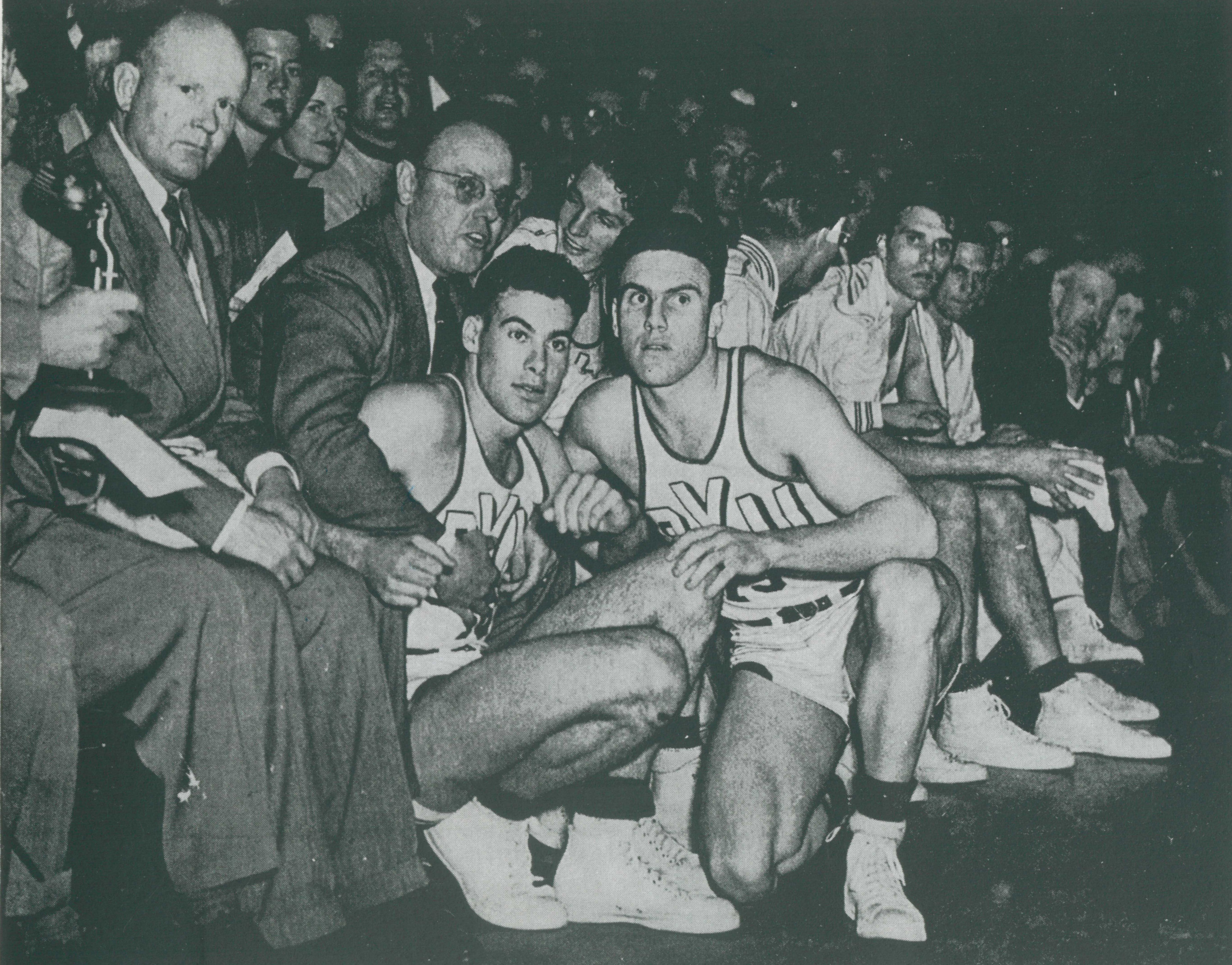
In the Fall of 1949, I entered Brigham Young University. I was on the team that won the Skyline Conference Championship for the first in many years. We went to the NCAA at Kansas City, Missouri. We lost to Baylor University, then beat UCLA for 3rd place. The next year we accepted a bid to enter the National Invitational Championship and two of our players were voted All American.

              I graduated from BYU in 1951, came back to Plain City and started to play basketball with the Ward team. From the 1951- 1952 season until the creation of the Plain City 2nd Ward in 1960, we never lost a league game in the Farr West Stake. The year of the creation of the Plain City 2nd Ward, they beat us once and we beat them once. We played off the Stake Championship at Wahlquist Jr. High, and we won the team and the championship. After that season, the Church specified an age limit and I was area championships and went to the All Church several times.

WAYNE COTTLE

Brigham Young University

BERT COOK

              He attended Plain City School where he was active in athletics. He graduated and attended Weber High School in 1947 and 1948., where he participated in football, basketball, baseball, and track. In 1948, he was selected on the Class A State All Star Team, in which Weber High School won the championship. He also won the All American in boys Award in baseball at John Affleck Park in 1948. From this he won a trip to Chicago.

              He played for the Plain City baseball team for the Farm Bureau and Ogden City League.

              From 1948 until 1952 he attended Utah State university at Logan, Utah, where he started on the first five as a freshman, and later in the year played in the AAU Tournament and was selected on the All Tournament Team.

              In 1951 – 1952, he lead the conference in scoring and was voted All Conference both years. In 1952 he was voted All American in basketball where his Number 6 jersey was retired at Utah State University being the first one in the history of the school. That same year he was selected on the All Conference Team, and traveled with the Harlem Globe Trotters and the College All Star for several games. Later that year, he signed a contract with the New York Knickerbockers and was drafted into the service where he played for Fort Lee, Virginia Military team in which he lead the scoring and was later voted to the Second Army All Star Team.

              He served his country in the Far East Command in 1954, being released in 1955, when he rejoined the Knicks until 1956. After a serious knee injury he returned to Plain City and played for the Plain City Ward and the Ogden City League.

              He played on the 1956 team that won second place and he made First Team All Church.

              At Weber High School I participated in basketball, baseball, and football and was productive and beneficial. After graduation in 1954, I attended Utah State University for two years on a football scholarship. Next, I received a University of Utah Scholarship in baseball. That year 1958, was a successful year with a batting of .350. The next year was even more eventful. My batting average jumped to .490. The .490 batting average was good enough to lead the Skyline Conference, plus I was fortunate to lead the NCAA in homeruns and RBI’s. These statistics and the efforts of the University of Utah Sports Publicity Department lead to my selection as the “First Team Catcher on the College All -American baseball Team”. As a result of this honor, I was selected the “Most Valuable Player in NCAA, District 7.” The year was 1959.

              Opportunities were available to sign a professional baseball contract with the New York Yankees, Chicago Cubs, Boston Red Sox, and the Phillies. In 1959 I signed a bonus contract with the Boston Red Sox.

              During the next three years I played in the following leagues: Sophomore League in Alpine, Texas: North Carolina League in Raleigh, North Carolina; Midwest League in Waterloo, Iowa; and the Eastern League in Johnstown, Pa. Winter ball was played in Bradenton, Florida.

              In 1962, spring training was held in Deland, Florida. Because of a successful spring training I was invited to join the Triple A League in Seattle, Washington, “The Seattle Rainiers.” All Star Catcher honors were received in 1960, 1961, and 1962. In 1963 I was invited to spring training with the parent ball club, The Boston Red Sox. At the completion of spring training I was again assigned to the Seattle Rainiers.

              Some of the great stars helping the young players were: Ted Williams, Bobby Doerr, Rudy York, Johnny Pesky, and Mel Parnell. As of this year, 1977, the only teammate of mine still with the Boston Red Sox is Carl Yastrzemski.

                                                                        Bert Cook

                                                            New York Knickerbockers

                                                                        Archie Skeen

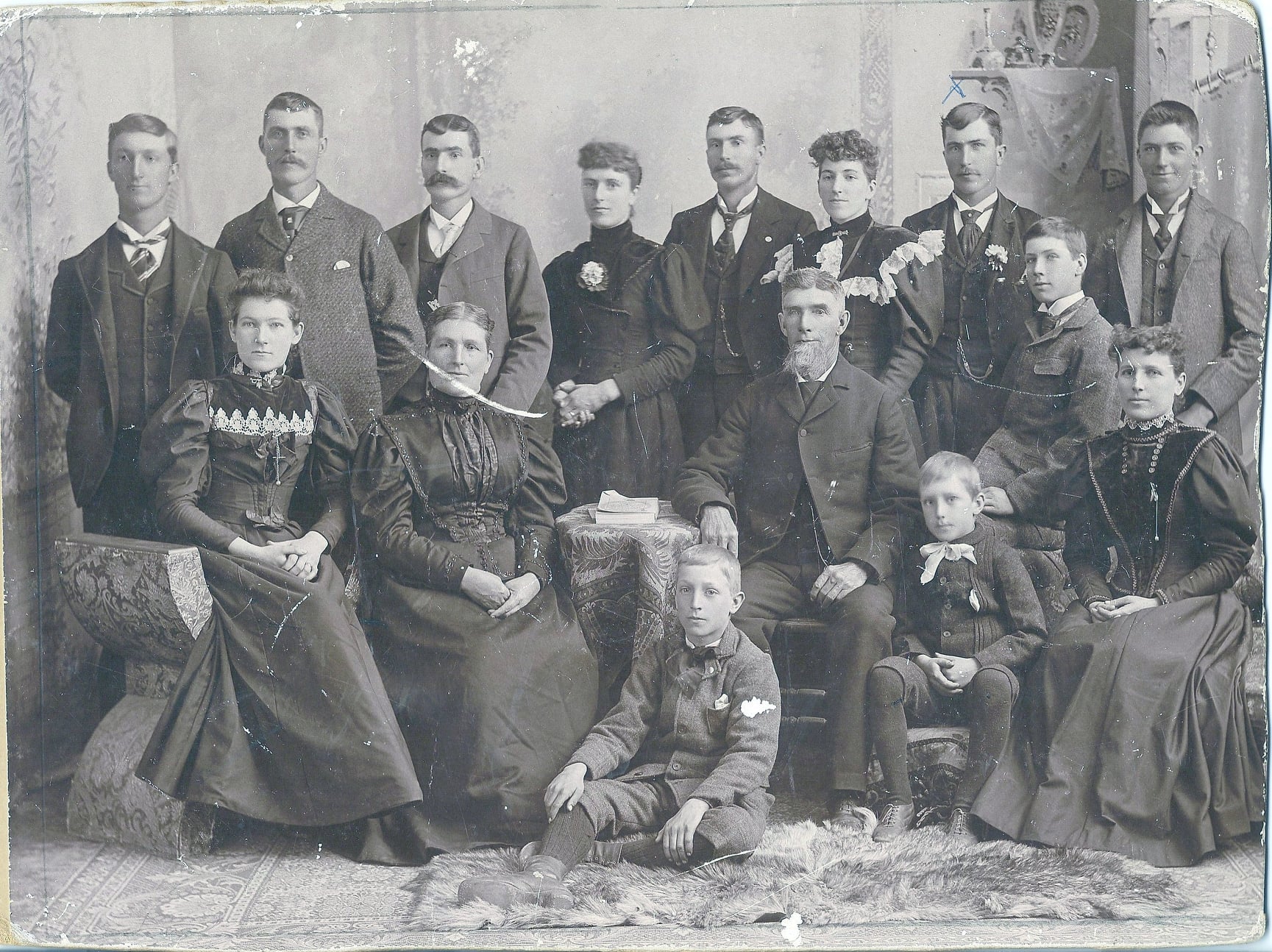
James & Nancy Donaldson Family

James and Nancy Donaldson family, order of 13 children, unknown for certain which are which in the photo: William Alexander (1861), Mary Elizabeth (1863), James (1864), Sarah Amelia (1864), Thomas Henry (1868), Archibald (1870), Annie Mathilda (1872), Robert Chambers (1874), Catherine Alice (1876), Francis Hutton (1878), Harvey Osborn (1882), Albert Edward (1884), and John Ross (1887)

This is the family of Nancy Hutton and James Wray Donaldson. James is the brother to my Joseph Russell Donaldson. James was born 20 November 1833 in Northern Ireland. Some list it as Bredie in County Tyrone. But I don’t have any documentation that even confirms that as yet. Same issue for my Joseph. James immigrated to Ontario Province, Canada. He appears for the first time on the 1861 in Pittsburgh, Frontenac, Ontario. It was in Joyceville, Frontenac, Ontario that he married Nancy Hutton. All 13 of his children were born in Pittsburgh or Joyceville. He was a farmer his entire life. It was in Pittsburgh he died 19 October 1907.

Nancy Hutton was born 9 May 1842 on Amherst Island, Lennox and Addington, Ontario, the 6th of 7 children of Archibald and Sarah Waddell Hutton. After James’ death she moved to Kingston with her daughter Catherine. It was in Kingston, Frontenac, Ontario that she passed 12 May 1933.

James and Nancy are both buried in the Sand Hill Presbyterian Church Cemetery in Joyceville.

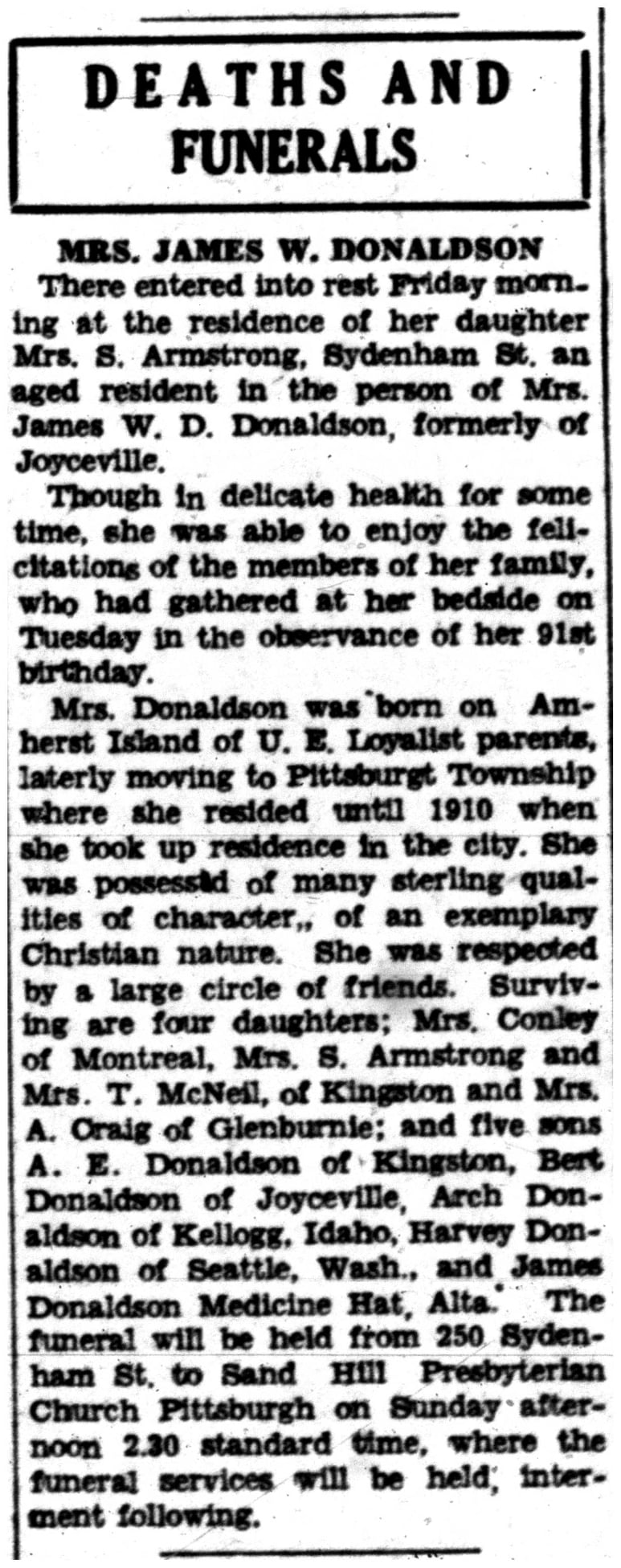
Obituary of James Wray Donaldson

Tombstone of James and Nancy Donaldson

Donaldson-Todd Wedding

Agnes Quirt Dunlop and Joseph Russell Donaldson

Samuel and Margaret Irvine Todd are pleased to announce the marriage of their daughter Sarah Armina Todd to Joseph Russell Donaldson, son of William and Catherine Scott Donaldson.  Joseph and Sarah were married 19 November 1862 in Pittsburgh, Frontenac, Ontario.

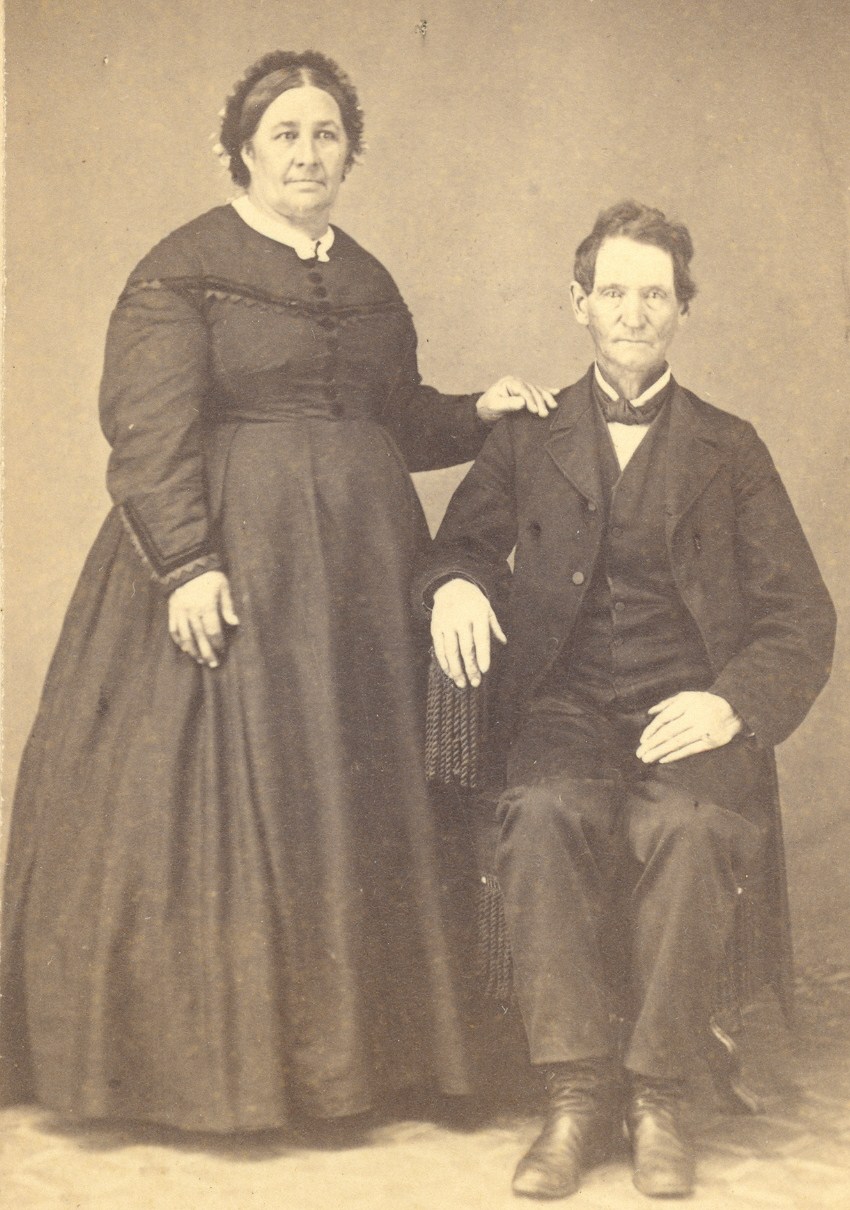
We really do not know much about this family in terms of personality.  We do know a few things about their lives from documents left behind.  I thought I would write this article in hopes that other photos may be found, but at least I can share this picture of Joseph and his second wife, Agnes.

Sarah Armina Todd was born the first of five children born to Margaret Irvine and Samuel Todd 13 April 1839 in Cape Vincent, Jefferson, New York.  We think the family had just barely arrived from Ireland.  The family then settled in Pittsburgh where her father worked as a blacksmith and farmer.  We also believe Margaret was of the Irvine Clan in Northern Ireland, but have yet to verify any of that.  We do not even know if Margaret and Samuel knew each other before leaving to emigrate to Canada.  They may have met in the United States or on the ship over the pond.  No pictures of her to date have appeared, hopefully one will arise at some point.

Sarah Armina Todd_Page_1

Sarah Armina Todd

Joseph Russell was born seventh of nine children we know of born to Catherine Scott and William Donaldson 12 April 1836 in Bredie, Tyrone, Northern Ireland.  We still have to confirm the exact location, but this is from family history sources stretching to Joseph and Sarah’s sons.  Joseph’s parents emigrated to Joyceville, Frontenac, Ontario we believe around 1842.  We have yet to verify much of the information related to this family.  I have posted some information on Joseph’s sister, Mary Hutton.  I have also made mention of Joseph’s double nephew, William John.

Joseph Russell Donaldson_Page_1

Joseph Russell Donaldson

Anyhow, Joyceville and Pittsburgh are about 1.25 miles apart and it is easy to imagine how Joseph and Sarah met.  Both families were in the area long enough they were probably well acquainted with each other and the myriad of cousins living in the vicinity.  However they met, the two were married in Pittsburgh in 1862 and went on to have eight children.  Joseph worked as a farmer his entire life in the Pittsburgh area.

Margaret Emma Donaldson was born 6 February 1864 in Joyceville and died 11 June 1916.  We do not know where she died or if she ever married.

William Scott Donaldson was born 18 June 1865 in Joyceville and died 12 September 1913 in Ogden, Weber, Utah.  He worked for the Union Pacific Railroad, which took him west.  There he met and married Mary Elizabeth Williams.  I have written of their life at this link: Donaldson-Williams Wedding.

Samuel Gordon Donaldson was born 23 February 1867 in Joyceville and died 22 October 1933 in Cleveland, Cuyahoga, Ohio.  He married Catherine Joyce 18 January 1899.

Joseph Russell Donaldson was born 15 September 1868 in Joyceville and died 19 October 1922 in Toronto, York, Ontario.  He married Mary Elizabeth Connell 1 May 1899 in Joyceville.

George Donaldson was born 10 October 1871 in Joyceville and died 8 December 1943 in Watertown, Jefferson, New York.  He married Florence Martha Carey 9 January 1896 in Clayton, Jefferson, New York.  Here are photos of their family.

Sarah Gertrude Donaldson was born 15 July 1873 in Joyceville.  We do not know anything really more about her other than she married Harry Joseph Houghton 22 April 1903.  As far as we can tell, they moved to Lakewood or Cleveland in Cuyahoga County, Ohio.

Harriett Edith Donaldson was born 10 September 1875 in Joyceville.  We do not know anything more about her other than she married Arnold Lovell 25 July 1903.

Robert John Donaldson was born 26 July 1877 in Joyceville and died 24 May 1878 in Pittsburgh.

Sarah then died 4 October 1880 in Pittsburgh and was buried in the Sandhill Cemetery in Joyceville.

Joseph remarried 15 July 1891 in Ernestown, Lennox and Addington, Ontario.  We do not know a whole lot about her other than it appears she was born 14 June 1842 in Quebec and died 20 February 1925.  Her parents are listed on her death certificate as Henry Quirts and Ann Jane Farquar.  The family used the name of Henry Quirt and Ann Jane Farquhar.  Dunlop was the name of a previous husband, Robert.

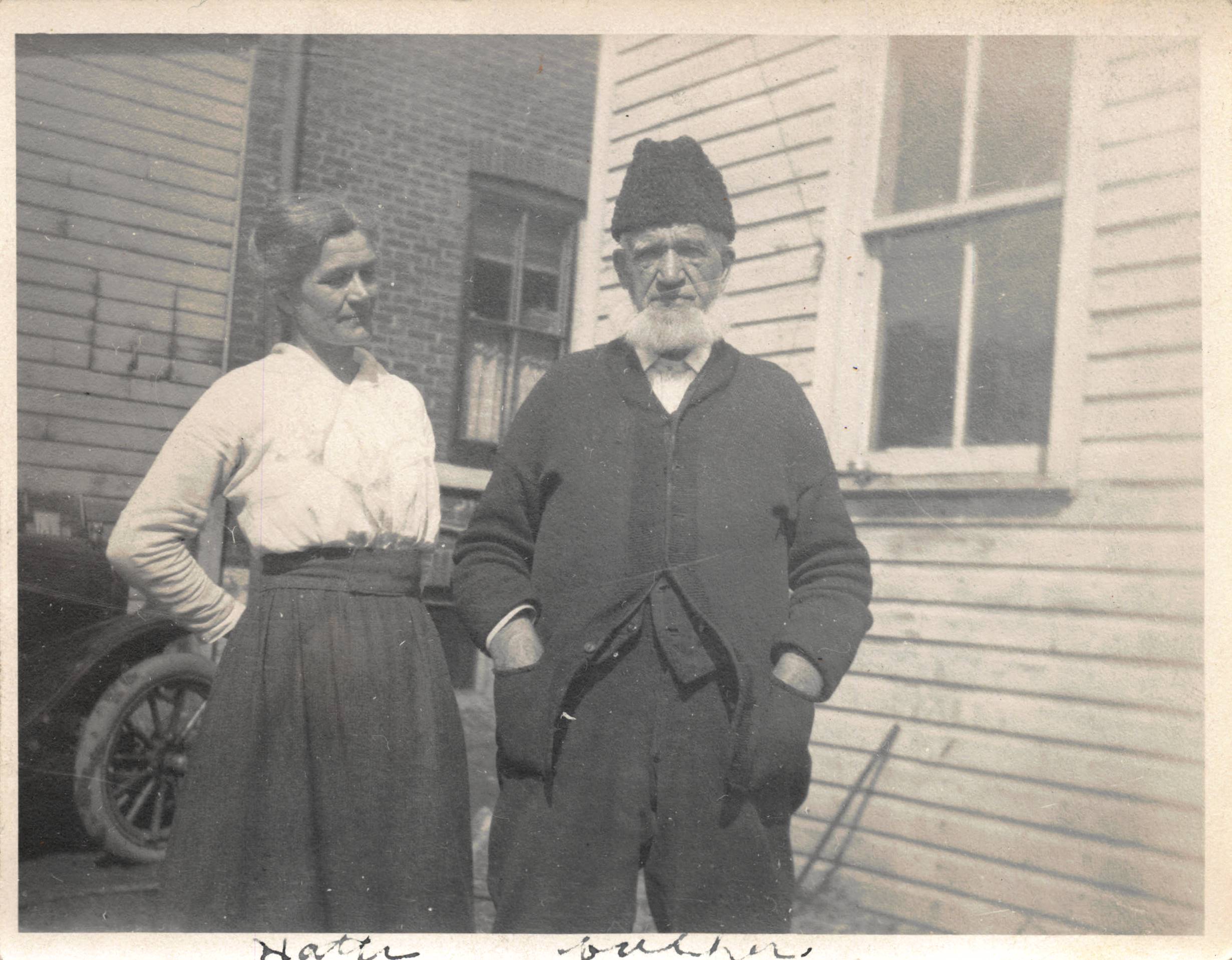
Unknown, Joseph and Agnes Donaldson, Hattie Lovell, Unknown

Unknown, Joseph and Agnes Donaldson, Hattie Lovell, Unknown

Hattie and Joseph Donaldson_Page_1

Hattie Lovell and Joseph Russell Donaldson

When retirement came,  Joseph moved to Kingston, Frontenac, Ontario.  It is here we presume he met Agnes.  He lived in Kingston until he passed away in that city 19 January 1925.  He was buried next to Sarah in Sandhill Cemetery in Joyceville.

Williams-Williams Wedding

I am sharing this life sketch of David Davis Williams and Rebecca Price Williams.  The original version was written by William Jenkin Williams and found in the records of Eliza Williams Rees with insights from her granddaughter Betty Mifflin Bushman taken from family interviews and her own experience.  For the most part I will stick to the original history.  I do not have any photos to share, but since I have the history, I wanted to make it available.

Before I jump into the rest of the life sketch, I think it is important to connect these individuals to my family history.  I have previously written of the marriage between David D Williams and Gwenllian Jordan.  David D Williams had a brother named John Haines Williams.  David Davis Williams is the son of John Haines Williams.

I will provide more family information after the life sketch.

~

“David D. Williams was born in Llanelli, Carmarthenshire, Wales on June 19, 1852, a son of John Haines Williams and Sarah Jane Davis.  He came to the United States with his parents, settling first in Pennsylvania in 1858.  In 1860 the family moved to Ogden, Utah, crossing the plains with in a handcart company led by Captain Elias Morris.  It was the second ox team to land in Ogden.  From there the family went north to the Malad Valley where they settled in Muddy Creek, living in a dugout where some of the children were born.  They later moved to Gwenford.

“Rebecca P. Williams was born on New Year’s Eve, December 31, 1857, at Merthyr Tydfil, Glamorganshire, Wales, a daughter of Jenkin Williams and Eliza Price.  She was baptized (LDS) in Wales on December 11, 1867 by her father, Jenkin, and confirmed by John Thomas.  With her parents, she came to this country for the gospel’s sake, settling in Pittsburgh, Pennsylvania.  After living there two years, they went to the Malad Valley in the year 1872.

Younger Rebecca Price Williams

Younger Rebecca Price Williams

“On Rebecca’s birthday, December 31, 1877, she and David were married in St. Johns, Oneida, Idaho by Justice of the Peace William H. Waytell in the presence of Benjamin Waldron and Mary Ann Daniels.

“David was baptized (LDS) 8 March 1878 by John Evan Price and confirmed by Samuel D. Williams.

“He and Rebecca took up a farm in Gwenford where they lived for about twenty years.  During this time David operated a freighting business between Kelton, Utah and Helena, Montana, a trip that would take him about three months.  He served as a deputy sheriff, was the first Chief of Police of Samaria, Idaho, and even worked as a blacksmith.  Later he went into the confectionery business and operated a business and general store, D.D. Williams Candy Kitchen, with Rebecca in Samaria until his death June 27, 1927.  He was a man, it is said, who could not be idle.   His daughter, Eliza, described him as a wonderful husband and  father.  His granddaughter, Mae Rees Mifflin, remembers him with great fondness also.  She named her first child, Darla Dean, after her grandfather.  It is a wonder that Darla was not nicknamed Dee Dee too.

David Davis Williams

David Davis Williams

“About him, a grandson, Ray Earl Rees, told the following story:  Their daughter, Eliza (Ray’s mother), had a washing machine.  In order to help her elderly parents, she would do their laundry.  Every Monday morning Grandpa David would drive his buggy the few miles to Malad with a bundle of clothes for her to wash.  Grandpa would drive the team around to the north road and enter the farmyard by the back way.  About the time he was expected, Ray would wait out by the gate to open it for his grandfather.  Then he would climb up in the buggy with him and ride up to the house.  Always Grandpa Williams had a sack of candy for Ray.  He could depend on that treat and waited eagerly for it each Monday morning.

“When the family would visit their grandparents in Samaria, it was a treat to go in to the store and see all the candies on display behind the glass counter.  Rather than give the children candy, Grandpa Williams would give them each a nickel and let them do the choosing.  They were not allowed to go around the counter, but while he smiled encouragement to them, they would stand before the counter and choose their treat.

“He was the sweetest man who ever drew a breath, Ray said about his grandfather.

“David was always a prominent figure in our childhood stories about family as our mother was said to be his favorite.  He even appeared to her to tell her goodbye after his death.

“It seemed so romantic to my sister and me that he and Rebecca married on my favorite holiday of the year, New Year’s Eve.  That day was also Rebecca’s twentieth birthday.  Her present was our handsome, nice great-grandfather.  What a perfect party time to have a wedding anniversary.

“Rebecca is remembered by her daughter, Eliza, as a wonderful mother and homemaker, never being one to go away from home.  She had a wonderful alto voice and when the children were small, she would often gather them around and sing to them.

“After her children grew up and married, she helped her husband in keeping the confectionery store.  Many remember stopping there as youngsters on their way to Mutual to share a soda and socialize.  They were always reminded not to be late for their church meeting by Rebecca, who would usher them out the door at ten minutes ’till.  Later the teenagers would reunite there to pick up where they had left off.

“Her daughter, Eliza, described her this way, Rebecca P. Williams was loved by all who knew her.  She was kind to everyone and did not have an enemy on earth.

“Great-Grandmother Rebecca was always a colorful figure to my sister and me.  As the youngest surviving child in her family of eleven children, we loved the story of how when the family came from Merthyr Tydfil, Wales, she was assigned to carry a beautiful crystal bowl for her mother.  With it wrapped in a shawl, fourteen-year-old Rebecca later carefully tended it all the way to Idaho.  Through interesting circumstances, that bowl was inherited by our grandmother, then Mama, and finally Darla.  Since Darla also inherited Grandma Rees’ beautiful china closet, it seemed quite natural that the Welsh bowl would always rest inside it.  At any rate, I never ever expected it to be mine.  One day when I was picking up Darla to bring her to my house for a day’s visit, her daughter, Alyce, walked out to the car with us.  In her hands, Darla was carrying something wrapped in a piece of fabric.  She handed it to me with a smile saying that she had a present for me as a little thank you gift because I was so good to her.  With Alyce looking on and smiling too, I turned back the cloth to see the Welsh bowl.  Ignoring my protests that it was hers and that I could not accept it, she said she knew it would be safer in my home, that I would take good care of it and always treasure it.  Alyce said they had talked it over and both felt that it should be mine.  How I love to hold and admire that bowl.  Made of clear glass in a square shape, scalloped edging runs along its rim and base.  With a small pedestal and lion heads at each square corner, it is truly a work of art and indeed a special item. I love knowing of its history and importance in our family.  When we would look at it as children and hear its story, it was always viewed in quiet awe or discussed in hushed tones.  Never, ever, did I think it would be mine.  I felt amazed, quite honored, and a bit afraid of the responsibility.

“David died on 27 June 1927 after an illness of eight months.

“Later Grandma Rebecca moved to Malad  where she resided just across the street from her daughter, Eliza.  I remember Grandma carefully preparing a plate of dinner each evening for her mother.  It was usually the job of Uncle Ray to deliver it with a caution to hurry so it would be hot for his grandmother.  When I was around, he would often grab me by the hand and together we would dance across the street as he deftly carried the napkin covered plate in one hand and dragged me along with the other.

“I remember her as a frail little lady, a bob of white hair on top of her head, wire-rimmed glasses perched on her nose as she looked us over.  Books and magazines were plentiful in her small apartment and always a deck of cards.  In addition to reading, she liked to play games, playing Solitaire to entertain herself when no one else was around.

“Rebecca died on March 30, 1936 at the age of 84, a few months before my fifth birthday.

Rebecca

Rebecca Price Williams

“Both are buried in the Samaria Cemetery.
“Thirteen children were born to David and Rebecca, five boys and eight girls:  Sarah, William Jenkin who died in infancy, Mary, David, Phoebe, Jenkin, Eliza, Margaret, John, Catharine, Beatrice, Frances Orenda who died as a baby, and George.”

~

Some more family history information.

David Davis Williams born 19 June 1852 in Llanelli, Carmarthenshire, Wales and died 27 Jun 1927 in Samaria, Oneida, Idaho.  He was buried 30 June 1927 in Samaria.

Rebecca Price Williams born 31 December 1857 in Merthyr Tydfil, Glamorganshire, Wales and died 30 March 1936 in Malad, Oneida, Idaho.  She was buried 2 April 1936 in Samaria.

David and Rebecca were married 31 December 1877 in St Johns, Oneida, Idaho.

Their children are:

Sarah Elizabeth Williams born 22 August 1878 in Samaria and died 31 February 1968.  Buried in Draper, Salt Lake, Utah.  She married James Benjamin McGuire (1872-1952) 30 September 1900 in Samaria.

John Jenkin Williams born and died 23 September 1879 in Samaria.  Buried in Samaria.

Mary Jane Williams born 10 April 1881 in Samaria and died 14 January 1975.  Buried in St Johns.  She married John Nelson Hill (1872-1913) 22 February 1899 in St Johns.

David Joseph Williams born 26 February 1883 in Samaria and died 4 April 1973.  Buried in Malad.  He married Ester “Essie” Katherine Munsee (1888-1967) 25 March 1908 in Ogden.

Phoebe Ann Williams born 12 December 1884 in Samaria and died 15 March 1942 in Salt Lake City, Salt Lake, Utah.  Buried in Riverton, Salt Lake, Utah.  She married Thomas Charles Jones (1883-1922) 4 July 1903 in Samaria.

William Jenkin Williams born 24 Jul 1886 in Samaria and died 5 Jun 1963.  Buried in Samaria.  Married Mary Mae John (1901-1989) 26 February 1921.

Eliza Mae Williams born 10 February 1888 in Samaria and died 6 July 1967 in Ogden.  Buried in Ogden.  Married Gomer Vaughan Rees (1883-1971) 24 November 1904 in Samaria.

Margaret Rebecca Williams born 25 November 1889 in Samaria and died 9 November 1980.  Buried in New Philadelphia, Tuscarawas, Ohio.  Married Walter Russell Ripley (1895-1979) 13 December 1913 in Malad.

John Haines Williams born 31 May 1891 in Samaria and died 25 February 1957 in Malad.  Buried in Malad.  Married Eleanor Jones (1899-1975) 29 March 1916 in Malad.

Catharine Zina Williams born 14 August 1893 in Samaria and died 19 Oct 1988 in Salt Lake City.  Buried in Malad.  Married Elijah R van Ables (1892-1961) 12 December 1920 in Malad.

Beatrice Estella Williams born 30 July 1894 in Samaria and died 9 December 1976.  Married Carl William Jones (1892-1958) 4 April 1913 in Malad, later divorced.  Married Allen John Keehn (1888-1957) 16 November 1938 in Elko, Elko, Nevada.

Frances Orenda Williams born 6 May 1897 in Samaria and died 10 September 1897 in Samaria.

George Thomas Williams born 22 February 1901 in Samaria and died 24 June 1962 in Pocatello.  Buried in Restlawn Memorial, Pocatello, Bannock, Idaho.  Married Theona Withers (1906-1990) 4 October 1924 in Malad.

Hutton – Donaldson Wedding

Archibald and Sarah Waddell Hutton are pleased to announce the marriage of their son Francis Osborne Hutton to Mary Donaldson, son of William and Catherine Scott Donaldson.  Francis and Mary were married 7 January 1862 in Frontenac Township, Ontario.

I have previously written of Mary’s brother, Joseph Russell Donaldson, who is my third great grandfather.  My cousin, Mark, stumbled upon these pictures so I thought I would make them available.

Francis and Mary had eight children which I will list what I know below.

Francis Osborne and Mary Donaldson Hutton with unknown individuals

Francis Osborne and Mary Donaldson Hutton (on the far right) with unknown individuals

Francis and Mary Hutton with unknown family

Francis Osborne and Mary Donaldson Hutton (sitting center) with unknown family

William Osborne Hutton born 29 March 1863 in Pittsburgh, Frontenac, Ontario and died 27 June 1930 in Lethbridge, Alberta.  He married Mary Christine Gillis (1870-1958) 1 June 1893 in Fort MacLeod, Alberta.

Nancy Etta Hutton born 6 February 1866 in Pittsburgh and died 27 April 1956 in Lethbridge.  She married David James Whitney (1861-1936) 23 May 1886 in Pittsburgh.  She remarried after David’s death to Newton Parsons in 1940.

Archibald Hutton born 14 February 1868 in Pittsburgh and died 24 May 1946.  He married Emma Flora Todd (1878-1953) 9 June 1897 in Joyceville, Frontenac, Ontario.

Francis Henry Hutton born 27 March 1870 in Pittsburgh and died 14 March 1937 in Lethbridge.  He married Lillian May Sinclair (1887-1977).

James Alexander Hutton born 30 May 1972 in Pittsburgh and died 5 May 1938.  He married Mary Loney (1881-1963) in 1902.

John Albert Hutton born 14 November 1876 in Pittsburgh and died 25 December 1967 in Grand Forks, Yale, British Columbia.  He married Sarah Mary McLean 15 September 1909 in Whitmount, Frontenac, Ontario.

Ernest Stafford Hutton born 4 March 1879 in Pittsburgh and died 29 July 1916 in Calgary, Alberta.  He married Mabel Rosemont Keeler.

Mary Elizabeth Hutton born 2 February 1883 in Pittsburgh and died 18 May 1968.  She married Francis Orton McLean (1884-1956) 30 January 1907.

Charles August Nuffer

This is the life history of Charles August Nuffer.  He wrote this autobiography on 28 January 1949.  I have maintained the language and spellings of the original document.  I also wrote a quick overview of his life previously.

This is a brief history of the life of Charles August Nuffer, son of Johann Christopher Nuffer and Eva Katherina Greiner Nuffer. I was born June 18th 1871 in Neuffen, Wurtemberg, Germany. When about eight years old I remember going with my father and mother to a neighbor’s home where the Mormon Elders were holding a meeting, one was Elder John Theurer of Providence, Utah. Some week later, one morning on getting up the floor was all wet, I asked my mother why, all that she said was that they were baptized members of the Mormon Church last night in the Mill Race back of our house.

It was not long after when they began to make arrangements to emigrate to America. After they had sold their home and land to get money for the voyage except what they could take with them, and that was not very much, they still had to borrow a few hundred dollars before they could go. They borrowed this money from the Schweitzer family that had also joined the Church, and came on the same ship with us, also the Lalatin family that had become members of the Church. So in the month of May 1880 they all bid farewell to friends and the land of their birth for the Gospel’s sake, and set sail on the steamer Wisconsin, for New York, U. S. A. (Early in the morning before daylight we left home in a covered wagon for the City of Stuttgart. I was carried in some bedding as I was sick with the measles and was not well enough to walk. From Stuttgart we went to Manheim and from there by boat on the Rhine to Holland and over the North Sea to London, where everybody was sick the next morning but myself, I think I was just getting over the measles.)

Young Charles August Nuffer

Young Charles August Nuffer

The first place we came to was called Castle Garden where all our belongings were examined. They also gave all the emigrants a little book, the New Testament to take along free. In those days most of the streets of New York were paved with cobble rock. After a few days rest we went by train to Collinston. Arriving in Logan we were taken by a family of Saints that gave us food and lodging for about three weeks by the name of Shaggo in North Logan. After three weeks we found a little old log house with one room and a dirt roof and plenty of bed bugs to keep us company. It was on a vacant lot on the street going to the College just east of the canal. We lived there about a month, as father bought a house and lot of Jacob Engle, full of cobble rock where we intended to make a living but we found it hard going. The house was built of small cobble stone and in the winter at night the walls would get all white with frost. Father would go out where ever he could get some work, he worked on the threshing machines and I went with him to help and he got a bushel of wheat a day. Grandma Spring, Regine and I went out in the north field to glean wheat, we would cut the heads off and put them in a sack. Father threshed them out with the flail and it made about sixteen bushels, so about all father could do is to earn for us so that we could have something to eat while John and Fred were earning money to pay for the place.

Fred went to Idaho working on the Railroad and John worked for Mr. Summers a contractor who later recommended to the Stake Presidency to take charge of building the Stake Academy after we had moved to Idaho. It seems to me the Lord had already begun to open up the way for our life’s mission in this part of the land.

When we arrived in Providence the potatoes were in full bloom on the lot which looked good, at least we would have potatoes to eat. We had to get the wood from the hills near by. They had bought a team and an old wagon so we went to get some wood. Father told me to drive, as I drove out the  gate and over a little ditch the tongue dropped down and the reach came up and the team ran away and I fell under the horses feet. I received a broken shoulder and the horses ran around the block and back in the gate, my first time driving a team, at ten years old.

While living in Providence I went to school a few months during the winters of 1881 and 1882 and learned to speak English. My teacher was Mrs. Mary Neaf Maughn, the mother of Mrs. A. E. Hull and Maughn the brush man, and Peter Maughn was the other teacher.

I was baptized when I was 9 years old by Mr. Campbell the grandfather of Mrs. C. M Crabtree of this ward. My sister Mary was born here October 11, 1881. She died in Mapleton, Idaho, October 5, 1900. I look back to my young days while living in Providence, and I still have many friends there, but my parents had to look forward to some other place for our future and to find the place for our life’s mission. It seems the Lord prepared the way. One of our neighbors, a German family had a daughter married to John Miles who was living at Wormcreek and she wanted him to move to Providence where her mother lived so we traded places. We lived in Providence from June 1880 until October 1883. So from here we go to Idaho the place the Lord had chosen for us to build our future home.

We loaded what we could on our wagon and Mr. Miles the rest on his as he helped us move and all together it was not very much, but it was all the poor teams could pull over the kind of roads there were at that time. On arriving at Wormcreek we found a place with a house on it, a log house about 14 by 16 feet, all one room, with dirt floor, no fence around it and no plowed land, and when it rained the mud would run down the walls and we had to set pans on the bed to catch the rain. Father, Mother, Regine, Adolph, Mary and I lived there then. Fred was out in Oregon but he came later that fall with two big horses and John was working in Logan, I think with Mr. Summers. During the winter John rode the biggest horse to Providence as he was going with Louise Zollinger whom he later married. The horse got warmed up too much and got a sore leg and they finally had to shoot him. John and Fred were in Providence most of that winter as their grandmother lived there and Fred was going with Anna Rinderknecht.

As we did not have much hay we bought two stacks of straw from Jap Hoarn and Tom Miles, the first lived in Richmond and the other in Smithfield as they were only on their farms in the summer. The snow as so deep Regine and I filled some big sacks we had brought from the Old Country with straw and tied on the hand sled and pulled it over the rested snow for home. The Miles were the only family that were living on the Creek besides us on what is now known as the Webster Ranch, and we lived on what is now known as the Fred Wanner Place. The Miles Family ran out of feed for their cattle so in March they shoveled a path over to the south side of the hills where the wind and sun had taken the snow off the grass and it had started to grow. When they drove the cattle through the path you could not see them because the snow was so deep. So with the help of the Lord we pulled through the Winter of 1884. In the Spring John and Fred came back and began to fence and plow the land and plant crops. Later John went over to Oxford to the Land Office to file on the land for himself as he had helped most to pay for the home in Providence. As father wanted a homestead of his own, one Spring day it was on the first of May he sent over the divide between Worm creek and Cub River to find a place where he could make a home for the rest of the family. When he returned he said that no one had gone over there before him that spring, as the snow had not melted yet. That was in the spring of 1885, so during that summer John and Fred were raising the crops and helped father build a log house and we put in some crops so we have something to eat for the winter. As we did not have much of a team they had Joe Nilsen come up from Preston to plow some along the Creek, he had a big team and a sulky plow. But that was not all, we had to fight squirrels and grasshoppers. What we raised that summer had to see us through the Winter, and it was not any too much.

Fred went up Wormcreek and got some logs and had them sawed at the Moorhead and Thomas Sawmill on the Cub River. But we found that there was only enough for the roof and none for the floor and ceiling. They had lumber at the sawmill but they would sell us any for wheat and the store in Franklin did not pay cash for it. Father had already laid some logs down to put the floor on so we just had to step over them all winter but maybe it was a good thing as we got the warmth from the earth as we only had a lumber roof over us 14 feet to the top and just a four hole cook stove to warm the house and wood to burn, and it was not all dry. Still we were happy and thanked the Lord for what we had. Mother would read a chapter from the Bible, we would have prayer and we would go to bed early. (Clayborn  Moorhead told me some years later that Joseph Thomas intended to take up my Father’s Homestead but he was not old enough then so my father was first. He said those Germans can’t make a living there, they will starve to death and I will get the land anyway. But, I think he did not know as much as he thought, he didn’t know we had put our trust in God.)

On Christmas Day 1884 Father sent me over to John’s (Grandma Spring was keeping house for him that winter), after twenty-five pounds of flour. The snow as up to my knees. After that flour was gone we had to grind the wheat in the coffee mill as no one went to the store anymore that winter until Father and I each carried a basket of eggs to the store in Franklin on the 2nd of March, over two feet of :frozen snow to buy some groceries. We could not busy much as we had no money. Mother raised some sugar beets in the garden, as we had no sugar she but some beets in the oven and baked them and put them in a cloth to get some syrup to make her yeast. She cut some up in little squares and browned them in the oven and ground them up to make coffee. Mother would also put the wheat in the oven to dry and brown it just a little so it would grind better and we used it for bread and mush. Finally the cow went dry so we had no milk for some time and no sugar, but we got through the winter without any sickness. We thanked our Heavenly Father for what we had and lived by faith in our Heavenly Father as we had no Church organization of any kind at that time there.

It seems the Lord wanted a tried people to build the Valleys of the Mountains for when we began to raise crops that we might have food for the next winter, we had to fight the squirrels and the grasshoppers. We worked with faith that did not falter and as I remember we never got discouraged for we felt the Lord was on our side.

April 1949

When I was going on 21 years of age I was looking for a homestead to file on. East of my father’s place, about 40 rods from our house in a hollow there was a nice little spring by a service berry bush coming out of a sandstone formation, where I decided to make my home. Not being of age to take up land, I moved a little log building with a dirt roof on it, that my father had used for a granary, onto the land. I had a bed in it and would sleep there some nights. I prayed to the Lord that he would protect it for me, that no one would file on it as I was not yet twenty-one, and not old enough to take up land. There was a man by the name of George Kent, down on the river. His wife told me there was a relative of theirs in Lewiston, Clyde Kent, who was going to jump that land, as they called it those days. I told them that I did not believe he would be that mean. I wanted to start life for myself as soon as I was 21. So on June 17, 1893, I was on my way to Blackfoot, Idaho by train in company of John McDonald, whose fare I paid to Blackfoot, and return as a witness for me as to my age. There was no bridge across Bear River to Dayton at that time. We stopped at Pocatello over night; it was not much of a town at that time, mostly railroad shops and saloons. We arrived at Blackfoot on June 18th, on my 21st birthday to file on that homestead. When I told them at the land office of the land I wanted to take up, they told me there was a man there some months before, the man I spoke of. Not giving up hope altogether we looked over the plat, and I found there was 40 acres all to itself, not filed on. After looking things  over for awhile I said to Mr. McDonald that is the land my cabin and the spring of water is on; so I filed on it and returned home. Arriving on Sunday afternoon my mother said there was a man and his wife looking at your place, as they thought that I had lost out. My family with me felt to thank the Lord that I had a place to build my home on.

As Fred and I started to quarry sandstone on my father’s place that fall, I hauled some sandstone in the Spring to build me a house, but during that winter 1893, my mother came down with pneumonia and died within a week on the 26th of February 1893. She was buried in the Preston Cemetery. She was about the 2nd or 3rd person buried there, as the new cemetery had been started that year.

The following Spring the Wanner family came to Mapleton, from Germany, on my birthday June 18th, which was a Sunday. This was the first time that I had seen my life’s companion, as they came to my brother Fred’s place, where they lived until they found a home to live in. Christine was their oldest daughter and I fell in love with her at first sight. My sister Regine was home again from Montana, her husband had left her, she had a little girl Katy. Christine stayed with her until she went to Millville to work for the Pittgins family for about three months for seventy-five cents a week and her board and some old clothes. When she left they gave her $6.00 and she gave it to her father as he told her she had to earn some money yet before she got married.

That fall as I started to haul stone to build a house, besides taking care of my father’s farm—Adolph helping me, as my father was away most of that summer to Bear Lake and other places, because he didn’t feel like staying home after Mother died. When he came back he brought with him Sister Weirman, and married her in the Logan Temple. Well, during this time I had started to build my house. We dug a hole in the ground and poured water in and mixed it. That was what we used to lay up the walls, and the house is still standing. By New Years the house was finished and cleaned, but we had no furniture or anything else to put in it, but still we made our arrangements to get married. We were baptized by Heber Taylor on 26 June 1894 in Cub River and confirmed by Edward Perkins at Mapleton on the 27 Jun 1894. We were married 1st February 1894 in the Logan Temple by Marriner W. Merrill, president of the temple. (Read Christina’s biography here.)  We made the trip by team and wagon, as there was no snow on the ground in the valley. We put our team in the Tithing Barn, as the Lalladine family were the caretakers. After returning from the temple, for supper we were invited by Charles O. Card at their home on depot street, as Mary Wagstaff’s mother’s sister was working at their home, and we spent our first night with them. He is the Card after which the city of Cardston, in Canada was named, as he later moved to Canada.

As I have said before, after we got the house finished we had nothing to put in it and had no money to get married with, so I asked Grandpa Wanner if he would loan me $10.00 and I would pay him back when I raised a crop. He let me have the money with which we bought our marriage license, and a few dishes for the house. We borrowed a table and an old set of knives and forks from my sister Regina, as she did not need them at that time. We returned them again when she got married to George Wanner a year or so later. We paid Grandpa in seed grain the next fall with many thanks to him for his kindness. For our wedding present Grandpa and Grandma gave us a bedstead to sleep on, as we had no furniture. I nailed some boards together for a cupboard for dishes. Stepmother Weirman Nuffer made some of our temple clothes and the garments were made out of factory. She was helpful to us in many ways, so that was the beginning of our family life in a humble way and we were happy together.

As Adolph was still at home, he and I ran my father’s farm, and I fenced my 40 acres, and started to plant some of it as fast as I could break it up. I helped Fred in the sandstone quarry to get a little money to buy a few things till we raised a crop. The Wanner family bought John’s place on Worm Creek for $2000 and became very successful farmers.

Will pass over a year or so till the first child Clara was born 10 August 1895, Louise 19 Nov 1896, Anna the 8 January 1899, Bertha 9 Jun ‘900, Fred 21 October 1901, Joseph 18 May 1904, Ida 15 Jun 1906. These children were all born in Mapleton.

From here on my main occupation was farming and quarrying sandstone. I cut grain with a binder for people in Mapleton at one dollar an acre. In the winter I worked with Fred on the Mink Creek Canal, blasting the rock with black and giant powder, making the canal from seven to ten feet wide. I worked out four hundred dollars in ditch stock and finally sold it for forty cents on the dollar. I received $1.50 a day in cash so that is all I got for my work, and we had to sleep in a tent in the wintertime and cook our meals but it build the canals so the people would get water for their land and could raise crops.

When Fred moved to Preston I took over the stone quarry. I was also ditch rider for the Preston Cub River Canal for a number of years, making a trip a day while the canal was full, at a dollar a trip. While runnig the quarry I delivered stone for some of the Preston business buildings and for the Lewiston Meetinghouse. During this time we were also taking care of John and Fred’s grandmother for a number of years. As the family was getting larger I built another room on the house as mother was busy taking care of Grandma Spring, and John was going on a mission to Germany. They decided to send Grandma Spring to Blackfoot where she died a year of so later. I think it was in the year of 1897, when Mother and I drove to Blackfoot with the team and buggy to take the rest of our homestead, that we had lost by that Mr. Kent beating me to it before I was of age.  While at Blackfoot we called at the hospital to see Grandma Spring.  They told us she had died before Christmas the year previous, and they had sent no word of her death to anyone.  A few words more while at the land office it seems the Lord had always prepared the way for us.  As we entered the land office the first person we met was President George Parkinson, who knew us well.  Without his help our trip might have been in vain, as it was difficult to take up land when another party had filed on it.  At the time we made this journey this was the frontier of the west.  Where Downey is now there was not one hours and from Pocatello to Blackfoot was all desert, not a house, only the Indian Reservation.  I carried my shotgun with us for safety.  We could say much more, but it would take too long to tell it.
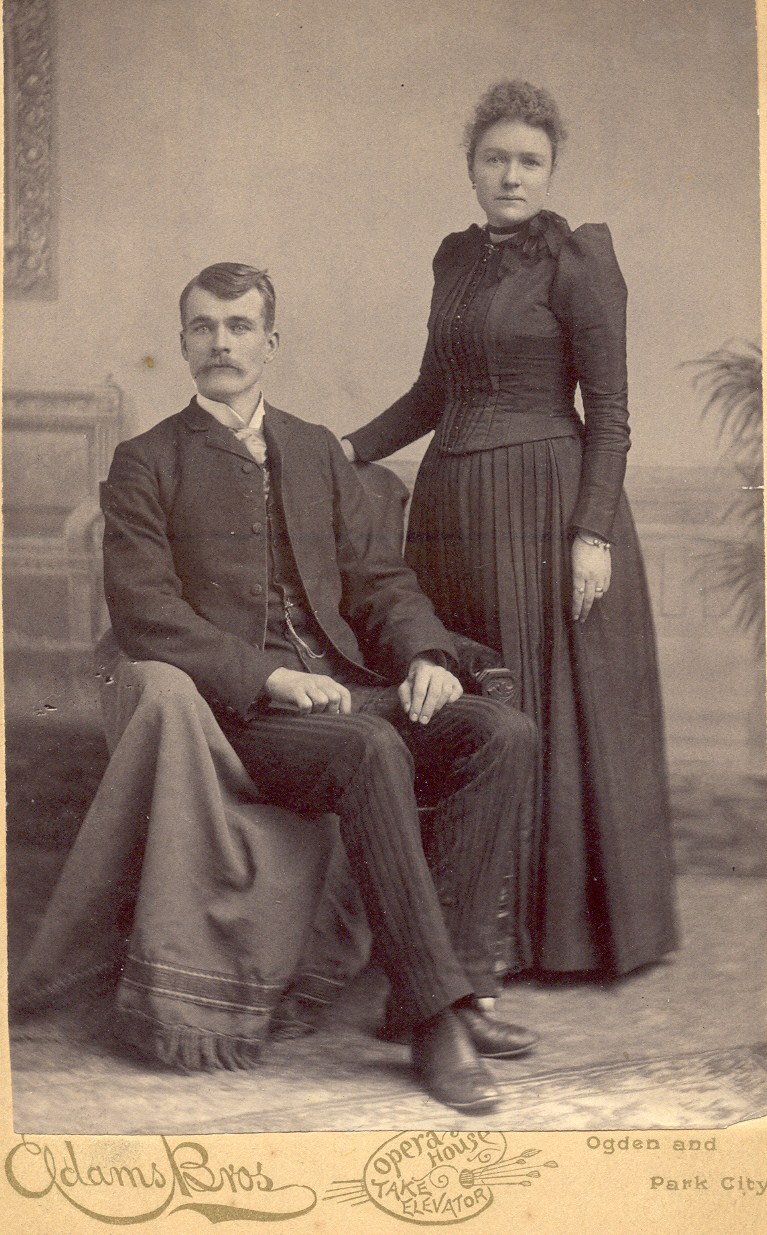
From here on it made a lot of work; to fence the land and break it up and get it ready to farm and to make a living for the family.  From here on I will begin tow rite of some of my work in the Church for which we have left our native land.  On April the 19th, 1896 the Stake Presidency, George Parkinson, Brother Cowley, Solomon Hale came to Glendale to form a German Organization, so we could hold meeting every two weeks, as there were many families Swiss and German that could not speak English. Addison Wagstaff was Ward Clerk and took the minutes. Brother Jacob I. Naef was chosen as President. It was not until 5 Jul 1896 that his counselors were chosen, Brother Jacob Schneider, first, Charles A. Nuffer second counselor. We held our meetings in the homes of the people on their farms and wherever they lived. They traveled with farm wagons a distance of20 miles one way to Mink Creek, Weston, Riverdale, Whitney, Treasureton, Mapleton, Preston and Glendale, there places were we held meetings. Some years later when Joseph Moser became President, I became one of his counselors, also brother Kern. After some years John asked to be released and I became President ofthe Branch on the 21st of March 1915, with Brother Kern and Alma Moser as my counselors. During this time we held the meeting in the old tithing office, later in the new one at Preston, until the 13th of August 1916, we held our last meeting. During the later part of the war some of the people of Preston made it very hot for the German speaking people yet most of them were Swiss, but that did not make any difference. So President Geddes came to me and asked me not to hold anymore meetings. After the war many of the German people had moved away so we never started to hold the meetings anymore, and I never was released to this day. That closes up this chapter of the German Saints of this part here, so I will go on to some of my other duties in the Church. Making in all twenty years that we held German Meetings with the people of Franklin Stake.

Now going back to the year 1899, when I ws called as second counselor to Bishop Edward Perkins in the Mapleton Ward. When Orron J. Merrill moved to Preston I took his place and his son Preston my place in the Bishopric. I was chairman of the School Board for six years, and Brother Merrill was the Clerk, and when he moved away his son was appointed in his place. While on the school board I had a schoolhouse built in the upper end of the District, with Harrison R. Merrill as the first teacher. That way the children of the upper end would not have to go so far to school. The children in the lower part of the Ward met in the old meeting house. While I was in the Bishopric Brother 0. J. Merrill was the Ward Clerk and clerk of the school board. After his father moved to Preston, 0. P. Merrill, his son, was the Ward Clerk and clerk of the School Board. Speaking of schools the first school that was held in Mapleton was in the winter of 1886, when Bishop Perkins went to Lewiston to school. He let the people of the Ward have a school room so they all got together and employed Hirum Johnson as their teacher. All children from seven years up to thirty, married men and young ladies went to school there all in one room. Some came from Franklin and Nashsville. I was feeding cattle for Harrison Thomas that winter and lived with Olive Sweet, she had to board me as she was living in their house, and they paid $150 for my schooling and $.45 for a book. I had to chop all the wood for the family. I was fifteen years old. This school house which was built by the efforts of the people of the upper part of the District, was the first schoolhouse built in Mapleton Ward with H. R. Merrill as its first teacher.

In 1899 in June I was ordained a High Priest by George Parkinson, President of the Oneida Stake, and we labored unitedly together in the Ward. Bishop Perkins was very kind to prepare me for this work, and in his home he read the Book of Mormon and the Doctrine and Covenants to me. So, that I may more fully understand the Gospel, and that I might be an example to the people of the Ward, and he taught me the Law of Tithing, and that we may be worthy to receive all the blessings that the Gospel had in store for His faithful children. So on the 21st of February 1900, we were recommended to the Logan temple to receive our second washing and anointing by President Morgan, a blessing that not so many have received, which is the greatest blessing anyone can receive in the House of the Lord, for which I have tried to be thankful all the days of my life.

In the Spring of the same year, as there was a severe drought in Southern Utah, President Lorenzo Snow went to St. George, and met with the people there and told them if they would pay an honest tithing the Lord would bless them and send rain to save their crops. As the church was in a very bad financial condition at that time. So on returning to Salt Lake City President Snow called a special meeting of all the General Authorities of the Church to meet in the temple on the Law of Tithing, on June the 2nd at 9:00 A. M. And as Bishop Perkins had taken so much interest in me he asked me to go with him, only the Bishops were called. All the General Authorities spoke in the Meeting, after which they all shouted “Hosanna to the Lord”. We were in the Temple from 9:00 A.M. until5:00 P.M. The meeting was in the room known as the Celestial Room. At the close of the meeting President Snow said, “If you will go home and pay an honest tithing, the Church will be freed from debt, and the Lord will forgive you of your past neglect, and I promise you your homes will never burn.” From that time forth I always paid a full tithing as long as I lived on this earth. This blessed land of America, which God has blessed above all other lands. So these are some of the blessings that your mother and I received through Bishop Perkins being so kind to me. In appreciation for the blessing the Lord has given us, I desired to do my full duty in my calling with the people of this ward, and we had many opportunities to be called out day and night in time of sickness and death, among the people. We labored together eight years and had much joy in our labors.

I have given you some of the ways I made a living for the family. To make a living during this time and to care for the family, I farmed, raised hogs and horses, milked cows, separating the milk and selling the cream, and making butter getting $.10 a pound at the store. The most I received while selling cream from six to seven cows was $35 a month. I also sold cream separators to the people of Franklin and Preston to make a little extra money. I cut grain with the binder for the people in Mapleton. I quarried stand stone for the Lewiston Meetinghouse, and some buildings in Preston. The Riter Brothers Drug Store and other buildings. For the hogs we received $4.00 per hundred.

I had now lived on Worm Creek, Mapleton twenty-four years and I have related only some parts of my life. During this time in my life it was necessary for us to look toward the future, and seven children had been born to us in our first home. As the family got larger I built room onto the house. During this time my sister Mary was working for a family in Logan and as she was not feeling so well she came home and we needed someone to help mother as Bertha was a baby at that time. But in September Mary came down with pneumonia and died the 5th October 1900.  She had been born in Providence, Utah the 11th of October 1881. At that time most of our children were sick with scarlet fever, but they got well with our care and the help of the Lord as it was hard to get a doctor.

Before leaving Mapleton, speaking of building I feel to give some information pertaining to my father after his third wife died, Mrs. Weirman. He married Mrs. Shaub of Logan and bought the house of her son Gene. He lived in Logan a few years but he wanted to come back to Mapleton again and wanted me to build him a house in my orchard. I bought some sawed square log from Kall Wheeler, and build him the house. He paid for the materials and I did the work free, and I moved them up from wagon by team, but it was only a few years until he wanted to move again. He had already lived in Preston twice before. The first time where Ernest Porter lived, and before that out where Jim Smart’s place is. I then began to haul tone to Preston and John laid up the walls in 1907. In all the houses he lived in were one in Providence, two in Logan, one in Worm Creek, three in Mapleton and three in Preston and he died the 121h Aprill908. When I started to build my home after his death I moved his wife back to Logan with team and wagon.

I will pass over some years as things went on as usual. We began to look to the schooling of the children, as there was not much opportunity in Mapleton. I bought five acres of land in Preston and during the winter of 1905 and 1906, I began to haul sandstone from the quarry for the building of our home. I also planted trees in the spring of 1906, as there was nothing on the land whatever, only a fence around it. So this was the plan for us to move to Preston, not to improve ourselves better financially, but to make it better for Mother and all of us.

The Bishop was called to go on a mission, and I was in line for Bishop as things looked at that time. Mother was already alone so much with the family and I had so many meetings to go to at night. I was still in the German Organization, and I was so far away. I had from two and a half to three miles to ride on horseback to meeting to the home of Brother Merrill or the Bishop. In all the eight years I labored in the ward only one ward was held in our home. I leave the rest for you to answer whey we made this move which needed much consideration and prayer, and the guiding care of our Heavenly Father in making this move.

So in the Spring of 1907, after renting the farm to Hart Wheeler of Mapleton, I built a frame house sixteen feet by twenty feet to have a place to live in. Also, we had a tent for some of the children to sleep in, so I would have the family with me while I was there building our home. I built the barn a place for the cows and chickens. I hauled logs for the bam and most of the lumber for the house from the sawmill on Cub River during the summer. In October of 1907, when the frame house and the bam were built we all moved to Preston. We were all glad especially the children, when they could see the train and hear it when it came to turn on the Y. So this was a great change for all. This was the first time I lived in town, since we left Providence. So in the Spring of 1908, as soon as the snow was gone I began to dig the foundation for the house and laying up the walls; doing the work myself. Our second home in which all the children were brought to men and womanhood. This was the most happy period of our life. In order to get the large stones on the wall we had to roll them up some logs, as they were too heavy to lift. I hired Adolph to help with the work for a while, but before I got the walls finished I took down with Typhoid Fever. Adolph and Mr. Peterson finished the walls. This was in the latter part of September, and I did not know any more of the building of the house till it was finished so the family could move in. Preston was a baby then and I remember that he cried so much it must have been hard for Mother. I can’t give much detail concerning my sickness, only that Mr. States was my doctor and a lady Mary Bodily was my nurse. Brother Arnold Shuldhess, the editor of the German paper “Beobachter”, was up from Salt Lake City and came and administered to me when I first took sick. When Miss Bodily had to go some other place they got Maude Stocks for my nurse. They gave me very little food; mostly brandy and whiskey, as food is most dangerous in Typhoid, at least that was the way they used to do for Typhoid Fever at that time. I never used liquor at other times in my life.

Before I forget, my sister Regina, about the year 1886 also came home from Logan where she had been working and came down with Typhoid and there were no doctors here as there was no town of Preston here then. If there had been we would not have had any money to pay them; so her mother treated her the best she knew with tea from different herbs. Our prayers and faith were in God and she lived and got well, so we did the best we could under different ways and conditions. I will again go on with my own case. The latter part of October as I remember, I began to improve in health and they began to give me some food, as I was getting very hungry and I thought I would not get enough to eat anymore. Mother was very much afraid she might give me too much to eat, as that is the most dangerous time of the disease. The first time I went out doors again was the beginning of November. The trees were all yellow and I went up town to vote on November 6th 1908. I am sorry to say that this was not the end of our grief and sickness, so we had to start all over again and as I write these few lines it fills my eyes with tears when I think of that dear Mother that never gave up, that watched over you all night and day with faith in God for a better day. The Lord heard our prayers and she had the privilege to bring you up to manhood and womanhood, but that was not the end of our trials as stated before.

When Clara and Anna came down with the fever we had to get Doctor Emery, as Doctor States lived in Franklin. As they had to come most every day and we had a nurse that did not belong to the Church. She stayed at Preston Rooming house and we had trouble with her as I will tell you later when I get to that. By this time we were living in the new house. I think it was sometime in December. But, under the care of the new doctor and the new nurse the girls did not show any improvement. It was not long till they came down with pneumonia and week after week they did not get any etter. The nurse had a lady friend that visited some time in the evening. One day I found some empty whiskey bottles in a pile of stone that was beside the house. I at once told the Doctor we did not want his nurse any longer. He said he had a Nuffer barn place in Weston for her. He said that we would be responsible if something went wrong with the girls. I told him I was willing to take the responsibility. The nurse left and shortly she came down with the fever at the rooming house. It was only a week or ten days till the girls were up on their feet again. It was now the latter part of February and what a relief it was especially for that dear Mother, when all could rest again.

Now during my sickness some of the people of Mapleton had been told by Doctor States that there was not much hope for me to get over my sickness and mother heard of it. She prayed to the Lord saying that if he would spare my life she promised Him she would let me go on a mission, under almost any conditions whenever called. So during the summer of 1909, I worked at whatever I could find to earn something to take care of the family, and to keep out of debt, and fmd planted what we could on the lot for the next winter. Sometime if February of 1910, I received a letter from Box B, as it was called in those days, when anyone was called on a mission. I did not know anything as to a call for a mission when I received the letter stating if I could accept this call, if I could be in Salt Lake City on April the 18th. I do not know if Bishop H. Geddes had told the authorities of the Church anything of my financial condition or not, as I remember he did not to me; which was very limited at this time nor did he tell me anything about being called on a mission. We did not hesitate for a moment, but told them that I would be there at the above date. As we had no porch on the south side of the house I went to work on it before leaving. I also built a shed for the white top buggy so it would be under shelter while I was away. On the 15th ofFeb 1910, Laura was born at home with Mrs. Nancy Beckstead in attendance, which made it still harder for me to leave you all alone. I also planted some garden before leaving. So in the morning of April the 18th, I was on my way, Clara going with me to Salt Lake as mother did not want me to leave alone. That way she could hear from me just a little longer, Clara was then nearing 15 years of age and Laura was going on two months.

As I remember I was set apart for my mission by Jonathan C. Campbell to the Eastern States Mission to labor under Ben E. Rich. After a few days in Salt Lake I left with other Elders for New York City, stopping at Des Moines, Omaha, Chicago, Buffalo and on to New York. After a few days there I was appointed by Ben E. Rich to labor in West Pennsylvania, with Elder Hyrum Nelson from Cleveland, Idaho. I was then sent by way of Philadelphia to Pittsburgh with Heber D. Clark as our president. We were then sent out in the country two hundred miles tracting on the way, where there was a Branch of the Church in Buck Valley. It would be too much to give my missionary account, it is written in my missionary journals, those red books in this home. As we met in Conference in Pittsburgh, with Ben E. Rich and all the Elders in February of 1912 I was released to return home. It was most difficult for mother to carry on any longer with the large family as she had to borrow most of the money while I was away, as it was a dry season, and Mr. Wheeler, the one that bought the farm did not make any payments and the Bank charged 12% interest.

When I arrived home Laura, it was on her birthday, was two years old. One great blessing while on this mission was that I did not have one day of sickness and Mother and the children all had good health, for which we thanked the Lord with all our hearts. It was February the 15th 1912 when I arrived at home in time to make arrangements for a new life in caring for the family again, and to pay off the money we had borrowed. But, before I could do that I had to borrow some more to buy a team with which to go to work. I borrowed $700 off of Grandpa Wanner; the team cost $300. On the 15th July 1912, I purchases thirty two acres from Mr. Charles Nelson west of town on time payment, at one hundred dollars per acre. I then planted it in hay and grain, and the same year a hail storm came and destroyed the crop of wheat. I then went hauling sand and gravel for a living, and helped Uncle John with the haying.

On returning home I was asked by President Joseph Geddes to visit the wards of the Stake with the High Council for two years. It was before the Stake was divided. I also was asked to take my place again in the German Organization Meetings, one or two times a month. During this time I was serving as a Ward Teacher, a Sunday School Teacher, and quite a number of years as the class leader of the High Priests group in the ward, at Priesthood meeting, so I had plenty to keep me busy. I was also the ward Chairman ofthe Anti-Tobacco and Liquor campaign. During the First World War, I was called as a Counselor to Peter Hanson, who was Stake Superintendent of the Religion Class until the Stake was divided. In all six years, once or twice a month on Sunday or week days we would go out in the Ward to find someone to teach Religion Class in the schools, or to visit the schools that had teachers as we found it necessary. I was called as Chairman of the Genealogical Organization of the Ward. When the Ward was divided, and your mother and I worked in the Genealogical Organization. We were released when Orion Jensen was Bishop. During the years of 1923,24,25, and 26, I was called to baptize the children of the Franklin Stake. Charles F. Hawkes had done that work before. Also, at times I was called on to baptize children of the 2nd Ward at the Stake House. While in the old Church House I was a teacher in the Sunday School in the different departments at different times.

On October 30, 1916 I bought the farm in Dayton of June Jensen, Sam Morgan and H. A. Peterson of Logan, at the price of $5,500 so we would have work for the boys, so they would not have to go away from home to find work. For a number of years we had to dry farm, before we could get water. We finally got thirty shares at $130 an acres. As the land was all under bond it cost me $800 to buy the rest of the land out and we had to pay $7 per acres to get a ditch thru the Eccles Farm. I traded the land in Preston to Sam Morgon at $125 an acre that helped some. I had to clear off some thirty-five acres of sage with axes all by hand. That was all we had to do that kind of work for number of years. I had the cabin on the west hill of Peterson’s and had to carry the water from a spring below the hill in Petersons’ for cooking and vitrolling the wheat. I had to get a right-of-way from Brother McCarry at a spring to water the horses. We also had a stable on the hill for the horses. Usually we would fill our grub box on Monday morning and stay till Saturday and Mother and the girls would take care of things at home during the week. When we got water on the farm we moved up on the flat to the west of the farm. We went down the creek for water to use. We then built another room and Fred moved over with his family for the summer to help with the work as we rented the Miles farm and a year or so later Miles bought a house that we moved on his farm, for Fred and his family to live in. Later on we built another room onto it.

Preston helped us with the work after school closed and Joseph moved in up stairs when he got married, working with Roy at the car bam at the U. I. C. Railroad. In 1929 we built a house on the farm for Joseph to move in, as we had more work all the time. The cost of the house was $1250. Then came the crash of 1929, when wheat dropped to 30 cents a bushel and hogs to $4 per hundred and beets $4 a ton. To pay our debts and pay for the house all of us got together with a lot of hard work and the help of the Lord we pulled through. We also sold some hay for $5 per ton. In the Spring while the boys were thinning the beets, I was doing the summer fallowing, with the gang plow, with six horses; for a number of years. We started out with only three horses on the farm for a number of years. We could not raise hay without water. We had to haul the hay for the horses from town. Also, for the headers Mother would come over and cook for them. At the first harvest we did not have very much, and I was away trying to earn some money to pay for the heading. Louise and Preston drove over and brought them their dinner. I also went up to Glendale one summer and helped Fred Wanner and Hyrum Jensen get up their hay. They gave me a ton of hay for three days work with wagon and team and I would haul it over to the farm. That was during the early part of our farming that I am writing on this page some of our hardships.

In order to make some money to pay for the farm and to live, as we only raised grain, as we had no water on the farm, I would work on the header and do stacking. Also, I would go out with Fred Nuffer and Fred Steuri doing cement work for school houses, and other buildings. I worked for Joseph Moser as a carpenter on the Gymnasium, also did cement work, while Fred was hauling gravel. I hauled the first load of gravel for that building, also hauled gravel for the Jefferson School Building. I worked for Struve on the 4’h Ward Meeting house doing cement work on many houses in town. I had my team hauling gravel when they built the first sidewalks in Preston, until they were finished, then to the City Water Reservoir. When the Utah-Idaho Central Railroad was built I worked on the cut south of town ten hours a day for $2. Again I helped Joseph Moser when he built the beet dump, the high line by Tom Clayton’s place. I then got a job on the dump with the Sugar Co., loading beets on the cars. The next two years I was tare man for the company, and got lots of scoldings from the farmers, but the company treated me well. They used to pile any beets on the ground in large piles in different places, and haul them on the cars later. So, the boys Fred, Joseph and I would haul beets the rest of the fall. We would leave right after daylight and work until dark, so when Sunday came we were glad to get a short rest and go to Church, or I would be called to visit some Ward in the Stake in the interest of religion class to get in into the school, and on Monday back to work.

Going back to the farm work, in the fall of 1931 and 1932 I bought a herd of sheep to fatten, then took them to Denver to market to help get out of debt. While Fred was living on the Miles place and Joseph on the farm there was some difficulty, I do not know what it was, and Joseph moved back to town. Fred moved into the house on the farm and young Fred Wanner moved in where Fred had lived, as he had him working for him in 1936. I bought a tractor to do the farming, and did the summer fallowing with it that Spring. As Charles Nelson was janitor of the Ward House he asked me if l did not want to take the janitor job. So I had another job, which the girls helped me with at $11 a month, but it all helped. That was during the First World War.

Thinking it was time to retire from farming at the age of sixty-six I sold the farm in 193 7 to my son Fred. In Jun 1937 I bought the Dodge car and the Gamble home. The next year the McCarry farm. The summer of 1937 we went on a trip, Mother and I, Louise, the twins, and Joe and Gretta to Los Angeles, visiting Jim Cummings and Fred Nuffer. From there to San Francisco, then on Highway 1001 , the Redwood Road to Portland, Oregon up the Columbia River to Boise, Idaho and back. I had to come home after over two weeks absence. Mother and I had been to Los Angeles by train to visit Jim and Anna, when they lived at Beverly Glen, and again when she died the 25 January 1928. As given before the third time to California and again to San Francisco to the fair. Mother and I, Louise, Joe and Gretta, when Gretta took sick. After Mothers death, myself and Louise, Ida and Gilbert, went to Los Angeles the fourth time. Later when Jimmy Cummings was married I went on the bus to his wedding. Some years after Mother’s death, I and Louise and the twins went on a trip by car to Zions National Park, Cedar Breaks, and Bryce’s Canyon and to Yellowstone. The first time we went to Yellowstone National Park with Mother, Louise, Roy and Clara. The last time we went Louise, the twins, Donald and Joe and Getta and I went. We also went a few time to Nephi to the Roundup.

These years while Ward Chairman of the Genealogical Committee, we assisted the Stake in getting up large excursions to the temple on the U. I. C. Railroad, every month. All during our married life we would go to the temple every years as often as we were able to go. We carried on research work through the Genealogical Office in Salt Lake City, and we received sheets of names on the Nuffer and Wanner line, and my mothers Griener line, all at our own expense. I have the sheets in my trunk with the work all completed as you will find them there.

For twenty years after buying the Chevrolet car and the Dodge, we went to the Temple, whenever we could once or twice a month with a full car of people from the 2nd and 1st ward, until I took sick in December 1948. Since then I have been to the Temple three times. I am writing this May 11, 1950.While going to the Temple one February morning early it was snowing and the road was slick. I had with me in the car Mother, Louise, Brother and Sister Rindlisbacher and Mrs. Clarence Corbridge. As I was getting near the Utah line I felt there was trouble ahead. I was going about twenty-five miles an house, when George Wanner passed me. When half a mile over the Utah line the car struck a bump in the road and turned over in the barrow pit then over on its side. At that time a car came and took all but Mother and I and Louise to the Temple. Then came Orion Jensen and took Mother and Louise to the Preston Clinic to be examined by the doctor. I stayed with the car until Petterborg came. The damage on the car was over a hundred dollars.

Some months later Mother began to have pains in her back and kept getting worse as time went on. During July she got so bad I took her to the Preston Hospital for an xray. She was there for a week, and Doctor Cutler said we had better take her to the L. D. S. Hospital in Salt Lake as they could not do anymore for her there. We went to Salt Lake July 24th we were told that she had tumor of the spine. She was there for a week, when we were told that they could not do more for her so we bought her home. She died the 10th August 1940.

1 February 1949

Dear Children of Mine,

If your Mother was alive as I am writing, we would be celebrating our 55th Wedding Anniversary, but as it has fallen my lot I’m all alone in this home where you all have been brought up under her loving influence and with my deepest love for you all. I shall ever thank God, my Heavenly Father for the gospel and its blessings.

Donaldson – Williams Wedding

David and Gwenlliam Williams are pleased to announce the marriage of their daughter Mary Elizabeth to William Scott Donaldson, son of Joseph and Sarah Donaldson.  They were married in her parent’s home in Slaterville, Utah on 2 Oct 1890.  (I had a picture of David and Gwenlliam in this post, but found out it is actually of another couple.)

William is currently employed with Union Pacific Railroad as a conductor in Ogden.

The couple will make their home in Ogden.

The farther you get back on some of these family lines, the less we know about the individuals and their lives.  This really is unfortunate.  If they had kept journals, or recorded some of their thoughts and at least given us some history, how much the richer we would be.  Look at how much a few sentences written on the back of this old photograph tell us that we would not otherwise know!

The back of this photograph has the following written on it.  “[illegible] master (??) held this photo for about 46 or 48 years then gave it back to me for a keep sake.  when she left for California to make her home.  she was 70.  taken in 1891 we lived in Evanston Wyo.  Donaldson was Union Pacific Conductor.  Mary Elizabeth Williams Donaldson.  Born apr 7th 1869 on Wall ave. between 24th and 25th street.  Just South of the Brigham Hotel in the old home.  Daddy sold the old home to Barnard White.  William Scott Donaldson Born June 18 1865 Cape Vincent Jefferson county New York.”

I assume the writing is by Mary herself since there is a reference of the photo being given back (William died in 1913).  But then why would she refer to her husband as “Donaldson” in reference to his work?  The details given of the birth and its location with the references of “Daddy” selling the home makes me think it is safe to assume this is written by Mary herself and the language is probably a norm of the time.

The reference to the Brigham Hotel (called the New Brigham Hotel on the National Registry) is interesting because that building is still there at 2402-2410 Wall Ave.  No homes still exist in that block.  We knew she was born in Ogden, but from that little note, we now know which block of Ogden.  I have written about her parents at this link: Williams-Jordan Wedding.

The writer on the photograph indicates that the Donaldson family lived in Evanston, Wyoming in 1891.  William George was born 23 Aug 1891 and David Delos 26 Mar 1894, both in Evanston.  (Read more about David’s family at this link: David Donaldson Family)  Mary may very well have been pregnant in the photo.  The photo was taken in Ogden or Park City as the bottom of the photo tells us that is where Adams Bros (and ride an elevator!) was located.  The family then moved to Park City, Utah where Joseph Ellis was born 28 Aug 1896 and Irvine Todd on 11 Jun 1898.

On 11 Jun 1900, the family lived at 2270 Moffatt’s Lane in Ogden.  Moffatt’s Lane is no longer the name of the street, it was renamed between 1910 and 1920 as Ogden Avenue.  William is still a conductor for the railroad.  On 20 Apr 1910, the family lives at the same address and William indicates to the census taker he is now a plumber and owns a shop.  William and David are both listed as apprentices, and I assume both are for their father. Somewhere in all this, he also had a confectionery store, of which we have one picture but little other information.  William was the proprietor of the Star Candy Company located at 2309 Washington Avenue in Ogden.  We don’t know how long it was open or when he opened it.

William Scott died 12 Sep 1913 of bladder cancer at Dee Hospital and was buried in the Ogden City Cemetery on the 14th.  He was barely over 48 years old.  The death certificate indicates William was the owner of a plumbing business.

William Scott was born 18 Jun 1865 in Joyceville, Frontenac, Ontario, Canada.  His mother was born in Cape Vincent, Jefferson, New York.  You can read more of his parents and siblings at this link: Donaldson-Todd Wedding.  As far as we can tell, all the children were born in Joyceville.  He did mention on both the 1900 and 1910 Censuses though that he was born in New York.  Maybe this was to claim his privileges as an a U.S. citizen.  Who knows.  He is not found on the 1880 Census presumably because he is in Canada.  Several of his siblings also finally show on the 1900 Census in New York and Ohio, but his father and mother lived their entire lives near Joyceville or Pittsburgh, Frontenac, Ontario, Canada.  His venture west most likely came with his employment by the railroads.  He did not join the LDS church until 1911.  His son John Edmund joined in 1910, Joseph Ellis the same day as his father, and William George and Samuel Alvin within the next 4 years.  The others did not join (although David Delos obituary says he did).

Back l-r: Todd, George, Mary, William. Front: Dave, Alvin, Ellis, Ed Donaldson.

Mary probably grew up near where she said she was born.  She was the oldest child (that lived) of 10 children.  The census taker in 1880 described the home as on the railroad grounds in Ogden.  The block where she said she was born is very near the Union Station and may have qualified as the railroad grounds.  The original station which was built in 1869.  No street or anything else, just on the railroad grounds.  The 1870 census does not give any indication where the family lived other than in Ogden.  The last two children were born in Slaterville (1881 and 1885).  The marriage record indicates in 1890 that Mary was a resident of “Slateville”.  The 1900 census records do not tell us where in Slaterville.  Mary’s mother, Gwenlliam Jordan Williams died there in 1900.  When David died in 1911, he was back in Ogden living at 3256 Wall Ave (this home is gone).

Mary remarried 11 Jul 1918 to Anthon Edward Peterson.  The family still lived at 2270 Ogden Ave in the 1920 census.  The four youngest still living at home.  By the time the 1930 census arrived, Anthon and Mary were living at 541 Washington Ave, which house I believe is still standing.  Anthon and Mary would remain together until he passed away in 1942.

All accounts of Mary is that she was stern and cold.  Her grandson, David William Donaldson (Dave), indicated that she was snooty, high-minded, and a brat.  Apparently she was very condescending and negative in every interaction.  After Anthon Peterson passed away, she sought to move in with her son, David Delos Donaldson and family.  The offer was apparently there to take her in for whatever years she had remaining.  However, Dave was not having any of that and indicated that if she moved in, he moved out.  This was between 1945 and 1948.  She ended up not moving in because of Dave.

Back l-r: David, Ellis, Edmund. F: George, Todd, Alvin Donaldson

Mary remarried 20 Nov 1945 to Thomas William Stoker (a cousin of mine on a different line).  They remained together until she passed away of old age 29 Mar 1951 in Ogden, just shy of 82.  At the time, Thomas and her were living in Huntsville.

4 Generations: Jan (boy), Dora, Mary Donaldson, David Donaldson