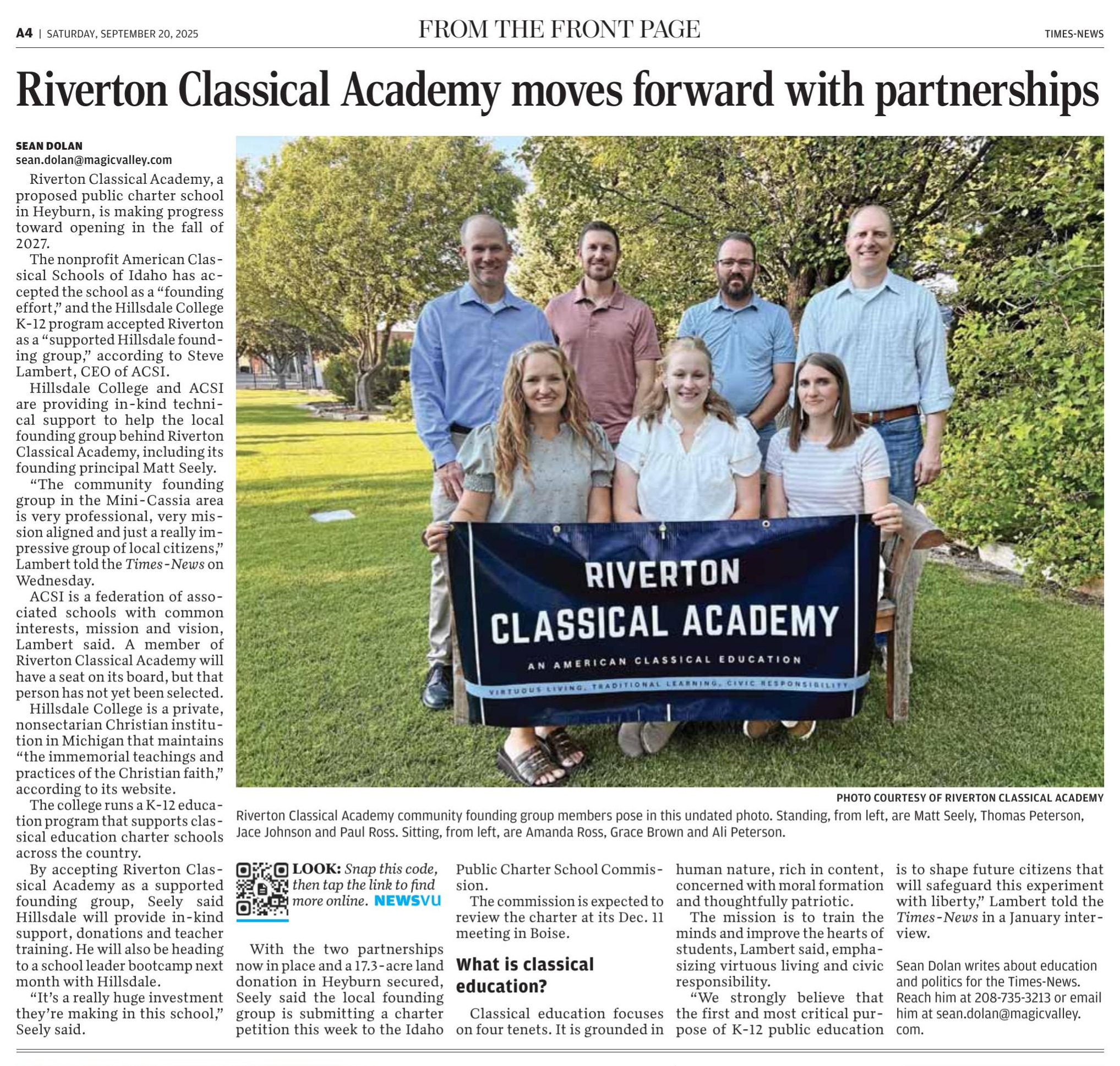
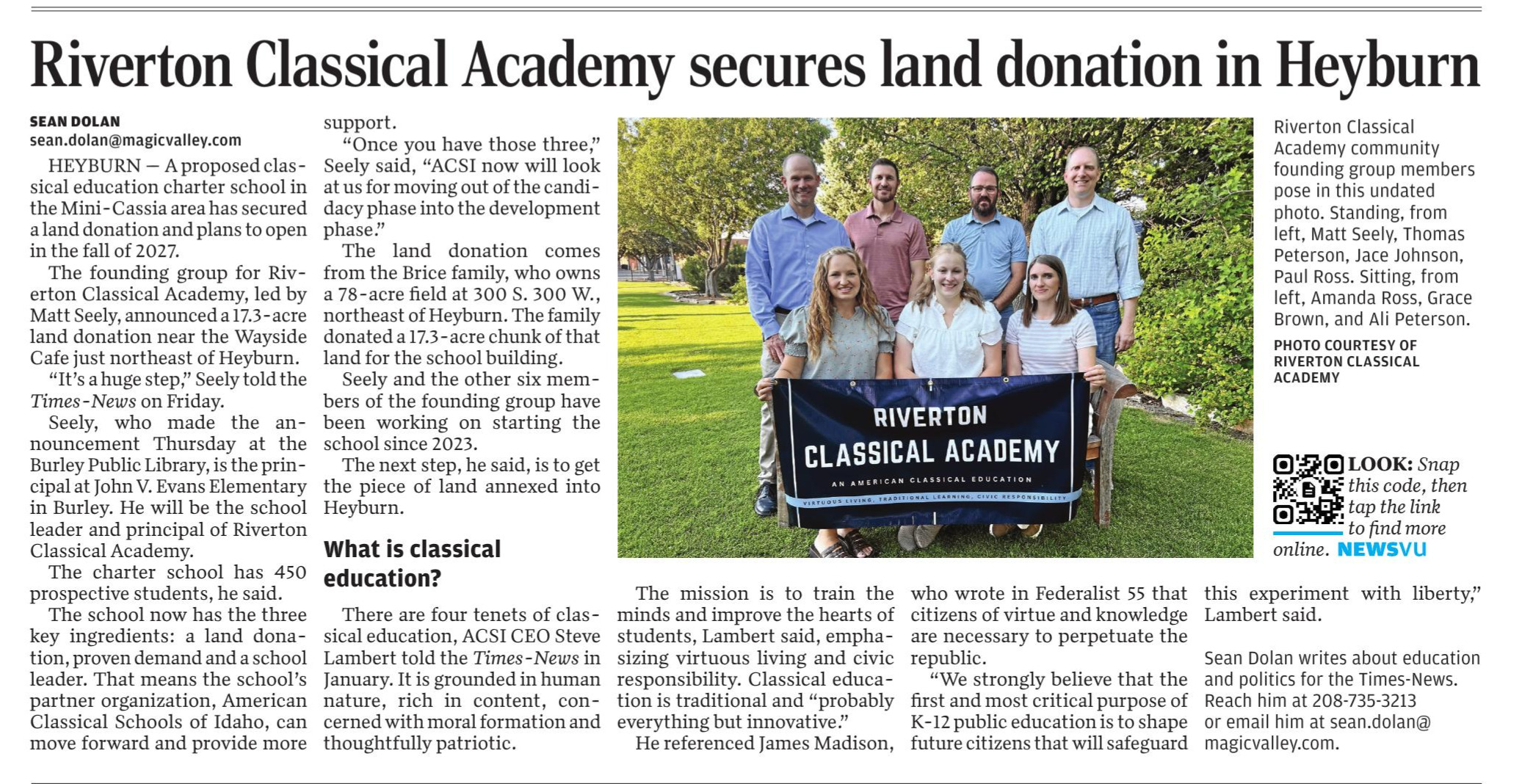
Riverton Classical Academy moves forward with partnerships

Today Amanda and I ran away for a quick visit to Manchester. There was not much on the agenda. We stopped in Gee Cross and visited Claire Martinez, mostly unannounced while she was cooking.

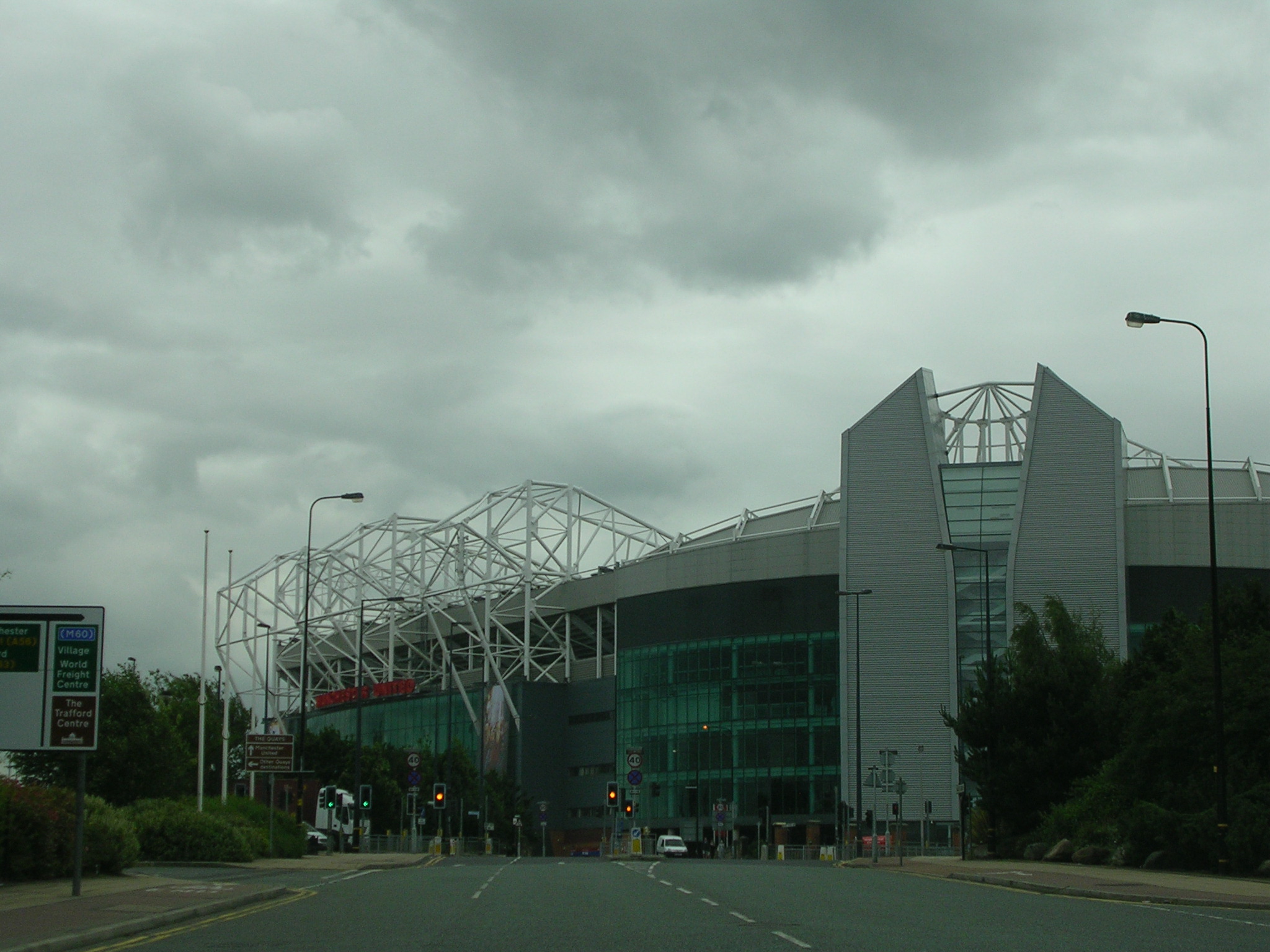
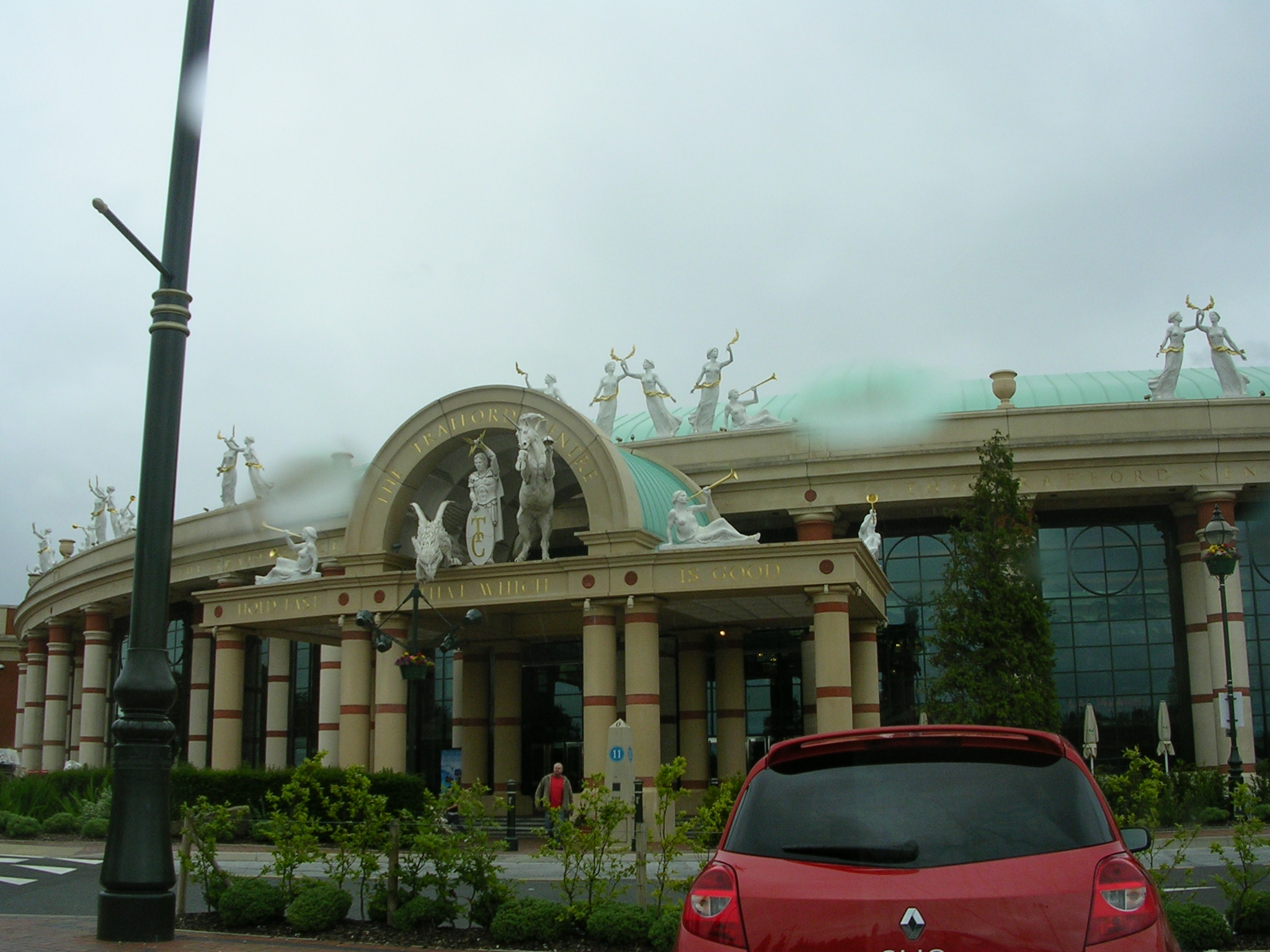
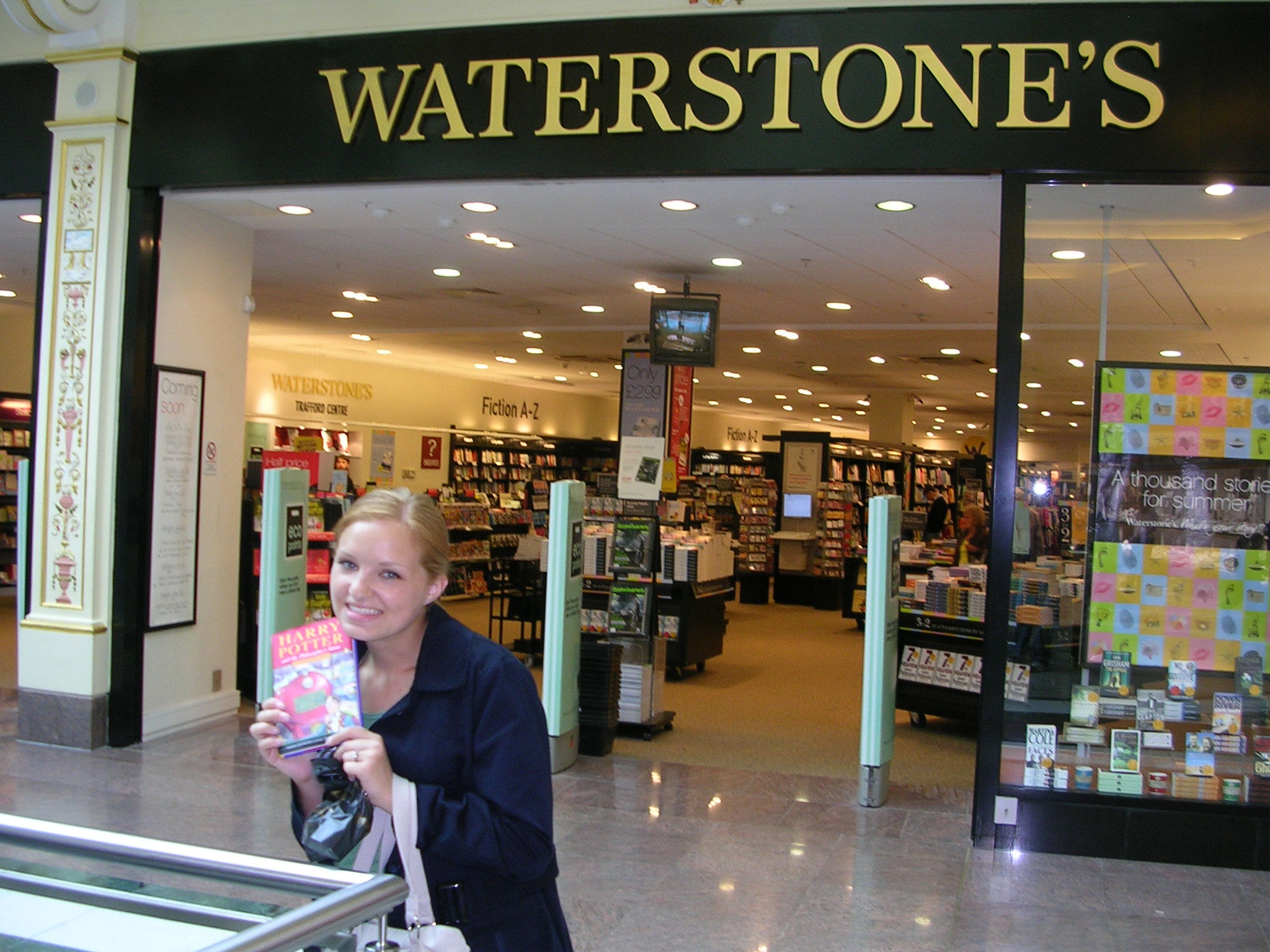
We visited the Arndale Shopping Center, Manchester Cathedral, Manchester Town Hall, Old Trafford (Manchester United football grounds), Market Street, and the Trafford Centre (glorified shopping mall). Amanda was able to pick up her British copy of the first Harry Potter book.



This evening, the Gore’s organized a bit of a get together for some of the members of the Eccles (now Swinton) Ward. It was very, very kind of them to do this for us. There were several families who came and it was wonderful to catch up with them. Leslie Walsh, Bob and Joan Wood, Alan and Margaret Griffin, Vincenzo and Dawn Santi, Alex and Gloria Brown with their son Nathan, and the Gores. They all had such wonderful things to say to us, about me, and it was great to catch up with them.
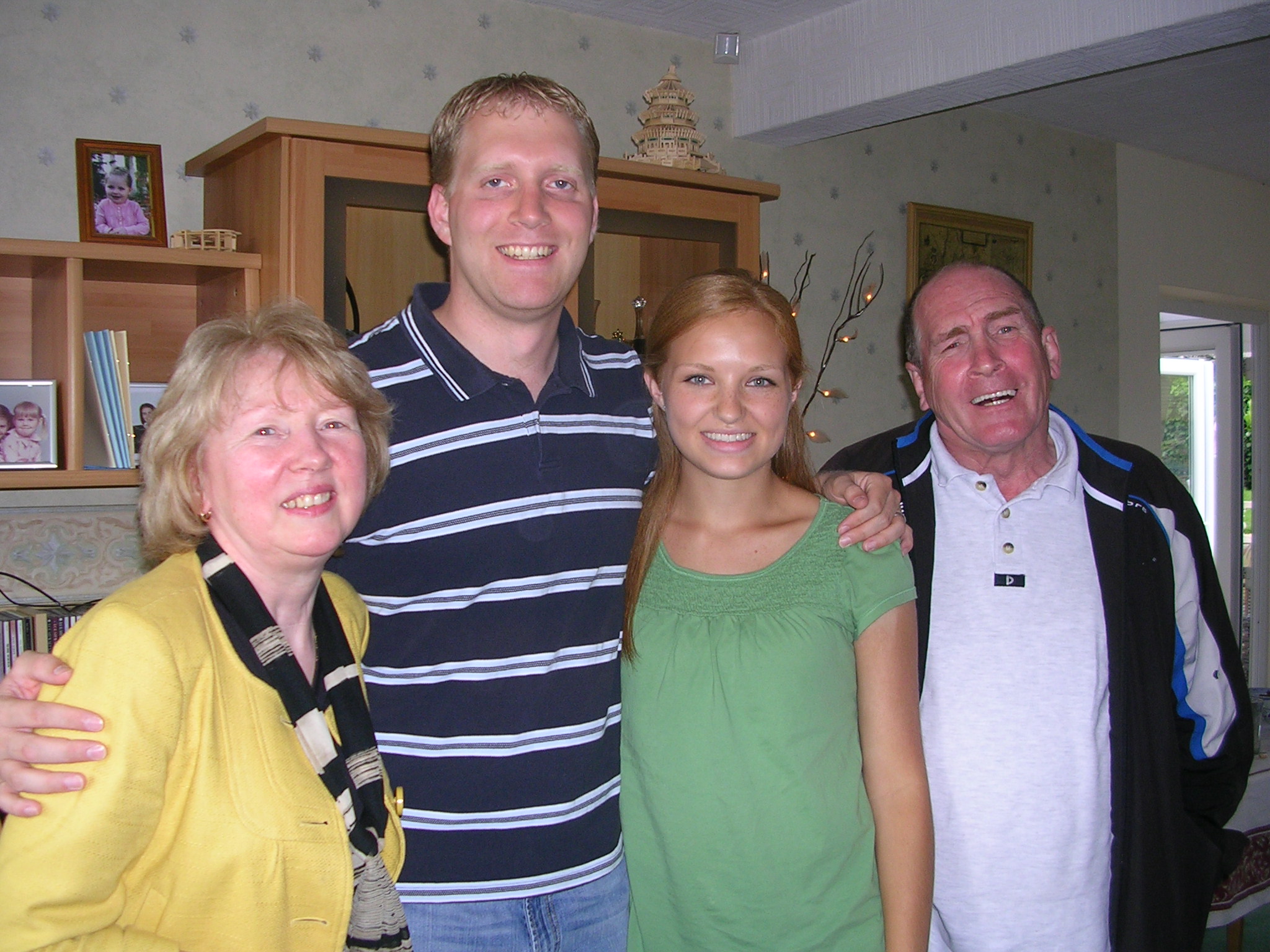

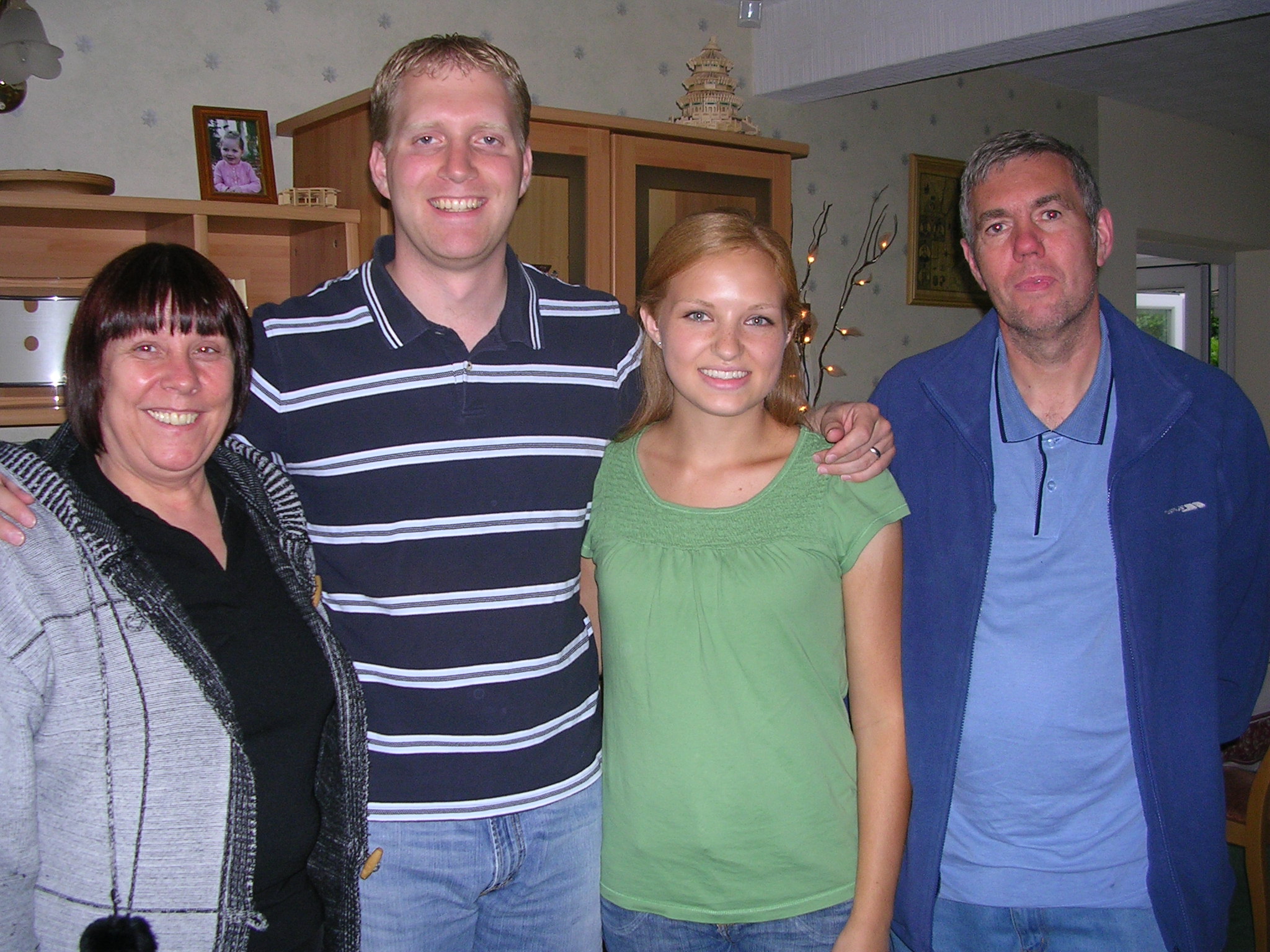

Kevin and Jean Gore treated us to a pub dinner this evening. It was really good food. They also treated us to a roast duck dinner last night. Each family has treated us very well, and provided great meals. We certainly appreciate their generosity.
Tomorrow we head to Birmingham, the day after to Milton Abbas. Don’t know when I will be able to get back on.
I have two copies of the History of Plain City, Utah. The front indicates it is from March 17th 1859 to present. As far as I can tell, the book was written in 1977. At least that is the latest date I can find in the book.
One copy belonged to my Grandparents Milo and Gladys Ross. My Grandpa has written various notes inside the history which I intend to include in parenthesis whenever they appear. They add to the history and come from his own experience and hearing.
I will only do a number of pages at a time. I will also try to include scanned copies of the photos in the books. These are just scanned copies of these books, I have not tried to seek out originals or better copies.
History of Plain City March 17th 1859 to present, pages 150 through 165.
SITE FOR NEW TOWN PARK
SUBMITTED BY FLORENE PARKE
In December, 1975, Mayor Lee Olsen and the Plain City Town Council consisting of William VanHoulten, Wayne Cottle, Darwin Taylor and David Thomas, passed a resolution to purchase 20 acres of land. This land was to be used as a recreational complex and also house the town hall and other municipal buildings.
On December 30, 1975, the City of Plain City purchased 20 acres of land from Bernard and Nora Poulsen. The land is located at the north-west corner of the intersection of 2200 North and 4100 West Streets.
The long-term plans for the park included three regulation ball diamonds, (two softball diamonds, and a little league ball diamond); an equestrian arena and open space exercise area to be used for football and other activities requiring large open spaces. A site identified for future development of municipal structures may include a swimming pool, restrooms and parking areas.
Purchasing and developing the land is an expensive process. It is the intention of the City Council to program the work in six one-year phases. Development of the equestrian arena was part of the first year’s phase.
The area housed an arena known as Paul Knight’s Arena. It has been used in the past for several Junior Possee competitions, calf roping meets, and various horses related events. The arena needed fencing and landfill and water installations.
In December, 1976, the Plain City Lions Club, in cooperation with the parents of Junior Possee members, had the area surveyed and hauled 103 loads of sand necessary for a proper working arena. Approximately 30 volunteers donated their time and equipment for two days to complete this part of the work.
Heavy gauge chain-link fencing has been purchased with money from the town and from money raised by Junior Possee members through various fund raising projects. The fence will be installed as soon as the weather conditions permit.
Plain City’s Junior Possees, Four-H groups, and the many other residents interested in equestrian sports will have a safe place for their activities, and the town will have an arena to be proud of.

Paul’s Arena as it is known today, which will be rebuilt into the Town’s new Park. Used for many years for horse and Jr. Posse events.
*A CHILD’S CHRISTMAS IN UTAH
BY WAYNE CARVER (SON OF ELMER AND JANE CARVER)
ASSOCIATE PROFESSOR OF ENGLISH
CARLETON COLLEGE
It isn’t that way now. The quiet fields are broken into building lots and the farmers build jet engines in the city and garden with a tractor after work. The old canal is lined with concrete and in the center of the town the Saturday and sun-drenched baseball diamond has shrunk to softball under lights, and the county has built a tennis court just off third bade for a game the kids are beginning to learn to play in white shoes.
The frame store with the pot-bellied stove smelling of sizzled tobacco spit and with the mash sacks and rummy dive in back is a supermarket now where wives in stretch-pants by barefoot and frozen chopped broccoli by the ton and aerosol bombs that go “SwwOOOOOOsh” and keep off the bugs or put on your pie a water glob of something threatening to be white and that keeps your arteries open.
It isn’t the way it used to be in that un-fluent time of plowing, planting, watering, hoeing, furrowing, harvesting, and throwing the harvest in the river to be pickled in the Great Salt Lake. It is the affluent society now, of missile sites and loan companies, and the ice cream comes come frozen in glazed wrapping and taste like the strips of brown paper we used to put our upper lip to stop the nosebleed. And I have not been back for Christmas for many and many a year – to the long everyday stocking with a fifty cent piece squashing the toe, the large orange pressing the half dollar down – a thick, loose-skinned orange that peeled clean and dry – to the heaped snow that fell on every Christmas eve – I have not been back, and it isn’t that way now – and all I can do is gather a crystal or two from a vein of quartz- or is it foolsgold? – in Time.
****
In the bed-covering warmth of the high ceiling room in the weather-bent old house between the mountains and the salt lake, nothing was alive at first except the dry flopping of the harness straps against the horse’s matted cost and the cold jangle of the chains against the horse’s matted coat and the cold jungle of the chains against the single-tree of the go-devil that Dad used to clear the paths between the house and the barn, the barn and the chicken coop, the chicken coop and the house, and to gouge a trial down the drifted lane to the country road where the snowplows from the shops in Ogden would come later in the day. Lying in the dark that is beginning to be thin out like spilled ink, we hear coming through the window the flopping and the jangling and the sliding rumble of the triangular runners as they push aside rocks and twigs and skid down the sides of irrigation ditches, and the tongue clicking and “steady, boy, steady,” of Dad as he talks to the horse. Hearing this, and seeing from under the door the orange line of kitchen light and, without listening for it, hearing the first snapping of the kindling in the range and smelling, without sniffing for it, the sulphurousness of coal smoke, we know- all three of us – that we have been trickled ourselves and somehow, we can’t say how, had fallen asleep – sometime, somewhere, – back in that black night and that Christmas had come again and caught us sleeping.
Then the tinny, descending jingle of loose bedsprings, the cold shock beneath the warm flannel pajamas legs, the cold fluttering linoleum slap against the feet; and the orange line beneath the door flashes upward and out: We are across the kitchen, through the heavy coal smoke to where the living room door id barred, sealed against us, as mother, at the side door, calls outside, and Dad comes in.
Daylight comes with the smell of oranges, pine, needles, pine needles, and chocolate, and coal smoke from the heater, and the brittle crack of hazel nuts and the tearing raveling crunch of peanut shells, the shimmering glissando of tissue paper crushing, the sweet sticky slurp of cherry chocolates, and the crack and shatter of peanut brittle. Amidst the smell, above the sounds, comes the “oh, just what I wanted,” of Mother and the “Very nice, very fine,” of Dad and the “One -two-three-four! I got four presents that’s simply more than anybody,” of Mary and the “This Wheel’s just fine cause it’s got a burr on the axle, not a cotter key,” of Nephi, and the “Billy’s got this book, he’ll not swap. I’ll swap with Rex,” of another.
By mid-morning the board valley glisten under the cold sun, and you have gone alone through the fields I the over-the-boots snow and along the row of willows besides the canal and watched the muskrats swimming in the alley of dark water between the frozen banks, have seen the runic tracing of the quail and pheasant trails and shaken the loose snow away from your collar that a magpie knocked down on you as you passed beneath the cottonwood trees to Rex’s place where you ate rock candy, swapped the extra Bomba you had read for the Army Boys in France that you had not. By noon you have been to Bill’s through the glare of the sun and snow and shown him your hi-tops with the long grey woolen socks ad the fold-over edge of red at the top and eaten peanut brittle, been to Grant’s and seen the new skates, shown-off the cream and green cover of your Plunk and Luck and eaten candy, been along the roads, the ditches, the trails until the snow packed into ice inside your boots has sent you home to dry and then, drying, behind the big heater in the living room to sail on the stack of books to all the great green world that never was and will last, therefore, forever.
The crunch and ravel and shimmering tinkle is gone from the room now. The quiet is there like a field rippled with snow until the others return from their rounds, and in from the kitchen come only the first rasps ad scrapes and clicks and hacks of dinner’s getting underway. There is pine tree and warmth and the smell of chocolate syrup. Behind the stove Bomba the Jungle Boy crouches in the grass besides the trail as the enemy patrol with poisoned darts in their quivers and blow guns in their hand file slowly by the disappear into the tangled heat of the jungle. In the gassy, coal smelling clearing Bomba is wiping into glittering brightness the still smouldering and dripping blade when, bursting through the streaming wall of branches and vines, comes Aunt Em’s bellow of tribal greeting, followed by a safari of cousins and a diminutive uncle, each one bearing weapons and supplies clutched in their careful and love-filled hands.
“Good Lord, Louisa, there you are just as I figgered, sweating out in the kitchen while everybody else has a fine faretheewell. We’re late but I been after Ephriam since daybreak to get them cows milked so’s we could get on our way. By Judas Priest, you would thought the man had never milked a cow before. Biggest kid in house for Christmas. I get more work out of the cat than I do him. Lordy! You ought to see that house. You can’t see out the windows for trash, and I’m so flustered I think I sliced an egg on the jello and a banana on the hot potato salad. I’m afraid to look, I tell you. And Moroni? – he was out chasing the girls until je ought to have been home milking, too; and, Lord, Sara and nell, you’d of thought they never been given anything before. And all the time, Eph draggin’ along, them cows moanin’ out in the barn, their bags so full they’d like t’have died, nothing to eat – it’s a good thing for that, I suppose. Why, he didn’t get out of the house until ten O’clock, the milk man had come and gone by two hours and all the time me trying’ to bake a cake in a crooked oven with the coal Wilbur man sold us at a special and, Louisa, I’m tellin ’you it ain’t coal at all. It’s just dirt. It’s better dirt than half that hard scrabble your man’s farming down there in Salt Creek, and if Wilbur can sell that sandy loam he sold me for coal, I’s say Josiah’s got a fortune in fuel under that field of onions he tries to grow ever summer. Glow! I’s by there t’other day lookin’ for the horses before the shruf stray-penned “ em and I say to Eph, “Josiah’s got a nice five acres of picklin’ onions out a that salt flat he’s tryin’ to farm. Ought to get a special price, seein’s how they pickled all summer. Grow! I’s by ther t’other day lookin’ for the horses before the shurf stray -penned “em and I say to Eph, “ Josiah’s got a nice five acres of picklin’ onions out a that salt flat he’s tryin’ to bake this cake, and roast a shoulder of pork and fix the salad and I’m up to my chin in candy and nuts and wrappin’ paper until I finally just booted everybody out the back door and said, “Lordy, go over t’the neighbors and dirty up some fresh territory while I get something done.” So they did. Except Eph. He’s still settin’ there in his new robe and slippers, dozin’ mind you, his head bobbin’ back and forth like a derrick fork. And them poor cows hollerin’ to be milked, and finally I told him, “Lord almighty man, go out there and take out enough milk to relieve their pain anyways, even if you don’t care about no milk check next week.’ So he did. Well, here we are. Where d’you want me to put the roast to keep it warm, Here! Give me that knife, I’ll peel the taters. Don’t you get no help? Where’re your kids? You get started on the rolls, woman. This house is goin’ to be crawlin’ with starving prople before we get turned around and us without a thing to put in their mouths.I thought I told you Big J flour’s better’n this other stuff. Lord! I don’t know what’s goin’ to happen to us. Ten o’clock milkin’; I tell you, I thought I’d never live to the day.”
And then the green jungle explodes into white brightness and come alive with cousins and uncles and aunts as the tribal dance around the tree begins and the hecatombs are offered to the angry powers of hunger and love: roast chicken, roast turkey, hams, and pork shoulders, brown gravies, chicken gravies, sage and giblet stuffing, candied yams and sweet potatoes, mashed potatoes, cranberry sauce, creamed corn, wax beans, lima beans, and string beans, carrots – tossed salads, potato salads, gelatin salads, cream pies, fruit pies, mince pies, pumpkin pies, chocolate cake, and white cakes, jello ad whipped crème and sliced bananas, candy in dishes and boxes, apples, oranges, and bananas – and one cup of coffee brewed just for Uncle Heber, the free-thinker of the tribe who risked the taboo, and for him, too, the cracked saucer for the ashes of his cigar.
And above the crack of celery, the clack of china, the clink oof silverware, the chattering drone and occasional giggle or scream, and through the acrid halo of smoke around Uncle Heber’s head comes Aunt Em’s piercing voice: “It’s a foul habit and an abomination in the sight of God, Heber, and I’d rather see my brother take to drink than terbakker the way you do. And coffee defiles the temple of the spirit in a worse way, and Louisa’s curtain’ll smell of Christmas and sin until the Fourth of July because of you.”
And though the drone and chatter, Uncle Heber’s: Sis, you finish your meal in your way; I’ll finish mine in mine. The Prophet used to smoke, so did Brother Brigham – and chew. They chewed and spit like any man. I sin in good company. Fact, is sis, if the truth was known, smokin’ and good coffee got to be a sin because Joseph had an allergy to caffeine and nicotine. Used to break out in hive after every cup of joe and every satisfying drag, so he made both a sin. Say, get me a stove match will you, sis, while yer up – in the kitchen there. See? A good cigar goes out if it ain’t appreciated.”
And then through the long dying of the day, the world beyond the oppressive clearing behind the stove goes on. Bomba frees the friendly white girl, eats a tapir, while through the nebulous jungle wall from far beyond come the shouts and squeals of cousins and brother and sister play, the falsetto chirping of Aunt talk, and the grumbling bass of Uncle talk. And as the Army boys march aboard the transport in New York to go to France with “Lafayette, we are here,” on their lips, there hovers in the air of the stifling, coal-gas smelling hold of the transport:
“Franklin D. Roosevelt was sent by God to lead his children out of bondage.”
“I like that man’s smile. Then he sticks them cig-roots in his mouth and I tell you I jist don’t know!”
“We should have won that game on the Fourth; Freddie just got a leetle tired. . . .”
“Walkin’ on to my farm and tellin’ me what I can grow and what I can’r. I sicked the dog on that little pipsqueak. . . .”
“Doak, that big elephant, fannin’ twice with men on. . . . Never could hit a round-house out.”
“. . . on relief until his first paycheck . . . blew it all one weekend at Elko. . . “
“Next time Brig Roberts umpire, I say protest the game. . . “ “Two of them Clinton players smoke. I seen ‘em. . . “
“Good for them . . . “
“Heber!”
“Paid in paper script. . . not worth the paper it’s . . . “
“. . . kept track the last three games . . . fanned four times with one on . . . “
“Farmers the last one to get anything from a government . . . “
“We got 3.2 beer what we have to risk damnation to drink. But the price of tater’s about the same as when Hoover. . . “
“ Eat the taters then the shut up. “ S bettern defilin’ Em! We’d live forever, that a-way – the two of us.”
“Ha!”
“Only hit all year as I remember rolled down the gopher hole back of first base in West Warren for a ground rule double. . . some clean up hitter be is. . . “
“don’t care how the man smokes. I’d vote for FDR for God tomorrow if I had the chance..”
“But President Hoover says. . . “
“To Hell with President Hoover!”
“Heber! Heber! Heber!”
And now Bart, the oldest, most handsome, most dependable of all the Army Boys in France, escaped from the hospital in the rear, slogs through the nuts, shells, and package wrapping of rural France, wet, cold, delirious, dropping into shell holes as the rat-a-tat-tat of a match-shooting gun rattles out of the living room from behind the sofa. In the lull that follows, as the darkness comes on, a command rips across the subdue murmur of No-Man’s Land: Ephriam! It’s milkin’ time. Lord! Let’s go on home and see how many cow’s got mastitis from this mornin’. Judas Priest! One thing for sure. Never milk a cow, never have to. They’ll have their bags caked-up like a lick of salt. Come on, Eph!.
And Uncle Heber, rising from the waves of cigar smoke, “Emmie sit down. For the Lord of all the Lamanites. I only see you about once a year, it seems like.”
She, settling back into the sofa, “That’s for sure.” There is a long quiet. Then, “But Heber, when’re you going to come to your senses and make your peace with me and the Church.”
I’m ready, Emmie, always have been. For you or the Church. But I figger the Church’ll be a dang sight easier to settle up with that you.”
From inside the pill-box in the living room comes another burst of fire, and Bart, with his dependent buddies, crawls along a little stream in the gassy gloom of twilight, trying to get a bearing on the mortar that is lobbing rounds into the Company. And Bart whispers, “I’m going over there to see what it looks like, anyways.”
“No, no, bart,” from his friends. But he, “Remember the Luistania.” Ashamed, they say no more. “It may not be what I’m after but just beyond that hill is where I need a pig for winter dressing up, and if Parley P. Brown – Goodie-Two-Shoes Brown, we called him in school – has got what I want –“
‘Heber! That’s talk I won’t hear. He’s a God-fearing man and –“
“And a man practically lacking in the power of speech, Em, that’s what he is. Why, Em whenever I think you’re right, that I’m a sinner temporarily damned to a lower degree of glory, I remember the day I went over there to buy that pig. We’re out in the pen, see – a sloppy pen if you ever saw one – and all these weaner pigs are grunting around in there. I’ve got this gunny sack and a three foot piece of two-by-four, but Parl Brown don’t so things that way. No Sir! ‘You stay here, ‘ he says and he crawls in that stuff. I’ll return presently with a shoat.” Return! Presently! Shoat! The man can’t talk. Well – anyhow – he slops into the pen. He corners one of the wet-snouted little balderdroppers, lunges at it and, by Christmas, kisses by half a foot – skids into the plank wall. Judas Priest, I though he’d killed himself. Picks himself up. Scrapes himself off. Looks over at me. You could hardly see his face. ‘Little rascals,’ he says, and grins; he corners another. Dives again, skids, misses, splatters, hits, stands up,wipes, away at himself a bit. Elusive little tykes,’ he says, turns, gets ready to do it again. I’ve had enough. ‘Parl!’ I beller at him. He looks around. I crawls over the fence. By jaspers, I’m near tears, ‘Parl, for Juniper’s sweet loving sake, man, don’t talk to pigs like that. Now you go on, get out of here!’ He goes, me pushin him. Then I turns to the litter and look them square in the eye. They’re all backed into one side and a corner, still and quiet. They’d sense the change right off. Then I hold my two- by out in front where they can see it. I drops my sack open, the mouth of it facing them. I drops on my haunches and teeters a bit. Then I says, real tight and lowlike: ‘Now – you little thin-snouted, bleary-eyed runty-backed, spiral-trailed sons of this litter, one of you hop into this sack.’ Why, almost immediately, you might say, the one nearest the sack trots over, sniffs a hit, squeals a little, and walks in the sack and curls up. I snap the sack to with a piece of binder twine, hoists it over my shoulder, climbs ion the pick-up and brings it along home. Paid Parl a day later by check. Well, Emmie, you see the point? Sin has its place. A man like Parley P. Brown might not defile the curtains in the parlor, might make it all the way to the Celestial degree of glory, but he’s not worth a good God- damn in a pig pen.”
Then the war draws to its close in the snow of winter and the troops march home from No-Man’s Land, over there, over there – across the rubbles of papers and candy and peanuts and broken toys and needles from the trees, and , suddenly, the lights all over the world come on to Mother’s: You’ll ruin your eyes, son, reading in the dark behind that heater.”
And only the others are there now – the other two and Dad and Mother – and we eat a sandwich of cold chicken and have some milk out of the big pan in the pantry and we have family prayer around a chair in the kitchen. Kneeling there, the linoleum burning its cold into our knees, everything is love and one and whole. The day is blest, and all the days to come.
In the bedroom we shiver against the cold sheets and giggle and fight for warmth against each other.
In enveloping blackness we hear the squeak of the snow under Dad’s boots as he walks for the check-up to the barn and hear the sounds of cleaning up from the kitchen.
Overhead the attic creaks as the old house sways a little in the winter chill that comes down on a black wind from the black mountains to the east an moves through the valley and across the salt lake and into all the years to come – but that cannot touch the bed-covering warmth of a Christmas that is past.
*Reprinted by permission of ‘The Carleton Miscellany”
Copyright, 1965, by Carleton College
Northfield, Minnesota 55057
FIRST PLAIN CITY CANNING FACTORY

This was the first canning factory in Plain City. It was located across the street from Loyd Olsen’s home at about 1900 North 4700 West. The factory was built around or before 1900. The picture was taken in 1906 or 1907. The factory was torn down in 1916 or 1917 and part of it was moved to become part of the john Maw store. Laura Musgrave remembers working there as a girl.
We do not have the names of those in the picture, but were told that the older man on far right is Abraham Maw who run the factory. He is the father of Henry T. Maw and grandfather of Abraham Maw.

PICTURE TAKEN ABOUT 1900
Front row left to right:
Trina Folkman, Wilford Danvers, Lonna Richardson Miller, Thomas Jenkins.
Second row left to right:
Elea England Watson, Dave Geddes, Luci Rawson, Sophie England, Jed Skeen, Melissa Carver.
Third row left to right:
Rose Stoker, Cerilla Richardson, Lorenzo Lund, Sussen Geddes, John Moyes, Riley Skeen, Lyman Skeen, Emily White, Richard Lund.
Peter Green was on the original photo with only part of him showing. You could see his hat and right arm and leg.
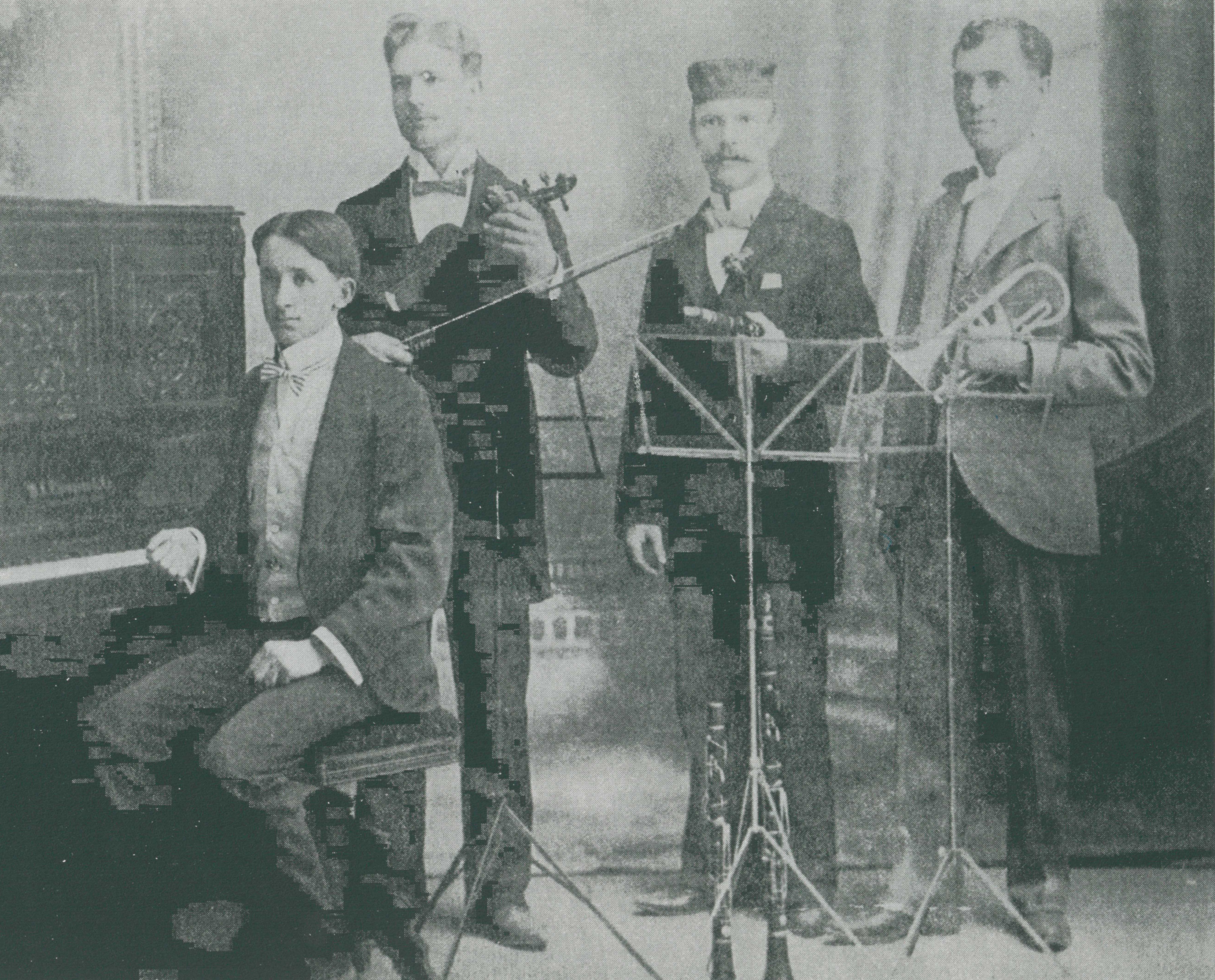
EARLY ORCHESTRA
The man with the cap is Robert Hunt. He is Clara Hunt Singleton’s brother. Clara was the mother of Florence Singleton Simpson.
OLD PHOTOS
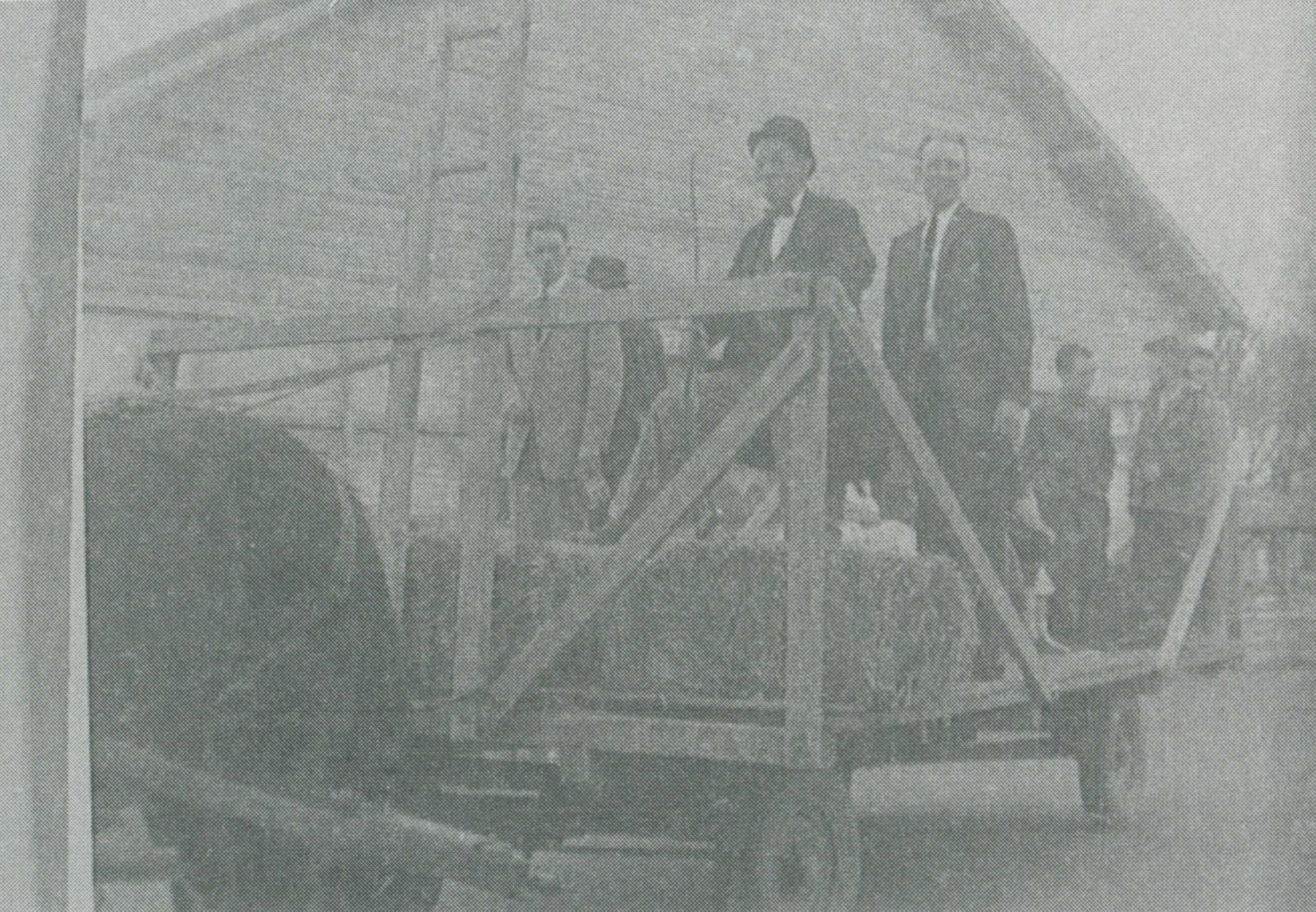
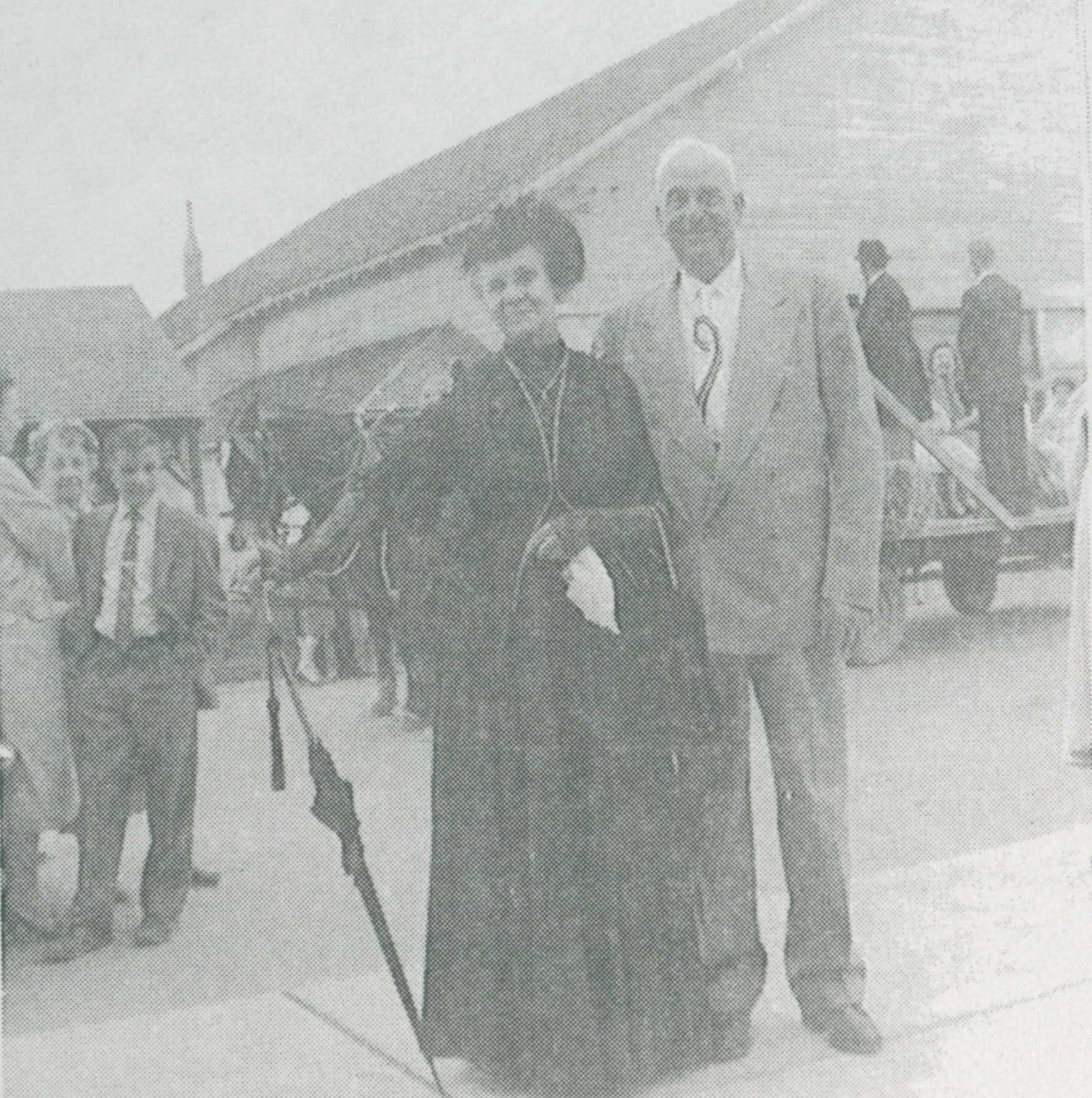
Above two: Plain City’s 110 year Anniversary.
Picture taken in front of the old dance hall. In 1959 on the Sunday nearest the 17th of March no cars were allowed at the church, just teams and horses and buggies. The people came to church in pioneer dress as a climax to a weeks long celebration.

Above: Rear view of the old Church house. The upstairs was a recreation hall with a stage.
PLAIN CITY CANNING COMPANY
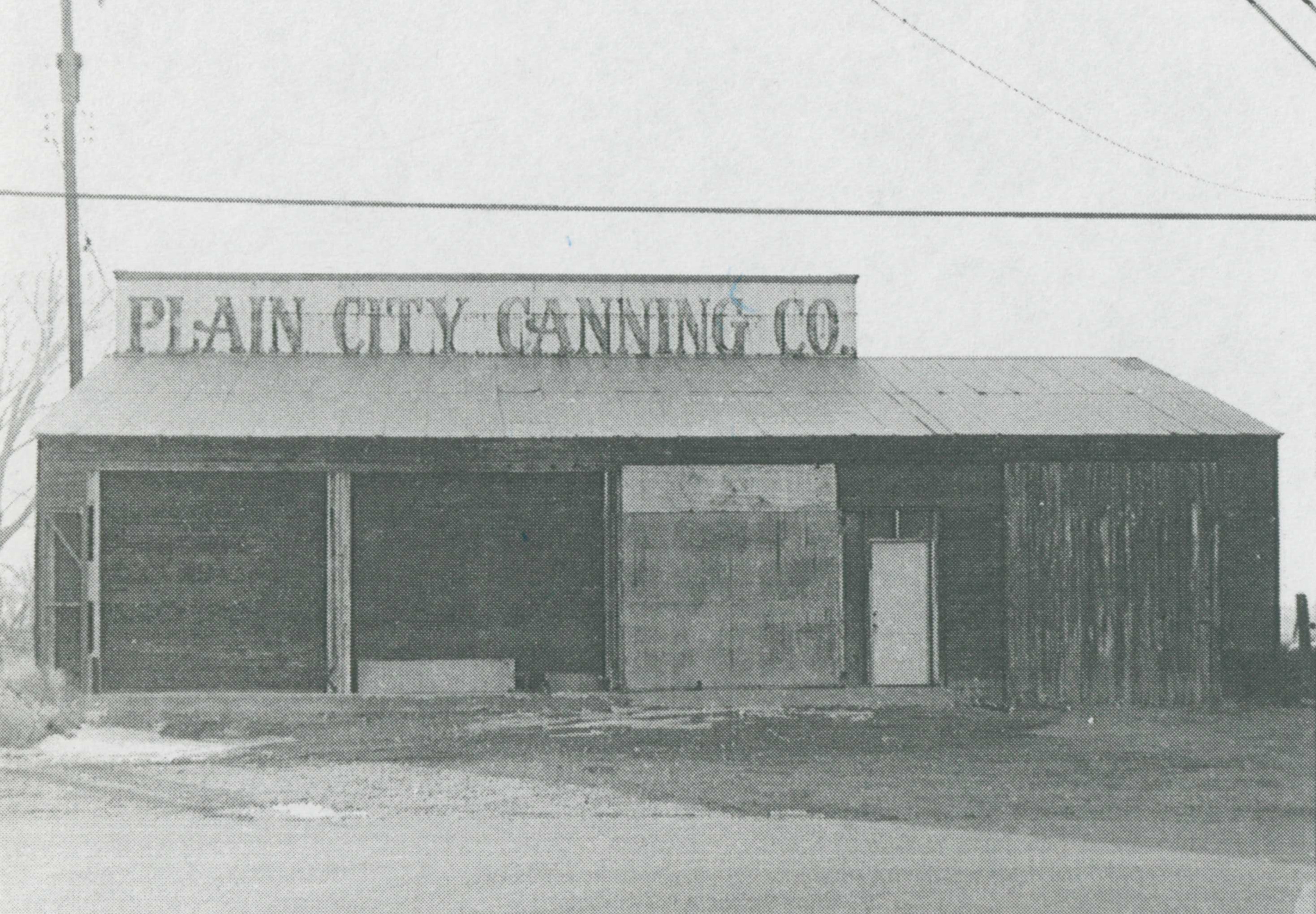
The Plain City Canning Company was built in 1925. They operated the factory for over 30 years. During World War II they used prisoner’s of war for laborers during the canning season. It is owned by George Cook.
EVERETT’S PLUMBING

This building was built by Everett Taylor for his plumbing business.
BUSINESSES OF TODAY
BUILDERS BARGAIN CENTER
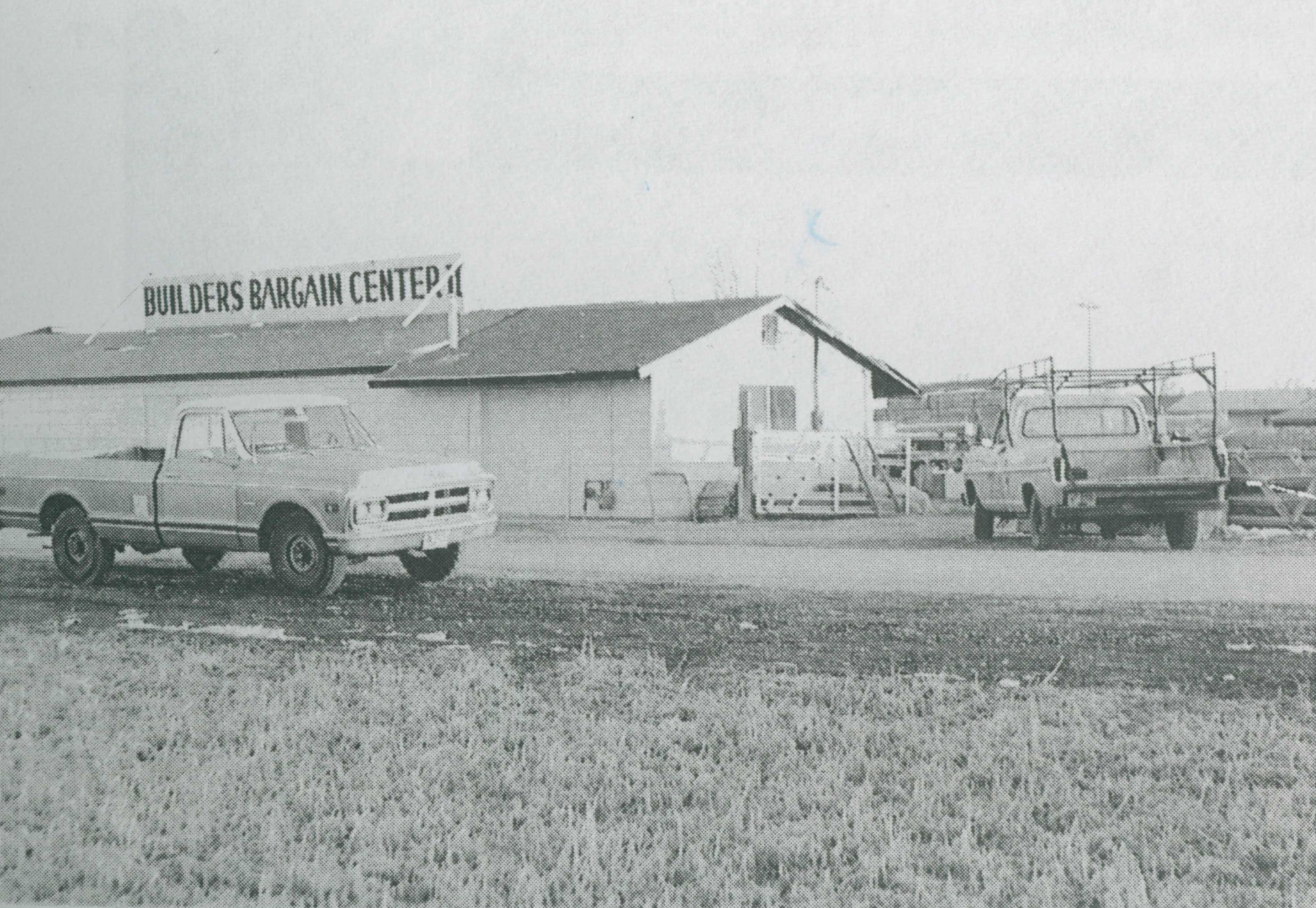
Builders Bargain Center, formerly England’s Builders. This business was started and run by Chester England for many years.

The Confectionery, but known to everyone in City has the Pool Hall, or the Grog Hall.
BUSINESSES OF TODAY
BARNES FURNITURE CO.
Barnes Furniture Co. was started by Hebert and Elida Barnes in the winter of 1948-1949. Elida had acquired upholstery skills through Utah State Extension Services with offices in Odgen. Herbert learned wood work, restyling and remodeling from Utah Defense Depot. An elderly German refinishing craftsman taught Hebert the refinishing craft. Later on both had upholstery training through Weber College.
The first shop was one-half of a small railroad box car situated east and south of the present shop at 1600 N. 4700 W.
This makeshift shop was soon out grown. The present shop erected in 1953.
FIRST SHOP
Now owned by George Cook and used as a bath house.

PRESENT SHOP OF BARNES FURNITURE

BUSINESSES OF TODAY
PAUL COSTLEY GARAGE

This garage opened in the fall of 1947, and is located north of the city of Plain City.

C. & B. REPAIR SHOP
The C. & B. Auto Repair Shop owned by Curt Knight and Bruce Hall. The old building at the left is Rall Taylor’s old blacksmith shop.
BUSINESSES OF TODAY
CLIFF FOLKMAN SERVICES
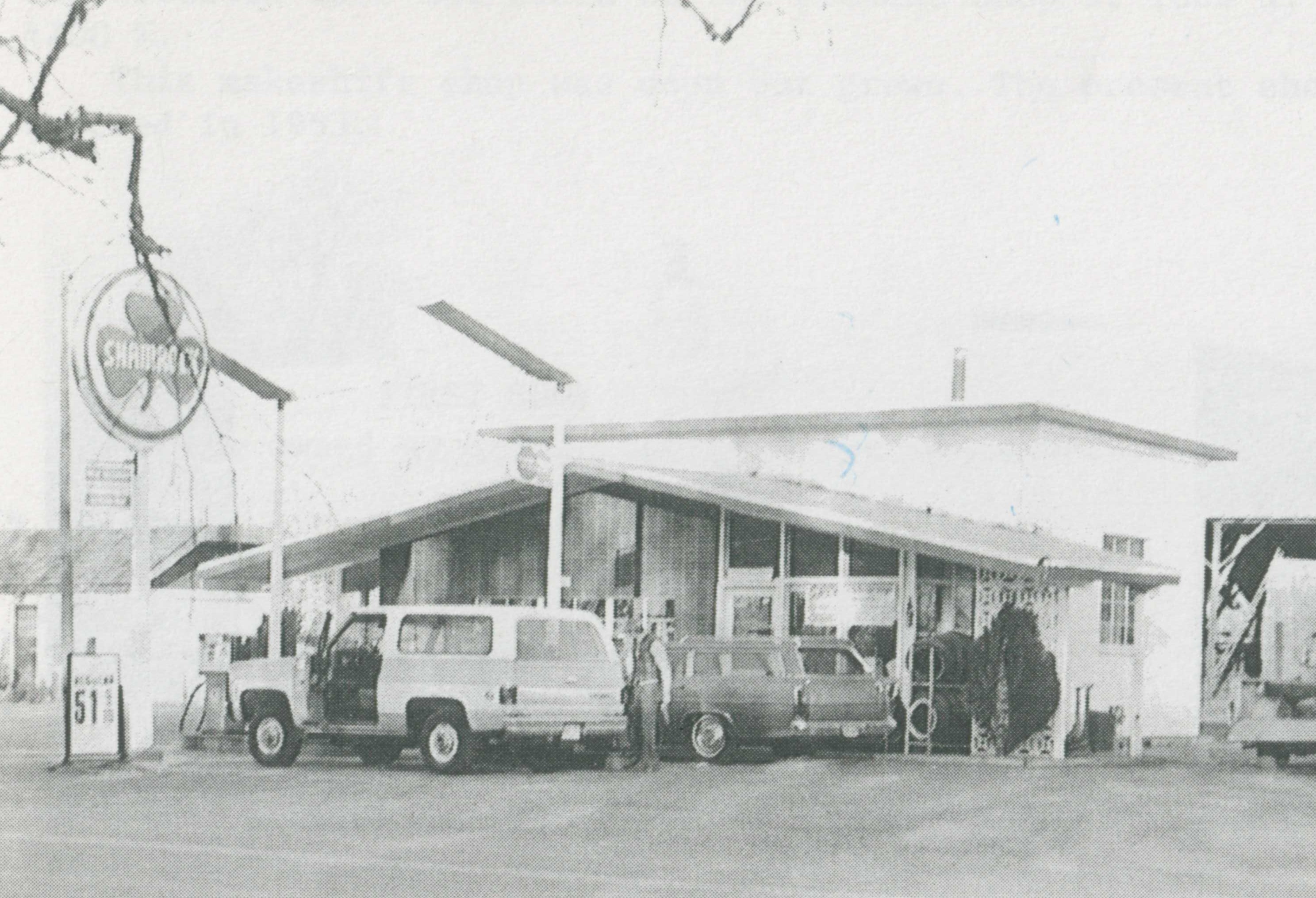
Cliff Folkman operated a gas station in this location for over 30 years. He moved into the new building in the fall of 1964, located in the center of town, on the east side of the Square.
WHITIE’S CAFE AND ICE CREAM PARLOR

Dennis White opened his cafe in the summer of 1976. It is located on the east side of the Square.
BUSINESSES OF TODAY
UTAH TRANSIT AUTHORITY BY RUTH FOWERS
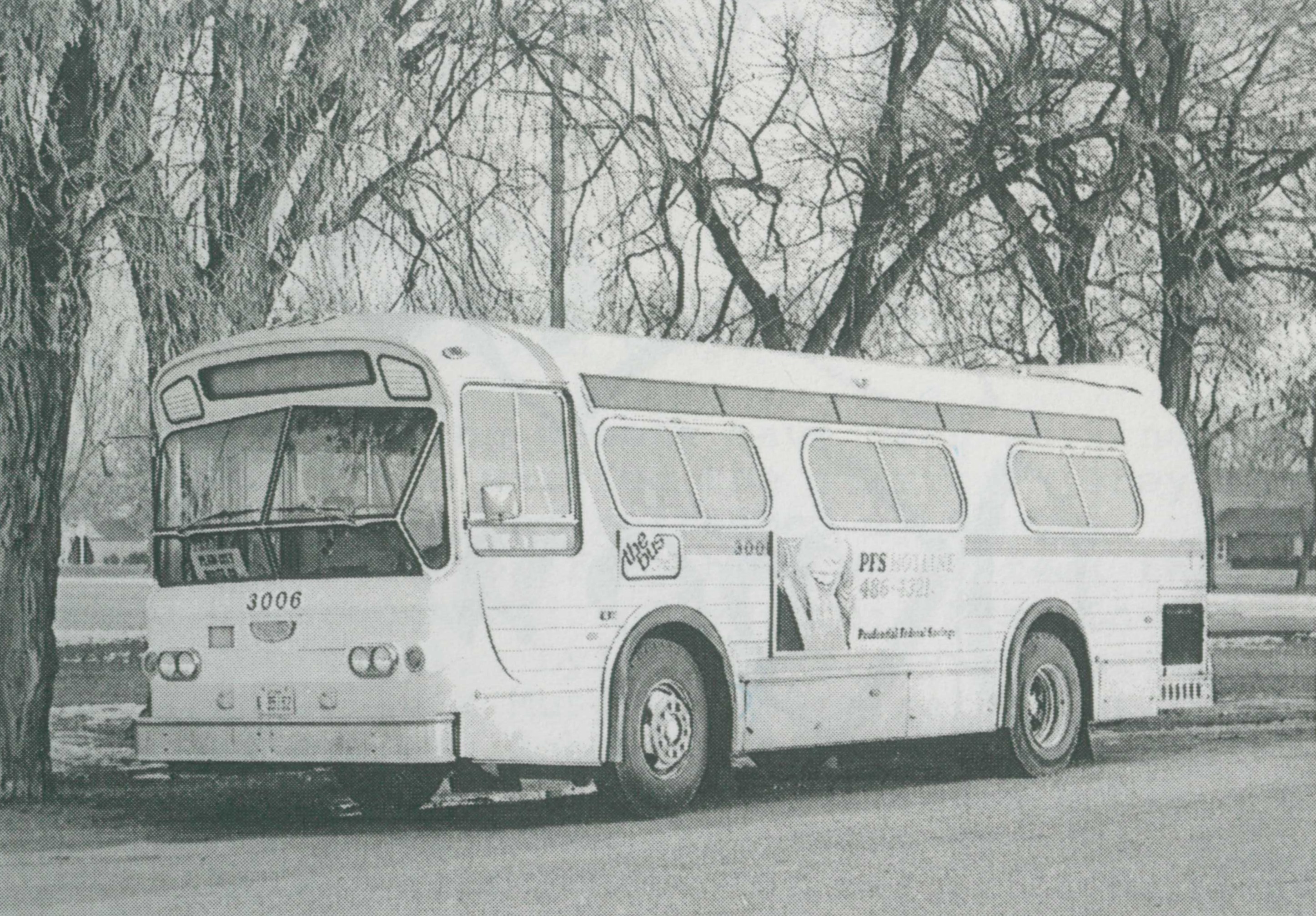
On Tuesday, July 6, 1976, the Utah Transit Authority started regular bus transportation services to Plain City area. The bus arrived in Plain city at 6:55 A.M. and returned to Ogden through Slaterville by way of Pioneer Road. The schedule continued every 40 minutes, the late bus leaving Plain city at 6:55 P.M., Monday through Saturday, with o service Sunday or holidays. It is called Route #20 Plain City.
This service had been in the planning for some three years prior. The U.T.A. is supported by quarter of a cent sales tax. The fare being 15 cents for adults and 10 cents for children and senior citizens, with senior citizens allowed the courtesy ot ride free between the hours of 10 – 3 and after 6 P.M.
Many citizens are enjoying this method of transportation to and from Ogden, some extend its service to Salt Lake City and return.
BANK OF UTAH
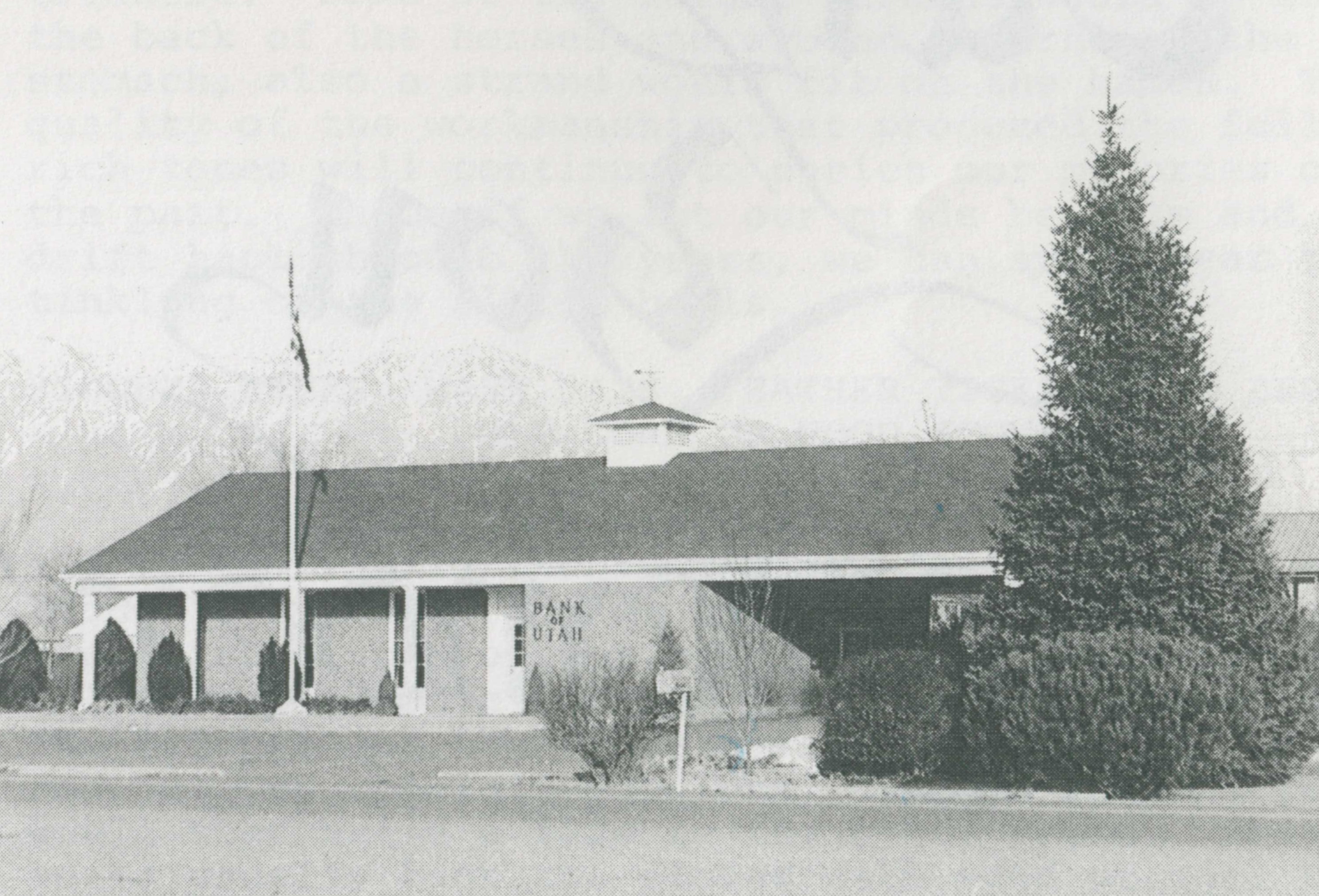
Nov. 27, 1972, marked the grand opening date for the Plain City Branch of the Bank of Utah.
The bank has had a steady increase in its patronage since the beginning. Services are available to all the citizens in the surrounding towns. Some clientele come from as far as south Brigham City.
The bank started with three employees and now as four.
I have two copies of the History of Plain City, Utah. The front indicates it is from March 17th 1859 to present. As far as I can tell, the book was written in 1977. At least that is the latest date I can find in the book.
One copy belonged to my Grandparents Milo and Gladys Ross. My Grandpa has written various notes inside the history which I intend to include in parenthesis whenever they appear. They add to the history and come from his own experience and hearing.
I will only do a number of pages at a time. I will also try to include scanned copies of the photos in the books. These are just scanned copies of these books, I have not tried to seek out originals or better copies.
History of Plain City March 17th 1859 to present, pages 141 through 149.
BONA VISTA IMPROVEMENT DISTRICT
SUBMITTED BY FLOYD PALMER
This most important new culinary water system has made life a little more pleasant in this community and surrounding areas. It was turned into the lines just a century after sturdy pioneer families first put together temporary shelters and tapped several sweet water springs which they found in the area.
It replaces old flowing wells, bringing precious waster from the depths of the earth. In early days many deep and surface wells dug, covered over, and fenced off to keep children from falling in. They were first fitted with “pitcher” pumps, a short-handled affair which were the “pumper” out in a short time. Even the farm animals had to depend on well water pumped to the surface by hand.
Later, the easier to work, long-handled pumps were installed. These were followed by power pumps connected to a small storage tank. This was the ultimate in a private water supply.
In 1955, a Weber County man, Linn C. Baker, was a member of the State legislature. He is the one who sponsored the bill to create special improvement districts. The reason he was the sponsor of this bill was due to his work in the Health Department for the State of Utah. As he studied samples of water sent to him from the outlying towns, he became aware of the amount of contamination there was in the drinking water in certain areas, Plain City was among the highest on the list. This was traceable to shallow surface wells being used, also septic tanks with poor drainage.
Soon after the Weber Basin Conservancy District was organized, Plain City wanted to purchase one-thousand-acre feet of water. Their request was held in abeyance until a line could be built from Ogden Canyon. This, however, was never done.
Elmer Carver was on the executive committee of Weber Basin Project. Through the encouragement of Commissioner Carver, Mr. Ezra Fjeldsted, manager of Weber basin Project, and Linn Baker, all met with the Plain City Town Board to get something started. Floyd A. Palmer, a member of the Town Board, was asked to represent Plain City on a committee of surrounding towns in Weber and Davis counties. Mr. Ezra Fjeldsted acted as chairman of this group and several meetings were held in both counties which Mr. Palmer attended.
Following this, a public meeting was held in Plain city. Farr West, and Harrisville were asked to join in. This was for the purpose of starting a culinary water system. The results of this meeting, from all groups attending, were to go ahead, also to contact other nearby towns and get their feelings about joining in.
A series of meetings were held in Farr West, Harrisville, Slaterville, Marriott, Wilson Lane, and Plain City. Other towns were invited to attend. Ezra Fjeldsted represented Weber Basin, Floyd A. Palmer represented Plain City, Dick Groberg represented Farr West, Kenneth Brown represented Harrisville, Clifford Blair represented Marriott and Slaterville, and Arthur W. Sorensen represented Wilson Lane. The meetings were all met with a great deal of enthusiasm and interest.
Plain City Town Board consisted of Lee Olsen, President, Floyd A. Palmer, Elvin H. Maw, Merrill Jenkins, Blair Simpson, as members. A culinary water system was a prime item of the agenda in 1956. The town board along with several local residents were well organized to promote the need for a water supply to replace the surface wells and pumps.
On July 19, 1956, Elmer Carver, Chairman of the Board of County Commissioners of Weber County, State of Utah, signed a certified documents that there be and is hereby created within Weber County, Utah, a Water Improvement District to be known and designated as the BONA VISTA WATER IMPROVEMENT DISTRICT, the same to embrace and include all real property lying within the following boundaries, to-wit: (SETS FORTH DETAILED LEGAL DESCRIPTION OF DISTRICT BOUNDARIES WHICH BOUNDARIES EMBRACE LANDS HEREIN ABSTRACTED – Abstracter)
That the following-named persons are appointed as the Board of Trustees of said Bon Vista Water Improvement District:
Floyd A. Palmer, Plain City
Richard Groberg, Farr West
Kenneth Brown, Harrisville
Clifford Blair, Marriott-Slaterville
Arthur Sorensen, Wilson Lane
This resolution shall take effect immediately and shall be recorded in the office of the Weber County Clerk. Recorded August 22, 1956.
Following this appointment from the Weber County Commission, the board held a short meeting. It was necessary to elect a chairman, after a discussion of each of the board members. Kenneth Brown was appointed as chairman.
The first order of business was to secure professional and legal help. Mr. Jack Richards was appointed attorney. Jack Reeves, of the firm of Nelson, Reeves and Maxwell, was appointed engineer. They were appointed to do the field work and present the plans and drawings back to the board.
When the plans were completed, the board spent much time deciding the most feasible and economical areas to run the lines in. Also, to give each town a fair share of the project. Following this, it was necessary to project estimated costs. The board spent many months getting costs and deciding on types and kinds of pipes and materials to use on the project. The overall plans had to look attractive and feasible in order to get a bonding company to handle the bonds.
The first step made to secure the bond issue was to get signed pledge cards with an agreement to pay $250.00 for a waster connection. This was a requirement. Committees were organized with Floyd A. Palmer, Richard Groberg, Kenneth Brown, Clifford Blair, and Arthur Sorensen acting as chairman in each of their respective towns. The result was very successful, all those serving on these committee are deserving of much credit for their untiring effort and accomplishments.
On August 20, 1957, a bond election was held to see if the residents would approve a $900,000.00 bond issue. The vote was 490 yes and 82 no. Edward L. Burton Company was retained as Fiscal Agent, and $698,000.00 was sold in General Obligation Bonds, and the system was under way.
On April 14, 1958, a contract was awarded to Smith-Scott Pipe Company to furnish cement mortar-lined steel pipe for the main lines.
Also, on April 14, 1958, a contract was awarded to Knudson Construction Company to install water mains in the Harrisville-Randall area which was Phase I of the project.
Also, on April 14, 1958, a contract was awarded to Chicago Bridge & Iron Company to furnish and erect a 250,000.00 gallon elevated storage tank in Plain City.
On April 28, 1958, Theron Palmer was hired as General Superintendent to oversee construction and to get it ready to serve and operated as a system.
On May 27, 1958, an office was rented from the E. B. Stone Estate on the corner of 9th and Washington. The district still maintains its offices here. The building was purchased by the district in 1969 and has been remodeled.
On May 27, 1958, negotiations were begun with the State Department of Welfare of obtain ownership of a spring located in Garner’s Canyon in North Ogden. The spring was used at the time by the welfare department at the Industrial School property for culinary use and irrigation use.
On May 27, 1958, Weber Basin let a contract to Statewide Construction Company to build the 16-inch transmission line from 4000 South on U-84, down into the district where Bona Vista could connect to it.
Also, on May 27, 1958, a piece of property located at 4100 West on 2200 North in Plain city, was purchased from Vern Palmer to construct the elevated tank.

Raymond Concrete Title Company moved in and drove concrete pilings 80 feet into the ground to support the tank.
Gerald Larkin was then awarded a contract to construct a foundation so Chicago Bridge and iron could begin erection.
On July 3, 1958, a contract was awarded to Bert Robinson Construction Company to build lines in the Farr West and Plain City.
Also, on July 3, 1958, Standard Plumbing Supply Company was awarded a contract to furnish materials for service lines.
On July 17, 1958, the Weber County Commission agreed to purchase 60 fire hydrants to go on the system to be located by the Weber County Fire Chief.
On July 17, 1958, Smedley construction Company was awarded a bid to construct lines in the Slaterville, Marriott, and Wilson area for $44,975.00. The same day Mac Construction Company of Salt Lake City was awarded the bid to construct our North Ogden Reservoir for $16,911.00. This is a concrete underground reservoir.
On August 11, 1958, an agreement was reached with the Welfare Department to obtain full use of the spring in North Ogden. Weber-Box Elder water was purchased to replace the Welfare Department’s share of the spring.
On February 11, 1959, work began on the plans and site for a reservoir in the Roy area.
On March 23, 1959, it was decided to run a line on the North Plain City Road.
On August 27, 1959, it was decided to either buy or condemn the Hansen property for a reservoir.
A bid to build a tank in Roy was awarded to Wehyer Construction Company for #31,403.80 on September 23, 1959.
Negotiations began to buy an eight-foot well from the Farr West Stake for $31,403.80 on September 23, 1959.
Linn C. Baker resigned as Secretary on January 1, 1961. He had been with the district since it began.
On December 6, 1961, it was decided to construct extensions to existing mains in the amount of $90,000.00 General Obligation Bonds were sold to finance these extensions. Waterfall Construction Company did the job.
All though the summer of 1961, the Farr West well was tested to see if it would hold up.
On February 28, 1962, President Wimmer signed the Warranty Deed on the Farr West well and property. On January 16, 1963, it was decided to put heat lights on our Roy tank. This was the first such installation in this area and it drew a lot of attention.
The Utah State Health Department studied the plans for use of the plans for use of the existing well in Farr West and decided against allowing it to be used because of its depth. A change application was then filled with the State Engineer to drill the well to a deeper depth.
On May 10, 1963, a contract with Wesley Stoddard was made to drill a well in Farr West for $21,632.00 plus $4,700.00 for the test hole to see how deep the well would have to go.
A meeting was held at the Farr West Pump House building on January 20, 1964. This building was contracted by the Bona Vista Water employees. The piping was also done by employees of Bona Vista.
R. W. Coleman Company was awarded a contract for $18,877.50 to change some lines under the interstate highway on November 22, 1965.
Negotiations began on March 28, 1966, with Weber Basin on the North Ogden Well, which was later drilled and is used in the system now.
Water meters were deemed necessary and were bought by bid from Waterworks Equipment Company and E. C. Olsen Company on October 28, 1968.
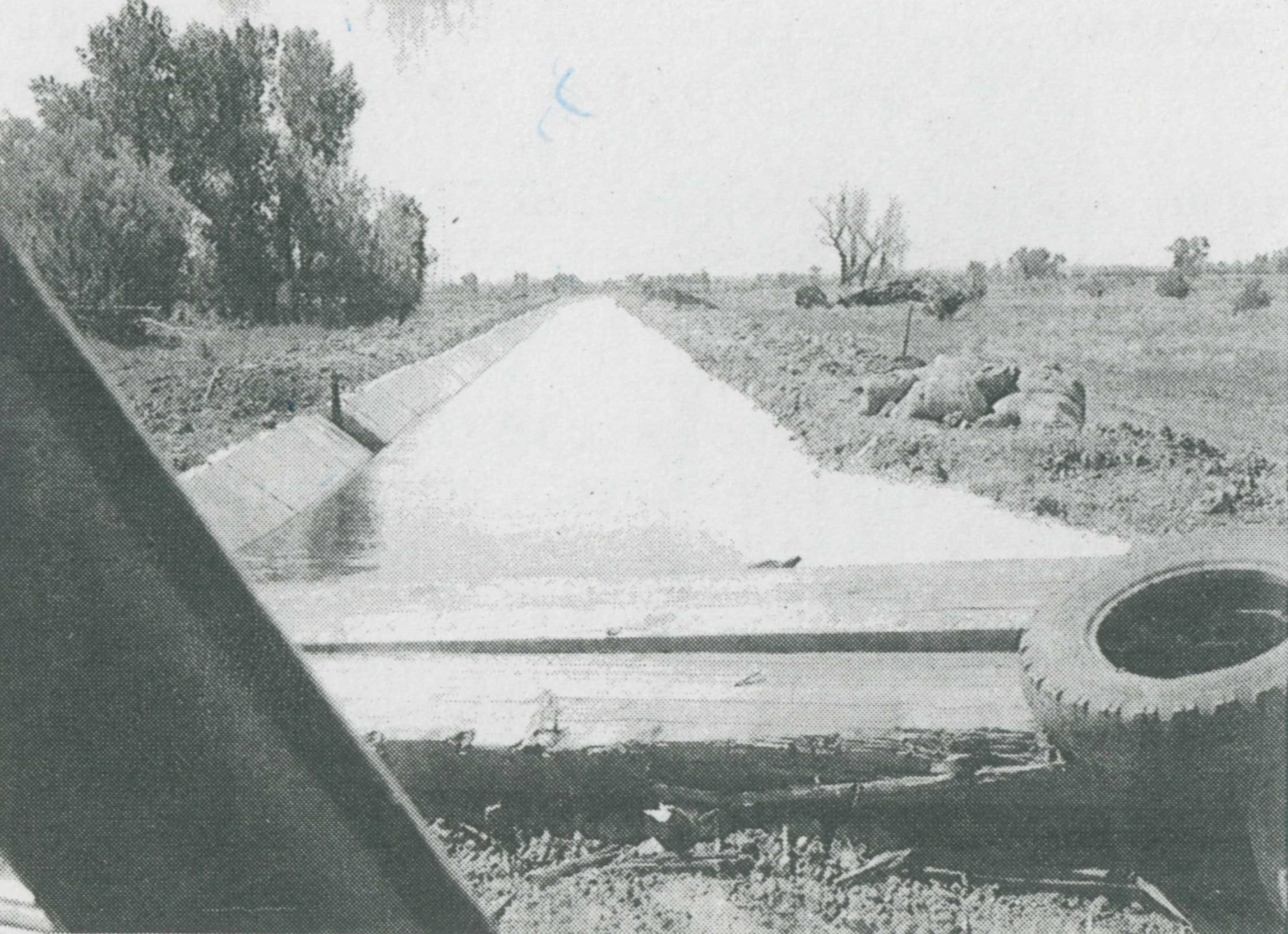
BEGINNING OF PLAIN CITY IRRIGATION WATER
1859 Before the summer was over some water had been brought in their new ditch from Four Mile Creek to Plain City. In 1860, the Canal was completed to Mill Creek, the following year to Broom’s Creek and in 1862 to the Ogden River. The Right of Way in Weber River was purchased in 1873 at a cost of $2000.
In 1899 Samuel Wayment drilled an Artesian Well 249 feet deep producing additional water for the settlers. He also was in charge of the iron work and the building of the Chief Canning Factory in Plain City.
PLAIN CITY IRRIGATION-CEMENTING OF THE MAIN CANAL
SUBMITTED BY Wayne Skeen
For many years the Plain City Irrigation Company received it’s water from the Weber River. The diversion point into the canal was just north of the old American Packing Plant that was later called the Swift Meat Packaging Plant. The Irrigation Company had a large Plank Head Gate in the Weber River that forced the water into the Plain City Irrigation Company Canal because of high waters in the spring this gate would wash out and it was necessary to make a gravel and dirt dam each year using horses, scrapers, and even large bulldozers. In recent years this became a major problem.
The government began planning the Willard Project in 1960. This project would interfere to a certain extent with the existing canal used by the Irrigation Company because big Willard Bay Canal would be built in part of our existing canal and would also cross it in part of our existing canal and would also cross it in other areas. The leaders of this project wanted to provide a turn out from the big canal into the Plain City Irrigation Canal. The corporation of our company was necessary to give them the right to use the area affected by the construction of the Willard Bay Canal. The logical point of diversion would be west of the Farr West Church House. This meant that some new construction would be necessary to get the water into the old canal. It was in need of some repairs and it was at this time that the idea of a new cement lined canal was entertained.
Directors who served during this period of construction were as followed:
President Abram Maw 1959-60
President Alvin J. Robson 1961-65
Vice President Walt Christensen 1959-64
Vice President Carl Taylor 1965
Bert Hunt
Charles Heslop
Keith Blanch
Mike Panunzio
Secretary Wayne Skeen 1959-65
High lights of the minutes of the meetings during the construction period are as follow:
August 11, 1959
Ogden City had extra water for sale this year which was allocated out to various canal companies. A motion was made by Alvin Robson that this water be purchased to see them through the current season. It would be paid by those stock holders who subscribed for the extra water.
April 4, 1960
The meeting was called to discuss the new canal. Charles Heslop was assigned to work on interested free money from the Utah Water & Power board for the construction. Alvin Robson was assigned to work with the Soil Conservation on the completion of the surveying of the canal, and additional monies.
July 12, 1960
A meeting was held to discuss a possible shortage of water for the remainder of the year. Time was changed from 20 shares per hour to 25 shares per hour.
January 9, 1961
A priority was established with the Utah Water an Power board for interest free money and application made for $100,000.00
A survey showed that there was a 10% loss of water between the River turn out and the Point of use.
March 8, 1961
The Irrigation Company received a $10,000.00 cash settlement for their rights in the old canal from the O.U.R.D. Railroad Company that passes through their yards.
Alvin Robson, Carl Taylor, and Walt Christensen was to secure information regarding tiling of the canal from Victor Lund’s corner up to the Jesse Singleton property where the canal leaves the road and runs back into the fields.
April 20, 1961
A report was given by Alvin Robson regarding the tiling of the lower part of the canal. There were mixed emotions about tiling this section of the canal because of the fall and the amount of water to be delivered. “Alvin Robson commented as the discussion went on concerning the piping verses the cement lining. The stockholders are residents of this town and should have some concern towards the improvements and beautification of the community and that an open cement lined canals to greet the people entering the town is not very inviting and once it was constructed it would never be changed in our life time.”
Keith Blanch speaking as a town board member expressed his opinion regarding the beautification and eliminating hazards in the community and felt that it was worth while and the tax payers should help with the construction of the Irrigation Company in piping this section of the canal.
Glen Charlton and Lee Olsen from the town board were present. An opinion was asked from the town board members. Mr. Charlton felt it was a worth while project as long as it was right. Mr. Olsen commented that it was a good thing as long as it was sufficient to meet the needs of the water users.
The town board members agreed to cover the pipe that was laid with dirt. It was agreed that 2880 feet of 36 inch tile would be laid this spring from the old beet dump corner to Victor Lund’s corner.
April 27, 1961
The Town board members present: Dee Cook, Glen Charlton, Kent Jenkins, and Lee Olsen. Mr. Covey from Utah State University was also present.
Further discussion concerning cost of construction of the concrete pipe continued. Keith Blanch made a motion that the town board and property owners should join with the Irrigation Company in the cost of the 36 inch tile to be laid. Motion seconded by Carl Taylor
Mr. Robson suggested the property owners who would benefit from the lining of the canal pay $1.25 per foot frontage towards the pipe. The Town Board said they could only participate within the city limits and they would contribute $4,000.00 over a 10 year period. The bids were to be sent to Secretary Wayne Skeen by March 30, 1961.
April 30, 1961
The purpose of this meeting was to open bids. Utah Concrete Pipe Company received bids for 36 inch concrete pipe at $8.75 per foot. Waterfall Construction Company was awarded the laying of the pipe at $1.55 per foot.
Abram Maw made the motion that the project not be stopped at the beet dump corner but continue up to the up to the weir east of the water tower (where the pipe portion of the canal now starts) if the property owners will contribute $1.25 per foot. Motion seconded by Keith Blanch.
Charles Heslop ad Elvin Maw were asked to approach these property owners and get their approval to pay the $1.25 and also contact all stock holders and get their signature for government participation thru the Soil Conservation.
Charles and Elvin were successful in getting all the names except Jesse Singleton who would not accept any government monies and would not pay the $1.25 per foot to tile in front of his property.
Alvin Robson contracted Howard Singleton, Jesse’s boy and he agreed to pay the $1.25 but only up to the old house that sat in the field and that is where the concrete pipe starts today. Alvin Robson tried to convince the Director’s that they should at the company’s cost tile the remainder of the ditch along the road because any future expansion of the community would by hampered by open ditch reducing the width of the road. This motion turned down.
Walter Christensen made the motion that Alvin Robson meet with the Soil Conservation to discuss details of cost and tiling and lining the canal.
April 31, 1961
Alvin East, Maurice Skeen, and Owen Wayment from the Warren Irrigation Company met with the directors to discuss details and sign a contract for the exchange of Ogden and Weber River which would benefit both companies. The contract was signed.
Mr. Daniel Lawrence from the Utah Water & Power Board attended the meeting. Keith Blanch made the motion that Alvin Robson and Wayne Skeen be given the power to enter into a contract with the Utah Water & Power Board for the total cost of $1,300.000.00 and formulate all details.
May 3, 1961
Junior Taylor was appointed as Water Master of the year.
May 15, 1961
The purpose of this meeting was to discuss the Weber Basin Project with E.J. Feldstead and commissioner Wilmer Carver. They needed additional votes to finish construction of the Willard Bay. A proposed addition would cost seventeen million dollars.
June 5, 1961
The purpose of the meeting was to see what should be done because it appeared that there would be a water shortage before the end of the year. It was proposed that we only run off water until the stream reached a point that we could not water properly and then start to use our shortage water and put turns on 1/3 basis.
September 27, 1961
The new project was discussed and it was recommended that the company hire an engineer and begin construction on the upper end of the new canal.
There were many problems that came out of the construction of this canal. It would be necessary to get some dirt to construct the pad for the canal. The company purchased some ground at the upper end of the canal from Max Stander. Then got the dirt that was necessary to build the upper end of the canal and then leveled the ground and gave it back to Mr. Stander. They also purchased additional dirt from Robert Penman. This dirt was trucked from his property just south of the Weber River and west of the main road. The dirt was hauled by farmers using their beet trucks, etc.. The new pad was made in the old canal banks where possible, but there was some trading of land etc. to straighten out the canal. There was also a problem in getting someone to dig out the canal to the size and shape required to allow 50 seconds feet of water at one time. The company asked for bids, but they only received one because the equipment needed to shape the canal was not available. In order to get the project moving Alvin Robson caught a bus on Ogden and went to the Fuller Forms Company in Arizona to see if they had some type of equipment that could be used. He purchased a right to one of their slip forms that could be used in forming and pouring the concrete. He returned to Ogden and worked with the Ogden Iron Works on 23rd Street and Grant Avenue where the construction of the slip forms took place. The next problem was to begin the construction of the project. Dean Hadley of Taylor was hired to do most of the big equipment work. Local farmers also helped with their equipment. The Soil Conservation furnished the engineering on the project. Herbert Issackson of Pleasant View was the surveyor. One of the major problems that existed and is still a yearly discussion is the amount of water delivered from the existing head gates. The government required that curtained head gates must be varied in size for them to participate financially.

There was much contention and personal feelings during the construction of how it should be done. Some people left the jobs and never came back, but the project was finally finished. The construction created problems for some but most of the inconveniences were ratified by the Irrigation Company. New bridges were built, land was leveled, damages to property was crops were paid for during the construction. The Company paid for fencing materials with the property owners installing the fences. Cattle that used to walk across the stream would fall into the new lined canal and couldn’t get out. The Company paid for some of the cattle that were lost before the agreement to install fencing was made.
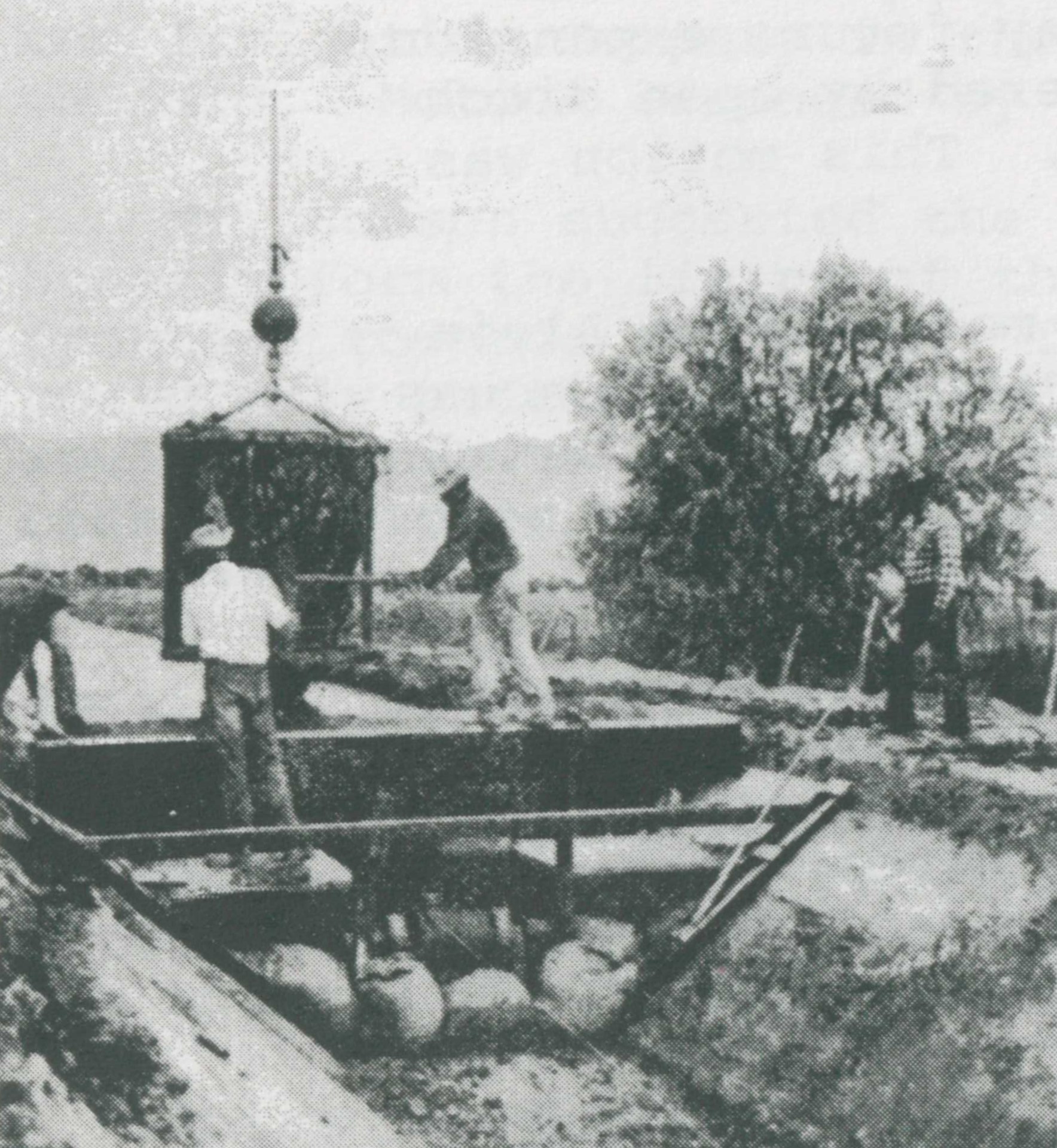
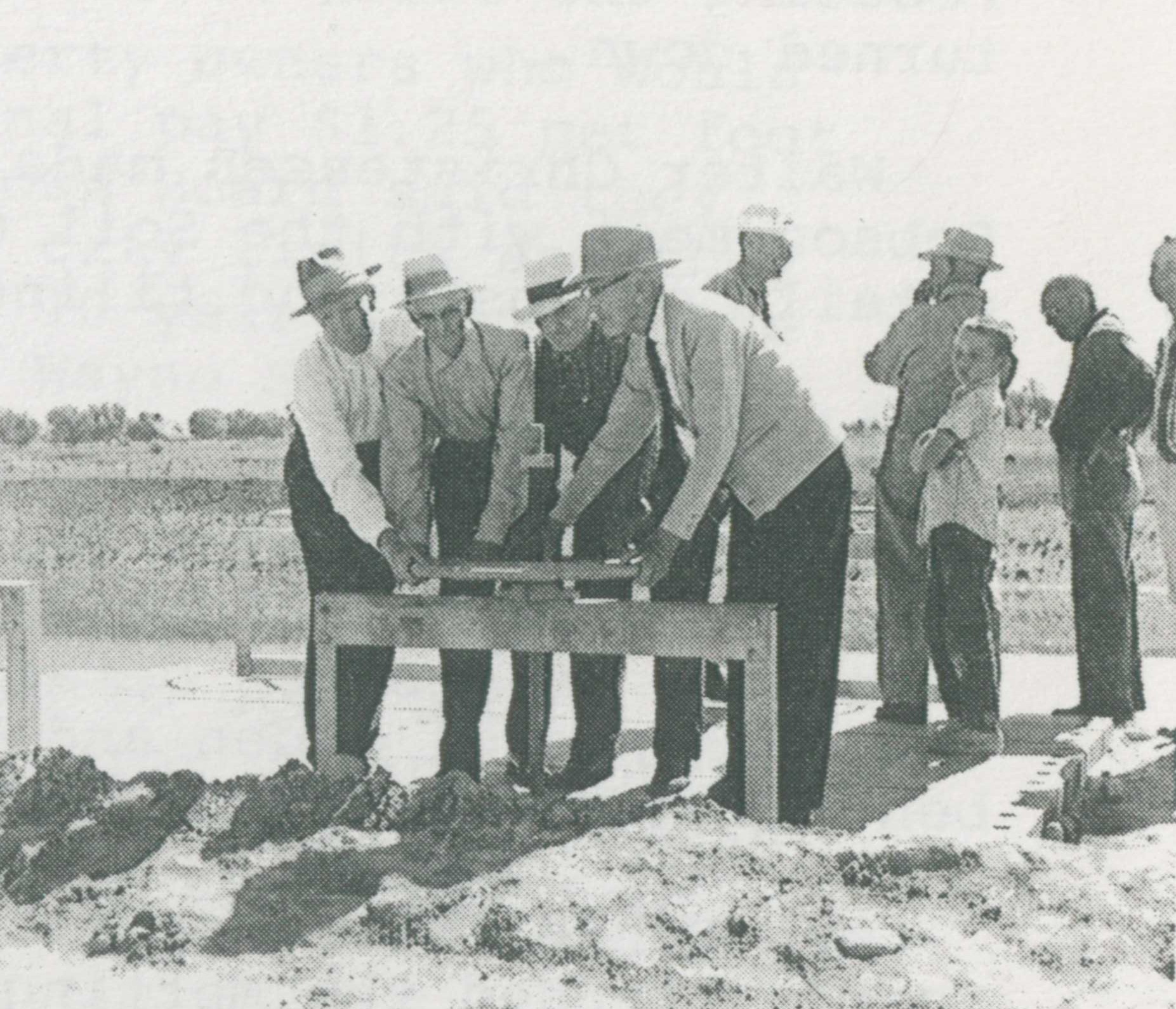
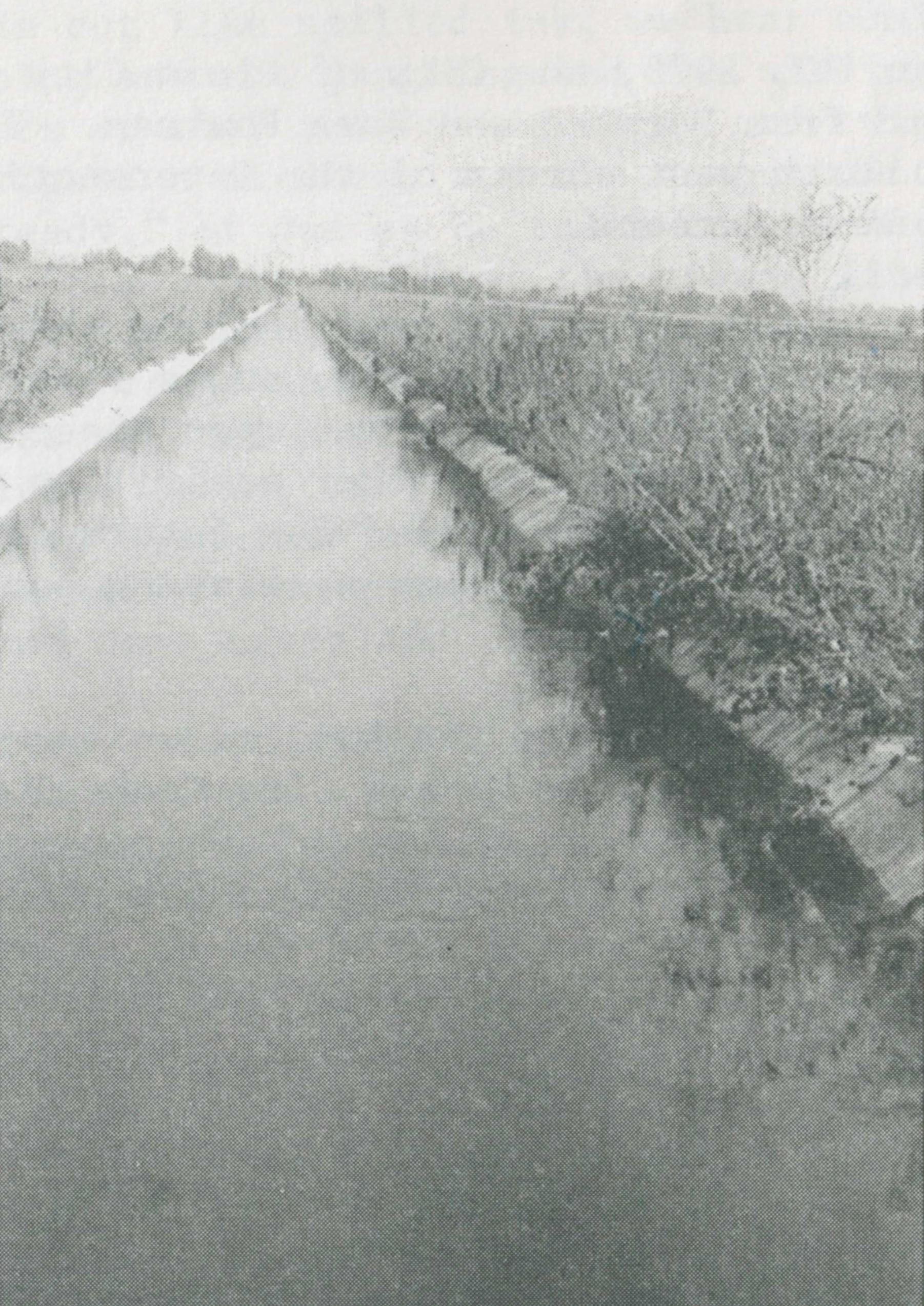
The total cost of the project was $199,754.08. The amount of $122,918.61 was borrowed from Utah Water & Power Board. This money was interest free if a yearly payment was made by November 30th each year. The last payment of $8.257.06 will be paid on November 30, 1977. Other cost not being paid by the stockholders come from the Soil Conservation and the sale of pieces of the old canal, and the town board. Vice President Bill Hatch of the First Security bank was also an asset in the financing of the canal.
We borrowed monies from the First Security Bank as construction went on to pay for cost on a daily basis. On December 31, 1974, the company owed the First Security bank $60,000.00 Alvin Robson and Wayne Skeen met with Mr. Hatch in May regarding this bill. Mr. Hatch said that the bank needed some type of security for this loan. There was nothing to give him because out rights to the canal had been given to the Utah Water and Power Board. Alvin Robson and Wayne Skeen then approached Mr. Lawrence of the Utah Water and Power Board asking them for more money for the project explaining the situation with the bank. Alvin Robson explained that they might just as well take over the ownership of the canal because the bill had to be paid. There was nothing to offer as security because the Utah Water and Power board had everything that the company owned. Later, Mr. Lawrence of the Utah Water and Power Board gave the Irrigation Company an additional $30,000 which helped to delete that note at the First Security Bank.
*********
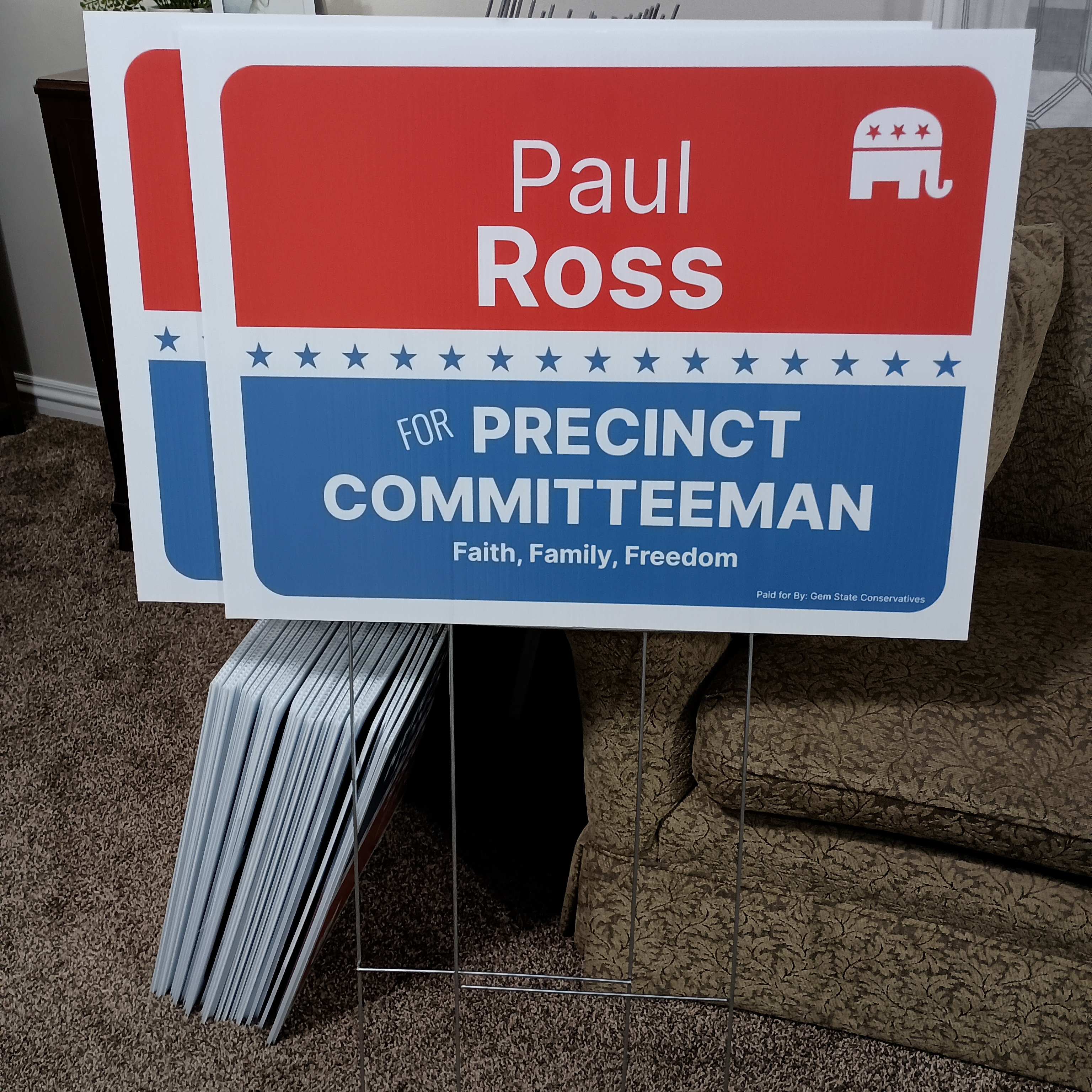
We moved into our new home in September 2022. The move from Fairmont Street to 200 South Road was only a little over a mile. It changed quite a few things. We changed elementary schools, we changed routes to work, we changed Wards, we changed Stakes, and we changed Precincts. We were in the Burley 4 Precinct and now are located, oddly, in the Starrh’s Ferry Precinct.
Starrh’s Ferry is a large Precinct, named after the historical ferry across the river. Here is the language from the historical marker:
“In 1880, George Starrh, a Snake River placer miner, started a ferry across Snake River one mile north of here.
“From 1880-2, freighters hauling supplies for a mining rush to Wood River used Starrh’s ferry (powered by river current when stiff winds were not blowing too hard), and local traffic lasted until Milner reservoir flooded out summer operations after 1904. But a small town with a post office (1909-12) remained there for more than a decade. During that time, nearby bridges replaced Starrh’s ferry.
Late last year the current Precinct Committeeman lost her husband and had some of her own health issues. In conversation she had indicated she did not think she would run again and I said I would be happy to run for the position so she did not have to worry. She was very gracious. Just weeks before the registration period she sounded like she might be planning to run again and suggested she let me know if she was going to do it. A few days before, she let me know she would not be running again. I had heard maybe another lady, Melissa Brown, would be running but nothing was confirmed and the current Committeeman didn’t say anything about another candidate. I threw my hat in the race on the first day for Candidate filing. That same day, Ms. Brown also filed for the same seat. The race was now on.
Before running, I also learned that Gem State Conservatives was building a coalition across the state to help committeeman run in contested races that were considered more mainstream Republican. The basic idea was that various individuals would assist candidates to help ‘right the Republican ship’ from the ‘conservative’ contingent of the party. A wide variety of aids would be made available from access to online registries to the covering of the costs for signs and postcards. There would be total autonomy on which resources we wanted to use, if any. Various meetings would be set up in order to help train on how to navigate the campaign website and even putting together a slogan. Also was the option of networking across the state to learn from other committeeman candidates. These all turned out to be very valuable resources. The meetings also helped provide encouragement in the topsy turvy emotions of a race.
I had assisted with various campaigns throughout the years, from U.S. Senator down to a city Mayor. The basic idea is always the same, connect with the voter. As I downloaded all the registered voters of my Precinct, I realized I already knew or had interacted with about 70% of them in some fashion over the past decade. When I started, the Starrh’s Ferry Precinct had 729 registered voters in roughly 396 households. Some of those are duplicates as married couples living with their parents, or college children, and more, are really not a separate household. There were 358 separate mailing addresses. The work started.
You can see the signs above. They are free to all candidates, but are generic and all basically the same. I was not in love with my short name in such a small fashion. You cannot cuss free signs though. I did my first mailer very early in the season as part of the Presidential Caucus. The Idaho Republican Party was kind enough to provide the Caucus jpeg. It brought about a dozen texts asking for more information. I dare say the flyer was effective as the Starrh’s Ferry Precinct was the best attended of the Precincts that caucused at Burley High School’s King Fine Arts Center.

The next stage was texting or calling every single person on the registered voter list. That turned out to be somewhat of a nightmare. My phone did not like texting over 700 people in two days in April. I did not want to use an auto-dialer. If someone wanted to reach out to me, I hoped they would do so. But then I could also avoid potential federal law on auto-dialers and all the disclosures that sometimes can get problematic. Just me, raw Paul Ross.
That drummed up another dozen conversations. Very helpful. Started quite a few conversations. Interesting how many people responded “STOP” but then were surprised and chatty when they realized a real person was sending out the text messages. A hurdle for me is that I still have my (801) prefix on my phone. Various said they don’t live in Utah. But it also helped cull the herd as many indicated they had moved, no longer lived in Idaho, and various other things. After a series of chats or text chains, a number of people were asking for more.
Now it was time to put up signs. The signs arrived near the end of April. I had my strategic war map of the precinct and where would be the best sites for signs. Gem State Conservatives provided 25 signs. Of course the signs on corners never get much attention. Nothing more than weeds. But well selected sites, with property owners taking ownership of the signs, is best. That conjures up conversations between neighbors, discussions about issues, and questions for candidates to find out their stances. That was less than a sign per square mile in Starrh’s Ferry! I had to be very strategic on which stretches and which houses. Most were very complimentary and willing to help. It was just taking the time to go and visit each site and get the signs up. Hopefully in a way that an Idaho wind wouldn’t remove it. We did have some crazy winds for many days. I did have to replace the stands on more than a dozen signs, more than half of the total signs.
Then the voting started. That is when people started doing some homework and reaching out to friends and family. The first week of voting I lost at least an hour a day from work in responding to texts and addressing questions. It is always nice when the majority of the precinct is already familiar with, knowledgeable of, or circumstantially aware of both the candidates. Discussion and contrasting seems to be easily done and people do it on their own after asking their own questions. I really did not have to present myself, usually just answering questions. I was also surprised by how many of the questions really did not have to deal with my precinct race, but rather the contested Sheriff race (between Jarrod Thompson and Travis Worthington) and the Legislative District 27B race (between Clay Handy and Pat Fields). By giving insight and answers to both of those races, and even the U.S. Representative race (between Mike Simpson, Scott Cleveland, and Sean Higgins), the answers I provided gave them the information they also felt they needed for the Precinct race.
We still have a week of early voting to go and then the election on May 21st. Here are some flyers I have seen for people. Steve Taggart, a friend of mine in Idaho Falls, is running for a Precinct in Bonneville County.


Here is the one for my opponent.


Since I already felt I have connected and did not need to do as much cold-call introductions, I kept mine to the more generic postcard.


There is the profile that is listed for Gem State Conservatives. Here is my biography:
Hi! I’m running for Republican Precinct Committeeman to represent Starrh’s Ferry on the County Rep. Committee. I have helped build and sustain our County party since 2014, serving as Chairman since 2022. I am involved in the community as an attorney, helping bring a public charter school, and more. I am asking for your vote on May 21. Contact me at paulnjross@hotmail.com
I guess we will see how things actually turn out on the 21st. But this week almost a dozen people texted or called to let me know that they voted early. The thought that they wanted to let me know makes me think it was for me (if they are in my Precinct). I voted on the first day early voting opened.

This week I will text everyone in my precinct again to encourage them to remember to vote, either early or on May 21st.
There are so many stories I want to share from discussions, but those will have to be in my journal and not in the public forum of my blog.
I have two copies of the History of Plain City, Utah. The front indicates it is from March 17th 1859 to present. As far as I can tell, the book was written in 1977. At least that is the latest date I can find in the book.
One copy belonged to my Grandparents Milo and Gladys Ross. My Grandpa has written various notes inside the history which I intend to include in parenthesis whenever they appear. They add to the history and come from his own experience and hearing.
I will only do a number of pages at a time. I will also try to include scanned copies of the photos in the books. These are just scanned copies of these books, I have not tried to seek out originals or better copies.
History of Plain City March 17th 1859 to present, pages 107 through 122.
SCHOOLS
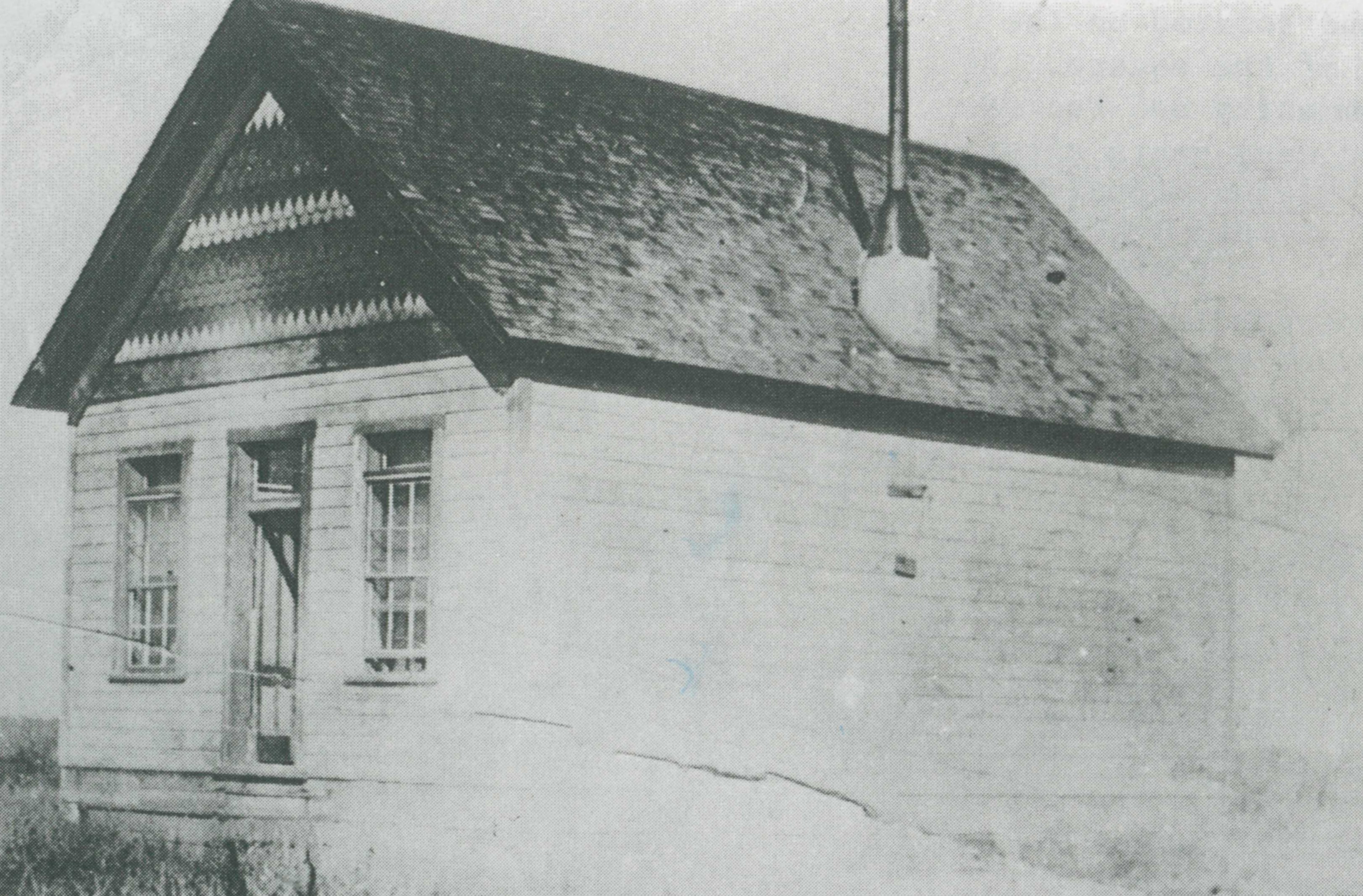
Poplar School
Submitted by Roxey R. Heslop
Poplar was a branch of the Plain City Ward and it received its name from the long rows of Poplar trees on both sides of the street.
The school district was organized in 1891. First school was held in the home of Peter McCue located about 3475 West 1975 North. James L. Robson was the first teacher followed by Mrs. W. Winslow and Myra Gray.
A room school house was built about 1894 at 3320 West 1975 North. This picture is not the Poplar school which had no windows in the front but on the west side and three was a wood shed at the back but it is very similar in many ways.
The teachers were Bessie Zinn, Blanch Bagley, Freed W. Dalton, Naomi Tracy, Emma Anderson, Sarah Stevenson, Etta Brow, Lottie Henigar, Minnie Rudiger, Melvina Wayment, Esther Steward, Welthy Lake, and Pearl Tracy.
The Poplar School House was the center of church and social activities. Sunday School was organized 3 Sept. 1894. Primary and Religion were held there.
Dances were wonderful. Everyone danced and the young folks were taught to waltz, two-step, quadrills, polkas, schottisches and others that were popular at that times. Richard Lund with his violin accompanied by his daughters, Annie or Alminda on the organ. Often lunch was served. Children’s dances were held.
The Poplar Lane people were like a united family. Everyone went to church and attended all social events. All the children played together.
Nearly all of the folks have gone but those who are left enjoy wonderful memories of the days of activity, associations and inspirations that was bought from the one-room school.


CLASS PICTURE TAKEN IN THE POPLAR SCHOOL

Poplar school was a one room building. This picture was taken during the school term of 1901-1902 with Etta Brown as teacher. Later she married LeRoy E. Cowles who became the president of the University of Utah.
Top row: Emma Cottle, Elmer Robson, Ada Skeen, Williams Allred, Walter Cottle, Anzley Miller Luckart, Parley Taylor, Luella Cottle Stanger, Edmund Furnis, Alma Furnis, Laurence Cottle, Leslie Taylor, John Taylor.
Bertha Urry, Kate Urry East, Pearl Taylor Lund, Bertha Robson England, Alice Urry Wayment, Josephine Cottle Monroe, John Jackson, Elmer Taylor.
Roxey Robson Heslop, Manila Taylor Hancock, Emma Taylor Homer, Kate Kensley Nalder, Parley Stoker, Blanch Kenley, Drysdale, Unknown, Jessie Kenley Wayment, Evelyn Taylor Cottle, unknown, Martena Taylor Surrage, Merl Jackson, Zina Urry, Nellie Kenley Draney.
Some were too young to go to school and were brought for the picture.
Submitted by Roxey R. Heslop

Bottom Row
Pearl Taylor Lund, Lester Taylor, her brother
2nd Row From Bottom
Kristina Grieve, John Quincy Blaylock, Principal
Lula Marriott Neal, Hazel Skeen Rhead
3rd Row
Bertha England, Ruth Hodson Wheeler
Sylvia Richardson Singleton, Ruby Ipson Hunter
Jesse Cottle

Left to Right, Back Row:
Mable Palmer, Noland Taylor, Gilbert Maw, Leone Lund
Middle Row:
Iris Poulsen, LaVerna Davis, Principal John C. Neal, Florence Singleton, Ruth Poulsen
Front Row:
Clifton Kerr, Marion Sneed, Arvilla Taylor, Ellis Giles, Margaret Hunt, Gilbert Taylor, Harold Carver

PUBLIC SCHOOL BUILT IN 1906
This is located on the site of the present Plain City Elementary School.
It included elementary through tenth grade in later years. The last year the tenth grade was held in the school was 1947. After that, it remained in use as an elementary school.
The front windows were bricked over and later the front doors were bricked when the gymnasium was added to the east.
Still later, a cafeteria was added to the west. The building was demolished in 1955, leaving the later additions and adding a new addition of classrooms to the east that same year.
The students pictured at the bottom of the picture are enlarged on the3 following pages.
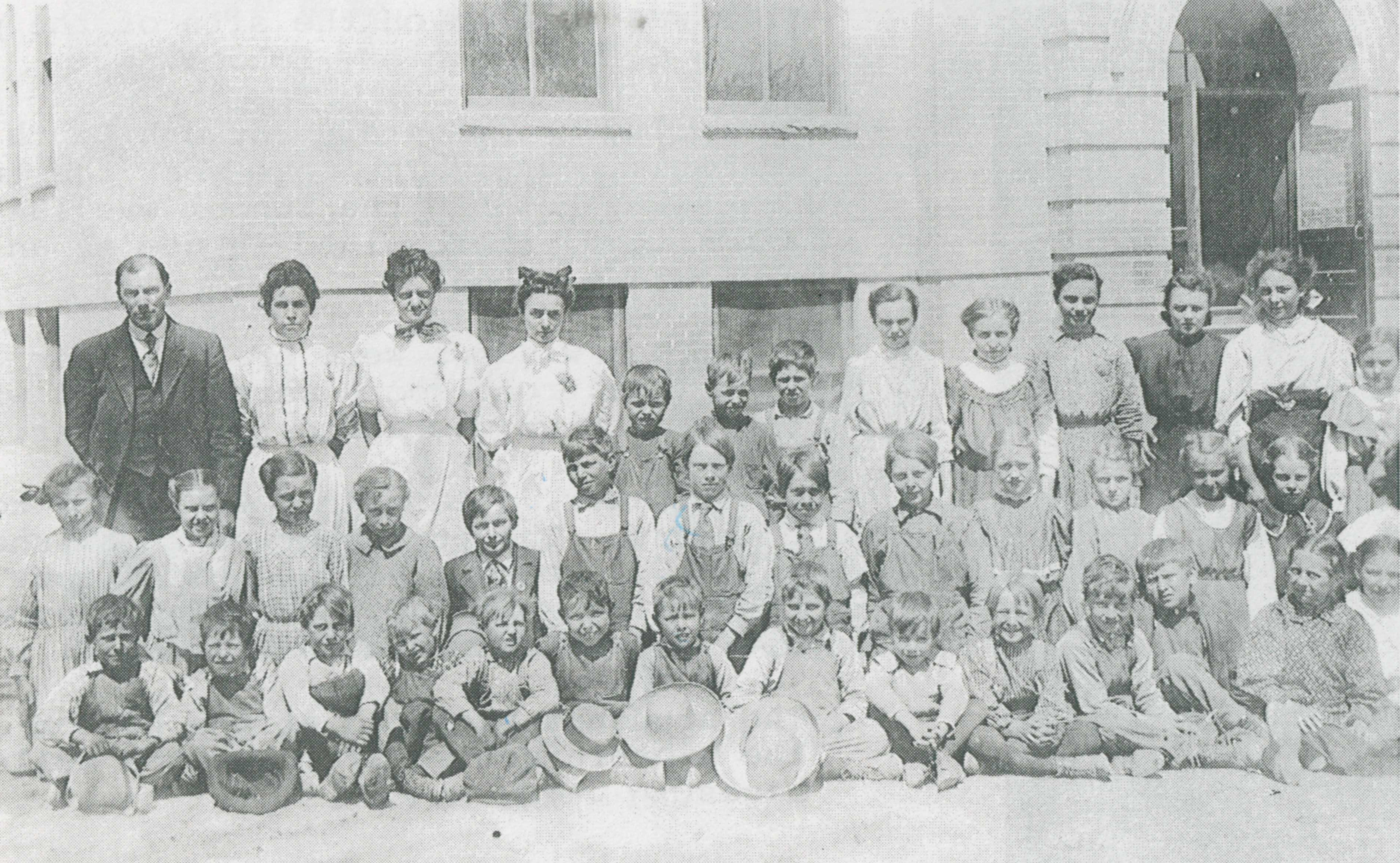
Weber County School District was organized in 1906-07. Plain City was dedicated in September of 1906.
The teachers are: John Quincy Blaylock, Laura Lamon, Rosabell O’dell and Elda Cooley.

1909, 8TH Grade Graduation Class.
Back row L to R: John Taylor, Roxey Robson (Heslop), Easter Lund (Stevenson), Elvin Maw, Mildred England (Hart) (Robins).
Front row L to R: Lona Ipsen ( – ), Teacher John Q. Blaylock, Bertha Hodson (Bullock).

Enlargement of the students in the 1907-07 school picture on the preceeding pages, showing the center one-third of the students.

Early school buses were privately owned and used for summer vacations and school trips.
Enlargement of the students in the 1906-07 school picture on the preceeding page, showing the left one-third of the students.

L. Rulon Jenkins, teacher and Principal of the 1906 school during later years in the 30’s and 40’s.

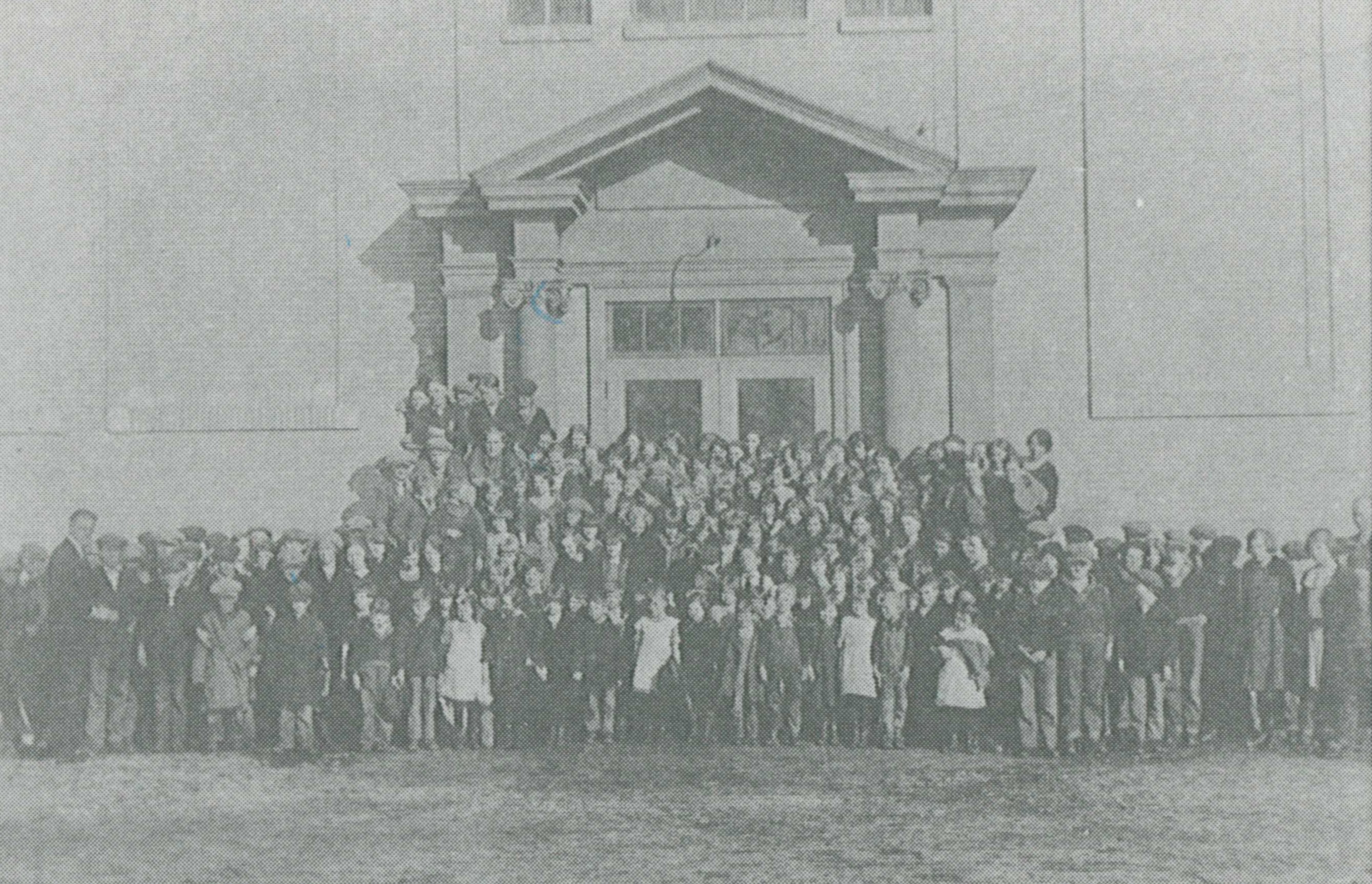
Early classes held in the 1906 school during succeeding years. Dates and identities not known.

Early Plain City Class Picture Date and teacher unknown. We hope you can identify a parent or grandparent to make it more meaningful to you.

View of the 1906 school after the gymnasium had been added and more modern bus transportation used.
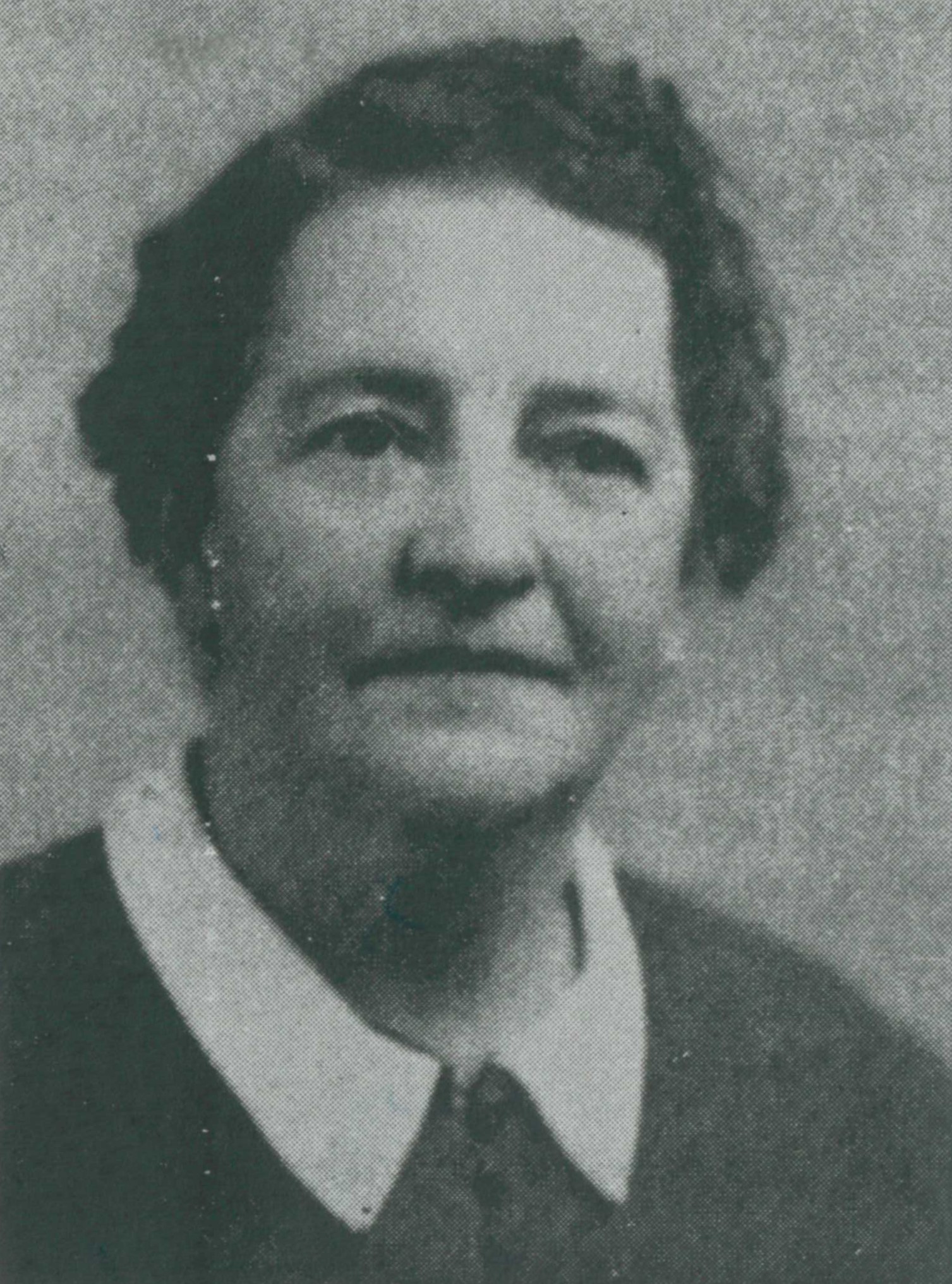
CLARA SKEEN THOMAS
SUBMITTED BY BEVERLY B EDDY
The Plain City School Hot Lunch Program was organized by Clara Skeen Thomas, wife of George Sidney Thomas. Clara Thomas was the first to start the Hot Lunch Program at the Plain City School 1923-1924.
She received $1.00 per day. She served vegetable and tomato soups, chip beef gravy on mashed potatoes and chili. These were purchased at the cost of three cents a bowl. With this money she received from the food, she would but the materials needed to prepare the next meal.
For years, she cooked and prepared the food at her home. She would have to take it up to the school each day. This would consist of three blocks each way. Later the school purchased a coal oil stove, which made it possible to prepare the food at the school. Each year the Hot Lunch program started in November and ended in March. Clara Skeen Thomas cooked and prepared the hot lunch at the Plain City School for eleven years and never missed a day.

SCHOOL LUNCH PROGRAM
L to R: Ivy Carver, Elizabeth Lund, Vacona Singleton, Tillie Moyes, Bell Woods.
SCHOOL BUS TRANSPORTATION
SUBMITTED BY ELMER ROSE
Oh what progress in education when in 1926, Weber High School opened its doors for County students. This high school is located on Washington Blvd. and presently occupied by the Adult Education Center.
Elmer Rose, of Warren, drove a bus to accommodate the northwest area of Weber County. Mr. Rose’s route covered several miles each day. He picked up all the high school students from Warren and both elementary and high school students from the south end of Plain City. He dropped the elementary students off at the Plain City elementary school. The student’s near the street car tracks were left to ride it to the high school.
Mr. Rose then continued his route through the North Plain City Road, back along highway 84 to within a reasonable distance from the car line. Then after passing the Harrisville along the route to Ogden limits.
On the route going to the high school, Mr. Rose picked up the Farr West Elementary students and delivered them to the Farr West School. He returned down the North Plain City Road picking up the elementary students for Plain City School.
The bus contracts to maintain and operate these units of transportation were awarded by bids. The lowest bidder getting the job if his outfit met the approval of the school board.
The inside of the bus had a bench on each side facing the center. The girls usually occupied these seats. In the center was a bench called a straddle seat. The boys were crowded together astraddle this bench.
The first bus was small and about 30 students were crowded into it. The students gave this bus the nickname of “Cracker Box”.
He often chartered his privately owned bus to take scouts, F.H.A. and other groups on excursions and other activities.
Mr. Rose removed the bus from its chassis during the summer so that he might use the truck for farm trucking.
This picture is of the second privately owned bus maintained and operated by Elmer Rose. This bus had a large capacity, accommodating about 50 students.

BUSSES LOADED IN FRONT OF WEBER HIGH SCHOOL IN 1926

The first buses to transport students to Weber High School in 1926 were operated and maintained by the individual owners. The contracts were let to the person whose bid was accepted by the Board of Education. Since these first buses were individually owned, the owners often used them for 4-H, temple, and various other excursions and activities.
Owners often used them for hunting trips. Family and friends slept in them overnight lodging away from home. The straddle bench was removed to make room for the bed.
Some owners removed the bus body from the chassis and placed another bed on the truck, so as to utilize it for farm trucking during the summer.
School transportation has evolved from the horse-drawn school wagon to the giant sized yellow school bus.
Today students ride to school fairly comfortable. The buses are warm, the seats padded, the radio plays popular music. These luxuries were undreamed of by the students who rode in the white top covered wagon, or the horse drawn sleigh in the midst of winter.
SUBMITTED BY RUTH FOWERS
SCHOOL LUNCH PROGRAM WORKERS
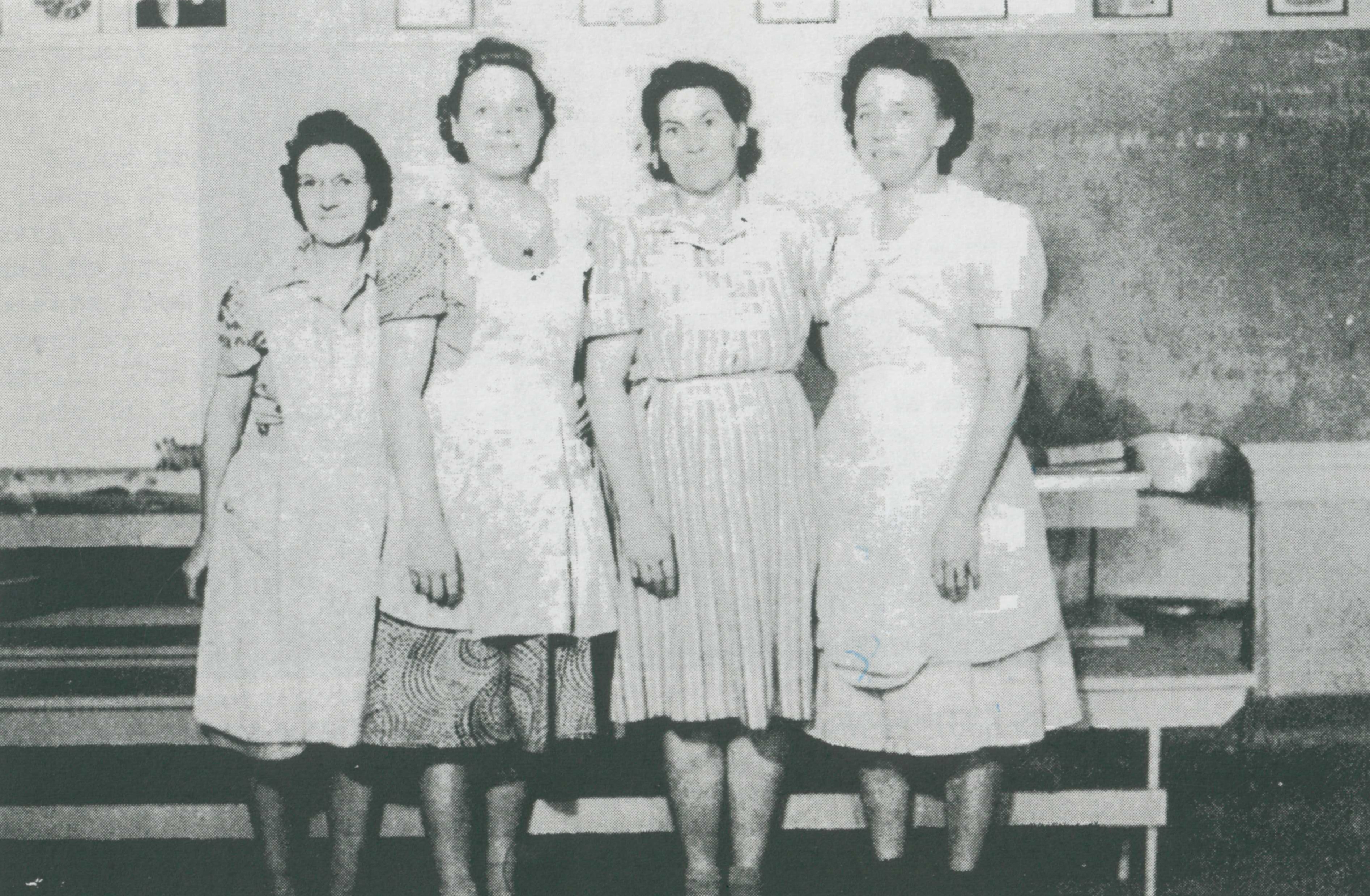
L to R: Hazel Kennedy, Mabel Moyes, Thelma H. Palmer, VaCona P. Singleton- Head Cook.

L to R: Principal Earl Cragun, Fern Hogge, Mabel Moyes, Norma Jensen, Hazel Kennedy.


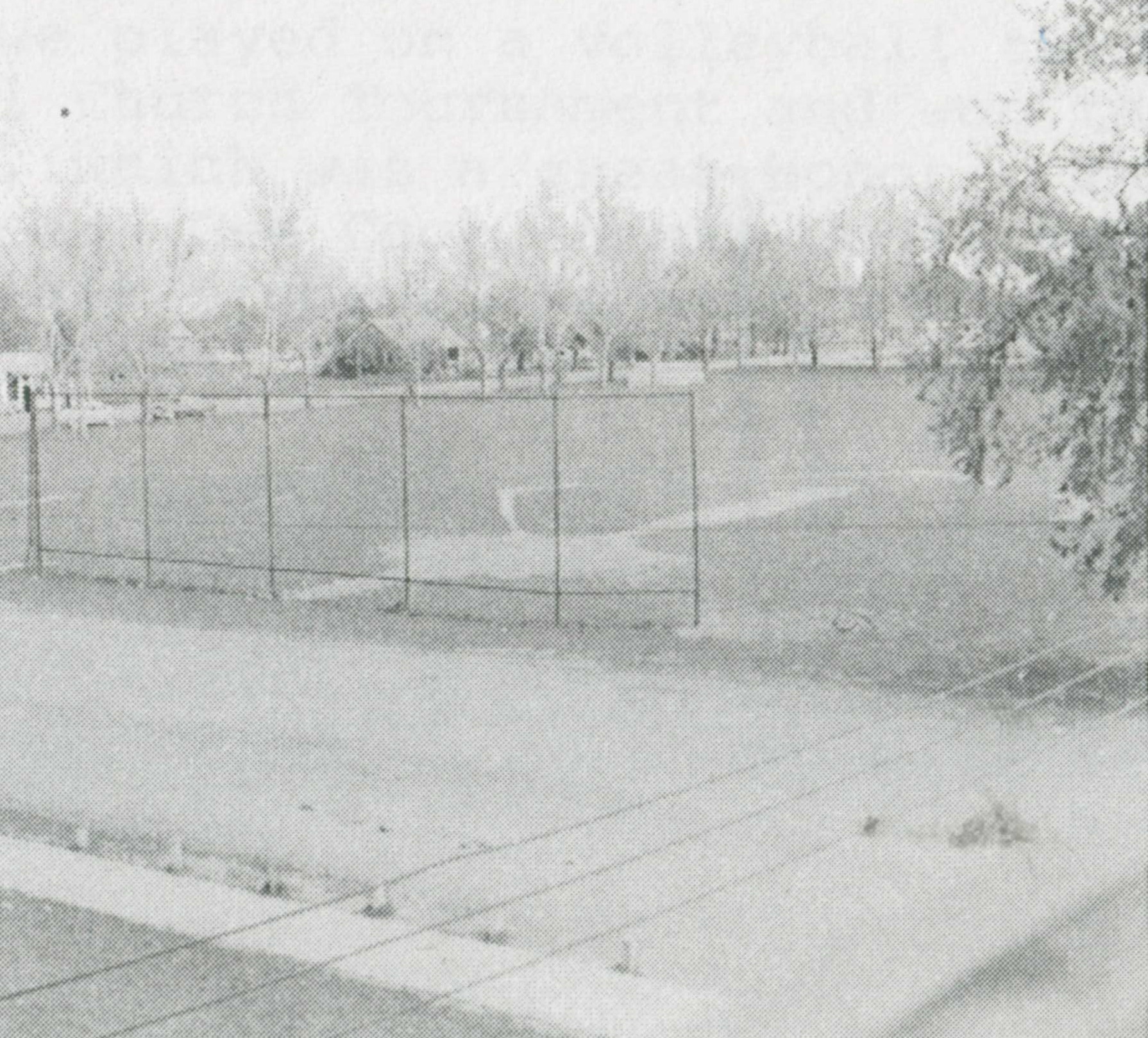


Three view of the Plain City Elementary School as it stands today in 1977 with its many additions.
I was trying to find some photos and stumbled upon my Mom’s graduation pamphlet I had scanned a few years ago. Thought maybe it was time to share it, especially where I have seen some of her classmates have passed away recently.

1972 Baccalaureate and Commencement – Burley High School – Burley Idaho
These programs courtesy of the following Public Spirited Business Concerns
Amalgamated Sugar Co.
Burley Processing Co.
Burley Reminder
Cassia National Bank
First Federal Savings & Loan Assn., Burley Branch
First Security Bank
Guys ‘N Dolls
Idaho Bank & Trust Co.
Idaho First National Bank Burley Office
McCaslins
Ponderosa Inn
J. R. Simplot Food Processing Division
South Idaho Press

Class Officers
President Garth Beck
Vice President Bud Hoffbuhr
Secretary Jill Hinz
Executives Peggy Wood, Peggy Larson, Kaye Dawn Larson, Jeananne Gruwell, Jean Graham
Class Adviser Mr. David Peck
Baccalaureate Sunday, May 21, 1972 2:30 P.M.
Mr. Tom Gruwell , Principal, Presiding
Processional High School Band Mike Chesley, Conducting
Welcome Garth Beck Class President
Invocation Bud Hoffbuhr
Special Number Bel Canto Choir Elden Wood, Conducting “Battle Hymn of the Republic”
Address Dr. Walter R. Peterson
Cherubim Song Senior Octet
Benediction Calvin Pearson
Recessional High School Band
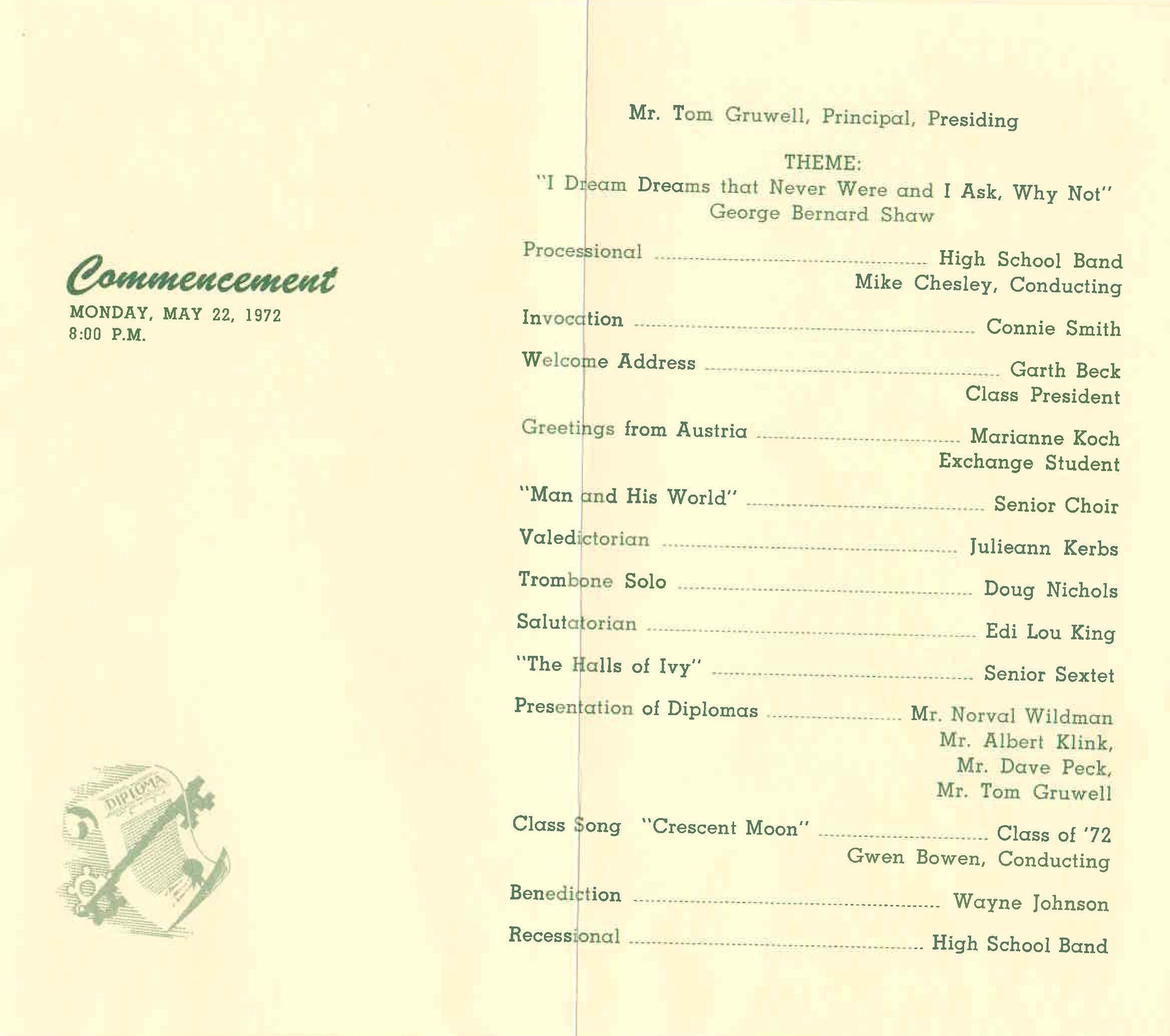
Commencement Monday, May 22, 1972 8:00 P.M.
Mr. Tom Gruwell, Principal, Presiding
THEME: “I Dream Dreams that Never Were and I Ask, Why Not” – George Bernard Shaw
Processional – High School Band – Mike Chesley, Conducting
Invocation – Connie Smith
Welcome Address – Garth Beck, Class President
Greetings from Austria – Marianne Koch – Exchange Student
“Man and His World” – Senior Choir
Valedictorian – Julieann Kerbs
Trombone Solo – Doug Nichols
Salutatorian – Edi Lou King
“The Halls of Ivy” – Senior Sextet
Presentation of Diplomas – Mr. Norval Wildman, Mr. Albert Klink, Mr. Dave Peck, Mr. Tom Gruwell
Class Song “Crescent Moon” – Class of ’72 – Gwen Bowen, Conducting
Benediction – Wayne Johnson
Recessional – High School Band
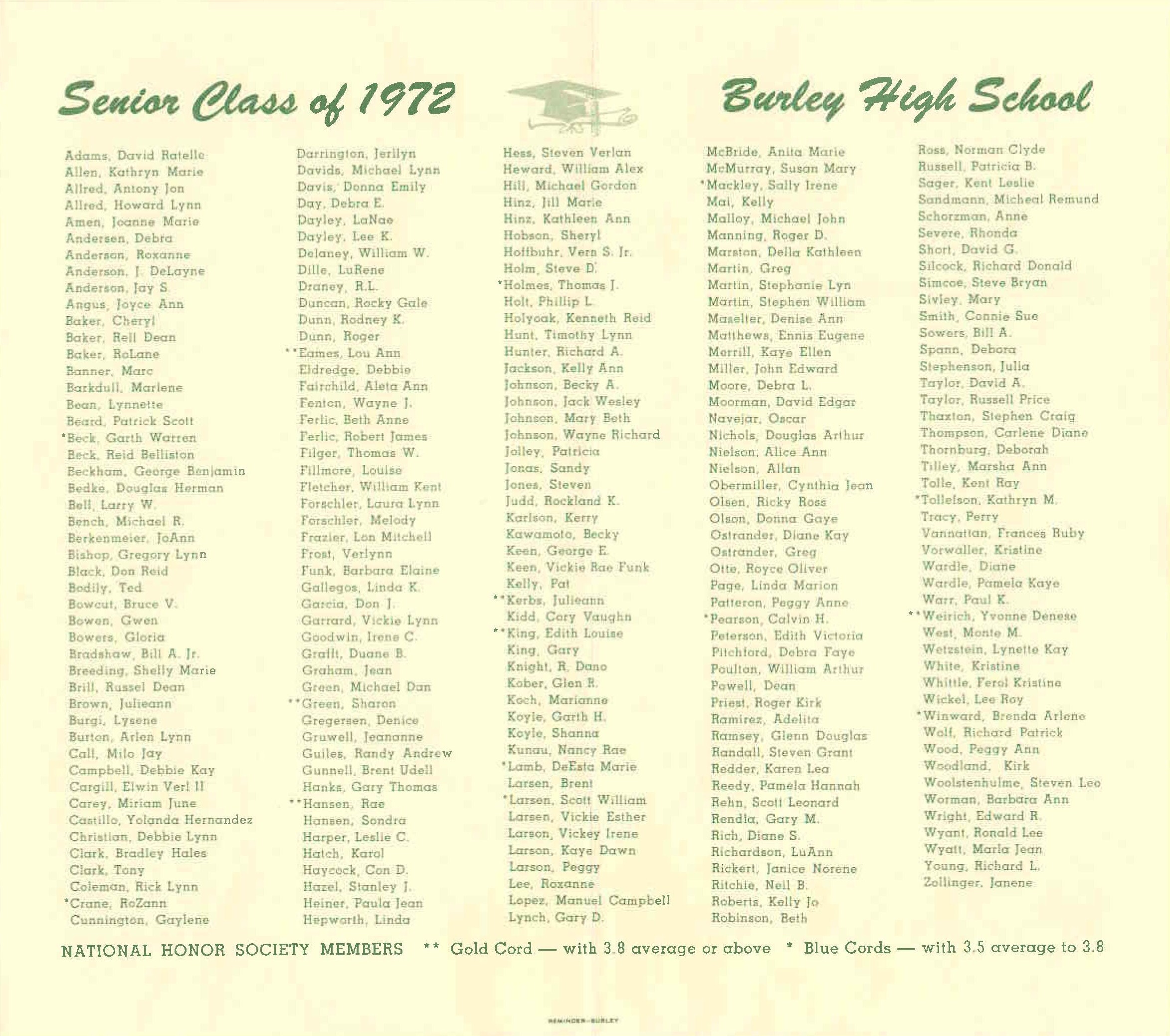
Adams, David Ratelle
Allen, Kathryn Marie
Allred, Anthony Jon
Allred, Howard Lynn
Amen, Joanne Marie
Andersen, Debra
Anderson, Roxanne
Anderson, Jerald DeLayne (1954 – 2017)
Anderson, Jay S
Anderson, Todd Michael (1953 – 1972)
Angus, Joyce Ann
Baker, Cheryl
Baker, Rell Dean
Banner, Marc
Barkdull, Marlene
Bewan, Lynnette
Beard, Patrick Scott
* Beck, Garth Warren (1953 – 2002)
Beck, Reid Belliston
Beckham, George Benjamin
Bedke, Douglas Herman
Bell, Larry W
Bench, Michael R
Berkenmeier, JoAnn
Bishop, Gregory Lynn
Black, Don Reid
Bodily, Ted O (1954 – 2019)
Bowcut, Bruce V
Bowen, Gwen
Bowers, Gloria
Bradshaw, Bill A Jr
Breeding, SHelly Marie
Briggs, Larry
Brill, Russel Dean
Brown, Julieann
Burgi, Lysene (1953 – 2016)
Burton, Arlen Lynn (1954 – 2014)
Call, Milo Jay
Campbell, Debra “Debbie” Kay (1954 – 2019) Johnson
Cargill, Elwin Verl II
Carey, Mirian June
Castillo, Yolanda Hernandez
Christian, Debbie Lynn
Clark, Bradley Hales
Clark, Antone “Tony” Lee (1954 -2015)
Coleman, Rick Lynn
* Crane, RoZann
Cunnington, Gaylene
Darrington, Jerilyn
Davids, Michael Lynn (1953 – 2020)
Davis, Donna Emily
Day, Debra E
Dayley, LaNae
Dayley, Lee K
Delaney, William W
Dille, LuRene
Draney, Rex Leonard (1953 – 2007)
Duncan, Rocky Gale (1954 – 2020)
Dunn, Rodney K
Dunn, Roger
** Eames, Lou Ann
Eldredge, Debbie
Farwell, Albert Michael (1952 – 2023)
Fairchild, Aleta Ann
Fenton, Wayne J
Ferlic, Beth Anne
Ferlic, Robert James
Filger, Thomas W
Fillmore, Louise
Fletcher, William Kent
Forschler, Laura Lynn
Forschler, Melody
Frazier, Lon Mitchell
Frost, Verlynn
Funk, Barbara Elaine
Gallegos, Linda K
Garcia, Don J
Garrard, Vickie Lynn
Goodwin, Irene Cecilia
Goold, Gary
Graf, Becky Ann (1954 – 2011) Moats, Kloer
Grafft, Duane Brian (1953 – 2006)
Graham, Jean
Green, Michael Dan
** Green, Sharon
Gregersen, Denice
Gruwell, Jeananne
Guiles, Randy Andrew (1953 – 2015)
Gunnell, Brent Udell
Hanks, Gary Thomas
** Hansen, Rae
Hansen, Sondra
Harper, Leslie C
Hatch, Karol (1953 – 2004) Kerr
Haycock, Con D
Hazel, Stanley Jarvis (1953 – 2008)
Heiner, Paula Jean
Hepworth, Linda
Hess, Steven Lerlan
Heward, William Alex
Hill, Michael Gordon
Hinz, Jill Marie
Hinz, Kathleen Ann
Hobson, Sheryl
Hoffbuhr, Vernard “Bud” Standley Jr (1954 – 1997)
Holm, Steve D
* Holmes, Thomas J
Holt, Phillip L
Holyoak, Kenneth Reid
Hunt, Timothy Lynn
Hunter, Richard A
Jackson, Kelly Ann
Johnson, Becky A
Johnson, Jack Wesley
Johnson, Mary Beth
Johnson, Wayne Richard (1953 – 2008)
Jolley, Patricia
Jonas, Sandy (1954 – alive)
Jones, Steven
Judd, Rockland K (1953 – 2012)
Karlson, Kerry
Kawamoto, Becky
Keen, George E
Keen, Vickie Rae Funk
Kelly, Pat
** Kerbs, Julieann
Kidd, Cory Vaughn
** King, Edith Louise
King, Gary
Knight, Robin Daniel (1953 – 2014)
Kober, Glen R
Koch, Marianne
Koyle, Garth H
Koyle, Shanna
Kunau, Nancy Rae
* Lamb, DeEsta Marie
Larsen, Brent
* Larsen, Scott William
Larsen, Vickie Esther
Larson, Vickey Irene
Larson, Kaye Dawn (1954 – 2019) Silcock
Larson, Peggy (1954 – 2016) Stirland
Lee, Roxanne
Lopez, Manuel Campbell
Loveland, Cynthia (1954 – 1981)
Loveland, Kevin R (1954 – 2008)
Lynch, Gary D
McBride, Anita Marie
McMurray, Susan Mary
* Mackley, Sally Irene
Mai, Kelly
Malloy, Michael John
Manning, Roger D
Marston, Della Kathleen
Martin, Gregory Max (1954 – 1975)
Martin, Stephanie Lyn
Martin, Stephen William
Maselter, Denise Ann (1954 – 2022) Rollins
Matthews, Ennis Eugene
Merrill, Kaye Ellen
Miller, John Edward
Moore, Debra Lynn (1954 – 2002)
Moorman, David Edgar (1953 – 1997)
Navejar, Oscar
Newcomb, Kathy Lorene (1954 – 2020) Bailey
Nichols, Doulgas Arthur
Nielson, Alice Ann
Nielson, Allan (1954 – 2020)
Obermiller, Cynthia Jean
Olsen, Ricky Ross
Olson, Donna Gaye
Ostrander, Diane Kay
Ostrander, Greg
Osterhout, Rex Dale (1954 – 2017)
Otte, Royce Oliver
Page, Linda Marion
Patteron, Peggy Ann
* Pearson, Calvin H
Peterson, Edith Victoria
Pitchford, Debra Faye
Poulton, William Arthur
Powell, Leslie Dean (1953 – 2005)
Priest, Roger Kirk
Ramirez, Adelita
Ramsey, Glenn Douglas
Randall, Steven Grant
Redder, Karen Lea
Reedy, Pamela Hannah
Rehn, Scott Leonard (1954 – 1994)
Rendla, Gary M
Rich, Diane S
Richardson, LuAnn
Rickert, Janice Norene
Ritchie, Neil B
Roberts, Kelly Jo
Robinson, Beth
Ross, Norman Clyde
Russell, Patricia B
Sager, Kent Leslie
Sandmann, Michael Remund
Schorzman, Anne
Severe, Rhonda
Short, David G
Silcock, Richard Donald
Simcoe, Steve Bryan
Sivley, Mary
Smith, Connie Sue
Sowers, Bill A
Spann, Debora
Stephenson, Julia
Taylor, David A (1953 – 2009)
Taylor, Russell Price (? – alive)
Thaxton, Stephen Craig
Thompson, Carlene Diane
Thornburg, Deborah
Telley, Marsha Ann
Tolle, Kent Ray
* Tollefson, Kathryn M
Tracy, Perry Alan (1953 – 2005)
Vannatian, Frances Ruby
Vorwaller, Kristine
Wardle, Diane
Wardle, Pamela Kaye
Warr, Dee Ann (1954 – 2013)
Warr, Paul K
** Weirich, Yvonne Denese
West, Monte M
Wetzstein, Lynette Kay
White, Kristine
Whittle, Ferol Kristine
Wickel, Lee Roy
* Winward, Brenda Arlene
Wolf, Richard Patrick
Wood, Peggy Ann
Woodland, Kirk
Woolstenhulme, Steven Leo
Worman, Barbara Ann
Wright, Edward R
Wyant, Ronald Lee
Wyatt, Marla Jean
Young, Richard LeRoy (1953 – 2022)
Zollinger Janene
National Honor Society Members
** Gold Cord – with 3.8 average or above
* Blue Cords – with 3.5 average to 3.8
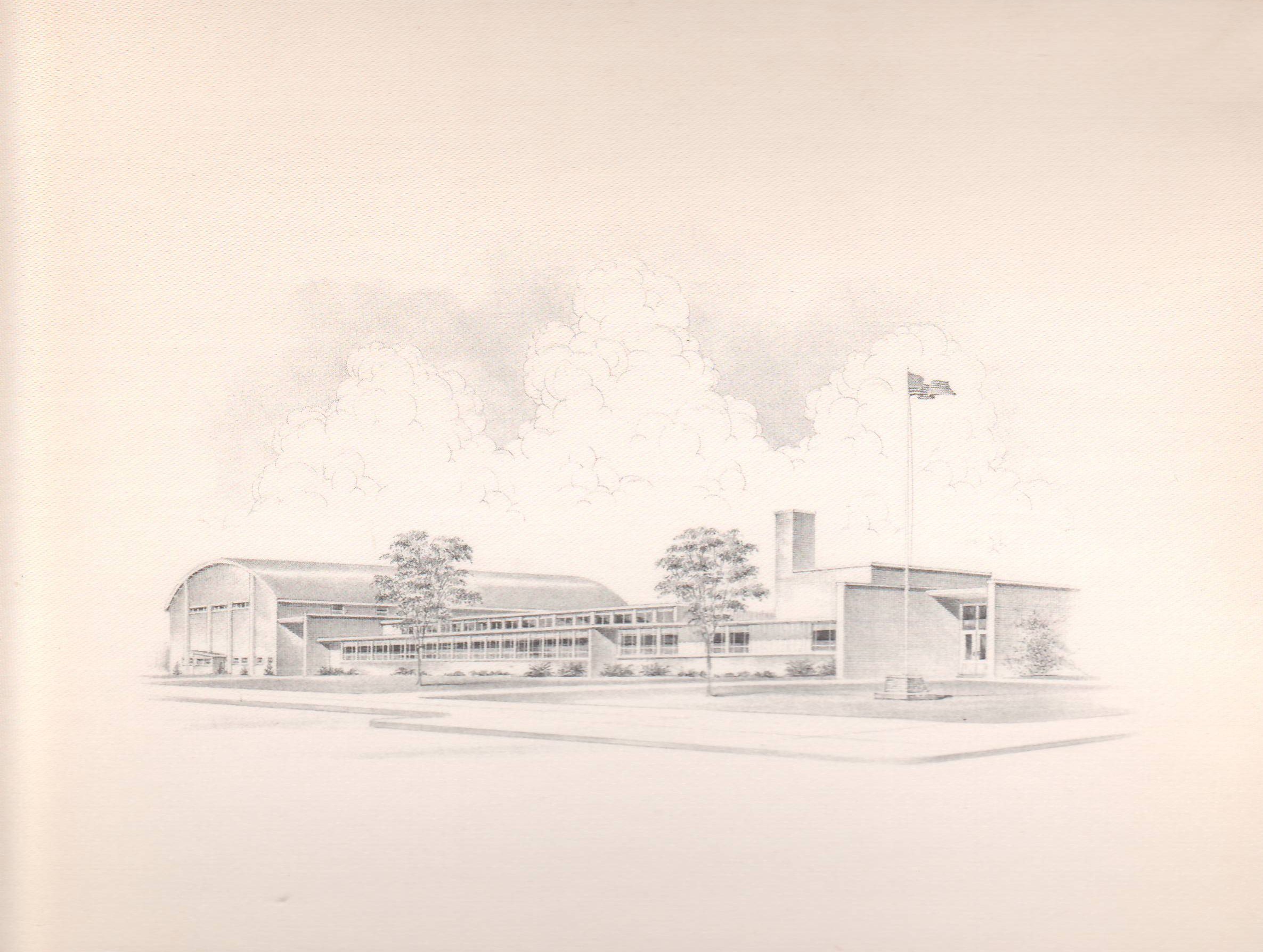
The sketch of the Burley High School on the front of the Diploma case.

Mom’s actual Diploma.
Burley High School – Burley, Idaho
This Certifies That Sandy Jonas has satisfactorily completed a Course of Study prescribed for Graduation from this School and is therefore awarded this Diploma.
Given in the month of May, nineteen hundred and seventy-two
Tom Gruwell – Principal
Harold W Blauer – Superintendent
W B Whiteley – Chairman Board of Education

Here is a copy of Mom’s Senior picture – 1972

 Sagacity